Monthly Archives: September 2022

Faux tales

FAKE news about Datuk Seri Najib Razak has shifted into overdrive even though he’s already incarcerated at Kajang Prison.

Last week, two social media postings about the former premier made their rounds.

It’s unbelievable the number of people – including those who are supposedly well-informed – who swallow hook, line and sinker these misleading and deceitful messages.

Judging from the comments on some portals, there are Malaysians who believe them.

The first was a posting that claimed “Najib isn’t in a cell. A good friend whose cousin is a senior prison officer at Kajang said Najib is given a house within the prison grounds.”

These houses are supposedly meant for senior prison officers, and it was claimed that Najib is enjoying house arrest.

We should know better because the red flags were already there. It says the information came from “a friend” and if that wasn’t enough, “whose cousin is a senior prison officer”.

Well, a friend of mine whose cousin is a senior prison officer said it’s not true. The media, which often quotes anonymous sources, will never accept information from a third party.

For starters, the Kajang prison complex has homes for wardens with families and a flat for wardens who are single.

They both sit away from the prison detention building and the prison headquarters, where the administration is located.

If Najib is placed in an officer’s home and not a cell, that will surely be leaked out fast and furiously in this digital age of social media.

Don’t expect every prison warden or their family members to be fans of Najib. They won’t cast a blind eye.

This is not 1989, when Abdullah Ang, a former banker convicted of criminal breach of trust, was accorded special privileges while serving time and could reportedly wilfully walk in and out of prison.

Even that was exposed by a newspaper, the Malay Mail, and that was in the pre-Internet age.

Then there’s a video posting showing Najib in a pink baju Melayu, in a home, looking at a 2010 photograph hanging on a wall and joking with four men.

Disturbingly, many angry Malaysians believed this was his prison cell or a hospital ward.

But the video was posted by Najib himself ages ago when he visited a Felda settler, Ithnin Abdullah, in Kledang, Kota Tinggi, Johor.

You can check his Instagram account to view it. Someone deviously used this video to make it look like he is in his new cell or a hospital ward.

Understandably, many Malaysians are upset that Najib, who has committed a heinous crime and sentenced to 12 years’ jail, has been so quick to seek a pardon.

And hardly two weeks after being jailed, he sought to be sent to hospital to have a recurring stomach-related ailment treated, with his daughter saying her father “is highly prone” to stomach ulcers that flare up under stress or during an episode of gastritis.

But even if it were true, the cynicism and scepticism would be irrepressible, as they would be for claims by lawyers and their clients who seek postponement of their cases on medical grounds. It’s the oldest delaying tactic used by lawyers in court and prisoners in jail because going to the hospital or prison clinic is surely better than rotting in a cell.

Last week, the Malaysia Now portal ran a report that said after November 2017, Datuk Seri Anwar Ibrahim spent much time at Cheras Rehabilitation Hospital until his release in May 2018.

The PKR president was sentenced to six years’ jail for his sodomy conviction but was released a week after Pakatan Harapan’s victory in the May 2018 General Election, following a royal pardon backed by Tun Dr Mahathir Mohamad’s new government.

The portal also carried pictures of Anwar on his bed with his regular stream of visitors, which included Najib, Datin Seri Rosmah Mansor and Datuk Seri Dr Ahmad Zahid Hamidi and wife, Datin Seri Hamidah Khamis.

A Google search will reveal many news reports and photographs of these high-profile visits.

Although the Prison Department says all prisoners will be treated equally, it’s easy to think that VVIP prisoners such as ex-politicians, ex-lawyers, ex-corporate figures and ex-police officers would get a slightly better deal.

For one, at least Anwar and the other politician prisoners had their own cells with attached bathrooms, or were located near the hospital clinics instead of the overcrowded cells.

But there’s no hot water for Najib, so he must bathe in cold water. He is, presumably, provided with a fan and a table, but furnishing will be sparse.

There are sound security reasons for keeping him in solitary confinement. I don’t think the authorities want to risk such prisoners being hurt by their cellmates.

But for now, Najib remains a Member of Parliament. He will continue to draw his allowances and remunerations as an MP.

This, again, will upset many people, but he still has two last ditch attempts to keep his Pekan parliamentary seat.

His lawyers have filed for a review of the Federal Court decision which upholds his conviction in the SRC International Sdn Bhd case, but this could just be clutching at straws.

Then there’s the application for a royal pardon, and while no provision exists in the law for the duration of a prisoner’s jail term before being pardoned, the practice is the person must serve a “considerable time”, and that usually means at least three years.

Besides, Najib still has four other pending cases against him, and surely that will weigh on the King’s decision. How many times can his Majesty pardon him?

But all this debate over whether Najib can remain an MP will be a moot point when Parliament is dissolved. He will automatically lose his Pekan parliamentary seat and will not be able to seek re-election.

If there’s a positive to take from Najib’s case, it’s that Malaysians are learning about our court requirements and procedures.

Many people have asked why Najib was allowed to move freely before the Federal Court judgement, which was his final court procedure of the charge in question.

That’s how our laws, which are based on the British model, work.

Well, he wasn’t denied bail and he had a final appeal platform – the Federal Court. Once it ended, he went straight to jail.

Likewise Rosmah, who was sentenced to 10 years’ jail for each of her three graft charges and fined a total of RM970mil, is at home because she was allowed bail and still has the Court of Appeals and Federal Court to take her case to. It may take two to three years before she finally exhausts her appeals.

The Malaysian court system, which is modelled after the British judiciary, may seem slow, but it provides sufficient avenues for an accused and the defence team to prepare their cases.

Najib may no longer be in the public eye, except for his appearances in court for his ongoing cases, but he’s still a newsmaker because only a fine line separates fame and infamy.

His popular social media platforms are now run by his team, but they still have a large following.

That says a lot, but it would be foolish for Umno to go the general election with Najib as its main cause, and that certainly will also affect the other Barisan Nasional parties.

The electorate wants to know how voting for Barisan can benefit the people and country, rather than treating the general election as a referendum to free or pardon Najib.

Barisan, especially Umno, must get its machinery started instead of talking about influencing party members to sign petitions supporting Najib. The recent Umno meeting may have been good for hardcore Najib supporters to let off steam, but it made the party look like it has lost its sense of objectivity.

That’s not how a party goes into a general election. It’s bad optics.

Let’s be real. Instead of casting doubt and making aspersions at the judiciary, Umno should claim credit for upholding and respecting the laws in this country. No one is above the law, after all.

PAS: All Kanot Part 2


PAS: All Kanot with Siti Kasim Pt 1


The show must go on

IT’S a classic case of the right hand not knowing what the other hand is doing. We already have a one-stop agency known as Puspal for the applications for filming and performance by foreign artists.

The panel, which comes under the purview of the Communications and Multimedia Ministry, comprises representatives from the respective bodies.

So, the last thing the music tourism industry needs is more bureaucracy to make it even more difficult to get their permits approved.

Out of the blue, Federal Territories Minister Datuk Seri Shahidan Kassim has said that approvals that had been given to concerts in Kuala Lumpur will be reviewed to ensure their suitability to the people.

He said the ministry had received complaints from the public that certain concerts did not contribute to youth development.

Now, that is a vague reasoning. Concerts to most of us are purely for entertainment value, so we really do not know what the Minister is thinking.

This is disturbing because it comes after the call by PAS to stop concerts featuring international artistes.

The party also asked for Jakim, the Islamic Development Department, to be given a bigger role to play within Puspal to stem performances, which it deemed not Islamic.

This is surely bad news for show promoters as they have just started to promote Malaysia as a destination for music tourism after a two-year hiatus because of the Covid-19 pandemic.

It also runs contrary to the Tourism Ministry efforts to push Malaysia as a gateway to revive the nation’s tourism industry.

In July, it said the Ministry was supporting all concerts, local and foreign, being held here because the artistes will bring along their followers.

As an example, South Indian composer and singer R. Anirudh will see several chartered flights from India and Singapore to KL to watch his “Once Upon A Time” concert.

Indonesia’s Lords of Rock, Dewa 19, will be performing at the Axiata Arena in Bukit Jalil, KL, and a massive crowd, including those from other Asean nations, is expected.

It has been estimated by statista.com that the revenue in the music events segment is projected to reach USD30.68mil (RM139mil) in 2022 and that does not include the spillover effects to the hotel, restaurant, and airlines sectors.

It is highly regrettable that a few of our politicians do not understand the negative impact of their statements as it will send the wrong signals and narrative.

Our rival neighbours will only be happy to take over hosting by telling these prized acts that they are not welcome in Malaysia.

Even Saudi Arabia, a conservative country, has opened and pledged to stage ‘’600 per cent more concerts from this year’’ and over the past few years, before the pandemic, BTS, Justin Bieber, Salman Khan and Pitbull have all performed there.

Rave parties featuring international deejays have performed in Riyadh to thousands of locals and foreigners. Even men and women are allowed to mix and dance.

In Jakarta, the biggest K-pop concert dubbed KPOP LAND 2022 will be staged on Sept 16, where thousands of people will watch it at the Stadium Madya Senayan.

Something is terribly wrong when PAS Youth leader Ahmad Fadhli Shaari equates concerts to LGBT (lesbian, gay, bisexual and transgender) and hedonism, and some of our leaders actually take what he has said seriously.

How he can derive such a perception is beyond the comprehension of level-headed Malaysians. He needs help, seriously.

If Shahidan, rightly or wrongly, heeds his complaint, what about the support of the majority of Malaysians for such concerts? Surely, the voices of moderate Malaysians count?

It won’t be wrong to say more toxicity comes out from some political gatherings than concerts, really. Now, these divisive political meetings for sure are bad for youth development.

Walk the talk


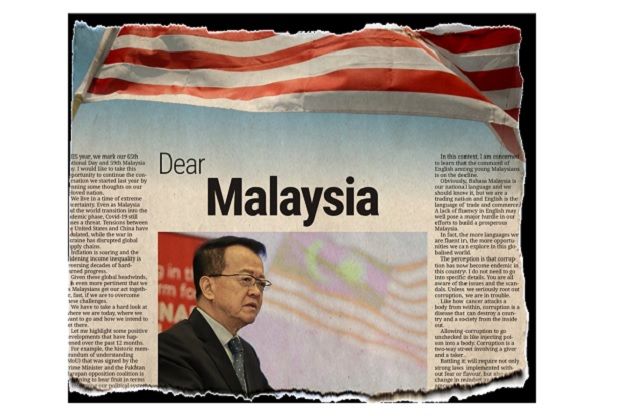
Standing out: Many commended Cheah for his readiness to speak up on national issues that concern the people in his open letter to fellow Malaysians on National Day.

NOT many renowned Malaysian businessmen would want to openly discuss issues affecting the nation, particularly those involving corruption because no one wants to antagonise the powerful.

It’s fair to say their fears aren’t unfounded. After all, as businesspeople, many depend on the goodwill of politicians to get their work expedited by avoiding obstacles.

Few would want to see themselves become the target of paid mercenaries on social media, especially not when business is involved. Many prefer to whine privately, but as political dynamics become more uncertain, they find it increasingly difficult to be friendly with only one side.

Now, they need to sidle up to both sides or worse, three or four sides even, but it doesn’t always work that way. Invariably, they are expected to choose sides.

But as we head towards an impending general election, there is growing speculation that results will be inconclusive, yet again.

That means there will be another round of horse-trading and deal-making to “hammer out” a Federal Government like it happened after the collapse of the Pakatan Harapan government after only two years.

Now, even the DAP has raised the possibility of working with Umno, saying it won’t rule out a collaboration with the latter as “anything is possible in politics.”

It would have been unthinkable previously. But after being in the Federal Government for 22 months, it’s hard to relinquish power. After all, power is addictive.

So, businessmen would rather stay out of the many political crosshairs and minefields.

But eyebrows were raised last week when Tan Sri Dr Jeffrey Cheah, the founder and chairman of Sunway Group, penned an open letter to fellow Malaysians in conjunction with our National Day.

Many commended him for his readiness to speak up on national issues that concern Malaysians.

In his well-articulated letter, he started off by highlighting the positive developments over the past 12 months, including the historic memorandum of understanding (MOU) signed by the Prime Minister and the Opposition.

Cheah also cited the gazetting of the anti-party hopping law and the imminent tabling of a political finance Bill.

But the tycoon then rightly rued that “like many of my fellow Malaysians, I worry that some in power appear to be more focused on politics, rather than policies.

“We are all aware of the obstacles we face in trying to build a brighter, more progressive, more inclusive and more sustainable future for our country.”

Calling for an urgent need to strengthen national unity, he asserted that “we must all do what we can to clean up the toxicity that influences our conversations on race, religion and culture.

“And then, there is education. It is no secret that our education system needs a massive overhaul. Unless we urgently address this challenge, we will doom our children and our country to a future of poverty and misery.”

He expressed concern that the command of English among young Malaysians was on the wane, adding that while Bahasa Malaysia is obviously our national language and we should know it, “we are a trading nation and English is the language of trade and commerce. A lack of fluency in English may well pose a major hurdle in our efforts to build a prosperous Malaysia.”

Cheah also touched on corruption, intimating that “the perception is that corruption has now become endemic in this country” and “unless we seriously root out corruption, we are in trouble.”

Cheah has hit the nail on the head. The truth is, Malaysia needs to get its priorities right or risk slipping down the slope.

The level of toxicity in this country is unbelievable, especially with the amount of time devoted to politics, mostly destructive ones, when we, instead, could be focusing our energy on productivity.

Thinking out of the box has become a cliché, an overused phrase. We need everyone, especially ministers and government officials, to change their mindsets and welcome ideas and comments from credible business leaders.

It’s insufficient to be surrounded by so-called political sycophants whose skills are only limited to their manoeuvrings.

Businessmen who have proven themselves to be committed to nation-building should be encouraged to speak up since they surely mean well. They should be invited to share their expertise more often with our national leaders.

If there’s an award for “Businessman of the Year,” Tan Sri Dr Jeffrey Cheah certainly has my vote. Thank you for speaking up, sir. Standing out: Many commended Cheah for his readiness to speak up on national issues that concern the people in his open letter to fellow Malaysians on National Day.

PM bats aside intense pressure


National Day: Celebrations a good showcase of patriotism…

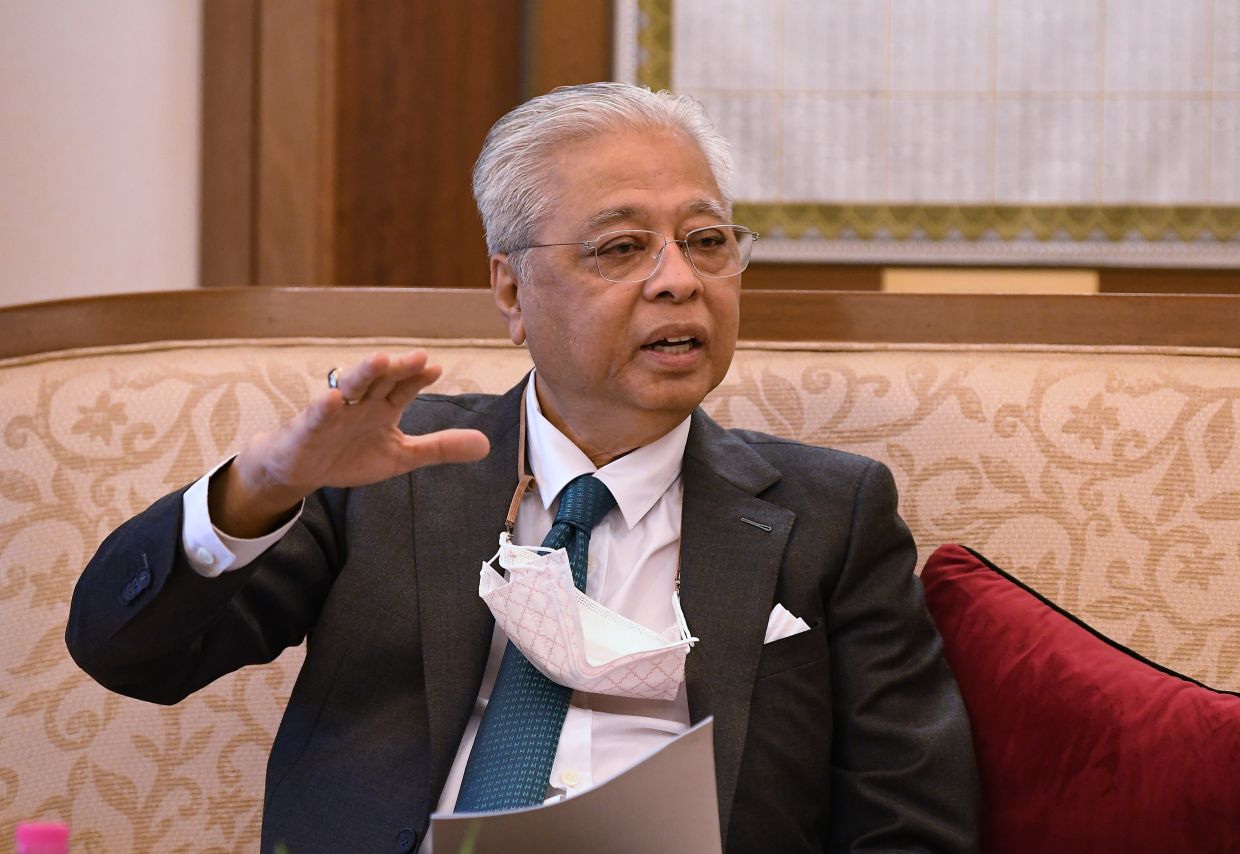
It’s been a harrowing week for Datuk Seri Ismail Sabri Yaakob, but he has come out on top and largely unscathed.

THE Prime Minister doesn’t enjoy the best narrative. It’s not surprising that he hasn’t received the kind of endearment his predecessors have.

For one, Datuk Seri Ismail Sabri Yaakob has just been on the job for a year and Malaysians are still struggling to get to know him.

After all, he has never held high-profile ministerial portfolios.

He lacks the charisma, urbane and sophisticated qualities of previous prime ministers, and there’s the perception that he is uncomfortable with English, and thus seeks refuge in Bahasa Malaysia.

Social media has been vicious towards his fashion sense. Yet, everyone who has met him says he’s a pleasant, humble and decent man.

Unfortunately, that’s also a euphemism for being a weak leader, an impression even within Umno circles, with its legacy of tough-guy leaders.

However, the events of the past few weeks have changed the way many Malaysians view Ismail Sabri, including his critics.

Amazingly, he has been able to fend off the intense pressure heaped on him by his party.

Calls and texts had bombarded his phone even before the Federal Court upheld the 12-year jail sentence and RM210mil fine on Datuk Seri Najib Razak for misappropriating RM42mil of SRC International Sdn Bhd’s funds.

The former prime minister is facing four other charges on the 1MDB case.

Najib’s supporters, some still highly emotional, had insisted that action be taken, including initiating a royal pardon even before the court verdict.

There has been anger that the Bench hasn’t been fair to Najib while some insist that the Attorney General must, from now on, be an Umno appointee.

That’s fair comment because former attorney general Tan Sri Tommy Thomas would have been the choice of the Pakatan Rakyat government.

The push became stronger after the sentencing, but Ismail Sabri, trained as a lawyer, knew better because interference in the judiciary was a line not to cross.

The separation of powers involving the Executive, Legislative and Judiciary is clearly defined.

Politicians and their supporters (many not well versed with the law) who have met Ismail Sabri, have ended up receiving the same response – he won’t interfere in the judicial process, and they must understand how the law works in Malaysia.

It got more intense for Ismail Sabri when he agreed to declassify the governance, procurement and finance panel investigation on the littoral combat ship (LCS) project, which revealed more damaging details.

Although it was a Cabinet decision, the directive was a double-edged sword, and the finger was firmly pointed at Ismail Sabri.

After all, it was he who gave the go-ahead to have it tabled and endorsed by the Cabinet.

While it showed accountability and transparency on the part of the government, it also proved the depth of corruption involving high-level officials.

Many Malaysians would find the dirt, as evident in the reports, repulsive, and as a result, fence sitters may even decide to vote against Barisan Nasional.

Some felt it was unnecessary since the Public Accounts Committee’s 250-page report on the multi-billion-ringgit LCS project is injurious enough.

Certainly, the decision of the apex court and the reports of the PAC and panel have proven that our institutions have remained independent and strong.

It’s commendable that lurid and colourful quotes have been retained, almost verbatim, in the PAC report, especially the parts on the findings by the forensic auditor.

We have proven to the world that the law is respected and upheld in Malaysia.

Yes, there was a lot of “letting off steam” at the recent Umno meeting, but no one took their anger to the streets.

The Prime Minister, Attorney General and Chief Justice were not sacked, as wrongly speculated by some media.

We are at a defining moment in our nation’s history.

We will be judged by how we stand now.

It has not been easy for our judges, especially Chief Justice Tun Tengku Maimun Tuan Mat, who has been viciously intimidated and pressured.

Even members of the media have been subjected to irrational criticisms, mostly bordering on crassness and callousness, without any substantive value.

But sentiments are still raw, and many have found the events of the past week to be shocking because they have been unprecedented.

For some, it is another opportunity to take political potshots at their nemesis. But these are mere sideshows.

In Putrajaya, the seat of government, many are now saying that Ismail Sabri has begun to earn their respect.

But he must prove he has earned his stripes further by securing a convincing mandate for the Barisan Nasional in the coming general election.

This is one Merdeka celebration when we all can stand tall and proud. Happy National Day.