Monthly Archives: October 2025

Setting The Benchmark Higher For ASEAN

United States President Donald Trump upon arrival in Malaysia yesterday for the 47th ASEAN Summit, in high spirits as he is warmly greeted by Prime Minister Datuk Seri Anwar Ibrahim and a lively troupe of traditional Malay dancers in vibrant costumes.

KUALA LUMPUR, Oct 27 (Bernama) —  It's never easy dealing with United States President Donald Trump, as his unpredictability and mood swings are legendary.

But Prime Minister Datuk Seri Anwar Ibrahim has been able to pull off what many world leaders have failed disastrously. 

Not only was he able to establish a close rapport despite only meeting for the first time, but he also successfully walked away with tangible economic wins for Malaysia.

The zero tariffs on Malaysian electronics exports to the United States are a landmark.

Up to 1,700 Malaysian products amounting to RM21.9 billion into the US, which will enjoy tariffs lower than the 19 per cent imposed on Malaysia earlier.

While there are those who claim we have given in too much to the US, let's not overlook the crucial areas.

The electronics and electrical sector contributes to 40 per cent of the nation's exports.

As with all negotiations, there are wins and losses, but a deal must be reached. There cannot be a winner-takes-all formula. 

It is a breakthrough for both nations, while for some countries, the talks are still dragging on.

It is about securing Malaysia's economic future through deft diplomacy and calm leadership.

Malaysia has also proven its ability to walk and balance the delicate path of non-alignment.

It is also about managing unpredictability, which many leaders have found themselves caught in tight spots when dealing with Trump.

Depending on which side of the bed he wakes up on, tariffs have shot up for no clear reason.

Instead of pandering excessively or trying to outmatch Trump, Anwar used his charm, wit, patience, focus and empathy to win over.

These are skills which he has honed in his decades of political career.

The right vibes began when Trump walked down from Air Force One at KLIA, where he was greeted by traditional cultural reflecting Malaysian culture.

But it was done differently as Trump swayed to the tune of the iconic "Hawaii 5-0" TV theme, which was captured on TV cameras and broadcast around the world.

The video that @margomartin (Special Assistant to the President and Communications Advisor) captured of Trump dancing in Malaysia has just surpassed 1 million likes on @TeamTrump Instagram and has a whopping 21.5 million views.

It also has 17.7 million views on Facebook and 9.3 million on TikTok. 

Breaking away from protocol, Trump even invited Anwar into "The Beast", as the US presidential limousine car is called.

It is indeed a rare honour extended by Trump, and in that short ride to KL, Anwar turned formality into friendship.

What is evident now is that Malaysia has proven itself as a reliable trading partner.

We will do business with any country, and we do not want to be dragged into any geopolitical rivalry. Malaysia will give the same grand welcome to China's Xi Jinping as we did to Trump.

There are many Malaysians who dislike Trump, as with many Americans, too. But he remains a powerful political figure whose decisions have a global impact, politically and economically, and Malaysia needs to be on the comfortable side.

We have also become a global semiconductor supply chain player, and we should be proud of it.

Under the agreement, our microchips and related goods will enter the US market duty free.

It will boost high-value job creations in Penang, Kulim and other industrial areas.

We can now assure the world that Malaysia remains a secure hub for high-tech component production.

Malaysia has sizeable rare earth material, but extraction requires high technology, which only a few countries like the US and China are able to do.

There are also environmental laws for us to look into, as they are buried deep under gazetted jungles. 

All these posed challenges, and it will take a long time before actual work can start.

For ASEAN, as the chairmanship comes to an end, Anwar has demonstrated a leadership that will be hard to match by other leaders in the region.

Many ordinary Malaysians have openly expressed their pride in Anwar's diplomatic performance.

It cannot be denied that his competence in speaking English has helped him win the hearts and minds of our guests.

The reality is that the English language matters, and it is required to engage other personalities on equal footing.

Anwar has elevated Malaysia's standing in the eyes of the world, without doubt.

As one report rightly put it, “his steady hand turned unpredictability into opportunity. And in doing so, he reminded the world that Malaysia's voice – calm, confident and constructive- carries farther than ever before.”

The US agreement to stick to the zero tariffs is a game-changer. It is a win for Malaysia.
Heavy is the teacher’s burden


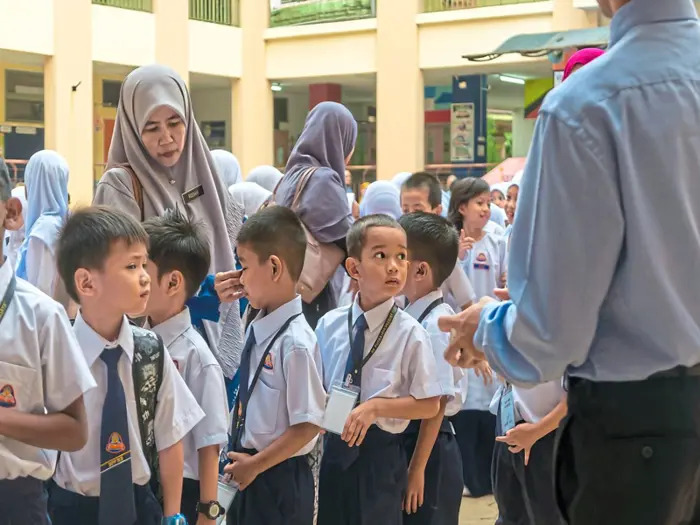
Trying to do their best: It’s time to prioritise the teaching profession. Teachers are not mere government civil servants, they are thought leaders, nation-builders, and motivators. — Posed photo/123rf

THE nation continues to debate whether those under 16 should be banned from having social media accounts, if CCTV and security detectors should be installed in schools, and about mental health counselling training for teachers.

Sadly, no one has come out to talk about support for our teachers.

More work has been loaded on them as they become surrogate parents the minute children are dropped off at school gates.

If the kids are top scorers, parents take the credit and bask in reflected glory, but if they are under performers, the teachers get the blame.

In the staff room, teachers are becoming data entry clerks, filing endless meaningless reports to schools and education departments.

The once-feared disciplinary teachers, many of whom we older people remember until today, have lost their power in the present day school system.

They can even be charged in the courts for whacking ill-behaved kids.

Many of us from the older generation would never dare tell our parents then that we had been given a beating in school by these teachers, who roamed the corridors with canes in hand.

If our parents came to know, we usually ended up getting another round of punishment. Now, kids run to their overprotective parents to whine. The parents, in turn, run to their lawyers and the media, to make exaggerated allegations.

No wonder we keep hearing about teachers opting to retire early. The reported main reasons for their decisions include a loss of interest in teaching (67%), followed by family problems (about 17%) and health issues (around 7.7%).

Other factors include a heavy workload, administrative burdens and difficulty adapting to changes in the profession. They also struggle with inconsistent policies, syllabus density, and overly hierarchical school management and structures.

Recently, Deputy Education Minister Wong Kah Woh said 19,179 primary and secondary school teachers opted for early retirement between 2022 and May this year, with most citing loss of interest in teaching.

He said the ministry had outlined seven measures aimed at reducing teachers’ workloads, including scrapping low-impact school events and appointing members of the public as examination invigilators.

He also said the ministry had introduced teaching assistants at schools with more than 1,500 students to help reduce teachers’ administrative workloads.

It is good to read that the grievances of teachers have been heard and plans are being made to help them.

Teachers are more than educators. They shape the minds and character of the next generation. They have made a difference in many lives.

They are often the first role models outside the family, the ones who nurture dreams, spark curiosity, and guide children towards a better future.

I’m sure all of us, regardless of our age, still remember the names of teachers who made an impact on our lives. Of course, the bad ones are still etched in our minds too, but I believe many of us from the older generation had mostly good experiences.

Yet, despite their indispensable role, Malaysian teachers continue to be undervalued, underpaid, and underappreciated.

We call them “heroes” every Teacher’s Day, and when they retire, especially the headmasters, they are accorded a grand send off. Tears are shed, sometimes. But once the speeches and photo ops are over, very little changes.

During the national day parade, we see Malaysians getting excited over the muscled Abang Bomba and even the police canines. Certainly, we should consider giving our teachers just as prominent a role during the National Day march past.

For far too long, our teachers have carried the nation on their shoulders without receiving the recognition and perks they truly deserve. The respect they deserve has faded, with teaching no longer seen as a noble, well-paid profession. Malaysia will never attract the best minds if we continue down this path.

Teaching has never been a simple job but it is now harder than ever. Beyond delivering lessons, teachers are expected to be counsellors, administrators, event organisers, exam invigilators, medical officers, disciplinarians, and surrogate parents.

In the recent school stabbing case, they even had to apprehend a boy walking around with knives.

Their jobs don’t end after the long school hours either – there’s grading papers, preparing lesson plans, or attending meetings too. Now, they even have to learn about artificial intelligence and STEM to keep up with modern lesson modules.

Our teachers deserve better. For many, salaries are barely enough to match the rising cost of living.

Promotion opportunities can be limited and bureaucratic, and the allowances or perks they receive do not reflect the magnitude of their responsibilities.

Let’s not forget those who are posted to rural schools with few facilities. They literally live in hardship.

It is unfair that here teaching is regarded as a “safe government job with pensions’’ as the reality is in many other countries, including neighbouring Singapore, teaching is a prestigious, well-paid career that attracts top talent.

Teachers are not mere civil servants, they are thought leaders, nation builders and motivators.

Countries that prioritise education understand that quality teaching is the single most powerful tool to break cycles of poverty, foster innovation, and build a competitive economy, as one report put it.

Our Malaysian teachers deserve better.

A Japanese proverb sums it up perfectly: “Better than a thousand days of diligent study is one day with a great teacher.”

Malaysia In Spotlight As World Leaders, Including Trump, Gather In Kuala Lumpur For 47th ASEAN Summit


KUALA LUMPUR, Oct 24 (Bernama) — The spotlight will be on Malaysia when the country hosts the ASEAN Summit this weekend with a large turnout of world leaders including United States (US) President Donald Trump.

To date, only two distinct US Presidents have visited Malaysia – Lyndon B. Johnson in 1966 and Barack Obama twice: once in April 2014 and again in November 2015.

For Malaysia and for Prime Minister Datuk Seri Anwar Ibrahim, this historic event is beyond ceremonial as it has to be more than just a diplomatic photo opportunity.


Besides Trump, top representatives from across the globe, including China, Japan, Russia, Europe, the Middle East, Latin America, Australia, New Zealand, and South Africa, are also attending, making it one of the largest and most significant international gatherings ever hosted by Malaysia.

A total of 2,854 media personnel from 290 agencies from within and outside the country have registered to cover the 47th ASEAN Summit and Related Summits.

It represents a convergence of diplomacy, trade-advantage, and global branding that could shape the country’s trajectory for years.

There are plenty of issues that ASEAN and major world leaders want to discuss. From trade tariffs to regional economic cooperation to even Palestine. Then, there are side and bilateral meetings that leaders want, with programmes still being arranged.

Malaysian ministers and business delegations will want to engage with counterparties, explore investments, anchor supply-chains, and secure trade deals.

What better place than in Kuala Lumpur where these trade and foreign relations issues can be brought up face to face.

A global stage is set for Malaysia where our diplomacy is seen as open, relevant and credible.

Although our term as the ASEAN chairman just spans a year, we have proven to the region and the world that we have played an effective and meaningful leadership role.

This kind of visibility brings value: foreign direct investment, diplomatic goodwill, global media attention.

Anwar is looking forward to meeting Trump with one major agenda item – how the US can ease or address tariffs and economic matters, in particular to maintain the zero tariffs for electrical and electronic components.

While economic and political ties are important, this is an opportunity to emphasise our Malaysian values and Global South initiatives which must be respected.

We maintain our independent voice and defend principles of justice, inclusivity and multilateral rules-based system, including our concerns over the grave situation affecting Palestinians in Gaza, while engaging with the US, an important trading partner for Malaysia.

But credit must be given to Anwar with his extensive global reach with world leaders. His personal relations with these powerful personalities with his “telephone diplomacy” has been effective and unprecedented in our nation’s foreign relations conduct. It is unmatched.

Malaysia may be just a small middle-income nation but Anwar has positioned Malaysia as an active “bridge” between major powers, emerging blocs and regional dynamics.

As the ASEAN Chair, he has emphasised the regional bloc’s centrality, regional cohesion, and Malaysia’s role in shaping the architecture of Southeast Asia. 

In so doing, Anwar strengthens his personal political standing and Malaysia’s standing simultaneously. Malaysia’s ability to host a summit with a large presence of world leaders signals that we remain relevant and autonomous, and our ability to convene, to mediate, to stand as a regional hub of cooperation.

By bringing the world to Malaysia and using the summit to highlight Malaysian priorities and values such as poverty eradication, inclusivityand the digital economy, he reinforces his domestic credentials, as one report put it.

“Hosting smoothly – logistics, security, hospitality – will bolster public perception of Malaysia’s competence.

“If the summit is seen as successful, it translates into political capital: Malaysia is shown to be mature, stable and outward-looking under Anwar’s leadership,’’ it added.

But substance and results must be seen beyond the grandeur. There has to be a return on investment. The spotlight has to be converted into tangible economic and diplomatic returns.

Certainly, Malaysia hopes the summit will mark a strategic inflection point for our nation.

This is a chance to show what Malaysia stands for and can do, as we stand proudly in the eyes of the world. It is certainly a great prelude for Visit Malaysia 2026 as the world looks at Malaysia.

Time to man up – and protect the women


Safer for all: We need to instil in schools and in our culture, a greater respect for girls and women. — 123rf

THREE highly disturbing incidents have jolted the nation recently: One involved the gang rape of a female student in a classroom by four schoolmates in Melaka, another saw a Form Four girl fatally stabbed by a Form One boy in Selangor, and in Kedah three students and a former student were arrested for allegedly raping a girl several times and sharing nude recordings of the victim online.

Understandably, there have been angry responses to these cases. Prior to this, there have also been several bullying reports, including the high-profile Zara Qairina Mahathir death in Sabah where an inquest is still ongoing.

All these incidents involved minors, which means their identities must not be revealed. Still, that has not stopped social media from circulating pictures and videos without a care.

The Child Protection Act in Malaysia is clear – the law was enacted to protect, care for, and rehabilitate children.

They can be charged in court for their crimes but unlike accused adults, their names and details cannot be made known and photographs cannot be published by the media. The Act applies to all individuals under the age of 18 in Malaysia, and there is no exception as these are universal legal standards.

The public has been furious over how the authorities have reacted to these sad incidents, as the perception is that there has been a lack of empathy towards the victims.

Education Minister Fadhlina Sidek found herself caught in the storm and, unfortunately for her, the cases keep piling up.

Like they say, it never rains but it pours. When something bad happens, other bad things tend to happen at the same time or in rapid succession.

The reaction, especially on social media, has been swift, with an outpouring of raw emotions.

Not many netizens are thinking straight, though, with many not understanding prevailing laws and their principles. Unfortu-nately, some of these outraged but misinformed influencers have large followings.

The threads that follow are probably the worst – in Zara’s case, she was purportedly put inside a washing machine because the bullies were children of VVIPs, according to rumour- mongers. Until today, some people still hold this nonsense to be true, even though it has been rebutted.

In the gang rape case in Melaka, the four were charged after the Attorney General’s Chambers reviewed the police investigations.

But let’s be clear – the principle of being innocent until proven guilty is a fundamental right in law.

Yet a standard reply by the Education Minister that they are allowed to sit for the SPM examination has suddenly become a hot topic with many wanting the four to be punished immediately.

A simple question from a reporter, and Fadhlina’s standard reply has evolved into a totally new narrative.

If she had kept silent, she would have been burned. If she had said they can’t sit for the SPM, she would have been put to the stake by lawyers as it would be legally and constitutionally wrong.

Like it or not, the four have a right to sit for the SPM exams as they have yet to be convicted. Even convicts in jail have the right to sit for examinations.

But crisis management has failed in this case. It could have been better handled and in the age of social media, where replies are edited, and where no one bothers to read the entire text, sound bites are easily manipulated.

Perhaps temperatures could have been lowered if the minister had replied that the children are lawfully allowed to sit for the SPM but it would have to be in another facility – not at their school – and under the supervision of the police.

Social media is toxic. The minute the rape and fatal cases were reported, some of the questions that surfaced were about the races of the perpetrators and the victims.

Were they Malay or Chinese? Was the rape victim wearing a tudung? Was it a consensual sex act involving minors but regarded as rape?

Then the media reports are filled with comments from politicians, experts, and self-proclaimed experts that the school system has turned foul and rotten, with incompetent teachers. Many demanded that the minister resign.

Fingers have been pointed at schools, ministries, and enforcement agencies, with policemen expected to be present in every school from now.

There were 7,778 primary schools as of 2022 and 2,439 secondary schools in 2020, with about 132 private primary schools in 2021 and 287 international schools as of January 2020, according to a report.

How does one police all of them?

Of course, one can also ask: How could such crimes happen in supposedly safe learning environments? Why weren’t there better security measures? Why wasn’t there more vigilance?

These are fair and necessary questions. Institutions must be held accountable.

But if we limit our national conversation to security lapses, CCTV cameras, or ministerial responsibility, we are missing a critical truth: gender-based violence is not merely a systems failure – it is a cultural failure.

No one cares that they are all victims. Their identities, including pictures and videos, are shared on social media – someone even shared the initial police report of the stabbing incident.

But Malaysians as a whole also need to answer this question: How have we, as parents, cultivated our children’s attitude towards girls?

It begins in homes where boys are excused for “teasing” girls. It grows in schools where inappropriate comments are brushed off as jokes.

It festers in communities where girls are taught to dress modestly “for their safety”, while boys are not taught to respect boundaries.

“Boys will be boys” is no longer acceptable.

Women who purportedly are not dressed decently are blamed for arousing the men. In short, it’s always the women who have to take the blame.

Yet there are too many cases of modestly-dressed women, including tudung-clad ones, who are raped. This happens even in conservative states, especially in the rural areas, and many of the rapists are relatives. Incest is committed, too.

It is not about what women wear or how they walk or talk. Boys and men should stop these stupid excuses.

Malaysia has a misogyny problem and we do not even talk about it. Women drivers are supposed to be bad and men should be preferred over women for certain jobs. These are just excuses.

We need to instil in schools and in our culture a greater respect for women. When disrespect is normalised, it creates a dangerous environment where some grow up believing that they have the right to exert power over others.

Women have the right to reject advances and when love is not requited, and that does not allow anyone to punish or, worse, stab them to death.

Getting rejected, whether in love or in work, is part of life, and parents need to teach that to their kids, from the early stages at home.

Education is not the sole responsibility of teachers. Parents should stop assuming they can delegate that task completely to teachers.

Respect towards women is not negotiable. They are not the weaker sex and they are not to be confined to the back. Malaysia is not a Taliban country, full stop.

Reading through the reports of these cases, it would appear that many parents had no idea what their children were thinking or doing, with the standard replies being that “everything seemed normal”.

Many of us probably seldom talk to our children and, for sure, have no idea about the kind of content on social media that they are following.

Yes, our schools must be safer but cultural transformation is just as essential. Respect must be taught, modelled, and expected.

Instead of fault-finding, perhaps it is important that, as parents, we remind ourselves that we need to teach our children the principles of respect and acceptance.

Let’s ask ourselves: How many of us, parents and grandparents, know what our children are watching and playing on their computers behind closed doors?

It could involve anything from cyberbullying, fraud, and identity theft, to exposure to inappropriate content and bizarre life-threate-ning games, so parents need to keep up with their kids. And parents should stop blaming others for their kids’ behaviour.

There is a need for a security audit of all schools, teachers need to be trained to handle psycho-logical issues, and it will help if Rela volunteers are posted to assist.

And please, empower the teachers, and stop whining if problematic students are hauled up for punishment. For all that, teachers also deserve to be better paid.

Balancing smartphone use and child safety with sustainable solutions

IT’S commendable that efforts are being made to protect our children from the harmful influences of social media.

There is plenty of research showing that children are being exposed to inappropriate content, including sex and violence, cyberbullying, fraud, identity theft, and other risks.

The Malaysian Communications and Multimedia Commission is aware of and watchful for sexual predators who prey on children online by pretending to be friends of the same age.

And that is only the tip of the iceberg. The fact is, many disturbed individuals operate freely in the social media realm.

We need workable and enforceable methods to protect our kids.

Banning smartphones for those under 16 may seem like a noble idea, but for practical reasons, it simply will not work. It is wishful thinking.

Smartphones are now woven into the fabric of modern childhood. They are a part of daily life, not just for minors, but for everyone.

We can’t even order food at restaurants now without a smartphone, pay for our meals since our e-wallets are on our phones, or book transport.

Children under 16 use phones for texting, researching, playing games, doing homework, and keeping in touch with their parents and friends. They also read the news, access information, and use apps for entertainment.

Tablets and laptops are merely supplementary. Even if smartphones were banned, children could still access the digital world through other devices.

This 64-year-old uncle, who started his career using a typewriter, is writing this article comfortably on a smartphone.

Perhaps a more workable approach would be to ban smartphone use during school hours.

Many countries have taken this step. South Korea, for instance, reportedly bans mobile phones and smart devices during school hours, with exceptions for students with special needs and disabilities, or when devices are needed for educational purposes.

Finland is said to have similar restrictions for primary and secondary students. France has gone further, banning phones in schools for students aged three to 15. Students there must surrender their phones upon entering the premises or lock them away.

Australia has already decided to ban social media access for those under 16, but the onus is on social media platforms to prevent underage users from gaining access. They will be responsible for enforcing the restriction.

It would be wiser for the government to study how other countries have implemented these measures before making any knee-jerk decisions.

We can certainly learn from their experiences, as they too are concerned about the rise in bullying and violent incidents linked to social media. No system is flawless, and I am sure they faced their share of challenges.

Malaysia is no exception. Even with preventive steps, cases of sexual grooming and violent incidents are likely to continue.

There is little point in imposing an outright ban on smartphone ownership for those under 16. We should stop comparing today’s children with our past, because social media simply did not exist then.

Even among adults, the rise of hate speech and racist remarks online is alarming. Nothing seems sacred anymore, and the law struggles to curb these toxic narratives.

So what can we expect of our children who read such comments, often written by adults, online? Or from politicians who act like bullies on TikTok? Are we really setting the right example for our children?

Some countries are reportedly considering laws to regulate social media access for minors, including raising the minimum age and requiring parental consent.

But again, it is easy to lie about one’s age or identity online. Many parents are also digitally illiterate or lack the skills to understand what their children are doing.

Malaysia already has plenty of laws, but enforcement remains a chronic problem. Many of us have grown immune and cynical to repeated warnings from the authorities.

How many times have we heard officials say “we will not compromise” or “no stone unturned”?

Surely, we cannot expect policemen to stand guard in every one of our 10,000 schools. The police are already stretched thin handling school bullying cases, time that should be spent catching real criminals.

As a start, schools could impose limits on screen time. But this would require the support of all stakeholders.

Teachers are already overburdened, and soon they may have to keep an eye on students sneaking in their phones.

Promoting responsible smartphone usage and digital literacy would be a far more sustainable solution.

In the end, the real responsibility lies with parents. Teachers can only do so much during school hours.

We must support our teachers as custodians, not drag them to police stations for disciplining our children.

Palestine – a cause for all


A humanitarian issue: Palestinians returning to what remains of their home after the first phase of the ceasefire in Gaza came into effect on Friday. — AFP

THERE is overwhelmingly strong and emotional support from the Malay-Muslim community in Malaysia for the Palestinian issue, which is understandable given the religious affinity between the brethren.

And on Malay social media, questions have been raised about why there is less enthusiasm among non-Muslims.

The responses range from anger over the perceived lack of empathy to calls to frame the narrative in a more universal message of humanity.

I have made no apologies for my support of Palestinian struggles and I wear the badge of my stand proudly.

Unlike many Malaysians, I have seen with my own eyes and personally experienced the daily humiliations the Palestinians were subjected to even before the war.

It had been going on for decades – to be precise, for the last 70 years.

I visited Jerusalem in 2005 on a Christian pilgrimage, which was authorised by the Malaysian government.

I saw a Palestinian woman carrying a baby standing under the scorching sun as Israeli soldiers mocked her.

She stood there silently with downcast eyes for a long time as calls were made via walkie-talkies, presumably to check if she was a security risk.

A daily short journey home or to work could take much longer than usual – which is unimaginable to Malaysians – because of these checks. Sometimes it could become a six-hour ordeal affecting people’s productivity and hampering their movements. And all this was taking place in their land.

The eye-opener for me was when our group was made to wait for our entry from Jordan to Jerusalem at the immigration checkpoint.

We were made to wait for hours even though the place was empty. As the group gathered to pray, the young gun-toting soldiers ridiculed us loudly.

It was certainly a wake-up call for some of the Christians who may have thought of Israelis as the “chosen ones”.

There are enough videos on YouTube showing Christian pilgrims and even nuns being spat at and abused by Jews.

Jews are not Christians, full stop, even though Jesus was a Jew. And not all Palestinians are Muslims, even though most are.

Our guide, Jeries Farra, was an Arab Christian who spoke excellent Bahasa Indonesia, and from day one he told us point blank how his people were treated.

The Bible-quoting man had nothing good to say about Zionist Jews but also said there were secular and liberal Jews who despised the Zionist regime.

He was just as angry towards Muslim countries that had diplomatic ties with Israel. He accused them of being complicit in the injustice, as they quietly watched the sufferings of the Palestinians.

This is the lesson: Not all Muslim Arabs are as angry with Israel as most Muslim Malaysians here, and Christians have to draw a distinction between a Judaism-practicing Jew and a Christian.

There was a clear demarcation – the Palestinian towns were dirty and poor as a result of being deprived of funds, in contrast with the Israeli-run areas, which were clean and affluent. Many areas reminded me of Los Angeles, with manicured lawns, rolling hills, and palm tree-lined roads.

There was signage everywhere that proclaimed proudly “Jer-USA-lem” to show off their backer.

In fact, many Israelis I met had two passports – Israeli and American – with many sounding American.

I will never forget how our Malaysian tour manager, who organises pilgrimages, repeatedly appealed to us to buy from Palestinians, saying they needed our help. Many of us bought more than what we wanted to lend support to the Palestinian cause.

Ironically, too, many of the Biblical sites are located in predominantly Palestinian areas, and it was common to see Muslims selling Christian prayer items and Biblical souvenirs. It was also common for Muslims to celebrate Christmas then, especially in Bethlehem, the Biblical birthplace of Jesus.

That one trip, which was over two decades ago, changed everything for me. I saw Palestinians as an oppressed people. As ordinary people who needed to have our support. I met Muslim and Christian Palestinians.

Fast forward to 2025, and I read about Christians and Muslims being killed at the Holy Family Catholic Church in Gaza, even as the church provided refuge to hundreds of Palestinians.

The Al-Ahli Arab Hospital in Gaza, run by the Episcopal Diocese of Jerusalem, wasn’t spared either. Israeli forces shelled it on Palm Sunday, the start of the Holy Week, the most sacred week of the Christian year.

The Israeli response is always the same – these were hideouts of Hamas or it was an accident.

Malaysians need to look deeper beyond religion as this is about a universal struggle for justice, human rights, and dignity.

It is a cause that should transcend religious and ethnic boundaries – and one that all Malaysians, regardless of faith, should care about.

People from around the world – in Britain, Italy, Spain, Germany, Colombia, Canada, the Netherlands and South Korea – have come out to stage protests for the Palestinian cause, and most of them are Christians.


People from around the world – including in Mexico, pictured here – have come out to stage protests for the Palestinian cause, and most of them are Christians. — AP

And for the past two years, Christians in the West Bank have cancelled Christmas celebrations and even refused to put up the Christmas tree at Bethlehem Square as a result of the war in Gaza. This is how Palestinian Christians have responded as one people.

Even many ultra-orthodox Jews with their black hats and jackets have come out to protest against the Zionist regime.

The Palestinians have been displaced, their homes and lands robbed. They have been discriminated against. And in the age of social media, we see with our own eyes the genocidal effort to wipe out Palestinians, some-thing we would have never imagined.

It is wrong for any Malaysian, regardless of race and religion, to say this is not our problem.

We have opposed apartheid in South Africa, supported the independence movement in Timor-Leste and now the country’s entry into Asean.

Malaysians have previously raised money for Cambodia and North Korea when they faced famine, as well as for the Bosnians.

To non-Muslims I say let’s not send the wrong message that we do not care. Injustices affect us directly, religiously, or culturally, and we must not forget that the late Pope Francis was the most vocal Christian leader on the plight of the Palestinians.

In his Easter message, given a day before he died in April, he expressed his “closeness to the sufferings of Christians in Palestine and Israel, and to all the Israeli people and Palestinian people’’. He prayed for all.

We need non-Muslims in Malaysia – Buddhists, Christians, Hindus, Sikhs, and all – to speak louder and be seen to stand in solidarity with Palestinians, and at minimum, to pray for all the people in Palestine.

All religions believe in the universal values of freedom, dignity, and justice, and the right to just live peacefully.

Not every Palestinian is a terrorist or a Muslim, not every Jew is a Zionist, not every Arab nation has been sincere in wanting to save Palestine, and certainly many non-Muslims in Malaysia also support Palestine.

The Palestine issue is one that deserves the support of all Malaysians. Let’s not be selective in our causes.

Journey to the roof of the world … by bus

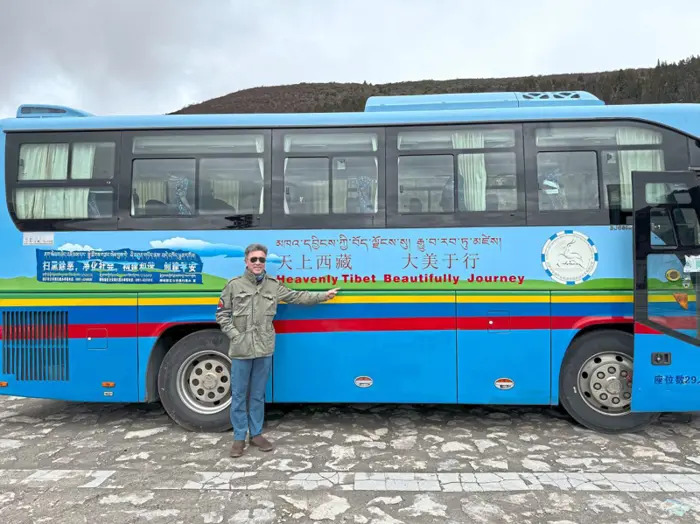
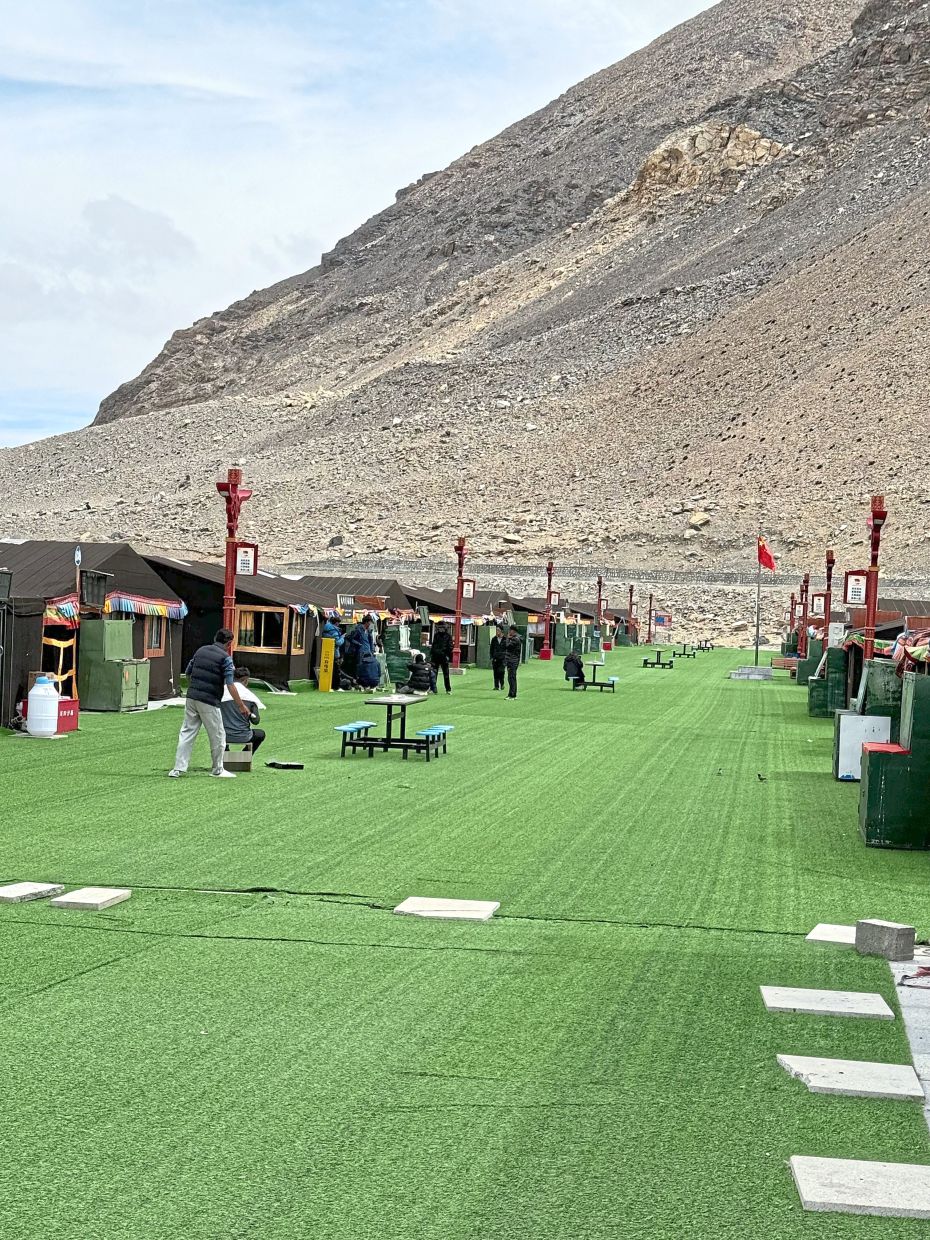
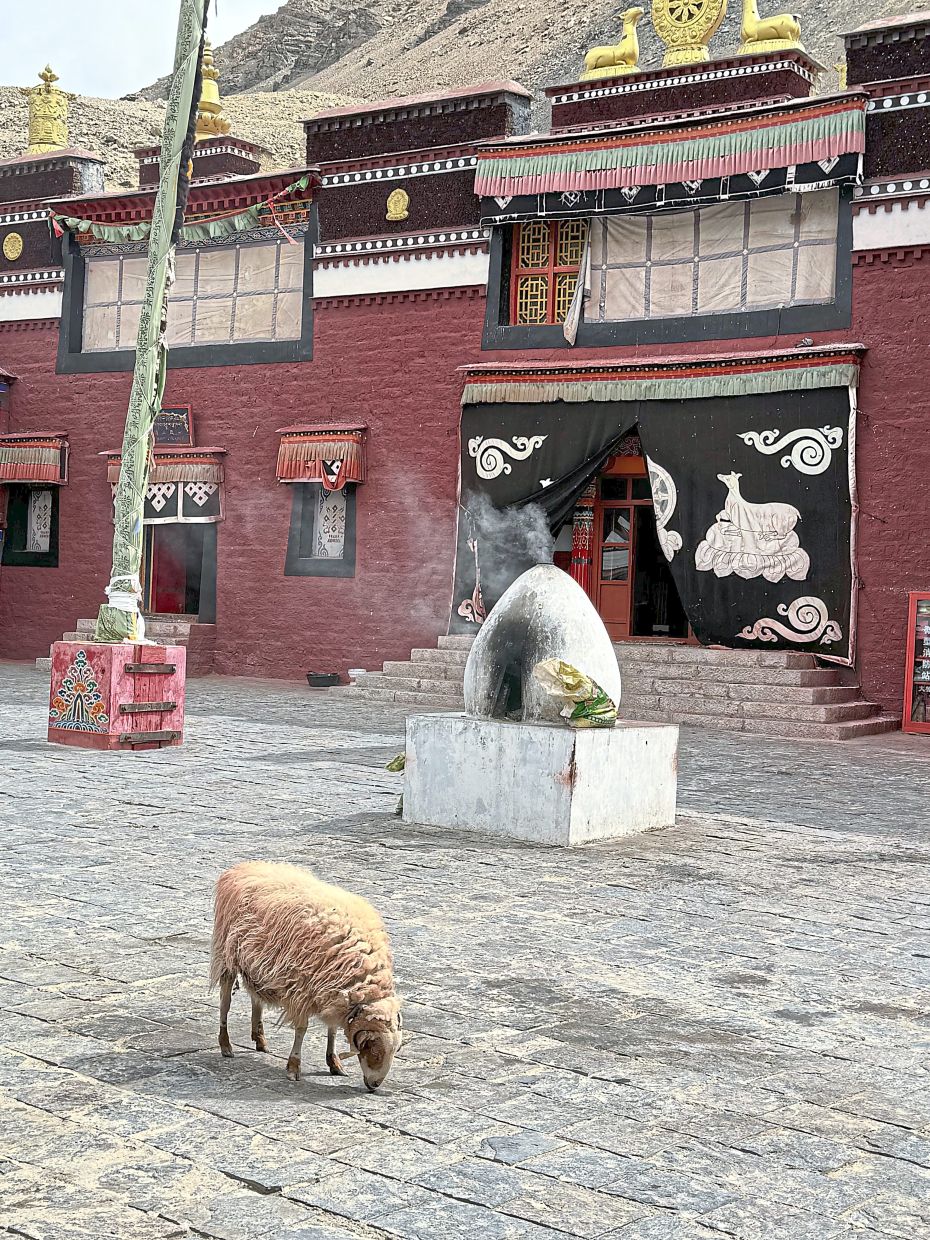
One of the government-sanctioned ‘eco-buses’ that travellers can take to the EBC. — Photos: WONG CHUN WAI. (Click on image above to view the rest of the gallery).

It may seem hard to believe but you can actually take a comfortable bus ride to the base of Mount Everest. This has been possible for some years on the China side of the mountain, via Tibet.

For real mountain climbers, who would usually take about a week to reach the base camp on the other side through Nepal, the idea of taking a bus up seems repulsive.

But if you are 64 years old with no plans of hiking for that long, especially in torturous situations, then you are probably encouraged to opt for the easy way up the mountain.

The journey begins in Kuala Lumpur, where I took an AirAsia flight to Chengdu, China, and then another flight to the city of Nyingchi to kickstart my Tibetan adventure.

The city sits at an elevation of 2,949m above sea level, and is supposed to help our travelling party of Malaysians gently acclimatise to the high altitude.

Over the next few days, we made our way through Tibet, stopping at various small towns, before entering Chomolungma – the Goddess Mother of the World – which is what the Tibetans call Mount Everest.

The bus journey from Lhasa to Shigatse, Tibet’s second largest city, took over six hours, which was mainly uneventful except for certain periods when the ride offered stunning views of the Yarlung Tsangpo River and rugged high-altitude plains.

We also saw pilgrims lying prostrate – bowing and stretching their body flat to the ground – at some of the villages.

We also stopped occasionally to stretch our legs and to use the public toilets, which were mostly in miserable conditions – what a turn-off!

I reminded myself that I shouldn’t expect touristic luxury and comforts when travelling in such a way, and that the views will eventually make up for the rough edges. That will be the ultimate reward that awaits us.

From Shigatse, we headed towards Tingri, a small town that serves as the last major stop before the Everest Base Camp or EBC.

We spent the night at Zhufeng town where there were decent and comfortable hotels for guests to prepare themselves for the early morning ride to the EBC.

Many of the hotels had strange names such as the Everest Warrior Oxygen Hotel but it was a good reminder for visitors – that we may need to use oxygen canisters as the air was thin up there.

My wife, Florence, experienced massive headaches and had trouble breathing properly, and we knew that it would not be possible for her to join us to the EBC the next day.

My poor wife suffered the entire night and I felt bad for her, but at the same time, I was also too excited to fall sleep because I was going to the base of the world’s highest mountain!

Up and away

Our guide told us very specifically and directly that there were no rooms for heroes on the trip. The EBC sits at around 5,200m, and many have ended up in hospital because they couldn’t deal with the altitude sickness.

Each of us was given a cylinder of oxygen to help with breathing, and were told to take things slow and stay hydrated.

The Chinese rules were clear – no one can drive up to the EBC on their own; only the government-sanctioned buses, called “eco-buses”, are allowed.

The final stretch of our journey included rough roads and switchbacks with occasional military checkpoints.

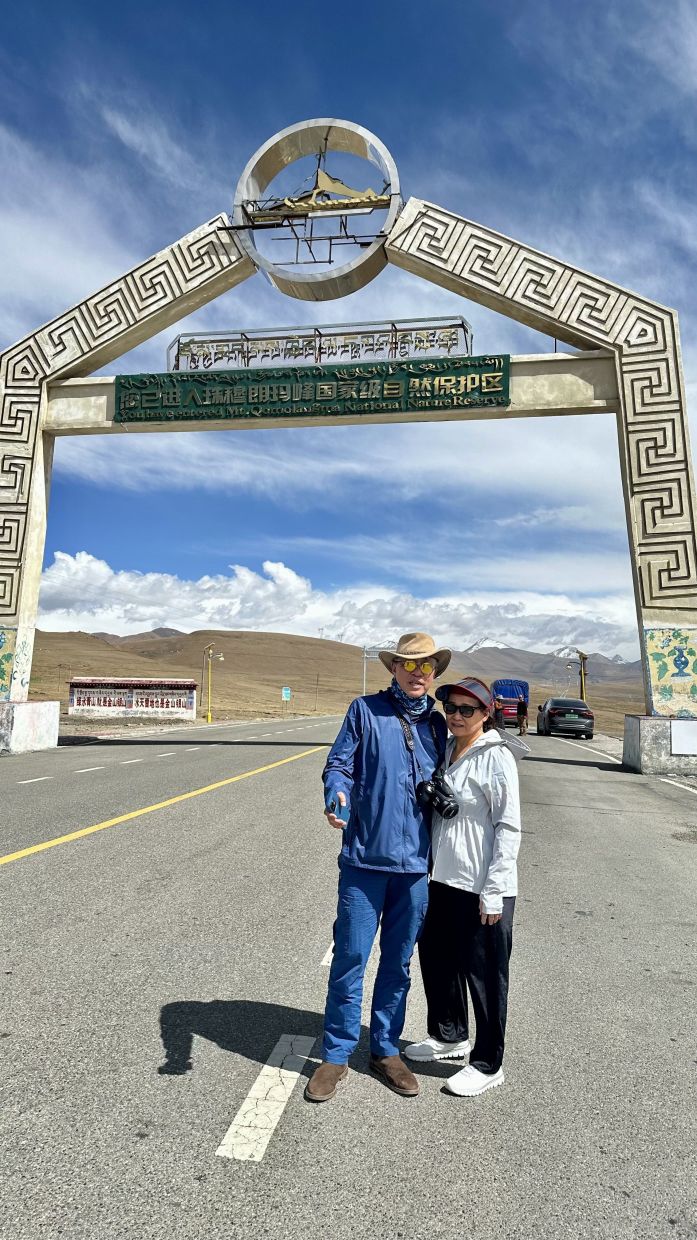
You’ll need a Tibet Travel Permit and an Aliens’ Travel Permit to reach this area – which our agency had dutifully arranged prior to the trip.

There were certainly plenty of expectations among the passengers on the bus, which included many Russian tourists. We had all made a long trip to get to this side of Tibet, and the journey was mostly tough and uncomfortable.

For most of us, too, this was our chance to add another tick to our bucket list.

We knew that our journey to the top of the world was going to be spectacular as the skies were clear that day. The sun was out, there were no clouds and certainly no rain expected.

The ride was something to remember and treasure as the scenery was amazing. We saw glaciers, expansive valleys, running rivers and plenty of yaks grazing along the way.

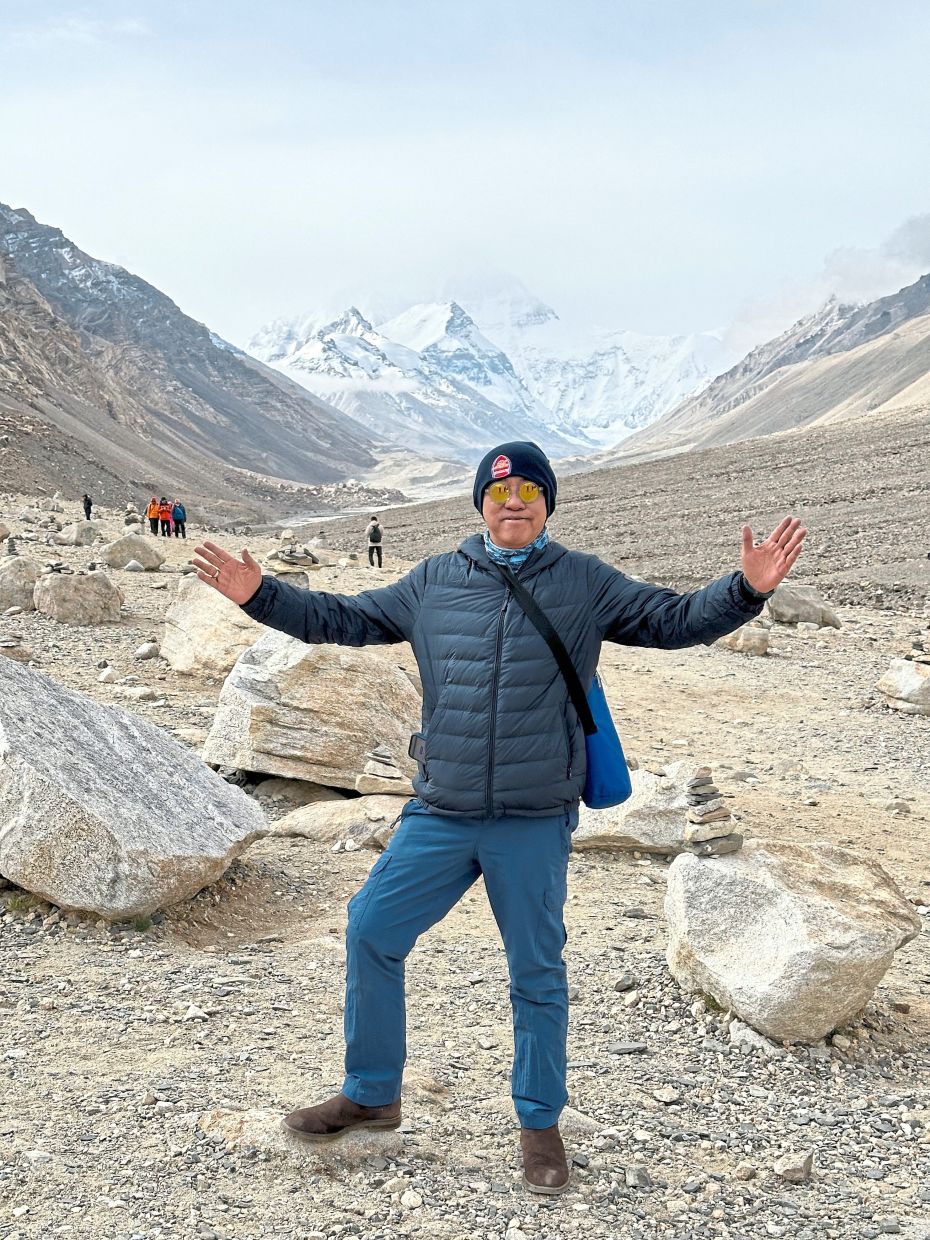
After about an hour, the majestic Mount Everest appeared before my eyes. This was the most stunning and mesmerising sight I had ever seen. To put it simply – it was pure magic!

The clouds had kindly parted ways to make everything look even more surreal and divine. I felt small as I soaked in all the magnificence. I was so thankful that I had made it here with my close friends, though I felt really bad and guilty that my loved one, Florence, was not by my side.

While enjoying the view, I suddenly realised that I didn’t have my oxygen canister with me. In my excitement, I had left in the bus.

Luckily, I did not have the need for it.

I was reminded not to be too overly excited about being at the EBC, but I didn’t care. I was in a hurry to have as many pictures taken with the glorious background.

I took the Jalur Gemilang out of my bag but was angrily shouted at by a Chinese ranger who gestured that no flags or banners were allowed at the EBC. This was really surprising to me, and it didn’t help that I could not understand Chinese.

Our poor Tibetan guide said he risked having his licence taken away for not advising me about this in advance.

As the excitement died down, I thought of the first person to conquer Mount Everest, Edmund Hillary. His wise words were: “It’s not the mountain we conquer but ourselves”, which I took to mean that the best places are the ones that are most difficult to reach.

As the saying goes, I felt like I was on top of the world, even though I was actually at the bottom!

Semporna – imperfect and filthy


Viral taint: A TikTok video on Semporna’s filthiness, posted by travel influencer Backpacker Ben (left), will have a negative impact on Sabah’s tourism and the country’s reputation. — @backpacker_ben/TikTok

IT’S terribly disgraceful and a huge embarrassment for Malaysia. Unfortunately, there is some truth in it.

There is a video making its rounds on social media platforms around the globe which has referred to Semporna, a coastal town in Sabah, as “Asia’s Dirtiest Town’’.

The video, uploaded by an influencer called Backpacker Ben, will surely have a negative impact on Malaysia.

But he is not the only one who has reacted in that way. A search will show there have been many similar videos previously with harsher comments on what is the gateway to the most beautiful islands on earth.

The pole position as Asia’s dirtiest town is an exaggeration as there are far worse, but Semporna is indeed filthy.

I made a trip to Semporna last month and I can vouch that the town is filthy.

It is simply a reflection of the town’s pathetic waste management programme – or the lack of one.

This has been going on for decades. The inability of the municipal council to tackle the huge amount of trash around the town and in the waters is disappointing.

Piles of garbage line the streets, plastic floats in the bay, and open drains carry the stench of a systemic failure. To put it bluntly, the town actually stinks.

When tourists turn up at the Seafest Jetty to wait for boats to take them to the islands, they are immediately greeted with rubbish – mostly plastic bottles and polystyrene containers – floating everywhere.

There is plenty of finger pointing but basically no sustainable solutions.

Poor waste management infrastructure and lack of environmental education and enforcement are the immediate reasons. The low level of public awareness, especially among the many stateless Bajau Laut (sea gypsy) people living on their floating homes, has been blamed.

The situation has become so bad that plastics and other debris have washed up on the shores of nearby Mabul Island and surroundings.

It is an incredible experience snorkelling in the waters around the coral-ringed islands with their crystal-clear waters and abundance of sea creatures, especially turtles.

At the same time, it was heartbreaking to see floating rubbish on the surface.


Semporna is the gateway to the breathtakingly beautiful dive haven of Sabah. The low level of public awareness, especially among the many stateless Bajau Laut living on their floating homes, has been blamed for its rubbish problem. But the town’s pathetic waste management programme – or the lack of one – is also at fault. — EDDIE CHUA/The Star

As a Malaysian, it was hard to explain to travellers who had come from afar about the massive amount of rubbish in Semporna and the plastics around nearby islands.

Semporna is the gateway to some of the most breathtaking marine environments on Earth. Yet the town itself tells a very different story – one of neglect, pollution, and missed potential.

Up to over 2,000 China tourists visit the islands around Semporna each day, according to The Daily Express, yet we do not see an international class pier there.

There is also a serious lack of clean toilet facilities, with most arrivals rushing to a nearby mall – but the toilets there are hardly well kept, either.

The distance from the Tawau airport to Semporna is about 40 minutes.

Another report said an estimated half a million tourists pass through Semporna each year, “yet the basic sanitation services look more like those of a village, not an international destination”.

Our federal, state, and local council officials, business leaders, and local communities need to come together and reclaim Semporna.

Semporna MP Datuk Seri Shafie Apdal should know the issues well enough, having represented the constituency for so long.

He cannot fend off matters by stating that he does not sit in the council, in reference to the issues in Semporna. He cannot just wash his hands of the problem.

Shafie is also the state assemblyman for Senallang, which covers Semporna town and Mabul Island. He has served as a chief minister for Sabah.

While there is an international standard hotel at Mabul, there is also a run-down fishing village, carefully sealed up, which also has a horrible rubbish issue.

The dirty and neglected atmosphere at the village tells a sad story. It is populated by the sea nomads, with huge amounts of plastics and trash lying around, and poorly maintained areas, a stark contrast to the island’s well-kept resort.

If we don’t act now, we risk letting a national treasure become an international embarrassment.

We brand Semporna and the islands as the Maldives of the region but we will end up disappointing tourists.

Semporna must clean up – literally and systemically. The world is watching, and what they see today is unacceptable.

We have to invest in a modern, well-funded waste collection and recycling system with possibly a portion of tourism revenue reinvested directly into environmental protection and urban cleanliness programmes.

The people of Semporna will benefit from cleaning up the town and the waters. They rely on the sea for their food, income, and cultural identity.

There has to be community engagement and environmental education in schools, mosques, and villages, as it is everyone’s responsibility.

Semporna needs a stick-and-carrot approach if the stakeholders want to ensure it gets cleaned up. There has to be stricter regulation and enforcement, with rewards for those who help.

Right now, Semporna has failed to live up to its name. It is definitely not sempurna (perfect). In fact, it’s far from it.