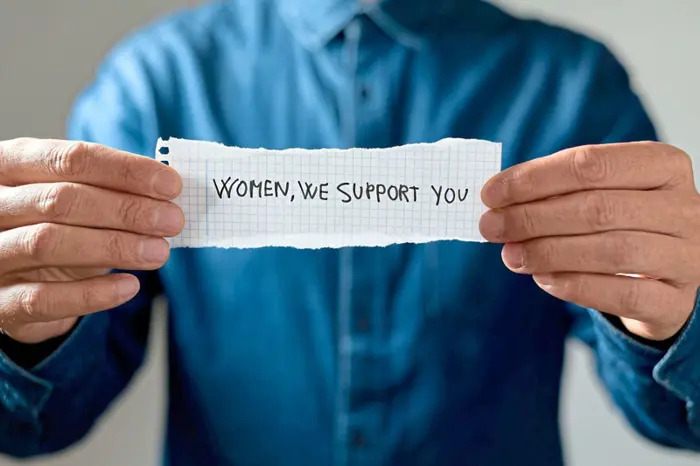
Safer for all: We need to instil in schools and in our culture, a greater respect for girls and women. — 123rf
THREE highly disturbing incidents have jolted the nation recently: One involved the gang rape of a female student in a classroom by four schoolmates in Melaka, another saw a Form Four girl fatally stabbed by a Form One boy in Selangor, and in Kedah three students and a former student were arrested for allegedly raping a girl several times and sharing nude recordings of the victim online.
Understandably, there have been angry responses to these cases. Prior to this, there have also been several bullying reports, including the high-profile Zara Qairina Mahathir death in Sabah where an inquest is still ongoing.
All these incidents involved minors, which means their identities must not be revealed. Still, that has not stopped social media from circulating pictures and videos without a care.
The Child Protection Act in Malaysia is clear – the law was enacted to protect, care for, and rehabilitate children.
They can be charged in court for their crimes but unlike accused adults, their names and details cannot be made known and photographs cannot be published by the media. The Act applies to all individuals under the age of 18 in Malaysia, and there is no exception as these are universal legal standards.
The public has been furious over how the authorities have reacted to these sad incidents, as the perception is that there has been a lack of empathy towards the victims.
Education Minister Fadhlina Sidek found herself caught in the storm and, unfortunately for her, the cases keep piling up.
Like they say, it never rains but it pours. When something bad happens, other bad things tend to happen at the same time or in rapid succession.
The reaction, especially on social media, has been swift, with an outpouring of raw emotions.
Not many netizens are thinking straight, though, with many not understanding prevailing laws and their principles. Unfortu-nately, some of these outraged but misinformed influencers have large followings.
The threads that follow are probably the worst – in Zara’s case, she was purportedly put inside a washing machine because the bullies were children of VVIPs, according to rumour- mongers. Until today, some people still hold this nonsense to be true, even though it has been rebutted.
In the gang rape case in Melaka, the four were charged after the Attorney General’s Chambers reviewed the police investigations.
But let’s be clear – the principle of being innocent until proven guilty is a fundamental right in law.
Yet a standard reply by the Education Minister that they are allowed to sit for the SPM examination has suddenly become a hot topic with many wanting the four to be punished immediately.
A simple question from a reporter, and Fadhlina’s standard reply has evolved into a totally new narrative.
If she had kept silent, she would have been burned. If she had said they can’t sit for the SPM, she would have been put to the stake by lawyers as it would be legally and constitutionally wrong.
Like it or not, the four have a right to sit for the SPM exams as they have yet to be convicted. Even convicts in jail have the right to sit for examinations.
But crisis management has failed in this case. It could have been better handled and in the age of social media, where replies are edited, and where no one bothers to read the entire text, sound bites are easily manipulated.
Perhaps temperatures could have been lowered if the minister had replied that the children are lawfully allowed to sit for the SPM but it would have to be in another facility – not at their school – and under the supervision of the police.
Social media is toxic. The minute the rape and fatal cases were reported, some of the questions that surfaced were about the races of the perpetrators and the victims.
Were they Malay or Chinese? Was the rape victim wearing a tudung? Was it a consensual sex act involving minors but regarded as rape?
Then the media reports are filled with comments from politicians, experts, and self-proclaimed experts that the school system has turned foul and rotten, with incompetent teachers. Many demanded that the minister resign.
Fingers have been pointed at schools, ministries, and enforcement agencies, with policemen expected to be present in every school from now.
There were 7,778 primary schools as of 2022 and 2,439 secondary schools in 2020, with about 132 private primary schools in 2021 and 287 international schools as of January 2020, according to a report.
How does one police all of them?
Of course, one can also ask: How could such crimes happen in supposedly safe learning environments? Why weren’t there better security measures? Why wasn’t there more vigilance?
These are fair and necessary questions. Institutions must be held accountable.
But if we limit our national conversation to security lapses, CCTV cameras, or ministerial responsibility, we are missing a critical truth: gender-based violence is not merely a systems failure – it is a cultural failure.
No one cares that they are all victims. Their identities, including pictures and videos, are shared on social media – someone even shared the initial police report of the stabbing incident.
But Malaysians as a whole also need to answer this question: How have we, as parents, cultivated our children’s attitude towards girls?
It begins in homes where boys are excused for “teasing” girls. It grows in schools where inappropriate comments are brushed off as jokes.
It festers in communities where girls are taught to dress modestly “for their safety”, while boys are not taught to respect boundaries.
“Boys will be boys” is no longer acceptable.
Women who purportedly are not dressed decently are blamed for arousing the men. In short, it’s always the women who have to take the blame.
Yet there are too many cases of modestly-dressed women, including tudung-clad ones, who are raped. This happens even in conservative states, especially in the rural areas, and many of the rapists are relatives. Incest is committed, too.
It is not about what women wear or how they walk or talk. Boys and men should stop these stupid excuses.
Malaysia has a misogyny problem and we do not even talk about it. Women drivers are supposed to be bad and men should be preferred over women for certain jobs. These are just excuses.
We need to instil in schools and in our culture a greater respect for women. When disrespect is normalised, it creates a dangerous environment where some grow up believing that they have the right to exert power over others.
Women have the right to reject advances and when love is not requited, and that does not allow anyone to punish or, worse, stab them to death.
Getting rejected, whether in love or in work, is part of life, and parents need to teach that to their kids, from the early stages at home.
Education is not the sole responsibility of teachers. Parents should stop assuming they can delegate that task completely to teachers.
Respect towards women is not negotiable. They are not the weaker sex and they are not to be confined to the back. Malaysia is not a Taliban country, full stop.
Reading through the reports of these cases, it would appear that many parents had no idea what their children were thinking or doing, with the standard replies being that “everything seemed normal”.
Many of us probably seldom talk to our children and, for sure, have no idea about the kind of content on social media that they are following.
Yes, our schools must be safer but cultural transformation is just as essential. Respect must be taught, modelled, and expected.
Instead of fault-finding, perhaps it is important that, as parents, we remind ourselves that we need to teach our children the principles of respect and acceptance.
Let’s ask ourselves: How many of us, parents and grandparents, know what our children are watching and playing on their computers behind closed doors?
It could involve anything from cyberbullying, fraud, and identity theft, to exposure to inappropriate content and bizarre life-threate-ning games, so parents need to keep up with their kids. And parents should stop blaming others for their kids’ behaviour.
There is a need for a security audit of all schools, teachers need to be trained to handle psycho-logical issues, and it will help if Rela volunteers are posted to assist.
And please, empower the teachers, and stop whining if problematic students are hauled up for punishment. For all that, teachers also deserve to be better paid.