At a time when anyone with a phone can publish ‘news’, unverified and often racially-tinged information are common. Being responsible when reporting news has become crucial.
AS a new reporter who had just joined a newspaper in 1984, I was assigned to the crime and courts beats to hone my skills.
Covering police stations and courtrooms taught us rookies, as we were called, to verify facts, work multiple sources, and understand the legal boundaries of reporting. It taught us what could be said and what must not be said.
It was an education in responsibility. Crime reporting exposed journalists to real human consequences – loss, grief, injustice – and instilled the need for accuracy, restraint, and sensitivity.
In the courts, we learned the importance of due process, the presumption of innocence, and why reporting must never be prejudicial to a case. Probably the most important word used in our stories was “alleged’’.
Just as importantly, these beats trained reporters to separate fact from rumour. In environments where speculation was rife, discipline mattered.
That grounding helped ensure that when reporters moved on to other roles, they carried with them a respect for truth, balance, and the potential impact of every word they wrote.
Our editors, regardless of the medium of the newspapers, drummed into us important ethics – never mention the race of an accident victim and the alleged offender motorist, especially if it involved two persons of different races.
The same principle applied to other cases, too, in particular rape and murder cases. The ethnic background was omitted, although in cases involving foreigners nationalities could be mentioned.
The names of the alleged offenders and victims are mentioned only when those accused are charged in courts.
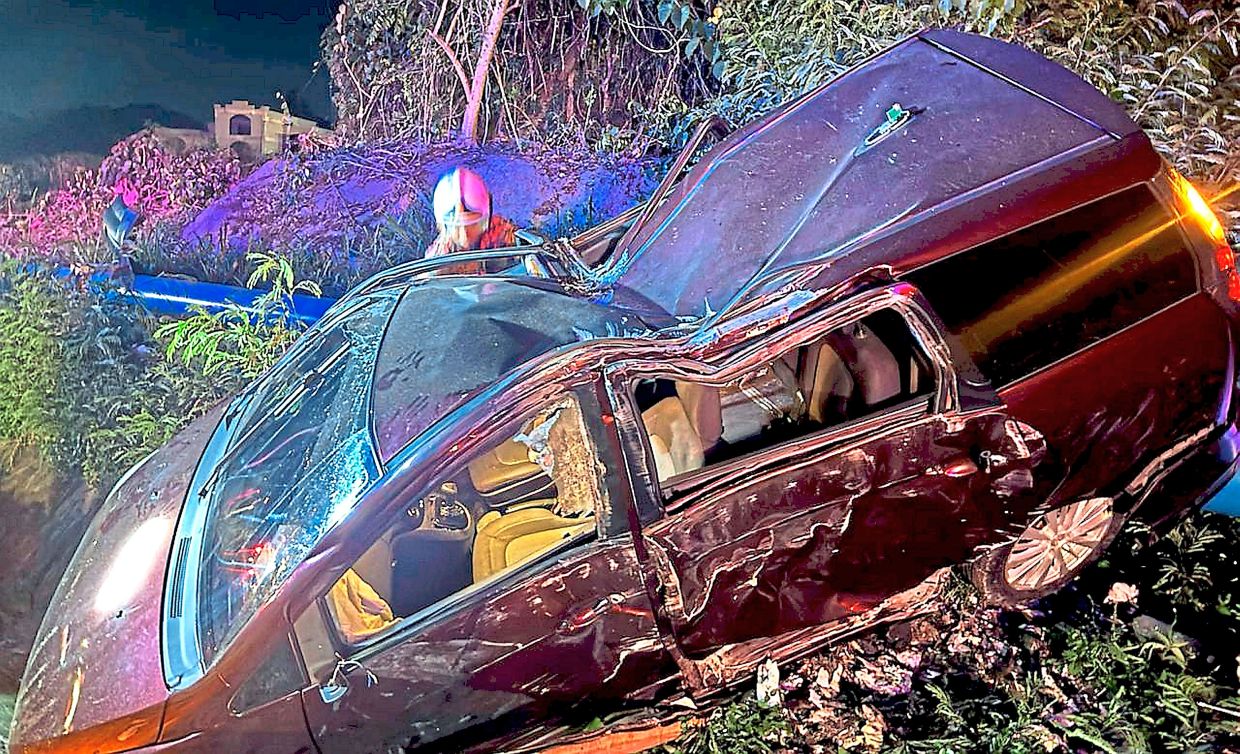
Data-proven: Alcohol-related crashes account for less than 0.5% of total road fatalities in Malaysia, with fatal cases typically in the low double digits each year. — The Star
It was not about hiding facts; it was about understanding context and consequence. Editors drilled into us that words matter, and that an unnecessary reference to race could inflame tensions in a plural society.
Social media has changed all that.
Horrific videos captured from dash cams are immediately shared and anger is stoked as netizens post racist comments, as was seen in a recent high-profile case of an Indian driver and a Malay victim. This was compounded by allegations of alcohol consumption.
The national mood can quickly turn brittle.
We find ourselves, as the old phrase goes, on tenterhooks. Malaysia has long prided itself on a delicate but workable social compact – an understanding that our diversity is a strength, not a fault line.
What is most worrying is how quickly individual incidents are framed through the prism of race, rather than treated as what they are: matters for the rule of law.
It is most disturbing and sad. When an incident occurs, facts are often still emerging. Yet on social media, the story is already being written – and rewritten – with dangerous certainty.
Race is inserted early into the narrative, sometimes deliberately. The mention of alcohol, too, is not neutral; it is weaponised to invoke moral judgment, particularly within a Muslim-majority context.
Compounding this is a dangerous distortion of facts. Public outrage is often amplified in cases involving alleged drunk driving, particularly when race is inserted into the narrative.
Yet the data tells a very different story. Alcohol-related crashes account for less than 0.5% of total road fatalities in Malaysia, with fatal cases typically in the low double digits each year.
In 2023, for example, there were just 13 fatal cases linked to drink driving; in 2024, 12 cases. Even in 2025, the numbers remained extremely low relative to the thousands of overall road deaths.
The fatal accident cases involved drivers who tested positive for drugs, were fiddling with their mobile phones, and driving dangerously and without helmets. In many cases, it was pure incompetence.
Motorcyclists and pillion riders account for about 65% to 70% of all road fatalities in Malaysia, according to Paul Tan’s Automotive News portal.
A significant contributing factor is vulnerability – not just behaviour – but lack of physical protection compared with cars. Studies showed that up to 38% of motorcycle accidents involve riders not wearing helmets.
In some observations, 42.8% of riders did not wear helmets at all, and many others wore them improperly.
Even when helmets are worn, around 45% are not properly fastened, reducing effectiveness.
It doesn’t help when we see pictures of politicians riding in rural areas without helmets in a convoy. They set bad examples.
A Klang Valley study found that 43.4% of drivers admit using phones while driving, and over 50% use phones when caught in traffic jams, according to the Transport Ministry.
Despite the high awareness of danger, only 4% of reported accidents are linked to phone use (self-reported).
However, enforcement and police data indicate that distracted driving (including phone use) is among the top causes of accidents, alongside reckless driving and human error.
The Daily Express reported that Malaysia records hundreds of thousands of accidents annually (over 600,000 in 2024 alone) with the dominant causes being: reckless or inattentive driving, failure to observe traffic rules, and loss of control.
Put simply, drink driving – while serious and entirely unacceptable – is statistically one of the least common causes of fatal accidents in the country.
By contrast, the real killers on Malaysian roads are far less discussed: reckless driving, human error, and systemic safety gaps.
Motorcyclists alone account for about 65% of fatalities, and broader risky behaviour – not alcohol – is the dominant factor behind the deaths.
Today, anyone with a smartphone can “publish”, and often does so instantly. The old gatekeeping role of editors has been replaced by algorithms that reward speed and outrage.
In this new environment, the restraint that once guided reporting is frequently absent. Race is no longer a detail to be carefully considered; it is often the headline.
Instead of getting news from trained reporters, we are consuming news from so-called content creators and influencers.
None of this is to diminish the tragedy of a life lost to an intoxicated driver. Even one death is one too many.
But when public discourse elevates a statistically small category into a racialised national crisis, we risk losing perspective. Worse, we risk fuelling division based on perception rather than fact.
We should ask ourselves: When did we begin to lose confidence in our institutions? The police, the courts, and the investigative process exist precisely to establish facts and deliver justice.
When public discourse runs ahead of due process, it creates pressure – not just on the authorities, but on communities themselves. Every such case risks being seen not as an isolated crime, but as a proxy for communal grievance.
Malaysians have become more connected online but also more disconnected in their thinking.
As Communications Minister Datuk Fahmi Fadzil put it – Malaysians are using 5G connectivity but we have 6G capability when it comes to sharing fake news in this country.