Author Archives: wcw

Too soon for a pardon


Loyal followers: Najib meeting his supporters at the Palace of Justice in Putrajaya on Aug 23. Some are demanding a royal pardon for the former prime minister. – IZZRAFIQ ALIAS/The Star

LET’S not make a mockery of the judicial process. Datuk Seri Najib Razak has barely spent a week in prison to serve his 12-year jail sentence, yet there are groups already demanding a royal pardon.

Of course, it’s within the former prime minister’s constitutional rights to seek a pardon from the Yang di-Pertuan Agong on the grounds of clemency, but he still must serve his time.

By that, it means a considerable amount of time – usually at least three years – to justify his bid before the Pardons Board, as a first step towards getting the nod from the King.

Najib will not be the only inmate who must plead before the board to be set free from jail. He has to join the long queue, and in most cases, these prisoners would have served decades since their conviction.

Najib has committed a heinous crime, which has been reported worldwide, so why should he be given any special treatment or consideration and priority over others who are probably more deserving of a reprieve?

The usual process of the Pardons Board, which meets regularly, is to first ask for reports from the prison on the behaviour of the applicant inmate, including the nature of the crime committed.

It will then prepare and submit a report from the Attorney General to the King.

Deliberation factors include the length of time served, level of remorse, correctness of the conviction, age and health.

Let’s not forget that Najib didn’t forward any mitigating factors before the Federal Court but decided to pull his lawyers out from making their submissions.

In fact, he claims he has been denied justice. In short, the judges were biased. This defiant stance is sure to complicate any process to earn him an early pardon.

As one comment, which was posted on a news portal, rightly said, “it defeats the retributive and rehabilitative nature of a criminal sentence if a prisoner can obtain a pardon immediately or shortly after a conviction by the court.”

And remember, there are four other on-going corruption cases.

So, how many times do his supporters expect the King to grant him a pardon?

These four cases are related to graft at the 1Malaysia Development Berhad (1MDB) and other government agencies, which could potentially result in more jail time and massive fines.

Basically, it doesn’t make sense for Najib to seek clemency when he has other court cases, with some at the trial stage.

Last week, the Federal Court ordered Najib to serve a 12-year sentence with immediate effect. He was also fined RM210mil. He was found guilty of one count of abuse of power, three counts of criminal breach of trust, and three counts of money laundering.

His supporters rallied outside the palace to seek a royal pardon, just a day before he began his sentence, while his opponents launched an online petition urging the King not to grant him his absolution.

These actions from both sides are mere political side shows and are inconsequential since there can be no immediate pardon from the King because the law is very clear on this.

Likewise, those who had spoken of a pardon before the court sentencing also didn’t know what they were talking about. That’s not how the law process works, and they were simply ignorant.

Najib’s immediate concern would be his Pekan parliamentary seat. He must apply to seek a royal pardon within 14 days but there have been no updates of whether he has done so.

In any case, should Najib lose his seat, it would have little consequence as a general election is expected to be held soon.

If there’s none soon, the elections must still be held by July 15, 2023, because the Parliament term expires after that.

When it comes to pardons involving high-profile politicians, precedents have been set.

Former Selangor Mentri Besar, the late Harun Idris, was convicted of embezzling funds to sponsor the 1975 Muhammad Ali-Joe Bugner boxing match in Kuala Lumpur. He served three years in jail.

Ex-youth and sports minister Datuk Mokhtar Hashim was sentenced to death for the murder of then Negri Sembilan state assembly speaker, Mohamad Taha Taib, in 1982, but was pardoned after serving eight years in jail.

Datuk Seri Anwar Ibrahim was also pardoned only after serving three years and three months for sodomy.

Najib’s biggest immediate concern will be his four corruption cases and the number of years that could be added to his prison stay.

Tunku, My Grandpa


My 15 minutes with one of the world’s most famous paintings, ‘The Last Supper’


The Last Supper can be found at the Convent Santa Maria delle Grazie in Milan, Italy. — Photo: Florence Teh

It took three trips to Milan, Italy, before I finally got to see one of the most revered paintings, The Last Supper by Leonardo da Vinci, the greatest painter of the Renaissance period.

It has certainly been a long wait, but all I got in the end were 15 miserable minutes and a viewing experience shared with 12 other people – those are the rules for each session.

I paid a princely sum to one of the tour agencies to join a group to see this magnificent work of art, which has been on the wall of the dining hall at the Convent Santa Maria delle Grazie since 1495.

Thrilled about the visit, my wife and I decided to make our way to the convent three hours before our session, thanks to our kiasu-ness (afraid to lose).

We didn’t want to miss our slot since we had to use the underground metro train to the nearest station, which has signs conveniently only in Italian, and that might have slowed us down.

Unsurprisingly, we were too early, and the blistering summer heat didn’t reward our eager beaver approach as there’s practically no shade outside the convent.

But really, time passes by fast because there are plenty of eateries and shops in the vicinity. Besides, when one is in Milan, do as the locals do – order a drink at a café, be idle and just watch people passing by. After all, when one is on holiday, who cares what’s happening in Malaysia or anywhere else in the world? The artwork we had planned to feast our eyes on certainly kept us focused at the time.

The Last Supper has created a deep impression of what Jesus’ last meal with his 12 Apostles was like, before he was captured and crucified.

Non-Christians, and even many Christians, assume that da Vinci’s artwork is an accurate depiction, but in truth, it’s not.

Firstly, the table is linear, and incredibly, all the characters are seated in a straight row. Well, da Vinci likely had to fit everyone in a single frame. Liken it to using our phone to capture a memorable moment and squeezing everyone into the shot and you’ll get the picture.

But the Jews then would have been seated at a triclinium, which was the popular culture of that time.

(A couch extending around three sides of a table is a triclinium used by Romans as well as the Jews then.)

Visitors to Jerusalem would be able to see paintings and wooden carvings of a more likely version of The Last Supper’s seating. I know this first-hand having been to Jerusalem on a pilgrimage in 2005.

Theologians including Prof Jonathan Klawans from Boston University, have said The Last Supper may be a “characteristic of the Passover meal, which is equally characteristic of practically any Jewish meal”.

The disciples were also unlikely to have sat upright, as in da Vinci’s impression, as they were reclined, which was the custom when partaking in the Passover meal, according to Creation.com, a Christian website.

(The Passover event is to commemorate the Israelites’ escape from slavery in Egypt and the “passing over” of the forces of destruction, more than 3,000 years ago.)

The Passover is celebrated after sunset on a full moon – and not during daytime as depicted in the painting, “which shows daylight outside the windows, suggesting an Italian luncheon rather than a sacred observance conducted in Jerusalem”.

The painting also features crusty loaves and fish, but it should be unleavened bread, and crucially, wine. Basically, the menu was wrong, and luckily, there were no pizzas, or it would be blasphemous.

Certainly, it’s one of the most studied paintings of this great artist since religion is involved, unlike the Mona Lisa – reportedly a portrait of Lisa, the wife of rich Italian merchant Francesco del Giocondo.

As I sat inside the room of the monastery, I took the valuable short time to immerse myself and admire this art of wonder, which has attracted the world to this place. In 2019, just before the Covid-19 pandemic, nearly half a million people visited the convent in conjunction with the 500th anniversary of the death of this great Renaissance painter and inventor.

As the tour ended, I asked the guide who the feminine looking person with long hair seated to the right of Jesus was.

“That’s not Mary Magdalene (a disciple of Jesus’), that’s John (one of the 12 Apostles),” he retorted, looking annoyed and seemingly tired of this question from another idiot who has read Dan Brown’s The Da Vinci Code.

But ironically, the book, which was eventually made into a Hollywood movie starring Tom Hanks, has generated interest in the subject as well as this great 15th century masterpiece.

As Riyadh dances, PAS is out of tune

IT may be news to PAS – and they will hardly be able to believe it – but Saudi Arabia has been promoting international concerts, including even rave parties. Party-goers are even free to dance together.

Massive reforms are taking place in this once deeply conservative country but thanks to Crown Prince Mohammed Bin Salman, rapid and radical plans are being pushed ahead, leaving even some clerics aghast.

MBS, as he is known, has allowed women to drive while improvements are taking place in areas like employment and freedom of movement.

What’s more, over the past few years, especially before the Covid-19 pandemic hit, international concerts had already taken place in Riyadh, with men and women allowed to dance together.

Big acts such as Justin Bieber, Pit Bull, Jason Derulo, A$AP Rocky, Black Eyed Peas and Salman Khan have all performed in this Arab nation. Rave parties featuring French DJ David Guetta have also taken place.

In fact, South Korea’s biggest K-pop group, BTS, also performed in Riyadh – and they got VVIP treatment.

Saudi Arabia officially announced in December 2021 that it plans “to offer up to 600% more concerts”.

Over in Malaysia though, we seem to be regressing. We have PAS Youth threatening to stage nationwide protests unless the Federal Government cancels all upcoming concerts featuring international artistes.

Its Youth chief Ahmad Fadhli Shaari claims the concerts will encourage “hedonism” – a PAS favourite term – and were not in line with the norms and values of Muslim life in Malaysia.

He said: “Our party will not hesitate to stir up resistance across the country if these are not cancelled.”

This is what happens when a little power gets into the head of PAS leaders. With just 18 parliamentary seats in the 222-seat Dewan Rakyat, it has become part of the Federal Government, only because of how the country’s political scenario has unfolded.

PAS leader Datuk Idris Ahmad now holds the religious affairs minister post. He was given a royal rebuke recently by the Sultan of Selangor, Sultan Sharafuddin Idris Shah, after warning Muslims against attending the Japanese cultural celebration Bon Odori.

The Islamist party, which has long run the Kelantan government, has closed cinemas, banned concerts, and imposed gender segregation including at supermarket check-outs. Unisex hair salons are a no-no, too.

Now that is has squirmed into the Federal Government, PAS seems to be trying to push its luck – and authority – on the rest of Malaysia.

The Islamist party, which always seems soft and even apologetic when it comes to real issues like corruption, is always loud when it comes to the subject of lifestyles.

It has conveniently forgotten that Malaysia is a multiethnic and multireligious country and that it has no right to impose its interpretation of religious values on others. After all, religious freedom is guaranteed in the Federal Constitution.

PAS president Tan Sri Abdul Hadi Awang, who is also the special envoy to West Asia, should be explaining to his party members and supporters why huge changes are taking shape in Saudi Arabia.

He might want to start with the news – which will be heartbreaking for the PAS folk – that Saudi Arabia has even staged the MDLBeast Soundstorm festival, its version of Tomorrowland, a Belgian electronic dance festival.

In Riyadh, the party went on for four nights with non-stop entertainment, dancing and electronic tunes, with 500,000 people attending.

Perhaps, PAS needs to organise a lawatan sambil belajar (study tour) to Saudi Arabia soon to see all these purportedly hedonistic concerts, featuring foreign acts.

But then, PAS might be more interested in visiting the Taliban in Afghanistan.

Budget 2023 expected to be tabled on Oct 7


KUALA LUMPUR: The Budget, scheduled to be tabled on Oct 28, will now be held earlier.

It is now expected to be presented in the Dewan Rakyat on Oct 7 – three weeks earlier than scheduled.

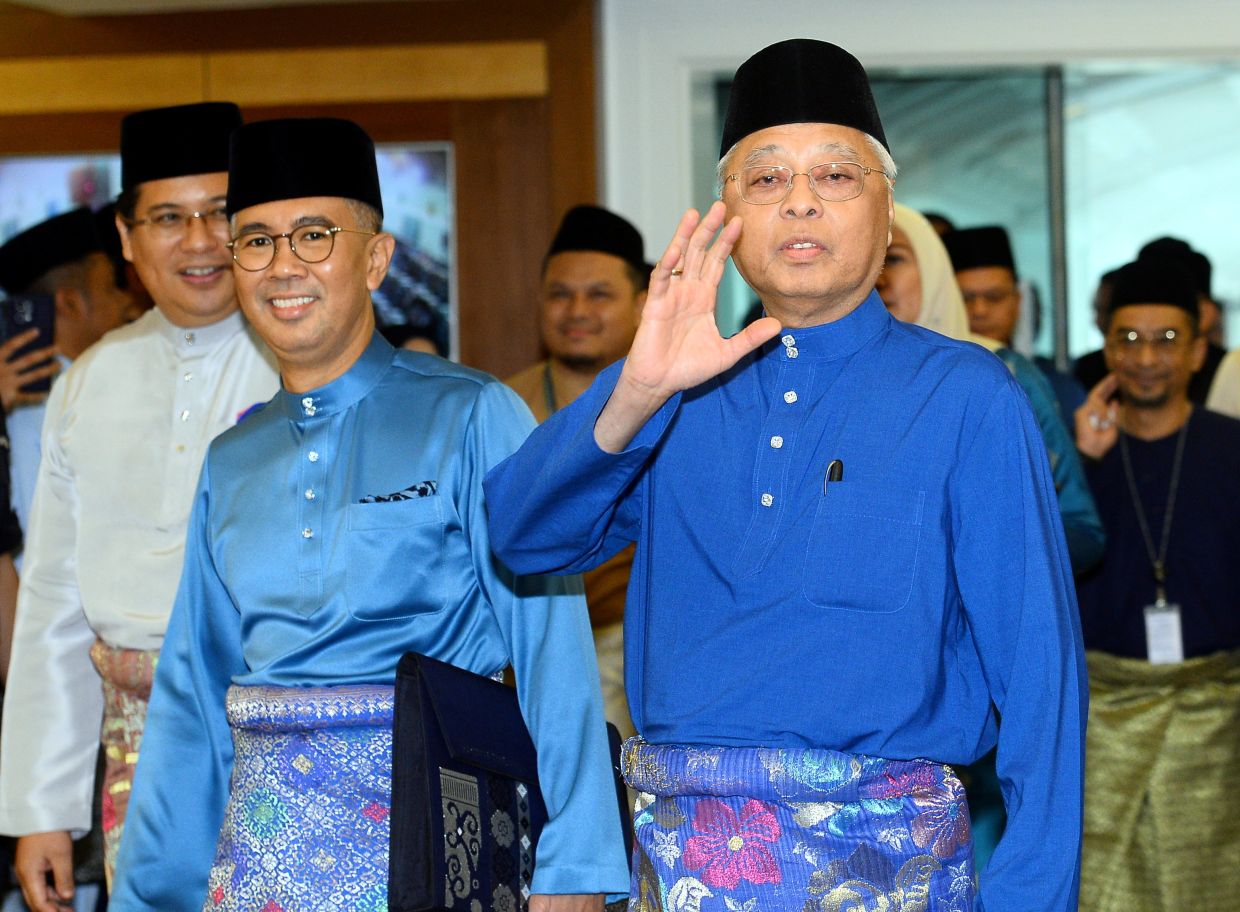
The Cabinet, which met on Friday (Aug 26), was informed of the decision by Prime Minister Datuk Seri Ismail Sabri Yaakob.

The decision is regarded as an indication that the general election will be held soon.

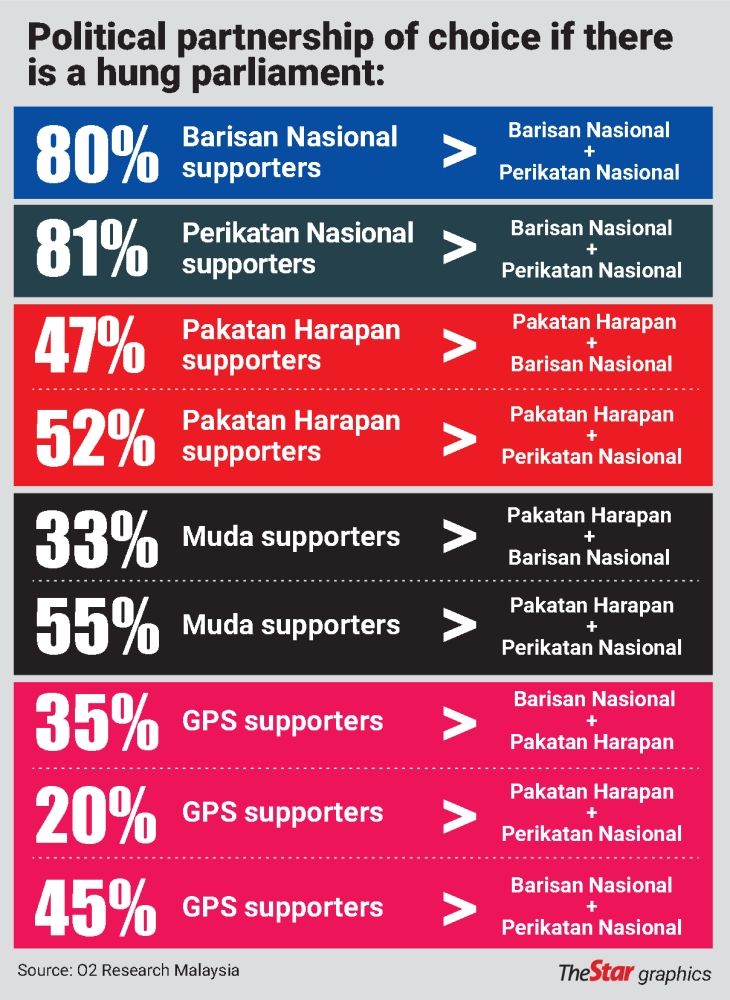
Barisan Nasional officials, in reacting to the news, said the Parliament could be dissolved after the Budget is tabled.

Finance Minister Tengku Datuk Seri Tengku Zafrul Abdul Aziz will present the Budget when the Dewan meets again on Oct 3.

Following the Cabinet’s directive, the next step will be to inform Dewan Rakyat Speaker Tan Sri Azhar Azizan Harun, who needs at least 28 days to inform the Members of Parliament of the new date.

The decision to hold an earlier Budget is being made ahead of the special Umno meeting on Saturday (Aug 27) where leaders are expected to push for a general election to be held soon.

The present Parliament term ends in July 2023.

Barisan leaders said Parliament could be dissolved after the Budget is tabled.

”Political developments are moving very fast as the GE tempo will now be accelerated,” said one Barisan leader.

A peek into prison life


Kajang Prison.

KAJANG Prison is located right in the middle of this town in Selangor, about 40km away from Kuala Lumpur.

No new visitors to Kajang, in the Hulu Langat district, would miss the imposing medium-security prison building.

It is now home to Datuk Seri Najib Razak, the first Malaysian prime minister to be jailed.

The former premier is one of more than 5,000 prisoners there as at July 2022.

Like all Malaysian prisons, this facility is overcrowded, but it is surprisingly clean and well-maintained.

Our senior prison wardens are even sent overseas to learn from others on how to manage these facilities.

I had the opportunity of visiting both the Kajang and Sungai Buloh prisons several times, where I was allowed access to most parts of these centres in the company of the wardens, to see for myself what the situation there is really like.

I was invited to give motivational talks to the inmates and on one occasion, was even asked to help an inmate facing natural life imprisonment to obtain a royal pardon.

He had served 28 years by then. He was a model prisoner who ran a church service at Kajang Prison.

For a start, it’s nothing like the prisons we see in American TV dramas.

There are no double-decker beds for our inmates. They sleep on the cement floor, on standard latex mattresses that are about 5cm thick.

Those in the good behaviour category are rewarded with a 10cm-thick mattress.

There are about four to six persons in a cell, with a shared open toilet covered by low partial walls with no door.

They have to shower in the cell, too.

Some of the cells have no shower and inmates will have to go to a shower area, known simply as “tempat mandi”.

At Kajang, inmates are served three meals a day, starting at 7am when breakfast is served. The inmates usually have a cup of tea or coffee and a piece of bread. Lunch is around noon and dinner at about 4pm, mainly consisting of rice and curry with chicken or fish.

Former prisoners describe it as “canteen food’’. They eat in the dining hall.

At 10pm, it’s lights out.

The prison is a hot place and it feels like an oven in there.

No fans are provided in the cells. Trees are also not planted in the prison complex as they are deemed unsuitable for security purposes.

Many male inmates strip down to their underwear in the cells. In some areas, though, industrial fans are installed to allow better ventilation to reduce the unbearable heat.

Well-behaved inmates, who wear blue attire, get some form of reward like a desk and possibly a fan.

It is unlikely that Najib will share a cell with five or eight other inmates at Kajang Prison.

While VIP prisoners are expected to be treated the same as others, the prisons would certainly want them to be safe.

Based on what former inmates, wardens and non-governmental organisation visitors say, these VIP prisoners – usually former politicians, lawyers, policemen or corporate figures – would likely be assigned their own cells.

Even Datuk Seri Anwar Ibrahim, when he was incarcerated at Sungai Buloh Prison, had his own cell, which was located near the clinic wing.

Politician Lim Guan Eng and Hindraf activist P. Uthayakumar were also held in Kajang Prison.

In both the Kajang and Sungai Buloh prisons, drug addicts and traffickers make up the largest number of inmates, with many rehabilitation programmes drawn up for them.

Unlike in the movies, the average prisoner is usually well-behaved, and they conventionally stay away from trouble.

Sexual relationships in these facilities are regarded as a crime and certainly, any sexual act or even attempting it leads to only one thing – extra prison time.

Prisoners are addressed by their numbers, NOT names, and for newcomers with titles, this certainly needs some getting used to.

Welcome to Kajang Prison.

Where Are All The Good MPs?


Respect the separation of powers – let the judges be

FOR God’s sake, please leave the Federal Court judges alone. The Bench should be left to discharge its duties professionally without any form of intimidation, pressure, or certainly, interference from anyone – especially the Executive.

Malaysians are not the only ones closely following developments at the apex court involving Datuk Seri Najib Razak in his final appeal in the RM42mil SRC International Sdn Bhd case.

(On July 28, 2020, the High Court convicted and sentenced Najib on seven charges involving criminal breach of trust (CBT), money laundering, and abuse of position, all involving SRC funds, totalling RM42mil. He was sentenced to 12 years in jail and a fine of RM210mil. The conviction and sentence were upheld by the Court of Appeal.)

The world is watching how we are handling this high-profile case as it involves a former prime minister, no less.

Surely, the five-member bench led by Chief Justice Tengku Maimun Tuan Mat, who is hearing the appeal, should not be subjected to any kind of threats.

That’s not how it works.

The independence of the judiciary should not be challenged nor compromised, and over the next few days, the nation will be witnessing a defining moment.

These top judges must be free to make their decisions without fear or favour. The separation of powers in our Federal Constitution is clearly stipulated. The doctrine under which these three branches of government – the Executive, Legislative and Judicial – are kept separate is to ensure there is a system of checks and balances.

This is to ensure the government remains accountable and fair, as well as to enable each branch to act as a check on the power of the other.

It is thus a mockery, if not ignorance, when politicians suggest or expect the prime minister to intervene in a court case because they feel one of their party members should not have to face the consequences of his actions.

Deliberate acts have been carried out, in different ways and on various platforms, to embarrass the Bench with vicious insinuations hurled at the Chief Justice (and even journalists) who have written about the issue.

To be more precise, threats have been made against the CJ. To put it bluntly, it is unprecedented and shocking – words which Malaysians have now grown familiar with, thanks to certain lawyers.

Right-thinking Malaysians, regardless of their political allegiance, must stand up to voice grave concerns at what is taking place now. Politicians come and go but the institution remains.

Malaysia has been able to remain a stable and progressive nation, as we celebrate our 65th birthday, because the rule of law and order has always been upheld.

There is an established legal system in this country with the Federal Constitution recognised as the highest law of the country.

Like it or not, it is the judges who have been appointed to dispense the law and to exercise its authority.

Those facing charges are given every opportunity to challenge the decisions of the courts.

In many countries, the accused who has been sentenced to jail at the lowest court, would have been jailed immediately while going through the stages of appeal.

But here, the appellants are given bail, as in most cases, as they seek the views of the Court of Appeal and finally, a review from the Federal Court.

Malaysians who do not understand the various points of appeal have also questioned, without basis, why Najib had been allowed to roam freely. That is simply because he had not exhausted his appeals.

But the buck stops at the Federal Court, the highest court in the land, today. Everything must come to an end. Whatever decision handed down by this apex court has to and must be respected, regardless of whether we like it or not.

The grounds of their decision will be properly put in a written judgment for all to read.

Malaysia is not a half-baked Third World nation, where politicians and their apparatchik decide on the verdicts of court decisions, let’s be clear.

Leave it to the judges, please.

Guessing game over GE date continues

UNTIL a few weeks ago, many politicians and journalists were certain that Parliament would be dissolved by October although the Prime Minister is still keeping them guessing.

To avoid being caught off guard, preparations by various political parties have started.

It is speculated that the Budget, fixed for Oct 28, would be brought forward to accommodate the dissolution of the Dewan Rakyat.

While Finance Minister Tengku Datuk Seri Zafrul Tengku Abdul Aziz told the media that the tabling date of the Budget remains unchanged, the aspirant Barisan Nasional candidate has also been hitting the grounds.

He is almost always at the Kuala Selangor parliamentary constituency, where he is said to be contesting, when he is not carrying out official duties.

Umno deputy president Datuk Seri Mohamad Hasan has gone on his nationwide visits to ensure the machinery is put in place.

But last week, the Prime Minister’s Office told the media that Datuk Seri Ismail Sabri Yaakob would be travelling to New York from Sept 22 to 25 to attend the United Nations General Assembly.

The decision caught several Cabinet members and officials off guard as the PM would surely not be taking five days off if he was preparing for the GE.

He has also invited several Members of Parliament to accompany him on the trip, an official said.

During a meet with editors last week, for the interview on his first year as PM, he indicated that he wasn’t ready for the GE, saying the littoral combat ship (LCS) issue had now emerged, saying “we don’t know how this issue will affect our chances”.

But in the same breath, he said “the global economic forecast for next year is not encouraging. If this is the situation, would it be a good time for the election to be held next year?’’

If the Budget is to be held earlier, say by the first week of October, it means the notice would have to be served to the Speaker to inform him of the change in plan.

Under the rules, a minimum 28-day notice would be needed and based on this assumption, the notice would need to be sent by Sept 1 or 2.

That means the Dewan Rakyat can be dissolved once the Budget is tabled by the first week, and to pave the way for GE15 to be held by November.

“The impact of the Budget, which will certainly be aimed at the electorate, would be lost if it is not followed immediately by the elections.

“The PM must strike it while it is hot because like it or not, it will be regarded as a preliminary BN manifesto. To put it simply, the message is vote us back and we will put this Budget into a reality,’’ said an analyst.

By December, the monsoon period which often brings floods to many areas of the East Coast would have started and it would not be the best time to hold a GE.

The next option is to dissolve Parliament after the Chinese New Year next year, which begins on Jan 22, 2023.

Christmas, in December this year, and CNY in January would allow the PM to provide better optics for his Keluarga Malaysia concept.

There has been criticism that, so far, the turnout for his various state celebrations involved mainly Malays.

The diversity and inclusivity elements are missing and surely, to make his Keluarga Malaysia idea more meaningful, these must be seen.

Last year, he was missing from the annual Christmas high tea organised by the Christian Federation of Malaysia as he had to rush to flood-hit states.

As with the previous practices, the annual Sijil Pelajaran Malaysia (SPM) examinations for Form 5 students is scheduled from the end of February to March 2023 and this means almost all schools, usually used as polling stations, would be held up for the exams.

Many schoolteachers are also roped in by the Election Commission to assist in the running of elections.

By March 22, the fasting month begins (and ends on April 21) and then Hari Raya begins, with a month of celebrations.

The window period available for the PM to call for the GE gets tighter as the clock ticks. The term of the present Federal Government ends on July 15, 2023.

One exasperated Barisan leader said ‘’if the PM is worried about LCS, he has a valid reason, but no one can be sure what other issues will crop up next if the dragging continues”.

The PM is certainly keeping his options close to his chest and politicians, who claimed they have been told of “possible months” heard directly from the PM, have ended up being wrong, so far.

Forces face farce


Under construction: One of the controversial littoral combat ships at the Boustead Naval Shipyard in Lumut.

THE current controversy surrounding the purchase of six littoral combat ships (LCS), which is burning RM11bil of taxpayers’ hard-earned money, isn’t the first discrepancy and alleged corruption, incompetence and mismanagement involving the Defence Ministry (Mindef).

In the name of national interest, details relating to procurement are often shrouded in secrecy, with information branded classified.

Last week, the government announced that it plans to set up a Royal Commission of Inquiry to investigate the LCS issue, which has now been presented to the Cabinet.

It’s certainly a good follow-up to the detailed findings by the Public Accounts Committee (PAC) and the de-classification of a report which highlighted the poor financial management and cash flow issues ailing Boustead Naval Shipyard (BNS), the company embroiled in the LCS fiasco.

Hopefully, the setting up of the RCI will expose Mindef’s shortcomings and reveal it to the public while establishing a proper procurement process.

The RCI shouldn’t be another panel with a glorified name which delays its deliberation and has its report collecting dust at the end of it.

The Malaysian Anti-Corruption Commission (MACC) has already stepped in, and Malaysians want to see the case expedited with the Attorney General hauling up the culprits responsible for the inflated costs.

This could include powerful political personalities who directed those implicated in the PAC report.

The sad reality is that the LCS issue is yet another shameful blot on Mindef’s long and never-ending series of scandals over the last 40 years.

Before we pore over its “chequered” history of the past decades, fresh in my mind is the 2019 news reports of the non-delivery of six helicopters worth RM300mil that were ordered in 2015.

Bernama had reported that a Mindef representative filed a complaint at MACC, saying the McDonnell Douglas MD530G lightweight combat helicopters were to be handed to Malaysia in 2017 and 2018.

It reported, quoting sources, that approval for the November 2015 purchase of the helicopters was not done according to procedures, with the government’s interests not properly protected.

The source told Bernama that the Malaysian government had paid up RM112.65mil for the acquisition, or 35% of the total cost.

We haven’t heard from MACC since 2019, when it said it was investigating 14 controversial land swap deals involving Mindef.

The list of dodgy procurement deals is long. It includes the 1981 purchase of 26 units of the British Alvis Scorpion tanks.

According to Consumer Association of Penang president, Mohideen Abdul Kader, the tank’s recommended Rolls-Royce gasoline engines were replaced with slower diesel ones, and the guns with heavier ones.

He said the modifications made the tanks heavier and slower, a sitting duck in any military encounter, and eventually in 2018, they were scrapped.

“The 186 SIBMAS armoured personnel carriers purchased by Malaysia in 1983 were found to lack combat effectiveness.

“Malaysia bought 18 Russian Sukhoi Su-30MKM Air Superiority Fighters, taking delivery of three in 2007 and the rest in 2009.

He said the deal, worth RM3.2bil, was made through a Russian state company whose local agent was paid 12% of the purchase price, amounting to RM380mil.

Mohideen said by 2018, most of them had become unserviceable, with only four of the 18 fighter jets still able to fly. The rest were under repair and the ministry eventually fired the contractor, apparently for failing to maintain the jets in airworthy condition.

“In 2002, the ministry negotiated through a Kuala Lumpur-based local company Perimekar Sdn Bhd to buy two Scorpene submarines and a used Agosta submarine produced by the French government at the price of RM4.5bil.”

Mohideen said a whopping commission of RM510mil was paid, 11% of the purchase price of the submarines.

He also claimed that in 2004, the PSC-Naval Dockyard was contracted to deliver six patrol boats to the Malaysian Navy, but only two were delivered in 2006, neither of which were fully operational.

He said by 2007, the original cost of RM5.35bil ballooned to RM6.7bil, a 26% increase.

Mohideen said the auditor general reported that the ministry had paid RM4.26bil, although only RM2.87bil worth of work had been completed, implying an overpayment of 48%. He said the Cabinet also waived late penalties of RM214mil.

A comprehensive list can’t be contained within this space because, sadly, it’s never-ending.

To take consolation, similar malpractices are reported all over the world.

Dr Zia Ul Haque Shamsi’s report on July 19, 2021, described India as having the most corruption scandals when it comes to buying arms and equipment.

He said India was plagued with scandals of military transactions despite stringent and painstaking bureaucratic processes for the approvals of defence procurements.

It will only be a matter of time before similar specialist writers on defence use Malaysia as a case study, especially when our approval process can hardly be described as rigorous.

As lawyer Mohideen rightly said, “the incestuous relationship between politically connected local agents of foreign arms manufacturers and the ministry must be ended.”

Enough is enough. It’s time we clean up our act and stop the country being looted through Mindef.