Festive fever: Yee Sang is a popular must have Chinese New Year dish and many will wish for health, happiness and prosperity when tossing it. – The Star
THE best part of Malaysian festivals is always the short videos depicting the celebrations of the various communities. They take either the humorous or tearjerker route, but they invariably end with a positive note.
Social media platforms are brimming with Chinese New Year short films ahead of the spring festival. There’s a common theme to all these films – it has been a tough two years because of the Covid-19 pandemic, and younger family members are deliberating whether to go home for the traditional reunion dinner.
Many are struggling to catch up on their work, especially businesses (finally), while some are unsure if they could be a threat to their aged parents with the virus still rampant. But they all close with a happy note.
Well, many of us wish our real life Malaysian political saga can conclude with a cheerful conclusion, too.
We can’t tell whether to laugh or cry over the numerous political developments in our beloved Bolehland.
Our politicians and top officials have one thing in common – many can’t keep their stories consistent and believable. Sometimes, they contradict themselves, and the audience is left bewildered, and even entertained.
Thanks to poor narrative, there are always more questions than answers in the end.
Yet, these protagonists, being bad actors, are oblivious, presuming their audience to be simpletons.
Where the upcoming festival is concerned, I also love the tossing of the yee sang during Chinese New Year meals. Being the materialistic Chinese, we all wish for health, happiness and certainly prosperity – that means money.
We shamelessly wish each other “Gong Xi Fa Cai,” which literally means “good luck getting more wealth.”
Being known for hard work, perseverance and self-reliance, the Chinese community has accrued wealth and survives purely on its dedication and of course, business acumen.
Oh, how we love to trade in our stock markets. I still remember the good old days when there used to be a thing called the CNY rally, when various share prices would always shoot up before the festival.
Now, it’s depressing because our Bursa Malaysia is no longer the bee’s knees. It has become boring now.
My feng shui awareness has reminded me to make sure I don’t allow my brother, mother or girlfriend to use my account to play the market.
If you are going to dabble in stocks with a lot of money, make sure you can explain to your wife how you’ve managed to accumulate so much money. You don’t want the fierce Tiger at home to growl at you, I can hear Master Joey Yap advising me.
Certainly not advisable. It’s simply against the rules, unless it can be proven conclusively that there is no case against you. As the Hokkien say, “don’t be siao (crazy)” because no one can help you.
Here’s another feng shui suggestion – if you’re celebrating CNY. Don’t go to karaoke joints. Calculations and predictions indicate that a lot of misfortune can take place at these dimly lit places.
With the #MeToo campaign, friendly gestures at meetings with clients and staff, which may be normal, can be misconstrued. Leave all forms of corporate communications to guest relations officers. That’s certainly not the job of a lawyer or an accountant.
And stay 1.5 metres apart, as required under the Health Ministry’s Standard Operating Procedure.
Yes, you heard me. It may be a karaoke joint, or a club, but SOP must still be adhered to for your own health, profession and political longevity.
It’ll be a chore explaining any form of health or political hazard to your spouses, and electorates, especially.With MySejahtera tracking your movement, corporate meetings at karaoke joints to deliberate on the Budget 2022 seems unconvincing.
I know you need to expand to Vietnam and there is a need for the presence of Vietnamese guest officers, er, I mean translators but it doesn’t seem believable.
Possibly, a politician needs to meet their voters in a night club because in the evenings, in a more relaxed atmosphere, the electorate will be able to talk politics.
Dunno lah, just saying. What? Can’t hear me? Music too loud? Never mind, I can come closer and talk into your ears, so you can hear clearer.
All parents have this worry – that their daughters will get their drinks spiked when they go clubbing.
But in Malaysia, politicians can also get their drinks spiked. Don’t play play. Like that also can ah? Why not? Anything can happen in Malaysia one. In politics, there will always be plenty of jealousy.
These topics look to be high up on the menu of banter during the CNY reunion dinners and meals with friends, for sure.
Watching these videos always imbues a sense of nostalgia and that wish to be with our family members.
Looks like I must keep repeating to my 91-year-old mom, who is hard of hearing and a bit forgetful, that I am truly back home, and yes, I’ve contributed to the spring cleaning, too.
Yes, mom, I also used the power jet to clear all the lizard and bird droppings from the drain. Yes, everything. It’s simply shiny.
It’s good to be back in Penang. I will remain on the island for the entire three days. Yes, mom, I have no plans to go to Bukit Mertajam for clubbing appointments.
I’m sure most of us are looking forward to travelling home. Drive safely and take care. There has been a sharp drop in our Covid-19 cases, especially at the serious stages, but unfortunately, there has been a spike in political tall tales.
WHEN politicians and public figures are in a spot, they’ll find ways to squirm their way out. It’ll be flimsy excuses ranging from the boring to the ludicrous, but that won’t stop these beleaguered personalities.
After more than three decades as a journalist, I have my list of desperate attempts by politicians, mostly to escape from embarrassing situations. They might sound tenuous, but the jury is out.
The most common SOP is – stop the press – to end the mire of sticky situations. Naturally, blaming the press is the most convenient escape plan.
Usually, the subject claims he or she has been “misquoted” or that the comments have been “taken out of context.” Of course, in a recent situation, a politician set a new benchmark – “Where are you from? China, no wonderlah”. He insinuated the reporter didn’t understand what he was saying.
But my most memorable experience was when a federal minister claimed I had misquoted him (what’s new?), and when I produced my recording as evidence and to end the dispute, he sheepishly replied, “Well, I may have said it, but I didn’t mean it.”
Then, of course, our politicians like blaming external forces, which can be a foreign country, foreign media, foreign agent, or a foreign wife. It’s always mundane and unimaginative – “they are jealous of us.”
It used to be these foreigners envying our achievements but since the monstrous 1MDB corruption scandal, I’m not sure if there are other sources of envy for them.
Tun Dr Mahathir Mohamad is a notorious serial recalcitrant when it comes to disparaging the Jews, so much so that he is deemed anti-Semitic.
He has claimed Jews ruled the world by proxy and has blamed financier George Soros for undermining Asian currencies.
Dr Mahathir may have probably blamed Barbra Streisand for bad singing or Dustin Hoffman for poor acting, too. Oh wait, did someone say Waze is a Hebrew word meaning free map? Holy moly!
In one National Day message, the former PM blamed foreign powers continuing with their schemes to recolonise the country. Of course, he has also blamed other races for their economic situation.
But the most creative scapegoat must be chopsticks. It’s their fault – they are envious, that’s why they keep chopping us and sticking all kinds of things on us. No one should use chopsticks. It’s better that all Malaysians are hands on. Use your hands.
Well, the American and European politicians are no better. They now blame China for everything, from the coronavirus they claim was made in a Chinese lab, to the disappearance of countless dogs from the face of the earth. Maybe the Chinese ate them all.
In Malaysia, another favourite or easy route is to claim that these allegations are politically motivated. That’s archaic, and surely there must be a more convincing way of absolving someone of blame.
We would surely expect such justification, inane as it may be, from politicians, but not from civil servants. Such witless rebuttals are as good as politicians accusing their nemeses of playing politics. If politicians are not in the game of politics, then why would they bother?
If all else fails, politicians always employ a tactic to stay uncommitted and remain coy by saying something which basically says nothing.
So, be it in Parliament or when answering the media, we are used to hearing their soundbite “we will look into it,” which only means they will deliberate on the issue but ultimately do nothing about it, a euphemism for inaction. Another de rigueur response to the media is “noted”, which also means an acknowledgement for doing diddly-squat.
There are better ones like “the matter is still being studied” which, when simplified, means it will be examined but will invariably gather dust or be lost in the archives.
Politicians in many countries find it easier to apologise to appease the public and to prolong their shelf life, but in Malaysia, sorry seems to be the hardest word (Thanks, Sir Elton.) Apologising is a major defect or well, a political impotence to our alpha male politicians. Elsewhere it’s regarded as a strength.
So, we have a catastrophic fiasco in the poor management of the recent floods but no apology. No one stepped up to be accountable nor apologise. Forget about Japanese style harakiri (ritual suicide, mostly in admission of blame), but shift the blame “kiri dan kanan” (left and right).
The most effective way in Malaysia seems to be by staying silent, weathering the storm and hopefully (and usually), Malaysians will forget. A fresh issue will crop up and the controversy will be yesterday’s news.
Or stay defiant, don’t buckle and stay put with the job. What garden leave? It doesn’t apply in Malaysia especially when half of us don’t even know that term.
It’s also odd for public figures to call for a press conference where the subject reads out loudly from his prepared text – and then tells the press that no questions would be entertained!
If that’s the case, why bother calling for a meet-the-press session? They may as well just post the statement on Facebook or other social media platforms. Despatching the release via email would do, too.
Haven’t the officials briefed their bosses about most media outlets now running on skeleton crews because of cost control, or reporters just working from home now since most of us are wary of contracting Covid-19 from crowded functions? SOPs are often not enforced at these events, exposing media personnel to politicians who meet over 100 people a day. In a nutshell, politicians are a health hazard.
Well, incredibly, Tan Sri Abu Zahar Ujang, the chairman of the Advisory Board of the Malaysian Anti-Corruption Agency, also refused to field questions at a press conference after claiming the media misquoted him at an earlier press conference, on Jan 5, which he alleged had created much confusion and tarnished MACC’s image.
He refused to take questions, noting the five-page press statement sufficed. It was an improvement. The Jan 5 press conference had a 13-page statement, but it didn’t answer what the media wanted.
Then, there are artistes and celebrities who have benefited from media coverage, but when their private lives come under scrutiny, often via their own fault, they blame and berate the press, saying no one should report on their personal lives. Suddenly, they forget that they’re public figures and that there’s always a cost to the celebrity life they crave.
It’s the same with staff from marketing or corporate affairs departments who go on their knees for help when their bosses are in trouble. These guys, who wax eloquent about algorithms, data and social media influencers’ impact, suddenly don’t know what to do for their clients.
Oops! That’s another story and this has run off course. But the moral of the story is, learn how to work with the press, and don’t be quick to write us off or treat us as scapegoats to save your skin.


Sheltering an idealogical campaign: The Al-Hol camp, has been described as the ‘most dangerous camp in the world’ with a huge ISIS presence and where radicalistion is believed to be taking place.
KUALA LUMPUR: At the height of the Islamic State’s (ISIS) stranglehold in Iraq and Syria, more than 100 Malaysian fighters joined the so-called holy war, some even with family in tow. Many recorded their fight on social media, too.
But seven years later, following the defeat of the terror group, and with 16 Malaysians repatriated to Malaysia, over 50 fighters and their families remain in refugee camps or have unknown location status.
Bukit Aman has identified 56 Malaysians – 19 men, 12 women, 17 boys and eight girls – who were living in Syrian camps or at large.
Police said 10 women, 12 boys and five girls are living at the Al-Hol refugee camp in north-eastern Syria while nine Malaysian men are in Al-Hasakah prison. One is in prison in Idlib.
Idlib province, which is near the border of Turkey, is in the north-western side of Syria, which has been the scene of many battles.
Al-Hol holds individuals and their families who were in ISIS and until January 2021, it has been reported that the camp’s population was over 60,000, having grown from 10,000 at the beginning of 2019.
It has been reported that there are ISIS militants from more than 50 countries staying at the camp.

Wanndy, who was killed in 2017, was a charismatic leader among Malaysian ISIS fighters.
Described as the “most dangerous camp in the world”, it has a huge presence of ISIS elements and regular killings.
“A major challenge for the authorities is that the Malaysian nationals are held in camps controlled by the Syrian Democratic Forces (SDI), which the Malaysian government does not recognise diplomatically.
“Given that many of these camps have become the hotbed of radicalisation, these unrepatriated individuals could be further radicalised, and later attempt to slip into the country,” said a newly released report.
The report on Malaysia was part of the January 2022 Annual Threat Assessment issued by the Singapore-based International Centre for Political Violence and Terrorism Research of the S. Rajaratnam School of International Studies, Nanyang Technological University.
The US-backed SDI is an alliance of forces comprising Kurdish, Arab, Assyrian/Syriac and several smaller Armenian, Turken and Chechen forces fighting for a secular state, according to a report.
Against this complex background, militants linked to ISIS have also reportedly launched an ideological campaign to persuade these Malaysians living in Syrian camps to fight and re-establish a caliphate in the Middle East.
“The Malaysians, who are staying back, have been brainwashed into believing that the fight isn’t over and that ISIS will make a comeback.
“The ISIS presence in these camps is too strong and radicalisation continues,” said a source.
According to the Centre for Political Violence and Terrorism Research report, at least 48 Malaysians (42 men, one woman and five children) have been killed in Syria.
“The recruitment of Malaysians into Syria has largely dropped in recent years, following the deaths of high-profile Malaysian ISIS fighters and recruiters such as Muhammad Wanndy Mohamad Jedi, Fudhail Omar, Akel Zainal and Muhammad Nizam Ariffin.
“The Malaysian militant landscape, which has traditionally been driven by charismatic individuals such as Wanndy, has remained leaderless since his death, which may explain the general drop in militant recruitment and activity in the country.
“However, the exact numbers and identities of Malaysians still actively involved in militant activities in Syria and other conflict zones remain unknown,’’ it said.
Muhammad Wanndy, also known as Abu Hamzah Al-Fateh, was killed in a drone attack in Raqqa, Syria, on April 29, 2017, and was believed to be the mastermind of several attacks in the region, including at the Movida entertainment centre in Puchong, Selangor, in 2016.
In that incident, two ISIS sympathisers on a motorcycle lobbed a hand grenade into the club, injuring eight.
Muhammad Fudhail @ Abu Qutaibah was killed in an airstrike in 2017 in Raqqa by the Syrian military.
Wan Mohd Aquil Wan Zainal Abidin @ Akel Zainal, who was a rock band drummer, was killed together with his wife and two children, aged two and three, in 2019, in a Russian airstrike on his home in Baghouz, Syria.
Mohd Nizam @ Abu Afghan was killed in Mosul, Iraq, in 2016, during clashes with Iraqi government security forces. He was one of the earliest Malaysian arrivals in Syria.
The CPVTR report added: “With regards to its citizens still in Syria, Malaysia says it will continue to maintain an open-door repatriation policy.
“Some individuals have expressed a willingness to return home, while others have rejected the government’s offer.”
These Malaysians who chose to return will be detained and investigated for potential criminal charges while the women and children will undergo a special assessment by psychologists.
“We will find out why they are in Syria, whether they were forced (to) or joined ISIS.
“If there is sufficient evidence, the women will be charged as well,” intelligence sources said, adding that these were standard procedures.
Since October 2019, Malaysian authorities had been working with foreign agencies to bring back some 40 Malaysians. Their number has slowly decreased.
Two Malaysians, who were accused of travelling to Syria to commit terror acts, have been charged under Malaysia’s Security Offences (Special Measures) Act.
Both men could face up to 30 years in prison if convicted.
The pair were the first Malaysians to be deported from Syria after Turkish troops crossed the border into Syrian territory in October 2019 to go after Kurdish fighters.

Who watches the watchers? The country’s anti-corruption agency has taken a battering of late with some of its officers arrested for corruption. — Filepic/The Star
Our country seems to be adept at scripting headlines for all the wrong reasons.
IT looks like the Malaysian Anti-Corruption Commission (MACC) is at its lowest ebb. The agency’s image is in tatters, and in the eyes of the public, an impression has been formed.
Malaysians expect an enforcement agency fighting graft to be whiter than white, with exacting standards of accountability, transparency and ethics.
If the MACC can’t deliver that, then how can the public expect the agency to execute its responsibilities and tasks?
Perception is everything. The timing of the controversy involving its chief, Tan Sri Azam Baki, couldn’t be worse for the agency because trust and confidence in our institutions have eroded badly.
Just last week, an MACC senior enforcer was charged with misappropriating US$6.4mil (RM25.1mil) seized by the commission four years ago. Shahrum Nizham Baharuddin pleaded not guilty.
He was accused of criminal breach of trust (CBT) with monies entrusted to him at the MACC special action branch chief’s room in 2019.
It was reported that former Malaysian External Intelligence Organisation director-general Datuk Hasanah Abdul Hamid tried to reclaim US$6mil (RM25.2mil) in cash that was confiscated from a Cyberjaya apartment after she was granted a discharge not amounting to an acquittal in her CBT case. She claimed that a portion of the cash was missing and was replaced with counterfeit notes.
Last month, two more MACC officers were arrested in connection with a heist at a businessman’s house in Jalan Ampang, Kuala Lumpur, involving RM700,000. Before that, two other MACC personnel were arrested and remanded over the case.
And now, Azam has found himself in the news for the wrong reasons. He is under investigation by the Securities Commission for his statement that his brother had used his name to purchase shares in 2015.
Azam had made this claim following allegations that he had interests and shareholding in several companies. The Anti-Corruption Advisory Board chairman Tan Sri Abu Zahar Ujang subsequently cleared him, saying the board was satisfied with Azam’s explanation.
But, of course, it didn’t end there. It would be surprising if Azam and Abu Zahar expected it to because it’s naïve of them to underestimate Malaysians, who are generally in a foul mood.
Surely both know that every securities account opened with a central depository must be in the name of the beneficial owner of the deposited securities, or in the name of an authorised nominee.
While Azam is understandably furious at the controversy, it’s difficult to be certain if his threat of legal retribution against those responsible will help him.
He has said “there were efforts by individuals with personal interests or with a bad agenda against the MACC”, saying “we have identified who they are and what their agenda is”.
Granted, that while there will be individuals or groups with political motives, many ordinary Malaysians are also asking the same questions, and they certainly have no interests.
Azam may not have to answer directly to the people, but it would definitely be incorrect for him to say that he is only answerable to the advisory board.
It would also not be wise for him to be so dismissive of the people’s sentiments and give the impression of high-handedness and intimidation.
It could be ignorance on Azam’s part that led to him allowing his brother, Nasir, to use his account to buy shares on the open market without realising that he had committed an offence.
But it would be erroneous for him to say that he owes no one any explanation because he is the top MACC chief – surely, by virtue of his position and the agency he serves, Azam is accountable.
Basically, the people want to know why Nasir needed to use his brother’s account when he has his own.
Surely Malaysians are reasonable and rational enough to accept convincing explanations.
There are no rules that say civil servants can’t trade in shares, and if he can invest in the stock market with good supporting documents, there’s no reason to doubt it.
Likewise, Nasir needs to prove he has sufficient financial means to purchase these shares on the open market and explain why he had to use his brother’s account.
Malaysians are furious because public figures, whether political or government, have failed badly in terms of trust and integrity. So much so that we have adopted a cynical view of politicians.
The perception is that the rot of corruption has set at the core. It’s now so entrenched that it has become a culture and an expected way of doing business. Greed has seeped into every crevice of morality, and all this has damaged Malaysia’s cost of doing business and sense of competitiveness.
Outside Malaysia, we are looked upon as a corrupt country where the rich and powerful can get away with just about anything.
Worse, those who aren’t familiar with our British-modelled legal system think that convicted persons can walk around freely.
That is simply because they have not exhausted their appeals avenue. Unlike the US system, they don’t go to jail immediately.
It doesn’t help that the leadership has chosen to remain silent over many contentious issues when public and government figures fail miserably, such as the mishandling of crises like the recent floods.
No one seems to take responsibility, and no one has been shown the exit for their utter incompetence.
In fact, when the public writes complaint letters to the media, to the help desks or even sends e-mails to government websites, the missives often go unanswered, leaving them frustrated.
Here’s some advice to our leaders: Put your ear to the ground and hear the loud rumblings and grumblings. They’re thunderous!

Blast site: Thai police and army personnel inspecting the scene of a bomb attack which left three police officers dead in Yala in 2016. — AFP
KUALA LUMPUR: Rebels from southern Thailand and the Thai government will meet here this month as part of the continuing peace talks, which have been disrupted by the Covid-19 pandemic.
After two years of virtual negotiations between both sides, the face-to-face meeting will finally take place.
The separatists are from the powerful Barisan Revolusi Nasional (BRN), a heavily armed group operating in four provinces, namely Pattani, Yala, Narathiwat and Songkhla, which make up Thailand’s Deep South.
The population in these provinces near the Malaysian border is predominantly Muslim Malays.
The facilitator for the talks is former Inspector-General of Police Tan Sri Rahim Noor (pic), who represents the Malaysian government.
He confirmed that the latest meeting would be held soon but said no date has been fixed yet.
“It is scheduled to be held in the middle of January, but the date has not been finalised,” he told The Star.
Rahim said the meetings had progressed “very well’’ but declined to provide details.
The negotiations involved representatives of the Thai government with chief negotiator Gen Wanlop Rugsanaoh and the BRN.
The relentless cycle of violence in southern Thailand began in 2004 and has claimed at least 7,000 lives to date.In May 2021, Thai security forces were reportedly in a three-hour standoff with two separatist insurgents in a small remote village in Yala, southern Thailand.
The United States Institute of Peace (Usip) reported that “as they stood their ground, the two combatants made video calls to family and friends to bid farewell”.
The previous peace talks between the BRN and Thailand were held in Kuala Lumpur in January and early March 2020, which provided hope for ending the violence in southern Thailand.
The BRN delegation was led by the bespectacled Anas Abdulrahman @ Hipni Mareh, a high-ranking official said to be foreign educated and a former schoolteacher.
The BRN is also known as the Barisan Revolusi Nasional Melayu Patani.
It was founded by Haji Abdul Karim in 1963.
Previously, Wanlop had reportedly said he had personally been in the field to listen to suggestions and feedback from the grassroots, including stakeholders, non-governmental organisations and civil society organisations.
He said Thailand was committed to finding a peaceful and lasting solution to end the decades of conflict in the troubled southern province.
Nikkei Asia quoted seasoned observers saying the interactions have so far been confidence-building measures “but are an encouraging sign that there will be progress to a more decisive stage addressing concrete measures”.
It quoted Rungrawee Chalermsripinyorat, a lecturer at the Songkla University in Pattani province, saying the BRN submitted a document to the Thai government in mid-2021.
It included three demands: a political solution that meets the aspirations of Muslim Malays in the south, a reduction in military operations and “the idea of inclusivity; and to involve civil society representatives, religious and political figures, and community leaders in the peace dialogue”.

Hoping for a brighter 2022: The past two years have been tough not just for Malaysians, but the entire world, too. – AZMAN GHANI/The Star
WE usually start the year with the traditional well wishes and hopes. As Malaysians usher in 2022, we have busied ourselves on New Year’s Eve by sending out such messages.
I am an optimist and have no fear of taking on difficult situations. But this time around, I feel uncertain and unsure.
The past two years have been tough ones not just for Malaysians, but the entire world, too. I have lost good friends who succumbed to the dreadful Covid-19, and those who survived but were badly affected, are still struggling to regain their health.
Many lost their jobs in 2021, and those who retained employment invariably had their salaries cut and are still waiting for their docked pay to be reinstated.
Our lives have all been made more difficult by the unnecessary and excessive politicking in Malaysia, but at least in 2021, the competing factions agreed to end their disagreements, even if just momentarily.
We have a Prime Minister who has succeeded in drawing both sides onto the same page to keep the government intact and to pass the Budget.
He has come under fire from a demanding electorate, rightly or wrongly. But imagine the dire consequences if Parliament remains at loggerheads without enough numbers to push through the Bills.
The results of the Melaka and Sarawak state elections have also proven that Malaysians have had enough of politics and want a government that’s not held at ransom by smaller parties.
This is precisely what has happened to the Federal Government. It’s a government cobbled together by partners who have no love for each other but share the common interest of holding power.
Umno and Bersatu are forced to live together like an estranged couple, with their open bickering for all to see, as evident in Dewan Rakyat.
And then there is PAS. Despite having only 18 Members of Parliament in the 222-seat Dewan Rakyat, it seems to enjoy many ministerial positions, not to mention deputies.
PAS has become a member of an awkward family, which the couple is stuck with and can’t get rid of. Clearly, it’s a thorn in the side.
In other words, the present Federal Government is like a dysfunctional household.
The rest of us are supposed to feel blessed, blissful and thankful that the family is still functional. And we must also put up with a few relatives who are clearly incompetent.
PAS has cleverly continued to play the race and religion cards, desperately holding on to the legs of the contentious parents and pleading with them to stay on, even though a divorce is imminent.
But PAS has become so intoxicated with the perks and power that they just want the status quo to continue for the full term while we are forced to suffer and endure their glaring ineptitude.
So, as we usher in the New Year, Malaysians are holding their breath and praying that the leadership will be able to reinstate trust and confidence in all of us.
Malaysians are not asking for more. We need hope. A country and its people must have hope. Leaders, if our politicians can act like that, need to inspire and lead the country.
We don’t need grandstanding campaigns with hollow messages which don’t motivate Malaysians, even though the politicians involved may think otherwise.
The size of the participation at such launches really means nothing. In this time of the pandemic, it’s even worse and ill-thought of to get people together for such theatrical ego-inflating exercises.
Finally, if 2021 had to end with the woeful display of politicians in yellow boots, water-jet spray, animal droppings, VVIP convoys with imposing police outriders and poor disaster management, we can only put our hands together and ask for mercy – from the fumbling MPs.
For 2022, let there be no curry mee reviews, and we hope what happened previously was just an unending nightmare.
And let’s keep our fingers crossed that there will be no more unconvincing press statements from the various agencies to justify the inadequacies of their ministers.
Malaysia needs leaders who can always command, cope with difficulties, show spirit and resilience, and display their true mettle.
We’re asking for real leadership that understands and accepts that this country belongs to Malaysians of all races and religions.
There is a trust and confidence deficit now. So, less talk and more work, that’s all we ask for.
I wish all readers a Happy New Year, and hope that we will truly remain happy for the next 12 months.

Then and now: Mohammed Nazir (left) and Mohammed Farik.
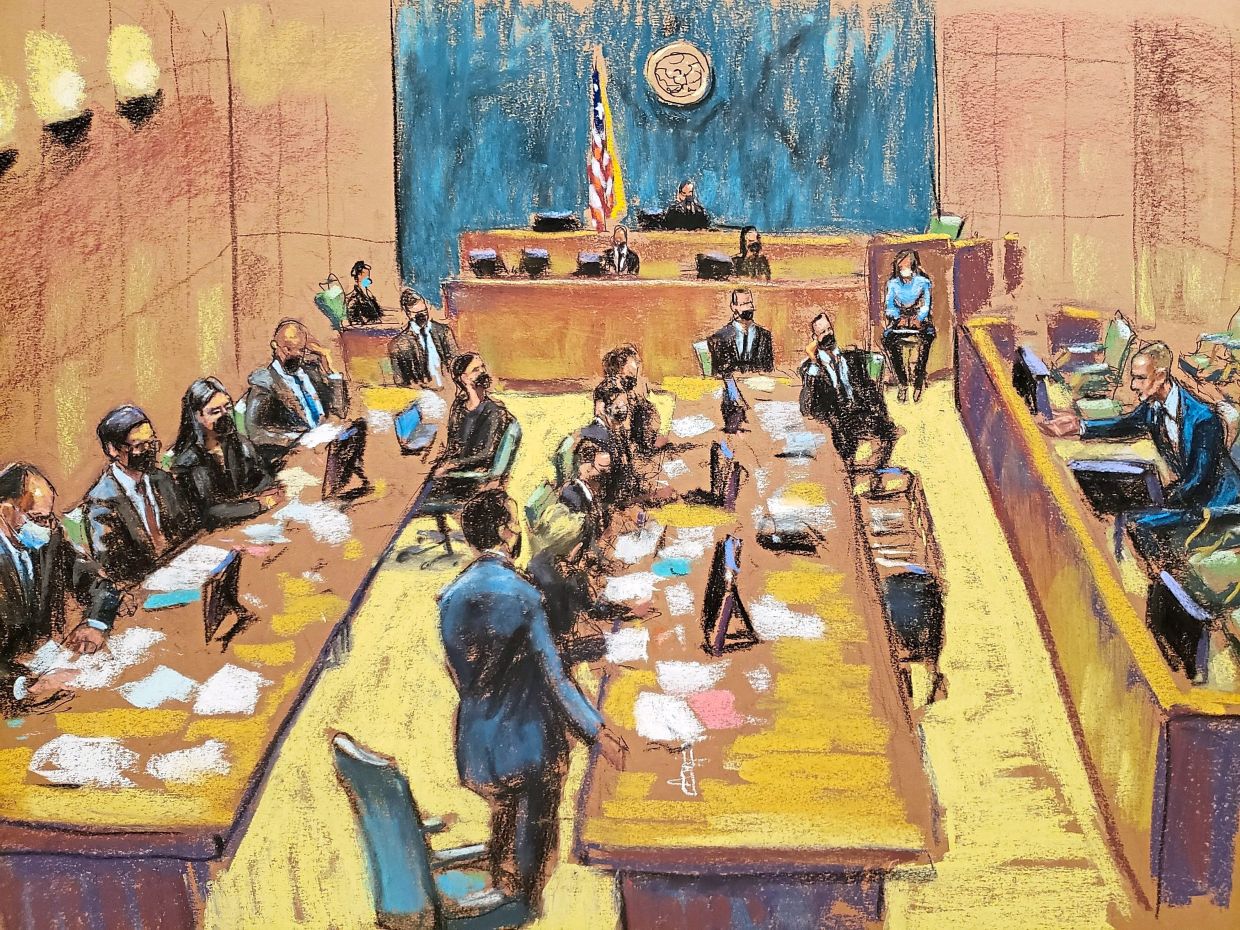
KUALA LUMPUR: Indonesian terrorist Hambali can now speak in English and even taught himself Arabic following his arrest 18 years ago.
His lawyer, Jim Hodes, said Hambali was only allowed a strictly controlled call four times a year, each lasting 15 minutes.
”As his lawyer, I am not allowed to speak to him and can only access him by travelling to Guantanamo in a lengthy convoluted and heavily controlled manner,” said Hodes.
According to one news report, Hambali, 57, enjoys watching programmes like Planet Life and Blue Planet on DVD.
In 2010, mStar – The Star’s Bahasa Malaysia news portal – obtained a picture of Hambali from his brother, Kankan Abdul Qadir, who lives in Cianjur, West Java, Indonesia.
The picture was delivered to the family with the assistance of the International Committee of the Red Cross (ICRC). It showed a frail-looking, bearded Hambali, reading a book.
Hambali’s wife, a Sabahan, Noralwizah Lee Abdullah @ Lee Yin Len, a Chinese convert, is believed to be staying at the village with the family.
She was arrested together with Hambali in the central city of Ayutthaya, Thailand, in 2003.
After her release from her two-year detention under the Internal Security Act, she stayed in Sabah’s east coast district of Beluran.
It was reported that her sister, Noral Fadilah @ Lee Ah Lin, was married to Abu Yusuf @ Dandang Surman, another terrorist.
Abu, who was born in West Java, Indonesia and reportedly a permanent resident in Malaysia, stayed for five months in Afghanistan, according to a 2003 report by the International Crisis Centre on Jemaah Islamiyah (JI).
Noralwizah and Hambali met at the Luqmanul Hakiem school in Ulu Tiram, Johor, which was founded by two Indonesian JI members, Abdullah Sungkar and Abu Bakar Bashir.
Abdullah died in 1993 while Abu Bakar, 82, was released from Indonesian prison last January after his 15-year sentence was reduced for good behaviour.
Hambali’s 2010 picture was probably the last photograph seen by the world until his new picture was released by his lawyers recently.

Hambali’s lawyer, Jim Hodes
He was the second in a family of 13 children of a rice farmer in the village of Sukamanah, where he got involved in radical activity in his teenage years.
In fact, he travelled to Afghanistan in 1983 to fight the Soviet Union, where he received arms training. It has been reported that between 1987 and 1990, he had met the late Osama bin Laden.
There have also been reports that Hambali even made calls to Mohamed Jamal Khalifa, a brother-in-law of Osama’s. The two possibly met in Afghanistan during the war. Jamal, who was accused of funding terror plots, was killed in Madagascar in 2007.
”My client (Hambali) was detained in 2003. He was isolated and tortured by the US government for the next three years.
”He was then held in solitary confinement for the next 10 years. His living conditions now are better than when he was being tortured and held in solitary confinement,” Hodes said.
He has maintained that “I do not believe anyone in the US government truly believes that my client represents a threat to anyone, let alone anyone in the US” but Hambali’s jailers have reportedly maintained that “he did use the daily prayers and lecture he led to promote violent jihad among fellow detainees.”
”He also uses his language classes and status as a teacher to exert undue influence on others,” it was reported.
Hodes said he looked forward to having contact with Indonesian and Malaysian authorities to discuss this and other issues in the future.
Mohd Farik, 46, a Kajang-born engineer, is also a cousin of well-known Malaysian terrorist, Zulkifli Abdhir @ Marwan, who was killed by the Philippines army.
He was a leader of the Kumpulan Mujahidin Malaysia, which was linked to the JI and listed under FBI’s Most Wanted Terrorists.
Johorean Mohd Nazir, 45, who has a degree in architecture, is described as a “high value detainee” and “lieutenant of Hambali”.
In an interview with the New Straits Times in 2016, his brother, Zahbah Lep, said Nazir started gravitating towards Islamic politics when he was 16 and had studied at the Politeknik Sultan Abdul Halim with Farik when he started joining JI and Tarekat groups.
”I was shocked when I was shown a photo of him clad in battle fatigues with Osama bin Laden in the desert.
”I just could not believe that he was capable of doing that,” Zahbah was quoted as saying in the news report about the picture shown to him by Special Branch officers.
It has been reported that he joined the Territorial Army to learn military skills before going to Afghanistan, where he also met Osama.
There has been admission by the US of arrested terrorists being tortured and the existence of covert, overseas CIA interrogation centres known as black sites (even in Morocco and Romania) where Hambali was said to have been questioned.
Time magazine claimed in 2003 that all three were also interrogated in the remote Indian Ocean island of Diego Garcia, a US military base.
Hambali is said to have been subjected to almost three years of isolation, interrogation and torture, according to a Reuters report in 2014.
More details of these methods of detention and interrogation can be obtained online in a 2014 report of the Senate Select Committee on Intelligence Committee Study.