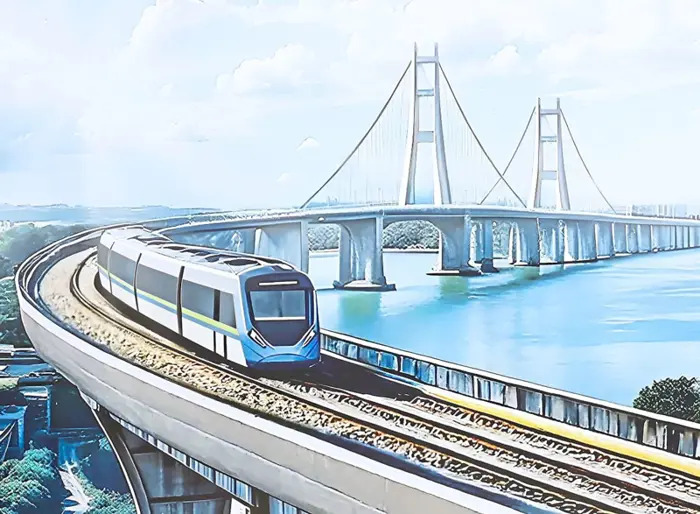
Practical purpose: Penang’s LRT service is expected to connect the island’s 1.8 million residents to the million others on the mainland and vice-versa, as seen in the artist impression of its Mutiara Line project. — CHAN BOON KAI/The Star
IT is understandable for elected representatives to ask state and federal governments for projects that can bring high impact value for their constituents.
However, that does not mean these lawmakers can simply ask and expect these requests to be met, especially if these infrastructure projects are hugely costly.
In recent weeks, two proposals have grabbed headlines: Perlis Mentri Besar Mohd Shukri Ramli calling for the setting up of an airport in Chuping, Padang Besar, by 2040; and Langkawi MP Datuk Mohd Suhaimi Abdullah asking for a light rail transit (LRT) system on the island.
Both ideas may sound impressive at first glance – symbols of ambition and development – but a deeper look reveals a troubling disconnect from economic realities and public interest.
Let’s start with Perlis. To be fair, the MB proposed the airport to be ready only in 16 years’ time.
He was not asking for one in the immediate future.
The facility is aimed at serving tourists and travellers from Thailand as the state believes it has to accommodate future air needs as well as boost investor confidence, the Mentri Besar claimed.
But Perlis is Malaysia’s smallest state by both area and population – it is home to just over 250,000 people, although the size of the population may increase within a decade.
The reality is that Perlis is only an hour’s drive from the Sultan Abdul Halim Airport in Alor Setar.
Building a new airport in this context is, at best, redundant. At worst, it’s a gross misallocation of public resources.
Airports require long-term financial commitments, including sustained operational funding for costs such as security, maintenance, staffing, and environmental management.
Unless there is compelling evidence of unmet demand for air travel – be it from tourism, business, or cargo – building an airport in Perlis is akin to building a stadium in a town without a team, as one report said.
It would help if the PAS lawmaker could justify the proposal with compelling facts and figures.
Then there’s Langkawi. The Bersatu MP’s proposal for an LRT system might sound practical, especially since the island’s traffic congestion is a pressing issue.
But let’s not forget: Langkawi is a small island with a population of under 100,000.
In 2023, Langkawi welcomed 2.82 million visitors and they certainly used the roads.
Langkawi remains a tourist destination, not a metropolitan hub.
What it needs is smarter, sustainable mobility – not a billion-ringgit rail system that will see more empty carriages than actual commuters.
In contrast, the population of Penang is about 1.8 million with a huge number living on the island.
About 800,000 people live in the urban areas of George Town alone and the broader Greater Penang metropolitan area – which includes southern Kedah and northern Perak – has around 2.6 million residents, according to reports.
The Mutiara LRT, a 24-station light rail transit system, will be coming up in Penang with a 29.5km line that will connect George Town city centre with its southern suburbs of Jelutong, Gelugor, and Bayan Lepas and eventually with a link towards Seberang Prai across the Penang Strait.
According to reports, the estimated cost is capped at about RM16bil to RM17bil as of July 2025, mostly from market conditions such as land acquisitions, since 2016.
To put it simply, Langkawi does not have the number of passengers to justify the building of an LRT. Maybe a city tram but certainly not an LRT line.
Effective public transportation must be tailored to actual needs.
Langkawi deserves improved bus routes, more frequent ferry services, and ecofriendly shuttle systems that would provide far greater returns on investment.
LRT systems, however, are necessary only in dense urban environments with high daily ridership.
Langkawi, with its sprawling resorts and modest resident population, simply does not fit that bill.
Again, the Langkawi MP was speaking with no data-driven details to back his idea.
He may have appealed to his voters but to many Malaysians, it sounded like he did not do his homework. Did he do feasibility studies and look at the return on investments (even granted that most LRT systems around the world take a long time to recoup the initial investment, if ever)?
The most important fact, though, is this: LRT systems are meant for cities with large populations to reduce road congestion.
It is acceptable for our lawmakers to have vision but we also need leadership that is grounded in data, sensitive to local needs, and committed to spending public money responsibly.
Vision is important but it must be matched with pragmatism.
There is little point in having airports which are empty as no airline wants to fly there because the volume is too small, or empty LRT stations because there is insufficient ridership.
The Kedah government, meanwhile, has been pushing for an international airport in Kulim although the Penang International Airport is merely an hour away by road.
The state PAS government hasn’t been able to convince many people that an airport in Kulim will complement the Penang airport. Having an airport in Ipoh isn’t going to excite anyone either.
As the Free Malaysia Today news portal said, with one each in Kulim, Penang and Ipoh, it would mean three airports over a distance of less than 150km.
If there is any airport that deserves an immediate upgrade, it is the Tawau Airport in Sabah, which is bursting at its seams.
In 2024, it ranked as the eighth busiest in Malaysia, handling close to over two million passengers, including many tourists from China who use the airport to travel to nearby Semporna.
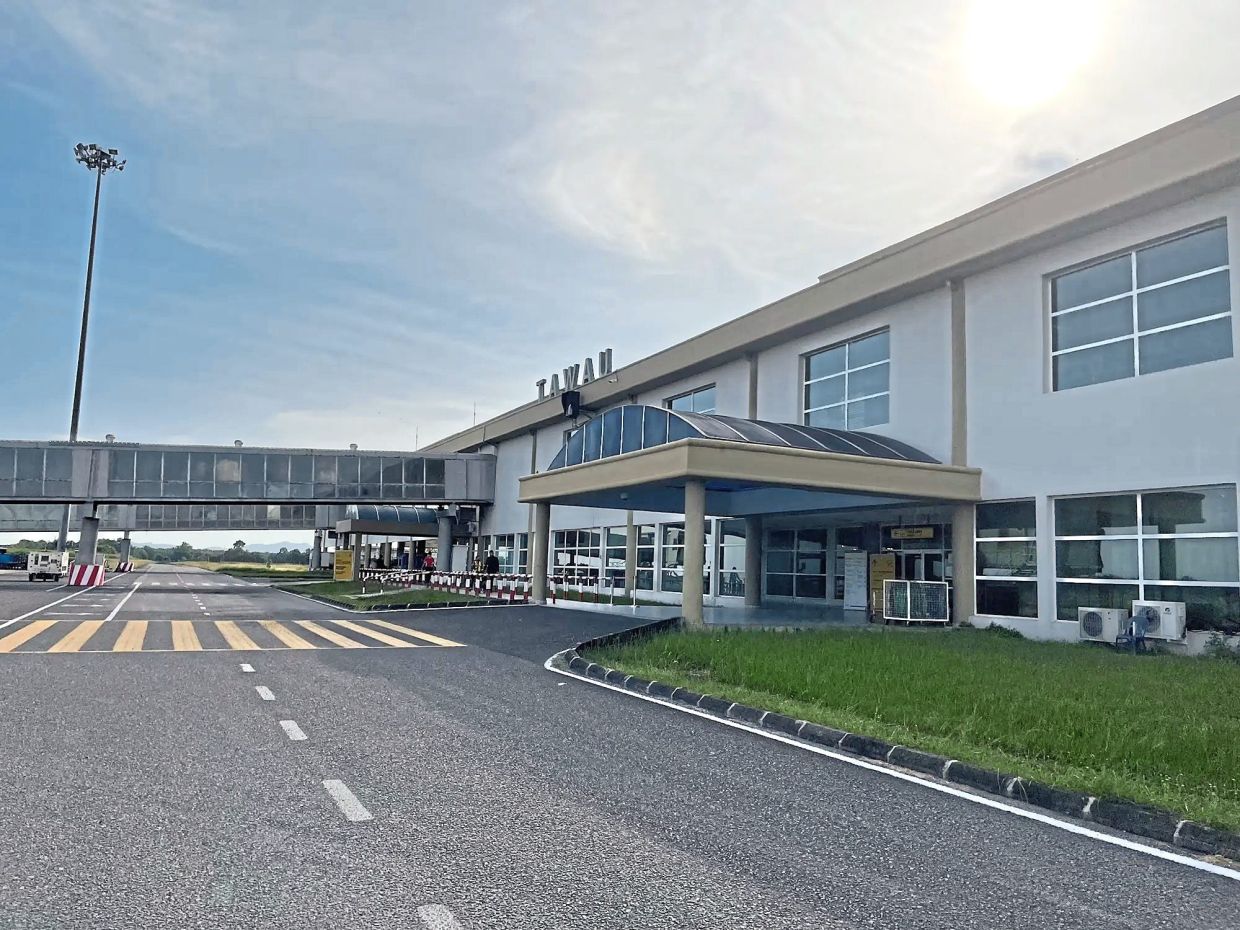
It is good to hear that the Transport Ministry has begun plans to upgrade the airport.
Semporna, the gateway to the Mabul and Sipadan islands, needs a massive cleanup as it is embarrassingly dirty, with almost zero decent facilities, including clean toilets at the pier – but that’s another story.
With Visit Malaysia 2026 taking off soon, let’s focus on projects that need immediate attention instead of dreaming of grandiose projects such as airports. No runaway dreams, please.