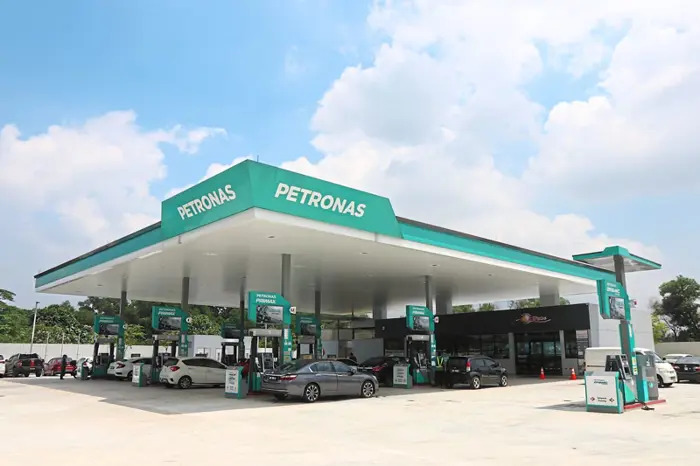
Blow softened: Subsidies are keeping petrol prices low in Malaysia – for now. — The Star
THE conflict in the Middle East between the United States-Israel and Iran has thrown the rest of the world into serious disarray.
We all have been caught up in the issue as the war continues, although we live thousands of miles away.
US President Donald Trump has also made conflicting statements over the past week. One day he says the war is ending soon and that the US is “ahead of schedule” – and then he flips by saying it won’t end so soon as there is still much to be done.
The war has expanded with Iran’s attacks on its neighbours, the United Arab Emirates (UAE), Oman, Bahrain, Kuwait and Iraq while Israel has hit Lebanon.
The Strait of Hormuz, a critical artery through which over 20 million barrels of oil and gas reportedly pass daily, has been shut down by Iran.
Global oil prices have spiked, with many countries already feeling the pressure with fears of a long-term, high price energy crisis and looming recession.
Higher fuel prices ripple through every sector of the economy – from transportation and food production to electricity and manufacturing.
To put it simply, we will have to pay more for everything – from the petrol for our cars and food items to the electricity for our homes.
Across Asia and beyond, governments are struggling to cushion their citizens from the impact with economies already being badly affected.
While attempts have been made to keep oil to US$100 (RM394) per barrel, Iran has served notice that the world should be prepared to pay US$200 (RM788) a barrel.
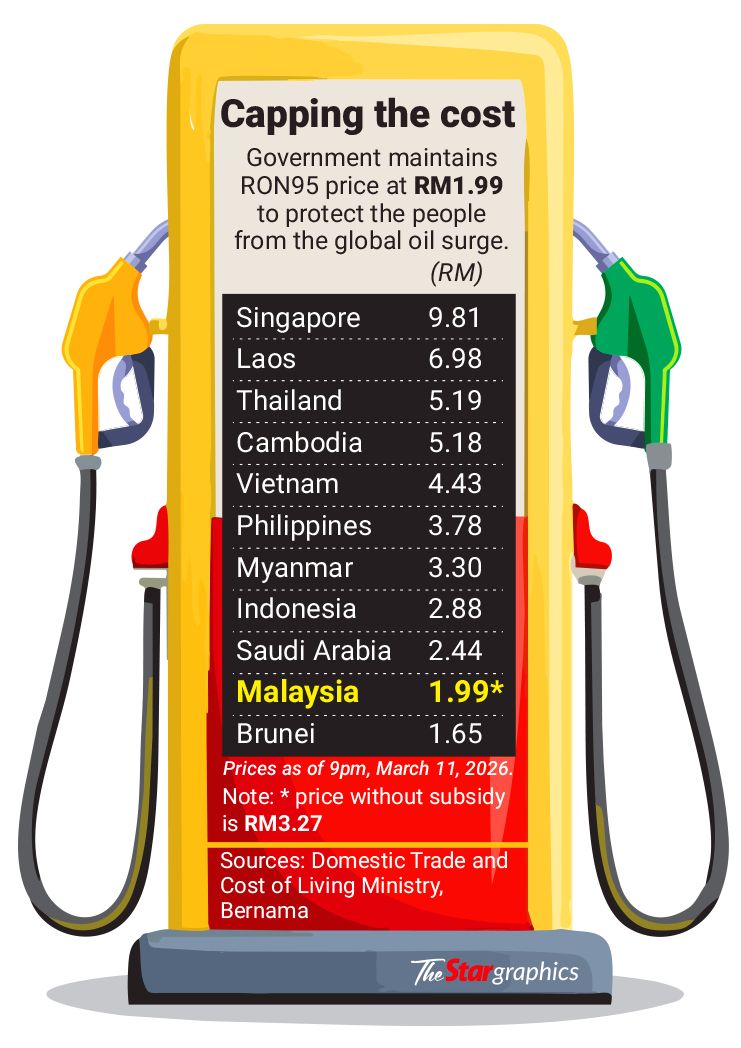
Against this volatile background, Malaysia has managed the shock relatively better compared with regional peers like Singapore, Thailand and the Philippines.
The price of petrol in Malaysia is the second lowest in Asean after Brunei, thanks to government subsidies.
There has not been any panic buying by motorists rushing to fill up their tanks like in neighbouring countries.
However, the question remains: How long we can continue doing this?
The total subsidy for RON95 petrol could reach RM24bil by the end of 2026 if the conflict continues. It means forking out RM2bil a month to keep RON95 at the subsidised price of RM1.99.
We have been lucky as Malaysia occupies a unique position as an oil producer, exporter and importer while also maintaining policy tools that help soften the blow for consumers.
World Bank Malaysia chief economist Apurva Sanghi tweeted that as a major gas exporter, Malaysia produces light and high-quality crude oil and exports lots of it.
“So exporters benefit from higher oil prices. Same for gas exporters, with higher gas prices,’’ he tweeted on X.
He explained that Malaysia also imports crude oil, mostly from Saudi Arabia and the UAE, which it then refines, partly for local consumption and partly for further export.
Malaysia has turned into a net importer of crude and refined products in recent years and the higher oil prices will lead to higher import bills.
Still, unlike Singapore which imports nearly all its energy needs, Malaysia benefits from its own petroleum resources.
Through national oil company PETRONAS the country still earns substantial revenue when oil prices rise. These revenues provide the government with fiscal space to manage subsidies, fund targeted assistance, and maintain economic stability.
Singapore, in contrast, has little choice but to pass on higher global prices to consumers and businesses. While its economy is resilient and well-managed, the city-state must absorb the full impact of rising import costs.
Thailand and the Philippines face a similar predicament with both economies being heavily dependent on imported energy, making them vulnerable when oil prices spike.
Governments in Bangkok and Manila often resort to temporary price controls or emergency subsidies, but these measures strain public finances and are difficult to sustain over time.
For Bangladesh and Pakistan, the situation is even more acute as they face severe fiscal and currency pressures partly driven by rising energy import bills.
In Pakistan’s case, higher oil prices have repeatedly forced the government into painful fuel price adjustments that trigger inflation and public discontent.
That does not mean Malaysia is immune to the oil price surge. It’s just that we enjoy a buffer that many others do not – for the time being, at least.
Another key factor is the government’s subsidy and price stabilisation mechanisms as targeted fuel subsidies and price ceilings still play a role in preventing sudden spikes at the pump.
This ensures that households and small businesses are not immediately exposed to global price volatility.
But over-reliance on subsidies is fiscally unsustainable in the long run. Ordinary Malaysians, who do not understand the mechanism of such subsidies, will not appreciate it when adjustments have to be made to petrol prices periodically.
Equally important is the country’s relatively diversified energy mix and infrastructure, which includes domestic refining capacity and natural gas resources. These help moderate supply disruptions and reduce dependence on imported fuels.
In circumstances like this, austerity helps. Thus Prime Minister Datuk Seri Anwar Ibrahim’s directive to government bodies not to hold Hari Raya open houses.
There has been criticism that caterers and small businesses will be affected by the decision but, the fact is, we have to use the current breathing space wisely.
We do not know how long the war will last. It is easy to start a war but it is far more difficult to end one.
Iran has said it is not ready to end the fighting even if the US wants to. We know Israel has will never keep its part of any bargain, even if there is a purported truce. We have seen it in Gaza where it continues to rain bombs.
This is the time to strengthen fiscal discipline, accelerate targeted subsidy reforms, and invest in energy diversification, including turning to renewables.
Malaysia is resilient today as a result of structural advantages, prudent policy tools, and strong institutions such as PETRONAS.
But maintaining that resilience will require good leadership, steady hands, careful stewardship and forward-looking reforms.
The real test is not surviving the latest oil price hike but preparing the nation for what comes next.