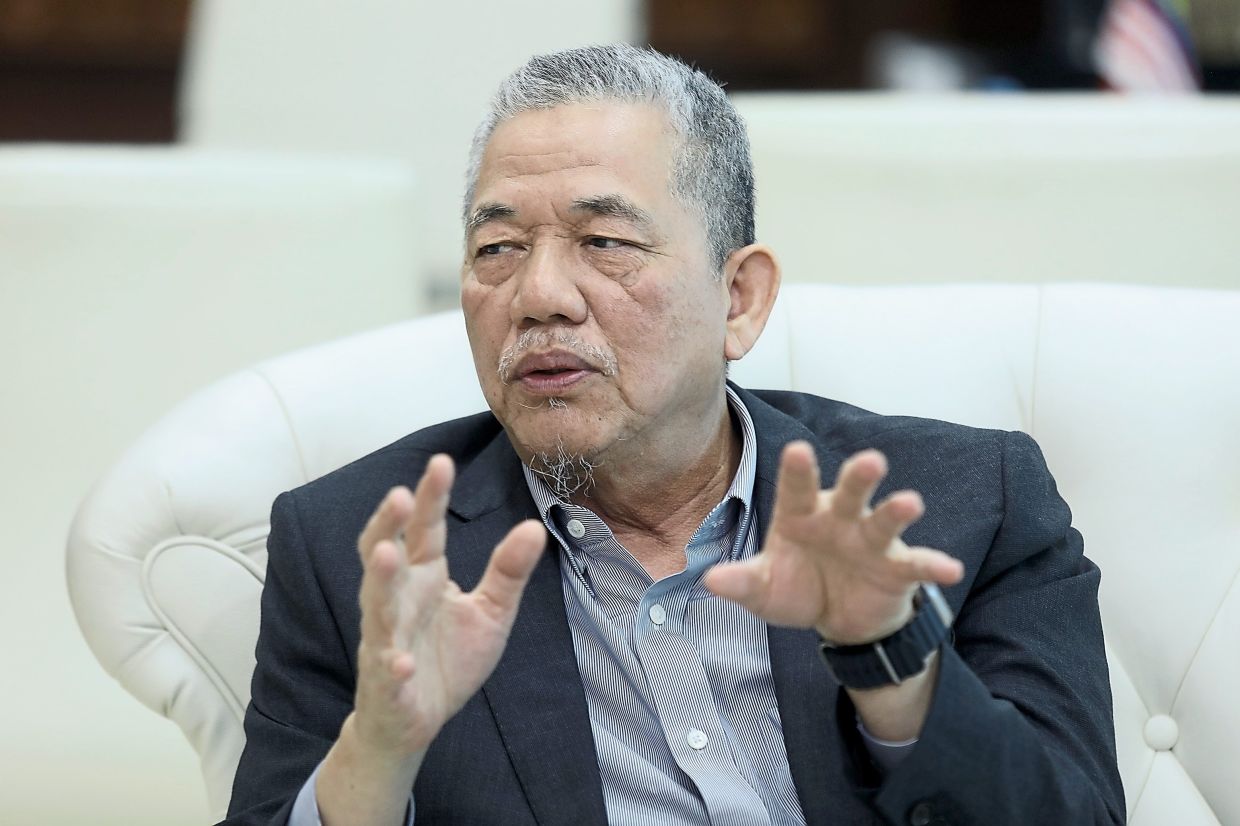
Fadillah: Malaysia is the first producer of certified sustainable palm oil and remains the global gold standard
DEPUTY Prime Minister Datuk Seri Fadillah Yusof will be making a visit to Brussels next month to meet the European Union (EU) which has imposed what he has described as “unjust and discriminatory’’ regulations against the palm oil industry.
The Plantation and Commodities Minister will be joined by his Indonesian Coordinating Minister for the Economy Airlangga Hartarto to meet EU Members of Parliament, officials, businessmen and non-governmental organisations.
Fadillah spoke to WONG CHUN WAI in an exclusive interview on the EU actions and their impact.
WONG: Datuk Seri, there has been considerable discussion in the press about Europe’s latest move to block palm oil exports, but this isn’t the first attempt. Can you tell us about the Renewable Energy Directive?
Fadillah: You’re right, in recent years the EU has enacted several legislations and regulations that specifically target palm oil. One of the most discriminatory is the Renewable Energy Directive (RED).
RED, first enacted in 2018, is Europe’s landmark renewable energy and transport fuel policy. Since it came into force, RED has since undergone several revisions. The most recent update – so-called RED II – labelled palm oil as high risk.
This singled out palm oil and prevented palm-based biodiesel feedstocks from being counted under RED II’s renewable energy targets, nor qualify for its financial incentives. Worse, RED II implemented a ban on palm oil usage by 2030.
In response, Malaysia fielded action against the EU at the World Trade Organisation. It appears the EU was rather unhappy with our response. Europe is actively considering the introduction of “RED III,” which may ban palm oil biodiesel exports starting this year.
The EU has claimed these RED restrictions are not a ban. This is sophistry. What else should you call it, when the directive makes our immediate exports unviable, and then sets a future date after which we can no longer export?
I understand that the EU plans to carry out a benchmarking system of countries and placing them on low, medium, and high-risk places over deforestation, under EU Deforestation Regulation. How will this affect us?
The EU Deforestation Regulation (EUDR) is set to become yet another trade ban erected against exports from Malaysia and other developing countries. Its benchmarking system used to determine the risk status of exporters is based on unsound reasoning and a weak scientific basis.
Malaysia, and the palm oil sector’s record on deforestation is clear. Today, deforestation from palm oil in Malaysia is effectively zero. Palm oil plantation expansion has slowed, and since 2019, palm oil planted area has decreased from 5.9 million ha to 5.67 million ha.
Since 2011, the forested area in Malaysia has actually increased. Forested area has now grown to 19.1 million ha which are under a long-term forest management plan. This is more than 55% of Malaysia’s total land area.
The Malaysian Sustainable Palm Oil (MSPO) certification scheme has played a critical role in reducing deforestation from palm oil to effectively zero.
In 2022, MSPO revised its standards to strengthen our commitments to reducing deforestation.
The Malaysian government has been very clear to our European partners: our palm oil is not high risk, Malaysia is not high risk, and we do not expect to be classified as such.
Malaysian palm oil is sustainable and is one of the most certified vegetable oils in the world today.
The MSPO already guarantees Malaysia’s commitment to comprehensive sustainability standards.
It has been reported that Malaysia and Indonesia are considering stopping palm exports to the European Union. While this reflects our frustrations, is this a rational response as Europe remains the second largest importer of palm oil globally?
Malaysia values our European friends. We treat our trading partners with fairness. Sadly, this mutual respect and recognition has not been reciprocated by the leadership of the EU.
Malaysia and Indonesia will coordinate closely on the EUDR response, more closely than ever before. The EU should understand that our two countries are of one view on the nature of the EUDR and we are determined together to defend our palm oil producers and our farmers.
After my meeting with Airlangga Hartarto, Indonesia’s Coordinating Minister for Economic Affairs, last month, we have agreed to send envoys to the EU to discuss the impact of the bloc’s new deforestation law and to prevent unintended consequences of the regulation on Malaysia and Indonesia, and our critical industries.
At the same time, our producers are focusing on new, more promising markets that respect their trading partners, such as the Middle East, India and China.
We are also identifying other avenues for the Malaysian palm oil industry by encouraging the industry to diversify into the downstream activities, which produces higher value-added palm oil-derivatives, oleochemical products as well as palm biomass. This enables the industry to fully utilise these co-products, enable the adoption of circular economy and minimises its wastes.
Can high-end government-to-government engagements help?
Yes, such engagements are very important. However, the challenges present for Malaysia in the EU goes well beyond a joint mission. Malaysia and Indonesia are both members of the regional platform (Asean) and we have discussed how to work within Asean to address European unilateralism against our region.
We have agreed to coordinate cooperation with our Indonesian partners to express our shared concerns about the impact of the EU’s regulation and the harm it will have on our region and developing nations across the world.
This government is committed to standing for Malaysian interests, including in the palm oil sector, in every meeting, every speech, at every regional and international forum.
Should we spend more energy and resources in other countries such as China, India, and the West Asian countries?
These are markets that offer great potential and can only lead to closer ties and more engagement. Yet, they are not mature markets like Europe, either.
India and China remain the two biggest buyers of Malaysian palm oil and we feel there is still room for expansion in these growing markets. Oils and fats intake in both these markets are growing and we plan to expand the usage of Malaysian palm oil and downstream products, especially in the food sector.
At the same time, we are focusing on several key countries in the Middle East and Africa. In 2022, Malaysian palm oil exports to the Middle Eastern region increased by approximately 32% whereas exports to the North African region registered an increase of 51%. Under the umbrella of the MSPO, we are also positioning sustainability as the unique value propositions of Malaysian palm oil.
The same issue of deforestation has been used against Malaysia and Indonesia. This has been going on for a while. What else can we do to overcome the deforestation regulation?
Malaysia’s record on deforestation and forest conservation is far superior to that of many European countries.
Firstly, Malaysia’s commitments to uphold 50% of its land under forest cover, which was announced at the Rio Earth Summit 1992, still exists today.
Currently, Malaysia maintains about 55% of its total land area as forest cover.
The EU average is under 40%. So, who should be lecturing whom when it comes to forest protection and deforestation?
We also need to continuously convey Malaysia’s latest sustainability initiatives and efforts, to keep the Western market updated.
For example, our national palm oil sustainability certification scheme, revised last year, has included strengthened sustainability requirements, which include No Deforestation cut-off date, High Conservation Value (HCV) areas, Social Impact Assessment (SIA), improved social and labour practices and Greenhouse Gas (GHG) emissions calculation.
To be clear: Malaysia is the first producer of certified sustainable palm oil, and we remain the global gold standard. Our major companies can meet the EU sustainability requirements in EUDR and elsewhere. That is not in question, and we will continue to supply our European customers seamlessly. The issue with EUDR is that it deliberately targets small farmers which could see them being excluded from supply chains – and that infringes on Malaysia’s sovereignty.
Has your Ministry had any engagements with the EU and are they engaging or open to discussing this contentious issue? Or are their minds closed?
Yes, we have held a dialogue and engagement session with our EU counterparts. We will continue to do so. Malaysia and Indonesia will also act in coordination.
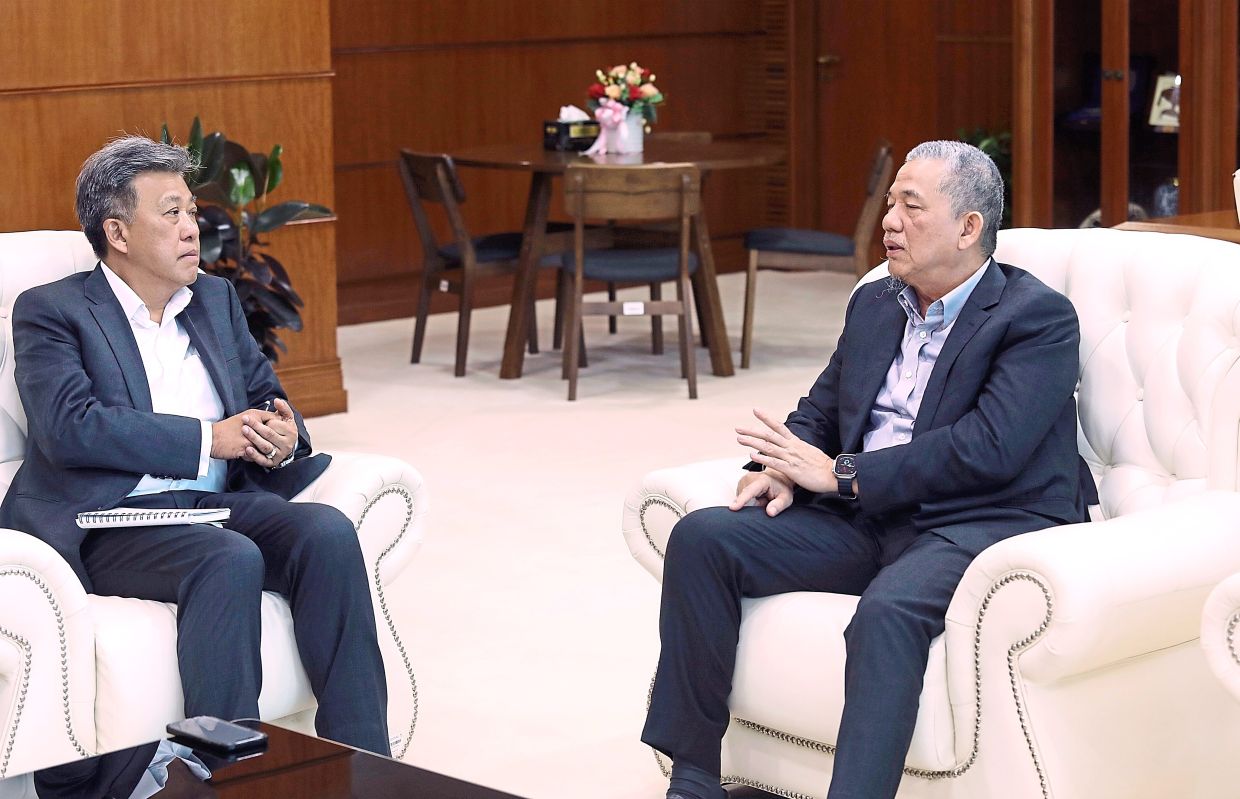
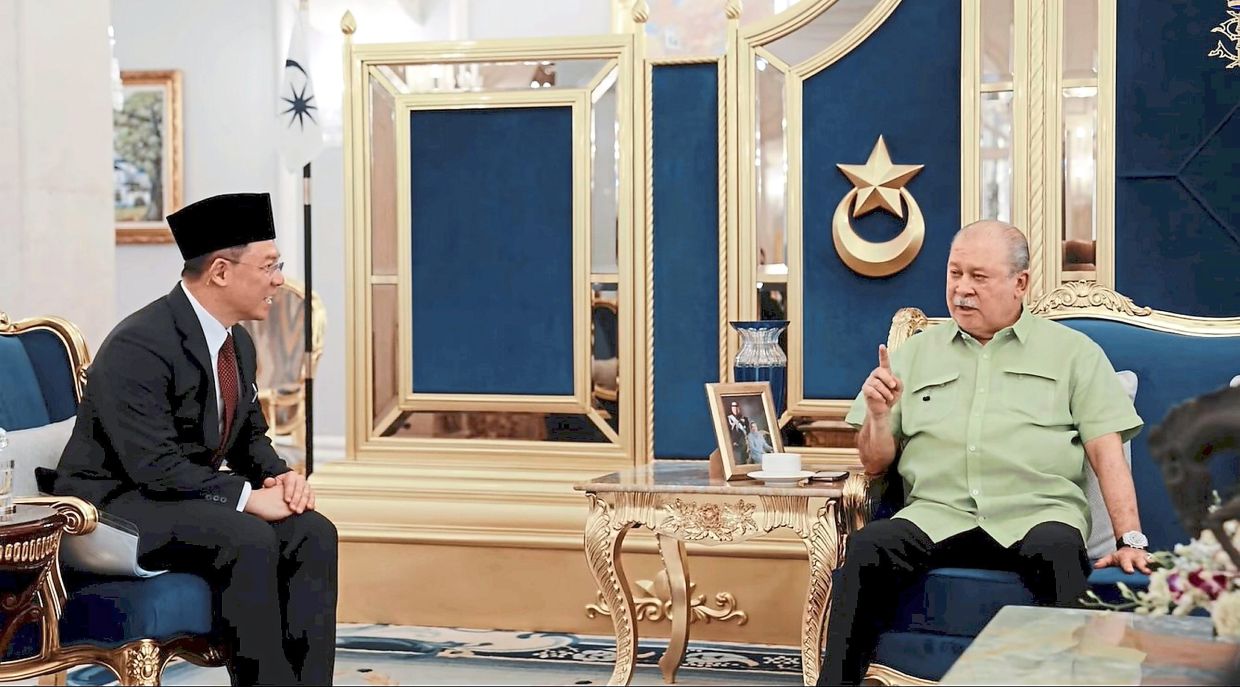
Wong (left) and Fadillah during the interview.
What will you do to make the ministry more impactful and efficient in carrying out/implementing directives from your office? The sentiment is that the industry players are hopeful of this government demonstrating a better degree of delivery, what will you do to ensure that this happens?
As the Minister of Plantation and Commodities of Malaysia, my main priority is to protect the interests and livelihood of the millions of citizens who depend on the palm oil industry. While we understand and acknowledge the concerns about the environment and deforestation, we firmly believe that the EU deforestation- free regulation is discriminatory and unjustified.
Sustainability and ESG (environmental, social and governance) have been and will always be a core focus for us. We have implemented strict regulations and guidelines for oil palm plantation development and management, including guidelines for environmental impact assessments and monitoring of plantations.
We have also made mandatory the adoption of sustainable practices such as the MSPO certification scheme, which sets standards for responsible palm oil production.
In addition, we will work closely with the industry to explore alternative ways to increase productivity while reducing environmental impact and deforestation. We will also explore new markets and opportunities for Malaysia’s palm oil industry to reduce dependence on the EU market.
Furthermore, we will continue to engage in constructive dialogues with the EU and other stakeholders, and to demonstrate the positive contributions of the palm oil industry to the economy and livelihood of many Malaysians, as well as its commitment to sustainability and responsible production.
My priority as the Plantation and Commodities Minister will be to protect the interests of the industry and the livelihood of the citizens, while also ensuring that sustainability and ESG remain at the core of our policies and practices.
Given the continuing campaign against palm oil, what fresh steps will be taken to better promote palm oil?
Palm oil is the world’s most popular vegetable oil. It is the most productive, healthiest, and most versatile. So of course, our competitors wish to knock us down, whether through non-governmental organisation campaigns or through lobbying for trade barriers. So, we know that the key is to rely on facts and demonstrate our work to our customers. A simple example is our mandatory MSPO certification scheme, which clearly addresses sustainability, environmental protection, social responsibility, and workers’ rights, among others. It also focuses on, most importantly, traceability.
Our efforts are focused on getting stakeholders in Malaysia and abroad to understand and appreciate MSPO-certified products through talks, forums, and seminars.
MSPO has become our differentiation factor. We are producers of not just any palm oil, but certified Malaysian palm oil, and MSPO is the sustainability guarantee.
It is also important to mention that the Malaysian palm oil industry has more than 450,000 smallholders. They are the backbone of the industry. They are also a real-life example of Malaysia’s commitment to the UN Sustainable Development Goals (UNSDGs).
Unfortunately, the proposed regulations that would harm smallholders would also directly undermine the SDGs.
The national fresh fruit bunch yields for Malaysia have been stagnating since the mid-1980s and have in fact regressed further the last three to four years reaching only 15.5 tonne/ha in 2022 (way below the likes of the more efficient planters in Malaysia). It is a new 30-year low, what initiatives must the industry focus on to raise our national yields so that we can also remain competitive in the future?
Firstly, the industry needs to focus on minimising losses through increasing its crop-recovery efforts by optimising the plantation operations’ collection of loose fruitlets, as well as reducing the occurrence of missed ripe fresh fruit bunches (FFBs) and unripe FFB collections.
Secondly, replanting efforts with selected and proven dura-free planting materials should be given utmost importance to maximise the yield. In addition to the conventional plant breeding programmes and in-vitro cloning of high yielding palms, the industry needs to utilise the developments made through the full mapping of the oil palm genome.
More genomics-based planting materials with selected traits such as thinner shells, thicker mesocarp, being disease and stress-resistant, are expected to be developed by the industry which can further increase the productivity of the new generation of oil palms in Malaysia.
Finally, the industry should embrace and adopt the latest available technological advancements in the form of Industry 4.0 (IR 4.0) technologies to help increase yields, for example autonomous drones and mechanisation for agronomic practices, digitalisation and the utilisation of Big Data, Internet of Things and blockchain technology for precision agriculture, plantation management and milling operations.
The adoption of these technologies enables the industry to transition into precision farming that will fully optimise its available resources (planting materials, land, labour, energy, water, fertilisers, and pesticides).
There has been an acute shortage or foreign workers in the industry last year attributing to the lower production. What will you do to ensure that avenues exist so companies can replenish their workforce?
We are aware of the labour shortage faced by the palm oil industry during the pandemic. My ministry has been engaging with the Ministry of Human Resources in addressing the issue, such as speeding up the procuring of foreign workers.
My colleague, Human Resources Minister V. Sivakumar, has announced this January that Malaysia would relax conditions on migrant worker recruitment involved in certain sectors which include plantations, where his ministry will process and approve applications within three working days.
Another measure undertaken is that the Human Resources Ministry will also enable Malaysian employers to employ foreign workers from 15 source countries without undergoing preconditions of employment and quota eligibility. This will help expedite the procurement process of foreign workers for the Malaysian palm oil industry. Nevertheless, plantation operators should not be too reliant on foreign workers.
They should be more creative in trying to entice the local workforce, for example, by offering flexible working hours as well as attractive incentives based on productivity. The industry needs to also explore and utilise available IR 4.0 technologies that can reduce the dependency on manual labour.
What will you do to ensure that red tape and bureaucracy are eliminated in the recruitment process as this is a problem stated by many industry captains today?
The ministry will continue its engagement with the Ministry of Human Resources in identifying unnecessary red tapes and bureaucracy that are hampering the recruitment process for the industry.
However, we need to also ensure that there is no element of forced labour during the recruitment process, and potential foreign workers are procured through ethical and transparent sourcing, without any form of exploitation or coercion. The government and private sector are both committed to this.
Sustainability has become a vital necessity to keep trade doors open today especially in Western markets, what emphasis will the DPM give to the topic of sustainability?
Firstly, we need to emphasise that Malaysia has and continues to be committed to ensuring that its commodities are regulated, sustainably produced and certified. Its MSPO certification scheme is mandatory for the palm oil industry. Its auditing process is fully independent, externally audited by certification bodies which include recognised international firms such as BSI, Control Union and SGS.
Additional sustainability requirements included in the revised MSPO standards in 2022, like High Conservation Value areas, No Deforestation cut-off date, Social Impact Assessment, have improved social and labour practices and GHG emissions calculations to enable the Malaysian palm oil industry to better address environment, labour and governance issues.
MSPO’s supply chain traceability platform (MSPO Trace) which extends beyond the mills to refineries and processing facilities and enables better transparency as well as traceability of MSPO-certified palm oil, will enable customers and consumers to verify the sustainability of the Malaysian palm oil used.
In addition to the MSPO certification, we are also looking at the possibility of making sustainability certifications compulsory for our other commodities as well.
Secondly, we are advocating to the palm oil industry that sustainability requirements are no longer about mere compliance and should now be the norm and engrained in our corporate culture.
With ESG ratings and risks gaining traction amongst financial institutions, investors and stakeholders, companies need to ensure that sustainability and ESG matters are well addressed.
This is crucial in gaining better financing access and attracting more institutional investments.
We hope that our international partners will work with us on this sustainability journey, rather than imposing trade barriers that will not incentivise positive change.
The EUDR is not a good development from this perspective. We hope to have more constructive and balanced approaches from our international partners.
Sir, as the first DPM from Sarawak, what have been the expectations from the people of Sarawak from you?
Sarawak demands its right as stipulated in the Malaysia Agreement 1963 (MA 63). We claim for our rights, allocations that Sarawak should receive, based on MA63 when Malaysia was formed.
Our oil royalties should be demanded as we are the producers of resources.
As the late Pehin Sri Adenan Satem used to say, “I don’t care if the oil is dug in other countries, but if the oil is taken from Sarawak, we have the right to demand additional royalties for us to carry out further development”.
We are more assertive in asking for what was previously agreed upon to be fully honoured.
Expectations from Borneo are quite big, not only from Sarawakians but also Sabahans. It is my responsibility that this is borne and it requires the cooperation of not only Borneo MPs but even all MPs for us to see how we can close the gap between Sarawak, Sabah and Peninsular Malaysia.
What are the immediate targets for the immediate, medium and long-term for Sarawak and Sabah?
The three main areas to focus on are:
- Education – to ensure every child has the access to proper education to prepare them with the required knowledge.
-
Healthcare – so that everyone, including those in the rural areas, has access to proper medical treatment and facilities.
-
Physical development – access roads that will help to spur development and connect people.
The size of Sabah and Sarawak is a challenge, but I believe the federal government is trying its best to provide the best infrastructure to both regions.
Though it might take time, correct steps are taken to ensure a successful implementation.
The decision of the federal government announced by Prime Minister Datuk Seri Anwar Ibrahim to empower the Public Works Departments of Sarawak and Sabah to manage federal projects of up to RM50mil should be the right move to prevent delays or non-implementation of approved projects in Borneo.