Author Archives: wcw

Time for GE15


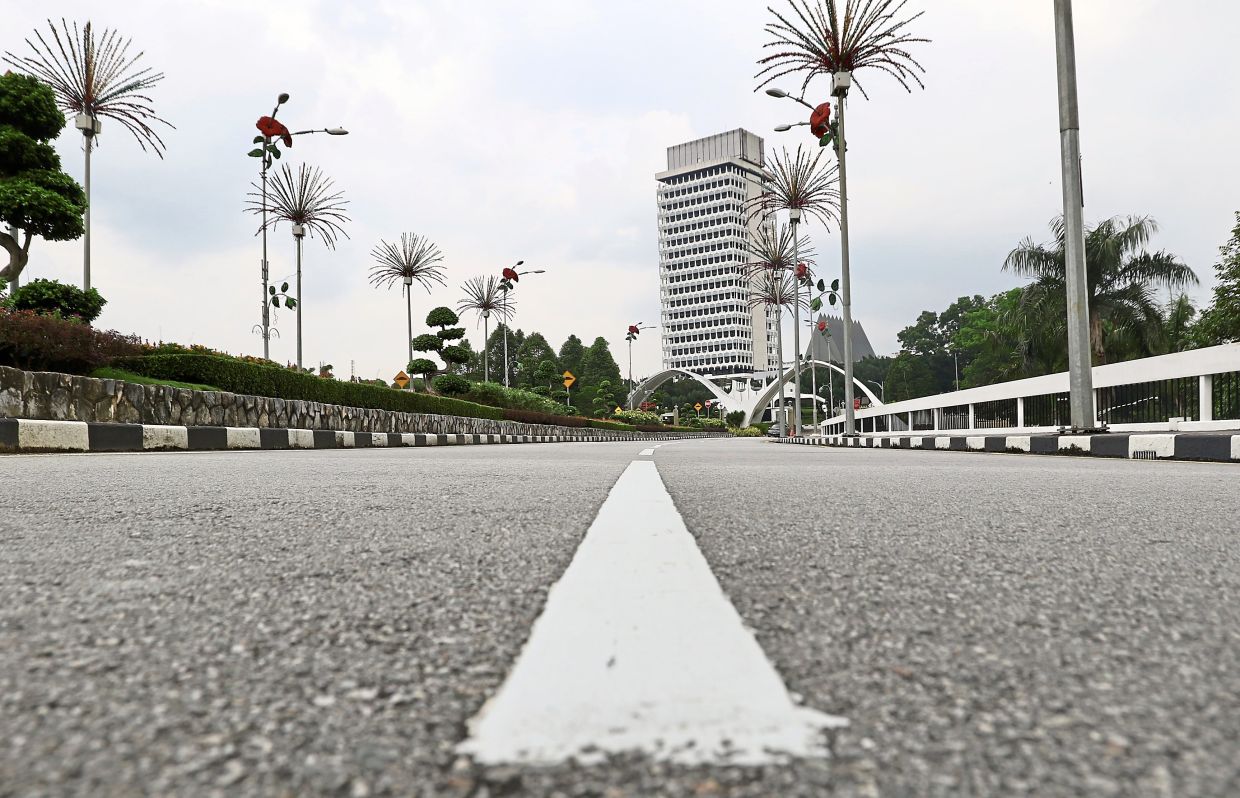
Having a general election soon can be the way out of the country’s political and economic conundrum, says the writer. – AZHAR MAHFOF/The Star

For economic reasons and the sake of political stability, Malaysia needs to head to the polls soon.

IF there’s one thing that Malaysia needs to do soon, now that the Johor state election is over, it’s to call for the general election – once the Memorandum of Understanding between the Government and Opposition expires in July.

After the huge amount spent for these state elections, don’t forget we have to spend it again when the GE is called to elect Members of Parliament for these states.

The Johor polls, which concluded last night, cost taxpayers over RM100mil. State polls since the last general election in 2018 have cost the country an eye-watering RM420mil.

Three state elections have seen RM130mil spent in Sabah, RM45mil in Melaka and RM149mil in Sarawak. Elections have progressively become more expensive because everything is costlier these days, and the Election Commission, which handles the polls, isn’t spared this economic conundrum.

The necessary items to comply with Covid-19 SOPs constitute additional costs.

We can’t have more state polls after Johor due to political reasons. It needs to stop.

The only way out is to have GE15 after July. There’s no use trying to avoid it, and the reasons given by those who don’t want it are far from convincing.

The MOU has served its purpose in keeping the federal government intact when Covid-19 was at its peak because the collapse of a federal government with no Prime Minister would have been disastrous.

The Rulers made it clear at that point, in no uncertain terms, that Malaysia could not afford excessive politicking.

But much has changed since the historic MOU – to strengthen political stability amid the pandemic – was inked last September for a bipartisan cooperation.

The MOU covered the Covid-19 plan, administrative transformation, parliamentary reform, judiciary independence, Malaysia Agreement 1963 and the setting up of a steering committee.

But the reality today is, the federal government, comprising the Barisan Nasional and Perikatan Nasional as the core coalitions, no longer functions as a unit.

The political marriage has broken down. The feuding couple is bickering openly and bad mouthing one another, and in state polls, they are contesting against each other.

The Muafakat Nasional, formed between Umno and PAS when Pakatan Harapan came into power in 2018, is as good as over. It was devised purportedly to unite the Muslim community for electoral purposes, but it has run its course.

Umno no longer sees a need for its alliance with PAS as it continues its winning streak and is now even eyeing PAS’ state and national level seats.

PAS, with a mere 18 of the 222 parliamentary seats, certainly seems to have enjoyed tremendous clout and holds powerful posts because it can cause the downfall of the federal government.

Has PAS president Tan Sri Hadi Abdul Awang, who is the special envoy to the Middle East, helped us secure investments worth billions of ringgit like Indonesia did with US$32.7bil (RM137bil) from the United Arab Emirates?

Yes, of course. It’s easy to forget he met the Taliban in Doha and helped provide a link to the Malaysian government. Thank you, a job well done then.

But seriously, the longer we hold back on the general election, the greater the financial impact on Malaysia.

No investors would put money in Malaysia if they’re unsure of who will helm the country in the long term.

The continuous mudslinging by politicians, including those in the Federal Government, is hardly inspiring to anyone wanting to invest here.

Malaysia is sending the wrong messages to the world, as if the 1MDB scandal hasn’t already made us the butt of jokes. Let’s be brutally honest – we are viewed as a corrupt country.

Our politicians spend an inordinate amount of time making silly statements, which are reported worldwide and earn us unflattering headlines.

Why would anyone advise husbands to beat their wives “gently” to discipline them, for example?

And why even bother making a statement like Singapore would be more developed if it were led by Umno. That was totally unnecessary.

Of course, we have a wellspring of such foot-in-the-mouth remarks by our politicians.

But a strong government is necessary, and for that matter, a Prime Minister who has an ironclad mandate. To complicate matters, for the first time, we have a PM who is not the boss of his own political party.

As international borders reopen, investors would want to have a final decision, and that means visiting Malaysia – and other options – personally to see the country and talk to the stakeholders, and possibly even the ministers in power, to get assurances.

We have a window period, which unfortunately, is fast diminishing. The clock is ticking away ominously.

Malaysia remains the only country in Asean where investors are continually in the dark about its political direction. We used to have the edge of a strong political leadership and stability.

Last week, DAP organising secretary Anthony Loke and Pejuang president Mukhriz Mahathir both expressed reservations about a general election being held soon.

Mukhriz said the current Parliament should run its full term until May 2023, while Loke wants the MOU to be extended, citing the Covid-19 pandemic and proposed an MOU 2.0, but only after the anti-hopping law is passed.

However, Covid-19 has been declared endemic and, whether we like it or not, the virus won’t go away.

We must live with it and even if the MPs serve the full term, infections will still be present.

The impression given is that the Opposition is reluctant to face a general election because its performance in the past state elections have been dismal.

The big question isn’t whether the GE would be held after July or in 2023, but whether we will end up with another weak government and multiple partners with a lame duck PM.

A Malaysian in Ukraine


Johor Elections – The Last Lap


Young Guns in Johor


The woes of war

THERE can’t possibly be a valid reason for war in any shape or form. Call it aggression, invasion, occupation, liberation or special military operations. Any which way you slice it, it’s still war, and the lives of innocent people are ultimately destroyed overnight.

So, there can be no justification for Russia invading Ukraine.

All the nations – or rather their leaders – that have been embroiled in wars always have the same narrative.

They all did it (hypocritically) in the name of protecting national interests, but in truth, it has always been about competition over territory and resources, historical rivalries and grievances, or unfortunately, defending against an aggressor.

Those clued in to history will know that these are chronicles of the victors in wars. The winners are always the good guys in our textbooks.

So, when the colonists landed on our shores to plunder our natural resources, they used the word “discovered” as if there were no people or rulers before they came to loot.

The Orientalists, European writers, and designers in the history of the Eastern world, justified their actions supposedly because there were no established administrative and judicial systems before they arrived.

These historians have even used the maxim “Gold, God and Glory” to justify their exploitations, conquests and expansions by Europeans, especially the British, Spanish, French, Dutch and Portuguese.

At the turn of the 20th century, imperialism took a different form via economic control through a mode of global governance and institutions, which exerted dominance over most developing countries around the world.

Hypocrisy by the superpowers isn’t something new. Ukraine is not Russia’s first conquest as it invaded Afghanistan from 1979 until 1989, which was 10 long years.

The war led to massive destruction and untold misery for the beautiful country and its people.

The war took the lives of 15,000 Soviet soldiers and injured 35,000, while two million Afghan civilians were killed.

To fight the Russians, the United States provided arms to resistance fighters, the Mujahedeen, who ironically, evolved into Taliban terrorists and turned their guns on the US instead after the Russians left.

And there was the invasion of Iraq and Libya in 2003 by the US and UK led coalition, which was supposedly “to disarm Iraq of weapons of mass destruction, to end Saddam Hussein’s support for terrorism, and to free the Iraqi people.”

Let’s serve this straight up – it was simply an invasion to get rid of two leaders who didn’t align themselves with the West. And to possibly steal the country’s oil.

We all know there were no weapons of mass destruction, evidenced by the findings of a UN inspection later. However, there was mass destruction indeed, but of the two countries and its people.

And worse, terrorists in the form of the Islamic State took over these places and plunged the nations from dictatorship to hell holes as they came under Isis rule.

Even stranger still, the US occupied Afghanistan for 20 years shortly after Al-Qaeda’s attacks on Sept 11, 2001.

It was a war against terrorism, but the invasion took more than 170,000 lives and ultimately failed to defeat the Taliban.

Likewise, the US invaded Vietnam in 1965 and by the time it finally withdrew in 1973, more than 58,000 Americans had lost their lives senselessly. Yet today, some consider Vietnam to be a potential ally of the US, especially in the geopolitical context of territorial disputes of the South China Sea and the containment of China.

Again, as the interests of powerful nations gain priority and their leaders compete, countries like Syria and Yemen continue to suffer. But how many of us are concerned by their predicament?

Maybe these nations are considered unimportant to the West.

There have been many major wars since World War II (1939 to 1945), which seem to have been unceremoniously ignored by some international media covering the Ukraine invasion.

In fact, the Bosnian War from 1992 to 1995 saw the ethnic cleansing of Bosnian Muslims by Serbs.

The comments of some Western TV reporters reek of racism, especially when they express concern that these Ukrainian refugees “look like any European family” and “they seem so like us.”

They’ve conveniently forgotten that Bosnians are also Europeans and look like white folks, except they’re Muslims.

It’s the same with the plight of the Palestinians, who have suffered systematic and methodical genocide since the 1940s, with almost incessant attacks on them by Israelis.

Western nations have all looked the other way as bombs continue to rain down on innocent Palestinians.

It’s not just the Western powers but Arab leaders preaching Islamic brotherhood, who don’t even want to lift a finger to help them.

The Arab world, by and large, only issues condemnations every time there is an attack, but it remains just words, and not actions – at least so far.

In fact, the United Arab Emirates, Bahrain, Sudan, Morocco, Egypt and Jordan have diplomatic ties with Israel.

Let’s not forget that Israel invaded Lebanon twice – in 1978 and 1982, and again bombarded Lebanon in 2006.

What has happened in Ukraine is the result of a geopolitical fight beyond the comprehension, care and understanding of the common people in Ukraine and Russia.

The people in Ukraine speak Russian and many have relatives and friends in Russia. After all, it was under the Soviet Union previously.

I’ve had the privilege of visiting Ukraine, including cities like Kyiv, Odessa and Crimea, and I have fond memories of this incredible country.

I have Ukrainian friends in Malaysia who have shared their fears for the safety of their families stuck in the country or have refused to be refugees because they would rather die in their own homes.

The leadership and people of Ukraine have chosen to be with the West, and it must have stoked Vladimir Putin’s fears that it will join Nato and have its military powers parked next to Russia.

Regardless of the logic and nonsense of it, the inflated egos of powerful political figures, coupled with their insecurities, have caused misery to common civilians.

Any form of aggression, by any country, is unacceptable. So, we need to find a place in our hearts and pray for the people of Ukraine – without forgetting other people in similar situations.

It has been reported that there are at least three dozen countries that are now at war or in conflict.

All these refugees don’t deserve to be in these positions because of stupid leaders.

As for Ukraine, it was Putin who started the war, so he must end it. This meaningless war should never have happened in the first place.

Sex, sleaze and scams


Billion dollar bombshells: Leissner testifying in a US court as a key witness in the 1MDB corruption trial of his former Goldman Sachs colleague, as shown in this court sketch. – Reuters

IT must have been a week when most Malaysians cringed in embarrassment. Tough times, indeed, for trying to find a place to bury our heads knowing that the world was reading about the level of corruption that has plagued our country.

It’s not just the politicians either, but top-level officials and bureaucrats, and even their spouses and mistresses, who seem to be inextricably involved in one way or another.

Yes, it’s just a claim by Tim Leissner, a man with questionable intentions, who took money from 1MDB, but he has now turned prosecution witness.

Based on records, he has poor credentials, but we must admit his testimony is damning.

Leissner, a former Goldman Sachs banker, has been described as a “serial liar” and “cheater”, and these are the more polite terms used on him.

After all, billions have been siphoned off by Jho Low and his partners in crime, whether at corporate or political levels.

While Leissner has testified in court that he was allegedly blackmailed by his lover into buying a RM43mil (US$10mil) house in the posh Knightsbridge area in London, one wonders what the relevance was in naming his affairs with the other women, who have no role in the 1MDB scandal.

While these women were politically connected because of their families, it hints at how desperate Leissner is to boast about his conquests with “the natives”, so to speak. While the mainstream media didn’t name them, social media did, and unfortunately, their identities and pictures went viral.

It has been reported that former Astro chief executive officer Datuk Rohana Rozhan has been called up by the Malaysian Anti-Corruption Agency (MACC) because if 1MDB money was used to buy her a house, it will involve possible money laundering as well as failure to report the hideous crime.

The alleged relationship between Rohana and Leissner first surfaced in the book, Billion Dollar Whale by Tom Wright and Bradley Hope, albeit indirectly. She was mentioned as the former chief financial officer of Astro, but in Leissner’s words, their liaison was an open secret.

The writers described Leissner as “a good talker,” who grew up in the northern German town of Wolfsburg, close to Hanover, who talked his way into the upper echelons of Malaysia’s elite.

But while the pillow talk and seduction make for juicy reading, it’s the missing money and the links that should remain our focus. These are the missing pieces in the jigsaw puzzle.

Those implicated will or have to come out with denials. It’s unlikely they’ll want to refute him in open court. The reality is that their credibility is in shambles, even if unfair.

Malaysians are likely not going to subscribe to their denials and would want the authorities, including the MACC, to take it up.

The truth is, our institutions including Bank Negara Malaysia and well, the MACC itself, have lost their credibility. More than just simple denials are needed to restore their image.

That amounts to a serious revamp if it means allowing these agencies to move forward. Perception is everything and surely, we don’t have to tell the government that.

We mustn’t send the wrong message that there are different sets of rules for the rich and powerful, what with their connections. If they have committed a crime, they should not get away with it.

Incredibly, we now see corrupt and even convicted politicians being feted like celebrities or honourable personalities, and their leadership unfathomably “missed.”

Well, unfortunately, that’s also because their successors are worse in terms of expectations and performances, and the lack of leadership has led to some segments of Malaysia longing for a time when there was hope, stability and purpose. Yes, it’s an irony when some of us pine for the leadership of crooks, but we have come to that stage.

I’m afraid that some of us Malaysians are also sending that kind of signal to these tarnished politicians.

Malaysia is indeed in a sorry state as we struggle to solve that conundrum. It looks like more dirt will surface to complete the inside story of one of the biggest financial heists in history.

Winning Over Undi 18 with Shahril Hamdan


我是老师 Zazah


Playing Mr Romantic