Author Archives: wcw

Compass of compassion


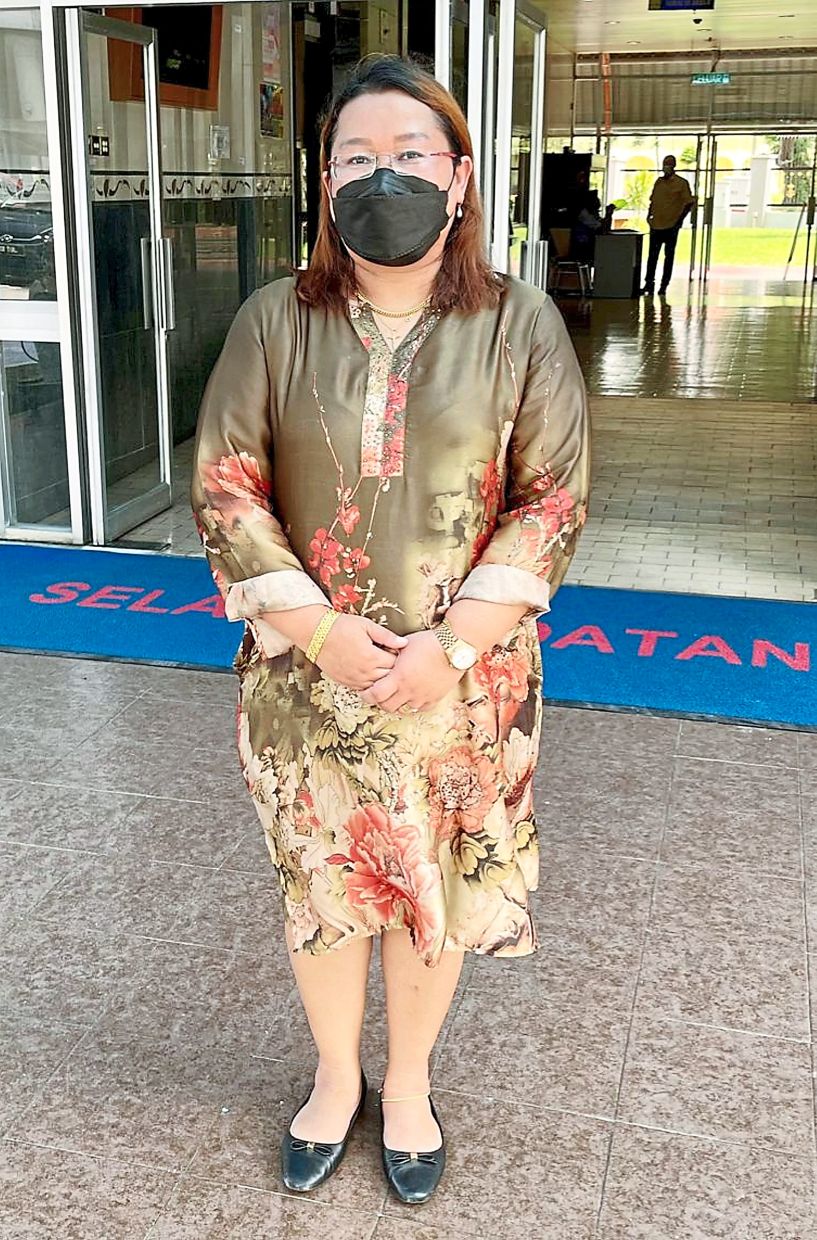
Long wait: Loh with her children during an outing few years ago. Last week, she finally got to see her children for the second time in three years. – Photo provided

IT’S a tragedy, really. Common sense, compassion, legality and fair play all seem to be absent in the recent alleged conversion of three children to Islam.

The children – a pair of twin girls aged 14 and their brother aged 10 – are minors. Their father, who is in jail for a drug offence, had purportedly taken them to an Islamic religious office and had them converted.

Apparently, the children agreed to the conversion even though they are minors.

Their father had told officials that he wasn’t aware of their mother’s whereabouts, and amazingly, they were immediately converted.

The children were then placed in a welfare home because their father was about to begin a jail term for drug abuse.

To be fair to the officials, here was a father who needed his children to be cared for and he didn’t know where their mother was.

They did what they felt was right – ensure the three had food and a roof over their heads at a children’s home. This could just be an instinctive reaction of plain compassion and attending to an urgent need.

But the mother, Loh Siew Hong, has now showed up and has told the media alleging that she has been prevented from seeing her children. And in a likely act of desperation, she has conceded to converting to Islam if that’s the only way for her to reunite with her kids.

Here’s where the confusion and suspicion begin. The father claimed he had no idea where his ex-wife was, and this was taken at face value. It would have helped if some form of investigation was done to trace the mother.

It appears the welfare department was unaware the court had granted custody of the kids to the mum.

The religious council now arguably looks like it was in a rush to convert the minors.

But to be clearer, it is the religious office – and not the National Registration Department – that registered them as Muslims. So, there are no legal implications yet.

It has been reported that after converting to Islam, their father handed his children over to an Islamic study centre and then went to prison.

Let’s put it this way – the 35-year-old mother was not consulted and the impression we’re getting now is that she was denied all rights to her own children.

The Islamic centre, which is taking care of the children, seems to have more authority than the mother. Loh has now, supposedly, ended up having to seek permission from Rumah Sinar Harapan children’s home in Jitra, Kedah, to see her children.

With them being minors, it seems unusual for the mother to accept the claim that the kids had agreed to convert without her knowing the circumstances – emotional or otherwise – to their decisions.

Last week, after days of painstakingly waiting, Loh finally got to see her children for the second time in three years.

According to her, she was denied meeting her children for days, apparently over Covid-19 fears.

She had, in fact, won custody of her children in the High Court last year, and saw them for the first time in three years outside the Kangar district police headquarters.

Perlis has a state Constitution allowing either the father or mother to convert the child. The question is: do the state laws override the court decision?

Any form of natural justice would have clearly adhered to the overwhelming circumstances that Loh should be taking care of her children as the biological mother.

She earns a steady income as a chef in Genting Highlands. Her ex-husband, Nagashwaran Muniandy, is serving a jail term, and that says enough of him.

Instead, the High Court’s decision has been over-ridden by Nagashwaran’s simple act of unilaterally converting the children into Muslims.

This echoes the case of M. Indira Gandhi, who has not seen her daughter Prasana Diksa for 11 years. She has no idea where her 12-year-old daughter is.

Nothing has changed despite the Federal Court ordering the police in 2018 to find and return Prasana, who was taken by her ex-husband just before he converted to Islam in 2009. The High Court had also issued an arrest warrant in 2014 for the Muslim convert, who now goes by the name Muhammad Riduan Abdullah.

The High Court ruling in 2010 had granted full custody of all three children from their marriage to Indira.

Islam is a compassionate religion. There’s no coercion or obligation in Islam, but only ignorant people who manipulate it in the name of the religion.

Likewise, most of us non-Muslims would also object if our children embraced Christianity, Buddhism, Hinduism, Judaism or other faiths, without knowledge or consent if they’re still minors. When they become adults, it’s their right to embrace any religion they choose.

Faith is between a person and God. It must be respected and not used as a tool to win custody of a child, especially after the law has decided otherwise.

It’s a travesty when there are parties who support such an act. Let’s not allow religion to cloud common sense and fair justice.

It’s more important for Islamic officials to ask this question – are these opportunistic husbands using Islam to gain custody of their children because of their marital squabbles and ignoring court decisions?

Likewise, politicians shouldn’t come into the picture to score political points, especially since that won’t help the mother or children.

Fly Beyond the Sky


Should Politicians Be Ambassadors?


Litmus test beckons


New mode: Political parties will have to change their campaigning strategies to keep safe and attract the new voters.

IT’S unchartered waters for almost all the political parties, but perhaps much more for the established ones when they must grapple with the 750,000 new voters in the upcoming Johor state polls.

If big rallies with fiery speeches worked out effectively previously for the opposition parties, it unfortunately won’t happen again though.

Such huge gatherings have been banned in the Sarawak and Melaka state polls because of the strict standard operating procedures to prevent another explosion of coronavirus infections.

House to house visits is preferred by the older parties in the Barisan Nasional, but this is urban Johor. It could work better in a rural setting, but many parts of Johor are guarded properties or in condominiums.

Like it or not, with the Covid-19 pandemic raging again, not many voters would be jostling to meet politicians.

In any case, even without the dreadful virus, not many Malaysians will welcome and embrace politicians who have suddenly reappeared and are asking for our votes again.

The average young voters are expected to be a crucial factor. We can assume that they have made up their minds on who they want to vote for, but the choice of candidates will still make a huge difference.

Younger candidates, even untested, could be more successful than the older and more experienced ones, especially those with baggage.

These politicians like to think they are better known, but the harsh reality is most Malaysians don’t know their elected representatives.

Who can blame the electorate as many of them disappeared after getting elected. In fact, the last known contact was the photo opportunity visit to the market to thank their voters.

From the point of election, try getting them on the phone. The Yang Berhormat suddenly has a changed persona and developed amnesia for his pledge to be available to serve his constituents. Suddenly, he carries six phones.

Many of us in the press, including this seasoned journalist, have a list of Ministers and politicians who no longer return calls or texts to the media. If we can’t reach them, the chance for the unknown voter is probably nil.

Well, they know they must beg the millennials with a limited attention span for votes. Forget about talking to them, as it will be seen as another classic tiresome case of preaching and lecturing.

Please forget about calling them directly. This is the social media era. Just text them. Learn how to use Tik Tok, Instagram and if you must depend on YouTube, please keep your videos short.

Any video, on whatever platform, will see the viewership nosedive if the audience gets bored. The splendid social media – you can tell how much time they indulge in your political pitch.

Boy, will these narcissist politicians be in for a rude surprise when they check on the data and find they have hardly been inspiring to these young voters, who would rather switch to more entertaining content.

These young voters won’t be reading print, that’s for sure. If the news reports online are too long, they will either gloss over or skip them entirely.

Their consumption method for information or news will be on their mobile phones. That means the political parties will need plenty of help from campaigners who understand the effectiveness of social media influencers.

It’s not a magic wand as it doesn’t mean if you have a million followers, you will get a million votes automatically.

But these followers will share the messages and videos of their preferred candidates swiftly.

The additional numbers will bring the state’s total voters to about 2.5 million, compared with 1.8 million in the 14th General Election. The bulk of the new voters comprises those aged above 21 years and are not the result of Undi18.

Of the 750,000 new voters, not all are aged 18 to 21 – most of them are 21 and above.

In Johor, there are 17,000, aged between 18 and 20 years, who are on scholarships, and how they vote would also be interesting. The perception of youths being pro-opposition may not be accurate.

The test will also be for Syed Saddiq Syed Abdul Rahman, the youthful president of the Malaysian United Democratic Party (MUDA).

While he has a huge following among those who share his ideals of a progressive and multi-racial approach, politics in Malaysia is also complicated because there are many layers of conservative and religious politics, even among the younger set, who disagree with his approach.

But the opposition see him as a “wow factor” in the Johor state seats, but he may have to fend off PKR as well and not just the Barisan Nasional and Pakatan Nasional. Certainly, talks on compromise between MUDA and PKR have failed.

The things that matter most to the young voters are jobs, cost of living, opportunities and hope for the future.

Most voters want the economy to be rebooted. It has been tough for everyone to meet the daily demands with reduced wages pitted against the increasing cost of living.

Many of us, including the young, find the constant bickering of politicians sickening. In fact, many of these politicians should have retired long ago.

Incredibly, these expired politicians still think they are relevant to the young, when they don’t even have the basic skills to operate their computers and mobile phones.

Johor is set to be the curtain raiser for the next general election. The MOU between the various political parties ends by July and like it or not, it’s time Malaysians decided on a more defined and clearer government.

The present federal government has been helmed by Prime Minister Datuk Seri Ismail Sabri Yaakob, and it has brought stability. However, he doesn’t have a mandate.

Worse, the various key players in the federal government can no longer see eye to eye. For Malaysians, we don’t even know who is in charge anymore. For investors, they may just stay away and put their money elsewhere.

Let the Johor voters set the tone and pave the way for a general election, by this year, hopefully.

Be A Tiger!


The CNY Sensation with Layla Sania


An old controversy gets a new lease on life, mirroring the sign of the times

IT’S ironic that a controversial statement by Tun Dr Mahathir Mohamad, largely forgotten or more precisely, generally unknown to most Malaysians, would get resurrected.

And even more coincidental that it must come from his daughter, Datuk Paduka Marina Mahathir, who mentioned it in her column in this newspaper.

The editor who cleared her copy was probably not born yet to be able to spot Marina’s error.

The crux of the issue is that Marina had wrongly attributed a “shoot to kill” threat made by the then Home Minister, the late Ghazali Shafie, in the 1970s regarding Vietnamese refugees.


Explosive affair: Dr Mahathir’s statement in 1979 caused an uproar all around the world, sending the people around him scrambling to clear up the mess.

The “shoot to kill” threat was reported in the media to have, in fact, been made by then Deputy Prime Minister Dr Mahathir, her father.

Malaysia made world news for that remark and as usual, for the wrong reasons, a long-running and familiar theme.

I was just an angsty 18-year-old Sixth Former who spent more time reading the newspapers than textbooks.

I remember reading the gaffe by Dr Mahathir, which angered me, although I can’t remember the subsequent details.

Those of us from that generation would recall the Vietnamese refugees, known as Boat People, who began landing on the East Coast beaches in their rickety boats in 1975.

Many perished on their voyages through the rough South China Sea while trying to escape the communist rulers and soon, Pulau Bidong, off Terengganu, was turned into a refugee camp from 1978 to 1991.

Later, a transit camp was set up in Sungai Besi, Kuala Lumpur, as well as seven other camps in the east coast, Sabah and Sarawak.

The camp in Sungai Besi, set up in 1982, was officially closed in 1996 with the repatriation of 22 boat people to Hanoi, the last batch of refugees to leave Malaysia.

By that time, Malaysia had sent 248,194 people to third countries and repatriated 9,592.

In the 80s, many of us driving past Sungai Besi could clearly see the camp. I was assigned by The Star to visit some of these repatriated refugees in Vietnam, ahead of the country’s admission into Asean in 1995.

They were happy to talk to a journalist from Malaysia who showed interest in how they had fared.

Digging into the archives, I interviewed Bui Huu Duyen in Ho Chi Minh City, who said he picked up Bahasa Malaysia from watching television and conversing with the camp policemen.

He was only 16 years old when he fled Vietnam, but it had nothing to do with politics except to migrate to the United States. He jumped on a crammed boat with 200 people on board. After years in Malaysia, he agreed to go home, only to find Russia was no longer communist, Vietnam asylum seekers were no longer automatically considered refugees, a status which would be a passport to resettlement in the West, and Vietnam had launched its doi moi (economic reconstruction) to welcome capitalists.

But not all was rosy. In 1995, over 4,000 refugees tore down the fence at the Sungai Besi camp and even disconnected the power supply in a protest against their return to Vietnam. There were reports that home-made weapons were found.

His years in Sungai Besi, where he learnt English, helped him get a job as a driver.

However, the late 1970s were turbulent times, when boat people began to land on our shores, which tested how Malaysians were going to handle these unwelcome visitors.

The toxic elements of race, religion and politics all came into play, as is expected in Malaysia. In fact, it’s still happening today, as we’re well aware. All this became an explosive affair when Dr Mahathir made that remark.

In her column dated Jan 30, Marina said, among other things: “I’ve been through embarrassing moments abroad when our politicians have said something stupid and then tried to cover it up.

“In the late 70s when we had many Vietnamese refugees landing on our shores, our then home minister announced that we would shoot any that washed up on our beaches.

“Predictably, outrage ensued around the world. He then gave the standard politician’s excuse, that he was misquoted, that he actually said he would ‘shoo’ them away. Did anyone believe it?”

In a Facebook post subsequently, Marina thanked all those who had pointed out the “major factual mistake” in her column, adding “it seems that I’m capable of making my own gaffes, so I stand corrected and sincerely apologise.

“It was not meant to revise history, as some have alleged, it was wholly the weak memory of something that happened when I was barely out of my teens and still trying to make sense of the world.”

It’s understandable. Even the copy clearer at The Star failed to notice the error and in normal cases, the editor would have corrected it and informed the writer.

The uproar caused by Dr Mahathir led to then Prime Minister Tun Hussein Onn reportedly rushing to reassure then UN secretary-general Kurt Waldheim in a letter that there was no such policy.

“I wish to state that our measures to prevent further inflow of the boat people do not include shooting them,” Hussein said, according to news reports.

The Washington Post report noted that Hussein’s statement contradicted Dr Mahathir’s words, “who according to several news agencies, threatened that new refugees would be shot and that the estimated 75,000 in camps here would be put back to sea”. He also was reported to have said that Malaysia was building a fleet of boats.

Last week, veteran journalist Rajan Moses, who was then with Bernama, revealed how he was “punished” for reporting squarely about comments by Dr Mahathir in 1979 that the boat people would be shot on sight to prevent them from landing on Malaysian shores.

Moses said: “I was the only journalist, a Bernama journalist at that, who actually wrote the ‘shoot on sight’ story based on what Dr Mahathir said to a few reporters at the UKM news conference in June 1979.

“It made world headlines. The Bernama story (my story) was played up well, but later was re-edited and tempered to take out the sting in the original story,” he reportedly explained in the Malaysia First chat group, whose members broached the issue.

All this is history, but the controversy has helped put the missing pieces of the jigsaw puzzle together so we can have a better and accurate understanding of the past, and hopefully, a better way of handling similar incidents in the future.

As for me, I’m more worried that our politicians have continued to shoot themselves in their foot and drag the country down.

Just a few years back, my church had to shut down its Vietnamese ministry when almost all the workers had returned home because their country had progressed and moved ahead in Asean.

In just a few decades and despite the wounds of the war, Vietnam has blossomed impressively. It has consistently been among the fastest growing economies in the region in terms of GDP growth, foreign direct investment, and middle-income population.

It’s shaping up as the region’s single economic success story in the coronavirus era, according to asia.nikkei.com.

We have plenty of reasons to be concerned. We can’t even beat the Vietnamese in football now.

Excessive, unconstructive politicking in a democracy does have many pitfalls. Perhaps it’s time we shoo away these politicians. Or shoot them down via the ballot boxes.

Taking the Political Path


The roaring silence

Emblazoned on our nation’s coat of arms and Filem Negara’s emblem, yet our tigers face a dire prospect in Kelantan.

THIS may be the Year of the Tiger, but they are disappearing from our jungles at an alarming rate. Let’s dispense with the silly excuses. We have destroyed their habitat and now, we’re expected to believe in this ecological fairy tale that clearing jungles is advantageous to these majestic animals.

We’re used to our politicians coming up with yarns, but of late, even senior government officials are getting in on the act.

It’s hard to accept the claim that deforested areas are good for tigers, supposedly because their prey, such as deer, would appear there with the new trees.

Kelantan Forestry Department director Abdul Khalim Abu Samah was recently quoted saying that after an area is deforested, new vegetation will grow, which will encourage the presence of new animal species that serve as food for tigers.

“The tiger population will become larger when small trees grow in the deforested area. The area will see the presence of animals such as mouse deer, which are food for tigers. It will be easier for tigers to hunt their prey,” Khalim had said.

But before we delve into the subject, it’s important we recognise that logging is allowed and accepted in Malaysia.

Selective logging is not the same as excessive logging, which has led to massive deforestation. That’s the sore point with most of us. Then, there’s illegal logging, too.

Last week, WWF-Malaysia clarified that its study published in 2009, entitled “The importance of selectively logged forests for tiger panthera tigris conservation: A population density estimate in Peninsular Malaysia” by D. Mark Rayan and Shariff Wan Mohamad, was conducted to obtain information on the density of tigers, specifically in selectively logged forests.

The NGO said it was important to note that the study refers to selective logging, not indiscriminate logging.

Selective logging is a forestry practice that involves only cutting a select number of trees annually in a forest compartment, instead of the whole forest at once, in line with sustainable forest management (SFM) practices. The 2009 study found a density estimate of 2.59 adult tigers per 100sq km.

This indicates that selectively logged forests, such as Gunung Basor Forest Reserve, have the potential to accommodate a high density of tigers.

The study concluded that further research was urgently needed to understand the ecology of tigers and their prey in selectively logged forests.

This is to ensure that tiger-friendly management guidelines can be recommended for SFM and therefore, significantly aid tiger conservation in Malaysia.

WWF-Malaysia must have issued the statement to avoid any misunderstanding following Khalim’s revelation.

But to have a better understanding of what has been concluded, the Malaysian Nature Society (MNS) has advised that the practical aspects need to be accounted for as well.

“The claim that deforested areas may be good for tigers should be looked at from a practical angle,” said MNS president Ahmad Ismail.

“It might be theoretically acceptable to say that when dense forests are cleared, it would create an area where new trees can grow, and this would benefit herbivores.

“Practically, we have to look at the size of the forest that we have for the tiger’s habitat. Is it big enough for them to run away from logging areas when logging activities are carried out?

“Tigers are not human-friendly animals. They will run far away from areas where there are human activities. But if the area is not big enough, it might cause conflict between them and humans,” he said.

However, a mapping of emerging deforestation hot spots in Kelantan, using the Geographical Information System (GIS) by Nazir Natasha Rozana, found that the state’s forests have been heavily exploited over the past few decades due to many factors to satisfy human needs, thus causing the east coast state to lose its forest cover in the process.

It’s hard to fathom what Kelantan Deputy Mentri Besar Nik Mohd Amar Nik Abdullah was thinking when he reportedly said: “Tigers do not enter villages because of deforestation. We have read a statement from the Kelantan Wildlife and National Parks Department (Perhilitan), which says that tigers entered the village because they were sick.”

Well, it’s tough to say who’s ill – the poor tigers or our twisted politicians.

According to another report from 2010, Kelantan had 823ha of natural forest, extending over 83% of its land area. However, by 2020, it lost 8.83ha of natural forest, reveals the Global Forest Watch.

It said Kelantan was responsible for 63% of all tree cover loss between 2001 and 2020. This region had the most tree cover loss at 262kha compared to an average of 41.6kha. Areas are provided in thousands of hectares or kha.

The worst affected areas are Gua Musang, Kuala Krai, Tanah Merah, Jeli and Machang, with the PAS-led state government continuing to rely heavily on logging as a revenue source.

In 2019, Channel News Asia reported that Kelantan, which is probably the poorest state, is “blessed with land and forests, but today, much of the state’s forests, hills and mountains have been razed for oil palm, durian plantations and mining, depriving the state of natural flood prevention features.”

“Because licences to mine, plant and log are lucrative sources of income, Kelantan does not seem to be inclined to put a stop to it. The only way that this situation can be improved or mitigated is for regulations in this area to change.’’

Another report by researcher Khor Yu Leng said Kelantan’s Orang Asli living near Gua Musang have been affected by logging and durian plantation development, pointing out that the flood of 2014 was record setting, with experts singling out the root of the problem to be deforestation.

Incredibly, despite doing a lousy job in administering the state, with over reliance on funding via concessions and logging, the Islamist government has continued to get itself re-elected in every election.

Tourism, a low hanging fruit in economic terms, is almost non-existent with the state government culling its Malay traditional culture by branding it unIslamic.

Manufacturing is non-existent and if commodities are the only form of agriculture, it will just mean more land clearing. It’s clear for all to see the difference between states that have better governance and broader sources of revenue and those that don’t.

If the Orang Asli and even the general population don’t stand a chance in Kelantan, what more the tigers in the state?

In the words of the senior PAS leader and forestry official, the tigers must be sick to come out of the jungles, and the logic that the state must clear the forest so that the tigers can live better, is alarming, to say the least.

It’s a given that the tigers in Kelantan won’t have a rip-roaring time, but Malaysians can roar to put pressure on politicians and officials to save one of the most majestic animals and our national pride.

Uighurs trained in Sulawesi before joining ISIS


KUALA LUMPUR (The Star/Asia News Network): The Mujahideen Indonesia Timur (MIT) (pic), which operates in the mountainous jungle of Poso, Sulawesi, used to have Uighurs from China working side by side with them in their terrorism. According to intelligence reports, most of them used forged Turkish passports to enter Indonesia from Thailand to launch their attacks on Syiah, Christians, and the Indonesian government.

Uighurs are members of a Muslim minority community who mostly live in western Xinjiang in China, as well as across Kazakhstan, Kyrgyzstan, Uzbekistan and Turkey.

Indonesian terrorism researcher Boas Simanjuntak said according to available data from the police, there were 12 Uighurs who joined MIT in 2011, adding that some were arrested and released in 2016 and 2020, as well as deported to their country.

“Two Uighurs died on March 15 2016 in Poso during Abu Wardah @ Santoso’s leadership between 1976 and 2016,” he said. But there have also been reports that four from six Uighurs were killed in 2016 in central Sulawesi.

Police also named two of them, Farok @ Magalasi Bahtusan and Nuretin @ Abdul Malik, who were caught in a gunfight with the police and army on March 15, 2016.

It said that same day, MIT dumped the body of another Uighur into a river after he allegedly fled from the group, and a week later, an Uighur named Joko @ Turang Ismail was killed, according to Radio Free Asia.

Boas said under Santoso’s leadership, MIT had links with Islamic State (ISIS) and that there was a directive from IS to provide military training for Uighurs before they join the terrorist group in Syria.

RFA quoted Ridlwan Habib, terrorism expert at the University of Indonesia, as saying that some Uighurs came to Indonesia to train with Santoso’s group before returning to China to commit acts of terror.

Newslines Institute said there were about 1,500 Uighurs fighting for ISIS as early as 2015, and that figure shot up to between 4,000 and 5,000, but following the defeat of ISIS, there is now an estimated 2,000 of them at the Al-Hol camp in northeast Syria.

Al-Hol is a refugee camp controlled by US-backed Syrian Democratic Forces, with a population of 60,000 people, mostly ISIS detainees and their families from 50 over countries.