Author Archives: wcw

Chasing waterfalls in Lusong Laku, Sarawak

It isn’t exactly crystal-clear waters, and certainly, it’s almost unheard of, but the waterfall at Lusong Laku, Belaga in Sarawak must surely rank as the most magnificent and majestic cascade in Malaysia.

The area deserves to be known as the Lost World of Sarawak because it’s virtually cut off from all forms of civilisation and remains one of the most remote parts of the state.

It took us nearly two hours to drive 142km from Bintulu, the coastal town in central Borneo, to Kampung Asap, a Penan resettlement.

From there, we hopped onto a four-wheel drive for a gruelling and treacherous six-hour journey that took us through logging tracks deep in the interior.

At a rustic coffee shop in Sungai Asap, we were cautioned about it being the last toilet stop because from there, we would have to answer nature’s call in the bushes.

We were also advised to make our last phone calls because we were going to go off the grid.

We’d be without GPS and would enter unfamiliar territory that was bumpy, dusty and dangerous. Also, we’d need to be on alert to avoid the beastly timber trucks that may come charging at us. Of course, instincts told us to pray it wouldn’t rain either, and that our vehicle wouldn’t break down during the roller coaster ride.

The plan was to reach Lusong Laku by sundown at 7pm, as darkness could potentially make the 270km trip more difficult, and of course, dangerous.

As we entered the jungle paths, we drove through timber camps and some farm huts, but there was little else.


Oh oh …. this is a rough patch! Going deep inside the Sarawak interior.

For an environmentally conscious urbanite like me, it was deeply upsetting to see the wanton logging still proliferating, and the trucks carting the logs passing by us was heartbreaking.

I couldn’t help but feel angry and sad at the destruction of the jungle and the ugly scars left behind by land clearing. Likewise, the displacement of the natives who made the jungles their homes, and the animals that live with them.

There wasn’t much to say. We kept silent, mostly, as we mourned the travesty before our eyes. It was hard to enjoy the panoramic view from above the tree tops of the rapidly depleting tropical forest.


The lush greenery of the jungle is at risk of excessive logging. Photo: FLORENCE TEH

Ironically, it’s these timber companies who have carved out the tracks which now make Lusong Laku and Sungai Asap more accessible to the people, where they can buy sundries and stock up on essentials.

However, the tracks were mostly badly maintained, and, on some stretches, planks were hastily put together as makeshift bridges for us to drive on.

And at times, we found ourselves precariously close to steep edges of ravines. Morbid thoughts kept playing in my mind of how we’d survive should our tyres slip and send us hurtling down. How long would it take for help to arrive? I shuddered to think.

The journey had taken longer than we expected because, much to our dismay, it rained. And the closer we got, the tougher the terrain became.

The timber tracks disappeared after a while, and the final 30km took us over two hours to navigate. In the darkness, the journey felt endless, and when we finally reached the village, it was almost 9pm.

Every villager seemed to be asleep, their homes pitch black, and a miscommunication almost left us having to sleep in the car – because the owner of a homestay wasn’t informed of our arrival.


Homestay in Lusong Laku.

But our host, Bulan Kulleh, sportingly cleaned up the house and then prepared dinner for us, which comprised wild boar soup, spicy ikan bilis and wild vegetables.

The majestic Lusong Laku waterfalls (called Wong Pejik in the Punan language, meaning waterfall) was just next to her home, and we could hear the roar of the cascading water.

The Punan are an ethnic group found in Sarawak and Kalimantan, Indonesia, but they are like the semi-nomadic Penan, who make up most of the people in Lusong Laku. The village itself is a resettlement area for these natives who had to leave their jungle homes to make way for the Bakun Dam construction.


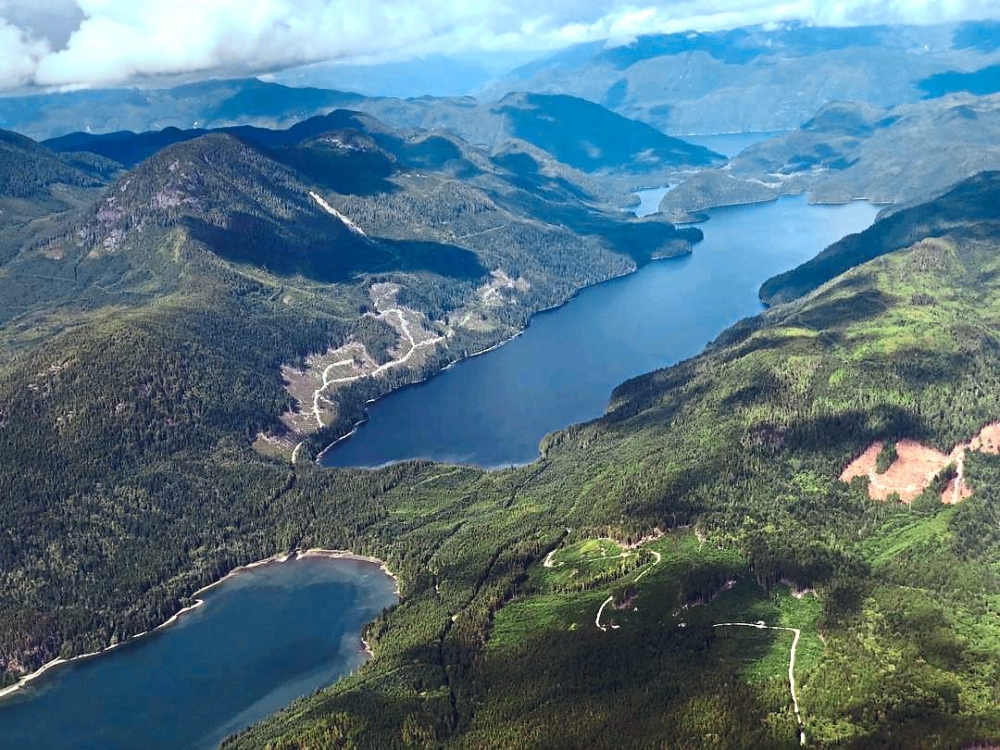
Aerial view of the Lusong Laku waterfall and Sekolah Kebangsan Lusong Laku in Belaga.


Raging river of splendour, the Lusong Laku waterfall. Photo: FLORENCE TEH

Although I was exhausted, I woke up at 3am and couldn’t contain my excitement for dawn to break, so I could hurry out to see the incredible Lusong Laku.

I was prepared for the murky water because I knew the logging upstream had wreaked havoc on the environment, but the waterfall at the upper end of Sungai Linau was a sight to behold.

It’s simply breathtaking and spectacular and is likely the most incredible waterfall in Malaysia. It has been rightly named the “Niagara Falls of Malaysia”.

The fast-flowing water, which churned and rumbled as it thundered down the rapids, left me dazzled. I was drawn to make my way down the steep river bank to get better pictures.

Bulan, a Lahanan woman from Sungai Asap, advised me to be careful since a few people had been fatally swept away by the flowing currents.


With Cikgu Nazmie and Bullan at their house in Lusong Laku.


The writer was excited to finally see one of the greatest waterfalls in Malaysia, Lusong Laku.

Lahanans, the oldest inhabitants of Borneo belonging to the so-called Kajang group, are one of the smallest ethnic communities in Sarawak. But many regard themselves Kayans because of their proximity and marriage with the Kayans.

Excited, I was prepared to be a little reckless, and successfully made a slow descent onto the river bank.

My driver, Luhat Ajang, nervously kept his footing on the sandy shore to help me record a video, with the waterfall raging behind me while my colleague, Glenn Guan, was busily flying his drone to get the best aerial shots of the river.

Within walking distance from the waterfall is the Penan resettlement village, with its two rows of longhouses for 133 families.


With the Penan children at their longhouse.

The Penans have been described as the last aboriginal nomadic people in Sarawak who sustain their livelihood by gathering food from the forest, as well as hunting.

Displaced by the construction of Bakun and Murum hydro-electric dams, they have been resettled at Sungai Asap and Lusong Laku.

It has been reported that self-sufficiency in food production is a major problem for the Penans. To assist them, iM Sarawak came up with the Wet Padi Project to train the Penans in modern farming, which was implemented in 2015.


Going about their daily activities at the Penan longhouse.

Besides the Wet Padi Project, iM Sarawak also launched a food aid programme to cover their basic sustenance ahead of harvesting.

While Lusong Laku was once an important trading post before the war, the area has lost its shine, and very little information on the place is available. However, it is slowly getting known, thanks to the waterfall.


Saying goodbye to the kind folks of Belaga, Sarawak.

There is little chance of this incredible sight becoming a major tourist spot unless there are accessible routes and good commercial accommodation. This would also provide jobs to the people there. Its tourist potential will likely have authorities trying to rehabilitate the river and put an end to logging.

I also learned there was an inactive volcano crater around, but it is now covered by the jungle and no longer visible. There is certainly a need for more in-depth information on this stunning and picturesque spot, and for Sarawak to share its charms with Malaysia and the rest of world.

Riding the winds of change

IT’S unfortunate that politics in Malaysia is going to get more toxic with the formal pact between Umno and PAS, as we can expect the two parties to take the race and religion agenda to its limit.

The two sides may not have the best credentials. Umno is still struggling to face the aftermath of the barrage of corruption and money laundering charges that have been filed against its top leaders since its defeat in the general election.

Its claim of fighting for the Malays and religion seems hollow in the wake of the glaring looting of the country’s coffers and even institutions meant to protect the interests of the Malays.

Then, there is PAS, which has found itself in an awkward situation following the expose that its leaders have a weakness for luxury cars and super bikes. Suddenly, the pious image that they have branded themselves with all along isn’t so convincing any longer.

Both Umno and PAS share something similar – their leaders have been kept busy at the Malaysian Anti-Corruption Commission office.

Many rational Malaysians have dismissed the marriage of these two parties who have planned their pact in the name of upholding race and religion.

But the reality is that enough voters will buy into their poisonous ideology. They feel they need to support Umno and PAS because “the new government is controlled by DAP – which is a euphemism for the Chinese – and that they need to protect Malay interests and Islam.”

It doesn’t help that the tone and even body language of DAP leaders, when they deliver their speeches, are unlikely to endear them to the Malays.

A few of the DAP ministers still lack the social skills and sensitivities in creating a warm working relationship with the mostly Malay officials at their ministries.

The synergy of Umno and PAS is expected because it is a known fact that only 25-30% of Malays voted for Pakatan Harapan in last year’s general election, but that was enough to move the goal posts of political equation.

On the other hand, about 95% of Chinese voters chose PH in the May 9 elections, more than the 85% who supported the now-defunct Pakatan Rakyat coalition in 2013, according to the Merdeka Center. About 70-75% of Indians voted for PH.

It said 35-40% of Malays voted for Barisan Nasional, while 30-33% placed their faith in PAS.

The report said although a higher percentage of Malays voted for PH in Johor and in west coast states such as Melaka and Negeri Sembilan, PH’s overall Malay support was affected by its weak performance in Kelantan and Terengganu.

Both Umno and PAS leaders would have realised that if they work together, they will be a formidable force as the combination of their votes were more than that for PH.

We can ridicule PAS leaders for being pseudo politicians masquerading as religious teachers, but to their rural supporters in the east coast, they are highly revered, and their constant call to set up an Islamic State in Malaysia stirs the hearts of their audience.

They are unlikely to be swayed by the news of their Porsche driving leaders, as they would probably be seen riding on their bicycles in the villages.

And their base remains solid with their loyal followers, which some of us would dismiss as fanatical.

PKR has long realised that without the participation of PAS supporters, they would never be able to get the huge numbers for their protests.

Last year’s anti-Icerd (International Convention on the Elimination of All Forms of Racial Discrimination) rally was a success because PAS was responsible for mobilising the mammoth crowd that turned up.

But over the last nine months, Umno – especially Datuk Seri Najib Tun Razak – has been able to reach out to the working-class Malays, which has been described as a disenfranchised group struggling to pay their bills.

These are not the Malays who spend the afternoons sipping tea at Bangsar Shopping Centre, but the Malays who shop and eat in Kajang and Bangi, like how the voters of Semenyih do.

But we also need to examine closely the voting patterns of Semenyih.

While most analysts have described the defeat of PH in this predominantly Malay state constituency as a “mini Malay tsunami”, we should also be mindful of Umno, Alliance and Barisan Nasional having won the seat 13 times consecutively since 1957. The only exception was in GE14, when the PH candidate won with a 8,964 vote majority. So, the Barisan victory must be seen from the right perspective.

Still, we must not overlook that there has been an increasing sense of frustration and let-down, that PH has failed to deliver what was promised. PH leaders themselves – including Tun Dr Mahathir Mohamad – have admitted that they over-promised because they didn’t expect to win.

The PH government has five years to fulfil its manifesto, and it’s already coming to a year now. Previously, most voters didn’t bother to read the manifesto, but times have changed. The voters and opposition hold the government to it. The onus is now on PH to share with voters its realised promises, it’s future targets, and if failure were to prevail in the short and medium term, the reasons for it.

Now that they are coming close to a year in office, they can’t continue blaming Najib or Datin Seri Rosmah Mansor, Jho Low and everybody else for their inability to deliver. The legacy issue has become tiresome and their performances will be affected if voters keep hearing the same excuses, because PH was voted in to fix the problems.

There is a commonly used phrase in political science – “revolution of rising expectations.”

It refers to a situation in which a rise in prosperity and freedom leads people to believe they can improve life for themselves and their families.

The people seek to make political changes – as in GE14 – to allow them to pursue better opportunities. In our case, the people disposed Barisan after it was in power for 60 years, and Malaysians hope for a sliver of prosperity and freedom.

While there were reforms in some institutions, they expected better from PH, and obviously, they feel their expectations have been dashed. From the increasing cost of living to the weakening ringgit to poor performances of some ministers, the PH government must have heard all the grumblings, and it doesn’t help that there are enough Malays who feel that the DAP and other non-Malay officials are calling the shots.

And of course, there’s the factionalism and open squabbling in the recent PKR party polls.

It may hard to fathom, but there are Malays who buy this line because Bossku says so!

If we were to accept the survey findings that only 25-30% of Malays voted for PH, then we could safely presume that the Malay-based PH components are in serious trouble.

It wouldn’t be wrong to assume the percentage of support for PH has dipped since May last year.

Even Dr Mahathir can’t be counted upon to deliver the votes now in the fight for the hearts and minds of the Malays.

Barisan reportedly secured the majority of the 854 police personnel who voted in Semenyih.

But non-Malays have every reason, from now, to worry about the fight for the Malay votes between Barisan and PH.

There are concerns that both sides will try to outdo each other in being more Malay and Islam than the other, and such fears are not unfounded, as at some point, the non-Malays will become the bogeymen when politicians create fictional trepidation.

PH needs to focus on fulfilling the promises in its manifesto, work on the economy and issues affecting the people directly. However, a flying car isn’t one of them.

The persistent pipe dream

PATHETIC and disgusting. That’s surely an understatement in describing the continuous racist slurs non-Malays have had to endure.

Using non-Malays – particularly the Christians – as bogeymen hasn’t ended, even more than six decades after independence.

The situation has probably worsened because social media has made things more evident and amplified them. Thankfully though, politicians selling venom to their target audience can no longer be a covert affair.

These chameleons used to stir the hornet’s nest of race and religion with the Malays, portraying themselves as champions of their community. And then, they have no qualms attending events at Chinese new villages, where they try to please the residents by professing to be one people. Just to add value to the “show”, even a calligraphy writing session is entertained.

Next on their “tour” – get on stage, put their palms together, and greet the people in Tamil, and then do the dance bit, of course. And we bought all that, believing they portrayed the real Malaysia.

Incredibly, some are still doing the rounds. For a fresh twist, the LBGT element has even been thrown in now, and despite the charade being recorded, clarification must be issued to say otherwise. You know, I didn’t mean it.

Someone has forgotten that it isn’t only the ghosts, drunkards and LBGT community who are still awake at 11pm and need to use the toll.

These commuters include nurses, doctors, policemen, security guards, hawkers, taxi drivers, restaurant employees, firemen, factory workers, food deliverers and of course, journalists too, and we often work the infamous graveyard shift.

Scoring points and teaming up with an equally repulsive partner to create suspicion against other fellows, with fictional threats of race and religion, is just unacceptable.

While we cringe over the thought of how there are listeners who buy their hate speech, we expect these politicians to at least rise above these nauseating tactics and convince the people that they can provide better governance and deliver more than the present government.

They should prove to the people that the new government’s failings include not fulfilling its election promises, allowing the cost of living to go up and watching the ringgit’s value shrink. And to add ammunition, highlight how some ministers have even failed their probation.

That’s what a fault-finding Opposition is supposed to do – ensure check and balance, and behave like a government in-waiting, but here we have opposition Members of Parliament who can’t wait to broker a deal by defecting to the government’s side of the fence.

There’s another distateful story. It’s about an Umno MP who crossed over to Parti Pribumi Bersatu Malaysia and had the gall to admit that he was doing it for the constituents.

So, we have an odd situation where opposition MPs mourned the defeat of the previous government even after almost a year, and now plot to join the new government. Not plot to topple, of course, not that again, but plot to join. Naturally, it’s in the interest of the people.

We believe you, well, some of us do. Most of us know it’s just a lie, but hey, we are in the era of malu apa

Then, there are the “remnants”, who probably won’t be accepted by the new government, and figure that the only way for them to get back on the gravy train is to stoke the fires of racial and religious sensitivity. You’ve got to give it to this lot, though. They are, at least, fighting back, although their methods are pretty despicable.

However, the hate speeches will likely work in some constituencies, where, like oil, it burns the minds and hearts of angry voters who are already struggling to put food on the table for their families.

Still, it’s the pits when someone like Barisan Nasional secretary-general Datuk Seri Nazri Aziz resorts to claiming that having a non-Muslim Attorney General is not “lawful” since he took oath without swearing on the Quran. Nazri, of course, is bluffing, but he’s like those snake oil peddlers who will say anything to make a sale.

Nowhere in the Federal Constitution does it state that an AG needs to take an oath using the Quran. And surely, we won’t expect the likes of Nazri to concede that in the history of Malaya, there were six British AGs.

Cecil Sheridan, who died aged 88 in 2000, was the last British Attorney-General of Malaya and helped in drafting the constitution of its successor state, Malaysia.

When Malaya attained independence in 1957, Sheridan was promoted to Solicitor-General and in 1959, became the country’s Attorney-General. He also helped in the preparations for the formation of Malaysia in 1963 and in the process, worked closely with Tunku Abdul Rahman, the Prime Minister of Malaya, Tun Razak Hussein, its deputy Prime Minister, and Lee Kuan Yew, of Singapore.

True, the eight subsequent successors were Malays, but there’s no race and religion criteria in the appointment of the top-ranking public prosecutor of the country.

The first Lord President of Malaysia – now renamed Chief Justice – was a Scot named Tun Sir James Thompson, who assumed the post in 1963 when Malaysia was formed. He held the post until 1966.

Likewise, after independence in 1957, Malaysia’s first two finance ministers were ethnic Chinese – Tun H.S. Lee and Tun Tan Siew Sin. However, from 1974 until very recently, the post had been held by Malays.

So, what we are effectively saying is that our founding fathers had no issue with the ethnicity of these important posts such as chief judge, attorney general and finance ministers. However, as six decades have worn on, we have become more degenerate, insisting on focusing on race and religion, instead of qualifications, credibility and integrity as the main criteria?

Certainly, these men, who held the loftiest positions, did well then, and many of us can accept that they didn’t collude with individuals to loot the wealth of this country and the Malays – who make up the bulk of Malaysians.

The harsh reality is that the pilfering and corruption are shamelessly executed by those claiming to fight for their race and religion. They shouldn’t blame anyone else or try to fan the flames of racial discontent to save themselves. Malaysians are tired of such perversion, so we can’t allow such incorrigible politics to proliferate in our beloved country.

One Chinese Finance Minister, a Christian Chief Justice and an Indian Attorney-General aren’t going to be able to control a country of 31 million people, where Malays and the indigenous people make up 61.7%, compared to the the shrinking Chinese (20.8%) and Indian (6.2%) population.

As for religion, according to a 2010 estimate, Muslims number most at 61.3%, Buddhists 19.8%, Christians 9.2%, Hindus 6.3% with Confucianism, Taoism and other Chinese practices at 1.3%, others 0.4%, no religion 0.8%, unspecified 1%.

As for the 1.6 million civil servants – the then-Minister in the Prime Minister’s Department Datuk Seri Shahidan Kassim told Parliament that as at December 2014, the ethnic composition of the civil service was as follows: 78.8% Malays, Bumiputera Sabah (6.1%), Bumiputera Sarawak (4.8 %), Chinese (5.2 %), Indians (4.1 %), other Bumiputera (0.3%) and others (0.7%).

As for the police force, then-Home Minister Datuk Seri Dr Ahmad Zahid Hamidi said non-Malays only made up 5% of the 133,212-strong force.

“Of the total, 80.23% or 106,871 are Malays, while Chinese make up only 1.96% (2,615), Indians 3.16% (4,209), Punjabis 0.21% (275) and others 14.44% (19,242),” he said in replying a question by Raja Kamarul Bahrin Shah (Amanah-Kuala Terengganu).

And we haven’t even counted the Prime Minister, Deputy Prime Minister and the Malays holding key posts in the Cabinet, and of course, the overwhelmingly Malay armed forces, numbering 420,000 personnel. It’s downright contemptible for our politicians to make fictional claims of non-Malays gaining control of the country, when the facts and figures clearly speak for themselves. For most rational Malaysians, we just want to see a clean government and civil service, which can safeguard our national interest, regardless of race and religion.

The late Chinese premier Deng Xiaoping famously said that it doesn’t matter if the cat is black or white, so long as it catches the mice.

Our recent history has showed that our big fat cats didn’t catch the mice but ended up becoming rats themselves.

Lake Baikal: A Siberian land frozen in time


Lake Baikal presents visitors with many picturesque views. Photo: Cliff Lai

I wasn’t good in both Maths and Science subjects in school. I recall one infuriating teacher threatening to banish me to Timbuktu or Siberia, as punishment. At that point, as a squirming student, I had no idea where these strange-sounding places were, but they certainly sounded far.

Indeed, they were far and isolated when I later looked them up on the world map. One is in Mali and the other in modern Russia.

But thanks to the teacher, those two places stuck in my mind, particularly Siberia. While Maths had no place in my realms of interest, Literature certainly did.

As a teenager, I buried myself in the works of Aleksandr Isayevich Solzhenitsyn, the great Russian novelist and historian.

I read many of his books, which allowed me to better understand the hardship of dissidents who were cruelly sent off to the Gulag forced labour camp in freezing Siberia.

By the time I finished his series of books on these cruel places, I had planned to see for myself what Siberia would be like.


Siberia is fast becoming a top tourist destination. Photo: Wong Chun Wai

In the 19th century, a million convicts were sentenced to hard labour and banished to these punishing places, many with their families in tow.

As I became a young adult, Euro disco sensation Boney M entered my life, singing about Rasputin. According to the song, he was Russia’s greatest love machine.

And when I looked up the character depicted, I learnt that it was Grigori Rasputin, a Russian mystic and self-proclaimed prophet who befriended the family of Tsar Nicholas II, the last monarch. And yes, Rasputin was Siberian!

Fast forward to 2019 – the Chinese New Year seasonal heatwave did enough for me to pack my bags and head for ice-cold Siberia. To be more precise, the blue ice of Lake Baikal in south eastern Siberia.

Thanks to modern transportation, Siberia is no longer a great distance. In fact, my connecting flight from Bangkok to Irkutsk only took six hours. The time zone between the capital of Siberia and Kuala Lumpur is the same, too.

Having lost interest in cities and their flaky man-made tourist traps, Siberia was a natural step in my growing interest for off-the-beaten-path adventures.

Besides the promise of endless supply of vodka by my tour operator, Leesan, I needed no other convincing because Lake Baikal is one of the world’s great natural wonders.

It’s the world’s largest freshwater lake in terms of volume, and the oldest at 25 million years. It is also the deepest, at 1,700m.


Lake Baikal is one of the worlds great natural wonders. Photo: Cliff Lai

With a surface area bigger than Belgium – and many times bigger than Singapore – it contains nearly one quarter of all the world’s freshwater, which is approximately equivalent to all five of the North American Great Lakes combined.

“The Earth’s deepest inland body of water and its massive stone basin is so large that all of the rivers on the planet would take an entire year to fill it.

“While more than 300 rivers flow in, only one – the Angara – flows out, eventually draining into the Arctic Ocean, hundreds of kilometres to the north,” CNN Travel reported.

The United Nations Educational, Scientific and Cultural Organization, or Unesco, aptly declared Lake Baikal a World Heritage site in 1996.

But there was another persuasive reason why I wanted to see Lake Baikal. Like in many other places, human-induced climate change is taking its toll on this spectacular body of water.

The lake itself has become warmer – even though as a first-time visitor from the tropics, I couldn’t tell – and seasonal ice is present for a shorter time and is thinner these days. Its water is also stratified for longer periods, says a report.


Dont have a car? No worries, just rent some special bicycle to ride around Lake Baikal. Photo: Wong Chun Wai

If you live long enough to see it, Lake Baikal could be a warmer experience, a time when rainfall will also be more prevalent.

But now, it’s still mind-boggling to see this massive snowy landscape turn into a highway, with vans zooming across the frozen lake. The thickness of the ice on Lake Baikal varies from 70cm to 150cm (60cm of ice can already withstand 10 tons of weight).

There was another first for me – I have neither seen nor travelled in a UAZ (Ulyanovsky Avtomobilny Zavod), a Russi•an m•ilitary off-road automobile. I was told that I would be on a four-wheel drive, but this strange-looking armoured vehicle was something else.

The robust vehicle made the expedition over the sub-zero frozen lake that much more of an adventure.


This vehicle helps you glide around the icy lake. Photo: Leesan

With plenty of sharp, protruding ice blocks on the surface, my Buryat driver expertly navigated across the lake, though that didn’t stop us from being thrown around when we hit some bumpy stretches.

Like most Russians, he barely knew how to smile. The Bruce Lee and Visit Hong Kong magnets on his car made the over-sized Buryat look like an MMA fighter. His stoicism and inability to speak English convinced me to avoid small talk, and instead, leave him to just drive over the lake.

Buryats, numbering about 500,000 in Russia, are of Mongol stock, and the largest indigenous group in Siberia. Irkutsk, in fact, is only about 500km away from Ulaanbaatar, the capital of Mongolia.

The only time he spoke was through our guide, when he wanted us to know that there was a Buddhist stupa on Ogoy island on the lake, which we drove past.


You will get your Instagram-worthy shot at Lake Baikal. Photo: Cliff Lai

My ignorance had led me to believe that Russians were just atheists or Orthodox Christians, but the Buryats were either Buddhists or animists.

When the rough ride finally came to an end, what greeted me was an incredible, out-of-this-world sight. Standing in front of me were giant turquoise spires of ice. These natural sculptures were so majestic and incredibly beautiful, simply beyond words.

“When the lake freezes during the winter, an amazing phenomenon takes place: large shards of transparent ice form on the surface of the lake, giving the amazing appearance of turquoise ice,” a report said.

The white-layered air bubbles on the ice – the result of methane gas produced by algae – and the lines of cracks are certainly Instagram-worthy. It’s simply nature creating art.


The white-layered air bubbles on the ice are simply gorgeous. Photo: Cliff Lai


The thickness of the ice is between 70cm and 150cm. Photo: Florence Teh

I also saw many beautiful ice formations on the islands we visited, which writer Chris Wright described as “remnants of high waves that crashed against the sides during early storms and frozen solid. They were weird and smooth and wonderful, shining in the late afternoon sun and dripping as they began to melt. Often, the bottom 20cm or so have thawed away, leaving them hanging above the ice.”

To the dissident prisoners who were sent to the Gulag, Siberia – 4,200km away from Moscow – this was a hell hole.

Ironically, Siberia is now becoming a tourist gem, with the magnificent Lake Baikal, its showcase.

At the airport, immigration and customs signs sport Chinese characters, the nation is well aware of the tourist dollars, or rubles, that could roll in. And at the spots I visited at Lake Baikal, the presence of the Chinese was obvious.


Sunset at Lake Baikal is spectacular. Photo: Leesan

There are even Chinese restaurants in Irkutsk. Most of the hotels we stayed at had rice as part of the buffet, and on one occasion, even rice porridge was available for breakfast.

It came as no surprise to see many Thai tourists milling about, too, given the direct flight from Bangkok.

To share a travel tip: Visas are needed, but interestingly, no immigration forms required filling to enter Siberia.

In the final moments before my departure, I passed through streets named after familiar characters, including communist icons Lenin and Marx. However, Irkutsk is also known for naming its streets after Siberian writers including Zagoskin, Omulevskaya, Yadrinzev and Vaginskaya.

And of course, it’s time to get some of Valentin Rasputin’s works. Irkutsk was the home of this well-known Russian writer, and many of his novels and stories are set in the Angara River.

To my teacher who wanted to banish me to Siberia, I can only express my gratitude for putting the seed of the place in my head, which led me to read some of the greatest literary works, including those by Siberian writers.

No, Siberia isn’t that cold. In fact, a Russian classic in hand, a bottle of vodka by the side, and a window view of Lake Baikal is all you need to keep warm.

For the love of the nation

IT’S time for Malaysia to change its narrative. For a start, our leaders must end the hyperbole of how the previous Barisan Nasional government stripped and looted the country’s wealth.

We generally know enough about the financial crime of the century, the hunt and arrests of those implicated in the cases.

Datuk Seri Najib Tun Razak and his wife, Datin Seri Rosmah Mansor, are facing a barrage of corruption and money laundering charges, and they are expected to spend the next five years in court.

The main character, the infamous Jho Low, and his family, are on the run, and it’s a given fact that the long arm of the law will eventually reach them.

A corrupt government has collapsed, and it’s now coming to a year since the new federal leaders took charge.

Malaysia can’t continue telling the world how we’re a troubled country with a deep financial hole, and neither should we keep contradicting our stand.

We can’t be saying we’re near bankrupt one day, and the next, concede that our economy is in good shape.

The Pakatan Harapan government marks its first year at office in May. So, its ministers can’t still be whining about inherited problems of a 60-year-old government forever.

Many of the current leaders, including the Prime Minister, were part of the system, and in the case of Tun Dr Mahathir Mohamad, he was at the helm for 22 years, lest we forget.

Admittedly, an eye-watering amount of money has been pilfered, so, the government needs to retrieve what’s stolen.

Ironically, PH was elected to fix these problems.

Malaysia can’t seem like an attractive business proposition with our troubled nation in full parade, especially when investors have many countries to choose from.

The country’s economy for the next two years will be turbulent, but forming the Economic Action Council is a good start to indicate that we intend to tackle the issues together, with public and private participation.

The Prime Minister has made the right move, but the EAC must run fast to come up with confidence-building measures.

Against the backdrop of a challenging environment for global equity markets and a US-China trade war, Malaysia has continued to tread on a steady economic path. It’s slower than we want to, but at least a recession isn’t looming.

Finance Minister Lim Guan Eng must continue his positive tones, as he has finally been doing, to renew confidence both locally and internationally.

The idea of revenue through taxation should be canned, but grumblings among the small base of individual taxpayers is ringing out loud.

It’s unfair to keep scrapping for crumbs from these taxpayers. A more progressive tax regime should be in place. Give it a name if necessary, but importantly, a firmer consumption tax is required because it will be fairer. It’s simple, if you don’t spend, you don’t pay.

In a way, it needs to be balanced out since individuals can’t be paying both income tax and consumption tax.

Lim has taken the right direction to keep selling the messages of how Malaysia has introduced policies and measures to invigorate the capital market.

“Our stock market has remained resilient in comparison with our peers in Singapore, Thailand, Hong Kong and China.

“Amidst large capital outflows among emerging markets and Asean countries this year, the FBM KLCI benchmark index registered a year-to-date decline of 5.8% as at end-November, compared with other Asian markets that have experienced declines ranging from 9.1% to 22.7%.

“And, we are the second-best performing stock market in the Asia Pacific region,” he said recently.

There is other good news which we’ve yet to shout out loud enough for, like Malaysia currently ranking 15 from 190 economies in its facilitation of commerce, according to the latest World Bank annual ratings.

Malaysia’s ranking improved to 15 in 2018 from 24 in 2017. Ease of Doing Business in Malaysia averaged 18.18 from 2008 until 2018, reaching an all-time high of 24 in 2017 and a record low of 6 in 2013, it was reported.

Although we may have lost crucial time, we still have a year to make Malaysia look good because two major events take place next year.

Highlights for 2020 include Malaysia celebrating Visit Malaysia Year, and hosting the Asia Pacific Economic Cooperation (Apec) leaders’ summit, some 22 years after doing so for the first time.

Let’s do it right and make Malaysia proud. It’s not just an occasion befitting Dr Mahathir, but all Malaysians as stakeholders.

The government’s proverbial tale of empty pockets isn’t an excuse anymore. It just doesn’t work that way. If we need to spend, we need to find the money, because we expect a return on investments.

We need to tell a good story internationally, it’s that simple.

However, the lack of momentum to galvanise the nation hasn’t been motivational.

The world doesn’t want to keep hearing our negative stories and neither do Malaysians.

Tell the world we have fixed it and now we’re on the road again.

Come May, and it’ll be crunch time for underachieving ministers.

Everyone invariably tries their best, but those who are unfit just shouldn’t get the nod. After all, the last thing PH needs is painting a picture of a failed administration, but the coalition should be wary of many Malaysians believing the Barisan government fared better.

It’s unfair how some ministers are passing the buck to the PM because they lack the confidence to decide or are just indecisive because the responsibilities of their portfolios exceed their ability.

Visitors to Dr Mahathir’s office have noticed the growing mountain of uncleared documents, which is surely too much a task for anyone, what more a 93-year-old man.

We need to take advantage of the new Malaysia to construct a fresh national narrative which emphasises Malaysia and Malaysians.

There is a need to build national pride over the coming years, one which makes trust and integrity its main framework.

A shared vision beyond 2020 is crucial. Also, to bring Malaysians together and not let race and religion hijack the national discourse.

The question now is, do our leaders have the gumption for this, or will they just let New Malaysia be another piped dream?

By the time world leaders take the stage in KL, Malaysia should be ready to display a new sense of direction, purpose and plan.

Time of the season

A political year will soon be up, so the honeymoon’s truly over. How has New Malaysia’s government fared? With the indiscretions rolling out, that’s coffee shop talk right now.

DATUK A. Kadir Jasin (pic) is no ordinary journalist. He’s not just a highly respected veteran newsman with many accolades, but special advisor to the Prime Minister, too. He is also a supreme council member of Parti Pribumi Bersatu Malaysia.

So he is close to the powers that be, but unlike the politicians in his party, the 71-year-old is still very much a newsman, so ink probably still runs through his veins.

And some would say, Kadir has always been frank, but last week, he went a notch further. He was brutal, to be more specific.

He must have been inundated with phone calls and messages for having likely stepped on many toes, especially those of Cabinet members. Writing in his personal blog last week, he said the Prime Minister’s move to create the Economic Action Council could be due to his machinery’s inability to take care of Malaysians’ needs.

He said there were “implicit and explicit” reasons behind Tun Dr Mahathir Mohamad forming the EAC.

“The explicit reason is Dr Mahathir needs a special body to scrutinise and decide on matters related to pertinent and urgent issues about the economy, finance and welfare of the people. The implicit reason is that the PM is directly admitting that the current machinery, especially the Cabinet, is not enough to handle the issues mentioned.

“We don’t need to pretend merely to protect the feelings of anyone or any party. The reality is that after eight months governing the country, the Pakatan Harapan administration has not produced any tangible result for the public to feel it,” he wrote.

Kadir said the country’s financial and economic situation was already challenged due to the damaged legacy of the Barisan Nasional government.

He said there was no need “to beat around the bush” as many Malaysians were becoming disappointed with the government’s performance, and that of its Cabinet ministers and civil servants.

“I know many people know that the PM himself is not too happy or satisfied with the performance of the Cabinet ministers. It can be said that every time he meets the people and reporters, he is constantly asked about the competency of the ministers, ministers who rarely go to the ground, those who often take selfies with their officers, ministers who are hard to meet or those who aren’t truthful about their personal matters,” he added.

I disagree with his assessment that the EAC was set up because the Cabinet hasn’t been able to cope with those issues. Like the previous National Economic Action Council, this body has included respected economists and key influencers of the private sector.

It may lack members from the private sector, especially entrepreneurs, and the younger set, but this EAC is a good one that’s perhaps long overdue, especially with the coming two years looking turbulent. No one, not even the PM, has given a clear direction to the country how we intend to sail through these rough seas, and these uncertainties have also generated much concern in business circles.

Our politicians, including key Cabinet members, seem to infer that they are too busy politicking to draw up clear policies.

But Kadir is right. There is a strong sentiment that some ministers are not performing, or plainly put, are unable to manage their jobs.

It’s now clear how some of them don’t fit their portfolios, not because they aren’t clever or are incapable, but perhaps it isn’t aligned with their abilities, interests, social skills or even personalities. It’s a mismatch, and as the first anniversary of the Pakatan Harapan government in May approaches, the perception is that the first PH Cabinet was hastily cobbled together with insufficient thought, the effects of which can now be seen.

A couple of ministers are still in opposition mode and out to settle old scores, remaining shackled to the past. Names have also been bandied in Putrajaya of ministers who brushed aside the senior government officers in their ministries, and in some instances, allegedly doing so through racial prejudice and bias.

Kadir, as an adviser, has obviously informed Dr Mahathir of the ground-level grumbling and its steady increase in volume. There are two layers of resentment – the powerful political and business elites, a lot who think that not enough has been done.

Yes, reforms to the various institutions, crackdowns on corruption and wider involvement of Malaysians in key government roles, have brought fresh changes, but that won’t pay the bills because the economy is in dire straits.

At the lower end of the workforce, salaried workers, Felda settlers, farmers and low-ranking civil servants are struggling to make ends meet. They aren’t interested in inherited problems and additional corruption charges against Datuk Seri Najib Tun Razak because they are more worried about putting food on the table for their families.

The PH government surely should know by now why Najib has gained the support of lower income Malaysians, and what should worry PH is that most of them are Malays from both urban and rural areas.

In the 2018 general election, only 25-30% of Malays voted for PH, according to the Merdeka Center while 35-40% voted for Barisan Nasional and 30-33% supported PAS. So that explains the impact of Umno and PAS working together.

On the other hand, about 95% of Chinese voters chose PH, or more specifically, the DAP, and 70-75% of Indians voted for PH. Malay leaders in PH have privately admitted that the 25-30% from the Malay votes have declined since then. If this 20-35% is enough to cause the Barisan fall, think about the consequences if the decline continues.

Recently, DAP leader Lim Kit Siang disputed a survey claiming that nearly 60% of Malays were not happy with the performance of the PH government. He said the survey didn’t reflect the true situation.

“Ilham Centre/Penang Institute survey cannot be a correct reflection of the situation in the country as not even 1% of non-Muslims in any survey will believe that non-Muslims are now in control of the government and that DAP is calling the shots in Putrajaya,” the DAP adviser said in a statement on Feb 2.

Lim was responding to a report on a joint survey conducted by independent research firm Ilham Centre, said to be linked to some Parti Amanah Negara leaders, and Penang Institute, a think tank funded by the Penang government. They found that 60% of the respondents believed that non-Muslims were now in control of the government and that the DAP was running the show. The survey interviewed 2,614 Malay respondents between Oct 24 and Dec 24 last year.

Lim said if a similar survey were to be conducted among non-Muslims, then a substantial number of non-Muslims would be very supportive of the government since they are now supposedly in control of the government. But this is far from being the real situation.

Unfortunately, though, politics isn’t about human rationality, as Yuval Noah Harari wrote in his best seller, 21 Lessons for the 21st Century.

“If democracy were a matter of rational decision making, there would be absolutely no reason to give all people equal voting rights – or perhaps any voting rights. There is ample evidence that some people are far more knowledgeable and rational than others, certainly when it comes to specific economic and political questions.

“In the wake of the Brexit vote, eminent biologist Richard Dawkins protested that the vast majority of the British public – including himself – should never have been asked to vote in the referendum, because they lacked the necessary background in economics and political science,” he wrote.

And in Malaysia, the sad reality is that the race and religion cards work, and politicians, even those in PH, have regularly used them to win votes. It may be news to some non-Malays but there are many Malays who are not happy that the Chief Justice and Attorney-General are not Muslims, fearful that the rights of Muslims would be affected. The euphoria of a supposedly New Malaysia is now turning out to be a mirage after all, and in the battle to win or retain Malay votes, we can expect realpolitik – politics based on practical objectives rather than on ideals – to rear its head.

On the Falcon’s Crest in Doha, Qatar

It was my first visit to Doha, the capital of Qatar and like any first timer, I was left mesmerised by its dazzling skyline.

But I wasn’t there to be impressed by skyscrapers or the glitzy shopping malls stocked with marquee brand names found in every major city. I was looking for adventures – of the legacy and cultural variety.

I headed for the Falcon Souq (market) in search of Qatar’s Bedouin rich heritage, and against the long shadows of Doha’s modern horizon, I spent hours walking along the narrow alleys of the market.

Escaping from the sweltering heat outside, I allowed myself to be lost and to enjoy the coolness of the bazaar inside. I let my imagination run wild as I tried to absorb the sights and scents of what could possibly be a Bedouin past.

The Bedouin are a group of nomadic Arab people who inhabit the desert regions of North Africa and the Arab peninsula.

The English word Bedouin comes from the Arabic word Badawi – like the name of our former Prime Minister Tun Abdullah Ahmad Badawi – which means desert dweller.

The Bedouin are divided into various tribes, but share the common culture of camping in the desert, riding camels, and certainly, rearing falcons as pets.


Falcons kept as pets would usually have their heads covered in leather hoods to keep them calm. They are only taken off when the birds are hunting.

Wanting to maximise my time there, I promptly headed for the falcon market where these prized birds are traded.

An Arab bazaar is usually noisy, as traders and customers haggle over the price of goods, but here, it was near silent. It’s ironic and intriguing at the same time. The Arabs are loud people, but not at the falcon market.

Perhaps it’s a serious business, and not just another hobby. To add to this unusual scene, the falcons, with their heads covered in hoods, are also sitting in eerie silence.

“The falcon’s eyes are always covered by a leather hood when it is not hunting, to calm the bird. The hood withdraws visual stimuli and suppresses the falcon’s hunting instincts when it is not chasing a prey. The leather hoods are so designed that they do not harm the precious birds,” wrote Ketki Sharangpani.


Falconry is serious business in Qatar – there is even a hospital at the market that specialises in taking care of falcons.

The shopkeepers were friendly, and they allowed tourists to venture inside to take photographs of the rows and rows of birds.For a small fee, you can pose for photographs with these falcons perched on your arm.

Most of the shopkeepers speak English and are happy to answer questions about these falcons that are worth thousands of dollars.

“The falcons in my shop sell for between US$3,000 (RM12,000) and US$5,000 (RM20,000), but I have also heard of some that are worth over US$20,000 (RM81,000).

“I have to do a lot of paper work as I need to help my customers get permits, equipment and medical checks, and follow up care,” said Ahmed.


The writer did not pass up on the chance on a camel ride during his trip.

There’s the Souq Waqif Falcon Hospital next to his shop, reflecting the Qataris’ dedication in caring for these desert birds. But their passion is understandable. It’s far more than just a hobby or status symbol – it’s a reminder of their proud and precious past.

“Falconry is an ancient tradition – we used to hunt with hawks or falcons. Falconry has been instrumental to Bedouin desert survival since ancient times and is a distinct part of the Arab culture.

“But falconry goes beyond the Arab world. It was historically important in Europe, Asia, and parts of Africa, along with the Middle East. As such, it finds a place on the Unesco List of Intangible Heritages, as a combined heritage of 18 different countries.

“It dates back thousands of years, has been handed down from generation to generation and is an essential part of the identity of indigenous people in these 18 countries. Falconry’s acceptance as an intangible cultural heritage protects it for future generations.

“Desert survival for the Bedouins was tough: food was often sparse and the smaller birds and animals, like hares, were difficult to catch. It was in these circumstances that falconry, as a hunting technique, came into existence and was adopted by the Arab Bedouins to supplement their desert sustenance.

“The birds of prey were used to hunt because of their keen eyesight and swift action. Though the nomadic way of life is now almost over, falconry is still widely practiced both as a sport and passion by Bedouin men of all ages,” Sharangpani added.


Falconry is an ancient tradition.

In 2017, images of 80 falcons owned by a Saudi prince travelling on a plane went viral after it was posted on Reddit by a user who said it was sent to him by a pilot friend.

“Though the original post says the birds are hawks, bought plane tickets by a Saudi prince, it’s more likely they are falcons, the official bird of the United Arab Emirates.

“While a plane full of birds might be an unusual sight to western eyes, it’s actually not that unusual in places like Saudi Arabia, Kuwait and Qatar, where falconry is common place. According to the Qatar Airways website, economy passengers can expect to share their cabin with as many as six falcons,” Britain’s Metro reported.

CNN Travels reported that “in the United Arab Emirates, the birds are required to have their own passports, issued by the Ministry of Environment and Water, to combat smuggling of the birds. The document is valid for three years and costs US$130 (RM529). Between 2002 and 2013, the government issued more than 28,000 falcon passports.

CNN Travels added that “according to its website, Qatar Airways will allow a passenger to travel with one falcon as an economy class passenger and a maximum of six falcons are permitted within the entire cabin — but you’ll have to pay for it, with rates ranging from US$115 (RM468) to US$1,650 (RM6,719) per bird.

Etihad has similar regulations for flying with falcons, but Emirates requires all animals traveling in the cabin to be caged.

I was also fascinated by the many shops at the souq, which offer a huge variety of falconry accessories, from handmade leather hoods to health supplements.


You can find many shops at the souq that offer a big variety of falconry accessories.

As everything began to wind down, I found myself sitting at a tea shop and trying my best to catch the final moments of my east African adventure.

The Arabic setting couldn’t be more perfect for me to immerse myself as I closed my eyes to the call of the azan, reminding the faithful of prayer time, taking me back home in that instance.

Yes, falconry was and still is a recreation of rich Arabs, especially the Bedouins, but they’re also birds that keep nomads alive in the desert, helping them to search for food.

The birds surely deserve all the attention and care. They have earned their right.

The Qataris have kept their roots alive and proven that development is more than just a meaningless skyline, which is the same everywhere. Anyone can build a skyscraper, but not anyone can embody tradition and heritage.

To conclude my curious holiday, I took a short trip to the Al Wakrah sand dunes, where my Jordanian driver expertly showed off his driving skills on the undulating desert slopes.

If the Bedouins rode their camels on these sandy hills previously, the Toyota Cruisers have taken over now with their superb abilities to navigate this tricky terrain.

Central to this adventure was the animals, and of course, man’s appreciation for these glorious winged raptors. One can argue that this is denying the birds their natural habitat, but in a world of senseless poaching, pampering an animal in partial captivity seems like a much lesser evil.

To each his own but seeing those huge majestic birds up close and appreciating their beauty would never have been possible in the wild.

To find the Falcon Souq, visit the Al Souq St in Doha. Anyone there can point you in the right direction. The falcon souq is open from 9am to 1pm and 4pm to 8pm on weekdays and only in the evening on Fridays.

Qatar Airways flies direct to Doha from Kuala Lumpur.

Malu apa, bro!

WE seem to be heading towards a dangerous edge. There is now an emerging culture of shamelessness.

Datuk Seri Najib Tun Razak may have been slapped with countless charges of corruption and money laundering, but his campaign, Malu apa, bossku (“Why the shame, boss?” in Bahasa Malaysia), has surprisingly attracted millions of likes on social media.

The scandal-smeared former prime minister has traded in his tailored suits, impeccable English and political elite-aristocratic crowd for the Mat Rempit and Malay working class.

As part of his makeover, he is now decked in black parka, black jeans and black sneakers.

He is even hanging out with the young Mat Rempit and posting wefies with them. He is also happily showing off a black-and-red Yamaha Y15ZR 150cc moped that is all the rage with the youths of today.

And the registration plate on his bike is 8055KU, which insinuates “BOSSKU”, and to these newfound supporters, Najib is called Boss kita! (Our Boss.)

The key phrase here is Malu apa bossku, and while many learned Malaysians are cringing over this new culture, it barely seems wrong for our embattled former PM, who is basking in it and promoting the malaise.

But a similar show is also surfacing on the other side of the political divide.

One Pakatan Harapan leader after another is having his or her dubious education credentials exposed after Deputy Foreign Minister Marzuki Yahya was questioned over his.

Johor Mentri Besar Osman Sapian’s education history has come under the spotlight with the allegation that he didn’t obtain a degree from Universiti Putra Malaysia (UPM), as claimed.

Housing and Local Government Minister Zuraida Kamaruddin’s social science degree from the National University of Singapore (NUS), as reported when she became a minister, has also come into question. Now, she’s washed her hands of ever having had one.

DAP Assemblyman from Tronoh Paul Yong Choo Kiong claimed to have a masters in business administration from Akamai University – an alleged degree mill in Hawaii – among his academic qualifications.

None of these politicians have apologised for not correcting these errors when they were revealed, but now, they have conveniently shrugged off the news reports, claiming no knowledge of such revelations.

Worse, Marzuki passed the buck to Prime Minister Tun Dr Mahathir Mohamad, saying it is now up to his boss to decide. The Johor MB chose to remain silent, hoping that the storm would blow over.

The central issue here isn’t whether an elected representative should have a tertiary education – the point here is, should we put our trust in anyone who lies to themselves?

If some of these individuals buy dubious online diplomas, they are only cheating themselves. Worse, the electorate has also fallen for this charade hook, line and sinker.

Instead of working hard, like most university students, these individuals apparently chose the easy way out. Are we expected to believe them when they talk about accountability and integrity from now on?

What’s worse is, most Pakatan leaders have chosen to look the other way or have lamely justified these dishonest transgressions.

If they were in the private sector, the sack would be a foregone conclusion, but then they are “Yang Berhormat”, despite these dishonourable acts.

Apa nak malu, YB! Aku ada SPM aje, bro!

And of course, that’s not the end. PAS leaders have found themselves in unfamiliar waters.

With their turbans and goatees, they like to appear pious and holier than thou. However, they are now seeing their names flying on social media, associated with a taste for sports cars and bikes, and not just under their names, but those of their children and spouses.

A report filed with the Malaysian Anti-Corruption Commission (MACC) over allegations of PAS leaders getting RM90mil from Umno under the previous administration involved “a list of expensive cars”, properties, high-powered motorcycles and “the purchase of number plates at exorbitant prices”, it has been widely reported.

According to the report, several PAS leaders were accused of using these funds to acquire the cars and properties.

The cars include BMW, Mini Cooper, Toyota Vellfire, Range Rover, Porsche Cayman, Audi Q7, Audi A6, Toyota Camry, Toyota Fortuner, Volkswagen Passat, Mercedes Benz, and a BMW motorcycle, according to a report.

“As for the properties, this includes a bungalow in Bangi worth RM3mil,” says a report. The only item missing is camel ownership.

PAS Mursyidul Am (spiritual leader) Datuk Hashim Jasin has admitted to owning a Porsche Cayman, but said his son was the real owner, who was entitled to an Approved Permit (AP) when he served as the Arau MP between 1998 and 1999.

Every one of them has branded these accusations as part of some grand political conspiracy, pleading innocence and insisting they are virginal and pure instead.

But we are sure they will be okay, and they will continue to preach accountability and transparency, and possibly continue to look – invoking race, religion and God – to their faithful followers, who will readily give away their savings and, brave the rain and scorching sun to support them.

Malu Apa Bossku? Tatap Sokong Boss (as the Sabahans will say).

Monkey off its back


It is possible to get very close to the primates in Rwanda, but only when your ranger gives the all clear.

It is possible to get very close to the primates in Rwanda, but only when your ranger gives the all clear.

To avoid slipping on the proverbial banana skin by losing out on ecotourism revenue, Tourism Malaysia must first put its best foot forward.

I HAD never heard of Buhoma, a one-street village along the border of Uganda and Congo, until I visited the Bwindi Impenetrable National Park in the north-eastern part of the sprawling forest to trek for gorillas.

The gorilla families living just behind this obscure village apart, nothing else there piqued my interest.

Not even the slight Pygmies – who average 155cm, or about five feet in height – or the more appropriately called Batwa people, living around the Buhoma village.

Well, perhaps one little interest – to learn how locals made gin from bananas. The brew is called Waragi, a name derived from “War Gin”, a tag earned by Ugandan soldiers who returned from World War II. They even have beer made from bananas.

Certainly, the banana is their staple. They eat bananas in all forms all through the day, with over 50 varieties to choose from.

When I asked my guide-driver, who endured an exhaustive day at the wheel, what he would be having for dinner, he broke into a big smile and said: “Boss, I am having bananas for dinner.”

The next day, I asked him what he had for breakfast, and again, it was the same facial expression and joy, and again, he repeated: “Boss, I had bananas for breakfast.”

At this point, he asked me, if Malaysia had bananas. I told him, of course we have bananas. I was also very tempted to tell him that Malaysia was in danger of becoming a banana republic if its politicians don’t stop monkeying around with its people’s money.

But I thought that would be too complicated to explain, and I also didn’t want to ruin my stay by relating the looting escapades of an infamous Malaysian fat boy.

What happened next surprised me.

“I know Malaysia! I love Cardiff!” – and I was stunned. We were standing in the middle of this God-forsaken village, with dust flung in the air every time a four-wheel vehicle drove past us on this untarred orange-coloured dirt road. And right there, he asks me about Malaysia because he has seen the word emblazoned on the jerseys of the Cardiff football team.

At this point, I whipped out my phone and sent him into a frenzy when I showed him a picture of me and Cardiff boss Tan Sri Vincent Tan, decked in the club’s jersey.

And he even knew Tan Sri Tony Fernandes, Queens Park Rangers and the Malaysia link. And all because of football.

Thanks to technology, he gets to watch most of the English Premier League matches, providing him in-depth knowledge of the people behind these clubs.

So, Malaysia is known around the world because of football, and Cardiff FC is not even in the top tier of the table. Malaysia may be hosting Visit Malaysia Year in 2020, but there’s not a single sen from Tourism Malaysia for the free publicity.

By now, EPL followers must have seen the “Visit Rwanda” tourist board logo all over the stadiums and for sure, on the sleeves of Arsenal players.

These are multi-million-ringgit deals, because for Rwanda, tourism is the biggest foreign exchange earner in the East African nation.

No doubt, president Paul Kagame’s £30m (RM158mil) sponsorship has come under fire from critics unfamiliar with Rwanda, those stuck in time with its impoverished history and images of the 1994 genocide.

But Rwanda has moved on, especially since its tourism industry offers lakeside resorts and walks with mountain gorillas. An expert estimates that a £30m investment could generate £300m (RM1.58bil) in new revenue.

The capital, Kigali, is regarded the safest and cleanest city in the entire African continent.

If airlines touching down at KLIA warn passengers about drug trafficking being a serious offence which carries the death sentence, in Rwanda, we were warned that the possession of plastic bags is an offence.

Plastic bags have been banned in Rwanda since 2008, and here in Malaysia, we are still shamefully struggling with doing away with it. Yet, many of us continue to think we are much better than Rwanda, at least environmentally.

Upon arrival, visitors see large signs which read: “Use of non-biodegradable polythene bags is prohibited”. And, of course, our luggage was dutifully searched.

Besides the government’s commitment, Rwanda is acutely aware that tourists visiting the country are likely to be environmentally conscious.

They are there to see the gorillas, and not skyscrapers or glitzy shopping malls.

Rwanda’s tourism is reportedly on an upward trajectory, earning US$438mil (RM2.3bil) in revenue in 2017, up from the US$404m (RM2.1bil) recorded in 2016.

The truth of the matter is, the EPL is the most-watched sports league in the world, broadcast in 212 territories to 643 million homes with a potential TV audience of 4.7billion people. That’s a staggering figure.

Another report has it that “an average game is watched by over 12 million people. With these astonishing numbers, the EPL has every right to call itself the most popular league in the world.

“In comparison, its closest rival, Spain’s La Liga, draws an average of just over 2 million fans per game.

“That league’s top two teams, Real Madrid and Barcelona, negotiate their own TV contracts since they are able to get more money from the global TV audiences than selling La Liga as a whole.

“Other top European national leagues also languish in comparison to the English league. Italy’s Serie A draws 4.5 million viewers for an average game and Germany’s Bundesliga is roughly 2 million viewers.”

In 2017, Tourism Malaysia was lambasted – and rightly so too – by Malaysians for selecting Barcelona striker Luis Suarez as its tourism ambassador.

It was a horribly bad decision, and until now, we still have no idea how much we paid this bad boy of football.

Adding insult to injury, the videos that accompanied Suarez were embarrassingly bad, too.

Then Tourism and Culture Minister Datuk Seri Nazri Aziz defended the move, saying the star player’s social media status was undeniable.

“He has 25.3 million followers on Instagram, 18.9 million on Facebook and 12.4 million people following him on Twitter.”

“The statistics say that he is a popular player. We sometimes don’t understand how fans think. What is important is the statistics,” he explained.

Well, if statistics are important, why were Malaysians not privy to the ROI – return of investment – from the Suarez saga, and why the secret over how much taxpayers had to fork out for this footballer?

It’s very simple, if we are serious about getting tourists to come to Malaysia in 2020, we have to spend – wisely – and not pour into the pockets of crooks.

Even Rwanda understands that if you pay peanuts, you get monkeys, and that big bananas are needed to get the world to see the gorillas. For us though, goreng pisang will get us nowhere.

Eight is (just about) enough

EIGHT CNY dilemmas of modern Malaysian families (but not widely talked about to preserve family harmony):

CNY reunion dinner outside

It’s not just a trend but has become a near necessity for CNY reunion dinners to be held at restaurants. Yes, traditionally, the CNY is a time to gather with loved ones, to catch up with one another and spend limited but quality time feasting on good home-cooked meals.

But more and more of such home dinners are no longer practical and instead, only good for CNY videos. The reality is that most family members feel it’s unfair to burden their ageing mothers to cook up a feast.

Most of the adult children, along with their spouses, are already too exhausted to help in the kitchen after the long journey home. The wives are also career spouses and for many, culinary skills are not high up in their resumes.

Then comes the uncomfortable part – watching to see which family members pitch in with doing the dishes. This is the contentious, if not resented moment, when long faces can easily prevail.

The more affluent will delegate the tasks to their maids, but those without such domestic help will end up at the sink, as part of the shared workload for those on the wrong side of the economy.

This is when the ears of their husbands burn red, complaints from their wives turning vicious while their poor siblings soak in the ire. Invariably, the obligatory threats of boycotting next year’s CNY reunion dinner will be rolled out.

So, to avoid a domestic squabble on the scale of a US-China trade feud and to preserve family harmony, and more significantly, to let the poor old matriarch enjoy her well-deserved rest, reunion dinners largely end up at hotels or their respective restaurants.

But like a bad or good CNY movie (depending on perspective), the show never ends without the entire clan expecting the newly well-heeled son to pay for these lavish dinners. Well, he has done well mah, he should pay for the CNY dinner lah. He paid so much income tax already, pay for dinners can die meh?

Putting up at the family home – no negotiation!

You may be a billionaire Tan Sri, but come CNY, your parents expect you to stay at the family home with all your siblings and their children. Don’t even think of staying at a hotel – more so if you originate from a sleepy hollow New Village in some obscure district. A simple budget hotel nearby may not even exist!

Putting up in a three-bedroom home with six or more siblings and their kids will be a Team Building exercise you never signed up for.

Don’t even whisper, and I mean whisper, about the bedrooms not being air conditioned, even if the seasonal stifling heat can be excruciating. The zinc-roofed new village dwelling isn’t exactly the best home stay, but wah, now complain so much.

“Last time, can stay in new village home, but now rich already in KL, want air condition. Action already, mah” – that’s the kind of remarks that will be unleashed if you aren’t careful with your behaviour. Sensitive. Sensitive. Sensitive.

Or worse!

“Oh, now got money already. Cannot stay in the house anymore. Must stay in hotel. Only show face during dinner and after that cabut. Home not good enough for him already.”

Whoa! That’s even more piercing than a callous remark.

But it’s a good CNY practice – never ever forget your humble roots, and your parents who put you where you are now.

How much should an ang pow be?

“Ah Pa, how much angpow money you gave *******? How come your brother gave me only RM10? RM10 can do what? Some more, I am the only child mah.”

Gulp. How to reply? Quick, think fast. Preserve the peace.

“Ah Boy, don’t compare lah. It isn’t how much. It doesn’t matter. It’s tradition. Just smile and say thank you. Never compare, ok? Good. You listen to Ah Pa, good boy! “

Ah Boy is, however, still upset and can’t comprehend his father’s logic or noble efforts at maintaining family harmony.

But that’s when the spanner gets thrown in the works with the wife wading into the debate.

“Dear ah, why is your brother like that one? We give his son RM50 and he gave our boy only RM10. What is this? Every year also like this. Last year, he blamed GST. Now, he blames SST.”

To keep the crockery on the shelves and not airborne, there are times it’s best that no words are uttered, especially when facing a losing battle. Well, that’s what Sun Tzu says in the Art of War, and he specifically insisted that in a war with wives, the husbands can never ever win.

Recycled CNY hampers

Abalone from CNY hampers are to be kept while the “fake abalones” – limpets and clams – which are just aquatic snails, will have to be redirected elsewhere. And what is this “clams in brine”? Australians, Kiwis and South Africans must take us for idiots because brine in simple English means high concentration of salt. And not some expensive, high quality XO sauce made from dried scallops.

Abalone mushroom. That’s not abalone lah. Give away.

Please give away all the sugar stuff “wah, no more carbonated water, no more cans of longan and lychee in syrup water for CNY this year. All very health conscious. No sugar please, ok?”

But never mind, keep the good wines. I know, wine also has high sugar content but keep, keep, keep. Expensive stuff. Yes, yes, I promise I won’t drink. Ya ya ya, don’t nag lah, I know high sugar level, but wines are expensive. Don’t give it away.

And make sure, don’t give away the whiskey. Whiskey doesn’t have sugar. I Google already. Confirmed no sugar lah.

Pointless reunion with ex-classmates

CNY is always a good time to reconnect with former school mates. It’s an occasion to reminisce on our formative years. The cheeky, naughty times in school, disappearing acts, school yard fights, girl friends from the school next door, the Boy Scout days of dating Girl Guides, losing battles against zits, raging hormones, the copying (er… cheating) during exams, and many other school day misadventures.

The only problem with such meetings, though, is that some of us haven’t grown up, incredibly, behaving and talking like the childish Fifth Formers we once were. And of course, there are also plenty of episodes we will now choose to forget, deny or blame on the misrepresentation of facts.

For those of us who believe we are still young, we can’t help but notice how we’re kidding ourselves.

The receding hairlines of our friends (some now grandfathers), a few after their second divorce and facing the pain of paying alimony, or the couple or so in jail or waiting to be jailed despite their brilliance (which unfortunately led them down a dark path) are sobering reminders of life’s many pains. Quite a few of them have, sadly, even “checked into” Batu Gantong in Penang or Semenyih in Selangor.

“Aiyo passed way already?”

It’s just too much to hear and see, all within the three-hour dinner.

Or worse, to hear this:

“Wah, your girlfriend in school, remember or not? So damn hot leh. But I checked her FB, now very fat already. Very aunty. I show you.”

That came from a former school mate who is himself fat and very “uncle”.

And despite the myth that single people, especially women, are queried at family CNY gatherings and school reunions, the true question is usually – “Wah, you marry again!” and not “why are you still not married?”

The “Professor Dr Feng Shui Master” at every CNY

Call me cynical, but I can’t understand why so many Feng Shui masters call themselves professors and doctors. No one knows, and they themselves probably don’t know they are identified as professors, or what doctoral thesis they undertook to earn themselves these titles. It seems that tags like master or sifu aren’t good enough.

There’s no escaping – they seem to be relentlessly interviewed by the media.

It’s always the Prof Dr Uncle, and sometimes these days, Aunty, talking about the year’s prospects for each zodiac sign. I’d like to hear one of them say that we will all make plenty of money this year, the profits will be insanely high, the stock markets will go 100% bullish, and that we should invest in property because Bank Negara will relax housing loan rules. I’d also like to hear about how Donald Trump is crazy about Chinese food and not burgers, and that I will not have to continue to labour like an ox, which is coincidentally (and conveniently) my zodiac sign.

The bragging family member

This is the worst of the family lineage. This is the person who talks loudly (completely unsolicited) about his overseas trips on cruises in the seven, or even eight seas.

He’s the one who waxes lyrical about his business acumen, foray into fintech, cryptocurrency and block chain technology, which the rest of us are too idiotic to understand, thus revealing that we earn less than him, or so it’s made to seem.

He wonders why so many of us kill ourselves in universities while he manages with a Form Three education – and is now hiring MBA scholars to think and work for him to make his pile while we forever remain cautious and doomed as the urban, poor middle-class Malaysians.

Are the CNY holidays over yet? Two days only, right? Must go back to KL soon, mother!

Fatt! Fatt! Huat ah! Huat ah!

Everything must be good during the CNY. Every fruit, every wish, every colour, every dish, every drink must be associated with prosperity and luck. That’s what the CNY celebrations are all about, and at every Yee Sang tossing, we make the same wishes.

That’s all every Chinese does, a phenomenon not just restricted to these parts, but synonymous with any part of the Chinese world across the globe.

The number 8 is infinitely important because it has a similar pronunciation, whether in Mandarin or Cantonese, with wealth or fortune. This number is very welcome for the Chinese, and certainly a good way to conclude this week’s article.

These are the CNY celebrations, and it is surely auspicious to end with point No 8 for prosperity reasons, and also, I’m scratching the bottom of the barrel for witty ideas here.

The characters and situations above are fictitious and merely meant to tickle the funny bone. Any resemblance to any persons (living or dead that’s what it says at the end of movies, right?) or situations is purely coincidental. It’s also designed to reflect the wit and humour of CNY. Apologies in advance if these reflections cause indigestion, mental trauma or physical discomfort – they were not by design, but by accident.

Here’s wishing everyone Keong Hee Huat Chye, in true Penang tradition, so that northern Hokkien is kept alive and kicking!