Author Archives: wcw

Waiting in the wings

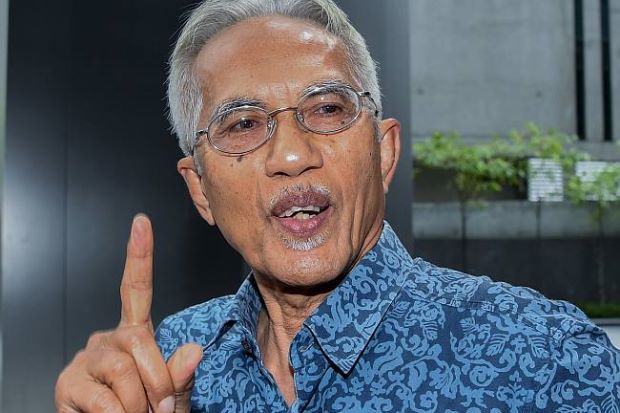
Datuk Seri Anwar Ibrahim

Datuk Seri Anwar Ibrahim

THE acrimonious relationship between Tun Dr Mahathir Mohamad and Datuk Seri Anwar Ibrahim – when they were Prime Minister and Deputy Prime Minister back in the day – is well-documented, and as a reporter covering the feud, I had a ring-side seat of the fight.

I remember joining Dr Mahathir and his entourage on a trade mission to South America in September 1997.

Malaysia was grappling with a financial crisis, the stock market had plunged, its currency was under attack and the skies were shrouded in haze.

It seemed like things couldn’t get any darker.

But worse it got when the relationship between its two leaders went terribly sour over how the country should tackle the financial crisis.

The South American visit was the longest official overseas engagement during Dr Mahathir’s first tenure as prime minister.

And the knives which had been drawn by then made the assign­ment feel even longer.

During the trip, a few ministers obviously wanted to “apple polish” the PM by doing their best to run Anwar down – all within earshot of reporters, amazingly.

One Umno leader waved a copy of the now-defunct Asiaweek magazine – which pictured Anwar riding a jet ski on the cover – and loudly complained that Anwar was a man in a hurry, and even promised to gather supporters to turn up at the airport for Dr Mahathir’s arrival.

My good friend, Johan Jaafar, now Tan Sri, was most uncomfortable when the air on board the chartered flight became toxic.

He was editor of Utusan Malaysia, which at the time was probably the most influential newspaper in the country.

In his own words, “I was famously fired three months before Anwar got the axe. I was guilty by association.”

Anwar was sacked as deputy prime minister on Sept 2, 1998 and as deputy Umno president the following day.

I was at the Putra World Trade Centre with other reporters from every media on Sept 3.

And that marked the beginning of the reformasi movement.

Along with my journalist brothers and sisters, I literally camped outside his home, soaked to the bone in the rain.

It’s funny now to recall how we predicted a short lifespan for the uprising.

How wrong we were.

Anwar is a born fighter and he’s probably the most charismatic Malaysian leader I’ve ever known.

He mobilised thousands onto the streets and had powerful international leaders on his side.

He has gone through the “black eye” episode, beatings, jail sentence, sex video scandal and sordid sodomy trials – not once, but twice – and survived it all. (Anwar was assaulted after his arrest on Sept 20, 1998, causing him to appear in court with a black eye. Former Inspector-General of Police Tan Sri Abdul Rahim Noor was eventually charged with the assault and received a two-month jail sentence. He later apologised to Anwar and his family.)

More incredibly, his wife – Datuk Seri Dr Wan Azizah Wan Ismail – stood by him, defended him and filled in for him as party president.

That’s another astonishing story by itself.

Fast forward to 2018. Dr Mahathir is surely the glue that binds for the ruling coalition.

Without him, it wouldn’t have been possible for Pakatan Harapan to win the general election and, without PKR and DAP, Dr Mahathir wouldn’t have had the structure and machinery to do likewise.

He held the key to reach many rural areas, including the Felda seats, which tipped the balance.

It was the massive historic win which led to Anwar being released from prison and subsequently pardoned.

Basically, the unimaginable happened and now, another stranger-than-fiction scenario is about to play out.

And again, there is plenty of cynicism and disbelief.

So, what Dr Mahathir said last week is important.

On record, for the first time, he said he would honour an agree­ment by the four parties of the Pakatan Harapan for him to step down after two years, and hand the country’s leadership to Anwar.

I am told there is a written agreement, but what’s more significant is that he has said so very clearly and in no uncertain terms, that it is going to be passed on to Anwar.

“I am confident that he is now more mature and much more experienced,” Dr Mahathir said at a gathering in a hotel with Malaysians living in Brunei.

He was responding to a question from a guest who voiced concern about history repeating itself on the choice of successor.

This should put an end to the conspiracy theories that PKR deputy president Datuk Seri Azmin Ali was his preferred choice as successor, or that Dr Mahathir intended to stay longer than two years and wouldn’t honour the agreement.

Even after Dr Mahathir’s open endorsement of Anwar as his replacement, there were still lingering doubts for some.

Former Umno MP Datuk Tawfik Tun Ismail said he was expe­riencing a déjà vu moment with the current political landscape, and with the banter between government and party leaders.

Referring to statements made by both Dr Mahathir and Anwar, Tawfik said the current back and forth was reminiscent of the time leading up to when Anwar was ousted from the government.

“Listening to what is said and what is denied, it’s almost like listening to what Anwar and Dr Mahathir said many, many years ago.

“I support you, you support me, and next day, you know one is killed,” he said, referring to Anwar’s sacking by Dr Mahathir in 1998.

In politics, a week can be a long time, what more two years.

However, age is not on Dr Mahathir’s side.

After all, he is already 93, so the punishing demands of the top job will take its toll on him.

He is truly doing a tremendous national service for Malaysia and we must be indebted to this incredible man for his tenacity. But he is also only human.

He needn’t take on this back-breaking job of cleaning up the government and economy when it will be easier for Anwar to do so when he takes over the reins instead.

Anwar has certainly grown much wiser and has mellowed, demonstrating patience and constraint, particularly with his constant urging for Dr Mahathir to be given room to decide.

But Anwar is not getting any younger either. He has waited long enough. He must get himself elected as a Member of Parliament soon.

To be known as a PM-in-waiting means nothing really, so he needs to be an MP before he can be appointed prime minister by the ruling coalition.

Let’s not picture this, but should something unfortunate happen to Dr Mahathir, Anwar cannot assume any role or position unless he is an MP.

There is nothing unusual because there is a process of succession planning, even at company level, and as the president of the party with the largest number of seats within the PH alliance, it’s only rightful Anwar succeed Dr Mahathir.

In just three months, the year will come to an end. The motion of succession will begin soon, and while fate decides everything, as early as next month, Anwar will take his earliest steps to fulfilling his destiny.

When the right words count

Alarm bells: Dr Mahathir caused a stir across China and Hong Kong when he said foreigners were banned from buying residential units in the US100bil (RM410bil) Forest City project in Johor.

ANY journalist who has had the pleasure of covering a press conference by Tun Dr Mahathir Mohamad will tell you that he is a delight because the Prime Minister is so quotable, and his witty and trademark deadpan sarcasm provides the best news stories.

Two decades on, he has made a return to helm the country’s top post and remains very much the character we’ve come to know.

Brimming with confidence, he is never guarded or cautious, unlike some other politicians. He can deliver a speech from prepared text, but Dr Mahathir is at his best when he’s spontaneous.

He openly says what’s on his mind and in his heart, and sometimes, does so impulsively. That perhaps sums up what he has gotten himself into lately.

Dr Mahathir has never shied away from any questions from reporters no matter how provocative, but he needs to rein himself in sometimes.

There is really no need for him to weigh in on the issue, particularly when it involves bilateral relations with China, a situation which can now best be described as delicate.

Last week, he triggered alarm bells across China and Hong Kong when he said foreigners – as good as singling out mainland Chinese – were banned from buying residential units in the US$100bil (RM410bil) Forest City project in Johor.

Most Malaysian businessmen have also expressed concern and discontent at the remark.

“One thing is certain, that city that is going to be built cannot be sold to foreigners,” Dr Mahathir told a news conference here.

“We are not going to give visas for people to come and live here,” he was quoted in an interview with Reuters.

He then added that the government would tear down the perimeter wall around the Malaysia-China Kuantan Industrial Park (MCKIP) in Pahang, which has been described as the “Great Wall of China.”

He rattled off all this right after his official visit to China, which isn’t likely to go down well with Beijing.

While the Chinese government has been able to exercise restraint and patience with Dr Mahathir’s outbursts, sentiments on social media – in which the Chinese government has become more sensitive – are exacerbating the situation.

Dr Mahathir, who visited Beijing for the first time since he took shots at Chinese investment ahead of a May election win, told China that he supports free trade, so long as it’s fair. Everyone needs to remember that countries are at different stages of development, he said.

“You don’t want a situation where there’s a new version of colonialism happening because poor countries are unable to compete with rich countries in terms of just, open, free trade,” he said.

Dr Mahathir has got this wrong though. Johor allows foreigners – especially Singaporeans – to buy properties in the state.

It’s very simple – there is already a policy in place on what it takes for foreigners to purchase real estate there.

A glut of houses amounting to RM1mil and above is bad enough, and the soft market has only stretched the wallets and maxed out the credits of property developers. Like in any business, contractors, too, are badly hit when not paid in full. The property market is, after all, the biggest multiplier of jobs.

Malaysia cannot afford to pick and choose its property clients because it is not legal and is also irrational and impractical.

The diplomatic and commercial faux pas sent all the wrong signals to Beijing and Hong Kong, causing bewilderment and uncertainty among developers and buyers alike.

Dr Mahathir’s remarks sent the shares of Country Garden Holdings, the developer of Forest City, into see-saw mode in Monday’s trading amid confusion.

The stock, which had risen by as much as 3.9% earlier last Monday, returned almost all its gains for the day on the Hong Kong exchange after his comments were published, ending the day 2.5% higher at HK$12.14.

As part of a damage control exercise, Johor Mentri Besar Datuk Osman Sapian had to reiterate that the state still welcomes foreign investors buying high-end residential units here, assuring Johor stays friendly with foreign direct investment.

“Our restriction on foreign property ownership is still the same – foreigners are only allowed to buy housing above RM1mil,” he said.

There is also ambiguity between Permanent Residence status and the “My Second Home” programme, which is aimed at enticing the well-heeled to take up temporary residence in the country with every purchase of high- end property, a common practice in many countries.

And let’s be honest, because to the rich mainlanders, in terms of draw for temporary stay, we can’t compete with Canada, Australia, the United States, the United Kingdom or even Singapore.

It is a fallacy and the handiwork of misguided fears to believe that mainland Chinese would invade Johor Baru to take up residence.

While some politicians have made it an issue of Chinese investments in Malaysia, the question that needs to be asked is, are we seeing anyone else, besides the Chinese, coming to our shores with serious investment plans?

Yes, we have found ourselves stuck with over-priced and over-paid deals, and agreements that should have been better drawn up and with exit clauses, but let’s be mindful and tactful, too.

And for sure, there is no Great Wall of China in Kuantan, as sadly represented, because it is merely a fencing parameter.

The Pahang state government, in trying to defuse the issue, told Dr Mahathir that the government should take into consideration the consequences before tearing down the perimeter wall around the MCKIP.

State Tourism, Environment and Plantations committee chairman Datuk Seri Mohd Sharkar Shamsuddin said the previous, Barisan Nasional government had already deliberated the matter, putting it down to the culture and working style of the Chinese citizens.

“That might be the working culture of the Chinese nationals, who prefer a secluded area. It could also be due to security reasons that the previous government had allowed the construction of the wall.

“Just like when we are there (China), they respect our working culture, including the need for halal food supply, surau facilities and separate washrooms. So, I believe the wall is due to their working culture,” Sharkar said.

He also expressed concern that such minor issues could affect the relationship between Malaysia and China.

The reality is that all our properties – whether residential or commercial – have walls or fences, for security reasons at least.

With a 1,400 workforce at the MCKIP, owned by Alliance Steel (M) Sdn Bhd, the majority locals, it is illogical to imagine that the whole project is shrouded in secrecy.

The Chinese have been told that they need to “follow the laws” on issues related to Forest City and MCKIP, but the federal government hasn’t detailed their offences, which is only casting further confusion.

Meanwhile, investments from China to Malaysia have come to a halt now that the Chinese are truly spooked, particularly because no one seems to know what’s going on currently.

Flip-flop statements, contradictory remarks and unfriendly gestures won’t do us any good. Instead, we should be recognising that between Asean members, Malaysia has the best link to China with our cultural and linguistic advantages, something other member nations can only be envious of.

A wild durian trip to Sabah

Off The Beat: A wild durian trip to Sabah

The flesh of the sukang, or red durian, has a beautiful colour.

The bumper durian season has reached its tail end, at least in Peninsular Malaysia. Thanks to this super season, which saw a glut in the supply of our favourite King of Fruits, prices came tumbling.

This season is simply the best in recent times. A combination of hot weather and regular rainfall resulted in this long durian season and the fruit’s oversupply.

Thorny delicacy

It was hard to refuse this thorny delicacy, especially with the variety available and the affordable prices.

A few extra inches have made home of my waist line, and I dread going for a medical test now because I have always had to grapple with my blood sugar levels. It’s anyone’s guess if I get a lecture or a pat on the back from the doctor.

From Musang King to D24 to Red Prawns to the relatively unknown Golden Phoenix or Kim Hong, I sampled them all this season.

Genuine jungle fruits

I also made a a trip across the South China Sea to test Sabah’s red flesh durians, which are genuine jungle fruits.

I’ve been travelling to Sabah, one of my favourite states, for decades, but have never had the opportunity to taste its native fruit. The closest I’ve got to this unusual durian is through numerous pictures of them. With the season reaching its peak, I took a trip to the foothills of Mount Kinabalu recently in search of this unusual spiky fruit.

A two-hour trip from Kota Kinabalu took me up the winding roads of North Borneo to the quaint town of Kundasang in the Ranau district.

It reminded me very much of Cameron Highlands with its sprawling farm land of vegetables, and even strawberries, the key difference being the majestic view of the highest peak in Malaysia.

Simply a delight

Air-conditioning has little place here because the cool climate is simply a delight, a welcome relief from the sweltering heat currently baking the country. Against the backdrop of this breathtaking view, I began my search for the wild durians of Sabah, known by the Kadazandusun as the sukang (red) or dalit (red to orange flesh).

durian

The sukang and dalit wild durians are endemic to Borneo.

Unlike the durians in the peninsula, which are mostly commercially cultivated, these wild durians are found in the more remote parts of the state and deep in the jungles.

But some farmers have started to cultivate them on a small scale because of demand from durian connoisseurs who readily pay top ringgit for them.

The red sukang, characterised by long and curved spikes, and the dalit (which morphs from white flowers to become roundish, orange fruits when ripe) with its short and sharp spines, can be sold at RM25 per kg. The more common and kampung varieties only fetch RM15 to RM20 per kg.

durian

The dalit durian has short and sharp spines.

I’m certain tourists from the peninsula and those from China are paying anything between RM35 and RM55 per kg because of our naive behaviour of going weak in the knees and glowing with excitement at the mere sight of these novelty, sepak takraw ball-sized fruits. And from a mile off, vendors can identify weekend visitors from oil-rich Brunei, their car number plates a sure giveaway of their outstation origin and propensity to be fleeced. I’m not sure if they are still rolling in the dough these days, but they didn’t seem to be haggling with the durian sellers.

And here’s the point of this article – how do these wild durians rate against the smooth, buttery and creamy taste of Musang King or my favourite Golden Phoenix with its bitter sweet flesh, or the liquor-y taste of the XO durians?

I may not be the best person to rate them given my (poorly) hidden affection for Sabah and the obvious biasness that stems from it, but leaving prejudice behind, I gave them a shot anyway.

Red and orange

I found it hard to tune my taste buds to these indigenous fruits. Despite their colourful appearance, the taste was bland. Unlike the creamy durians that we are so accustomed to, the flesh of the red and orange durians is thin.

While others have claimed that wild durians have strong and distinctive scents, the ones I tried were odourless, reminding me of those from Thailand.

I read a review which said the “taste and flavour of red durian is twice as strong as orange durian. That’s why red durian is sold more (and fast) than the cheaper orange durian. Some say you would get a bit ‘drunk’ if you ate too many red durian”.

My experience was distinctly different, though. Perhaps I should have tried more of these wild durians to better assess them, but I had already struggled to finish three pieces. How was I going to manage more?

My Sabahan friends tell me these durians taste better in the fermented form of tempoyak, which is best served with rice mixed with salt and chilli. It was also interesting to learn that unlike ordinary durians, which fall off their tree when ripe, these wild ones normally ripen and split while still hanging in their tree.

As my red durian tasting tour came to an end – perhaps on a low note – my enthusiasm was reignited when I was told that my wild durian adventure had only just begun. Apparently, I should have entered the jungles in the centre of the Tongod district, where I would have found the oldest and tallest tree in Sabah, if not in Malaysia.

The tree in Kampung Kenang-Kenangan, measuring 57.7m, is believed to be over 100 years old, and according to legend, is able to produce up to 2,000 fruits a season.

The tiny district in Sandakan has a population of a mere 35,000 people, with Orang Sungai and Kadazandusun the predominant ethnic groups there.

If the statistics are anything to go by, there are likely more durians than people in Tongod when the season peaks.

From giant-size durian trees to durians that grow low on trees (just above ground level), it looks like my next destination would be to search for these unusual fruits in the deep jungles of Borneo.

The Kura-Kura or Tortoise Durian (Testudirium) is regarded an extremely rare durian of Borneo, and there is little information on this unique species. Naturally, this would make the hunt more tantalising for an off the beat trip, doesn’t it?

Hate destroys the hater

Taboo subject: The Merdeka exhibition, Stripes and Strokes , that is causing some Malaysians sleepless nights over photographs of LGBT activists.

IT’S a subject most Malaysians, and that includes prominent civil rights advocates, shy away from – the lesbian, gay, bisexual and transgender (LGBT) conundrum is regarded too controversial, taboo even.

So, many of us prefer not to talk about it, choosing to pretend that the LGBT community doesn’t exist. Or we simply don’t want to think about it. After all, why question seemingly conventional mindset?

Those who want to share their thoughts about it (often loudly) see it from a religious and even political viewpoint.

In their hyperbole, these people see the LGBT community as a threatening group with a deviant culture that “can destroy the moral fabric of society.”

Strangely, these moral police don’t even express anger and hatred towards terrorists and paedophiles.

At a time when Malaysians are dealing with more pressing concerns, like learning billions of ringgit have been stolen from us, consequently putting us under a mountain of debt, some of us are unbelievably having sleepless nights over photographs of LGBT activists at a Merdeka exhibition. Equally pertinent, apparently, is the community’s choice of washrooms – male or female. Go figure.

Over the past few weeks, the LGBT issue seems to have fired up many, with Minister in the Prime Minister’s Department Datuk Dr Mujahid Yusuf ordering the removal of two portraits of LGBT activists at an exhibition included in the George Town Festival.

Most Penangites likely never knew of the exhibition until the order to remove the photographs of Nisha Ayub and Pang Khee Teik was revealed.

Dr Mujahid was quoted as saying that he had no issues with people choosing to practise LGBT activities, so long as they abstained from openly promoting their lifestyle.

The angry exhibition sponsor, Datuk Vinod Sekhar, retorted that it was “incredible” that Dr Mujahid voiced his opinion, saying that discrimination against such people needed to stop.

“For the first time in Malaysia, a Minister has stood up and accepted that there is transgender victimisation. Prior to this, no Federal Minister in charge of religious affairs has come out and said this. This really changes the narrative of things in the new Malaysia,” Vinod was quoted.

The colourful businessman, a heart patient, got so upset and bothered that during an interview with a reporter fromThe Star, he collapsed when his defibrillator (implanted in his chest), failed.

A defibrillator is a device that releases a high energy electric shock to the heart through the wall of the chest of a person who goes into cardiac arrest.

Predictably, no one spoke up against Dr Mujahid’s directive after that, as far as I can recall. It can’t be denied that Dr Mujahid acted because it would have been politically suicidal of him to not have done so. The plain truth is that he wasn’t worried about LGBT activists – he was more concerned about the political fallout had he not acted.

Surely he is aware that there is still a political market for those who want to hear hate speeches on race and religion. The urban voters may want a New Malaysia, but at least 50% of the electorate, many in the rural constituencies, want the old ways to remain, evident from the popular votes tally in the recent general election.

Never mind that their own community stole from them, the appointment of key government posts to non-Malays is still abhorrent and a challenge to the position of Malays.

What more when issues relating to LGBT are impossible to defend in an increasingly religious Malaysia, and one involving a tiny fraction of Malaysians with no political clout or dividends to politicians.

So, when a transgender was beaten to a pulp by a group comprising eight men in Sungai Ujong, Negri Sembilan, it didn’t warrant national outcry.

In fact, most media didn’t even report it, and the indifference to this blatant and cowardly display of brutality and gangsterism seems to suggest that the cross-dresser deserved to be assaulted.

So goes the adage padan muka (serves you right), and surely this is expected when some of us berate and demonise this community.

It is one thing to tell your followers that such sexual orientations are against religious, and even cultural practices, but it is another thing all together to incite hatred against fellow human beings, where the line is crossed when a person is beaten up, and we look the other way, and worse, feel no remorse.

Apparently, CCTV images showed a group of men whacking the transgender in the middle of the street with a piece of wood and plastic pipe.

No one attempted to stop the assailants as the shocking violence played out, resulting in the victim suffering a ruptured spleen, several broken ribs as well as injuries to her back and head, which required 12 stitches.

It’s unequivocal – violence is wrong, and Deputy Women, Family and Community Development Minister Hannah Yeoh and her party colleague, lawyer Syahredzan Johan, must be commended for speaking out when most politicians chose not to.

“The hate speeches directed at the transgender community reduced their humanity in the eyes of society and has made it easier for them to be targeted. We condemn in the strongest terms any hate speech directed at the community,” said the duo in a statement.

“The men surrounded her, and it is believed that she was attacked because of prejudice against her gender identity and the fact that she is a transgender woman.”

Five individuals have been charged, three of whom are expecting to sit for the SPM examination in November. It’s frightening that prejudice has rooted itself in our younger generation. What business do they have spreading hate and inflicting pain on those different from them?

No more talk, the time to nip it in the bud is now, so we must send a strong message that violence, in any shape or form, can never be tolerated.

We already live in a highly prejudiced society, so, do we really need this kind of blatant brutality and lack of acceptance? Absolutely not!

Good grace under pressure

BY Prime Minister Tun Dr Mahathir Mohamad’s admission, the Pakatan Harapan didn’t expect to win the general election. So, the new federal government is finding itself biting more than it can chew having made “too many promises”, and is now struggling to fulfil its election pledges.

“Actually, we did not expect to win, and we made a thick manifesto with all kinds of promises.

“We need to make sacrifices to fulfil our promises. If we can’t fulfil them, we will need a good reason that is acceptable to the people,” Dr Mahathir was quoted by a daily which cited several sources who attended a PH meeting last week.

Firstly, there’s no way to fulfil all promises made in 100 days because it’s just physically impossible – that’s just too short a duration.

It augurs well during campaigning but realistically, it can never be pulled off, even if the economy is strong and we have billions to spend.

The 100-day period is popularly used to evaluate the first three months of an American president’s term, but many democracies have their own yardstick to measure the success of a government or a leader.

The practice has long been adopted in Malaysian politics to observe the start of a new political administration. It’s sometimes regarded as the honeymoon period, where some tolerance is accorded to a new leadership, especially if it is inexperienced.

Secondly, the PH and Malaysians, presumably, failed to realise the financial mess we’re in. The empty coffers will make the government’s task of realising its promises that much more difficult. However, given the depth of our debt, most voters will probably find it in themselves to give the new government more time to settle into the job.

Without doubt, the new government has plenty of goodwill and support, and even after the 100-day period is over, it will retain the patience of the rakyat, but nothing should be taken for granted.

After all, PH leaders can only blame the failures and corrupt ways of the Barisan Nasional government for a time.

They were elected to fix the problems left behind by the Najib Administration, so the blame game can’t continue forever.

We can expect a rough ride ahead because the figures released by Bank Negara don’t bode well for the future.

Economic growth for Malaysia in the second quarter of this year came in at 4.5%, which was below consensus estimates of more than 5%.

According to Bank Negara Malaysia, supply disruptions in the second quarter resulted in the slower economic growth.

In comparison, GDP growth was 5.8% in the corresponding quarter of 2017 and 5.4% in 1Q2018.

In the breakdown of GDP by economic activity, the services, manufacturing and construction sectors showed growth in the second quarter while the agriculture and mining sectors slipped into a decline.

Last week, Malaysian equities took a hit while the ringgit slid to its lowest level since November as fears escalated over the currency crisis gripping Turkey. These are factors beyond our control, but the timing couldn’t have been worse.

The PH government has made good its election promise to abolish the unpopular Goods and Services Tax. Unfortunately, this populist move will have far-reaching consequences for Malaysians in the long run as it simply means the government earns less from taxes. This diminished revenue stream is bound to hamper development.

Basically, the losses will extend to the forgone projects that would have been financed by the higher earnings the GST would have generated. This affects essential projects such as schools, hospitals, roads, public services and subsidy programmes for the poor.

According to Singapore’s Straits Times associate editor, Vikram Khanna described the move to discard the 6% GST as driven more by “populist politics than by sound economics”.

Malaysia became the first country to introduce GST and then abolished it, although it has long been accepted by economists as the most comprehensive, transparent, fair and efficient form of consumption tax.

Vikram said that while today’s oil prices of about US$80 (RM278.60) per barrel can provide some fiscal cushion in the short term, oil-based revenues are fickle and volatile. Malaysia can’t depend on them for the long term.

“After the GST is abolished, the government will eventually need to come up with new taxes – either on income or capital gains, or higher user charges. The negative impact on the economy of these taxes should also be factored into the cost of abolishing the GST,” he cautioned.

He said one reason for the perception that GST raises living costs is it being an “optical illusion” – the GST is transparent and is clearly stated in invoices, but the SST is hidden to consumers.

“While they actually pay it (SST), many of them don’t realise they are doing so. Another reason is that some unscrupulous businesses raised prices when the GST was introduced by more than their additional tax liability, blaming the GST for the increase,” Vikram said.

He said the GST also became a scapegoat for other issues such as the financial scandals relating to, for example, Felda Global Ventures and 1Malaysia Development Bhd (1MDB).

“In some voters’ minds, the issues came to be linked: the GST was viewed as a means to recoup revenues that were lost to Malaysia because of mismanagement and corruption. What was essentially an economically sound tax became tainted and politicised.

“Abolishing it is relatively easy. But now comes the hard part: The new government has the unenviable task of managing Malaysia’s finances without the GST – and without an alternative revenue measure that can match it,” Vikram said.

The bottom line is that the government will now be short of at least RM21 billion with the abolishment of GST, and it doesn’t help that despite the rise in global oil prices to an average of US$70 per barrel, the expected increase in oil-related revenue is estimated at only RM5.4 billion.

The easiest thing to do, in the immediate term, was to identify cuts worth RM10 billion, which meant downsizing, delaying and abolishing overlapping and non-urgent programmes and projects.

It will be painful post GE14, but fortunately, there are also bright sparks in the New Malaysia.

Malaysians knew corruption had a vice-like grip on the country, but they didn’t realise its grave impact until examples of it were exposed, one after another, by the new government.

Barisan leaders and supporters must have been just as shocked and horrified to witness this unbridled greed.

The immediate institutional reforms will win the PH government top marks, and truth be told, the new culture that has surfaced is a breath of fresh air. The shackles feel like they have come off – Malaysians now feel free with the old regime having been toppled, and the media has also benefited. The PH government will be closely watched, though.

Call it what you will but ending the tenure of Barisan political appointees and replacing them with their leaders as envoys smacks of hypocrisy.

At least the effort to pursue those who stole our money through 1MDB deserves an “A”.

All’s not rosy though – the disorganisation of some ministers also needs the attention of Dr Mahathir. Some are already fast earning reputations for ignoring the advice of their more experienced ministry officials, while others are even resorting to snubbing the media.

It’s a shame that some PH politicians continue to wear “racial glasses”. Surely the long-drawn issue of many senior Malaysians not getting citizenships because of document issues is not restricted to a single ethnic group.

And some PH leaders still view race and religious issues as if they are still in Umno, quickly forgetting where their votes came from and how they got elected into government.

We must surely commend Dr Mahathir for looking beyond race in the appointment of key posts, including Tommy Thomas as AG and Lim Guan Eng as Finance Minister.

Hopefully this will set a precedent for appointments from now on to be based on ability and merit.

The PH government clearly has its work cut out, but coming from a patient and accepting culture, we could do with giving the new administration more time to iron out the creases. But good grace is always under pressure from the weight of expectation, particularly for a nation fraught by disappointment and thirsting for change. Everything has its limit, and time will soon tell if the powers that be have met their KPI.

When in Hokkaido, follow the lovely scent of lavender

When in Hokkaido, follow the lovely scent of lavender

It’s lavender season in Japan now and thousands of tourists are descending on places like Furano in Hokkaido prefecture.

It’s lavender season in Japan now and thousands of tourists are descending on places like Furano in Hokkaido prefecture, known for its sprawling lavender fields like the one in Farm Tomita, with spectacular views of Mount Tokachi.

It’s a breathtaking view, one that is a visual feast for the eyes. Lavender aside, poppies, lilies and sunflowers also grow lushly in the Nakafurano area.

There’s good reason why this kind of natural beauty is ingrained in the culture – the Japanese take the lavender season seriously because it is a multimillion-dollar industry. I decided to take a detour on a recent trip to my favourite Japanese prefecture, Hokkaido, the northern-most of the country’s four main islands. Was it the dead seriousness of the Japanese in their flower trade that made me want to visit a cemetery? Hardly.

It wasn’t to pay respects to the dead but to pay homage to the jaw-dropping sights (and dizzying smells) of the vast fields of lavender. Sure, visiting a place of burial isn’t exactly what most tourists have in mind when planning their travels, but then again, I’m no conventional traveller.

For those who don’t know, the Makomanai Takino cemetery in Sapporo, set up in 1982, is home to one of the most magnificent landscapes bristling with the wonder of lavender. Almost every tombstone is covered with properly manicured versions of the flower, true to Japanese precision.

lavender

The Makomanai Takino cemetery in Sapporo, Hokkaido, is home to one of the most magnificent landscapes bristling with the wonder of lavender.

The paradox of having so much life and beauty in a place representing death is odd yet stirring to the mind. What I saw was indescribable and simply beyond words, and summer is the best time to take in this amazing scene.

I’d have never set foot there had I chosen the ordinary path of signing up for a tourist package. It is out of the way for most tour operators, and I only had the chance to visit it because I was driven privately and didn’t have an itinerary to weigh me down.

“Any time of year, visitors will have a different experience. The 150,000 lavenders turn fresh green in spring, pale purple in summer and silky white with snow in winter,” as one writer aptly described the changing landscape.

While the trip was mainly planned for viewing blooming flowers, for me, it was even more incredible to catch the sight of a huge stone statue of Buddha within this hill of purple beauty.

The top of the statue’s head, which rises through a circular well at the centre of the verdant mound, is carpeted in 150,000 of the flowers, spread across 180ha of land.

This is the work of award winning Japanese architect Tadao Ando, who is regarded as the greatest Japanese architect in modern times. Ando has become one of the most renowned in his field, winning many prestigious international awards.

lavender

This stone statue of Buddha is the work of internationally renowned Japanese architect Tadao Ando.

Apparently, before the temple was completed, the 13m Buddha sculpture stood alone in a field for 15 years.

“Soon after its completion, the client realised the stone structure was out of scale on its own, giving visitors an uneasy sensation. For that reason, they decided to hire Ando to create a more serene architectural procession for the site,” a report revealed.

However, I was a little disappointed to see the replicas of about 40 Moai (Easter Island) heads on the cemetery ground. I believe it makes little sense because all it does is dent what is otherwise a picture-perfect feel of the place.

Why would anyone want to see fake Moai heads at a Japanese cemetery? It gets worse – there is even a full-size replica of the Stonehenge, a distinctly British monolith. I don’t think Ando would have endorsed these replicas, which have given the cemetery a theme-park feel, a total contrast to its sombre mood.

I dare say, even the permanent residents there would be slighted!

But I wasn’t going to let these disappointments affect my overall impression of this magnificent terrain. It truly is a hidden gem.

This is no ordinary graveyard. And trust the Japanese to have worked on every detail to make visiting it an experience to remember.

Where else but at a Japanese burial ground could I buy lavender-flavoured ice cream to wrap up the trip? Who knew end of the line could amount to a sweet ending.

An F for you, Bung Moktar

Out of order: Bung Moktar crossing the line in Parliament with an ‘F you’ retort to Mongin’s ‘casino’ jibe.

THE antics of Kinabatangan MP Datuk Seri Bung Moktar Radin at the Dewan Rakyat are familiar to most of us.

He’s a recalcitrant who thrives on earning attention from the media and Members of Parliament through his outlandish behaviour.

Members of the august House are supposed to address each other as Honourable or Yang Berhormat, being elected members, but it’ll be interesting to see how this fits the man of the hour.

After all, he is notoriously known for his crass, disparaging and insensitive remarks. They may be sticks and stones to many of us. However, last week he crossed the line when he shouted “F*** you” at a fellow MP.

He was about to question Khairy Jamaluddin (BN-Rembau) on the price of goods at the Selayang wet market when Willie Mongin (PH-Puncak Borneo) said: “Not casino, is it?”

This was in reference to widely circulated photographs of a man resembling Bung Moktar at a casino apparently in Macau.

A visibly upset Bung Moktar retorted: “What is this? You are rude. You don’t deserve to sit here. Gangster!

“You want to fight? F*** you.”

With the microphone still on, his words were clearly audible, and as expected, his expletive spread like a disease on social media.

Bung Moktar has set a new “low” for his endless string of controversial remarks in and out of Parliament.

Last year, when he debated the tudung issue, he was quoted saying: “What is the problem with wearing a tudung?

“If she is a beautiful woman, even if she wears a tudung, she would still be beautiful. If she is not pretty, even if she is naked, who would want her?”

In 2011, he said “women drivers are slow and oblivious” and in 2007, he said women “bocor setiap bulan”, referring to their menstrual cycle.

He criticised then Batu Gajah MP Fong Po Kuan in Parliament when she complained to the Speaker about the dilapidated condition of the august House’s roof which leaked every time it rained.

Mana ada bocor? Batu Gajah pun bocor tiap-tiap bulan juga.” (Where is the leak? Batu Gajah leaks every month, too).

In 2008, Bung Moktar was caught making an obscene hand gesture at some MPs during the 30-minute daily live telecast of Question Time in Parliament on RTM1, though it went unnoticed as the set cameras were off him then. He admitted to making the gesture but insisted that it was “not what it meant” and shouldn’t be construed as rude.

That year, he even insulted the disabled community by asking veteran politician (now late) Karpal Singh to stand up in a show of respect to the House, fully aware the DAP leader had been paralysed waist down following an accident.

When Germany won the World Cup in 2014, he tweeted: “WELL DONE…BRAVO…LONG LIVE HITLER”, upsetting many people.

Bung Moktar will surely continue with his ways because all he needs to do is retract his offensive remarks, apologise and move on. That’s the privilege accorded to MPs.

He’s in good company, though.

Joining him is Lipis MP Abdul Rahman Mohamad, who reportedly shouted “P****ak” in the Dewan.

In retracting the offending word, Abdul Rahman said he had wanted to “teach” DAP’s RSN Rayer (PH-Jelutong) a lesson for his slur during the previous week’s proceedings.

Rayer uttered “kepala bapak”, a phrase he also used in the Dewan Rakyat the previous week.

The DAP MP from Penang must surely be clued in to what Malaysians think of his debating skills at the Dewan Rakyat, despite being a practising lawyer.

He is in danger of edging towards a slippery slope if he continues displaying his brash manners and ignoring the voice of the people who feel he must improve on his delivery and exercise self-restraint. Theatrical responses are so passe in the New Malaysia. Keep that in your ceramah, please.

And what was Mongin thinking when posting on Twitter that he accepted Bung Moktar’s challenge to a one-on-one fight in the ring?

“Too many blunders from Kinabatangan in Parliament.

“If he insists on a fight, I accept his challenge to go one-on-one in the ring. Just let me know the time and date,” said Mongin in his entry last week.

Perhaps he was angry with Bung Moktar’s remarks: “I have seen Puncak Borneo (Mongin) having drinks with perempuan pelacur (hookers) as well.”

The truth is, Bung Moktar doesn’t even deserve a response.

Mongin can choose to sit down with whomever he wants. After all, purported tainted politicians still walk the corridors of Parliament as Yang Berhormats, passing themselves off as righteous and principled figures.

And let’s not even deliberate Pasir Salak MP Datuk Seri Tajuddin Abdul Rahman’s disgraceful tirade on race and religion, and his highly imaginative and provocative speeches on how Malaysia is in danger of being taken over by Christians.

His hate-filled speeches bordered on sedition and his remarks often targeted Teresa Kok (DAP-Seputeh):

“The only woman with a ‘Kok’ is in Seputeh.”

The nation might be crying out for a new political culture, where debates can be conducted in a more mature and civil manner.

Sadly, we haven’t seen enough of it. Instead, we are still violated by a spectacle of ill-mannered MPs unable to behave with dignity or debate intelligently (not even intellectually) and with decorum.

But MPs like Bung Moktar are doing as they please because there are no rules in Parliament which restraint lawmakers who continuously distract and disrupt proceedings, and in the process, dishonour the House.

So, if we’re asked to rate the performance of Bung Moktar and other renegade MPs, we can only give them an F for failing us miserably.

Keeping it civil

Brave new world: The civil service needs to get used to the New Malaysia approach while our ministers need to snap out of the Opposition mode and get down to work.

IT’S often said that ministers come and go, but civil servants stay forever. And the good old government machinery runs as before, a fact some of our new ministers will probably be clued into by now.

Ministers who have no experience at state government level may have pre-conceived notions of the privileges they enjoy, like unlimited authority and knowing what they decree would suffice to overrule the bureaucrats.

And that is the biggest mistake they could make as newcomers to Putrajaya, because nothing exemplifies shooting oneself in the foot more than putting down civil servants – they run the ministries, after all.

Making its rounds on the grapevine these days is how some ministers put down their secretaries-general at meetings, believing they know better, or quite possibly, that they can do a better job at improving the performance of their charges.

Some of our ministers were probably not born when British sitcom Yes, Minister (which later became Yes, Prime Minister) aired on BBC Two, and on RTM, from 1980 to 1984.

Set principally in the private office of a British Cabinet Minister in the fictional Department of Administrative Affairs in Whitehall, it follows the ministerial career of the Right Honourable Jim Hacker.

In it, he attempts, or rather, struggles to formulate and enact laws or effect departmental changes and meets with resistance from the civil service, in particularly his Permanent Secretary Sir Humphrey Appleby.

The obstructions (sabotages, some would say) were often carried out so deftly that the minister would often rarely know what hit him or possess a trail of evidence to prove insubordination.

In fact, the delays (such as total rejection of policy) were cited to impress upon the minster that the shenanigans were for the benefit of his political mileage.

But of course, the sitcom was totally fictional and in real life, not all civil servants could get away like that.

Respected banker and commentator Tan Sri Dr Munir Majid wrote that Prime Minister Tun Dr Mahathir Mohamad had put together a Cabinet with a mix of races and genders, and a range of ages, which is unprecedented in the political governance of our country. However, except for a handful of ministers, the Cabinet falls short on experience.

Dr Munir urged Pakatan ministers to get out of “Opposition mode” so they can function and deliver with all the advice and support available.

“They would need to get the government machinery – the civil service – to implement their decisions effectively.

“Here, there is another problem. The largely Malay civil service is not used to having political masters committed to a multi-racial Malaysia and a no-nonsense regime,” he wrote.

That simply means our ministers, who have been used to merely delivering fiery speeches, now need to roll up their sleeves and get down to work and show the fruits of their labour. They can only blame the ills and corruption of the previous government to an extent.

A few ministers, and even the Attorney-General Tommy Thomas, must now grapple with all the documents being in Bahasa Malaysia, unlike in the private sector where the medium of communication is English.

Their staff would most likely be entirely Malay, except for their aides, who are political appointees. Directives would be issued in an entirely different way, obviously reflected by the work culture and style of communication.

That is just how the civil service works, so, they simply need get used to it. Of course, stories of all this being a culture shock for some have surfaced recently.

Dr Munir reminded that “there is still some way to go to arrive at a New Malaysia in terms of multi-racialism. After two generations of ‘Malay First’ and subsequently ‘Malay and Muslim First’ political ethic, there is a mountain to climb to make it New Malaysia.”

The reality is that about 75% of the Malay electorate in GE14 voted for Umno or PAS, in comparison to 95% of the Chinese voters who voted for Pakatan Harapan (an increase from the 85% who supported the now-defunct Pakatan Rakyat coalition in 2013). About 70% – 75% of Indians voted for PH, the figures show.

It has been reported that only 25% – 30% of Malays voted for PH, according to figures from Merdeka Centre. Apparently, 35% – 40% of Malays voted for Barisan Nasional while 30% – 33% supported PAS.

The findings displayed that although a higher percentage of Malays voted for Pakatan Harapan in Johor and in west coast states such as Melaka and Negri Sembilan, the coalition’s overall Malay support was diminished by its weak performance in Kelantan and Terengganu.

It’s no secret that as the new government reaches its 100-day mark, some ministers are still struggling to assemble their offices.

It’s just as well that some have yet to meet the press or make statements, because they are still learning to juggle the workload as others continue their scramble to find the ideal personnel.

The job has been so overwhelming that they have been unable to meet their key officers to solidify plans and directions.

With no appointments in sight, some staff are wondering if they are being snubbed, or simply that the ministers are too busy with other engagements. It doesn’t help that they don’t even reply messages.

But the civil service needs to accept that this is New Malaysia. There is no turning back. The culture of openness, accountability, engagement and success must take centre stage, with any form of prejudice left by the wayside.

The strategy of using race and religion to stir emotions seems hollow now.

Millions of ringgit were stolen from the people by those in power, and as the facts have revealed, they weren’t Chinese, Indians or Christians, contrary to what these politicians still want the Malays to believe.

And certainly, the civil servants who sniffed out the moral decay under their very noses knew exactly what was happening.

Clean, trustworthy and competent ministers, and a loyal, non-corrupt and efficient civil service will make Malaysia great.

After all, as the saying goes, it doesn’t matter what colour the cat is, as long it catches the mice.

In this context, what’s important is surely them being good Malaysians.

Ministry feeling the squeeze

Heavy responsiblity: Dr Maszlee is fast realising that heading the Education Ministry is not only a mammoth task but also one that is often embroiled in political drama.

IT must now have dawned on Education Minister Dr Maszlee Malik that he sits in a hot seat. A role as university lecturer is a different ball game altogether from heading an entire ministry.

Previously, there was the Higher Education Ministry, which oversaw the higher institutions of learning, and the Education Ministry, tasked with looking after schools. Now, everything is housed under a single ministry.

It is a mammoth task, no doubt, and certainly one not helped by knowing how the ministry is often embroiled in political drama.

Decisions by the minister directly impact millions of Malaysians, particularly teachers, parents and students.

Almost every Education Minister in the past has attempted to leave a mark, or tried to make a difference, but they have all only disappointed us.

Whether they are changes to the syllabus, textbooks, school terms or even names of subjects, we’ve run into the handiwork of these politicians more times than we’d like to remember.

Although each of them made cosmetic changes, none of them, unfortunately, affected a profound difference in their duty – improving the standard of our education system in schools and universities.

The strings of distinctions, which our students brandish from public examinations, fall short because of the glaring difference in standards. Realistically speaking, an “A” in Malaysia could well just be a “D” in some examination papers overseas.

The grading system in science subjects, for example, has long been a bone of contention, and no one really seems to know how it works.

And regardless of where our students may be studying, at national, Chinese or Tamil schools, their proficiency in English has continued to deteriorate. As if to throw a spanner in the works, it’s not just the students who are weak – the ones teaching them English aren’t very good either.

None of these teachers and students can be blamed though because they are victims of the education system which taught them. Unfortunately, most of us are now paying the price through our communication, written or verbal.

Dr Maszlee has found himself having to clarify and even backtrack on previous decisions recently, too. Last week, after being criticised, he had to change his stand and promised financial aid to Chinese independent high schools (SPMC) under the federal development budget.

Earlier, he said SPMC couldn’t receive allocations to pay teachers’ salaries since they’re not government schools.

“Operation allocation covers the government’s internal expenses. Most of the allocations are for civil servants and teachers’ emolument.

“As SPMC is not a public school or under the ministry’s purview, and its teachers are not civil servants, the ministry cannot use operation allocation for SPMC, private religious schools and other private education agencies.”

In his written reply to Ayer Hitam MP Datuk Seri Dr Wee Ka Siong, Dr Maszlee said independent schools wouldn’t be funded since they don’t come under the purview of the education system.

The Unified Examination Certificate (UEC) issue has also continued to dog Dr Maszlee, with lingering doubts over his stand.

He had reportedly said that recognising the UEC may undermine the status of the national language and national unity, adding that PAS and Umno Youth had also echoed similar sentiments.

The Simpang Renggam MP also previously said that a “holistic approach” towards any decision to recognise the UEC is needed to ensure both the national language and national unity weren’t threatened, adding he wanted to avoid unnecessary U-turns on the issue.

And after being struck by a barrage of criticisms, he made a political statement saying the only one in conflict is Barisan Nasional, with MCA deputy president Wee and the party standing on one square and (Umno Youth chief) Datuk Asyraf Wajdi Dusuki standing on another.

More controversy was to follow. First, he announced the Government’s firm implementation of the black shoe standard for all students from next year. But after taking on the brickbats head on, he agreed to a year’s grace period to enforce the switch of white shoes to black pairs.

His announcement to raise funds for our financially-strapped universities by selling number plates to the alumnus also raised a ruckus, even if his intentions were noble.

So, the 43-year-old minister’s faux pas have given the impression that he isn’t in tune with the job or the stakeholders.

He shouldn’t be too quick to make inconsequential changes while still learning the ropes.

Unfortunately for him, his ministry is one huge minefield, where one slip of the tongue could blow up in his face. And in a political environment where Malaysians have become more demanding, he would have to live with constant scrutiny and judgement.

The Johorian has been pummelled on social media, taking blows no less from pro-Pakatan Harapan bloggers. This won’t do his credibility, and consequently, confidence, one bit of good.

Dr Maszlee is surely feeling the weight of the world on his shoulders now. So, he needs plenty of support and help. However, he must realise that the honeymoon period of 100 days is fast drawing to a close. The media is already saying that he is difficult to reach, and this incommunicado business even includes his senior aides.

This surely can’t be the best way to go about things, can it?

Baby love no more

IT’S enough to make anyone’s stomach churn how a 41-year-old man could take an 11-year-old child as his wife, and later proudly confess that he had wanted to marry her since she was seven.

Worse still, it’s frightening and sickening that he had the audacity to concede his wish to marry her showed it wasn’t an act of lust. His latest revelation is more revolting than the earlier news of his marriage to the underage girl in Thailand.

BH Online quoted the man from Gua Musang, Kelantan, as saying that they would have already moved in together if he only married her to satisfy himself. Instead, he has opted to wait five years for her to turn 16.

The rubber tapper and religious teacher said he was unsure what drove him to marry the girl, but claims it wasn’t spurred by desire.

“I knew Ayu since she was little because we were neighbours, and I taught her Al-Quran lessons. It was then I told myself that one day, I will take this girl as my wife, and I did so four years later,” he reportedly said.

Incredibly, he expects Malaysians to believe him when his own family members – including his first two wives – found his decision to marry a minor appalling and decided to spill the beans on him.

There is no other way – we must end child marriages. There is simply no justification for such paedophilic acts. What’s worse is, religion is being used to legitimise it.

Innocent teenage crushes are common, which is part of the growing-up process, but when it involves a married man who has two wives with an 11-year-old child, that’s an alarming story.

Shockingly, the religious authorities have their hands tied and can do little beyond imposing a fine on the man for an administrative bungle.

On July 10, the Gua Musang syariah court let him walk off with a mere RM1,800 penalty for marrying a minor without prior consent from the court and for engaging in polygamy without permission from his spouse. His marriage to the child bride in Narathiwat, Thailand, took place on June 18.

Despite national condemnation, the man has refused to give in to public pressure to annul the marriage.

His children are also stuck with the reality that they now have an 11-year-old stepmother. One can only imagine the trauma they have to endure.

His children are said to be between five and 18 years old, one of whom is even friends with the girl.

It doesn’t make sense either that Deputy Prime Minister Datuk Seri Dr Wan Azizah Wan Ismail declared it “was not wise to prejudge the issue before all the evidence is brought together and the investigation is complete.

“The actions we take in dealing with this alleged incident of child marriage must be based on evidence. We will issue a statement on this matter only after the investigation is complete,” she reportedly said.

The man has already admitted he has been in love with the minor since she was seven. Now he has officially married the girl in Thailand. So, it is no longer an “alleged case”.

But since religious issues could come into play, things could get complicated for what would otherwise be a straightforward matter. It’s not the 1MDB case, after all.

In Malaysia, the furore gets incredibly loud when deliberating the subject of homosexuality. And in more extreme instances, some of the ill-educated aren’t even tolerant of liberals.

Yet, they seem to be disturbingly silent when it comes to child marriages. If it had involved their own children, though, they would have screamed bloody murder.

Child marriages are a gross violation of human rights as they deny girls the right to health, education and a life free from violence and exploitation, which is clearly enshrined in the Universal Declaration of Human Rights, Convention on the Rights of the Child (CRC), Convention on the Elimination of All Forms of Discrimination Against Women (CEDAW), and other international and regional human rights institutions.

In 2016, the then Women, Family and Community Development Minister Datuk Seri Rohani Abdul Karim told Batu Kawan MP Kasthuri Patto in a written reply that the number of applications for Muslim child marriages between 2005 and 2015 was 10,240. The figure for the approved applications was not provided.

The annual average of applications for Muslim child marriages recorded by the Department of Syariah Judiciary Malaysia between 2005 and 2010 is 849, while the annual average for 2011 to 2015 is 1,029, Rohani said.

Non-Muslim child marriages recorded by the National Registration Department between 2011 and September 2015 stood at 2,104 with girls aged between 16 and 18, Rohani said. Most of these teenage girls (68%, or 1,424) were married off to men aged 21 and above, while the rest (32% or 680) found themselves tying the knot with those closer to their ages of 18 to 21.

The Syariah Lawyers Association explained that “under the Syariah law, only (a) person who has attained puberty can get married. The age of puberty may differ from one person to another, though, so proof is required in any application for underage marriages.

“Of course, there are other factors that need to be considered by the court before allowing or rejecting the application,” he said, adding that requests for Muslim underage marriages are not automatically approved, needing evidence to show merit first.

Its deputy president Moeis Basri said on Malay Mail Online that Syariah courts were bound by Syariah laws, whether they are codified or otherwise. In practice, he said this means that Syariah judges will exercise their wide discretionary powers to consider all relevant factors before approving underaged marriages.

This includes examining physical signs to see if the girl has begun menstruating, and the level of maturity in both the child bride and groom-to-be.

In response to the incident, which has earned nationwide ire, the campaign #pelajarbukanpengantin (#schoolnotspouse) to end child marriages – which involves a group of non-governmental organisations and individuals – has kicked off.

Deputy Women, Family and Community Development Minister Hannah Yeoh, Permatang Pauh MP Nurul Izzah Anwar and Klang MP Charles Santiago are among many who have pledged their support.

In his Facebook post earlier this week, Santiago said: “It’s about time that we have open discussions on the issue of child marriage for it deprives a child of her rights and robs her off a childhood as well, not to mention the physical, sexual and emotional trauma.”

In our heart of hearts, most of us can tell right from wrong. We may not wish to speak explicitly about such matters, especially if it involves religion, but surely, we all wish to do the right thing.

We simply can’t endorse these kinds of despicable marriages, whatever the reasons may be.