Author Archives: wcw

When everything is possible

Flag war: Party flags of various colours have already been put up around the country in the buzz for the upcoming general election.

NO one, not even in his wildest dreams, would have imagined that Tun Dr Mahathir Mohamad would patch things up with his longtime nemesis, Datuk Seri Anwar Ibrahim.

And more incredibly, contest a general election on the PKR ticket.

The PKR symbol is, of course, the eye. Many of us remember the 1998 “Black Eye” incident, when the former deputy prime minister sported a badly bruised eye when he was brought to court after he was allegedly assaulted by the police.

Now here’s the former prime minister, who dismissed Anwar in the first place on grounds of sodomy and corruption, waving the PKR flag on a stage.

Anwar himself certainly couldn’t have imagined this would ever happen. Dr Mahathir even attempted to visit him in the slammer!

Then there’s former PAS leaders like Parti Amanah chief Mohamad Sabu, who gave hate speeches about Dr Mahathir, hurling disparaging remarks about his children’s wealth, but is now heaping praises on the former premier since they are all on the same turf.

It’s likewise with the DAP – its leaders have written voluminous books and churned out tons of videos about the former PM to discredit him, but are now singing a different tune.

The DAP, which urged Chinese voters to back PAS in the 2013 general election and painted the Islamist party as the most moderate party, is now saying the opposite. PAS is now being described as extremist.

Less than a year ago, the Chinese were angry with ultra Malay group Perkasa but now, many of them have donned the Pribumi uniforms and the party is cheered on by many Chinese voters, the very same people who criticised it previously.

Nothing is impossible in politics.

And why is a multiracial party like DAP contesting in Chinese-majority seats when Umno is their main “enemy”?

Why is MCA, a Chinese party, contesting in mixed seats with a Malay majority?

Also, why is PAS, the one-time nemesis of Umno, now on the friendliest terms and playing footsie?

No one is even sure if they drink from the same cup as they will contest against each other in the elections.

The two traditional rivals will surely slug it out in Kelantan, Terengganu and Kedah, even if Datuk Seri Najib Tun Razak and Datuk Seri Abdul Hadi Awang have been seen “flirting” in the political arena.

And even as they are facing off, it appears that Umno and PAS are quite prepared to help each other make up the numbers in case some unexpected scenario pops up.

Abdul Hadi talks openly of being kingmaker, and several PAS leaders haven’t dismissed the possibility of a Unity Government somewhere on the horizon.

After all, PAS was part of the Barisan Nasional when it was formed.

Under the late Tan Sri Asri Muda, PAS was a Barisan member from 1973 to 1978, and Asri became the Land and Rural Development Minister. He shifted PAS’ outlook towards Malay nationalism and moved away from the religious-based policy platform. But that made his popularity dip and he was subsequently ousted as PAS president.

The experience of having PAS in Barisan wasn’t a happy one and not long after, the party left the coalition.

It’s fair call to suggest the majority of the electorate want Umno and PAS to get together.

However, there are confusing and conflicting signals, making it difficult for grassroots members to make sense of it all.

For Chinese voters who are uncomfortable with Umno and PAS working together, they shouldn’t forget that DAP in fact, had worked with PAS, and many Chinese backed it in the last election.

It must have been confusing for us even after the Islamist party broke away from PKR and DAP. It was still kept intact in the Penang and Selangor state governments where its members were still state executive councillors for quite awhile.

Then there are disgruntled politicians who didn’t make the cut as candidates and openly threatening to sabotage their parties or counterparts from other parties! These characters seem to have forgotten that these parties don’t belong to their grandfathers, and it is not their given right to contest the elections.

Many proclaim that the main reason they took up politics is “to serve the people” but in the end, it’s apparent that they are more interested in serving their own selfish ambitions.

Then there are the gullible voters – they believe almost everything their political heroes tell them because they can no longer tell the difference between fact and fiction as they are blinded by emotion.

They forget that these politicians are always ready to strike a deal if it means making a difference to the balance of power, meaning positions, perks and power.

Of course, at their ceramah, some of them will be waxing eloquently about “political principles”, all with straight faces.

It would be naive of voters to believe that these politicians are more interested in saving the country or race, as their track record shows that it’s about saving themselves, their parties, their children and themselves.

A few are serial political nomads, who jump from state to state to contest, while others, who happen to be born in a particular state and grew up in Kuala Lumpur, and are now back in their home state, claim it’s a “home coming” for them when they don’t even know their way around town.

But, of course, over the next few weeks of the campaign period, we will see politicians of all shades telling us what they are doing is all for our sake.

Many of us will lap up these claims, spending time sending unsoli­cited political messages – inclu­ding fake news – via WhatsApp to acquaintances and, worse, straining friendships and family ties when they don’t echo our political enthusiasm.

I should only say this: Let’s try getting an appointment with the new Yang Berhormats once the general election is over. See if these newly crowned YBs still remember you. Good luck.

Much more than worlds apart

Rural challenge: For the people of Banggi in Sabah, picking up provisions means having to travel by boat on a four-hour journey through choppy open sea to the nearest town of Kudat.

TWO of our most naturally beautiful states, Sabah and Sarawak, are shockingly only an electronic visual experience to many peninsula Malaysians, viewed through their devices and little else. Few of them have set foot there, and if they have, they would likely have moved in and around the more administrative and commercial cities like Kuching, Kota Kinabalu, Sandakan, Sibu and Miri, and not some of the more remote locations.

It’s unlikely they would have subjected themselves to the rough terrains of the interiors, where one has to fly, travel upriver by boat and then hike through the jungles to reach the village settlements in these sprawling rainforests.

For some Sabah MPs, a 150km journey (the distance between Kuala Lumpur and Melaka, which takes 90 minutes for travel by road) into their kawasan could take six hours on muddy and slippery roads.

But would our Semenanjung folk even be aware that for the people of Banggi in Sabah, the biggest island in Malaysia, picking up provisions means having to travel by boat on a four-hour journey through choppy open sea to the nearest town of Kudat? If that sounds daunting, don’t forget the return journey.

This is something most people in Semenanjung cannot fathom. For us urbanites, that same chore merely means driving down the road to the nearest grocer. Given these geographical differences, people here speak nonsense when they talk about lopsided parliamentary constituencies.

The standard argument in every election is it being unfair for urban parliamentary seats, with its huge electorate, to have so few seats, while rural areas have more parliamentary seats. The suggestion here is that these purportedly lopsided situations are created to benefit the ruling party.

Without doubt, the rural heartland has always backed the ruling Barisan Nasional. But there is basis to this.

Take, for example, Sarawak, the Baram parliamentary seat. Let’s be honest: who would dare try to pinpoint its location on a map? It’s ok, you’re in good company. But look it up.

Baram is almost as big as Pahang, yet the state has 14 parliamentary and 42 state seats.

As far as the Baram voters are concerned, it isn’t fair that they are served by a sole MP and two state assemblymen. Prod them on the subject and they will tell you in the face that “Orang Malaya” (people of peninsula) talk rubbish.

Baram belongs to a remote part of Sarawak and is home to the Orang Ulu, a collective including the Kayan, Kenyah, Saban, Punan, Berawan, Lun Bawang and Kelabit. Many of us living it up in the city don’t even know of their existence.

The great Baram river, the second longest in Sarawak, flows through this landscape and is regarded as the lifeline of the indigenous people living there.

MPs in similar constituencies spend days, sometimes weeks, to reach small villages scattered in these huge areas. Certainly, urban MPs, albeit with a bigger electorate, have it easier than their counterparts in rural places.

Sarawak PKR chief Baru Bian has called for more parliamentary seats in the state, even if peninsula-based parties continue debating the suggestion.

Currently, Sarawak, which is almost as big as the entire Peninsular Malaysia, has only 31 parliamentary and 71 state seats.

In comparison, the peninsula has 166 parliamentary seats. Sabah has 25 parliamentary seats.

Baru said: “Sarawak is clearly under-represented, especially those in the rural areas.”

Then, there is Hulu Rajang, Malaysia’s largest parliamentary constituency. At 31,817sq km, it is about the size of Pahang. The state seats are Baleh, Belaga and Murum.

The electorate comprises only 7,000 Orang Ulu voters as well as 10,000 Iban. The 2% Malay/Melanau and 1% Chinese complete the 17,696-strong electorate. However, the sheer size of this seat is simply unimaginable to the average “Orang Malaya”.

The Kapit division in the central region is also the size of Pahang, though it has a population of only 18,000. The singular way to get there is by boat or helicopter.

This is Sarawak. It is complex, with its diverse cultural, racial and religious beliefs involving more than 40 ethnic and sub-ethnic groups.

More than 5,000 villages are distributed across a state the size of the entire peninsula with a population of only 2.6 million people. For campaigners in the elections, this means using four-wheel drives, long boats, speed boats, helicopters and trekking to reach there.

On the other hand, despite Sabah (73,620sq km) equalling the land mass of nine states in the peninsula and being 90 times the size of Perlis (816sq km), the state only has 25 parliamentary seats.

The rural Kuamut state constituency (under Tongod district) is 10,054sq km, which is larger than Kedah (9,347sq km), and the Keningau parliamentary seat is 3,533sq km, which is bigger than the combined 3,405sq km areas of Melaka (1,650sq km), Penang (1,039sq km) and Perlis (816sq km).

Kedah has 15 MPs, 36 assemblymen and one Mentri Besar while Kuamut is only represented by an assemblyman and shares its MP with Sukau (6,604sq km), which is about the size of Negri Sembilan (6,633sq km), with eight MPs and 36 assemblymen – a grouse veteran Sabah politician Datuk Dr Jeffrey Kitingan always points out.

The Keningau parliamentary seat, held by PBS chief Tan Sri Joseph Pairin Kitingan, for example, is larger than the combined states of Melaka, Penang and Perlis.

Keningau has only one MP and three assemblymen, while the three peninsula states combined are represented by 26 MPs and 83 assemblymen, two chief ministers and one Mentri Besar.

Basically, the MPs in these huge constituencies have to work much harder than their counterparts in the peninsula, even though they have fewer voters, given the nightmarish logistics involved.

Armchair critics sitting in the comfort of their homes and waxing critical eloquence about unfair parliamentary sizes, should try visiting these deep recesses to understand and better appreciate what these rural MPs need to contend with. It is no walk in the park.

Something to talk about

IF there’s one job that requires no experience, qualification, and certainly no age limit, it’s that of a politician.

You can be an elected Member of Parliament, Senator, Congressman, Prime Minister or President in a democracy and none of these prerequisites are even necessary.

Isn’t that amazing? The rest of us ordinary folks must write lengthy resumes and show proof of our education qualifications when we apply for a job, only to be told, in no uncertain terms, that our contract may also be terminated – we don’t have to wait five years!

And of course, under the Malaysian employment law, we will have to retire gracefully when we hit 60. However, it’s common knowledge that some older workers find themselves re-designated and moved on to what is regarded non-essential positions before they even reach retirement age.

But there appears to be a different set of rules (or rather, no rules) for politicians. We know that women in general get offended when asked their age. This seems to also affect some male politicians. So, it came as no surprise when Tun Dr Mahathir Mohamad gatecrashed a forum held to discuss if he was “too old” to become Prime Minister.

To the shock of those present, the Pakatan Harapan chairman challenged his detractors to call him “old” in person.

“I’m here, guys. Say it to my face,” the Parti Pribumi Bersatu Malaysia chairman posted on Twitter, along with a picture of himself sitting while facing the forum’s panellists and moderator.

Sinar Harian, which organised the forum, quoted the former prime minister of 22 years as saying he was still active physically and mentally.

“There are two types of ages – one in terms of years and another in terms of the body. The age of the body does not necessarily equate to the age in years.

“There are those who are only 50 but have ageing-associated diseases such as dementia, and those who are old but can still think innovatively,” he said when handed the microphone to speak.

To be fair, most Malaysians envy Dr Mahathir’s state of health. For one his age, his mind is active and healthy, no doubt. He is sharp.

And as University of Chicago academician Harold Pollack wrote, “blanket judgments about older politicians are, of course, indefensible. Many of our older leaders have more skill and intellectual firepower than most of us will ever have.”

Dr Mahathir puts many of us, younger people, to shame. But it cannot be denied that he has also consistently been absent from many political events that he was supposed to attend. Perhaps his health isn’t what it was anymore.

In December, Pribumi deputy president Datuk Seri Mukhriz Mahathir said his father was “advised to cut back on his working hours” following a bout of flu and high fever.

Dr Mahathir was unavailable during the party’s Jelajah Semarak ceramah held in Ipoh, Perak, having taken ill for a week.

“I would like to send my father’s regards. He apologises for not being able to join us due to his poor health,” Mukhriz said.

In February, following his doctors’ advice to rest, he postponed a Pribumi programme scheduled to be held in Bentong.

According to programme coordinator Mohd Ashraf Mustaqim Badrul Munir, Dr Mahathir was told to take it easy due to unspecified health reasons.

He was also admitted to the National Heart Institute (IJN) for a chest infection.In a statement, IJN said he was being treated in the general ward for the infection following a bad bout of cough. Last year, the Pakatan Harapan chairman had to call off two fundraising dinners in Temerloh and Kluang due to the flu.

Unfortunately, no one can counter the ageing process. It is not just Dr Mahathir. It affects all of us. The records of his series of illnesses are there for all to see.

Hitting the campaign trail is punishing for anyone, regardless of their age. Any candidate can vouch for this and it will surely not be easy for someone who is 93 years old – and Parliament has not even been dissolved!

Yes, we envy Dr Mahathir for his amazing feat, but we should also worry for him because he is no superman. Like the rest of us, he is just a human being.

The problem with many politicians is that they can’t seem to let go. They tend to have a narcissistic streak. They think they are indispensable and that the country, or even the world, cannot move without their touch of brilliance.

Last year, it was reported that in the United States, Senator Dianne Feinstein – the oldest member of the US Senate – said she would seek re-election this year, and if she wins, Feinstein would be eligible to serve till she is 91 years old.

Feinstein isn’t the Senate’s only octogenarian. Seven current members are also reportedly past 80.

“This week, a pharmacist who provides medicine for members of Congress said he fills Alzheimer’s prescriptions for some,” the Kansas City Star reported.

It has also been reported that the prevalence of real dementia is far lower than the propensity for mild cognitive impairment, but annual risks among the healthy roughly double every five years after 70. By 85, almost a third of adults experience some form of dementia.

No one offering themselves to be PM or President should feel offended that the public is discussing their age and health since they want to assume the heaviest job in Malaysia, or elsewhere. As Pollack wrote: “We should address these matters without rancour or cruelty, but also without euphemism or undue reticence.

“These matters are hard to talk about in American politics because they are hard to talk about in our own lives. I see my mortality etched on my father’s face, as my daughters see it in mine.

“Mortality and bodily fragility are two great constants of human life. How we handle those constraints provides a small but important test of American democracy.”

Malaysians have every right to discuss the age of our political candidates, especially their physical and mental conditions. And such discourse should be handled in a rational and civil manner, without the need to go down the mud-slinging route. After all, we Asians have been taught to respect our elders.

GE14 – the curveball’s domain

THE outcome of the coming general election will be decided by the Malay and bumiputra voters, who form the largest electorate in the rural parliamentary constituencies. That’s exactly how the fight for votes will play out.

While the noisiest rumblings and largest rally turnouts will be in the urban areas, the campaign in the villages and deep interiors will weigh heavily in the hearts and minds of the people there. And ironically, this will take place with minimum fanfare.

The media will be discussing the elections from the viewpoint of Kuala Lumpur, city and town areas, attempting to sound authoritative, but they are unlikely to feel the pulse of the rural heartland unless they venture deep into these tricky terrains.

From the 222 parliament seats in the country, 119 are regarded Malay-majority. In Peninsular Malaysia, which has 156 parliament seats, 81 are rural and 44 semi-rural, totalling 125 seats.

In the 2013 general election, Barisan Nasional, through Umno, won 66 of the 81 rural parliamentary seats, or 81.5%, 14 in semi-rural (31.8%) and five urban seats (12.5%).

Another big chunk of the allocation comes from bumiputra seats in Sabah and Sarawak, which will be crucial in deciding GE14’s results.

There are 25 parliament seats up for grabs in Sabah. Apart from six, regarded as urban seats, the rest are rural or semi-rural.

Barisan holds 21 seats in Sabah, the breakdown including Umno (13), PBS (4), Upko (3) and PBRS (1), versus the Opposition’s Parti Warisan Sabah and DAP with two each.

Sarawak has 31 parliamentary seats with Barisan holding 25, mainly rural and semi-rural, while in the urban seats, DAP has five and PKR one.

That’s the math of the elections. These statistics will help in discussing the elections in a more educated, rational and analytical manner.

At present, Barisan has 130 seats. It is two short following the demise of Jelebu MP Datuk Zainuddin Ismail in December and the passing of Paya Besar MP Datuk Abdul Manan Ismail in February.

Unlike the rousing crowds at ceramah in urban areas, campaigning in the rural environment is done in quite the opposite fashion.

As voters are scattered in different parts of the mostly vast constituencies, candidates will have to make personal visits to see these people.

The incumbent MP usually knows the names of his constituents by heart with relationships having been forged over years.

Their presence at weddings or funerals is regarded critical in rural settings.

What has made the contest more interesting this time around is the field being populated with more three-way fights in many seats.

The multi-corner battles will help Barisan in most areas, but this also means the Malay votes will be fragmented.

These votes in GE14 will see a five-way split between Barisan, PAS and Pakatan Harapan. This is where the non-Malay votes will be crucial, making this demographic king makers then.

PAS has announced that it will run in at least 130 out of 222 parliament seats, exceeding the number contested by Umno in the last polls.

PAS research centre director Dr Mohd Zuhdi Marzuki revealed that the final number of federal seats (Gagasan Sejahtera – which comprises PAS, Parti Cinta Malaysia and Parti Ikatan Bangsa Malaysia – will collectively contest in the upcoming elections) has yet to be decided.

“PAS will contest in no less than 130 parliamentary seats. The remaining will be filled by Gagasan Sejahtera component parties, NGOs and eminent persons who stand with the coalition,” Zuhdi said.

PAS won 21 out of 73 parliament seats it contested in the 13th general election in 2013, though several have since defected to splinter setup Parti Amanah Negara.

Despite talk that Sabah and Sarawak are on shaky ground for Barisan, this is merely wishful thinking by detractors because the two states will surely deliver the seats to the coalition in GE14.

While the Internet has made it possible for rural folks to access all kinds of information, the narrative of politics of development remains relevant in both states. Simply put, bread and butter issues remain vital.

The rural voters still want to see their MPs every week, and not merely on the eve of the elections – that’s the status quo there.

The Opposition not getting their act together hasn’t helped their cause either. In Sabah, many multi-corner fights will unravel, dividing the opposition voters further.

For Pakatan, their strongest component party now is the DAP, which has 36 of the 72 seats, the rest including PKR (28), Amanah (7) and Parti Pribumi Bersatu Malaysia (1).

There’s every reason to believe the DAP will continue to be dominant, with the pressure tipped on Pribumi, particularly, to deliver the seats. Amanah looks like a slow starter in the race, compared to DAP and PKR.

After the polls, if the DAP remains the strongest and Pakatan is unable to form the government, then the growing expectations will hover over the Malay MPs from Pribumi, who will have to face their Malay constituents.

The dynamics of the equation will then be tested severely, like it happened in the past polls.

Despite the chatter about curbing party hopping, these self-serving political parties have merely encouraged defections, instead. Why else would both sides be reluctant to enact an anti party-hopping law?

Politics is about power and position, although its players would like us to believe that serving the people is priority.

The horse trading and deals will be part of the high-power game with the announcement of the results.

The seemingly unthinkable has happened, with foes becoming friends, so, expect the impossible to occur again.

Dipping unwittingly into danger

Maria Chin Abdullah (left) and Wan Saiful Wan Jan (right). -The Star filepic

TWO prominent activists, Bersih 2.0 chairman Maria Chin Abdullah and Institute For Democracy and Economic Affairs (Ideas) think-tank chief executive officer Wan Saiful Wan Jan, have taken their head-first plunge into politics and abandoned their roles in civil society in the process.

They have effectively now become political players and risk their reputation by swimming with sharks.

For their sake, I hope they know what they are doing and have negotiated well for a seat to contest in (preferably a safe parliamentary one). And hopefully by May, if the general election is held by then, they will be sworn in as Yang Berhormat.

This concern is raised because non-governmental organisation activists and academics seldom last long in politics. They have a dismal record of survival due to a variety of reasons, including lacking a following at the grassroots level, inadequate resources and inability to withstand cut-throat internal politicking. Ultimately, after a while, they realise they haven’t the stomach or guts for this dirty game.

Last week, Maria announced that she wasn’t joining any party and would be an independent candidate contesting under the Pakatan Harapan ticket instead. It’s difficult to fathom how any of the component parties will work for her in that odd situation, which will be nothing short of an uphill climb.

Unlike Wan Saiful, who was by Parti Pribumi Bersatu Malaysia president Tan Sri Muyhiddin Yassin’s side at a press conference, Maria merely revealed her decision to be a politician.

She had said on Tuesday that she would only contest in the 14th general election (GE14) if handed a parliamentary seat by Pakatan, adding that “Federal is the one that makes the decisions”.

Word is that the DAP has no plans of offering her a seat since they have sufficient candidates, the sentiment being that the party need not ride on Maria’s coattails, indicating it would only benefit her instead of the party.

PKR has remained coy, with vice-president Tian Chua politely welcoming her ambition but saying that the former Bersih 2.0 chairman’s contesting location would have to be “worked out”.

The Batu MP said that Pakatan wouldn’t have problems allocating a parliamentary seat for her to contest in, with 222 to choose from.

So, don’t expect the PKR to offer Maria a safe seat, especially with Chua insisting that her placement is just a technicality.

Pakatan chairman Tun Dr Mahathir Mohamad said that the Opposition coalition has yet to decide on her candidacy.

Perhaps she has already cut a deal she isn’t prepared to divulge publicly yet, but time is fast running out with the elections impending. For a dose of reality though, no party grassroots accept “parachute” candidates.

Of course, given that they have been toiling in their respective constituencies, they naturally expect to be fielded as candidates as just reward for their sacrifices for the party.

Wan Saiful, in explaining his decision, said: “We need a solution at a political level. Our country needs an administration with a political will to change.”

He added that he was expecting public backlash for joining a race-based party.

“We must choose an existing platform that has the best potential to achieve our goals. People will only take a party seriously if it is able to shape the perspective and thinking of the people, and only Pribumi is able to do this at a national level,” he said.

When queried on his contesting constituency, Wan Saiful revealed that it was the party’s decision.

Speculation is centring on him contesting the Putrajaya parliamentary seat, where he will lock horns with Umno secretary-general Datuk Seri Tengku Adnan Tengku Mansor.

If it’s true, then he is taking on a Herculean task in a constituency predominantly “ruled” by civil servants.

In the 2013 polls, Tengku Adnan retained the seat for Barisan Nasional for the third consecutive term, defeating PAS’ Husam Musa with a 5,541-vote majority. 

Tengku Adnan garnered 9,943 votes against Husam’s 4,402 votes, hence dashing PAS’ hopes of capturing the federal administrative capital. In the 2008 elections, Tengku Adnan defeated PAS candidate Mohamad Noor Mohamad with a majority of 2,734 votes.

Malaysian politics is littered with casualties from civil society, including Aliran founder Dr Chandra Muzaffar, the once-PKR deputy president who offered to contest in the Bandar Tun Razak parliamentary seat.

However, he was left reeling from internal backstabbing as he walked out of a party bent on toppling him in the name of “reformasi”.

Chinese educationist and human rights activist Dr Kua Kia Soong joined the DAP and was given its stronghold of Petaling Jaya to contest. He won handsomely in the 1990 general election, but his time in the DAP was fraught with bitterness. He even wrote a book titled Inside The DAP: 1990-1995, detailing his unhappiness in the party.

The educationists in Gerakan and MCA, like Tan Sri Koh Tsu Koon, Tan Sri Dr Fong Chan Onn and Tan Sri Dr Ting Chew Peh seem to have done well in national politics.

Former political science lecturer Dr P. Ramasamy has likewise done well in the DAP, stepping up to become Deputy Chief Minister.

But it won’t be plain sailing for both Maria and Wan Saiful.

The former has already found herself defending her agenda in leading the Bersih movement, and her plans to contest as a Pakatan candidate prove that Bersih is a tool of the Opposition.

Others claim her value in Bersih has dipped following the withdrawal of support from PAS, dramatically shrinking the number of Malay participants.

For Wan Saiful, suspicion abounds through his writing, what with him recently doubting his new party’s role in safeguarding Malay interests.

“I am not sure if Pribumi can convince the country with this narrative quickly enough for GE14. Umno is entrenched in the psyche of both rural and urban Malays. Dislodging it from that position is not going to be easy.

“In fact, I think among the Malays, the urbanites are more difficult for Pribumi to attract than rural villagers. They can be more educated and analytical, but they have a lot more to lose if a change were to occur.

“The urban, middle and upper-class Malays also tend to complain in private, but the pretend heroism does not follow outside their comfort zones. Pribumi will have trouble getting them into its ranks before GE14,” he wrote in his column on Jan 3.

Not long after, he announced his decision to join Pribumi, the party he has reservations with in making an impact to secure the crucial Malay votes which will determine the outcome of GE14.

The two appear to have jumped into waters infested with the ocean’s greatest predator without the appropriate protective gear.

Keep ‘low-class’ squabbles out

SOME of our politicians seem to have a knack for sticking their foot in their mouth. They likely enjoy doing it with the belief that their bravado helps authenticate their manhood, but they unwittingly make us cringe with embarrassment instead.

It’s obvious by now that some of our leaders don’t put their grey matter to good use and it sure looks like these serial ill-mannered recalcitrants have little care for the implications of their recklessness which, as expected, has made headlines internationally.

No surprises then that our country has become a laughingstock yet again, thanks to these politicians who probably still think they are heroic alpha males. Their senseless outbursts have made us look like angry and ignorant Third World natives who are unable to articulate our thoughts reasonably and in a civil manner.

This is especially disturbing, given their position as ministers. We expect them to be above making deranged comments and name-calling, the norm on social media.

But like it or not, we have gone down the gutter and sadly, they barely display any remorse. They also don’t think of the damage they cause to the nation.

Surely, they can do better than to pounce on an allegation made by a fugitive blogger and add more life to half-truths and fantasies?

It isn’t about Robert Kuok being Malaysia’s richest tycoon. It also isn’t because he is ethnic Chinese.

The bottom line is that uncouth behaviour is unacceptable, irrespective of us being Malay, Chinese, Indian, Iban or Kadazan. We all place great importance on reverence and respect for our elders, it’s as simple as that.

If we disagree with them – after all, our elders are not always right – we offer our views, try to get them to appreciate our opinions and courteously rebut them if we see things differently. This is called having adat, sopan santun and berbudi Bahasa – a truly Malaysian way.

The same principles apply to Kuok. He is powerful and rich and he, of course, can be “corrected”.

But surely, as ministers, our politicians can counter opinions in a mature, dignified and refined manner, unless they are telling us they are incapable of doing so.

Really, it boils down to one word – arrogance. The way Kuok was torn apart by Tourism and Culture Minister Datuk Seri Nazri Aziz typifies that condescending attitude.

(Last week, blogger Raja Petra Kamarudin posted three articles on his website Malaysia Today, alleging that Kuok was funding various political parties to overthrow the Government. In response, Kuok refuted the allegations, saying he reserves the right to act against the portal.)

A couple of other ministers also took the same imperious stand, as if on cue, even when no clear evidence was forthcoming of Kuok’s purported funding of an opposition party.

Like it or not, the multi-billionaire has deep connections in China. He can reach Chinese President Xi Jinping if he wants to. He offers great assistance to our leaders as an emissary, and simply as a helpful Malaysian, if we need the ears of the Chinese.

He is an asset, not only because he has donated to Umno and MCA or because he pours millions into Malaysian charities. Or because he was prepared to invest heavily in the sugar refinery trade and a shipping line with government aid, but mainly because he has remained a Malaysian.

A simple gesture by Kuok to have the Shangri-la Hotel at Melbourne’s Sapphire By The Gardens Tower has added millions of ringgit in value to SP Setia, the Malaysian government linked company building the 57-storey residential tower there. And word that Chinese business magnate Jack Ma bought the penthouse there has made the address even more prestigious.

It’s mind boggling that there were political operatives that would want to attack Kuok who has put Malaysia on the global business stage. Many countries would have willingly taken their place in the queue to offer him citizenship, yet here, we have people throwing eggs in his face.

But that isn’t the sole issue that has riled many rational Malay­sians.

Who would have thought that when Prime Minister Datuk Seri Najib Tun Razak shared he consumes quinoa, it would become an issue?

DAP supremo Lim Kit Siang claimed he had never heard of quinoa, “let alone of it being in existence”. That is hard to believe because surely he knows that a large segment of Malaysians, especially those with diabetic concerns, have no choice but to turn to quinoa and brown rice as their staple food?

Quinoa is widely available at supermarkets but of course, we don’t expect many of our politicians to visit any kind of market, except for making themselves available during election campaign time, when they shake hands with the public for photo opportunities.

For those of us who have been eating white rice our entire lives and are forced to cut down on carbohydrates and sugar, quinoa or brown rice will never taste as good. It is almost incomprehensible to add quinoa to nasi kandar. It is a mockery of this national dish – almost a sin, in fact. So, regardless of its price, quinoa makes up part of a diet most people with blood sugar issues would rather not have if they could get away with it.

Lim claimed that quinoa is 23 times more expensive than the standard white rice consumed by the average Malaysian.

Former PM Tun Dr Mahathir Mohamad waded into the debate too, saying he only ate white rice – and found himself reminded that eating quinoa was surely cheaper than having to feed his stable of purported 40 horses.

Soon, the argument degenerated to Penang Chief Minister Lim Guan Eng being asked to reveal the amount of beer he drinks.

The childish mud-slinging continued with discussions on the use and availability of plastic bags.

Selangor Barisan Nasional declared that they would get rid of the Selangor government-mandated 20 sen surcharge for plastic bags if they won in GE14. Turning free plastic bags for the public into an election promise is incredulous, particularly in a day and age when we should be more environmentally conscious.

The joke continues with Pakatan Harapan Youth promising that English Premier League (EPL) football matches will be free again if it rules the nation. PKR Youth chief Nik Nazmi Nik Ahmad said they want EPL fans in Malaysia to enjoy the most popular football league in the world.

The free-to-air EPL suggestion is among 10 proposals the youth wing intends to use to attract young voters in the elections. Nik Nazmi said the broadcasting rights for major sports should be open to everyone and not just pay TV such as Astro.

Clearly, he has no idea what he’s talking about or how he has made a fool of himself. Of course, the bid for the broadcasting rights of EPL is open to all TV stations – just cough up the dough. Astro pays over a billion ringgit for its coverage of sports events and the EPL makes up a big chunk of it. It would be interesting to know if Pakatan really would fork out a billion ringgit to provide free coverage for Malaysians.

Politics here is clearly in a sad state. We have had to listen to low-level quarrels over quinoa and rice, Argentinian horses and carrots, plastic bags and paid bags, and outrageous promises of free EPL broadcasts.

Not to forget politicians from either side of the divide acting as though they aren’t receiving funding from businessmen, be it Malaysians, Chinese or Saudis.

Will our politicians next bicker over pitting wholemeal wheat bread against white bread, or organically grown vegetables against ordinary ones?

As Hafidz Baharom wrote, politics in this country has reached a pathetic crisis.

“No one is discussing what truly matters in this country, which are the solutions of everyday Malay­sians. Instead, they insist on taking potshots like kindergarteners arguing over a swing set,” he wrote.

Yes, it’s the silly season before the general election, but some politicians have simply become sillier than others.

Telling fact from fiction

Easy target: Fake news is a big problem here because many of us are too impressionable when it comes to news on the Internet.

HARDLY a day passes without someone sharing a video with me. No one bothers to check, not for a minute, if this could be nothing more than a fake video gone viral. Yet, amazingly, they are quick to forward such things to me.

And that doesn’t even include the unsolicited political messages, through which senders expect their receivers to echo their political enthusiasm.

More alarmingly, residents chat groups on uncollected rubbish or poor maintenance, suddenly see political messages popping up in them. Even prayer and old classmates chat groups aren’t spared, my goodness.

Blame it on what is often dubbed “silly season”, leading up to the general election, but don’t test our patience by diverting our attention to something trivial. It is downright irritating and insulting. And who cares about these politicians, anyway? Not everything in life is about politics, after all.

On Friday, a video went viral on what looked like a gun fight between the police and a notorious gang in Kuala Lumpur.

Some truth-seekers took the trouble to check with the media, but most would have despatched it to their friends in no time at all.

As trained journalists, we obviously scrutinised the video to look for give-aways. It doesn’t take a detective to pick out the holes, but then, there are many gullible Malaysians.

For one, the tiny yellow taxis in the video don’t exist in KL. There is no such building with that staircase structure in the capital, either, and there was a camera crew in plain view running around filming the action scenes, clearly indicating a movie set.

Most of the cars in the video aren’t even models we regularly see in Malaysia, and there was also a guy who ran by wearing what appeared to be heavy clothing.

On Thursday night, it got even sillier.Leaping out of the world wide web was a video of what’s been made to look like a Malaysian student being bullied in a classroom.

The comments by some racist airheads really infuriated me. With the victim appearing Chinese, the bully possibly Malay – he looked Indian to me – it became fertile ground to sow the seeds of hate.

At no point did it occur to them that this video could have come from Singapore. It didn’t even cross their minds that Malaysian students no longer wear uniforms entirely in white. The last time students were decked completely in white was probably in 1979 – during my time as a student. And desks and chairs in green? In our schools?

The Education Ministry has come out to confirm that the incident in that widely-shared video happened in Singapore on Feb 9.

Describing the footage as a “severe case of bullying”, Deputy Education Minister Datuk P. Kamalanathan urged netizens to stop spreading the clip.

“This happened at Westwood Secondary School in Singapore. Please don’t spread this video and claim that it happened in Malaysia.

“Before forwarding anything, it would be wise to authenticate its veracity to avoid confusion and misinformation,” he added.

A group of students from Westwood Secondary School were filmed punching, kicking and throwing chairs at a classmate in a video that then went viral, reported Singapore’s The Straits Times on Feb 18.

In the video posted on Facebook page Fabrications About Singapore on Feb 15, a student can be heard egging his friends on to “teach” one of their classmates a lesson.

Two students were captured throwing chairs at a boy seated at his table in a classroom while on his mobile phone. The boy is stunned when a chair hits his head.

A student then slaps the boy, before throwing a series of punches and kicks at him.

Then, the student overturns the boy’s chair, shoves him to the floor and continues to pummel him.

Then, there was the fake sex video, which purportedly featured national badminton hero Datuk Lee Chong Wei as a “movie star”.

I meet my fellow Penangite regularly, and I can safely say that I have observed him up close and personal.

I can tell that Lee is much more muscular than that skinny, presumably, porno actor in the video, and the hairstyle doesn’t even match our sports idol’s.

Lee has done right by making a police report, and let’s hope the police, with the help of the Malaysian Communications and Multimedia Commission, swiftly track down the culprits of this vicious smear campaign.

It’s obvious that some people not only want to discredit the three-time Olympic silver medallist but are looking for maximum mayhem by aligning their dubious act to coincide with the release of his feature length biopic Lee Chong Wei: Rise of the Legend next month.

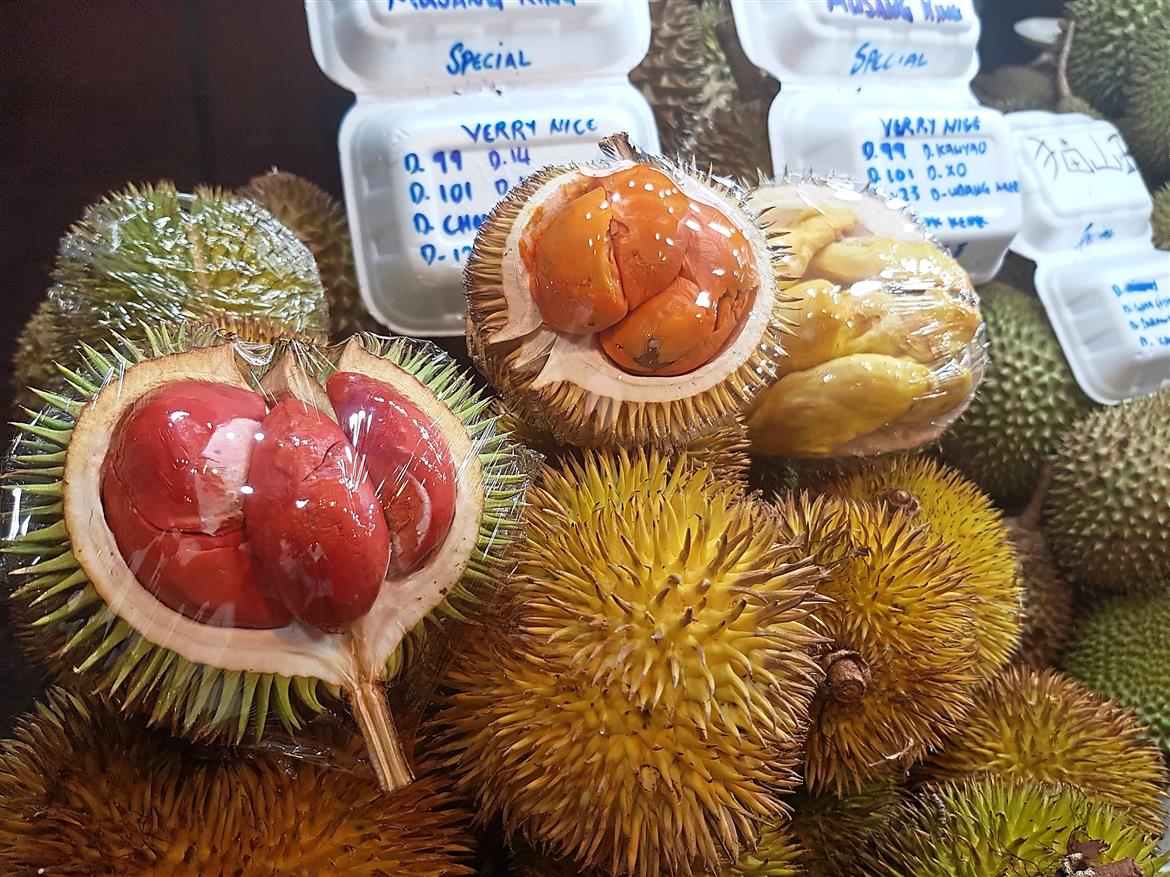
And that’s far from the end of the tall tales. There’s also this pathetic fake news about rejected Musang King durians from China – timed to perfection to be “reported” right before the International Durian festival in Bentong.

The Internet burned with a doctored picture depicting a mountain of the “rejected” fruits, which were said to have been exposed to extremely high levels of insecticide.

Those who shared that piece of poor journalism – either because they were sincerely concerned, genuinely ignorant or politically motivated – didn’t know, or cared to find out that Malaysia doesn’t export durians in its original fruit form but rather, as frozen pulp in packages.

And for sure, the Chinese wouldn’t have wanted to bear the freight charge to return these bad durians to Malaysia. The life span of our durian is only a day or two. How could it have been stacked up like that in the picture?

Durian lovers who inspected the picture could tell they were not Musang King, but instead, something of Thai origin.

With the general election looming, the recycled rumours of Bangladeshi phantom voters arriving by the planeloads at KLIA2 have resurfaced. Even an opposition state assemblyman, in her Chinese New Year video criticising the #UndiRosak activists, cheekily added that “even the Bangladeshis want to vote.” Can you picture 40,000 of them milling at our airport?

Although not a shred of evidence has come to light to back up the incredulous claim, the myth continues to be perpetuated, and it’s a given it will be rinsed and repeated. Perhaps it’ll be the Nepalese or Rohingya this time?

While the ordinary Malaysian can be forgiven for being easily swayed, it’s an entirely different story when journalists find themselves duped, or God forbid, spreading the “news”.

In the 2013 general election, a prominent TV presenter posted on his Facebook page claiming a blackout occurred at the Bentong counting centre, which led to the Barisan Nasional winning the parliamentary seat, slyly implying the coalition cheated during the result tabulation.

He got his network into hot water when he returned to his FB profile to say, “when my child is born, I will ask him to write an essay with the title ‘The Blackout Night’. The beginning of the essay would be on May 5, 2013, there was a stiff fight in the Bentong seat. Someone had said that he would cut his ears if it is lost, and then the counting process started, blackout …”

To credit MCA president Datuk Seri Liow Tiong Lai’s opponent, DAP challenger Wong Tack denied the rumours. But let’s hope this presenter has since matured, and perhaps, become more cynical as a journalist or presenter, at least.

The most frequent fake news that sparks to life every few weeks would be the dates of the Parliament’s dissolution and polling.

Interestingly, in the case of the polling date “report”, it involved the Prime Minister having an audience with the King, accompanied by the Deputy Prime Minister and Speaker.

It’s all very simple, really – the PM doesn’t need anyone tagging along, and after meeting the King, he surely can’t be fixing a date since that job belongs to the Election Commission.

A news portal reported that fake news is a big problem here because many of us are too impressionable when it comes to news on the Internet.

The Asian Correspondent reported: “Without questioning the veracity of certain claims and announcements, it seems that oftentimes, anything resembling a news story – whether shared on social media or via mobile messaging apps – is swallowed wholesale.

“Let’s look at how WhatsApp has become a popular platform to spread news. How many of you have received forwarded messages that clearly resemble fake news and could have easily been dismissed as such? I’m sure so many have, and speaking from experience, it definitely gets frustrating.

“The worst part is that when you question the person who unwittingly forwarded the news, he or she would say, ‘I don’t know if it’s true or not. I received it from someone else, so, I’m just forwarding.’”

This has happened continually because no one is punished for their unscrupulous and reckless deeds, even if their actions lead to undesirable consequences amounting to racial tension, riots and even death.

And the campaigning hasn’t even begun! So, let’s put on our thinking caps and brace for the inevitable soon – a deluge of fake news.

Pooch and prejudice

No puppy love: To immortalise Hachiko’s loyalty, a shiny bronze sculpture stands near the Shibuya train station.

I decided to celebrate Chinese New Year away from Malaysia this year, so my wife and I chose Tokyo as our destination.

We wanted somewhere that was a short flight’s distance for a brief getaway to celebrate our 28th wedding anniversary, an occasion marked auspiciously by Valentine’s Day and of course, this time around, the Chinese New Year holidays too.

Now, the problem with Tokyo is the absence of any form of Chinese New Year mood there since it is not observed by the Japanese. But the cool weather was a refreshing change from the stifling heat currently enveloping Malaysia.

That said, the Year of the Dog would not be complete without tipping the hat to Japan’s most revered dog at Tokyo’s Shibuya metro station.

There, a statue of the faithful and fabled canine Hachiko has been erected as a homage, where selfie opportunities are mandatory for anyone visiting Tokyo to realise their trip.

The dog, from the Akita prefecture, has long become a symbol of faithfulness, a trait familiar with dog lovers.

This legendary canine was born in the city of Odate but ended up being owned by university professor Hidesaburo Ueno, who lived in the Shiba neighbourhood.

Hachiko would wait patiently at the same spot in the train station for his owner to return on the 4pm train from his workplace, the Tokyo Imperial University.

But one day in May 1925, the professor never returned to greet his loyal friend after suffering a fatal cerebral haemorrhage on campus.

A forlorn Hachiko would return to that same spot for the next 10 years, hoping to be reunited with his master.

“It is said that the dog would wait outside the station every evening – a model of fidelity and patience,” the Japan Times reported.

To immortalise the canine’s loyalty, a shiny bronze sculpture stands at the Shibuya station. The art fixture was put up in 1934 and has since become one of the area’s main tourist attractions.

The story inspired the 2009 film Hachi: A Dog’s Tale, starring Richard Gere. And less known, perhaps, is Hachiko Monogatari from 1987, which relates the same tale.

The body of golden-brown Hachiko, which has been described as the most faithful dog in history, was found in a Tokyo street in 1935. He had died of old age. To keep his memory alive, he was preserved and placed on display at the National Science Museum.

He also has his own memorial beside his master’s grave at the Aoyam cemetery.

In 2015, a new statue was installed at the University of Tokyo, the new name of the imperial university, to mark the 90th anniversary of Ueno’s death and the 80th of his dog’s.

“The statue depicts a joyous image of the professor and his loyal dog being reunited. It tells a happy tale of master and dog reunited forever at last,” a news article reported.

As we celebrate the Year of the Dog, the Malaysian Islamic Development Department must be applauded for assuring Muslims that using images of dogs for Chinese New Year celebrations “is something that must be respected by all” and “according to the Islamic concept of co-existence, as well as Malaysia’s practice of moderate Islam”.

Jakim director-general Tan Sri Othman Mustapha’s statement was certainly welcome and was even a pleasant surprise for many non-Muslims, who often view the authority as conservative.

After all, this is the same agency that insisted popular pretzel chain Auntie Anne change the name of its “Pretzel Dog” to “Pretzel Sausage”.

Non-Muslims have always been respectful of how Muslims consider dogs unclean under Islamic tradition.

Some have gone to ridiculous lengths to ensure that such sensitivity is observed – even leaving out the likeness of two animals, the dog and pig, from the Chinese zodiac!

Believe it or not, a T-shirt maker printed tops like these to represent the 12 zodiac animals for the Chinese New Year recently.

And some malls even chose not to use image of dogs in their Chinese New Year decorations.

Not surprisingly, the over-reaction of these business entities have irked their Chinese customers, judging from the response on social media.

It may seem surprising that Universiti Putra Malaysia (UPM) has produced some of the best veterinary doctors in this country, the majority of them Muslim.

My late dog Jezz, a gorgeous white Spitz, lived for 16 years and endured that long because of the loving affection of a Muslim vet at UPM.

She showed her care, not just as an animal doctor, but as someone who consistently reminded her students and visiting pet owners that dogs are also God’s creations.

A young tudung-clad Muslim vet from a clinic in Aman Suria, Petaling Jaya, has also been doing a wonderful job of looking after the health of my poodle, Paris.

In all my visits to consult these two doctors, neither has ever displayed any apprehension or disdain in handling my pets. They have always been professional and are true animal lovers, even graciously accepting dogs.

Next year, the Chinese will celebrate the Year of the Pig. For whatever reason, we have become more afraid these days, a situation far different from the past.

Well, the last time we celebrated the Year of the Pig in 2008, nothing untoward happened and the chubby animal didn’t disappear into thin air then either.

I have always had complete faith in the sense of reasoning and maturity of our people, and I believe no one will lose their head over a zodiac sign.

When tongues wag and tales grow

I love dogs. I’ve always had one, from since I was a child, and now, I have three – two Siberian huskies and a poodle.

Despite their differences – in age and breed – they truly love each other, and it’s a real blessing to have this trio of girls in our family.

But I can’t echo that sentiment for some of our politicians. Politics in Malaysia has gone to the dogs. The concerned players are already in dog fights and the general election hasn’t even been called yet.

It’s still early days, although everyone reckons polling is on the horizon. And we’re all too familiar with the dog-eat-dog nature of politics.

Politicians are already snarling, slobbering and barking at each other. Everyone seems to be calling each other liars and running dogs daily.

Therefore, this has left many of us confused. Who is telling the truth? The incessant snapping doesn’t seem to be seeing an end. There is no light at the end of the tunnel, so to speak.

Well, it was the Penang undersea tunnel that got the ball of nastiness rolling. There’s no resolution in sight, for sure, and if you think we should only cross the bridge when we get there, forget it. It’s under-utilised, at least one of them, anyway.

Well, as the saying goes, every dog has its day, but at some point, it’s going to be dog-gone for any politician who can’t stick to the truth or remember the lies he told. For certain, it will be one hell of a dog day afternoon when that happens.

Meanwhile, opposition leader Tun Dr Mahathir Mohamad has been criss-crossing the country telling his audience that Malaysia will go to the dogs if Datuk Seri Najib Tun Razak remains Prime Minister. Yes, those are his exact words – go to the dogs.

There’s still plenty of fire in his belly, like a dog with a bone on issues, although he called off a few functions last week, presumably because of health reasons.

On Friday night, he was admitted to the National Heart Institute. Guess he must be dog tired. He’s still a crowd puller and has the knack of explaining issues in simple language and in a low, calm voice, as opposed to the thunder and lightning approach favoured by his DAP partners.

His deadpan expressions and trademark sarcasm are enough to draw laughter and keep the crowds entertained. But he has been continuously dogged by the ghosts of his past. The palaces are in an unforgiving mood for what he has done previously, when he was at the helm for 22 years.

It was Dr Mahathir who launched the campaign to amend the Federal Constitution to remove the Sultans’ immunity in the 1990s.

Dr Mahathir has also been asked to return his DK (Darjah Kerabat Yang Amat Dihormati) title, the highest award in the state, which was conferred on him in 2002. The move by the Kelantan palace to revoke the Datukships of two top Parti Amanah Negara leaders from the state has sent ripples through political circles.

Amanah vice-president Husam Musa and his state chief, Wan Abdul Rahim Wan Abdullah, returned their titles to the palace several days ago after being instructed by the State Secretary’s office to do so.

In December, Dr Mahathir returned the two awards he received from the Selangor Sultan, a move believed to be related to the palace’s outrage over his remark on the Bugis, whom he describes as pirates, irking many, including several Sultans.

The chairman of Parti Pribumi Bersatu Malaysia (Pribumi) was the recipient of two medals of honour from then Selangor Sultan in 1978 and 2003. One of them was the Darjah Kebesaran Seri Paduka Mahkota Selangor (SPMS) (First Class).

Dr Mahathir reportedly told a Pakatan Harapan rally that Malaysia was being led by a prime minister who is a descendant of “Bugis pirates”.

That comment triggered outrage from the Johor Palace, Bugis community and associations in Malaysia, and even from some parts of Indonesia.

Selangor Ruler Sultan Sharafuddin Idris Shah was also incensed by Dr Mahathir’s remarks in an interview with The Star.

Last January, the Sultan of Johor said he was “deeply offended and hurt” by the political spin used by certain politicians against mainland Chinese investments in the state, saying if left unchecked, would drive away investors. A visibly upset Sultan Ibrahim Ibni Almarhum Sultan Iskandar singled out the nonagenarian for “putting political interests above Malaysian interests, particularly Johor”.

To put it simply, it appears that Dr Mahathir has run into serious problems with the powerful Rulers, and anyone who understands Malay politics will surely appreciate the relationship between the executive and the Rulers.

The Pakatan Harapan may feel that they should unleash our former PM since he was their top dog to best reach the Malay audience, but plans have run aground somewhat.

Politicians come and go, but Rulers remain, at least for longer than politicians. Rulers determine the laws, in many ways, and it would be foolish for a politician to take on these highly-respected royalty.

It will be hard for Dr Mahathir’s younger party colleagues to communicate with him – he comes from another generation all together. And as the adage goes, it’s hard to teach old dogs new tricks. He’s known to be stubborn and one who will doggedly talk about the issues of his choice.

The odd situation is that it is unlikely that any of the Pakatan Harapan leaders will come out openly to defend him. It’s a classic case of tucking their tails between their legs, with the whining kept private.

It’s truly the Year of The Dog. Let’s hope the GE will be called soon because most Malaysians just want to get it over and done with. We have already let the dogs out, and we hope to bring them home soon!

A happy Chinese New Year to all Malaysians celebrating. Gong Xi Fa Cai.

The truth is out there

Field of green: A paddy field in Kota Marudu, Sabah, one of the lesser known parliamentary seats in Malaysia.

OVER the past month, I have been receiving a steady stream of visitors who want to hear my views on the upcoming general election.

I offer the same advice to all of them – don’t listen to me. Talk to voters and by that, I mean a cross section of Malaysians who live in the urban and rural heartland of the country, to get a fairly accurate assessment of the sentiments on the ground.

To foreign reporters, I tell them that they will be wasting their time and money if their only source of information is taxi drivers, bartenders, fellow journalists and the crowds at rallies.

It’s even worse if their idea of criss-crossing the country is confined to Bangsar, George Town, Johor Baru, Kota Kinabalu and Kota Baru. And from these visits, they confidently assume they have tapped into the pulse of the nation.

But this will not draw them apart from the average Malaysian, who has likely never ventured out of his or her neighbourhood or circle of friends and colleagues, yet conspires to make political judgments.

The key to winning the Malay­sian general election is to secure the rural parliamentary seats. Some Malaysians draw blank when asked if they have ever set foot in Kudat, Silam, Stampin, Kota Marudu, Sepanggar, Putatan, Batang Lupar or Selangau, or even know of their existence since they are part of the 222 parliamentary seats in the nation.

And there are urbanites who aren’t even aware of the numerous ethnic groups in Sabah and Sarawak or the names they go by.

Semporna, for example, which Parti Warisan Sabah chief Datuk Seri Shafie Apdal regards his fortress, has a strong influence because of the Suluk ethnic factor – and it’s safe to say many urbanites in “Semenanjung” have little knowledge of this group.

In Kota Belud, Sabah, the Bajau call the shots. Umno leader Datuk Seri Dr Salleh Said Keruak is most powerful here.

In the 2013 general election, 108 out of 133 seats won by Barisan Nasional came from rural seats. A total of 72 out of 89 seats won by Pakatan Rakyat came from urban and semi-urban seats – with plenty of help from Chinese voters.

The DAP, in particular, encouraged every Chinese voter returning to their hometown to vote against Barisan, conjuring the belief that the community could determine the electoral outcome, including even giving PAS votes.

There are only about 30-odd Chinese majority seats in the country. As expected, the DAP won all of them, but the huge turnout of Chinese voters could not knock Umno out.

What was worse, they helped vote in PAS, including hardliners like Nasrudin Hassan (PAS information chief) in Temerloh, despite his open contempt against concerts and Valentine’s Day celebrations.

The Opposition, particularly the PKR, did well in Malay-majority seats in semi-urban and urban categories because of the support of other ethnic groups.

But it was clear that Barisan firmly held the rural seats because in terms of the popular vote, the coalition obtained 57% in rural seats, 47% in semi-urban seats and 36% in urban seats.

Of the 108 rural seats won by Barisan involving more than 4.5 million voters, 66 were Malay-majority seats, 15 bumiputra Sabah-majority seats, 18 bumiputra Sarawak-majority seats and nine mixed, according to research group Politweet.

The 2018 general election won’t be any different. It will be fought in the rural Malay villages.

The Opposition has grudgingly nominated Tun Dr Mahathir Mohamad to lead the pact because they know that only the former prime minister can reach the Malay villages. They are fully aware of their weakness in the rural areas.

In this context, rural areas refer not just to the seats in the peninsula, but the bumiputra Sabah-majority and bumiputra Sarawak-majority seats as well, which are even more complicated.

The interior seats in these two states are difficult to reach, with some constituencies bigger than certain states in the peninsula and the voters scattered. Reaching these rough terrains means spending days of trekking or commuting via helicopter and boat.

Voters in Sarawak are often perturbed when Semenanjung folks tell them condescendingly that they should not have an MP to represent such a small number of electorate, compared to the huge number of constituents in Cheras or Kepong, for example.

Some urban folks are simply ignorant – they have no idea where Banggi is, for instance, and they just can’t fathom that these villagers have to travel four hours in choppy sea conditions to reach the nearest town of Kudat to get groceries.

For city dwellers, it would probably take them nothing more than a couple of hours to brave snarling traffic conditions to get where they want to.

The Barisan machinery excels beyond the fringes of the city because it is fully entrenched in the network of support in the villages, whether it’s via farmers’ or fishermen’s cooperative or village security committee. And it knows the political allegiance of every voter, too.

The test this time around will be the 54 parliamentary seats in Felda areas, almost all of which are rural in nature, and they involve the settlers and their children, who are likely working in urban areas now.

I politely told an American journalist that he should not get too excited by the size of our rallies, whether Opposition or Barisan, but to open his ears and listen to the voices of the rural folk instead.

One grievous error the American press committed during the US presidential election, where they failed to see the advancement of Donald Trump, was how out of sync New York-based media establishments were with the largely rural population that voted for Trump, “the disenfranchised voters who looked past his cheesy exterior and his penchant for half-truths and heard a message of hope, however twisted”.

Washington DC and Los Angeles urbanites, for example, were loudly against Trump, but no one bothered to seek the views of rural folk, which was probably deemed unimportant to the media houses. Perhaps they thought they knew better.

As David Farenthold of the Washington Post wrote: “One of the downsides of the fractured media landscape is that it’s easier than ever to sit in an echo chamber or filter bubble and preach to the converted. Newspaper readers believe what they want to believe, and so do those on Facebook – and never the twain shall meet.”

One way or another, most of us are guilty. Our friends who send us messages in chat groups or social media automatically assume that we share the same political enthusiasm as them, though that’s not necessarily the case.

Malaysia is much more complex than meets the eye. It is vast and the rural-urban political divide persists.