Monthly Archives: July 2007

Let Idris Jala finish his mission at MAS

IT’S always easy to point fingers at someone for a screw-up. In this case, it’s Senator Tajulurus Mohd Zain of the Merbok Umno division who demanded the sacking of Malaysia Airlines managing director Datuk Idris Jala for a series of flight delays and cancellations recently.  

Some politicians, who assume they are very important, are fuming because they have been affected by these delays and the person they hold responsible is the MAS chief executive officer. 

There is no doubt that there are internal problems in the national airline, probably much more than what has been admitted by Idris himself. But the man must be credited for doing his job – to cut losses, make profits for MAS and retain the airline’s brand name. 

He has introduced the private sector culture into the once ailing airline including having the appraisal system for its 19,500 staff. This has never been done since the airline was set up but it is a common, if not mandatory practice, in private companies.  

There has to be some yardstick to measure a worker’s productivity and performance but word is that there is resistance. Needless to say, an automatic increment or promotion will affect the operating costs of the airline. 

Last week, Tajulurus, who is a member of the Senators’ Club, called for Idris’ dismissal to prevent a further “sliding of services” by the national carrier. 

MAS, he said, was fast losing its credibility and its services was regressing from “bad to worse,” adding that Idris should leave and MAS was bogged down with internal problems.  

Tajulurus has chosen to overlook some basic facts – Idris has only been on the helm for a little over one-and-a-half years, taking a job which nobody wanted as the balance sheet of the company read like a horror book.  

Inheriting a mountain of problems, Idris has slowly built up the airline. The task has been difficult, particularly when politicians interfere, but to his credit, Idris has chosen to be forward-looking, refusing to answer questions from reporters who often attempt to dig for information about the company’s scandalous past. 

From flying to unprofitable destinations, in the name of South-South co-operation, to overpriced nasi lemak, to some members of the royalty who refused to pay for their tickets and overweight baggage, Idris has tried to reduce the obstacles one by one, fully aware that he is stepping on sensitive areas. 

In just a year after Idris took over, MAS returned a first-quarter 2007 profit of RM133mil. It’s a feat, really. 

Tajulurus may be unhappy but OSK Investment Research, for example, retained its “buy” call for MAS on July 17 despite the bad press involving delays blamed on technical glitches, bad weather and problems with a new computer system. 

In short, Idris has tried to avoid political and commercial turbulences, which Malaysians are familiar with, and at the same time, show other CEOs he can make MAS fly again, yielding positive results. 

Malaysians are also looking forward to its low-cost subsidiary, Firefly, which is expected to begin operate flights from Subang and Senai to Ipoh. 

OSK also reported that “we maintain our buy call on expectations of a code-sharing agreement with a Chinese airline which will help bolster connectivity starting in 2008,” it said. 

There are challenges ahead for MAS – by Jan 1, 2009, Asean would have opened up its skies, making the airline industry highly deregulated – that means more traffic rights to airlines with the possibility of supply outstripping demand.  

Already, there are 400 new planes this year and another 500 new ones next year from Middle East and India, based on Boeing and Airbus’ order bookings. 

Idris has no choice except to drive towards a more performance-based culture, as he said in a recent interview. He has been given the mandate and he should use it well, never mind what the politicians want to say. 

But Idris also needs to manage its switch-over to the new IT system better as no passenger would want to stand at the check-in counter for 30 minutes to get a boarding pass and then wait for another two hours before flying off because of a delay.  

Worse, there have been cases of passengers being stranded for days. 

More importantly, he must take seriously the talk of an “unofficial go-slow” involving alleged discontent over its shares option and bonuses. His hands are clearly full as he has 14 unions to deal with, a nightmare no other CEO has to tackle. 

Clearly, MAS cannot afford flight delays, irrespective of the causes, or purported cases of over-booking, which can be regarded as an economic sabotage to the Government’s Visit Malaysia 2007. 

Still, it is no surprise that MAS won the “World’s Best Cabin Staff” award at the World Airlines Award 2007, which involved an 11-month survey. 

The smiles of our MAS crew and the nasi lemak that awaits Malaysians after being away from home have long made the national carrier a winner.  

For Jala and his staff, it also means keeping the company profitable and more important, to fly on time. 

Rules of the game have changed

The series of actions, they claimed, was another attempt to stifle dissent in Malaysia, and they alleged that it was an infringement of human and civil rights and the freedom of speech.  

On the other side, Minister in the Prime Minister’s Department Datuk Seri Nazri Aziz has come out charging against bloggers, declaring that “the time for talk is over, now is the time to act”.  

He warned that three laws could be used against offending bloggers: the Internal Security Act, the Sedition Act and Section 121b of the Penal Code (which deals with offences against the King, Ruler or Yang DiPertua Negeri and carries a maximum penalty of life in prison).  

Datuk Seri Najib Tun Razak said the Government was “deeply troubled” by the growth of “irresponsible” alternative media, adding that “in the name of freedom, these websites allow the broadcast of slander, lies and swearing, use of harsh, degrading language and racial slurs without regard for the reader or those concerned”.  

The Government, he also said, had been tolerant of anti-government positions and criticisms on the Internet but was now “very concerned about statements that insult religion and reek of racism”.  

Let’s take a step back and look at the larger picture. The fact is that there is some truth, as much as some of us would be reluctant to admit, in the arguments of both sides.  

For the Government, there is a sense of frustration that much of what is written by bloggers are untruths or half-truths, often spiced up with lots of imagination to increase the number of eyeballs for their websites. With it reluctance to reply to these allegations, either by posting comments or rebuttals through pro-government bloggers, these allegations remain unchallenged.  

Worse, after a while, and egged on by anti-government postings from readers, they dangerously become the gospel truth. Worse still, not many question the credibility or political biasness, even ambitions, of these bloggers.  

A prominent blogger alleged last week that the Rulers Conference had rejected the extension of the Inspector-General of Police’s tenure by the Prime Minister. The fact is that the issue was not even brought up by the Rulers.  

On another issue, Datuk Seri Abdullah Ahmad Badawi was criticised for supposedly making too many overseas trips. Wisma Putra, however, has yet to defend the Prime Minister against such allegations.  

But it could have, for example, explained Pak Lah’s visit to Russia. This is one of Malaysia’s biggest trading partners and Petronas is also making inroads into the oil and gas industry there.  

So surely the meeting between Abdullah and Russian President Vladimir Putin was crucial, especially after it had been put off three times. 

Information like this, if effectively used, would neutralise the lies or mistakes on the blogs and could also discredit irresponsible bloggers.  

The fact is blogsphere is here to stay. All the laws will be ineffective in the end because the New Media can be operated anywhere without any censorship. We have to embrace the Internet and the Government simply needs to learn to use the new medium to its advantage.  

It would be worse if critical bloggers decide to hide their identities and therefore frustrate any attempt by the Government to act against them.  

The impression, rightly or wrongly, given to the young by our leaders is that they lack the knowledge and skills of the Internet. This perception is created from statements made by the leaders.  

It is the battle of the hearts and minds. You could say it is a psychological war between the dissenters and the Government and the latter has to take on its critics. It can do so by recruiting pro-government bloggers – there’s a whole battalion of them out there.  

On the flipside, our bloggers cannot deny that not many of them bother to check or verify the statements they make. Even Malaysia Today’s Raja Petra Kamaruddin, who was questioned by the police last week, has called for caution in the postings by readers.  

It cannot be denied that many of the postings, even though these are not articles by the bloggers, are inflammatory. Many are downright racist, slanderous and libellous.  

The use of four-letter words has been allowed to go through without any moderator to delete them. Bloggers cannot criticise our Members of Parliament for using unparliamentary language when they themselves allow such obscenities on their blogs.  

Bloggers must admit that freedom of speech does not mean freedom to slander or to libel. If civil suits are taken against them, it is simply because others have been offended, if not emotionally or financially affected, by their words.  

Their victims have rights too, and bloggers should not assume that they have the monopoly over civil rights.  

Like print and electronic journalists, they must live by the same rules when it comes to defamation, libel and other laws relating to national security. But there is a difference: they don’t need to answer to the Internal Security Ministry for a printing permit.  

The question is: has our Government also over-reacted – to the point of making police reports and threatening tough laws, including the ISA – against our bloggers? There are probably only a handful of active and loud dissenting voices among the thousands of Malaysian bloggers.  

The rest, including children and grandchildren of our leaders, are more interested in writing about their personal lives, music, fashion, and probably about their teachers.  

In a country of about 25 million people, there are about 3.7 million Internet subscribers but there are no official estimates on the page views of our political blogs.  

However, they may get a million page views a day when there is a hot issue. Online versions of newspapers have up to 40 million page views a month. So really, it is the mainstream newspapers that continue to garner the most attention.  

The good news, according to the World Association of Newspapers in a study, is that the young have not given up on newspapers.  

But the bad news is that family and friends are trusted more than traditional media.  

The study also said the usage of new media, such as computers, mobile phones, the Internet and MP3 players, is increasingly taking up time that would otherwise be spent on traditional media.  

Politics is also not the most important issue to most Malaysians, especially the young. A cursory check of the online versions of newspapers would show that crime, celebrity gossip and sports remain the most-read items.  

It’s a blow to their ego but, really, our bloggers are not as powerful as they think they are, or as the Government makes them out to be.  

Issues are being created because some of our politicians simply shoot themselves in the foot; for example, Kinabatangan MP Datuk Bung Mokhtar Radin and Jasin MP Datuk Mohd Said Yusof over the “bocor” issue. 

If politicians like them get rapped, they should not blame anyone, whether bloggers or print journalists, for their fallacies. Neither should they fall back on the arguments of race, religion or political affiliation to get out of the mud.  

Should some politicians have a credibility problem, especially among the urban young, they just have to work on their image. The use of threats will not work in the long run as the new generation turns more and more to the Net.  

Worse, any form of action could lead to suspicion that those in authority cannot tolerate criticism because they fear their positions would be challenged.  

The Government has to face the harsh reality: It no longer has control over media technology and mainstream media is being challenged by an alternative media that answers to no one.  

Cyberspace is a new political frontier and the fact is the rules of the game have changed. 


Keeping the flame of hope burning

HE had just completed his Penilaian Menengah Rendah examination when I met him at Kajang Prison, where he was being detained for the murder of his tuition teacher’s daughter. 

The boy, then only 15, had started serving his sentence for the murder of the 11-year-old girl. But unlike other convicts who knew the duration of their prison sentence, the boy killer was to be detained in prison at the pleasure of the King. 

In short, he could be kept in prison for a long time simply because he was a juvenile. If he had been an adult, he would have been sent to the gallows as Section 302 of the Penal Code carries the mandatory death sentence for murder. 

The Child Act 2001 states that the death sentence shall not be passed on a juvenile but the flipside is that pardons are rare. Never mind if they are juveniles who are first-time offenders with no previous criminal records. 

On July 12, the Court of Appeal ruled that detaining the boy at the King’s pleasure was unconstitutional. On Wednesday, the appellate court freed him as there was no law that prescribed a sentence for a child convicted of murder. 

It was near noon when I was brought by the prison warders to meet him two years ago. He was shy but I remember his smile and politeness. 

The warders appeared to be fond of him, even sympathetic. Their main concern for the boy, who will turn 18 next month, was the lack of tuition and books for him. 

Sharing the cell-like room with him were eight other juveniles, who were Form Five students of Sek Agama Dato Mana Petra Maamor in Ampangan, Seremban, Negri Sembilan. 

They were in jail for the murder of their schoolmate Muhammad Farid Ibrahim in the school dormitory. Like the boy, they were detained at the pleasure of the King – in this case, the Yang di-Pertuan Besar of Negri Sembilan as the offence was committed in the state. In an interview last year, the boys said the first thing they would do after their release would be to visit Muhammad Farid’s grave to seek forgiveness. 

These boys were placed in the same cell, away from adult convicts, but it was obvious that deprived of proper learning facilities, their chances of passing their exams were near impossible. 

Peering through the grilles in the classroom, I could see hundreds of squatting prisoners in red T-shirts in the huge compound of the prison. They were all drug offenders – this was the daily view for the kids. 

Classes were merely a way of passing time and perhaps to learn a bit whenever volunteer teachers showed up. Except for volunteers from Shelter Home, led by Pastor James Nayagam, the reality is that there are not many teachers who would take time away from school and tuition for these kids.  

One by one, these kids showed their drawings to me. They patiently explained to me what their drawings symbolised, giving me the impression that they had not given up hope. I wasn’t sure whether they were putting up a brave front for me but I hoped that they would remain determined. 

The warders also took me to talk to one of two sisters who had been charged with the murder of their Australian businessman stepfather in Subang Jaya, Selangor, in 2003. 

The sisters were acquitted by the High Court last year without their defence being called but their two boyfriends were sentenced to 10 years’ jail, the maximum penalty for manslaughter. 

The girl, who was studying for her SPM exam when I visited her, was another sad case. Her sister was also in the same prison. Their mother, who had returned to Sarawak to start a new life, rarely visited them. 

Very much left to themselves, they still had dreams and gladly shared with me what they wanted to do when they walked out of prison. 

But the reality is that while there may be sympathy for these juvenile prisoners, the families of victims would be less forgiving. 

For example, the mother of the girl murdered by the boy said that freeing him was unacceptable. She described the court decision as “unfair” to her daughter and family members. Their anger is understandable given the nature of the killing. 

Still, our overcrowded prisons are no place for juvenile convicts. The Sungai Buloh prison, for example, has over 5,100 prisoners, with 263 of them being below the age of 20. There isn’t much that prison staff can do to constructively motivate or counsel the young prisoners. 

The maximum capacity of the prison is 2,500 prisoners but it only has 500 warders who handle duties which include manning security and driving prisoners to court. Ten of them have even doubled up as counsellors. 

These youngsters are restless, energetic and short-sighted, and it doesn’t help when they feel their situation is hopeless and that no family members want to see them.  

Keeping the flame of hope burning

In short, he could be kept in prison for a long time simply because he was a juvenile. If he had been an adult, he would have been sent to the gallows as Section 302 of the Penal Code carries the mandatory death sentence for murder.

The Child Act 2001 states that the death sentence shall not be passed on a juvenile but the flipside is that pardons are rare. Never mind if they are juveniles who are first-time offenders with no previous criminal records.

On July 12, the Court of Appeal ruled that detaining the boy at the King’s pleasure was unconstitutional. On Wednesday, the appellate court freed him as there was no law that prescribed a sentence for a child convicted of murder.

It was near noon when I was brought by the prison warders to meet him two years ago. He was shy but I remember his smile and politeness.

The warders appeared to be fond of him, even sympathetic. Their main concern for the boy, who will turn 18 next month, was the lack of tuition and books for him.

Sharing the cell-like room with him were eight other juveniles, who were Form Five students of Sek Agama Dato Mana Petra Maamor in Ampangan, Seremban, Negri Sembilan.

They were in jail for the murder of their schoolmate Muhammad Farid Ibrahim in the school dormitory. Like the boy, they were detained at the pleasure of the King – in this case, the Yang di-Pertuan Besar of Negri Sembilan as the offence was committed in the state. In an interview last year, the boys said the first thing they would do after their release would be to visit Muhammad Farid’s grave to seek forgiveness.

These boys were placed in the same cell, away from adult convicts, but it was obvious that deprived of proper learning facilities, their chances of passing their exams were near impossible.

Peering through the grilles in the classroom, I could see hundreds of squatting prisoners in red T-shirts in the huge compound of the prison. They were all drug offenders – this was the daily view for the kids.

Classes were merely a way of passing time and perhaps to learn a bit whenever volunteer teachers showed up. Except for volunteers from Shelter Home, led by Pastor James Nayagam, the reality is that there are not many teachers who would take time away from school and tuition for these kids.

One by one, these kids showed their drawings to me. They patiently explained to me what their drawings symbolised, giving me the impression that they had not given up hope. I wasn’t sure whether they were putting up a brave front for me but I hoped that they would remain determined.

The warders also took me to talk to one of two sisters who had been charged with the murder of their Australian businessman stepfather in Subang Jaya, Selangor, in 2003.

The sisters were acquitted by the High Court last year without their defence being called but their two boyfriends were sentenced to 10 years’ jail, the maximum penalty for manslaughter.

The girl, who was studying for her SPM exam when I visited her, was another sad case. Her sister was also in the same prison. Their mother, who had returned to Sarawak to start a new life, rarely visited them.

Very much left to themselves, they still had dreams and gladly shared with me what they wanted to do when they walked out of prison.

But the reality is that while there may be sympathy for these juvenile prisoners, the families of victims would be less forgiving.

For example, the mother of the girl murdered by the boy said that freeing him was unacceptable. She described the court decision as “unfair” to her daughter and family members. Their anger is understandable given the nature of the killing.

Still, our overcrowded prisons are no place for juvenile convicts. The Sungai Buloh prison, for example, has over 5,100 prisoners, with 263 of them being below the age of 20. There isn’t much that prison staff can do to constructively motivate or counsel the young prisoners.

The maximum capacity of the prison is 2,500 prisoners but it only has 500 warders who handle duties which include manning security and driving prisoners to court. Ten of them have even doubled up as counsellors.

These youngsters are restless, energetic and short-sighted, and it doesn’t help when they feel their situation is hopeless and that no family members want to see them.

Some way to go before the polls

No political party, whether Barisan Nasional or the Opposition, can confidently claim they are in a position to go to the polls now. As far as most political analysts know, only preliminary preparations have been conducted. 

In some parties, several new faces have been identified to contest in certain constituencies while some veterans have been told, through third parties, that they could be dropped. 

Last week, the Election Commission said it would only be ready to conduct the general election after September. Its chairman Tan Sri Abdul Rashid Abdul Rahman said the Government had asked the commission when it would be ready but did not indicate when the election would be called. 

He added that by the end of September, the EC would have trained 200,000 election workers and procured all the equipment needed for the polls, including see-through ballot boxes and special punchers to be distributed to the country’s 25,000 polling districts. 

Rashid also said the EC had budgeted RM220mil for the general election but might have to ask for RM100mil more for the new equipment. 

Most analysts have ruled out the holding of elections this year because, over the next few months, the national leaders would have their hands full. 

Preparations for next month’s 50th National Day are peaking. Celebrations have been planned nation-wide for a month, which would certainly have an impact on the “feel-good” factor, which is essential in the run-up to the polls. 

In fact, on July 30 and 31, Prime Minister Datuk Seri Abdullah Ahmad Badawi is expected to announce a slew of projects in Kedah, Perlis, Penang and Perak as part of the Northern Corridor Economic Region project. 

From modern agricultural practices involving harvesting padi three times a year to the construction of Penang’s second bridge, the projects are expected to fire up voters in these four states. 

For sure, it would put a serious dent on Parti Keadilan Rakyat-DAP plans to capture Penang this time. 

Despite the seemingly anti-establishment sentiments among urban voters at this point, the predominantly middle-class Penangites have always been more concerned with bread-and-butter issues. 

Barisan campaigners are so confident in the mood swing that many want to take on Datuk Seri Anwar Ibrahim in the polls. 

The bridge, together with plans to turn Penang into a regional transportation hub, will surely bring spillover benefits to the various sectors. In short, Penangites can look forward to a better standard of living over the coming years. 

Abdullah and his deputy Datuk Seri Najib Tun Razak have a tight schedule ahead of them in September. The Budget, which many expect will be “an election budget”, is to be tabled in Parliament on Sept 7. 

Abdullah is scheduled to fly off to Sydney the next day for the Asia-Pacific Economic Cooperation summit. Then he has to attend the annual United Nations General Assembly in New York in the third week of September, which is during the fasting month. 

We can rule out the possibility of the elections being held during the fasting month or Hari Raya (Oct 13-14). 

The feel-good factor is expected to continue with the likelihood of more national celebrations – the first Malaysian would be in space by then. 

By November, Abdullah has two important dates on his diary. First is the Asean Summit in Singapore, where his presence is regarded as crucial, as the Asean leaders deliberate over adopting the Asean Charter. 

Equally important for Pak Lah is the Commonwealth Heads of Government Meeting in Uganda, to be held around the same time as Malaysia lobbies for the election of Datuk Seri Dr Rais Yatim to be the secretary-general, which would make him the first Malaysian to hold the post. 

At home, the two-month school holidays would have started and the monsoon season would have set in by then in the east coast. 

But by November and December, the drumbeat for the elections will become louder. Politicians can forget about taking a long break with their families at this time because election preparations would be in full swing. 

For the Chinese, the year 2008 is a prosperous year. In Cantonese, 2008 rhymes with “yee teng teng fatt” or “sure to prosper”. Perhaps it’s also a good time for elections. 


Strong ties behind bridge loan

How did Malaysia manage to secure such a huge loan with low interest? It had plenty to do with the friendship between Malaysia and China. 

We were the first among the Asean countries to have formal ties with China.  

Not only that. As Second Finance Minister Tan Sri Nor Mohamed Yakcop put it, that special relationship began during the days of the Malacca Sultanate and, therefore, doing business between the two countries “is in our DNA”. 

The friendship factor is also important, especially the personal ties between Prime Minister Datuk Seri Abdullah Ahmad Badawi and Chinese Premier Wen Jiabao. 

The two leaders have met formally and informally on numerous occasions over a decade, particularly when Abdullah was Foreign Minister, and that special relationship is of tremendous help. 

In many ways, the two men share similarities in their demeanour. Both are modest, popular and approachable. 

Regarded as a fourth generation Chinese leader, the 65-year-old Wen is popular with the people. He has been credited with China’s entry into the World Trade Organisation, a move that has turned his country into an economic powerhouse. 

According to sources involved in putting the loan deal together, Abdullah wrote to Wen last year, inviting the Chinese to take part in building the 24km-long bridge, which will be the longest in South-East Asia. 

The island’s second bridge will help ease traffic congestion in the state and is vital to meeting the Government’s objective of turning Penang into a regional transportation hub. 

The bridge is designed to resemble a pearl and will have a four-lane carriageway with two observation platforms at the central span. 

The Japanese, it seems, also lobbied for the job after getting wind of plans to build the second bridge. But Malaysia’s expensive experience with the Japanese, particularly with loans when the yen appreciated, put the Japanese in a disadvantageous position. 

China is only asking for 3% interest when the market rate is at least 5% to 6%. 

However, the special loan for Malaysia has put China in a somewhat difficult situation. Chinese officials have privately expressed concern that other countries, including those from Africa and South America, will make similar demands. After all, Malaysia is not in the category of poor, under-developed countries. 

The low-interest loan, said the officials, was unusual and certainly unprecedented – with orders from the top Chinese leadership to act immediately. 

Wen responded quickly after he and Abdullah met in Nanning last year. The bilateral meeting was held during the Chinese-Asean Commemorative Summit to mark the 15th anniversary of establishing dialogue relationship between China and Asean. 

Wen, a trained geologist and engineer, expressed interest in taking part in the second bridge project and a directive was issued to Minister of Commerce Bo Xi Lai to handle the financing. 

Last week, Bo came to witness the signing of the loan agreement between state-run Exim Bank of China and Bank Pembangunan Malaysia. 

The presence of Bo itself is an honour for Malaysia because he is regarded as a rising political star in China. 

Bo, 52, is the son of Bo Yibo, a legendary Chinese revolutionary leader regarded as one of China’s modern Eight Immortal Leaders who are likened to a group of mythical heroes with supernatural powers of the Tang and Song dynasties. 

Bo is a former mayor of Dalian in China’s coastal economic hub. He worked in Dalian for 17 years, making him the longest-serving Chinese official in any single region in the country. 

Dalian, regarded as one of the cleanest cities in China, also has strong economic ties with Malaysian companies. 

With a long resume of constructing some of the best highways and projects in Dalian – including the Shenyang-Dalian Expressway, the first expressway in China – Bo threw a challenge at the signing ceremony. 

He wanted to return to Malaysia by Nov 1, 2010, to witness the opening of the second bridge – a year ahead of schedule. 

It’s a challenge put forward not just to the China Harbour Engineering Company that will build the bridge but also to its Malaysian partner, UEM Construction, and our officials. 

The second bridge, which is the signature project under the Ninth Malaysia Plan, will not just be an iconic project. It will stand proud as a symbol of friendship between Malaysia and China.  


* The story on the bridge loan was an exclusive in The Star on July 11.


Private sector in the driver’s seat

THE past few months have been hectic for Datuk Seri Effendi Norwawi as the Government pushes the rollout of major Ninth Malaysia Plan (9MP) programmes and high-impact projects, including the Iskandar Development Region and the Northern Corridor Economic Region (NCER), which will be launched at the end of the month. 
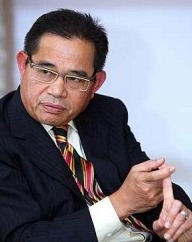
Datuk Seri Effendi Norwawi

The expectations are high and as the clock ticks away, the Minister in the Prime Minister’s Department has found himself and his staff racing to meet the deadline.  

It was already 6pm when he walked into his apartment in Kuala Lumpur – two hours late for this interview. “I am sorry as I had to attend a last-minute meeting in Putrajaya on the Northern Corridor,’’ he apologises profusely. 

“We are in the exciting phase of the implementation process. The masterplan for the Northern Corridor will be unveiled soon, followed by that for the Eastern Corridor,” he adds. Sime Darby Bhd, one of Asia’s largest conglomerates, with substantial plantation and property holdings, has been given the job of drawing up the masterplan. 

“In the coming weeks and months, more initiatives will be unveiled, especially in areas that require fresh changes and where there have been dialogues and discussions between the public and private sectors,’’ says the minister. 

However, he is not prepared to disclose more about the NCER, well aware that it should be left to Datuk Seri Abdullah Ahmad Badawi to spell out the details. As part of the launch of the NCER, the Prime Minister is scheduled to visit Kedah and Perlis on July 30, and Penang and northern Perak the following day. 

To be accompanied by other Cabinet members, he is expected to announce a slew of initiatives that are set to transform the four states. The development focus for each state will leverage on the existing economic strengths of the area, such as agriculture, manufacturing, tourism and human capital. 

Big plans up north 

Bits of information on the NCER have already been floating around for some time. For example, one component will be the RM1.1bil Penang Monorail, with two lines of 37km to be built on the island and future extension to the mainland. 

A bus network, along the lines of Rapid KL, with 150 buses will begin operations soon in the state. 

Penang’s much-awaited RM2.7bil second bridge, which will link Batu Maung on the island and Batu Kawan on the mainland, is also set to bring spin-offs for the state, especially in the property sector. The 24km bridge is likely to ease the congestion at the present 13.5km bridge, which is already 21 years old. 

The network of roads through the Penang Outer Ring Road, the second bridge and the public transport upgrade are essential elements that must precede the rollout of other projects in the state. 

Penang will also be made a regional transportation hub. There is talk that Air Asia would fly to major destinations from Penang. One project, also expected to be announced soon, is the setting up of a low-cost carrier centre at the Penang International Airport. 

The container wharves at the Penang Port will be deepened, while on the mainland, food processing centres (including a halal hub) will be set up to handle agricultural products from Kedah, Perlis and northern Perak. 

Kedah and Perlis have been earmarked for an agricultural push, with modern padi farming techniques to be introduced to boost the earnings of the farmers in the country’s Malay heartland. One plan is to increase harvesting to three times a year from the present two. 

The Prime Minister is expected to unveil a special padi grain on July 30. This is meant to improve the padi yield in Kedah and Perlis. Also, Sime Darby is likely to provide details of its seeds research centre, whose key aim is to develop quality rice. 

Potatoes will be cultivated for non-food use, particularly as bio-plastics and composites, as part of the downstream activities to improve the livelihood of farmers. 

Irrigation and flood mitigation projects have been conceived for padi farming areas in Kedah, while an inland container depot will be built. In Langkawi, tourism facilities will come up on the outer islands. 

Corridors of dream 

In northern Perak and Perlis, the thrust will be on human capital development, such as the building of vocational and skills training centres. In Selama, for example, animal husbandry will be the focus. 

Vocational training and an agriculture faculty in a northern state university are being planned to help school-leavers and agriculture graduates to become modern farmers. 

Says Effendi: “There is also the Penang City Park, a mixed development which we are facilitating and assisting. It will be iconic and exciting.” 

The proposed project is a 15-year project covering serviced apartments with healthcare facilities, houses, retail outlets, a hotel, convention centres and office space. The development will boost the state’s economy and create thousands of jobs. 

A metropolitan park that will link the City Park, Youth Park and Botanical Garden is on the cards. This will preserve the state’s 860 acres of green lung, reflecting the authorities' commitment to protect the environment. 

There are other environment-related aspects of the NCER project. In Perak, the Belum Forest has been earmarked for herbal plants research. The northern region has 51.9% of forestland, which the Government is determined to preserve. 

While the finishing touches are being applied to the NCER plan, follow-up actions have been taken on the Iskandar Development Region (IDR) in south Johor, for which over RM4bil has been allocated for infrastructure development. 

“These projects embody the Government’s ambitious goal of making the whole country a hassle-free place for the private sector to flourish,” says Effendi. 

“However, it will take time to cover the entire nation. This corridor development approach, covering the major regions of the country, offers the advantage of speedy implementation, excellent infrastructure and a one-stop agency to deal with.” 

The Second Penand Bridge is an essential part of the state’s development plans


Private sector to the fore 

There is an element that makes the 9MP different from the previous five-year plans. Effendi points out: “In the past, the economy has been predominantly driven by the public sector. But now, since we have a more developed and mature private sector, it’s time to change that. 

“We would like the private sector to be the prime mover of economic growth as is the case with the developed economies. 

He adds, “The 8MP saw the ratio of contribution to the economy as 60:40, the public sector accounting for 60%. The 9MP aims to reverse this so that the public sector’s contribution is reduced to 40% and the private sector goes up to 60%. 

“To sustain the country’s GDP growth at 6% to 7% or higher, the private sector must continue to invest, add production capacity and become the main engine of growth. 

“During the 8MP, the private sector investment growth was – 1%, compared to the 7MP period. Our challenge in 9MP is to achieve 11% growth. In order to accomplish this, the private sector has to invest RM378bil from 2006 to 2010.” 

The IDR, for example, will need plenty of private investors, particularly those from Singapore, to make it a reality. 

The Penang City Park, a unique housing development scheme that cleverly blends in with the environment, including the setting up green lungs, is a private initiative. 

Equine Capital Bhd subsidiary, Abad Naluri Sdn Bhd, which is already developing a township in Batu Kawan, is handling the Penang City Park, which hopes to draw top-notch buyers. Foreign fund managers and investors in Europe have already expressed their interest in the project as Penang is a brand name. 

Describing himself as a “facilitator” for the government and the private sector, Effendi was a banker, civil servant, businessman, Sarawak state assemblyman and Member of Parliament. 

“I have been on both sides. There has to be a mutual trust on both sides. The private sector needs efficiency and prompt decisions, while the public sector has its procedures, rules and circulars to follow,” he says. 

“What we need is a mechanism through which both sides can understand each other, merge and make Malaysia more vibrant.” 

Effendi regards himself as lucky. As an appointed senator, he is free from the punishing constituency work, and is able to devote his time totally to national development. “You can say I am now in the middle ground, and my role is to bring the two sides together.” 

Building trust 

Throughout the interview, Effendi focused his attention on the importance of the private sector, saying “We can only develop a real mature economy if there is a strong and healthy collaboration between the Government and the private sector.” 

How can we build this trust? His reply: “I believe that action speaks louder than words. The Prime Minister himself “walks the talk” in many instances. 

“The National Implementation Task Force (NITF) has set up a Private Sector Investment Advisory Panel to examine various issues affecting the private sector. This panel holds regular dialogue sessions and meetings with the private sector to seek input on how to improve Malaysia’s investment climate. The Government also pro-actively looks into ways to reduce bureaucracy and red tape.” 

Chaired by Abdullah, NITF has established standing and working committees on the education, health, tourism and services sectors, among others. 

Effendi points out that the decision to waive the real property gains tax was made within a month after the Government had engaged the Real Estate and Housing Developers Association in a discussion. 

“We worked with Iskandar Regional Development Authority to come up with incentive package for IDR which was finalised and approved within a month,” he says. Another example, he adds, was the setting up of Pemudah, a high-powered task force that looks into cutting red tape in the public service delivery system. 

“The task force has been given six months to come out with actions. Since it had been set up in February, Pemudah has implemented a series of initiatives to make government processes and procedures more efficient,” he says. 

One of these is the shortening of the time to register new companies from more than a month to only 24 hours. 

“Another example in the property and construction sector, is the setting up of a One-Stop-Centre (OSC) to shorten processing time of development project approvals at the local government level. With this OSC, process time was cut from 3-5 years to a mere 4-6 months,” says Effendi. 

When the interview came to an end, it was nearly 7.30pm. Effendi walked to this writer to the entrance of his condominium. “This is not the end of the day for me. Yes, all of us in Pak Lah’s team have been very busy, but there is more to come. Things are being set in motion for this national mission,” he assures.  

An act no one can fathom

The superimposed picture was so badly done that even a primary school pupil could tell it was a fake but that did not stop the PKR information chief from posting the doctored photograph on his blog. 

Worried about the impact of the picture, bloggers have come out to condemn Tian Chua for his reckless act, saying this was not the first time the politician had reacted in such a thoughtless manner. 

The superimposed photograph purportedly refers to the testimony of prosecution witness Burmaa Oyunchimeg, 26, who told the murder trial that she had seen a photograph of Altantuya dining with Abdul Razak and a Malaysian government official known as “Najib Razak”. 

The photograph in question was not shown in court and Najib had, in the past, repeatedly denied knowing Altantuya. 

Last week, angry government backbenchers criticised PKR for posting the picture, saying it was despicable and shameful, and described the antics of Tian Chua as cheap theatrics. 

Opposition leaders called up newspaper editors to share their displeasure and embarrassment at what Tian Chua had done. They said it was another example of his self-destructive nature. 

In March, Tian Chua attempted to drive through a barrier during a demonstration and nearly hit a man. And during the reformasi protest in 1998, he sat in front of a Federal Reserve Unit truck a la “Tiananmen Square”. 

In his blog, Tian Chua admitted to posting the doctored photo but tried to justify his action by arguing his case from an art-history perspective. He said that “in my digital representation, it seems people are able to see what their eyes cannot”. 

He has insisted that the picture was done in a “Monty Python” style artwork, in reference to the British TV comedy show which began in 1969. 

In his posting, he wrote: “Some of you may have concluded that I am a lousy politician” and “I must confess my first passion is not politics but art, particularly drawing.” 

For someone who always demands integrity and credibility from government leaders, Tian Chua has failed to explain his action convincingly. 

His arty-farty reasoning – including drawing parallels from the works of Realist artists like Leonardo Da Vinci – may sound impressive to his diehard liberal fans, but it does not strike a chord with the grassroots. 

Party adviser Datuk Seri Anwar Ibrahim and party president Datin Seri Dr Wan Azizah Wan Ismail have so far not commented on Tian Chua’s action. 

Their silence is understandable because Tian Chua’s popularity in the party has been deteriorating. A one-time party vice-president, the Malacca politician chose the safety of the appointed information chief’s post during the recent party polls. 

He had wanted to contest the Machap by-election but the DAP was given the task of facing Barisan. 

Although Tian Chua has consistently shown himself to be a liability to PKR, there are few activists as committed as him in the party. Whatever his faults, he has remained an idealist who is prepared to stick his head out and champion the cause of all races. 

He also has to manoeuvre in a party dominated by seasoned ex-Umno leaders who have tasted power and wealth. 

There is grumbling in the PKR ranks that the titled, rich and influential seem to get preference for party positions, leaving non-government organisation activists out in the cold. 

That perception is not entirely wrong because a few human rights activists who contested the recent party polls lost badly. Obviously, old-style politics has again beaten youthful idealism.  

Worse, racialism seems to have surfaced at the party polls. 

Just last week, a string of resignations involving top Selangor figures rocked PKR even as it was recovering from former Youth chief Ezam Mohd Nor’s decision to quit. 

A total of 22 top office-bearers from the Shah Alam and Sepang divisions resigned on Thursday, including Shah Alam chief Nasir Akhbar Khan and Sepang deputy chief Khairudin Karno. 

They said they were showing solidarity with Ezam and cited dissatisfaction with the “inner-circle politics” of Anwar Ibrahim. 

The resignations are a blow to PKR because Shah Alam is a key division. When Ezam contested the parliamentary seat in 1999, he slashed Barisan’s majority from 40,000 votes to 1,040 – the biggest vote shift in the country. 

But these days, the PKR is shooting itself in the foot. With the general election likely to be held early next year, time is running out for the party. 

It opened all its cards during the Ijok by-election and, despite the fierce fight between the two contenders, Barisan won convincingly. 

New issues are unlikely to crop up in the next general election campaign. By continuing to hurt itself, the PKR will face a tough time against the well-oiled Barisan machinery. 

Politics is an art and Tian Chua, by his own admission, has not learnt well. For a start, he has to look at the bigger picture to better appreciate the beauty of politics.  

Coming – More good news

He also insisted the breakfast should include Penang char koay teow, displaying a slight frown when the waiters brought him some pastries.  

The group, based in Hong Kong and Singapore, had been invited to join Datuk Seri Abdullah Ahmad Badawi at his table after the opening of a conference on the media last week.  

Despite arriving home in the wee hours of Thursday, Pak Lah looked fresh, upbeat and chatty although he had developed a slight cough from his trip in Europe where he met several key leaders.  

One key meeting was with Russian President Vladimir Putin as Malaysia is Russia’s biggest trade partner in Asean, with trade amounting to over RM4bil last year. Petronas also has a stake in the Russian oil giant Rosneft.  

Fresh from his European summer visits, the PM is expected to continue his economic momentum over the coming months, this time on the local front.  

There are plenty of reasons for Abdullah’s optimism as he is set to unveil the massive Northern Corridor Master Plan at the end of the month.  

Even his breakfast guests insisted on a sneak preview from Pak Lah on the exciting details in the plan.  

He is scheduled to visit Perlis, Kedah, Penang and Perak soon to announce a series of high profile projects, which many said would transform the lives of the millions of ordinary people in these states.  

In the Malay heartland of Kedah and Perlis, the padi farmers will hear of agricultural programmes that will radically improve their ways of working.  

The face of Penang is also set to change in an exciting programme that will make the state a regional transportation hub.  

In northern Perak, the focus will be on human capital development, where our young can improve their skills.  

The trickle-down effects from these projects will surely be felt once the projects get started, particularly the construction industry.  

For Kelantan, Terengganu and Pahang, the Eastern Corridor will cover projects from eco-tourism to the construction of key infrastructures.  

Sabah and Sarawak will not be left out as the two states have also been identified as areas of growth.  

Several pleasant surprises can be expected when the media is updated on the Iskandar Development Region in Johor.  

There are plenty of good signs – the country’s economy is likely to grow faster than earlier this year, helped by the rise in public spending and expanding services sector.  

Last week, a Reuters’ quarterly poll showed that economists had raised their growth forecasts to 5.6% from 5.5% predicted in a similar poll in March.  

Growth, however, is expected to accelerate to 6% next year, according to the report, with expected strong investment recovery, including expansion in the tourism and energy sectors.  

The same report said the firmer ringgit would help rein in inflation, which some had expected to rise as a result of the wage increase for civil servants. Stringent price controls, however, have stabilised the situation.  

Economics aside, numerous changes to government policies are being finalised that are expected to bring cheer to Malaysians – aptly for the country’s 50th anniversary in August.  

With a general election looming, possibly in the first few months of next year, the economic pace can be expected to move faster in the coming months.