Author Archives: wcw

What should ‘Merdeka’ mean to us?


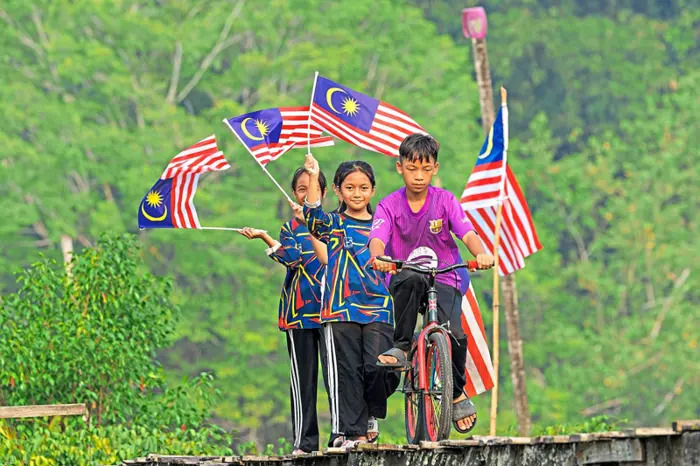
Friends proudly waving the Jalur Gemilang as they make their way around their village near Bako, Kuching. — ZULAZHAR SHEBLEE/The Star

NATIONAL unity may not be high on the agenda of some politicians these days who continuously play the race and religious card – but Tunku Abdul Rahman was clear about it.

The country’s first prime minister and Bapa Malaysia championed national unity as the core strength of a multiracial nation.

He understood and practised what he preached about the need for all Malaysians to stay together. Unity, he felt, was our fundamental strength as a people and as a nation.

“Every one of us must respect each other’s rights and feelings, be tolerant of each other’s religion, customs and habits, for in diversity we can find real unity,’’ he said in one of his many unforgettable quotes.

As a young reporter starting my career in The Star’s Penang office in 1984, I was indeed privileged to be able to see him up close.

He was our company’s chairman and he also wrote a popular column, Looking Back, and sometimes I was asked to go to his house to collect his work. They were typed in huge letters, owing to his diminishing eyesight.

He often used a magnifying glass to read his writing before passing the articles to me.

Sometimes I would have to wait a little longer as he would be busy with his poker games.

I will never forget his family members. They included adopted children who were Chinese. His staff was multiracial. So was his retinue of friends.

He was never afraid to say that Malaysia was established as a secular state with Islam as the religion of the federation rather than as an Islamic theocracy.

It’s there in the Hansard report of May 1, 1958.

In an interview published on Feb 9, 1983, he said it again. This time, he warned against turning the multiracial nation into a strict theocracy.

Today, not many politicians would dare make the same declaration as Tunku. After all, PAS is one of the biggest parties in Parliament.

But as we fly the Jalur Gemilang proudly, hear patriotic songs being played and watch Malaysians from all walks of life gathering to celebrate our independence, we should pause and ask ourselves an uncomfortable question: What does Merdeka actually mean to us today?

Is it simply about waving the flag, singing Negaraku and remembering Aug 31, 1957?

Or is it about protecting the Malaysia that our founding generation struggled to build?

The question is particularly important with race and religion being increasingly pushed to the centre of political discourse.

Worse, are we even discouraging Malaysians from flying the Jalur Gemilang with certain politicians indulging in fault-finding against those who make mistakes when flying the national flag? These Malaysians even risk their business premises being shut down as punishment.

Or they may end up being ostracised on social media, with political reprimands and name calling. Worse, they could even be arrested and handcuffed as happened to an editor last year.

The Tunku would never have tolerated such nonsense or allowed it become an annual ritual. He would not have allowed Malaysians to feel marginalised or let bullies go scot free.


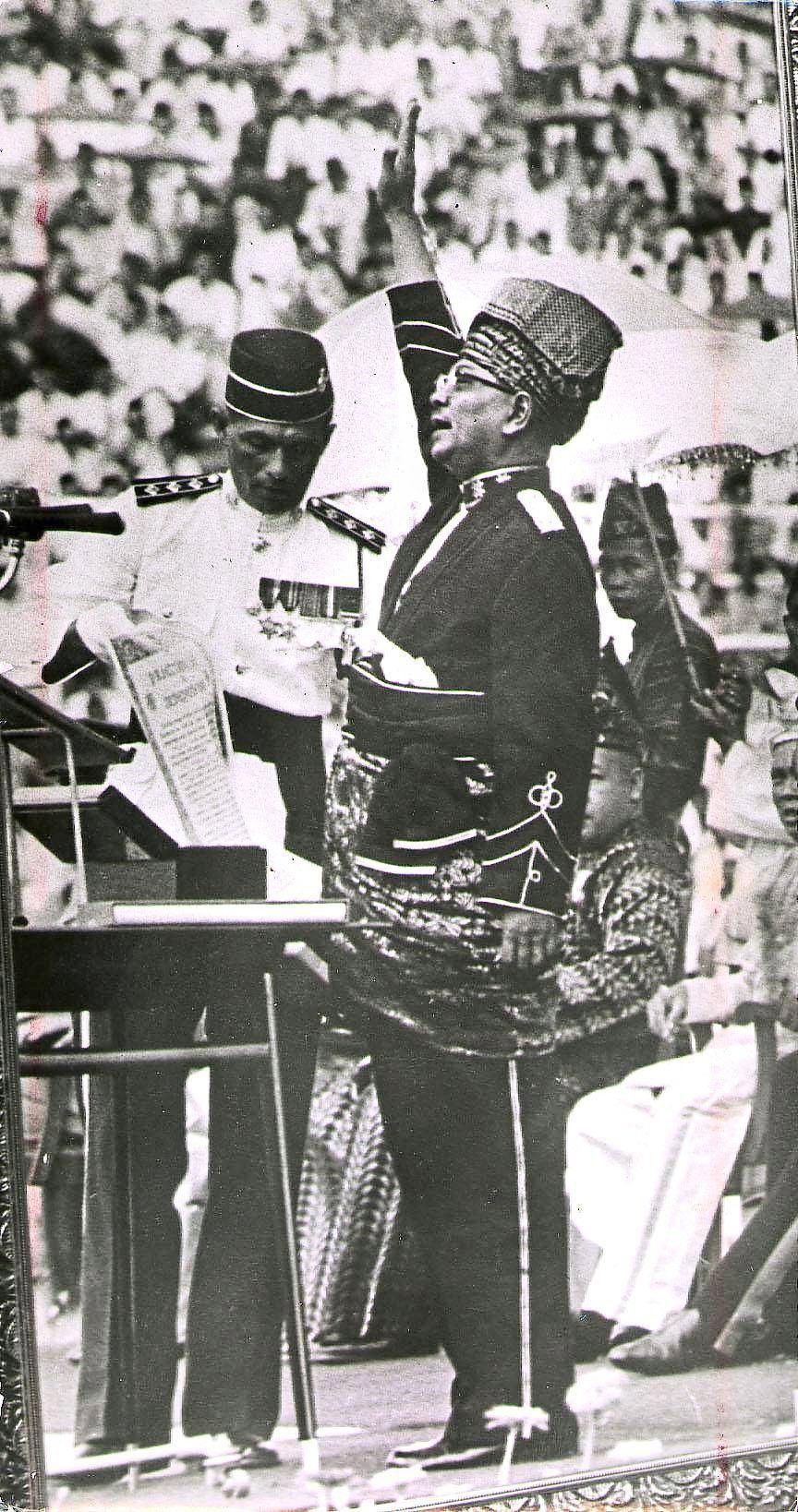
Founding principle: Tunku Abdul Rahman declaring ‘Merdeka!’ to the whole world in 1957. The country’s first prime minister had championed national unity as the core strength of a multiracial nation. — National Archives of Malaysia

There is nothing wrong with being proud of one’s race, culture or religion. These are all important parts of our identity.

Islam has a special position in our constitutional framework, while the Constitution also protects the legitimate interests of other communities and provides for freedom of religion and equality before the law.

The problem begins when these identities are turned into political weapons by politicians who tell Malays that their future is threatened by other Malaysians, or tell non-Malays that their place in the country is constantly under threat.

These people are not strengthening Malaysia. They are weakening it, dividing Malaysians and putting a strain on race relations in Malaysia.

Fear is an easy political currency to wield. It can be collected quickly and spent even faster during elections.

Race and religion become convenient tools to mobilise supporters, silence critics and create enemies where none should exist.

This is not the Malaysia we should be celebrating on National Day. Certainly, this is not what the Tunku would want.

Our founding generation understood that independence could not be built around one community alone.

Tunku Abdul Rahman and the leaders of the Alliance understood the practical necessity of working across communities. They did not have the luxury of pretending that Malaya belonged exclusively to one race or another.

They had to build a country in which Malays, Chinese, Indians and the many indigenous communities could see a future for themselves. That compromise was not a weakness, it was the foundation of our strength.

That is why it is so disappointing to see the word “Merdeka” sometimes reduced to slogans while the spirit behind independence is forgotten.

What did our founding fathers want?

Surely not a country where Malaysians constantly look over their shoulders wondering whether another race or religion is about to take something away from them.

Surely not a country where politicians compete to see who can make the most inflammatory statement about race and religion. And certainly not a country where patriotism is measured by how loudly we condemn fellow Malaysians.

Merdeka should mean freedom from fear, freedom to worship, freedom to speak responsibly, freedom to celebrate our own culture while respecting everyone else’s.

It’s freedom for a Malay Malaysian to be proudly Malay without believing that being Malaysian is somehow less important.

It’s freedom for a Chinese, Indian, Kadazan, Iban, Dayak or Orang Asli Malaysian to be equally proud of his or her heritage while being completely Malaysian.

And it’s the freedom for every Malaysian to disagree with a politician without being labelled disloyal to the country, race or faith.

Then, there is the Rukun Negara which was proclaimed on Aug 31, 1970. It is a reminder of what happens when national unity is allowed to fracture.

Its principles include loyalty to King and country, supremacy of the Constitution, the rule of law and courtesy and morality, while its stated aspirations include achieving closer unity among the people and preserving a democratic way of life.

Our founding generation did not have social media. They did not have algorithms pushing outrage into our phones every few minutes.

They did not have anonymous accounts turning every disagreement into a racial or religious confrontation. But they understood something we seem to be forgetting: a divided society is much easier to manipulate than a united one.

Political toxicity does not appear overnight. It grows every time we tolerate another racist remark because it comes from someone on our side.

It grows every time we excuse religious provocation because it benefits our political camp.

It grows when politicians turn ordinary differences into existential threats.

And it grows when decent Malaysians remain silent because they are tired of the arguments.

This is why National Day should be more than a celebration. It should be a moment of national reflection.

If our founding fathers could speak to us today, perhaps their message would be simple: You inherited a country together. Do not allow political toxicity to make you forget that.

The Jalur Gemilang belongs to all of us regardless of our race or religion, as His Royal Highness Sultan Sharafuddin Idris Shah rightly said.

Tabung Haji: A story of mismanagement


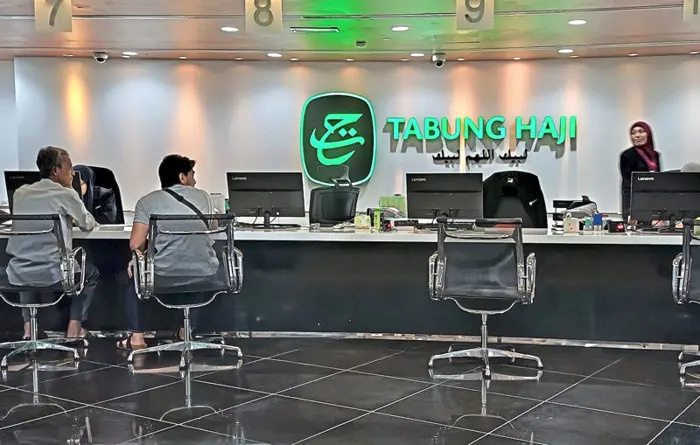
For generations of Malaysian Muslims, Tabung Haji has been more than a financial institution. It is a trusted place to save for one of the most important journeys in their life – the pilgrimage to Mecca. — AZLINA ABDULLAH/The Star

NOT all Malaysians will understand the scale of the Tabung Haji scandal as it does not hit their pockets directly.

However, this disturbing scandal is a story of mismanagement and apparent abuses, a failure of fiduciary duties, poor investments, weak governance and more.

It would not be wrong to suggest that even many members of Parliament who read the report would not understand it fully.

The reality, unfortunately, is that the cost of the alleged financial mismanagement of Tabung Haji has to be borne by all Malaysians as a whole – not just Muslims.

The government reportedly executed a financial rescue package exceeding RM10bil for Tabung Haji to restore its financial standing following several controversial issues.

The findings from the recent Royal Commission of Inquiry (RCI) highlighted several malfeasances – intentional and unlawful acts of wrongdoing – from 2014 to 2017, prompting the ongoing anti-corruption investigations and plans to amend the Tabung Haji Act.

To put it simply, a government bail-out had to be carried out to address impaired assets – the drop in the value of a business asset below its recorded book value – and structural deficits.

A structural deficit is a budget shortfall when ongoing spending is higher than regular income.

If the rescue had not been done, Tabung Haji would likely have been forced to adopt a mass sell-off of fund assets, which would have had severe implications.

The key RCI findings exposed alleged severe governance failures, dubious hotel leases abroad, and misleading investment strategies under the previous management.

For generations of Malaysian Muslims, Tabung Haji has been more than a financial institution. It was a trusted place to save for one of the most important journeys in their life: the pilgrimage to Mecca.

This makes the controversies surrounding Tabung Haji more painful and a huge letdown.

The most disturbing part is that the money involved was the savings of ordinary Malaysian Muslims who put aside their hard-earned money, ringgit by ringgit, believing that their savings would be managed responsibly.

Tabung Haji was created on Sept 30, 1973, as the Malayan Muslim Pilgrims Savings Corpo-ration. Founded by the late economist Royal Prof Ungku Abdul Aziz, it was created with the noble purpose of helping Malaysian Muslims to save money for the haj.

It gave Muslims a safe and syariah-compliant way to save for the haj. It also helped make the pilgrimage possible for gene-rations who might otherwise have struggled to afford it.

But an institution built on trust can be badly damaged when those entrusted with managing it forget who the money belongs to.

The lessons from the Tabung Haji saga are therefore much bigger than just accounts and balance sheets.

They are about governance, accountability, and above all, they are about what happens when political influence, poor management, and questionable decisions are allowed to weaken an institution meant to serve the people.

The horror is not simply that money can be lost. Money can be recovered, institutions can be restructured, policies can be changed – but trust is much harder to rebuild.

Ordinary depositors who now read about questionable investments, inflated valuations, transactions involving connected parties, or decisions that appear to benefit others, must ask one simple question: Who was looking after our money?

That question deserves a straight answer. Not political statements meant to divert from the main issue. Not another spin on race and religion to get out of a tight spot.

Tabung Haji cannot be treated as a political cash cow or a convenient source of influence.

Its board and management must be chosen for competence, integrity, and independence. There must be proper checks and balances, professional investment decisions, and transparent reporting.

When will we ever learn that politicians – many of whom do not even have corporate and financial competence – have no business running a savings corporation involving billions of ringgit?

A look at the board of directors of the past management will reveal that some of its members were picked based merely on their political party standing.

There is also a wider lesson here for Malaysia.

We have too often allowed institutions to become vulnerable because we assume that those in charge will always do the right thing.

That is not good enough and certainly not true. Good governance requires building systems that prevent abuse, detect wrongdoing early, and ensure that no one is too powerful to be questioned.

Tabung Haji’s experience should therefore be remembered not merely as another financial scandal or political controversy. It should be remembered as a warning.

When an institution holds the life savings of ordinary people, there can be no room for complacency, cronyism, or political interference.

The depositors of Tabung Haji deserve nothing less than the highest standards of stewardship.

The money of Malaysian Muslim depositors was entrusted to Tabung Haji. So was their trust, and that trust should never again be treated so callously.

Let’s not forget that the money of other Malaysians, regardless of race and faith, had to be used to bail out Tabung Haji.

We have politicians who claim that the word “sakau”, which means to steal, to rob, to pilfer or to embezzle, was never used in the RCI report. Of course not.

Sakau is Malay slang or street language for stealing or embezzling, but in another connotation, is also used for drug craving and addiction.

Certainly, we do not expect the esteemed members of the RCI to use that word in their report.

Ahead of National Day, the actions of the culprits can best be described as a most traitorous act to the country and Malaysians.

When legal betting loses, illegal betting wins


MALAYSIA has a curious contradiction when it comes to gambling. On the one hand, the government licenses and regulates legal number forecast operators (NFOs) such as Sports Toto Bhd and Magnum Bhd.

These companies operate within a legal framework, pay huge taxes and duties, employ thousands of people, support community works including sports development and are subject to regulatory controls.

NFOs like Sports Toto, Magnum and Da Ma Cai are heavily taxed as they pay multiple layers of taxes and duties on every single ticket sold.

On the other hand, illegal betting – particularly online betting – has grown into a huge shadow economy, operating largely outside the tax system and beyond the safeguards imposed on licensed operators.

It has been reported that the government loses about RM5bil annually in tax revenue to illegal gambling syndicates and bookies.

Because illegal operators do not pay a single sen in gaming taxes or corporate duties, these syndicates drain massive resources from the national economy.

Another report has it that illegal 4D betting and gambling syndicates generate at least RM18bil in revenue annually.

That’s twice the revenue of Malaysia’s tax-paying NFOs while The Star reported in 2023 that illegal bookies run more than 50 websites and smartphone apps, allowing them to bypass physical law enforcement and operate 24/7.

The irony is that Sports Toto is not allowed to take bets online with punters having to physically buy these tickets at the outlets.

Then, these illegals give higher payouts because they don’t pay taxes, and provide credit extensions to punters which encourages continuous gambling.

On Aug 12, the Federal Court unanimously dismissed the Kedah state government’s final appeal to reinstate a ban on lottery and gaming outlets.

In short, the apex court ruled that the state government has no right to ban these gaming outlets, as the licences were issued by the Finance Ministry and not the state.

The Kedah state government, however, issues business permits for the outlet premises, but any attempts or delays to allow these outlets to commence business can be regarded as contempt of court.

The question we should be asking is simple: Are some policies intended to eliminate legal gambling actually helping illegal gambling to flourish?

This is particularly relevant in states controlled by PAS, where state governments have sought to stop the operation of licensed gaming outlets.

Kedah is the clearest example. The state government stopped renewing business premises licences for licensed NFOs, effectively forcing their outlets to close.

In 2023, all such premises in the state ceased operating. Perlis also saw the closure of legal outlets.

Sports Toto itself warned that the closure of legal outlets in Kedah and Perlis could result in the proliferation of illegal operators in underserved areas.

Magnum has made a similar argument, warning that illegal operators undermine legitimate companies while depriving the government of significant tax revenue.

This is not an argument in favour of gambling. It is an argument about whether prohibition actually achieves its intended purpose. It is plain common sense.

People who want to gamble do not necessarily stop gambling simply because a legal outlet disappears.

They may simply move elsewhere – increasingly to their mobile phones.

The illegal operator, unlike the licensed operator, does not have to pay gaming duties, comply with the same regulatory requirements, maintain physical premises or operate under the scrutiny imposed on legitimate companies.

It can offer betting around the clock, advertise through social media and messaging platforms, provide credit and move from one website or platform to another when enforcement agencies catch up.

The Prime Minister has acknowledged the scale of the challenge. In Parliament this year, Datuk Seri Anwar Ibrahim said illegal gambling was difficult to curb partly because online operators are often based overseas and can quickly start and shut down operations.

He also said enforcement actions had resulted in seizures worth billions of ringgit, according to a Bernama report.

The scale of enforcement illustrates the problem. In July, police said 554 people were arrested in 422 raids during a nationwide crackdown on illegal betting linked to the 2026 World Cup, with betting credits totalling RM3.24mil detected, Bernama reported.

And these are only the operations the authorities managed to detect.

There is another important issue: the difference between a legal and illegal operator is not merely a matter of a licence. It is a matter of who benefits from the money.

When someone buys a ticket from a licensed operator, the activity is visible and taxable.

When the same person places a bet with an illegal operator, the money disappears into the underground economy.

Magnum says its business contributes to the economy through taxes, gaming industry duties, employment and its nationwide network.

Its latest annual report says the group generated RM2.30bil in revenue in financial year 2025 and supported no fewer than 2,600 jobs across its agency network and offices.

There is a distinction between saying gambling should be tightly controlled and pretending that shutting down legal outlets will make gambling disappear.

It won’t. In fact, it may produce the opposite outcome.

The legal industry is already carrying a considerable tax burden. Research cited by The Star noted that the increase in service tax placed additional pressure on NFOs, which were already subject to gaming taxes and duties.

This is why the Kedah case is more than a dispute about gambling outlets. It is also about the division of powers between the federal and state governments.

The Court of Appeal ruled in May that the Kedah government’s blanket refusal to renew premises licences had the practical effect of prohibiting federally licensed betting operations.

The majority held that betting and lotteries fall within federal jurisdiction, while the state’s premises-licensing powers cannot be used to frustrate that federal framework.

But beyond the constitutional argument lies a practical question for policymakers: What happens to the punter after the legal outlet closes? Does he suddenly stop betting, or does he simply find an illegal outlet?

If the latter happens, then the policy has not eliminated gambling. It has merely shifted gambling from a regulated environment into an unregulated one. That is the uncomfortable reality policymakers need to confront.

The answer cannot simply be to allow gambling everywhere.

There must be strict controls on where licensed outlets operate, who can participate, advertising, age restrictions and responsible gaming.

But shutting legal operators out of entire states while illegal online operators remain only a few taps away on a smartphone is hardly a sustainable strategy.

If someone is determined to gamble, the government cannot realistically pretend that the desire does not exist.

Its responsibility is to minimise harm, enforce the law and prevent criminal networks from profiting from the activity.

That means going after illegal operators, blocking their payment channels, disrupting their websites, prosecuting their organisers and educating the public.

It also means looking honestly at whether excessive restrictions on legal operators are unintentionally handing customers to criminals.

PAS-led states may have a legitimate moral and religious objection to gambling. That is their political position, and they are entitled to defend it, but policymaking must also deal with consequences.

If legal outlets disappear while illegal betting expands, the winners are not the state governments, the taxpayers or society.

The winners are the illegal bookmakers.

Malaysia, therefore, needs a more realistic approach: regulate what is legal, aggressively prosecute what is illegal, and do not confuse the closure of a legal shop with the disappearance of gambling.

This is because when the legal betting operator is forced out, the illegal operator does not necessarily disappear. He simply happily takes his business online.

An effective and realistic approach is to consider allowing legal lottery operators to migrate to online channels to better control customers through vigorous electronic Know Your Customer or eKYC verifying the identity of its customers.

Beyond a symbol


Shared identity: Our national flag is a reminder that despite our differences in race, religion, language, politics and background, we belong to the same nation. — Bernama

THE National Day is a time when we come together in unity but over the past few years, the nation has been on tenterhooks in the run-up to the country’s celebrations.

The Jalur Gemilang is meant to unite us. It is a symbol of a country we share; a reminder that despite our differences in race, religion, language, politics and background, we belong to the same nation.

Yet, every year, we seem capable of turning the flag itself into another source of division of a racial dimension.

There is something deeply ironic about the way we sometimes argue about the Jalur Gemilang.

The country is celebrating its 69th anniversary of independence soon. As far as I remember, there have only been isolated cases of the national flag being hung upside down.

It was never a controversy in the last six decades but it has now degenerated into a national crisis.

Maybe we didn’t have social media then and maybe we didn’t have nasty racist politicians.

A flag is hung upside down. Another is displayed the wrong way. Someone puts it up at an incorrect angle, a few times by foreign workers.

A business premises uses a slightly faded flag. A netizen spots it, takes a photograph, posts it online and the outrage begins.

Politicians quickly jump into the fray. Statements are issued. Police reports are threatened or lodged.

Social media commentators demand action.

The language becomes increasingly heated, as though a badly displayed piece of fabric is somehow the greatest threat facing Malaysia.

Last year, a newspaper editor was even handcuffed over an improper edited version of a copy depicting the national flag. Surely, there have been worse cases of criminal acts when even the suspects were not handcuffed.

Of course, the Jalur Gemilang should be treated with respect. There are proper protocols for displaying the national flag, and there is nothing wrong with reminding Malaysians about them.

But there is a difference between correcting a mistake and turning every mistake into a national crisis.

We should ask ourselves whether we have lost sight of the bigger picture. Is nation building really about making sure every flag is perfectly positioned, while some Malaysians remain divided along racial and religious lines?

Is patriotism measured by how loudly we condemn someone who makes an innocent mistake with the flag?

Or should patriotism also mean how we treat our fellow Malaysians, how we defend the rights of others, how we reject racism and extremism, and how we contribute to a more united society?

It takes only a few minutes to take a photograph of a wrongly displayed Jalur Gemilang and upload it to social media. It can take months or even years to heal any rifts in the nation.

The National Day should be filled with stories of Malaysians who have dedicated their lives to bringing Malaysia and Malaysians together.

They include teachers who educate children in rural areas, soldiers who put their lives on the line, nurses who care for the sick, the police constable who stands under the rain directing traffic, the firemen who enter a blazing building and many more unsung heroes.

There is more to it than just the flag. We want to see leaders who teach our children to respect people of different faiths. This takes patience.

We want to see politicians who preach moderation, tolerance and compassion while bringing Malaysians together despite political differences. This requires real leadership.

It includes creating equal opportunities, improving education, fighting corruption, strengthening institutions and ensuring that every Malaysian feels that they belong. This requires far more than a social media posting.

Unfortunately, we have politicians in our midst who prefer to generate a different kind of outrage. They are mostly political mice when it comes to corruption issues for all their put-up bravado.

They prefer to develop an unfortunate habit of confusing symbolism with substance.

Putting up thousands of flags during National Day is easy. Building a Malaysia in which people of different backgrounds genuinely feel proud to call themselves Malaysian is much harder.

We can sing patriotic songs, attend National Day celebrations and wave the Jalur Gemilang but if we continue to insult one another because of race or religion, what exactly have we achieved?

The national flag should remind us of our common identity, not become another weapon in our political arguments.

It is much easier for politicians to condemn a shopkeeper than to explain how we intend to bridge the widening divisions in society.

Let’s not forget that it is easier to demand punishment than to build reconciliation and even that, we know some political recalcitrants are selective in their targets.

If someone displays the flag incorrectly, educate them, as in most countries. There is no need to make a political spectacle out of it.

If there are clear guidelines, explain them. If a deliberate act is involved, then let the appropriate authorities deal with it according to the law.

Lest we forget, the Jalur Gemilang belongs to all Malaysians.

The flag does not ask whether we are Malay, Chinese, Indian, Kadazan-Dusun, Iban or from any other community. It does not ask whether we are Muslim, Buddhist, Christian, Hindu or followers of another faith. It simply represents Malaysia.

It’s time for Malaysians to ask the petty politicians what they have done for Malaysia instead of making threats, calling names and looking for badly hung flags on social media.

Stay the course, Mr Prime Minister


Governing effectively: With more than one year to go, Anwar has to push through all the reforms, including the proposed laws pending in Parliament. — Bernama

IT is only to be expected that the Prime Minister will now find himself under pressure following Pakatan Harapan’s disappointing performances in the Johor and Negri Sembilan state elections.

As always in Malaysian politics, every electoral setback immediately fuels speculation of an early general election.

There will be voices within and outside the government arguing that a fresh mandate is needed to reset the political landscape. Within Pakatan, there could be doubts and even a temptation to push for snap elections.

But that would be a mistake for Datuk Seri Anwar Ibrahim.

Politics is often about timing. Winning elections is not merely about riding the momentum but also knowing when not to go to the polls.

The unity government was never conceived as a conventional coalition formed after an election.

It was born out of necessity after the 2022 General Election produced a hung Parliament.

Its purpose was to provide stability in a country exhausted by years of political upheaval, revolving-door prime ministers, and shifting parliamentary alliances.

Calling another general election barely halfway through the parliamentary term would undermine that very objective.

The present unity government’s term runs until February 2028, and it has until then to call for elections, although many have questioned if the component parties are sincere in wanting to work together.

The recent state election results deserve careful study, but they should not be exaggerated. State elections are frequently influenced by local issues and personalities and regional dynamics.

They are not always reliable indicators of how Malaysians will vote in a national election.

Johor has always had its own unique political culture, while Negri Sembilan has historically produced electoral outcomes that differ from national trends. Reading these contests as an inevitable forecast of Putrajaya’s future would be simplistic.

More importantly, there is little evidence that Malaysians are clamouring for another general election.

What voters consistently say, whether in opinion surveys or daily conversations, is remarkably similar: They want lower living costs. They want jobs. They want better wages. They want efficient public services. They want less political drama.

Very few are asking for another nationwide campaign.

Barisan Nasional, PAS, and Wawasan worked on a simple narrative: vote for Malay-Muslim Unity. That tactic worked well and all it needed was for Barisan, PAS, and Wawasan to avoid multi-cornered fights.

Barisan has given PAS a backdoor entry into Negri Sembilan but Umno party president Datuk Seri Zahid Hamidi has said Barisan will defend all its 21 state seats in Melaka, the next battleground.

It is also yet to be seen if PAS will make way for Barisan in states like Kedah, Perlis, and Terengganu, which are now under the Islamist party’s control.

Despite the Malay-Muslim unity push, the fallout between two Umno factions in Negri Sembilan was already evident a day after polling.

The Federal Government’s priority should therefore remain governance rather than electioneering.

Anwar himself has repeatedly argued that Malaysia lost valuable years because political leaders were preoccupied with survival instead of governing. It would be ironic if his administration now gets drawn into the same cycle.

The economic fundamentals also suggest caution. Malaysia continues to navigate an uncertain global environment marked by geopolitical tensions, supply chain disruptions, and uneven economic growth.

Investors value predictability above almost everything else. Few developments create greater uncertainty than an unexpected general election. Businesses delay investment decisions. Consumers become cautious. Civil servants inevitably become more focused on political transitions than policy implementation.

The costs are real, even if they rarely make headlines.

There is also the question of unfinished reforms and the need to review hugely unpopular policies, especially the sales and service tax and e-invoice implementation which has hurt the small and medium-sized industries (SMEs) and even ordinary citizens.

The resentment has been loud and only the Prime Minister can fix it. Time and patience are running out.

The SMEs represent over 97% of local businesses and they drive the local economy. They reportedly contributed 39.7% of GDP, providing a value-added output of RM689.8bil.

They serve as the backbone of the economy, driving growth, employment, and trade across the country, hiring 48.7% of the total national workforce.

We are talking about the livelihoods of 8.09 million working Malaysians.

Then there is unhappiness in the Malaysian logistics and freight forwarding industry, which faces a mix of global geopolitical shocks and severe localised structural strains. The resentment over several pressing operational and systematic bottlenecks is loud as the players feel they have not been properly consulted over regulatory issues.

The Madani administration has embarked on subsidy rationalisation, tax reform, industrial transformation, civil service improvements, and governance initiatives.

None of these reforms produce instant political rewards, while many may also involve short-term political pain before longer-term benefits emerge.

Abandoning this programme midway for an election would risk leaving reforms incomplete while denying voters the opportunity to judge them based on actual outcomes.

Politics should not become an endless series of opinion polls. There are other practical considerations.

The unity government itself continues to evolve. Relations among its component parties remain complicated.

Frustrated voters have even reminisced fondly about the Tun Dr Mahathir Mohamad and Datuk Seri Najib Razak administrations, forgetting the fact that they led dominant parties in government unlike the present unity government with 18 partners.

Electoral cooperation that works in one state also does not necessarily translate into success elsewhere.

Seat negotiations would also be far more difficult if Parliament were dissolved today.

The recent elections have also exposed unresolved questions within both government and opposition coalitions about leadership, strategy and cooperation.

For Anwar personally, the challenge is no longer proving that he can become prime minister. That chapter has been written. The greater test is whether he can show that political stability delivers better governance than perpetual campaigning.

History tends to remember administrations for what they accomplish rather than how frequently they seek electoral validation.

The opposition, meanwhile, will undoubtedly interpret the recent results as evidence that national momentum is shifting.

Every opposition seeks to convert state victories into federal ambition and to create doubt.

But governing parties should not make strategic decisions based on opposition confidence.

Malaysia’s Constitution provides for a parliamentary term of up to five years for good reason. That allows a government sufficient time to implement policies before returning to seek the people’s verdict.

Unless the government loses its parliamentary majority, there is little constitutional or political necessity to cut that term short.

The strongest response to electoral disappointment is not another election but better governance and speedier reforms.

If the administration can demonstrate that inflation is under control, investment continues to flow, wages are improving, public services are becoming more efficient, and reforms are producing tangible benefits, the political narrative may look very different when the next general election does arrive.

The voters have already spoken once in 2022. They entrusted Parliament with the responsibility of governing a deeply divided nation.

That responsibility has not expired simply because a few state elections have produced uncomfortable results.

The best campaign for the next general election begins not with dissolving Parliament, but with governing effectively until the time comes.

With more than one year to go, Anwar has to push through all the reforms, including the proposed laws pending in Parliament.

But the clock is ticking away fast.

He has to invest more in keeping his voter bank happy and forget about pandering to those who would not vote for him, but in fact want him to go.

Finally, let’s not forget that the unity government was formed following the intervention and decision of the Yang di-Pertuan Agong, Al-Sultan Abdullah Ri’ayatuddin Al-Mustafa Billah Shah, after the 2022 election produced a hung Parliament.

The misquote epidemic


It’s not me, it’s AI: Politicians now have another entity to blame for their misguided statements: artificial intelligence. — Others

IT is something politicians have been doing for a long time, not just in Malaysia but around the world.

But thanks to social media, especially videos, they are no longer getting away with it. It is now easier to catch politicians who shoot their mouths off.

Many have a tendency to get carried away, especially when speaking to a huge audience. They just stop thinking straight.

In Malaysia, some politicians also seem to suffer from a mysterious condition that strikes only after a controversial statement has gone viral. Medical science has yet to classify it, but the symptoms are remarkably consistent.

First, they say something outrageous and bask in the cheering.

Then comes stage two, when social media explodes, followed by viral criticism.

Stage three: Declare, with a straight face, “I was misquoted”.

Blame the media, blame the critics for language inefficiency, and if it still doesn’t work, blame it on Islamophobia, if you are from a certain political party.

We have seen it with one politician. When he couldn’t stick to his “I was misquoted” defence, he proceeded to the next diagnosis: “I was quoted out of context”. However, as the video was crystal clear, he upgraded to: “It was a translation error.”

If the statement had been delivered in flawless English, Bahasa Malaysia, Mandarin, or Tamil, there is still one final line of defence: “My words have been manipulated.”

Because there is now another entity to blame: artificial intelligence (AI). One can always claim AI was used to manipulate the voice to create fake news.

It is a fascinating phenomenon. Malaysian politicians possess an almost supernatural ability to become “victims” of journalism the moment public opinion turns against them.

It’s a wonder how we journalists have managed to fill our news portals and newspapers when every controversial quote apparently exists only in an alternate universe.

Perhaps we have misunderstood the purpose of press conferences. We thought politicians were speaking to the media. Apparently, they were merely conducting experimental theatre.

Translation, it seems, has become the political equivalent of bad weather. Whenever things go wrong, blame the translator.

Then there is the familiar “out of context” defence. Context has become a magical place where every offensive remark somehow goes to camouflage itself.

Of course, journalists are not infallible. Genuine mistakes happen and indeed there are reporters who are poor in understanding other languages except the medium in which they work.

Quotes can occasionally be inaccurate, translations can genuinely miss nuances, and corrections are part of responsible journalism. But the interesting part is how rarely politicians discover these errors before the backlash begins.

Once upon a time, politicians could dispute a printed quote.

Today, there are livestreams, multiple camera angles, podcasts, TikTok clips, CCTV footage, and three different people recording on their phones from the front row.

Yet somehow, even high-definition video has quotes “taken out of context”.

The real casualty is public trust. When every uncomfortable remark is dismissed as a media conspiracy or translation error, genuine reporting becomes harder to defend, and genuine corrections become harder to believe.

Still, politicians get away with it most of the time. You have to be thick-skinned to be a politician.

Politicians ask voters to trust their promises, their manifestos, and their vision. That trust must also extend to owning their words when the microphones are on.

After all, leadership is not measured by never making mistakes. It is measured by having the courage to say, “Yes, I said it – and I was wrong”.

In my 40 years as a journalist, I have lost count of the number of times when politicians denied what they said.

But the most memorable one for me was a denial by a minister who has since retired. He called up my editor angrily to refute my story, saying he did not utter what I had written.

My editor, though, listened to the tape recording – that’s what we used in the 1980s – and then sent me over to the minister’s office where I replayed the tape to him.

After a short silence, he came out with this straight-faced reply: “You are still wrong. I may have said it but I didn’t mean it and you should have asked me to clarify.’’

What a gem.

But there’s a another new defence now: When all fails, start a new controversy.

Like one politician just did. He announced that his team had completed the legal and historical documentation to challenge Penang’s lease payment rates. The thing is, no specific physical “legal address’’ or court-filing location has been formally launched or executed yet.

PAS’ pro-Islamist stance a double-edged sword

PAS has frequently found itself at the centre of controversy because of statements made by some of its leaders, particularly on issues involving race, religion and gender.

The Islamist party strangely wonders why it is unable to win over non-Muslim voters when many find its stand on many issues unacceptable.

The party, which aspires to take over the country, is also fond of pointing out that the four states they govern – Kedah, Perlis, Terengganu and Kelantan – are exemplary states.

Unfortunately, most non-Muslims think otherwise, as these states remain poor and backward, in their eyes.

While the party often argues that its positions are rooted in Islamic principles or have been taken out of context, many of these remarks have generated significant public criticism and have affected perceptions of the party, especially among non-Muslims.

Some of the more prominent controversies included comments about non-Muslims and political leadership.

PAS president Tan Sri Abdul Hadi Awang has repeatedly argued that Muslims should lead the country and has criticised what he describes as excessive influence from non-Muslim political parties.

Some of his remarks have been interpreted as portraying non-Muslims as challenging the position of Islam or the Malay rulers, prompting accusations that the party alienates minorities.

Then, there is the use of religious terminology in politics. Various PAS leaders have been criticised for using terms such as kafir (non-believer/infidel) in political discourse or making statements that opponents say are divisive.

In recent years, even some PAS leaders acknowledged that such language could offend non-Muslims and urged members to be more sensitive.

PAS is still struggling with women and gender issues. PAS has faced criticism over statements about women’s leadership, dress codes and gender roles.

One recent example involved a PAS Youth leader comparing women leaders to female cows, which drew widespread condemnation as sexist.

Last year, PAS Youth information Muhammad Salman Al Farisi reportedly posted an online analogy claiming that when a female cow leads a herd, she makes all the decisions while males just graze. He argued that humans should not follow a similar dynamic by letting women lead – which unfortunately was widely reported overseas.

Then, there are dress codes and moral policing. In PAS-governed states such as Terengganu and Kelantan, proposals or enforcement involving dress codes, entertainment restrictions, gender segregation and business regulations have often generated controversy.

Critics argue these measures affect non-Muslims and personal freedoms, while PAS maintains they are intended to preserve public morality.

PAS has also consistently opposed concerts and certain cultural events, arguing they encourage “hedonism” or conflict with Islamic values. These positions have led to debates over artistic freedom and tourism.

But the worst is its race based political messaging. PAS has frequently framed politics around protecting Malay-Muslim interests, arguing that Islam and Malay political power require safeguarding.

Supporters see this as defending constitutional provisions, while critics say such rhetoric deepens ethnic polarisation.

One recurring pattern noted by political observers is that PAS simultaneously seeks to expand support among non-Muslims through its non-Muslim supporters’ wing while some leaders continue making remarks that many non-Muslims perceive as exclusionary or insensitive.

This has led to criticism that the party’s outreach efforts are undermined by the rhetoric of certain members.

PAS, for its part, rejects claims that it is anti-non-Muslim and points to its non-Muslim wing and occasional non-Muslim election candidates as evidence that it welcomes all Malaysians, overlooking the party’s positions on governance, welfare, anti-corruption and economic issues.

The latest controversy involving Kedah Mentri Besar Datuk Seri Sanusi Md Nor is simply another case of a PAS leader shooting off his mouth and in the process shooting himself on the foot.

The PAS election director had sparked backlash after starting at a rally that “the Chinese have China, the Indians have India and the Malays only have Tanah Melayu”.

Leaders across political lines criticised the remarks as racially divisive, while his party leaders have sought to carry out damage control by claiming he was quoted out of context, a tactical political approach which the media uses too.

PAS president Tan Sri Abdul Hadi Awang often rebuts criticism by making claims of Islamophobia when he is pinned to a corner and unable to explain convincingly.

Next month, Malaysia will be celebrating its 69th National Day and it is ironic that the country is still grappling with race and religious issues.

Voters should be picking their elected representatives on their capabilities and records – and not merely on race and religion, as advocated by PAS.

Dreaming in extra time


Dream real: Hosting the biggest football tournament of the world is no longer simply about building a few stadiums; we need spectacular stadiums. Many Malaysians would rather the government take care of their rice bowl than chase after the World Cup. — Reuters

BY now, most of us are fully aware that some Malaysian politicians have developed an extraordinary talent: the ability to produce astonishing announcements and make huge promises.

The latest is a suggestion that Malaysia could host the FIFA World Cup.

Optimism is a wonderful thing. But there is a fine line between ambition and wandering into the realm of fantasy.

This whole idea of hosting a World Cup is a bit like announcing plans to buy a luxury yacht while your relatives are quietly discussing how to split the electricity bill.

It is acceptable to think big, and dream big, and it is perfectly understandable when most of us did not have proper sleep during the World Cup final.

After all, many were also dreaming – hoping and praying – that teams from smaller countries would, somehow, by some divine miracle, reach the semi-finals.

No one disputes that hosting the world’s biggest sporting event would be a spectacular achievement. The World Cup is football’s Olympics, attracting billions of viewers and requiring world-class stadiums, transport systems, security, accommodation, and logistics.

Then there is the weather. I do not know if Malaysia’s humid weather – with sporadic heavy rain as well – is as bad or worse than summer in the United States or Europe.

Is Malaysia prepared to build stadiums with expensive cooling technology as was done in the United States and Qatar?

It is not that Malaysians lack ambition. Quite the opposite. We are a nation that built the Petronas Twin Towers when many thought it impossible.

We have produced world champions in badminton, divers who punch above their weight, and motorsport events that attract global audiences.

But ambition works best when it comes with a spreadsheet. That’s how serious ideas are carried out and made real.

The average Malaysian today is less concerned about where Argentina might train in 2038 than whether groceries will become cheaper next week.

Inflation has a remarkable ability to reduce one’s enthusiasm for billion-ringgit dreams, especially when one is unlikely to be around to implement, or even see the fruition of the project.

When people hear “World Cup” they no longer picture Lionel Messi or Kylian MbappĂ©. They calculate how many nasi lemak breakfasts the construction budget represents.

There is also the small matter of venues. Hosting a World Cup is no longer simply about building a few stadiums – which will likely remain empty after the final whistle blows. We need spectacular stadiums.

And we already have stadiums on the East Coast lying idle after playing host to Sukma, which is a much smaller sports event.

Of course, supporters of the proposal argue that big dreams inspire progress. That is true.

The late US President John F. Kennedy announced the moon mission before America’s national space agency Nasa had all the answers. But Nasa had a detailed engineering roadmap.

We, on the other hand, tend to announce the destination first and hope someone eventually remembers to buy the fuel.

Perhaps this explains why Malaysians reacted less with excitement than with perfectly timed memes over the suggestion that Malaysia can host the World Cup one day.

Within hours, social media had already nominated potholes as official training facilities for defensive midfielders and suggested that traffic congestion itself could qualify as an endurance sport.

Malaysians possess an elite- level sense of humour because, historically, it has been cheaper than therapy.

To be fair, there is nothing wrong with thinking big. Every successful country needs long-term aspirations. But timing matters.

Announcing a multibillion-dollar World Cup ambition when households are tightening budgets is rather like telling passengers packed like sardines on board a delayed KTM train that Malaysia could one day build a teleportation device.

Perhaps this is why the proposal struck many as politically tone-deaf rather than visionary.

Citizens also tend to appreciate grand visions after smaller promises have been fulfilled.

Fix the schools. Strengthen healthcare. Improve public transport. Raise wages. Keep prices manageable. Then talk about grand plans. Maybe the Asian Games, for starters.

Malaysians are not against dreaming. They simply prefer dreams that don’t require explaining why reality hasn’t caught up.

Let’s take a hard look at ourselves. The Malaysian national men’s football team is currently ranked 136th in the world and among Asean nations, Malaysia is in fifth position, behind Thailand (94th), Vietnam (99th), Indonesia (118th), and the Philippines (135th).

Some have suggested that Asean could host the World Cup as a region with matches held in the members’ respective countries. Seriously, would any of the other Asean nations, especially those who aren’t football crazy, even want to be part of this idea?

It would also mean that all these Asean nations would become automatic qualifiers, meaning top Asian teams like South Korea, Japan, and Australia may not get in.

And have we forgotten that Malaysia has an outstanding 1MDB liability of RM8.9bil with the country’s total liabilities amounting to RM51.4bil, including principal, interest, legal costs, and operational expenses?

We are struggling to pay these 1MDB bills while also currently funding huge fuel subsidies to keep prices down. Where are we to find the funds to host the World Cup? The cost for the just completed 48-team World Cup has been estimated at between US$8bil and US$14bil.

That’s about RM33bil and RM57bil – and FIFA is thinking of adding more teams. So it will cost much, much more in future.

Meanwhile, many of us are battling the cost of living. We don’t have time to dream about the World Cup. We have still not woken up from an economic nightmare.

Many Israelis’ dual citizenship makes entry ban harder to enforce

KUALA LUMPUR: One common question raised by many Malaysians on social media following allegations that Israelis had participated in the Network School in Johor Bahru is how they could have entered the country.

There have also been angry comments that the authorities had not done their work. From the remarks made, one can conclude that these netizens are unaware that many Israelis hold dual citizenship.

There is no official count of how many Israelis hold dual citizenship or a second passport, but the reality is Israel allows dual citizenship in many circumstances.

The Tel Aviv government claims that it does not maintain or publish a comprehensive registry of citizens’ other nationalities.

But from reports, a commonly cited estimate is that around 10 per cent of Israeli citizens hold another citizenship, which would be roughly one million people based on Israel’s current population. However, this is a reported estimate rather than an official statistic.

The Network School, an international co-living and co-working tech commune located in Forest City, Johor Bahru, has been in the news, following allegations of Israeli participation.

Silicon Valley investor Balaji Srinivasan founded and operates this “startup society’’ for digital nomads and developers.

Following the crackdown, Balaji has reportedly said the planned RM500 million expansion in Malaysia is now on hold.

In a lengthy post on social media platform X, he directed barbs at activist group Malaysia Protest 4 Palestine (MP4P), which had cited the presence of Israeli content creator Nusier Yassin, better known as Nas Daily.

The media has reported that Israeli-Palestinian vlogger Nas Daily had in 2022 said he managed to enter Malaysia despite the ban by entering Johor Bahru via Singapore using a Saint Kitts and Nevis passport.

An academic study by Yossi Harpaz estimated that around 344,000 Israelis held citizenship of a European Union country (based on 2019 data), though that did not include all dual nationals.

The most common second citizenship is generally believed to be that of the United States – often considered the largest single group, with estimates suggesting that more than 200,000 Israeli-American dual citizens live in Israel.

We can assume that the figures did not include Jews who were born in the US or whose ancestors had migrated to the US earlier.

The other countries where Israelis reportedly hold citizenship are France, reflecting decades of immigration; Russia, said to be due to the large wave of immigration from the former Soviet Union beginning in the 1990s; and the United Kingdom, through immigration and descent.

Other commonly held second citizenships include those of Poland, Romania, Hungary, Portugal, Argentina, South Africa, Australia and Ethiopia, depending on family origin and immigration history.

Reports quoting academic research and polling said that in the US, there are more than 200,000 Israelis holding dual American citizenship.

Online reports quoting the Middle East Eye said Israeli military data indicates that over 50,000 active duty personnel hold foreign passports, primarily from the US, Russia, France, the UK and Ukraine.

In short, there is nothing to stop any Israeli holding these foreign passports from coming into Malaysia.

Immigration director-general Datuk Zakaria Shaaban has said a total of 256 foreigners from 40 countries inspected in relation to Network School hold social visit passes while another 10 have professional visit passes under the nomad category.

He said the 10 nomad pass holders comprised four US citizens, three Russians, two Australians and one Indian.

Zakaria said his department had yet to find evidence that Israeli nationals were present at Network School, but would continue its investigations and share its findings with other agencies.

It would not be easy to detect Israeli presence as there is no official public list of Israeli citizens who also hold US passports, and for many public figures, citizenship status is private.

Malaysians, both Muslim and Christian pilgrims, who have visited Jerusalem, with approval from our Home Ministry and Immigration, would have surely met many Israelis who speak in an American accent and admit to holding American passports.

Another common sight in Jerusalem is that these Israelis proudly put up billboards that proclaim JerUSAlem to show its American ties.

The controversy certainly needs to be handled properly and amicably as Malaysia welcomes investments and talent. At the same time, the country would not tolerate any form of disrespect or threat from anyone. More importantly, Malaysia’s position against Israel is clear and well known, and we make no apologies. – Bernama

Campaign season: The never-ending national sport


Flag fatigue: As party banners replace World Cup flags, the columnist reckons voters are getting tired of politicians constantly ‘performing’ on the campaign trail rather than doing their job of governing. — CHAN TAK KONG/The Star

FATIGUE and irregular sleeping hours are taking a toll on me. It’s a real relief that the World Cup is finally coming to end, with the final in the wee hours of tomorrow morning.

As they say, every good thing must come to an end. But that does not seem to the case when it comes to elections in Malaysia. Maybe elections are not a good thing here.

Election campaigns never seem to cease and many Malaysians are just tired.

Yes, we are often reminded that we have to exercise our democratic duty but, unfortunately, common sense is missing among some politicians. Too much of anything is bad.

There was once a quaint belief that elections were something Malaysia had every few years. It was a charming belief. Today, though, elections are held every few months.

The modern elected representative has also evolved. Once expected to legislate, scrutinise policies, and solve constituents’ problems, he has now become an incessant campaigner, a busy salesman.

If you take the trouble to watch the Dewan Rakyat proceedings on television, you will often see many empty seats.

But those missing MPs would never be absent from the campaign trail. I suspect our politicians get a special kind of high when on walkabouts or at ceramah.

They have become political athletes with a unique skill set: smiling for the 87th selfie of the day while simultaneously promising lower prices, higher incomes, better roads, faster Internet and, if time permits, world peace.

It’s the only time that all languages are suddenly used. Even the right-wing Malay politicians insist that campaign material must be in all languages.

They even pretend to know greetings in Chinese and Indian languages. They also bring along some obscure relatives who have Chinese blood or are from a vernacular school.

During this silly season, as we journalists call elections, governing, unfortunately, just gets in the way.

Parliament may debate laws, but campaign trails debate everything else. Every microphone becomes a portal through which common sense briefly leaves the building.

Speeches grow increasingly colourful, metaphors increasingly adventurous, and arithmetic increasingly optional. It’s occasionally quite stupid, let’s be blunt.

The campaign trail has become a magical realm where every sentence begins with confidence and ends somewhere completely unrelated. Political rallies produce so many memorable quotes, but fact-checkers need overtime pay and linguists deserve hazard allowances to ensure that anything that sees print does not end up in court.

Perhaps it is inevitable. Human beings are not designed to spend months talking continuously into microphones under hot lights while trying to sound spontaneous.

There is plenty of well-researched evidence to show that the attention span of audiences is less than 15 minutes. That’s it. The brain then waves a tiny white flag.

This explains why campaign speeches often resemble a group project where nobody reads the assignment.

Some candidates promise impossible timelines. Others invent problems only they can solve. A few accidentally argue against the very policies they supported just last Tuesday.

By the final week, everyone appears to be campaigning against everyone else, including themselves. One week, they are attacking each other incessantly on state policies and the next week, they are defending each other on federal policies.

One cannot entirely blame them and neither can we blame the voters, who have become increasingly confused.

It must be tough for politicians, too, spending every waking hour greeting strangers, shaking thousands of hands, eating six dinners a night, attending forums, recording videos, posting on social media, and remembering which constituency they’re in before beginning their speech.

Under those conditions, anyone might eventually thank the wrong town, endorse the wrong slogan, or accidentally declare a traffic roundabout a national monument.

Meanwhile, voters develop an equally fascinating condition known as Campaign Fatigue Syndrome.

Symptoms include involuntarily tuning out whenever someone says “My fellow Malaysians…”, instinctively avoiding streets decorated with too many flags, and believing that every free tote bag contains another political leaflet.

By the third week, voters can identify party jingles faster than the national anthem. By the fourth week, even the flags look exhausted.

The greatest irony is that the people who most need time to work are busy doing other things, no thanks to politicians.

Road repairs wait while politicians explain why roads should be repaired. Committee meetings are postponed because everyone is attending another ceramah explaining the importance of effective governance.

Policy papers gather dust while campaign manifestos are published on glossy paper, with dramatic music and drone photography.

One wonders whether Malaysia should consider a radical innovation: allowing elected representatives to spend more time being representatives than candidates.

Imagine, MPs would actually be discussing legislation instead of rehearsing slogans. Assemblymen would be attending committee meetings without checking whether there is a by-election somewhere within driving distance.

And imagine press conferences where every answer is shorter than the question.

Campaigns, of course, are essential to democracy. Voters deserve choices, spirited debates, and the chance to scrutinise. Elections should be lively because democracy itself is alive.

But there is a difference between healthy competition and permanent, non-stop performance. At some point, the microphones need to be switched off so the spreadsheets can be opened.

Welcome to Malaysia. Where, I am beginning to believe, elections are part of the Visit Malaysia 2026/2027 campaign and Chinese mainland tourists are targeted for this circus.