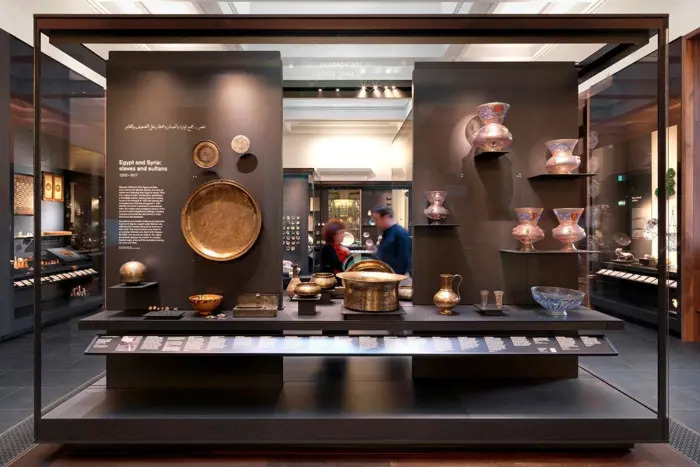
The Albukhary Foundation Gallery of the Islamic World occupies two refurbished galleries at the heart of the British Museum in London. Photo: British Museum
Each day, thousands of visitors step into the iconic British Museum in Bloomsbury, London.
The museum attracted around 6.5 million visitors in the 2025-26 financial year, according to its latest annual report – an average of roughly 18,000 visitors a day.
Yet this is one of the places where Malaysia’s presence overseas is not immediately obvious.
The vast institution is filled with treasures from civilisations across the world – ancient Egypt, Greece, Rome, Asia, Africa and the Americas. But somewhere within this magnificent museum is a gallery with a distinctly Malaysian connection.
The Albukhary Foundation Gallery of the Islamic World is a reminder that Malaysia’s contribution to the global understanding of Islam need not always come through politicians, diplomats or religious leaders.
Sometimes, it can come through art.
The gallery, which opened in 2018, was made possible with support from the Malaysian-based Albukhary Foundation. That may not sound like a big deal to many Malaysians, but it is significant given the British Museum’s standing as one of the world’s most prominent cultural institutions.
To have a Malaysian foundation associated with a permanent gallery dedicated to the Islamic world gives the country a cultural footprint in a museum visited by millions.
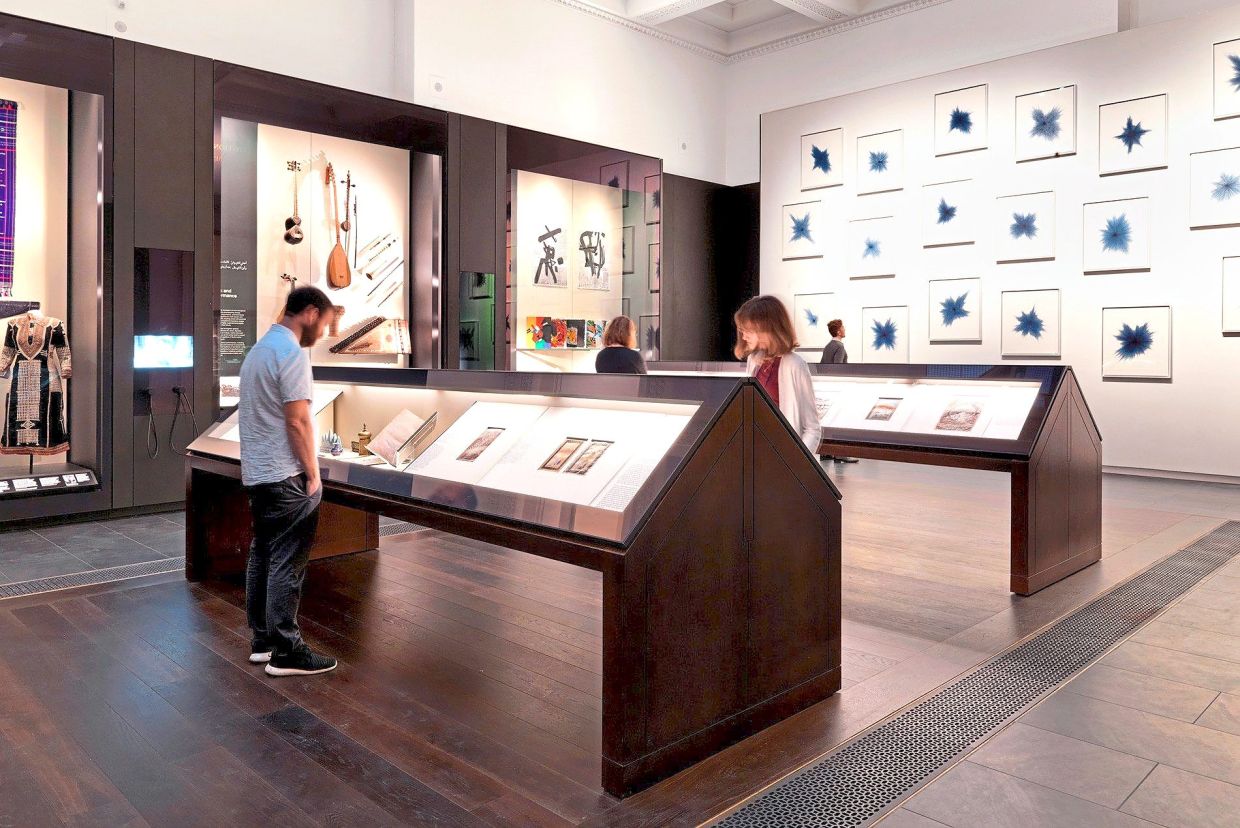
The gallery showcases the British Museum’s extensive Islamic collection, spanning from the 7th century to the present day. Photo: British Museum
The gallery itself is fascinating because it does not present Islam as a single, uniform civilisation. Instead, it tells a broader story.
The Islamic world stretches across geographies and centuries – from Africa and the Middle East to Central Asia, India and South-East Asia. It is a story of merchants and travellers, scholars and artists, rulers and ordinary people.
History can be a drag, and many of us still suffer from the traumatic experiences of history teachers who forced us to memorise dates and events at school.
But history is ultimately about telling stories – making sense of what happened, why it mattered and how it shaped our lives.
The story of Islam, too, is not just about religion. It is also about ideas moving across borders.
The objects displayed include manuscripts, ceramics, textiles, scientific instruments, coins and architectural fragments. For someone walking through the gallery, the experience is not about being lectured on Islam. It is about discovering the civilisation through its objects.
And perhaps that is one of the most effective ways of introducing people to a faith and its culture.
A non-Muslim visitor can admire the beauty of Islamic calligraphy without knowing Arabic.
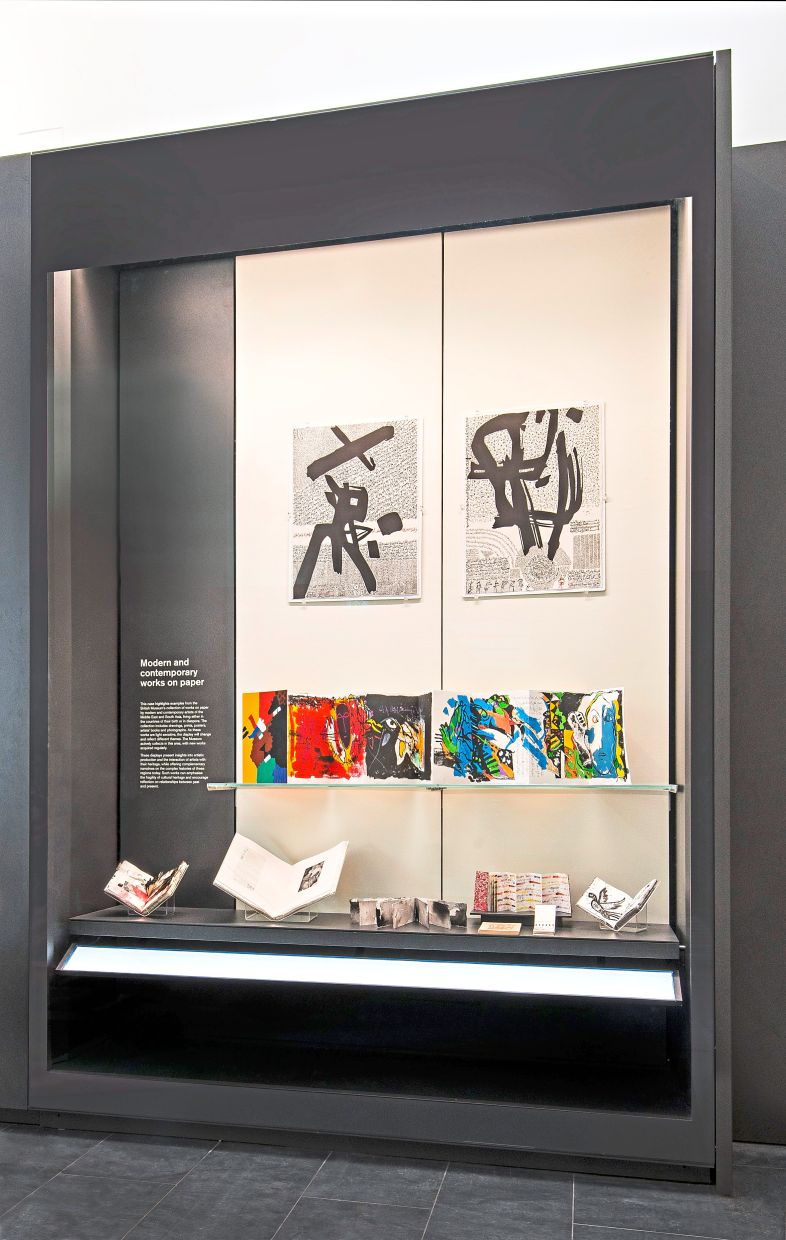
The exhibits also bring together the stories of interconnected worlds across time and geography. Photo: British Museum
A child can marvel at the intricacy of a ceramic tile. A visitor from Asia can recognise connections between cultures that travelled along ancient trade routes.
The gallery becomes more than an exhibition space. It becomes a bridge.
It also makes me think about how Malaysia talks about Islam. We often spend enormous amounts of time arguing about what Islam should mean in our politics, laws and daily lives.
Perhaps we should also talk more about Islam’s contributions to civilisation – its art, architecture, scholarship, mathematics, astronomy, medicine, literature and trade.
A confident Muslim society should have no fear of allowing others to see and appreciate its history, or of welcoming non-Muslims into mosques to learn and feel welcome.
The Albukhary Foundation Gallery provides precisely that opportunity, especially for an international audience in London.
Every day, thousands of people from Britain and around the world enter this museum.
Some will make their way to the Islamic World gallery and may spend only a few minutes there. But in that time, they encounter a part of Islamic civilisation through objects that have survived generations.
They also encounter something with a Malaysian connection.
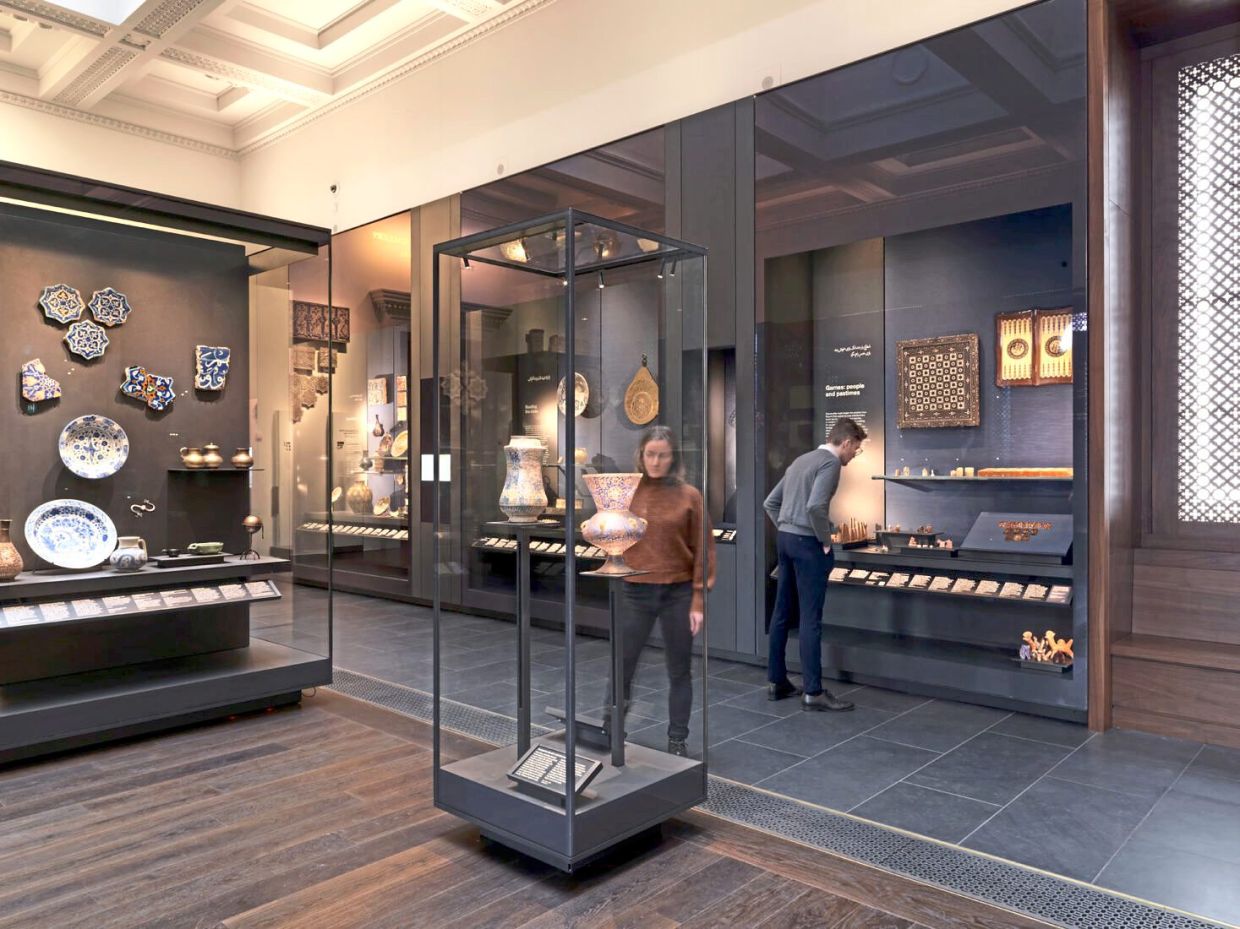
Covering regions from West Africa to South-East Asia, the gallery features archaeological finds, royal commissions, everyday objects and contemporary art. Photo: Florence Teh
For Malaysia, this should be an important lesson.
We are a Muslim-majority country, but we are also a multicultural and multi-religious nation. Our experience is therefore different from that of many other Muslim countries.
We have our own story to tell – about how Islam exists alongside Buddhism, Christianity, Hinduism and other faiths, how Malay, Chinese, Indian, Indigenous and other cultures have shaped the country, and how our Islamic identity has developed within a plural society.
The world does not need another lecture about why one community is right and another is wrong. It needs more opportunities for people to understand one another.
Perhaps this is why the Albukhary Foundation Gallery matters beyond the beautiful objects displayed inside it.
The foundation now supports the display of Islamic art belonging to the British Museum that once lay in the underbelly of the institution, where few visitors ventured.
When this state of affairs came to the attention of the Islamic Arts Museum Malaysia, a partnership was forged between the British Museum and the Albukhary Foundation, Islamic Arts Museum Malaysia’s (IAMM) parent. It was decided to relocate these priceless objects to a more prominent part of the museum.
Through IAMM’s efforts and sponsorship from the foundation, the British Museum allocated Rooms 42 and 43, a prime location at the heart of its main building, for the collection. After four years of preparations, the gallery opened in October 2018.
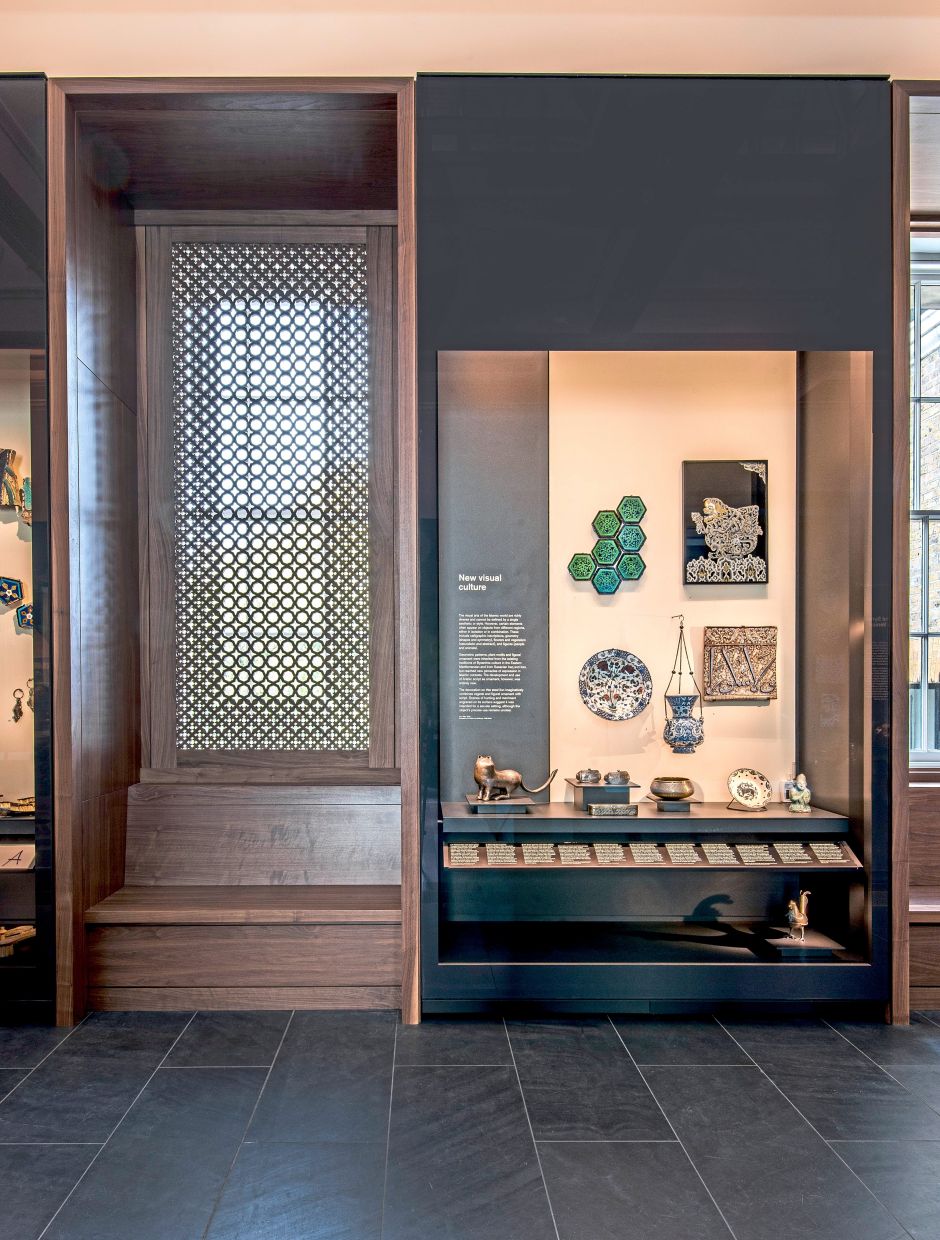
The British Museum allocated Rooms 42 and 43, a prime location at the heart of its main building, for the Albukhary Foundation Gallery collection. Photo: British Museum
British Museum director Hartwig Fischer described it as “a magnificent renovation of historic galleries within the White Wing of the British Museum. The gallery is pioneering in many ways”, he noted in The Making Of The Albukhary Foundation Gallery Of The Islamic World, published by the British Museum.
After the opening, Jane Jakeman, a podcaster from The Art Newspaper who writes regularly on Islamic art, wrote: “The Albukhary Foundation Gallery of the Islamic World that opened on 18 October 2018 is one of the biggest transformations so far at the museum’s galleries of Islamic art.
“Previously, the British Museum’s Islamic collections were squashed into crowded cabinets right at the back of the building.
“You only found them by happy chance unless you were really searching for them. In the previous displays, everything was really a bit dull and dim and slightly dusty looking.’
“Another factor that sets the gallery apart is that it is not an exclusive celebration of masterpieces and canonical works. Instead, it provides a refreshing experience by democratising displays with contemporary art placed beside masterpieces.”
At the launch of the joint exhibition Inspired By The East: How The Islamic World Influenced Western Art in 2019, foundation trustee Sharifah Zarah Albukhary said: “What we have now is a true collaboration between two institutions halfway across the globe. By bringing these two museums and their collections together, we hope to present an updated study of the nexus between East and West.
“It is not an entirely new understanding. It is more an analysis of different understandings – and misunderstandings – over the centuries.”
The gallery is a Malaysian contribution to a global conversation about Islam.
It shows that our relationship with the Islamic world does not have to be defined only by political alliances, religious debates or diplomatic statements. We can contribute through scholarship, culture and the preservation of heritage.
And it is something Malaysia could be doing much more of.
We should be telling the world who we are not merely through our politics, but through our culture, our diversity and our understanding of Islam.
The Albukhary Foundation Gallery shows what is possible.
It is, in a very real sense, a small Malaysian window into the Islamic world – right in the heart of London.
And through that window, millions of visitors have the opportunity to see Islam not simply as a religion debated in headlines, but as a civilisation that has contributed enormously to the human story.