Author Archives: wcw

Drama series “Jiwa Seorang Pentaksub” is breaking new ground for Malay television


Rosyam Nor (right) plays the scheming politician who gets his comeuppance in the recently concluded ‘Jiwa Seorang Pentaksub’. Photo: Handout

Finally, after almost two months of keeping myself free at 10pm from Monday to Thursday, TV3’s drama series Jiwa Seorang Pentaksub, about a rogue Yang Berhormat, has come to an end.

YB Datuk Firzan was shot dead by his personal assistant, who gave birth to his son, whom he promised to marry but never did.

His two estranged sons beat him up while his young wife – his son’s girlfriend whom he literally kidnapped – joined in the assault before his fatal death.

Fans would have preferred the scheming politician to be arrested and handcuffed actually. The politician villain was brightly played by award-winning actor Datuk Rosyam Nor.

What captivated many Malaysians was the antagonist YB Datuk Firzan – narcissist, manipulator, liar, womaniser, drunkard, herpes-infected and, the worst of it all, a person who beats up women.

Rarely do we find a Malay television drama that feels more like a primetime series.

Most are tired, rehashed scripts of ghost comedies, gangsters or religiously preachy TV series.

But the 25-episode Jiwa Seorang Pentaksub has been an attention grabber.

Beyond its twists and emotional storytelling, the show has dared to bring into the living rooms mainstream Malay issues that have long been considered uncomfortable, controversial or simply unsuitable for conventional local television.

For decades, the formula for Malay television dramas has been largely familiar.

Family conflicts, romantic misunderstandings, corporate rivalries and moral redemption have dominated the landscape.

Difficult issues certainly existed, but they were often diluted, implied or wrapped in narratives that quickly restored the status quo.

Jiwa Seorang Pentaksub – which means “The Soul Of An Obsessive” – chooses a different path.

Instead of avoiding society’s darker realities, it places them at the centre of its narrative.

Adultery is portrayed not merely as scandal but as a catalyst that destroys families and trust.

Narcissism and manipulation are explored through characters who exploit emotions, relationships and power for personal gain, although playing the role of a politician helped make it easier, I guess.

Nuanced approach

Perhaps most notably, the series also presents an unmarried mother as a human being rather than simply a moral lesson.

In a television environment where such characters have often been reduced to stereotypes, this represents a more nuanced approach that acknowledges the complexity of people’s lives and choices.

The inclusion of a corrupt politician is equally significant.

Political corruption has appeared in Malaysian productions before, but it has rarely occupied such a prominent place in mainstream Malay primetime drama.

By depicting the abuse of public office alongside personal moral failings, the series reminds viewers that corruption is not only about money or power; it is ultimately about broken trust.

Taken individually, none of these subjects is entirely new.

Malay filmmakers, streaming platforms and independent productions have explored many of them over the years.

What makes Jiwa Seorang Pentaksub noteworthy is that they appear together in a TV3 primetime drama aimed at a broad national audience – although at a late hour – but that distinction matters.

Free-to-air television still reaches millions of Malaysians across generations.

Unlike streaming services, whose audiences actively choose niche or mature content, broadcast television has traditionally adopted a more cautious approach because of its wide demographic reach.

This has often resulted in stories that prioritise familiar formulas and clear moral boundaries over social complexity.

The willingness to move beyond those conventions suggests growing confidence that audiences are ready for stories reflecting real-world challenges rather than idealised versions of society.

Importantly, the series does not celebrate adultery, abuse or corruption.

Instead, it examines their consequences without the need for overemphasising the religious-moral parts.

It asks how manipulation flourishes, why victims remain trapped in toxic relationships and how charisma can mask deeply destructive personalities.

These are conversations that extend well beyond television drama.

Timely manner

The portrayal of narcissistic and manipulative behaviour is particularly timely.

Public understanding of emotional abuse, gaslighting and coercive control has expanded considerably in recent years, driven largely by mental health advocacy and greater awareness on social media.

Seeing these dynamics portrayed in a mainstream Malay drama may help viewers recognise similar patterns in real life, whether in families, workplaces or intimate relationships.

Some critics may argue that such themes risk sensationalism or undermine traditional values – based on some comments on Threads.

But stories have long served as mirrors of society.

If audiences can watch dramas about crime, illness or family tragedy, there is little reason why they cannot engage with narratives about domestic abuse, political corruption, manipulation or the realities faced by single mothers – provided these subjects are treated with care and responsibility.

What Jiwa Seorang Pentaksub demonstrates is that Malay television can be both commercially accessible and socially relevant.

It shows that audiences are capable of engaging with morally complex characters whose flaws cannot be neatly categorised as heroes or villains.

Perhaps that is its greatest contribution. It challenges the assumption that mainstream viewers only want “safe” stories.

Instead, it suggests they are willing to confront difficult questions about power, relationships, accountability and human behaviour.

If this TV3 series marks the beginning of a broader shift in Malaysian television, it should be welcomed.

Mature storytelling does not abandon cultural values.

Rather, it trusts that viewers are capable of reflecting on difficult realities while drawing their own moral conclusions.

In the end, Jiwa Seorang Pentaksub is significant not simply because it tells a compelling story.

It is significant because it expands the range of stories that mainstream Malay television is willing to tell. And in doing so, it opens the door for richer, braver and more authentic portrayals of Malaysian society.

The malaise of race politics


Choosing wisely: Malaysian voters need to ask the right questions of their candidates. — Bernama

WHEN the people of Johor went to the voting booths yesterday to cast their ballots, we can be certain the majority ignored the call by Tun Dr Mahathir Mohamad.

The former prime minister had asked voters to pick only Malay candidates in the polls.

This was after PAS president Tan Sri Abdul Hadi Awang had made a similar call, saying the state government must continue to be led by Malay leaders to preserve Malay-Muslim leadership in Johor.

These two ageing politicians are oddballs. Both share the same simplistic approach of offering Malaysians a political shortcut.

Forget competence. Forget integrity. Forget that we are all Malaysians. According to Dr Mahathir, Malay voters should simply vote for Malay candidates.

PAS has since changed its stance to be friendlier towards the MCA and MIC, reportedly because they are with Barisan Nasional and are not like the purportedly extremist DAP, which is part of Pakatan Harapan.

The irony is that many Malaysians, including Malays, also perceive PAS as an extremist party.

Instead of asking voters to scrutinise the record of candidates, to check policy documents, financial records, their educational qualifications, and to ask awkward questions about governance, the two are only keen on the ethnicity of the candidates.

Can you imagine if voters begin asking, “Awak Melayu kah (are you Malay)?”, “Awak Muslim ke (are you Muslim?)?”; or if Chinese-based and Indian-based parties ask their supporters to do the same thing with their ethnicities?

Perhaps those two politicians should ask Malaysians to extend the principle beyond politics.

The next time you need heart surgery, don’t ask whether the surgeon is qualified. Ask if he shares your ethnicity.

If your house catches fire, insist the firefighters first confirm their racial identity before reaching for the hose.

When we order food, we should ask the delivery service, “Budak yang hantar makanan, dia Melayu Muslim ke (Is the person delivering the food Malay-Muslim)?”

When boarding an aircraft, will we ask “Kapten Melayu-Muslim ke? Flight attendant sama juga kan (Is the captain Malay-Mus-lim? Same goes for the flight attendants, right)?” Should the other races do the same too and demand crew of their “own kind”?

Never mind the pilot’s flying hours and the crew’s quality of service. What truly matters is whether everyone in the cockpit and cabin belongs to the “correct” community.

Absurd? Of course.

Yet this is precisely the logic, or rather illogic, behind asking citizens to choose leaders primarily because of race.

It is a curious argument coming from Dr M, someone who spent decades insisting Malaysia needed capable administration, economic growth, and national development. One would have thought that after leading the country for over 20 years across two premierships, the benchmark for political leadership would be experience, competence, and results rather than ancestry.

Apparently not.

Perhaps Malaysia has misunderstood democracy all along. To some people, elections are not about selecting the best representatives but about your race and religion.

If we take their logic – which we can presume would extend beyond the Johor state polls and eventually reach the general elections, then Malaysia is in deep trouble.

Hadi does not care that his party can’t even run Perlis, Kedah, Terengganu, and Kelantan efficiently but is determined to get to Putrajaya. His faithful followers don’t care either.

But with Dr Mahathir and Hadi’s twisted logic, the race and religion narrative would certainly simplify political debates.

“What’s your plan to improve Johor’s economy?”

“I’m Malay.”

“Excellent. Next question: How will you address the rising cost of living?”

“Still Malay.”

The unfortunate implication is that race somehow guarantees good governance. History has been less than enthusiastic about this theory.

Corruption has never needed an IC to verify race and religion before money changes hands. Inflation does not discriminate when it comes to race and religion.

Potholes possess no racial preference. Bureaucratic inefficiency speaks every language fluently.

Citizens waiting in hospital queues are rarely comforted by knowing that the minister responsible happens to share their ethnicity. It’s the quality of the healthcare workers that matters.

There is another odd assumption in voting along racial lines, if we are to accept the call of the two leaders.

It quietly suggests Malay voters are incapable of judging candidates on merit.

That the Malays cannot compare policies, evaluate integrity, or recognise competence unless someone first points out the candidate’s race.

This is hardly the compliment its advocates appear to think it is.

Malay voters, like every other Malaysian, are certainly perfectly capable of asking sensible questions.

Has this person served the public honestly? Can this candidate manage public finances responsibly? Does this representative show integrity when nobody is watching?

Remarkably, none of these questions require a DNA test.

Malaysia’s Federal Constitution certainly recognises the country’s unique history and provides special provisions for Malays and the natives of Sabah and Sarawak.

It also establishes a shared citizenship that expects elected representatives to serve everyone in their constituency.

Johor, perhaps more than most states, understands this reality. Its prosperity has never depended on everyone looking alike.

Instead, it has depended on attracting investment, welcoming talent, encouraging enterprise, and convincing people that tomorrow will be better than today.

Investors, inconveniently, tend to ask about infrastructure, political stability, and the rule of law rather than the ethnicity of the local elected representative.

Race remains an important part of Malaysia’s identity. No reasonable person disputes that. The greatest irony is that race-based politics always promises security while quietly delivering permanent division.

If every community is encouraged to vote only for “its own”, eventually everyone becomes suspicious of everyone else, and every election becomes an ethnic census with campaign posters.

Democracy deserves better.

Malaysia deserves leaders who unite rather than divide, persuade rather than provoke, and solve problems rather than sort citizens into categories.

If the best candidate happens to be Malay, vote for that candidate. If the best candidate happens to be Chinese, Indian, Iban, Kadazan or Orang Asli, vote for that candidate.

That is not colour-blind idealism. It is simply how meritocracy is supposed to work.

After all, if race alone were enough to guarantee good leadership, Malaysia would have solved all its problems decades ago.

We have Malay leaders who have been convicted of corruption, including those who have plundered the nation’s wealth on an unimaginable scale.

Have we forgotten that the country faces a financial obligation of RM51.4bil because of the 1Malaysia Develop-ment Berhad scandal in which at least US$4.5bil (RM18.31bil) is alleged to have been misappropriated?

But there is also a longer list of Malay leaders who have served the country very well, in both the public and private sectors.

Their competence and qualifications are well-known, and they have reached the pinnacles of their careers on their own.

Likewise, there are Malaysians of other races who have put their lives on the line for our beloved country.

When Dr Mahathir and Hadi enter hospital for treatments, I am sure they will insist on the best doctors and nurses – and not ask if they are Malays and Muslims.

They will also not ask that the bags of blood they receive during surgeries come exclusively from Malays and Muslims.

There are only good and bad people – and they come from all races and religions.

The only race that matters is for Malaysia to race to the top, to remain competitive and be stable.

Confessions of a durian season sinner


Bumper problem: Many are finding it difficult to resist the scrumptious fruit during this Durian Tsunami, including the writer. — LIM BENG TATT/The Star

THE past one month has been a very traumatic and sinful one for me. I feel awfully ashamed about all the lies that I have told. I don’t think I can continue with this immorality.

Forgive me, Father, for I have sinned. I have lied to myself, my wife, my family, and worst of all, my doctors, in trying to conceal my wrongdoings in my medical issues.

Everyone has at least one secret and has probably lied a few times, or sometimes more than our politicians.

Then, there are diabetic patients during durian season. They lie to everyone.

This bumper season, dubbed the Durian Tsunami, may have been the best news for most Malaysians who don’t run durian plantations. But that’s not the case for us diabetics.

It’s already tough having to control the intake of nasi lemak, mee goreng, roti canai, teh tarik, and chicken rice, among other Malaysian delights. Durian season is pure hell.

To be fair, most diabetics are remarkably disciplined people. They count carbohydrates with military precision, decline sugary drinks with admirable resolve, and can identify the glycaemic index of food faster than most of us can identify our Cabinet line-up.

But unfortunately, self-discipline has never been my strong point. I am nothing but a weak soul who gives in to temptations, especially food, easily.

With durians, I cannot even stop to think. I lie to myself continuously. This season’s durian season is a clear example of Lucifer at work in wanting to destroy all of us decent Malaysians.

Or maybe it’s the Zionists – or even Singaporeans who can’t grow durians and have manipulated the market. Or, as politicians like to claim, maybe someone is just jealous of Malaysia and its people.

Any which way, this year’s durian glut has indeed turned Malaysia into one giant temptation.

Every roadside has become a pop-up durian carnival. Every petrol station seems to have acquired a stall.

Every neighbourhood chat group suddenly has a self-appointed “durian dealer” announcing, “Fresh Musang King just arrived!”

One late evening, a church-going friend sent me a text message. He asked if a diabetic could eat durians.

“What do you think?” I asked.

“In that case, I guess I should not be eating,” he replied sheepishly.

“But as a fellow diabetic, I have to tell you that I am buying durians,” I told him.

“Oh! In that case, I will go and buy now, I trust you. I will eat moderately,’’ he said, seemingly delighted with my answer.

He was even more convinced when I told him I have been eating moderately. Of course I lied, but I knew he wanted to hear that.

And then, he asked me: “Please don’t tell my wife.”

This lousy scourging husband is now cheating on his wife. His wife must be an idiot not to know what he has been doing in the late night, what with his foul-smelling burps.

Like any good God-fearing Christian, I won’t snitch on him. Especially when I need him to do the same for me.

The problem is not eating durian. It’s that we never stop at one. Nobody stops at one. The “satu ulas” or one seed is merely the opening ceremony.

By the third seed, you’re discussing flavour notes like a wine connoisseur who knows the location of the best vineyards.

“This one has hints of caramel. A slight bitterness, that’s why it’s called XO.”

“This one is a bit dry, it must be Black Thorn. From Penang only, you know, they have hilly areas conducive for such trees.”

“Musang King is my preference. New world trees but still good lah. Excellent finish today.”

By the sixth seed, you’re contemplating whether it would be socially acceptable to lick the husk or put salt water on it. And the lying begins.

“We can eat durians as much as we can but must take care of our health. Come, come, must put warm water into husks and add some salt, to cool ourselves down, OK?”

One more thing Ah Boy, don’t go and drink liquor after this, must always take care of our health.

But it’s hard to cheat the doctor, no matter how much we postpone our medical check-ups, especially with the blood test.

The blood test does not care for dramatic acting. The HbA1c result arrives with the brutal honesty of a Malaysian auntie. There is no need for a forensic check.

The doctor, meanwhile, isn’t convinced that I have been eating durians moderately.

“Doctor, I know durians have high sugar but it is also a fruit with vitamins and healthy fats, like salmon mah,” I protested. Bad mistake.

The doctor gave me a stern stare that would put Judge Collin Lawrence Sequeira – who presided over the 1MDB case – to shame. The doctor didn’t have to pronounce the guilty sentence.

I could almost hear him say, almost like Sequeira in his judgment, the “sheer scale of the durian plunder that took place made Attila the Hun look like a choirboy in comparison”.

Nobody has ever eaten 2kg of salmon while standing beside the road saying, “Just one more piece”.

I hope the durian tsunami will be over soon. Fat hope. Some people say it will continue until August. The torment and torture will go on.

No amount of mint chewing can erase the unmistakable perfume of durian. It lingers in the car, on your fingers, in the refrigerator – and on your conscience.

I will continue to utter the dirty four words – not four letters – “just one more seed”.

And that, dear readers, is the biggest lie of durian season – besides, of course, the politicians’ “I promise to serve’.’

Threads carry diverse Palestinian stories in a new exhibition at IAMM


A general view of the Islamic Arts Museum Malaysia’s newly opened exhibition ‘Tatreez: Reclaiming Palestine Through Embroidery’, which explores how Palestinian embroidery continues to serve as a vital medium of historical memory, resilience and cultural identity. Photo: The Star/Raja Faisal Hishan

Embroidery and textile arts are rarely afforded significant space in museums, making the Islamic Arts Museum Malaysia’s newly opened exhibition Tatreez: Reclaiming Palestine Through Embroidery a notable undertaking. The exhibition highlights the rich tradition of Palestinian embroidery and is accompanied by the publication of a book.

As the museum – located in the vicinity of Perdana Botanical Garden in Kuala Lumpur – aptly notes, tatreez is more than a decorative art form; it is “a visual language of memory, identity and cultural continuity, passed down by the skilled hands of women who have preserved its patterns over centuries”.

Every part of Palestine has its own distinctive cultural features, while sharing a common identity. It is a living archive of Palestinian history, memory and identity.

Every stitch tells a story – of villages, families, traditions and resilience. As the craft continues to evolve and gain international recognition, tatreez remains a vibrant expression of Palestinian culture, connecting past and present through the enduring language of thread.

In recent decades, tatreez has experienced a remarkable revival. Palestinian artists, designers and cultural organisations have worked to preserve traditional patterns while adapting them for contemporary fashion, accessories and artwork.


The exhibition in KL features over 100 historical thobe dresses and accessories, giving Malaysians a glimpse of ancient Palestinian craft and culture. Photo: The Star/Raja Faisal Hishan

Embroidered jackets, bags, scarves and jewellery now bring tatreez to audiences around the world.

Social media and digital archives have also played an important role in documenting historical patterns and teaching the craft to a new generation.

Workshops, exhibitions and community projects help ensure that the knowledge continues to be shared across borders and generations.

In 2021, the embroidery tradition known as Palestinian tatreez was inscribed on the Representative List of the Intangible Cultural Heritage of Humanity by Unesco, recognising its cultural importance and the efforts of Palestinian communities to safeguard the practice.

Islamic Arts Museum Malaysia (IAMM) director Syed Mohamad Albukhary said the journey towards Tatreez: Reclaiming Palestine Through Embroidery began more than 15 years ago, with the museum building its collection through acquisitions from the Inaash Association in Lebanon, an organisation that has provided vital support amid one of the world’s longest-running humanitarian crises.


The insightful in-house publication, released to coincide with the IAMM exhibition. Photo: Islamic Arts Museum Malaysia

The collection, he added, “would not have been possible without the assistance of private collectors who have for decades been gathering the finest examples.”

Through the exhibition and its accompanying 324-page publication, Syed Mohamad said the museum seeks to highlight that the Palestinian plight extends beyond the loss of land and lives, as “their identity and heritage are also endangered”.

For centuries, tatreez has served as a visual language through which Palestinian women have expressed identity, history, social status and connection to the land.

The origins of tatreez can be traced back hundreds, and possibly thousands, of years.

Historically, Palestinian women embroidered dresses, known as thobes, by hand, using patterns that were unique to their villages and regions. These motifs often reflected local landscapes, agricultural life, religious beliefs and community traditions.

Before widespread literacy, embroidery functioned as a form of communication. The colours, designs, and placement of patterns could reveal a woman’s hometown, marital status, economic standing and even aspects of her personal story.


A velvet thobe malak mukhmal with narrow sleeves, embellished using the distinctive Bethlehem embroidery technique and featuring motifs traditionally associated with the Bethlehem region. Photo: Islamic Arts Museum Malaysia

Each garment became a wearable record of identity and belonging.

According to reports, for example, embroidery from Jerusalem often featured elaborate gold-thread work, while villages in the Galilee and the southern Palestinian countryside were known for bold red patterns stitched onto dark fabrics.

The process of creating a tatreez garment is labour- intensive and requires considerable skill. A single embroidered dress can take months, or even years, to complete.

The craft is traditionally passed down from mothers and grandmothers to younger generations, preserving both technical knowledge and cultural memory.

Today, the wearing or creating tatreez became an act of cultural preservation and, for many, a form of resistance against the erasure of Palestinian history.

As the craft continues to evolve and gain international recognition, tatreez remains a vibrant expression of Palestinian culture, connecting past and present through the enduring language of thread.


A village woman’s dress from the Gaza region, richly embroidered with necklace and comb talisman motifs distinctive to the area’s textile traditions. Photo: Islamic Arts Museum Malaysia

It is important to note that the museum’s collection of tatreez is now perhaps the best around the world.

“We are also aiming to become a global centre of knowledge and research in the field. In the peaceful surroundings of Malaysia, we hope to become a unique resource and custodian of what remains of a once-vibrant culture,” said Syed Muhamad.

“The next step towards this is the exhibition being launched. It reminds us that traditional crafts are living practices.

“They continue to evolve while remaining rooted in community knowledge and experience. These were communities in which the two principal faiths lived in harmony. Muslim and Christian Palestinians created embroidery that is largely no different from each other,” he added.

Let’s hope that both the exhibition and this publication will foster a deeper appreciation for this remarkable craftsmanship and the people who have practised it: past, present and future.

The exhibition which opened on June 19 will continue until April 25, 2027, while the publication is available for sale at the IAMM gift shop (and its online store).

The book is dedicated to Palestinians everywhere – those who remain rooted in their homeland and those scattered across the world – whose resilience and struggle ensure that the cultural heritage of Palestine lives on for future generations.

The waiter, the QR code and me


Many restaurants in Malaysia are now using QR codes for food orders. — 123rf

MALAYSIAN waiters are in danger of becoming an endangered species. The only ones still to be seen in most places are those from Myanmar.

Many of them are often required to put on their masks in coffee shops, especially in Selangor, and I always have problems understanding them because they are hardly audible.

From behind the masks, and with their heavily accented Malay or English, it’s even more difficult to engage in a conversation,.

But that’s not my main grouse. This 65-year-old Uncle misses Malaysian waiters, even the notoriously rude ones at Chinese restaurants.

Not because I enjoy bossing people around. Not because I am technologically challenged.

I can still navigate online requirements and adapt to social media platforms well and even occasionally remember some of my passwords.

What I cannot understand is why I now have to do the waiter’s job while still paying a service charge.

The modern dining experience often begins with a cheerful greeting followed by a solemn gesture towards a QR code.

“Please scan the order.”

At that moment, I cease being a customer and become an unpaid member of the restaurant’s operations team.

First, I scan the code. Then I browse the menu. Then I place the order. Then I double-check that I haven’t accidentally ordered six bowls of tom yam instead of one.

Yet when the bill arrives, there it is: the service charge. Service for what exactly? Providing the QR code?

In many restaurants, you even have to collect the chopsticks, bowls and your chilli yourself, not to forget filling up the tea pots with hot water.

I am not opposed to technology. Digital menus can be useful. They display photos, update prices and reduce printing costs. Food prices also keep going up and it’s harder to make changes on printed menus, so sure, digital is helpful.

I also understand that it is difficult to hire waiters, especially Malaysians. We’d rather spend the entire day watching short Chinese video dramas, becoming pseudo political analysts on Threads or posting videos whining about the body odour of other nationalities when on holiday abroad.

But somewhere along the way, restaurants seem to have confused convenience for themselves with convenience for customers.

The situation becomes even more puzzling when the ordering system demands personal information before I can order a simple meal.

Would you like my full name? Perhaps. My phone number? Why? I am already using my phone to place the order. My e-mail address? Definitely not.

I recently encountered a restaurant that seemed less interested in my food preferences than in building a customer database worthy of a multinational corporation.

All I wanted was a plate of fried rice. The system behaved as if I were applying for a housing loan.

Before long, we may be asked to provide our blood type, favou­­rite colour and even the name of our pet before being permitted to order a cup of coffee.

(I don’t know why it is always the name of our pets. What about those poor souls with no pets?)

Restaurants argue that such information helps them improve customer service and offer promotions. Yet many customers simply want a meal, not a lifelong relationship.

The irony is that genuine service is becoming harder to find, even with technology that is supposed to improve the customer experience.

A good waiter does more than carry plates. A good waiter answers questions, recommends dishes, knows your favourite food if you are a regular customer, notices when something is wrong and occasionally rescues customers from ordering something they will regret.

A QR code cannot tell you that the curry is unusually spicy today. It cannot notice that your drink has not arrived. It certainly cannot smile when serving dessert.

Technology should enhance hospitality, not replace it.

So yes, I still prefer having my order taken by a human being.

Call me old-school if you must. But if I am paying a service charge, I would really like some actual service.

Remember the saying, the customer is always right? Now, the QR code is always right.

If you miss something on the QR code order and you walk over to the young cashier to make an inquiry, you get an angry and annoyed look instead of any help. It’s as if you have committed the world’s biggest digital mistake.

All I want is a plate of nasi lemak, not to sit through a digital competency test or to surrender enough personal information to qualify for a relationship or a loan.

I hope we won’t eventually have to keep pressing buttons on our phones to place our food orders via a call centre located in India, the Philippines or China!

If you like this article, please press one. If you dislike it, press two, and if you wish to file a complaint or to speak to someone from The Star or the Malaysian Media Council, please hold.

Your complaint will of course be recorded for training purposes. Please hold.

Anwar’s Oil And Gas Breakthroughs In Russia And Turkmenistan


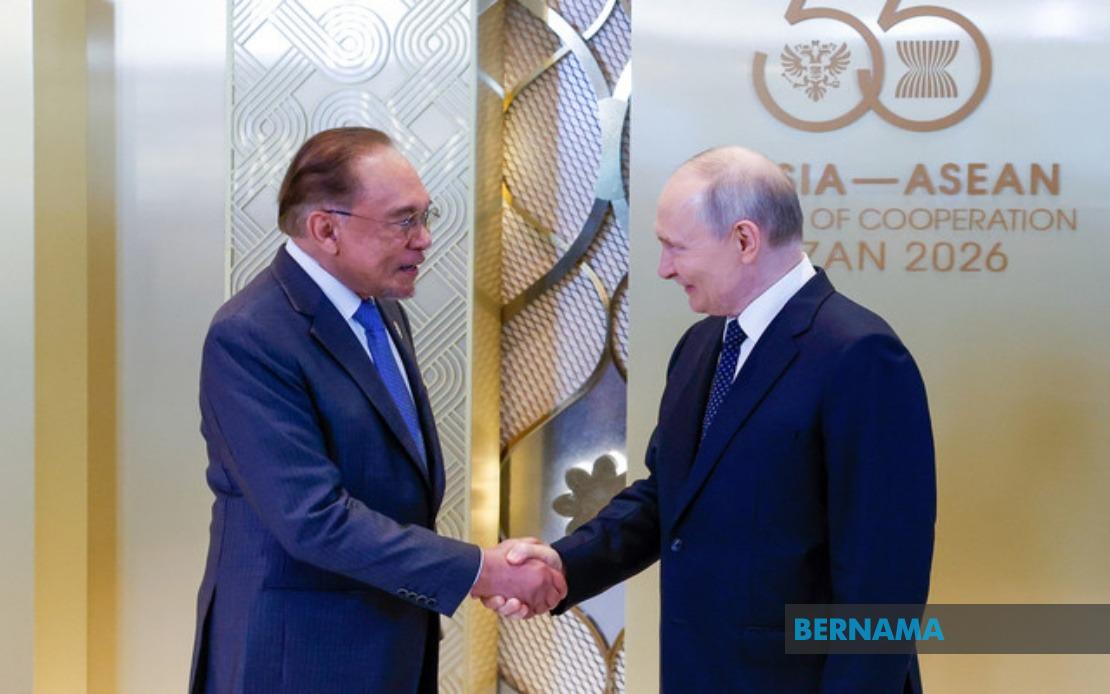
KUALA LUMPUR, June 24 (Bernama) — Let’s give credit when credit is due. Without doubt, Prime Minister Datuk Seri Anwar Ibrahim’s visit to Russia and Turkmenistan last week has been a hugely accomplished one.

First, Russian President Vladimir Putin assured Malaysia of a supply of oil, gas and diesel for at least the next 20 years.

Then, Turkmenistan allowed PETRONAS into one of the world's largest natural gas fields in the country.

Under the agreement, PETRONAS will be entrusted with the development of two major gas blocks.

The agreement would help address Malaysia’s concerns over future gas supply requirements while strengthening PETRONAS’ position as a major exporter to key markets, including Japan, South Korea and China.

The breakthrough in Turkmenistan highlights a defining feature of the Prime Minister’s administration: the use of active economic diplomacy to create opportunities for Malaysian companies abroad.

For decades, PETRONAS has built a reputation as one of the world’s most respected national energy companies.

Yet in today’s geopolitical environment, commercial capability alone is often insufficient.

Access to strategic resources increasingly depends on strong government-to-government relationships, trust between national leaders, and the ability to position Malaysia as a reliable long-term partner.

Anwar’s engagement with Turkmenistan reflects this reality. His visit and direct discussions with Turkmen President Serdar Berdimuhamedow helped elevate bilateral relations beyond traditional diplomatic exchanges and towards tangible economic outcomes.

By placing energy cooperation at the centre of the discussions, Anwar effectively created a platform for PETRONAS to explore new investment opportunities that may otherwise have taken years to materialise.

This approach mirrors the Prime Minister’s broader foreign policy strategy. Since taking office, Anwar has consistently emphasised economic diplomacy as a tool for national development, whether through strengthening ties with the Gulf states, attracting investment from China, deepening ASEAN cooperation, or opening new avenues in emerging markets.

The objective is clear: every diplomatic engagement should ultimately translate into jobs, investments, trade opportunities and economic growth for Malaysians.

The Turkmenistan initiative demonstrates how this strategy can deliver results. While PETRONAS possesses the technical expertise and financial strength to compete internationally, high-level political support can provide the confidence and assurances necessary for host governments to pursue deeper partnerships.

In energy-rich countries where strategic resources are closely linked to national interests, leadership-to-leadership engagement often plays a decisive role.

Anwar’s involvement is particularly significant given the scale of Turkmenistan’s gas reserves. The country is home to some of the world’s largest natural gas deposits, making it a strategic destination for global energy companies.

Securing opportunities in such a market requires more than commercial negotiations; it requires trust, credibility and sustained diplomatic effort.

The Prime Minister’s role should therefore not be viewed as interference in corporate matters, but as an example of modern economic statecraft.

In an increasingly competitive global economy, governments are expected to champion their national champions and help them access strategic markets. Countries such as China, South Korea, Japan and the Gulf states have long integrated diplomacy with commercial objectives. Malaysia’s success in Turkmenistan suggests that Anwar is adopting a similar approach.

Should PETRONAS eventually secure participation in a major new gas field, the achievement will belong not only to the company and its management team, but also to a broader national effort in which diplomacy, government policy and corporate excellence worked hand in hand.

The message is clear: when the Malaysian national leadership and diplomacy are aligned with Malaysian business interests, the nation can punch far above its weight on the global stage.

Growing anger, no answers


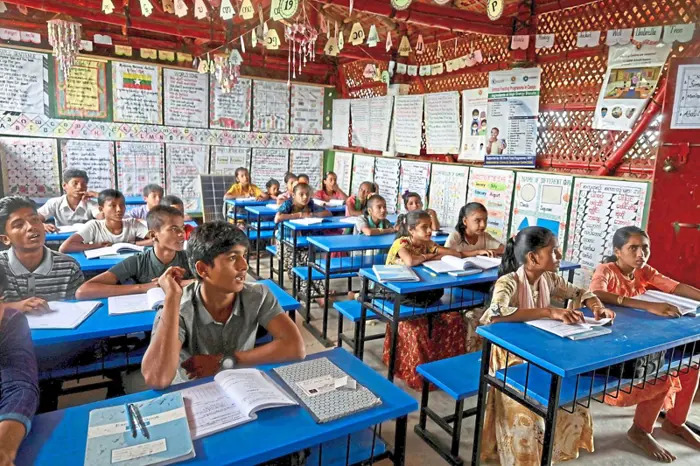
Big challenge: Rohingya refugee children attending a class at a school in Kutupalong refugee camp in Ukhia, Bangladesh. Malaysia does not have any mechanisms for education, healthcare, employment, and social integration for refugees. — AFP

JUST a decade ago, Rohingya refugees were portrayed by our politicians as a Muslim minority persecuted by Myanmar’s oppressive military regime. The politicians pushed the case into a powerful symbol of Muslim solidarity.

The political branding peaked between late 2016 and 2018, and was primarily aimed at gathering support ahead of the country’s general elections.

Former Umno president Datuk Seri Najib Razak even led a high- profile rally in Kuala Lumpur – with his party’s political rivals beside him, to boot.

The cause became a convenient platform for politicians seeking to demonstrate their Islamic credentials and appeal to domestic Muslim sentiments.

In short, these refugees were openly welcomed into Malaysia.

But following domestic backlash in 2020, Najib clarified that his pro-Rohingya solidarity was meant to stop the violence in Myanmar, not an open invitation to refugees to relocate to Malaysia.

Fast forward to 2026, the resentment against the Rohingya community has peaked, with much of the anger coming from the Malay community.

Malay social media, especially on Threads, is full of postings calling for these stateless people to be sent home.

Non-Muslims are asked why they have stayed out of the debate. Well, many did enter the debate a decade ago – they said these refugees should not come over – only to face undue criticism then.

Netizens who pose these questions over social media now probably weren’t even born then and have no background context to the issue.

To put it simply, at the height of the Rohingya crisis, questioning this approach was politically risky, especially for non-Muslims.

Humanitarian concerns understandably dominated public discourse. Images of desperate refugees fleeing violence generated sympathy among many Malaysians.

The narrative was straightforward: fellow Muslims were being persecuted and Malaysia had a moral obligation to help.

But what was largely absent, however, was any serious discussion of the long-term implications.

There are now an estimated 180,000 registered Rohingya refugees in Malaysia, with a huge settlement in Langkawi, Kedah, and Selayang, Selangor. There could be more, many unregistered.

As Malaysians grapple with the increasing cost of living, they are now less ready to carry the burdens of others, especially as pressure increases on public services.

Common complaints include: visible poverty and begging, including at Bukit Bintang, Kuala Lumpur; overcrowded settlements; isolated incidents of crime; perceptions of poor integration; and competition for low-skilled jobs and public resources.

What many do not realise is that Malaysia does not have a formal refugee law, so many refugees remain in legal limbo.

The politicians who championed their cases then definitely did not think too much about how we would eventually handle them.

Few politicians asked difficult questions then, including how many refugees Malaysia could realistically absorb?

What would happen if the crisis lasted not years but generations? What mechanisms would exist for education, healthcare, employment, and social integration?

Would the refugees remain indefinitely in legal limbo? Who would bear the financial and social costs of managing a growing stateless population?

So we essentially are now stuck with the Rohingya refugees’ lack of legal status, which leaves many trapped in poverty and at the risk of exploitation.

We can’t deport them either as Myanmar doesn’t recognise them. Neither does neighbouring Bangladesh, which has about 1.2 million Rohingya refugees residing in camps near the Bangladesh-Myanmar border.

Let’s be honest: there are no third countries welcoming Rohingya refugees with open arms.

What was supposed to be temporary shelter in Malaysia has, unfortunately, become a permanent home for these Rohingya.

Malaysia is now saddled with a situation in which a sizable stateless population resides within its borders without a clear pathway to permanent settlement, citizenship, repatriation, or third-country resettlement.

For the Rohingya themselves, life remains precarious. Many work in informal sectors, have limited access to formal education, and live under constant uncertainty about their future.

For Malaysian authorities, the challenge grows more complex every year. Enforcement agencies, healthcare systems, schools, and local communities must contend with permanent realities that temporary policies were never designed to address.

For ordinary Malaysians, frustrations have become more visible. Many citizens increasingly question why a problem that was presented as temporary appears to have no end in sight.

The politicians who championed the Rohingya had their immediate political rewards. The policy costs were not thought of but the bill is now coming due.

The country cannot indefinitely maintain a large stateless population without generating social tensions.

At the same time, it cannot simply wish away the reality that many Rohingya have spent significant portions of their lives in Malaysia and have few realistic alternatives.

Perhaps we should allow controlled legal employment in certain sectors – because the reality is, prohibiting legal work pushes refugees into the underground economy.

A work-permit system restricted to specific sectors suffering labour shortages could reduce illegal employment, increase tax and levy collection, reduce dependence on charity, and lower incentives for begging and the setting up of informal businesses.

This would likely be more acceptable to Malaysians if it were limited, monitored, and tied to registration.

We cannot stop their children from attending their own schools. A generation growing up without education is a long-term risk for everyone.

Our politicians and policymakers cannot hope for the Rohingya problem to go away. It won’t.

But as we head towards elections, no politicians would now want to be dragged into an issue where they risk losing votes.

After seven exes, what next for PAS?

IF there is a record for the most divorces involving a political party in Malaysia, the title would go to PAS, the Islamist party.

It has been involved in at least seven major coalition arrangements.

All of these alliances or political fronts have ended disastrously. There is always one recurring theme that stands out throughout its history: PAS has found it extraordinarily difficult to remain in long-term electoral coalitions.

In simple terms, PAS can never stay in a political relationship and there are many reasons for that, even if it refuses to admit them.

The Pan-Malaysian Islamic Party (PAS) is one of Malaysia’s oldest and most resilient political parties.

Founded in 1951, it has survived electoral defeats, ideological disputes, leadership crises, and dramatic changes in Malaysian politics.

Despite painting itself as a religious party with supposedly strong moral principles, the party has always been ready to cut deals for power and positions.

Yet it has always been able to justify all its actions to its faithful followers, always on religious grounds.

Over the decades, PAS has cooperated with the Alliance Party before independence, it joined Barisan Nasional in the 1970s, the Angkatan Perpaduan Ummah coalition, Barisan Alternatif, Pakatan Rakyat, Gagasan Sejahtera, and the current Perikatan Nasional coalition.

While in Barisan Alternatif, the party leaders provided “sufficient and convincing” grounds on why it was acceptable for PAS to work with DAP.

Of course, now the party sings a completely different tune and has blamed the DAP for every flaw under the Malaysian sun.

The question is not why individual coalitions failed, but why PAS repeatedly encounters difficulties in sustaining coalition politics itself.

Unlike many political parties that primarily organise around economic interests, regional concerns, or broad electoral coalitions, PAS is fundamentally an ideological party.

Its core mission has long been the promotion of Islamic governance and the expansion of Islam’s role in public life.

The party has not hidden the fact that its aim is to set up an Islamic state and do away with any form of secular and Westminster-style legislature.

It will impose gender segregation and close down entertainment outlets, including cinemas.

This ideological commitment provides PAS with a loyal and disciplined support base. It doesn’t care how non-Muslims feel.

However, such a hardline stance also limits the party’s flexibility when negotiating with coalition partners.

As in all marriages, coalitions require compromise. Partners must often soften policies, postpone contentious goals, or accept positions that do not fully satisfy their supporters.

For PAS, however, issues involving Islamic law, religious authority, and the role of Islam in government are often viewed as matters of principle rather than negotiable policy preferences.

As a result, coalition partners frequently fear that PAS’s long-term objectives may conflict with the broader, more pluralistic agendas necessary to win support in Malaysia’s multi-ethnic society.

Malaysia’s political system creates a unique challenge for PAS. The party’s strongest support traditionally comes from conservative Malay-Muslim voters, particularly in the east coast states. It doesn’t help that PAS has not governed its four states well – Perlis, Kedah, Kelantan and Terengganu remain the poorest states.

If it cannot run these states competently, why would Malaysians, especially urban Malays and non-Muslims, want to gamble their future away with PAS?

National electoral success requires cooperation with parties representing non-Muslim communities, urban voters, and more secular constituencies.

This produces a recurring contradiction. PAS needs coalition partners to gain national influence, but its partners often want PAS to moderate its Islamic agenda in order to appeal to non-Muslim voters.

PAS leaders often reassert their religious agenda, which has coalition partners such as Gerakan and MIPP fearing electoral backlash among non-Muslim voters. The balance is difficult to sustain over time.

Its participation in Barisan Nasional during the 1970s ended amid disputes over state-federal relations and power-sharing arrangements.

The partnership demonstrated that even cooperation with fellow Malay-based parties could break down when questions of political authority emerged.

The latest breakdown has been with Bersatu headed by Tan Sri Muhyiddin Yassin, and the situation has ended in yet another divorce.

During the Reformasi era, PAS joined Barisan Alternatif alongside parties that shared one platform: opposition to the ruling government.

However, concerns among non-Muslim voters regarding PAS’s commitment to an Islamic state became a major source of friction.

That experience was repeated in Pakatan Rakyat. PAS, DAP and PKR successfully challenged the dominance of Barisan Nasional and made significant electoral gains.

Yet disagreements over hudud legislation, Islamic governance, and constitutional questions eventually contributed to the coalition’s collapse.

In each case, short-term strategic goals united the coalition, while long-term ideological differences gradually pulled it apart.

PAS is without doubt a formidable political force. It is now the single largest party in the Dewan Rakyat. It has come to a point where PAS now thinks that Putrajaya is within its reach.

The party is not merely an electoral machine. It possesses a strong religious infrastructure, including clerical leadership, educational networks, and grassroots activists who view politics as part of a broader Islamic mission.

Consequently, PAS leaders must answer not only to voters but also to party members who expect ideological consistency.

Coalition compromises that may appear pragmatic to outside observers can be interpreted internally as abandoning fundamental principles. This creates pressure on party leaders to defend doctrinal positions even when political circumstances encourage moderation.

The leadership therefore operates within narrower negotiating boundaries than many coalition partners.

Conversely, PAS leaders and supporters often suspect that secular or multicultural partners seek to marginalise Islamic policies once electoral objectives have been achieved.

These mutual suspicions create fragile coalitions built more on shared opposition to a common rival than on a genuinely shared political vision.

When the common enemy weakens or political conditions change, the underlying differences become visible.

The Perikatan Nasional coalition differed from PAS’ previous alliances because its major partners draw support largely from the Malay-Muslim electorate.

This reduced some of the ideological tensions that plagued earlier coalitions involving secular and multi-ethnic parties.

Nevertheless, the challenges remained. Competition for leadership within the Malay political space, differing strategic priorities, and future electoral calculations still generated strains.

PAS cannot say it has severed its relationship with Bersatu and still work with Bersatu. The likelihood is that PAS will just work with former Bersatu deputy president Datuk Seri Hamzah Zainuddin’s new party, a breakaway group from Bersatu.

PAS’s difficulty in remaining within electoral coalitions is not primarily the result of poor leadership or tactical mistakes.

Rather, it reflects a deeper structural challenge facing ideological parties operating in diverse democratic societies.

To achieve national influence, PAS needs coalition partners. Yet the very principles that give PAS its identity and electoral loyalty create tensions with those same partners.

This tension has shaped the party’s history across multiple alliances and explains why coalition breakdowns have become a recurring feature of Malaysian politics.

As long as PAS remains committed to both ideological consistency and national political relevance, it will continue to face the difficult balancing act that has tested every coalition it has joined.

It will be disastrous for Malaysia if a religious and Malay-based party forms the federal government without genuine non-Muslim participation from the peninsula, Sabah and Sarawak.

Johor polls – birth of a new order?


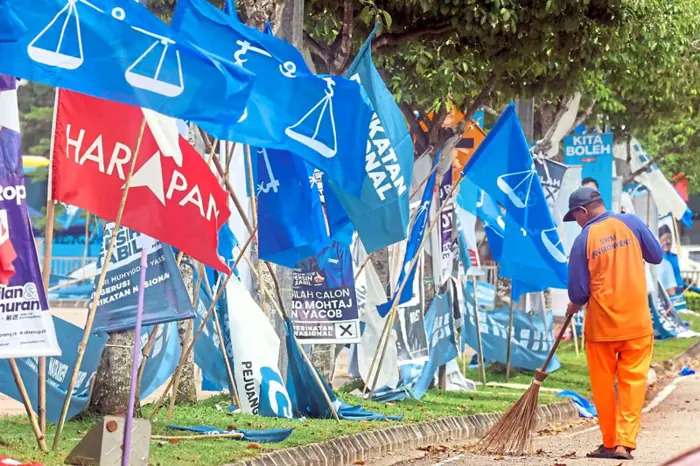
Set to be crowded: A flag war in Johor Baru during the 2022 general election. Today, Johor once again finds itself at the centre of a potentially transformative political moment with its upcoming state polls. — Filepic/The Star

ALL signs points to a crowded election fight in Johor, one of Malaysia’s most economically important states, although the consensus is that the Barisan Nasional holds pole position.

For many observers, the upcoming state election appears poised to become a defining test of whether Malaysia’s political future will continue to be dominated by large coalitions or whether the country is entering a new era of fragmented, personality-driven politics.

For decades, Johor occupied a special place in the nation’s political landscape.

As the birthplace of Umno and long regarded as Barisan’s safest fortress, the state often reflected broader political trends before they became apparent elsewhere.

When Johor began showing signs of political change in 2018, many observers interpreted it as evidence that the country’s political foundations were shifting. And change happened.

Today, the state once again finds itself at the centre of a potentially transformative political moment.

Barisan has announced that it will go solo, which means it will be taking on Pakatan Harapan, its partner in the federal level unity government headed by Datuk Seri Anwar Ibrahim.

How the two major coalitions will slug it out without wounding each other badly before the next general election is left to be seen.

Then there is opposition bloc Perikatan Nasional comprising PAS, Bersatu, Gerakan, and MIPP. The relationship between PAS and Bersatu seems to have broken down, with leaders issuing contradicting statements.

At the time of writing, all eyes are on former Bersatu man Datuk Seri Hamzah Zainuddin and his new political platform – speculation is rife whether it would actually replace Bersatu in Perikatan.

Should that happen, we could see another intra-coalition fight with Bersatu taking on Perikatan.

There is also the newly-formed Parti Bersama Malaysia (Bersama) headed by Datuk Seri Rafizi Ramli, a former PKR deputy president, and his loyalist Nik Nazmi Nik Ahmad, who are both Klang Valley-based politicians.

It has been reported that the party wants to contest all seats in Johor but unless it can attract known state figures to sign up, it will be difficult to regard Bersama as a formidable force outside Kuala Lumpur.

Which brings us to the next point: where does Muda, which, like Bersama, also eyes young voters, stand in this election?

After the exit of its former president Syed Saddiq Syed Abdul Rahman, it appears to be drifting aimlessly. The party is now headed by Amira Aisya Abd Aziz, the state assemblyman for Puteri Wangsa.

Although regarded as an urban and liberal party, talk that it is prepared to work out a pact with PAS, Pejuang and Ikatan Prihatin Rakyat has raised questions about what Muda actually stands for.

In the 2022 Johor election, Barisan won 40 of the 56 seats up for grabs, Pakatan won 12, Perikatan won three, while Muda managed one.

Much has changed since.

Unlike previous elections, where parties were largely organised under identifiable coalitions, the emerging picture suggests that Johor voters may be presented with multiple competing alternatives.

Barisan, Pakatan, and newcomer Bersama are all expected to enter the fray under their own banners.

The uncertainty surrounding PAS and Bersatu – and their Perikatan coalition – has created additional intrigue, with growing speculation that new alignments may emerge before polling day.

If PAS were to align with Hamzah’s new platform, Johor’s electoral battlefield could become dramatically more crowded.

A PAS-Hamzah alignment would potentially consolidate portions of the conservative Malay vote while offering a fresh narrative centred on opposition unity and political renewal.

Should these developments materialise, Johor could witness some of the most complex electoral contests in its modern history.

Under a fragmented electoral environment, winning no longer requires commanding majority support.

Instead, victory increasingly depends on securing a plurality of votes in crowded contests. Constituencies that once required a candidate to secure 50% or more of the vote could potentially be won with support in the mid 30% range if rival votes are divided among several competing parties.

This reality may ultimately favour Barisan, which has organisational depth, particularly in Johor’s rural and semi-rural constituencies.

Barisan enters the contest with a relatively clear structure, established grassroots networks, and disciplined election machinery.

In a fragmented field, organisational strength often becomes more valuable than broad popularity.

Still, it would be a mistake to assume that Barisan’s victory is guaranteed.

The political environment confronting voters today differs markedly from previous decades.

Younger voters have entered the electorate in large numbers following the implementation of Undi18, while urbanisation and changing socioeconomic expectations continue to reshape political loyalties.

Voters are increasingly less attached to traditional party affiliations and more willing to evaluate candidates and parties on contemporary concerns such as economic opportunities, cost of living pressures, governance standards, and institutional reform.

This creates opportunities for Pakatan, which remains strongest in urban centres and among voters who prioritise governance reforms and institutional accountability.

Johor’s expanding urban corridors, stretching from Johor Baru to Iskandar Puteri and beyond, provide fertile ground for Pakatan’s message.

The coalition, however, faces a dilemma familiar to opposition parties operating in fragmented political systems: how to prevent anti-establishment votes from being split among multiple competitors.

Converting public interest into electoral success requires extensive grassroots organisation, candidate quality, and financial resources – areas in which established parties generally maintain substantial advantages.

Johor may therefore offer an early glimpse into what future national elections could look like.

Rather than a straightforward battle between two dominant blocs, Malaysia may be heading towards a political landscape where four or five major forces are in competition.

Most importantly, it may also reveal whether Malaysia is entering a new political chapter where coalition politics gives way to a more fragmented and uncertain electoral order.

If that is indeed what happens, Johor will once again have provided an early indication of where Malaysian politics is heading.

Media Leadership: Steering a legacy for the young

By VERONICA SHUNMUGAM


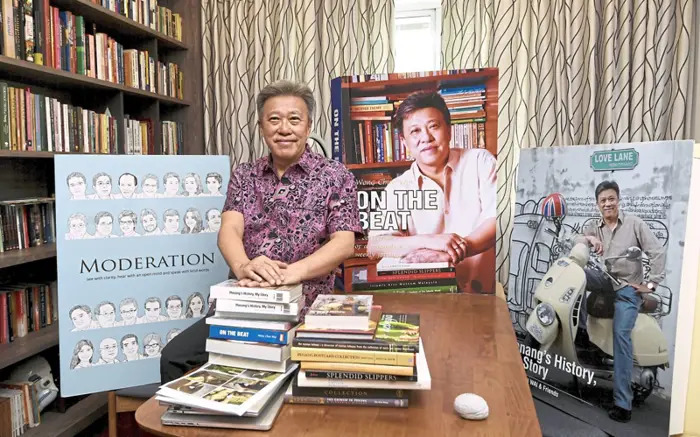
Chun Wai: ‘I wanted The Star to be known for its moderate stance.’ — AZHAR MAHFOF/The Star

THE biggest challenge for mainstream media in the 2000s has been the growth of digital technology, with social and alternative media being the most disruptive influences.

And it was in these testing times that Datuk Seri Wong Chun Wai, now 65, became the group chief editor (GCE) of Star Media Group (SMG) in 2008.

He was just 46, the company’s youngest GCE but his young age had its advantage – he knew what youths were looking for. They wanted credible news and brand identity, and he wanted to show that legacy media could offer them all of these, and more.

At a time when loud, strident voices were getting vehement on social media, he wanted to offer a balance – with moderation.

“I wanted The Star to be known for its moderate stance,” says Chun Wai, as he prefers to be known.

“Young consumers are interested in what your brand stands for and I strongly felt that SMG needed branding to continue progressing past the 1987-88 Operasi Lalang era and regaining its footing.”

Indeed, moderation in editorial content anchored SMG as it expanded its reach from print to online, radio, events and exhibitions, and over-the-top video services.

To walk the talk, in 2014, SMG launched a Voice of Moderation campaign to promote unity, rational discourse and inclusivity in a polarised society.

A book titled Moderation, which compiled 28 essays from various prominent Malaysians, activists and journalists offering diverse perspectives on the concept of moderation in the country, was published in 2016.

SMG, under Chun Wai’s leadership, also organised a series of Anak Anak Malaysia and Harmony walks and Ride for Malaysia events that had diverse groups interacting with each other.


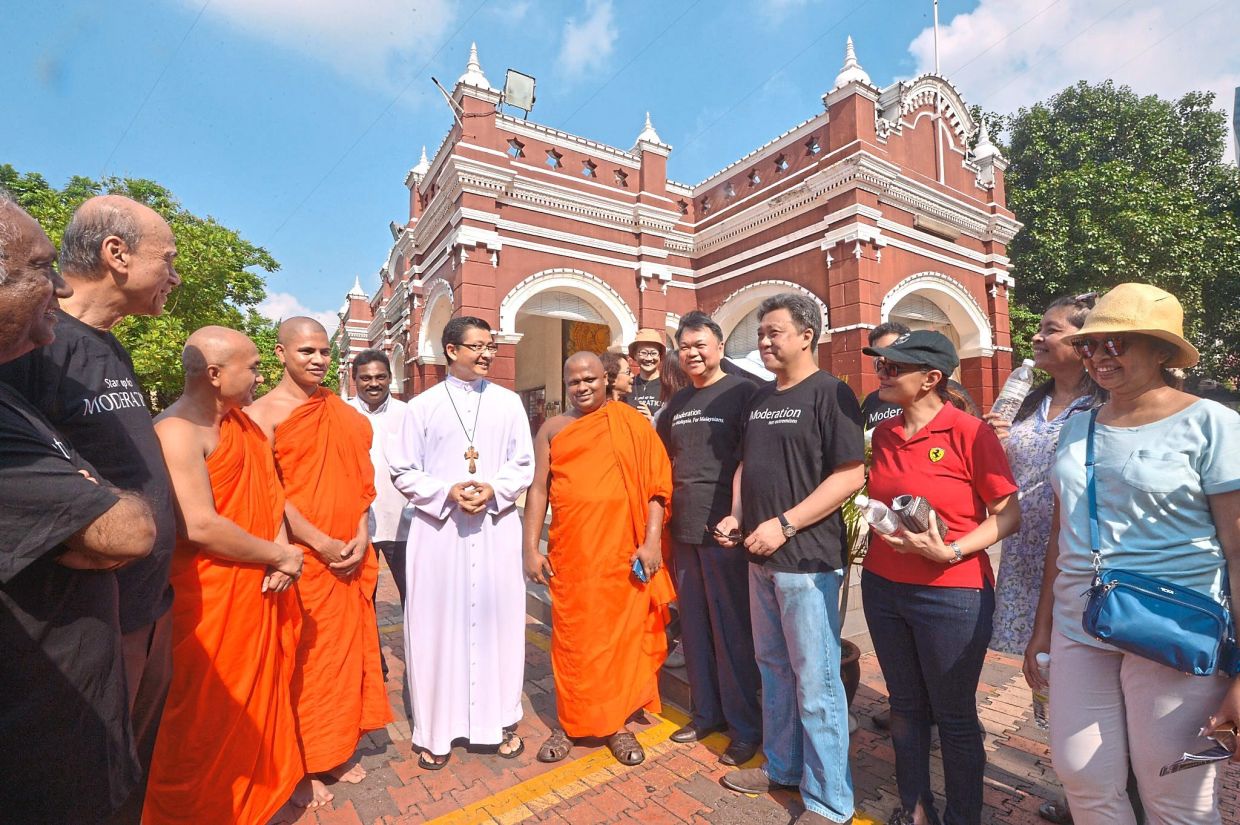
Championing unity: Chun Wai (second from right) with moderation advocates and religious leaders during a Harmony Walk in Brickfields, Kuala Lumpur, in 2015. — RAJA FAISAL HISHAN/The Star

With a series of achievements behind him, he became the first Malaysian to be elected into the Paris-based World Editors Forum in 2012.

He was also appointed as chairman of Bernama, the national news agency, in 2023 but the veteran journalist’s proudest moment came when he was awarded the National Journalism Laureate award in 2024, the first journalist from The Star to be thus honoured.

However, he has also had his bad days. He said that he had seen his share of bad editorial judgement and bad articles, saying he wished he could have done better on those occasions.

When he first took over as GCE of SMG, one of the first things he oversaw was a change of workflow processes to ensure output would present audiences with a different angle and deeper analysis of breaking news.

“There are things besides politics that people will love you for,” he shares, spotlighting the pioneering youth advocacy of reporters who had trained under the company’s BRATs Young Journalist Programme which began in 1993.

One such award-winning example was the investigative unit within The Star’s R.AGE youth pullout. Among its many achievements was the uncovering of a legal loophole enabling paedophiles to reach children and teens via smartphone chat apps.

“This got a (new child protection) Act passed in Parliament (in April 2017)!” he says.

“Sure, social media was on the rise but it wasn’t giving young people in-depth stories that they needed,” he points out.

In 2011, The Star’s ePaper for iOS and Android devices was launched and the company took on a “digital first” approach to ensure it was well placed in the digital era.

“Change is always difficult but by the time I became GCE, much of the resistance to the digital approach had waned.”

By the time Chun Wai became chief executive officer (CEO), he had taken note of the change in news consumption, propagating the switch from serving “readers” to “audiences”, from having a “group chief editor” to “chief content officer”, the first such move in the nation, to cater to the transformation of the media industry.

Chun Wai was not content that his colleagues would just be wordsmiths, as he also wanted them to be comfortable in front of the video cameras and quick on social media.

“We produced shorter, visual-themed reports for younger readers as we transitioned from our older set,” he shares while noting that the older audiences – often informed decision-makers – preferred well-researched, in-depth articles.

Big news companies like SMG face a tougher job serving a buffet of information compared to one-dish news portals that cover just politics or high society.

The Star Online e-portal, which was launched in 1995, remained one of the company’s core strengths under Chun Wai. It was Malaysia’s first online new portal, coming years before others picked up the trend.

With insights from 11 years at SMG’s helm, as its executive director in 2010 and CEO from 2013 to 2019, Chun Wai admits that it is hard to sustain high reporting standards amid increasing clickbait journalism.

However, he was motivated by a sense of responsibility that he finds sits heavier on the shoulders of legacy media workers: “Sometimes, we may be late (in reporting) because we need to verify details, but we’ve been trained to be very cautious as we live in a multiracial country.”

As news production became more democratic and news delivery rapidly sped up, he helped ground SMG’s counter-approach by recognising the double edge that these developments had.

“Practically anybody can call themselves a content creator or influencer.

“But I think that accuracy and brevity are key. In the old days, we were taught ground rules such as a person’s right to privacy, especially through court reporting.

“Many today are not aware, or have forgotten that they are responsible for comments published in their account or portal,” he states.

The business section also had his rapt attention. “As GCE, I realised the importance of the business section as its readers make investment decisions.”

He also continued the company’s succession planning. His predecessor Datuk Wong Sulong had sent him for leadership and finance courses on a bank scholarship between 2004 and 2006.

“If he had not given me that opportunity, I would not have learnt about financing methods,” Chun Wai says, adding that the experience taught him the negotiation skills needed to be an effective news administrator.

“I also learnt that a vast trust-based network of businessmen will get you funding,” he shares, adding that he built on this by remaining an active newsman.