Monthly Archives: July 2012

It’s hot, hot, hot at the beach

THE downside after watching the grand opening of the Olympic Games is that you now have to be content with watching the qualifying stage of most of the events, where the excitement is not quite at the pulsating stage.

For most of us who believe that Malaysia can only win medals in badminton and our fervent hope is that this is the Olympics where we will finally clinch our first-ever gold medal there are no real options for us to cheer for anyone else.

With only a few days left to spare in London, and without the press credentials that would have allowed me free access to all the events, my friends and I decided early on that beach volleyball must be on our must-watch list.

It is certainly a brilliant choice as the tickets are apparently the most sought-after for the Games. While the organisers may be worried about empty stands at some sports, beach volleyball is playing to sell-out crowds daily.

Even Paul McCartney and Prince Harry are reported to have snapped up tickets for the matches which are being played at the Horse Guards Parade, located on the Prime Minister's doorstep in central London.

The parade ground lies at the heart of London's ceremonial life and still hosts the Trooping of the Colour event that takes place on the Queen's official birthday each year.

The temporary arena has a capacity similar to Wimbledon's Centre Court. Interesting enough, a total of 5,000 tonnes of sand was being brought in from a quarry in Godstone, Surrey, to create the capital's very own “beach”.

When you are there, you really feel the presence of No 10, Downing Street, Buckingham Palace, the Big Ben and the London Eye in the backdrop.

But these scenic spots are not likely to be real reasons why many of us have bought tickets for a sport few of us have ever seen up close and personal.

Dubbed the sexiest sport, there are plenty of good reasons why many Londoners, the group of us Malaysians, and we presume the rest of the world, want to watch the matches.

For a start, the women players are in bikinis. The sun has been kind almost daily despite earlier weather forecasts that the weather may turn chilly and the players may have to cover up.

There are no other events in London where pop music is blaring out from the huge loudspeakers in between points and during the players' break.

And there are dancers, in skimpy beachwear, gyrating their hips and even rolling suggestively in the sand, as part of the routine. So there can never be a boring moment at the matches.

In fact, one suspects that the spectators look forward to these breaks more than when the games are in progress. No wonder the UK press has aptly described the atmosphere as “sexually charged”.

Those of us who love popular music will enjoy the music break as the Queen's We Will Rock You is played every few minutes and the fans are encouraged to stomp their feet and clap their hands in unison.

From Mas Que Nada the samba-inspired song from Black Eyed Peas to LMFAO's Party Rock Anthem, the sporting spectators are always on their feet, dancing away to the music being played during the breaks.

And the announcer is practically playing the role of a disc jockey, giving witty comments and sometimes, the crowd is asked to dance to the Conga beat of the Miami Sound Machine.

It doesn't seem like a competitive sport at all; it's more like a beach party, where plenty of booze is being passed around.

Volunteers are placed among the spectators to engage with them and even cajole them to dance. Occasionally, handsome hunks are seen chasing after blondes to the theme song of the classic comedy TV show of Benny Hill, another British icon.

Beach volleyball, which was introduced only at the Atlanta Games in 1996, is fast gaining the “resentment” of indoor volleyball players. One newspaper reported that “with the skimpy outfits, the glamorous sun-and-sand backdrop, beach volleyball has been attracting more than its share of the limelight.”

Interestingly, the BBC has reported about the many empty seats at indoor volleyball games. Soldiers, teachers and students have been invited to fill up these empty seats to save the organisers the embarrassment.

Beach volleyball is certainly more newsy. According to an interactive survey by the Metro newspaper, most men would prefer to go on a date with a beach volleyball player than any other athlete.

One in two males would like to take the famous scantily clad athletes for dinner. Women, on the other hand, prefer a date with a tennis player.

So it comes as no surprise that beach volleyball has been given extensive coverage by the BBC.

I think my colleague from our sports desk, S. Ramaguru, who is covering the Games primarily from the Malaysian angle, is missing out on one of the best parts of the Games.

Oh yes, the beach volleyball games only begin at 2.30pm, which means the fans need not wake up early! And I am sure Malaysians back home find the time just about right for them to watch the games live.

Fun-filled start to the Games

Taking the world on a quick run through Britain’s rich history – from an agrarian society to an industrial powerhouse to showcasing its cultural heritage which the world has openly embraced through film and music – the Brits showed the world what being creative is all about.

You have to hand it to the Brits when it comes to wit, humour, creativity and, surely, popular music. No one does it better.

The organisers knew they would not be able to compete with the Chinese who welcomed the world to the Beijing Olympics with their grand epic opening of thousands of drummers and flying swordsmen. That is an image etched on our minds forever.

Knowing that, the Brits kept reminding the world that they would be presenting a different kind of show, and what a difference it was. Everyone in the stadium, and around the world, watching the event live was reminded that it was the Brits who brought us James Bond, the Beatles, the Rolling Stones, Harry Potter, Mary Poppins, the World Wide Web and, of course, Mr Bean.

The Brits have something they know the others would not be able to match, which is their ability to laugh at themselves. Plus, the Brits sure know how to party. They are determined to make the London Games one of the best in their own way.

Putting protocol aside, director Danny Boyle of Slumdog Millionaire fame was even able to get the Queen and her two Corgis to agree to “act” with Daniel Craig in a James Bond movie. The scene was apparently filmed in March and remained top secret until last night.

The scene of Bond and a Queen Elizabeth lookalike skydiving into the stadium will also be much talked about for years to come.

The Queen, who is celebrating 60 years on the throne, must be commended for sportingly agreeing to play a minor but important role in the video clip and giving consent for a lookalike to jump out of the “helicopter”.

And let’s not forget the other Queen who performed the Bohemian Rhapsody, which is easily one of the most recognisable songs in history.

It was also a surprise to see Mr Bean aka Rowan Atkinson joining the London Symphony Orchestra in a powerful rendition of the theme from Chariots of Fire. His comic character certainly brought the house down.

The platoon of Sgt Peppers and inflatable yellow submarines were a delight especially to people of my generation. It was the humour and self-mockery that made the show so uniquely British.

The organisers had marketed this Olympics as the “friendliest” games ever and the “most fun games”, and we now know for sure they can beat the Chinese when it comes to this.

There were some bizarre moments too, like minister in charge of the Olympics Jeremy Hunt’s bell flying off its handle while he was ringing it – in front of TV cameras. The bell hit Hunt’s publicist, and the embarrassed Culture Secretary, who had earlier said he could not promise the games without any glitches, sportingly rushed over to his aide and was heard saying: “My goodness me! Terrible moment there. There you are, disaster averted and thank you. You got more TV there.”

It was all nicely handled and he could laugh at himself. The press was not told to omit the awkward scene. That’s class for you and something our overly sensitive Malaysian politicians need to emulate – chill out and learn to laugh.

Knowing how tricky transportation would be last night, my friends and I decided to take a boat to the venue instead. The day before, we had got ourselves “trapped” when we went to watch the Olympics torch relay at Oxford Street.

The tube stations were jam-packed and we wondered what the consequences would be if an unwanted incident were to break out as there seemed to be little crowd control.

There have been minor protests by cab drivers but, on the whole, the Londoners have worked together to ensure the success of the games. So far, everything has been marvellous.

The policemen openly displayed the Olympic mascots on their vehicles and motorcycles. Those on duty during the torch run relay along Oxford Street, easily one of the busiest streets in the world, acted with restraint, allowing the crowd to come close to the buses carrying the torch bearers.

They also took the trouble to engage with the crowd who were waiting patiently for the torch runners.

It was English politeness that left a deep impression on me. The volunteers were always smiling and happy to say “thank you”, “please”, and “have a good time”.

If they carry on like this, the London Games will certainly live up to its promise of being the friendliest games ever.

And, considering that this is the first time I have ever watched the Olympics up close and personal, the memories will linger and be part of my grandfather stories one day.

Gazette the city’s green lung now

In 2006, the Government agreed to gazette 189ha as a permanent green area, as part of the Kuala Lumpur Master Plan but until now, nothing has happened.

There is always the worry that greedy developers can use their connections to get a small slice of the land. So, can the regular Bukit Kiara visitors be blamed if they have doubts over the sincerity of the authorities in wanting to push for a permanent end to their anxiety.

This is the biggest green lung for city folks living in Petaling Jaya and Taman Tun Dr Ismail. Why shouldn’t they be concerned when they hear stories that parcels of land are said to be privately owned. The fears that this land would be commercialised are justified.

Yes, we have seen how foreigners have encroached into Bukit Kiara to illegally tap the old rubber trees on the hill.

The demarcation, with the construction of a 3.5m high fence along a 4.7km stretch of Bukit Kiara, is good if there are legitimate security reasons.

But not when 3,000 trees were also felled as a result of this exercise. This writer hopes these numbers are not accurate but when bulldozers make their way into the jungle, it is unlikely to instil much confidence even when signs are put up to explain the ongoing fence exercise.

Many former ministers, including former Prime Minister Tun Abdullah Ahmad Badawi and former MCA president Tan Sri Ong Ka Ting, are regular visitors to the park.

They have enjoyed their regular walks there and certainly, like many other joggers, they can see the joy and sincerity of the Friends of Bukit Kiara.

There’s no politics here. It is just a group of multi-racial Malaysians and expatriates who love nature and are committed to wanting to protect what is left of nature in a concrete jungle.

It is like a piece of precious gem which the ordinary people want to hold on to desperately against mindless housing development.

We do not want to see cement paths being laid and new trees being planted after the mature trees have been felled. And certainly we do not need a refreshment kiosk being set up. I hope the Malaysian Nature Society has erred in this claim or, at least, been wrongly reported by the media.

But what is clear is that the authorities, even before they embark on the fence building project, should consult environmental groups like MNS for advice on how to build in such an ecologically sensitive spot.

There are many qualified people in MNS and other NGOs who could offer suggestions and advice; let us also not forget that over the years, it has been the park users themselves who have helped maintain the park. They are the ones who have repaired the nature trails and kept the park clean.

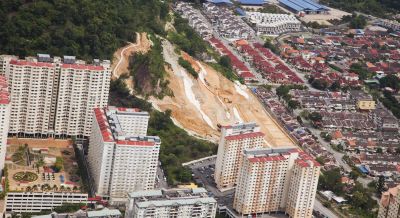
The users can see for themselves that the road and fence have already led to massive earthworks that threaten the pristine water body in the heart of the park and all points downstream along Sungai Ulu Pencala.

The MNS has also highlighted other questionable aspects of the development plan, including the proposal to set aside part of the park for the planting of high-value commercial crops, such as cinnamon, tongkat ali and agarwood trees.

Part of the park had been zoned out to be planted with African and South American trees.

“It is hard to see the point of these initiatives which threaten to displace local indigenous species that are the natural and rightful flora and fauna of Bukit Kiara,” MNS president Prof Dr Maketab Mohamed was quoted in a news report.

Indeed. It is strange that our local authorities still look out for trees from other parts of the world instead of concentrating on our own species. The landscape people seem to only look at aesthetic aspects rather than weigh the consequences of introducing alien species into the country.

In the quest for development, we must not forget that the natural heritage God has blessed us with cannot be replaced by even the most sustainable, green structures that may come up. True, there will always be demand for homes amidst the hills, but the price others have to pay will definitely be more than what the homeowner pays.

The problem has always been that local authorities and developers prefer not to see beyond what their eyes can see. Certainly, they would rather feign ignorance that flooding problems far away are not a direct result of the destruction of hills that are natural sponges to control the flow of water.

The people who use Bukit Kiara have spoken out. They have even gone on a walk to highlight their grievances.

They see themselves as stakeholders and they want their voices to be heard, respected and taken into account, in the plans of the city fathers. Those who speak up are moderates and certainly not anti-development.

No one deserves to be belittled or threatened by any politician because of our concerns against encroachment to our hills or green lungs. It is WE who put them there. They should be thankful to us and not the other way around.

We do not care whether they are the state or federal governments, and we do not care whether they are in the Barisan Nasional or Pakatan Rakyat. They should listen to us.

Do more to combat crime

The last thing our police force would want is to have headlines of high-profile crime cases splashed across the newspapers. But perception is everything. Malaysians, especially those living in major cities, feel insecure and what is more worrisome is that women and the elderly seem to be easy targets.

The statistics show that in Selangor, there is a 19.4% drop in the crime rate since 2009 and overall, the nationwide figure dipped by 24.7%.

The Home Ministry has said the crime level fell from 211,645 cases in 2008 to 157,891 last year.

No one is spared. Even the home of former Malacca Chief Minister Tan Sri Rahim Thamby Chik was broken into recently and his gun was taken away.

More disturbing are the constant reports of women being robbed, or nearly robbed, in or outside malls in the Klang Valley.

They may be run-of-the-mill crimes but such incidents are now posted on all the social media platforms like Facebook and Twitter by the victims, complete with photographs, and they go viral in an instant. Eventually, these incidents are picked up by the newspapers and online news portals.

Crime takes place daily and police have often regarded such cases as petty crime as they deal with thousands of cases.

The police often update the media daily with more serious crime cases such as murder, abduction, drug seizures and armed robberies. When there is a shoot-out, the media is quickly alerted by their contacts. These are followed by on-the-scene reports.

In the news

Daily petty crimes such as break-ins are often relegated to the bottom but now the public have better access to reaching out to others. If in the past, victims did not even want to let their neighbours know of their misfortune, younger Malaysians want to share their experiences with the world.

Thus, when Nayati Moodliar was abducted outside his school on April 12, it was known around the world swiftly. The news was reported in his hometown in South Africa about the same time as in the Malaysian media.

Our government officials and police would surely not want to see such cases highlighted but no one should be in denial mode. Yes, there is no need to sensationalise such reports but they must certainly be published and discussed.

Politicians only want to see their own pictures in the newspapers or their state bulletins but the reality is that crime has become a hot dinner conversation topic.

There is another issue that has cropped up. Now that the Emergency Ordinance has been abolished, there is fear that former detainees are now roaming free and have gone back to their bad old ways.

Last year, more than 700 people were detained under the EO but the law has since been repealed. Although the police have justified the use of the EO to bring in criminals that they cannot charge in court due to insufficient evidence, they have also been accused of abusing the EO.

Some of these ex-EO detainees have now been blamed for the recent spike in crime although there is no real data to back this argument.

But fighting crime isn’t the job of the police alone. Bashing the Government and the cops is easy but public apathy has also been identified as one of the reasons why criminals have become more brazen in committing crimes.

There is reluctance among the public to come forward to give evidence after they lodge police reports. Not wanting to testify in courts because of the lengthy court process would not help the police and prosecution send these crooks to jail. Then there are also those who fear repercussion for their personal safety.

The police also cannot be everywhere. Mall managers, for example, cannot expect policemen to be stationed in their buildings. It is their responsibility to hire more security guards and work with the police to enhance safety.

Over the years, security has become a major concern but it is such an irony that from shopping malls to gated communities and secured neighbourhoods, the guards hired to take care of Malaysians are mostly foreigners.

Business will always look at costs when hiring but we should be equally concerned about their backgrounds and be prepared to pay more for good workers.

Pay security guards well and our employers will get Malaysians to work for them. Now, some of these foreign guards cannot even give directions to customers at malls.

And why not keep some levels of parking lots in malls for the elderly and women? Or install press alarms at every level of the parking areas. Let us see the management of malls do something concrete.

Stop rape of our beloved hills

I recently got a copy of an email that was addressed to Chief Minister Lim Guan Eng and several state executive councillors. The writer, having just read the latest issue of Buletin Mutiara, did not mince his words when he slammed the government for misleading Penangites with its front page report stating that “the hills are alive”.

He wrote: “… a view from the hilltop of Penang Hill showing green uncut foliage does not mean our other hills in Penang Island are safe.”

Balding top: Penangites are incensed over the wanton destruction of hill slopes in Penang.

He then went on to reveal that there are many patches of hills that are being cleared at this very moment.

“One of them is the township of Sungai Ara. You cannot miss it when you are passing PISA on the way to the airport, on the right. Go closer and you will be shocked at how bad the situation is.”

Overall, the content of this email clearly shows that this Penangite is very angry over the wanton destruction of hill slopes and is not amused that every time the issue is brought up, the current government keeps throwing the buck back at the previous administration.

As he puts it, “You are the current government, address and close this current issue.”

It serves no purpose to organise a climb up Penang Hill and then claim everything is fine. Seriously, with due respect, the state officials were just looking at the wrong side of the hill. It was nothing more than just a publicity stunt in the hope that the issue will go away.

Penangites care as much about their hills as their beaches, and also every social and civic issue in town. It has always been so although they may appear louder these days simply because there are more platforms and social media channels for them to shout through.

But why is it that any genuine airing of grievances, like the hill issue, is perceived as “politically motivated”?

And why is the state always going after journalists who, because of their connection to the ground, are but mere messengers in airing these concerns?

It is so convenient to blame everything on “media lynching” and to call journalists all sorts of names, including being tools of Barisan.

The DAP did well in the March 2008 political tsunami because Penangites wanted change. They were fed up of the Koh Tsu Koon government and wanted a strong leadership for the state. No one was surprised when Lim Guan Eng cruised to such a convincing victory.

But with the current term almost at the end, the DAP-led government is still singing the same old tune of claiming credit for itself when things go right and shifting blame on others when things go awry.

The writer of the email cited development in the Sungai Ara area and challenged the CM to get the state executive councillor Abdul Malik to show him around.

“Come after a heavy downpour or rain and you will see the clear streams from the hills turn RED … it’s bad,” he wrote.

“Most of us residents and rakyat here are executives in the Bayan Lepas industrial zone. We are happy and support our current government, but please bear in mind, we will not tolerate further scavenging and rape of our beloved hills. They must be preserved at all cost, kept on behalf of our children and returned to them in the future.”

Strong words indeed. But that’s how Penangites are. However, instead of understanding and listening to them, the state leaders prefer to talk down to them or, worse, label them with all sorts of names.

At the end of the day, we should all agree that there is a need for a comprehensive urban planning policy with clear focus on sustainable development. The hills are choking, and there is no need to engage in political semantics over whether a project is above or below 76m, or whether a project is deemed “special”.

Will there be more high-rise condominiums on the way, as a DAP assemblyman has revealed?

Confusion can arise when there is lack of clarity. The ordinary Penangite, without access to the files, will comment on what is apparent before his very eyes.

Listen. And listen hard to the Penangites who still care.

Pastors are mere mortals

But it would appear that religious figures are fast catching up when it comes to having their day in court. Religious establishments have increasingly found themselves in the news for the wrong reasons, from allegations of child sex abuse and corruption to leaking documents.

Closer to home, the news of Pastor Kong Hee, founder of the City Harvest Church (CHC), one of Singapore’s richest churches, being charged for allegedly siphoning off nearly S$23mil (RM57mil) has shocked many, including Malaysians.

Hee is alleged to have misused the money to support his wife’s singing career in the United States. His wife Ho Yeow Sun is also a pastor at the mega church. The non-denomination church is said to have net assets worth RM257mil in 2009, according to official estimates. It has affiliate churches in a number of countries, including 11 in Malaysia.

The investigations on the church came just after another high-profile case in 2009 when a prominent Buddhist monk was jailed for six months for misappropriating hospital funds and lying about it to the authorities.

Kong, 47, and four other church executives, who were charged with aiding him, are now out on bail. All have said they will fight to clear their names.

The Singapore authorities have stressed that the charges are against the individuals and not the church.

But the CHC leadership will need to re-evaluate themselves as there is no denying that the church with its 30,000-strong congregation has been under the scrutiny of the authorities, the media and other churches.

Kong, according to reports, lived the lifestyle of a chief executive officer rather than a pastor. According to the church website, he withdrew from City Harvest’s payroll in November 2005 and started his own business.

His emphasis on pop concert-style services seemed to work as many young professionals in the secular world flocked to his church.

It has been reported that 47.4% of its members are below 25 years of age and that the average age of the congregation is 24. The majority of the members are young professionals aged between 25 and 35 and the church endeavours to “build an ultra-modern, energetic and upwardly mobile image”. It has 25 full-time pastors and assistant pastors.

Certainly, it is no easy task for any church in this age of materialism and consumerism, especially in Singapore, to draw in the young people. So credit must be given to Kong.

But there has been mounting criticism over the last few years as the church grew. Its ultra-modern titanium-clad church complex, which includes a RM1.45mil fountain feature, was built at a cost of RM120mil. The toilets, by the church’s own admission, are said to be “the very meaning of style”.

Kong seems to have convinced his congregation that the church’s “Crossover Project”, which included supporting his wife’s singing career in Hollywood, aimed to expand Christianity in the United States and Taiwan through her secular music.

Living in a Hollywood mansion that cost RM63,390 a month to rent, she had an album produced by famed rapper-producer Wyclef Jean and reportedly won some awards. In an entertainment city where money can buy anything, such achievements have been questioned by the cynics.

She has appeared in videos wearing sexy outfits gyrating to rap music and, in one video, even stripped down to her bikini. It is debatable how these videos would convince the secular to find God and flock to churches.

But it would appear, from reports in The Straits Times and based on comments posted on Facebook, that many of the members are prepared to give Kong the benefit of the doubt and are standing by him.

Although we should allow the trial to take its course and wait for the verdict, it is clear that in the court of public opinion, the people view politicians and government officials in a totally different light from religious figures. Caught in a similar situation, most people would have found the former guilty from day one, but not the religious figures.

Many are reluctant to accept that religious figures are also mere mortals. They can put on their religious garb but they are still sinful human beings with their own frailties. In some cases, they come across as just plain greedy and selfish.

In the worst category are those religious figures who interpret the holy books to justify their political ambitions in the name of God. Many of the faithful are caught in a dilemma when they assume that disagreeing with these human beings means questioning God. Nothing could be more wrong.

The faithful should stand firm in their belief in God, but they must not be afraid to question or even challenge their religious leaders if they are wrong.