Monthly Archives: January 2013

Painful closure

The details were sketchy and all we knew at that time was that the body fished out of the river near Kampung Sungai Sireh in Port Klang was highly decomposed. The boy was apparently wearing a yellow T-shirt.

Our challenge was to publish the story without being speculative, or even conclusive, as the parents of William Yau Zhen Zhong rushed to the mortuary to identify the body.

Just a few nights earlier, again near midnight, there was a false alarm. We were told a boy resembling William had been spotted in Kemaman, Terengganu.

Before that, police in Johor had questioned a woman who was seen with a boy. Again, a member of the public had alerted the police, believing it was William.

But on Thursday night, many of us had this disturbing feeling that the body recovered from the river could well be the closing chapter of a saga that had captured the nation’s attention, and galvanised the people in hope of a miracle.

There was also another concern – to be sensitive and respectful to the parents, and the readers as well, by not being too graphic about the details of the decomposed body.

As parents and human beings, we had hoped that it was not the missing William. Still, even if it was not William, the very thought it could be someone else’s son was not comforting either. However, the fear of every Malaysian has been confirmed. It is now certain that the body was that of William, who was reported missing on Jan 16.

Our hearts go out to the family. It will not be easy for them to handle this situation and the grief will be there even after the story no longer commands the attention of the public. But there is, at least, closure to this case.

Which is not so for many other cases of missing children.

Many of their parents still hope against hope. Many will continue to be traumatised by occasional claims of sightings. Loose talk of children being part of syndicates of beggars, with amputated legs or hands, also does not help. Imagine the kind of pain that is inflicted on these parents.

It is also disturbing to read the account by fisherman Yusof Osman, who found the body, that last year alone, fishermen in the area had fished out eight bodies at the jetty. He reportedly also said that 16 bodies had been found in the same area over the last 10 years.

The boy’s body was the second to be found at the jetty this year. The first, that of a heavily tattooed man, was found on Jan 4.

That’s really shocking. It could well mean that people are being killed and dumped into the river. We are not even sure how many of the killers were caught.

There have also been previous reports that bodies are sometimes found in waste dumps. Again, many of these incidents are forgotten and remain as statistics. More often than not, if the press is not aware, such cases would have gone unreported.

In the case of missing children, as in William’s, they are often given priority as media organisations also want to help the community by giving maximum exposure in the hope of finding the children.

In April last year, Netizens using the social media and newspapers helped secure the release of 12-year-old South African Nayati Shamelin Moodliar.

He was walking to the Mont Kiara Inter­national School when he was grabbed by two men. His friends and family immediately set up a Facebook account to gather more information and galvanise the people to look out for him.

In William’s case, there was a lapse of time. The case was first reported in the Chinese newspapers, and only four days after his disappearance, on Jan 19, did the national dailies give prominence to the case. The TV and radio stations then joined in the search.

By then, the news reports had grabbed the nation’s attention with a full search involving various groups. Precious time, in many ways, was lost.

We hope that Malaysians, especially those attending places of worship today, will spare a thought and a prayer for William’s family. As much as the nation is engrossed over politics and the date of the general election, do remember to think of the boy and others who need our prayers.

Alma mater right smack in the centre of historical George Town

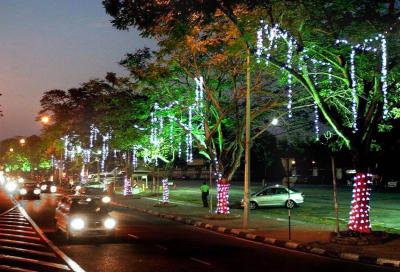
Glowing: Light Street all lit up with LED bulbs, giving the street a vibrant look. Glowing: Light Street all lit up with LED bulbs, giving the street a vibrant look.

FOUR buildings still stand majestically along Farquhar Street today — the High Court, Cathedral of the Assumption, St Xavier’s Institution (SXI) and St George Church, the oldest Anglican church in Southeast Asia.

Farquhar Street is named after Robert Townsend Farquhar, the Lieutenant Governor of Penang from 1804 to 1805.

Work on the original site of the court building started in 1809, and was completed and inaugurated in 1903. It was the work of a team of engineers headed by Singapore-based John Henry McCallum, the Surveyor General of the Straits Settlements.

The Church of Assumption moved to its present site, just next to SXI, in 1857. The church was built by the Eurasian community who had followed Captain Francis Light to Penang from Phuket, Thailand.

Facing religious persecution there, the Catholics, led by Bishop Arnaud-Antoine Gamault, fled to Kuala Kedah before landing in Penang.

They landed in 1786 on the eve of the Feast of Assumption and set up their church on Church Street before moving to Farquhar Street.

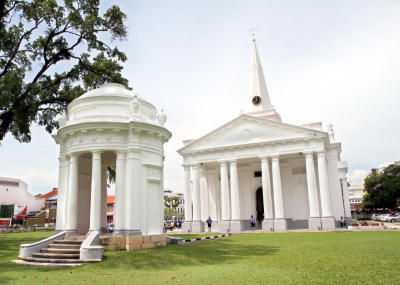
Proud heritage: The newly restored St George’s Church has stood proudly in Farquhar Street for close to two centuries. Proud heritage: The newly restored St George’s Church has stood proudly in Farquhar Street for close to two centuries.

I have lost count of the number of times I went down on bended knees in front of the Virgin Mary’s statue outside the church, praying for divine intervention because I did not prepare myself for the school examinations!

The St George Church was completed in 1818 by the Colonial Chaplain, Rev Robert Sparke Hutchings, who founded the Penang Free School (PFS) two years earlier in 1816.

The current Hutchings School, which is just next to the church and the present Penang State Museum, was where PFS originally began. It was renamed Hutchings School after the founder when PFS moved to its current premises in Jalan Masjid Negeri.

But for today, I shall not talk about my rival school because the biggest impact on my life was SXI, my alma mater. I had my primary and secondary education in that school.

The best memories of my school life remain vivid until today, shaping my worldview, and more importantly helping me forge a great many memories with people of other races.

We were united in one thing — we were Xaverians.

Ironically, SXI started off as a Malay language school in a hut cleared from a jungle in 1787 — just a year after Capt Light landed. It was only in 1825 that an English medium school took shape and was named the St Francis Xavier’s Free School, with the La Salle brothers taking over the management.

I entered SXI in 1968 as a Standard One pupil, and classes began at 1pm. The morning session was for the secondary students only.

The humidity of the tropical Malaysian weather certainly did not help us eager students. Most of us were already soaked with sweat from running around before the assembly.

But those were the best times of our life. It was the time of the beehive hairstyle and butterfly-rimmed glasses, so accurately depicted by Lat in his cartoons. Women teachers came in samfoo or cheongsam and they always looked terrifying to us.

Somehow, many of them were bosomy. I do not know whether it was truly their physique or just our imagination.

But we were just in Standard One, so it could not have been because our teenage hormones were raging uncontrollably.

I had some unusual memories. One Cikgu Nordin, who rode his Vespa to school, taught me Bahasa Malaysia. He was fairly good but had the sadistic tendency of pinching the nipples of students who failed to meet his requirements. I was one of them.

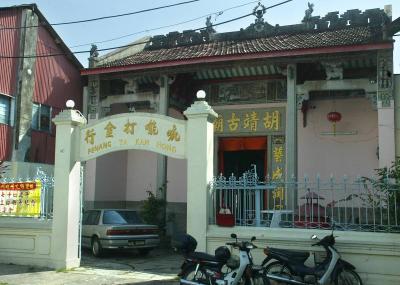
Meeting place: The Goldsmith’s Guild in Muntri Street it is the oldest goldsmith association in the country. Meeting place: The Goldsmith’s Guild in Muntri Street it is the oldest goldsmith association in the country.

But I wished he knew that I went on to study Malay Literature in Sixth Form and in my first year in Universiti Kebangsaan Malaysia, I enrolled in the Malay Letters Department.

SXI has produced many famous Malaysians — the first chief minister of Penang, the late Tan Sri Wong Pow Nee, Opposition veteran Karpal Singh, Cabinet minister Tan Sri Nor Mohamed Yakcop and composer Jimmy Boyle, who wrote the classic Putera Puteri.

The school, for a long, long time, remained the only one in Malaysia with a full-fledged orchestra where students got to learn to play the violin and other instruments for free.

My biggest regret was not picking up any of the skills, thinking it would a sissy thing for me to do so. The school band also, until today, has a corp of bagpipers.

The school canteen had one of the best variety of Penang hawker fare including char koay teow, wantan mee, prawn mee, curry mee, assam laksa, nasi Melayu and mee mamak.

In the 1970s and early 1980s, for 50sen, we could still get a plate of char koay teow with an egg and a prawn.

There was even a dental clinic operated by an assistant within the school premises. It terrified us whenever she came to class to hand- pick a number of us for checks.

The clinic was located next to the Brothers’ quarters, which was out of bounds to us, adding an air of mystery as to how they lived.

Adjacent to Farquhar Street is Light Street, which was the settlement’s first road. It was, of course, named after Capt Light.

According to Khoo Salma Nasution, for his “first municipal act”, Light sank a public well at the end of Light Street — the one-acre Well Estate is now part of the Convent grounds.

Capt Light is said to have stayed to the west of the Well Estate, on the site which is now the St Xavier’s field.

According to her, he lived with his Eurasian-Thai wife Martina Rozells in a bungalow on the site of the SXI field. After his death, she married one John Timmers, and they continued to stay at the bungalow.

The Leith Street Ghaut, located next to the SXI field, used to house several government quarters, and was formerly called Martina Lane, in honour of Light’s wife.

I spent countless hours at the field, where I played football and hockey, and I cannot think of any school where we could just walk to the end of the field to enjoy the sea breeze and watch the waves hit the sea walls. Students were banned from fishing but there were always occasions when the rule was breached!

Then, there were the peeps into the Convent Light Street (CLS) just across the road. CLS is the oldest girls’ school in the country and was founded by three French Sisters of the Holy Jesus Mission who arrived in Penang in 1852. It was our good fortune that the school shared the same field with us.

Inside the school compound stood the Government House which was Light’s former town property.

It housed the Governor’s Office and Council Chambers, wrote Khoo, with the building completed before Farquhar left.

Governor Philip Dundas arrived with a number of staff including a young Stamford Raffles, who was then an assistant secretary.

It is almost certain that Raffles, who went on to discover Singapore, spent a large part of his time attending to his duties at this building.

The side portion of SXI faces Love Lane. It is an attractive, even intimate, name for a road and has given rise to many versions as to its origins.

Until the late 1970s, at least one or two budget hotels were known as brothels.

Some said Love Lane, or “ai cheng hang” as the Hokkiens called it, was so named because sailors used to meet their local lovers there with its large Eurasian community around the church while others claimed the name originated from its association with the local Chinese rich kept their mistresses by the adjacent road, Muntri Street.

In fact, at least one house there had a horse stable. For a while, the stable was converted into rented homes but now, it has become a boutique hotel, appropriately named The Mews. Muntri Street – where the school backyard faces – was also a dropoff point for parents who sent their children to SXI.

The word “Muntri” is said to mean Mentri or Minister in Malay. One version has it that it was named after Ngah Ibrahim, the son of Long Jaafar, who developed the tin mining district of Larut in Perak. In fact, there is also a Larut Lane not far from Muntri Street.

Many clan associations and trade guilds used to be lined up along the street but small hotels have sprouted in this area. These old associations, facing dwindling membership, have found it hard to continue operating.

Young people find no relevance and need for such associations, formed to protect the interest of the early Chinese settlers, but they remain an important part of Penang’s history.

A few of the buildings appear to look like temples as they served dual functions — the trade and religious aspects. They include the Hainan Association Temple, where most of the members were coffeeshop and restaurant operators. They were the ones who would run the Dragon Dance performances.

The Cantonese dominated the Goldsmith Association, or ta kam hong as it is still called. Founded in 1852, it is the oldest goldsmith association in the country and dedicated to Wu Ching, the deity of goldsmiths.

The best part about growing up in Penang is that George Town’s history truly comes alive in our surroundings.

Related Stories:
Readers write

The lost middle ground

Depending on which side of the political divide you are on, they both seem to have supporters and detractors.

From the way they were cheered on by the students at the forum at Universiti Utara Malaysia, they sure have their set of admirers.

The conventional wisdom is always to listen more, instead of wanting to talk more. But we enter a new dimension when one person lectures, belittles and talks down to another person with countless reminders of “listen, listen, listen”.

In this case, we hope that Sharifah has learnt her lesson. She should listen to some good advice by signing up for a course in public speaking, body language and good etiquette. It’s pretty clear she failed in all these areas.

I am sure most of us would agree that she came across as patronising, condescending and arrogant. In short, the president of the Suara Wanita 1Malaysia sounded like a big bully. The visual of her walking around the floor, taking command while the other panellists looked on helplessly and hopelessly on stage, didn’t help.

Worse, when she pulled the microphone away from Bawani, it spoke volumes of her incompetence as a leader. Her political career, if she has any, has ended and that can be seen from the number of political leaders who have distanced themselves from her.

The low point was when she insinuated that those who do not like Malaysia could leave, which smacks of racism. Worse, there was actually cheering from the floor. Her irrelevant animal analogy convinced me she had lost her plot.

But let’s give Sharifah points for her good command of English and confidence. She probably got high marks for leadership until last week.

Bawani also needs a lesson in public speaking. She is the kind of opinionated person many of us would have encountered at public forums.

Participants are often invited to ask questions and the moderator normally accepts a degree of flexibility by allowing them to express some brief opinions first. Often, we hold our breath and cannot wait for the person to just ask the question, rather than go on and on.

Obviously, Bawani couldn’t wait to pounce on Sharifah. She was in combative mood, as evident from her tone and gestures, and was delivering a ceramah, the result of attending too many opposition ceramah, perhaps. Like a politician, she hogged the microphone and refused to let go.

She turned up for the forum with a fixed mind, and in attack mode, just like Sharifah, who appeared to just want to extol the virtues of the government.

Bawani isn’t the political novice that some Netizens would want to think. She was a full-time personal assistant to a Parti Sosialis Malaysia leader for four years.

She was a familiar face at anti-government demonstrations and, as expected, pictures of her participation and cosying up with PSM leaders were uploaded on the blogs.

Still, let’s give her points for youthful idealism and readiness to fight for the marginalised in our society.

And that’s the problem with most of us. The political divide is so entrenched and deep that there is no reasoning any more. The middle ground is lost. We are incapable of articulating our points in a persuasive and rational manner, preferring instead to shout, as in a ceramah, or to talk down, in the “big brother/sister knows best” attitude.

Looking at the comments posted by their supporters on the Net, the name-calling is incredibly ugly. The hundreds of comments posted are filled with hatred, which speaks poorly for many of us who talk so much about freedom of expression.

Why should Bawani’s Indian ethnicity and Sharifah’s Indian-Muslim background even be debated? This only reinforces my argument that we do not appear capable of engaging in a good debate without indulging in low-level semantics.

Maybe it’s our conservative Malaysian background, our education system where we let teachers dominate the classes, or our political system. But we need to grow up. Perhaps this is part of our growing-up pains as Malaysian democracy finally opens up.

Old pre-war shophouses being turned into valuable properties

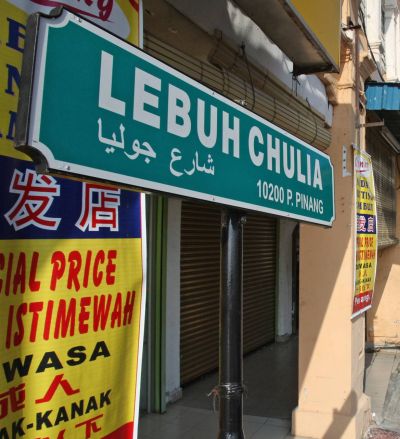
<b>Bilingual:</b> A road sign with Chulia Street’s name written in Bahasa Malaysia and Arabic.” width=”400″ height=”439″ /> <span class=Bilingual: A road sign with Chulia Street’s name written in Bahasa Malaysia and Arabic.

FEW would have imagined that the pre-war houses along Chulia Street are now the most sought-after properties in George Town.

They were once dilapidated, with many of its residents and owners moving to upscale and more respectable neighbourhoods in the suburbs.

But today, savvy professionals from Singapore, Hong Kong and Kuala Lumpur, with an eye for heritage and the arts, are snapping them up.

A property that was valued at RM400,000 was sold at double the price some years back. But these days, the price ranges from RM1.8mil to RM3mil. One old hotel was bought at RM7mil just recently.

(Based on a per square foot rate, the going price now is RM1,200 psf, having gone progressively upwards from RM600 psf in 2010, RM800 psf in 2011 and RM1,000 psf in 2012. A typical pre-war house is about 12 to 14ft wide, and some 60ft in length.)

Not bad for a street that was once known for its cattle pens – to this day, older Penangites still call Chulia Street Gu Kan Tang, or the place where the Indians kept their cows.

The early settlers were mostly traders from Tanjore and Ramnand, both districts in Tamil Nadu, according to one book.

Chulia Street was one of the four main roads laid down by Captain Francis Light as part of his earliest development plan when he founded George Town, the other three streets being Beach Street, Light Street and Pitt Street.
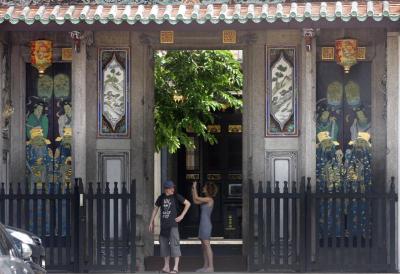
<b>Popular site:</b> Tourists admiring the paintings on the front door of Han Jiang Ancestral Temple ( Teow Chew Association ) in Chulia Street.” width=”400″ height=”274″ /> <span class=Popular site: Tourists admiring the paintings on the front door of Han Jiang Ancestral Temple ( Teow Chew Association ) in Chulia Street.

Historians said it was named after the Indian kingdom of Chola or Chulias, as the inhabitants were known. It was earlier known as Malabar Street, after the Malabari Indians.

But Chulia Street has a personal meaning for me. At the age of 15, my father had to leave his home in Kuah, Langkawi Island, to work in Penang.

Wong Soon Cheong, now 88, had aspired to be a teacher, like some of his childhood friends in Langkawi. They had moved to Penang to study in the famous Chung Ling High School before joining the teaching profession. He too wanted to join them.

But his life was to take a different path.

His father, who had landed in Langkawi from Kochow, then a small agricultural place in Guandong, China, was too poor to help his son fulfil his dreams.

Instead, Wong Ah Fook told his son to leave the island to search for a job. It shattered my father’s dream of becoming a teacher.

It is still a mystery as to why my grandfather began his life in this country as a farmer in Langkawi, presumably thinking he had arrived in Penang.

I hardly have any recollection of my peasant ancestor as my father has been reluctant to divulge any bits about him.

So my father arrived alone in George Town with just a bag and a shirt on his back. He found a job as an assistant in a hardware shop. He slept in the shop at night – it was either his boss’ act of kindness or his way of exploiting him.

He had his share of ghost stories, including one eerie encounter with his boss shortly after the latter’s death. But even after that, dad continued sleeping alone in the shop.

Wong Soon Cheong, who is fluent in Malay, with a thick northern accent, taught himself to read and write English while he improved his command of Chinese.
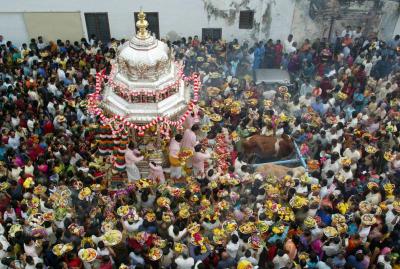
<b>Major festival:</b> The crowd surrounding the silver chariot as it stops in Chulia Street Ghaut during Thaipusam.” width=”400″ height=”269″ /> <span class=Major festival: The crowd surrounding the silver chariot as it stops in Chulia Street Ghaut during Thaipusam.

Love blooms at Cheapside

He not only found a job in George Town but also found love. Just off Chulia Street, there was — and still exist — a lane called Cheapside. The lane is named after a street in London that links Newgate and the Bank tube station. Cheapside used to be meat market during the medieval times but is today known for being a flea market in modern London.

My mother, Yeoh Poh Choo, now 82, stayed with her parents and three sisters at a pre-war house which still exists today. The father owned a stall selling hardware at Cheapside.

My father took over the business from his father-in-law, Yeoh Boon Kee, not long after he married Poh Choo. He was 25 and my mum was only 18 years old then.

As Yeoh did not have a son, my father, his son-in-law, was the best person to run the business. The catch was he now had to financially support the entire in-laws, including Yeoh’s wife Neoh Ah Lan.

It was a heavy burden as not long later, he had to take care of his own four sons, the additions to the family. He also had to take of his mother, Chow Ah Sam, who had come to Penang to join his son.

The house off Chulia Street was hardly the best place to grow up. The place was dirty, smelly and dusty. The people who stayed there were rough with many of the children swearing openly. Most fared badly in schools and ended up as stall hands, or as triad members.

It was very much a working class neighbourhood. There were no modern toilet facilities and the people had to use the bucket system. The night soil — or human waste — collectors were mostly Chinese immigrants and while they earned an honest living, the job was surely demeaning.

Ironically, despite the term “night soil”, collection was done in the morning.

It may come as a shock to many but until the early 1980s, there were still some parts of Georgetown which had no flush toilet system.

I was lucky. The rubber boom, in the 1960s, saw a demand for rubber tapping knives and my father’s financial status improved sharply. He bought a double-storey linked house in Jalan Kampung Melayu, Air Itam.

But I still spent a large part of my childhood in Chulia Street. There was the famous wantan mee stall at a coffee shop at the junction of Chulia Street and Carnarvon Lane. And after my father closed the hardware store in the evening, a hawker selling char hor fun or fried rice noodles would take over the area. Down the road, at Sky Hotel Coffee Shop, the best char siew (barbecued pork) and roast duck still taste as heavenly as they did 40 years ago.

The past lives on in the present

At night, one side of the road was transformed into a food haven and it was certainly a sight and smell to remember as the locals, backpackers and honking vehicles jostle their way through the narrow street.

In some strange ways, nothing much seems to have changed. The children of these hawkers have taken over the trade but their fathers, much older now, are still around to keep watch. Likewise, my brothers — Chun Sang, my eldest, and Chun Keong, my second brother, still run my father’s hardware stall.

As with any old city, there is always a myriad of alleys and lanes connecting the main street. These lanes became my playground and allowed me to escape from my grandmother’s watchful eyes.

Carnarvon Lane, or kam kong lai or “within the kampong” to the Hokkiens, is a road off Chulia Street leading to the Campbell Street market. There used to be a Malay village then, according to historical documents, which ran until Malay Street and Armenian Street but nobody would have imagined that today.

Chinese sundry shops still line the road with a thriving morning market but the shops are fast becoming a thing of the past as modern air-conditioned supermarkets take over these mom-and-pop joints.

As a child growing up there, I had to run errands for my mother buying condiments or ingredients for her cooking from these shopkeepers.

My childhood memory of breakfast in Penang is particularly strong in Carnarvon Lane. I could not resist the dim sum shop there where I bought my lor mai kai or steamed glutinous rice.

The street was named after the 4th Earl of Carnarvon, Henry Herbert. He was the Secretary of State for the Colonies, or simply the British Official in charge of the colonies from 1866 to 1867.

The town and county of Carnarvon were located in the principality of Wales. He was a prominent member of the Conservative Party and the Lieutenant of Ireland.

Another adjacent road is Chulia Street Ghaut — which was actually a reclaimed street leading to the shoreline. The narrow path was filled to enable people to have easier access to Weld Quay during the 19th century. It was also a landing spot for firewood supplies, thus the name “chha lo thau” or literally, firewood landing place, to the local Chinese.

Chulia Street has continued to keep its cosmopolitan and colourful flavour. From the early Indian settlers to the thousands of backpackers of the hippie days in the late 1960s and now the new property investors, it’s never dull.

Readers write

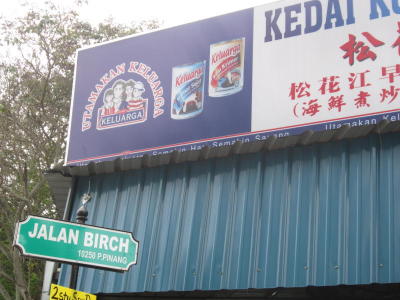
I was in Gurney Drive, Penang, recently and came by Birch Road. My immediate reaction was to compare it with Birch Road in Kuala Lumpur which has since been renamed Jalan Maharajalela. Can you tell us about who this Birch is? – Klang Valley Penangite
Chun Wai replies:
Interestingly enough, one reason Penang was awarded the Unesco Heritage status was that it managed to maintain much of its old road names, unlike in other parts of the country. Birch Road in Penang, according to my research, is named after James Kortright Birch, Resident Councillor of Penang from 1905 to 1906 who had, over various periods from March 1897, served as Acting Resident Councillor. The more famous Birch Road in Kuala Lumpur was named in honour of the popular Sir Ernest Woodford Birch and not the infamous first Resident of Perak, James Wheeler Woodford Birch, as many commentators had erroneously stated. The road has since been renamed Jalan Maharajalela after Dato’ Maharajalela, the local Malay chief who was partially responsible for JWW Birch’s assassination in 1875. That the road is now named Jalan Maharajalela may seem like poetic justice but Ernest Birch was actually a one-time Acting Resident of Selangor before becoming the eighth Resident of Perak (1905-1910).

If you have queries on the streets of Penang, or want to share your own snippets, email to mystory@thestar.com.my


An unholy mix

What started off as a Christmas message by DAP leader Lim Guan Eng is now in danger of pushing the country into deeper polarisation. He could not keep politics out even during a religious festival.

The DAP politician had asked that Chris­tians in the peninsula be allowed to use the word “Allah” in the Bahasa Malaysia version of the Bible.

His statement has given rise to much speculation with many believing that Lim made the remark with political intentions – to lock up the Christian vote, especially among the Chinese electorate, and hopefully raise the political temperature among the Christian bumiputras in Sabah and Sarawak.

The issue is not new. There have been many efforts by various individuals to untangle this tricky issue. Religion is always sensitive and emotional, as with all matters dealing with faith. There’s no right or wrong and it is often impossible to look at such matters objectively.

It is a fact that Christians in Sabah and Sarawak have long used the word “Allah” in their worship and Scripture. That has already been established, recognised and accepted.

In the peninsula, some older Baba Christians referred to God as “Tuan Allah” but that is not widely practised. Still, such references are customary and based on cultural rather than religious factors. I am told that the Scripture for the Sikhs also contain references to “Allah”.

Again, such references have been made for a long time, and there has never been a controversy because no one has attempted to make a political issue out of it. It has been a case of live and let live.

Similarly, the fact remains that in most churches in the peninsula, where the services are conducted in English, Mandarin (and other Chinese dialects) or Tamil, the word “God” is mainly used. It is unlikely that the word “Allah” would be used and in most churches, such references would not be made simply because most Christians themselves would feel uneasy if the word “Allah” is used.

But we do have to take note that in the peninsula, there are also church services conducted in Bahasa Malaysia for Sabahans and Sarawakians, as well as for Indonesians, and “Allah” would be used in this context.

Realistically, it is almost impossible to charge any non-Muslim for using the word “Allah” when they pray and, given the complexities of our plural society, no one in his right mind would want to aggravate the situa­tion.

The stand and feelings of the majority Muslims must also be understood and taken into consideration. Many feel uneasy that Christians want to use the word “Allah” and the fact that in PAS, the leaders are split right down the middle on this issue speaks volumes of this controversy.

But today, many churches have become politically charged, and they are standing up for the interests of the Christians whom they believe have not been properly given due respect, especially in their dealings with government officials at federal, state and local government level.

Some pastors and priests have openly used their pulpits to criticise the government on Sundays and on weekdays, many turn to their Facebook to voice their grievances as well. Like the Umno members who once faced the wrath of PAS leaders for working with the MCA and MIC, many Christians who do not support Pakatan Rakyat have been openly humiliated in the various social media.

Many DAP elected representatives are active Christian leaders too, with a few playing the role of lay pastors. Public forums, in the name of educating Christians about their voting rights, are sometimes just a front for a pro-Pakatan Rakyat forum.

Not many are prepared to admit this, and this writer often bears the brunt of such open expression by many churches, both Catholic and Protestant.

I think it is important that no one gets carried away with their e-mail, tweets and FB postings over this issue. Speak with reason but always show respect and sensitivity for the views of others, including the Sultan of Selangor who is responsible for the affairs of Islam in the state.

In the run-up to the general election, which is just weeks away, the politicians will accelerate their campaign to fulfil their ambitions. Everything they do will always be in the interest of the people and never for themselves, so they claim.

It is incredible how many accept the words of some politicians and bloggers as the gospel truth. There are many religious leaders who seem to have forgotten that God is their Saviour and not some selfish, ambitious politician.

Some have treated their sermons like ceramah, the result of attending too many political gatherings perhaps.

Regardless of how we call God, it is important that we focus on our commonalities in serving Him. We are to be His faithful servants and we should be more worried about whether we have grown in our faith, rather than becoming better campaigners or cyber troopers for some politicians.

Sex in the city

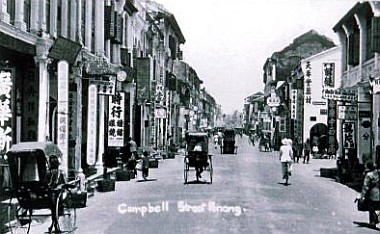
Good ol’ times : An old postcard showing rickshaws plying Campbell Street in Penang from the book ‘Penang – Postcard Collection 1899-1930’. — Courtesy of Malcolm Wade Good ol’ times : An old postcard showing rickshaws plying Campbell Street in Penang from the book ‘Penang – Postcard Collection 1899-1930’. — Courtesy of Malcolm Wade

THANKS to the old Penang’s status as a bustling metropolis and port, the island was already exposed to foreign culture long before the rest of the country. From hotels, where social events were held, to seedy bars for lonely sailors, Penang had it all.

George Town was in fact conferred city status by Queen Elizabeth II in 1957, making it the first town in the country to achieve city status — which explains why many Penangites are not overly excited with the need to apply for city status today.

In short, it was a real happening place. And right in the heart of it all was Campbell Street, which was a new road created between Pitt Street — now renamed Jalan Mesjid Kapitan Kling — and Penang Road in the mid-19th century.

Campbell Street is named after Sir George William Robert Campbell, who was also the acting Lieutenant Governor of Penang between 1872 and 1873.

According to local historian Khoo Salma Nasution, for the local Hokkiens, sin kay or new road, by way of pun, came to refer to the fresh prostitutes or “new chickens” brought in from China to fill the courtesan quarters along this street.

Campbell Street, with its many goldsmith and textile shops, was a shoppers’ paradise from the 1960s to the early 1980s. But it had a reputation for being a red light district even much earlier, and flourished as one until the war.

“The houses of pleasure were identified by red lanterns hung at the door. Senior citizens recall these dens as places to relax and enjoy a range of services. The well-dressed, well-mannered courtesans served opium, tea and liquor, and provided musical entertainment and companionship,” Khoo said.

But George Bilainkin, who was appointed as editor of Penang’s English newspaper The Straits Echo, in 1929, had a less romantic description of Campbell Street. The brash and young Briton reported that in many of these brothels there were prostitutes “as tender an age as 10 or 11 are to be found. Sometimes they are sold by their mothers and grandmothers for as little as £10.”

He wrote that “European residents in northern Malaya are careful not be seen anywhere near these houses, but visitors are not so discreet and, at times, the police have exceptionally delicate tasks to perform.”

Present time: What Campbell Street looks like now. Present time: What Campbell Street looks like now.

It is clear that the old Penang wasn’t just exotic but truly erotic.

Most present-day Penangites are probably unaware that from the late 19th century to the 1940s, before the war, there was a sizeable Japanese community in that part of town. To be precise, in 1910, the official census counted 207 Japanese residents in Penang, mostly poor settlers trying to find fortune in the lively port city.

According to researcher Clement Liang, many of the Japanese were involved in the flesh trade, with 28 such “business establishments” recorded with four male staff and 126 females.

Many of these prostitutes came from Kyushu, the Shimabara peninsula located in Nagasaki prefecture, particularly in the impoverished areas of Karayuki-San in Japan.

“Today, visitors to Tennyo Temple, a Buddhist shrine in Kyushu can witness hundreds of stone pillars engraved with the names of Karayuki-San, former places of occupation and the amounts of donation. The word ‘pinang’ is featured prominently on many of the pillars there, a testimony to Penang’s past link with the Karayuki-San which originated from this area,” Liang wrote.

He wrote that many of the farmers’ daughters were sold overseas as prostitutes with false promises of decent jobs.

Campbell Street is connected to Cintra Street or Jipun Kay while the nearby Kampung Malabar, so named after the Malabars from southern India, was known as “Jipun sin lor” or the Japanese New Road, with reference to the Japanese-run brothels and small sundry shops.

“The locals could recall that Cintra Street was a favourite place for the foreigners and non-Chinese looking for sex because the Japanese prostitutes did not turn them away like the Chinese do. These Karayuki-San were deemed cleaner as they inspected the client beforehand and refused those whom they saw carrying diseases,” Liang wrote in his paper on the pre-war Japanese community of Penang.

But by 1920, the Japanese government through collaboration with the British administrators who were concerned with the epidemic spread of venereal diseases, began to abolish this flesh trade and forced the Japanese prostitutes to leave the Straits Settlements and the Malay states.

“Most of them were repatriated to Japan for good and for those who refused to return, they either went “underground” and turned to sly prostitution or married locals to stay on,” he wrote.

Not all Japanese were involved in immoral activities, with the records showing many ran dental clinics, dispensaries and photo studios.

The Japanese were among the first groups to bring in the silent movies to Penang. One silent movie cinema owned by the Japanese was operating in Kuala Kangsar Road, near the Komtar building.

But all the excitement in Campbell Street is gone today. With the emergence of the many shopping malls in Penang, there are few reasons to shop at this once colourful and vibrant street.

Even the efforts of the Penang Island Municipal Council to build a RM2.3mil pedestrian walkway failed to bring life to Campbell Street. At night, once the shutters come down, the street is quiet and distinctively lonely with little life.

For this writer, the only chicken that makes him want to go back to Campbell Street is the one served at the century-old Indian Muslim Hameediyah Restaurant. The fried chicken and curry chicken dishes are among the best I have eaten.

And I do have many fond memories of this street. It was at one of the jewellery shops that I bought two tiny diamonds worth RM1,000 – a hefty sum then for this salaried man — for our wedding rings.

I can no longer recall the name of the shop and it has not become an issue during Valentine’s Day, which happens to be our anniversary, because my wife has forgotten too.

My mother, Yeoh Poh Choo, grew up in nearby Chulia Street, and was naturally a familiar face in the area. She used to shop for food at the Campbell Street wet market and we were always amazed at how she came back with such good bargains and occasional freebies, either some extra meat or prawns, thrown into her basket.

The Campbell Street wet market continues to be popular today and its Victorian-style architecture has provided its facade with a heritage image, similar to the Covent Garden in London.

I also remember the many hawkers who ply the street in their three-wheeled vehicles, including the kueh kak seller (fried carrot cake) who was arrogant because he always had a long queue of customers, to the curry mee seller, who would always have her entire brood with her.

Back in those days, my mother bought her own textiles to make clothes and she would bring me along. And to prevent me from getting bored, she would treat me to the dried and pickled fruits from a shop there.

All these memories and more are good enough reasons to still visit this historically-rich street each time I am back in my hometown.

Troubling diatribes

The more agitated they become, the angrier they turn against the government and everyone else around them. Their entire day is spoiled and, presumably, they would also blame the government for that.

Anyone who disagrees with their views are called names, cursed and rubbished. And they do this even as they extol the virtues of the freedom of expression and respect for individual views in the same breath.

Exiled blogger Raja Petra Kamaruddin was hero-worshipped and everything he wrote was deemed the gospel truth until he started questioning some opposition leaders. Overnight, he lost his legions of fans who not only turned against him but also called him all kinds of names.

Last week, someone posted on Twitter that Jakim had declared the coffee at Starbucks to be haram. No one took the trouble to check the authenticity of the claim that some coffee beans from South America could be religiously unclean. Instead, there was a barrage of criticisms against the religious authority which soon turned into an anti-government session.

And the problem with such diatribes on the social media is that even if an inaccuracy is corrected on one site, many would have shared this piece of false news elsewhere. Many of us are not surprised when old controversies resurface after a long time simply because along the sharing loop, there will be someone who will happily pass on anything critical even if it is no longer hot.

Some of the pro-government supporters writing on the social media platform are no better. They seem incapable of arguing their case in a rational manner and, often, the arguments take on a racial angle.

Many seem oblivious to the fact that dissent is part of democracy and differences in opinion are to be respected.

Some of these supporters narrowly champion the interest of one component party, forgetting that the other component member parties are equally important. That’s how divided the country has become.

The inability to articulate one’s views objectively and in a mature manner is troubling. A glance at the comments posted on the various news portals would show the level of shouting, not debate, that is taking place. They seem to have become the gathering point of like-minded people with the same political bias, prejudices and viciousness too.

Many hide behind their anonymity but are quick to condemn writers who dare to put their names to their works as cowards if they do not share their views. How ironic indeed.

These are the people who read the same blogs and news portals every day, nodding in agreement as they do so and believing that the whole country not only shares their political views but also actually support their stand.

Their idea of objectivity is one that reflects their world view while the opposing views are to be dismissed. Everything seems to be either white or black. There’s no middle ground or readiness for reasoning.

In places of worship, prayers by some religious leaders have become skewed and their measure of “ethical and righteous” leaders are actually based on their personal political beliefs.

They are not ashamed to post their rantings daily on Facebook, forgetting that as religious leaders they have a certain degree of responsibility to their followers who come from both sides of the political fence.

Such obsession with politics seems to have overtaken their spiritual priorities as they become cyber troopers, unknowingly serving the interest of the politicians first instead of their flock who need spiritual guidance.

They evoke the Scriptures to justify their political campaign and unashamedly use God’s name, as if God is telling the congregation, via these religious leaders, who and how to vote.

There are two things one tries to avoid at social gatherings – religion and politics. But with the general election just weeks ahead, it has become more difficult to avoid these topics.

My dentist talks about politics to me as I hold tightly to the dental chair with the buzz of the drill ringing in my ears. My stylist not only cuts my hair but feels he also has the right to share his political views with me.

Even the Myanmar man who runs the prawn mee stall talks politics. But, thankfully, it’s only about Aung San Suu Kyi and the generals.

Penang’s rich history unfolds

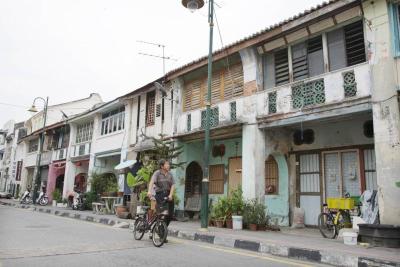
Rich in culture: Armenian Street was once home to prominent Armenians whose touch in architecture and business can still be felt in Penang today. Rich in culture: Armenian Street was once home to prominent Armenians whose touch in architecture and business can still be felt in Penang today.

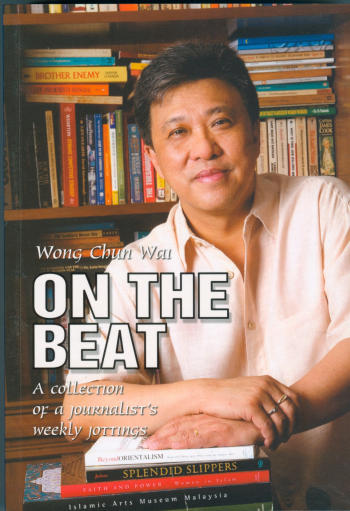
Wong Chun Wai may have left Penang more than two decades ago to settle down in the Klang Valley. But his heart remains in his hometown. Now, in this column aptly titled Penang’s History, My story, Chun Wai makes the streets of George Town come alive by taking a walk into the past to unravel the personalities and events that made Penang what it is today. It is history, and also his story, as the writer juxtaposes the stories with those of his growing-up years in the heart of George Town. The weekly column begins today in StarMetro.

MORE than ever, the stories behind all the street names lining George Town need to be told. Unlike most major towns in other states, the names of roads bearing the original names of colonial administrators, Malay leaders, Chinese tycoons and Indian traders have remained unchanged.

Yet, it would not be wrong to assume that the lovers, strolling along Gurney Drive, hand in hand, are unlikely to have any idea who is Henry Gurney. Or care.

Henry Gurney was a British High Commissioner who was ambushed and killed by the communists on his way to Fraser’s Hill, but that’s another story.

The motorists passing by Farquhar Street daily probably do not see the need to find out about Robert Townsend Farquhar, who was a Lieutenant Governor — a senior colonial officer, who was a representative of the Queen.

But there is also romance, err sex, in history. There is Love Lane. Some said Love Lane, or ai cheng hang as the Hokkiens called it, was so named because sailors used to meet their local lovers there, with its large Eurasian community around the church while others claimed the name originated from its association with the local Chinese rich who kept their mistresses by the adjacent road, Muntri Street.

In fact, at least one house there had a horse stable. For a while, the stable was converted into rented homes but now, it has become a boutique hotel, appropriately named The Mews.

And who is the Muntri or Mentri that was so important and powerful until a name was referred to this man?

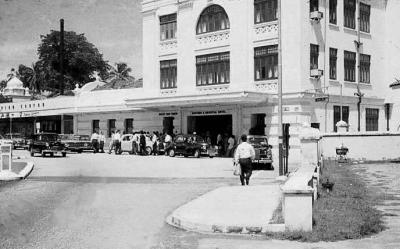
Still standing: The Eastern & Oriental Hotel in Penang in 1950. It is founded by the Sarkies Brothers. Still standing: The Eastern & Oriental Hotel in Penang in 1950. It is founded by the Sarkies Brothers.

This is a weekly column to share my passion for the history of Penang, my hometown, and where my heart is still is although I have lived and worked in the federal capital for the last two decades.

I have made it a point to return home at least once a month to see my parents, who are already in their 80s, and they remained an important reminder of my roots.

The history of Penang has always been fascinating, not just to Penangites, but Malaysians in general. That is why, this column, will not only be published in Penang but also in the Metro section of the central edition.

History, as the name suggests, is about His Story. Unfortunately, most of us can only recall nightmares about how our history teachers forced us to take down long notes and memorise useless dates, which has no bearing to our lives!

Bad history teachers and bad teaching methods killed all our enthusiasm because our teachers forgot that history is about telling interesting stories to keep our attention, so that we learn how people used to live their lives and how we should learn from the past, so we would not make the same mistakes as they did.

This column seeks to talk about the personalities behind the names of the streets in Penang and it is also about my story — of how growing up in Penang, during the 1960s and until my adulthood of the 1980s, were like.

Thanks to people such as Khoo Salma Nasution, who remained a source of inspiration for me and for wanting to share our love of Penang history.

Her book, Streets of George Town, Penang, has gone to the fourth edition, and will be a major source of my work.

Then there is Dr Neil Khor, a former colleague, who is now instrumental in helping to make the heritage of Penang alive.

But much of the researched work for this column is based on the work of my colleague, Ronald Byrne, who ran a weekly column, called The Old and The New for The Star, in its northern edition in the 1980s.

He took the trouble to produce old pictures of the streets and ran them along the scenes of the streets, as they are today.

The postcards were contributed by Chan Guan Fook, who has a huge collection of these vintage post cards.

Thanks to the Internet, there are many amateur historians who have blogged about the history of these personalities who made Penang what it is today.

Ex-Bernama journalist, Syed Imran Syed Ahmad, has painstakingly written much about the streets of Penang via his kudaranggi.blogspot.com site, which I like to credit as another source.

This fresh attempt hopes to rekindle interest among young Penangites and the state’s leaders — on both sides of the political divide — who have made Penang their home.

In this journey, join me in the walk through the heritage trail where this writer hopes to learn more about our past from you as well so that the present and future can be more meaningful and interesting!