Monthly Archives: April 2013

Incredulously ridiculous

IT’S incredible how some of our politicians can say the most amusing and ridiculous things with a straight face.

Surely there must be plenty of self-restraint, or a total belief in oneself, for them to be able to deliver the most outrageous statements without breaking into laughter themselves.

The most laughable remark in recent days must be that of former MIC president Datuk Seri S. Samy Vellu who announced that he was a winnable candidate for his former Sungai Siput parliamentary seat. In fact, he even used the words “without a doubt” to emphasise his winnability status.

With due respect, I think I can safely say that half of Malaysia would prefer that the 77-year-old retired politician continues in his present role as the country’s special envoy to India and South Asia for infrastructure.

And then there was Datuk Chua Jui Meng, who’s entering the fray in this general election, reportedly declaring himself as “young” too.

The 69-year-old former Cabinet Minister used to sing praises of the Barisan Nasional but after losing a series of party elections, he decided to change his party uniform, sing a different tune, and has now become the Johor PKR chief.

Obviously, the DAP grassroots in Johor, who used to cross swords with Chua, have not forgiven him and thus would find it difficult to campaign for him, even if the order came from the national Pakatan Rakyat leadership.

This is the irony. This general election will see over two million new voters, mostly young ones, who could end up voting in the oldest politicians.

Datuk Nik Abdul Aziz Nik Mat, for example, is already 82 years old but still regards himself as indispensable. He is for sure a winnable candidate as he still retains his popularity but it must be pretty comical when he calls for changes in the federal government and political landscape when nothing has changed in Kelantan politics.

He too deserves a special mention for his remarks that Muslims who vote for DAP will get divine merit or pahala as DAP has accepted Islam. I wouldn’t want to comment on a religious matter but, seriously, this one sounds more political than religious.

In DAP, Lim Kit Siang is 72 while Karpal Singh is 73. They have been in politics before many of us were born and they are still around. Yes, the two are calling for change, too.

Old-timers also exist in the Barisan Nasional. Datuk Seri Rais Yatim is 71 while Tan Sri Nor Mohamed Yakcob is 66. They are good in their jobs, although some may disagree, but, seriously, they should consider moving on with their lives. Life is short. They shouldn’t waste their twilight years in government and in party politics. They should use their precious time to spend with their loved ones.

The proposal to give each political party 10 minutes to talk about their manifestos also had many Malaysians laughing. A clarification was then made to say it was actually 10 minutes each session in a series of programmes.

We are not sure whose brilliant idea it was but – you guessed right – there were no takers. I am sure even the Barisan component parties are not keen to take up this 10-minute slot.

Then there is Datuk Seri Anwar Ibrahim, who is already 66 years old but still harbours hopes of wanting to become the next prime minister of Malaysia.

It is probably his last shot and if it doesn’t happen, then this is the end of his political career. But we have to admit that Anwar looks younger and more dashing, unlike Samy or Kit or Karpal.

He looks and acts younger, really. He can say he is “young” and half of Malaysians will believe him. In fact, he can say anything and half of the country will be convinced. And he can also deny anything, and many will stand by his denials.

That’s how powerful he is. Last week, he made another comical remark – he vowed that if he became the Prime Minister, he would “end cronyism”.

Now, that’s funny for many of us older Malaysians who have been around long enough and followed the country’s political and economic developments – that means Malaysians who are 50 years old and above.

The Election Commission has fixed 15 days for campaigning and we can be sure we will be treated to many happy and surely outrageously funny remarks in this period. After all, they are very much the hallmark of Malaysian politics.
British and local bigwigs remembered in the seven-street precinct

Photos by ZHAFARAN NASIB

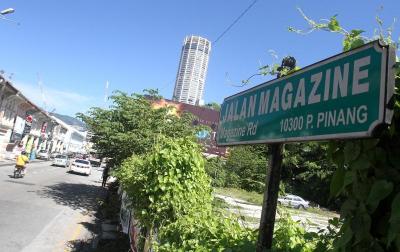
<b>Historical:</b> Magazine Road is one of the main access roads to Komtar.” width=”400″ height=”252″ /><br />
<span class=Historical: Magazine Road is one of the main access roads to Komtar.

IT IS still regarded as a rough, working class neighbourhood. The image of the iconic seven-street precinct has remained very much the same despite development in its vicinity.

The mainly Chinese-educated and Hokkien-speaking residents — who are mostly wage earners, traders and small businessmen — continue to make up the majority here.

According to one report, the houses along the streets were built in the late 19th century as a result of the “the spillover effect from the Francis Light Grid and Carnarvon Street/Prangin area.”

Thus, vegetable farms and wooden houses were soon replaced with brick houses, saw mills, foundries and cottage industries.

When Penang embarked on its massive urban renewal plan in the 1980s, which included the Komtar project that was right at the doorstep of this precinct, the area still remained somewhat of a no-man’s land, where triad activities thrived.

When I started out as a cub reporter at The Star office in Penang, I had to first earn my stripes on the crime beat.

Racing to crime scenes and visiting the mortuary in the middle of the night were part and parcel of work.

But there was also the routine morning press conference at the state police headquarters in Penang Road where the officers would brief us on the crime statistics.

It was common to see small-time thugs being made to squat in the room of an investigating officer attached to the anti-vice and gaming division while the officer chatted with us nonchalantly.

The gangsters, with their tattooed bodies, were more often than not, from one of the streets in the seven-street precinct.

<b>Seventh street:</b> Cecil Street is named after Straits Settlement goverrnor Sir<br />
Cecil Clementi.” width=”400″ height=”255″ /><br />
<span class=Seventh street: Cecil Street is named after Straits Settlement goverrnor Sir
Cecil Clementi.

There was always much excitement in the area. We would occasionally get calls from our police sources who tipped us off on clashes that broke out between rival gangs.

If we were quick enough, we would be at the crime scene to actually witness street fights before the cops arrived.

But in all fairness, many of the children of the original residents have done well in their lives. Often, with good education, they were able to move up the social ladder and lead transformed lives when they moved out of the area.

On a trip to Penang two weeks ago, I took a drive around the area. It is really a safe area despite the tough neighbourhood image of its past.

It has emerged as a popular tourist spot with its many colonial pre-war homes and shophouses. Although they are not included in the Unesco World Heritage Zone, these houses can fetch the same prices as those in Chulia Street and other surrounding areas.

Apart from sightseeing, foodies can find great food here as well. The duck meat koay teow soup at the Cecil Street food court is easily one of the best in Penang.

All the streets here retain their original names but the fact of the matter is that the locals only know them by their numbers.

Cecil Street, for example, is the seventh street which the Hokkiens call chit tiau lor and I doubt if even the residents know the history behind the person it was named after.

Fortunately, many Penangites and history buffs have taken it upon themselves to write extensively about this iconic precinct on the Internet.

According to blogger Boon Raymond, the seven major streets within the triangular grid or block borders Magazine Road, Jalan CY Choy (formerly Bridge Street) and Jalan Gurdwara (formerly Brick Kiln Road).

The seven main streets are Magazine Road or first street, which was named after the government gunpowder depot formerly located at the present Gama Supermarket. In Hokkein, it is called thau tiau lor or the first road.

Then, there is Noordin Street or the second street, which is named after HM Nordin, an Indian Muslim merchant. He is said to be one of the founders of the Kapitan Keling mosque.

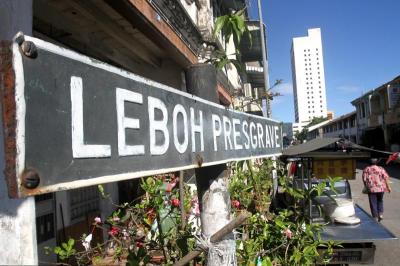
<b>Still standing:</b> Presgrave Street has retained its old signage.” width=”400″ height=”266″ /><br />
<span class=Still standing: Presgrave Street has retained its old signage.
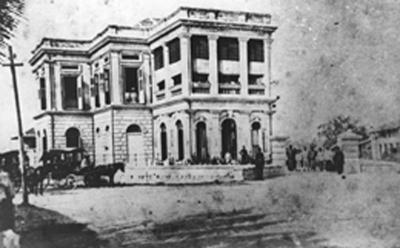
The third street is Presgrave Street — named after Edward Presgrave who founded the law firm of Presgrave and Matthews at Beach Street in 1898.

Presgrave & Matthews is one of the oldest legal firms in the Straits Settlement. According to the firm’s website, Presgrave was educated at the Edinburgh Academy and University.

In Penang, he was the solicitor-general and the president of the Penang Municipal Commission.

Today, Presgrave Street has gained a name for its street food and is within walking distance from Traders Hotel.

The fourth street is Tye Sin Street, which is named after Foo Tye Sin, a commissioner into the 1867 Penang Riots, which saw clashes between the Hai San and Ghee Hin gangs.

Foo was an unusual man of his time. The Hakka tin miner and businessman could speak English fluently as he was schooled at St Xavier’s Institution and Penang Free School. He was even a Justice of Peace.

Colonel Sir Henry McCallum has a road named after him at the fifth street. The colonial engineer of the Straits Settlement also has a street named after him in Singapore. After his stint in Penang and Singapore, he went on to become the Governor of Lagos, Newfoundland, Natal and Ceylon.

The sixth street or lak tiau lor is named after the importing agents, Katz Brothers Ltd which was set up in 1864 by Hermann Katz and his brother.

The brothers supplied pepper and other goods to ships. They did so well that they opened branches in Penang, Sumatra and even London and Frankfurt, according to local historian and publisher Khoo Salma Nasution.

<b>Landmark:</b> Wisma Gama was once the site of the old police station and<br />
gunpowder magazine. —Photo courtesy of Penang Public Library” width=”400″ height=”248″ /><br />
<span class=Landmark: Wisma Gama was once the site of the old police station and
gunpowder magazine. —Photo courtesy of Penang Public Library

The Katz Brothers brought in safe, locks and even sewing machines from Europe, among others, for sale in Penang.

The seventh street is named after another colonial officer, Sir Cecil Clementi, the Governor of the Straits Settlements between 1930 and 1934. He was a governor in Hong Kong prior to his posting in the Straits Settlement. In Singapore, Cecil Street is located near Raffles Singapore.

The Cantonese-speaking official was born in India to Colonel Montagu Clementi, a judge advocate general and his wife Isabel Collard. An Oxford graduate, he studied Sanskrit and classics to prepare himself for a role in the East.

Without doubt, there is plenty of history in the seven-street precinct and it is sad that they remain largely unknown to the residents and Penangites who pass by the area daily.

Just outside the precinct is the eighth street or Herriot Street — named after Stuart Herriot, a British merchant who stayed in Penang since the 1830s while ninth street — Sandilands Street — is named after another British businessman GM Sandilands.

According to Boon Raymond, the Ang Bin Hoey triad society had its headquarters at Sandilands Street.

At the end of December 1945, it was moved to 55, Maxwell Road. The triad society was dissolved in May 1946, but it continued its activities underground as a secret society.

According to an entry in Wikipedia, the Ang Bin Hoey, which is the Hokkien pronunciation of Hung Meng Hooi, was originally a society of the Ang people which was started during the Qing dynasty and was famed for its anti-Manchu activities.

In Penang, it evolved into local triads which gained notoriety for less noble pursuits.

Penang has become a magnet to many tourists because of its history and heritage. It is history that has made Penang such a unique tourist destination.

The federal and state governments should work together to ensure that this heritage is preserved to help Penangites keep history alive, and to remember those who have made the state what it is today.

What a letdown

After all the brouhaha to get Malaysians living abroad the right to vote, only a dismal 6,268 out of over 700,000 have registered as postal voters.

IT’S disappointing, especially after all the brouhaha over giving all Malaysians living abroad the right to vote.

It has now been reported that only a dismal 6,268 Malaysians out of over 700,000 living abroad have registered as postal voters. There are some who think there could be as many as a million Malaysians abroad.

The Elections Commission (EC) had estimated that there would be at least 100,000 or even 200,000 overseas Malaysians who would register.

The criteria are fairly simple – they have to be registered as voters first and have been in Malaysia not less than 30 days in the last five years before the dissolution of Parliament.

Objectively, no one can say that not enough time has been given. The worst excuse I have heard is that the Elections Commission website broke down last week and this made many who are overseas unable to register as postal voters.

This was reported in the pro-opposition Malaysiakini news portal. Surely, if you are seriously concerned with the developments in this country, you would have taken the trouble to register yourself much earlier.

It does not matter if you are overseas or in Malaysia. If one feels so strongly about what is taking place in Malaysia and wants to change the government, the obvious thing would be to ensure the change takes place via the ballot box.

Since the 2008 general election, it has been a long drawn campaign by both sides. Never has political awareness been so high.

That probably explains why there are 2.9 million new voters – all first-timers and mostly below 40 years old – out of the country’s 13 million electorate. That’s one out of five voters taking part in this general election.

It does not matter whether these new voters want to throw out this government or keep the status quo. The most important point is that they believe they can make a difference. They believe passionately that talk is cheap and that they will let their votes do the walking.

The call to allow overseas Malaysians to vote was on the agenda of Bersih, and two platforms – MyOverseasVote and Bersih Global – were set up to facilitate overseas Malaysians to register as postal voters.

Early this year, the EC announced that Malaysians residing overseas, except in Singapore, southern Thailand, Kalimantan and Brunei, would be allowed to apply to vote by post provided that they have been in Malaysia for at least 30 days in total during the last five years.

We have heard the arguments before – there are those who claim that those who have been abroad too long do not understand what is taking place in Malaysia while many overseas Malaysians have ridiculed such arguments, saying that they follow events back home closely via the Internet.

Others suggest that the large number of overseas Malaysians are mostly non-Malays who are critical of Barisan Nasional and are likely to vote for the opposition.

They include many who have migrated because of their unhappiness over the affirmative action programmes that favour the bumiputras.

This argument does not hold water because the reality is that even if Pakatan Rakyat wins, the same affirmative actions will continue. Not even the DAP has dared to ask for these special rights to be removed.

While we do not know if the low number of overseas Malaysians registered to vote as postal voters is due to their indifference or because they still find the procedure cumbersome, the EC must continue to improve its mechanism to ensure a bigger turnout.

The reality is that more and more Malaysians, especially the young, will work overseas because travelling has now become cheaper, faster and easier.

Many Malaysians work in Jakarta, Hong Kong, Beijing, Guangzhou or Bangkok while they keep their Malaysian permanent address.

Many companies have also become more global in their set-up and send talented Malaysians to work in their regional hubs.

Unlike the older Malaysians who packed off with their families for a new life abroad, most young Malaysians are often single and live jet-setting lives.

They are not necessarily the grumbling and whining types who run down Malaysia. They may enjoy life overseas but deep in their hearts, they miss the many good things in this country.

These younger and more mobile Malay­sians keep their minds open and while they are critical, they also make better evalua­tion of the issues.

This will be the new overseas Malaysians in the coming years. Make it easier for them to cast their votes in the coming general elections.

For more election stories, please visit The Star’s GE13 site

Francis Light’s contributions are fondly remembered in history but not of his wife

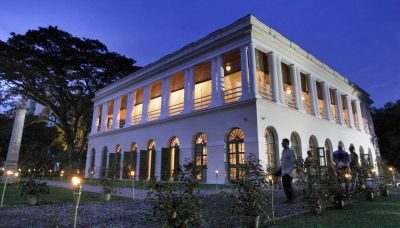
Standing proud: The restored Suffolk House shines brightly in its restored grandeur.

AS A schoolboy taking the bus home, I would pass by the Methodist Boys School (MBS) in Jalan Air Itam almost every day.

I never knew about the existence of Suffolk House, where Captain Francis Light was said to have lived, nor understood its significance.

There was no mention of the mansion in my history textbooks. Furthermore, despite its granduer, it is off the main road, unlike the grand mansions along Jalan Sultan Ahmad Shah or Northam Road. It didn’t help that I had no friends studying at MBS.

But over the past decade, the loud calls to restore Suffolk House and efforts by non-governmental organisations to educate Malaysians about its historical significance, got my attention to find out more.

I finally stepped into Suffolk House a few months ago during one of my regular trips home. An upscale restaurant is now operating at the historic mansion.

The architecture of the 200-year-old building is simply stunning. The ambience and charm of the restaurant was worth the hefty bill that I paid for a dinner for eight.

I had an important guest from Kuala Lumpur with me and there were plenty of reasons to show what Penang has to offer besides street food.

After the last course, I closed my eyes and let my imagination run wild, and a few glasses of wine earlier definitely helped.

It was easy. After all, Light used to hold social gatherings – dances and events — at his residence, so did the subsequent governors of Penang and the Straits Settlements in the 1800s.

But there are now reports that say Light actually lived in a smaller house at the estate. The present mansion was only built much later.

Suffolk House was so named because Light was born in Dallinghoo, Suffolk in East Anglia. The house actually stands on the estate that was originally owned by Light, and where many Europeans stayed on because of their love for Penang.

But that night my mind wasn’t fixed on Light. Until now, each time I think of Suffolk House, questions would cross my mind about his Thai-Eurasian wife, Martina Rozells.

Little has been written about her and yet she probably played a huge role in the life of Penang’s founder.

Flowy script: A letter signed by Light.

Light had met Rozells in Phuket, Thailand because it was his base for over a decade after he failed to convince the British of the importance of opening up Penang, which was an afterthought, in 1786.

Reading up about her life, I could not help but feel a strong sense of sympathy for her. Given her mixed ethnic background, she was probably a beauty but I am not sure she was given a fair deal by the British snobs.

Rozells has been referred to as Light’s wife but it was not clear whether she was his lawful wife or he simply regarded her as his wife. She had five children — three girls, Sarah, Mary and Ann and two sons, William and Francis Lanoon — with him.

When Light passed away in 1794 after suffering from malaria, his business partners, James Scott and William Fairlie, were the executors of his will.

According to some history books, the two transferred Light’s properties, including Suffolk Estate, to their own names and left Rozells in a lurch. In short, they cheated her.

She had to seek justice from the courts. But in the Victorian age, the fact that she was part Portuguese, part Thai and part French, was of no help. There have been suggestions by some writers that she was linked to Kedah royalty then, but this has never been substantiated.

She was a Roman Catholic while Light was an Anglican. In old Penang, the Anglicans reigned supreme. In their eyes, the marriage was not possible nor accepted, if indeed, there was a proper marriage.

In the book, Malaya’s First British Pioneer: The Life of Francis Light, HP Clodd wrote that Light “co-habited” with Rozells at least 22 years before his death in 1794 — as pointed out by historian Ooi Kee Beng in an article.

Interestingly enough, Light did leave Rozells a bungalow on the site next to the St Xavier’s Institution field.

In the book, Streets of George Town, a portion of Light’s will about this bungalow was reproduced:

I give and bequeath unto the said Martina Rozells my bungalow in George Town with one set of mahogany tables, two card cables, two couches, two bedstead large and two small with bedding…. a dressing table and 18 chairs, two silver candle sticks, one silver teapot, two sugar dishes, twelve table spoons, twelve tea spoons, one soup spoon and all the utensils not under the stewards charge to be disposed of as she thinks proper without any limitation. I also give Martina Rozells four of my best cows and one bull….

Ooi pointed out from Clodd’s book, “with little known about her, a shroud of mystery had grown around her over time”.

We do know that she bore him two sons and three daughters, the most famous of the children being William, who was the founder of Adelaide.

The book also mentioned, “Only two years after his death, Light’s estates were fast running into jungle to the certain loss of his heirs and the Company (British East India Company). His son-in-law, a General Welsh who married Sarah Light, would lament in 1818 that his wife’s siblings had lived to see every inch of ground and even his [Light’s] houses alienated from them. Rozells reportedly lived for several years on the land and in the bungalow bequeathed her by her common-law husband, and may have later married one John Timmer.

Rozells was said to have held his wedding ceremony at the chapel in Fort Cornwallis in 1799. It was also said that after the service, the chapel was sealed off until now. No explanations had been found.

We can conclude that Rozells did not live an easy life in Penang. She failed to get her justice in the British-run court.

To keep her mouth shut, the British East India Company reportedly paid her a pension but kept the jewel in the crown.

In the eyes of British officials, Light did not marry Rozells but among the Eurasians and Thai community, she was regarded as his official wife.

It is sad that detailed and reliable information about her is almost non-existent even though she was the closest person to Light.

More information has surfaced over the past months — thanks to the work of Australian historian Marcus Langdon, who wrote that Suffolk House was built by (acting governor of Prince of Wales’ Island) William Edward Phillips. Philips was also the owner of Strawberry Hill on Penang Hill and not David Brown — Light’s partner.

Langdon had also written that Philips was the one who took over the pepper estate belonging to Light, on which stands Suffolk House, believed to have been built by Philips, who was acting governor of Penang in 1817.

In short – Light stayed at the Suffolk Estate but not at Suffolk House. Still, as I sipped my glass of wine at the restaurant on that rainy night, I could feel the presence of these iconic British figures who played a major role in making Penang what it is today.

Blame it on my imagination, the wet weather or simply the wine, but I could feel the many voices telling me to return to Suffolk House. I will, soon.