Monthly Archives: March 2015

No more pussyfooting around

PAS President Datuk Seri Abdul Hadi Awang

PAS President Datuk Seri Abdul Hadi Awang

PAS president Datuk Seri Abdul Hadi Awang is experienced enough to know that the implementation of hudud laws, even in Kelantan, would be ultra vires the Federal Constitution – but the signals have already been sent.

IT’S almost certain that the attempt by PAS president Datuk Seri Abdul Hadi Awang to push for the implementation of hudud laws in Kelantan, via a private member’s bill, will not see the light of day in the current session of Parliament.

The word in Putrajaya is that Hadi will be told that the Dewan Rakyat is busy with other more urgent matters including several other bills in the current one-month session which ends on April 9.

In short, Hadi’s proposed bill to amend the Syariah Courts (Criminal Jurisdiction) Act to synchronise it with the recently passed Syariah Criminal Code II 1993 (Amendment 2015) in Kelantan will not happen.

The statement by Prime Minister Datuk Seri Najib Tun Razak on the hudud issue is also long ready. It is understood that he wants to choose the right timing to state his stand.

It is obvious that Barisan Nasional is enjoying the daily mud-slinging between PAS and DAP, with PKR already indicating that it won’t support the PAS attempt.

But one thing is clear in Putrajaya – the implementation of hudud laws, even in Kelantan, would be ultra vires the Federal Constitution. Or, in simple language, it will go against the supreme law of the country.

PAS and the party’s array of lawyers can argue and try to interpret the laws to suit their stand but, in the end, any implementation of hudud would still need an amendment to the Federal Constitution, which requires a two-thirds majority.

Criminal laws are under the sole jurisdiction of the federal authorities. Even the criminal laws under the Kelantan enactment will need some form of enforcement authority and, as it stands, the only authority is the Royal Malaysian Police.

While the state religious authorities are empowered to enforce specific religious matters, they do not have any power with regard to criminal matters.

It is not the job of PAS leaders to play policemen. It is the job of the Royal Malaysian Police headed by Inspector General of Police Tan Sri Khalid Abu Bakar.

The policemen report to him and not PAS leaders and their state religious authorities, or any self-appointed moral police force.

Kelantan, or any state government for that matter, simply does not have the power or the right to introduce criminal laws. Only Parliament can legislate on such matters, and provide the punishment to go with the offences. That’s what the Penal Code is all about, which is a federal piece of legislation.

What PAS is trying to do, and they know that they cannot do it, is to usurp the power of Parliament.

The Syariah Criminal Code II 1993, which was amended recently, is being revived after 22 years. It has always been there, but the party did not push it at the federal level because it was realistic about its chances of getting enough MPs to support it.

So why the current push? Is it because PAS believes that it now has sufficient clout – together with other Muslim MPs from Umno, and possibly some from PKR – to get the stamp of approval?

Or is it simply because the PAS ulamaks, headed by Hadi, want to make sure that the party president gets re-elected in the coming PAS elections, and in the process strengthen their grip on the Islamist party?

Hadi is experienced enough to know that PAS will never be able to push it through – but the signals have already been sent.

PAS has always been consistent about its hudud and Islamic state ambitions, even if its Pakatan partners, DAP and PKR, seem to want to gloss over this clear fundamental divide. It is also clear that PAS wants to push harder now because of the changing demographics in the country.

The Chinese and Indian population is shrinking and so will its electorate base in the years to come. This is primarily the case in the peninsula. The only bastion against any Islamic agenda seems to be the non-Muslim bumiputra voters in Sabah and Sarawak, with their large number of Christians.

And these two states also control 56 of the 222 seats in the Dewan Rakyat, so they cannot be ignored.

But over in the peninsula, especially in the Malay heartland, Umno is handling the hudud issue cautiously as PAS campaigns along the line that “Hudud=Islam and Islam=Hudud” in the rural areas.

There is no doubt that the religious and conservative side of Islam is on the move and increasing its influence. And the reality is that only Umno, whether we like it or not, can hold back the push by PAS.

Unfortunately, the Chinese and Indian voters were convinced in the 2013 general elections by DAP that the Barisan Nasional government could be toppled at the federal level. In the process, they happily voted in PAS candidates without thinking of the consequences.

The saddest case was in Temerloh where incumbent MP Datuk Saifuddin Abdullah was voted out and replaced by PAS hardliner Nasrudin Hassan Tantawi. Saifuddin, known for his progressive views, is now an active advocate of moderation.

Now, DAP secretary-general Lim Guan Eng has said that the party wants to sever ties with Hadi, but will keep its relations with PAS within the Pakatan Rakyat. In Sarawak, however, the state DAP has declared that it will not work with PAS any more.

For all that bravado, the reality is that PAS is actually inconsequential in Sarawak. But DAP appears to want to play safe at the national level by going after Hadi personally. But whether DAP wants to work with PAS or not is quite irrelevant, even if Hadi is not party president, because the Islamist party has clearly stated its goals.

Is DAP, again, in the next general election going to tell the Chinese voters to vote for PAS and pretend that all is well and fine? DAP has to make up its mind.

Likewise, the Prime Minister also needs to come out strongly on the issue.

Barisan cannot continue the tactical move of deferring any Private Member’s Bill on hudud at every parliament session. The charade has to stop and the best way is to say clearly that Malaysians will not and cannot accept hudud because it is unconstitutional.

This is a multi-racial and multi-religious country. It is a total fallacy and gross misrepresentation for Hadi and anyone, including some misguided Umno leaders, to believe that hudud laws do not affect non-Muslims. Of course, they will, make no mistake about it.

The implications to non-Muslims are clear enough. If anyone missed out on their possible impact in the original 1993 enactment, the amendments that were recently passed should convince them that there is no way hudud can be exclusively a Muslim issue.

Until now, we have not heard any convincing rebuttals from PAS or their supporters other than to be told to stay out of the debate.

It won’t be just Malaysia watching how we deal with Hadi but also the world. Keep our beloved Malaysia multi-racial, multi­cultural and multi-religious. We will not and must not let PAS dictate how we live our lives.

Get it right, we’re all affected

In a multi-racial and multi-religious country like Malaysia, hudud will impact the non-Muslims as well, whatever the assurances given so far.

IF we were to listen to Umno leader Datuk Seri Ismail Sabri and various PAS leaders, they would want us to believe that the hudud laws in Kelantan, if implemented, would not affect non-Muslims in Malaysia. So we should not be worried.

Correction – judging from Ismail’s tone, it was more of a warning to non-Muslims not to “interfere” in the issue. And this is the same person, who also happens to be a Minister, who has achieved notoriety for his controversial rantings recently.

We should be aware that there are some non-Muslim hardcore supporters of Pakatan Rakyat, because of their fanatical anger against the Barisan Nasional, who would also agree with the claim that it does not affect non-Muslims.

Despite such persistent claims that hudud does not affect the non-Muslims, we have to acknowledge the reality that in a multi-racial and multi-religious country like ours, there is absolutely no way that we can separate the Muslims and non-Muslims. Our daily interactions will be mainly for the good, but when crime covered by hudud is committed, there will invariably be cases when both parties are involved.

Which is why the questions will persist over what happens in such situations. In a rape case, for example, it remains unclear how it would be resolved if the victim is a non-Muslim and the perpetrator(s) are Muslims.

How does one get the four reputable Muslim witnesses to prove that the offence has been committed? What if only non-Muslims were witnesses to this horrible crime? How can they testify in a religious court, and how much weight will their evidence be given? And what if there are absolutely no witnesses involved, when it is just the word of the victim against the perpetrator?

These are questions that need to be answered properly, even by people like Ismail. Or should we just shut up and not interfere?

Just take a look at Section 41 of Kelantan’s Syariah Criminal Code (II) Enactment 1993 which states that it only permits direct evidence by just adult male Muslims. A “just” male Muslim is defined as a person who does whatever is required of him by Islam, avoids committing great sins, does not continuously commit lesser sins and also has a sense of honour.

Section 40(1) clearly states that there must be two or more witnesses for every hudud offence listed in the Code, except for adultery and sodomy, where the number of witnesses shall not be less than two.

Again, not only do you need two witnesses, but they must be “just, adult male Muslims.” These particular sections have already been widely discussed by many legal commentators, and even law students.

It should also be noted that while the current issue is with regard amendments being made to the original Enactment, and PAS’ plan to ensure its implementation by moving the Private Member’s Bill in Parliament, the issues have remained unresolved since 1993.

Back in 1993, we all probably saw it as a state issue which will probably not get a federal mandate to allow for its implementation. But now with a stronger PAS at the national level, and the realisation that the Islamist party could also get the support of other Muslim MPs, it is a different scenario altogether.

The problem is that our politicians are so eager to rush through these laws for their own political agenda that they are not interested in explaining to us how hudud would be carried out.

While they claim to pursue this cause in the name of God and Islam, we can’t help but suspect that politics is at play here with powerful religious arguments used to shut down critics and of course, non-Muslims. This is what non-Muslims fear most – that we cannot comment nor criticise anything that affects us because we are not Muslims.

Non-Muslims, if we were to listen to PAS and the likes of Ismail, should just stop debating or even talk about hudud laws.

But from a political perspective, non-Muslims are also responsible for the situation we are in today. The reality is that the DAP campaigned strongly for PAS in the 2013 general election. A huge number of non-Muslims, especially among the Chinese, voted for PAS even if the Islamist party never wavered from its stand that it wanted to set up an Islamic state.

There was only one DAP leader who consistently objected to it – the late Karpal Singh. The other DAP leaders simply glossed over this fundamental issue and pretended that it would never come to pass. And they were successful in convincing the Chinese voters to throw their support behind the PAS candidates and put more of them into Parliament and the various state assemblies.

It also has to be mentioned that the voting trend of the last two general elections was also due to the fact that most Malaysians want a good government. With so many allegations of corruption and abuse of power, it was felt that voting for the opposition would facilitate the creation of a two-party system which would help to keep all the politicians in check.

The so-called liberal stand by some PAS leaders during the election season also helped, but what we see in PAS today is that the conservative ulama leaders, who are also politicians, are wrestling to gain control of the party. Hudud is used to show that they are the real leaders – and this has to be carried out before the party elections.

In Umno, there are some party leaders who have given up on non-Muslim (principally also non-Malay) voters after the last elections. They feel let down and angry that these voters would rather vote for PAS than Umno, despite knowing what PAS stood for.

Against this political backdrop, some Umno grassroots members are saying they would rather gain the support of the Muslims, particularly Malays, even if that means, rightly or wrongly, playing the racial and religious cards. Their argument is that if some Chinese voters can work with and support PAS, why can’t Umno members do the same on an issue that affects them as Muslims and Malays.

Unfortunately, this has given rise to the impression that Umno and PAS are thinking alike but let us not forget that the Barisan Nasional, of which Umno is the dominant partner, is still a multi-racial coalition. Malaysia isn’t just about the Malay heartland in the peninsula but also Sabah and Sarawak, with its huge base of non-Muslim voters. These are the voters who have been loyal to Barisan and are crucial for the ruling coalition to remain in power.

One can understand their concerns when religion, as perceived in the peninsula, becomes the focus. They are watching closely how Umno would handle this issue, bearing in mind how the centre handled the few contentious cases relating to religion in these two states.

And we have to salute the Sarawak Chief Minister Tan Sri Adenan Satem for his open-mindedness, especially his stand that he will never compromise on issues that could disrupt the racial and religious harmony of the people.

On the hudud, it has been reported that he has conveyed the party’s stand direct to the Barisan chairman.

If we need more convincing relating to how hudud affects non-Muslims, just look at some clauses in the recently passed Bill, now officially known as the Syariah Criminal Code II 1993 (Amendment 2015).

The PAS Kelantan government has reportedly retained three clauses that could subject non-Muslims to the Islamic penal law despite its assurance otherwise.

The media has reported that the Bill retained Clause 56, 57 and 58 under the “General” supplementary that provides for hudud and ta’zir (discretionary) punishments for anyone who conspires, plots, abets or assists in the act of a crime.

Clause 58 also provides that those found to have assisted in a sariqah (theft) offence would also be subject to the hudud punishment of amputation, it said.

Clause 56 states that “if the act of crime is perpetrated by a result of or caused by abetment, assistance, plotting or malicious planning, everyone involved in the planning, plotting, assisting or partaking in the malicious plan to perpetuate an act of crime shall be punished by imprisonment under ta’zir of not more than 10 years.”

It was further reported that Clause 57 states that “shall an act of crime be perpetrated by a group of individuals in order to realise a malicious plan, then every one of those individuals involved shall be deemed as guilty as the main perpetrator and shall be punished with imprisonment under ta’zir of not more than 10 years.”

According to some reports, section 46(1) states that circumstantial evidence will not be accepted in hudud offences, except for zina (adultery) and syurb (intoxication), leaving only oral evidence to be admissible.

No doubt the lawyers mounting the challenge to this law will be perusing every detail of the Enactment but for the ordinary people, they have very simple questions that need to be answered.

Certainly we want to know who will actually be enforcing such a law – the religious police or our police. And we have already seen how, even without hudud, the religious authorities conduct themselves in situations when both Muslims and non-Muslims are involved, like in the Borders case.

How will the syariah courts carry out the hearings and what is the view of the Attorney-General? Being the principal legal adviser in this country, he has to be concerned for the rights of all Malaysians. We would certainly like to hear his views and what kind of advice he will give to the federal government should this process go one step further and land in Parliament.

Let’s get the picture right – the hudud laws do affect the non-Muslims, so let’s not kid ourselves into believing otherwise.

I believe and trust in God but I will surely not trust politicians masquerading as theologians and using God’s name.

Let the A-G do his work

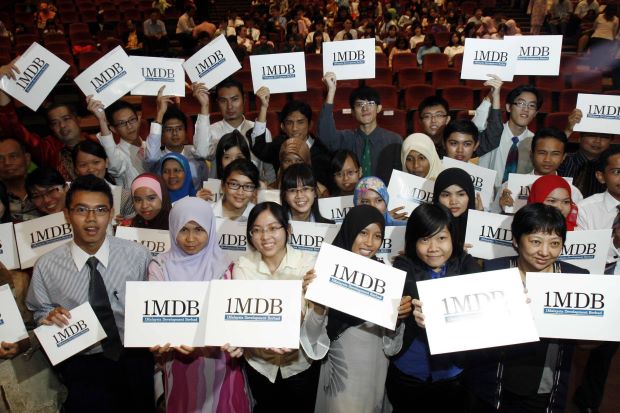
Speed is of the essence but the task force and Auditor-General must do a thorough investigation and leave no stone unturned in the controversial 1MDB issue.

IT looks like Malaysians would have to start learning about accounting terms from now on if they want to make sense of the many news reports on the controversial 1MDB issue.

The accusations and figures bandied around, purportedly involving billions of ringgit, have been mind-blowing to most Malaysians. It is simply beyond the grasp of most ordinary Malaysians who will never get to see that kind of money in their lifetime. After all, a recent report quoting the Employees Provident Fund revealed that 75% of its 14 million contributors, meaning those who are currently employed, earn less than RM2,000 a month.

Until now, the only time we hear of forensic is when we watch those popular TV police programmes showing investigators removing blood and hair samples at the scene where a crime has taken place.

Now we are hearing about forensic auditing, whereby the Auditor-General and a panel comprising staff from the Attorney-General’s Chambers, the Malaysian Anti-Corruption Agency and the police have been entrusted to investigate and give us the answers.

It must not be forgotten that this is on the order of the Prime Minister.

But the task force would need trained personnel with a strong accounting background, and not just any accountant but those equipped with forensic auditing skills. Those with legal and police experience won’t be good enough for this case.

That means going beyond looking at the numbers when examining the state of the company’s finances. They have to effectively reconstruct the books to look at what lurks beneath, just like what the police forensic team would do when they reconstruct a crime scene, where every piece of evidence has to come together to show them the real picture.

One report defined forensic auditing as the application of accounting methods to the tracking and collection of forensic evidence, usually for investigation and prosecution of criminal acts such as embezzlement or fraud.

With 1MDB, there have been allegations of criminal fraud, but these remain mere allegations. Pointing fingers is the easy part. Furthermore, what has been revealed so far relates mainly to an email trail among various individuals.

The purported exchange of email, as well as the content, will be vigorously challenged in any court of law.

From a layperson’s point of view, he will wonder if the name or names of a person or individuals implicated will actually show up on any document. Or will the perpetrators, if any, be smart enough to make sure their names won’t be there?

Certainly, one would be curious to also see the actual paper trail – documents and agreements which may be far too complex for the ordinary person to comprehend.

The task force will have to gather all such evidence first, before they use their forensic skills to determine if any criminal act, or acts, has or have been carried out. Of course, for most of us, all we want to know is who then is responsible.

Whether the 1MDB is a strategic development company or a sovereign fund, the fact remains that it is a wholly owned government entity and public money is involved.

A RM950mil standby credit has been granted to the company by the government. You can call it “facility” or “standby credit” but in simple language it is a loan. And the bottom line is that the money is public money.

The comprehensive audit of this high-powered task force would also need to look at the work done by the external auditors, considering that the company has had three different auditors in five years.

Deloitte, the current external auditor which was engaged by the fund in December 2013, is its third auditor. It replaced KPMG, which had taken over from Ernst & Young.

The reasons for KPMG’s departure remain unclear although 1MDB has contended that the auditor left on the grounds that it could not complete the accounts. KPMG has so far remained silent on the matter.

Malaysians are right to demand for answers and the Prime Minister has rightly called for a full investigation.

The composition of the task force itself, comprising wholly of government officers, may not satisfy the sceptics.

But let us give Auditor-General Tan Sri Ambrin Buang, who has proven himself to be a man of high integrity, the support to carry out the difficult task ahead. He will have to report his findings to Parliament in the end.

As my colleague, specialist editor N. Shanmugam wrote, “Amrin has to do a good job not only on paper. But he must also be seen as having done a good job, considering the various reports that have emerged.”

Another person who would figure prominently once the investigations are underway would be Public Accounts Committee chairman Datuk Nur Jazlan, an accountant who is also seen as another person of high integrity. His fellow Barisan Nasional MPs sometimes say he is “more opposition than the opposition”.

The PAC would need the Auditor-General’s Report as a basis to begin its own investigation into 1MDB, which has raked up RM42bil in debts since 2009.

The PAC chaired by Nur Jazlan, with DAP’s Dr Tan Seng Giaw as deputy, includes five Pakatan Rakyat MPs and six from the Barisan.

The PAC, by parliament tradition, has sufficient clout to call up any witness to get to the bottom of any financial issue involving public funds. The members will surely want to maintain its integrity when it starts its own probe.

Speed is of the essence but the task force and Auditor-General must do a thorough investigation and leave no stone unturned.

It would be better for 1MDB and the political leadership for things to clear up as soon as possible. Otherwise, the controversy will continue, especially in cyberspace where nothing is sacred and lies and half-truths will escape legal action. The Prime Minister has already filed a suit against an opposition MP.

Beyond the financial matters, the issue has become murky and tricky because the 1MDB controversy is also being used to settle political scores.

It’s a minefield out there when not enough is known accurately, or beyond what has been reported and whispered. These allegations may be unsubstantiated but if they remain unrebutted, then there would be serious implications. It is not a very smart way for the authorities to handle this delicate situation.

There is a need for 1MDB to answer these allegations head-on so that Malaysians can decide. Mere denials would not be good enough as Malaysians expect strong answers.

If it is merely bad business decisions or management incompetency, then we should ask for a management audit. Let’s keep an open mind.

The truth needs to be told and the truth will emerge eventually. But meanwhile, let the Auditor-General and task force carry out their work.

Much to celebrate

Malaysia has moved on, embracing and accepting the talents of women. The Grant Thornton International Business Report revealed that Malaysia has the highest number of women in the workforce – up to 40% – compared with other Asean countries.

I AM surrounded by women – in a positive way. Until a few years back, I was the only man in the house.

Now, besides my wife, four other females play a key role in my life – my mother-in-law, daughter, maid and my female poodle. Before my sister-in-law got married, she also lived with us.

These days, her two sons come to my house, which is like a daycare centre for my sister-in-law and her husband.

Both my wife and daughter are opinionated and strong-minded, even stubborn, in many ways. The days of submissive women are long over in Malaysia.

My 23-year-old daughter has set the record for being the first law graduate in three generations of Wongs, and is now chambering with a law firm.

The change in gender composition in my life has been really radical because I grew up without sisters, only three brothers.

It would have been nice to have a sister. I am the youngest in the family but I know my parents wanted a daughter too. In the 1960s, there was no scan to tell the sex of the child before birth, and so it was a lot of guessing and hoping.

Actually, my parents were so sure I would be a girl, a sort of wishful thinking, that they even had an English female name ready for me. That was what I was told, but my parents have never confirmed that little piece of information.

And so when I was born, it was just another son to my father who did not bother to turn up immediately at the midwife’s clinic in King Street, which is within walking distance of the old Star office in Penang.

My male-dominated life continued with my enrolment into St Xavier’s Institution for primary and secondary education. Except for Sixth Form, which is co-ed, SXI is an all-boys’ school.

I played football, spent plenty of time at the river near my home catching fish, and, until my hormones began raging during my teenage years, it was just the company of boys for me.

So, from an all-male home, except for my mum, I moved on to an all-female home in Kuala Lumpur. That’s how it changed.

In many ways, it also indicates how Malaysia has moved on, embracing and accepting the talents of women.

When I first joined The Star as a cub reporter, as the most junior journalist was known then, I was interviewed by then editor-in-chief Hng Hung Yong, the Cambridge and Harvard-trained journalist. He remains a journalist today, and certainly a respected one with his intellect.

That was just after I finished my Sixth Form exams, and I left The Star to continue my tertiary education at Universiti Kebangsaan Malaysia. When I rejoined The Star after I graduated three years later, it was the newspaper’s first woman top editor Datuk Ng Poh Tip who interviewed me.

With her Masters degree in political science, she set new standards in the newspaper, demanding that journalists have better education and research abilities and not just be able to file stories. More women editors emerged by then, including Cheryl Dorall, who became Sunday Star editor in the 80s, the first woman to do so.

Fast forward 2015: The Star has changed. I have stopped counting the number of women editors and journalists in the company. In some cases, the men may think they are in charge but it’s actually the women who run the show, even if they refuse to admit it.

I have had the privilege of working under our first woman managing director Datin Linda Ngiam, who went on to become the first woman director of our media group. Both her roles have been records of sorts in the company’s history.

The Star Radio Group chief operating officer Kudsia Kahar, a well-known radio personality, is also a first, and our group’s Capital Radio remains the country’s only radio station dedicated to women, with huge listenership among professionals.

Of the over 1,500 staff in the company, over 40%, and for sure women, would play a bigger role in the years to come.

Our universities and colleges now comprise 60% to 70% of female student intake, and while some have expressed concern at the imbalance, I really do not see why a predominantly female ratio should be of concern.

Gender should not be an issue; what is more important should be the quality of the graduates our universities are producing. The Grant Thornton International Business Report (IBR) recently revealed that Malaysia has the highest number of women in the workforce – up to 40% – compared with other Asean countries. However, not everything in Malaysia is that rosy as the country reportedly has the lowest number of women occupying senior roles, at only 26%.

Grant Thornton said the data also showed that Malaysia was the third lowest globally to have women on the board of companies as chairman, chief executive officer, chief financial officer, executive and non-executive directors.

Malaysian employers must realise that gender diversity is good for business. Grant Thornton rightly pointed out that “it increases financial performance, enriches brand perception in the marketplace, improves problem-solving, enhances team and individual creativity, as well as boosts employee satisfaction and retention.”

In fact, racial diversity is also good for any company as it brings the best talent out, cutting across gender and race.

I am thankful to be born and living in Malaysia. I wouldn’t want to live in Pakistan, Afghanistan, Saudi Arabia or some conservative society where women are regarded as inferior by misguided males, some of whom use religious doctrines to keep their power.

Such men with their inferiority complex seem to have forgotten the importance of their mothers, grandmothers and sisters in bringing them up.

Then there are those who continue to blame women for their sexual urges, often citing their dressing as being provocative. Some rapists blame the women and try to play the role of victim instead, as in the numerous cases in India, especially in the rural areas where they are sadly deprived of outlets to release their frustrations.

The reality is, even in Malaysia, rape perpetrators are usually known, or even related, to the victims. Many of these cases take place in rural areas and the victims are dressed in conservative clothing.

PAS-ruled Kelantan, despite its strict religious façade, consistently ranks top in the country with reported rape cases and other social woes. The Internet is filled with statistics on the problems in the state.

The International Women’s Day theme for this year is “Make It Happen”, and certainly most right-minded Malaysians believe in making it happen for all our sisters. I don’t have one but for all women, you are my sisters! We will make it happen!

Unity came so easy back then

Good food, great company: Family and friends tossing yee sang for good luck during the Chinese New Year.

Good food, great company: Family and friends tossing yee sang for good luck during the Chinese New Year.

Many of us continue to talk fondly of the past not because we want to relive the good old days but because they remind us about how we, as a young and fledgling nation, could do so well in so many areas of life.

MY family members and doctors banned me from any form of carbonated drinks this Chinese New Year – it is simply ­sugared water to them. Other favourite items regarded as “health subversives” were canned longan from China and barbecued meat, which are really festive ­goodies.

See how much has changed? Those of us who grew up as children in the 1960s would remember that carbonated drinks were also known as aerated water – simply water where air is added.

This was the era of Fraser and Neave, or F&N as it was popularly known. We had only two choices – orange or sarsi, as sarsaparilla is known still.

These bottled drinks came in a wooden crate, which would be sent to our home by the sundry shop delivery boy. It was an occasion to look forward to. A whole ­wooden crate would be regarded as somewhat of a luxury in the homes of Malaysian families in the 1960s.

Very often, cockroaches would be found trapped inside the empty bottles, and we – the children – had to remove these creepy crawlies before the bottles were sold to the Indian man who collected used items such as newspapers and bottles. We already knew how to reduce, reuse and recycle long before the greenies got into the act.

For a long time, I could never understand why my Cantonese neighbour kept referring to these F&N drinks as “Holland water” or “hor lan soi”. It was only in recent years, thanks to easy research via Google, that I understood that it was because F&N had a joint venture with Holland’s beer brewer Heineken to produce Tiger Beer way back in 1931.

F&N was founded by John Fraser and David Chalmers Neave, who diversified from their printing business in the Straits Settlements to pioneer the aerated water business in South-East Asia in 1883.

Sugar-loaded food was encouraged for the Chinese New Year as the superstitious Chinese families believed it would bring sweet memories and experiences in the coming year.

That’s quite a different line of thinking from present-day Malaysia where many of us practically distance ourselves from sugar, which is now regarded as poison.

That was also the time when Malaysia had only eight million people. Yes, we went through 1969, the black spot in the nation’s history, but most of us still have fond memories of the country we used to know.

There were dark clouds in the 1969 ­general election and we had to live through the horrifying consequences. But we also remember the strong bonds with our schoolmates from other races. It was the strong ties that kept us together, even if the nation was on the verge of being torn apart. Five decades later, many of us still keep that special friendship alive. For those with whom we have lost contact, we still harbour hopes that the friendship forged during the growing-up years would be rekindled. We never looked at race and religion as the criteria for friendship. It was simple – the person was either a good or bad person.

It was common for Malay and Chinese friends to sleep over in Chinese homes, and vice-versa, and we took special care to make sure that food sensitivity was respected. There was no need to say anything else. They were all unwritten rules.

This was the time when most Malays did not have to worry about enrolling their children in Christian missionary schools. No one worried about getting converted or getting copies of the Bible. Some in fact took the Bible Knowledge paper in the public examinations. The cross in every classroom in Catholic schools was never a concern.

In fact, it was one former education minister who ordered the cross removed. The irony of it all is that he is now regarded as a popular opposition icon.

And CNY was a time when many of my friends from St Xavier’s Institution in Penang would come to my home – the ang pow were an inducement, no doubt! Before the festival was over, the entire class, regardless of their race, would be coughing, the result of ingesting too much carbonated water and oranges.

The parents of my Malay and Indian schoolmates also had a request – that my friends would return home with delicacies such as kuih bakul and kuih kapit!

It is such a far cry from today, where we now hear divisive remarks from racist individuals and one controversial Malay-Muslim wannabe, as he is known now, which take the joy out of our celebrations. And so we have to listen to those who proclaim that it is not right to offer greetings to fellow Malaysians of different faiths, and to be suspicious even of the food served or the eating utensils.

I do not recall the term “open house” as it is known now. Homes remained open at all times. This was an era where no one made any appointment for a house visit. Malaysians would just drop by any time they wished. Making appointments would be unthinkable, socially unacceptable and even regarded as snobbish.

Most homes did not have a telephone. It was usually the neighbourhood sundry shop that had the telephone, and we had to pay 20 or 30 sen to make a call. And the bonus was that the number also became our number and people could call us there. It must have been a lot of work for the sundry shop owner to be the neighbourhood operator as well.

Chinese New Year also meant going to the cinemas. I grew up in the golden era of the Shaw Brothers with their sword fighting and kung fu flicks, and for some strange reasons, Malaysians nicknamed the Special Branch police the “Shaw Brothers”.

There would always be one or two special movies made for the CNY festival. Even in the 1980s, there were always the Hui Brothers’ comedies to look forward to.

A little discretion was also exercised during CNY. My father, who abhorred gambling, lifted the ban during CNY. The children were allowed to play cards – and again, I also wondered why everyone kept referring to these simple stacks of playing cards as “Holland cards” or “hor lan pai”. Everything seemed to be linked to Holland and no one was able to give me a good explanation then.

Well, it seems these playing cards started in Holland although some said it was introduced to the Dutch by the French in the 15th century. The strict ban my father imposed on gambling certainly had an impact on me and my brothers.

Interestingly enough, that was also an era where Sports Toto draws were actually broadcast live over RTM (with Datuk Faridah Merican as the host) and people bought Social Welfare lottery tickets because they were regarded as charity, not gambling.

There were only two channels in black and white available on TV, and I followed the programmes to kill my boredom but I never got excited.

Many of us continue to talk fondly of the past not because we want to relive the good old days but because they remind us about how we, as a young and fledgling nation, could do so well in so many areas of life.

We had a sense of unity and purpose, we excelled in trade and commerce, we had glory days in sports, and we also had high education standards.

Today, we see so many wrongs in these very same areas where we once had success. We know that when standards drop, and excellence and ethics are compromised, there will be serious implications in the long run.

We appreciate that there is room given for a diversity of views, but at the same time we wonder why individuals and groups who propagate extremist views are not being reined in.

And then we see the growing scourge of corruption in this country where sums involving millions no longer shock us. Compare that to 1983 when the RM2.5bil scandal involving the Bumiputra Finance Malaysia captured the whole nation’s attention. It was regarded as the­ ­mother of all scandals, and a precious life was lost – that of BMF auditor Jalil Ibrahim.

But what is RM2.5bil compared to the losses involving some of our government-linked institutions today? There was a public inquiry into the BMF scandal. We wanted to know what happened and, more importantly, we wanted to make sure that it would never happen again. We wanted proper rules to be set up so that public funds are protected.

But have we learnt anything from the past, or do we even care? Malaysians must insist on answers and accountability from our politicians on how our money is spent – or perceived as lost. It is not their money, it is the people’s money.

Malaysians are demanding answers and they have a right to do so.

The days of trying to sweep everything under the carpet are over. We may know a bit here and there about some alleged wrongdoing, but in the absence of full disclosure, the situation only gets worse. All we want is to see any form of wrongdoing, especially those involving huge sums of public money, eradicated.

CNY isn’t over yet and many of us, including politicians, are busy making the rounds of the open houses.

We hope there will be a spirit of openness in seeking out the truth. Whether one is a visitor or the host, we should be prepared to send out the right message about what the people truly care about.

Our real concerns should not be drowned out by polite talk and good food. This can still be the occasion to truly listen to the concerns of the ordinary people and to make fresh commitments to make things better.