Monthly Archives: November 2016

Who are the real Malaysian heroes?

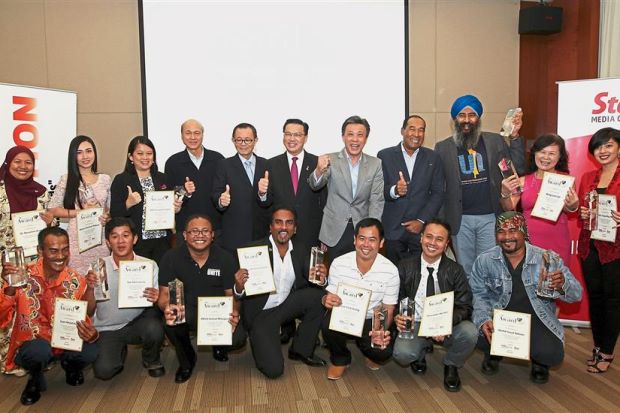
Everyday heroes: (background, fourth from left onwards) Ecoworld chairman Tan Sri Lee Lam Thye, Star Media Group chairman Datuk Fu Ah Kiow, Liow, Star Media Group chief executive officer Datuk Seri Wong Chun Wai and Gamuda Engineering managing director Datuk Ubull Din Om striking a pose for photographers with recipients of the Star Golden Hearts Award 2016 at a ceremony in Menara Star.

TWO recent events have reassured me of how good ordinary Malaysians are, especially those who believe in the spirit of moderation and unity, even as we see ugly displays of racist behaviour around us sometimes.

When we put politics out of way, most Malaysians are able to build on the bond that glues us together as a nation.

Last week, one of my dearest friends and colleague Soo Ewe Jin passed away. At his wake services over two nights, his Muslim friends readily stepped forward and spoke passionately about him from the lectern of the Trinity Methodist Church in Petaling Jaya.

There were absolutely no reservations or awkwardness on their part. They walked right into the sanctuary of the church, listened when hymns were sung and stood respectfully with others when prayers were offered.

They listened attentively to the sermons delivered by the pastor and some even turned up on both nights.

Those in attendance were a multi-racial group, they filled the church to the brim and those who paid tribute to Ewe Jin shared immensely touching and emotional stories of how their lives had been impacted by him.

It was a truly Malaysian setting. It took place in a church but it proved a point – that visiting a place of worship is an ordinary move when we choose to leave out the politics of fear and hatred created by some quarters.

I’m sure our Ewe Jin, a passionate advocate of moderation, was watching from heaven, feeling enormously proud.

The word “moderation” kept cropping up in the two nights the wake services were held, used in tandem with the endless tributes to the “Sunday Starters” columnist who won legions of fans for being so ordinary (although he was ironically anything but ordinary) and for simply reminding us every Sunday of the need to be grateful for what we have.

And when the wake ended, people of all faiths stayed back, some to get to know each other, others to renew friendships.

After all, many of us only meet during weddings and funerals.

On Thursday, moderate Malaysia was celebrated again, even as we read of more displays of thuggish acts and intimidation in Parliament.

The Star brought together winners of this year’s Golden Heart Awards – where we pay tribute to the unsung heroes and heroines of Malaysia.

We started giving out these awards last year to give recognition to Malaysians from all walks of life – individuals or groups – who acted heroically and/or selflessly, building bridges between different communities and in doing so, promoting racial harmony and unity.

This year, winners included Sabahan Marie Christie Robert, a Kadazan who donated her liver to her former teacher, Cikgu Cheong.

There was Rishiwant Singh Randhawa who sent food to orang asli affected by the floods in remote areas. He also did not think twice about flying off to help Syrian refugees.

Then, there was Dr Rusaslina Idrus, who provided clothes and toiletries to the homeless and urban poor in the capital through Kedai Jalanan. She helped all regardless of race or religion. But more importantly, she helped people in a dignified way.

Another was Kong Lan Lee, who is actively involved in helping special needs children through Persatuan Kanak-Kanak Istimewa Kajang.

Boilerman Mohd Yusuf Rohani, who cared for his childhood Indian friend for 15 years, sending him to hospital and just helping him out – even when he himself was not financially well off.

Fishermen Saari Mohd Nor and Low Kock Seong who rescued eight Royal Malaysian Air Force men from a plane crash were two other recipients of the award.

Others were Shalini Yeap May Hwa and Afred Samuel Mariyas, Jerryson Abraham Gnanaraj Doss and Edna Sung Burongoh, Khairuddin Abd Aziz and Tan Chin Leong.

Like Ewe Jin, these people went out of their way to help others and made sacrifices in their personal life to carry out these charitable deeds. They impacted the lives of many others, in their own way.

Tan Sri Lee Lam Thye, who was chief judge, aptly said: “The award continues to celebrate Malaysia’s everyday heroes from all walks of life, who act in a selfless manner to build bridges between different communities and promote racial harmony and unity.”

But what touched our hearts most was the large number of nominations we received – it only showed how many Malaysians committed themselves to helping fellow Malaysians without fanfare.

A few declined to be named, saying they wished to remain anonymous so that they could continue doing their work more effectively – without the interference of certain authorities.

Others nominated included a soup kitchen volunteer who served more than 2,000 refugees in Greece; a photographer who left his job to travel the world and raise funds for solar-powered lights; an accountant who helps Bhutanese weavers earn a better living through sales of handmade scarves and even a fisherman who is involved in numerous cases of recovering the dead from the sea.

In a week, we read of certain politicians inciting hate and blaming the media for their own incompetence, hoping to distract attention.

So, it was uplifting to know that there are many who only see the goodness of their fellow Malaysians, and not judge anyone for the colour of their skin, the way they pray and celebrate their culture – or even how they dressed.

These unsung heroes and heroines easily put to shame some of our brash, intimidating and arrogant politicians, from both sides of the divide, with their unproductive behaviour.

There is still hope for Malaysia.
Farewell, my dear friend Ewe Jin

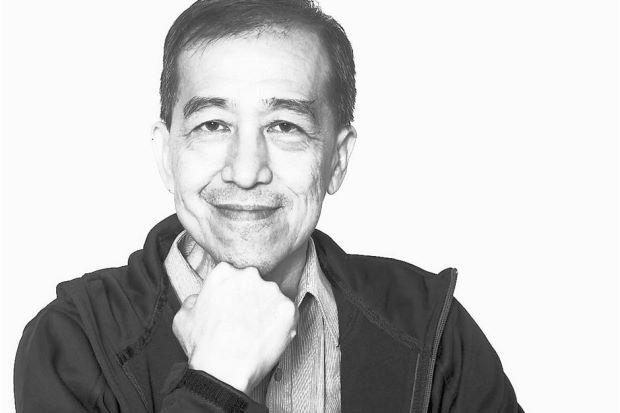
Shining example: Ewe Jin taught his readers to always be grateful and enjoy the simple things in life.

He was one of the kindest, most generous and positive people I have had the privilege of knowing.

HIS Sunday Starters column was on the “Best Read” list every weekend. He rarely wrote about politics, personalities, celebrities or heavy analyses. He focused simply on ordinary people.

That struck a chord among many readers of this newspaper and that was what Soo Ewe Jin wanted – a column for ordinary people, about ordinary people.

In his own words: “Amidst the busyness of life, we need to pause and look at things with our heart and not just our eyes.”

At 5.20pm on Thursday, our Ewe Jin passed away at KPJ Damansara Specialist Hospital with family members and close friends by his side.

He had battled cancer for 17 years and the journey since its relapse two years ago had been a difficult one.

Like anyone else afflicted by the disease, chemotherapy affected him greatly. He had difficulty opening one of his eyes and had to use a hearing aid. In fact, he was even going blind towards the end, but his mind was as sharp as ever.

Ewe Jin was first diagnosed with nose cancer in 1999 and seven years later, he had a lump in his lymph nodes. Another relapse came in March 2011.

The entire time he was seeking treatment, he still continued working. He was a leader and writer, contributing to The Star Says, always offering sound suggestions and well-researched points of discussion. He knew he was representing the voice of The Star, after all.

Besides writing his weekly Sunday Starters, Ewe Jin edited my column On The Beat – removing the blemishes, sharpening it and often, correcting my grammatical errors. He would also rein me in if I went too far, reminding me to be rational instead.

Ewe Jin was very proud of the multi-racial make-up of his neighbourhood in Kelana Jaya, which he often wrote about. The Malay, Indian and Chinese neighbours he spoke of were real people, not fictional characters.

Like me, he deeply believed in moderation and edited the essays on the subject in time for this year’s National Day, labouring away with just one good eye.

He had been with The Star since 2000, serving in various positions – as editor for The Star Online, Sunday Star, Special Projects and as Executive Editor, his last post.

Ewe Jin was with the National Echo, the Malay Mail and The Edge. He also shared his expertise at the Institute of Strategic and International Studies and the World Wide Fund for Nature Malaysia.

Last week, our columnist Lyana Khairuddin visited him and shared some photographs taken at her Wear Kebaya Night event.

He cheekily told her that “Chun Wai isn’t a real Baba, even if he is from Penang, but I am a real Baba”.

Ewe Jin was proud of his Peranakan heritage and we both shared the same parochial sentiments – Penangites are special.

He studied at the Penang Free School while I was from the rival St Xavier’s Institution and the two of us regularly bickered, even over something as flippant as the Latin mottos of our schools.

We both came from humble backgrounds. He grew up in the triad-infested Jelutong area while my turf was Kampung Melayu in Air Itam, which was far from being an affluent neighbourhood.

And recently, Ewe Jin took two trips to the Ulu Yam waterfalls because it reminded him of the waterfalls at Penang’s Botanical Garden – he was a Penangite till the very end.

Our passion for journalism, for people and Malaysia, had always brought us together. He told his sisters that I was the brother he never had – he had eight sisters and was the only boy in the family.

In turn, he was the Christian brother I never had – he taught this rebellious and former atheist what the Bible was all about and watched over me regularly, preventing me from straying too far. Fate has its methods, and it is no surprise that we ended up being members of the same church.

He was the unofficial pastor at The Star – he brought colleagues together for fellowship and prayed for everyone and for the company.

If there was one recurring theme which kept popping up in his stories, it was the call for us to be grateful for what we have. Grateful – this must be the most frequently used word in his column.

He taught us to enjoy the simple things in life such as waking up daily (this was a luxury to him, given his battle with one of the most deadly illnesses) and other little things which we often take for granted.

He never asked for anything, as a friend or a colleague.

As he spent less time at the office the past two years, which affected his work assessment and his annual increment, he still texted me and extended his appreciation for what he received. For me, it was a lesson in humility and gratitude.

He was a shining example to our colleagues and many others who never met him but were ardent fans who knew much about him through his writing.

Even as I write this article, my mobile phone is ringing non-stop with messages of condolences pouring in from everywhere, including a journalist on duty in Peru.

Ewe Jin never said no when it came to helping others, even when he himself had to watch his finances. His wife Angeline Lim quit her well-paying job to take care of him, leaving him as the sole breadwinner. Yet, he still found it in his heart to hand the royalties earned from his book (a compilation of Sunday Starters articles) to the needy.

Ewe Jin was a fighter. Most of us would not be able to endure the many torturous chemotherapy treatments he went through.

On Thursday, even as the doctor told us at noon that our friend had only “four to six hours to go”, we saw how Ewe Jin fought as the clock ticked. He fought for every breath, seemingly refusing to let go.

He had battled the disease at every stage but still found the time and resources to help others fight their own demons.

Ewe Jin often offered kind words and support to other cancer survivors, visiting them at their hospital beds, regardless of their colour or creed. He wrote a book, Face To Face, which he and Angeline distributed for free to share his cancer journey and encourage fellow cancer patients.

He instilled this lesson in me: “When you visit hospitals, you will discover that everyone is the same. The colour of your skin no longer matters, we are one and the same.”

He was always at ease with everyone, with friends from all walks of life. Whether they were jobless, retirees, judges or professors, he treated everyone equally. He was one of the kindest, most generous and positive people I have had the privilege of knowing.

Farewell, Ewe Jin. We will miss you so much, but we take comfort that you are no longer in pain and are now in a much, much better place.

We know you are watching us now, still caring for us and everyone else like you’ve always done. Rest easy, my dear friend.

Stop biting the helping hand

YOU can be angry with Datuk Seri Najib Tun Razak but let’s not lose our objectivity. The Prime Minister brought in RM144bil worth of deals signed between Malaysia and China.

Many Asean countries are eyeing that kind of money from China but strangely, some Malaysians’ sense of rationality is becoming warped, even perverted, and they feel it is prudent to go into senseless name-calling and mindless smearing of China.

We have to be careful here – remarks like Malaysia indulging in yellow culture, selling our soul to China and comments which smacks of racism are surely not the way to treat a friendly superpower nation like China.

Those making such disparaging remarks are doing a disservice to Malaysia. It’s akin to throwing sand into our rice bowl.

Hate the PM as much as you want as this is how democracy works. But do some of us need to lash out with political rhetoric against China?

It is one thing to score points against our political rivals but surely, there must be a line drawn – let’s not bite the hand that is trying to help us at a time when Malaysia needs to secure more foreign investment to shore up our flagging revenue from oil and gas.

Many of the negative responses over these deals with China seem to be politically motivated, stemming from ignorance and, in some cases, ethnic prejudice against all things Chinese, whether it has to do with mainland China or Chinese Malaysians.

Let’s look at the numbers – foreign investors (including the US) are net sellers of stocks in Bursa Malaysia and have reportedly dumped RM948.1mil in stocks although some have said it is even more.

Malaysia can no longer depend on traditional foreign direct investments from the US and other Western countries.

The reality is that China invested as much as US$84bil (RM370bil) in 2012, establishing it as the world’s third largest outward investor after the US and Japan. China has aggressively eclipsed other nations.

The shift towards China, according to one study, is obvious as the republic emerged as Malaysia’s largest trading partner, enjoying a 13.8% share of Malaysian trade since 2012.

Malaysian firms (especially those owned and managed by Malaysians of Chinese descent) have also been actively investing in China since it liberalised its economy in 1979. Some of these firms played a crucial role in attracting mainland Chinese firms to invest in Malaysia, according to studies.

Everyone knows that China has the money. And Malaysia has an edge over other Asean countries because of the link between Chinese Malaysians and China that has given us an advantageous position, especially when China increasingly sees Singapore as a US ally.

There are some who are unhappy with China’s purchase of 1MDB’s energy assets in Edra Global Energy Bhd for RM9.83bil by the state-owned China General Nuclear Power Corp recently, suggesting that the republic was only helping Najib out in the 1MDB controversy.

But let’s look at other investments – even before the recent trip by the PM. China has put in a multi-billion ringgit purchase of a substantial equity stake in Bandar Malaysia via China Railway Construction Corporation.

China Railway Engineering Corporation has announced plans to set up its multi-billion regional headquarters in Bandar Malaysia, which will host the main terminal for the proposed KL-Singapore High Speed Rail project.

It has been reported that the Chinese government has started buying more Malaysian Government Securities (MGS) and this inflow of new money could possibly rise to RMB50bil (about RM30bil) in total or 8.5% of Malaysia’s total outstanding MGS as of early April.

Those who have been grumbling should answer if there’s any big money coming from the US, Australia or Britain.

And many of us are also wary about money coming in from the Saudis – some are alleging that they are exporting radical Islamic values to Malaysia. Do we need this?

Like it or not, China, apart from being Malaysia’s largest trading partner which takes up 19% of its exports, is presently one of the top five foreign investors in the country.

Investments from China in the manufacturing, construction, infrastructure and property sectors are at significant levels now.

According to official data, China’s investments in the manufacturing sector here from 2009 to 2015 totalled RM13.6bil, creating 24,786 jobs.

Malaysia also needs more Chinese tourists to visit our country and we hope to attract two million Chinese tourists by the end of the year. Our tourism industry has seen a growth of 23% in arrivals from China since the e-visa entry programme was introduced in March this year.

China is the third largest source of tourists for us after Singapore and Indonesia. Malaysia targets eight million Chinese tourists by 2020.

Only 10% of China’s population travelled out of their country and yet they have spent US$229bil (RM1tril) globally last year. They easily beat the number of many Western countries put together!

They spend more than other tourists and they travel in bigger numbers. We all know that in Western countries, Chinese-speaking shop assistants are specifically hired to engage with this segment of customers.

Malaysia is not on the radar of Chinese tourists but more young Chinese tourists have chosen to visit Sabah because of its beautiful sea and lush forests.

Chinese tourists spent US$215bil (RM948bil) abroad last year, 53% more than in 2014, according to a World Travel & Tourism Council report, a figure which is more than the annual economic output of Qatar. Chinese tourists are now spending way more than anyone else, including the Americans.

The number of Chinese tourists travelling globally has more than doubled to 120 million over the last five years, according to data from the China National Tourist Office and WTTC. That means one in every 10 international traveller now is from China.

Malaysia is missing out on this action, unfortunately. For a start, we can make travelling into Malaysia easier for them and having more direct flights will help.

Let’s give credit where credit is due. Najib has done well, from his recent trip to China.

It will even be better if our own Air Asia gets to fly into more Chinese cities as this will surely help boost Chinese tourist arrivals.

Let’s get real, all of us.

Certainly we have the right to express our concerns over the terms of some projects, and to seek clearer details, but let’s not drag in unnecessary elements which strain bilateral ties.

Keep China’s faith in us

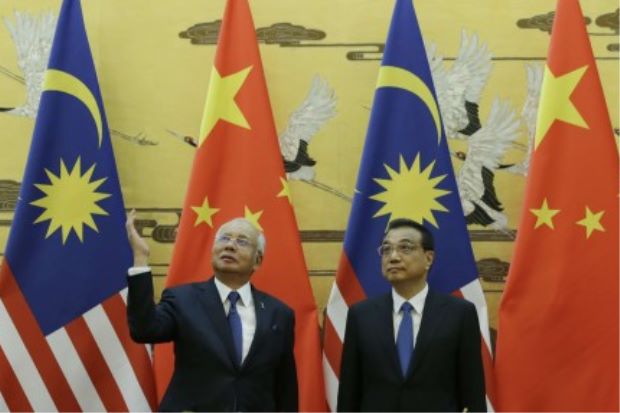
Prime Minister Datuk Seri Najib Razak (L) and China's Premier Li Keqiang at the Great Hall of the People, in Beijing. – EPA

IT’S no longer a topic that is discussed in hushed tones at functions attended by diplomats and businessmen – that relations between China and Singapore are strained. It is out in the open.

The irony is that Singapore is the Asean coordinator for ties with China – and the latter has literally told the island republic to buck up.

The latest salvo against Singapore reportedly came from Chinese vice-minister for foreign affairs, Liu Zhenmin, who warned that as a non-claimant state in the South China Sea dispute, the island should stay away from commenting on the issue.

China’s top diplomat urged the republic to focus on coordinating dialogue between China and Asean – in short, he is effectively saying that Singapore is not doing a good job in that department.

China’s impatience with Singapore has been simmering for a while although it has never been out in the open. But in June, Global Times ran a commentary by Chinese Academy of Social Sciences researcher Cheng Bifan under the headline “Singapore has picked the wrong target in its balance of power strategy”.

The newspaper, regarded as a mouthpiece of the Chinese communist party, is also a subsidiary of the powerful People’s Daily.

Basically, China is irritated with Singapore for seemingly siding with the United States over the South China Sea issue.

Hong Kong’s South China Morning Post (SCMP) has reported that Internet users in China have delivered stinging criticisms, labelling Singapore a sycophant of the US, threatening that China would teach the tiny South-East Asian nation a lesson.

Particularly painful is the phrase they often use to mock Singapore: Li Jiapo, a play on the island’s name in Chinese, substituting the first two Chinese characters “Li Jia” or the “Lee family”, it reported.

The problem started after a tribunal in The Hague rejected China’s claims in the South China Sea dispute with Singapore Prime Minister Lee Hsien Loong saying that the verdict delivered a strong statement about international law in maritime disputes.

During a recent trip to the United States, Lee also reportedly told US President Barack Obama that Singapore hoped Washington would “remain actively engaged in the region.”

It doesn’t help that Singapore has allowed the US to deploy its P8 Poseidon spy plane to the city state. The US also operates from Japan and the Philippines, its two other allies.

But since Rodrigo Duterte, whose ancestors came from Xiamen, China, became president, the Philippines has shifted its sights –and is looking at China.

As the unhappiness builds up, the Global Times accused Singapore’s representative at the Non-Aligned Movement summit in Venezuela of trying – but failing – to add an endorsement of the Philippines’ international arbitration case against China’s territorial claims.

It added that the representative had become exasperated and made “sarcastic remarks” when the move was opposed.

The Singaporean envoy, however, hit back at the Global Times, for publishing an “irresponsible report replete with fabrications.”

His protestation, however, was met with defiance from the newspaper’s editor-in-chief, who stood by the article, accusing Singapore of “damaging China’s interests,” the Wall Street Journal reported.

According to envoy Stanley Loh, Singapore did not raise the South China Sea issue or the tribunal ruling at the summit. He said the proposal to revise the summit communique was made collectively by Asean, which wanted the document to reflect regional concerns over recent South China Sea tensions.

But Chinese diplomats and journalists, close to the communist party, have openly accused Singapore of “siding with the US to willingly play the troublemaker” over the thorny issue.

According to National University of Singapore’s Prof Wang Gungwu, it would not be in Singapore’s interest for China to doubt its friendship as the city-state has a big stake in China’s economic development.

Suspicion against Singapore is so great that, rightly or wrongly, some Chinese businessmen have blamed the island republic for holding back the building of the High Speed Rail between Malaysia and Singapore, suggesting that the island republic is “blocking and delaying” Malaysia’s readiness to award the project to China.

SCMP (owned by Chinese tycoon Jack Ma) which monitors events in China closely, quoted Wang Yiwei from the School of International Studies at China’s Renmin University as saying that he believed China’s “disappointment” with Singapore stemmed from Beijing’s initial hopes that the island state could play a role not just to bridge China and Asean, but with the US, the West and the global community.

Singapore had not adequately protected the overall and long-term interests of China and Asean, despite being the coordinator, he said.

“Instead, Singapore suggested that China accept the tribunal’s ruling. This was a huge turn-off for China,” Wang said.

In contrast, Malaysia-China relations have entered a new high. The “biggest deal” is not even the huge amount of businesses coming into the country but our commitment to buy four Chinese naval vessels, which are known as littoral mission ships (small craft that operate close to shore). Two are to be built in China and the other two in Malaysia.

Liu said the two countries were focusing on naval cooperation and that the deal marked a big leap in bilateral ties.

The defence deal also signalled that Malaysia wanted to have closer military-to-military relations with China.

The two nations also signed the framework for the RM55bil East Coast Rail Line, which will be China’s largest investment in Malaysia to date.

Najib, who was on a six-day visit to China, met President Xi Jinping on Thursday.

Malaysia Airlines Bhd also secured many direct flights from China, recently announcing that it would start flying to eight new destinations and 11 new routes in the republic from Kuala Lumpur, Kota Kinabalu and Penang, from early 2017. MAS is also hoping to add a second daily flight between KL and Shanghai in April 2017.

Although Malaysia is the Asean coordinator with the US, Prime Minister Datuk Seri Najib Tun Razak has played a remarkable role, balancing our link with the two superpowers.

And although Malaysia is a claimant to the territorial claims, Malaysia has restrained itself well, issuing cautious statements, without adding fuel to the rivalry between the two giants.

Najib’s diplomatic skills benefit Malaysia greatly. The domestic political fight should not be used to disrupt the strong ties between Malaysia and China.

Sarcastic innuendoes that “Malaysia is Red” does not augur well for Malaysia, which risks earning the wrath of China, at a time when the market is terribly weak.

Claims that the proposed ECRL project was overpriced, that the soft loan will come to RM92mil per kilometre, is nothing short of amusing.

China’s offer is said to be lower compared to what was offered by Japan and other European countries – and it comes with a soft loan.

The payment is over a tenure of 20 years and in the first seven years, Malaysia will not have to pay anything – neither interest nor repayment. Surely, that is attractive.

Najib has lobbied for China to increase its import of palm oil as it has dropped 50% in the first six months of the year.

Apparently, this was due to some negative reports and wrong perception of the nutritional value of palm oil, a common tactic used by Western countries to promote soy bean and other vegetable oils.

China used to be the largest importer of palm oil from Malaysia but it has fallen to third place, after India and Europe.

It is important that domestic politics should not come at the expense of losing the support of the Chinese. We are talking about the rice bowl of Malaysians and we don’t want selfish politicians to throw sand into our rice bowl.

It is one thing to score political points against Najib, by ridiculing his approaches to China for business deals, but it should not affect our economy.

For example, the number of Chinese visitors to Taiwan has reportedly fallen 22% since the island’s Beijing-sceptic government took office in May, with tourism operators saying that the industry is in a slump.

Hotels are only half full and thousands of tour buses are sitting idle, with observers saying the decline is due to China limiting tour groups to Taiwan amid rapidly cooling cross-strait ties, according to a report.

There was a boom in mainland tourists to Taiwan in recent years under former President Ma Ying-jeou’s Beijing-friendly government, with Chinese visitors accounting for about 40% of the total 10 million tourists last year, according to government figures.

However, in the months since President Tsai Ing-wen took office up to Aug 23, mainland visitor numbers have reportedly fallen 22.3% compared with the same period last year.

In Hong Kong, news reports of resentment against Chinese mainlanders and calls by some HK politicians for independence have resulted in a backlash with Chinese tourists staying away from HK.

The SCMP reported the decline in the month of the mini-golden week holiday – when Chinese tourists go on vacation – and this came as a blow to hopes that the city’s battered retail sector – which heavily relies on tourism spending – could improve soon.

Government statistics showed May retail sales decreasing 8.4% on a yearly basis after the April decline narrowed to 7.5%, from a 9.8% dip in March, marking the 15th consecutive month of contraction.

Hong Kong Retail Management Association chairman Thomson Cheng Wai-hung has predicted a double-digit decline in the first half of this year, which would be the worst in over a decade, as its members signalled that sales in June were “even worse than May”.

The reality is that China has become a economic superpower and we have had a headstart by becoming the first Asean country to forge diplomatic ties with China.

Through the efforts of the Chinese community here, the special ties have been further cemented, and that has allowed us to have a special place in the heart of China.

Malay extremists should learn to appreciate this special link, which has benefited Malaysia greatly, before they make careless and hurtful racist remarks that serve little purpose.

The billions pouring into Malaysia is staggering and surely, we are the envy of many other Asean countries. That is because China trusts us and we should keep and build on that faith in us.