Monthly Archives: January 2017

Let’s think forward, people

Playing the race card and bashing one of our biggest economic partners – China – is like shooting ourselves in the foot.

THE trouble with politicians is that they often let political and personal interests get in the way of facts and very often, national interests.

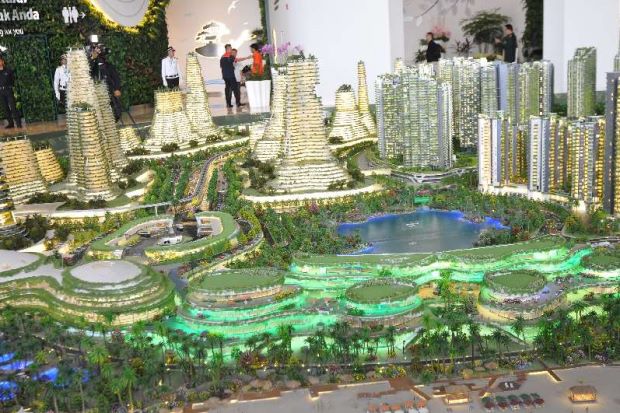
Johor’s Forest City project has become a controversy out of the blue but the debate is not over whether the sprawling project will become a ghost city or if it would lead to having a glut of apartments in the state but strangely, whether the mainland Chinese have any business building it.

Then, there is the emotional spin, if not a racist one, in the suggestion that Johor Baru will suddenly see an influx of Chinese immigrants.

A day after Tun Dr Mahathir Mohamad admitted that his remarks that 700,000 Chinese mainlanders would occupy Forest City was based on a news report by Bloomberg, some politicians were again quoting the same figure and fears, based on the same report.

But what has been overlooked is this: the Forest City reclamation project will actually increase the land mass of Johor.

While the noise centres on the purported loss of sovereignty, influx of mainland Chinese and how these Chinese nationals would supposedly rob the rice bowls of Malaysians, naysayers have ignored, intentionally or otherwise, the fact that this project will add 1,386ha of land to the state.

This will add to the current size of Johor which stands at 1,921,771ha, which means Johor will increase its size to 1,923,157ha. Forest City’s 1,386ha will help make up 0.0072% of the state’s new size.

Rather than losing land, this will add a huge tract of land on the sea.

In fact, reclamation could go on right up to the Singaporean border.

To put it in simple language – the Johor state government did not give away land that it already owns but the Chinese company has created its own land to buy and build.

Also, Forest City will be developed over a span of 30 years. By that time, the size of the Malaysian population would have doubled. So, 160,000 new homes or 5,300 units per year over 30 years no longer sounds like such a big deal.

Everyone seems to have forgotten that while we argue over Forest City, Singapore has been reclaiming land right up to our border.

Anyone who has been to any tall building in JB could just look out of the windows and see how close Singapore has actually come.

Check what it has done on the north-east side. It does not take an expert to note that it is too close for comfort.

Reclamation work in Singapore has been carried out extensively on a large scale since the 1960s by the Singaporean government. Since 1965, the island republic’s land mass has expanded by 22%, from 58,000ha to 71,000ha.

According to reports, most of the reclaimed land is in Changi, Tekong, Jurong Island and Tuas areas and the Singaporean government has reportedly planned to reclaim another 5,000ha by 2030.

Forest City, when completed, will sit on four artificial islands deve­loped by Coun­try Garden Pacific View.

Besides creating about 200,000 jobs, its spillover effect includes re­venue for the state go­vernment in terms of taxes.

The total cumulative investment of US$100bil (RM444bil) will attract returns of sufficient proportion. It is expected that Forest City will contribute tax revenue to the Malaysian government in the amount of RM66bil over a period of 20 years.

Forest City plans to create the world’s most advanced smart city – we are collaborating with Cisco, Accenture and Celcom to develop the Smart City Vision.

With the concept of “an integrated city”, Forest City will introduce eight key industries, namely Tourism & MICE, Healthcare, Education & Training, Regional Headquarters, Offshore Finance, E-Commerce, Emerging Technology, and Green & Smart industry. Forest City has been approved as a duty-free zone.

Last week, the Sultan of Johor Sultan Ibrahim Ibni Almarhum Sultan Iskandar asked critics, including Dr Mahathir, “let me ask him this – Forest City is to be built on reclaimed land and most of these units are condominiums. In simple language, these units are up in the air. They are strata units.

“I would like to ask Dr Mahathir if these foreign buyers can just take their apartments back home or carry off an inch of the reclaimed land.”

Last year, the South China Morning Post reported that Country Garden began selling units in Forest City earlier with the first phase of the project including 482 condos and 132 serviced apartments. In a report in The Straits Times in Singapore in 2016, Country Garden said it had received bookings for nearly all of Phase One.

Forest City is the second project for Country Garden in Malaysia, and the Guangzhou-based developer is one of several Chinese companies rushing to build new homes for sale in Malaysia’s Iskandar development zone.

Last year, Country Garden reportedly secured its second project in Australia, paying a reported HK$35mil (RM20mil) to secure a set of private homes for conversion into a high-rise condo development in Sydney’s St Leonards area.

The argument that a foreign builder has no business in Malaysia actually does not hold water. Malaysia’s SP Setia, for example, has built high density apartments in London and was warmly welcomed by the British government with buyers, mainly from Malaysia.

Today’s Chinese buyers are affluent and well-heeled. They would probably have similar investments in other countries especially Britain and Australia.

They are not the types arriving in boats like the ancestors of the Malaysian Chinese and for sure, they don’t need our Malaysian passports or to look for jobs here.

The mainland Chinese have gone past that stage and many are far richer than us Malaysians. It’s a laugh to them when they read about Malaysian politicians alleging that they want to live permanently in Malaysia.

If we can remember, the Petronas Twin Towers was designed by Argentinian architect Cesar Pelli and construction was given to South Korean and Japanese construction companies.

Some of our politicians are now talking about mainland Chinese buyers but lest we forget, what about the thousands of Filipinos and Indonesians who purportedly received blue identity cards in Sabah, an issue that has remained thorny. They were not affluent immigrants. They were of no real benefit to Malaysia except to fulfil political expediency then, perhaps.

It is bizarre to equate Syrian war refugees and illegal immigrants from Mexico with investors from China who would be bringing in money and connections to Malaysia. It is incredible how far some of our politicians are prepared to stretch this issue.

The trouble with some politicians is that they develop amnesia – either partial or total loss of memory – when they switch political allegiance.

It is expected and we are supposed to accept it but playing the race card, and worse, bashing one of our biggest economic partners – China – will only hit us badly.

We are so proud of you, Faiz!

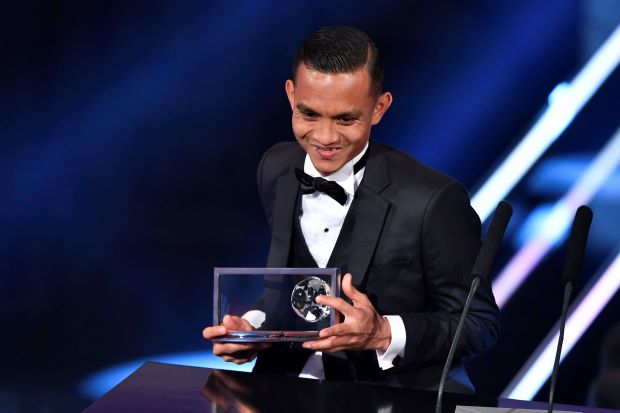
Mohd Faiz Subri holds his trophy after winning The 2016 FIFA Puskas Award during The Best FIFA Football Awards ceremony, on January 9, 2017 in Zurich. – AFP

Whether he spoke flawless English is not the point here. What matters is that he took home Fifa’s prestigious Puskas Award for the best goal of 2016 – a first for the country and for Asia.

THE controversy over Malaysian football star Mohd Faiz Subri’s poor command of English has died down but I need to get this out of my chest – these fault finders seriously deserve a kick in their chin, butt or any part of their body where it hurts.

Why would anyone care if this 29-year-old Penangite could speak the Queen’s English when he has been presented an award for the best goal in the world?

What should matter is that he took home Fifa’s prestigious Puskas Award for the best goal of 2016, a first for his country and for Asia. That’s about it. Nothing more than that. All the c**p – and I apologise for the use of this crass term to the uppity lot who pick on someone’s standard of English – that Faiz should learn to speak better, does not matter one bit.

Faiz was criticised by a columnist in Malaysiakini for his poor spoken English while some netizens took offence that the Penang FA footballer did not wear the baju Melayu when he received his award, despite having taken two pairs with him, given to him by NGOs.

The Puskas Award was presented to Faiz, courtesy of a spectacular free kick in a Super League match against Pahang last February, with the ball swerving from an “impossible” angle into the right corner of the net.

The video clip of Mohd Faiz’s spectacular free kick which was first uploaded by FIFATV on YouTube has been viewed more than 2.5 million times while clips of his Puskas rivals Johnath Marlone Azevedo da Silva (Brazil) and Venezuela’s woman player Daniuska Rodriguez only garnered over a million views.

Here’s this ordinary Penang boy, stepping on the global stage for the first time and must be still trying to figure out if he was just dreaming – surely we could understand why he was nervous.

He wasn’t a household name nor was he the best among Malaysian footballers but there he was, sharing the same space with his icon Cristiano Ronaldo and to top it off, to be presented with the trophy by Brazilian football legend Ronaldo.

I bet he still goes to sleep with a smile on his face. Bravo! Most of us can only dare to dream but not all of us can have our dreams come true! Faiz, yours did. We are so proud of you. No one should take that glory from you just because you cannot speak flawless English.

Those who have criticised you have not been watching football, for sure. Just watch how many top football names speak English on television. Either their standard of English is bad or heavily-accented despite having lived many years in England.

I am certainly not defending the poor command of English but merely to put things in the right perspective.

As a reader rightly posted on a news portal: “Faiz was there to receive Fifa’s best goal for 2016 award, not to compete in Toastmasters International contest, where the world champion of public speaking is chosen” while another said: “He is a football player, not a teacher or a politician. So why all the fuss?”

Another posted: “Let us not be too critical of him. Not many get a chance to stand on a world stage surrounded by emperors and kings of football and in front of dozens of TV cameras and flashing lights.”

“He should not be expected to speak proper English. In fact, he should not be expected to even understand the language at all. Even Brazilian football legend Ronaldo, the person who presented the award to him, spoke in Portuguese and an interpreter translated it.”

Yet another posted: “He is a footballer and he does his talking on the pitch, as he did when he scored that beautiful goal.”

Really, those who belittled Faiz over his poor command of English should ask themselves if they can comfortably do the same in the national language, which they should be proficient in.

And now, on the suit Faiz decided to put on that night.

“I had to wear three layers of clothes. Those who were there would know how cold it was,” the Penang player reportedly said, referring to the winter in Switzerland, with sub-zero Celsius temperature.

Yes, let us all give Faiz credit for trying. He has explained that the award show hosts had asked that he spoke in either English, French or Spanish, so he was left with no option.

If there is any lesson to learn from here – Faiz is a product of our national school system. We have neglected the English language which Malaysians used to be proficient in and were proud of but let’s face it, politicians killed it.

They are to be blamed, not Faiz, or many other young Malaysians. In many other countries, it is the young who can speak English better than the older ones but in Malaysia, it’s the reverse – older Malaysians, who were schooled in English, are largely proficient but the young ones are struggling with the language. In many cases, it is simply hopeless.

And just when young Malaysians are struggling with English, another reality is that Mandarin is set to become a global language. It will become another international language very soon.

Those who are unable to speak Mandarin – including this writer who cannot speak or write this important language – will fall behind.

I am 56 years old this year and I still want to be able to converse in Chinese at the very least. Young Malaysians must understand that the world is changing. It will not wait for anyone.

In many European countries, especially the Scandinavian ones, most people are able to speak in other languages apart from their native tongue.

Foreigners are hugely impressed with our ability to speak in Bahasa Malaysia, English, Mandarin, Tamil and some other dialects, too. It is this linguistic ability that have helped us get businesses and secure jobs.

This is an asset, people.

Those who argue otherwise are simply acknowledging their own disability to improve themselves and thus have to defend their own inadequacies and worse, do it on nationalistic and racial grounds.

The more disturbing fact is this – our political elites are sending their children overseas, especially to Britain, to learn, speak and write proper English while ordinary Malaysians are deprived of such a privilege.

These elites continue to justify our education policy – which could do with a lot of improvement – at the expense of Malaysia and Malaysians.

That is not all. We know that the string of distinctions many Malaysian students have scored has created a false sense of competency and confidence, especially when these super scorers, who all think they should be doctors and engineers, are confronted with the harsh reality – that their string of As are actually Cs and Ds at the international level.

Faiz, you deserve all the accolades for your super goal. You have done Malaysia mighty proud. You have written the speech at your best ability and you have prevailed.

We want more than anything that you do not lose your head. And please don’t think of having a Datukship. We already have enough Datuks in this country (!) but there’s only one Faiz – the Faiz who scored that awesome goal.

If there’s anyone who deserves to get the kick – besides the critics – it is also the Football Association of Malaysia. It should have done better to help Faiz with the speech and help him face the world’s cameras.

Let’s not go overboard

Malaysia is a secular country and we should not let religious authorities run our country and how we should live our lives.

LET’S face it – the Malaysian Islamic Development Department (Jakim) has become so powerful as the sole authority in deciding whether any product is regarded as halal that no manufacturers would dare to go against this religious body.

The fact is that the country’s Muslim population has increased and Muslim consumers prefer religiously safe and clean products, properly certified by Jakim.

It is a lucrative market and manufacturers want the halal label to ensure that their products are accepted by Muslim consumers.

The wait for the Jakim approval takes up to six months, if the manufacturers are lucky as it can be longer if there are questions raised. Surprise location checks are included as well.

There are also overseas visits to inspect how foreign suppliers transport ingredients to ensure the logistic process itself complies with the halal standard.

Even mineral water suppliers want the Jakim logo. If it’s water straight from the pipe, it’s straight forward but if the manufacturers claim that their product is mineral water, then Jakim will insist on knowing for sure there is no animal bone matter involved in the process of extraction.

Jakim, in previous interviews, has said they were short-handed and stood up against allegations that they were a money-making machine.

There have been too many stories hurled against them but to be fair, they remain hearsay and accusations.

The reality is that winning over pious Muslim consumers in the global market is estimated to be worth US$2.3tril (RM10tril) a year.

It has been reported that Malaysia’s halal exports are expected to grow over 19% to RM50bil this year from RM42bil in 2015, leveraging on intensive promotions from industry stakeholders.

Malaysian Investment Development Authority (Mida) chief executive officer Datuk Azman Mahmud said the halal industry was fast becoming an important source of revenue and growth as attracting foreign direct investment in the halal business (products and services) would help increase exports.

The global halal foods market alone was estimated at US$693bil (RM3.1tril) while Malaysia’s annual demand for halal foods was valued at RM1.7bil, he said, adding that in the food manufacturing industry, mostly halal food production, more than 1,437 projects worth RM29.3bil had been implemented, creating 99,000 jobs.

In Indonesia, many other items are reportedly touted as halal, like computer mouse, headscarves and even shirt buttons.

There is even halal cat food over there as Muslim owners want their furry friends to follow the same dietary restrictions as they do.

An Indonesian paint manufacturer, Bernahal Paint, is advertising that its wall paint is halal, claiming its material is lard free.

The Indonesian counterpart of Jakim is the Indonesian Ulema Council Food and Drugs Supervisory Agency while in Singapore, the Islamic Religious Council (Muis).

But Muslims are now asking if businesses are commercialising religion and halal matters by promoting what Muslims should use and consume.

Is the line being pushed too far? Even Jakim expressed surprise when a manufacturer of middle-eastern dates asked for a halal certification – I mean dates are dates, and they are a fruit after all.

In an interview with the Straits Times in Singapore, Perlis mufti Datuk Mohd Asri Zainul Abidin was quoted as saying that “Muslims are required to eat halal but the problem is when people practise religion beyond the nature of Islam itself.

“Traders are commercialising religion and halal by promoting what Muslims should use and consume,” he added.

In a press report, such commercial uses of the label have spurred a group of auditors, including Muslim Singaporeans, to form a new association to help governments certify manufacturers using halal guidelines and standard practices.

One of the initiators, Imran Musa, reportedly said they aimed to quash “halal extremism” and set the record straight on what is “genuinely halal and good.”

“Having unnecessarily stricter rules towards halal will lead to halal extremism,” he asked, saying “who would have thought of halal paint and halal tudung?”

“Halal extremism is slowly creeping in as some clerics impart their own judgment, hence making halal more stringent.”

The reality is that currently, halal certification has no universally accepted standard, with different countries imposing varying interpretations of the Islamic rules for what is permissible.

In Malaysia, with our multi-racial, multi-religious and multi-cultural make up, many non-Muslims are saying that the push for halal requirements is going too far.

Many referred to reports of the proposal to have different trolleys in supermarkets for Muslim and non-Muslim shoppers, for example.

Then, there is the much publicised controversy over Jakim’s insistence that the word “Pretzel dog” be scrapped as it would give the impression to Muslims that “hot dog” contains dog meat.

Pretzel store franchise Auntie Anne caved in, despite a public outcry, and it humbly changed its “Pretzel Dog” to “Pretzel Sausage” in order to receive the prized halal certification.

And now, fast food giant McDonald’s has found itself in the news when its directive to stop non-halal birthday cakes from being brought into their outlets emerged.

McDonald’s, as a business entity, is entitled to carry out its own policies. It issued an apology to customers for the mis­under­standing but at the same time, it noted that such a policy was also practised in Singapore.

To be fair, some cakes do contain liquor including some servings of the ever-popular tiramisu cake. Many Malaysians may not realise it but most ice cream outlets in the country no longer offer the liquor-laced rum and raisin flavour.

But there is an issue here over Jakim’s authority, given that it is a halal-certification authority. So, does it not mean its authority is confined to only food served at F&B outlets but not the premises itself?

If this continues, it will open the floodgates for more areas, like public transportation vehicles, cinemas, entertainment outlets and schools, to be classified along halal and non-halal lines.

For example, when the now-defunct Rayani Air was launched, it was more concerned with selling itself as a fully syariah-compliant airline but less than four months after its launch, it was grounded for safety audit reasons. Many talked about its halal status and not about the most important aspect –its safety.

While we must be aware of the sensitivity of Muslims over dietary matters, we must be mindful that directives made should not segregate the people along religious lines, especially at a time when there is a need to enhance unity in the face of rising extremism.

As Malaysia turns 60 this year, it is time we reflect and think about the path we are taking as a nation. Whether we wish to admit it or not, Malaysia is a secular country and we should not let religious authorities run our country, including how we should live our lives.

The job of administering our country belongs to elected politicians and not clerics, of any religion and race.

It will be a helluva ride!

Expect 2017 to be a busy year as the general election might be held. Also, Hadi’s Bill will come up again, we will celebrate our 60th birthday, and host the SEA Games.

FASTEN your seat belts. Get ready for a roller coaster ride. A political roller coaster that is, as 2017 is set to be a super eventful year.

With the general election speculated to be held this year – most popularly thought to be in September, as of now at least – the competing political parties are set to kick off their campaigns over the coming months.

And whether we like it or not, everything will be political. The new year will start off with a bang all right.

Even the first quarter of 2017 is set to be a hot period.

The proposed amendments to the Syariah Courts (Criminal Jurisdiction) Act 1965 – commonly known as RUU355 in its Bahasa Malaysia abbreviation – is still unresolved and it’s expected to crop up again when Parliament reconvenes in March.

The Private Member’s Bill, tabled by Marang MP Datuk Seri Abdul Hadi Awang, was read out a second time last November to include several tweaks to the Bill that the PAS president read out for the first time the previous meeting.

It is set to be a contentious issue that has rattled Barisan Nasional component parties, with Umno seeing the Bill as merely a way to enhance punishments under Syariah laws while many other Barisan component parties see it as a back-door effort to implement hudud laws.

Many non-Muslim Barisan leaders are also asking why they should be supporting a Bill initiated by an opposition party.

The Government has said that the Cabinet will set up a Parliamentary Select Committee that will involve Muslim and non-Muslim MPs to study the complicated matters in the proposed amendments, especially those related to the separation of powers between the civil and Syariah courts.

But Abdul Hadi is not sitting idly by. He has served notice that the Islamist party will hold a “monster” rally to garner support for the Bill.

“God willing, PAS will organise a himpunan aman raksasa (peaceful monster gathering) representing Muslims from various political parties and NGOs, including those who supported the Bill. Wait and see,” he told a press conference at Parliament lobby here.

Although the date has yet to be confirmed, Abdul Hadi said it could be held before the new Parliament session kicks off in March.

The PAS president also reportedly likened the non-Muslim MPs to Jakarta Governor Basuki Tjahaja Purnama, better known as Ahok, for openly criticising the Bill which governs the lives of Muslims. Ahok is currently on trial for allegedly insulting the Quran.

“Unfortunately, the amendment has shown how non-Muslim politicians try to interfere in matters pertaining to the Muslims and the Rulers,” he said.

In Jakarta, following the mammoth protest by Islamist groups, a huge gathering to promote diversity and tolerance was held to counter the earlier gathering.

It will also be a busy year for Penang Chief Minister Lim Guan Eng as his trial over his two corruption charges involving his RM2.8mil double-storey house along Jalan Pinhorn in Penang starts in March.

High Court judge Hadhariah Syed Ismail has fixed the hearing for both cases to start from March 27 to 31, April 10 to 14, April 24 to 28, May 15 to 19, May 29 to June 2, June 13 to 16 and July 17 to 21.

The prosecution and defence teams have been ordered to submit all relevant documents for the cases by Jan 6.

Malaysia is celebrating its 60th National Day on Aug 31 this year and we can be sure that the Government will use the occasion to pump up patriotic sentiments ahead of the polls.

The country will host the SEA Games in August where certainly, the cheers for Malaysia will be the loudest.

It is a whole month of celebrations, with plenty of feel-good factors being pushed into the air, as we enter into September for the Malaysia Day celebrations.

As the region focuses its eyes on Malaysia, Line 2 of the MRT project would have started following the completion of the 51km Sungai Buloh-Kajang line in December 2016.

It will be an impressive sight as modern transportation in the Greater Klang Valley begins operations and this will surely be a pride of Malaysia.

The country’s biggest convention and exhibition centre at Mitec at KL Metropolis at Jalan Haji Sultan Ahmad Shah in Kuala Lumpur will also open this year.

Bigger than the Putra World Trade Centre, the site will be used for the SEA Games – this is certainly set to be a new icon for our Kuala Lumpur.

An impressive line-up of international events have already been planned for 2017 even before the official opening of this complex – which is shaped like the rubber seed, which has benefitted Malaysia tremendously.

By then, the Election Commission’s re-delineation exercise – which critics of the government claimed was a gerrymandering exercise to benefit the ruling party – would have been completed.

If no polls are called by then, the GE will most probably be held in 2018, as it will be too near the monsoon season.

Do expect 2017 to be a busy year as the political players will swing into action early. Political twists and turns will be aplenty and these can be expected ahead of the polls. Make sure your belts are tied – expect the unexpected.

You can’t say you have not been warned.