Monthly Archives: September 2017

Moderation, the way to go

PAS, or any other group, should not be allowed to use religion to challenge Malaysia’s social climate and political system.

THERE have always been beer festivals in Malaysia, with St Patrick’s Day and Oktoberfest celebrated on a large scale annually by beer drinkers. It is common knowledge that the target crowd here is the non-Muslims, and drinkers are left to enjoy themselves during these celebrations.

Then, there is the Better Beer Festival, which has been held five years consecutively, without incident or complaint.

Malaysians are known for many things, and most prominently, their degree of acceptance and respect for each other. But that open-mindedness is worryingly corroding. The world, as we know it, is no longer the same. And Malaysia is no different.

Last week, the Inspector-General of Police Tan Sri Mohamad Fuzi Harun said the beer festival could not go on for fear of possible attacks by militant groups.

He said the police had received intelligence indicating that a militant group was planning to sabotage the event and that few parties planned to cause trouble during the event.

This is certainly disturbing. It means the level of tolerance here is being challenged, and if this is allowed to go on, we are pandering to extremists, at the expense of our moderate way of life.

Foreigners will be struggling to make sense of this event’s cancellation, and wonder how it now even involves security concerns. It was bad enough when word went around that the reasons were political.

While the police have not revealed much about the militant group, we are thankful to them for their unerring vigilance against emerging terrorist cells, including those sympathetic to the Islamic State (IS).

Terrorism cannot be taken lightly, and that’s the scary truth. The arrests of Abu Sayyaf militants in our capital proved that it is not fiction – the threat is real. These agents of destruction are in our midst.

No one knows when and how they will strike, which is why we must back the police unconditionally in the continued fight against terror activities.

A brewery in Shah Alam was once a target, which turned into a botched job in the end. So, it’s no surprise if a beer festival finds itself in the crosshairs of a terrorist group.

The task for all of us, especially the police, is getting more challenging, with threats targeting the KL SEA Games, even.

But while the shadowy figures in our midst remain unknown, what’s obvious is that PAS has stepped up its demands.

The beer festival has been held for half a decade straight, but suddenly, this year, PAS turns up with a demand for Kuala Lumpur City Hall (DBKL) to cancel the event. And in its typical templated press release, claims that the festival will only lead to moral decay, as it would most likely descend into a pesta maksiat or “vice party”.

This is not only disturbing, but upsetting, because it is clearly an infringement on the rights of non-Muslims.

DBKL could have handled the cancellation better. If the police had advised them to cancel it because of security reasons, it should have just said so. It would be legitimate and more acceptable.

But the local council gave the impression that it was entertaining the demands of the Islamist party, giving rise to speculations that this was the result of a kind of political expediency.

PAS’ clout in pushing DBKL’s hand for a swift course of action, has been rightfully questioned. The party does not even have an MP in Kuala Lumpur, or even a member on the DBKL advisory board.

The precedence set by this beer festival cancellation is intriguing. Threats like these will always exist, but does this mean that from now on, beer events and concerts might be cancelled for security reasons?

Is it not more logical for the police to increase its presence at the event and protect the rights of non-Muslims, instead of allowing such a group to get what it wants?

The Better Beer Festival was supposed to take place on Oct 6 and 7 at Publika Shopping Gallery, KL, featuring 250 different craft beers from 43 breweries worldwide.

The DBKL announcement came a week after PAS central committee member Dr Riduan Mohd Nor spoke out against the event, calling it a “pesta maksiat”, and claiming that it would turn Kuala Lumpur into the “largest vice centre in Asia”.

PAS has attempted to stop nearly every concert and even Valentine’s Day celebrations. When I was a student at Universiti Kebangsaan Malaysia in the 1980s, the party tried to halt a concert by Alleycats on grounds that the show would be a pesta maksiat. Imagine the incredulity of it all?

A combination of terrorist wannabes, extremists, racists, right wingers and politicians posing as theologians is certainly a recipe for disaster for multi-racial Malaysia.

Tan Sri Mohd Sheriff Mohd Kassim, a spokesman for the G25 group of prominent Malays, said: “In future, business organisations will be very reluctant to organise any kind of exhibition or festival for fear that when a political party intervenes with a religious voice, the Government will react immediately to cancel an event.

“Who will dare organise an international event risking last minute cancellation?” he said.

If we subscribe to PAS’ rhetoric, every concert or event will degenerate into a riot of sexual immorality stemming from mingling genders.

Due to its paranoia, check-out lanes in supermarkets are segregated by gender, and the lights in cinemas must remain on at all times. In the party’s state of origin, no unisex salons are allowed to exist, either, and unfortunately in some cases, owners were non-Muslims. A watch shop owner who put up a poster of a Bollywood actress wearing a watch was also fined because it was deemed “provocative”. Again, this involved a non-Muslim owner.

More recently, the Kota Baru Municipal Council (MPKB) fined the organiser of a private fundraiser for not seeking a permit to hold performances during the event, in which three Chinese primary schools with low enrolment were expected to be beneficiaries. The entertainment element of the event only constituted cultural performances in a hotel ballroom, and was not even a public event.

Still, MPKB demanded the event be immediately halted, but the organiser rightly ignored the stop-order and proceeded, since tickets had already been sold, and it was a private function.

The absurdity continued with MPKB recently instructing the organiser of a fun run – which has operated smoothly since its inception in 2015 – to segregate men and women at this year’s event.

Buddhist organisation Soka Gak­kai Malaysia’s Kelantan branch said the council made the “gender segregation” request before the application was approved a month ago.

Branch chairman Chew Moi Luan said a notice was put up at the flag-off of the 7km Run for Peace, complying with the request, but most of the 1,400 participants ignored the directive. Bravo!

While what we’re seeing is shocking, let’s get this straight: Malaysia has not become a Taliban country, not as we know it, anyway.

Malaysia is not Afghanistan, Saudi Arabia or an IS-held territory where theologians hold the reign of power. Can non-Muslims be blamed for asking what’s next for Malaysia with heavy-handed approaches by religious bodies?

Understanding and acceptance are essential if we want to keep our beloved nation moderate and rational. The worries of religious intolerance will add to the loss of confidence, so, PAS and the like shouldn’t be allowed to erode our way of life, which we have valiantly protected and represented the past six decades.

PAS, which has been running the Kelantan state government for decades, should get its puritanical priorities right. Fix your own backyard first, because you have bigger moral problems that need serious attention.

Statistics revealed that next to those in Terengganu, Internet users in Kota Baru are the biggest surfers of porn sites, it was reported.

And presumably thanks to Kelantan’s proximity to Thailand, from 2001 to 2016, Kelantan recorded 11,000 HIV-positive cases. A total of 2,255 Kelantanese died of AIDS-related illnesses during that same period.

Deputy Home Minister Masir Ku­­jat has revealed that the state’s Health De­­partment attributed the rising num­­ber of HIV cases to promiscuity, and people there adopting morally-questionable lifestyles, such as “switching sex partners”.

Masir noted that HIV infections caused by homosexual activities doubled from 10 in 2015 to 20 last year, with HIV infections through heterosexual relationships also increasing from 40 to 50.

Recently, it was reported that drug addiction among students in Kelantan is at a critical stage, requiring immediate redress.

National Anti-Drug Agency (AADK) director-general, Datuk Abd Halim Mohd Hussin, disclosed that 280 students from 31 secondary schools in the state were tested positive for drugs (mostly for methamphetamine) during urine screening tests carried out on 3,797 students between January and Aug 13.

“Pasir Mas recorded the highest number, with 70 students, followed by Pasir Puteh (44), Kota Baru (43) and other districts,” he was quoted saying.

It’s curious that with such strict imposition of rules and incessant blaming of rape on “scantily dressed women”, the conservative state continues to have the worst record for many social issues.

Simply Google rape cases in Kelantan, and what will roll out will be the most nauseating incest cases involving fathers of underage victims, or their relatives, or someone known to these poor minors – someone they had trusted.

Kelantan may not be the worst state, with cases mostly involving rural areas. But how on earth are we to accept the illogical and warped arguments of PAS leaders, that these young girls were supposed to have provoked their male aggressors by the way they dressed?

Malaysia cannot afford to let PAS or any groups using religion challenge the present social climate and political system, which has successfully seen this country through good and bad times. Our way of striking a balance has catered to a culture of compromise and, respecting and accepting one another.

Our country was built on a bedrock of moderation, and for us to continue to live in peace and harmony, the onus is on us to preserve it.

Malaysian Hospitality, it’s my choice

Golden service: Our cabin crew are the best, and truly deserve the many accolades that have come their way. — EPA

SURELY, we must have heard from frequent flyers that Malaysia Airlines Bhd has lost its lustre and vigour. Our planes look derelict compared to those of Cathay Pacific, Singapore Airlines and Emirates Airlines.

The complaints run the gamut, from food choice to movie selection. The management of Malaysia Airlines must have received this feedback, surely.

Yet, like many Malaysians, I remain loyal to MH. I believe in its Malaysian Hospitality. I have travelled to many countries, got onboard a variety of airlines, and I can vouch that our cabin crew are the best, and truly deserve the many accolades that have come their way.

However, all that can’t gloss over the national carrier’s need to be competitive again. Its troubles haven’t been erased from memory, but faith in the brand is slowly but surely returning.

The airline’s losses in 2014, in the wake of MH370’s disappearance, and the shooting down of MH17, will continue to haunt it. Those massive losses of human life have hurt both the airline and country’s image in a horrible and devastating way.

It didn’t help that the old MAS was declared “technically bankrupt” in 2015. But the dark clouds have blown over. The management has done a remarkable job in turning things around, earning media coverage which said, “so much growth that it doesn’t have enough aircraft to match the demand.”

In June, MAS announced it was buying six second-hand Airbus A330s, and last week, Prime Minister Datuk Seri Najib Tun Razak revealed that the country intends to make Malaysia Airlines buy more Boeing planes, saying: “We are committed to 25 planes of 737 MAX 10, eight 787 Dreamliners and there is a strong probability, not possibility, that we will add 24 or 25 more 737 MAX 10 in the near future.”

So within five years, with the additional purchases, the deal will be worth in excess of US$10bil (RM41.87bil), it was reported.

The 737 MAX 10 will be the airline’s most profitable single-aisle airplane, offering the lowest seat costs ever, while the 787 Dreamliner is a long-haul, mid-size wide-body, twin-engine jet airliner.

The Prime Minister also witnessed the signing of a Memorandum Of Understanding between Malaysia Airlines and The Boeing Company for aircraft purchases and the setting up of a Maintenance, Repair and Overhaul facility in Sepang, worth US$4.86bil (RM20.35bil).

The discussion with Donald Trump was the highlight of Najib’s 911 working visit to the US, where he was invited by the 45th US President.

Najib said the Government would also try to persuade low-cost carrier, AirAsia Bhd, to purchase US-made General Electric engines.

Reading purely into the political spin, the PM is seen spending lavishly, which the country can ill afford at the moment, but Malaysia Airlines needs those new planes badly, as its chief executive officer Peter Bellew attested, “even after buying six used A330s, it seems the airline is still short of empty seats for its aggressive regional expansion plans.”

A recent report states “this purchase of 40-plus long-haul aircraft is a huge deal for an airline that currently has just 21 long-haul aircraft in active rotation (15 Airbus A330s, six Airbus A380s – which it recently considered selling).”

According to AirFleets, “Malaysia has an additional 24 wide-body aircraft currently stored, half of which are (understandably) Malaysia’s retired 777 fleet, which was the aircraft model involved in both the 2014 tragedies. Three others are Boeing 747-400s, which are known for their fuel inefficiency, compared to more modern aircraft.”

Malaysia Airlines also needs to regain premium destinations it lost. Malaysians can no longer fly MH to New York, Los Angeles or San Francisco. It’s disappointing that we have to hop on another airline to get to these prime locations.

The Paris and Amsterdam routes ceased operations early last year, and before that, in 2015, Frankfurt and Istanbul also lost their service, leaving London as the airline’s sole European destination.

This certainly doesn’t bode well for an international carrier since these are golden ticket routes – popular and profitable.

Incredibly, at one time, the old MAS flew direct into Zimbabwe and Argentina even, when decisions were made by leaders without considering commercial concerns.

Malaysia Airlines now has to consign its past to the history books and move on to compete in the highly-competitive aviation business.

The Government has wisely left the job of running the airline to a professional. Who cares if he’s a foreigner? As long as he does it right.

The management has whittled down its staff size because the airline was simply “bloated” at one point. It has stopped the practice of having over-priced food items for passengers.

Malaysia Airlines must, however, remember that it is a premium brand. It is not a low-cost carrier and passengers expect to get what they pay for.

No compromise can exist in the food quality, entertainment offerings and luxury of the business class, where airlines rake in the bucks. Now, even Wi-Fi is a prerequisite.

Two “new” movies in a movies package doesn’t cut the mustard, especially when other airlines offer hundreds of selections from multiple genres.

Frequent travellers also want the menu to be regularly updated, even if they are able to pre-order their food before boarding (for high-paying passengers). Certain things simply cannot be compromised for long hauls, though.

Our national carrier could do well to remember that we are not mere passengers, but customers, too. As the client, it’s fair game to expect some pampering.

Najib has made the right call to buy more planes for Malaysia Airlines. It is long overdue, more so because planes are not delivered to the buyer the day after purchase.

My choice is clear – a Malaysian airline comes first – whether it’s Malaysia Airlines or AirAsia – because I believe in supporting a Malaysian brand. Give me the satay and sincere smiles, any time.

Same country, different world

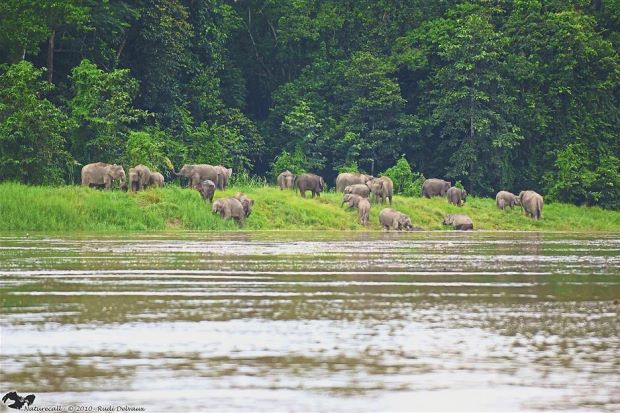
Rare sightings: Foreigners camp out for months along the Kinabatangan River just for a glimpse of the pygmy elephants.

The beauty and simplicity of Kinabatangan remain lost to Malaysians who are caught up in their own political bubble.

MANY Malaysians, especially those from the peninsula, are probably clueless as to where Kinabatangan is.

In fact, were it not for the notoriety of Datuk Bung Moktar Radin, the four-term parliament member for the constituency (which is the size of Pahang), most would never have heard of the place.

His off-colour, sexist and offensive remarks in the Dewan Rakyat are still remembered two decades on.

Tongod – a remote district in Kinabatangan – is bigger than the state of Selangor. Amazingly, Sabah can fit four states into its borders and still have room. That’s the colossal size of the state.

Following a recent visit to Sandakan to suss out the political sentiments ahead of the general election, I made a detour and went to Kinabatangan on National Day.

I’ve learnt that the danger of living in the Klang Valley is that many of us assume the rest of Malaysia shares similar electoral aspirations. That typifies the hazard of living in a political bubble. We form conclusions which eventually develop into wishful thinking, simply by talking to our like-minded peers.

However, the key to winning elections is to secure the votes of the heartland, as attested to in the United States recently, a scenario reflected here, as well.

The opinions of people from New York, Los Angeles and Seattle count for little. While he expected the barbs from urbanites, US president Donald Trump also knew he had rock-solid support from South Carolina, Kansas and Alaska, and those from rural areas. He was right in expecting the votes to arrive.

Back in Sabah, I was summoned by the call of the wild. After meeting political stakeholders in Sandakan, talking and listening to politicians, voters and community leaders in this Cantonese-speaking town, I had to see for myself what the jungles of Kinabatangan were all about.

It took me over two hours, via a bumpy trunk road, from Sandakan, to reach Kampung Bilit – a small river bank village with a population of 200, comprising mostly Orang Sungai (river people).

Coincidentally, Kampung Bilit is Bung Moktar’s village. He grew up there. As a kid, he had to take risky boat rides on the Kinabatangan river to get to school in Sukau, having crocodiles for company along his journey.

The people there have built their lives around the 560km river, about 25km upstream from Sukau and 130km from Sandakan city centre, where they catch freshwater prawns (udang galah) and fish for a living.

The village is obviously a Barisan Nasional stronghold as most of the houses were flying the party banner, along with the Jalur Gemilang and the state flag.

Ecotourism ensures villagers are busy ferrying tourists from the banks of Malaysia’s second longest (Sarawak’s Rajang is the longest) river to various accommodation spots along that stretch of water. During our two nights’ stay at a lodge, my wife and I were the only Malaysians there. The rest were from Europe, the United States, and even South America.

The lodge staff revealed Malaysians hardly come to the place, or to Kinabatangan, for that matter.

I was repeatedly asked why I chose to visit the remote place, where WiFi doesn’t exist, cellphone reception is abysmal and there is no television to while away the time.

However, decked in heavy boots and armed with torchlights, we enjoyed the nightly treks (at 8pm), which took us through the jungle and puddles of mud.

Bedtime was routinely 10pm, and we were up by 5.30am for the morning boat rides to watch the animals.

The excited foreigners, with their mouths agape every time they encountered an animal (be it even a bird or insect), travelled halfway around the world to get to Kinabatangan for the experience.

There’s a simple reason to why I made this journey: as a Malaysian, I felt terribly ashamed that I had never ventured to many parts of my own country.

Kinabatangan is a world-famous wildlife sanctuary, renowned for its unique fauna, including the proboscis monkey, pygmy elephant, freshwater dolphin, hornbill, orang utan and freshwater shark.

The world pretty much congregates in this incredibly well-preserved place to catch a glimpse of these animals. Some foreigners stay for months, only hoping to see the rarely-sighted Asian elephants.

These trips come with a caveat, though – sightings are not guaranteed, a condition tourists readily accept. The only creatures we were not keen on seeing were the mosquitoes and leeches that accompanied us on our jungle treks.

While most of what we saw involved pristine beauty, there were the ugly sides, too. Most villagers appreciate the importance of tourism for their livelihood, but are still stuck in their ways.

Plastic bottles littered the river, their source an insignificant detail. I felt embarrassed because as a Malaysian, I would want these foreigners to form a good impression of our country.

Kinabatangan’s rise to fame surely hasn’t gone unnoticed by the lodge staff. Those who can speak basic English, including the receptionists and guides, have prospered from job opportunities.

However, they understand that for Kinabatangan to continue providing them a living, their villages should remain isolated, underlining the need to preserve the jungle as is.

It’s an amazingly beautiful place. It’s not just the array of animals on parade but, as one report said: “Scattered in the area are limestone outcrops, many with caves that harbour large nesting colonies of swiftlets, as well as endemic limestone-inhabiting flora and fauna. The largest and best-known of these limestone hills is Gomantong.”

Kinabatangan, or Kota Kinabatangan (three other towns in Sabah exist with the Kota prefix – Kota Kinabalu, Kota Belud and Kota Marudu), is hardly a town by Klang Valley standards. The Kentucky Fried Chicken outlet there seems to be the nerve centre for the population, which numbers more than 150,000. Foreigners working on the oil palm plantations also make up the community.

My visit to Kinabatangan has been an eye-opener, and not just from a political perspective.

The parliamentary constituency, created in 1966, has been under the control of the Alliance and Barisan from Day One. Voters are scattered all over the vast area, and sometimes, it takes days of travel to reach them. There are regular reports of people losing their way in the jungles, once even including a ranger.

Given what I saw and heard, the outcome of the general election there is anyone’s guess, though history has a way of repeating itself.

Malaysia is all about us

A scene of "Citizen Liow".

A National Day video has sent out a stark reminder to all that we must work towards making Malaysia a better home for all.

NO MCA politician has generated this kind of buzz on social media. The last one who set the Internet on fire, a parliamentary candidate who contested the Bukit Bintang constituency in the last general election, did so with an embarrassing bit of footage.

It was so stirring to the senses that the clip wormed its way into newsfeeds of foreign television stations, at the expense of poor, unsuspecting viewers.

So, it was unprecedented when a video – featuring MCA president Datuk Seri Liow Tiong Lai as a minister, citizen and husband – of this nature generated more than 200,000 views over the last four days, the number still on the rise.

The MCA has sometimes found it difficult to ignite the imagination of the Chinese community. Perhaps, the job of rubbishing the Government is more appealing to the reading, listening and viewing public. Truth be told, it is easier to do that than explain and defend government policies. No surprises then why MCA leaders often end up preaching to the converted, ie, their own party members at its ceramah.

But that changed last week. The six-minute National Day clip has become the talk of the town. It caught on so well that it exceeded the views of videos of the recent SEA Games KL 2017, on YouTube on Aug 30.

In the video, Liow, portrays himself as the Transport Minister engaged in an honest conversation with a citizen (a double act of himself), who is distinctly disgruntled by the way the country is being run.

It is Liow like we have never seen before – the citizen version of him, shabby, dispirited and a little rude, even.

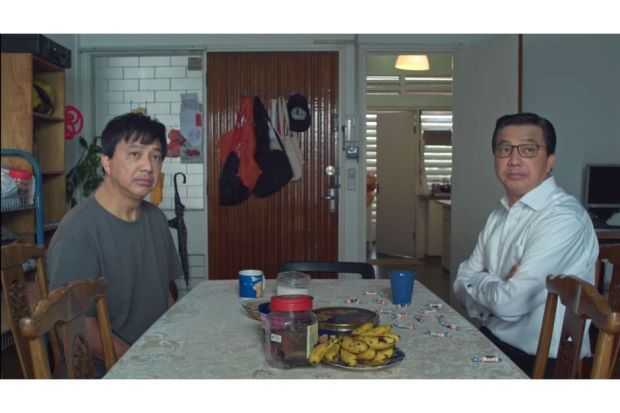
“Citizen Liow” vents his frustrations, echoing the country’s current mood, and brings up the demeaning “balik tongsan” remarks and endemic corrupt practices, among others. At one point, he even throws a fistful of “rabbit” sweets at the minister in his home. The on-screen sparring between both Liows is brutally frank, mirroring the general sentiments of the local Chinese community.

Professional filmmakers, Pete Teo and Liew Seng Tat, have done a truly respectable job for Liow in addressing issues confronting the community. To call this short film a piece of propaganda is surely missing the deep-rooted points presented.

Come to think of it, not once were words like MCA, Barisan Nasional, One Malaysia or unity, so associated with Liow and other Cabinet members, ever uttered. This National Day, no one was asked to be grateful to the Government.

In fact, we should have reminded the elected leaders to be grateful to the people, instead, for placing them in those lofty positions in the first place.

At a time when politicians are put under the microscope, their every move scrutinised, Liow has taken a fresher route. He has addressed and opted to deal with issues that have not only bothered, but hurt the community for the longest time.

It is pointless telling the Chinese that Malaysia is their home, only to have extremist groups heckle them to “go back to China”. Inexplicably, these groups seem to enjoy unparalleled immunity and are spared any kind of punishment for their public display of disdain.

Liow has attempted to grab the bull by the horns, as depicted in this video, as he genuinely admits his failings and shortcomings, conceding that he could have done more for the community, but was crippled by stinging criticism of how the country is increasingly being divided by race and religion.

He has chosen a difficult subject, one which Malaysians prefer to grumble about within the community or in hushed tones, and certainly not at a time when the country celebrates its 60th year of independence, with flag-waving initiatives aplenty.

In fact, the MCA president’s throw of the dice has paid off, and quite handsomely, too.

A writer on a pro-Malaysiakini forum, known for its critical MCA stance, said “the MCA president has never ever before experienced this level of publicity. This scares many groups of people.”

“For his opponents, the enemy whom they deemed ‘inconsequential’ suddenly has access to a large audience. The opposition has gone into defence mode by attacking. As they unleash their trolls and attempt unlettered interpretations of what is basically a film calling for national unity and hope, they shame themselves by taking a tribal hardline to a non-partisan message.”

The writer added that “the video tugged at the heartstrings even. People of all races have seen it as a unifying force. It has created a greater understanding of how the Chinese in Malaysia feel, and imparts the importance of understanding each other’s grouses if we want to heal the nation.”

The reality is, Malaysia is our home. There is no other place for us. Not Indonesia, Saudi Arabia, China or India. As Martin Luther King Jr said, we came in many ships but we are now in the same boat. For better or worse, we have been brought together by destiny and we must work to make Malaysia a better place to live in.

Criticising the government of the day is fine, but running the country down is unacceptable because politicians come and go, but not our country. Our home stays the way it always has. And who else to better take care of her than us?

Liow, in this National Day season, has sent us this reminder, particularly to the Chinese community.

It is easier to be the champion of a particular community by ramping up the single-race rhetoric, but much harder to balance the demands of the ethnic groups which make up Malaysia.

But because we have practised a culture of understanding and acceptance, there is no reason why this shouldn’t continue to work. After all, Malaysia is about all of us.