Monthly Archives: February 2018

Telling fact from fiction

Easy target: Fake news is a big problem here because many of us are too impressionable when it comes to news on the Internet.

HARDLY a day passes without someone sharing a video with me. No one bothers to check, not for a minute, if this could be nothing more than a fake video gone viral. Yet, amazingly, they are quick to forward such things to me.

And that doesn’t even include the unsolicited political messages, through which senders expect their receivers to echo their political enthusiasm.

More alarmingly, residents chat groups on uncollected rubbish or poor maintenance, suddenly see political messages popping up in them. Even prayer and old classmates chat groups aren’t spared, my goodness.

Blame it on what is often dubbed “silly season”, leading up to the general election, but don’t test our patience by diverting our attention to something trivial. It is downright irritating and insulting. And who cares about these politicians, anyway? Not everything in life is about politics, after all.

On Friday, a video went viral on what looked like a gun fight between the police and a notorious gang in Kuala Lumpur.

Some truth-seekers took the trouble to check with the media, but most would have despatched it to their friends in no time at all.

As trained journalists, we obviously scrutinised the video to look for give-aways. It doesn’t take a detective to pick out the holes, but then, there are many gullible Malaysians.

For one, the tiny yellow taxis in the video don’t exist in KL. There is no such building with that staircase structure in the capital, either, and there was a camera crew in plain view running around filming the action scenes, clearly indicating a movie set.

Most of the cars in the video aren’t even models we regularly see in Malaysia, and there was also a guy who ran by wearing what appeared to be heavy clothing.

On Thursday night, it got even sillier.Leaping out of the world wide web was a video of what’s been made to look like a Malaysian student being bullied in a classroom.

The comments by some racist airheads really infuriated me. With the victim appearing Chinese, the bully possibly Malay – he looked Indian to me – it became fertile ground to sow the seeds of hate.

At no point did it occur to them that this video could have come from Singapore. It didn’t even cross their minds that Malaysian students no longer wear uniforms entirely in white. The last time students were decked completely in white was probably in 1979 – during my time as a student. And desks and chairs in green? In our schools?

The Education Ministry has come out to confirm that the incident in that widely-shared video happened in Singapore on Feb 9.

Describing the footage as a “severe case of bullying”, Deputy Education Minister Datuk P. Kamalanathan urged netizens to stop spreading the clip.

“This happened at Westwood Secondary School in Singapore. Please don’t spread this video and claim that it happened in Malaysia.

“Before forwarding anything, it would be wise to authenticate its veracity to avoid confusion and misinformation,” he added.

A group of students from Westwood Secondary School were filmed punching, kicking and throwing chairs at a classmate in a video that then went viral, reported Singapore’s The Straits Times on Feb 18.

In the video posted on Facebook page Fabrications About Singapore on Feb 15, a student can be heard egging his friends on to “teach” one of their classmates a lesson.

Two students were captured throwing chairs at a boy seated at his table in a classroom while on his mobile phone. The boy is stunned when a chair hits his head.

A student then slaps the boy, before throwing a series of punches and kicks at him.

Then, the student overturns the boy’s chair, shoves him to the floor and continues to pummel him.

Then, there was the fake sex video, which purportedly featured national badminton hero Datuk Lee Chong Wei as a “movie star”.

I meet my fellow Penangite regularly, and I can safely say that I have observed him up close and personal.

I can tell that Lee is much more muscular than that skinny, presumably, porno actor in the video, and the hairstyle doesn’t even match our sports idol’s.

Lee has done right by making a police report, and let’s hope the police, with the help of the Malaysian Communications and Multimedia Commission, swiftly track down the culprits of this vicious smear campaign.

It’s obvious that some people not only want to discredit the three-time Olympic silver medallist but are looking for maximum mayhem by aligning their dubious act to coincide with the release of his feature length biopic Lee Chong Wei: Rise of the Legend next month.

And that’s far from the end of the tall tales. There’s also this pathetic fake news about rejected Musang King durians from China – timed to perfection to be “reported” right before the International Durian festival in Bentong.

The Internet burned with a doctored picture depicting a mountain of the “rejected” fruits, which were said to have been exposed to extremely high levels of insecticide.

Those who shared that piece of poor journalism – either because they were sincerely concerned, genuinely ignorant or politically motivated – didn’t know, or cared to find out that Malaysia doesn’t export durians in its original fruit form but rather, as frozen pulp in packages.

And for sure, the Chinese wouldn’t have wanted to bear the freight charge to return these bad durians to Malaysia. The life span of our durian is only a day or two. How could it have been stacked up like that in the picture?

Durian lovers who inspected the picture could tell they were not Musang King, but instead, something of Thai origin.

With the general election looming, the recycled rumours of Bangladeshi phantom voters arriving by the planeloads at KLIA2 have resurfaced. Even an opposition state assemblyman, in her Chinese New Year video criticising the #UndiRosak activists, cheekily added that “even the Bangladeshis want to vote.” Can you picture 40,000 of them milling at our airport?

Although not a shred of evidence has come to light to back up the incredulous claim, the myth continues to be perpetuated, and it’s a given it will be rinsed and repeated. Perhaps it’ll be the Nepalese or Rohingya this time?

While the ordinary Malaysian can be forgiven for being easily swayed, it’s an entirely different story when journalists find themselves duped, or God forbid, spreading the “news”.

In the 2013 general election, a prominent TV presenter posted on his Facebook page claiming a blackout occurred at the Bentong counting centre, which led to the Barisan Nasional winning the parliamentary seat, slyly implying the coalition cheated during the result tabulation.

He got his network into hot water when he returned to his FB profile to say, “when my child is born, I will ask him to write an essay with the title ‘The Blackout Night’. The beginning of the essay would be on May 5, 2013, there was a stiff fight in the Bentong seat. Someone had said that he would cut his ears if it is lost, and then the counting process started, blackout …”

To credit MCA president Datuk Seri Liow Tiong Lai’s opponent, DAP challenger Wong Tack denied the rumours. But let’s hope this presenter has since matured, and perhaps, become more cynical as a journalist or presenter, at least.

The most frequent fake news that sparks to life every few weeks would be the dates of the Parliament’s dissolution and polling.

Interestingly, in the case of the polling date “report”, it involved the Prime Minister having an audience with the King, accompanied by the Deputy Prime Minister and Speaker.

It’s all very simple, really – the PM doesn’t need anyone tagging along, and after meeting the King, he surely can’t be fixing a date since that job belongs to the Election Commission.

A news portal reported that fake news is a big problem here because many of us are too impressionable when it comes to news on the Internet.

The Asian Correspondent reported: “Without questioning the veracity of certain claims and announcements, it seems that oftentimes, anything resembling a news story – whether shared on social media or via mobile messaging apps – is swallowed wholesale.

“Let’s look at how WhatsApp has become a popular platform to spread news. How many of you have received forwarded messages that clearly resemble fake news and could have easily been dismissed as such? I’m sure so many have, and speaking from experience, it definitely gets frustrating.

“The worst part is that when you question the person who unwittingly forwarded the news, he or she would say, ‘I don’t know if it’s true or not. I received it from someone else, so, I’m just forwarding.’”

This has happened continually because no one is punished for their unscrupulous and reckless deeds, even if their actions lead to undesirable consequences amounting to racial tension, riots and even death.

And the campaigning hasn’t even begun! So, let’s put on our thinking caps and brace for the inevitable soon – a deluge of fake news.

Pooch and prejudice

No puppy love: To immortalise Hachiko’s loyalty, a shiny bronze sculpture stands near the Shibuya train station.

I decided to celebrate Chinese New Year away from Malaysia this year, so my wife and I chose Tokyo as our destination.

We wanted somewhere that was a short flight’s distance for a brief getaway to celebrate our 28th wedding anniversary, an occasion marked auspiciously by Valentine’s Day and of course, this time around, the Chinese New Year holidays too.

Now, the problem with Tokyo is the absence of any form of Chinese New Year mood there since it is not observed by the Japanese. But the cool weather was a refreshing change from the stifling heat currently enveloping Malaysia.

That said, the Year of the Dog would not be complete without tipping the hat to Japan’s most revered dog at Tokyo’s Shibuya metro station.

There, a statue of the faithful and fabled canine Hachiko has been erected as a homage, where selfie opportunities are mandatory for anyone visiting Tokyo to realise their trip.

The dog, from the Akita prefecture, has long become a symbol of faithfulness, a trait familiar with dog lovers.

This legendary canine was born in the city of Odate but ended up being owned by university professor Hidesaburo Ueno, who lived in the Shiba neighbourhood.

Hachiko would wait patiently at the same spot in the train station for his owner to return on the 4pm train from his workplace, the Tokyo Imperial University.

But one day in May 1925, the professor never returned to greet his loyal friend after suffering a fatal cerebral haemorrhage on campus.

A forlorn Hachiko would return to that same spot for the next 10 years, hoping to be reunited with his master.

“It is said that the dog would wait outside the station every evening – a model of fidelity and patience,” the Japan Times reported.

To immortalise the canine’s loyalty, a shiny bronze sculpture stands at the Shibuya station. The art fixture was put up in 1934 and has since become one of the area’s main tourist attractions.

The story inspired the 2009 film Hachi: A Dog’s Tale, starring Richard Gere. And less known, perhaps, is Hachiko Monogatari from 1987, which relates the same tale.

The body of golden-brown Hachiko, which has been described as the most faithful dog in history, was found in a Tokyo street in 1935. He had died of old age. To keep his memory alive, he was preserved and placed on display at the National Science Museum.

He also has his own memorial beside his master’s grave at the Aoyam cemetery.

In 2015, a new statue was installed at the University of Tokyo, the new name of the imperial university, to mark the 90th anniversary of Ueno’s death and the 80th of his dog’s.

“The statue depicts a joyous image of the professor and his loyal dog being reunited. It tells a happy tale of master and dog reunited forever at last,” a news article reported.

As we celebrate the Year of the Dog, the Malaysian Islamic Development Department must be applauded for assuring Muslims that using images of dogs for Chinese New Year celebrations “is something that must be respected by all” and “according to the Islamic concept of co-existence, as well as Malaysia’s practice of moderate Islam”.

Jakim director-general Tan Sri Othman Mustapha’s statement was certainly welcome and was even a pleasant surprise for many non-Muslims, who often view the authority as conservative.

After all, this is the same agency that insisted popular pretzel chain Auntie Anne change the name of its “Pretzel Dog” to “Pretzel Sausage”.

Non-Muslims have always been respectful of how Muslims consider dogs unclean under Islamic tradition.

Some have gone to ridiculous lengths to ensure that such sensitivity is observed – even leaving out the likeness of two animals, the dog and pig, from the Chinese zodiac!

Believe it or not, a T-shirt maker printed tops like these to represent the 12 zodiac animals for the Chinese New Year recently.

And some malls even chose not to use image of dogs in their Chinese New Year decorations.

Not surprisingly, the over-reaction of these business entities have irked their Chinese customers, judging from the response on social media.

It may seem surprising that Universiti Putra Malaysia (UPM) has produced some of the best veterinary doctors in this country, the majority of them Muslim.

My late dog Jezz, a gorgeous white Spitz, lived for 16 years and endured that long because of the loving affection of a Muslim vet at UPM.

She showed her care, not just as an animal doctor, but as someone who consistently reminded her students and visiting pet owners that dogs are also God’s creations.

A young tudung-clad Muslim vet from a clinic in Aman Suria, Petaling Jaya, has also been doing a wonderful job of looking after the health of my poodle, Paris.

In all my visits to consult these two doctors, neither has ever displayed any apprehension or disdain in handling my pets. They have always been professional and are true animal lovers, even graciously accepting dogs.

Next year, the Chinese will celebrate the Year of the Pig. For whatever reason, we have become more afraid these days, a situation far different from the past.

Well, the last time we celebrated the Year of the Pig in 2008, nothing untoward happened and the chubby animal didn’t disappear into thin air then either.

I have always had complete faith in the sense of reasoning and maturity of our people, and I believe no one will lose their head over a zodiac sign.

When tongues wag and tales grow

I love dogs. I’ve always had one, from since I was a child, and now, I have three – two Siberian huskies and a poodle.

Despite their differences – in age and breed – they truly love each other, and it’s a real blessing to have this trio of girls in our family.

But I can’t echo that sentiment for some of our politicians. Politics in Malaysia has gone to the dogs. The concerned players are already in dog fights and the general election hasn’t even been called yet.

It’s still early days, although everyone reckons polling is on the horizon. And we’re all too familiar with the dog-eat-dog nature of politics.

Politicians are already snarling, slobbering and barking at each other. Everyone seems to be calling each other liars and running dogs daily.

Therefore, this has left many of us confused. Who is telling the truth? The incessant snapping doesn’t seem to be seeing an end. There is no light at the end of the tunnel, so to speak.

Well, it was the Penang undersea tunnel that got the ball of nastiness rolling. There’s no resolution in sight, for sure, and if you think we should only cross the bridge when we get there, forget it. It’s under-utilised, at least one of them, anyway.

Well, as the saying goes, every dog has its day, but at some point, it’s going to be dog-gone for any politician who can’t stick to the truth or remember the lies he told. For certain, it will be one hell of a dog day afternoon when that happens.

Meanwhile, opposition leader Tun Dr Mahathir Mohamad has been criss-crossing the country telling his audience that Malaysia will go to the dogs if Datuk Seri Najib Tun Razak remains Prime Minister. Yes, those are his exact words – go to the dogs.

There’s still plenty of fire in his belly, like a dog with a bone on issues, although he called off a few functions last week, presumably because of health reasons.

On Friday night, he was admitted to the National Heart Institute. Guess he must be dog tired. He’s still a crowd puller and has the knack of explaining issues in simple language and in a low, calm voice, as opposed to the thunder and lightning approach favoured by his DAP partners.

His deadpan expressions and trademark sarcasm are enough to draw laughter and keep the crowds entertained. But he has been continuously dogged by the ghosts of his past. The palaces are in an unforgiving mood for what he has done previously, when he was at the helm for 22 years.

It was Dr Mahathir who launched the campaign to amend the Federal Constitution to remove the Sultans’ immunity in the 1990s.

Dr Mahathir has also been asked to return his DK (Darjah Kerabat Yang Amat Dihormati) title, the highest award in the state, which was conferred on him in 2002. The move by the Kelantan palace to revoke the Datukships of two top Parti Amanah Negara leaders from the state has sent ripples through political circles.

Amanah vice-president Husam Musa and his state chief, Wan Abdul Rahim Wan Abdullah, returned their titles to the palace several days ago after being instructed by the State Secretary’s office to do so.

In December, Dr Mahathir returned the two awards he received from the Selangor Sultan, a move believed to be related to the palace’s outrage over his remark on the Bugis, whom he describes as pirates, irking many, including several Sultans.

The chairman of Parti Pribumi Bersatu Malaysia (Pribumi) was the recipient of two medals of honour from then Selangor Sultan in 1978 and 2003. One of them was the Darjah Kebesaran Seri Paduka Mahkota Selangor (SPMS) (First Class).

Dr Mahathir reportedly told a Pakatan Harapan rally that Malaysia was being led by a prime minister who is a descendant of “Bugis pirates”.

That comment triggered outrage from the Johor Palace, Bugis community and associations in Malaysia, and even from some parts of Indonesia.

Selangor Ruler Sultan Sharafuddin Idris Shah was also incensed by Dr Mahathir’s remarks in an interview with The Star.

Last January, the Sultan of Johor said he was “deeply offended and hurt” by the political spin used by certain politicians against mainland Chinese investments in the state, saying if left unchecked, would drive away investors. A visibly upset Sultan Ibrahim Ibni Almarhum Sultan Iskandar singled out the nonagenarian for “putting political interests above Malaysian interests, particularly Johor”.

To put it simply, it appears that Dr Mahathir has run into serious problems with the powerful Rulers, and anyone who understands Malay politics will surely appreciate the relationship between the executive and the Rulers.

The Pakatan Harapan may feel that they should unleash our former PM since he was their top dog to best reach the Malay audience, but plans have run aground somewhat.

Politicians come and go, but Rulers remain, at least for longer than politicians. Rulers determine the laws, in many ways, and it would be foolish for a politician to take on these highly-respected royalty.

It will be hard for Dr Mahathir’s younger party colleagues to communicate with him – he comes from another generation all together. And as the adage goes, it’s hard to teach old dogs new tricks. He’s known to be stubborn and one who will doggedly talk about the issues of his choice.

The odd situation is that it is unlikely that any of the Pakatan Harapan leaders will come out openly to defend him. It’s a classic case of tucking their tails between their legs, with the whining kept private.

It’s truly the Year of The Dog. Let’s hope the GE will be called soon because most Malaysians just want to get it over and done with. We have already let the dogs out, and we hope to bring them home soon!

A happy Chinese New Year to all Malaysians celebrating. Gong Xi Fa Cai.

The truth is out there

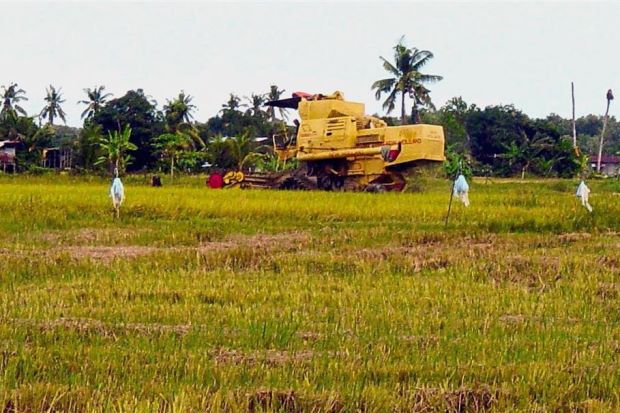
Field of green: A paddy field in Kota Marudu, Sabah, one of the lesser known parliamentary seats in Malaysia.

OVER the past month, I have been receiving a steady stream of visitors who want to hear my views on the upcoming general election.

I offer the same advice to all of them – don’t listen to me. Talk to voters and by that, I mean a cross section of Malaysians who live in the urban and rural heartland of the country, to get a fairly accurate assessment of the sentiments on the ground.

To foreign reporters, I tell them that they will be wasting their time and money if their only source of information is taxi drivers, bartenders, fellow journalists and the crowds at rallies.

It’s even worse if their idea of criss-crossing the country is confined to Bangsar, George Town, Johor Baru, Kota Kinabalu and Kota Baru. And from these visits, they confidently assume they have tapped into the pulse of the nation.

But this will not draw them apart from the average Malaysian, who has likely never ventured out of his or her neighbourhood or circle of friends and colleagues, yet conspires to make political judgments.

The key to winning the Malay­sian general election is to secure the rural parliamentary seats. Some Malaysians draw blank when asked if they have ever set foot in Kudat, Silam, Stampin, Kota Marudu, Sepanggar, Putatan, Batang Lupar or Selangau, or even know of their existence since they are part of the 222 parliamentary seats in the nation.

And there are urbanites who aren’t even aware of the numerous ethnic groups in Sabah and Sarawak or the names they go by.

Semporna, for example, which Parti Warisan Sabah chief Datuk Seri Shafie Apdal regards his fortress, has a strong influence because of the Suluk ethnic factor – and it’s safe to say many urbanites in “Semenanjung” have little knowledge of this group.

In Kota Belud, Sabah, the Bajau call the shots. Umno leader Datuk Seri Dr Salleh Said Keruak is most powerful here.

In the 2013 general election, 108 out of 133 seats won by Barisan Nasional came from rural seats. A total of 72 out of 89 seats won by Pakatan Rakyat came from urban and semi-urban seats – with plenty of help from Chinese voters.

The DAP, in particular, encouraged every Chinese voter returning to their hometown to vote against Barisan, conjuring the belief that the community could determine the electoral outcome, including even giving PAS votes.

There are only about 30-odd Chinese majority seats in the country. As expected, the DAP won all of them, but the huge turnout of Chinese voters could not knock Umno out.

What was worse, they helped vote in PAS, including hardliners like Nasrudin Hassan (PAS information chief) in Temerloh, despite his open contempt against concerts and Valentine’s Day celebrations.

The Opposition, particularly the PKR, did well in Malay-majority seats in semi-urban and urban categories because of the support of other ethnic groups.

But it was clear that Barisan firmly held the rural seats because in terms of the popular vote, the coalition obtained 57% in rural seats, 47% in semi-urban seats and 36% in urban seats.

Of the 108 rural seats won by Barisan involving more than 4.5 million voters, 66 were Malay-majority seats, 15 bumiputra Sabah-majority seats, 18 bumiputra Sarawak-majority seats and nine mixed, according to research group Politweet.

The 2018 general election won’t be any different. It will be fought in the rural Malay villages.

The Opposition has grudgingly nominated Tun Dr Mahathir Mohamad to lead the pact because they know that only the former prime minister can reach the Malay villages. They are fully aware of their weakness in the rural areas.

In this context, rural areas refer not just to the seats in the peninsula, but the bumiputra Sabah-majority and bumiputra Sarawak-majority seats as well, which are even more complicated.

The interior seats in these two states are difficult to reach, with some constituencies bigger than certain states in the peninsula and the voters scattered. Reaching these rough terrains means spending days of trekking or commuting via helicopter and boat.

Voters in Sarawak are often perturbed when Semenanjung folks tell them condescendingly that they should not have an MP to represent such a small number of electorate, compared to the huge number of constituents in Cheras or Kepong, for example.

Some urban folks are simply ignorant – they have no idea where Banggi is, for instance, and they just can’t fathom that these villagers have to travel four hours in choppy sea conditions to reach the nearest town of Kudat to get groceries.

For city dwellers, it would probably take them nothing more than a couple of hours to brave snarling traffic conditions to get where they want to.

The Barisan machinery excels beyond the fringes of the city because it is fully entrenched in the network of support in the villages, whether it’s via farmers’ or fishermen’s cooperative or village security committee. And it knows the political allegiance of every voter, too.

The test this time around will be the 54 parliamentary seats in Felda areas, almost all of which are rural in nature, and they involve the settlers and their children, who are likely working in urban areas now.

I politely told an American journalist that he should not get too excited by the size of our rallies, whether Opposition or Barisan, but to open his ears and listen to the voices of the rural folk instead.

One grievous error the American press committed during the US presidential election, where they failed to see the advancement of Donald Trump, was how out of sync New York-based media establishments were with the largely rural population that voted for Trump, “the disenfranchised voters who looked past his cheesy exterior and his penchant for half-truths and heard a message of hope, however twisted”.

Washington DC and Los Angeles urbanites, for example, were loudly against Trump, but no one bothered to seek the views of rural folk, which was probably deemed unimportant to the media houses. Perhaps they thought they knew better.

As David Farenthold of the Washington Post wrote: “One of the downsides of the fractured media landscape is that it’s easier than ever to sit in an echo chamber or filter bubble and preach to the converted. Newspaper readers believe what they want to believe, and so do those on Facebook – and never the twain shall meet.”

One way or another, most of us are guilty. Our friends who send us messages in chat groups or social media automatically assume that we share the same political enthusiasm as them, though that’s not necessarily the case.

Malaysia is much more complex than meets the eye. It is vast and the rural-urban political divide persists.