Monthly Archives: September 2019

Fix for a better mix


Big test: The latest by-election will be closely watched as it takes place in Tanjung Piai, which has been called a mixed constituency seat. — Bernama

An upcoming by-election could prove how far we have come from the divisive and degenerative politics of race and religion.

THE Tanjung Piai by-election will serve as a good platform for our politicians to stop, or at least, refrain, from using the race and religion cards simply because the Parliamentary constituency has almost equal representation of Malay and Chinese voters.

It has an electorate of over 53,000, of which 57% are Malays, 42% Chinese and 1% Indian. It’s hardly inaccurate to describe this seat as a racially mixed one.

The relentless recycling of toxic issues, a forte of some of our politicians, will only backfire if they cross the line.

An issue may be hugely appealing to one race but appalling, and even offensive, to another community. That’s the tale of plural Malaysia.

It was reassuring to hear Umno vice-president Datuk Seri Mohamed Khaled Nordin expressing hope that the Tanjung Piai by-election will be about a healthy and moderate contest for a more democratic Malaysia.

Similarly, Johor Pakatan elections director Datuk Salahuddin Ayob has pledged that Pakatan Harapan will be moderate in its campaign, pointing out that with Tanjung Piai being a mixed constituency seat, “support from one community will not be enough.”

It’s good that these two leaders can sit at the same table and think of the greater good for a mixed-race electorate and Malaysia. Hopefully, leaders from PAS will also read the narrative.

Malaysians, and not just Tanjung Piai folk, will be glued to this by-election since this is the biggest test for both sides.

For Umno and PAS, this is the time to prove, beyond reasonable doubt and the lofty promises, that they truly embrace multi-culturalism and inclusiveness.

Their pact, while strategically sensible, is viewed as an alliance that campaigns only for the interests of the Malays and Islam.

That has spooked many Malaysians, and is certainly not going to help their cause in winning in the next general election, especially if they don’t stop their aggressive approach.

The right thing for Umno and PAS to do is to support a candidate from an Opposition party, in this case MCA, and prove that politics transcends race.

Not all the 222 Parliamentary constituencies are Malay-Muslim majority, and no party can form the next government without Sabah and Sarawak, which have 25 and 31 seats respectively. In Sarawak, from the 31 seats, 10 are Malay-Melanau majority, while 21 are non-Malays, and for Sabah, 11 of its 25 seats are in non-Muslim areas.

It’s not far-fetched to assume that PAS has near-zero appeal in these two states, and that the voters there have little patience for firebrand politicians who preach race and religion.

In the case of Umno, it won 88 Parliamentary seats nationally, with 14 in Sabah and one in Labuan. Of the 73 seats in the peninsula, about 30 are small constituencies in rural areas, reads a report.

The 40-plus other seats are mostly Malay-majority, with mixed ethnicity seats, which have a sizeable number of non-Malay voters within the constituency. It would be foolish for a politician to write off these non-Malays.

Statistics indicate that there are 83 mixed Parliamentary seats where Pakatan won in the 2018 general election. Pakatan apparently secured 88% of these racially mixed seats, while Barisan National only managed 10. PAS failed to win a single ethnically mixed Parliamentary seat.

Last week, the Selangor government-linked think tank Institut Darul Ehsan reported that support for PAS in Selangor has fallen to a mere 8% – almost half of the 15% vote it received in 2018. But, of course, the findings will be questioned with the think tank being state funded.

It claimed that PAS has three kinds of supporters – the hardcore, non-members who back the party’s ideals, and PAS voters who are neither members nor supporters but vote for the party based on personal reasons or are attracted to the party’s alternative offer.

Increasing the number of racially mixed Parliamentary seats will be the best way to sustain moderate politics.

It will end the use of race and religion because candidates will know it would be foolhardy on their part.

But it would be challenging, too, since the Malay-Muslim population has shot up while the Chinese and Indian electorate is shrinking. There are more foreigners than Indians in Malaysia, and that’s a fact. The result is there are absolutely no Indian-majority seats.

It would also be more difficult to carve out racially-mixed seats in east coast states like Kelantan, Terengganu and, to some extent, Pahang, as they are predominantly Malay.

So, Sabah and Sarawak must continue to be the bastion of moderate and multiracial politics, and these two states will likely be the ones to hold the fort.

However, there is a suggestion that Malaysia can have up to 140 mixed seats out of the 222, and it would be up to the Election Commission to draw up such boundaries to ensure there are no clear racial majorities.

The dynamics of politics will change, and politicians would have no choice but to campaign across ethnic lines. The appeal of communal politics will also be neutralised, and that can only be good in the long run.

After six decades of independence, we are heading down a slippery slope if our politicians continue to harp on race and religion.

Tanjung Piai a test for all political parties

IT will be the first test for the Umno-PAS alliance in the coming Tanjung Piai parliamentary by-election, and for that matter also for the Opposition front which includes MCA and MIC.

There is no doubt that the combination of the two Malay-based parties is extremely powerful, as far as the delivery of votes are concerned, but their roles in the by-election will be a testimony of whether Umno-PAS want to see an inclusive Opposition front.

While it is strategically realistic for the two to have a formal pact, they have been criticised for championing Malay-centric interests and accused of sidelining other races.

An Opposition coalition that is serious in wanting to beat the ruling Pakatan Harapan would surely realise that while Malaysia is predominantly Malay and Muslim, it still remains a plural society. Nothing is going to change that.

No federal government, formed by any political pact, can be a legitimate one if it is not representative of other races.

A government of only one race and one religion, shutting out others, is meaningless, even setting off a dangerous course.

Starting off with a Malay-Muslim narrative, Umno and PAS now appear to have taken a more conciliatory tone.

Leaders of both parties have set off to Sabah and Sarawak to explain that the Umno-PAS alliance is a national consensus charter, and that it included the indigenous people of the two states.

Wanita Umno chief Datuk Dr Noraini Ahmad gave an assurance recently that “unity is the national consensus charter, it is inclusive of all races.

“Umno and PAS are two big parties for Malays and bumiputras but we never sidelined our indigenous friends in Sabah and Sarawak.

“When we talk about Ummah (community) it is inclusive, not just about the two parties only,” she reportedly said at a press conference.

Noraini said when they talked about Perpaduan Ummah (Unity of Community), they did not limit it to only Muslims.

“What we offer is peace, unity and harmony. Umno, under Barisan Nasional, has other components, the MIC and MCA, while PAS also has its own supporters from other races, so it does not mean only for the Malays,” she had said.

PAS president Datuk Seri Abdul Hadi Awang and Terengganu Mentri Besar Ahmad Samsuri Mokhtar also paid a call on Sarawak Chief Minister Datuk Patinggi Abang Johari Openg in their efforts to woo Gabungan Parti Sarawak.

Hadi again kept to his script and said PAS had no issue with other non-Malay parties, except DAP.

They have made the right move by trying to explain their pact, as Umno and PAS need Sabah and Sarawak.

The two states have 25 and 31 parliamentary seats respectively. That’s a combined 56 seats of the total 222 parliamentary seats.

In Sarawak, out of the 31 parliamentary seats, 10 are Malay-Melanau majority while 21 are non-Malay seats.

As for Sabah, 11 of the 25 seats are non-Muslim areas.

While the Umno-PAS pact may win more Malay votes, it is also a double-edged sword as it turns off the powerful Christian voters in the two states who have already openly expressed uneasiness with the race and religion approaches.

It doesn’t help that there are certain Umno and PAS leaders who continue with their rhetoric, which are often overboard and offensive to non-Muslims.

The two parties need to be consistent as they cannot talk of being inclusive and forget that their speeches, which may be tailored to their audiences, are also followed by other races now in this digital age.

It’s worse when their tone reflects their ignorance.

Tanjung Piai will be the test for Umno and PAS to prove that they walk the talk beyond the pledge in the charter pledging to embrace the spirit of multiracialism.

Despite the huge wave of support for Pakatan in the 2018 general election, Parti Pribumi Bersatu Malaysia managed to win the Tanjung Piai seat by just 524 votes.

It cannot be denied that this had much to do with the popular MCA candidate Datuk Seri Wee Jeck Seng, who had held the seats for two terms before his defeat.

A hugely grassroots politician, he is known to have sponsored haj and umrah trips for his Malay constituents, and donated regular supply of rice to poor villagers.

Wee was the political secretary to former MCA president Tan Sri Ong Ka Ting, who held the seat.

The race composition argument cannot be used as there is no predominantly Indian-majority seat in Malaysia.

The role of MIC in Barisan will be meaningless if there are no MIC candidates in the next general election.

More so, when there are seven DAP MPs of Indian and Sikh ethnicity while PKR has six Indian MPs.

For state assemblymen of Indian and Sikh ethnicity, DAP has 15 and PKR has five.

Much water has passed under the bridge since the 2018 general election.

The euphoria has died down and as with the rising expectations of voters towards a new government, the demands are sometimes unrealistic but the over-promises in the Pakatan government have not helped.

It has been made worse by what has been known as U-turns, which have given the perception of indecisiveness and inexperience.

In the general election, it has been reported that only 25%-30% of Malays voted for Pakatan, according to the Merdeka Centre, but that was enough to see the downfall of Barisan.

It was further compounded by the split of votes – 35% to 40% of Malays voted for Barisan while 30% to 33% supported PAS.

In the case of Tanjung Piai, it has an electorate of 57% Malay, 42% Chinese and 1% Indian voters.

That means both Barisan-PAS and Pakatan have to work out a strategy and narrative that appeals to the Malays and Chinese, as both are almost equal in size.

The results of the 2018 polls show that Barisan has a huge loyal base there and the same can be said of PAS.

The PAS votes of 2,962 will tip the balance in Barisan’s favour.

The irony is that among large sections of the Malays, there is an increasing perception that Bersatu is unable to defend Malay rights – a rallying cry of the Umno-PAS charter – while many Chinese and Indian voters have complained that DAP has “sold out”, and that power has changed the Chinese-based party.

Last month, DAP adviser Lim Kit Siang was heckled in his own Iskandar Puteri constituency in Johor over the khat issue.

In Tanjung Piai, it will be difficult for DAP to attack MCA, if it is contesting the seat, for depending on Umno-PAS votes, as DAP has also worked with the Islamist party under the Barisan Alternatif pact while Tun Dr Mahathir Mohamad, who had sent so many of the DAP leaders to jail, is now revered by the DAP leaders.

Even Dr Mahathir had dismissed DAP as a racist party, the same line that Hadi is now using despite having worked with DAP before.

But that’s politics, where there are no permanent friends and enemies but only common interests.

So, the stage is set for a battle, with a radically changed political landscape and sentiment since May 9, 2018.

The people of Tanjung Piai have the privilege of sending a clear signal.

Have HK people lost their mind?


IT’S a classic case of the Hong Kong people shooting themselves in the foot with the protracted violence and riots on the streets every weekend which are beamed across the globe.

The continuous protests may be aimed at denting the image of China’s leaders, who are certainly particular about the country’s image, especially ahead of the 70th anniversary of the People’s Republic of China.

But the reality is that what had started as peaceful demonstrations to voice their fears of the purported erosion of their rights have now degenerated into chaos and violence.

We are sorry for the people of HK but you have lost much goodwill and sympathy.

To be brutally frank, we think you have lost your mind.

The general consensus – and one does not even need to carry out any survey – is that these Hong Kong youngsters do not know when to stop, and do not even know what they want.

If the escalated violence is aimed at provoking China to step in with the People’s Liberation Army, and with possible bloodshed, the protesters may be surprised.

China does not need to do anything. The endless protests will lead to Hong Kong people hanging themselves, in the end, without the mainlanders having to react.

On Oct 1, hundreds of millions of Chinese will be on the move to celebrate the week-long Golden Week. Almost all of my Chinese friends are going home to see their loved ones or travel overseas on holiday.

But this time, HK isn’t on their itinerary. Why would any Chinese tourists want to go to a place where they would be unwelcome, and worse, may even get beaten up.

According to a report quoting Hong Kong authorities, tourist arrivals dipped abruptly in July by 4.8% compared to the same month in the previous year.

The number of Chinese visitors fell 5.5% to 4.16 million, down from 4.4 million in July 2018.

A large majority of Hong Kong’s visitors come from mainland China. In January to June 2019 alone, mainlanders made 27 million visits to the territory.

According to the South China Morning Post, which is based in Hong Kong, the Hong Kong Retail Management Association (HKRMA) said most of its 8,000 member shops had recorded a drop in revenue.

HKRMA said it would revise its sales forecast to a “double-digit decline” if the protests continue. It had earlier predicted a year of single-digit growth.

The Hong Kong Tourism Board’s preliminary figures have shown a “double-digit decline” in the number of visitor arrivals in the second half of July.

“The travel trade has reported that the number of forward bookings in August and September has (also) dropped significantly, ” a spokesperson told the BBC.

It isn’t just Chinese tourists. Many people have put off travelling to HK because no one would want to walk an hour to reach the airport terminal or to find a huge number of protesters jamming the airport and disrupting flights.

There is more bad news for HK. Dozens of airlines have written a joint letter to Hong Kong authorities to seek airport fee waivers as the carriers struggle with reduced traveller demand following the months-long civil unrest in the city.

The Board of Airline Representatives (BAR) of Hong Kong, which represents more than 70 airlines that fly to and from the city, wrote to the government earlier this month asking for temporary relief from landing and parking fees as well as rent and other operational costs, Reuters reported.

“Already we have seen a double-digit drop in passengers in August compared to last year and we expect this to worsen in the remaining months of the year, ” BAR chairman Ronald Lam, a senior executive at Cathay Pacific Airways, was quoted as saying in a letter dated Sept 16.

“Many airlines have already reduced or cut their services to and from Hong Kong as many routes have become unprofitable due to declining passenger numbers, ” Lam said in the letter, addressed to Hong Kong’s transport secretary.

Cathay Pacific, the biggest corporate casualty of the Hong Kong protests, reportedly said this month that it would cut capacity for the upcoming winter season following an 11.3% fall in passenger numbers in August.

Travellers are tired, and to put it bluntly, pissed off, by the shenanigans of the protesters. They should not be called pro-democracy activists, as the Western media, especially CNN and BBC, like to brand them. They are just anti-government protesters, and in some cases, plain rioters and hooligans.

And if you are pro-China, or against these HK kids, you automatically get labelled a “thug” or “triad, ” but when innocent bystanders, who dare to speak up or challenge these angry young men, get beaten up and it almost goes unreported.

So are some of the odd Caucasians, who get involved in these demonstrations, and even actively direct the protesters. They are arrested, as shown in videos, but my media friends in HK said they were let off because of a lack of evidence.

It’s paradoxical that one of the five demands is that they want the charges against the arrested protesters to be dropped – so they want a fair and just legal system but when you break the law, while on a rampage and in an illegal protest, they want to be set free.

The third demand is the retraction of the proclamation that the protests are riots. How are these not riots when barricades were set up and put on fire, petrol bombs were thrown, innocent people beaten up, and insane vandalism carried out to destroy public property?

Then there is also a demand to investigate purported police brutality. Most of us who have been following the weekly protests must be left shaking our heads.

Yes, HK isn’t Malaysia or Singapore, where there are enough laws to put a stop to these. Even in the United States or United Kingdom, the protesters wouldn’t be allowed to continue this week after week.And no one, including my media friends, has been able to tell me why the Western media is calling Joshua Wong a student leader when he is not an elected one, he is not in any university and at 22 years old, he is not even in any school.

And who is paying for his globetrotting ways to meet the big names, and surely some powerful forces must be making these arrangements and meetings. Surely, he can’t pick up the phone and ask to meet the president.

The most oxymoron pictures have to be the kids waving the US and UK flags at the protests, and do they actually believe that President Donald Trump, with his anti-immigrant policy, will hand them US passports and welcome them to America? Neither would Boris Johnson who wants to keep out immigrants with his Brexit move.

Home is where the heart is


Harking after a home: Officials have acknowledged that the lack of affordable housing is one of the issues that sparked the unrest in Hong Kong, which has been going on for months. — AFP

Owning a house is the standard ambition of any individual, however, getting there is increasingly becoming not only a local, but global struggle.

THERE’S a lesson to be learnt from the protests in Hong Kong – politics is about selling hope. So if the young people living in a depressing environment feel they have no future, then the alarm bells should ring loudly.

In the case of Hong Kong, the leaders – mostly technocrats and government officials – didn’t see it coming, or maybe they were just indifferent.

Many young people in Hong Kong feel they stand no chance of becoming a homeowner in their lifetime, and officials have acknowledged that the issue is one of the causes that sparked off the unrest.

The controversial Extradition Bill, which allows a Hong Kong resident to be sent to mainland China to face trial, was merely a catalyst. Those protesters couldn’t all possibly believe they’d fall on the wrong side of the law and face the consequences, could they?

Last week, former Hong Kong chief executive Leong Chun-ying was in Kuala Lumpur for appointments with businessmen, opinion leaders and officials, to update them on developments on the island.

I was among the lucky Malaysians picked to hear his thoughts and views on Hong Kong, while he, too, listened to our concerns during the two-hour closed-door meeting.

My co-host and meeting organiser, Datuk Seri Azman Ujang, and I both feel that of all the problems faced by any country in nation-building, none deserves greater priority than housing the people.

What expectation could be more basic than having a roof over our heads, and with it being a decent and affordable one at that? And when we talk about affordable, it should be truly attainable by the low-income people who form the bulk of the population in most countries.

Azman, the Bernama chairman, rightly outlined the consequences of the failure that stems from a lack of will in resolving the housing problem of the masses. And as he said, this could easily lead to people pouring into the streets protesting issues not even directly related to housing.

It’s a fact that many poor Hong Kong people live in a room less than 75sq ft, and millions live in deplorable conditions.

More recently, “nano” flats – tiny apartments less than 200sq ft – have fast become the norm in overcrowded Hong Kong.

According to a South China Morning Post report, the cost began at HK$2.85mil (RM1.52mil) for an apartment no bigger than an average Hong Kong car park space, but the lack of interest forced a rethink by the developer.

But what’s mind-boggling is that while there are plenty of poor people in Hong Kong, or many who feel poor, Hong Kong’s fiscal reserves stood at HK$1.16tril (RM620bil) as at the end of January.

In a report, Financial Services and the Treasury Bureau said there was a surplus of HK$86.8bil (RM46.2bil), bringing the cumulative year-to-date surplus up to HK$59bil (RM31bil).

All this wealth belongs to Hong Kong and not mainland China, so a lot can be done with that money for a population of just seven million people, especially low-cost housing!

In comparison, Malaysia’s official reserve assets amounted to US$102.03bil (RM425bil) as at end November 2018, while other foreign currency assets stood at US$51.6mil (RM215mil) for the same period, Bank Negara said. Malaysia has a population of 32 million.

It can’t be denied that Singapore has done well in housing its population, with over 90% of the seven million population reportedly living in homes of their own, and the home-ownership ratio is said to be the world’s highest.

The Singapore Housing Development Board (HDB) deserves global recognition for its feat in solving the housing problem of the people, especially the poor.

The middle-class and poor must be able to have a roof over their heads. That’s an essential human need. No country can have peace and stability if the poor are not able to own a home in their lifetime.

A prosperous and satisfied middle-class will lead to political stability. A huge middle class will also mean greater purchasing power, and this will lead to a better economy with spillover effects for everyone.

When there are angry citizens protesting everything from the escalating food prices to housing, then even the elite (including politicians and businessmen) will not feel safe. In South Africa, the rich live in houses with high walls and electric fences to protect themselves, but that’s not the best way to live. It’s living dangerously.

Malaysian politicians who still wield the race and religion card will realise that at some point, these will be “dead issues”.

With well-documented shrinking numbers, the Chinese and Indian population will no longer be the proverbial bogeymen in the future. Instead, it is class stratification that will be a matter of concern.

Last year, it was reported that the gap in income between the rich, middle class and poor in Malaysia had widened since 2008, according to a study by Khazanah Research Institute (KRI).

In its “The State of Households 2018” report, the research outfit of sovereign wealth fund Khazanah Nasional Bhd noted that the gap in the real average income between the top 20% households (T20) and the middle 40% (M40) and bottom 40% (B40) households had almost doubled, compared to two decades ago.

The report, titled Different Realities, pointed out that while previous economic crises, in 1987 and the 1997/98 Asian Financial Crisis, saw a reduction in the income gap between the T20 and B40/M40, post-2008/09 Global Financial Crisis (GFC), those disparities had not reduced.

But the Gini coefficient, which measures income inequality in the country, had declined from 0.513 in 1970 to 0.399 in 2016, denoting improvement in income inequality in Malaysia over the past 46 years.

Explaining the phenomenon, Allen Ng, who is the lead author of the KRI report, said income of the T20 households had continued to grow, albeit at a slower pace than that of the M40 and B40 since 2010.

“However, because they (the T20) started at a higher base, the income gap between the T20 and M40/B40 had continued to grow despite the fact that the relative (income growth) is actually narrowing post-GFC, ” Ng explained at a press conference after the launch of the report yesterday.

In his bestselling book The Colour Of Inequality: Ethnicity, Class, Income And Wealth In Malaysia (2014), economist Dr Muhammed Abdul Khalid wrote that “the future does not look rosy for Malaysia; the current policies are encouraging wealth disparity between rich and poor, and between ethnicities.

“Unless bold and drastic actions are taken urgently, a harmonious future for Malaysia is uncertain. There must be an urgency to give every Malaysian economic security, a better and sustainable future.”

Muhammed, the managing director of the research and consulting firm DM Analytics Malaysia, said last year that contrary to popular belief, most Chinese (70%) are wage-earners, as are most Malays (72%). In fact, the poverty gap between races has dropped compared to 40 years ago, though the disparity remains.

And what about Malaysia? We have a disastrous, if not scandalous, record, particularly the pathetic business activities, dealings and performance of the 1Malaysia People’s Housing Programme’s (PR1MA) set up to build affordable homes.

More than RM8bil has gone up in smoke because PR1MA’s management failed to meet its targets, despite all the assistance and facilities accorded to their projects by the previous federal government and most state governments.

PR1MA reportedly built only 11,000 homes, compared with its target of half a million residential units to be delivered by the end of 2018. That’s less than 5% of the original plan.

PR1MA Malaysia was set up to plan, develop, construct and maintain high-quality housing with lifestyle concepts for middle-income households in key urban centres. Its homes are priced between RM100,000 and RM400,000.

PR1MA is open to all Malaysians with a monthly household income of RM2,500 to RM15,000.

A total of 1.42 million people registered for PR1MA, a promise of one million homes by 2020, but only 16,682 units, or 1.6%, of the target, were completed between 2013 and 2018, costing the government billions in public funds.

Poor management, exorbitant land acquisition costs and unsuitable sites have turned the people’s housing project into a major financial flop. PR1MA’s failure, which could cost the new government billions, is apparently already saddled with ballooning debts, rendering the loss-making company untenable.

It’s the responsibility of the government to build affordable homes – not the private developers. Private developers, especially those who helm public listed companies, have profits and dividends to answer for to shareholders. They are in the business of making money, and with the expensive land bank they have acquired, they need to build expensive homes, too.

Even if there are requirements with the obligated mixed homes for social housing needs, it still won’t resolve the problems.

Our politicians shouldn’t pass their responsibilities to them. They just need to have qualified and competent professionals with integrity to run a set-up like HDB. Obviously, the people who ran PR1MA didn’t do their jobs. We can help Malaysians own homes, or at least rent them at affordable rates, if we’re truly committed. The question is, are we?

As for Hong Kong, there is another lesson the young protesters need to learn: a full democracy doesn’t guarantee you a home and a decent job. Just ask the homeless in the United States and Britain.

Wild as the wind in Serengeti, northern Tanzania


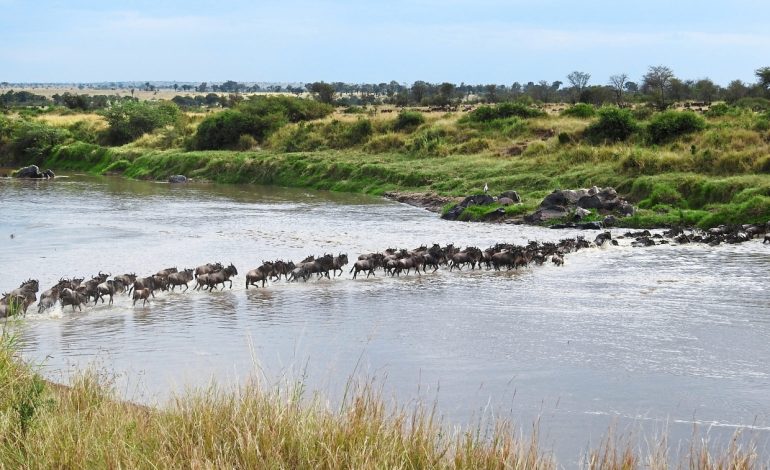
Sometimes, the wildebeests will form a single line to cross the river. — Photos: WONG CHUN WAI/The Star

The wildebeest isn’t exactly the best-known animal to most of us here. They aren’t striking in appearance and people often mistake them for buffaloes or wild cows of Africa, or at least assume they have similar lineage.

However, they are antelopes, although they belong to the family which includes cattle, goats, sheep and other even-toed species.

They play minor and insignificant roles in the Disney animated films, Lion King. Lowering their stature even further, they were portrayed as non-communicative animals, and we probably only remember their existence because Simba almost got killed in the massive wildebeest stampede.

They chased Simba deeper into the gorge, but fortunately, his father Mufasa came to his rescue. However, in that tragic scene, Mufasa is killed by his brother, Simba’s uncle, Scar.

Most of us would recall the scene of these not particularly beautiful and forgettable buffalo-looking animals running around like crazy in huge numbers.


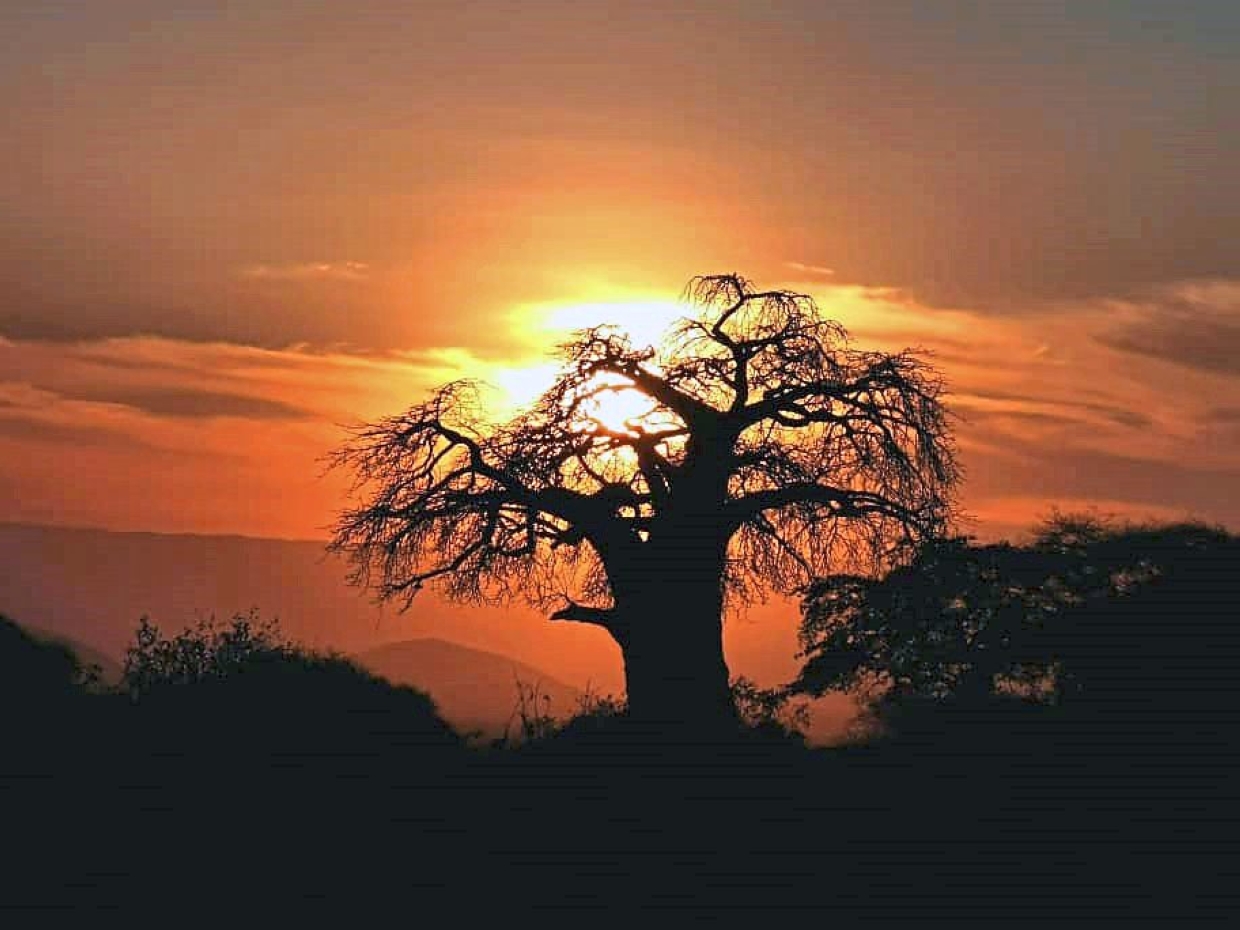
Sunset at the Tarangire National Park is simply breathtaking.

It was that scene in Lion King that created a lasting impression on me, rather than those National Geographic documentaries. I guess that’s the power of popular culture.

Last month, I travelled to the Serengeti in northern Tanzania to watch such stampedes, or more precisely, the largest mammal migration in the world.

The region, which spans over 77,700sq km (30,000 sq miles), has the largest concentration of African animals. It’s renowned for its large lion population and is ranked one of the best places to observe these creatures in their natural habitat.


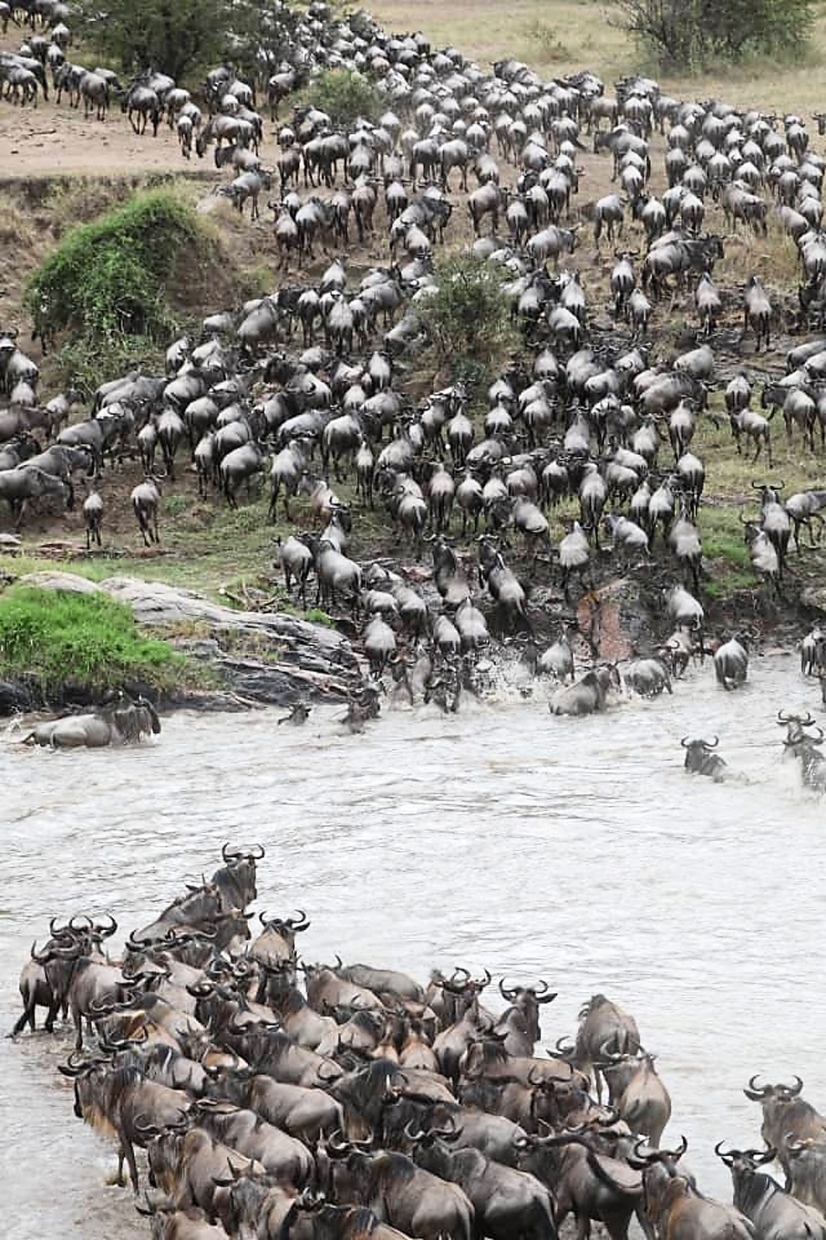
The migration of wildebeests in the Serengeti is one of the best things to experience in Tanzania. — SIN CHEANG LOONG

But the most populous animal is the wildebeest, numbering over 1.7 million, and they can be seen just about everywhere in the Serengeti (meaning “the endless plains” in the Maasai language).

This is the dry season in Tanzania, and the best time to be there for the Great Wildebeest Migration, as the annual relocation of these animals is called. They are sometimes joined by the zebras and gazelles across Northern Tanzania and Kenya.

Dubbed the great animal spectacle on Earth, an estimated two million of these animals move in a regular pattern through the Serengeti and Masai Mara ecosystems in search of greener pastures. However, since the timing and location of them crossing the river during their migration is largely down to guesswork, plenty of patience is needed to witness this great event because it involves endless hours of waiting.

In one instance, my Malaysian travellers and I circled around the same sprawling area for eight hours to ensure we didn’t miss the event. It meant waiting an hour or two, and even though we saw the massive assembly, nothing happened initially.

So, we headed to another area after the guides called each other to exchange information on the animals’ movement. After all, these are wild animals, so there’s no such thing as scheduled timing for crossing.


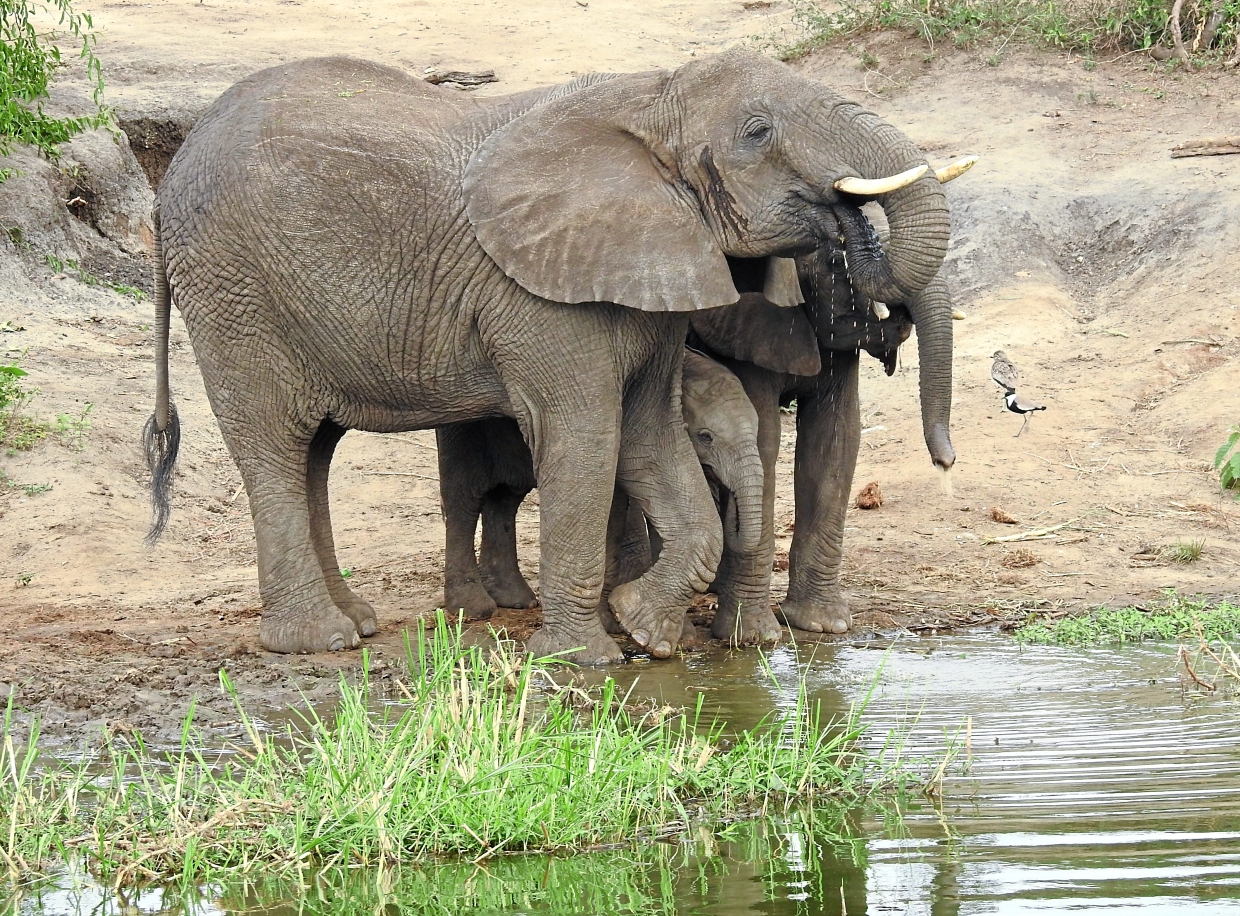
A jumbo family at the Tarangire National Park.

Besides being patient, we also learned to lower our voices when chatting. And our jeeps had to stay camouflaged as well, parking behind trees to avoid startling the wildebeest.

The “covert operation” constituted sitting in the jeep with the hot sun bearing down us, just hoping the crossing would happen. Largely, we sat there baking under the merciless sun since almost all the jeeps are not air-conditioned.

My guide, Charles Mpanda, was a man of great patience and told us to take his lead, assuring us we would be rewarded with a “great spectacular scene”, saying he would not let us return to the lodge until “I deliver to you what I have promised”.

We were under strict orders to remain in our vehicles, and if we had to ease ourselves, we had to make a quick exit to the nearest possible bush, which was like an al fresco outhouse. Hazards while doing the deed in the shrubs could come in the guise of a wild animal or an irate warden who could easily penalise us for safety violations.


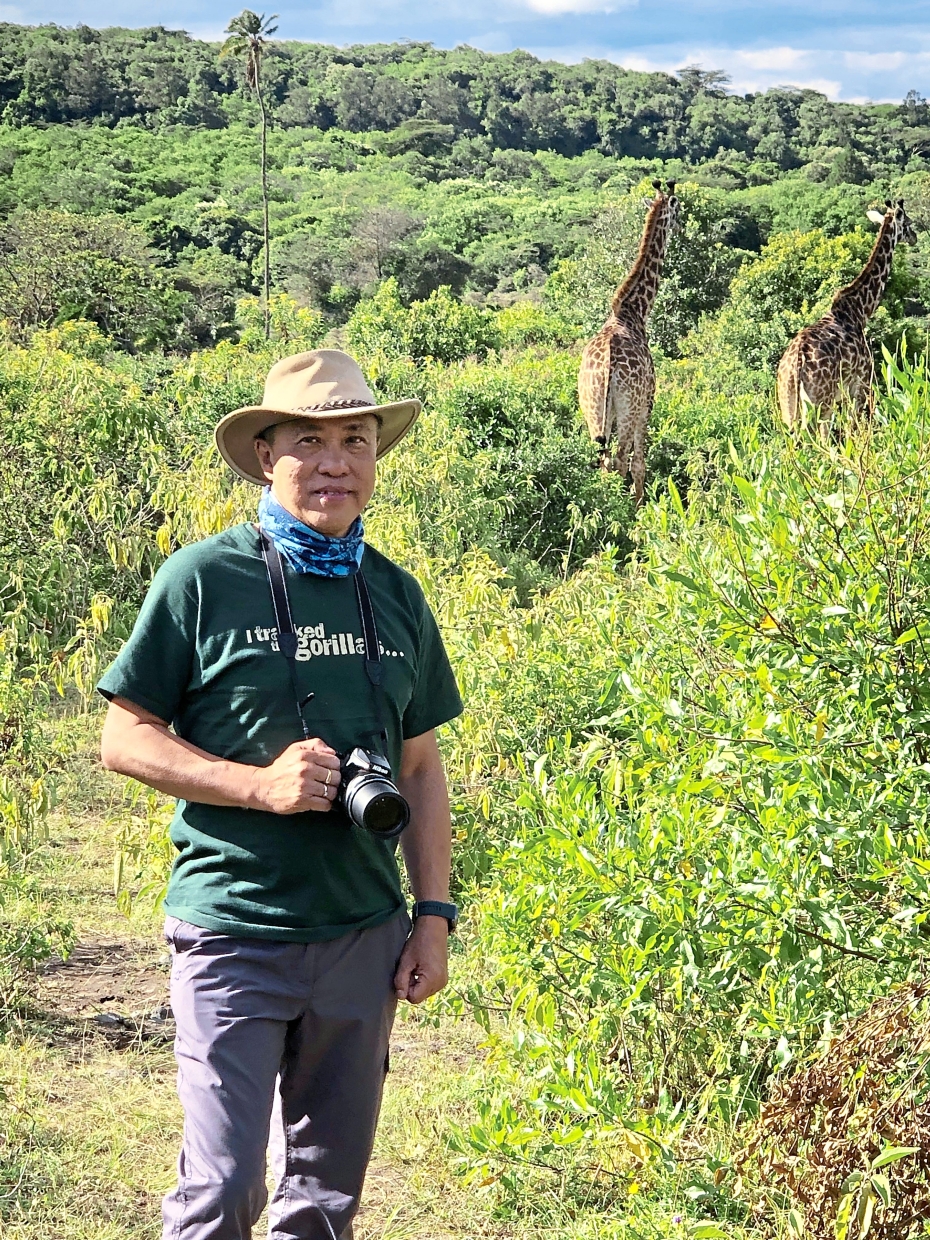
The writer at Arusha National Park. He and his travel companions patiently waited for hours each day to get a good glimpse of the animals roaming freely at the park. — SIN CHEANG LOONG

While nothing is certain, there were signs to look out for indicating the migration would begin, such as the wildebeest running together in huge numbers – sometimes in a single file – to a gathering point near the riverbanks.

Once they gather, they tend to wait for a leader (if there is such a thing) to begin the rush, before the entire herd joins in.

I finally saw how the “herd mentality” works, and in one incident, two herds crossed in opposite directions in the same spot, exemplifying the old adage “the grass is always greener on the other side.”

The Great Migration in Tanzania can be witnessed all year round with the wildebeest migrating in a circular motion around the Serengeti National Park. According to reports, one stands the chance of seeing up to thousands of them crossing the great Mara River between the months of July and October, which is when the wildebeest graze in the northern Serengeti plains.

“As the sight of the wildebeest crossing is so dramatic, it is considered by many the most desirable time to see the migration,” says one report.

From December to March, during the calving season, the wildebeest gather in the southern area of the Serengeti, particularly in Ndutu, located in the Ngorongoro Conservation Area.

“Along with the river crossings, this is a real highlight of the wildebeest’s journey and a fabulous time to see the herds congregate on the dramatic sweeping plains of the south.

“February is the only time of year when you are almost guaranteed to see the big herds all together as they always come south for calving season,” reveals tanzaniaordyssey.com.

It also said that for the rest of the year, in November, April, May and June, the migration is “in between” locations, and as such, these months are slightly transitional times to see the herds.


Alligator at Tarangire National Park.

Apparently, November is the time of the short rain season, unlike April and May, when it rains for longer, and as such, the grass is green in these months across the Serengeti. So, the wildebeest are more dispersed than in the prime times of July to October and December through to March.

Wildebeest are described as “notoriously unreliable” and “although they generally all head from south to north Serengeti and back around again, they often zig-zag along the way, making it sometimes impossible to predict where the big herds will be at any given time.”

It also said the “the migration undertaken by the wildebeest is an annual event which sees one and a half million wildebeest accompanied by hundreds of thousands of zebras and numerous other antelope species as they search for greener pastures. The animals follow a clockwise movement through the Serengeti following the rains for the lushest of grass. The 500km is fraught with danger, with many predators such as lions, cheetahs and crocodiles preying on the animals.”

During my 12-day stay in Tanzania, I witnessed four migrations, and all had happy endings. There wasn’t a single casualty, and all the wildebeest made 100% successful crossings.

I’m not sure how I would have handled it emotionally had I seen these animals being attacked by crocodiles, but thank God, I saw them spared from such ugly scenes, even if this is all part of the cycle of life.

But the Serengeti isn’t just about the wildebeest, as there are plenty of amazing animals to watch up close and personal. This is simply amazing Tanzania.

How to get there:

I flew with Qatar Airways from Kuala Lumpur to Doha for seven-and-a-half hours and then took a connecting flight (six hours and 40 minutes) to Kilimanjaro Airport in Tanzania, where our guide waited to whisk us on our safari trip of a lifetime in this beautiful country.

Hazy shade of the heatwave


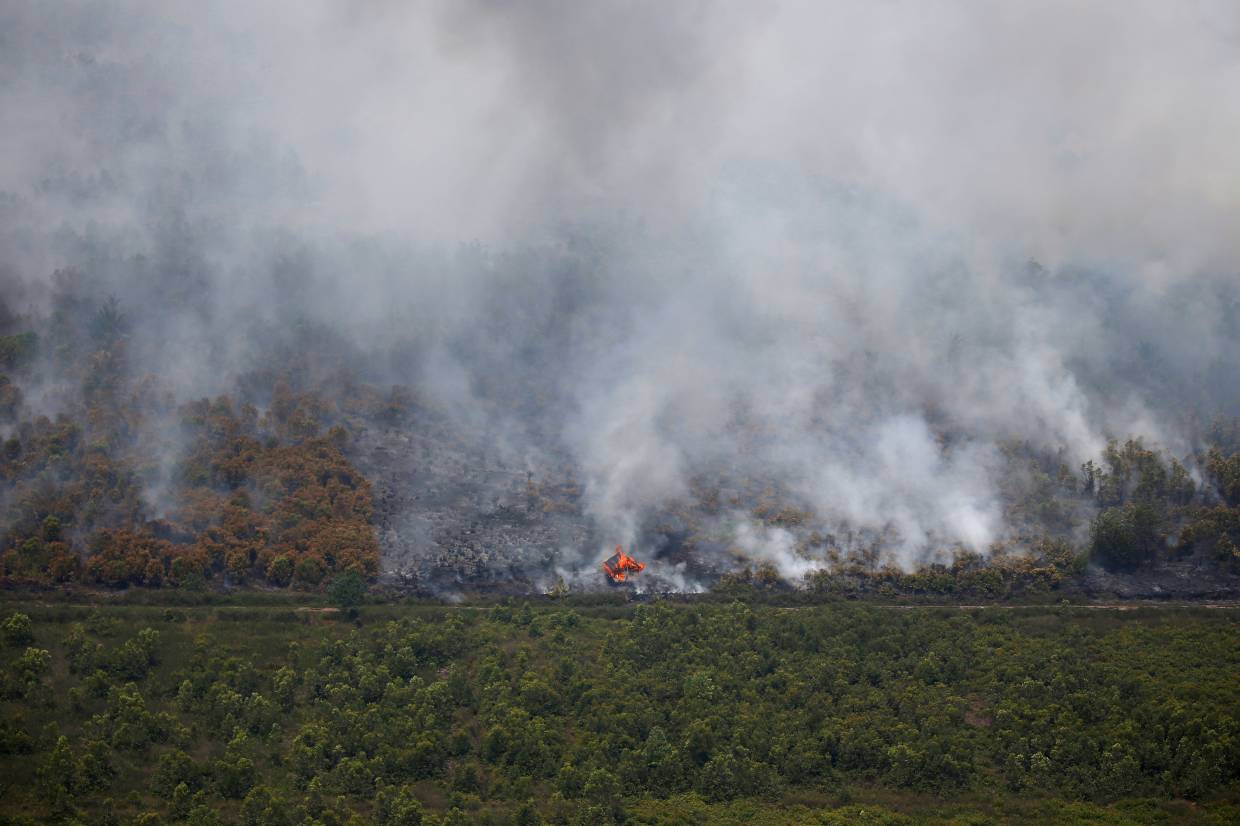
Forest fire in Palangka Raya, Central Kalimantan province, Indonesia on September 14, 2019. -Reuters

IT’S now decades into this rinse and repeat story, and miraculously, little has changed. The familiar sound bites of promised action are as hazy as the sickening weather this region continues to suffer from every year.

Honestly, it’s disgraceful that people in these parts have to put up with the smoke from the forest fires in Indonesia’s Kalimantan and Sumatra.

Since 1997, the slash-and-burn practices there have led to debilitating haze problems in Malaysia, Singapore, Brunei and the surrounding region.

Last week, Malaysia had to close more than 400 schools, as smoke and ash spread to more areas, stretching from Thailand to the Philippines, plunging air quality to unhealthy levels in their wake.

This annual transboundary problem has environmental, health and business implications. The difference now is that, incredibly, Indonesia has the audacity to blame Malaysia for the smoggy hazard.

And this time, the situation is more worrying because reports indicate the number of blazes in Indonesia’s rainforests has jumped sharply, as satellite data showed last week.

As the fires rage on, spreading toxic fumes across South-East Asia, concerns are arising about the impact increasing worldwide wildfire outbreaks have on global warming.

This has happened at a time when huge blazes are also singeing their way through the Amazon in South America because of the same reason – clearing jungle land for agriculture.

Slash-and-burn is the cheapest and fastest way to prepare land for cultivation, but it produces haze which is harmful to humans and wildlife.

Energy, Science, Technology, Environment and Climate Change Minister Yeo Bee Yin has rightly said that her Indonesian counterpart, Siti Nurbaya Bakar, is “in denial” after Jakarta insisted fires in Malaysia had caused the smog there.

“Let the data speak for itself,” Yeo said in a Facebook post, sharing figures from the Asean centre which showed only a handful of hotspots in Malaysia compared to the hundreds in Indonesia.

The number of “hotspots” – areas of intense heat susceptible to fire that’s detected by satellite – jumped sharply in Indonesia on Wednesday, according to the Singapore-based Asean Specialised Meteorological Centre.

Reports reveal that there were 1,619 hotspots detected on the Indonesian part of Borneo and in Sumatra, up from 861 a day earlier, according to a tally from the centre which monitors forest fires and smog outbreaks.

In 2002, Asean members devised and settled on a transboundary haze agreement – which Indonesia is part of – in response to the catastrophes of 1997 and 1998.

At that time, fires burned some 45,000sq km of forests in Kalimantan and Sumatra, and like today, the wind reportedly swept the acrid smoke across the region, polluting the air in Brunei, Malaysia, Singapore and Thailand in the process.

What was even worse was the timing of the haze crisis, with it happening during the devastating Asian Financial Crisis. Many of us can recall how the gloomy skies mirrored the sombre mood of Malaysians, with barely any optimism in sight.

It took 11 years after the treaty came into effect for Indonesia to ratify the agreement in 2014, but has our neighbour effectively enforced or enacted regulations at the national and local levels?

The problem with agreements, laws and rules is that they mean nothing if there is no proper enforcement. The voluminous agreement merely ended up a useless stack of papers which no one has paid serious attention to.

If this pact was properly executed, we wouldn’t be here choking our lungs away, and wearing those fiddly face masks which are more Hong Kong protester gear than ours.

I am not an expert on Indonesian law, and I could be wrong, but I have been told that none of Indonesia’s national laws make special reference to haze or pollution resulting from slash-and-burn activities.

In fact, Indonesia doesn’t categorise the spread of haze from forest burning as a disaster, say the media outlets there.

A news report said that for Indonesia, haze is merely the result of forest burning, especially when it’s manmade. Not categorising haze as a disaster prevents the country’s national and local disaster agencies from either responding accordingly or effectively.

Astonishing as it may sound, Asean has set a goal for a haze-free region by 2020 – that’s next year – as part of the agreement. No one can be blamed for thinking this a lofty goal. Truth be told, it’s even laughable.

Rightly or wrongly, the perception is that Indonesia has not been serious in its efforts to curb the problem. Many feel the country has maintained a “noncompliant” stance, and with the burning continuing every year, Indonesia has no one to blame but itself. It shouldn’t get overly sensitive because it deserves a dressing down.

“Local administrations throughout Indonesia should be informed about the policy. Only this way can we ensure that policies are synchronised and implemented effectively at national and local level,” reads academic portal The Conversation.

The writer, Dio Herdiawan Tobing, a research associate at the Asean Studies Centre at Universitas Gadjah Mada, detailed his trip with his research team to Palangka Raya, Central Kalimantan, one of Indonesia’s hotspots for land and forest fires.

“We wanted to know how local administrations view an agreement between ASEAN countries on haze pollution that Indonesia ratified two years ago.

“We were surprised to hear that the acting head of Central Kalimantan Environmental Agency, Humala Pontas, admitted he didn’t know much about the agreement. He asked: ‘What is contained in the agreement? Which part of the haze does it regulate? Are there any provisions that contain economic or other means?’”

He wrote about how the Environment and Forestry Ministry – the government body responsible for tackling threats to the environment – barely seems interested in enforcing the Asean haze agreement. It’s more focused on “project- based” action, such as distributing firefighting pump machines to the community.

“It was the Ministry of Foreign Affairs, in charge of international agreements, that actively supported Indonesia’s ratification of the haze treaty.

“As a consequence of the discord between the two ministries, two years into Indonesia’s ratification of the agreement, and local administrations are still not aware of it.”

But this isn’t the time for finger -pointing, and if Indonesia feels that it can put out the fires with its thousands of soldiers, then we must just place our faith in them. It’s very unlikely they will accept assistance from other Asean countries, including Malaysia.

The Indonesian government may also wish to consider an incentive programme to help discourage the slash-and-burn practise because penalties alone may be insufficient in nipping this once and for all.

More importantly, it’s not good enough putting out the fires. Asean wants a sustainable solution to this. We don’t want to go through this time and again. We’ve just had enough!

Dicing with danger

REGARDLESS of their nationality, race and religion, it’s irrational and impractical for anyone to still talk about boycott in the age of global economy.

Wake up, the world has changed! So, there’s no need to pretend or pose as defenders and champions of your race or religion.

Boycotts along racial, religious and nationalistic lines are not just unviable, but hypocritical in the modern-day economy, given that we use products from all over the world. It doesn’t matter if you are Muslim, Christian, Buddhist, Hindu or atheist, because ultimately, the products we use are likely to involve someone from another faith along the assembly line or supply chain.

The compliance, involving religious and health requirements, would probably be met, since any rational businessman would want to live up to the demands of their customers. That’s how businesses work.

From clothing to food, or technology to transport, almost every single item we use or consume can be traced back to producers, manufacturers and suppliers of various races, religions and nationalities.

It would be naïve for anyone to think otherwise.

So, the Muslims who initiate a boycott against non-Muslim companies obviously aren’t thinking hard enough and are oblivious to reality, or just ignoring the facts.

The minority Muslims involved in this campaign are likely doing this more for political reasons, and it’s apparent the targets are the Chinese and Indians – the euphemism for non-Muslims. Maybe I don’t know better, but somehow, I don’t think they ever mean the Americans, Japanese, Koreans or Thais.

That’s very unfortunate because their actions only hurt our fellow Malaysians, and we all know that in plural Malaysia, the staff of these companies include Muslims, especially in manufacturing. Often, most of the staff are Muslim.

Just count the number of Muslims who work in our hotels and restaurants, or even those in Genting Highlands.

Even in road accidents, or road rage incidents, Malaysians can’t pick their victims because this is a multi-racial and multi-religious country.

All it takes is a little spark of ethnic indifference, and with tempers fraying, such incidents are recorded and quickly make their social media rounds. And like clockwork, the accusatory finger of racial marginalisation is waved, with another purported example made of a race under siege.

But every day, we have Malaysians helping each other, in all forms, yet we take this good grace for granted. Instead, we let racial bigots hijack the agenda and allow them to amplify isolated cases.

We use and buy a product based on its quality, price and availability – that’s our consumer behaviour. So, it would be strange to expect us to buy a product simply because they are produced by someone from our race or religion.

Supermarkets and grocery stores said to belong to Muslims have appeared on a list in various towns – as has been actively circulated on social media – implying Malays should buy from these outlets.

That’s well and fine, but ultimately, the products sold in these supermarkets or grocers can’t entirely be manufactured by Muslims, so, the purpose of the move is a head-scratcher.

Of course, the products will be halal compliant, but they could be made by non-Muslim companies, yet would most likely involve Muslim staff, too.

Let’s take the argument further. Many of us, Muslim or otherwise, feel strongly about the treatment of Palestinians.

As someone who has visited Jerusalem on a pilgrimage, I have listened first-hand to the grievances of Christian Arabs living there. I saw the injustices Palestinians are subjected to in their daily lives.

My fellow travellers have also learnt to differentiate between secular Jews, atheists Jews, and Zionists, and are aware that we can’t lump everyone under the “Jew” category because many Israelites sympathise with Palestinians.

But can any of us honestly think it’s possible to boycott products created or manufactured by Israelis, or Jews?

Let’s start with Waze, a software developed by an Israeli company. I am sure it is widely used by many Muslims around the world, including Muslim politicians with the loudest rhetoric.

Then, there’s Intel Pentium and Celeron computer processor chips in personal computers (desktops, laptops and notebooks), which are either developed or manufactured in Israel. Likewise, the Windows XT operating system. All current Microsoft operating systems are heavily reliant on its Israel R&D centre.

Most anti-virus software and personal firewalls originate from Israel, and the algorithm (code) that’s used today for sending e-mails, was reportedly made by an Israeli who worked at the Ben-Gurion University in Be’er-Sheva in 1980. Many in-built and add-on applications on Facebook are Israeli developed.

The list is endless, ranging from medical equipment to life-saving drugs, and they are used by many of us.

Airlines operated by the Arab states, such as Qatar and Emirates, are surely among the best in the world now, and it will be silly for non-Muslim travellers to overlook these options because of religious prejudices.

And what about the choice of our transportation? Most of the cars we use are products of non-Muslims, and even if they include a national car, like Proton, most of the components and applications are the handiwork of non-Muslims.

Likewise, China-made mobile devices also rely on Western technology, and if their business with these tech companies ceases, the impact is great, as exemplified by the recent Huawei debacle. Without the Google search engine, YouTube and Gmail, and other applications, modern-day telecommunication loses its lustre.

It says a lot when American companies want to continue selling telecom equipment to Huawei, because the Chinese company is an important customer for many US tech firms, including Qualcomm, Intel and Micron.

It has been reported that from the US$70bil (RM293bil) in parts it bought last year, US$11bil (RM46bil) went to US suppliers. None of them have been convinced by their government that the Chinese tech giant is a national risk, a charge Huawei has repeatedly denied with no real evidence forthcoming.

Even the burqa and other religious items are now made in China and readily available for online shopping, and that’s a fact!

The bottom line is that the economy has changed dramatically with its layers of inter-connectivity, which could only increase in the digital age.

Malaysians will be labelled myopic and narrow-minded if the narrative of some politicians continues to be on race and religion.
And when global leaders address trade, artificial intelligence, digital enhancement and climate change, many of our politicians are instead still harping on divisive and unproductive issues, which is just lame and pathetic.

Getting up close and personal with the king of the beasts in Tanzania


It’s hot and dusty in the sprawling plains of the Serengeti in Tanzania. The dry season has gone into overdrive at this time of year, but August is also the best time to be on the safari trail.

This is when the greatest animal spectacle on Earth begins as wildebeest herds begin their massive migration across the crocodile-infested Mara river in search of water and greener pastures in Kenya.

It had taken a year for me to plan this trip – including saving enough money – and to visit this part of East Africa.

Tanzania is the envy of African nations as it is home to the best-known wildlife sanctuaries, including the Serengeti, Ngorongoro Crater and Kilimanjaro.

Some 20% of Africa’s large mammal species roam the reserves, conservation areas, marine parks and 17 national parks, all spread over an area of 42,000sq km, and forming about 38% of the country’s territory.

I first met Charles Mpanda – a hulking Masai safari operator – at a restaurant in Bangsar.

No surprise then that he was still wearing his safari hat and bush attire in Kuala Lumpur when I was introduced to him by a former Cabinet Minister who had travelled with him and insisted I do likewise.

After listening to him, I was convinced my group of Malaysian travelling companions would be in safe and competent hands.

After all, Charles was also endorsed by my idol, the famous off-the-track traveller-photographer Yusuf Hashim.


Lions don’t normally roam the plains if they are not hunting for prey.

“But Charles, I am very focused. I want lions. I don’t care about zebras and elephants. Can I see them?” I queried impatiently.

With a serious face, he responded calmly by telling me that I needed much patience to see them up close, and not just 10 feet away.

Of course, this advice is easier offered than taken, but nonetheless, I developed plenty of patience with the endless waiting under the hot sun, while needing to remain silent to spot these big cats and not spook them. It was all about searching, searching, searching and waiting, waiting, waiting.

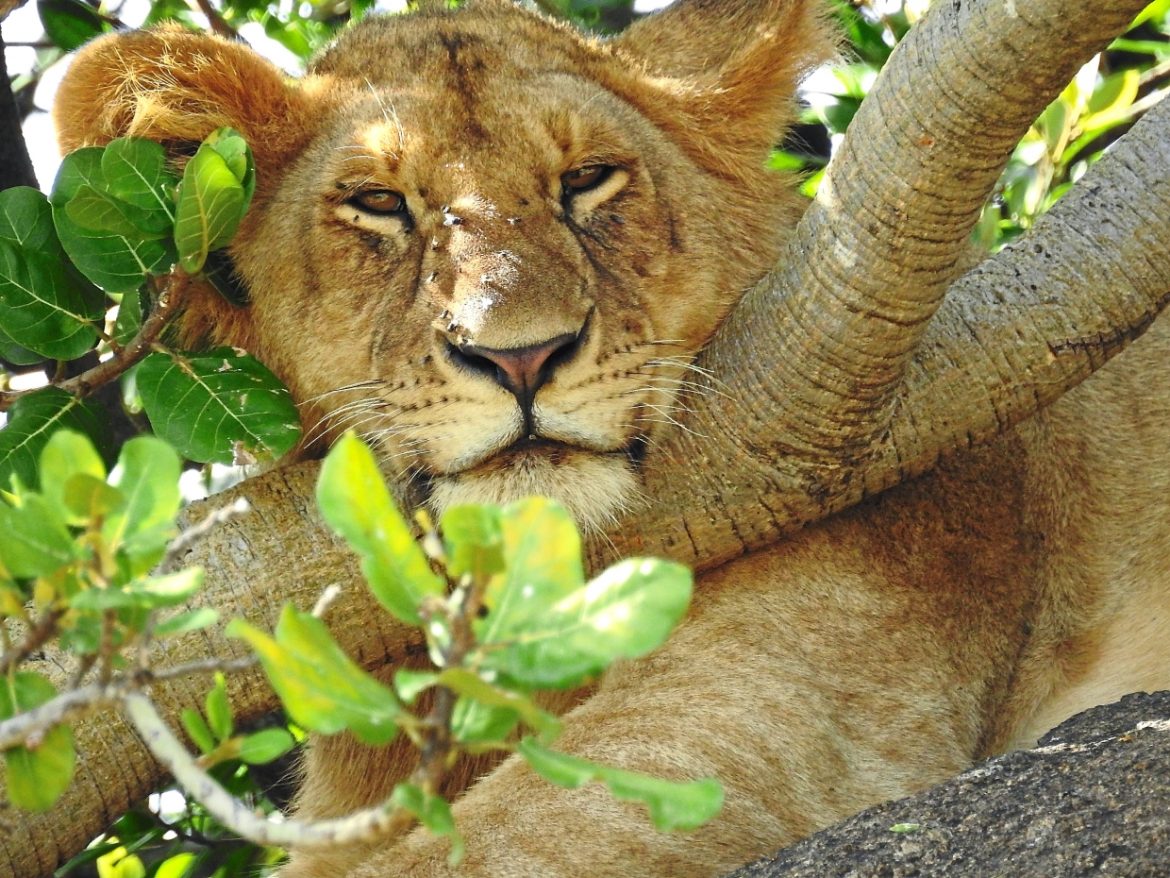
In the 12 days I was there, my party located eight lions, which included two males. They looked elegant and impressive with their distinctive manes, truly giving them the aura and look of the King of the Jungle.

Larger, stronger and certainly more muscular than the females, they were the ones that I wanted to see, hear and smell, and whose every feature on their faces I wanted to capture on camera.

While the waiting was a damper, luck was still on our side, and indeed, as Charles promised, the experience was truly up close and very personal!

At the Ndutu Park, Southern Serengeti – not far from the Lake Masek Lodge where we put up – we stumbled upon two females and a male lion.

It was late in the afternoon, and we were already burnt out and wanted to head back to the lodge, but lo and behold, we had the three big cats greeting us.

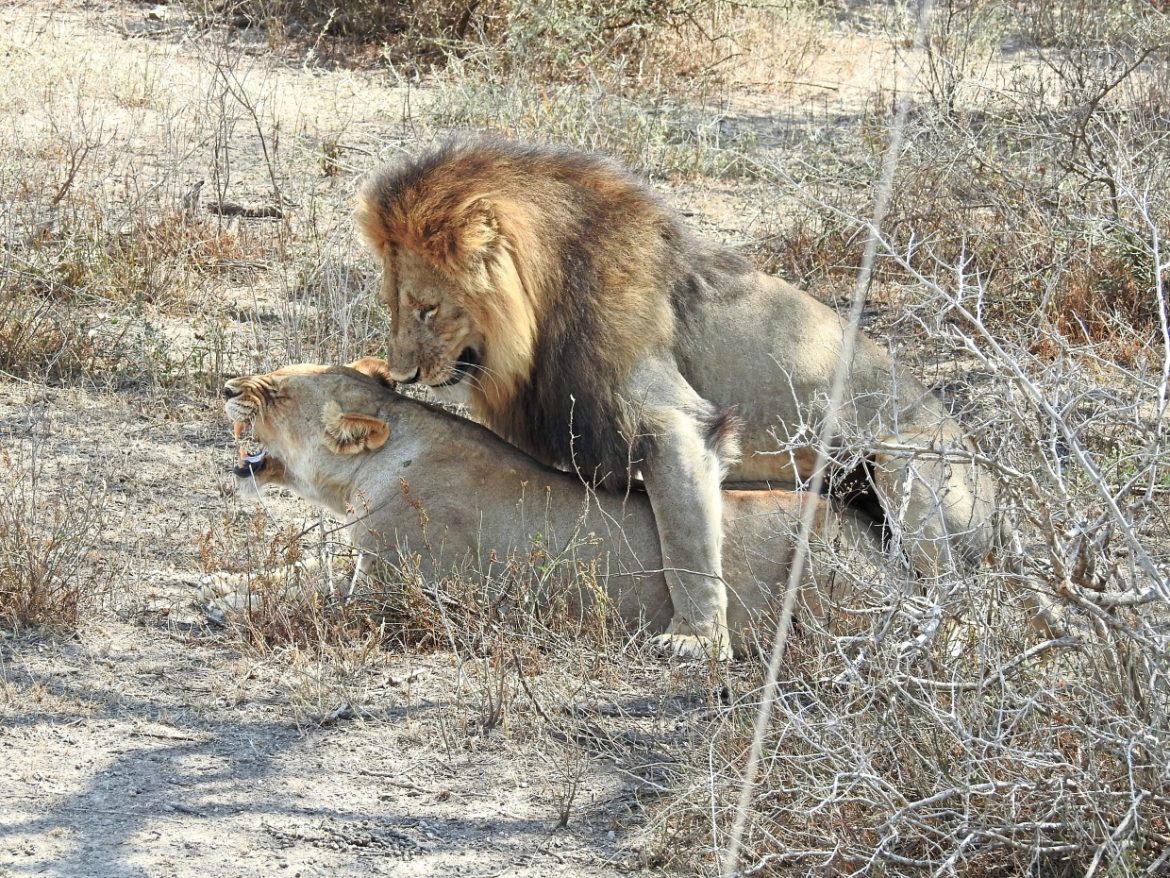
The male had to choose one of the two for his mating session. After taking his pick, the rejected female walked away in a dignified manner and let the two begin their copulation.

Oblivious to everything else that was happening around us, and feeling almost like shameless voyeurs, we watched every moment of this passionate affair, with the dominant male on the top of the lioness.

One of us even timed the love making process, and another nudged me, in true Malaysian style about buying “nombor ekor” when I return to KL, just as I was focusing my camera at the spectacle to record every moment of this amazing scene.

The whole process, as my fellow travellers reported, was pretty brief, much to their disappointment. A herd of cows in the distance provided a momentary distraction for the two cats, but they continued with the deed for a short while more before the fun came to an end.

I had to tell a woman friend, who looked dejected, that she shouldn’t expect much since “this is a lion show, not tiger show, my dear sister. You expected one hour, ah?”

While we literally bumped into these three lions, it was much harder to spot them when we were looking for them. They hid behind rocks and cleverly camouflaged themselves, especially during the day, since there’s little reason for them to be roaming aimlessly if their stomachs are full.


Lions mating at Lake Masek, Serengeti.

“Lions need an average of 11lb to 15lb (5kg to 7kg) of meat per day, but they do not need to eat every day. If a lion makes a large kill, it may eat up to 66lb (30kg) of meat at once and then not eat for several days.

“Lions normally hunt large animals such as wildebeests, zebras, warthogs and Cape buffalo. They also eat smaller animals, ostrich eggs and fish. Lions are scavengers as well, and eat both animals that have died of other causes and carcasses robbed from other predators.


A hyena at one of the parks. Photo: Sin Cheang Loong

“Lions need to be versatile in obtaining food because hunting is not always successful. Individual lions make kills in about 17% of their hunts; lions hunting in prides are successful about 30% of the time,” reads a reference site.

I had the privilege of being driven around by Charles Christopher Joel, or Semchaa, his African name, who is a walking encyclopaedia on every plant, flower, bird and creature in Tanzania.

With his eagle eye and discipline, this multi-tasker could drive through dusty, bumpy terrain while training his eyes on nooks and crannies to look for lions and other exotic animals for us.

He can also provide a running commentary at the same time, but if we got bored and ended up chattering, he’d swiftly reprimand us for potentially disturbing animals in the vicinity.

At one point, he saw vultures circling high up in the sky, and alerted us that there had to be a lion, leopard or cheetah somewhere which had just made a kill.

Indeed, it was a male lion, holding parts of his prey in his mouth, and thanks to my photographer, Sin Cheang Loong, it was beautifully captured, although from a distance.

But our safari aside, lions are slowly disappearing from Africa. At the turn of the century, there were about 200,000 lions roaming the continent, but there are less than 25,000 left now.

According to National Geographic, lions are listed as vulnerable to extinction by the International Union for the Conservation of Nature, which determines the conservation status of species.


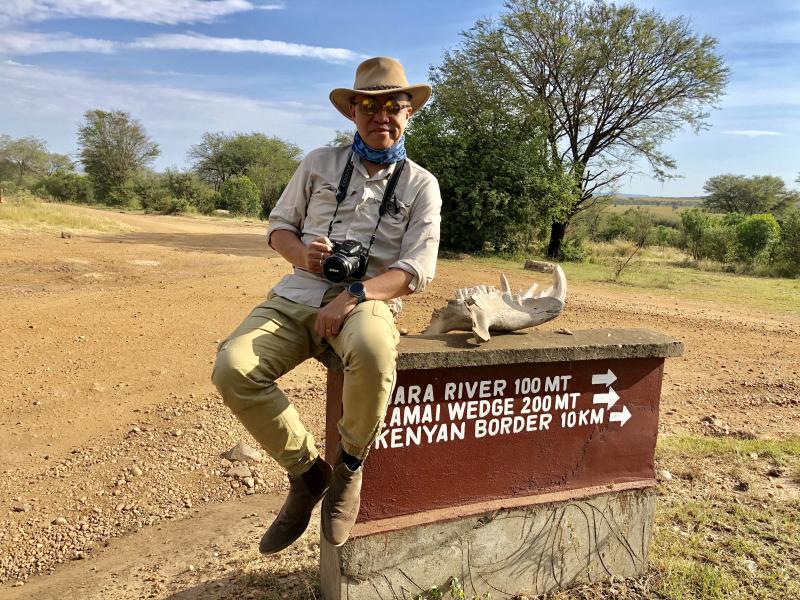
At the Tanzania-Kenya border. Photo: Florence Teh

To put things in perspective, the non-profit Wildlife Conservation Network notes that lion numbers have dropped by half since the animated movie The Lion King premiered in cinemas in 1994.

“Africa’s revered predators face myriad threats that put their very existence at risk. The decrease in lions’ wild prey for the bushmeat trade forces lions into dangerous contact with humans and their livestock in their search of food.

“But if the cats prey on cattle, they may be killed in retaliation – often by poison.

“And as human settlements grow, lions lose their habitat and see it fragmented, making it difficult for males to find new prides and mate.

“Poaching, too, poses a threat. Skin, teeth, paws and claws are used in traditional rituals and medicine, and there’s a growing market for lion parts in Asia as well.” As they say, once the demand stops, the killing will, too.


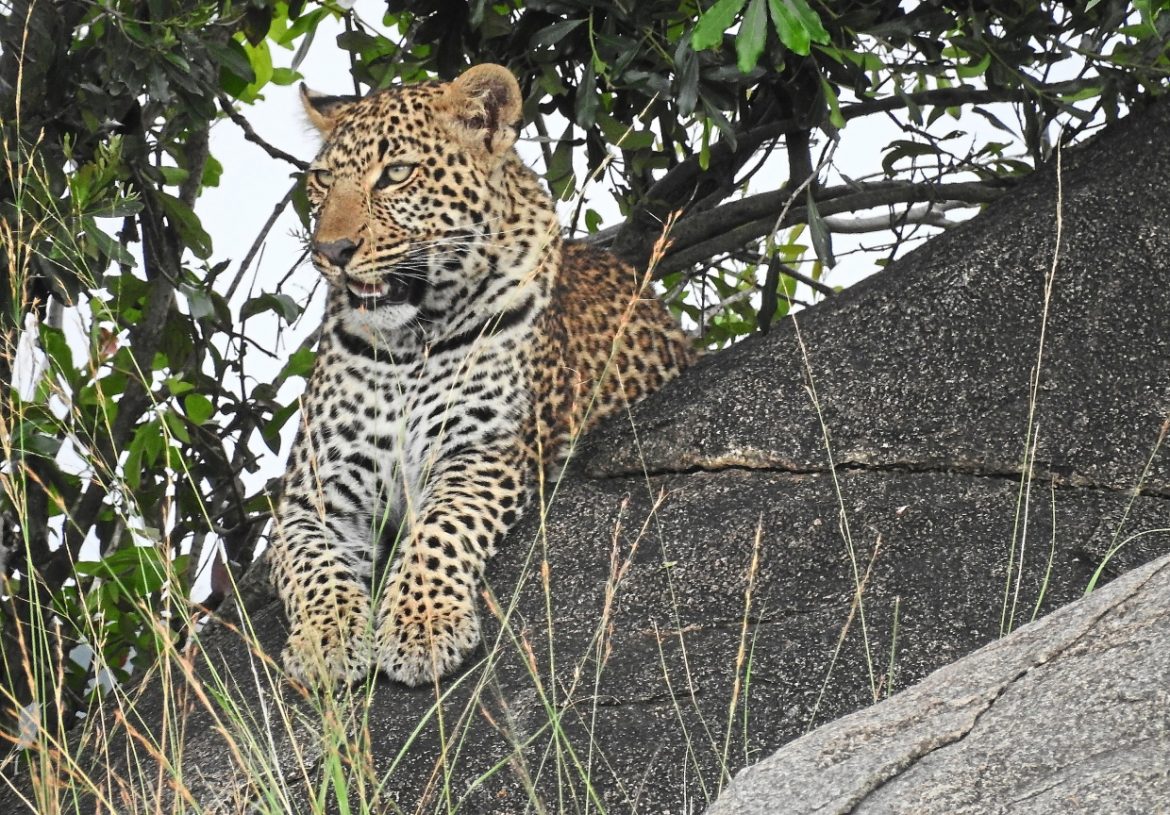
A gorgeous leopard spotted at the Serengeti National Park.


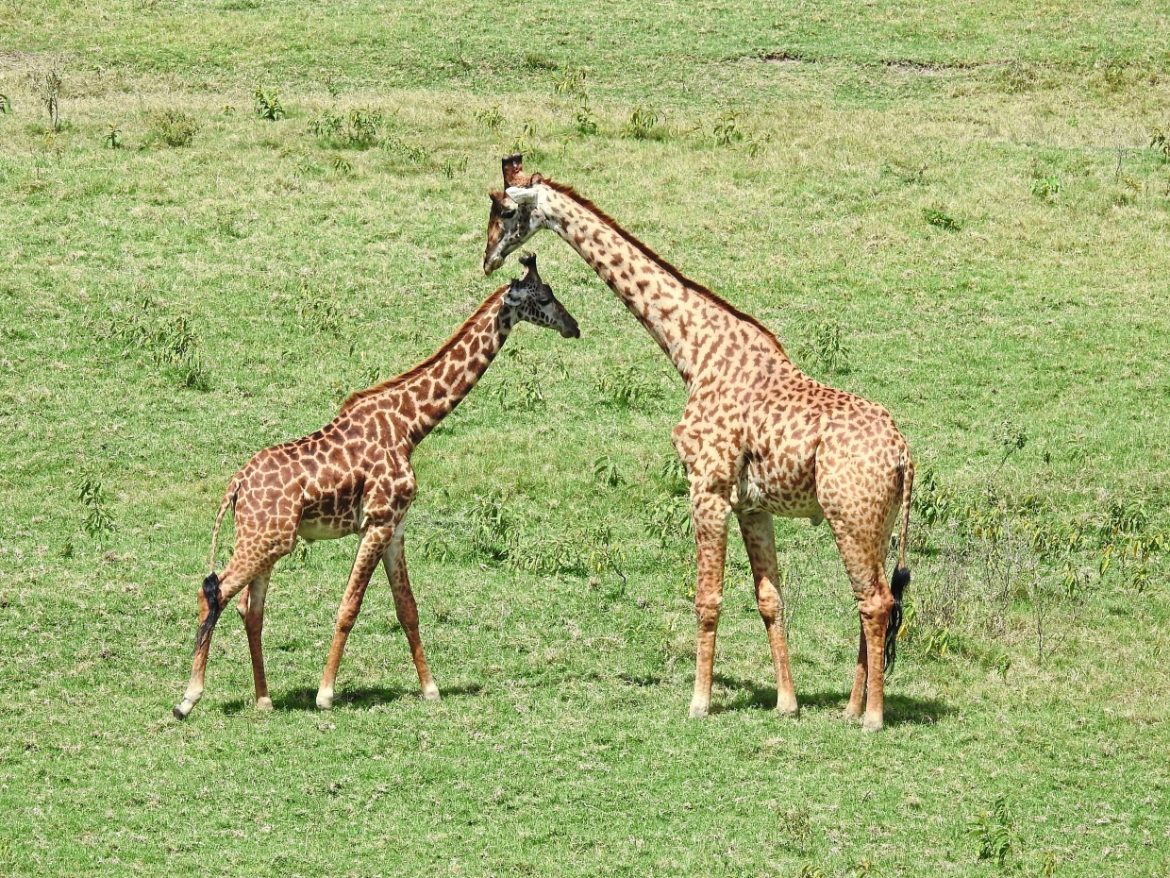
A mother giraffe and her child at the Arusha National Park.

In the end, I saw all the lions I wanted – one we saw in northern Serengeti eating in the distance, and another scene was of a family of three resting in bushes on top of rocks under shady trees at Kogatende, also in northern Serengeti.

So, all in all, we saw eight lions – an impressive number – including one at Ngorongoro Crater, which I viewed with my naked eye from a passing jeep.

According to The Guardian, the area of the world roamed by leopards has declined by three quarters over the last two and a half centuries, based on the most comprehensive effort yet to map the movements of the big cat.

It reported that researchers are shocked by the spotted hunter’s shrinking range, and that the decline has been far worse for several of the nine subspecies of leopards, including in other parts of the world.

“We found the leopard had lost 75% of its historical habitat, (and) we were blown away by that, (because) it was much more than we feared,” said Andrew Jacobson, a conservationist at the Zoological Society of London.

According to CNN.com, only about 7,100 cheetahs remain in the world and their numbers are swiftly dwindling, putting them at risk of extinction, according to new research.

Cheetahs should be re-categorised as “endangered”, instead of their current status as “vulnerable” on the list of threatened species maintained by the International Union for Conservation of Nature, researchers were quoted as saying.

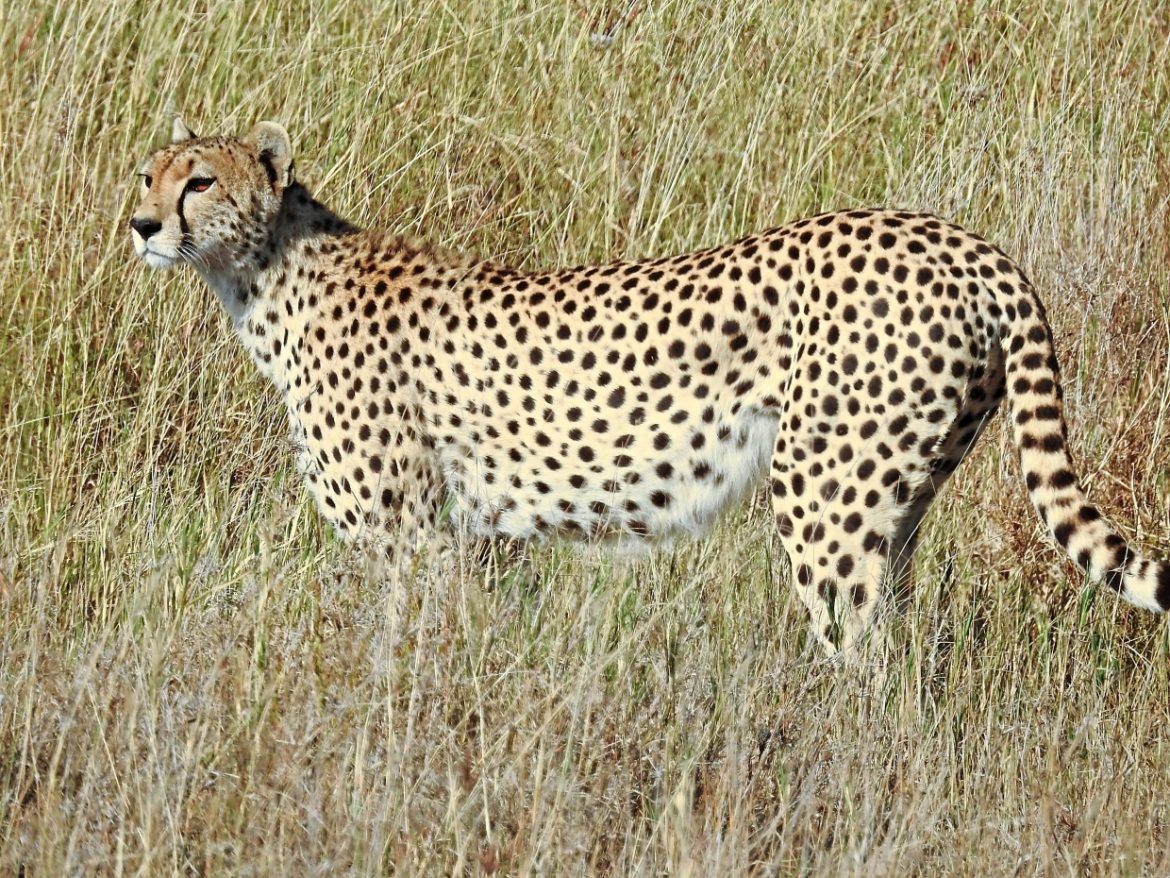
Having done my research before the trip, I had realistic expectations, but in the end, I saw the cheetahs twice. The first time was a pair of brothers in northern Serengeti, where we also saw them mark their territory by peeing on a tree.

The second time was in the Ndutu area of southern Serengeti, in some marshy but dry grass land. It was a lone cheetah walking, which finally came to rest on a shady rock.


Cheetahs are fast becoming an endangered species.

Finally, we saw another pair at the Ngorongoro Conservation Area, just before sunset at the tail end of our trip.

I had less luck with the leopards – I only saw one on a tree that grew out of a large rock (also in northern Serengeti), which I managed to capture on my camera.

As I ended my two-week stay in Tanzania, I told myself that I needed to return to see these beautiful creatures again.

They belong here, freely and in their natural habitat, and not in zoos, which are jails for animals. We need to protect them more than ever now. Like in the case of many other animals that have disappeared forever, we don’t want them confined to the history books.


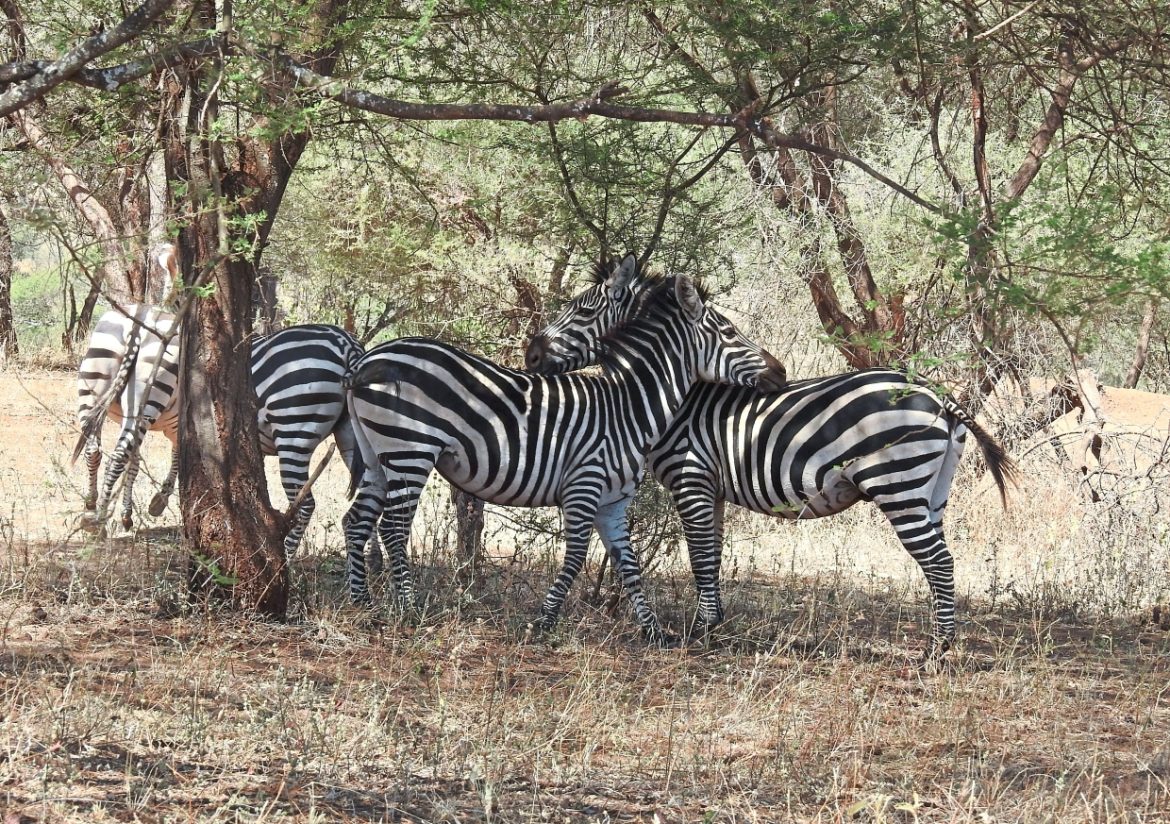
Zebras are easier to spot than some of the other animals at the Serengeti National Park.

Give kindness a chance


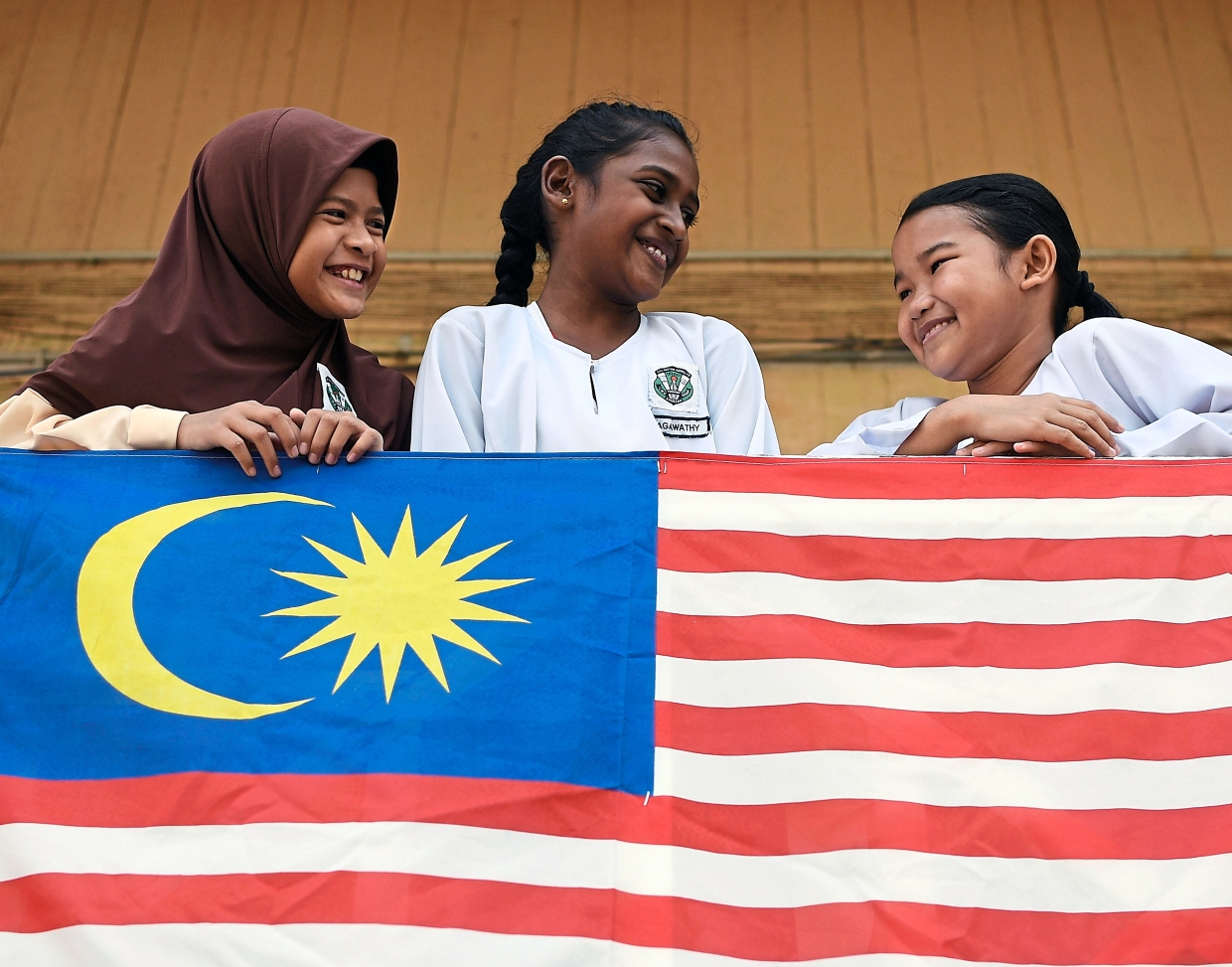
Spirit of Malaysia: Good friends (from left) Aimi Nurjannah Ahmad Fadilah, 10; N. Bhagawathy, 11; and Ong Chui Juang, 10; chatting by a Jalur Gemilang hung up at their school, Sekolah Kebangsaan Sultan Abdullah. — Bernama

THERE is a certain degree of apprehension, even uneasiness, this year as we celebrate National Day. Race relations in this country isn’t anything to be proud of, what with manufactured fears fuelled by groups with political interests.

There is a deliberate attempt to instil the perception that the Malay race and Islam are being challenged.

That belief is accepted not just by segments of the community in the lower leagues but, surprisingly, even in the upper echelons – by people we assumed would know better.

However, the ethnic equation of authority hasn’t shifted, and the Malays still constitute the anchor of power.

But the new government, a year into its service, must now grapple with this fear and is being forced to re-instil assurances that it remains the protector of the Malays and Islam, as well as other Malaysians.

It’s easy to be in the Opposition but much harder to be in the government of plural Malaysia, as many ministers are now starting to realise.

But Malaysia isn’t on the verge of breaking up. Far from it, in fact, because Malaysia is a middle-class country, with most of its people moderate and rational.

Sure, the weak economic sentiments haven’t helped, and when people have less money to spend, they have less patience, and perhaps, become easier to exploit.

This malaise has been so amplified over social media that some of us have been consumed by hate remarks spewed by unknown people and those served by political and religious platforms.

And they cut across all races and religions.

But there are many, many Malaysians out there helping each other regardless of race and religion every day. They include the police, army and firemen – service men and women who put their lives on the line every day to protect us.

We often take this for granted, assuming it’s their job to do so, since that’s what they get paid for, but they have families too, and their job really isn’t easy.

Let’s hope their wellbeing becomes one of the more positive narratives to look forward to.

This National Day 2019, I wish to pay tribute to my fellow Malaysians, who I believe are inherently sharing, giving and colour blind.

This has been in our DNA since our nation was born in 1957 as the Federation of Malaya, and reborn as Malaysia in 1963. I urge Malaysians not to be baited by divisive forces, and instead, safeguard the diversity that defines us.

Our founding father Tunku Abdul Rahman understood the importance of all races coming together. The delegation that went to London to seek independence comprised all races, and Malaysia wouldn’t have been possible without Sabah and Sarawak.

And to reiterate, Sabah and Sarawak didn’t join Malaysia – those states helped form Malaysia!

Malaysia is a product of all races coming together to make diversity a reality, with Malay leaders steering the ship.

Sixty years later, and this beautiful land remains one of the best countries to live in. This is our home. To put it into context, most of us would be itching to reach home after an overseas assignment, or even a holiday trip. It’s telling when those who emigrated can’t even give up Malaysia.

Many are so often here one wonders if they truly ever left, and their many postings on their tanah air in social media on various issues indicate their hearts have never really left the country.

Malaysia is crying out for an upturn, because there are many good people around us, who have been doing good things.

We have many good examples to take from, so why be derailed by people who don’t matter, and by things that shouldn’t either?

Tunku laid the foundation of our great culturally diverse nation based on the spirit of compromise.

He may have faltered at times, but he did things for the greater good, and that can’t be denied. Much has been written about his contributions, most notably in The Star, where he was a columnist penning his thoughts well into his twilight years.

I had the privilege of meeting him when I was a reporter in Penang, where he stayed. He was also once the chairman of our company.

He always strove to buy hardware materials from my father’s stall – not even a shop – at Cheapside, off Chulia Street, because he could talk to my father in the Kedah accent. My 95-year-old dad was born in Kuah, Langkawi.

His aides preferred him shopping in more comfortable places, but he always insisted on returning to my father’s humble roadside stall. That was our Tunku.

Then, there is our prime minister twice over, Tun Dr Mahathir Mohamad, whose tryst with destiny means Malaysia has been given a second chance to become a model nation.

Love him or loathe him, Dr Mahathir’s role as nation builder is well-documented and his legacy will remain.

Then, there is the silent majority doing wondrous things in Malaysia and internationally. Many of them are Merdeka babies who grew up with the nation and witnessed its ups and downs.

Another Kedahan, Tan Sri Syed Mokhtar Albukhary, is surely one of the most reclusive Malaysian businessmen.

He avoids social functions, even his own corporate events. He is more comfortable in his long sleeve batik shirt and sandals than his suit, which explains why he’s one of the most misunderstood tycoons.

He shuns the limelight and seldom speaks to the media, and much of his charity work also goes under the radar.

Syed Mokhtar couldn’t care less what people say about him. He has often found himself in the unenviable position of responding to unsavoury remarks made by those who have never even met him.

His critics say he has too many business interests, but none of the rich in Malaysia can match the magnitude of his charitable clout.

He grew up in a kampung with a Malay neighbour on one side, and a Chinese one on the other.

“We came from many places in different boats, but we are now in the same boat. We have to keep going to stay on course. We are all in the same tongkang (a native boat used in the East Indies in fishing and in local trading), ” he would often tell younger Malaysians.

He went to school in 1958, the first post-Merdeka batch of students who represented the breadth of Malaysian society.

He started his business when the New Economic Policy was launched in 1971, seizing all the economic opportunities it presented. Syed Mokhtar feels his country has been good to him, and he still has much to give.

The donations underscore his personal philosophy rooted in the Muslim values of taqwa (submission to God) and Ihsan (compassion).

I met the media-shy Syed Mokhtar for the first time some years ago, and was struck by his simplicity, charitable spirit and positivity.

He dropped out of school to work and support, not only his family, but also several poor neighbours. Many of us give when we have plenty, but he did it when he barely had anything. This became the starting point of the Albukhary Foundation.

His parents taught him to provide for the poor, with those lessons bearing fruit through his philanthropic values at 23, when he started a small business dealing in rice.

When he received his first monthly pay packet of RM1,500, his mother urged him to share half his earnings with the poor.

“So, I kept half for my family while the other half was donated to 15 needy families in my village,” he revealed in an interview.

When looking for Malaysians to list in the inaugural philanthropy issue in 2008, Forbes Asia selected Syed Mokhtar, and again and again thereafter.

By then, Syed Mokhtar was a business tycoon whose charitable contributions were felt across five continents.

As at end 2018, he had contributed over RM4bil, mainly to various education, health and welfare projects that have benefited hundreds of thousands of Malaysians

He has donated huge amounts of money to Universiti Tunku Abdul Rahman, the Asian Institute of Medicine, Science and Technology University and Wawasan University, for example – and these universities have high non-Malay enrolment.

Earlier this month, the Albukhary Foundation came to the rescue of a bright young Sarawakian who had gained admission to study medicine in Cambridge, where each year, only 21 places are offered to international students to study medicine.

His father, a site supervisor, is the sole breadwinner, and with his mother a homemaker, the family simply couldn’t afford to accept the offer. Also, there was a 33% slash in government scholarships, which surely reduced his chances of being selected.

At school, when his friends enjoyed their holidays, he had work to pay his school fees, but he knew it would help reduce his parents’ burden.

Then he applied to private foundations for a scholarship. Despite his Cambridge offer, his application was rejected by 10 different foundations in Malaysia and abroad. He even wrote to Warren Buffet, one of the richest men in the world, never to hear from him. But he caught the attention of Syed Mokhtar.

The applicant is a Chinese boy from Kuching, but for Syed Mokhtar, he is a Malaysian who deserves a helping hand.

To benefit from these initiatives, the Foundation sets one main condition: you must be poor.

For example, when he found out that poor kidney patients in his home state Kedah couldn’t afford dialysis treatment, he built the full-fledged Albukhary Dialysis Centre, with medical and nursing staff to provide free medical treatment for them.

Located in the Sharifah Rokiah Centre of Excellence in Alor Setar, the dialysis centre has 18 machines and 40 patients, mainly rubber tappers and casual workers with no fixed income. Future plans include acquiring more machines and increasing patient capacity.

The Sharifah Rokiah Centre of Excellence, named after his beloved mother, is best known for its Albukhary International University.

Baby boomer Syed Mokhtar knows the future belongs to the youth. And he wants to pass on to them values that have stood by him through good times and bad. He calls them the 5As: Adab (good manners), Akhlaq (ethical), Aqidah (faith), Amanah (trust) and Amalan (practice). The 5As have become the core values of the Albukhary International University. They are also values he has shared with his children, who are set to follow in their father’s footsteps.