Monthly Archives: November 2019

The way to a man’s heart is through his stomach, likewise the nation


Time to deliver: The public is counting on and holding accountable all promises made by the Pakatan government.

OUR politicians don’t seem to get it. Malaysians are exhausted from their endless politicking at the expense of homing in on pressing issues affecting the people.

The message of the people from the Tanjung Piai by-election is clear, but it looks like that reality hasn’t set in as it should have.

Politicians succumb to amnesia easily and develop dementia much earlier than the rest of us, which probably explains why promises pledged in their manifesto can even quickly be forgotten.

A clutch of politicians from previous elections have even placed an expiry date on their manifesto – the voting deadline of 5pm on polling day.

But things have changed. For the first time in the country’s electoral history, promises made and broken are being discussed, even 18 months after the general election.

The public is counting on and holding accountable all promises made by the Pakatan Harapan government.

Sure, three years are needed for these promises to be realised but breaking them is another thing altogether.

Reneging on promises is worse than not fulfilling them, and that has become a significant source of resentment for the people.

So, imagine the disgust of Malaysians when reading about a plot – real or imagined – executed in the dead of the night to meddle in the country’s leadership transition.

It’s unprecedented in the nation’s politics for party allegiance to be cloak and dagger affairs, and solidarity to have little meaning. But that’s indicative of the kind of politicians in our midst these days.

Before this, we knew exactly who we were dealing with – they were either with the Government or the Opposition. There were no perforated lines and the distinction was clear.
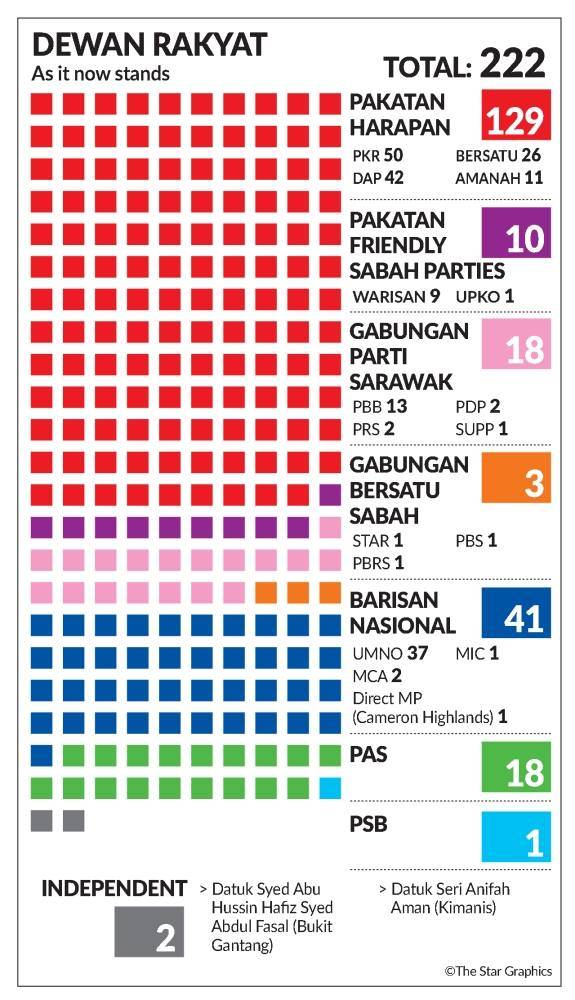

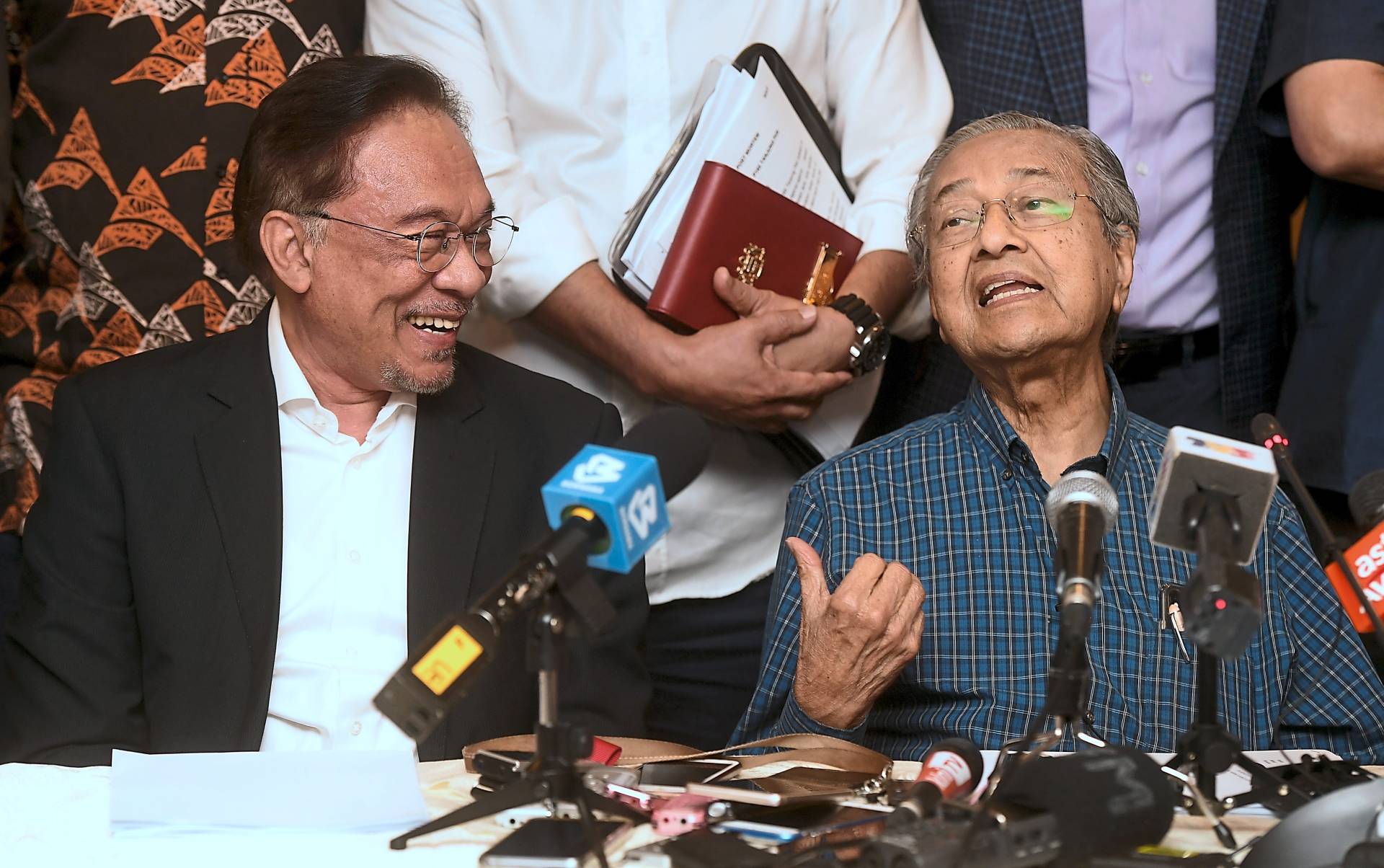
Now, we have the Opposition – namely PAS and some Umno leaders – that has pleaded with the Prime Minister to remain in his post until he turns 98. Yes, two years shy of a centurion, that’s how old Tun Dr Mahathir Mohamad will be by the next general election.

So now, we have the Opposition rooting for the head of the government to keep his post instead of wresting it from him, which is the primary ambition of normal opposition parties.

The mind-boggling situation has come under sharper focus with former Umno vice-president Datuk Hishamuddin Hussein and PKR deputy president Datuk Azmin Ali singled out for plotting to ensure status quo.

Now, it’s apparent Azmin isn’t rooting for his party boss but Dr Mahathir instead, the leader of another party, Parti Pribumi Bersatu Malaysia, a component party of PH.

Within Umno and its 37 seats, consensus have split nearly down the middle as to whether Dr Mahathir should continue, or the reins be handed to Datuk Seri Anwar Ibrahim instead.

This is likely what’s happening – Umno probably doesn’t have a candidate in mind from its ranks to sit in the hot PM seat and form the next government. Isn’t that what an opposition party is supposed to do, offer the alternative?

So, the best they can hope for is to have someone who is prepared to, at the very least, be sympathetic to them.

It’s complicated, and unfortunately, there are no hand guides. So, are you following so far? Welcome to Malaysia’s paradoxical politics.

Bersatu, which won only 13 parliamentary seats in last year’s polls, had the privilege of heading the federal government and most state governments. PKR has 50 seats, DAP 42 and Amanah 11.

Bersatu, however, gained seats after a series of defections, going from 13 to 27. It lost one following the Tanjung Piai byelection, though.

Dr Mahathir, of course, was given the job because without him, PH would never have been able to knock Barisan Nasional out of government.

He was the super glue that bound everything together while Anwar was still languishing in prison. Anwar wasn’t a Member of Parliament, so he certainly couldn’t become the PM.

So, for peculiar reasons, Bersatu now has more Mentris Besar in states where the combined PKR-DAP seats number higher.

And DAP, which has the sizeable 42 parliamentary seats, has cleverly stayed clear of the issue, so far.

For all the bravado, no one in PH can hope of becoming the PM without the support of the DAP, because Cabinet revamps would be impossible without the approval of PH component parties.

Dr Mahathir’s hands are tied. He failed to implement his Cabinet changes and even when he attempts the next one, he will find that juggling party and geographical factors won’t make the job any easier.

When Dr Mahathir was the PM first time around, he was the most powerful man in Umno and Barisan. He had full control and could choose who should succeed him.

The scenario is far different now. Most members of the press, and even veteran politicians, seem to overlook the new political determinants.

Besides being the smallest component party, there is also an agreement, signed by representatives of PH, that Anwar will succeed Dr Mahathir. His name is specifically mentioned.

But there is no timeline for how long Dr Mahathir stays. The two-year tenure was mentioned by the leaders but was eventually omitted in the agreement since many didn’t want Dr Mahathir to be a lame duck PM.

So, it will be the PH presidential council that will have to enforce the agreement because their leaders are signatories. The council also has the power to decide how long Dr Mahathir stays.

The agreement was inked by representatives of the four parties at midnight on July 14,2017, at the PKR headquarters in Petaling Jaya.

But the agreement may not be enough, and that’s why the move by Anwar’s nemeses include – even if these dramas are mere optics – tying his hands and cutting deals to ensure their political relevance.

If anyone thinks that politicians spend their time working for the people, then they must have been born yesterday, or live in a dream world.

Here’s what Anwar faces – the Federal Constitution stipulates that the PM must be a member of the Dewan Rakyat who, by the decree of the Yang di-Pertuan Agong, commands a majority in Parliament.

PKR rebels have sent a message to Anwar that they can cause much mischief – with the help of PAS and some Umno MPs – if they command enough numbers to support a motion for Dr Mahathir to serve the full five-year term.

Obviously, it’s not because they love him dearly or want him to be in the pink of health, as the top position has a way of chipping away precious minutes and seconds of one’s life given the demands of the job.

Anwar is stuck, in a way. He can’t sack his defiant PKR leaders, and for these recalcitrants, starting a new party would hardly be an ideal solution. In fact, it could even tear apart the PH coalition now under heavy criticism from the people.

Anwar’s image and leadership have taken a beating by his inability to keep the party together.

His nemeses were once his fanatical supporters, but now, they have turned against him.

They were on the front lines of the Reformasi protests and movement of 20 years ago when they took the streets.

Surely there must be something very wrong somewhere for this change of heart?

So, everyday people are caught in what has is now known as the Great Unhappiness, where we grapple with the cost of putting food on the table, struggle to pay bills, and deal with the lack of job opportunities and a weakening ringgit.

Reforms and good governance may top the priority list of the PH, but this new culture doesn’t fill the people’s stomachs – only Perut Economy matters at the minute.

It doesn’t help that the public sees some ministers as either incompetent or arrogant. Perception is everything in politics, after all.

We haven’t seen any shared prosperity, but what we do know is that politicians are busy fighting among themselves for positions, party and government, all at our expense.
We all stand together

Even with all the signs pointing to unity being our greatest asset, some quarters continue to sow divisive politics as part of their delusions of grandeur.

STRANGE as it seems, the only schools with a multi-racial student enrolment and teachers are vernacular ones, specifically Chinese primary schools. For doubters, especially politicians, they only need to visit these grounds of education and see for themselves.

I have visited many schools across the nation in my time, particularly during the run-up to the National Day celebrations to drum up patriotism with a fervour, and in those many years, I’ve noticed a steady increase in non-Chinese students in Chinese primary schools.

Reports say the non-Chinese made up more than 50% of the new intake at SJKC Masai, Johor Baru, last year, making it perhaps the Chinese school with the highest ratio of non-Chinese pupils down south. According to a news report, the school accepted 233 new pupils, of whom 130 are non-Chinese. The school has a total of 1,559 pupils at last count, and 667 (or 43%) are non-Chinese.

SJKC Tionghua Kok Bin, a small school in Klang with an enrolment of only 379, has an amazing multi-racial make-up of 50% Chinese, 42% Malays, 6% Indians and others making up the balance.

Speaking from a neutral standpoint, being an advocate of re-introducing English as a medium of instruction into our schools, this can only bode well for unity, what with the benefits that come with it.

I am the product of a time when English was the main language in teaching. I also belong to the last batch which sat for the Malaysia Certificate of Education, or the equivalent of the Sijil Pelajaran Malaysia.

Likewise, I took the Higher School Certificate examination as the entry examination for local university seats.

It was my years of education at St Xavier’s Institution in Penang that shaped my world view, which provided the right dosage of liberalism. But more importantly, it’s where I made firm friends of all races.

Not just Malays and Indians, but many Eurasians, too, a community more familiar to those living in Penang and Melaka.

These multi-racial schools were neutral grounds, where real friendship with various races were truly forged. And time has proven that they weren’t superficial relationships or mere professional ties, either.

There was also another factor – England was then a real economic powerhouse and China and Taiwan were second-class citizens. And just when education had seemed sacred ground, the degrees from their universities weren’t recognised and even seen as inferior.English was the language of the elite and Mandarin was confined to the working class and blue-collar workers.

But the situation has turned on its head now. Anyone who has visited Beijing, Shanghai and the top tier cities of China, will attest to how much the Asian powerhouse has overtaken the United States, Britain and many European cities.

If we are unfamiliar with China, know that the situation is worse in western countries, where they still have superior views of themselves.

It should be frightening to see how far we’ve lagged as the world around us has evolved. We should rue missed opportunities and be annoyed at how we’ve drawn ourselves out of the loop of progress.

Vietnam are on our coattails, even at Asean level, while Indonesia and Thailand are easily on par.

While our politicians are preoccupied with their aimless and unproductive politicking, other nations have raced ahead with their determination and focused goals in achieving economic advancements.

And maintaining commerce with China is a top priority, what with its huge market and growing population of wealthy people.

The ace up our sleeve is our people’s ability to speak Mandarin and other Chinese dialects. Excluding Singapore, no Asean country can match us in this realm.

Doing business in China involves plenty of relationship building, and it’s done through guanxi (pronounced gwon-she). It’s simply a Chinese term meaning “networks” or “connections”, which opens doors for new businesses and facilitates deals. A person with a lot of guanxi will be in a better position to generate business compared to someone lacking it.

To compensate for the inability to speak Mandarin, I have tried to capture their hearts with my ability to drink endless rounds of distilled Chinese liquor with them while staying sober.

Basically, knowing to read and write in Chinese – the language of the world’s biggest customer market of all business types – is a tremendous advantage.

Mandarin has economic value as a language. So too Bahasa Malaysia, Hindi and Tamil, especially to the Indonesian and Indian markets, what with their humongous markets. And Arabic is just as essential.

In many European countries, national language apart, students are expected to learn and pass English, French and German language exams. We know kids are completely capable, but the self-appointed champions of race and religion are the ones making it difficult for others to learn.

So, we must bear with a lawyer’s nonsensical attempt to portray the existence of vernacular schools as unconstitutional.

Rightly, the Chief Judge of Malaya dismissed Mohd Khairul Azam Abdul Aziz’s leave application, on the grounds that it was within the Parliament’s power to form such schools.

Mohd Khairul’s lawyer Datuk Shaharudin Ali said he was “surprised” by the court’s decision and said his next step might be to file a new motion on the issue at the High Court.

Well, we’re surprised that he was shocked, and in keeping with the current theme of humour going around, many Malaysians are surprised that he was surprised.

If he has chosen to pick on vernacular schools, then he should also challenge the existence of so many international schools that essentially use English as a medium of instruction.

It seems acceptable for those who can afford it to study at these schools which use English, while the rest of the country remains out of reach of such a luxury.

It’s counterproductive to spend time cooking up plots to derail, or even to eradicate vernacular schools, when these institutions have proven to be assets with how they’ve produced many of our finest leaders, businessmen and community leaders.

It’s part of wilful imagination, and it’s fictitious to claim that vernacular schools have threatened national unity.

At these vernacular schools, racial harmony is heavily promoted. However, that tenet can’t be attributed to politicians and groups who claim these schools are the source of unity problems.

Knocking on death’s door at the Bangkok Forensic Museum


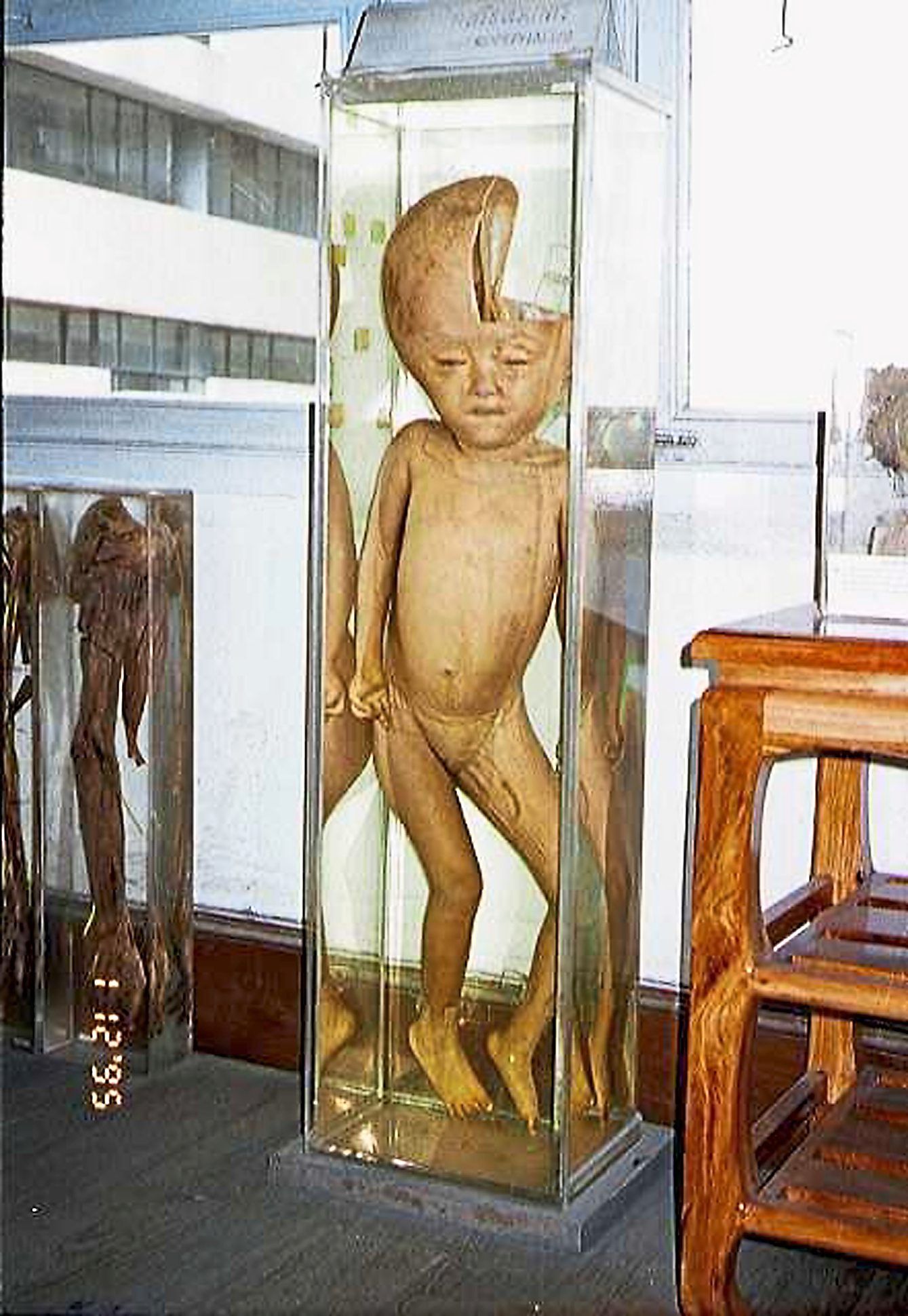
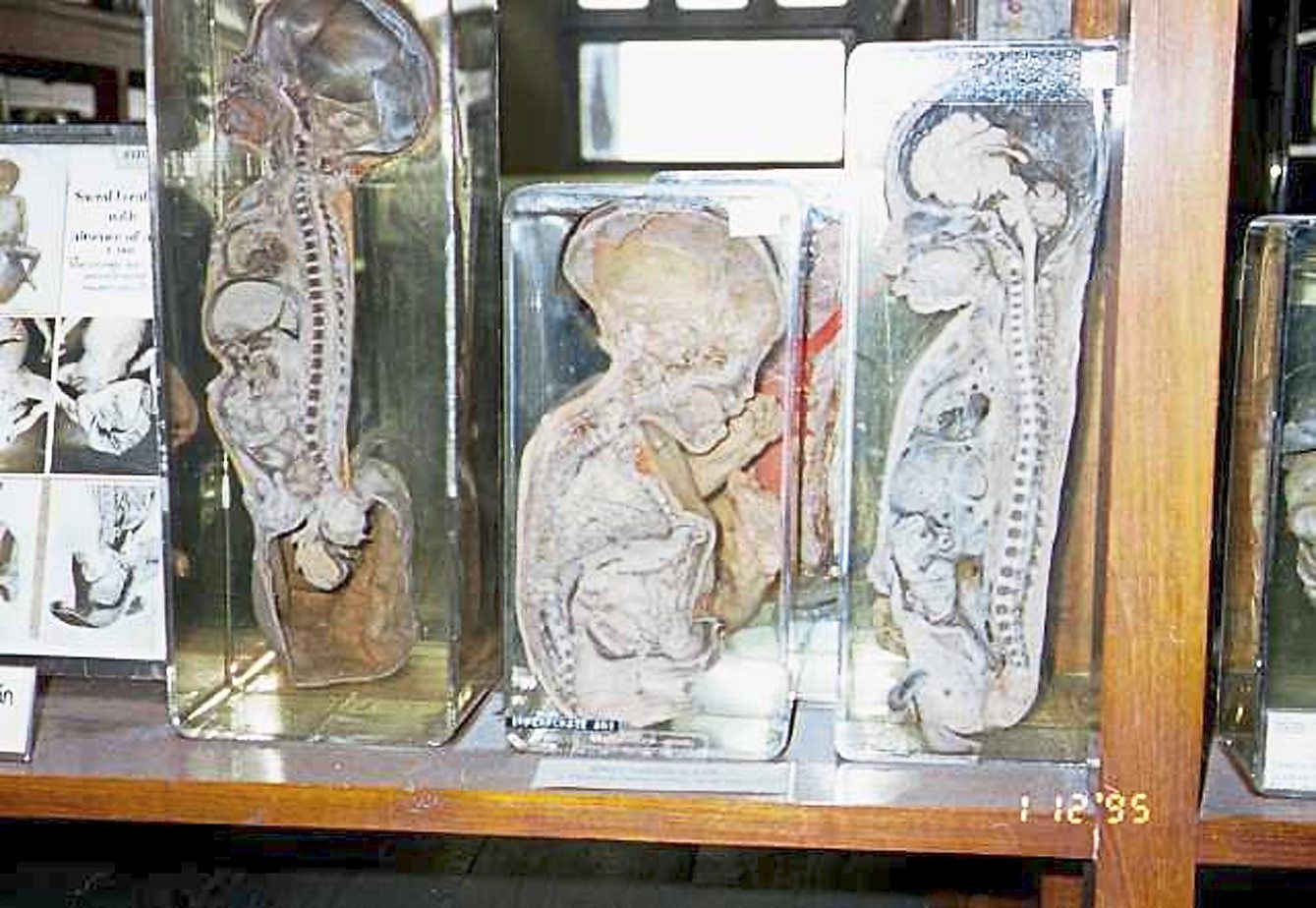
At the forensic museum in Bangkok are countless glass containers of deformed and diseased babies, including Siamese or conjoined twins, all preserved in formaldehyde.

Halloween may have just passed, but there’s surely never a time to turn down a morbid and creepy tale to feed our psyche, is there?

And providing that in a real-life setting is the Bangkok Forensic Museum, famously known as the Museum of Death. It’s a highly recommended destination for dark tourists – travellers who search for places historically associated with death and tragedy.

Many adventure seekers have been inspired by journalist David Farrier, through his exploits in his Netflix documentary, where, among other things, he swam in a lake in Kazakhstan formed by a nuclear blast, highlighted a Japanese town hit by heavy radiation, and even featured a haunted forest.

Having walked through the Suicide Forest in Aokigahara last Halloween, an area on the north-western part of Japan’s Mount Fuji, where about 200 people killed themselves in the dense forest, I knew I had to add something to my list to mark this macabre occasion this year.

So, a trip to the forensic hospital in Bangkok’s Siriraj Hospital it was.

I had perused the news sites and watched enough videos to know what I was dealing with. But with patience being a virtue, it wasn’t surprising that getting there wasn’t as easy as I thought, even after making sure my hotel receptionist detailed my destination in Thai on a piece of paper for me to show my taxi driver.


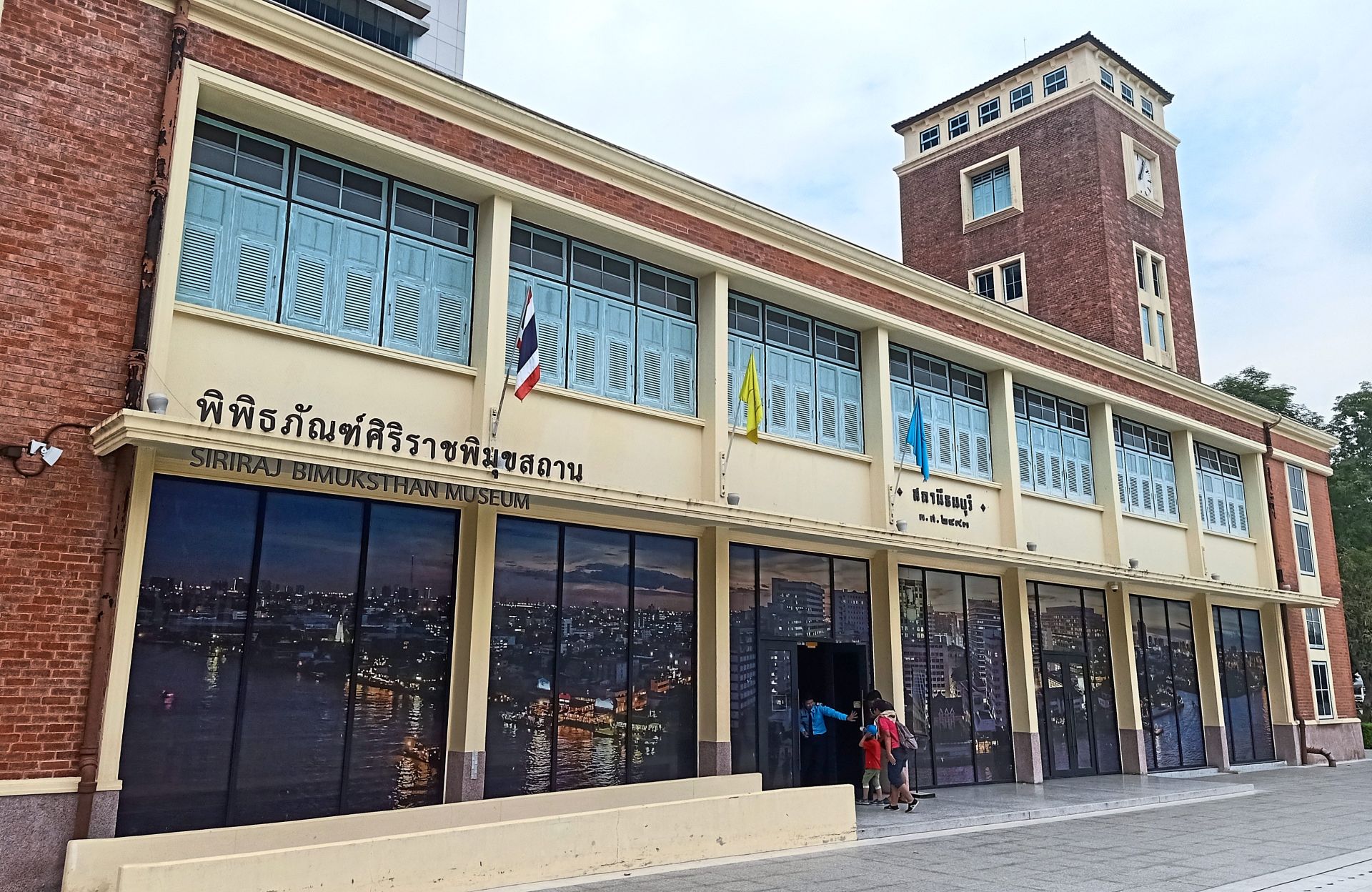
The Bangkok Forensic Museum, or more famously known as the Museum of Death, is for those looking for their dose of horror.The Bangkok Forensic Museum, or more famously known as the Museum of Death, is for those looking for their dose of horror.

When I reached the hospital, I could tell from the exasperated driver’s expression that he couldn’t drop me right at “death’s” doors because some roads were closed due to on-going construction work. That translated to me having to walk a short distance.

Since most Thais don’t speak English, I had to stop every step of the way to ask for directions from those who do.

The journey through the huge hospital seemed premeditated for me to see the sufferings at the country’s largest hospital. It was simply filled to the brim and for the first time, I saw so many beds along the corridors of a hospital.

Some patients looked like their time on earth was about up as loved ones cuddled them. It was disturbing as there were heart wrenching scenes.

I finally located the forensic museum, but before being let in, the security guard ordered me to write down my name and nationality. My journalist senses tingled, so I swiftly scanned the names of visitors with similar strange interests.

They were mostly Japanese, some Dutch, Britons and Australians. I was the only Malaysian on the long list. Don’t ask me why the majority looked to be from Japan, though.

The hospital has six distinct museums within two separate buildings. The creepiest ones are the Ellis Pathological Museum, Songkran Niyomse Forensic Medicine Museum and Congdon Anatomical Museum. Most of the museums are on the second floor of the Adulyadejvikrom Building.

But the sinister experience began with a bummer – only after paying the 200 Baht entrance fee did the receptionist tell me photography wasn’t allowed!

The rule was introduced about six months ago, and since then, some exhibits have been removed as a mark of respect. Bags were strictly ordered to be kept in a locker, so my hopes of doing a video were also dashed.

But I wasn’t going to let a minor setback ruin my pre-Halloween outing.


From being shot in the head to being killed in horrible vehicular circumstances, these “teaching aids” were meant to show medical students the impact of damage to the skull.From being shot in the head to being killed in horrible vehicular circumstances, these “teaching aids” were meant to show medical students the impact of damage to the skull.There were countless glass containers of deformed and diseased babies, including Siamese or conjoined twins, all preserved in formaldehyde.

Then, there were aborted foetuses in various stages of development. They shook me because I never fathomed a life could exist in mere weeks. That scene certainly evoked deeper thought on abortions and their implications. I guess it’s tough to see a young and innocent life snuffed out.

The exhibits ran the gamut, including a two-headed foetus of a child with “mermaid syndrome” (where legs fuse together), skulls fractured by gunshots and other weaponry used to inflict fatal blows to the head, and accident victims.

From being shot in the head to being killed in horrible vehicular circumstances, these “teaching aids” were meant to show medical students the impact of damage to the skull.

They may seem gruesome, but it’s hard to deny them being informative.

There was another big disappointment – the notorious mummified corpse of the legendary Si Quey was no longer on display. He was one of the most feared men in Thailand.

He had come to the country as a Chinese immigrant in 1944 and earned the distinction of being one of the first known serial killers. Apparently, he murdered and ate the livers of many young boys 60 years ago, believing that this would make him stronger.

In June, the Medical Science Faculty of Siriraj hospital removed the “cannibal” label from the display case containing the embalmed remains of Thailand’s only alleged maneater.

The faculty dean instructed the label’s removal in response to a campaign to restore human dignity to the deceased, leaving only his name in English. Like a double whammy, the move also included the ban on photography.

According to news reports, Quey’s alleged cannibalism spawned many movies, books and dramas during the late 1950s and early 1960s. It was said that the mere mention of his name would stop a child crying. Myths aside, no evidence has been found to prove that he ate the organs of his victims.

But one mind blowing exhibit was a two-and-a-half-foot-wide diseased scrotum, which came with parasites you never knew could exist in a human body.

What was on display was a huge, preserved, swollen scrotum of a man who suffered from Elephantitis as a result of Lymphatic Filariasis, which infected him by microscopic worms.

Above the formaldehyde case containing his appendage is a photo of the poor man with his 75kg nut sack.

Until then, I wasn’t squeamish, but that safe passage ended when I walked into another building, where more containers of deformed babies awaited.

But two babies caught my attention – there were offerings of toys and children’s food for them. I didn’t want to find out more.

Having lived in Asia all my life, where we’ve often heard stories of strange spooky things, I knew what the offerings meant. The museum would most likely be securely locked up at night, and as I write this close to midnight, I can feel the prickling of goose pimples on my body as my mind reaches back to the second floor of the museum.

Good night, and I hope you have no nightmares tonight. The Siriraj Forensic Museum awaits those who dare tread paths less ventured.

How to get there:The Siriraj Forensic Museum lurks in the west bank of the Chao Phraya River. Visitors need to take the BTS Skytrain Station to Sala Daeng on the Silom Line to get there. From there, take the express boat (with orange flag on the back) to the Siriraj Pier (N 10) or simply hop on a taxi.

Time to steady the ship

A year-and-a-half into new governance, and the economy has shown little sign of improving. It’s time to up anchor from stagnation and brave the waves with conviction.

JUST over a year ago, the Pakatan Harapan coalition swept into power and dethroned Barisan Nasional, which had been the ruling party for over six decades.

The nation was in a state of euphoria as Malaysians welcomed a new era, with promises of fresh approaches to governance and ideals under a New Malaysia.

The victors guaranteed everything under the sun because they never imagined they would be in government, and that has been the open admission of Pakatan leaders.

The exuberance that once greeted Pakatan politicians at every mammoth ceramah during the General Election has unceremoniously faded. Their cause hasn’t been helped by some ministers fumbling and struggling after a year in office.

In some situations, these ministers have been simply incompetent. Had they been in the private sector, they would have got the boot after the probation period.

The Prime Minister’s attempt to revamp the Cabinet has failed to take off, forcing him to live with the hastily cobbled together line-up. However, if his officials have been honest with him, the murmurings of discontent must surely have reached his ears.

Yes, positive achievements have been recorded in the past year-plus – integrity and public accountability in our institutions have been restored, and once-untouchable corrupt figures have been apprehended by the long arm of the law and hauled to court.

But Malaysians are also tired of ministers blaming the past government for the country’s shortcomings. Sure, the claims are probably true, but they should just zip it and fix the holes. That’s why they were elected in the first place.

In fact, Tun Dr Mahathir Mohamad’s popularity has taken a beating, and one only needs to look at the comments on social media to gauge the disenchantment on the ground. A formal and more structured survey will likely reveal the same assessment, too.

While racial and religious sentiments have been employed to beguile the crucial and decisive Muslim-Malay electorate, there is also an equal amount of unhappiness among the non-Malays.

DAP leaders are used to being treated with near-idolatry status by Chinese voters, but of late, some party bigwigs have been heckled and booed at gatherings.

From being champions of the Chinese community, they have now found themselves branded apologists of Dr Mahathir. It’s as if the DAP and MCA have traded places, as the latter was severely criticised in the past while under the Barisan government.

While the recovery of the nation’s money from the 1MDB looters has given Pakatan brownie points, it’s obviously not enough to sustain the desired level of support.

Any political science student will know that in any uprising and toppling of a strong government, there is always a level of growing expectations. And often, the sentiments are even unrealistic, but that’s the price populist politicians must pay when elected.

Unfulfilled expectations have caused the Pakatan government to lose its ratings with the electorate. In the digital age, where politicians’ promises are recorded in the public domain, Pakatan leaders have now found themselves unable to meet these expectations. Even if the reason is real, such as empty coffers, it’s difficult to explain to the electorate.

We can’t say we are short of money and yet spend anything from RM800mil to RM1.67bil to provide meals to all primary school children, especially when it should be channelled to only needy students, particularly those from rural areas.

And why are we planning to build an airport in Kulim costing RM1.6bil when the Penang International Airport is just 26km away?

The failure to get recognition for the Unified Examination Certificate (UEC) – the school leaving certificate of the Malaysian Independent Chinese secondary schools – as stated in Pakatan’s GE14 Manifesto remains a sore point among Chinese voters who view education and economy as two primary concerns.

It was also a bitter pill to swallow when Finance Minister Lim Guan Eng, for two Budgets in a row (2019 and 2020), denied Tunku Abdul Rahman University College (TAR UC) its annual matching grants of RM30mil, totalling RM60mil.

The decision has drawn continued flak from the Chinese community, simply because the grants are meant to keep the tuition fees affordable for low and middle-income groups.

In a video that has gone viral, Lim is depicted declaring to the audience at a ceramah during the GE, that each of TAR UC’s 28,000 students would get RM1,000 if Pakatan formed the government.

The promise wasn’t fulfilled, and rubbing salt into the wound, there’s now no matching grant either. The justification given was that the government would direct the funds to the private higher education institution if the MCA was willing to relinquish its ownership of it.

Lim said this was in line with the government’s stand that public funds shouldn’t be channelled to politically-owned organisations.

But the explanation hasn’t convinced most Chinese because TAR UC has never been an MCA-indoctrinated institution, and any TAR UC graduate can attest to that.

MCA has had to finance these institutions with the support of the Barisan government, tycoons and ordinary people.

While the DAP and MCA are enemies, the general feeling is that when it comes to matters of education which benefit the Chinese, its community is left disappointed because the students and families have become victims of a political rivalry at a time when Malay unity is being openly promoted.

It’s a known fact that several DAP leaders are alumni of TAR UC, and all its campuses are in constituencies which have come under the control of Pakatan since the last General Election.

In Kampar, Perak, where Universiti Tunku Abdul Rahman (UTAR) is located, the constituency is now under the DAP despite the large number of student and lecturer voters.

The UEC is perhaps a much more complicated matter. While the Chinese community wants instant recognition, the examination has unfortunately turned into a highly racialised and politicised issue, and its subtext now is about the fear of losing Malay support.

UEC task force chairman Eddin Khoo said the final report on the recognition of the examination certificate is currently undergoing an internal discussion.

But the UEC issue has been dragging on for decades and wasn’t recognised even during Dr Mahathir’s first tenure as PM.

Obviously, Pakatan won most of the Chinese votes during GE14 mainly because, among other promises, its manifesto and leaders pledged to recognise the UEC.

So we have an odd situation where the UEC is recognised by the top universities in the world including the California Institute of Technology, Harvard University, Oxford University, University of Cambridge, University of Toronto, University of Tokyo, National University of Singapore, University of Hong Kong, University of Melbourne, Peking University and Kyoto University, but not here.

Based on The Times Higher Education World University Rankings Top 200 of 2014, more than 70 of these world-class universities have accepted the enrolment of UEC graduates to pursue tertiary education.

And yet, we see these mulling and delaying tactics being applied despite the bravado pledges of recognising the UEC.

The education débâcle apart, the continuing weak economy, the declining value of the ringgit, the increasing cost of living, the lack of economic programmes and taxation of all forms, have all become a source of discontent for the Chinese at all levels.

It’s still too early to predict the outcome of the Tanjung Piai by-election, and difficult to suss out if the huge crowd at a recent multiracial Barisan ceramah is any indication that voters want to send a strong message to the Pakatan government that they are dissatisfied.

But the grievances of daily issues, particularly the cost of putting food on the table and job opportunities, have become loud grumblings at the expense of largely positive actions by the government.

A gorgeous island that’s just a hop, skip and jump away

I’ve had the privilege and luxury of travelling to a multitude of places near and far, and in more recent time, my preoccupation has been on the living world, particularly in our oceans. Our region has some of the most fascinating marine life, and while Sabah’s Mabul and Sipadan islands have drawn international repute and is home to a menagerie of amazing animals, for city dwellers in the peninsula, particularly those in the capital, Redang Island is only a hop, skip and jump away from the daily grind.

The ace up its sleeve is the island is easy to reach from Kuala Lumpur and offers the most accessible spots for snorkelling and scuba diving, given its crystal-clear waters. For a simple and short weekend getaway, Redang is hard to beat and provides the best value.

It is just a little less than an hour’s flight from either the Sultan Abdul Aziz Shah Airport in Subang or KLIA to Kuala Terengganu, from which, a short 45-minute boat ride takes visitors to the island located in Kuala Nerus.

Redang is one of the largest islands off the east coast of the peninsula with an international reputation for its clean and clear waters, and white sandy beaches.

Taking advantage of the low tourist season with the monsoon just picking up, I popped over to the island paradise last week.


There are between six and eight turtles that regularly turn up at Redang Island’s Turtle Point.

Sure, like in the Klang Valley, there were showers in the evenings, but they were brief. Luckily, there was plenty of sun in the morning for the three days I was there.

Getting there from the Merang jetty was a rocky ride because the waves were choppy, but once the boat reached the open sea, the undulating waves petered out, providing a much smoother and calmer journey. No sick bag needed for this slowly-but-surely developing seafarer.

The northeast monsoon season from the South China Sea, which just begun, ends in January. Most hotels halt operations during this heavy rainy season, what with its strong winds and waves. All ferry schedules are restricted from the months of November through to February.

But I capitalised on this window period when hotel rates are better and fewer tourists are present, evidenced by the low turnout at the snorkelling spots in the marine park.

I made it in as the last of the tourists, before the island ceased operations for the wet season, which comes with its dangerous sea conditions.

Redang has never failed to impress me. Dipping into its waters is like swimming in an aquarium full of colourful friendly coral fishes.

It’s one of nine islands forming a marine sanctuary park, where snorkelling and diving are the main attractions.


Plenty of clownfish can be found here. — Photos: ANG KUAN WEI

Having been there previously, this time, I picked two places – Pasir Akar and Teluk Mak Simpang, popularly known as Turtle Point, which isn’t far from the upscale The Taaras Beach & Spa Resort operated by the Berjaya Group.

The wall of the island here protects it from the ocean’s currents, making it ideal for snorkellers and less experienced swimmers, and for kids, too.

Watching YouTube videos or ogling at picture postcards of the place is fine and dandy, but to get a real sense of the place, you must swim in Redang’s waters. Like a recurring wave of a reminder, I couldn’t help feeling how blessed Malaysia is and what a beautiful marine park we have in this part of our country.

For those who prefer to keep dry or have a fear of sea water, fret not – Redang’s splendid beauty can also be enjoyed from the cosy confines of the boat, where one can still feast their eyes on the fishes.

There are also between six and eight turtles who regularly visit the area. Call them resident turtles if you like, and the most popular one is named Jojo. However, visitors here are usually on the lookout for three gigantic whale sharks.

But unlike the ones at Maratua in Derawan, East Kalimantan, which are easier to spot because they always swim around the numerous fishing platforms, this trio is rather elusive.


Literally swimming with the fishes!

Some lucky divers and even snorkellers have spotted them though at the Big Mount and Pulau Lima dive sites, of which the northern Big Mount has had sightings of whale sharks, black tip sharks and even manta rays.

Apparently, strong currents at this spot help nourish these filter feeders, but these dangerous conditions also make it privy to only experienced scuba divers.

I have read that at the southern tip, there are small caves filled with lobsters and crabs, and also huge moray eels and groupers. Reading about all this and not experiencing it first-hand is becoming a drag, so, now might just be the right time to take up scuba diving.

With over 500 species of live corals, more than 1,000 species of invertebrates and almost 3,000 species of fishes, this island is indeed a marine haven.


The titan triggerfish is just one of the fishes you can find here. — KENNETH LAM

Redang means so many things to so many people – some seek it for a change in pace, and some for its scenery. And some go there to be one with nature, but for me, it’s all of the above. It’s simply a spectacular place to be, given its accessibility, accommodation ranging from utilitarian to premium, and its safeness.

And soon, those seeking her charms can hop on a plane operated by Berjaya and fly directly there from Subang.

Can’t afford to meddle


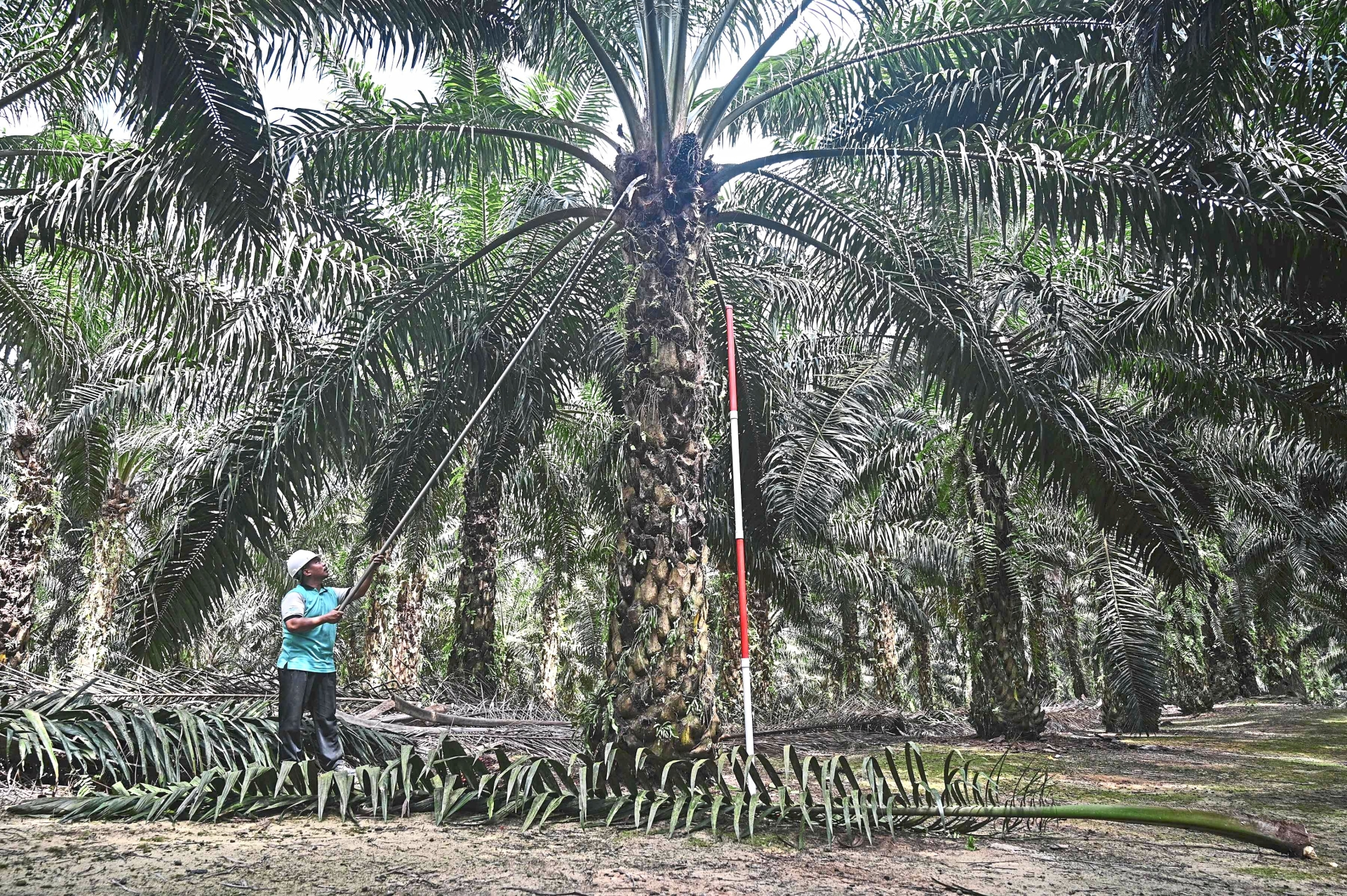
Big pressure: Malaysia’s palm oil sector faces a new threat after Indian traders were asked to halt purchases amid a row over Kashmir. – AFP

It seems counterproductive to be irking a major contributor of our economy when the price of one of our main commodities is on the wane.

BOYCOTTING our palm oil may not be the Indian government’s official stand, not even two weeks after the controversy surfaced, but the lobbying by some Indian groups – including the media – to punish Malaysia is still unsettling, especially when the price of the commodity is at its lowest.

At stake is the huge Indian market worth RM6.9 billion, so the call for prejudice isn’t something to be overlooked since the country is the world’s largest vegetable oil importer, with Indonesia and Malaysia its palm oil suppliers.

The palm oil downstream products that India needs include ghee, soap, vegetable oil, biofuel, pharmaceuticals and cosmetic products.

Recently, an Indian trade body representing oilseed crushers, advised its members not to buy palm oil from Malaysia, taking a cue from New Delhi’s protest of Prime Minister Tun Dr Mahathir Mohamad’s remarks on the Kashmir conflict.

“The recent developments pertaining to strained relations between our nation and Malaysia has put a lot of responsibility on our industry in view of huge imports of palm oil from that country,” said Atul Chaturvedi, president of the Mumbai-based Solvent Extractors’ Association (SEA) of India.

“In your own interest as well as a mark of solidarity with our nation, we should avoid purchases from Malaysia for the time being. We trust you would heed our advice, ” he said in a statement.

Chaturvedi said the Indian government “has not taken kindly” to Malaysia’s position on Kashmir at the UN General Assembly.

“It would be in fitness of things, as responsible Indian vegetable oil industry, we avoid purchasing of palm oil from Malaysia till such time clarity on the way forward emerges from the Indian government, ” he added.

The furore started when Dr Mahathir said in his speech at the 74th session of the General Assembly, “despite UN resolution on Jammu and Kashmir, the country has been invaded and occupied, ” and called on India to “work with Pakistan to resolve this problem”.

In its bid to thwart protests in the region, the Indian government, on Aug 5, revoked Jammu and Kashmir’s legally autonomous status and imposed many unprecedented security measures, including cutting off the Internet and phone services.

The PM’s opinion hit a raw nerve there and led to India’s Ministry of External Affairs rebuking Dr Mahathir’s references to Kashmir on Oct 4.

Added fuel to the fire, the media, particularly Magna Indica-anchored News Z, has been broadcasting a clip nearly every five minutes why India must support Hindus in Malaysia up in arms against Dr Mahathir.

Basically, Malaysia is being accused of taking sides and backing Pakistan – India’s long-time nemesis. It’s hard to ignore controversial preacher Dr Zakir Naik either wittingly or unwittingly playing a part in this diplomatic debacle.

Zakir, unwelcome in any nation, including Muslim majority countries, is a permanent resident in Malaysia. He was thought to be a Saudi Arabian citizen, but apparently, he isn’t, and even the Saudis don’t want him.

Indian groups, including the media, need to take a step back and look at the effects of trade wars and tariffs. It benefits no one except the inflated egos of shallow politicians who think they are statesmen.

The clear example is the escalating US and China trade war, which has led to spill over effects to the rest of the world, as the two superpowers clash. So, trade wars, in any form, is bad for any country.

As Dr Rais Hussin, the Emir Research CEO, put it aptly in his description of trade wars, “they trigger a dyadic trade relationship that is toxic on the rest of the global value chain, with India included.

“If that is an economic fact, why should India emulate the example of Washington DC and Beijing?

“Secondly, and perhaps more importantly, an unsaid yet practical principle in Asean is – any country wishing to be part of a thriving region of 680 million people, cannot be seen supporting the opposition there.”

He wrote that Prime Minister Modi has had a “Southerly Policy” with Asean since 2015, and is a member of the East Asian Summit, Dialogue Partner of Asean.

“India is destroying a key principle of its own diplomatic engagement. Not only will the whole of Asean oppose it, but the rest of the East Asian region will see India’s behaviour as the beginning of the use of ‘hatchet diplomacy’.”

There is another point to consider, much of Indonesia’s palm oil is owned and sold by the likes of Malaysian companies IOI and Genting.

That aside, there are growing concerns among India’s long-time friends that Modi’s hard-nosed approach to nationalism, bordering on religious fervour, is discomforting to many. These actions by Hindu militants, according to many reports, are affecting minorities including Muslims, Christians and Sikhs.

For the time being, the prices of crude palm oil are expected to remain competitive, at least until the first half of next year, pending any official announcements from India.

The Star recently quoted sources saying the offtake of Malaysian palm oil was still stable, and with demand still exceeding supply, CPO prices would hold steady. That’s comforting news.

Without a firm word directly from the Indian government, the market is treating the potential boycott by Indian importers on local palm oil as mere speculation. The MB Investment Bank’s regional head of plantation research, Ivy Ng, said excluding potential impact on demand from speculation of the boycott, CPO prices should recover next year, averaging at around RM2,300 per tonne.

In March, it was reported that China was bumping up its palm oil purchase from Malaysia by around 50% to around 4.7 million tonnes, which will be a huge boost to local planters and the government.

Last year, Malaysia exported 3.07 million tonnes of palm oil and palm products to China worth a total of RM8.38bil, marking, from 2017, an increase of 7.3% from 2.86 million tonnes worth about RM9.39bil.

Primary Industries Minister Teresa Kok said that the agreements were a “good start”, following the delegation meeting between the two countries in August last year, during which it was decided that the Chinese uptake of Malaysian palm oil would be increased by half a million tonnes.

The agreements inked for the purchase of 1.62 million tonnes of palm oil were very significant, said China Ambassador Bai Tian, especially in view of the 45th anniversary of diplomatic ties between Malaysia and China this year.

“This is really a very big number and I believe in the near future, there is possibility that China will increase its uptake of palm oil from Malaysia,” he said.

“As I have said before, China imposes no glass ceiling on the import of Malaysian palm oil, ” he added.

There was the perception that China was quietly stalling purchasing our oil palm, following the change of the federal government last year and the uncertainties over numerous Chinese projects in Malaysia as its consequence. Concern abounded since China is Malaysia’s third largest importer of our palm oil.

Dr Mahathir was outspoken during his first tenure as PM. He was the champion of Third World countries, and he initiated the Group of 20 comprising developing countries, giving his brutally frank views of western countries in the process.

Although Malaysia is a member of the Commonwealth, and even hosted CHOGM (Commonwealth Heads Of Government Meeting) in 1989, Dr Mahathir once said there has never been a “common wealth” among the member nations, which were all once colonised by the British.

That’s Dr Mahathir for you, and as he reaches 95 years old next year, I don’t think we can expect him to change. He will speak up, without fear or favour, and whether we like it or not, but he must also take cognisance of how Malaysia, which he helmed for 22 years earlier, no longer has a double-digit economic growth. And the prices of crude palm oil and crude oil have dropped drastically over the years.

India and Pakistan will likely continue being at loggerheads, and whatever Malaysia says, will not please anyone. Likewise, there was no need for Dr Mahathir to suggest that Hong Kong chief executive Carrie Lam quit, which did nothing more than irk China.

He was responding to a question from Hong Kong Bar Association chairman Philip Dykes during a question-and-answer session at a forum in Hong Kong, probably not realising that Dykes is an unwelcome man in Beijing.

In fact, the vice-chairman Edwin Choy quit over the association’s failure to condemn protesters’ violent actions in the ongoing anti-government demonstrations.

Malaysia can stay out of harm’s way if he refrains from commenting on issues involving other countries. After all, we have enough problems of our own.