Monthly Archives: December 2019

Silence isn’t always golden

THEY were once heralded as brave, articulate and outspoken leaders, always weighing in on issues concerning the people, but they seem to have gone mute, or just disappeared.

The public used to count on these MPs to speak up for the people against the government for its abuse, corruption, wastage and disregard for laws.

The people called them the voices of conscience, and even when these politicians weren’t solicited by the media for their views, they voluntarily sent out press statements.

That resulted in newsrooms collecting similar press statements from many different people from the same political parties, or their component partners.

But a year later, and the transformation is finally becoming apparent. Some of them have transformed into “mute” politicians, who seem more concerned with not offending their colleagues in federal and state governments.

They are more worried about the feelings of their Cabinet members and the state executive councillors than that of the people, whom they promised to represent.

But an expanded waistline, a deeper pocket, adulation and praises that are often heaped on these powerful politicians, have disconnected them from the everyday man.

Perhaps they’ve been consumed by their own glory? Whatever it is, many have lost their voices. We can’t be sure if they even care anymore.

The outcome of the recent Tanjung Piai by-election was a wake-up call for the Pakatan Harapan government, and although many PH leaders said they got the message loud and clear, there’s scepticism as to whether lessons have been learned.

It’s unlikely they have, probably buying into the logic that the next general election is three years away. But a week is a long time in politics.

Throw in a few religious and racial issues into the ravenous pit of fodder, and the people will start feuding and be distracted from the real issues affecting the country. What economy problems? All is well and fine – our economy is stable.

“Education concerns? No way, we intend to be a world class education hub.

“What coding, what robotic syllabus? AI? You mean Anwar Ibrahim? No? Don’t worry about artificial intelligence, as the government is currently studying the matter”.

In the wake of several contentious issues, some touching on race and religion, professional journalists would insist on verifying the authenticity of letters or statements that become viral on social media.

The media’s experience now is, it’s almost impossible to get reactions from most Cabinet members or their deputies, and yet, often, the media gets blamed for inaccurate reporting.

On a recent issue of a letter, said to be from the Ministry of Education, that went viral, no one chose to reply. Perhaps they were on holiday, or perhaps I am a nobody who warranted their time and reply. Guess it must get harder for the average, faceless Malaysian.

My business contacts, who have direct access to ministers, have also expressed similar sentiments, saying their texts were read but not replied. The blue ticks – which denote read texts – have now been re-set, so no indication is generated if messages have been read. Only received messages are acknowledged.

Well, these assuring agents of promise of a New Malaysia have certainly lost their voices.

As writer Clement Stanley aptly wrote in Free Malaysia Today recently: “They were the voices of hopes, dreams and promises of better days ahead if the opposition did the impossible and came to power.

These voices were eagerly waited upon as they bred new life into what was thought to be a forgone conclusion. These voices united a nation, hitting the very nerve of all Malaysians who voted for change. In such orators and fighters lay our trust.”

He added, “but now, like obedient little children at bedtime, they are content to listen to bedtime stories with a happy ending.

“Today, these people on whom we once pinned our hopes, have become mute, a pale shadow of their former selves, toeing the line rather than resisting it.”

Worse, some have even become arrogant by dismissing doubt and concern of the people, while responding confrontationally (as if in opposition mode) to silence differing views. And this isn’t even criticism or dissent.

There are also reform groups which used to busy themselves writing to editors with their lengthy views and speaking at forums, but they too, have disappeared.

A few have transformed into apologists and have attempted to defend some policies while others have taken up government positions, thus putting them in a spot.

“Bro, I hope you understand – I share your views, but I am sure I can’t speak openly now, so please carry out your moderation stand, because I am behind you.”

The challenge for 2020 and beyond is to hope for the emergence of fresh voices to challenge conformity and convention, and to take politicians’ promises with much more than a pinch of salt.

They’ll be busy jostling for positions among themselves even as they tell us, with a straight face, that they are fighting for us, the ordinary people.

When one is in power, it’s safer to play the role of the three monkeys who see no evil, hear no evil and speak no evil, as the saying goes.

It’s simply easier that way. After all, why rock the boat and lose it all, having waited so long to be in government?


A hunt for the best hairy crabs in Yangcheng Lake


Hairy crabs from the Yangcheng Lake are a premium item that are highly sought after by foodies. Photo: Wong Chun Wai

The hairy crab don’t take crap for its reputation of being super delicious, but unfortunately, it doesn’t come stamped with a healthy meal badge.

The military green mights are chock-full of cholesterol and eating just one of these crustaceans will have you touching the daily cholesterol quota of 300mg, based on the World Health Organisation’s daily recommended intake of the lipid.

So, it’s best to limit consumption to one, or two crabs per occasion, even if these arthropods are lean in the flesh.

It’s an expensive delicacy, but a maximum two tea spoonfuls of the marigold coloured creamy roe – the main reason to eat these crabs – is all you’ll need and you’re done.

But when it comes to food, we lose our marbles. Hairy crab (which earns its description because of its furry pincers) is an annual culinary obsession for many Chinese around the world, encompassing the months of September and October. This year, I decided to go on a pilgrimage to Yangcheng Lake, about 300km away from Shanghai, China.

To reach this wellspring of gastronomy, I had to take an “arduous” journey to Suzhou, a city west of Shanghai, where the most beautiful women in the country walked the land. Oh, and it has the finest silk, too. But they were barely distractions. Having eaten these little critters for some time (stomach always comes first), yet not quite an expert to tell where they come from (hello, Google!), I was invariably drawn to the sacred breeding ground of the best hairy crabs.

Crabs from the lake are said to taste sweeter and have better texture.

We chose October, which is when crab mania is at its peak in China.

Even the tourist-class hotel I stayed at had a small restaurant next door serving noodles in crab meat, dumplings in crab meat and many other dishes with the same commodity.

From small eateries to swanky restaurants, menus were furiously promoting these hairy creatures, which meant we had plenty to choose from and compare prices with, of course.

The Malaysian mission was simple (warning: this could sound familiar) – we would eat hairy crabs every day for as many meals as possible and as much we could until we we’d be sick of it till next year rolls around, of course.

There’d be no room – in the pocket – for shopping or sight-seeing since we squeezed this eating trip within a tight schedule.

But thanks to the help of a Chinese official, the local authorities had arranged for the best pick for us.

It wasn’t just a proper lunch – we were taken through the entire process of how the crabs were caught, placed in boxes, tied up and shipped to various countries, including Malaysia.

Crabs from the lake are said to taste sweeter and have better texture. Photo: Wong Chun Wai

We also chose a weekday to visit the lake since every weekend, an estimated 100,000 people, mostly from Shanghai, flock to the lake.

The body of water in Jiangsu Province is a freshwater lake, and it’s the most famous area of origin for mitten crabs.

It’s located between Lake Tai and the Yangtze River, and has a surface area of 20sq km.

Purists insist that the crabs must come from the murky and cold bottom of the Yangcheng lake, and not from nearby Lake Tai, though I could hardly tell the difference between their produce.

I was told that the Yangcheng crabs are sweeter and have a better texture, making them naturally more expensive, too.

Parts of the lake have been divided into coveted prime aquaculture plots, which resident entrepreneurs must lease from the local authority, of course, in pursuit of the prized certification of these Yangcheng Lake products being authentic.

The writer temporarily put aside all worries of cholesterol content to eat some delicious crabs from the Yangcheng Lake. Photo: Florence Teh

The market is filled with counterfeit crabs from other provinces and lakes, which are being passed off as the premium product.

A report said that “in recent years, Yangcheng’s crab farming output has shrunk, for reasons ranging from natural causes such as weather conditions, to the intentional reduction of breeding zones to improve quality.”

“The superior water, air and environmental quality of Yangcheng Lake are what contribute to the health and sweet taste of the crabs, ” said Zhang Jian Long of Changshu Jin Tang Shi Ltd Co, who supplies the Malaysian restaurant group, and has rights to farm one of the largest areas of the lake. He proudly revealed that chemicals such as antibiotics are prohibited even.

According to food writer Julie Wong, “the rich aquatic plants and other crab food present in the lake are its unique properties but with intensive and widespread farming, the crabs need to be fed a supplementary diet including corn kernels, wheat, chopped fish, clams and crushed shellfish.

“Native to China and Eastern Asia, Eriocheir sinensis, also known as mitten crab, lives mostly in freshwater but needs to return to sea to breed. In the wild, they are found on the eastern coast of China, in rivers and lakes that are connected to the sea, but hairy crabs are now farmed in every province in China.”

National Geographic China reported that “while they once lived wild in Yangcheng Lake and migrated naturally to the sea, the crabs became increasingly rare in the late 20th century due to factors like dams, pollution, and environmental changes.

“A burst of farming started after the 1980s, which led to overpopulation and a decline in quality. Eventually, measures such as reducing production, breeding with more scientifically advanced techniques and increasing the lake’s small aquatic life, ” were put in place to address the problem, it said. As I grabbed my fourth crab, I couldn’t help comparing the inexplicable fixation for durians and hairy crabs – both have high cholesterol content and are becoming increasingly expensive as demand grows.

But that didn’t conclude the trip. We wanted to end it equally on a high, so we chose to visit the famous Cejerdary, an upmarket noodle house specialising in hairy crab noodles.

It’s a small place not far from the Bund, which is characterised by a long queue far exceeding its 18 seats. If you’ve reserved a place, be very punctual. I was told that if I was more than five minutes late, my seat would be given up.

The menu is simple – hairy crab roe golden flakes noodle, crab noodle, fresh hairy crab and hot Chinese wine. We ordered one each, and as expected, I liked the crab noodle most.

The best thing is, these dishes are available all year round, so waiting for season is no longer a deliberation.

The old adage goes that the way to a man’s heart is through his stomach, but just make sure there’s some crab meat in it for the promise of undying love.

Sowing truth in a time of lies

THERE was a time when honour meant everything. A firm handshake between two persons was enough to seal a deal that would be upheld.

It’s known as the gentlemen’s agreement, and while it was informal and legally non-binding, the details were expected to be implemented.

There’s even a proverb that tells of honour among thieves, about how they won’t steal from each other because there is supposed to be some code of honour.

Well, that’s all gone now, and even contemporary movie makers will tell you that honour no longer exists. Even friendship and loyalty can lead to treachery of the unkindest. Where politicians, their henchmen and operatives are concerned, don’t expect honour of any kind.

It’s common knowledge that taking oath to tell the truth and nothing but the truth, with the hand on holy books in places of worship, means little these days when people don’t fear retribution in the afterlife.

The culprits are more concerned about saving their own skin, and other vital parts of their bodies, in the present life. Anything to escape punishment!

Perhaps, one day, they will feel remorseful and ask for their sins to be forgiven when they finally find God.

Last week, Malaysians found out that statutory declarations were back in business. It was a hot debate about a decade ago, but it has come back to taunt us.

Like old political tricks and plots, the SD script has been recycled in Malaysia.

In 2008, a private investigator, P Balasundram, appeared in public having signed an SD alleging, amongst other things, that Abdul Razak Baginda told him Datuk Seri Najib Razak had introduced Mongolian Altantuya Shaariibuu to him in Singapore.

That was SD number One, signed on July 1, 2008, and of course, we were expected to believe that it had to be the truth, or bear some semblance of it.

But three days later, on July 4, 2008, Balasundram retracted those parts from the first SD, and submitted a second one, saying the first was signed under duress.

He then disappeared, purportedly leaving the country, but he reappeared in November 2009, and claimed it was the second SD that was false and that the contents in the first were true.

Balasundram, a former Special Branch officer, suffered a fatal heart attack in 2013. He had sworn he would make sure the Pakatan Rakyat would come to power.

Although a third SD was supposed to surface upon his return home, there was none.

It’s debatable which of his SDs were true, or if at least one was true, or both even, but ultimately, they were conflicting.

It’s hard to tell if those who have made SDs are aware that according to the Statutory Declarations Act 1960, making a false statement contravenes the Penal Code’s section 199, but we know how the allegations were later dismissed as a pack of lies.

Now, the Altantuya case has come back to haunt us, so SD is now back in fashion.

Five years after the Federal Court upheld his conviction and death sentence in 2015, former police special action force personnel Azilah Hadri has made an appearance via SD.

In his SD, Azilah claimed that Najib and Abdul Razak ordered the killing, claiming that Altantuya was a foreign spy and threat to national security. The former Prime Minister brands the story a lie.

Before that, there was another controversial SD. Former researcher Muhammad Yusoff made a statutory declaration, accusing PKR president Datuk Seri Anwar Ibrahim of sexual misconduct on Oct 2 last year, claiming the abuse took place while he was still working for the party about a year ago.

It isn’t clear why he only decided to make these allegations a year later, and more so, so near the PKR party congress.

But he has taken a polygraph test to determine the veracity of his claims against Anwar. His lawyer said the polygraph test was one of the things he wanted to do to prove his claims. Anwar has denied the allegation and has given his statement to the police.

While SDs can be made and retracted, putting its value on the line, a polygraph test is another story all together.

According to a report, studies have shown that a well-trained examiner of a polygraph test can detect lying with relative accuracy, but a polygraph is not perfect, and an examiner’s interpretation is subjective, and the results are idiosyncratic to the person being tested.

Writing in the New Straits Times, Datuk Seri Akhbar Sattar said it was impossible to cheat in polygraph tests conducted by certified examiners, but said that “even so, the instrument is not truly a lie detector. It produces only graphs. The polygraph examiners are the lie detectors and they determine whether the person is deceptive or truthful.”

The American Polygraph Association has conducted over 250 studies which showed the accuracy of the polygraph at 98% when examined by certified examiners, and added that the polygraph is widely used in more than 80 countries, as it is regarded the best choice, rated highest in terms of widespread use by government as well as the private sector to detect lies, especially in security situations.

“In Singapore, the police, the Corrupt Practices Investigation Bureau, Ministry of Manpower, Prisons Department, Customs, Central Narcotics Bureau, Security and Intelligence agencies and the military use it for personnel screening and investigations.

“The prosecutor’s office also uses it to decide whether or not to file charges. Agencies like the CIA, FBI, National Security Agency, US Secret Service and the US Department of Defence and most US police departments use polygraph tests in investigations or to determine links with terrorist activities.”

But the director general of the National Centre for Governance, Integrity and Anti-Corruption, Tan Sri Abu Kassim Mohamed, stressed that while the polygraph test can be used as evidence in a court case when administered by qualified examiners, it’s up to the judiciary to accept it.

President of the Shariah Lawyers Association, Musa Awang, said based on existing law, the polygraph test may be used as evidence in court, but ultimately, it’s the judge’s decision to allow it.

“Currently, there is no precedent on the admissibility of polygraph evidence in Malaysia and Singapore,” wrote Akhar, who holds the professorial chair at Institute of Crime and Criminology, HELP University.

But the law has a clear warning for those who’ve made false SDs – a jail sentence awaits.

It stipulates that “whoever intentionally gives false evidence in any stage of a judicial proceeding, or fabricates false evidence for the purpose of being used in any stage of a judicial proceeding, shall be punished with imprisonment for a term which may extend to seven years, and shall also be liable to fine; and whoever intentionally gives or fabricates evidence in any other case, shall be punished with imprisonment for a term, which may extend to three years and shall also be liable to fine.”

It’s clearly stated, so it won’t even take a lawyer to decipher the warning. It’s time those who flout the law and abuse the legal system for a political fix, including making false SDs or committing perjury, be made to face the consequences of their actions.

Teaching with a purpose


We need our leaders to set the tone and directions right, as no one should experiment our children’s future as the whims and fancies of our ministers.

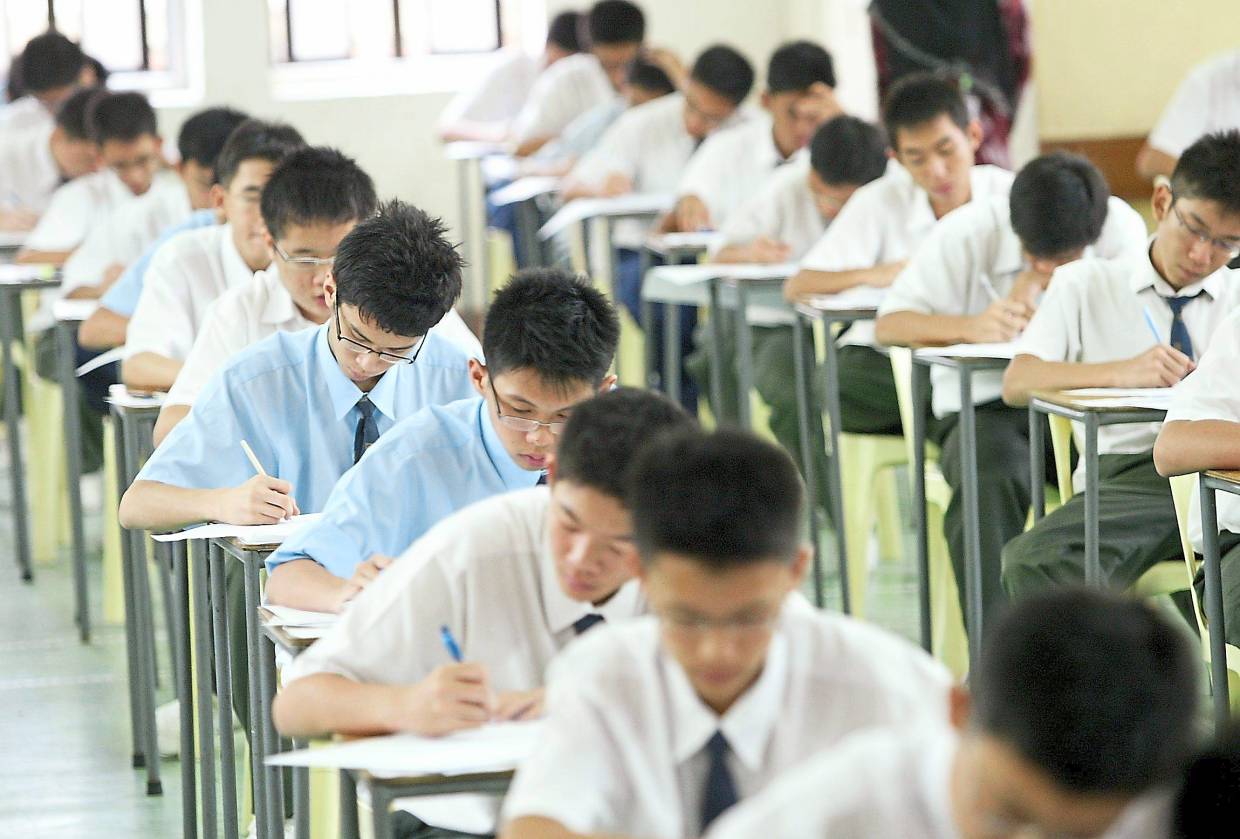
Education has kicked into high gear in most parts of the world, yet in Malaysia, we’re still aimlessly cruising the neighbourhood.

A FEW years ago, I visited a school in Guangzhou where I was privy to the scenes of a robotics lab where students were busy trying their hand at operating some of the models. In the class next door, the teacher was guiding teenage students on 3D printing processes, which is used to create three-dimensional objects from a computer-aided design model.

The school administrator also impressed upon me that they were using the STEAM education approach to learn the uses of Science, Technology, Engineering, the Arts and Mathematics as access points for guiding student inquiry, dialogue and critical thinking. By no stretch of the imagination was the modern education facility a representation of schools in China, because it’s an elite school in an urban setting. However, I was told the Chinese government is very focused on what they want, and this is the way things are taking shape.

It’s refreshing to see that’s the kind of education reforms China has been working on. They spend little time on irrelevant education issues like Malaysia is famous, or infamous for.

So, it comes as no surprise that a global education study has revealed that Chinese students in most of the country’s cities have outstripped their counterparts in nearly all parts of the world, as far as important skills in the information age is concerned.

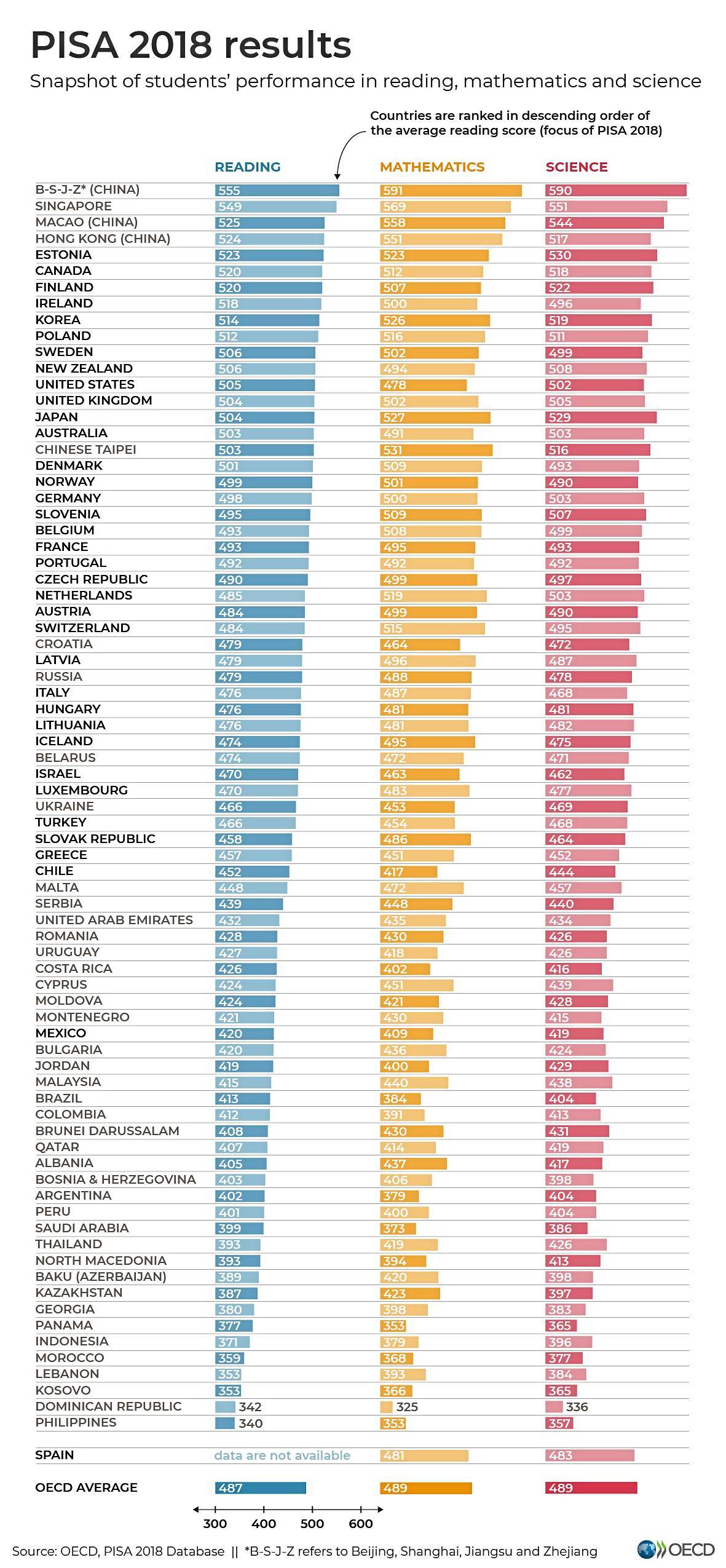
According to the Programme for International Student Assessment (PISA) ranking in 2018, some 22% of the 15-year-olds surveyed in Beijing, Shanghai, Jiangsu and Zhejiang provinces, showed they could handle abstract concepts and discern facts from opinions in what they read by achieving a reading level of at least 5 out of 6. Only Singapore fared better, with 26% of the city state’s students reaching the mark, while the overall average was 8.7%, according to test results released recently.

Pisa says this skill is becoming increasingly important as technology allows easy access to information. Reading, on the other hand, has become more about building knowledge, thinking critically and making well-founded judgments, rather than extracting information.

By now, most of us have read about Malaysia having moved up into the middle-third of the international assessment for participating countries, having advanced from being in the bottom-third in previous cycles.

Thank goodness we have improved, and it’s commendable that we are vying to improve our ranking by the next two cycles.

Education director-general Datuk Dr Amin Senin said Malaysia is headed in the right direction of education system reform.

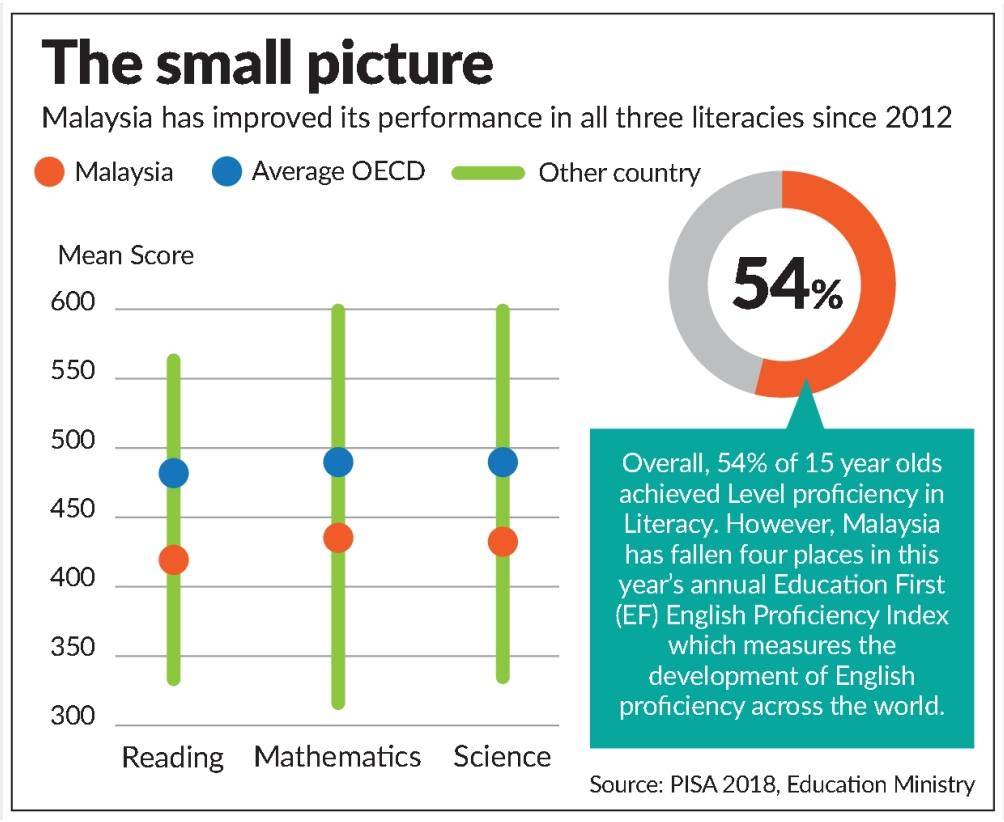
According to him, its performance in the 2018 PISA was deserving of a significant improvement in ranking for all three domains – Science, Mathematics and Reading literacies.

Based on results released by the Organisation for Economic Cooperation and Development (OECD), he said Malaysia scored 440 in Mathematics, 415 in Reading and 438 in Scientific literacy in PISA 2018.

This charts a course of improvement for Malaysia from PISA 2012 and 2015, when our country achieved below the global average score.

“Overall, Malaysia’s achievement showed significant increase in all three domains.

Some of us have found pride in that, but when looking at how Malaysia has ranked in the overall list, it shows that we’re barely at the races, and that we have an uphill battle ahead, even as we do all we can to catch up. Honestly though, it’s simply not good enough.

The Malaysian media conveniently omitted the entire ranking table of the participating countries, which would have given us a proper perspective of where we stand in the world.

We were quite content to report these findings for having walked the talk. It’s not wrong, of course, and we should encourage our educators as they connect the dots of our education system, while doing their absolute best under such testing circumstances.

But in Australia, the media was outraged that it’s falling behind other countries, lambasting themselves for their ranking and even branding themselves dumb. It was the hottest news, and that’s understandable because Australia prides itself as a global education hub attracting students from around the world.

In Malaysia, it isn’t Maths and Science that we’re struggling with, but English proficiency at global level.

Last week, it was reported that Malaysia has fallen four places in this year’s annual Education First (EF) English Proficiency Index, which measures the development of English proficiency in the world.

It was revealed that while it’s third in Asia, behind Singapore (66.82) and the Philippines (60.14), Malaysia’s score of 58.55 has seen it slide from the 22nd position to 26th in the latest edition of the rankings produced by international education firm EF Education First.

While it didn’t elaborate, the report stated that in Malaysia, men outscored women in English proficiency by a significant margin.

The index, currently in its ninth year, was created after analysing the EF Standard English Test scores of 2.3 million adults from 100 countries and regions.

The future is in robotics, artificial intelligence and machine learning, all of which are inextricable from various occupations.

In Singapore, driverless vehicles are seeing trial runs in campuses. Malaysians, though, have been left to wonder when such scenes will appear in our many local universities, since some have been pathetically engrossed in allowing racists to rant insensitive communal remarks with no real economic programme produced in academic form.

Is our education system, be it in schools or universities, preparing our students for the next stage, where job demands have changed, or, are the same teaching modules and lecture notes being recycled?

Is it surprising when we read about our graduates being jobless, and we know that many of them lack the soft skills required in the private sector – proficiency in English, and now Mandarin, talent in leadership, creativity, innovation and communications, and even ethics?

Those of us who studied for the Malaysian Certificate of Education (MCE) and Higher School Certificate (HSC) are aware that standards then were high, and a distinction was equivalent to the O and A levels, which are still intact in the UK.

Today, we have compromised, and some would even say, tampered with our grading system to the point that the string of distinctions obtained by our students at SPM and STPM levels are unceremoniously ignored by international institutions. An “A” in English is probably a “D” by UK standards.

And so, we have a false sense of achievement, and worse, unrealistic expectations, whether as students or parents, for believing we’ve done well and deserve rewards in return, when, in truth, we haven’t done enough at all.

Sarawak announced that it will now use English for Maths and Science, but does it help when state Education, Science and Technological Research Minister, Datuk Sri Michael Manyin reportedly said that students should not bother about English grammar.

Of course, it matters. It’s the basics in learning English. We can’t accept compromises with such comments like “don’t bother about English grammar. Don’t bother about the Queen’s English, just use Sarawak English.” So, let’s nip this in the bud from the start.

We need our leaders to set the tone and direction right, as no one should experiment with our children’s future based on the whims and fancies of our ministers. When we should be emphasising the importance of science, maths, AI and robotics, why are we, instead, telling students in schools to wear black shoes, or learn martial arts, regardless if it’s silat or kung fu?

Sure, more peculiar things may have happened in this country, but this ranks up there in the strange stakes.

Walking the talk


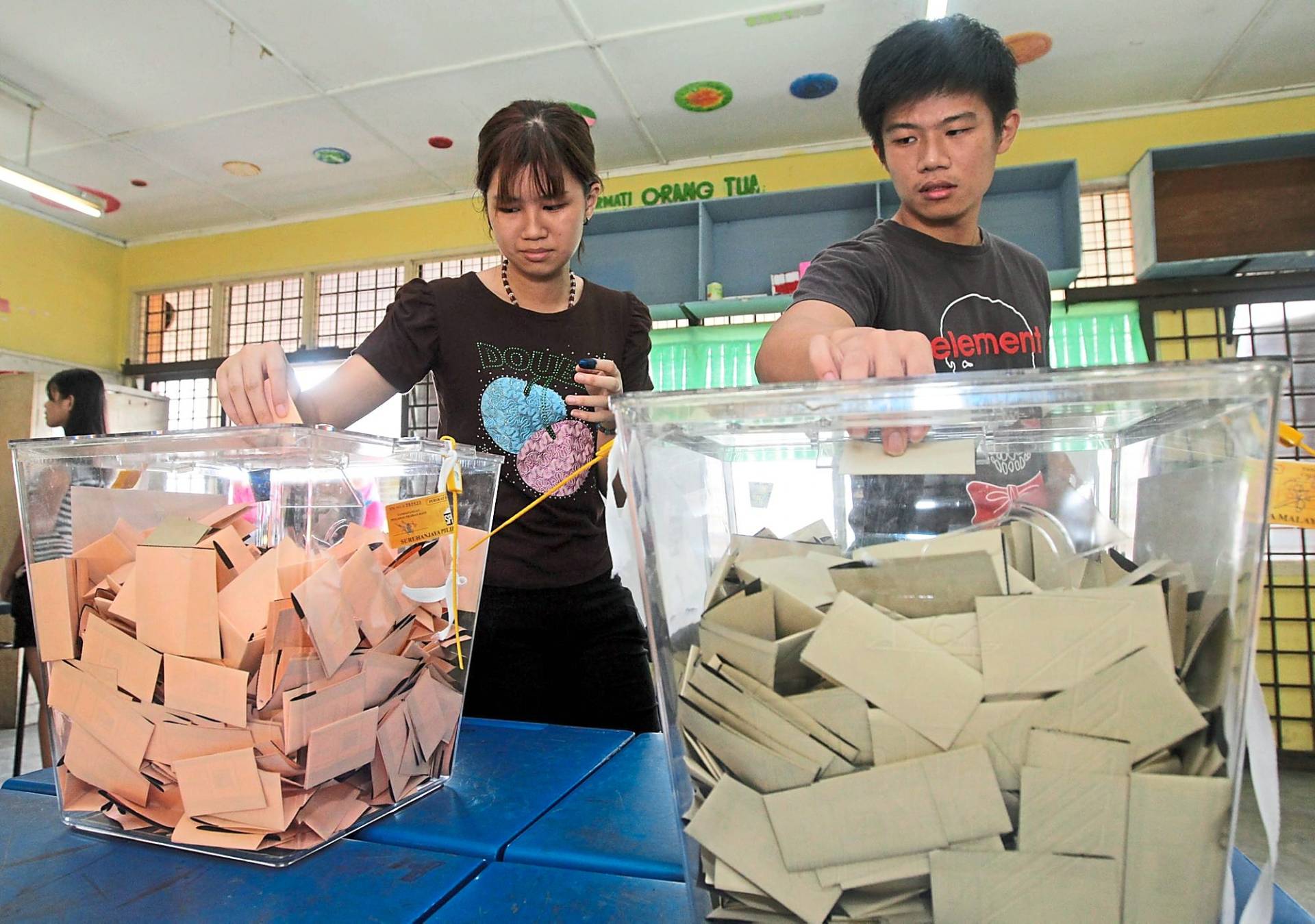
Youth power: The next election will feature voters even younger than these young adults casting their ballots in a previous general election. — Filepic

THREE years from now could seem a lifetime in this fast-paced world we live in, but 2022 isn’t that far off, especially with our Parliament members passing the Bill for Malaysians aged 18 and above to vote in the next general election.

A 15-year-old kid today will reach that age by then, and that young adult will have the power to dramatically influence political changes. They can also run for MP or state assembly positions by 2023. But most importantly, is the current democratic landscape prepared for such a paradigm shift?

The key concern is, how many of our existing political parties are ready to deal with the aspirations and wishes of these eight million new voters, who are expected to be automatically registered in the electoral rolls over the next five years?

The line-up of our present leadership is chockful of Baby Boomers, those born between 1946 and 1964. Gen Xers come next, and then the Millennials (Gen Y). Gene-ration Z is the newest to be distinguished and applies to those born from 1997 onwards.

Besides these super millennial voters, there are also the 3.9 million 21-year-olds who haven’t yet registered to exercise their democratic rights.

The government expects this change to increase the total number of voters to 22.7 million by 2023, compared to the 14.9 million in GE14, reads a Bernama report.

So, political parties which want to capture the hearts and minds of our young voters must design programmes that matter to them. And they’re best served using non-formal political structures to reach out to them, too.

The bulk of our current politicians, who range from being in their 50s to 90s, are not tuned in to the frequency of the young, resulting in a lack of empathy between the two generations.

Some of these know-it-alls just don’t know how to release the reins of power and retire rest assured of the younger generation’s abilities.

As much as our founding fathers must be recognised and treasured, rolling out the history of our Merdeka era leaders won’t help win votes – that’s fact. They are ideal for National Day fanfare but matter little in an election campaign.

Young voters, or any voter, for that matter, would want to know what their candidates can do for them, and not what party leader contributions to the cause constitute, even if track records matter.

The truth is, Malaysia desperately needs to see the faces of more young leaders at all levels. But for whatever reason, we seem to give the impression we are short of young heroes.

We still, understandably, talk about the late P. Ramlee, Mokhtar Dahari and Sudirman Arshad, but our global names are confined to Jimmy Choo, Michelle Yeoh, Nicole David and Lee Chong Wei.

Where are our Malaysian icons, and why are they not on international platforms proudly representing our country?

Hopefully, we will see young political leaders aged between 18 and 25 soon, if not by the next general election.

If our political parties twiddled thumbs in their pursuit for new talent, we’re likely to continue seeing the same old faces, literally, and that’s not going to entice this large group of young voters.

Previously, Malaysia’s youngest MPs were former PM Datuk Seri Najib Razak and Batu MP P. Prabakaran, who were elected at 22 years old.

The youngest MP currently is Youth and Sports Minister Syed Saddiq Abdul Rahman, who joined the Cabinet at 25.

The Bill to allow 18-year-olds to vote would mean putting pressure on the government and MPs to address issues such as education, job opportunities, housing and public transportation.

Climate change and the environment are important concerns for the young, too.

Singapore unequivocally backs its younger generation’s concern on climate change, a problem with major implications for billions of people if not slowed down.

“We are on their side, because this is something that is going to happen in their lives and is going to affect them.

“It is very much something in young people’s minds – this demonstration of young people around the world,” said Singapore Prime Minister Lee Hsien Loong.

It’s good we have an Energy, Science, Technology, Environment and Climate Change Ministry, but not great that it isn’t part of regular dialogue among the seniors. This is where our politicians have second-guessed our young ones in them having become more mature, politically aware and well-informed.

If our politicians spent more time listening instead of talking and plotting, they would learn more.

The Hong Kong protest is a textbook lesson. The country’s leaders refused to communicate with the young, who consequently demonstrated the intensity of their power.

We can choose to support or condemn them, but no one can argue that they have shown that they are a force to be reckoned with, and their votes certainly count.

This wakeup call to be more appealing isn’t limited to politicians, and should involve the media, too. None of the current media can cover themselves in glory for having been the voice of these new voters.

Media with youth platforms would be able to reach out to their peers more effectively, though.

In an age where the young (and even old) share content they believe in on multiple platforms, political and media stakeholders clearly have their work cut out.

Ultimately, they had better be ready to face the country’s most unprecedented general election ever.

Mari Ponteng for MP

MOST of our Members of Parliament wax eloquent about transparency and accountability, and their speeches are always filled with never-ending promises, likely as a display of devotion to their constituents.

And yet, none of us have been able to get full disclosure on the many absent MPs.

So much for transparency and accountability then.

Why can’t Parliament management reveal the attendance of MPs to us, instead of protecting them as if they were top secret officials who could undermine the nation’s security?

Ironically, we are also expected to swallow the bureaucracy of constituents from the 222 areas having to report their attendance to Parliament.

Deputy Speaker Datuk Rashid Hasnon was quoted saying that constituents could write to the Parliament management to have an MP’s attendance checked.

He also said it’s not appropriate for Parliament to publicly reveal the attendance of MPs.

“We can get their names, but it isn’t proper for us to spread their names. Whoever wants to know (about MPs attendance), they can meet the Parliament management,” he said.

It appears that the Parliament management is just avoiding embarrassing these lawmakers and making it much harder than need be for the media to snag that list.

As taxpayers footing MPs’ allowances, we surely have the right to know their attendance record, and the Parliament management’s salaries.

We must be privy to the identities of these recalcitrants, who are either too busy with their own businesses or simply indifferent to the affairs of the Dewan Rakyat to attend proceedings.

Honestly, they just find sittings unimportant and unnecessary for themselves.

Such indifference wasn’t the case during the election campaign, though, when they passionately rallied their audience, convincing them they would be the voice of the people.

Well, many haven’t showed up since, and that clutch who projected themselves as daring, and vocal politicians, have turned timid lately as they look up to their political masters while enjoying the power and perks of being in government.

It’s unbelievable that Mohamed Hanipa Maidin said it was a tall order for MPs to remain in the Dewan for long hours because of the temperature.

“It’s not easy for us to stay for a long time. It’s very cold sometimes,” said the Deputy Minister in the Prime Minister’s Department, who added that such occurrences were normal.

“I think everywhere in the world, you cannot expect MPs to stay in there all the time,” he told reporters at the Parliament lobby on Wednesday.

“That’s why we have a bell for the Speaker to ring. For me, it’s a small matter,” he said, adding that he isn’t worried about the poor attendance of Pakatan Harapan MPs in Parliament.

Well, YB, I don’t think Malaysians will find that reason acceptable at all! Come up with a better excuse, please!

Tun Dr Mahathir Mohamad has pledged that MPs who failed to attend enough Dewan Rakyat sittings would get a dressing-down.

The Prime Minister said Parliament attendance would figure in his decision-making for dropping MPs when he reshuffles his Cabinet.

“We will have to have a talk with the parliamentarians, as they were very anxious to be candidates.

“But after being elected, they are behaving as if they are not serious about serving the people,” Dr Mahathir lamented.

But there’s little room for him to affect a change. Politicians have thick hides and can even smile when being reprimanded, and that’s just about all Dr Mahathir can do.

After all, the absentees also include the front benches comprising ministers and deputies. What can the PM do to them? Precious little.

Recently, only 24 of 222 MPs were present; a quorum requires a minimum of 26 MPs. The Dewan Rakyat sitting was delayed by the Speaker under Dewan Rakyat Meeting Standing Order Number 13 (1). The same thing happened in October, too.

In fact, in July, Dewan Rakyat Speaker Datuk Mohamad Arrif Md Yusof had to order the House to stand down when Datuk Alexander Nanta Linggi (PBB-Kapit) noted that the number of MPs present was insufficient.

“There are no ministers or deputy ministers in the House, so can we proceed as there is a lack of quorum?” Alexander asked when the House resumed at 2.30pm following lunch break.

MCA president Datuk Seri Dr Wee Ka Siong weighed in, saying it was the government’s duty to ensure they have enough MPs present to endorse the Budget.

“Out of 127 government lawmakers, why can’t you get 40 to 60 MPs at any one time in the House if you don’t want the Opposition to ambush you?” he told reporters at the Parliament lobby on Wednesday.

He said it was the duty of Opposition MPs to keep the government on its toes.

“It is our duty to teach them a lesson, and I hope they have learned it,” he added.

Dr Wee, who is Ayer Hitam MP, also condemned the reasons bandied to justify Pakatan MPs’ absence during voting on the budget.

“There is no excuse for them to say they are new and have no experience, or they are fatigued. To me, this is rubbish and nonsense.

“Don’t find excuses for your weaknesses,” he asserted.

It’s not difficult for most MPs and reporters to pinpoint serial absentees, but unfortunately, they don’t have the stats to corroborate visual findings.

The only effective way to curb this malaise is for Dewan Rakyat to provide the attendance list of MPs, as appropriately suggested by Subang MP Wong Chen.

He also pointed out that a typical daily attendance rate is an abysmal 20% to 30%, while the minimum requirement for proceedings to progress is 26 MPs, or 12% of the entire Dewan Rakyat.

“Bottomline is, Parliament should publish a list of daily attendance. There is no greater cure to tak apa and sluggishness, than some transparency. Then let the absent MPs explain why they couldn’t be there. Sick leave and those overseas on official business/conferences can be excused,” he was quoted.

And if any of us truly believes that attendance is likely to improve soon, then we will believe in everything these MPs have promised us, too.

We can only hope our MPs don’t earn a rep for Mari Ponteng because of their notorious record for truancy.