Monthly Archives: February 2020

The good, the bad and the ugly


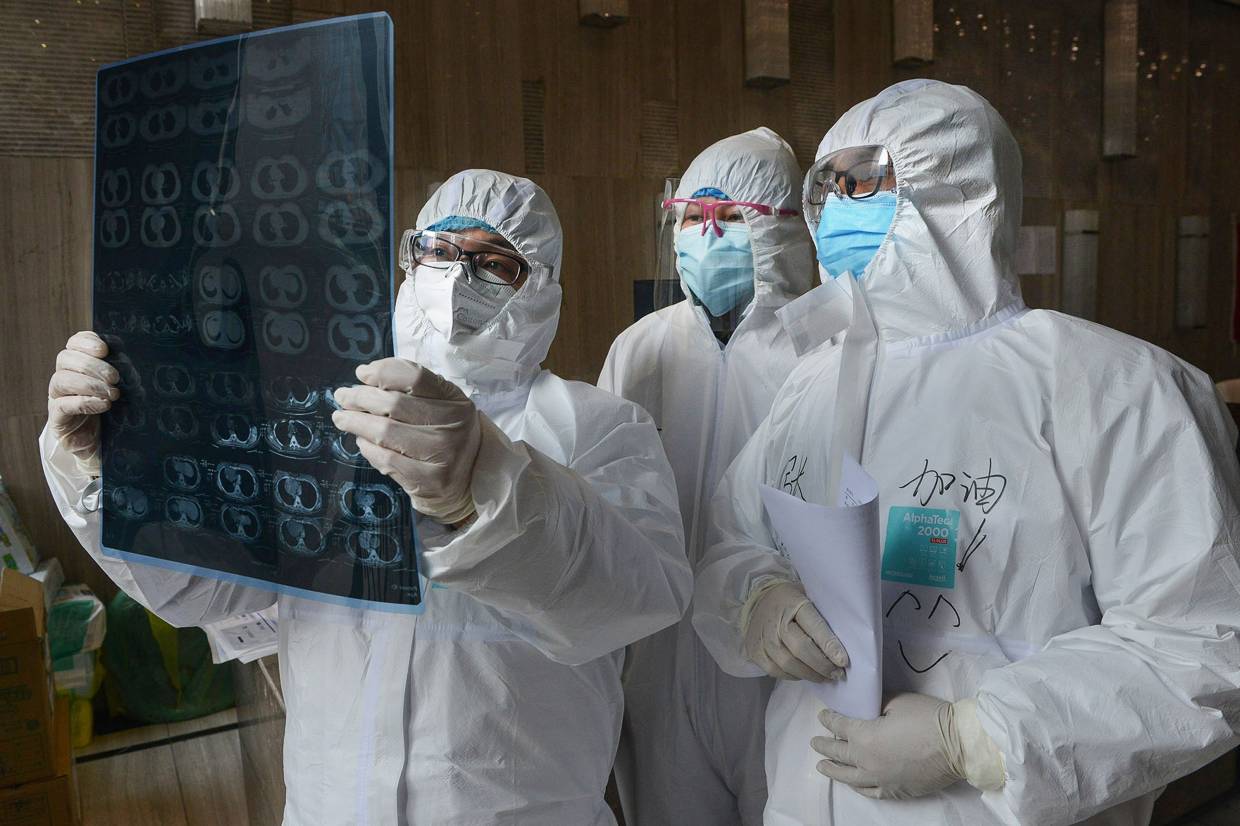
This photo taken on February 20, 2020 shows doctors looking at a lung CT image at a hospital in Yunmeng county, Xiaogan city, in China’s central Hubei province. -AFP

It takes all kinds to dominate in a world obsessed with economic might and political power.

AS a young boy growing up in the 1960s, I watched many Western movies and TV shows about cowboys and Red Indians, and as expected of a naïve and ignorant kid, I cheered for the “good” guys – the cowboys.

And because they were portrayed as such, the Red Indians were the “bad” guys to me. They were the savage lot, while the Caucasian men were the civilised group trying to help them. And routinely, the Red Indians would be defeated.

As I reached my teenage years and read more about the West, I realised that my supposed heroes were the ones who robbed these natives of their land, violated treaties and consigned the Red Indians to living on reservations.

The most famous Red Indian, Geronimo, the head of the Chiricahua Apaches, and his men were arrested and despatched to Florida as prisoners of war. Some of them were even discarded at crocodile-infested swamps.

Fast forward to contemporary Hollywood movies – the modern-day bad guys are always the Russians, Albanians and Arabs.

They are usually portrayed as one of brutal spies, criminals, human traffickers, drug dealers and terrorists, and in more lurid plots, all the above.

In The Equalizer, Denzel Washington, who plays a former intelligence agency man latterly driving a cab, goes after sadistic Russian gangsters and predictably, decides to kill all of them – in equally brutal ways.

In the John Wick movie series, Keanu Reeves also goes ballistic going after some Russians.

For some reason, all these ex-operatives are reclusive, divorced or widowed, still connected to their agencies, and as always, their loved ones get harmed (mostly killed) by the Russians, which invariably leads them to needing to settle the score.

Albanians hit the big time after the 2008 movie, Taken, which starred Liam Neeson, who plays Bryan Mills, another retired CIA operative whose teenage daughter and friend get kidnapped by human traffickers (Albanians) while holidaying in France.

In Taken 2, the 2012 sequel, the film follows the family to Istanbul, only to be kidnapped yet again, along with his former wife, by the father of one of the men he killed while saving his daughter two years previously.

It wasn’t just the Albanians who suffered from bad press as until today, my wife still refuses to go to Istanbul – as a result of the movie.

Fortunately for me, I have been to Albania. It’s a beautiful country with good people, and nothing like what the movies depict.

In the case of Arabs, we are accustomed to seeing them portrayed in poor light. They were womanising oil sheikhs at one time and are now mostly barbaric terrorists. Scenes with them are stereotypically sound tracked to the call of the Azan.

Mexicans, typically, are drug dealers. Likewise, Colombians, Cubans and Venezuelans. Well, in the movies, at least.

The hip hop loving African Americans in the United States, with their bling and bad attitude, are a dangerous lot. And thanks to their racist slurs, smaller Asians like us avoid antagonising them.

The latest bad guys are the Chinese. However, Hollywood isn’t quite ready to cast them as the standard stereotype because they are explicitly aware of mainlanders having plenty of clout.

Experts predict that by 2020, China will be the world’s largest cinema market, with box office revenue expected to leap from US$9.9 billion (RM41bil) in 2018 to US$15.5 billion (RM65bil) by 2023, according to a report by PricewaterhouseCoopers (PwC). In the first quarter of 2018, China surpassed the US in box office revenue for the first time.

It has been reported that China is presently Hollywood’s biggest foreign market, and according to projections by PwC, this year, the Chinese box office will likely rake in US$11.05 billion (RM46bil) compared to ticket sales in the US, which is expected to amount to US$2.11 billion (RM8.8bil).

So, unlike with other nationalities, Hollywood won’t mess around with the Chinese anytime soon.

Failed Hollywood movies, like The Terminator: Dark Fate, which starred Arnold Schwarzenegger, were rescued by the box offices in China.

Hollywood understands the power of money well. In fact, Christopher Nolan’s Dark Knight wasn’t even submitted for Chinese approval because of a dubious Chinese businessman character in the 2008 Batman movie. But in the Western media, whether in the US, Europe or Australia, China is being painted negatively, in a blatantly concerted way.

Everything from Huawei, to face recognition and to Xinjiang, and now Coronavirus, China has been the bogeyman.

The elephant-in-the-room theory is that the US wants a “freed Tibet” because it’s angling to build an air base that can send jets into China within minutes.

Adding to the spin doctoring, rioters and vandals in Hong Kong are relentlessly referred to as pro-democracy protestors to burn in the minds of the audience that they are the good guys.

HK policemen are painted as brutal when, ironically, tougher tactics are applied elsewhere, including by the American police.

The US is disturbed by the South China Sea, although it’s thousands of miles away and isn’t even a claimant. It’s strange when you think it has military bases in the Philippines and the vicinity.

The disdain for China even turned comical at some point. When a group of Vietnamese were found dead in a UK truck last year, newsfeeds initially revealed they were Chinese.

As the media scrambled for answers, one reporter, who was pressed for an answer, told his live audience that they could possibly be Chinese who fled to the UK because of their protests over the Xinjiang issue.

The underlining reason is simple – the Western media no longer wants to report about China in a balanced way, resenting its growth to become an economic power in just 30 years as it sits behind the US as the second largest economy in the world.

The narrative is the same: China should be feared and doubted, while Chinese scholars in the US ought to be treated as spies. And advanced technology better than that in American products be branded spying devices.

Hostility towards China has intensified and with the outbreak of Covid-19, there is no silver lining, what with spins of resenting Chinese president Xi Jinping, concealing figures of casualties, cover up, poor food preparation and filthy eating habits. And there’s also the racist perception that Chinese people are to be avoided and cooked up stories of uprising against Xi Jinping.

Of course, there’s also the twisted religious angle – that the Chinese are being punished, either for their eating habits, or again, the treatment of Muslims in Xinjiang.

The war against China is being waged in various fronts because it is deemed to have threatened the international order dominated by the US and its allies.

It doesn’t matter if the US is led by Donald Trump or a Democrat president, which could be worse, because the end game against China will simply be the same.

The Coronavirus epidemic has damaged the image of the Chinese. Their invincibility and ascent have taken a knock, so Xi Jinping must prove that China can beat this killer virus soon.

It’s a bad time for China nationals still travelling, but then again, even ethnic Chinese elsewhere are affected.

The average American believes everything they watch on CNN or Fox TV. No one should be surprised since only 45% of Americans – or 41.8 million – have been overseas. That’s an improvement, being 9% more than in 2018.

There is a far bigger picture here, one rooted in the concept of master and servant.

Not too long ago, China was a far-away mysterious country where cheap toys, low grade garments and fireworks came from. In the last couple of decades, the most populous country learnt technology well from the west, like how Japan did in the 1980s.

Today, the republic is on the cusp of achieving world domination. And that’s not a point lost on any superior or inferior nation.
Bigger fish to fry


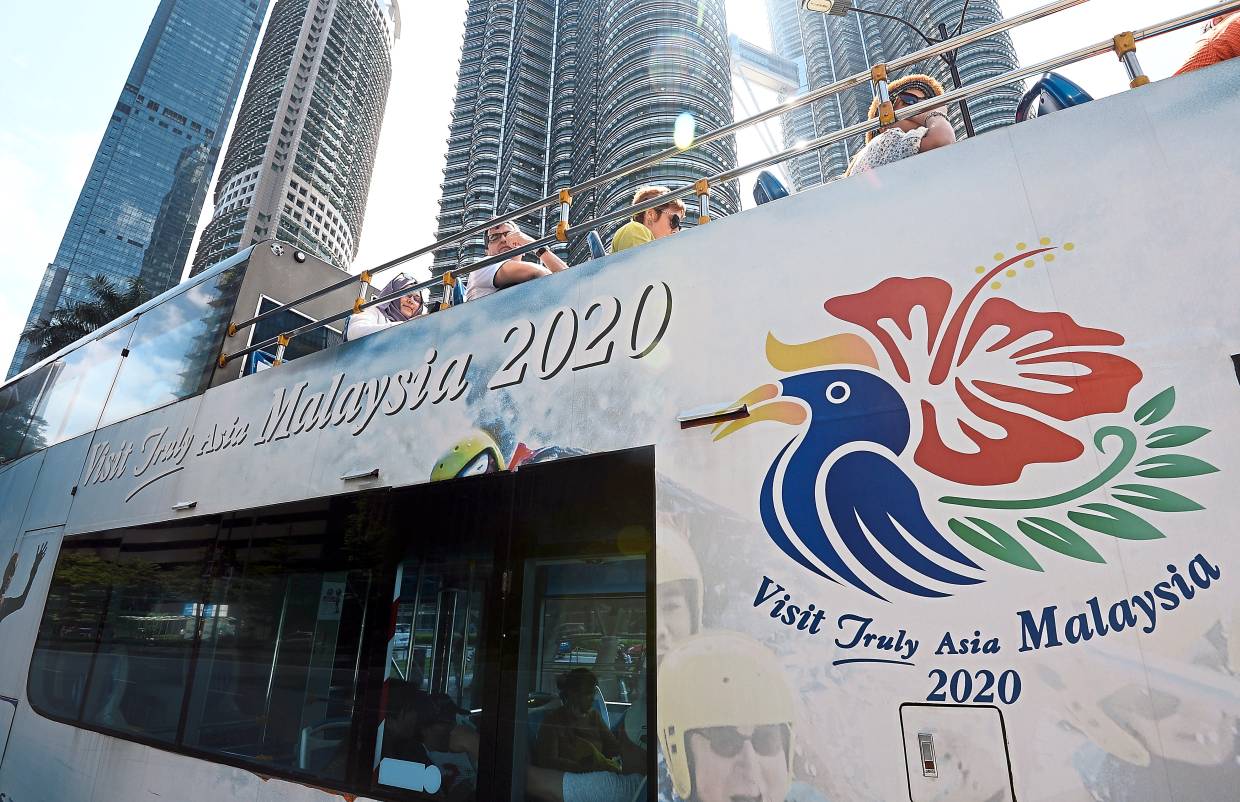
New moves: With the Covid-19 outbreak, Malaysia should work harder to draw tourists. — AZHAR MAHFOF/The Star

Even when our livelihood is threatened, our MPs are still more concerned about the game of political musical chairs within the corridors of power.

SOMETHING is very wrong with some of our Members of Parliament. Our economy has been heading south since the outbreak of the Covid-19, which spread – like a virus does – from China to the rest of the world, not sparing Malaysia, yet some politicians seem oblivious to the sense of urgency.

In fact, we are expected to post the worst results this year since the financial crisis a decade ago.

Our politicians seem to be living on another planet because they give the impression they are detached from reality and the people.

That’s only because they are caught up in relentless politicking and deal-making. The next general election is three years away but we are all tuned in to talk of the next government, the “backdoor, side door and revolving side-door” government.

There has been so much intrigue and intense speculation about the formation of a new government-in-the-making.

PAS is initiating a vote of confidence for Tun Dr Mahathir Mohamad to remain as Prime Minister amid talk that this is the first step to more dramatic political movements.

But on the ground, ordinary Malaysians are anguishing over daily living. Unless one is selling face masks and sanitisers, almost every business has taken a beating since the year’s start.

The worst hit include the airlines and travel businesses, but hoteliers, restaurants, shops, malls and, even bird’s nest and durian sellers have also reported huge losses.

Last week, an outspoken celebrity chef texted me to share his woes. His restaurant business has dropped by 40% because major clients have pulled the plug at the 11th hour.

And his customers are almost all Malaysians – not Chinese tourists – as he serves only Malay food. He never imagined this scenario since his restaurant has been jam-packed since its opening last year.

Tour agencies handling inland tours, especially those who rely on Chinese tourists, have already run into cash flow problems.

The cancellations run up to six months, and while it’s easy for the government to say that this is a temporary setback, the reality is that wages, Employees Provident Fund deductions, rentals and other operational expenses still need to be paid on time.

A local airline sent out a circular last week to inform its staff that the management was taking drastic cost-cutting measures to stay afloat as the company was facing “a state of financial downside”, saying these actions were pertinent “to limit the risk of closing down”.

The carrier took the unusual decision of limiting employees from travelling unless it’s with personal transportation and sans mileage claims. Overtime claims have also been stopped unless justified.

This is just the first two months of 2020 and things have certainly begun on a bad note for most of us. The first quarter of the year is as good as over, and it’s looking nothing less than disastrous.

I don’t know what some of our ministers were thinking when they said that Covid-19 will have minimal impact on us.

Don’t forget, this is Visit Malaysia 2020.

Malaysia is eyeing a GDP growth of 4.5% this year, with tourism alone expected to generate an income of RM100bil under the Visit Malaysia 2020 campaign.

Our ministers have a habit of painting a rosy picture, unlike their Singaporean counterparts who realistically tell their citizens to gear up to face the difficulties ahead.

What the rakyat wants to hear at the new Parliament session next month is what kind of economic stimulus would be provided to mitigate the impact on the economy.

Don’t tell us that the plan is being considered or underway. No more of this “sedang di kaji” (is being studied) or “akan di pertimbangkan” (will be considered) drivel. We no longer have the patience for such shenanigans.

We also want to know what’s being done to draw tourists to Malaysia now that China tourists are likely to cancel their trips here.

What are our alternate markets to draw tourists and assure them that Malaysia is safe, and convince them they shouldn’t emulate the knee-jerk reaction of the South Korea government in advising their people not to visit Malaysia?

And if the Covid-19 epidemic continues, what are the contingency plans of the Malaysian government and the affected ministries? We want to hear from the Prime Minister and the relevant ministers.

Update us on current and projected losses over the next few months.

Malaysians would also want to know what has been done to ease the India debacle. It’s a double whammy for our palm oil producers, especially small holders.

India and China, the world’s most populous nations, are the two biggest importers of palm oil. While we have persuaded Pakistan and other economies to buy palm oil from us, we simply can’t compensate for the loss of the huge Indian market.

Malaysia needs to stop antagonising big nations. We can’t win, so let’s be realistic.

And with two months having slipped by, we assumed our politicians would have been preparing for the next Parliament meeting with these issues in mind.

However, these guys are in dreamland, plotting an intriguing political coup and repeatedly counting the number of MPs on their side from the pool of 222. So much so, they probably count in their sleep, too.

And as is becoming routine, some sections of the media have been blamed for propagating fake news about this conspiracy, although almost all major media have reported the same. And some senior politicians should take note that MPs from their own party have been talking about it, too.

Politicians should stop accusing the media of creating fake news without justification, when they are making fake electoral promises to the people, and be warned that we can all see and remember.

It will get tougher over the coming months, and the performance of the first half of 2020 will be full of uncertainties.

So let’s brace ourselves for the rocky road ahead.

Sultan of Johor pays fond tribute to the Flintstones cartoon at Istana Mersing


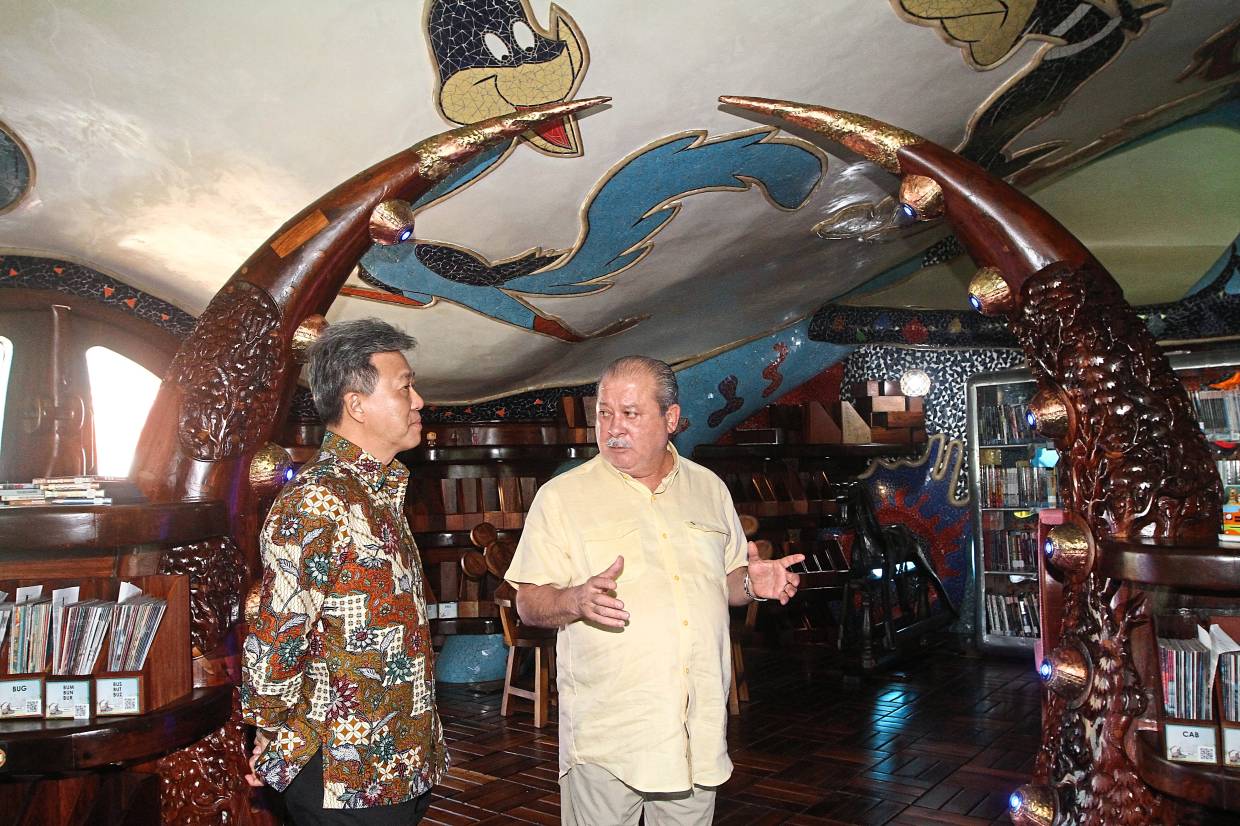
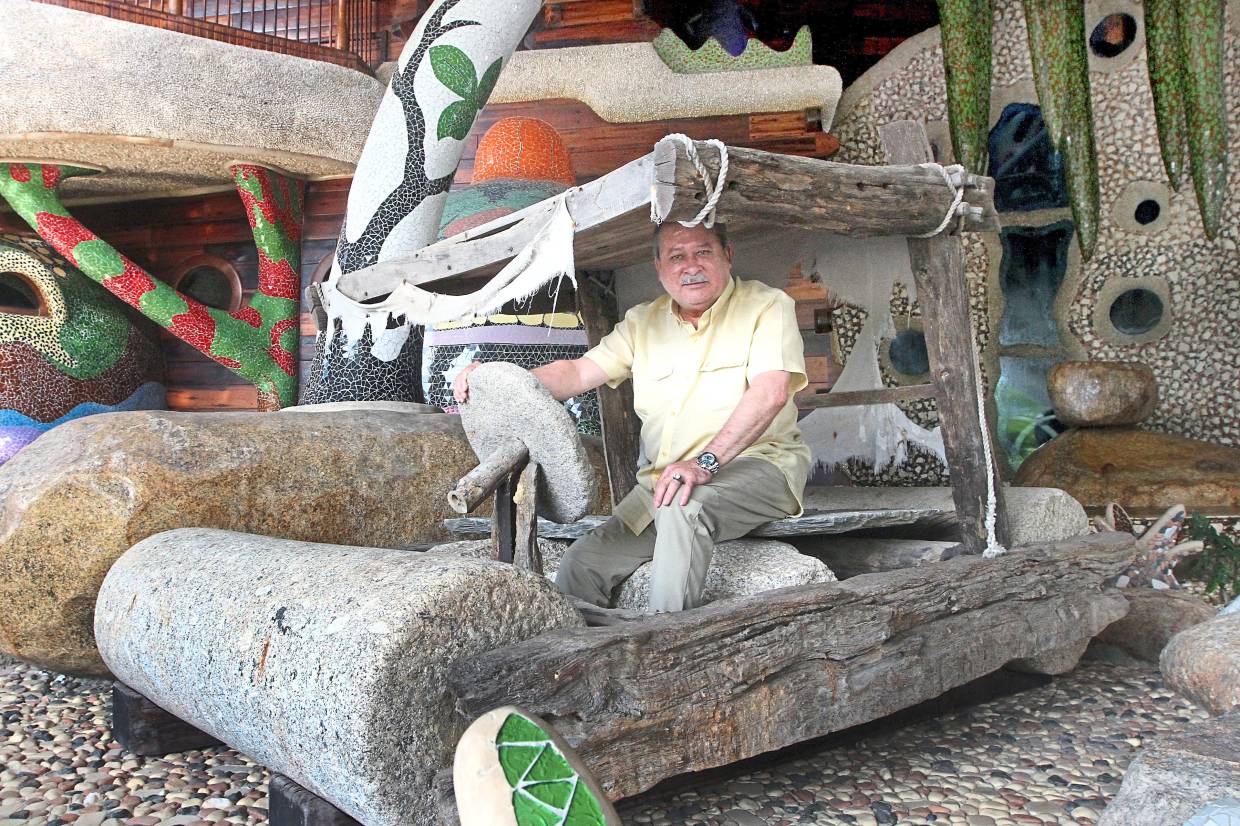
Sultan Ibrahim Ibni Sultan Iskandar of Johor at the Flintstone House in Mersing. — THOMAS YONG/The Star

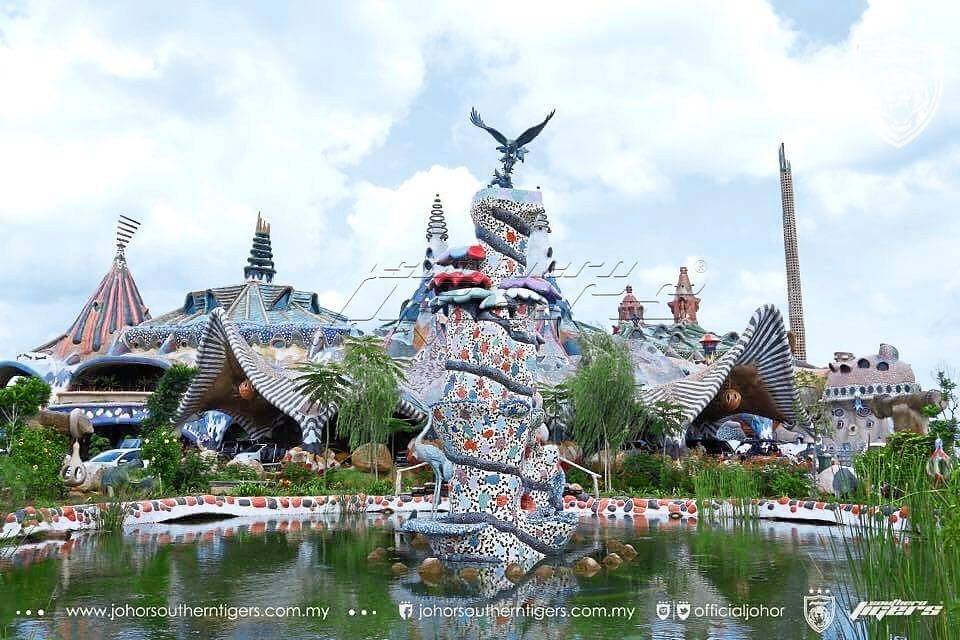
Busloads of tourists, foreign and local, stop by the perimeter walls of Istana Mersing, or Istana Flintstones, as it’s popularly known, daily.

They are mesmerised by the multi colours and unique shape of the building, which instantly brings to life, for them, the home of the Flintstones, a family immortalised in the popular Hanna-Barbera cartoon.

The journey from Johor Baru to Mersing is almost a two-hour ride via a 130km trunk road, but the initiated knows it’s worth it because such a palace is the only one of its kind in the world.

The Flintstones was an American animated series framed against a romanticised Stone Age backdrop and was hugely popular during its run from the early to mid-1960s. In 1994, it was also made into a movie featuring big name actors like John Goodman, Rick Moranis, Halle Berry and even Elizabeth Taylor.


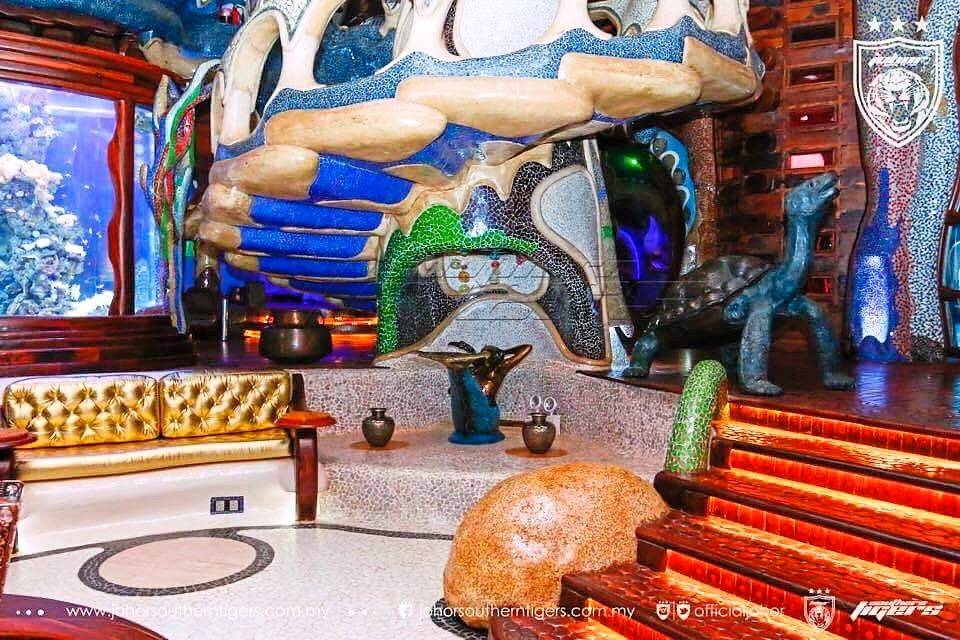
The two-storey palace was built to look like a giant cave from The Flintstones.

The Sultan of Johor, Sultan Ibrahim Ibni Almarhum Sultan Iskandar, a huge fan of this cartoon family, has kept the legacy of the Flintstones alive through his palace.

It’s located on a sprawling 24ha site overlooking the sea, with a nine-storey lighthouse, which is still under construction. It apparently has 17 rooms, including two presidential suites.


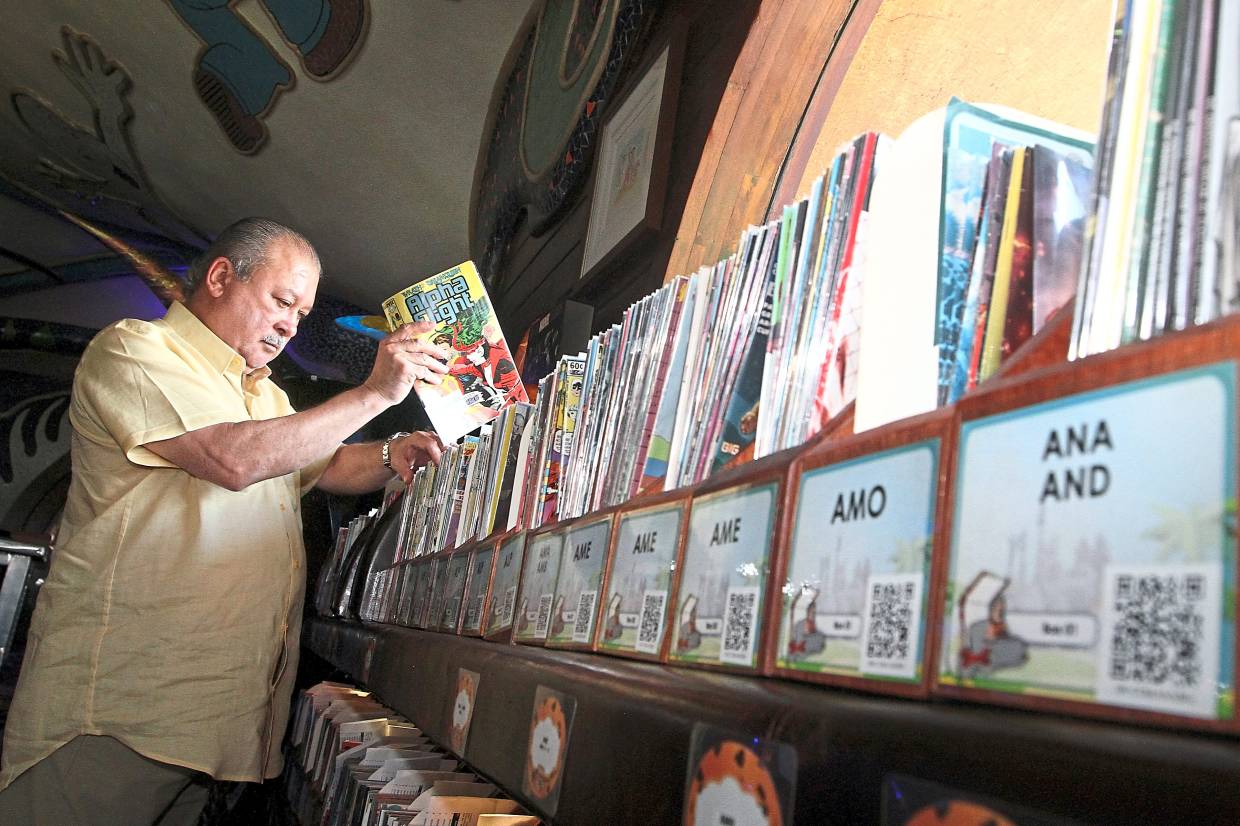
The two-storey palace, built to resemble a giant cave from the cartoon series, also has a museum and private library, which houses 60,000 original Marvel comics sourced from Australia.

The two-storey palace, built to resemble a giant cave from the cartoon series, also has a museum and private library, which houses 60,000 original Marvel comics sourced from Australia.

His Majesty Sultan Ibrahim said that he has been a fan of the cartoon since young.

“I can remember coming home from school and waiting for the cartoon to be on television. Fred Flintstone, the main character, remains my favourite.

“I could never get bored watching the series because it brings back many good memories of my childhood.”A life-sized replica of Fred Flintstone’s car from the show sits prominently near the palace entrance.

The two-storey palace, built to resemble a giant cave from the cartoon series, also has a museum and private library, which houses 60,000 original Marvel comics sourced from Australia.The two-storey palace, built to resemble a giant cave from the cartoon series, also has a museum and private library, which houses 60,000 original Marvel comics sourced from Australia.

It has specially designed wooden panelling on the car body and faux-stone finish on the wheels and chair, which was a gift from the King, Al-Sultan Abdullah Ri’ayatuddin Al-Mustafa Billah Shah, when he was a Crown Prince.

It’s a relief to know that the car isn’t feet-powered like in the series!

It was a privilege when the Sultan personally conducted a tour of his palace for this writer and his colleague, Nelson Benjamin, the bureau chief of The Star office in Johor.

A man gifted with the ability to remember even the finest details, Tuanku provided every bit of information on how the structure was put up, and where the materials were sourced.

“Every little thing was built from scratch and it was all properly done, ” he said as he showed me a letter from the Hanna-Barbera company granting Tuanku permission to construct the Flintstones-themed palace.


Sultan Ibrahim Ibni Sultan Iskandar of Johor has a vast private library at the palace, which includes a collection of 60,000 original Marvel comics! — THOMAS YONG/The Star

Tuanku revealed he is under pressure to open the palace doors to visitors. “I will discuss with my son (the Crown Prince) about which sections of the house can be opened to the public, ” he said, adding that it took five years to transform the once-swampland area.

Sultan Ibrahim also added that a lot of recycled materials, including broken marble pieces and KTM’s old wooden railway sleepers, have been repurposed and made into furniture to give the place a rustic look.

He added that they have an on-site sawmill and some 350 people, including professional carvers, working on the project.

The quirky building, which houses everything from swinging chairs to a huge aquarium, is a bona fide private theme park, which can match anything in Disneyland or elsewhere.

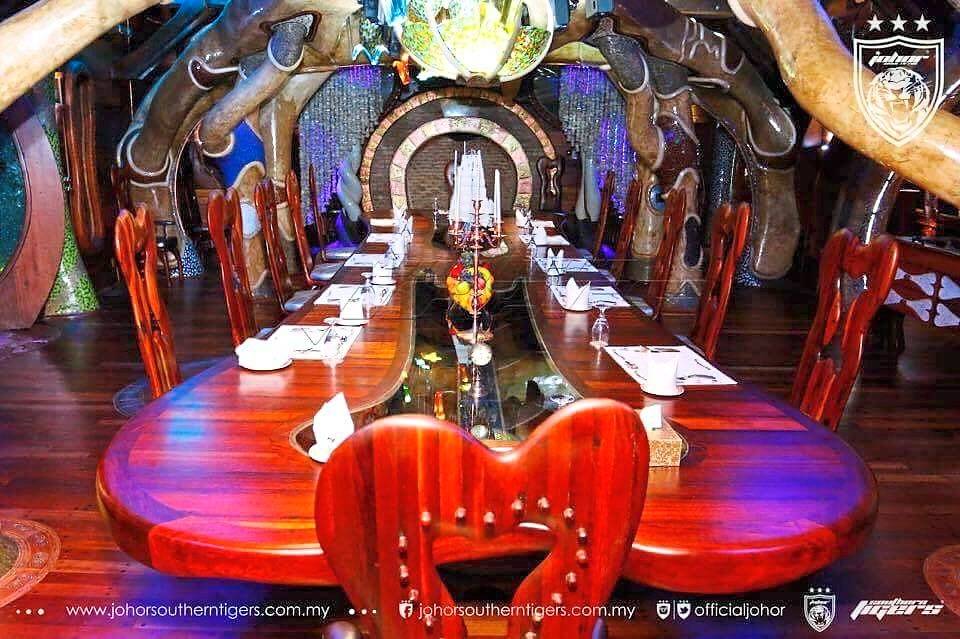
My favourite part of the palace is the dinner table, where projectors placed on the ceiling beam down moving animations of Fred Flintstone cooking.

There are also kitchens in various parts of the palace. Unknown to many, His Majesty is an excellent cook, and has restaurant-standard kitchens.


In the dining room, projectors on the ceiling beam down animations of Fred Flinstone cooking.In the dining room, projectors on the ceiling beam down animations of Fred Flinstone cooking.

Sharing his vision of Mersing, His Majesty said he hopes to transform the coastal town and put it on the world map. He added that people always travel to Mersing – which is located on the east coast of Johor – en route to nearby island paradises such as Pulau Rawa and Pulau Tioman.

Rawa Island was referenced in the 2018 blockbuster Crazy Rich Asians, although the parts depicting Rawa were, in fact, filmed in Pulau Langkawi in Kedah.

“We want people to stay on the mainland.

“To achieve this, we need good hotels and restaurants to cater to tourists, especially day trippers, ” said Sultan Ibrahim, adding that effort is needed to improve the jetty and clean up the Mersing river, which is congested with ferries and cargo vessels.

With eco-tourism a key revenue stream down south, Sultan Ibrahim added that there is now better control of the number of divers in the area with the establishment of the Sultan Iskandar Marine Park.


Recycled materials like broken marble pieces were repurposed and used to make a lot of the furniture and decorations at the palace.Recycled materials like broken marble pieces were repurposed and used to make a lot of the furniture and decorations at the palace.

“Now we have park rangers and an office to monitor all the activities around the marine park.

“The permits are issued by the local council and we can now better protect the marine life around the area and prevent people from just anchoring their boats indiscriminately or carting away the marine life, ” he said.

He added that the RM200 charge for divers was used for conservation efforts, but it will cost more for boats and rangers.

“We want to emulate Sabah in their efforts to protect their marine parks, ” he said.

Conservation efforts aside, it’s the palace which takes centre stage as the Sultan’s jewel in the crown.

And if there were a catchphrase to encapsulate the glee one experiences when seeing his abode, Fred Flintstone’s iconic “Yabba Dabba Doo!” should do just nicely.

Wu Lien-Teh: Malaysia’s little-known plague virus fighter


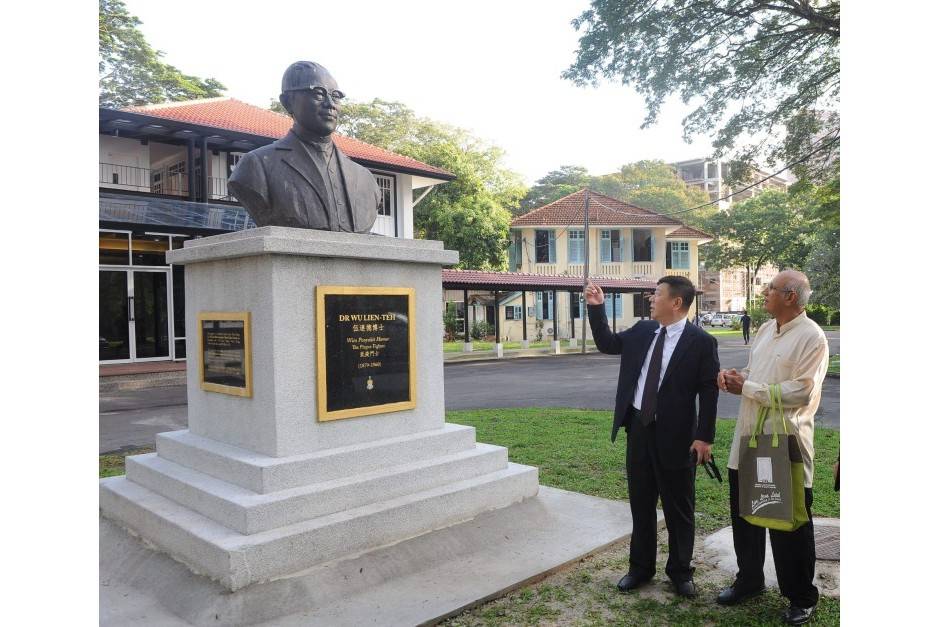
Dr Wu Lien-Teh Society chairman Datuk Dr Anwar Fazal (second from left) looking at Dr Wu’s bust which is located in front of the Penang Institute on Brown Road. – ASRI ABDUL GHANI/The Star

HIS name does not exist in our school history books and he has never been accorded the recognition that he truly deserves – and what’s more, he was a Malaysian.

In the fall of 1910, a pneumonic plague which originated in Russian Siberia, broke out in Harbin, the north eastern region of China. The epidemic spread so quickly that within four months, it claimed 60,000 lives.


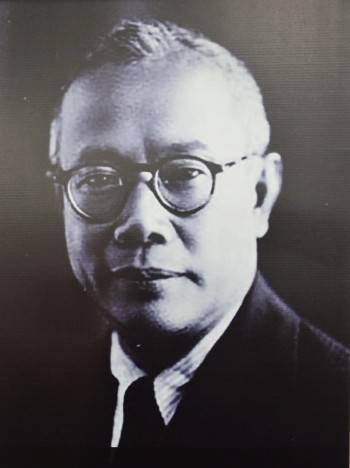
Dr Wu Lien Teh (pic), a Penangite, was given the job to find a vaccine to curtail the virus, which broke out in October 1910 and lasted till March the following year.

This is perhaps a good time to talk about Dr Wu as China and the world race against time to find a cure for the deadly novel coronavirus.

It is an appropriate time to honour a Malaysian who fought a plague that killed even more people in China then.

Dr Wu was born in Penang on March 10,1879 and, at 17, went to England to study at Emmanuel College, at the University of Cambridge.

He became the first ethnic Chinese to study medicine in the prestigious university.

According to an article in the Penang Monthly by Koh King Kee, the Penang Free School boy completed his medical degree two years ahead of requirement and won all possible prizes and scholarships in a class of 135 students.

”He pursued a postgraduate study of malaria at the Liverpool School of Tropical Medicine, and bacteriology at the Hygiene Institute of Halle in Germany and Institute Pasteur in Paris. He was the first student of Chinese decent to graduate with an MD from Cambridge University,” Koh wrote.

”After his arrival at Harbin, Dr Wu performed the first-ever post mortem exam in China on a Japanese woman who died from the epidemic. He discovered Yersinia Pestis in the body tissues and further concluded that the epidemic was pneumonic plague, which could be transmitted by human breath or sputum.

”This was contrary to the general idea that plague could only be transmitted by rats or fleas and could not be transmitted from person to person. His idea surprised all of his scientific peers and was met with widespread disbelief,” according to an article, published by US National Institute of Health, National Library of Medicine.

The article further notes that Dr Gerald Mesny, a prominent French doctor, was one of those who doubted Dr Wu’s views. Dr Mesny himself died of pneumonic plague several days later, after refusing to wear a mask, succumbing to the epidemic infection. His death shocked the international community then.

At the same time, Dr Wu convinced the Russian and Japanese railway authorities to cease the operation of all trains in 1911. These efforts cut off all transportation and contained further transmission of the disease in Northern-East China. Nonetheless, the death toll in Harbin continued to rise as the corpses of those who died of the epidemic served as a perfect “incubator” for the infection to spread.

Dr Wu sent a petition for the bodies of the deceased to be cremated and some 3,000 corpses and coffins were gathered and cremated.

No further infection was reported as of March 31,1911. The deadly disease had vanished by the time the Chinese New Year arrived, the article said.

”On the advice of Dr Wu, the International Plague Conference was held in Mukden from April 3 to 28,1911.

Renowned epidemiologists and scientists from 11 countries, including the US, UK, Japan, Russia, and France attended.

Dr Wu was elected as president of the conference and his work on plague prevention was highly praised by all.

In fact, modern medical science was established in China soon after this conference ended.

Dr Wu, always the fighter at the forefront of the battle to prevent plague, successfully stamped out the recurring epidemic by 1921.

According to writers Zhongliang Ma and Yanli Li, Dr Wu, in later years, devoted much his efforts setting up hospitals and medical colleges and founded the Chinese Medical Society.

In 1931, after the Japanese invaded the north-eastern provinces of China, he left for Shanghai, where he set up the National Quarantine System.

He returned to Malaya with his family in 1937, following the commencement of the anti-Japanese war in China.

In his later years, after coming home, he wrote and published a 1959 autobiography in English, Plague Fighter: The Autobiography of a Modern Chinese Physician.

The book was reprinted in 2014 by Areca Books.

According to the writers, Dr Wu died at the age of 81 on Jan 20,1960. He was deeply mourned by the scientific and medical communities, as well as the world as a whole.

The Times of London commented on Jan 27,1960:

”By his death, the world of medicine has lost a heroic and almost legendary figure and the world at large, one of whom it is far more indebted to than it knows.”

He is recognised as the Father of Modern Chinese Medicine and an institute in named after him in Harbin.

”He is regarded as the first person to modernise China’s medical services and medical education. He is also the first Malaysian to be nominated for a Nobel Prize in Medicine.

”To honour him and to remember his contributions, bronze statues of Dr Wu Lien Teh, were erected at Harbin Medical University. He remains unforgotten and his work continues to serve us, such as occurred when SARS suddenly broke out in 2003.

”We owe much to Dr Wu, who saved many lives and whose contributions to modern medicine in China allow us to continue to do so today.

Thanks to Dr Wu’s great contribution, the Wu Lien-Teh Institute was opened on Dec 24,2015, with the objective of researching infectious diseases and sharing the resulting knowledge to everyone.

Dr Wu was accorded no less than 20 honorary doctorates from renowned institutions including the John Hopkins University, the Hong Kong University and the Imperial University of Japan.

At the Beijing University Hospital, his bronze statue is also up.

According to Koh, Dr Wu returned to Penang after his graduation but ended up fighting against the colonial system.

”There was a two-tier medical system in the British colonies, where only British nationals could hold the highest position of fully qualified medical officers or specialists, according to reports.

”But that did not deter him as he went on to become a scientist and an anti-opium advocate. He spent the first four years of his medical career at the Institute of Medical Research, researching beri-beri, which causes the body system to break down as a result of deficiency in Vitamin B.”

Koh wrote that Dr Wu was also very vocal on social issues and founded the Anti-Opium Association in Penang, which pitted him against powerful forces – the British colonists who approved the distribution of opium and triad-linked Chinese tycoons.

”He was soon framed by these connections, leading to a search and subsequent discovery of a mere one ounce of tincture of opium in his clinic, according to a posting in Wikipedia.

”It was quickly regarded as illegal, although he was a fully qualified medical doctor who had used the drug to treat opium patients.”

Dr Wu’s prosecution and appeal rejection attracted worldwide publicity, including an invitation from the Chinese government in Peking to take up the post of vice-director of the Imperial Army medical College in Tianjin.

Left with little options, Dr Wu travelled to Harbin, on the instruction of the foreign office in Beijing, to investigate an unknown disease, which turned out to be the deadly bubonic plague.

”But his career as a scientist was cut short by the war in 1937 when the Japanese attacked China.

In fact, his villa in Shanghai was bombed by the Japanese.

”He returned to Malaya where he opened a clinic in Ipoh at Brewster Road – which has been renamed Jalan Sultan Idris Shah.

”His social work continued where he collected donations for the setting up of the Perak Library, now the Tun Razak Library, in Ipoh.”

Koh wrote that despite keeping “a low-profile civilian life”, there were moments of drama in his life.

During the Japanese occupation, Dr Wu was kidnapped by Communist guerrillas and released only after a big ransom was paid.

”Two months later, it was the Japanese’s turn to arrest him on suspicion of supporting anti-Japanese forces. He was eventually cleared of the charge after a Japanese officer, who was his patient, testified to his innocence.”

He practised medicine until the age of 80 and like all Penangites, the state was his forever home.

He bought a house in Chor Sin Kheng Road in Air Itam, Penang, for his retirement and died on Jan 20,1960, aged 81, after suffering a stroke.

A road in Ipoh Garden South has been named after him while in Penang, a private road named Taman Wu Lien Teh is located near the PFS.

But the road in Ipoh remains wrongly spelled although the mistake has been highlighted to the Ipoh City Council. It remains spelled as Wu Lean Teh Road.

More importantly, it is a great injustice for his name to be omitted from our history textbooks.

He deserves to be forever remembered.

The Dr Wu Lien-Teh Society, headed by Datuk Anwar Fazal, was set up in 2013 to research, promote and support the legacy of this Malaysian legend.

More changes ahead?


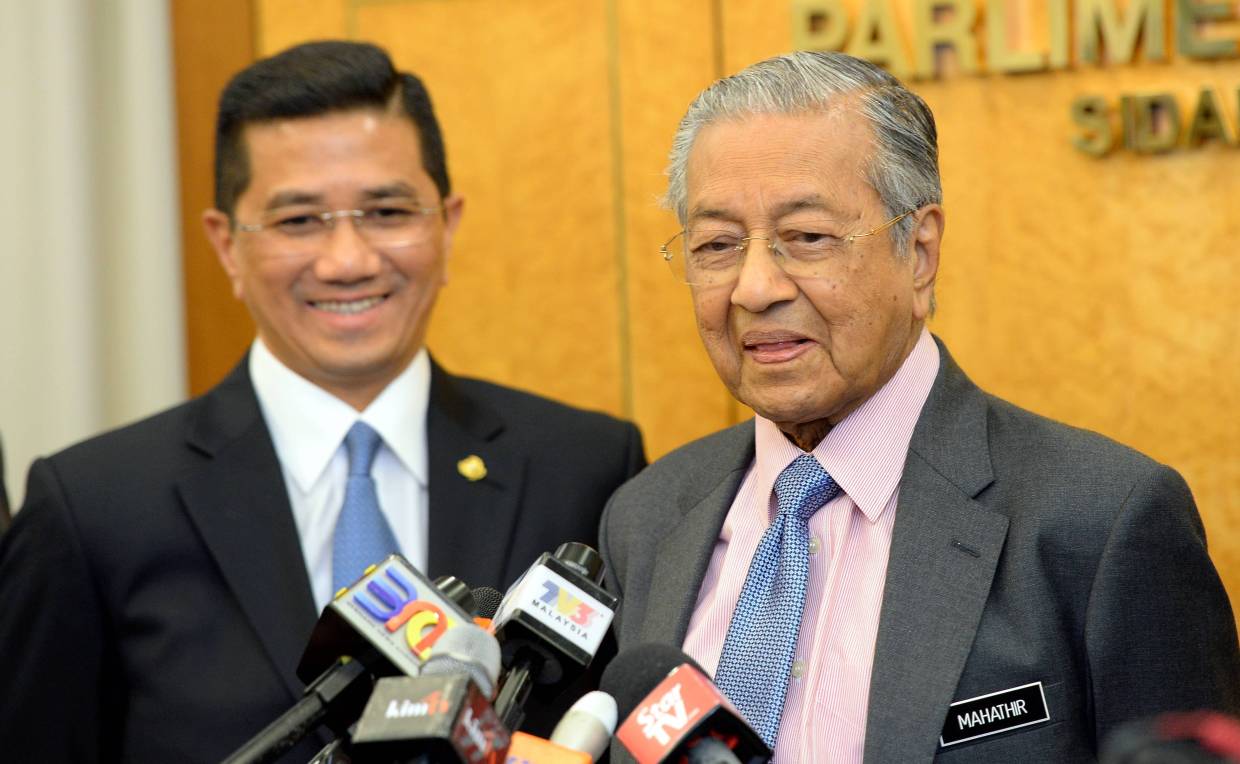
Prime Minister Tun Mahathir Mohamad speaks during a press conference at Parliament with him Minister of Economic Affair Datuk Seri Azmin Ali – Filepic

A sea change happened two years ago, and now, rumblings of another revamp to the country’s administrative landscape is expected to keep eyeballs peeled on newsfeeds.

WITHOUT doubt, Tun Dr Mahathir Mohamad is the master politician! Like or loathe him, he has set a few records which no one in the world can match.

At 95 years old, he is the oldest Prime Minister in the world and his supporters, including the Opposition now, want him to remain in office. That’s unimaginable, though.

He is also the only PM in Malaysia to have been reappointed to the position for a second time, and still holds the record for being the longest serving PM in the two decades of his first tenure.

And now, he is set for another record – PAS is said to be ready to initiate a motion at the Dewan Rakyat next month to express support for Dr Mahathir.

The Islamist party, an Opposition party, is defying logic. Instead of making moves to dispose of a serving PM from the ruling party, it, in fact, wants to keep Dr Mahathir on.

There are two ways of looking at this – PAS wants to elevate Dr Mahathir to strike a deal, which could involve being in government, or, the party views the nonagenarian as such a liability to Pakatan Harapan that he could be the ultimate self-saboteur in the ruling coalition.

After all, surveys have showed that Dr Mahathir’s popularity has taken a plunge, with one study showing that Pakatan’s 87% popularity in GE14 had dropped significantly to 35% by the first half of 2019. Pakatan has also lost in four consecutive by-elections.

Since last year, PAS leaders have openly declared that its 18 MPs will back Dr Mahathir if a no confidence motion is placed on him.

This time, when the Dewan Rakyat sits from March 11, PAS wants to turn the tables and submit a vote of confidence.

For a vote of confidence to succeed in the Dewan Rakyat, it must have the support of at least 112 out of 222 MPs.

There’s another peculiarity – many PKR MPs, headed by deputy president Datuk Seri Azmin Ali, want to retain Dr Mahathir at the helm instead of his own party chief Datuk Seri Anwar Ibrahim. Now, that’s also unprecedented.

Last week, Dr Mahathir said he welcomed support for him, including from Umno and PAS, saying, “Anybody supporting me, I feel like floating.”

Kuala Lumpur has been abuzz with speculation that moves are being made to create a new alignment, supposedly called Pakatan Nasional, comprising Dr Mahathir’s Parti Pribumi Bersatu Malaysia, and some MPs from PKR, PAS and Umno – leaving DAP and Anwar’s loyalists out in the cold.

DAP has struggled for acceptance in Malay politics, with Malay Pakatan politicians admitting that the DAP has been a burden for them, saying that party’s leaders suffer from image problems and the inability to be embraced by the Malay community.

It has also failed to win over the hearts and minds of senior civil servants at Putrajaya, and the lack of endearment has caused a debilitating fallout, with senior officials perceiving that they’ve been shut out.

Ironically, the DAP is also losing the support of the Chinese community (whose disdain for the party has increasingly grown), plotting a downfall of hero to zero in a little over a year. It having a sizeable 42 MPs isn’t a lost point, either.

PAS has openly said that a written agreement was drafted to show its commitment to Dr Mahathir until the 15th General Election, in the interest of religion, race and country.

Its secretary-general Datuk Takiyuddin Hassan has also reportedly said that they had met Dr Mahathir to discuss issues relating to oil royalties, as well as representation for the economic action council in PAS-led states Terengganu and Kelantan.

It appears that besides political appointments, PAS wants more money from the federal government for the two states under its control, particularly for cash-strapped Kelantan. It has one of the worst logging abuse records in Malaysia, where even Orang Asli land has been encroached on.

Playing with a toxic concoction of race and religion, and Malay dominance, it’s clear the message to Anwar and DAP is that they shouldn’t even think of asking Dr Mahathir to retire soon.

While there is an agreement that Anwar will succeed Dr Mahathir, as stated clearly in the signed document, there is no mention of when that will take place. It doesn’t say two years or three years.

And there’s another catch – the Federal Constitution also stipulates that the PM must have the majority support of the members of Parliament.

Basically, the agreement isn’t good enough if Anwar doesn’t have the numbers.

Regardless of it being either a vote of confidence or no confidence, the numbers are needed.

It looks like the former is easier, and if fellow Pakatan MPs, especially those from PKR, DAP or Amanah, decline to throw their support behind Dr Mahathir, it would look odd. It will be as good as a no faith call, without the need for a formal motion even.

The common assumption, among political players and analysts, is that the players seem to have issues with gaining committed numbers.

With PAS in the picture, splinter party Amanah will find it weird to get back with PAS. PAS has 18 MPs against Amanah’s 11.

The overtures have been made to Umno’s Datuk Seri Hishamuddin Hussein, and even its president Datuk Seri Dr Zahid Hamidi, who has over 50 corruption charges staring at him.

His critics have said he seems prepared to work with Dr Mahathir to save his skin.

Controversial Umno supreme council member Datuk Lokman Noor Adam has declared the two and other Umno leaders – in a series of videos – infected with Kerala Virus, referencing Dr Mahathir’s ancestral home in India’s southern west coast.

Lokman also sensationally released an audio recording claiming that Zahid had tried to convince party leaders during a meeting that Umno needs to work with Dr Mahathir.

On Friday, the Umno supreme council announced that Lokman has been given the boot.

If the forming of Pakatan Nasional is to be believed, it can’t be legitimate for it to brand itself a Malay and Muslim platform. PAS, with its unwavering commitment to setting up an Islamic state, may want it that way, but that’s not Dr Mahathir’s thinking.

He is cunning enough to realise that without Sabah and Sarawak, it won’t be possible to form a federal government – whether via the front door, back door or any door. In fact, Pakatan Nasional will be shown the exit door if it’s all about Malays and Muslims.

Malaysia is a multiracial country and any ruling government needs multiracial representation in the Cabinet.

The Sarawak political alliance of Gabungan Parti Sarawak has no love for PAS, and for that matter, it has no interest in backing any peninsula politicians who have failed them.

GPS comprises Parti Pesaka Bumiputera Bersatu (PBB), Sarawak United People’s Party (SUPP), Parti Rakyat Sarawak (PRS) and Progressive Democratic Party (PDP).

Their sole priority now is to win the Sarawak state elections this year, and it can only do so on its own – not with Barisan Nasional, Pakatan Nasional or Pakatan Harapan. This is also the best time for Chinese-based parties in GPS to wrest back seats from PKR and DAP, which have three and seven seats respectively.

GPS has announced that it will remain independent and look after the state’s interests, as it dismissed talk of joining any coalition.

However, the real winner from the outcome of the manoeuvring seems to be PAS – which is being courted by Barisan via Mufakat Nasional, and now, the so-called Pakatan Nasional.

PAS is extracting the highest price on its part, and it knows that all the Malay-based parties need its solid votes. The six by-elections have proven that an election can only be won with PAS’ votes. That is the political reality.

Despite pledging its support for Dr Mahathir, that still didn’t stop PAS from campaigning for Barisan in the Tanjung Piai by-election to ensure the defeat of Dr Mahathir’s Bersatu.

Succession planning has always been Dr Mahathir’s biggest flaw, intentional or otherwise, and if he succeeds in staying on, then he has created two other records.

Anwar will be the world’s longest PM in waiting, and, unbelievably, may not even get to it. And the best part is, he has wreaked havoc with disunity in PKR, and now Umno.

Without doubt, he is at his best or worst when he reveals his Machiavellian streak, and it would be naïve to think that he has changed, or mellowed, after all these years.

Fear of the unknown


Proliferation of a contagious disease still falls behind the speed at which its prejudice spreads.

IT looks like it has become a new norm in Malaysia since the outbreak of the contagious coronavirus in China and around the world, with increasing numbers of confirmed cases including fatalities.

I attended church service last week, like I do on most Sundays, where I always extend my hand to greet church members but recently, I was surprised when someone refused to return the gesture.

He didn’t explain why but offered me the Salam Malaysia greeting, of his hand on the chest. For a moment, I thought Visit Malaysia 2020 was in full swing in my church.

But I soon got the message. My pastor later went up to the pulpit and reminded his congregation not to be offended if touching hands had to be temporarily stopped with the spectre of the virus looming large.

That’s not all! Banks have been sending me notices of their annual Chinese New Year open houses being postponed. And there I thought banks were still doing better than other businesses.

A relative from Singapore cancelled her trip to Kuala Lumpur because of the virus. I was about to grumble about the debilitating Singapore attitude of “kiasi” (the Hokkien word for fear of death or being overly concerned) until I realised she had good reason, being over 80 years old.

But I am finding it harder to fathom wearing face masks in Malaysia. Kuala Lumpur isn’t exactly a crowded city compared to Hong Kong, Seoul, Tokyo and many major cities in China.

There is hardly any physical contact, and even in the MRT it’s not packed like sardines in a sweaty, claustrophobic situation with strangers pressed against each other.

I would be very worried if placed in such proximity but I haven’t experienced such situations in our MRT, not even during peak hours.

So, the idea of wearing face masks isn’t in place yet. Besides, I have no reason to be protesting anything or concealing my identity for fear of been recognised by the law. I am in KL, and not HK.

Also, Malaysia is so humid and hot that everything gets burnt under the sun. We have warm weather all year round, unlike China which is cold now.

So, it was only apt for Deputy Health Minister Dr Lee Boon Chye to remind Malaysians that people without symptoms of the virus need not be afraid of going maskless in public places.

“If they do not have symptoms, they do not have to wear the masks for protection. It is not necessarily effective against infection.

“To avoid infection, what is most important is to wash the hands often, using soap and detergent.

“If a mask is not worn properly, there is also a risk of getting flu-like symptoms, ” he said recently.

But if you have a fever, cold or cough, it’s your responsibility to wear one to contain your illness, even if it’s just the common cold. No one is taking chances at this point.

Certainly, I would want to put on my face mask when I am travelling on a plane because I don’t know the passengers or where they have been. Besides, most of us, the proletariats, travel economy class, or the cattle class, where there could be some form of body contact, even if minimal.

That said though, I think the world has become unreasonably paranoid. Many of us are over-reacting to the virus. If you are a mainland Chinese, it’s a bad time to travel because you would be eyed with suspicion and prejudice, with many forgetting that China is a country with 1.2 billion people.

If you are an ethnic Chinese, possibly a Malaysian or Singaporean, you could also face the same discrimination.

A Malaysian tour operator texted me from Lebanon over the Chinese New Year holiday saying he felt he was being viewed contemptuously because of his appearance, given the news of the virus.

We have read of Chinese being kicked out of hotels and restaurants for being China nationals.

Malaysians are still driving cars and food deliverers are still beating traffic lights every second.

No surprise then that road fatalities in Malaysia number over 6,000 and more than 25,000 injuries have been recorded the past five years straight.

Malaysia has the third highest fatality rate from road traffic accidents in Asia and Asean, behind Thailand and Vietnam.

By comparison, the fatality rates in developed countries are all in single digits.

Transport accidents (5.4%) were the fourth most common cause of death in Malaysia in 2016, behind ischaemic heart disease (13.2%), pneumonia (12.5%) and cerebrovascular disease (6.9%). It was the third most common cause of death among men, behind ischaemic heart disease.

Basically, more Malaysians could die on our roads than from this virus, but thankfully, the worst has yet to happen.

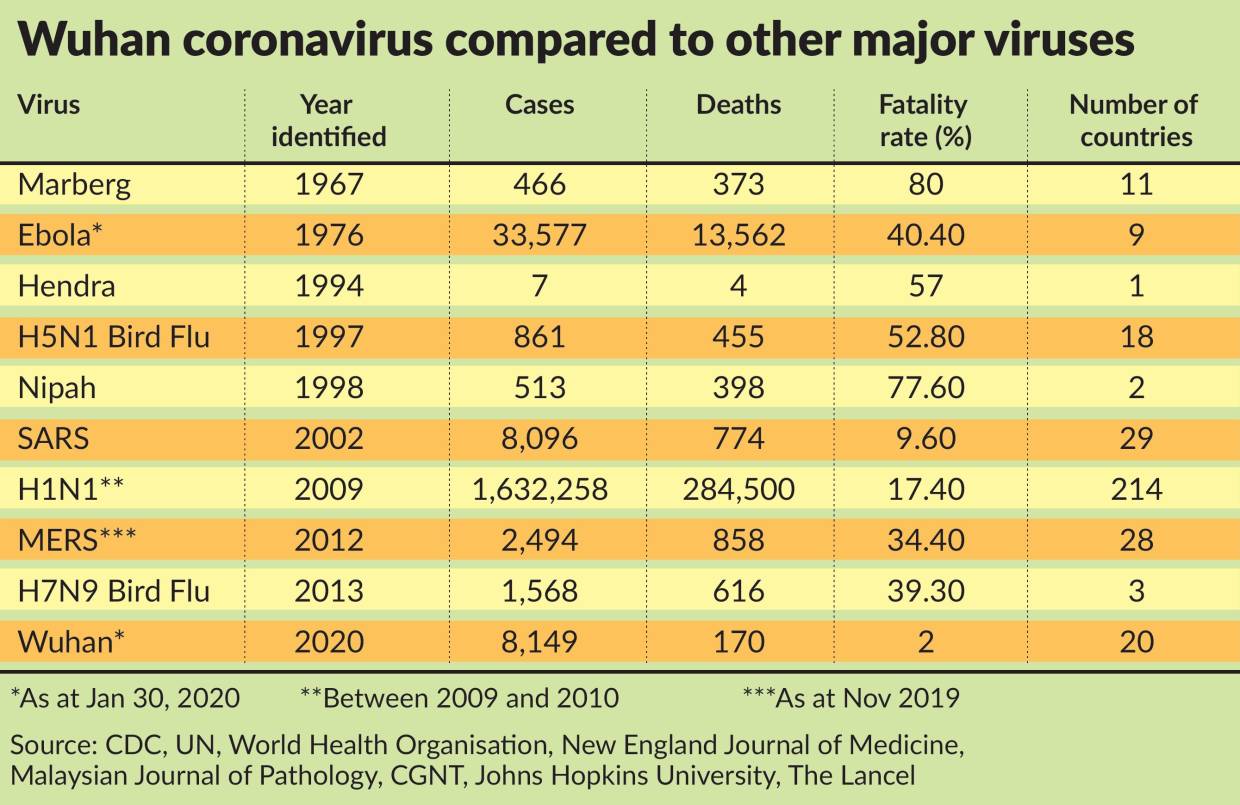
In fact, when the H1N1 influenza epidemic broke out in 2009, hundreds of thousands perished worldwide, according to the Lancet Infectious Diseases Online report.

It said the global estimates were more than 15 times higher than the number of laboratory-confirmed deaths reported to the World Health Organisation.

In the case of Ebola, there were a reported 11,310 deaths in Guinea, Liberia and Sierra Leone but the fear was not felt because Africa is a distance away and these countries are not regarded international financial centres.

As the world grapples with the fear of the coronavirus, where even a sneeze from the common cold can trigger undue panic, can we retain some common sense? Can’t we?

One man’s meat…


Wild animals may have tickled the palates of the adventurous, but the spread of another deadly global disease should conclusively put paid to unnecessary dietary requirements.

THERE is a well-known Chinese joke that the community has no qualms eating the meat of anything that has four legs other than a table, anything that flies other than an airplane, and anything that swims other than a submarine.

Yes, the Chinese are certainly an adventurous lot when it comes to food.

For sure, Chinese food isn’t just fried rice, sweet and sour fish, dumplings and fried noodles – the standard fare for most Westerners when it comes to Chinese cuisine.

And certainly, experimenting with Chinese food isn’t just about chicken feet, century eggs, stinky tofu, boiled blood cubes and less “desirable” pig body parts.

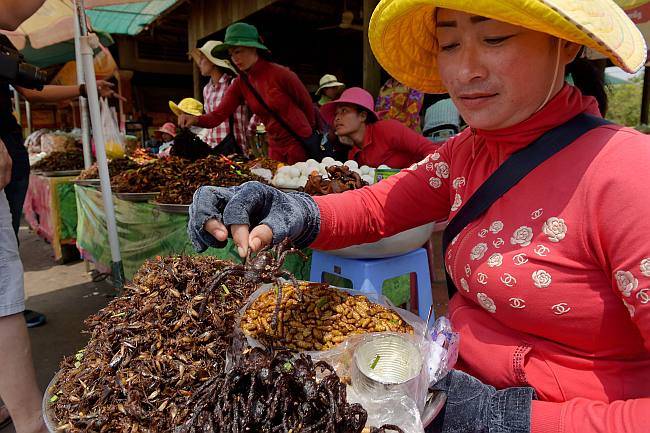
Common in China is the sight of street food encompassing scorpion, pupa, grasshoppers, lizard, starfish and crickets on skewers, especially in the Wangfujing area in Beijing.

These creepy-crawly snacks are apparently the norm, even if tourists cringe, joke and take bragging right photographs for Instagram purposes.

But in the lesser known, dark market areas in some parts of China, the harsh and sad reality is that there is a demand for exotic meat – those of snakes, dogs, cats, civet cats, bats and now, even wolf pups.

It’s unclear if the novel coronavirus’ source is a bat or snake at the Wuhan market, but we can conclusively agree on one thing – there is absolutely no need to consume such meat.

Not all Chinese have this persuasion for something different, though. Remember, China is a country of 1.3 billion people.

But the recent outbreak of the virus has given rise to racist and xenophobic displays towards this community, and even ethnic Chinese in other parts of the world.

It doesn’t help that there is a widely circulated video of Chinese social media influencer, Wang Mengyun, tucking into a bowl of bat soup. Here’s the clincher though – the video was filmed three years ago in Palau, a Pacific island nation where bat soup is a delicacy.

Regrettably, the video has been used in the United States and Europe to renew an old narrative about the supposedly disgusting eating habits of foreigners, especially Asians.

However, perception is always an issue, whether we like it or not. So, the time has come for the Chinese government, with all its might, to put a stop to the trade of exotic meats.

It isn’t just cruel to eat these animals, but the Chinese simply don’t need to eat any of this in the first place. Most don’t and there is no reason to fear a backlash, really.

Let’s face it, tiger penises are not going to improve the sexual prowess of anyone in China. It’s preposterous to even think that.

No one there is dying of hunger either, and there is no famine in the republic which could warrant eating wild animals and tree bark, like what was reported in North Korea at one time.

China is self-sufficient when it comes to food, since it produces half of the world’s pig population and 37 million tons of farmed fish, which is more than 60% of the world’s total, according to a report.

It’s not good enough that China has ordered a temporary ban on the trade in wild animals as the country struggles to contain a deadly virus believed spawned in a Wuhan market that sold exotic creatures as food.

A government directive says that raising, transporting or selling all wild animal species is forbidden “from the date of the announcement until the national epidemic situation is over.”

Conservationists have long accused China of tolerating a shadowy trade in exotic animals for food and as ingredients in traditional medicines, including highly endangered species such as the pangolin and tiger. Experts say the trade poses a significant and growing public health risk as potentially dangerous animal-borne pathogens that people would normally not be exposed to, make the jump to humans.

According to a news report, the SARS (Severe Acute Respiratory Syndrome) virus that killed hundreds of people in China and Hong Kong in 2002 to 2003, was also traced to wild animals; scientists say it likely originated in bats, later reaching humans via civets.

“Civets, a cat-like creature, were among dozens of species listed on an exhaustive price list for one of the animal-trading businesses at the Wuhan market that emerged online last week. Other items included various rats, snakes, giant salamanders and even live wolf pups.”

The announcement said all businesses, markets, food and beverage outlets and e-commerce platforms are “strictly prohibited from trading in wild animals in any form”.

It added that “consumers must fully understand the health risks of eating wild animals, avoid wild game, and eat healthy, ” according to AFP.

The so-called bushmeat trade, along with broader human encroachment on wild habitats, is bringing humans into ever-closer contact with animal viruses that can spread rapidly in today’s connected world, scientists reportedly say.

A study by the Global Virome Project, a worldwide effort to increase preparedness for pandemics, estimated that there are nearly 1.7 million undiscovered viruses in the animal kingdom, nearly half of which could be harmful to humans.

Peter Daszak, a virology expert with the project, said its research also indicated that we could expect around five new animal-borne pathogens to infect humanity each year.

China has previously cracked down on the wildlife trade, including after SARS, but conservationists say the trade typically resumes over time.

This is a good time for the Chinese government to launch a massive education campaign against the consumption of such exotic meat, in the foolish belief that they cure health problems or even function as an aphrodisiac. On the contrary, in some cases, it has been proven that they are even harmful to health.

As the Chinese population becomes more affluent and sophisticated, it’s clear that they will stay away from such eating habits.

Many Chinese now rear dogs as pets, which, during China’s early days as a struggling communist country, was dismissed as bourgeoisie behaviour to flout wealth. It has been reported that China is home to 130 million pet dogs, so it’s no wonder animal rights activists there have emerged in protesting the sale of dog meat.

China’s animal-protection movement is growing among young people, especially with those in urban areas and on the Internet. In April 2012, activists rescued 505 dogs headed for slaughter from a truck on which they had endured harsh conditions.

It is heartening to note that the state linked China Global Television Network has also called for a ban on the sale of exotic meat.Wild animals are not meant to be traded for their meat, fur or, as in the case of the Asiatic bears, their bile. It’s also no longer acceptable to keep animals in cages in zoos, which are mere animal prisons.

This is the right time for China to impose a complete ban on the sale of wild animals as food, as well as implement animal protection laws.

Only the Chinese government has the power to shut down an entire city three times bigger than London. No government in the western world has that kind of clout to do the same, and it shows the kind of will that China has in fighting the virus.

It has stopped the people of Wuhan from travelling out of the city, because it wants to contain the virus.

China has done tremendously well economically over the last decade and has surely stunned and impressed the world with its growth. But it’s time now to take further steps.

As the late iconic Indian leader Mahatma Gandhi said, “the greatness of a nation and its moral progress can be judged by the way its animals are treated.” Basically, what that means is a civilised society is recognised by its ability to take care of the oppressed and helpless.

I am confident China will do what is right to win the fight against this virus and make things better. This is the time to stand together with the people of China (especially those in Wuhan) for a common cause.

Fear and prejudice will heighten with the declaration of a global public health emergency, but this is a humanitarian issue, and certainly not about race, trade wars or rivalry.