Monthly Archives: November 2021

Made for Malaysia


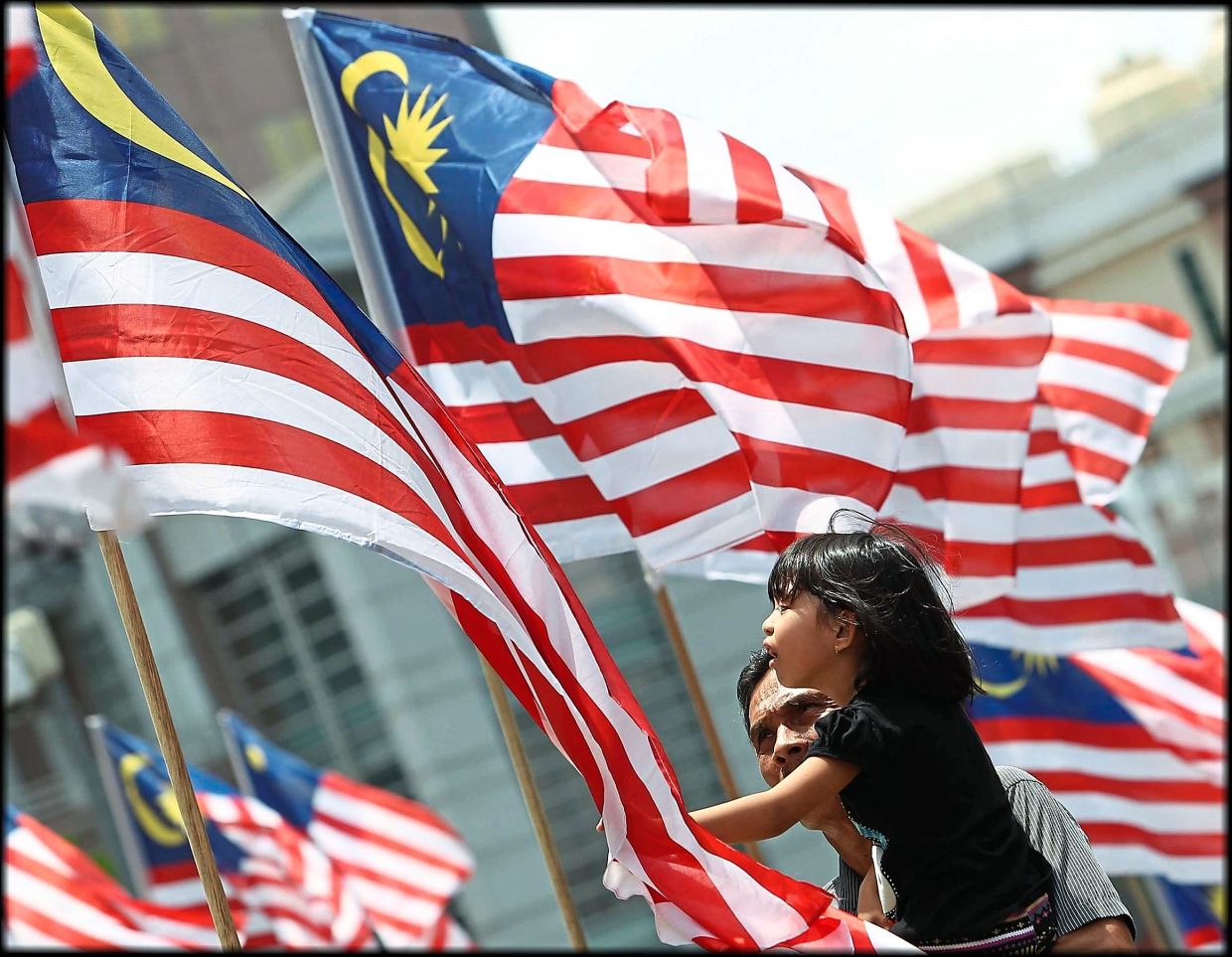
United nation: With our shared love for the country, we can work together to make Malaysia better for our young. — ZULAZHAR SHEBLEE /The Star

OUR politicians aren’t exactly covering themselves in glory to earn our trust. So, should it be surprising that we’re ailed by a trust and hope deficit? Likely not.

It would be unfair to describe Malaysia as a failed state, but we’re certainly on the wane. If we don’t do something to stop the slide, we’re headed towards a slippery slope. Some may even argue that we’re already in this predicament because politicians have only busied themselves looking at their numbers. And no, not the statistics of our economy, but the number of lawmakers they have on their sides.

If we really think that they’re serious about enacting an anti-hopping law, then we must also believe in unicorns and a flying elephant like Dumbo.

Last week, Lahad Datu Member of Parliament Datuk Mohamad Ketapi, who was elected on a Parti Warisan Sabah ticket, joined Parti Pribumi Bersatu Malaysia headed by Tan Sri Muhyiddin Yassin. And the latest – former Education Minister Maszlee Malik has gone from Bersatu to being an Independent and now PKR.

Before that, taxpayers had to contribute RM46mil for the funding of the Melaka state election. It was an election which most voters didn’t want, and it was evident from the underwhelming 65.85% turnout, which was one of the lowest among recent polls.

The state polls were triggered because four state assemblymen quit the Barisan Nasional-led state government, causing it to lose its majority in the state assembly.

The opposition, which was comprehensively defeated by Barisan in the polls, put on a brave face, and blamed it on low voter turn-out, the ban on ceramah and gatherings, and gerrymandering of seats. But the same constituency sizes and electorate didn’t hinder Pakatan Harapan from capturing Melaka in the 2018 elections. This time, the party was certain it would win because it felt a contest between Barisan and Perikatan Nasional would benefit Pakatan. Many pro-Pakatan news portals confidently predicted a Pakatan victory. Last week, after the shock defeat, Pakatan leaders produced figures to show that it secured a higher popular vote. However, Malaysia is modelled after the British first past the post electoral system. A loss is a loss, end of it.

Many voters rejected Pakatan because they judged Opposition Leader Datuk Seri Anwar Ibrahim on moral grounds.

The collapse of the Barisan state government was engineered by Pakatan, and incredibly, it then tried to justify party hopping, saying there were “different kinds of frogs” and soon, these defectors were allowed to contest under the Pakatan banner.

Malaysians are entitled to be disgusted by such hypocrisy, with this kind of pathetic political goal post shifting. Perhaps it’s time for us, drawing on our experiences and talents, to put together ideas to fire the country forward, especially since it’s unclear if lawmakers – with their interests and need to play to the gallery – can steer us out of this political misery.

With a weak government, collecting statutory declarations has become an obsession, if only to show each party has purported strong, formidable, convincing numbers to form governments, be it state or federal.

Our lawmakers seem to eat, sleep and dream of such numbers, to the point some may have become delusional.

Politics isn’t the monopoly of our lawmakers. All of us are stakeholders, although we may not have the authority or influence of our Members of Parliament, especially the Cabinet members.

But we can contribute in our own ways, through constructive deliberations of ideas and proposals on the various aspects of creating a better Malaysia for all of us.

Offline meetings are sometimes better than online social media discussions, although more Malaysians can still express their views on the various social media platforms. But progressive reforms are often hampered by debates over which community benefits, and which one loses, instead of focusing on enlarging the Malaysian economic pie.

We often fail to address major structural issues because politicians prefer to prioritise short term goals. In fact, there are over 200 such offline platforms globally, working with established institutions and existing democratic processes. So it’s not something untested.

The proposed Better Malaysia Assembly, initiated by Tan Sri Nazir Razak to formulate reforms, would certainly be a good deliberative platform if it can come under the auspices of the Conference of Rulers.

None of the signatories, I believe, have any political agenda or ambition. Most of us, including this writer, have already retired, or taken less demanding corporate roles, and certainly, we seek no remunerations for our advisory contributions.

We have nothing to prove, nor do we crave any kind of positions or titles. We have only one thing in common – our deep love for Malaysia.

Drawing from a broad range of people, it’s safe to say that most of the 55 signatories have a track record for speaking moderately, constructively and respectfully.

Some of us even have opposing views and approaches, but that won’t stop us from looking for common ground in the greater interest of Malaysia, especially if it involves contentious issues.

A national reset is highly necessary. The proposed Better Malaysia Assembly, with its non-partisan composition, can be the first step towards recalibrating our democracy, institutions and economy.

The proposals made by the Assembly need not be accepted, but they should at least be given a chance to be handed to Parliament for consideration. This is part of the democratic process.

No lawmaker, regardless of their party, needs to feel undermined because the processes will enhance our democracy. Let’s support this proposal for the sake of our beloved Malaysia and Malaysians.

We need to make Malaysia Better, and with the clock ticking, it’s time to engender political certainty and reforms.

Stop Our Talibanisation


She-Her-Hers with Dena Rachman


PAS’ plural poser

LET’S call it like it is – many Malaysians, especially non-Muslims, are feeling uneasy because of what’s unravelling in our country.

The growing perception is there are policies completely incompatible with the multiracial fabric of Malaysia.

In fact, we can even say that these laws, although at state and local government levels, are not in sync with the Federal Constitution.

To put it simply, since PAS became a part of the Federal Government, it has slowly but effectively pushed its objectives of imposing its interpretation of religious values.

The narrative is always the same – it is supposedly to protect the sanctity of the Muslim majority, and not non-Muslims.

But non-Muslims, and even Muslims, are feeling the heat of PAS’ narrow-minded view of what they want to achieve in Malaysia. And the consequences are frightening.

In the past, PAS was merely an opposition party at federal level, with powers confined only to predominantly Muslim states like Kelantan and Terengganu.

But the Islamist party has found itself wielding much more clout since it became part of the ruling Federal Government.

It knows it has become a vital cog in holding a weak Federal Government together, so, the party has been able to exert its influence.

But Malaysia remains a plural society even if the population of non-Muslims – particularly the Chinese and Indians – is shrinking. They remain a sizable community.

Malaysia is still a secular country with Islam as its official religion. Certainly, our country is not Afghanistan, Saudi Arabia or Iran, but if this isn’t red-flagged, we’re in danger of becoming Talibanised.

In the past month, we’ve had to contend with two issues – a ruckus over Timah whiskey’s name, which was baseless to begin with. More incredulous though, it involved four federal ministers arm-twisting the manufacturer to change the brand name.

Finally, MCA president Datuk Seri Dr Wee Ka Siong had to intervene to ensure the name remained. In a face-saving attempt, PAS sulkily insisted its stand hadn’t changed.

But PAS isn’t alone. It was simple politics and not remotely religious. PKR MP Rusnah Aluai from Melaka, also pushed for the name change, saying drinking Timah was akin to “drinking a Malay woman.”

There are 35 PKR MPs, but it had to take a Melaka MP to speak up because of the impending Melaka state election. Surely, it wasn’t coincidental.

There wasn’t a peep from any PKR MPs over her remark. What happened to the purported moderate multi-racial platform?

Perhaps, it was all staged by PKR to show its credentials at defending Malay and Muslim rights.

So, likewise, when the Kedah Mentri Besar imposed a ban on betting outlets in the state, it was also supported by Amanah state assemblymen. Obviously, Amanah, a splinter party of PAS, wanted to flex its muscles, too.

Kedah Menteri Besar Datuk Seri Muhammad Sanusi Md Nor announced that municipal councils won’t renew the business licences of betting outlets, telling punters to head to neighbouring Penang instead.

He had also revealed plans to ban the sale of liquor in rural areas, including part of duty-free island Langkawi.

Muhammad Sanusi became the MB in May 2020, but only now is he banning gaming outlets – midway in the Melaka state polls and ahead of the general election.

He said the move wasn’t meant to deny human rights of others or to marginalise any race in the state, adding that the decision was one way of obeying the command of God and being grateful for the blessings given to the state.

The Kedah’s MB argument that China has also banned gaming is not convincing. Well, it executes corrupt officials, will PAS propose that, too? There is now the nagging perception that PAS attempts to even justify corruption.

However, gaming won’t disappear. With a single stroke, he has decimated legitimate and tax-paying gaming operators, and given the illegal ones more business.

Surely, he can’t expect Kedah punters to drive all the way to Penang to get their gambling fix. They will simply call illegal operators, which are criminal in nature, to place their bets.

The biggest beneficiaries will be the criminals and perhaps, corrupt enforcement officers.

A simple WhatsApp message is sufficient and here’s the irony – Malaysian gaming outlets aren’t allowed to take bets online because the law doesn’t allow it, even when all businesses have gone digital, including those run by illegal gaming operators.

According to a news report in 2020, illegal betting syndicates rob the government of some RM3bil in tax revenues annually. It also said that the activities of these illegal 4D operations have grown bigger and more sophisticated over the last decade, eating up market share by the day.

“These illegal 4D syndicates do not only offer bigger cash prizes compared with the legitimate NFOs. They also have extended credit and allow online buying via WhatsApp on draw days,” a source was quoted.

The MB was quoted by the media saying gaming activities aren’t profitable. I don’t know where he got his information from.

In 2020, revenue from the NFOs was more than RM9bil, with sales tax amounting to about RM2bil, but illegal gaming and the Covid-19 pandemic has hit all the operators.

As an additional point, the brewery industry contributes RM2.2bil in taxes annually while contraband beer has cost the government uncollected taxes of over RM1bil a year.

Gaming is a highly regulated business with more hurdles being placed. The Finance Ministry has ceased providing new licences for gaming operations while states like Kelantan, Terengganu and now Kedah, via its councils, have stopped issuing business premises permits.

The point is this – no rational businessman would set up a betting outlet in a Muslim majority area because there would be little business, and in the case of Kedah, it would most likely be in the Alor Setar areas, where there are many Chinese punters.

So, can non-Muslims be faulted for feeling they’ve been denied their rights?

It’s also ridiculous that two PAS lawmakers should be offended by a question posed by a reporter over the Kedah decision and worse, retaliate by asking the reporter if she could tolerate her husband being a gambler.

The two MPs should have explained and defended the Kedah state government decision in a persuasive and rational manner, without needing to be condescending and confrontational.

Neither was it necessary to insist that she pose the question in Bahasa Malaysia, as if needing to prove her loyalty to the country.

It was clearly an attempt to sidetrack the issue by turning the tables on her. The right word is, in fact, bullying, which puts these PAS politicians in poor light.

I’m glad that National Union of Journalist president Farah Marshita Abdul Patah and Gerakan Media Merdeka found their actions unacceptable.

In 1972, PAS was invited to join the Barisan Nasional by Prime Minister Tun Abdul Razak, but seven years later, it pulled out. The same narrative of Malay unity was used then when it joined, but the relationship with Umno has never lasted because acrimony has always existed.

For a party with only 18 MPs against Umno’s 38 and Bersatu’s 31, PAS has strategically placed itself well in the Federal Government. In Pakatan Harapan, DAP has 42, PKR 35 and Amanah 11.

The biggest test will be when the Federal Government tables the RUU355, also known as the Rang Undang Undang (RUU) Mahkamah Syariah (Bidang Kuasa Jenayah), or the amendments to the Syariah Courts (Criminal Jurisdiction) Act 1965 (known as Act 355).

When PAS was in the opposition, it never went past the first reading as a private member’s Bill, brought up by the MP for Marang and PAS president Tan Sri Abdul Hadi Awang on May 26, 2016.

The controversial Bill then proposed to raise the Syariah courts’ maximum sentencing limit to 30 years jail, RM100,000 fine and 100 strokes of the cane.

But this time, it will come as a Federal Government Bill and that’s the difference. At this point, its contents are unknown, but Prime Minister Datuk Seri Ismail Sabri Yaakob has confirmed that it’s currently being drafted.

If there’s a lesson learnt from the PAS experience, it’s that one can do all the shouting outside the government, but if you’re part of the power equation, a political party can be most effective, even if it has fewer seats than the other component parties.

But perceived marginalisation of ethnic minorities and changing our way of life are now matters beyond mere concern.

We want these to be addressed immediately, and we don’t want our plural way of life to be destroyed in the name of religion, especially not according to PAS’ interpretation.

SOS Planet Earth


Time to recalibrate NEP


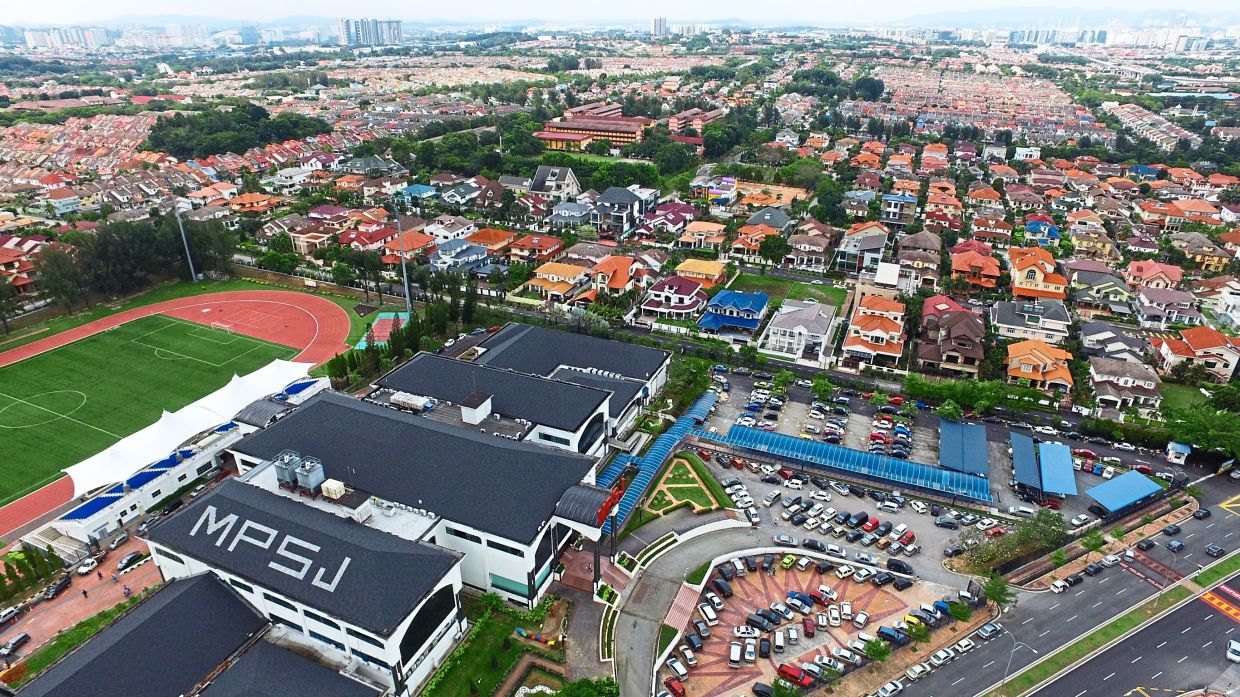
No segregation: When the massive Subang township was built, it was purely multi-racial in nature, and no one could really tell which home belonged to which race.

AS a student entering Universiti Kebangsaan Malaysia in 1980, an institution set up to promote the national language, there were some important lessons that awaited me.

Its student population was predominantly Malay, nearly monoethnic to be honest. The university, aware of the racial imbalance, began making changes.

Coming from the richly diverse Penang, the tiny presence of non-Malay students in a rural setting was an unsettling beginning to my student life. I had never heard of the campus’ site, Bangi, before I arrived in Selangor.

But being put in an unfamiliar, even uncomfortable environment, and needing to make friends with people from other races over the next three years, made me understand Malaysia better.

With that, I’d like to address the New Economy Policy, which has touched the lives of every single Malaysian. The NEP, which is an affirmative action, has turned 50 years old.

A milestone has been achieved, yet the half century birthday has generated little buzz. Perhaps it remains a contentious and sensitive issue and only a few of us can rationally speak about it.

At UKM, I made many Malay friends as well, and they opened my eyes and mind. I didn’t realise that some were so poor that they had to send home some of their scholarship money to help their parents.

Many had difficulties coping with their studies because the books were almost entirely in English. They came from Malay medium schools, sat for their exams in Bahasa Malaysia and had finally entered UKM – only to realise that the reference books were in English while lectures were in Bahasa Malaysia.

It would have been impossible for them to compete on pure meritocracy. It’s like expecting an Aboriginal kid living in the bush to be equal with a Caucasian Australian kid enjoying the trappings of suburban life.

The Malays and Orang Asli, who were poor in English, had to undergo English lessons and exams if they were to remain in university.

Having a poor command of English doesn’t dim intelligence, but it would certainly disconnect the person from the outside world, where English remains the most important international language.

I remember some students, who turned to me for help, asking if they could memorise English essay writing!

But as time went by, I empathised with their predicament. We’re talking about the flares and fun of 1970s and 1980s Malaysia, before the Internet age.

Coming from rural areas, they had no opportunities or finances to attend tuition classes, buy model books, and had no exposure to English or other cultures either.

I understood and appreciated the importance of opportunities and affirmative action better, while my bumiputra friends were equally shocked about their non-Malay friends not getting scholarships, especially those who deserved it.

Some forged friendships with non-Malays for the first time since they had never been exposed to living in a multi-ethnic society with its many complexities.

I used to joke that I had a “Fama scholarship,” meaning it was sponsored by my father and mother, but it’s true that my parents could afford to pay for my university fees.

They felt the fees, costing only a few hundred ringgit per semester, were cheap. More importantly, they were grateful they didn’t have to shell out for an overseas education, which would have cost a bomb. There were only five public universities while private ones were non-existent then.

But for the less privileged non-Malay students, there certainly was resentment, and this is totally understandable, too. My Malay friends also understood that there were poor Chinese and Indians, and that not every non-Malay came from a rich family.

I had an Indian friend who told me his rubber tapper father from Pahang was the only one in the estate who didn’t squander his hard-earned money on liquor and gambling because he saved every single sen to pay for his university fees.

Along the way, many qualified non-Malay friends, who had worked hard, failed to be accepted into medical, law and engineering schools simply because of the quota system. It would be difficult for them to have an objective judgement of the NEP.

The NEP, a product of the post-May 13 racial riots in 1969, was formulated to eradicate poverty and restructure society. Specifically, it was installed to rebuild Malaysia to address the unequal and unbalanced economic foundations that put Malays at a disadvantage. In a nutshell, Malays needed a fair share of the economy to become full partners.

The NEP was announced as part of the Second Malaysia Plan (1971-1975) as a 20-year policy. The government would implement the NEP, unapologetically, to shift the imbalances. Bumiputra would be spelled out specifically under the NEP, unlike the first two Malayan Plans and the first Malaysia Plan, where the term “rural inhabitants” was used.

In the book by Dr Chandra Muzaffar, The NEP, Development and Alternative Consciousness, he wrote that Malay poverty was already raised in the 1920s and 30s by reformers like Syed Shaikh Alhady, Haji Abbas Taha and Zainal Abidin Ahmad. The late Universiti Malaya vice-chancellor, Ungku Abdul Aziz, produced what must be regarded as the first academic analysis of Malay poverty by a Malaysian in 1975 entitled Facts and Fallacies on the Malay Economy.

In 1970, Prime Minister Tun Abdul Razak declared the government’s intention to create a Malay commercial and industrial community that would be capable of directing, managing and working in enterprises at all levels of complexity on par with the commercial classes of other races, as detailed in Datuk Seri Nazir Razak’s book What’s in A Name.

“That in turn meant enhancing the way Malays were educated, trained and employed so that the Malays could do high-level jobs. The ownership of business would also have to be shared more equally,” he wrote, because in 1970, Malays only owned 2.4% of commercial companies.

Poverty had been reduced, for example, among rubber smallholders, with incidence of poverty reportedly falling from 65% in 1970 to 5% by 1975, with similar drops in other sectors, including rice production.

Fifty years later, the NEP has successfully produced a strong Malay middle class, which is essential for a good economy. In many countries, the absence of a middle class has resulted in imbalances.

Those of us over 60 would recall that Malaysia was once racially segregated into the conclaves of various ethnicities. It was bad because locations were identified by race, for example, Kampung Baru in Kuala Lumpur was Malay and Pudu was Chinese, while Brickfields was Indian. Each time there was a gathering in Kampung Baru, it stoked unnecessary fear.

But when the massive Subang township was built in Selangor, it was purely multi-racial in nature, and no one could really tell which home belonged to which race. Certainly, the discounts for bumiputras have helped build multi-racial neighbourhoods. Urbanisation has also been successful for bumiputras, an objective of the NEP.

Having multi-racial workforces – the objective of uplifting Malays to be professionals, including sending them overseas to study – in Malaysian companies is certainly a positive result of the NEP.

No doubt, the NEP has produced many Malay tycoons, but in the 1970s and 1980s, many non-Malay tycoons had also emerged.

The big names include Tan Sri Azman Hashim of Ambank, Tan Sri Syed Mokhtar Al-Bukhary, Ananda Krishnan, Tan Sri Vincent Tan, Tan Sri Francis Yeoh, Tan Sri Jeffrey Cheah, and then there are newer ones like Tan Sri Tony Fernandes, Tan Sri Lim Kang Hoo, Tan Sri G. Gnanalingam, Tan Sri David Kong and Tan Sri Lim Wee Chai. There are opportunities for Malaysians to rise to the top, after all.

Some of the Malay tycoons still in the game today, albeit with NEP leverage, remain good businessmen providing livelihoods to millions of workers of all races.

They didn’t dispose of their shares, earned for being Malay, to get short gains and land trophy wives, or buy over-priced nasi lemak or noodles in airlines via related transactions.

The NEP has been successful, although we can’t ignore that it has also been a hurdle to genuine national unity. The number of poor Malays and non-Malays remains.

The NEP also took away the insecurity of Malays. As Dr Chandra wrote “by and large, Malay apprehensions are linked to the poverty of the majority of Malays in relation to what is perceived as non-Malay affluence.” That was his view in 1989, and to some extent, perhaps to a lesser degree, in 2021, the situation remains the same.

It can’t be denied that national unity would be hard to foster if vast sections of the population remain poor, but at the same time, it doesn’t help if a section of Malaysians feel deprived and unfairly left out.

“Even if Malay capitalists are created but Malay poverty persists, the problem of national unity will remain. For in such a situation, the question of Malay poverty can still be exploited to bring about ethnic conflict,” he added.

That, unfortunately, is the reality, even when corrupt Malay leaders would literally steal millions, if not billions, from institutions purportedly established to protect the interests of their race.

Then, there are also politicians who perpetuate the belief that it’s better for a corrupt Malay leader to have the reigns than a clean non-Muslim. They even justify bribery from a supposedly religious standpoint.

Dr Chandra also wrote that the NEP didn’t mean touching on a significant segment of the Chinese employment market “namely family businesses and other small and medium-sized enterprises.” Logically, it certainly doesn’t mean imposing a 51% quota criteria, for example, for small companies built by others.

Nazir wrote, “I strongly believe that, had later politicians respected the pledges made by Abdul Razak and (deputy prime minister) Dr Ismail (Abdul Rahman) that the NEP should last for no more than 20 years, it would have been regarded as a shining success.

“The NEP lives on for 50 years after its creation, a distorted, twisted and often counterproductive version of the original creation.”

I don’t think many Malaysians in their right mind would argue against the objectives of the programme, which sought to correct the imbalances without being unjust, over a 20-year period. It targeted 30%, although the Malay population was almost 60% then, and even more now.

But no Malaysian should be unfairly left out of employment opportunity or admission into university for not being bumiputra, especially after half a century of the NEP.

We must slowly remove the race narrative from our policies, including the NEP, with a needs-based approach. Ultimately, it would still revert to the needs of the bumiputras as they form the majority.

Having said that, the number of non-Malays has continued to shrink sharply. So, where do all these policies lead to, and does it mean that affirmative actions would finally need to be applied to the minorities, which could be just 20-25% of the population? Already, there are more foreigners than Indians in Malaysia.

The competition against bumiputras may come from second or third generation Cambodians, Bangladeshis, Indians, Rohingyas, Syrians and Pakistanis, who may insist that they have the right to enjoy the same privileges as Malays.

They could say that they are bumiputras under the Federal Constitution, as they are Muslims who practise the Malay way of life, and possibly even have Malay spouses. And surely, the third or fourth generation Malaysians, of Chinese and Indian ethnicity, shouldn’t have less entitlement than them.

Malaysia now needs a serious recalibration. We will lose our lustre as a nation to foreign investors if we don’t snap out of our slumber. We continue to slip down the ladder in Asean, losing to Vietnam, while Indonesia is now just a few steps behind us.

We can’t sustain what we have. We need to create a better Malaysia and make the most of our diversity as a truly Malaysian nation. Unfortunately, I don’t think we can rely on our politicians to decide our future. We must do this together.

Let’s start with focusing our attention on enlarging the Malaysian pie instead of talking about the size of the slices, when the pie is shrinking.


Female Mind Matters


Stop the Predators


Amphibious acts abound

THE Melaka state election is one nobody cares about, really. The only people getting excited are the politicians who have trumped each other and are now doing everything to grab power in the state.

It’s politics at its ugliest again. Over the coming weeks, politicians will be telling Melakans how they are doing all this in the interest of the people.

When facing the Malay electorate, they will also certainly throw in the line about protecting the race and religion in their social media postings, since physical political gatherings have been banned. And for the other races, they will offer a different narrative.

For the first time, the people of Melaka are being asked to choose a new government from a line-up where none of the politicians seem to differ much.

The parties are either off-shoots of each other or have been in the political game for decades now.

But this time, just after slamming party hopping and suggesting the need to enact laws to stop such betrayals, the politicians are back at trying to justify their actions, and even looking for places in their parties. Worse still, they are possibly fielding these traitors as candidates.

Whatever happened to the Memorandum of Understanding where both the government and opposition agreed on barring party hopping?

Don’t waste your time expecting politicians to live up to any form of lofty principles because the only thing that matters is the end that justifies the means. And that includes party hopping.

Four Melaka state assemblymen caused the state government to collapse after they withdrew their support for Chief Minister Datuk Seri Sulaiman Md Ali.

They are now homeless. So, they are looking for a platform to contest under its banner.

The attention is on Datuk Seri Idris Haron – who was sacked from Umno – and his allies.

PKR president Datuk Seri Anwar Ibrahim, who has criticised political frogs, seems to be justifying their actions for wanting to join his party.

Going by such warped logic, he’d conveniently say it is traitorous if PKR’s elected representatives quit the party to join a government party or be an independent, but not if it’s the other way around.

Some may even go further, praising such defections as noble and courageous, and deserving commendation.

Last week, Anwar reportedly explained to his party grassroots his reasons for standing by Idris Haron and three others, saying they withdrew their support for the Bersatu-Umno state government based on negotiations with Pakatan Harapan.

Therefore, Harapan can’t abandon them with the turning of the tide, he said.

“The fact is clear. There was a negotiation between Malacca Harapan with the said assembly persons.

“The negotiation led them to decide to pull their support from the state government in an understanding that they would not be betrayed and left behind afterwards,” Anwar said.

Besides Idris, the other three include Datuk Nor Azman Hassan (Umno-Pantai Kundor), Datuk Noor Effandi Ahmad (Bersatu-Telok Mas) and Datuk Norhizam Hassan Baktee (Independent-Pengkalan Batu).

That’s the problem with some politicians. They talk about “negotiations”, which is, in fact, a euphemism for a plot to topple the state government.

No one seems to care that when the voters picked them, it was based on the party they represented. Suddenly, for political expediency, and to justify their defections, a whole load of excuses is cooked up to convince the electorate.

The most glaring example must be former lorry driver Norhizam. The ill-mannered politician was voted in the 2018 general election because he contested under the DAP platform.

Let’s be honest, in many predominantly Chinese constituencies, DAP candidates are almost a shoo-in. As the saying goes, if you put a monkey to contest under the Rocket banner, the primate would still win.

The DAP has many good, talented lawmakers, but we all know that some are just warming their seats in the state assemblies and Parliament. Many voters don’t even know their representatives.

In the case of Norhizam, he is well-known, but for all the wrong reasons. He was an Umno member before joining the DAP. If he had continued in Umno, he would have gotten nowhere in politics.

The DAP, as expected, wouldn’t want him back. He has been a nightmare and a reminder of the adage that we deserve the Yang Berhormat we elect. His resignation also led to the downfall of the Pakatan Harapan government.

Like a bad sequel, he is now part of the group which toppled the Umno-Bersatu state government. He is a serial political katak.

Ironically while DAP has turned down the four, Anwar seems to have taken a different stance. He believes party members need to see the bigger picture, saying the party needs to be tactical to garner support from everyone.

“You must understand that changes have to happen, but not with our uncompromising attitude.

“It can happen only when we are being wise (hemah), being intelligent and by attracting support from every quarter.”

Yesterday, it was announced that Idris has joined PKR and Nor Azman has entered Amanah, which is headed by Mohamed Sabu.

For goodness’ sake, please spare us the drivel because this has nothing to do with anti-hopping principles but winning the state election at any cost.

Umno, which previously encouraged party hopping, is now getting a taste of its own medicine.

So, when the Sabah state government collapsed in 2018 following the defections of six Barisan Nasional state assemblymen, many cheered the endeavour as the nation celebrated the defeat of the BN federal government.

And even the DAP was quite happy to be in the company of frogs as it became a component of the state government. These kataks were heralded as heroes for helping set up a new state government. Not many complained nor branded these defectors frogs, except their respective parties.

But now, what goes around comes around. Parti Warisan Sabah chief Datuk Seri Mohd Shafie Apdal has now found that three Warisan elected representatives, so far, have quit the party.

So, Malaysians, especially us voters, must decide if we really want to stop these political frogs or bend the rules when there is political expediency, or when it suits our political allegiance.

There is an apt and beautiful Malay phrase, cakap tak serupa bikin, which translates in English to, “not meaning what you say, not saying what you mean.” Somehow, it’s much more potent in the national language. That best sums up what you can expect during the state election campaign.

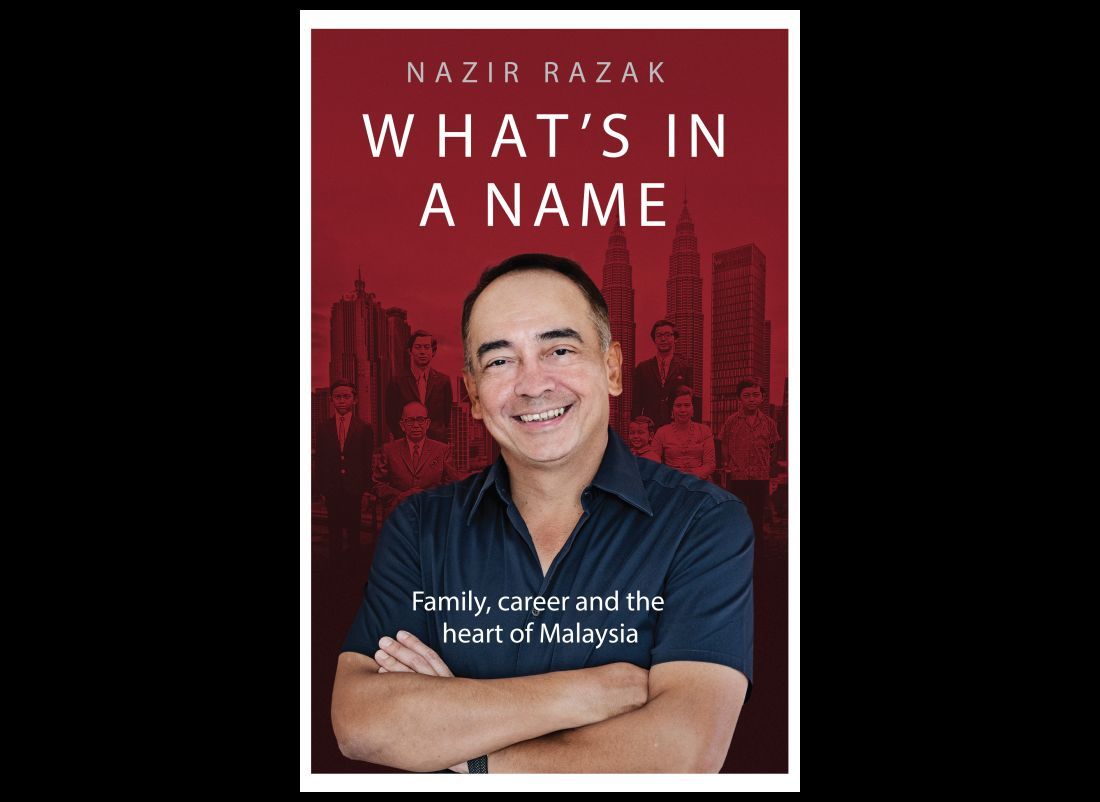
Book Review: What’s In A Name?


What’s in a name?
By Nazir Razak

MOST of us are born into ordinary families but we have been taught from a young age that we have to protect the family name. It does not matter if we are rich or poor.

Upholding the family honour involves worthiness, respectability, trust and social standing.

In the case of Datuk Seri Nazir Razak, this is even more crucial.

There were two prime ministers in his family. His father was the late Tun Abdul Razak and his eldest brother, Datuk Seri Najib Tun Razak, was prime minister too.

Razak’s brother-in-law was the late Tun Hussein Onn, who succeeded him (Razak) as prime minister.

Nazir was not born into an ordinary lineage, unlike the rest of us, so it goes beyond the name, it is a legacy.

Razak rebuilt the nation after the tragic racial riot of May 1969, formulated the New Economic Policy to reassure the bumiputras of their future and correcting the ethnic imbalance in the economy.

A man of great foresight, he set on establishing diplomatic relations with China in 1974, in the midst of the Cold War, making Malaysia the first Asean country to do so.

When Razak died two years later, at the age of 53, Nazir was only nine years old. Najib stepped into his father’s shoes, replacing him in the parliamentary seat of Pekan, in Pahang. He was then 23.

He went on to become Malaysia’s youngest Mentri Besar at 29 and eventually our sixth PM in 2009.

In Nazir’s words in his book: “Najib hit the ground running, offering wholesale transformation of the way the government and economy worked.

Yet, he also came into office caught in the horns of a painful dilemma.

“He sat at the top of a political party stuck in its ways, consuming vast amounts of cash to fund its system of patronage.”

Cash is king, Najib would say, but cash had to come from somewhere. The source of it is always the issue.

By 2013, the politics of money and patronage got worse when the 1MDB issue and now fugitive financier, Jho Low, entered.

With it, as more dirty details surfaced, monies allegedly originating from 1MDB arrived in Najib’s account before the 2013 elections.

The question if the money really came from Arab royalty or whichever donors has remained a matter of dispute.

While the book is about the Razak family, their values, legacy, bank career of Nazir, success of CIMB under his leadership, there is no doubt the gripping account of the 1MDB episode garnered the most interest, in particular the strained relationship of Nazir and Razak as the scandal worsened.

As Nazir began to ask questions about the scam, “Najib would have less and less patience with my questions. After a while, 1MDB became almost a taboo subject for us. I couldn’t get through to him and a couple of times, he even quipped that I must be jealous or just have a personal dislike of Jho Low.”

“The fact that 1MDB became a huge financial scam was probably the most blatant testament of a failing system. At the heart of that failure was the fact that the PM was simply too powerful; his actions easily avoided the scrutiny of his peers or public.”

People were just too afraid of the PM and his power, as Nazir wrote. This includes the people around him and those who used Najib’s name, for real or otherwise.

Not to forget the instruments of power such as the enforcement agencies and even the Inland Revenue Department, which are at the disposal of the PM and allegedly used to shut up critics.

At one point, the Razak brothers marched into Najib’s office at the Parliament building and demanded to know what was happening as “something fishy was going on” and “if it wasn’t dealt with, it could tarnish the family name and even bring down the government.”

It didn’t end there, as brotherly ties worsened, as Nazir revealed how he had to face a sudden torrent of fake news and innuendo in social media, where his children were subjected to vitriolic online abuse.

It was retribution from Najib’s camp, alleged Nazir, for an article he wrote, entitled “Remembering My Father” to mark Razak’s 38th death anniversary, which Nazir used to remind “everyone of the high standards my father demanded of himself when in public office, and to which we were expected to live with.”

Nazir also wrote about his relationship with his sister-in-law, Rosmah Mansor, which started well when the former was a student in Bristol, but “unfortunately the warm feelings didn’t last long. I soon began to worry that Najib’s power was intoxicating for her.”

“For Rosmah, life was very simple: you were either with them or against them. There was no middle ground. Criticism was tantamount to betrayal.

“Now at the Ramadan party, she grabbed Najib’s hand and looking straight at me said, loudly: “Don’t talk to him! He’s working against you and trying to topple you.’

“People turned to look. Najib tried to calm her down, and defend me. She was having none of it. Nor was she finished. She added, with more than a hint of venom; ‘I know what you’re up to. I have eyes. You had better watch out’.”

Caught off guard by the outburst, Nazir texted Najib to tell him “that would be the last event at this house I would attend since his wife was so openly hostile to me.

“To be fair, she was not entirely wrong, although my objective was to get to the bottom of what was going on at 1MDB, not to hurt Najib.”

In fact, Nazir, accompanied by Datuk Tong Kooi Onn, the owner of The Edge, met Tun Dr Mahathir Mohamad in London, telling him that they believed “billions of dollars had gone missing from 1MDB.”

After an hour, Dr Mahathir looked at the two and asked: “Why is it me that has to do something about it? I’m retired.”

“Well, sir,” Nazir replied. “You have to do something because you made him Prime Minister.”

There was another clash following a news report about Jho Low’s property shopping spree in New York as well as Rosmah’s lavish spending.

The PM’s Office issued a statement that the purchases were not unusual “for a person of the prime minister’s position, responsibility and legacy family assets.”

It irked the brothers, as it implied the money came from family assets, and soon the brothers responded by issuing a response, to defend the family reputation.

But Najib didn’t take it well and called Nazir, saying: “How could you guys do this to me, embarrass me in public” and subject him “to a barrage of angry invective.”

The reality is that 1MDB has hurt the entire nation. Umno continues to be injured. The Razak family is torn and the legacy of Razak has been badly mauled, if not destroyed.

This writer finished reading the 350-over page book in five days as Nazir has given us a personal account of what has affected the family, especially the 1MDB issue, and a drama of family loyalty, and what happens when loyalty comes into conflict with deeply held principles.

It must have been enormously difficult and heart wrenching for Nazir to write this book, and to share these impactful, and embarrassing details involving Najib but it’s clear that Nazir wants to protect the family name, at all costs, even if it involves his eldest brother.