Monthly Archives: April 2022

Making sense of inflation and ringgit

Despite the rising cost of living, Malaysia remains one of the cheapest places to live because of subsidies – which can be a burden too.

THE increasing cost of food, fuel and essential items – these are the biggest challenges facing governments around the world today as inflation climbs.

Over the past two years, the Covid-19 pandemic has hurt production and distribution while the Ukraine War has only aggravated the situation.

The United States’ decision to increase interest rates in March to stem its inflation rate of 8.5% – the highest in 41 years – has also caused repercussions around the globe.

It sent many currencies – including the yuan, yen and ringgit – tumbling, and talk is rife that the US will take stronger steps again.

These external pressures will only hurt the ringgit even more.

There is also a fear in the US that it is heading towards a recession as energy prices have increased by 32%, with gasoline up 48% and fuel up a staggering 70.1%, as a result of Russia’s invasion of Ukraine, which pushes prices higher.

The price of crude oil has remained volatile.

It tumbled to US$98 (RM427) today in reaction to weakening demands in China because of the Covid-19 outbreak there, but the price is more than likely to go up again.

Food prices in the US have reportedly jumped 8.8%, the most since May 1981.

To put it simply – everything costs more in the US now, including used cars and lorries, which have risen in price by 35.3% and 41.2%.

In contrast, Malaysia’s inflation is expected to average between 2.2% and 3.2%, according to Bank Negara Malaysia.

Malaysia remains one of the cheapest places to live and is a far cry from Singapore, which is the second most expensive city in the world, according to the Economist Intelligence Unit in its Worldwide Cost of Living 2021 survey.

Most of us get mixed up when it comes to understanding the meaning of “cost of living” and “standard of living”.

A Malaysian staying in a double-storey home with a small garden and two cars in Johor Baru, even with lower pay, will probably have a higher standard of living than his Singapore counterpart living in a tiny HDB flat.

But there is a price for the Malaysian government, or rather taxpayers, to pay for the lower cost of living.

We are among the most subsidised people in the world.

The increasing price of crude oil should be seen as a positive for a net oil and gas exporting country like Malaysia but it’s not, because most of it goes to paying for our subsidised petrol and diesel consumption.

According to a CGS-CIMB Research report, it is estimated that for every US$1 increase in oil price per barrel, the government gets some RM370mil in added revenue.

However, based on the figure of US$120 per barrel not too long ago, it will also set the government back by around RM780mil in fuel subsidies.

The subsidies on diesel and petrol for 2010 reportedly cost RM9.6bil.

In 2011, it was RM15.9bil.

On Tuesday, Minister in the Prime Minister’s Department (Economy) Datuk Seri Mustapa Mohamed said the estimate for this year is somewhere around RM30bil, with the subsidies involving RON95, diesel, liquefied natural gas and cooking oil.

According to Bernama, he said the rise in crude oil prices has affected the country’s inflation price, with the Consumer Price Index in March 2022 rising by 2.2 percentage points to 125.6% from the 122.9% in March 2021.

This surpassed the average inflation rate of 1.9% for the January 2011-March 2022 period.

Malaysia is spending billions of ringgit on all kinds of subsidies including rice, sugar, essential items and goods, including fertilisers which are petrochemical-based, and medicines.

Imagine, we have among the highest numbers of diabetic cases in Asia and we are still subsidising sugar.

Finance Minister Tengku Datuk Seri Zafrul Tengku Abdul Aziz put it bluntly in a recent interview in The Edge: “We are one of the most heavily subsidised nations in the world. It is estimated that more than 80% of each household’s expenditure is subsidised, from electricity to water.”

Obviously, this subsidy mechanism is not viable in the long run, but any reduction has to be done in a targeted and gradual manner.

Singapore is already talking about raising its Goods and Services Tax (GST) to 9% from the current 7%.

We, on the other hand, allowed more withdrawals from the Employees Provident Fund.

With GST, the government would have earned an additional RM20bil a year and perhaps RM40bil in two years, but it was politically unpopular.

For sure, a starting GST rate of 6% then was unpalatable but, unfortunately, politics got in the way, like with everything else in Malaysia.

The greatest sin was in abolishing GST simply because the new Pakatan Harapan government in 2018 wanted to be popular but it came at a great cost to the country.

It could have just been reduced to 3% but a promise to kill the GST appealed to the electorate.

That is now history and individual taxpayers, who make up only about 16.5% of Malaysia’s 15-million strong workforce, according to 2020 figures, have to shoulder the burden for the country’s 32 million people.

With a weak government and a general election looming, no politician would dare to talk about resurrecting the GST, in whatever name, or to cut subsidies, even if our federal leaders know that the subsidy bill keeps getting extended to keep inflation down.

Even Singaporeans are reportedly enjoying subsidised petrol in Johor and there have been other leakages including allegations of Malaysians selling diesel in mid-sea to foreign fishermen.

Tycoons with their fleet of expensive cars are also enjoying subsidised fuel, just like those in the B40 group.

There has to be a better understanding among Malaysians of why the ringgit has weakened but the inflation rate is well-maintained.

They have to know how subsidised fuel has kept prices stable for us despite the ever-increasing oil prices.

Otherwise, Malaysians will simply believe everything they read on social media about the economy and the value of the ringgit.
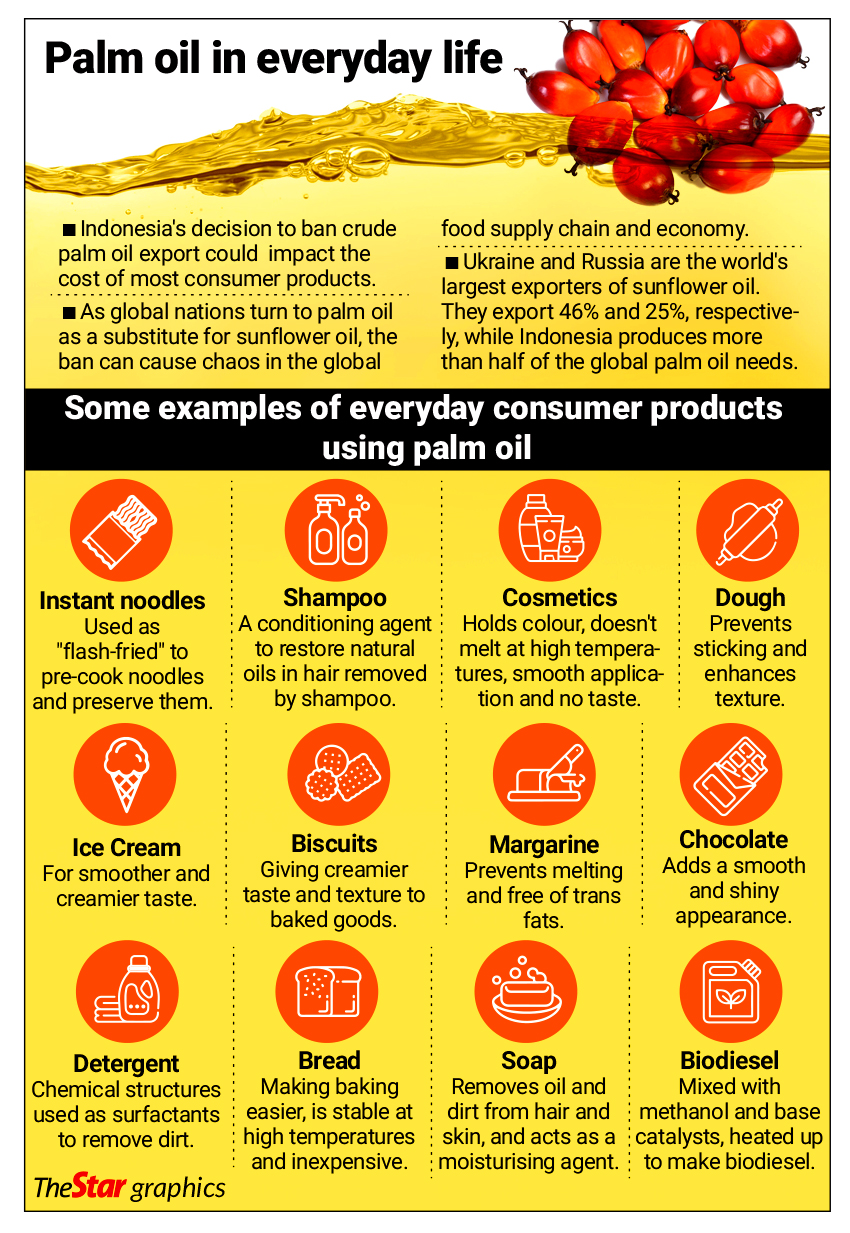

The good and bad of palm oil’s rise


Demand is picking up, but alas, consumers will pay more for basic goods

THE Prime Minister has been visiting the Pasar Ramadan at his Bera parliamentary constituency in southwestern Pahang since the fasting month began.

Datuk Seri Ismail Sabri Yaakob knows them quite well and was quick to spot that some food sellers were missing this year.

“I found out that they were smallholders, but they have been busy on their oil palm lots because prices have soared,” he said.

That’s good news for the smallholders and it looks like this year’s Hari Raya celebrations will be the best in years for them.

Bera district, which borders Negri Sembilan, is only 2,214sq km but is home to many Felda oil palm settlers, with the plantations lifting the livelihood of thousands of rural folk.

The villagers have even set up a Facebook page where they share pictures and news of their lives. Among the postings are the side businesses they have gone into recently, including food manufacturing.

Although the breaking fast session was not the best time to ask the PM questions, the editors at his table took the opportunity to ask him about Indonesia’s decision to halt palm oil exports and its impact on Malaysia – among other things – on Sunday evening.

Last week, Indonesia made a surprise announcement. It decided to ban the export of palm oil from April 28 in a move to secure domestic food availability and control cooking oil prices.

It will have a worldwide impact, especially in Malaysia, as the global edible oil shortage situation has become acute since the Russian invasion of Ukraine.

Indonesia accounts for 56% of the world’s palm oil production and accounts for 33% of oils and fats exports.

Malaysia is the second largest producer and can be expected to fill the void left by Indonesia.

As expected, palm oil prices have rallied, along with that of Malaysian commodities companies, even though Indonesia has now said that it may lift the export ban in a month or two.

If in the past, Malaysia and Indonesia have had to fend off anti-palm oil measures from the European Union, palm oil is now being seen as a viable alternative to sunflower and rapeseed oil, which come from Ukraine.

In the United Kingdom, supermarkets have had to limit the amount of cooking oil sold to shoppers.

While Malaysia will benefit greatly from the sharp plunge in sunflower supplies and Indonesia’s ban, we need to ensure that our producers do not go into a sale frenzy.

Selling wisely is pertinent as it will be good to reduce stocks. If done strategically, it will prolong the benefits, especially for the smallholders.

The total palm oil stocks in the country, according to the Malaysian Palm Oil Board is about 1.47 million tonnes, as of March.

For ordinary Malaysians, the concern is about government-subsidised cooking oil to meet local demand and to help blunt the impact of food inflation, especially among the lower income groups.

The government is expected to bear a cost of over RM2bil to maintain the cooking oil price this year compared to RM1.9bil in 2021.

But this is not just about cooking oil.

Palm oil is used as an essential ingredient for the production of instant noodles, ice cream, biscuits, peanut butter, margarine, chocolates, baby formula, lipsticks, detergents, soaps and even medicines, and these are not government-subsidised items.

The bad news is Malaysians will have to pay more for these items. It would be naïve to think that the increased cost of palm oil will not be passed on to consumers by these manufacturers.

Malaysian politicians are fond of reassuring the public with their standard, overused mantra of “all is all right, and it does not affect Malaysians’’.

But it may not be true this time.

Food inflation in January has accelerated at the fastest rate in four years in Malaysia, according to reports.

In 2020, Malaysia imported RM55.5bil worth of food products as compared to RM33.8bil worth of exports. To put it simply – the prices of almost all food items will or have gone up.

In February, Federation of Malaysian Manufacturers (FMM) president Tan Sri Soh Thian Lai warned that unless the cost of food and non-food items are kept under control, consumers should prepare themselves for price hikes of up to 10%.

Based on an FMM survey in December – even before the war in Ukraine – prices were on the rise with supply chain bottlenecks, higher logistic costs, soaring commodity prices and global energy and labour shortage, due to the Covid-19 pandemic, according to Free Malaysia Today.

Food aside, our top main imports are electrical and electronic products, chemicals, petroleum products and machinery appliances and parts.

We hope Malaysia will continue to benefit from higher global demand for our palm oil as over a million workers are involved.

The rise of palm oil price will boost our revenue but it will help if the government speeds up the entry of foreign labour to work in the plantations.

According to the South China Morning Post, Malaysian palm oil exports slumped to a five-year low last year and planters blamed this on the industry’s worst-ever shortage of workers.

The reality now is that, with a possible prolonged war in Ukraine, the world is desperate for more vegetable oil for food.

Prices have rocketed but it won’t help Malaysia if there are no workers to harvest the fruits.

It doesn’t look like Indonesia will impose a long-term ban simply because. For all the rhetoric and optics, its stock in February was at five million tonnes, which was the largest level since January 2021.

It needs to sell the stock. Palm oil has a short shelf life once processed into crude palm oil.

It can be anticipated that the export ban of Indonesian palm oil will not last because there is also insufficient storage capacities for growers and the mills are unable to obtain fresh fruit.

The lessons from the Covid-19 pandemic and Ukraine War are there for all to see – food security is very important and Malaysia needs to sufficiently grow our own food.

And justice for all


Innocent until proven guilty: The principle of the law is simple, all accused are guaranteed legal representation by the Federal Constitution. – 123rf.com

THE comment by Perlis Mufti Datuk Dr Mohd Asri Zainul Abidin about it being sinful for a lawyer to defend people who are known to have committed offences, has raised many eyebrows. In fact, that action is hair-raising.

It’s disturbing for many Malaysians, especially for those who perceive an increasing tide of such radical religious interpretations in our country.

Asri went further by saying that the sin of taking money from offenders is worse than income from prostitution.

According to a news report last week, he explained himself to several lawyers on their career path if they chose to be defence counsels to alleged offenders.

Asri’s comments rightly earned a rebuke from Minister in the Prime Minister’s Department (Parliament and Law) Datuk Seri Wan Junaidi Tuanku Jaafar, who issued a reminder on the principle that a person is “innocent until proven guilty,” adding that lawyers had no power to declare whether a person was guilty or innocent.

The principle of the law is simple: an accused – including a cleric – is guaranteed legal representation by the Constitution.

In February, celebrity preacher Ebit Lew was slapped with 11 charges of sexual harassment at an interior court in Sabah.

The 37-year-old, who was charged under Section 509 of the Penal Code, pleaded not guilty to all charges. If convicted, he could face up to five years in jail or a fine, or both.

Ilmami Ahmad, who appeared for the prosecution, was assisted by deputy public prosecutor Azreen Yas Mohamad Ramli, while Ebit was represented by Zairi Zainal Abidin.

Ebit may have been charged, but he is innocent until proven guilty, and even then, he is eligible to many stages of appeal in the higher court.

Going by Asri’s logic, Ebit would have been denied his right to legal representation, unless Asri meant a consistent criminal. But even then, it doesn’t mean the serial offender is responsible for every crime, unless proven otherwise, of course.

Asri himself has reportedly faced defamation suits, and he surely must have sought the advice of his lawyers. That would surely be the sensible thing to do.

The burden of proof is on the prosecution. That aside, imagine the consequences if no lawyers are provided for defences, according to Asri’s warped logic. There would be no trials and with no trials, conviction would be impossible unless the accused pleads guilty from the outset.

Then, there are the questions of insanity, diminished capacity, duress, mistake, infancy and entrapment, which may be the defence’s arguments, or in the worst case, mitigating factors. However, only trained defence lawyers can handle such cases competently.

Wan Junaidi dismissed Asri’s remarks, saying, if receiving payment and legal fees was sinful, then no Muslims would want to become lawyers. I’m sure there are many Muslim lawyers who would dismiss Asri’s “revelation”.

If I may humbly add, thank God Malaysia has a proper legal system that’s mainly based on the common law legal system. The supreme law of the country and the Federal Constitution set out the legal framework and rights of every citizen.

The country provides for a unique dual justice system – the secular laws for criminal and civil cases and syariah laws for Muslims, particularly on family and religious matters.

Asri’s position on legal fees is hard to fathom. Surely, as professionals, lawyers are expected to be paid for their services unless they do it on a pro bono basis.

To equate legal fees with prostitution is simply uncalled for, no matter how one puts it, especially in a religious argument.

Surely, Asri can’t expect Muslim lawyers to now seek his advice if they wish to take on cases involving clients who may be found guilty later or have a record of offences.

Have we come to a point where clerics like Asri have also become a reference point for legal matters or for lawyers who are unsure or uncomfortable about such cases?

Even in corporate and civil cases, there would be clients deemed powerful with all the resources at their disposal acting against the common man, for example, a bank repossessing a low-cost home of people who can’t service their loans.

Does Asri also equate the lawyer representing the bank to a prostitute, when essentially, his client is doing what is procedurally correct, as mutually agreed, by the bank and borrower in the agreement even if it looks heartless?

Clerics, regardless of their faith, are powerful and influential, but they need to be checked and reminded if they’re wrong, like everyone else, regardless of their position because they are mere mortals, not God.

Always plan and buy tickets early


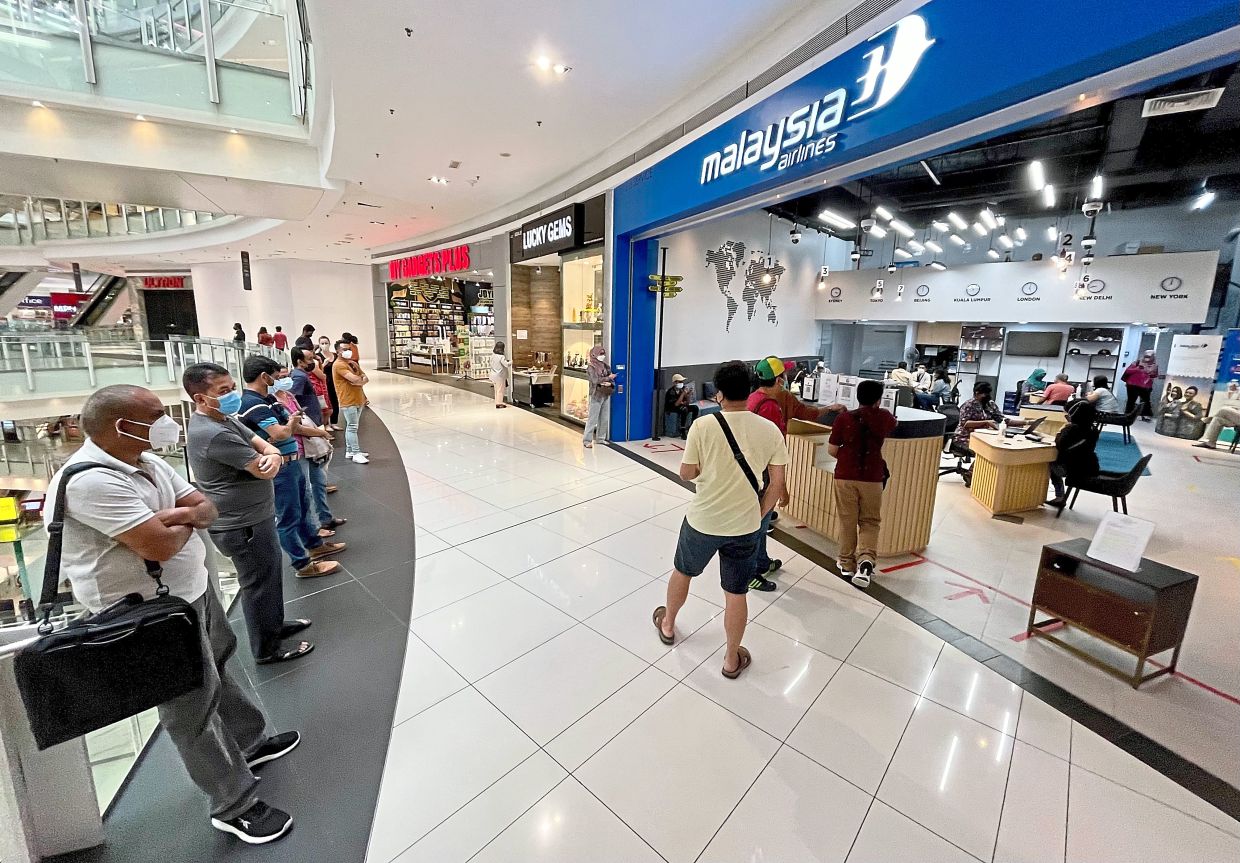
Change in the air: People queuing at the Malaysia Airlines ticketing counter in NU Sentral, Kuala Lumpur. — FAIHAN GHANI/The Star

THE days of making a last-minute decision to travel, especially for a vacation, are over.

By the new definition, it means booking an air ticket at least three months before your holiday to get the best rates.

Demand for flights has shot up since the borders began to reopen with less health protocols in many countries. And most airlines, including Malaysia Airlines and AirAsia, are expecting high bookings in the coming months.

Pent-up demand means there is a huge need for seats, but that would mean cheap fares will be gone.

At the same time, the price of fuel is at a 14-year-high since the Ukraine war broke out.

Yesterday, global petrol and diesel prices spiked again, the 13th hike in 15 days, as worries about global energy continue to escalate.

Malaysia Airlines has already imposed fuel surcharges on passengers and air cargo in selected markets since last month in a move to mitigate unprofitable routes.

AirAsia has also announced the same measure for all its domestic and international flights for all new bookings on and after March 8.

In short, air travel will be expensive.

Travellers must now realise that air fares will never be the same as two years ago.

But before we even go there, Malaysian holidaymakers are known to make last-minute bookings. However, even decisions made a few weeks in advance won’t do.

Perhaps, it cannot be helped that family vacations have to be during the festive season because it is tied with the school holidays.

So, if one books travel during the Hari Raya holidays, which includes the two-week school holidays, it won’t come cheap.

Likewise, in Europe, with summer holidays starting from June, this period would not be the best time for vacations over there as you will be competing with Europeans for accommodations and restaurants.

Having been hit during the Covid-19 pandemic, this is the time for the tourism and service industries to catch up and make up for their losses.

During the Easter holidays last weekend, it was a bad time for travelling due to crowds and chaotic scenes at airports and train stations.

But let’s get back to pricing and why one must plan.

Most Westerners plan their holidays, sometimes up to six months ahead. However, Malaysians are not that disciplined.

For example, if a businessman chose to fly Turkish Airlines and bought his business-class ticket in March as a return fare to London from Kuala Lumpur, it would cost him over RM9,000.

The flight with a three-hour transit in Istanbul, would now cost about RM22,000 if the person buys his ticket today, for the same travel date in May.

Always check for offers – as most seasoned travellers would know.

In March, KLM offered a return business class ticket from Kuala Lumpur to London at RM7,500. The snag is that one must fly to Singapore for a connecting flight in Amsterdam before continuing to London.

So, if one is not in a hurry, it’s a great offer, but with the offer period over, the same flight arrangements now cost over RM26,000.

Most airlines practise dynamic pricing, also called surge pricing, demand pricing or time-based pricing, which is a strategy in which businesses set flexible prices for products or services based on prevailing demand.

Simply put, as airline seats are being snapped up over the hours of the day, the ticket prices will keep going up.

Malaysia Airlines is always in the news because it is a national carrier. We also expect the airline to make profits, but we also insist it carries out national service.

For Malaysians travelling to London, it is the preferred choice because it is a direct flight. London is used as an example here because it is a popular destination for Malaysians for work, holidays, education and a gateway to Europe.

Last week, the Transport Ministry had to intervene following complaints that economy class airfares to Sabah and Sarawak were too high.

Minister Datuk Seri Dr Wee Ka Siong said based on observations by the Malaysian Aviation Commission last Saturday, the one-way fare for economy class from April 27-May 8 was between RM105 and RM1,398.

For flights during the peak period between April 29 and May 1, a one-way ticket was between RM195 and RM1,398. From this price range, the majority of all Sabah and Sarawak routes on economy class during the monitored period was only between RM300 and RM500.

But the situation was different before and on April 14, when the price range was between RM105 and RM2,084 during the monitored period, while during the peak period, the one-way fare for economy seats was between RM195 and RM2,084.

Dr Wee offered some advice – plan your travel and buy airline tickets early to benefit from possibly lower prices.

Malaysia Airlines will probably now have to cancel some flights to some Asean cities to meet the demand for Hari Raya, but it also means passengers who had chosen Malaysia Airlines to fly to these Asean cities will now be told that their flights have been cancelled or postponed.

Malaysia Airlines would now need to work with other airlines servicing the affected routes to enable these travellers to fly – and most likely, the national carrier would have to absorb some additional costs.

But most likely, Malaysia Airlines will get the rap again from some customers who want everything their way.

A painful lesson


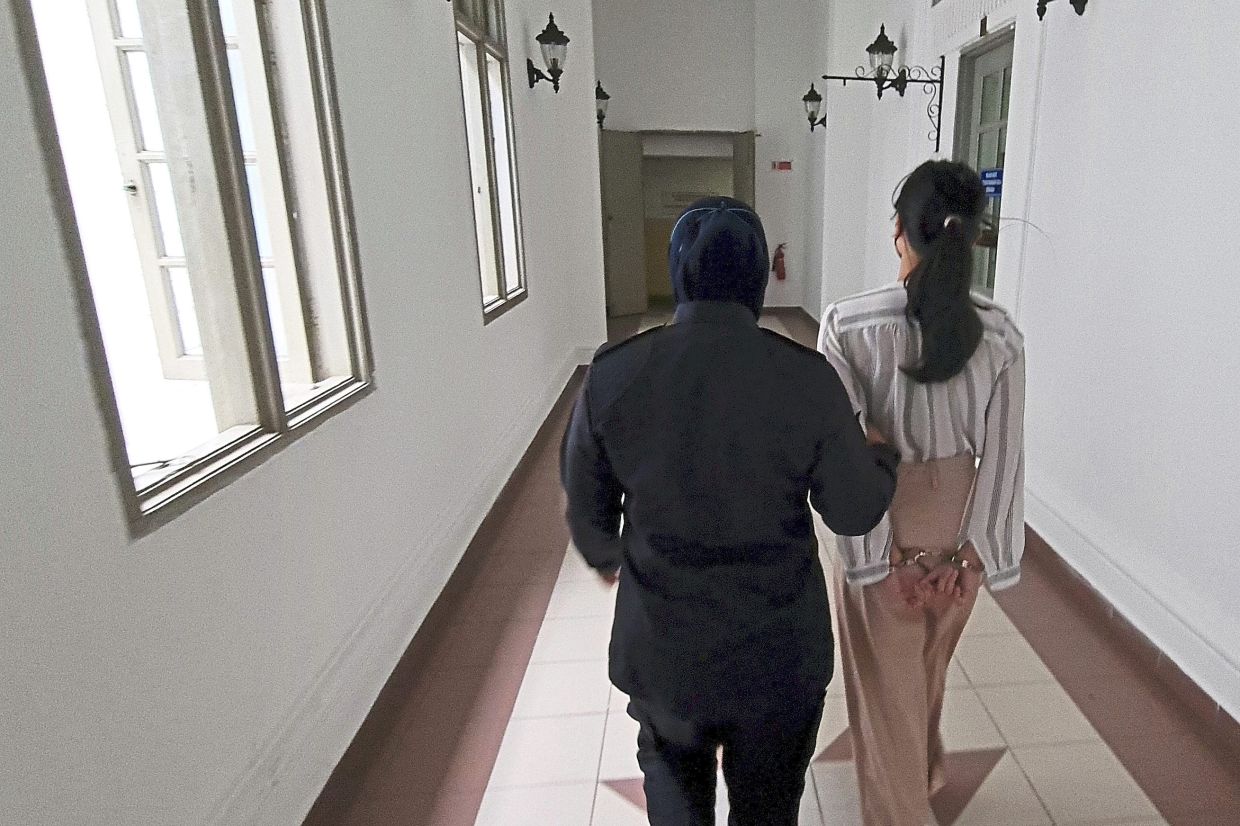
Found guilty: Sam was sent off to jail while her lawyers filed an appeal with the Court of Appeal. – China Press

We need to learn from this sad episode and put a stop to dangerous activities like ‘basikal lajak’ racing on our roads.

THE harsh jail sentence imposed on Sam Ke Ting over a devastating fatal accident nearly five years ago, has generated national debate. In the 3.20am incident on Feb 18, 2017, eight teenagers on modified bicycles (basikal lajak) were killed.

The High Court sentenced the clerk to six years’ jail and a fine of RM6,000 for reckless driving, which resulted in the deaths of these cyclists in Johor Baru.

Adding to her woes, a request for a stay of execution was denied, so Sam was sent off to jail while her lawyers filed an appeal with the Court of Appeal.

Let’s hope this appeal secures Sam her stay of execution because she’s neither a hardcore criminal nor flight risk.

Even those convicted of gross corruption are still walking freely while they await their appeals to be heard.

Sam would need a quick hearing, or else she would be locked up. But it may take up to six months before the Bench deliberates on her case. With the certificate of urgency, hopefully the Court of Appeal could meet on this sooner.

High Court Judge Justice Abu Bakar Katar had ruled that the magistrate’s court had erred in accepting the defence of Sam, who had proven she didn’t drive recklessly and had adhered to traffic laws. She had even been acquitted twice.

While Abu Bakar would have made his decision based on the facts of the case and laws, one can also understand why his decision has enraged many Malaysians, with their sentiments well displayed on social media.

Many of these reactions seem valid, really. To put it bluntly, this is common sense, particularly for those who have experienced near-mishaps with these reckless cyclists who think they own our highways.

Anyone driving along the highways at 3am expecting a smooth ride would get a scare if a gang of these cyclists suddenly appeared out of nowhere.

We can talk about the merits of the law, but most of us would surely be caught off guard, and no one in their right mind would want to collide with these youngsters.

You can be driving on a straight road and minding your own business, but if a gang of such cyclists suddenly swerves from the left side dangerously and recklessly, hitting your vehicle even, who’s at fault then?

But in the Johor case, all these are moot points because sadly, a catastrophic tragedy took place. One can imagine the remorse and guilt that Sam must endure for her part in the deaths of these youngsters.

She will have to live with this for the rest of her life.

It doesn’t help to debate now whether the blame should be on these minors who should know better than to roam around on the roads at 3am.

Their parents have been devastated and surely they have been tormented by a lot of abuse, too.

Five years later, with the case given a fresh twist, social media chatter has again haunted the parents, who have been accused of neglect. Irresponsibly but in typical Malaysian style, even racist rhetoric has surfaced.

All this will not bring the kids back, and neither will jailing Sam for six years. The point here is, what have we learned from this sad episode?

Have such dangerous activities stopped?

Have laws been drawn up and enforced to ban such modified bicycles, or do the authorities and parents still think there are more important matters to worry about – until the next major accident?

Highways are not meant for racing – not for cars, motorcycles, and certainly not modified bicycles.

We don’t need another bright politician to propose building racing parks for these youngsters.

We take road safety lightly. By now, we’re all familiar with the common scene at every traffic light – almost every delivery person will try to beat the lights.

Yet, many of us even tolerate and accept such disregard for safety because we think these are people merely trying to earn a decent living and that their wages depend on the speed of delivery and the number of trips they make. They should be excused. Kesian (pity).

One wonders whether these delivery companies even drum in them the importance of safety.

Hasnan Badi, a Malaysian downhill mountain bike racer with 15 years of racing experience, said the modified bicycles with cut-down handlebars and perhaps even no brakes, don’t provide proper control with the position the riders are riding in.

In an interview with paultan.org, he said roads were not the place for bicycle racing, except in controlled conditions, saying “it comes down to safety and education.

“If the kids are not educated on safety by the parents and the parents are not aware of what their children are doing, then this situation will happen again.”

He, however, said that drivers are also required to always be responsible and in control of their vehicle, adding that “drivers must be aware and be prepared to take necessary action to avoid accidents where possible.”

Finally, let’s not forget what the late William Orville Douglas, an American Supreme Court judge said, that common sense often makes good law.

From Acting to Politics with Hans Isaac


Ahead of the curve


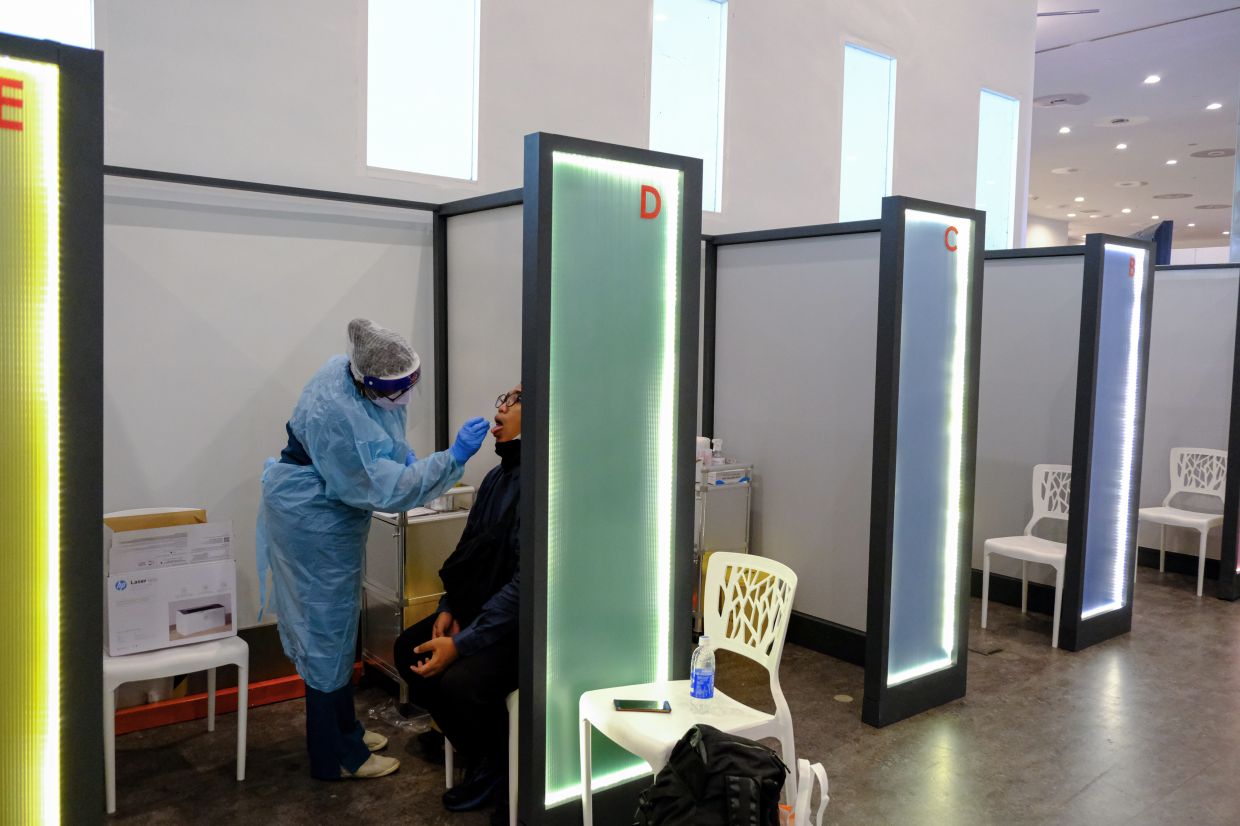
Opened borders: A health worker administering a test at a Covid-19 screening centre at KLIA2. Malaysia began to allow quarantine-free entry for fully vaccinated travellers from April 1. – Bloomberg

LET’S hope that the mandatory on-arrival antigen rapid test (RTK) at the Kuala Lumpur International Airport (KLIA) will be short-lived.

The issue is not the option of having to take the compulsory RTK tests at the airports or in health facilities within 48 hours, but its need in the first place.

It makes little sense to have this test because just prior to departure, a traveller entering Malaysia would be required to have a polymerase chain reaction test (PCR).

For example, a traveller flying in from London would need to do a PCR test at least 48 hours before departure, and the cheapest is about £65 (RM358) for the results to be delivered within 24 hours.

If you need your test results within three hours, it will be £85 (RM468), so, there’s no logic in conducting a test 14 hours later upon arrival at KLIA.

Then, you must pay for a professional RTK-Antigen (nasal) test costing RM100 for Malaysians and RM160 for foreigners.

Imagine short haul flights involving just a few hours, or like an hour, from Singapore.

It makes little sense to take two tests in such a short period for such a simple trip.

We’re all quite aware of the price of an RTK self-test kit at pharmacies, be it the nasal or saliva versions. There is an option, of course – you can take an RTK test at approved health facilities for about RM60, which provides results within 48 hours.

The PCR tests for incoming travellers are imposed by Malaysia. Britain no longer requires pre-departure PCR tests or on-arrival RTK tests. Singapore still insists on pre-departure PCR tests but has done away with on-arrival tests. Indonesia, Vietnam, Cambodia and the Philippines have either stopped it or announced that they will do likewise soon.

There should be greater flexibility for travellers because Malaysia has already declared it is transitioning into the endemic phase of Covid-19. Honestly, Malaysia should take the lead in Asean by making travel easier.

Many Malaysian business travellers heading to Singapore prefer making day trips because accommodation in the republic isn’t exactly peanuts. Throw in the cost of the numerous tests for each flight, and it all makes little economic sense to stay there. And remember, there are thousands of people commuting between the two countries on day trips.

It’s also questionable for a single company to handle screening services for all incoming travellers at KLIA and KLIA2. Proper tender exercises may have been conducted, but it’s still a monopoly.

Malaysia Airport Holdings Berhad announced that there are four different health screening providers at the four international airports – KLIA, Penang International Airport, Kota Kinabalu International Airport and Kuching Airport.

But there is only a single service provider at each one.

The tests have become pricey because the providers must pay for the set-up, rental and operations costs. Obviously, that will be passed on to the travellers. So, why the restriction for only a sole provider instead of encouraging competition?

The screening process can also be expedited when there’s more than one provider at the airports.

Another health provider has been able to offer the RTK test at RM60 for AirAsia passengers through an exclusive arrangement at KLIA2, which simply means that it can be cheaper.

AirAsia Malaysia chief executive officer Raid Asmat is right in saying that while it welcomed the reopening of international borders, many Asean countries have made the journey easier by simplifying testing regimes for travellers.

He said as Covid-19 tests become increasingly essential for travellers, the affordability of the mandatory testing would also harness the attractiveness of Malaysia as a preferred tourism destination.

So, how long must travellers put up with these on-arrival RTK tests when other countries have decided to be less cumbersome and, well, more competitive, by abandoning them?

Cynical Malaysians ailed by trust issues with the authorities could be forgiven for thinking that the compulsory RTK tests is just another cash cow, even though it’s not. However, it’s difficult to ignore this as a precautionary measure since Malaysia isn’t out of the woods, even if we’re almost in the endemic phase.

We haven’t even resolved the ownership controversy of the MySejathera app, even though Health Minister Khairy Jamaluddin has assured us that our data privacy is secure.

We need to keep Malaysia safe, but we also need to make our country competitive and stay ahead of the curve as borders are re-opened and the fight for tourism revenue accelerates.

BM, English & More


Status quo solution

STILL reeling from the controversy surrounding MySejahtera data protection for contact tracing mobile applications, there have even been calls to discard the system now. Of course, that’s easier said than done.

The Malaysian Medical Association has said it is time to consider relinquishing the use of MySejahtera as the country transitions into the endemic phase, adding that the app’s scanning features are no longer beneficial.

Its president, Dr Koh Kar Chai, said the app may have outlived its usefulness for contact tracing given the large number of cases within and surrounding the community.

Opposition leader Datuk Seri Anwar Ibrahim has also asked for the app to be done away with.

But MySejahtera is for more than just entering premises or revealing a record of vaccinations. Let’s not forget that it has become an acceptable and recognised app for Malaysians to use to enter most foreign nations.

Many countries insist on verifying if a visitor has at least two vaccinations or the added safety of a booster jab. The brand of vaccine is also a point of concern for many governments.

A large portion of the Western world, for example, doesn’t accept Sinovac, while China won’t accept Pfizer or AstraZeneca. So the reference point for now is still MySejah-tera, which is at least some form of an official declaration issued by the Malaysian Health Ministry.

Almost all countries in the world have some form of a digital contact tracing application.

If you visit Singapore, you will need to download Trace Together, which is still required for compulsory registration before entry into all premises. In Indonesia they have PeduliLindungi, while Hong Kong has the Leave Home Safe app.

To put it succinctly, all the talk of abolishing MySejahtera is premature and certainly ill-advised.

The crux of the controversy is the ownership of MySejahtera and public concern about the protection of the data of over 30 million Malaysians. There are certainly grounds for concern.

Malaysians aren’t the only ones that have raised a flag. All around the world, people are debating the same questions and demanding answers from their governments.

In Australia, for example, the concerns include what’s called “function creep”, with contact tracing information being used for other law enforcement purposes even though the country has laws preventing this.

There were also initial concerns regarding the government tracking people, which was soon allayed by its COVIDSafe app that doesn’t use GPS.

Australia’s Cyber Security Cooperative Research Centre has also carried out a cyber security review to ensure that the personal information collected is limited.

It’s also not unusual for countries to use or adopt technology from foreign developers or incorporate technologies developed by governments of other countries.

For example, Colombia’s CoronApp is developed by its government but uses technologies from the Singapore and South Korean governments, as well as Apple.

The Fijian government reportedly launched its careFIJI app based on the BlueTrace protocol developed by the Singapore government.

Last week, Health Minister Khairy Jamaluddin assured the public that the Malaysian government owns MySejahtera, adding that the Malaysian Administrative Modernisation and Management Planning Unit (Mampu) and National Cyber Security Agency (Nacsa) conducted a penetration and vulnerability test before the app was launched.

He said Nacsa conducted a monthly audit trail on the MySejahtera servers and that its Cyber Coordination and Common Centre monitors the app to detect possible breaches.

The ownership and management of the MySejahtera app made headlines recently when it was revealed that KPI Soft, now known as Entomo, sold the app’s intellectual property and software licence to MySJ Sdn Bhd for an eye-watering RM338.6mil.

The sale prompted questions about the safety of the data contained on MySejahtera servers, especially when it was revealed that Entomo is owned by a Singaporean company. But Khairy has clarified that while Entomo is based in Singapore, the company’s shareholders are largely Malaysian.

I agree with Khairy that we need to adopt a more broad-minded approach because many Malaysians have set up their tech ventures outside the country, with Singapore and the United States as the preferred choices.

A digital hub isn’t just a cluster of buildings. It also encapsulates the skills and ideas from the brains behind it, with real financial backing from the government and venture capitalists.

The truth is, the Malaysian government has not done a great job with this, and one shining example is how Grab had to seek out Singapore after Malaysia had turned it down.

Founded in 2012, Grab started as the MyTaxi app based in Kuala Lumpur, but then moved to Singapore in 2014 and was rebranded as Grab after Temasek Holdings backed Vertex Venture Holdings, saying that to grow big, they had to move to Singapore. It was a missed opportunity for Malaysia.

Khairy also said the government has not paid a single sen to any parties for the management of MySejahtera, adding that no payments have been made to “KPI Soft, Entomo or MySJ”.

But this may not be the best way to handle things. The developer has provided its service to Malaysia as a corporate social responsibility (CSR) exercise for one year, but surely nothing can be free forever, especially since additional features have been included in MySejahtera.

For example, this writer has been made to understand that MySejahtera’s Helpdesk doesn’t function effectively because it lacks the ideal number of staff to handle queries and complaints from users.

The government surely can’t expect the developer to use money from its own pocket to hire workers. Here is where Khairy is right – there must be a proper agreement between the government and the developer after the one-year CSR period ends.

As for the rumoured RM338.6mil the government is set to pay MySJ for the app, Khairy said the amount was exaggerated, but added “we are in the final stages of negotiation, it is less than RM300mil’.

It will be interesting to see what the agreed figure is because while we can’t expect it to be cheap, we certainly won’t accept a hefty bill either.

It looks like we either buy the app, extend the lease or refrain from using it and create a new one.

According to various news reports, Britain’s National Health Service (NHS) reportedly spent more than £35bil (RM193bil) on its contact tracing app. In March 2021, its Parliament reported that as of May 2020, NHS Test and Trace had been set up with a budget of £22bil (RM121bil). “Since then, it has been allocated £15bil (RM82.8bil) more, totalling £37bil (RM204bil) over two years.”

The amount, understandably, became a hot topic in Parliament with the Opposition describing it as “unimaginable.”

The New Zealand Herald reported that the Kiwi government paid NZ$6.4mil (RM18.64mil) to build its tracer app, while the New Daily reported Australia paid AU$8mil (RM25mil) for its own app.

Germany’s Corona-Warn-App reportedly cost the government €20mil (RM93mil).

While a smaller start-up could incur a lower cost, let’s remember that developers will always charge for additional work and features.

For now, Malaysians must insist our data is secure and not vulnerable to abuse, and that MySejahtera will have fresh features because, as the MMA rightly pointed out, it could be outdated soon. But taxpayers are certainly not expecting to foot an astronomical bill.

The World Health Organisation has said the severity of the disease caused by the Covid-19 virus would wane over time due to greater public immunity but warned that a more dangerous variant could be lurking around the corner.

I would rather stick with MySejahtera, practise physical distancing and keep my double-layer mask on than trust politicians who are asking us to dump the app.