Monthly Archives: December 2022

The worth of good service

Salary slashes and cash cuts – they may be academic, but it’s at least a start.

THE Prime Minister has announced that he will forego his monthly salary and decided that his Cabinet members will take a 20% pay cut.

The leaner line-up, while not massively significant, will also mean extra work for the ministers.

Datuk Seri Anwar Ibrahim said the Cabinet agreed that in the spirit of concern with the plight of Malaysians, the salary slash would only be reviewed when the economy recovers.

While it’s merely a symbolic move, we should, nevertheless, welcome the PM’s decision.

But even with the pay cut, our Members of Parliament are still better paid than most of us.

It’s not just their monthly salary but the many allowances and claims. As the saying goes, the devil is in the details.

The PM’s monthly salary is only about RM22,800, while his deputies get about RM18,170. But the claims and allowances of a PM can reach RM80,000 a month.

By Malaysian high-level corporate comparison, it would certainly be very low. So, some talented leaders may not wish to go into politics for this paltry sum.

A Minister gets about RM12,800 while a Deputy Minister earns RM8,840.

But don’t forget that the Ministers would still be entitled to their MP salaries, about RM16,000 monthly, while Senators earn RM11,000.

According to reports, MPs are also entitled to a host of allowances and claims from meetings, entertainment, special payments, monthly travel, driver, meal and living allowances.

In the 2022 Budget, RM148mil was allocated for the operations and running of Parliament.

In her popular column, So Aunty So What?, June Wong quoted her detailed findings from the Statute Paper 235 of 1983 on the Official Portal of Parliament of Malaysia (bit.ly/malaysia_mp).

First off, an MP’s monthly salary is RM16,000. He/she also has a phone allowance of RM900 and a fixed travel allowance of RM1,500 a month, without needing to submit claims.

An MP is also eligible to receive RM400 a day for attending Parliament and RM300 a day for official meetings, workshops, briefings, seminars, etc; a daily subsistence allowance of RM100 while on official duty within the country or RM170 outside Malaysia; food allowance of RM340 for every night spent outside the country; hotel charges of not more than RM400 a night, if the fixed allowance is not enough to cover all these claims.

That’s not all. MPs were not entitled to pensions or gratuities until the passing of the Administration and Members of Parliament (Pensions and Gratuities) Act 1971.

That Act was repealed and replaced by the Members of Parliament (Remuneration) Act 1980 [Act 237], which provides for pensions, gratuities, benefits and allowances.

There is also a “special payment” of RM1,500 a month for MPs who aren’t members of the administration as defined under Clause (2) of Article 160 of the Federal Constitution, meaning he is not a minister, deputy minister or political secretary.

Wong, who covered Parliament for many years as a reporter, wrote that “if they travel by air on official business, they are entitled to business class seats, and every month, they get allowances for fuel (RM1, 500), toll (RM300) and entertainment (RM2,500).

“They get a driver’s allowance of RM1,500 even if they don’t hire one, so they get paid for driving themselves. Extra benefits include getting a motor vehicle licence or a firearm permit FOC.”

There are many other perks, like allowances for medical care, warm clothing, ceremonial and black-tie attire, and loans for cars, housing and computers.

“The above salary and allowances, which amount to at least RM25,700, while not really exorbitant, is still a very high income for most Malaysians,” she revealed.

She wrote that MPs, after completing 36 months of reckonable service, get a pension after they turn 50.

What she has written was corroborated by Muar MP, Syed Saddiq Syed Abdul Rahman, former Youth and Sports Minister, who called for the review of pension entitlements and allowances for assemblymen, MPs and ministers, which the Parti Muda president said could exceed RM100,000 per month for some.

Ministers, he said, even get plate numbers that could be sold for hundreds of thousands of ringgit, and two APs (Approved Permits) to bring in luxury cars.

He said that ministers also get gratuity of up to RM1mil to RM2mil, which is based on their years of service as MPs.

Wong shared that “from my years as a journalist covering Parliament meetings, many MPs are seat warmers who hardly ever speak on anything, spend more time in the cafeteria and lounges and even leave before the day’s sitting has ended.

“That’s why the hall is often very empty, barely making the quorum of 26 MPs from the total of 222.”

I would add further that some well-known names, especially the veterans, are guilty of poor attendance.

Perhaps they think these Parliament meetings aren’t important or they have more urgent matters to attend to.

We can understand if they are Cabinet ministers, but these guilty MPs are often those who no longer hold positions.

Then, there are those who would create a ruckus to ensure their names get mentioned by the media and then disappear, based on my experience as a Parliament reporter.

Several of them, unfortunately, have included well-known lawyer MPs, who were suspected of having court cases to attend to and ended up getting themselves suspended.

To be fair, our lawmakers are not exactly the best paid when compared to their counterparts in Singapore and Hong Kong.

Even in Britain, the MPs have more Parliament meetings to attend to justify their allowances.

If we want clean and talented parliamentarians, then they ought to be properly compensated. We surely don’t want politicians to use their positions to enrich themselves.

As the saying goes, if you pay peanuts, you get monkeys, but we also don’t want MPs who behave like outrageous primates in Parliament.

It’s a relief that some of these serial recalcitrant reps were not picked to defend their seats, while some even lost badly in the recent general election.
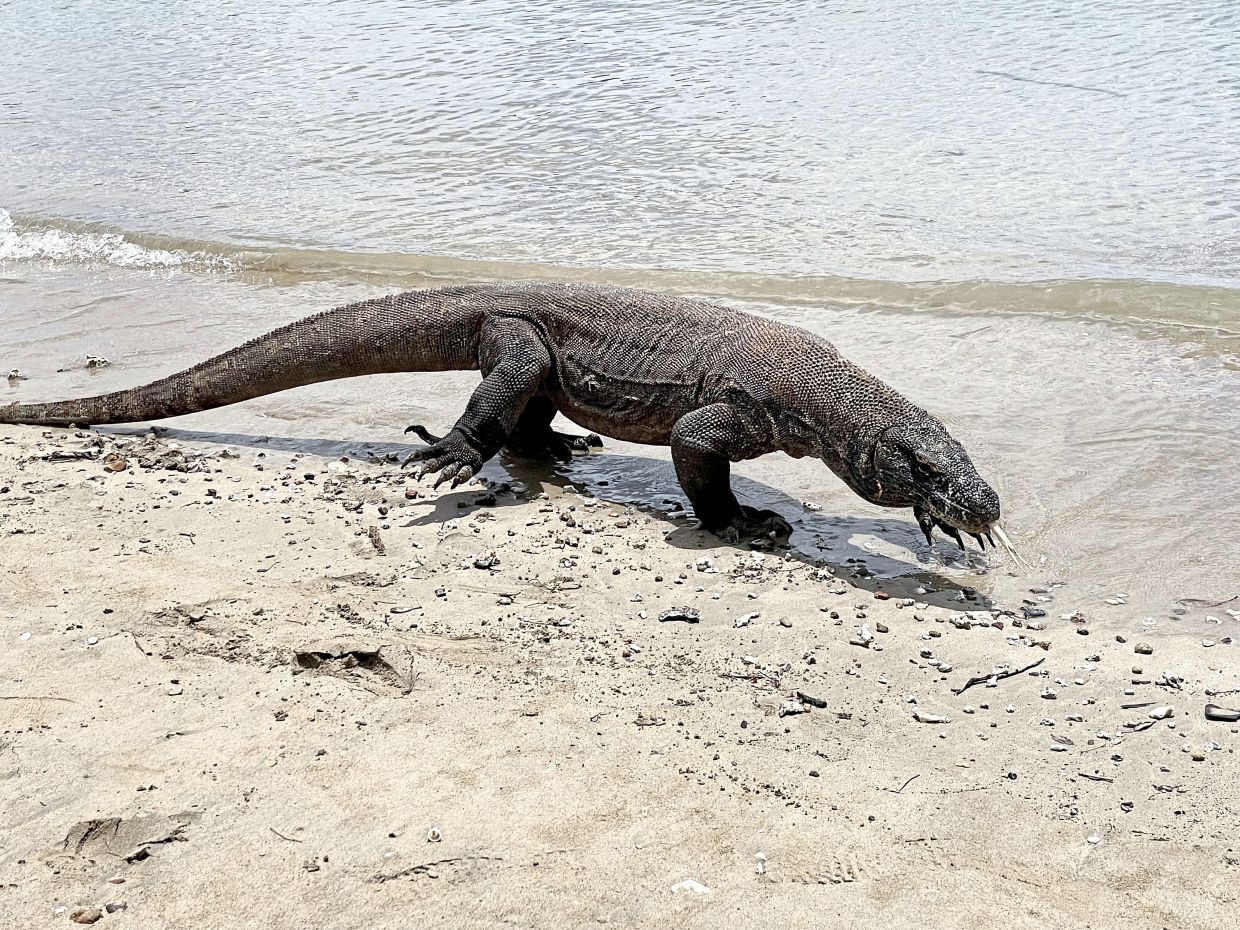

A trip to the island where dragons roam


A close up of a Komodo dragon walking along the beach on the Komodo National Park in Indonesia. — FLORENCE TEH

Jurassic Park may have been a work of complete fantasy, but the first sight of Komodo National Park islands blurred the lines between fiction and reality. Sure, it was CGI dinosaurs in the Hollywood blockbuster, but the heavy hitters here are true relics of a prehistoric age.

As a tropical country, it’s easy to imagine Indonesia covered with dense rainforests.

But the island is characterised by savannah vegetation instead. It’s hot and dry. The three main islands, Komodo, Rinca and Padar, have rugged, rusty-red volcanic hillsides and pockets of thorny green vegetation.

Even before stepping into the park, I was fortunate to catch a glimpse of a giant Komodo dragon outside the entrance, which seemed to be scavenging for food on the beach.

The unscripted appearance caused a stir as excited visitors rushed to get a close-up view of the reptile.

Barely flinching at the potential aggressive nature of the reptile, I, too, ran towards it.

A guide had to scramble to warn the tourists to keep a safe distance from the giant lizard, although they were already playing National Geographic photographers with their smartphones.

It was the ideal start to a trip I had planned for years. Being home to the largest reptile in the world certainly warrants the archipelago being recognised as a Unesco World Heritage site.

I wanted to get there before the year ends because there’s been talk of Indonesia raising ticket prices for the park’s entry, and disturbing news reports about the construction of a separate park for affluent visitors.


The writer with his wife, Florence, with a giant Komodo dragon at the park. The picture was taken by one of the rangers.

But more than that, these lizards are rapidly vanishing and are now considered endangered.

On Komodo island, only about 1,200 remain from more than 3,000 previously. In fact, at nearby Padar island, the reptiles have completely disappeared.

The lizards at Komodo island can grow up to 3.5m (11 feet) while those at Rinca island are smaller at up to 2.5m (8 feet).

To reach Komodo island, I flew to Bali on Malaysia Airlines, and put up at a hotel near the Denpasar airport to catch the morning hour-long flight on Air Batik to Labuan Bajo, the gateway to Komodo island.

Labuan Bajo is a sleepy fishing village of about 5,000 people at the western end of the large island of Flores in the Nusa Tenggara region of east Indonesia.

As Komodo island is a three-hour boat ride from Labuan Bajo, we began our journey at 5.30am, when the sun had peaked well past the horizon.

I had expected a speed boat but was, instead, greeted by a wooden, open-decked single engine boat, which looked like it could be used for fishing.

I felt cheated by the travel agent. But the lesson here was that I shouldn’t have assumed otherwise. I should’ve asked for a picture of the boat we had hired. A slow boat meant my wife and I had less time on the island.

But all was forgiven when we reached the land mass. We had hardly walked for 10 minutes into the park before being greeted by two huge dragons taking respite from the heat under a tree.

There was a crowd, but it didn’t seem to bother the animals, which were the size of an average crocodile.

The five rangers, probably used to seeing excited tourists, tempered their enthusiasm professionally and even offered to take pictures – all done in an organised and orderly manner.

They even stopped photo bombs and shooed away those who didn’t belong in the pictures. They certainly deserve a tip for that!

I had a good conversation with a ranger, with a mix of Malay and my half-baked Bahasa Indonesia, and he shared a story of how his colleague, who had worked in the park for 12 years, was also once attacked by a dragon.

“But pak, please tell your Malaysian friends not to come during weekends. Come on weekdays when there are fewer people.

“The park opens at 7am and the weather is cooler. You will see more active lizards then,” he said.

Visitors are constantly reminded to remain on the trail to ensure their safety, as he shared anecdotes of stubborn visitors who ended up being attacked by these vicious living dinosaurs.

During peak hours, the rangers are likely to only take visitors for a short walk and satisfy them with posed pictures with the lizards.

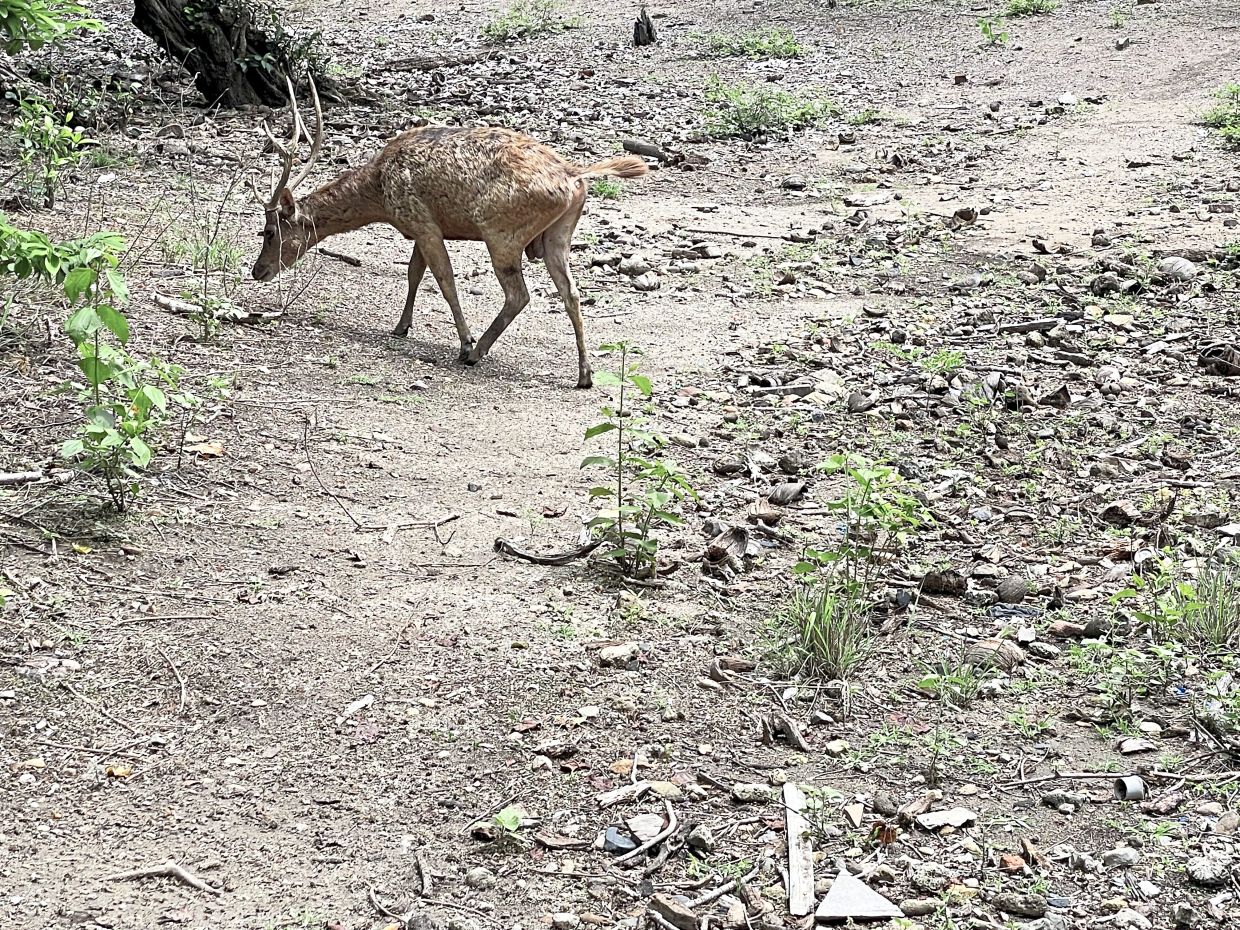
Besides the reptiles, it’s easy to spot other animals such as deer, wild boars and monkeys.


Apart from the giant lizards, other small animals live on the island too, like deer and wild boar.

The park prohibits overnight stays, but I saw many schooners and yachts, with accommodation facilities, berthed just outside the island.

These are the serious visitors who want to visit the park a few times, as well as sail to nearby islands.

But before I walked to the jetty to board my boat, I saw another dragon, a much smaller one though, making its way lazily along the beach, as if to bid me farewell.

My only advice to those who have not seen the Komodo dragons is to just make the trip since Indonesia is so close to Malaysia.

When we were on the island, my wife and I were the only Malaysians, but we met people who came from as far as Chile, Japan and other faraway countries, to see these disappearing dinosaurs.

A Compromised List?


A new dawn begins


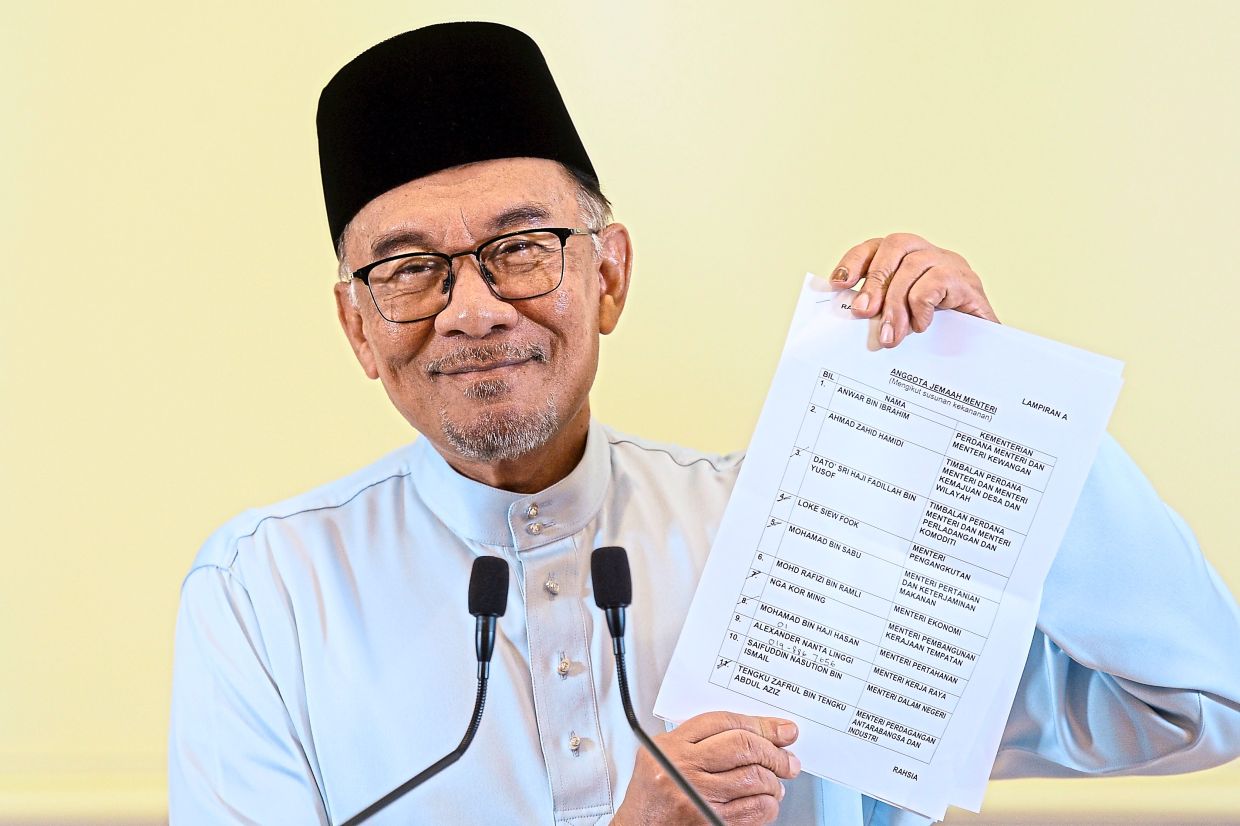
Unity in diversity: Anwar displaying a list of new Cabinet members on Friday night. The lineup has been welcomed as a reflection of the diverse unity government that the Rulers had suggested. — AZHAR MAHFOF/The Star

You can’t please everyone all the time, but Malaysia has, at least, resolution and a way forward now.

IT’S infinitely unnerving when politicians rely on a combination of race and religious issues to garner support.

Social media is littered with videos of these politicians dangerously peddling their lethal and toxic sentiments to push their desperate agendas.

Unfortunately, these tactics appear to have worked for certain parties, as evidenced by the votes in the recent 15th General Election (GE15).

It may seem preposterous but there’s certainly a market for such toxic stories, buyers of which, tragically, include young voters.

The majority of Undi18 votes, unfortunately, went to those who advocated hard-line religious practices.

Ironically, one of the prime movers of Undi18, Syed Saddiq Syed Abdul Rahman, nearly lost his seat.

It’s one thing to attack corrupt politicians and suggest an alternative, but the treacherous level it has degenerated to is an entirely different prospect.

From promising a passage to heaven to Jewish plots and an alleged Chinese-led unity government, it has become a no-holds-barred onslaught.

The Prime Minister has found himself accused of being an Israeli spy, while others have been called LBGT+ supporters and communists, thanks to one imaginative and fertile mind.

Even the Rulers have been criticised, although in a more subtle way, but the tone of discontent is palpable. They have ignored the line, for sure.

The election is over. His Majesty called for a unity government with Perikatan Nasional – comprising Bersatu, with PAS – invited to join the government, but Perikatan declined.

It was no surprise because Tan Sri Muhyiddin Yassin wouldn’t have fancied playing obliging subordinate to Datuk Seri Anwar Ibrahim, who was the choice of the Rulers for PM.

While Bersatu leaders have stated their preference to be in the Opposition, PAS president Tan Sri Abdul Hadi Awang’s hysterical outbursts haven’t quite tickled Malaysians’ funny bones.

He may have 49 Members of Parliament but he must surely feel anguished at being out of power at the federal level, especially with such a big bloc of lawmakers.

But PAS needs to get a grip.

The events of GE15, which led to an inconclusive result, have proven that no single political coalition can form a government without the participation of all Malaysians, including Sabahans and Sarawakians.

No doubt Perikatan has won over the Malay heartland, especially the “fixed deposits” of Felda settlers, and even the Putrajaya constituency, the government’s seat.

But Perikatan can’t hope to form a government if the rest of the country doesn’t subscribe to PAS’ politics.

It’s unfortunate that the Opposition is now nearly all- Malay, but, fortunately, the government bench is more diverse. There’s obviously nothing for PAS to brag about.

The party needs modern and progressive leaders if it hopes to achieve its aim. It needs a kinder and more open narrative to win over the rest of Malaysia, and not just the East Coast of the peninsula.

PAS is arguably regarded as a party dominated by religious leaders with qualifications from West Asia, but lacking strong fundamentals in finance, economics and the sciences.

A constant barrage of statements reeking of Talibanism isn’t going to help them.

Umno will now need to work on its lost Malay ground. It must cleanse itself of its tainted and corrupt image which has scarred the party.

President Datuk Seri Dr Ahmad Zahid Hamidi, like it or not, has plenty of work to do. He can’t preach the virtues of being in a unity government and be seen as the person who almost single- handedly killed Umno and Barisan Nasional.

Perlis fell to Perikatan by default, and now the state has a PAS Mentri Besar for the first time.

The polls are over. Malaysia needs to get back to work and brace itself for a tough 2023. There’s simply no time for unproductive politics.

It’s better for the new Federal Government to dedicate itself to making Malaysia a country we can all be proud of, with the rest of the world viewing us favourably.

Leave the dogmatic religious hardliners alone. Stop talking of banning PAS or arresting its leaders, as we will only create martyrs of them, an because, ultimately, it’s more important that the unity government proves its mettle.

If needed, appoint good PAS lawmakers who can contribute to their positions. Why not? There is good talent in all parties, and on both sides of the divide, too.

Let bipartisan politics be a part of a developing, mature democracy, where substance matters more than form.

As Chinese military strategist Sun Tzu said in The Art of War, “Keep your friends close, but keep your enemies closer”.

If the unity government is genuine, let it be an inclusive government.

Those of us who know Anwar will concur that he doesn’t give up on anyone. He will meet everyone, including those who’ve bad-mouthed him, to win them over.

His policy has always been that if he can’t have them aligned with him, he would want them to, at least, not oppose him. It will be harder this time, though.

Realpolitik the order of the day


IT’S certainly not a perfect list of Cabinet line-up. Datuk Seri Anwar Ibrahim just has been pulled from all sides, including by some powerful figures, who insisted on their choice of representatives in Cabinet.

The Prime Minister took a longer time than expected to finalise his list as party members and partners in his new Unity Government bombarded his phone with messages and suggestions.

There were endless meetings with stakeholders which dragged late into the night as the deadline approached.

Even his 3pm press conference to announce the list had to be postponed until 8.15pm and even that began late.

The PM had to honour his pledge for a leaner Cabinet and at the same time, balance the demands of his partners.

Although it looked like Anwar had to labour through some horse-trading and appeared to be weak, the reality is his predecessors had taken a longer time than he did.

Tun Dr Mahathir Mohamad took 11 days to fully complete his full line-up after the GE14 in 2018, which many have forgotten.

Anwar is in a more complicated position. Despite having a two-thirds majority in Parliament, Malaysia is in uncharted waters.

Malaysia has never had a Unity Government comprising partners, which has just fought a bruising election against each other.

Many made open pledges of not wanting to work together and tore each other to bits during the recent campaign.

But now, they are in the same government, and they will most likely make strange bedfellows and would need a period of adjustment to keep the government intact.

The period of instability and uncertainties will probably cause some turbulence, but rational-minded Malaysians certainly want this government to work.

The alternative, with many hard-line theological politicians, seems unpalatable. Perhaps even dangerous to multi-racial Malaysia.

In 1969, after the race riots, the Barisan Nasional government was formed which included the then opposition PAS and Gerakan.

It was not called a Unity Government, but the new coalition government worked and functioned effectively under Tun Abdul Razak.

Fast forward to 2022, Anwar is certainly sitting on the hot seat. Besides having to face a strong Malay and religious centric opposition, PAS, with 49 Members of Parliament, will continue to throw doubt on his leadership.

Already, the Islamist party has used the narrative that the Pakatan Harapan government is dominated by the DAP.

Like it or not, Umno president Datuk Seri Ahmad Zahid Hamidi has thrown PH a lifeline for Anwar to be the PM and lead a federal government. Anwar is indebted to him as without Zahid, he wouldn’t be PM.

Zahid’s inclusion has earned the wrath of PH members but let’s not forget that he also faces the same emotional wrath from Barisan parties.

We do not live in a perfect and idealistic world. Realpolitik is the order of the day. Politicians say things they do not mean, and quoting Italian philosopher Niccolo Machiavelli, the end justifies the means.

There has also been a lot of backlash against the inclusion of former banker Datuk Seri Tengku Zafrul Aziz, who lost in the Kuala Selangor parliamentary constituency.

But this is not a new practice. Previously, political leaders who had lost in the elections have been made Senators and appointed to ministry positions.

This time, PKR’s Saifuddin Nasution, who lost in his bid for the Kulim Bandar Baharu seat, now heads the powerful Home Ministry while Barisan Nasional secretary-general Datuk Seri Dr Zambry Abdul Kadir, defeated in Lumut, is now the Foreign Minister.

For some reason, Zafrul has been targeted but like former Health Minister Khairy Jamaluddin, both are young talents that Malaysia needs.

Both unfortunately lost in the GE. Likewise, it is sad that PKR vice-president Nurul Izzah Anwar was beaten in Permatang Pauh by PAS.

But the inclusion of popular Segambut MP Hannah Yeoh is certainly welcome although she would actually be more suitable as Tourism Minister, given her personality, than Youth and Sports Minister,

Sarawakian leader Datuk Seri Tiong King Sing, who is Tourism Minister, will be more cut out for an economy related portfolio although it can be argued that tourism is a crucial revenue earner.

They are bright sparks in Malaysian politics that are ready to cut across the political divide and practise bipartisan politics in a mature manner.

Not many, like Zafrul, are ready to leave high-paying positions in the corporate world for politics. How many of us, who prefer to whine, are prepared to take up such a bold move?

It is important that Anwar now focuses on facing the headwinds of 2023. He has correctly put more emphasis on the economy, cost of living and food security, which will affect the people the most.

Besides the economy, the government needs to prove that it can deliver. If it does, then it does not need to focus its attention on politicians who rely on race and religion to win support.

There should be no place for the politics of revenge and vindictiveness by the new appointees. Leave the civil servants alone.

Malaysians want to see the end of corruption, a better education system, healthy economy, fairer government and one that can make Malaysians feel proud of their country again.