Monthly Archives: September 2023

Tasteful tapestry

THE numbers were beyond the expectations of the organisers when more than 10,000 people of various races and ages showed up to participate in the Keretapi Sarong 2023 (KS2023) recently.

While most wore the sarong and the kain pelikat to the event, many also turned up in their traditional attire to add colour to KS2023 to celebrate the love for Malaysia and its diversity.

This year’s theme, Ethnicity and Unity, was accompanied with a strong fashion show, a flash mob and joget lambak, replete with the 1960s and 1970s music filling the air, revealed news reports.

I wish I was there. It must have been the party of the year. I’ve promised myself that I’ll be there next year with my buddies.

One news report that touched me was a Bernama story accompanied by a video of a Peranakan couple, John Roland Goh, 71, and Lai Joo Lian, 70, who were up by 6am to get ready and be part of the programme.

They were dressed in traditional Baba Nyonya attire, a short kebaya and sarong, as well as a Malaysian batik shirt.

For Lai, KS2023 was nostalgic because it allowed her to recall her teenage years and provide the opportunity to see the different types and patterns of clothing worn by today’s younger people.
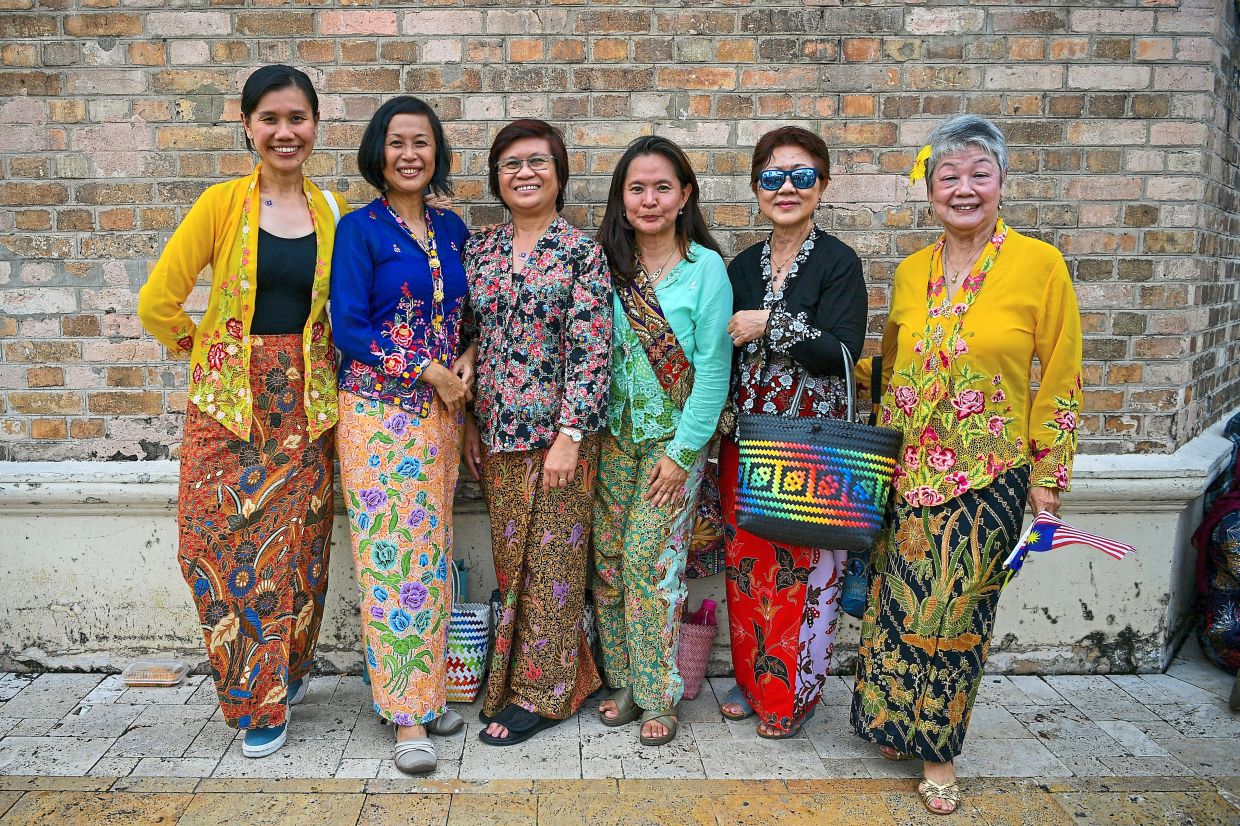

Nostalgic event: Lai (second from right) with her friends in Nyonya kebaya and sarong at the recent Keretapi Sarong 2023. The 70-year-old was up by 6am to get ready to be part of the programme. — Bernama

What I liked most about this event is that Malaysians voluntarily turned up all decked in their best. That’s the best part of spontaneity – it’s real and raw.

It was a reminder that Malaysia is safe.

Without politicians spewing toxic race and religion narratives, Malaysians are well clued-in on how to respect each other.

Whether it’s the joget lambak or ronggeng, most Muslims love and appreciate these cultural facets without being frowned upon.

It’s common knowledge that wayang kulit (shadow play) and menora (a Siamese theatre dance) have been banned by the PAS state governments.

The traditional dance, kuda kepang, was once banned but is slowly returning with some tweaks to parts that apparently infringed on religious sensitivities previously.

The songkok, for example, is just a Malay headdress and has no religious connotations. A baju Melayu is just incomplete without the songkok.

Why should anyone make a fuss if it’s compulsory to wear a songkok to an istana event?

I’m proud that the brass band of my alma mater, St Xavier’s Institution, had a velvet songkok as part of its uniform.

I happily and proudly wear a songkok with my baju Melayu during Hari Raya open houses.

And I can’t ever recall the Indian saree becoming an issue until recent years. Suddenly, sarees are deemed inappropriate and offensive by certain groups or institutions because it traditionally exposes midriffs and backs.

It’s a classic case of ignorance because this elegant dress was never designed to attract unwanted attention – it’s just the way it is and has always been. How has it suddenly become a crime now?

Last week, a school in Kajang found itself in the news when it allegedly barred its students from wearing the saree during the National Day celebrations.

This isn’t the first nor will it be the last time unless the Education and Higher Education Ministries put a stop to this nonsense by issuing a circular saying the saree is acceptable – not just for schools but at university levels, too.

Make it clear and leave no room for doubts or discretions. Engage Indian cultural and religious leaders on this dressing issue if clarity is needed.
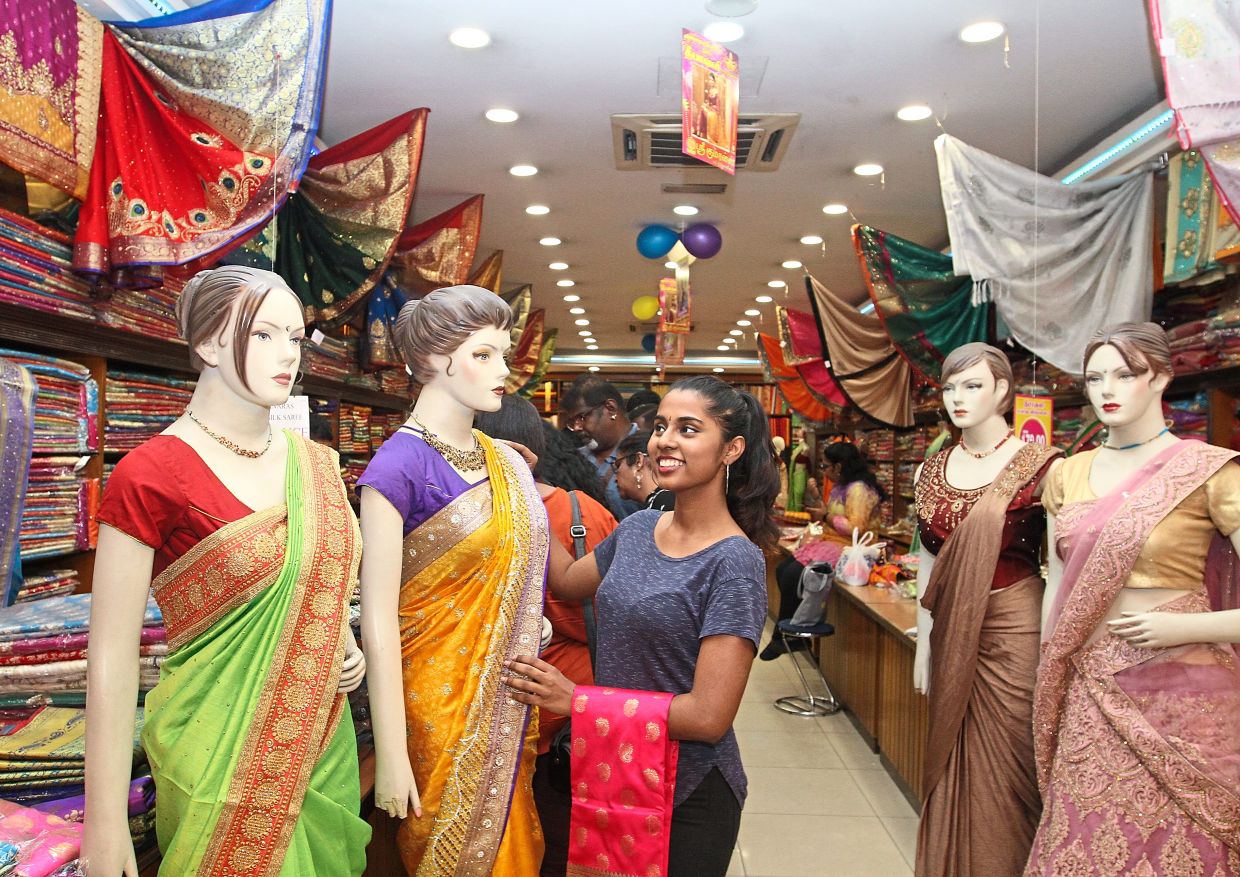

The elegant saree was never designed to attract unwanted attention and can be worn in varying degrees of modesty. — The Star

Teachers and lecturers should stick to what they are hired for – teach – and not make judgment calls on what is moral according to their individual standards and prejudices.

Anyone who has been caught in these situations before would know it’s usually a lone voice who imposes his or her stand on others.

It suddenly becomes a decree that no one dares challenge this person if he or she has some religious authority, but there may be no credence to this at all.

Each time an incident like this crops up, the authorities step in and put out the fire quietly.

By now, it’s well-known that most rape cases in Malaysia happen in rural areas, where the victims are conservatively dressed. The predators are largely familiar to the victims and have even included relatives.

According to a report in the New Straits Times on March 16, Kelantan has one of the most sexual crime cases in the country.

Bukit Aman Criminal Investigation Department director Datuk Seri Abd Jalil Hassan said most of the sexual crimes reported in Kelantan in the past few years were rapes.

“Eighty per cent of the sexual crimes reported in Kelantan involved children,” he said after launching Kelantan police’s Child Interview Centre (CIC) in Kota Baru.

Asked about the higher number of sex crimes involving children compared with adults in Kelantan, Jalil said he believed the lack of attention by parents to their children was a contributing factor.It has nothing to do with the dressing of flight stewardesses or nurses, which seems to be the obsession of some lawmakers.

Certainly, wearing shorts and skirts above the knees isn’t the cause of sex crimes.

So, the last thing we need in our schools and universities are self-appointed custodians of morality banning sarees, which is simply disrespecting the traditional culture of fellow Malaysians.

The actions of such teachers don’t only deprive students of their right to represent their cultural identity, but also runs contrary to the inclusive values espoused in the “Malaysia Madani” concept advocated by the unity government.

If we don’t stop this, the Iban warrior may no longer be seen wearing his shorts at National Day or Tourism Malaysia events.

So, kudos to the organisers of KS2023 for bringing tradition and fun to all Malaysians.

KS2023 director Shamsul Bahrin Zainuzzaman hailed the programme as having successfully achieved its main objective – to see Malaysians in ethnic attire travelling on public transport while promoting the multicultural sarong.

“I am wearing the traditional attire of the Bidayuh ethnic group as a sign of support, and we also saw many other friends from various races taking part in KS2023,” he told Bernama.

The Keretapi Sarong was introduced by non-governmental organisation Random Alphabet in 2012 before being taken over by LOCCO in 2017, involving thousands of participants travelling on public transport wearing either batik or pelikat sarongs as the de rigueur attire.

Anyone ready to organise a saree event soon? There’s certainly a dire need for education.
Despite its flaws, Malaysia Airlines is ours

TRANSPORT Minister Anthony Loke recently posted a picture of his hot meal including the signature satay, which is served on Malaysia Airlines (MH) business class, when he flew to Kuching to attend a Cabinet meeting and the Malaysia Day celebrations.

In his Facebook post, he assured that the airline was resuming its hot meal service in phases and that MH is taking efforts to ensure services would be back to normal as soon as possible.

Without question, Malaysian Hospitality has taken a beating over the past few weeks. Passengers, especially those who had paid hefty prices for their business class tickets, have been furious. Rightfully, too.

Original Penang Kayu Nasi Kandar boss, Buruhan Mohamed, in an interview expressed his dismay but said he would continue to fly MH.

It’s the same with me. I have always been a supporter of MH, not just because it’s our beloved national carrier, but it has the best crew.

I think I can say this with some degree of qualification after having flown to over 60 countries on many different airlines.

Last week, I flew to Hong Kong and Beijing on business class, and my carrier, Cathay Pacific, ran out of blankets. The dim sum that was served was certainly below par. I expected more from CX which would surely know what an acceptable dim sum should be like.

On a recent flight on KLM, I was served fusion Asian food by so-called master chefs, according to the introduction on the menu. Perhaps, it was made for Westerners to suit their taste buds.

British Airways are notoriously bad when it comes to food. On a recent flight from Zurich to London, in economy class, I had to pay for my coffee.

You only get a bottle of water and the flight attendant looked like she was forced to do her job. It’s my choice for the worst airline. But maybe not, the American airlines are probably on the “worst” list, too.

In 2022, it was reported that all BA’s shortest domestic and European flights would not receive any catering at all, while some longer European flights under an hour and a half in flight duration, ‘’may also go without food’’ with passengers given vouchers to buy food in the airport before boarding their flights.

This year, it was reported that BA passengers were fed Kentucky Fried Chicken – a leg each – on a 12-hour flight after the plane’s catering carts were said to be not properly chilled with the food having to be disposed of.

Of course, these wrongs by other airlines cannot justify the missteps by MH. Two or even more mistakes by others doesn’t make MH right and a hungry passenger is an angry passenger, regardless if it’s business or economy class.

But many of us have grumbled, if not, suffered over the quality of food on MH provided by Brahim’s Food Services, which had a 25-year concession to handle in-flight catering.

To be fair to the MH management, which has come under heavy criticism, it’s a legacy issue that the present team must handle.

Ending the contract of Brahim’s brought a lot of cheers but these teething problems are the price that MH is paying.

The battle on the “termination of convenience” clause which Brahim’s refused to accept, clearly shows the airline’s seriousness about cleaning up all its legacy contracts, be it with local or international companies.

It is noteworthy that the financial restructuring in 2020-2021 gave the airline group the opportunity to holistically repair its balance sheet and address decades-long legacy issues, resulting in a reduction in liabilities of over RM15bil, and eliminating RM10bil in debt.

The battle continues as the airline renegotiates other contracts that are nearing its term, and this time around it was Brahim’s.

Whilst this was ongoing, Brahim’s pulled the brakes and served MH with a service discontinuation notice, giving the airline only two months to prepare itself.

Any setup would have been faced with teething problems given the extremely short lead time, what more the airline business with its highly regulated and complex processes involved.

In short, the longstanding catering contract between Malaysia Airlines Bhd (MAB) and Brahim’s Food Services (BFS) ended on Aug 31, 2023 after extensive negotiations between the two parties since Q4 2022 did not result in an amicable agreement.

BFS had in early June 2023, served MAB with a notice of service discontinuation effective July 1, 2023, while discussions were still ongoing for a new contract. BFS subsequently retracted the notice and agreed to extend service until Aug 31, 2023.

The question is why didn’t MAB appoint a new caterer sooner?

“While negotiations with BFS were ongoing, MAG had also considered other short- term and long-term solutions for its overall catering plan, which all require extensive preparation.

“It is impossible to shift to a new provider within a short span of time, hence MAG was working towards continuing the contract with BFS. Our alternative caterer, POS Aviation, operates on a much smaller scale and is not able to expand in time to accommodate all MAB flights. In total, MAB serves 40,000 inflight meals a day from KLIA,’’ it said in a reply.

But the biggest misreporting by some media was the claim that MH had stopped serving meals when the airline’s FAQ section, MH clearly stated that meals will still be provided.

However, it being a full-service carrier, it noted that passengers were allowed to bring their own food subject to certain conditions.

So, what happens now? Full hot meal services won’t be available for a while as MH is prepared to only say in phases.

The high lifts equipped with proper storage capabilities (chillers) have arrived earlier than anticipated and we hope for Malaysia’s sake, passengers will have their full hot meals offered soon to all destinations.

To make up for this, MH should perhaps offer higher Enrich miles as a reward to its loyal passengers who are still committed to MH.

But despite all the hiccups, MH will remain my choice simply because it offers direct flights, and no other airline greets me with ‘’welcome home to Malaysia.’’

Taxation blues

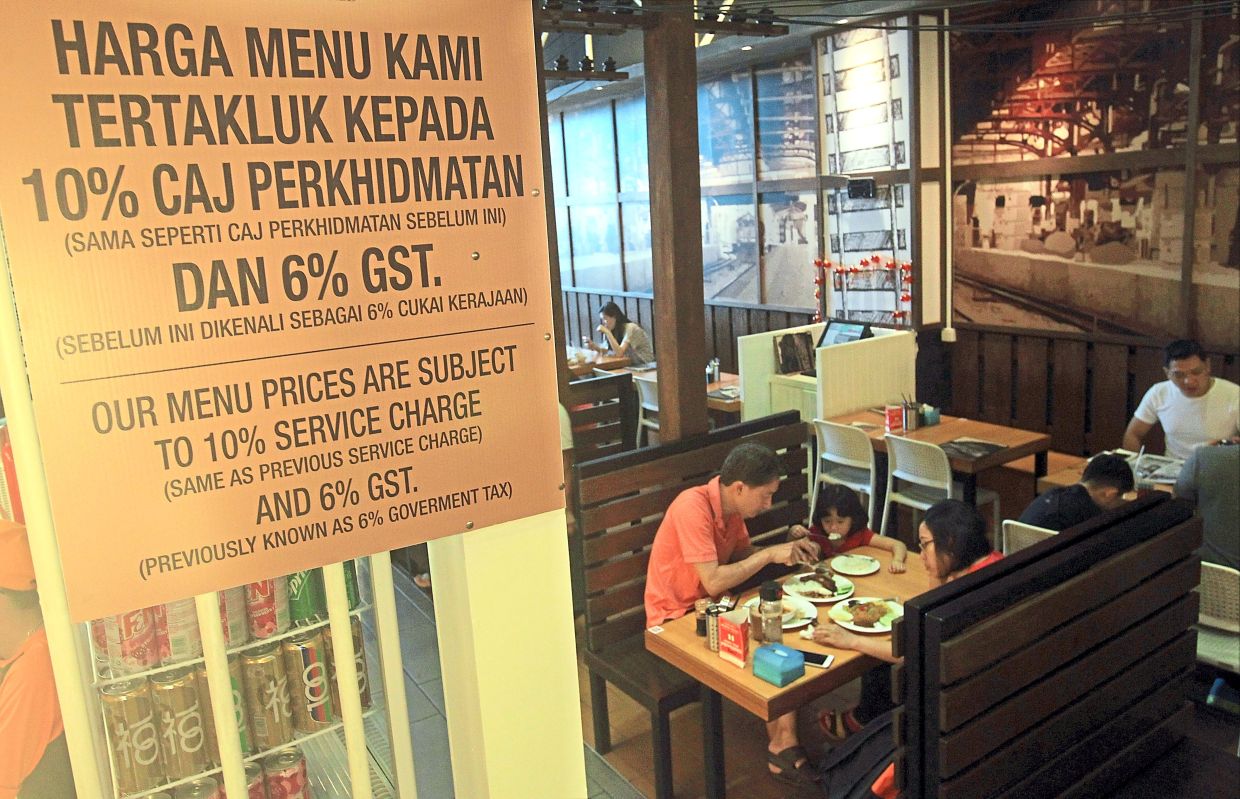
IT will never be a popular move, but the Goods and Services Tax (GST) is necessary if Malaysia hopes to have a wider tax net to generate more revenue, given the increase in public expenditure.

From healthcare spending to security, the bills have all gone up, but not revenue.

Malaysia is no different from other countries. That’s why more than 170 countries have introduced GST or its equivalent. However, we have the distinction of not only introducing it, but killing it, too.

The irony is those who had opposed the GST by the Barisan Nasional government then are now leading the unity government.

Some Perikatan Nasional leaders, who were Barisan ministers then, had vehemently defended the GST.

Last week, Economy Minister Rafizi Ramli said the government was not ruling out reintroducing the GST, which was abolished in 2018.

In fact, in 2015, PKR launched an anti-GST signature campaign along with a series of rallies to protest the tax system.

In 2013, Tan Sri Muhyiddin Yassin accused the opposition of using the GST to shore up support, saying “there are almost 160 countries that have the GST, and this includes poorer countries. Only Malaysia has not implemented it and I think it is time that we roll out this system.”

But in 2018, after he was out of the government, Muhyiddin participated in a rally against the GST, which was introduced by then Prime Minister Datuk Seri Najib Tun Razak.

Now, Rafizi says the Government will first prioritise its strategy to widen the nation’s revenue base, while focusing on redeveloping and rolling out of the Capital Gains Tax, which is slated to be implemented in 2024.

He said the administration favours non-regressive methods rather than the GST when it comes to contributing to the government’s coffers.

He said although the GST was the most efficient and transparent tax system, its reintroduction will hurt poor households.


Unpopular measure: Economy Minister Rafizi Ramli recently said the government was not ruling out reintroducing the GST, which was abolished in 2018. — The Star

Respected former Treasury secretary general Tan Sri Sheriff Kassim said the GST may not be popular but “like antibiotics, when you want to protect your body system, you have no choice but to take the bitter pills.”

The GST is levied on all goods and services and therefore, no one is exempted, rich or poor, which is the government’s concern.

The best tax instrument to raise govt revenue and create local and international confidence in Malaysia as a financially stable country is undoubtedly the GST.

Against the backdrop of the rising cost of living, the timing of GST’s re-introduction could be questioned, but there will never be an ideal time for it to return.

What can and should be done is to compensate the poor in the form of an effective cash support system.

But for now, only a small percentage of Malaysians are shouldering the burden of paying the tax.

It has been reported that Malaysia only has slightly more than 1.3 million individual taxpayers from more than 33.5 million people, representing a mere 4% of the entire population.

“As the private sector is highly influenced by external factors, its growth can be erratic.

“The public sector must therefore play the role of engine driver for the economy. So, it needs the GST to be assured of financial strength to provide the locomotive power for leading the economy, thereby enabling it to pull up the private sector,” said Sheriff.

The truth is, Malaysians will ultimately benefit when government revenue is strong to maintain a high level of spending.

We all know the reasons behind re-introducing the GST, but illogical considerations will take precedence. The unity government may have a strong majority.

Never mind if there’s one short of a two-thirds majority now that Muda president and Muar MP Syed Saddiq Rahman has decided to join the opposition, but the introduction of the GST doesn’t require a two-thirds majority because it doesn’t involve constitutional considerations.

By right, this would be the best time since the unity government has the numbers and is resolutely strong.

But Malaysian minds have been poisoned by the race and religion narrative, where almost every issue is twisted and manipulated. Many social media messages which are clearly venomously fake are given attention, and worst of all, forwarded and shared despite being anonymously written.

So, truth is silent, or has been silenced, while lies have grown louder. Lawmakers know that bold decisions need to be made but prefer to be cautious, or more disturbingly, be populists to fend off criticism.

So, economists can champion the GST’s cause, but the politicians aren’t going to push it through, especially if they had criticised it previously.

A royal tradition continues

JUST a month from now, the country’s nine Rulers will meet to elect the next Yang di-Pertuan Agong as the only elected constitutional monarch in the world.

Come Oct 29, the nation will witness the election of the country’s 17th King since it attained independence over six decades ago.

The election is stipulated under the Federal Constitution to elect the new King and his deputy under a five-year term.

Only the nine Rulers who are members of the Conference of Rulers can take part in the secret balloting. There is no such thing as a proxy vote.

However, while there is an election, the process is also based on a rotation agreed upon by the Rulers.

It is both a tradition and a convention which has been respected and upheld in the institution.

According to reports, the first cycle of the rotation, from 1957 – when the office of the Yang di-Pertuan Agong was established – to 1994, saw Negri Sembilan at the top of the election list, followed by Selangor, Perlis, Terengganu, Kedah, Kelantan, Pahang, Johor and Perak.

The term of the present King, Al-Sultan Abdullah Ri’ayatuddin Al-Mustafa Billah Shah, will end on Jan 31 next year.

So, the next Yang di-Pertuan Agong will be the Sultan of Johor, Sultan Ibrahim Ibni Almarhum Sultan Iskandar.

The deputy will be the Sultan of Perak, Sultan Nazrin Muizzuddin Shah Ibni Almarhum Sultan Azlan Muhibbuddin Shah.

The Rulers place great respect on tradition and precedence to the institution and its time-held process of picking a King.

While there is an election, the Rulers are unlike ordinary politicians. The royal institution certainly must be respected and honoured in every way.

It’s fair to say that the royal institution is the only one which Malaysians have high regard and respect for.

Although the Rulers are viewed as the custodians and protectors of Islam and the Malays, they have all displayed fairness and moderation to all Malaysians, regardless of their race or religion.

His Majesty the Sultan of Johor has been an outspoken and forthright Ruler, who has been consistent in his views on the need to protect the unity of the people, in particular his Bangsa Johor.

Sultan Ibrahim is certainly one who isn’t afraid to point out what’s wrong and what needs to be corrected.

For sure, under his rule, it won’t be business as usual.

Malaysians look forward to his reign as the next Yang di-Pertuan Agong and we are confident His Majesty will bring the needed change for peace and harmony.

Beauty in diversity

IT’S so refreshing to see a Malaysian movie that’s prepared to tackle the issue of our racial and religious differences, since we have a beautifully plural society and nation. The timing of the movie is especially apt ahead of Malaysia Day next week.

The movie, Adoiii Jiwaku, revolves around three colleagues working in a hotel. Ayis, Malesh and Sia are often at loggerheads plagued by cultural differences, or rather, prejudices and ignorance.

Following an incident in which Ayis accuses Sia of siding with his Chinese colleagues, the former decides to stage an office prank, which goes horribly awry.

As a result of electric shocks, Ayis and Sia, a Malay and Chinese, swap bodies. The script is hardly reinventing the wheel, but it’s rarely done in local movies, especially if it involves two races.


Different but same: ‘Adoiii Jiwaku’ revolves around three hotel workers who are often at loggerheads due to their cultural differences. A prank gone wrong leads to a body swap between two of them, a Malay and a Chinese, and all their latent racial prejudices comically come out. — Agencies

The comical delivery proves we Malaysians can laugh at ourselves, especially when Sia – who’s now in a Malay body – makes accusations about Chinese cheats. And at home, the stereotype wick is turned up when he’s served his favourite pork-bone soup, only to spit it out angrily realising he was served the non-halal dish.

But along the way, he learns about Sia’s family, as well as the community through his experience living in a Chinese home. Ayis even ends up being able to speak Chinese (Mandarin)!

Sia, who’s now in a Malay body, ironically accuses Ayis of always being “good at cheating in businesses” as a Chinese.

Offscreen, the actor, Ali Arami, can speak Mandarin, so it came in handy for his role. Steve Yap plays Ayis while other cast members include E. Ramachandran, and guest artistes supermodel Amber Chia and the late Adibah Noor.

Unsurprisingly, plaudits for the movie have come thick and fast, with a friend, Ariff Farhan, offering his two cents by saying, “We get emotionally invested, but we will always make up. We are Malaysians after all.

“Satu jiwa, semua sama. Kalau gaduh, semua gila.” (One spirit, all the same. If we argue, we’re all crazy.)


’Adoiii Jiwaku’ film’s director Steve Yap (middle green) and executive producer Chris Daniel Wong with the cast and production crew during a recent gala night screening at TGV cinema in Pavilion Bukit Jalil, Kuala Lumpur.

The movie’s co-producer Chris Daniel Wong singled out the ace up its sleeve; “The film attempts to instil patriotism through comedy, rather than the usual genre of historic drama or war movies because the younger generation in Malaysia today is rarely moved by older patriotic films since they can’t relate to events that happened before they were even born.”

He added that despite our political alliances and cultural differences, Malaysia’s sense of unity has ultimately always prevailed.

The movie was completed in 2021 but its release was put on ice since cinema attendance was still low, with Malaysians still adjusting in the post-Covid period. Cinemas are now packed again, though.

I’m glad that the movie, which marks Yap’s directorial debut, is opportunely being screened now.

As we celebrate our National Day and soon Malaysia Day, most of us would instinctively recall the works of the late iconic Yasmin Ahmad, with her brilliant Merdeka short films as well as her movies which always portray Malaysians coming together.

It’s people like her who have done more for nation building than our politicians who continue to pull us apart.

She certainly left behind an indelible mark with her many commercials during festivals, which depict the struggles of cultural diversity in Malaysia, and as one article said, Yasmin “challenged audiences to tackle humanistic themes of hope, love, and empathy in the face of breaking down social environments.

“She was unafraid of tackling sensitive subjects as she tore down racial, religious and cultural barriers that stood behind her and her vision,” wrote Mark Zumi.

It’s still fresh in the memory how Yasmin carried the colour-blind theme of an advertisement about a Chinese school boy named Tan Hong Ming, who has a crush on Ummi Khazriena, a Malay girl, a storyline many of us can relate to from our childhood days.

Yasmin dared cross cultural, racial and religious lines, which was considered taboo by the conservatives, with her depiction of interracial relationships. She also highlighted subjects many of us would have avoided for wanting to be politically correct.

Yap said he was inspired by her movies, especially Sepet, a 2005 Malay language movie about an interracial teen romance set in Ipoh, Perak, which tells the tale of a love that blooms between a Chinese boy and a Malay girl.


’Sepet’, a 2005 Malay movie about interracial teen romance set in Ipoh, tells the tale of a love that blooms between a Chinese boy and a Malay girl.

Yap said his movie is dedicated to Yasmin, but he used comedy to convey the message of harmony and respect by Malaysians for each other.

The movie addresses the stereotyping of Malaysians where Malays are portrayed as mat rempits, Chinese as cunning and, Indians as drunkards and gangsters.

Yap said he had finetuned the script over the last 10 years, but it was repeatedly rejected, and he was even conned over it.

The message from the movie is, there are no differences between us because we’re just human beings, and the most important point is we’re all Malaysian.

Congratulations, Yap and the cast, and the producers, for making this movie and carrying on from where Yasmin left off.

Selamat Hari Malaysia. This is our country and never let the politicians tell us otherwise. We have more similarities than differences.

Religious revelations

IT’S like a leaf taken out of a handbook on creating controversies for some of our politicians.

Whenever an issue crops up, the usual suspects will mouth off to say yea or nay in a way that distinguishes them as champions of their respective communities or faiths.

Strong language is used, often with little reasoning, to exhibit their masculinity, and no surprises, they are male figures.

As Sunday Star columnist Nathaniel Tan rightly wrote recently, in general, a lot of public discourse in Malaysia centres around “jumping”, or more appropriately, reacting to an issue instead of responding reasonably. He said when an announcement is made, if some don’t like it, they immediately begin jumping, issuing angry statements and yelling at each other.

Most times, there is a religious or racial slant to their riposte to emphasise they are the best custodians.

These lawmakers really offer nothing constructive, except to raise the political temperature.

With social media’s ubiquity, where everyone simply has something to say, the toxicity level has spiked.

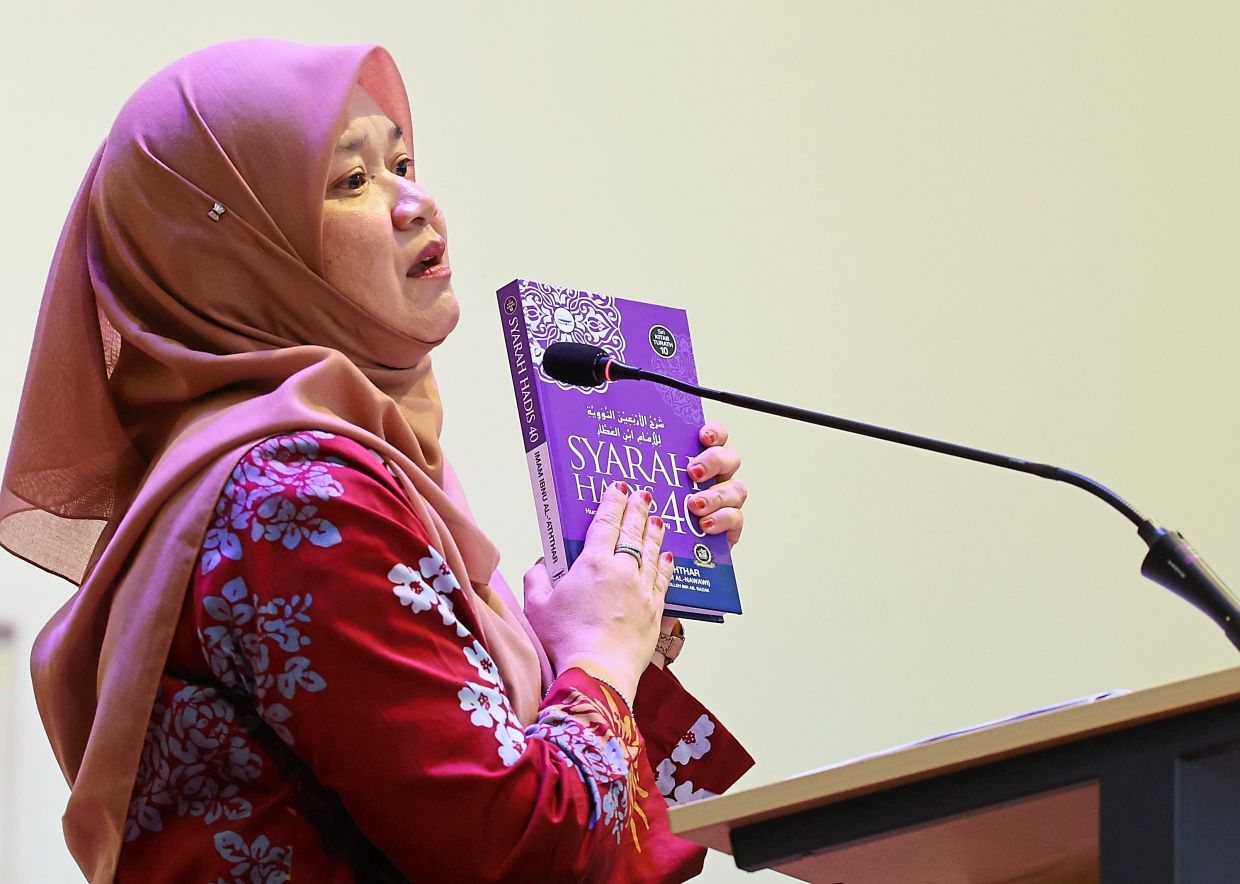
I’ve been following the controversy surrounding the introduction of the “Imam Al-Nawawi 40 Hadith” module in schools, which the Education Ministry has assured is strictly for Muslim students.

Well, the ministry should have given that guarantee right from the beginning, knowing there was the propensity for controversy from such an announcement.


Not for all: Education Minister Fadhlina Sidek has assured that the ‘Imam Al-Nawawi 40 Hadith’ module is strictly for Muslim students. — Bernama

It would have been helpful if it had explained the salient points of the module. It would also re-assure non-Muslim parents if a proper circular is issued to schools to emphasise that non-Muslim teachers and parents would not be involved.

I doubt many of the politicians or commentators who were busy trading verbal blows, took the initiative to read up on “Imam Al-Nawawi 40 Hadith” to better appreciate the works of this highly respected scholar.

There are plenty of commentaries and discussions on the book by Imam Nawawi, a hadith (sayings of Prophet Muhammad) expert who wrote extensively on theology and jurisprudence.

He was born in Damascus, Syria, in 1233 AD, and even at a young age, he devoted his time to studying, instead of playing, like all children his age.

Dr Jamal Ahmed Badi wrote in a commentary that Imam Nawawi “had endless thirst for knowledge and used to read twelve lessons a day and wrote commentaries on every lesson.”

His collection of 40 Hadith comprises the essential and fundamental concepts of Islam.

There’s also a more comprehensive commentary on Imam Nawawi’s book by US-based Jamaal al-Din M. Zarabozo.

I’m neither an expert on Islam, nor a Muslim. I’m merely a student of Islam, as it’s a major religion.

In fact, I signed up for Islamic History when I was in Form Six, and when I began my tertiary education at Universiti Kebangsaan Malaysia (UKM) more than 40 years ago, I was required to study the religion.

Non-Muslims who opted to study at UKM understood that Islam was a compulsory subject.

Although the course was on basic Islam, I dare to say it has been helpful to me in work and interaction with Muslims.

From my knowledge, none of us had any issues with what we had signed up for. I had the privilege of attending lectures conducted by the late Datuk Fadzil Noor and Datuk Dr Haron Din, two great Islamic scholars who eventually joined PAS.

When I began working as a reporter in Penang, I also met the late Kassim Ahmad, one of the greatest Malay intellectuals of modern times, who eventually got into much trouble with the authorities for his views on the Hadith, yet my interest continued to grow.

The point is, we must have a thirst for knowledge.

I’m a Christian with a respectable collection of books on Islam, and this has deepened my respect for the many positive values.

No religion teaches us to incite hatred, intolerance and violence against our brothers and sisters of other races and religions.

Unfortunately, there are religious and political figures who invoke God’s name and quote selectively from religious texts for the benefit of their own fiendish schemes.

It’s disappointing that many of us are afraid to learn about religions practised by fellow Malaysians for fear of being converted or compromising our faiths.

I have non-Muslims who come to visit my library and then ask “Why do you have so many books on Islam? Converting ah?” How ignorant.

By reading Imam Nawawi’s book, we would learn about his emphasis on hadith regarding the need to be sincere and truthful, or ikhlas, and avoid those who are insincere.

He also pointed out the seven types of desires, which include seeking glorification, money and portraying ourselves to be wholesome.

At a time when many of us are fearful of the young being instilled with radical and extremist teachings, the module should, by right, be welcomed.

It is important to teach the young that they need to project universal Islamic values in a multiracial and multi-religious Malaysia, and that we are not living in Afghanistan, for example.

Tan rightly wrote that we should resist our hot heads, at least for a day or two, and had this been the case, “non-Muslims might have learned that these 40 hadith were (ironically) chosen precisely because they are focused on moderation and exact types of positive values that are designed to temper extremism and highlight the inclusive nature of Islam.

“Religions frequently counsel patience, reflection, prayer, and meditation,” Tan wrote.

In fact, there are hadith and verses from the Quran which encourage Muslims to do good towards non-Muslims. Al-Nawawi’s compilation also stressed that Muslims should do no harm or reciprocate with harm.

Last week, Education Minister Fadhlina Sidek met non-governmental organisations including Aliran, Dong Zong and Pertubuhan Ikram Malaysia, and it is good that those who attended reportedly said they were satisfied with the explanation.

Unfortunately, not many Malaysians are prepared to advocate inter-faith dialogues in Malaysia, which would be a progressive step in educating people about the positive common values of religions.

Those who have attempted to do so with good intentions, ultimately found themselves caught in the chaos of controversy.

So, Godspeed if you’re willing to try.

Even a recent event organised by MIC, where multi-faith prayers were conducted, became an issue. MIC members may be predominantly Hindu, but they obviously have Christians, Muslims and Buddhists among them, too.

I’m sure the intention was sincere and done in good faith as well.

I’ve been lucky enough to have many Muslim friends, colleagues and even family members.

But I fear many of our young Malaysians may not have that kind of opportunity, unlike the older ones among us who grew up having real friends – not acquaintances – from other races and religions.

How many of us are ready and willing to point out the positive traits of other religions, but fear being rebuked and resented by religious and political leaders?

It’s important that we keep an open mind on everything, and as Edward Said wrote in his essay, the clash of ignorance is the result of ignorance being formed, perpetuated and exploited.

We must never let the ignorant determine the depth of tolerance (acceptance) and moderation for Malaysia. No religion teaches us to incite hatred, intolerance and violence against our brothers and sisters of other races and religions.