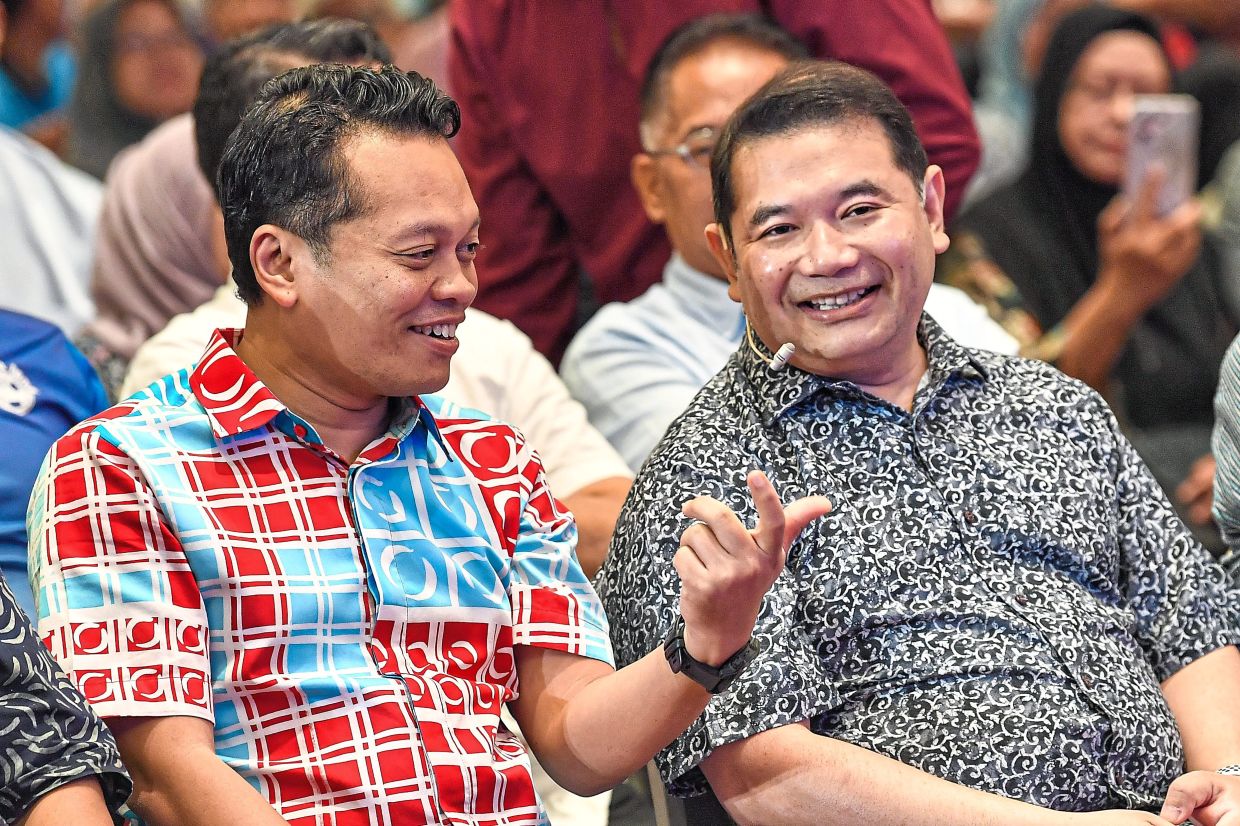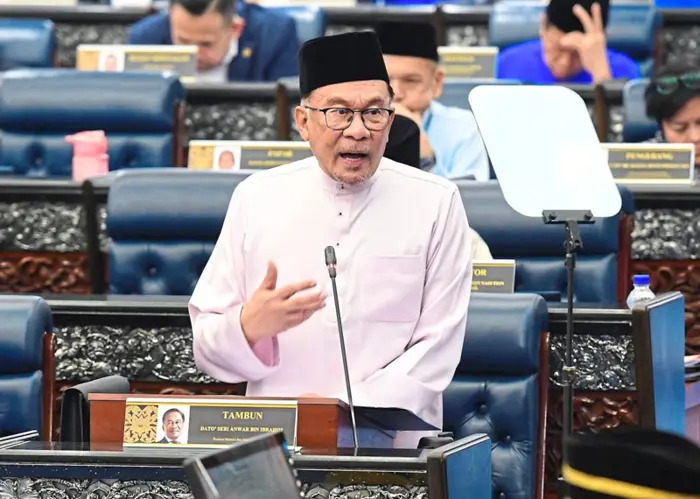
Keeping it together: While some feel the pace of reform under Anwar’s administration is too slow, the reality is that getting anything done with a coalition government is not easy or quick anywhere in the world. — Filepic/The Star
THE Anwar administration is midway into its five-year term and one of the strongest criticisms it faces is that reforms are slow. Prime Minister Datuk Seri Anwar Ibrahim’s opponents have even gone so far as to say that reforms are dead.
The reality of many Opposition leaders anywhere is that when they get into government, they find out one major truth: change cannot happen overnight.
It is even more difficult when it is a coalition government.
In the case of Malaysia’s unity government, it involves partners who had fought each other in the elections. Anwar’s party, PKR, does not even hold the largest number of seats in Parliament.
It may not be acceptable to his hardcore supporters but the inevitability is that expectations must be grounded. Anwar does not have the kind of all-powerful authority to issue executive orders with a stroke of the pen like US President Donald Trump does.
Over two years into his administration, while key reforms have been initiated, the pace and scope of change have led many to call for a more realistic lens through which to view the progress of his legacy.
Anwar had positioned himself as a reformist leader committed to restoring trust in governance, rebuilding the economy, and steering Malaysia towards a more equitable and transparent future.
He has had to make unpopular economic overhauls like targeted subsidy reforms and, most recently, broadening the sales and service tax (SST).
Anwar’s administration has focused heavily on fiscal discipline. The 2025 federal budget – amounting to RM421bil – is the largest in Malaysia’s history, with a growth target of 4.5% to 5.5% for the year.
Among the key reforms are the rationalisation of blanket subsidies and a shift towards targeted assistance for lower-income groups, and removing subsidies for the wealthy and foreign nationals. Minimum wage has been increased by 13% to RM1,700 to keep pace with inflation and cost of living.
Malaysians, including the rich, are so used to subsidised items like petrol that anything that is taken away can only lead to resentment.
Our petrol is the cheapest in the region, if not in the world, and while wages are not high, the cost of living is relatively low.
Unfortunately, no thanks to debt-funded excess spending accumulated over the last 28 years of budget deficits, RM16 out of every RM100 that the Federal Government earns goes to interest payments.
Anwar has a serious legacy issue. If he does nothing now – just to be popular – the coming generations will have to pay even more and suffer.
The latest moves, while fiscally responsible, have raised public anxiety amid rising prices and a weakening ringgit, highlighting the delicate balance between reform and public sentiment.
Let’s recap what other reforms the unity government has carried out since he became PM in November 2022.
Anwar pledged to strengthen Malaysia’s democratic institutions, and several early steps have been taken:
> The Abolition of Mandatory Death Penalty Act 2023 was passed, giving judges discretion in sentencing.
> Preliminary efforts to separate the roles of the Attorney General and Public Prosecutor are underway, with policy papers and studies being developed.
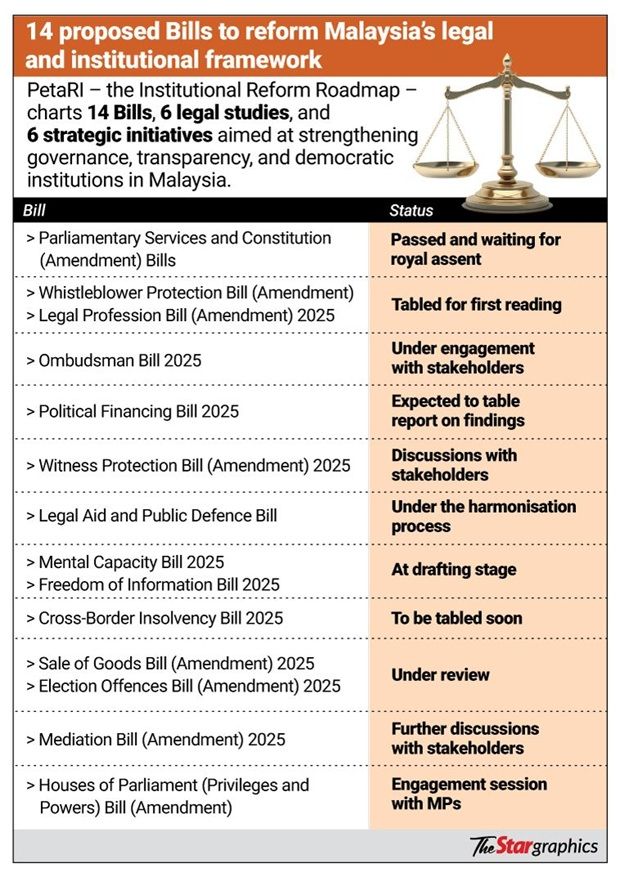
> A draft Political Financing Act has been introduced, aimed at curbing money politics and increasing transparency in campaign funding.
However, critics still argue progress is slow, and recent high-profile corruption court cases ending in DNAA (discharge not amounting to acquittal) have reignited concerns over the integrity and independence of the Judiciary.
It’s a bit oxymoronic: the public expects the PM not to interfere in the Judiciary but they also want him to tell the courts to keep unpopular politicians linked to corruption in jail.
Anwar himself has lost a civil suit brought against him by Yusoff Rawther, a former aide who alleged that the PKR leader sexually assaulted him at the party president’s Segambut, Kuala Lumpur, home in 2018.
The Federal Court also ruled recently that the Selangor fatwa does not apply to companies such as Sisters in Islam Forum, and that the state-level decree cannot direct federal agencies to block social media accounts.
In a step towards strengthening media freedom, the government introduced a new Media Council Act and journalism ethics code.
While Malaysia’s press freedom ranking dipped in 2024, it has since gone up by 19 places to 88th out of 180 in the World Press Freedom Index 2025 released by Reporters Without Borders last month.
For a journalist who was out of work in 1987 following Operasi Lalang, when then PM Tun Dr Mahathir Mohamed shut down The Star, Sin Chew Daily, and the now defunct Watan, much has improved; although by the same token, much still needs to be done.
Communications Minister Fahmi Fadzil has successfully set up the Malaysian Media Council which will allow self-regulation – a crucial step towards greater media freedom. The pro-tem committee chairman is Premesh Chandran, formerly of news portal Malaysiakini.
Still, advocacy groups urge greater legal protection for journalists and access to information, noting that institutional change requires more than symbolic measures.
What many journalists want is to see the abolition of the Printing Presses and Publications Act, which is clearly obsolete in the digital age.
Many of the reforms are already in the drafting stages, but what is holding back Anwar’s Malaysia Madani framework which centres on values such as sustainability, compassion, and innovation?
It serves as the philosophical foundation for the government’s policy direction but transforming ideas into action remains a complex task.
Entrenched bureaucracy and internal political compromises within the multi-party coalition government have slowed bold decision-making.
The PM may not say it but coalition fragility, especially with ideologically diverse partners such as Umno, Pakatan Harapan, and the Borneo-based parties, has forced Anwar to navigate reforms with caution.
While his reform agenda is commendable, he also faces several constraints such as global economic headwinds, including inflation, currency depreciation, and geopolitical instability, all of which limit the government’s fiscal room.
Public frustration over the cost of living, housing affordability, and stagnant wages persists, but governments all around the world are facing those issues.
Our inflation rate for May 2025 was 1.2%, which was the lowest in 51 months. However, the Consumer Price Index the same month increased by 1.2% year on year, especially food and beverages (2.1%), housing, utilities, gas, and other fuels (1%), and transport (0.7%). There will be further impacts after the expanded SST kicks in on Tuesday.
In early 2025, Malaysia’s unemployment rate remained stable at 3.1% with the number of employed persons increasing and the number of jobless people decreasing, which was a record high in April.
Let’s give credit where it is due. Malaysia secured RM89.8bil in approved investments in the first quarter of 2025, a 3.7% increase year on year with Johor recording the highest investment during the first quarter of 2025, with approved investments reaching RM30.1bil.
Malaysia also anticipates a 5% increase in investments for this year in line with gross domestic product growth.
Our ringgit has continued to remain steady against the US dollar and appreciated despite global uncertainties. Remember, just over a year and a half ago, many of us feared it would hit RM5 against the greenback.
We also know the first quarter has been sluggish for Malaysian corporations. Analysts have lowered their year-end targets citing US tariffs that continue to weigh on global trade flows.
No one is clear whether the ceasefire between Israel and Iran will hold, and any escalation there will impact the price of oil.
The disappointing first quarter (1Q2025) results align with Malaysia’s GDP growth of 4% year on year for the period, down from 4.8% in 4Q2024, mostly the result of external factors.
It is hard to explain complex economic scenarios, such as supply change from wars and US tariffs, to the average man in the street as they would only be concerned about the increasing cost of living in their daily lives.
The Anwar administration unfortunately, as with all governments, has to bear the brunt of the voters’ complaints.
Without doubt, the Reformasi legacy set a high bar.
Many Malaysians who supported Anwar for decades expect swift, sweeping change, but institutional reforms often require time, political will, and public consensus.
There is another factor to consider: realpolitik – the political necessity of compromise, especially in a unity government – means not all decisions will reflect progressive reform.
In some cases, they reflect political survival, to keep the government intact. Malaysia cannot afford to have another change of PM in the short-term.
Reformasi is a marathon, not a sprint, and miracles cannot be expected overnight after a 60-year-old entrenched political system dominated by the same political coalition of race-based component parties as well as a religion-based party.