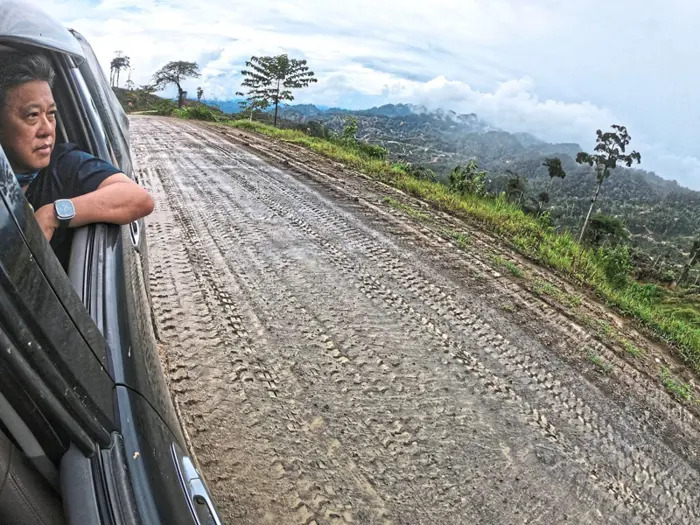
Power mode: The columnist on the way to Lusong Laku in Belaga, Sarawak, a few years ago. In Borneo 4WD vehicles are a vital form of transport. — Photos: GLENN GUAN/The Star
IT’S always difficult to explain to many Peninsular Malaysians why Sabah and Sarawak pay less for diesel while people on the peninsula face market-linked prices several times higher.
At first glance, the numbers provoke instinctive outrage.
Why should diesel in Sabah and Sarawak remain heavily subsidised at around RM2.15 per litre against RM6.72 per litre in the peninsula?
To many on this side of the country, it looks like preferential treatment. To those who understand the Bornean states, though, it is anything but.
It would not be wrong to suggest that many Peninsular Malaysians have even not visited the two states. After all, air fares aren’t cheap.
Even among those who have visited, most would never have set foot outside of Kota Kinabalu or Kuching.
They probably wouldn’t have gone to the interiors. They can’t be faulted for that; there are no reasons for them to do so.
However, the story of Sabah and Sarawak is not about inequality. It is a story about geography, necessity, and the realities of a country that is far more diverse than many urban Malaysians appreciate.
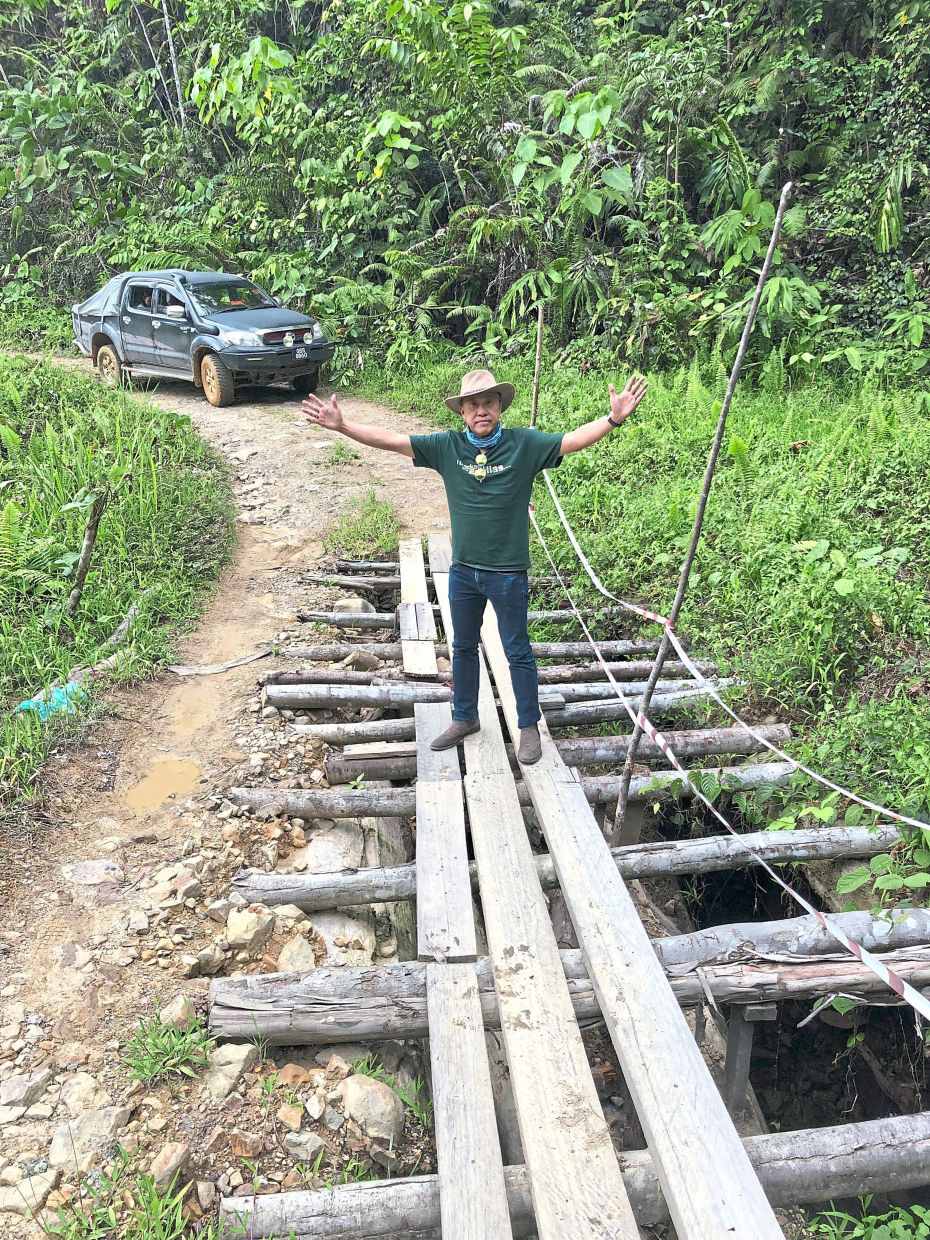
On a logging truck road in Belaga, where a regular car cannot go through.
We often grumble and whine about having to take a one-hour drive from Petaling Jaya to Cheras in Selangor. But in many areas in the two Bornean states, going from one place to another means travelling by car, boat, and then a long trek, or even taking a flight.
A 150km journey, the distance between Kuala Lumpur and Melaka, takes about 90 minutes by road in the peninsula. In Borneo, it could mean six hours on muddy and slippery roads.
On a sunny day, one is driving through a red dust storm; the moment it pours, that red earth turns into a dangerous slippery road.
Sabah-born The Star journalist Philip Golingai says: “Think about a villager from Tongod, right in the heart of Sabah, trying to get to Kota Kinabalu.
“It is a gruelling 280km trek that can easily take seven to nine hours depending on how much the earth has shifted that day.
“You don’t just drive to KK, you navigate. You need a 4WD just to tackle the ruts and the steep, muddy inclines of the interior.’’
In logging territories, especially in Sarawak, the drive is hazardous and it can mean an eight-hour journey or even an entire-day, with 4WD vehicles navigating rough and unpaved roads, or you’d have to take boats that connect riverine and coastal communities.
Trucks transport food, fuel, and essential goods across vast distances. As we know, such items are more expensive than in the peninsula.
The most fundamental misunderstanding lies here: in Sabah and Sarawak, diesel is not just another fuel option. It is the backbone of daily life.
The Federal Government has acknowledged that diesel is used “comprehensively” in these two states, which is why subsidy rationalisation for diesel has been confined to the peninsula.
It is not just transportation. In the peninsula, we just flick a switch on to power our electrical items.
In remote villages in Borneo, generators still supply the electricity. In many areas, there is simply no alternative. As policymakers have pointed out, “Nearly every boat and vehicle relies heavily on diesel’’ and certainly not on petrol.
Sabah and Sarawak are not just “bigger states”. They are geographically vast, sparsely populated, and infrastructurally uneven.
Diesel-powered boats are a vital, daily mode of transportation and economic activity in rural and interior Sarawak, particularly along rivers, for longhouse residents and farmers.
More than 5,000 villages are distributed across Sarawak, a state the size of the entire peninsula, and in Sabah, whose land mass also equals the size of the entire peninsula. Sabah is 90 times the size of Perlis.
The rural Keningau parliamentary seat in Sabah alone is larger than the states of Melaka, Penang, and Perlis combined.
What the people face there are not inconveniences. They are structural realities. As local leaders emphasise, diesel-powered vehicles – especially 4WDs – are “a necessity, not a luxury”.
Another factor often overlooked in the peninsula is logistics.
Much of the food, construction material, and consumer goods in Sabah and Sarawak are shipped from the peninsula.
Every step of that journey – by sea, road, or river – depends heavily on diesel.
If diesel prices were suddenly floated, transport costs would surge and prices of basic goods would rise astronomically, with rural communities being hit the hardest
The reality is that diesel subsidies help stabilise the cost of living in these regions, where incomes are generally lower and supply chains more fragile.
The call for uniform fuel pricing sounds fair in principle. In practice, it ignores unequal starting points.
Peninsular Malaysia benefits from dense highway networks, widespread access to petrol vehicles, more developed public transport systems, and better electricity grid coverage.
An MRT ride from Surian station in Petaling Jaya to Bukit Bintang, KL, costs just RM2 for a one-way ticket for this senior citizen. It would be unimaginable for our brethren across the South China Sea.
Sabah and Sarawak do not enjoy these advantages at the same scale. Attempting to impose identical fuel policies would not create equality – it would deepen inequality.
The government recognises this, noting that targeted subsidy mechanisms are harder to implement in the Bornean states due to the complexity of usage and access.
Urban Malaysians in Kuala Lumpur, Petaling Jaya, or Penang rarely encounter, nor understand, the disparities.
This is the rural reality which many of us never see. When a fisherman in Banggi, Sabah, or a villager in Ulu Baram, Sarawak, says diesel must remain affordable, it is not political rhetoric.
It is about survival – about getting to town, powering a home, or keeping food prices within reach.
Until infrastructure gaps narrow, until alternative energy sources are viable, and until rural connectivity improves, diesel in Sabah and Sarawak will remain more than just fuel.
The other reason for the heavy use of diesel is that 4WD vehicles and boats using the fuel run longer than petrol-powered ones, so it will always be regarded as an economical choice.
That basically explains why a “one Malaysia, one price” policy cannot work as we face the challenges of fuel price increases.
Rural Sabah and Sarawak are not the same as the highly urbanised peninsula.