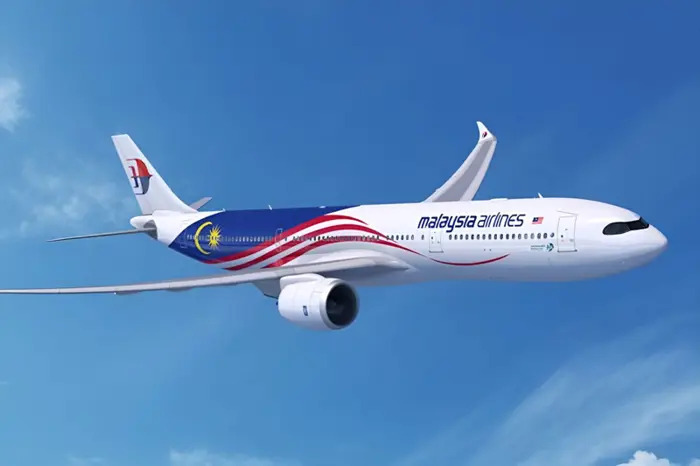
Flying high: While MAS has improved its financial performance, it needs to keep yields up and interfering in the amenities it offers – especially in the premium classes – is not the way to go.
HERE we go again. Every now and then we can expect PAS politicians to bring up the issue of alcohol. And like clockwork, they are back.
The question of whether Malaysia Airlines should continue serving alcohol on its flights has resurfaced once again.
It is understandable that there are cultural and religious sensitivities when it comes to the serving of alcohol.
The argument is that people choose to fly MAS not because of the availability of liquor but because of its services, safety record, and flight time punctuality.
It is a valid argument, but let’s not forget that MAS is not a budget airline. It is a full-service airline competing for premium travellers who pay a lot for first and business class seats.
We are up against Cathay Pacific, Emirates, Etihad Airways, Qatar Airways, Singapore Airlines, and Turkish Airlines, all of which many Malaysians and other nationalities often use for their connecting flights to key destinations.
Many premium travellers expect to be served a glass of champagne as a welcome drink as well as a good choice of wine to accompany their food. That is standard fare.
Not serving liquor would be a strategic misstep that could weaken the airlines’ international competitiveness and brand appeal.
Travellers expect a full-service luxury experience. Even how their seats are positioned and choice of flight entertainment are compared. These are regarded as expected standards and not optional frills for the well-heeled.
It is a flaw to compare MAS with Ariana Afghan Airlines, Iran Air, Iraqi Airways, Kuwait Airways, and Pakistan International Airlines. Seriously, with due respect, how many of us would want to fly on these airlines?
It would not be wrong to note that many who want MAS to emulate these carriers have never flown on those planes. Let’s not downgrade our national carrier by comparing them with these airlines.
We should be comparing MAS with Emirates, Etihad Airways, Royal Jordanian Airlines, Qatar Airways, and Turkish Airlines, which are world-class brand names. These carriers serve alcohol on long-haul flights, although they do not serve them on flights to Saudi Arabia.
Garuda Indonesia, too, serves wine and beer on its long-haul flights. As does Bahrain’s Gulf Air.
How is it that none of these PAS politicians are making comparisons with these airlines from Muslim countries or talking about the open sale of liquor in Dubai or Istanbul airports?
Malaysia does not need to pander to the demands of PAS politicians who are known for their obsession with liquor, dress codes, and concerts.
They wasted everyone’s time in Parliament asking if Prime Minister Datuk Seri Anwar Ibrahim was wearing Indonesian batik while he was tabling the 13th Malaysia Plan in August. Kuala Terengganu MP Datuk Ahmad Amzad Hashim subsequently apologised for his mistake.
In October, Hulu Terengganu MP Datuk Rosol Wahid questioned Datuk Seri Azalina Othman Said about her dressing – she was wearing a round-neck top with a blazer. It was ruled that the Minister in the Prime Minister’s Department (Law and Institutional Reform) had complied with the dress code.
Like I said, these politicians can’t seem to think very far beyond clothes and alcohol.
MAS has improved its financial performance and its management must be commended for a job well done. While the work is not over, it is on the right track with its post-pandemic recovery, shifting focus to premium segments and rebuilding networks.
It needs to keep yields up, add new routes, deliver new aircraft, manage costs, and avoid major disruptions.
Many of us do not realise that the premium and business class seats are the best paying ones for any airline. Even if the economy class is fully booked, it is these high-paying seats that really matter. The premium seats are a lifeline to profitability.
MAS has to maintain competitiveness in this segment.
Emirates even boasts of serving a generous amount of quality caviar in its first class section, which high-flyers expect – never mind if most of us Malaysians don’t fancy it, the rich customers expect it and do make comparisons.
Emirates and Singapore Airlines offer shower facilities on board for certain destinations, which MAS doesn’t have.
These are the battles that MAS has to face and fight.
The Malaysia Hospitality brand is our winner because the smiles and warmth of our crew are genuine and the best, especially for Malaysians returning home after a long time away. And the satay on board is top notch, no question about it.
The recruitment of more non-Muslim and international flight attendants can be a way out instead of stopping the serving of liquor on board.
But let’s leave this to MAS management, who know best about commercial competition and not these politicians.
To remove liquor service from MAS cabins would be perceived not as a nod to national values but as a cutback in quality.
It will be quickly used by rivals as a way to downgrade MAS in the premium experience for which passengers are paying top dollar. In an era where reputation and passenger satisfaction drive loyalty, MAS cannot afford to be seen as offering less for more.
Let the figures speak. Malaysia is the top tourist destination in Asean, having surpassed Thailand in 2025, and welcoming over 10.1 million international tourists in the first quarter, and 28.24 million from January to August, with the majority of visitors coming from Singapore, China, and Indonesia.
We have to give credit to Tourism Minister Datuk Seri Tiong King Sing for the job he has done, although the Sarawak politician himself was caught in a backlash over the serving of alcohol at a gala dinner connected to Tourism Malaysia’s Global Travel Meet.
It is easy for these PAS politicians to score political brownie points via race and religious issues, but how about speaking up against corruption and making proposals to stimulate the economy to help Malaysia for a change?