Author Archives: wcw

Bumpy ride ahead


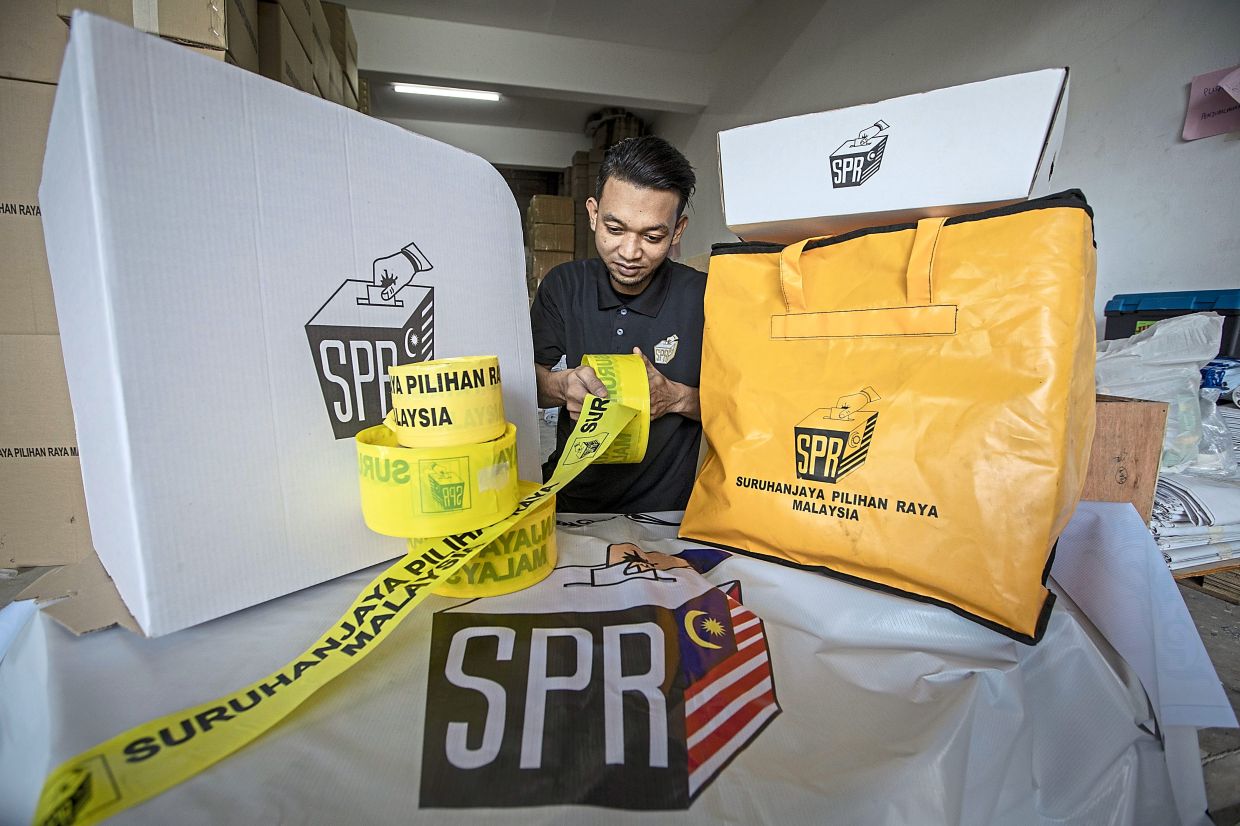
Long process: Election Commission staff preparing election materials to be delivered to various parliamentary constituencies in Sarawak for the 15th General Election. — ZULAZHAR SHEBLEE/The Star

IT’S going to be a protracted process. In fact, the 14-day campaign period is among the longest in the nation’s electoral history.

Predictably, many Malaysians were hoping for an 11-day runup, and the most popular date for polling was Nov 12. The date would also avoid coinciding with the wet season predicted to arrive by the middle of November.

So one wonders about the factors deliberated on by the Election Commission (EC) before deciding on Nov 19 as the polling day.

The longer the campaign stretches, the more it costs the candidates, workers, the EC officials and the media, too. The 15th General Election (GE15) will set taxpayers back RM1bil, and that doesn’t even include spending by the respective political parties and other stakeholders.

With most states opting to dissolve their state assemblies only when their terms end in July 2023, more expense will be incurred for another round of polling then.

The endless politicking in our country has become the bane of most Malaysians’ existence, so the last thing we want is another round of elections within a calendar year.

The same narratives will likely be rolled out, along with the same personalities leading the campaigns. So how many new sales pitches will we hear at state levels?

The Penang DAP got it right when it said that the sentiments of Penangites was to have the state polls concurrently, but unfortunately, the national level Pakatan Harapan leadership shot it down.

DAP national legal bureau chief Ramkarpal Singh correctly said Pakatan shouldn’t burden the people by holding separate parliamentary and state elections. His first-hand knowledge of word on the street is that the people aren’t keen on separate elections.

Describing GE15 as a forced election, he said there is nothing unprincipled in holding concurrent elections.

Unfortunately, national Pakatan leaders view it differently from Penang leaders.

There’s the impression that these state governments under Pakatan and PAS merely want to cling on to being in government.

In fact, the Opposition had previously pushed for an early election with the argument that the present Federal Government had no mandate from the people, given that it was a “backdoor government” born from the Sheraton Move.

But it has been reluctant to take on Barisan Nasional, and the Opposition – be it Pakatan or PAS – has used the monsoon to justify not having the general election this year.

Logically, with the conviction of Datuk Seri Najib Razak for corruption still fresh in the minds of the people, it would be easier for the Opposition to take advantage of the situation.

It should be claiming credit for the anti-corruption rhetoric against Najib and other Umno leaders.

The Opposition is convinced that the issue will continue to be effective.

If Najib and the 1MDB financial scandal were successfully “used” during GE14 campaigning in 2018, they will definitely factor in now as well, since he remains a major talking point. This time, the Opposition’s argument would be that if Barisan wins, Najib could be freed.

The former PM may be in prison, but he remains a dominant figure.

It’s still premature to predict GE15’s victor, but that hasn’t stopped chat groups, teh tarik sessions and family discussions from going into overdrive now that the dates for nomination and polling have been announced.

The campaign hasn’t started and until we know the line-up of the candidates, it will be hard to make an educated assessment.

The consensus this time is that it could be another round of inconclusive and fragmented results, with the various parties not securing enough numbers to form a government.

Then there are also those who have confidently predicted that Barisan will have an edge by highlighting the failures of the 22-month Pakatan government tenure, and that’s one reason for GE15 being called.

But hardcore DAP and PKR supporters claim there will be a repeat of GE14, where a 30% to 35% of Malay votes was enough to overthrow the Barisan government of 60 years. However, the parties and candidates will only really be tested in the coming weeks.

GE15 will be really rough. Those without the stomach and wits to bear the harrowing two weeks will falter.

No one should take anything – especially the voters – for granted.

Forget the old and jaded spiels, and don’t make assumptions either, especially when there will be 5.8 million new voters in this general election.

Vote for Malaysia


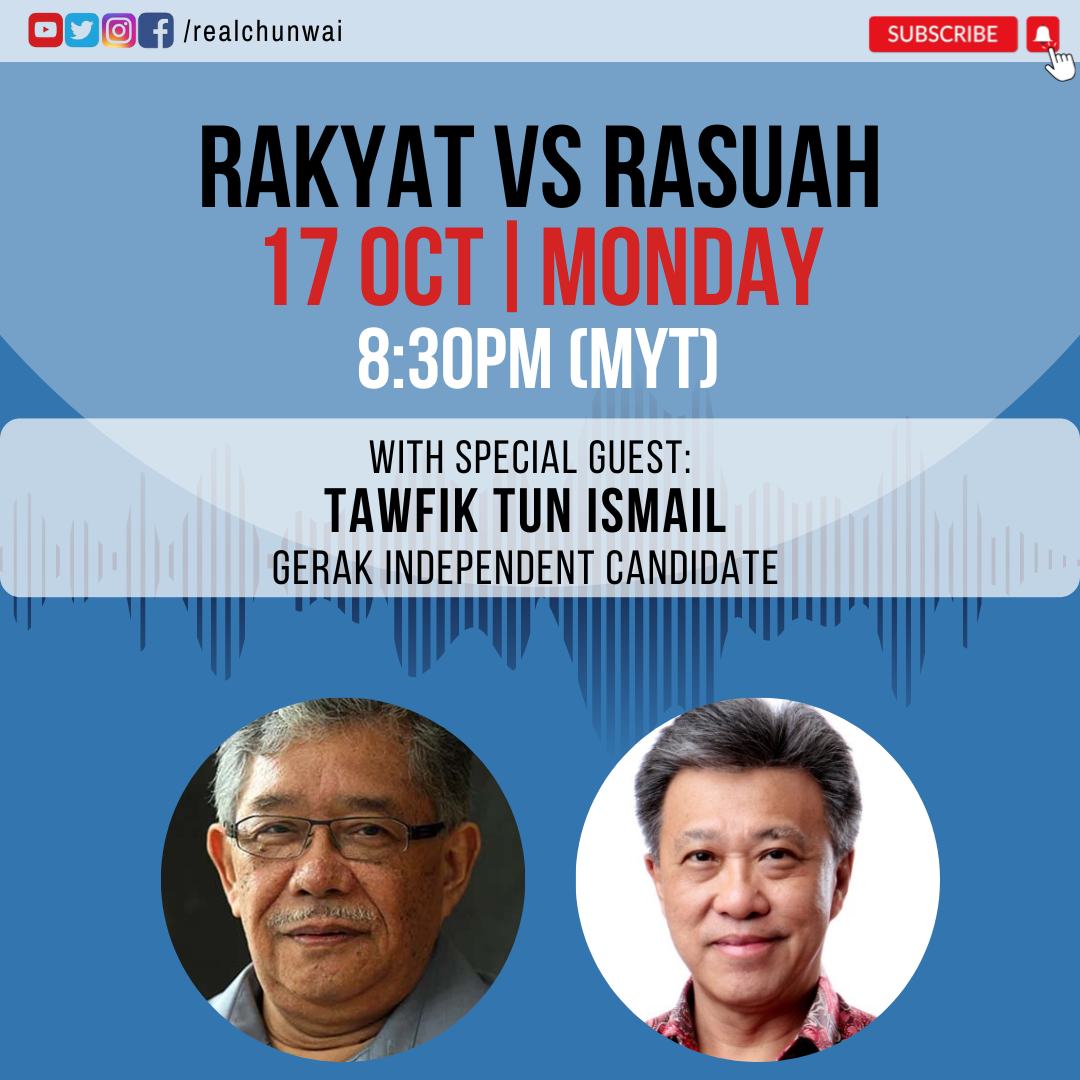
Rakyat vs Rasuah


Respect and tolerance

In a multiracial country like Malaysia, there is simply no room for religious prejudice.

POLITICS has become the mainstay of the media ahead of the general election, but there were two important announcements made by the Sultan of Selangor, towards which most politicians would conveniently cast a blind eye.

They avoid them for political expediency because it doesn’t suit their narrative or they don’t subscribe to it, which is damning either way.

Malaysia certainly needs level-headed and moderate politicians who dare question those who use religion to degrade the country with their personal interpretations of it.

The sentiment of many Malaysians is that this country is on a slippery slope as powerful groups and individuals propagate their religious agenda.

More and more of us, including the predominant Muslims, are feeling stifled as they impose values hardly suitable for multiracial Malaysia.

The recent controversy over the “non-halal” sign in a hotel’s lift, which it used to transport non-halal and perishable items, earned comprehensive coverage from the media.

Rightfully so, after lawyer and social activist Siti Kasim posted the sign and questioned its relevance. The picture had already gone viral on social media before that.

The hotel reportedly said that this is part of the requirement set by the authorities to ensure they receive their halal certification for the hotel’s back-of-house operations, such as the service lift.

Following the uproar, the Department of Islamic Development (Jakim) issued a statement about there not being a requirement for the “non-halal” sign to be displayed.

But Jakim said that hotels or premises can establish “any appropriate mechanism in accordance with the procedures set to maintain the integrity of Malaysia’s Halal Certification.”

While it implies no compulsion, it’s also a very general statement. Basically, no business entity wants to run afoul of religious authorities, especially Jakim or Jais, the Selangor Islamic Religious Department, or for that matter, similar religious bodies in other states.

These individual officers wield powerful authority by invoking religious decisions. The “non- halal” lift issue isn’t the first and won’t be the last. According to a news report, in 2013, a similar incident unravelled at another hotel in Petaling Jaya. A signboard beside three lifts stated “this elevator is only for transporting halal goods. For non-halal goods please use the staircase”.

Hoteliers have privately voiced their frustrations at this hindrance, which affects costing and even the layout of their establishments.

It means looking for separate lifts, entrances or stairways.

The impression given is that these alternate passages are required even though no signs are required.

In the end, many hoteliers opt to relinquish their non-halal restaurants as the most economical way out. For many, they see it as “coercion” of a different sort, reflecting the erosion of how non-Muslims can practise their way of life and secure their rightful place in this country, which is enshrined in the Federal Constitution.

But with the glass viewed half full, it can also mean halal-certified restaurants could attract a bigger pool of customers, especially Muslims.

Over the last few weeks, the Sultan of Selangor drove two crucial points home, which is clearly bold of him as head of Islam in the most important state.

He called on Malaysians to practise respect and tolerance to accommodate the differences of the country’s multi-ethnic and multi-religious societies.

Sultan Sharafuddin Idris Shah said differences in religion and race shouldn’t prevent Malaysians from living in harmony.

“If the multi-ethnic and multi-religious communities in Malaysia are ready to work together and respect each other’s religious beliefs, Insyallah, all good intentions and efforts in dignifying religion and strengthening close relationships in the community of various religions, cultures and this nation can be attainable,” he said during the Institute of Islamic Understanding Malaysia’s (Ikim) 30th anniversary celebration recently.

It’s important to note that leaders of other faiths were invited to this event, which is certainly commendable.

The Sultan said that from an Islamic standpoint, the existence of a multiracial society is the nature of human events, and our differences shouldn’t be used as an excuse to be cruel or hostile towards the followers of other religions. Earlier, the Ruler had said any muzakarah (religious discussion of an issue) decision must consider the rights and interests of non-Muslims, as legally guaranteed under the Federal Constitution.

He emphasised that Malaysia is a multiracial country and that the teachings of Islam showing mercy to all, including those of different faiths, must always be observed.

The Selangor Sultan, who is also the National Council of Islamic Religious Affairs (MKI) chairman, said the MKI muzakarah committee played a very important role and function in the Muslim community in Malaysia, and is a tower of legal reference at national and international levels.

He also said, again, that any statement regarding the decision made by the MKI muzakarah committee can only be made by its chairman.

“No other party, including the Minister in the Prime Minister’s Department (Religious Affairs) or the Islamic Development Department (Jakim), can make the statement.

“This is important to ensure that muzakarah decisions at the national level and fatwas at the state level are not influenced by elements of party politics,” said Sultan Sharafuddin.

He added that Jakim only acts as the secretariat of the MKI muzakarah committee, advising muftis to refrain from religious disputes in the public domain, especially if the issue had been resolved together in the muzakarah space.

The Sultan added that disputes between muftis and religious experts should not become a public spectacle, as it will only downgrade their authority.

So, many Malaysians can now only rely on our Rulers to bring some semblance of rationale and moderation.

In the past, the Sultan of Johor, for example, lambasted a Muslim-only launderette in his state while the Sultan of Selangor rapped the call to stop Muslims from attending the Japanese cultural festival of Bon Odori. We can clearly tell who our true leaders are.

So, forget our politicians. They’re either too timid or have too much self-interest to speak up against religious extremism or worse, they fuel the fire, especially PAS politicians.

Daulat Tuanku!

On tenterhooks

Like roulette, the nation is embroiled in a guessing game for the next general election.

THE 15th General Election, which must be held by Sept 16 next year, has become the most difficult one to predict. Currently, its date is just a stab in the dark.

The Dewan Rakyat’s term ends by July 15, 2023 and the election must be called within 60 days.

Malaysians are holding their breath for news on the dissolution of the Dewan Rakyat to pave the way for the polls.

The Prime Minister has said a few times that the general election is “near”, but unfortunately for us waiting on needles and pins, that time scale is relative because it could mean over the next few months.

The Budget was tabled two days ago, and many are anxious to see if Parliament will finally be dissolved in the coming days.

Unlike previous elections, where those in the political and media circles would usually have an inkling of when it would be, this time we’re clueless.

Datuk Seri Ismail Sabri Yaacob has kept his cards close to his chest. There have been no leaks or hints of any kind. The cat has stayed firmly in the bag.

He is fond of vague responses such as Insyaallah, an Arabic expression meaning “God willing.”

Basically, we aren’t any closer to knowing the election date with that sort of reply.

It’s no secret that his Umno party leaders, including party president Datuk Seri Dr Ahmad Zahid Hamidi, who has been pushing for the general election to be held this year, has found the PM’s expressions disconcerting and frustrating.

In Bahasa Malaysia, it’s called berdolak dalik (meaning wobble), as one senior Umno leader put it.

The past 48 hours have been unsettling for many. The only person who can call for Parliament’s dissolution is the Prime Minister, and that can only happen after he seeks the King’s consent.

He need not consult Cabinet members, although he has said this would be done.

No sitting PM has ever needed to do that, but then, he is in an unprecedented situation because in the past, the Prime Minister was also the president of Umno. Mail, as he’s fondly referred to, may be the PM, but he’s just one of the three Umno vice-presidents.

He is answerable to Ahmad Zahid, who is his party boss. The former DPM has now found himself in a much stronger position after being cleared of his bribery charges.

Last month, he was acquitted of 40 charges alleging he received bribes from a company to extend its foreign visa system contract, with the High Court ruling that the prosecution had failed to establish a prima facie case.

He was ruled out by many with Datuk Seri Najib Razak’s conviction following the Federal Court’s order to jail him for 12 years over charges involving the 1Malaysia Development Fund (1MDB).

The public had expected Ahmad Zahid to be next, but now that he has come out unscathed, he can retain his powers, and this is certainly a curve ball for Ismail.

Ahmad Zahid has the final say to decide on Umno’s election candidates since his signature is required as party president for the candidacy letters.

Those who had plotted his downfall may now find themselves out in the cold.

The present Cabinet is also odd, comprising Bersatu and PAS ministers who will be lining up against Barisan Nasional candidates, especially Umno.

To add to the irony, PAS is still warily straddling the divide between Umno and Bersatu. It can’t decide because its endgame is about being in the federal government.

Only its hardcore or naive supporters would subscribe to its “Muslim community” or Ummah narrative. It’s all about power, which is undoubtedly addictive.

Ismail’s party leaders, of course, find it unacceptable that the PM must share confidential information with his Cabinet members who also include Umno’s enemies.

The monsoon season and the havoc it wreaks has been widely used as the reason for not holding the general election.

Truth be told, the weather concern must certainly be taken seriously. After all, many of us, including those living on the west coast, have felt the wrath of the floods.

Floods in Malaysia in December 2021 caused economic losses ranging between RM5.3bil to RM6.5bil.

The same year, torrential downpours lashed the peninsula for three days, resulting in floods in eight states, and left 54 dead and two missing.

It is important to note that the King visited the National Flood Forecasting and Warning Centre on Thursday.

It is clear that our weathermen have openly warned that it is not the best time to hold the elections and we can be certain that the King would have posed that question to them.

For His Majesty, his concern is national interest in his decision, and not just be confined to political party interests.

The King, who will leave for London tonight on a working visit, will be away for a week.

The Opposition has been using this reason to stop the GE. This seems a far cry from the past when it was always eager for polls.

Umno has questioned the change of stand this time, saying the Opposition doesn’t want the elections because it’s in disarray and unconfident of doing well.

Umno says that if people were incensed with the government, the Opposition would surely seize the opportunity to topple the present government.

But this time, it is strongly against the call for Parliament’s dissolution, a sentiment echoed even in Penang, Selangor and Negri Sembilan, which are all under Pakatan Harapan.

Two general elections were held during the wet season – on Oct 20, 1990, and Nov 29, 1999.

Then, there’s the economic argument. If GE is only called next year, the country’s economy will improve, according to a minister.

But most economists believe the global economy will be volatile next year and many countries, including Malaysia, will not be spared.

So, 2023 will certainly be rough. The jury is still out on how the country’s economy will improve in the coming months because the impact of the depreciating ringgit will be felt from now till then.

But as the competing parties offer their narratives, a few things are certain.

Since the Dewan Rakyat will expire on July 15, 2023 – that’s not too far away, but the decision of the three states, and presumably Kelantan, Kedah and Terengganu under PAS, not to hold polls too, will mean taxpayers will have to pay for polls once more.

Many voters have unsurprisingly become jaded because of political fatigue. They find most politicians untrustworthy.

Some politicians have already talked of alliances and so-called “new political order,” which is just a euphemism for cobbling together a federal government even with rival parties if the majority is insufficient to form a government.

Many believe no party will have enough seats to form the next federal government.

We will hear these purportedly principled politicians running down their opponents during campaigning, but don’t be surprised if after the votes have been tallied, they justify to their supporters the need for everyone to work together.

It will always be for our interests – never theirs to become ministers and deputies.

But that’s mainly because there are enough Malaysians who will believe them in the coming months.

WhatsApp chat groups, supposedly to reminisce old times in school or plan makan sessions, will be hijacked by a few to become political talk shops.

Friends will sometimes become hostile because of their blind allegiance to their political idols.

But what’s most disturbing about this election date uncertainty is the inconvenience it has caused most Malaysians.

We can’t plan our work or holidays, what with the yearend approaching, because politicians can’t decide.

Just tell us if GE is next month or next year, so we can get on with our lives.

Black volcanic sand plains, moss-covered hills… is this Mars?


A view of Katla, the volcano in Iceland.

The setting of Katla in Iceland, one of the country’s most volatile volcanoes, resembles Mars.

This is a place where volcanic eruptions have occurred against similar breathless landscapes.

To put it simply, I’ve never experienced or seen such terrain. After all, I’m from Malaysia, where we’ve yet to experience natural disasters of such magnitude because we live just off the Ring of Fire.

So, it’s not surprising that Katla has often been used as a movie location, featured in the likes of blockbusters such as Star Wars, Game Of Thrones and Transformers.

Three hours after driving from Reykjavik, the capital of Iceland, we finally hit the desolate rural roads.

The closest civilisation is Vik, a remote seafront village where Katla is located.

Most roads outside the capital are narrow. With unscheduled stops, it turned out to be a gruelling five hours in the end.

Finally, our vehicle slipped off the main road and the bumpy ride commenced. Now, here’s where the fun really began.

We had to first navigate through the rugged terrain towards Katla on a 4×4 super Jeep.


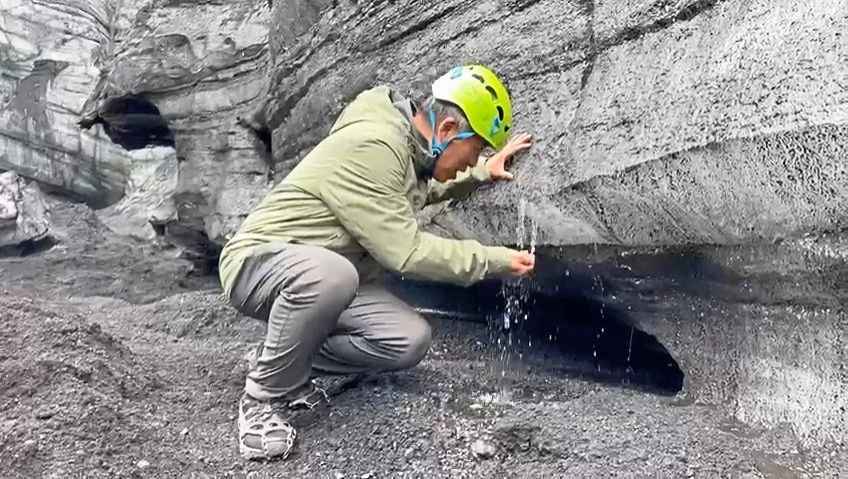
Drinking pure water straight from the rocks of Katla, a volcano in Iceland.

Barely 15 minutes in, I saw insanely jaw-dropping sights of black volcanic sand plains juxtaposed against moss-covered green hills.

These were simply stunning formations that I’d never seen before.

On my second visit to Iceland in the recent summer, I couldn’t resist the temptation of walking on both a glacier and a volcano.

Katla is famous for its iconic blue ice cave during winter and in the summer, it’s essentially just black sand, but I still didn’t want to forego this adventure.

After all, this is home to the Katla volcano and the Myrdalsjokull glacier, the southernmost glacier in Iceland, covering nearly 600sq km, with its highest peak almost 1,500m high.

So, what’s needed for this ice-capade? For starters, there’s plenty of walking. My wife and I had decided, years back, that with our knees still strong, we would take on all these tough trips first.

There’s a certain amount of hiking, too, and in some slippery parts, I opted to go on my knees and buttocks even!

There were carved steps as well as ropes for visitors to hold on to when entering the cave, but I was still apprehensive and nervous.

The thing with glaciers is that the landscape keeps changing. It’s perhaps easier to walk through the terrain in summer. With snow-covered grounds during winter, it can get slippery and more difficult.

Warm and waterproof clothing is a must in Iceland, unless it’s summer, of course. A pair of sturdy shoes will take you the distance, too.


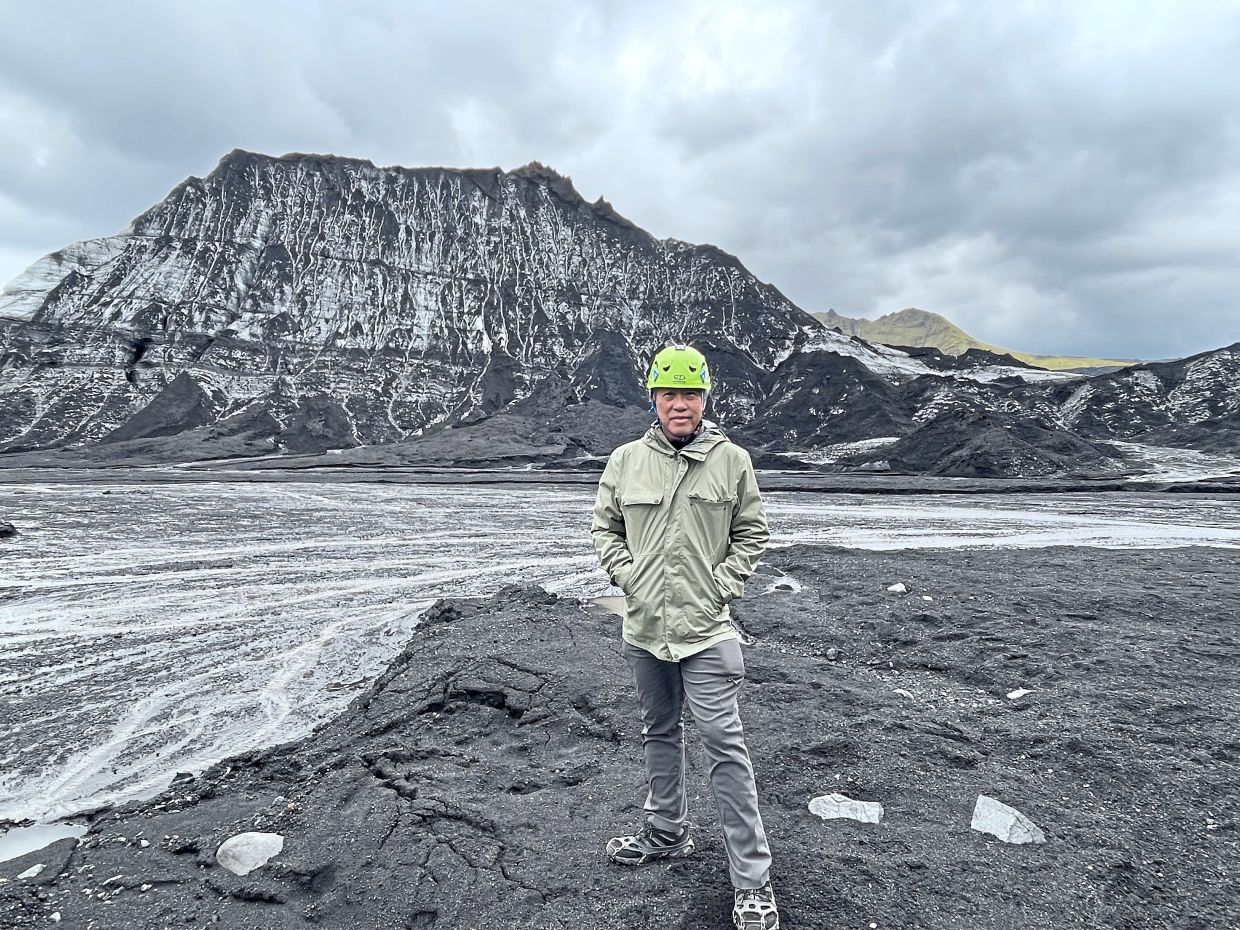
The writer at Katla, a place he needs to return to soon to experience the ‘blue ice’. — Photos: FLORENCE TEH

You’ll need to join a tour, where you’ll be provided with safety helmets, gloves, head lamps and crampons (a metal plate with spikes fixed to a boot for walking on ice).

The glaciers and natural glacial ice caves can only be visited with a trained and experienced guide.

I would still want to see the blue ice of Katla, which has made these caves iconic. Known as glacier blue, this is the result of air being squeezed from the frozen ice and snow. The scientific explanation is, the ice absorbs every other colour except blue.

As the journey ended, the guide switched on the radio, and David Bowie’s late 1960s nugget Space Oddity, came on, and I instantly knew it was a sign that I had to return.

Yes, the mission has not been completed. And like Major Tom seeking redemption, I must return in the winter. I must see the blue ice.

If I can’t make it to Mars, the mysterious and stunning landscapes at Katla are close enough for me.

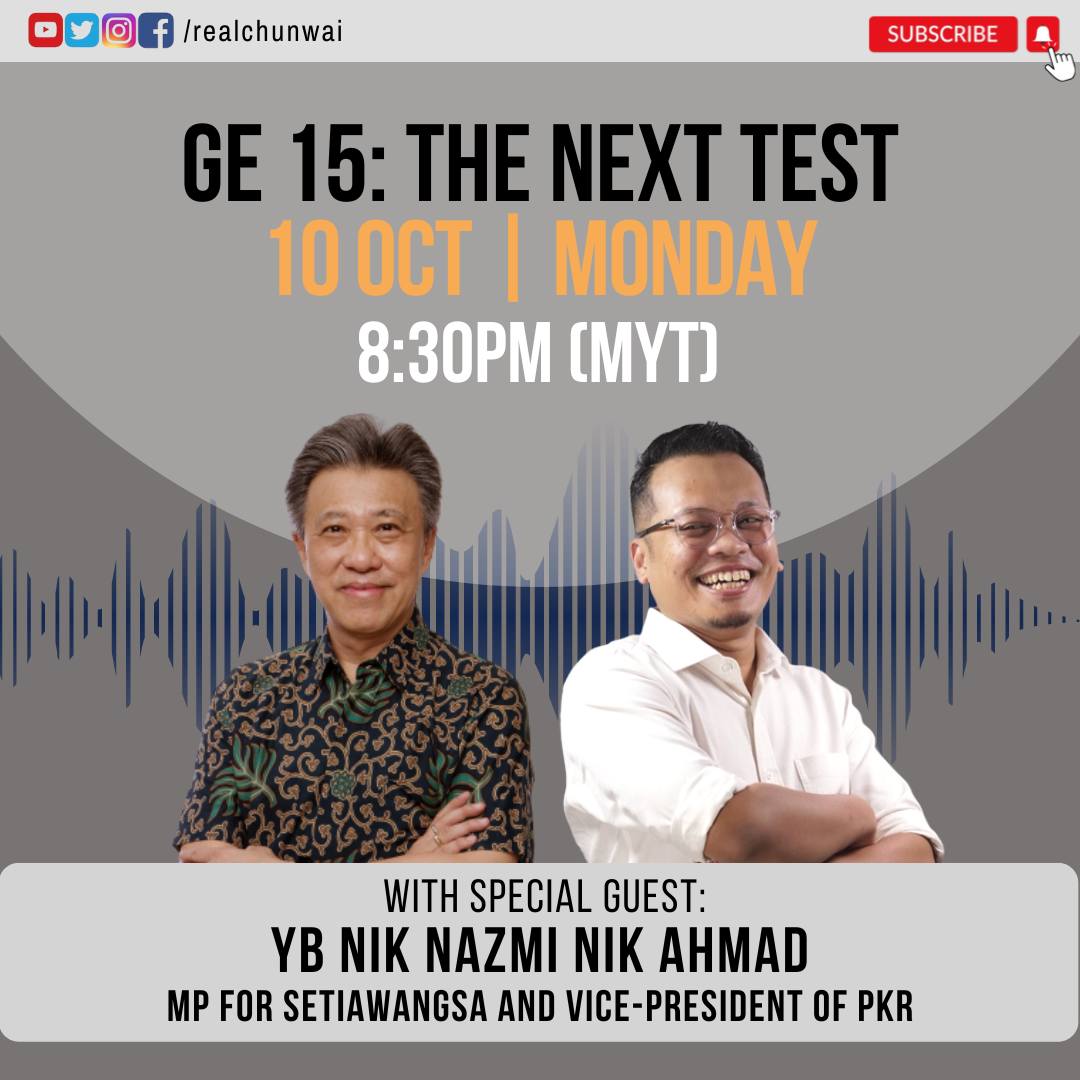
GE15 – The Next Test with Nik Nazmi


When fake goes mainstream


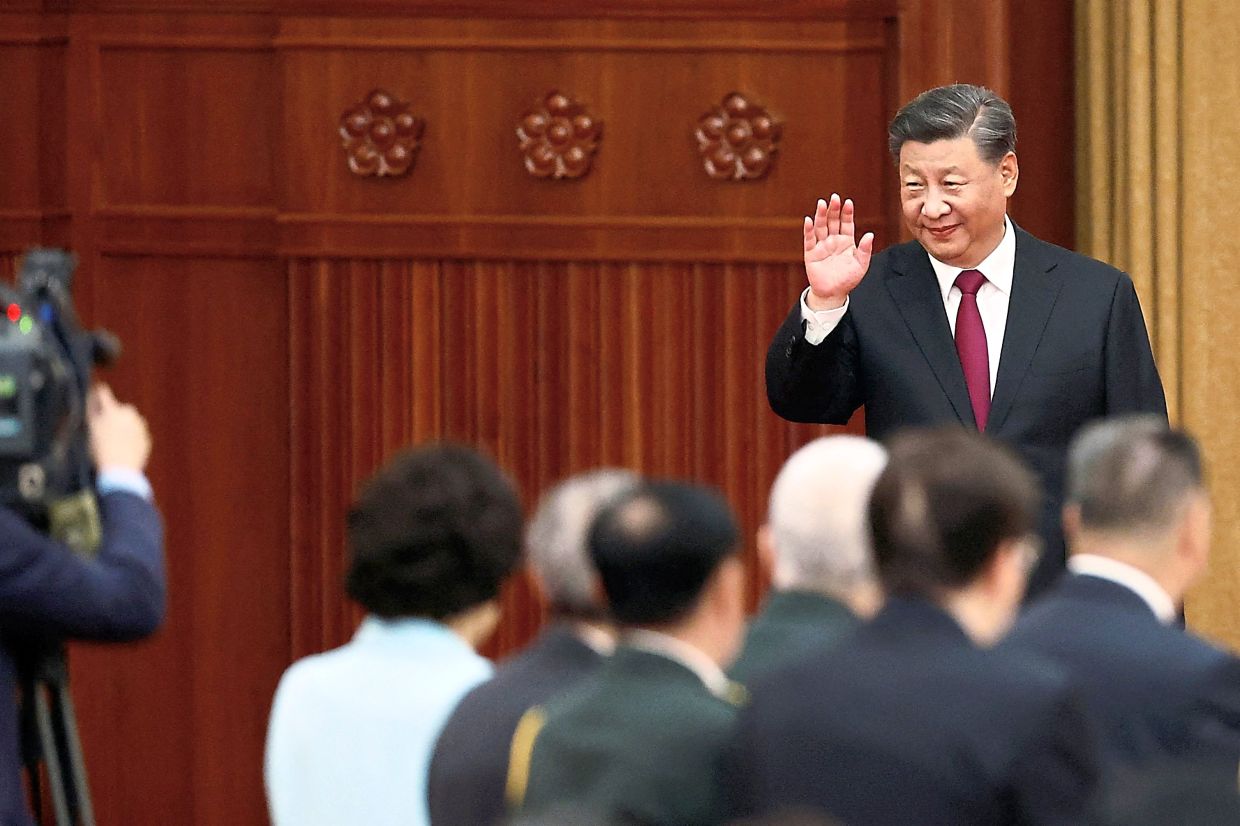
Free and footloose: Xi arriving at the Great Hall of the People on the eve of the Chinese National Day in Beijing, a few days after the many rumours and even some news reports of him being put under house arrest. – Reuters

MOST of us have become accustomed to reading fake news, especially on social media. These often have detrimental consequences when users accept such misinformation without verifying the content or lack the means to check if they are true.

Rumours have thrived on social media platforms for long, but last week, mainstream media resorted to the same despicable act when it reported the purported house arrest of Chinese president Xi Jinping.

It wasn’t news. It was a tale.

It was perhaps a case of wishful thinking by some anti-China media outlets, notably from Taiwan and India.

Western media like the CNN and BBC, which have been antagonistic towards China, were responsible enough to ignore this unverified claim.

Mainstream traditional media, especially old-fashioned newspapers, have always been the main source for verifying rumours that spread on social media. Journalists there are trained and have honed their skills to check and re-check the facts.

In this case, though, some mainstream media unashamedly joined in the frenzy to perpetuate the wild talk.

The rumour claimed that Xi had been arrested by the military, removed as the head of China’s People’s Liberation Army, and added that flights in Beijing airport had been cancelled and tanks were rolling on the streets.

A retired Malaysian journalist first alerted me about the rumour and asked me to check with my China contacts in the media and diplomatic circles.

I asked where he had read this, and he said: “Epoch Times.” That was an immediate red flag. The Epoch Times is a right-wing, anti-China media organisation based in Washington DC and funded by Falun Gong.

Falun Gong is a hugely followed religious movement but is banned by the Malaysian government. It’s also known for staging protests outside Chinese embassies worldwide.

Epoch Times’ matching opponent must be China’s Global Times, with its nationalistic pro-Communist views, using strong rhetorical language in its coverage.

According to veteran Hong Kong-based journalist Nury Vittachi, the red faces in the media included those in the Australian edition of The Spectator, a British magazine.

“Where there’s smoke there’s fire, as they say, and there is a column of smoke – the likes of which haven’t been seen since July 64 AD – pouring out of Beijing,” it reported.

July 64 AD was when Rome burned under Nero, and the magazine certainly would have hoped that Beijing was razed to the ground, too.

Vittachi wrote that “in India, it reached the list of top three biggest stories despite not containing a word of truth,” name checking Hindustan Times, Zee News, India Today, Daily News and Analysis. And this would surely include NDTV, a New-Delhi based television station.

Vittachi added “many versions included the information that there was no evidence for the story but omitted the fact that under the most basic rules of journalism, stories with zero evidence would normally not be considered printable.”

He traced the source of the tittle-tattle to a Falun Gong activist, Jennifer Zeng, and anti-China campaigners based in the US. There were even Twitter video postings depicting purported “big explosions”.

Strangely, no one bothered to check with Chinese state-owned broadcaster CCTV, as evidenced by a newsclip and video showing Xi Jinping at an exhibition on the milestones of the Communist Party of China at the Beijing Exhibition Hall.

He was at the venue on Sept 27 and the story in English was uploaded at 11.50pm by Xinhua news agency while CCTV put the news online, in Chinese, at about 7pm.

The frenzy about the alleged house arrest had been going on since Sept 24, yet most of these media outlets ignored his appearance at the exhibition, presumably to save their blushes. They pretended it didn’t happen.

The West, especially the US and UK, have long had a skew in their coverage of China, beginning with the Covid-19 virus, which was blamed on the Wuhan wet market, yet remains unproven. Some even said the virus was created in Chinese labs. That was followed by the “pro-democracy” protests in HK, which they claimed was “peaceful” despite the blatant attacks.

India, meanwhile, has a long acrimonious history with China, culminating in border clashes even. Although it prides itself as the world’s largest democracy, along with the US, the truth is it hasn’t competed with the economic progress and wealth of China.

Both sides are happy to run China down whenever opportunity knocks, and what better story than talk of Xi Jinping being arrested, never mind its veracity.

As the saying goes among some editors – never let the facts spoil the story.Even coverage of the Ukraine War by international news agencies has been lopsided. Unfortunately, though, the rest of the world’s media has no choice but to subscribe to these news agencies because they simply lack the means to send correspondents to war-torn areas.

So, what do most of us do? We refer to pro-Moscow news agency, Russia Today, but cautiously and objectively.

Luckily in Malaysia, we have access to RT, unlike in many European nations which only preach freedom of speech and the right to information.

A New Quest


Working tirelessly to benefit all Malaysians


“To remain effective and relevant, we must evolve and stay ahead of the nation’s human capital development trends,” said Datuk Shahul Hameed Dawood

HUMAN Resources Development Corporation (HRD Corp) Chief Executive Datuk Shahul Hameed Dawood talks about the work that it has successfully carried out and why the organisation wants it to benefit all Malaysians, including those from Sabah and Sarawak, writes WONG CHUN WAI.

WONG: You have introduced a lot of changes in HRD Corp since you took up the role of chief executive. Can you tell us more about HRD Corp’s evolution in the last two years?

Shahul: When I first came on board, I had two key priorities; expand our core mandate collecting the levy from employees and disbursing training grants for their employees’ development and taking the organisation on a digital transformation journey.

I am happy to note that we have managed to do both, thanks to the vision of the Minister of Human Resources Datuk Seri M Saravanan and the support of our chairman, Datuk Seri Jamil Salleh, together with HRD Corp’s board of directors.

The expansion of the PSMB Act 2001 took effect on March 1, 2021, covering 18 sectors and 238 subsectors. As a result, today we have over 75,000 registered employers with 4.1 million employees eligible for training and upskilling.

As for the latter, we formed a Digitalisation Department that was responsible for assessing our technology adoption as an organisation and providing comprehensive recommendations on how to proceed.

This led to the deployment of three new tech initiatives: our Go-to Cloud, Smart Workplace and Channel Expansion.

These laid the foundation for the introduction of our MyHRDCORP Super App. We are the first public sector organisation to have a super app in Malaysia.

Can you please share more about your digital transformation and the Super App?

Our Go-to-Cloud strategy enables us to utilise a hybrid multi-cloud ecosystem that improves the organisation’s speed, efficiency and agility. This has helped us to cater to multiple concurrent requests while protecting data security.

Through the Smart Workplace software and solutions, our employees are given the flexibility to complete their tasks and handle customer requests efficiently, regardless of whether they are working at home or in the office.

Then, there is Channel Expansion, the effort that created more channels and platforms for internal employees to communicate with each other and external stakeholders to reach out to our representatives – the most notable feature being our Ask Bella AI chatbot.

MyHRDCORP is a super app that is designed to provide the latest information on HRD Corp while bringing all our products and services under one easy-to-use platform.

It is aimed at supporting our key stakeholders; registered employers, trainers, training providers and Malaysian individuals, to utilise our services in meeting their personal, professional and business needs.

Since the app went live in August, we have seen about 8,500 downloads and received positive feedback on its use by stakeholders.
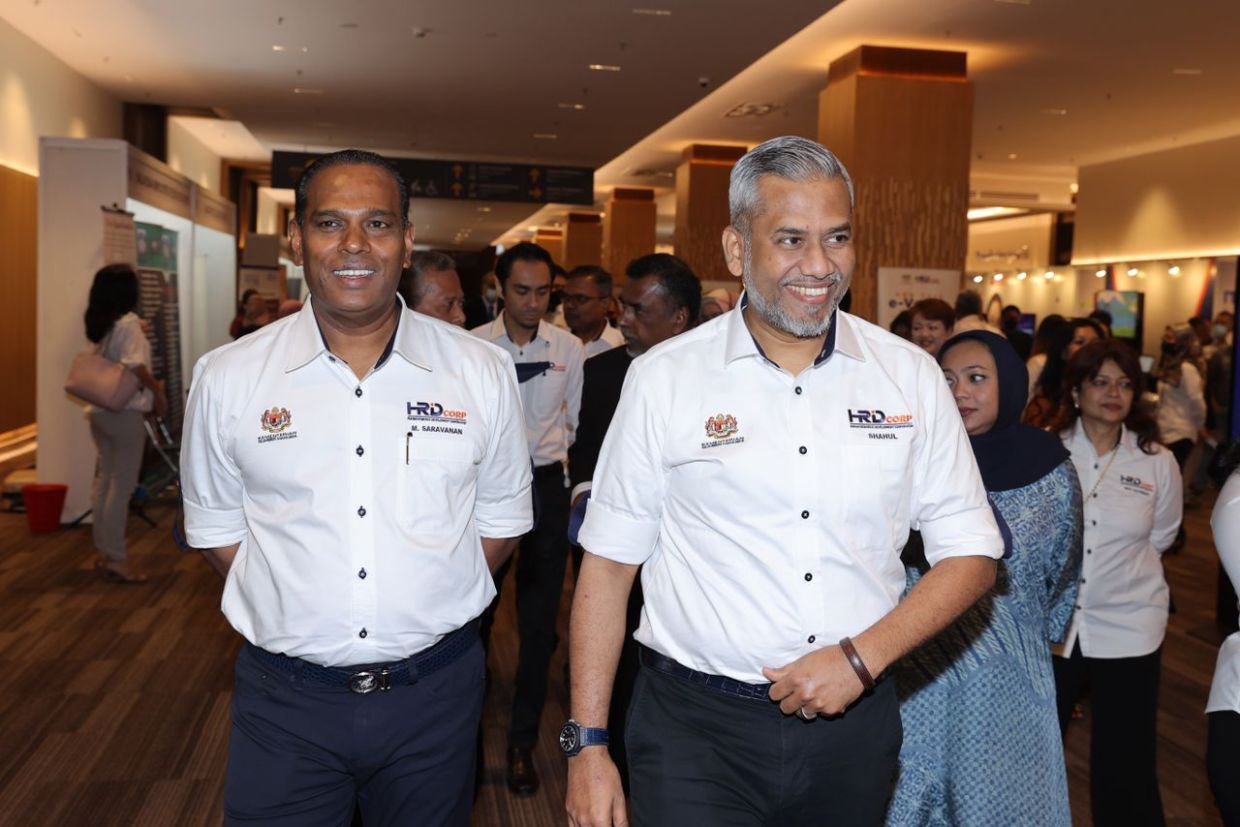

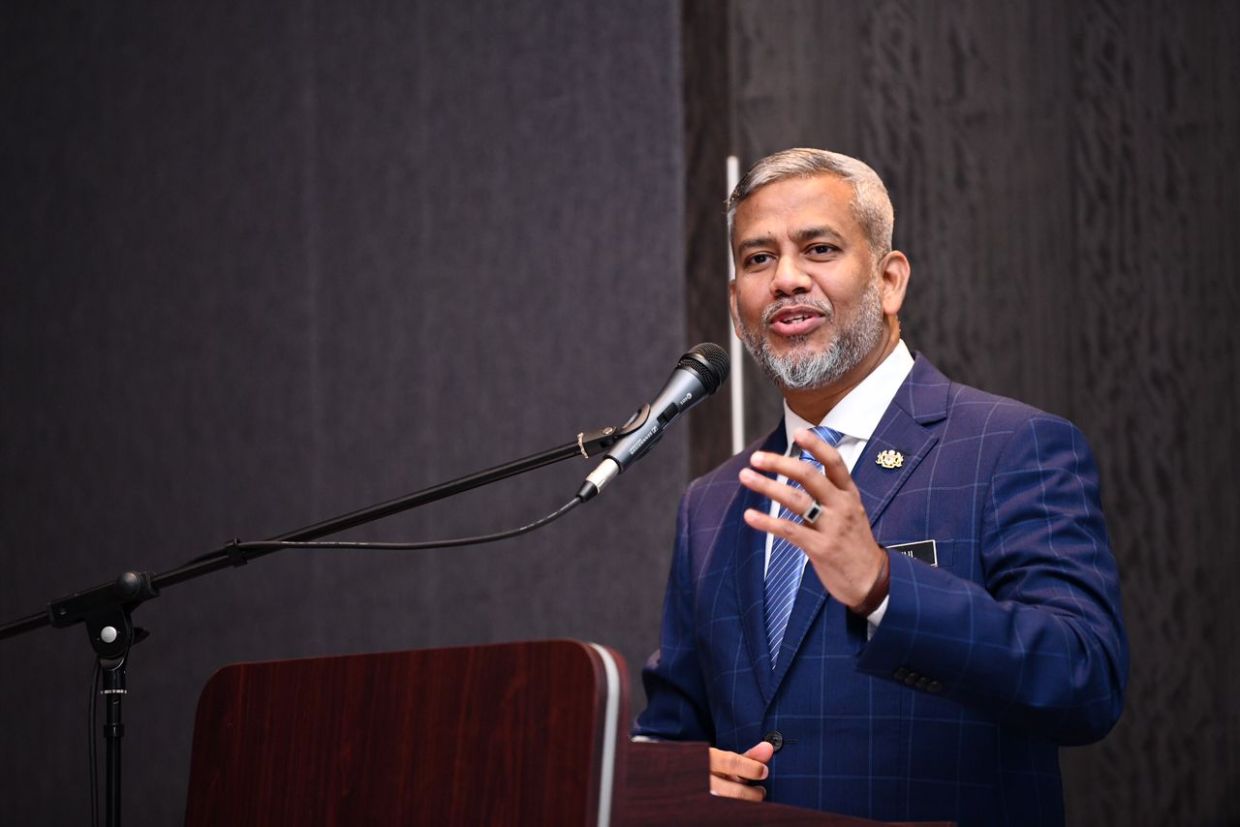
Datuk Shahul Hameed Dawood (right) together with Human Resources Minister Datuk Seri M Saravanan (left).

Who can benefit from the Super App?

Employers can check their levy balance as well as grants and claims status. They can also advertise vacancies while individuals can search and apply for jobs and training programmes.

They can also build a skills dashboard on the platform.

Trainers and Training Providers can submit proposals and check the status online, track their training attendance and effectiveness as well as market their courses to more people on the platform.

Beyond these two major efforts, HRD Corp has also introduced many new programmes and initiatives under your leadership. Can you tell us more about these programmes?

We introduced Penjana HRDF in June 2020 at the height of the pandemic. The programme provided reskilling programmes to graduates and retrenched workers, followed by income-generating opportunities (through entrepreneurship and freelancing) for B40 communities.

Then, there is Upskill Malaysia, an integrated centralised platform that provides information on upskilling, reskilling, cross-skilling and multi-skilling programmes offered and funded by government ministries and agencies.

HPC is a one-stop virtual portal that provides employment and income-generating opportunities to Malaysians through job matching and placement, training and development, as well as career counselling and coaching.

e-LATiH, on the other hand, has become Malaysia’s premier e-learning platform that offers all Malaysians unlimited access to free high-quality and internationally recognised skills development courses.

We also want to upgrade our level of training, here, via HRD Corp Microcredential, which is the first industry-based micro-credential in Malaysia that holds the largest repository of microcredential-based courses with more than 25,000 courses acknowledged through the HRD Corp Microcredential Framework.

You took the organisation through a major rebranding exercise last year, going from HRDF to HRD Corp. What would you say is the biggest change in the organisation since, and what is your proudest achievement at HRD Corp?

HRD Corp is a 29-year-old organisation. To remain effective and relevant, we must evolve and stay ahead of the nation’s human capital development trends.

When I was appointed, our Minister of Human Resources Datuk Seri M Saravanan shared with me his vision of wanting to HRDF to become responsible for every aspect of talent development in Malaysia.

So, this became my priority together with the senior leadership team and all employees of the organisation.

Previously, we were only known as an agency that collects a levy from employers and funds their training programmes.

Today, we have expanded our role through the following – placement, employment and income-generation initiatives for all Malaysians through most of our new strategic initiatives.

For example, lets look at Place & Train – previously we only funded training programmes for employees of registered employers or just general training programmes for unemployed individuals or graduates.

Now, we also offer placement for individuals followed by the training required to perform the job they are placed in.

We believe this is important, as there is no point in individuals developing their skills if they can’t get jobs.

Due to all of these new programmes and initiatives, we are now recognised as the primary custodian of all Malaysia’s upskilling, training and human capital development efforts by the prime minister himself.

So, the rebranding is more than just a name change.

It’s a clear validation of our expanded role and responsibilities in strengthening Malaysia’s human capital landscape.

Can you tell us about SCOPE, the Second Chances and Opportunities for People to Excel – for former prisoners – you mentioned that HRD Corp has trained and provided jobs for 1,000 former prisoners in 2021 and aims to train and provide jobs for 5,000 more in 2022.

This is a programme that has attracted a lot of enthusiasm and attention. I always believe that everyone must be given a chance. Sometimes, even a second chance.

There is a lot of interest from employers in the construction, restaurant and tourism sectors.

The Star reported that the famous Hameediyah nasi kandar restaurant in Penang provided jobs to these former prisoners as waiters. This was indeed very uplifting to these people.

Datuk, it is interesting that HRD Corp has also initiated programmes for senior citizens, housewives, etc. Tell us a bit more about that.

I am glad that you asked me this. We have SEBA – Seniors Back in Action for retirees and old people, HEARTS – Housewives Reactivate Talent Scheme for single mothers and B40 women, and OTEP – OKU Talent Enhancement Programme for persons with disabilities.

Which is why HRD Corp wants to emphasise that no one will be left out. Many senior citizens, housewives and OKU are productive, and they can still contribute. They, too, deserve to be upskilled and provided with employment and income-generation opportunities.

How has the response been for all the new programmes and initiatives that you have launched?

We have been receiving very positive response for all our new programmes and initiatives from our key stakeholders such as employers, trainers and training providers.

At the same time, the response from employer associations, industry players and the wider Malaysian public have also been encouraging.

This is because we have pivoted to helping more Malaysians build their capabilities while identifying and capitalising on new income-generating opportunities.

As the custodian of Malaysia’s human capital development efforts, it is important that we stay ahead of the curve and introduce efforts and programmes that will empower businesses and talents for the future of work. All of our efforts in the past two years have been focused on achieving this goal.

Datuk, I want to go back to the micro-credential issue. There were a lot of comments in the media and by the public about the HRD Corp Microcredential initiative that was launched recently. What is your take on this?

Before we go into the HRD Corp Microcredential initiative, it is important that people first understand what micro-credential is.

Micro-credential is proof of learning outcomes acquired by a learner after a short learning experience, as measured by their knowledge, skills and attitudes.

Previously in Malaysia, micro-credentials were only offered through the academic pathway.

The HRD Corp Microcredential Initiative is the first industry-based micro-credential in Malaysia.

It was developed to offer quality assured training that intensively measures and monitors the effectiveness of the training and its key learning outcomes.

There is also a strong need for this for our registered employers and their employees. This is because our research indicates that in 2019, out of 1,028,793 training places approved only 4.4% (44,932) were for certification courses.

HRD Corp spent close to RM94mil funding these courses. And within that, some were just certificates of attendance or certification from non-recognised bodies that offer little to no value to employers and employees.

Furthermore, between 2019 and 2021, about 18% of the complaints we received from employers were about the low quality of training delivery.

Therefore, the initiative was developed to address these issues and meet the current needs and demands of our registered employers and their employees.

The HRD Corp Microcredential framework follows a comprehensive 12-step verification, monitoring and certification/badging process.

So, both HRD Corp and the employers have more control over the quality of the training programmes and can determine whether they are effective in helping employees gain new skills relevant to their job roles and functions.

However, we took note of the feedback from industries, and we formed a Technical Working Committee comprising 22 employer associations that have discussed and deliberated the fee structure and implementation mechanisms for the HRD Corp Microcredential initiative.

More details will be announced soon.

Many people are saying that the micro-credential fee is unnecessary and could burden employers and training providers. What is your comment?

This is inaccurate. The micro-credential fee will be embedded within the total course fee and follows the same allowable cost matrix for all HRD-funded levy programmes with its own ceiling limit for each scheme.

This is similar to the approach we use for existing certification programmes that are funded by the HRD levy, where the certification cost is embedded within the total course fee.

Therefore, employers are not paying extra or using up their levy faster to train fewer people.

However, we are putting the Microcredential initiative on hold while we deliberate on the details further with the Technical Working Committee.

People are also saying that with all these new initiatives and programmes that HRD Corp is rolling out, it is going beyond its role as an industry regulator to become a for-profit organisation. What is your comment?

HRD Corp is a statutory authority responsible for Malaysia’s human capital development. As a 29-year-old organisation, how we perform this responsibility has evolved and changed with the times.

But our core DNA remains the same; to ensure that Malaysian talent and workforce gain the knowledge and skills development opportunities they need and for Malaysian businesses and industry to get a highly trained, knowledgeable and capable workforce that can support organisational and national economic growth.

We are also strictly governed by the Pembangunan Sumber Manusia Berhad Act 2001, which outlines our powers and functions as an organisation. This includes determining the terms and conditions for the disbursement of the levy for training programmes, as well as establishing guidelines for processing applications for the fund.

Everything we roll out has been in accordance with the power and authority prescribed to us via the Act.

I understand that HRD Corp will be organising its National Human Capital Conference and Exhibition 2022 in November this year. Can you tell us more about it?

As the primary driver of Malaysia’s human capital development efforts, we understand the challenges that businesses and workforce are facing in this post-pandemic business recovery and acceleration era.

The conference is our way of elevating the conversation and helping talent and businesses address challenges and embrace new opportunities in the future of work.

With the theme HR 5.0 Embracing the Next Evolution in Human Resource Development, the conference will feature five tracks over two days such as The Future of Work, Innovating at the Workplace, Generational Workforce Change, Disrupting the Current Model of Learning and Development and The Role of Workplace Leadership

What can we expect from HRD Corp in the next year?

We will continue to amplify our digitalisation initiatives with new programmes and initiatives.

We will also be strengthening our HRD Corp micro-credential rollout and introducing taxonomy programmes.

What about HRD Corp’s role in Sabah and Sarawak?

I have been making trips to these two states. Mind you, Sarawak is a big state. We want to have closer interactions with registered employers, trainers and training providers through various initiatives.

We had the HRD Corp Open Day Series in Kota Kinabalu in June and Kuching in July and the Chief Executive Engagement Series in Miri in September and Tawau/Sandakan in October.

The aim is to share more updates on our products and services, and also listen to them and address all their problems and issues in accessing our services on the spot.