Author Archives: wcw

Farewell, my dear friend Ewe Jin

Shining example: Ewe Jin taught his readers to always be grateful and enjoy the simple things in life.

He was one of the kindest, most generous and positive people I have had the privilege of knowing.

HIS Sunday Starters column was on the “Best Read” list every weekend. He rarely wrote about politics, personalities, celebrities or heavy analyses. He focused simply on ordinary people.

That struck a chord among many readers of this newspaper and that was what Soo Ewe Jin wanted – a column for ordinary people, about ordinary people.

In his own words: “Amidst the busyness of life, we need to pause and look at things with our heart and not just our eyes.”

At 5.20pm on Thursday, our Ewe Jin passed away at KPJ Damansara Specialist Hospital with family members and close friends by his side.

He had battled cancer for 17 years and the journey since its relapse two years ago had been a difficult one.

Like anyone else afflicted by the disease, chemotherapy affected him greatly. He had difficulty opening one of his eyes and had to use a hearing aid. In fact, he was even going blind towards the end, but his mind was as sharp as ever.

Ewe Jin was first diagnosed with nose cancer in 1999 and seven years later, he had a lump in his lymph nodes. Another relapse came in March 2011.

The entire time he was seeking treatment, he still continued working. He was a leader and writer, contributing to The Star Says, always offering sound suggestions and well-researched points of discussion. He knew he was representing the voice of The Star, after all.

Besides writing his weekly Sunday Starters, Ewe Jin edited my column On The Beat – removing the blemishes, sharpening it and often, correcting my grammatical errors. He would also rein me in if I went too far, reminding me to be rational instead.

Ewe Jin was very proud of the multi-racial make-up of his neighbourhood in Kelana Jaya, which he often wrote about. The Malay, Indian and Chinese neighbours he spoke of were real people, not fictional characters.

Like me, he deeply believed in moderation and edited the essays on the subject in time for this year’s National Day, labouring away with just one good eye.

He had been with The Star since 2000, serving in various positions – as editor for The Star Online, Sunday Star, Special Projects and as Executive Editor, his last post.

Ewe Jin was with the National Echo, the Malay Mail and The Edge. He also shared his expertise at the Institute of Strategic and International Studies and the World Wide Fund for Nature Malaysia.

Last week, our columnist Lyana Khairuddin visited him and shared some photographs taken at her Wear Kebaya Night event.

He cheekily told her that “Chun Wai isn’t a real Baba, even if he is from Penang, but I am a real Baba”.

Ewe Jin was proud of his Peranakan heritage and we both shared the same parochial sentiments – Penangites are special.

He studied at the Penang Free School while I was from the rival St Xavier’s Institution and the two of us regularly bickered, even over something as flippant as the Latin mottos of our schools.

We both came from humble backgrounds. He grew up in the triad-infested Jelutong area while my turf was Kampung Melayu in Air Itam, which was far from being an affluent neighbourhood.

And recently, Ewe Jin took two trips to the Ulu Yam waterfalls because it reminded him of the waterfalls at Penang’s Botanical Garden – he was a Penangite till the very end.

Our passion for journalism, for people and Malaysia, had always brought us together. He told his sisters that I was the brother he never had – he had eight sisters and was the only boy in the family.

In turn, he was the Christian brother I never had – he taught this rebellious and former atheist what the Bible was all about and watched over me regularly, preventing me from straying too far. Fate has its methods, and it is no surprise that we ended up being members of the same church.

He was the unofficial pastor at The Star – he brought colleagues together for fellowship and prayed for everyone and for the company.

If there was one recurring theme which kept popping up in his stories, it was the call for us to be grateful for what we have. Grateful – this must be the most frequently used word in his column.

He taught us to enjoy the simple things in life such as waking up daily (this was a luxury to him, given his battle with one of the most deadly illnesses) and other little things which we often take for granted.

He never asked for anything, as a friend or a colleague.

As he spent less time at the office the past two years, which affected his work assessment and his annual increment, he still texted me and extended his appreciation for what he received. For me, it was a lesson in humility and gratitude.

He was a shining example to our colleagues and many others who never met him but were ardent fans who knew much about him through his writing.

Even as I write this article, my mobile phone is ringing non-stop with messages of condolences pouring in from everywhere, including a journalist on duty in Peru.

Ewe Jin never said no when it came to helping others, even when he himself had to watch his finances. His wife Angeline Lim quit her well-paying job to take care of him, leaving him as the sole breadwinner. Yet, he still found it in his heart to hand the royalties earned from his book (a compilation of Sunday Starters articles) to the needy.

Ewe Jin was a fighter. Most of us would not be able to endure the many torturous chemotherapy treatments he went through.

On Thursday, even as the doctor told us at noon that our friend had only “four to six hours to go”, we saw how Ewe Jin fought as the clock ticked. He fought for every breath, seemingly refusing to let go.

He had battled the disease at every stage but still found the time and resources to help others fight their own demons.

Ewe Jin often offered kind words and support to other cancer survivors, visiting them at their hospital beds, regardless of their colour or creed. He wrote a book, Face To Face, which he and Angeline distributed for free to share his cancer journey and encourage fellow cancer patients.

He instilled this lesson in me: “When you visit hospitals, you will discover that everyone is the same. The colour of your skin no longer matters, we are one and the same.”

He was always at ease with everyone, with friends from all walks of life. Whether they were jobless, retirees, judges or professors, he treated everyone equally. He was one of the kindest, most generous and positive people I have had the privilege of knowing.

Farewell, Ewe Jin. We will miss you so much, but we take comfort that you are no longer in pain and are now in a much, much better place.

We know you are watching us now, still caring for us and everyone else like you’ve always done. Rest easy, my dear friend.
Stop biting the helping hand

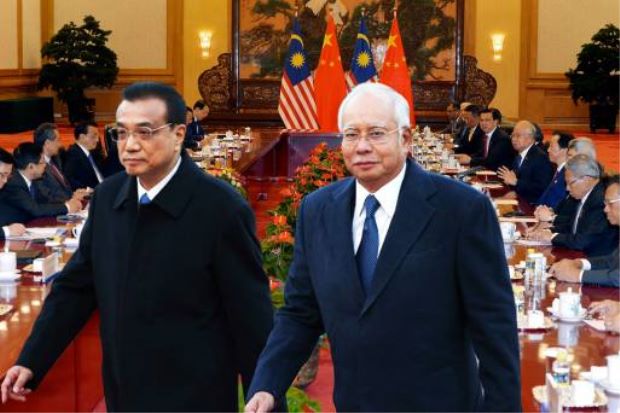
YOU can be angry with Datuk Seri Najib Tun Razak but let’s not lose our objectivity. The Prime Minister brought in RM144bil worth of deals signed between Malaysia and China.

Many Asean countries are eyeing that kind of money from China but strangely, some Malaysians’ sense of rationality is becoming warped, even perverted, and they feel it is prudent to go into senseless name-calling and mindless smearing of China.

We have to be careful here – remarks like Malaysia indulging in yellow culture, selling our soul to China and comments which smacks of racism are surely not the way to treat a friendly superpower nation like China.

Those making such disparaging remarks are doing a disservice to Malaysia. It’s akin to throwing sand into our rice bowl.

Hate the PM as much as you want as this is how democracy works. But do some of us need to lash out with political rhetoric against China?

It is one thing to score points against our political rivals but surely, there must be a line drawn – let’s not bite the hand that is trying to help us at a time when Malaysia needs to secure more foreign investment to shore up our flagging revenue from oil and gas.

Many of the negative responses over these deals with China seem to be politically motivated, stemming from ignorance and, in some cases, ethnic prejudice against all things Chinese, whether it has to do with mainland China or Chinese Malaysians.

Let’s look at the numbers – foreign investors (including the US) are net sellers of stocks in Bursa Malaysia and have reportedly dumped RM948.1mil in stocks although some have said it is even more.

Malaysia can no longer depend on traditional foreign direct investments from the US and other Western countries.

The reality is that China invested as much as US$84bil (RM370bil) in 2012, establishing it as the world’s third largest outward investor after the US and Japan. China has aggressively eclipsed other nations.

The shift towards China, according to one study, is obvious as the republic emerged as Malaysia’s largest trading partner, enjoying a 13.8% share of Malaysian trade since 2012.

Malaysian firms (especially those owned and managed by Malaysians of Chinese descent) have also been actively investing in China since it liberalised its economy in 1979. Some of these firms played a crucial role in attracting mainland Chinese firms to invest in Malaysia, according to studies.

Everyone knows that China has the money. And Malaysia has an edge over other Asean countries because of the link between Chinese Malaysians and China that has given us an advantageous position, especially when China increasingly sees Singapore as a US ally.

There are some who are unhappy with China’s purchase of 1MDB’s energy assets in Edra Global Energy Bhd for RM9.83bil by the state-owned China General Nuclear Power Corp recently, suggesting that the republic was only helping Najib out in the 1MDB controversy.

But let’s look at other investments – even before the recent trip by the PM. China has put in a multi-billion ringgit purchase of a substantial equity stake in Bandar Malaysia via China Railway Construction Corporation.

China Railway Engineering Corporation has announced plans to set up its multi-billion regional headquarters in Bandar Malaysia, which will host the main terminal for the proposed KL-Singapore High Speed Rail project.

It has been reported that the Chinese government has started buying more Malaysian Government Securities (MGS) and this inflow of new money could possibly rise to RMB50bil (about RM30bil) in total or 8.5% of Malaysia’s total outstanding MGS as of early April.

Those who have been grumbling should answer if there’s any big money coming from the US, Australia or Britain.

And many of us are also wary about money coming in from the Saudis – some are alleging that they are exporting radical Islamic values to Malaysia. Do we need this?

Like it or not, China, apart from being Malaysia’s largest trading partner which takes up 19% of its exports, is presently one of the top five foreign investors in the country.

Investments from China in the manufacturing, construction, infrastructure and property sectors are at significant levels now.

According to official data, China’s investments in the manufacturing sector here from 2009 to 2015 totalled RM13.6bil, creating 24,786 jobs.

Malaysia also needs more Chinese tourists to visit our country and we hope to attract two million Chinese tourists by the end of the year. Our tourism industry has seen a growth of 23% in arrivals from China since the e-visa entry programme was introduced in March this year.

China is the third largest source of tourists for us after Singapore and Indonesia. Malaysia targets eight million Chinese tourists by 2020.

Only 10% of China’s population travelled out of their country and yet they have spent US$229bil (RM1tril) globally last year. They easily beat the number of many Western countries put together!

They spend more than other tourists and they travel in bigger numbers. We all know that in Western countries, Chinese-speaking shop assistants are specifically hired to engage with this segment of customers.

Malaysia is not on the radar of Chinese tourists but more young Chinese tourists have chosen to visit Sabah because of its beautiful sea and lush forests.

Chinese tourists spent US$215bil (RM948bil) abroad last year, 53% more than in 2014, according to a World Travel & Tourism Council report, a figure which is more than the annual economic output of Qatar. Chinese tourists are now spending way more than anyone else, including the Americans.

The number of Chinese tourists travelling globally has more than doubled to 120 million over the last five years, according to data from the China National Tourist Office and WTTC. That means one in every 10 international traveller now is from China.

Malaysia is missing out on this action, unfortunately. For a start, we can make travelling into Malaysia easier for them and having more direct flights will help.

Let’s give credit where credit is due. Najib has done well, from his recent trip to China.

It will even be better if our own Air Asia gets to fly into more Chinese cities as this will surely help boost Chinese tourist arrivals.

Let’s get real, all of us.

Certainly we have the right to express our concerns over the terms of some projects, and to seek clearer details, but let’s not drag in unnecessary elements which strain bilateral ties.

Keep China’s faith in us

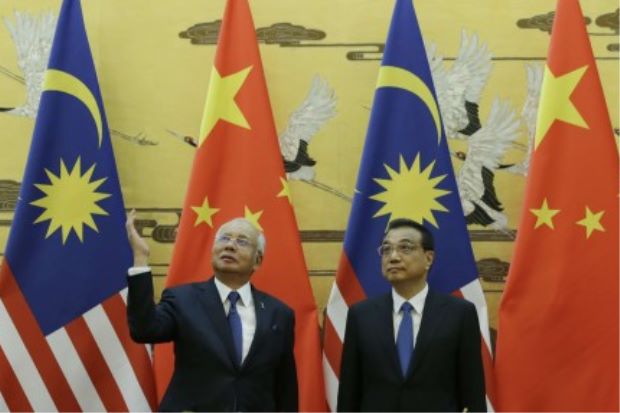
Prime Minister Datuk Seri Najib Razak (L) and China's Premier Li Keqiang at the Great Hall of the People, in Beijing. – EPA

IT’S no longer a topic that is discussed in hushed tones at functions attended by diplomats and businessmen – that relations between China and Singapore are strained. It is out in the open.

The irony is that Singapore is the Asean coordinator for ties with China – and the latter has literally told the island republic to buck up.

The latest salvo against Singapore reportedly came from Chinese vice-minister for foreign affairs, Liu Zhenmin, who warned that as a non-claimant state in the South China Sea dispute, the island should stay away from commenting on the issue.

China’s top diplomat urged the republic to focus on coordinating dialogue between China and Asean – in short, he is effectively saying that Singapore is not doing a good job in that department.

China’s impatience with Singapore has been simmering for a while although it has never been out in the open. But in June, Global Times ran a commentary by Chinese Academy of Social Sciences researcher Cheng Bifan under the headline “Singapore has picked the wrong target in its balance of power strategy”.

The newspaper, regarded as a mouthpiece of the Chinese communist party, is also a subsidiary of the powerful People’s Daily.

Basically, China is irritated with Singapore for seemingly siding with the United States over the South China Sea issue.

Hong Kong’s South China Morning Post (SCMP) has reported that Internet users in China have delivered stinging criticisms, labelling Singapore a sycophant of the US, threatening that China would teach the tiny South-East Asian nation a lesson.

Particularly painful is the phrase they often use to mock Singapore: Li Jiapo, a play on the island’s name in Chinese, substituting the first two Chinese characters “Li Jia” or the “Lee family”, it reported.

The problem started after a tribunal in The Hague rejected China’s claims in the South China Sea dispute with Singapore Prime Minister Lee Hsien Loong saying that the verdict delivered a strong statement about international law in maritime disputes.

During a recent trip to the United States, Lee also reportedly told US President Barack Obama that Singapore hoped Washington would “remain actively engaged in the region.”

It doesn’t help that Singapore has allowed the US to deploy its P8 Poseidon spy plane to the city state. The US also operates from Japan and the Philippines, its two other allies.

But since Rodrigo Duterte, whose ancestors came from Xiamen, China, became president, the Philippines has shifted its sights –and is looking at China.

As the unhappiness builds up, the Global Times accused Singapore’s representative at the Non-Aligned Movement summit in Venezuela of trying – but failing – to add an endorsement of the Philippines’ international arbitration case against China’s territorial claims.

It added that the representative had become exasperated and made “sarcastic remarks” when the move was opposed.

The Singaporean envoy, however, hit back at the Global Times, for publishing an “irresponsible report replete with fabrications.”

His protestation, however, was met with defiance from the newspaper’s editor-in-chief, who stood by the article, accusing Singapore of “damaging China’s interests,” the Wall Street Journal reported.

According to envoy Stanley Loh, Singapore did not raise the South China Sea issue or the tribunal ruling at the summit. He said the proposal to revise the summit communique was made collectively by Asean, which wanted the document to reflect regional concerns over recent South China Sea tensions.

But Chinese diplomats and journalists, close to the communist party, have openly accused Singapore of “siding with the US to willingly play the troublemaker” over the thorny issue.

According to National University of Singapore’s Prof Wang Gungwu, it would not be in Singapore’s interest for China to doubt its friendship as the city-state has a big stake in China’s economic development.

Suspicion against Singapore is so great that, rightly or wrongly, some Chinese businessmen have blamed the island republic for holding back the building of the High Speed Rail between Malaysia and Singapore, suggesting that the island republic is “blocking and delaying” Malaysia’s readiness to award the project to China.

SCMP (owned by Chinese tycoon Jack Ma) which monitors events in China closely, quoted Wang Yiwei from the School of International Studies at China’s Renmin University as saying that he believed China’s “disappointment” with Singapore stemmed from Beijing’s initial hopes that the island state could play a role not just to bridge China and Asean, but with the US, the West and the global community.

Singapore had not adequately protected the overall and long-term interests of China and Asean, despite being the coordinator, he said.

“Instead, Singapore suggested that China accept the tribunal’s ruling. This was a huge turn-off for China,” Wang said.

In contrast, Malaysia-China relations have entered a new high. The “biggest deal” is not even the huge amount of businesses coming into the country but our commitment to buy four Chinese naval vessels, which are known as littoral mission ships (small craft that operate close to shore). Two are to be built in China and the other two in Malaysia.

Liu said the two countries were focusing on naval cooperation and that the deal marked a big leap in bilateral ties.

The defence deal also signalled that Malaysia wanted to have closer military-to-military relations with China.

The two nations also signed the framework for the RM55bil East Coast Rail Line, which will be China’s largest investment in Malaysia to date.

Najib, who was on a six-day visit to China, met President Xi Jinping on Thursday.

Malaysia Airlines Bhd also secured many direct flights from China, recently announcing that it would start flying to eight new destinations and 11 new routes in the republic from Kuala Lumpur, Kota Kinabalu and Penang, from early 2017. MAS is also hoping to add a second daily flight between KL and Shanghai in April 2017.

Although Malaysia is the Asean coordinator with the US, Prime Minister Datuk Seri Najib Tun Razak has played a remarkable role, balancing our link with the two superpowers.

And although Malaysia is a claimant to the territorial claims, Malaysia has restrained itself well, issuing cautious statements, without adding fuel to the rivalry between the two giants.

Najib’s diplomatic skills benefit Malaysia greatly. The domestic political fight should not be used to disrupt the strong ties between Malaysia and China.

Sarcastic innuendoes that “Malaysia is Red” does not augur well for Malaysia, which risks earning the wrath of China, at a time when the market is terribly weak.

Claims that the proposed ECRL project was overpriced, that the soft loan will come to RM92mil per kilometre, is nothing short of amusing.

China’s offer is said to be lower compared to what was offered by Japan and other European countries – and it comes with a soft loan.

The payment is over a tenure of 20 years and in the first seven years, Malaysia will not have to pay anything – neither interest nor repayment. Surely, that is attractive.

Najib has lobbied for China to increase its import of palm oil as it has dropped 50% in the first six months of the year.

Apparently, this was due to some negative reports and wrong perception of the nutritional value of palm oil, a common tactic used by Western countries to promote soy bean and other vegetable oils.

China used to be the largest importer of palm oil from Malaysia but it has fallen to third place, after India and Europe.

It is important that domestic politics should not come at the expense of losing the support of the Chinese. We are talking about the rice bowl of Malaysians and we don’t want selfish politicians to throw sand into our rice bowl.

It is one thing to score political points against Najib, by ridiculing his approaches to China for business deals, but it should not affect our economy.

For example, the number of Chinese visitors to Taiwan has reportedly fallen 22% since the island’s Beijing-sceptic government took office in May, with tourism operators saying that the industry is in a slump.

Hotels are only half full and thousands of tour buses are sitting idle, with observers saying the decline is due to China limiting tour groups to Taiwan amid rapidly cooling cross-strait ties, according to a report.

There was a boom in mainland tourists to Taiwan in recent years under former President Ma Ying-jeou’s Beijing-friendly government, with Chinese visitors accounting for about 40% of the total 10 million tourists last year, according to government figures.

However, in the months since President Tsai Ing-wen took office up to Aug 23, mainland visitor numbers have reportedly fallen 22.3% compared with the same period last year.

In Hong Kong, news reports of resentment against Chinese mainlanders and calls by some HK politicians for independence have resulted in a backlash with Chinese tourists staying away from HK.

The SCMP reported the decline in the month of the mini-golden week holiday – when Chinese tourists go on vacation – and this came as a blow to hopes that the city’s battered retail sector – which heavily relies on tourism spending – could improve soon.

Government statistics showed May retail sales decreasing 8.4% on a yearly basis after the April decline narrowed to 7.5%, from a 9.8% dip in March, marking the 15th consecutive month of contraction.

Hong Kong Retail Management Association chairman Thomson Cheng Wai-hung has predicted a double-digit decline in the first half of this year, which would be the worst in over a decade, as its members signalled that sales in June were “even worse than May”.

The reality is that China has become a economic superpower and we have had a headstart by becoming the first Asean country to forge diplomatic ties with China.

Through the efforts of the Chinese community here, the special ties have been further cemented, and that has allowed us to have a special place in the heart of China.

Malay extremists should learn to appreciate this special link, which has benefited Malaysia greatly, before they make careless and hurtful racist remarks that serve little purpose.

The billions pouring into Malaysia is staggering and surely, we are the envy of many other Asean countries. That is because China trusts us and we should keep and build on that faith in us.

Let us do more against graft

File picture

BY now, it’s clear that many ordinary Malaysians have the perception that corruption in this country has degenerated into a hugely disturbing situation.

To many of us, rightly or wrongly, corruption has become an entrenched culture involving many in the political and government circle.

But who would have suspected that a seemingly innocent department like the Sabah Water Department could end up being investigated for such a staggering amount of money, in what is now known as our very own Watergate scandal.

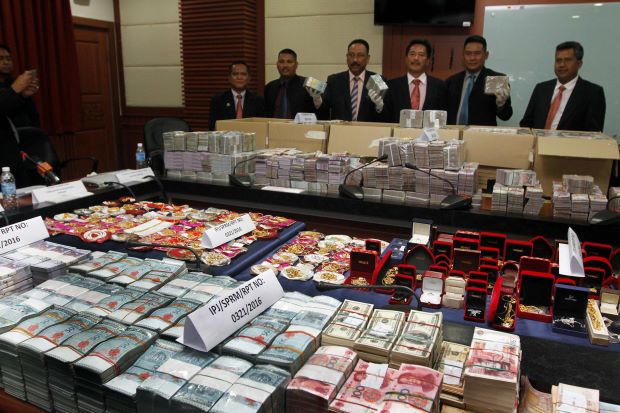
The Malaysian Anti-Corruption Commission (MACC) seized RM114mil worth of assets – RM53.7mil in cold cash stashed in the houses and offices of two senior Sabah Water Department officials on Oct 4.

Many of the department’s staff, apart from the top two officials, are also being investigated for alleged abuse of power and money laundering linked to contracts for RM3.3bil federal-funded projects channelled to the department since 2010.

MACC has traced RM30mil stashed in foreign banks and another RM30mil in 127 land titles for housing, agriculture and commercial purposes.

That’s not all. MACC also seized nine vehicles worth RM2.7mil, an assortment of jewellery worth RM3.64mil and designer handbags with a value of RM500,000.

To many Malaysians, when the topic is corruption, they would think of the police, customs, immigration, council enforcement officers and authorities with the power to arrest someone, to issue approvals or permits.

These authorities have earned such notoriety through mere generalisation or plain prejudice as there are surely many good and honest officials.

And of course, many Malaysians think lowly of high-level politicians, sniggering over their purported wealth even if they have little evidence and information.

The MACC must be commended for its successful investigations into the Sabah Water Department.

It has, in fact, led to loose talk among Sabahans that the MACC need only check the Facebook postings of some staff, even the low ranking ones, of another government department in the state to see the kind of lifestyle led by some of the workers.

There might not be sufficient evidence but the raid on the department will surely encourage more whistle blowers to tip off the MACC.

Malaysia ranked 54 among 168 countries in the Corruption Perception Index (CPI) 2015 with a score of 50 out of 100.

This is a drop from 50 out of 175 countries in the CPI 2014 with a score of 52 out of 100. High scores indicate a less corrupt perception.

Obviously, the 1MDB issue is a major perception issue and has affected the minds of many Malaysians, contributing to the slide in ranking.

In a 2014 news report, it said that the international accounting firm KPMG’s Fraud, Bribery and Corruption Survey 2013 revealed that an overwhelming 90% of business organisations feel that bribery and corruption is necessary to do business in Malaysia at the moment.

Transparency International- Malay­sia’s first ever Malaysian Corruption Barometer (MCB) 2014 recorded that as many as 45% of Malaysians feel political parties are the most corrupt, followed by the police force, then the public and civil servants, the report added.

It is safe to say that such perception among Malaysians have not changed much over the past few years. It has probably gone worse.

There is little doubt that many Malaysians feel, even with the current blitz on corruption, that the actions against the corrupt have not been sufficiently effective.

The tentacles of corruption, to many, has become so prevalent that no sector in government has become immune – that’s the scary perception even if the reality is otherwise.

It has tarnished the image of our institutions and must have affected investors who want to put money in Malaysia, even if we are seen as a country that is business-friendly.

To be fair, much efforts have been taken such as enacting the Whistle Blower’s Act in 2012 and increasing corruption arrests, as well as publishing the names of more than 1,000 corruption offenders on the MACC website.

There has also been a sharp decrease in business licenses and online publication of government contracts.

But one does not need another survey, although the Performance Management and Delivery Unit (Pemandu) has actually carried out one, which showed that a large segment of Malaysians do not believe that enough has been done to combat corruption.

That’s simply because the perception is that actions have only been taken against those at the lower and middle rungs of government.

If the fat cats – or big fishes – are left untouched, it may actually encouraged the bottom to be corrupt as they may think their bosses are dirty anyway, so why shouldn’t they, too, grease their hands to just pay the bills.

It is incredulous that a country like Malaysia, which has becoming more conservatively religious, are not seeing a corresponding decline in corruption.

Our religious leaders, regardless of their faith, seems to be more preoccupied with religious forms and theological aspects, and forgetting that they can be effective tools in the fight against corruption – not just against the takers but givers.

They should spend more time at their sermons, services and prayers to talk about the ills of corruption, among others – and not be too preoccupied with just politics.

More often than not, we hear the open grumbling of businessmen who lament the corrupt practices, which adds to their cost of doing business but if there are no givers, then, there will be no takers.

Never mind, if others want to give.

Let the policeman issue summons instead of offering a bribe to “settle it”.

If we give, why then are we still complaining about dirty cops?

If we do not do something more resolute now, the young will soon see corruption as an acceptable culture.

If we remember, in 2007, the majority of 1,800 university students interviewed felt it was acceptable to give or take bribes.

Surely, this is troubling. Have we come to this level where many of us can no longer differentiate between right and wrong?

It’s time to wake up, don’t let our beloved Malaysia go down the drain.

It’s just a word lah, come on

Cool monikers: Fans of Rapper Snoop Dogg, Singaporean band Black Dog Bone and our very own Alleycats have had no issues with their name.

The hot dog issue has made Malaysia famous for the wrong reason. Let it go, most of us have suffered enough embarrassment already.

LOOKS like the monsoon season is starting soon. That’s when it starts to rain cats and dogs. No, these animals will not fall from the skies but it’s best that Malaysians are well-prepared for the floods.

The authorities, we are very sure, will not let anyone be confused. Personnel from the Civil Defence Force and Fire Department are already on standby to face the wettest month of the year.

According to one report, tourists will almost certainly experience thunderstorms and floods – they have been predicted to take place on 83% of the 25 days with rainfall. Light rain may also occur but is rare, being observed on only 11% of those days.

This means our rescue teams can be expected to work really hard and as one will say – work like a dog.

But some will benefit from these heavy downpours. While some tourists would stay away from Malaysia during the wet season and with hotels in the east coast having already shut down ahead of the monsoon, there are tourists who come here for the rain!

These are people from countries with little or no rain, and standing in the rain can be a real joy for them.

The rain is loved by some because it is a sure escape from the sweltering heat. The expression “dog days of summer” refers to dogs seeking a shady spot to lie down and do nothing. Humans, of course, do the same and so, this expression became popular.

Well, luckily for us, this expression is not commonly used here because if it was, a confused Little Taliban, with his fiery determination to turn Malaysia into an Islamic state, would possibly ban its use in our school text books.

As one of my colleagues said, with such civil servants in our midst, we are no longer looking at creeping, but possibly galloping, Islamisation.

Some older Malaysians like me talk about times when there was much more openness in our society.

Many of us attended Catholic schools. To this day, most of us certainly did not convert and still kept our faith. Those were great days. In the early 1960s, we listened to Creedence Clearwater Revival, Deep Purple and even Three Dog Night.

Closer to home, remember the Singaporean band Black Dog Bone? They were real hot then with their best-selling albums, performing in the coolest discos and played to sold-out crowds in Singapore and Malaysia.

I loved the Malay version of Earth, Wind and Fire’s Fantasy – it was called Khayalan. Many of you millennials don’t know what you have actually missed out. These guys were awesome!

This bunch of Malay and Chinese boys from Geylang made waves in Malaysia. Well, they are just a distant memory now. But as they say, every dog has its day. Okay, 15 minutes of fame, if you insist, in modern jargon.

Then, we had Lobo with his hit Me and You and A Dog Named Boo and of course, singer Anita Sarawak, who famously got into trouble in 1981 when she did a cover for the song and cuddled a dog in a video. It was too much for some people even then, but it blew over and Anita Sarawak survived.

If it had happened now, she could have been “culled”. I remember meeting her for the first time and asked her about the controversy in an interview after a concert at Dewan Sri Pinang. The next day, I was invited for lunch by her and her manager for a big write-up. Those were the days.

Dogs were not the only “glamorous” ones. Cats were too. Penang produced our very own The Alleycats! Oh yes, David Arumugam and his brothers. Terima Kasihhhh! We knew they wouldn’t be kuching kurap (insignificant) for long in tiny Penang but would become real big dogs in Kuala Lumpur. Big time. And they did make it big time.

But now, we are in an era where the mere mention of even “Barbie Doll” which sounds like babi (pig) can offend some, even though it has nothing to do with the animal.

I worry for rapper Snoop Dogg and actor Kevin Bacon, with names like that. I mean these guys don’t know what they can get into. Didn’t they think about the consequences? And what about the Shakespearean play, Hamlet? No ham, please.

Our authorities are a stressed out lot. They are worried that some Malaysians cannot tell that hot dogs are not actually made from dog’s meat. It must be the deteriorating level of English among Malaysians. So, it is better to say hot sausages than hot dogs.

The director of the halal division from the Department of Islamic Development (Jakim) Dr Sirajuddin Suhaimee said he was “quoted out of context” by the media.

He was earlier quoted as saying, via Whatsapp to the media, that “in Islam, dogs are considered unclean and the name cannot be related to halal certification,” he reportedly said.

So, it has became the fault of the media, my friends – the media which try to spin and spin, just to sell news. You know, the media, especially the newspapers, are now under stress. Must compete. It’s a dog-eat-dog business, you see.

Enough has been said over the issue, which has grabbed headlines around the world. Most Malaysians have suffered enough embarrassment.

That’s the problem when someone decides to be an adviser in English when he should just be worried about certification and food products.

We don’t want to see Malaysia going to the dogs because we really love this country. We need to stay moderate and stay rationale.

Malaysians are really dog tired with the aimless petty squabbles, pointless rambling and the senseless din, which smacks of racism.

For Malaysians who believe in moderation, we must continue the cause with dogged determination. We shouldn’t be easily intimidated, threatened and discouraged.

There is no place for bigotry

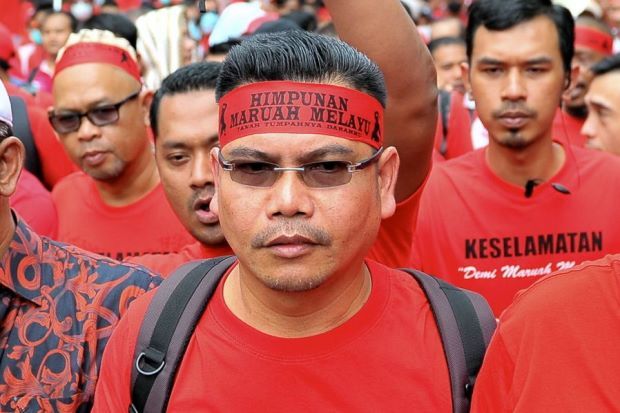
RED Shirts leader Datuk Md Jamal Yunus had yet to be born when the racial riots of May 13, 1969 broke out.

And that means the ikan bakar restaurant owner and privileged beneficiary of approved permits to import luxury cars has no idea of the inflammatory fire he is now playing with. Ignorance isn’t bliss in this case.

The Sungai Besar Umno division chief, you see, was born only in 1970 – a year after the black blot in the nation’s history and it would have been impossible for him to remember the scars of the tragedy that continue to haunt the nation.

Together with his supporters, they make it worse when they attempt to resurrect the ghost of May 13 each time there is a Bersih protest, with the Red Shirts responding with racial overtones. The spectre of May 13 should remain buried. These young thugs in red get involved in such scare tactics when they did not even exist, in any form, in 1969.

As we would say, forgive them for they know not what they are saying or doing.

Malaysians are pretty sick and tired of people like Jamal and his racist counterpart Ali Tinju whose only talent is organising protests which smack of racism and are a threat to others.

Jamal has, by his own admission, not done too badly in life despite failing badly in the SPM examination. Claims of being “suppressed and oppressed” ring hollow each time he makes his racist rants.

Presumably thanks to his political connections, he is in a trade that lots of other Malaysians, including many Malays, would never be able to enjoy.

We don’t suppose that he is now driving a Lamborghini because of his grilled fish business and many of us don’t think it is due to his financial or economic ingenuity either.

He has now found himself in hot water because of a May 13 threat he has been linked to on Facebook. However, he has denied vehemently, saying it was a fake account, and he is also not tweeting now.

Let’s just give him the benefit of the doubt, but surely, he cannot deny that he is a serial racist rabble rouser with his constant insane ranting, which has caused much unhappiness and anxiety among Malaysians.

His acts of hooliganism and gangsterism, to put it mildly, should, by right, be condemned by all. It is a credit to Umno leaders like Khairy Jamaluddin and Datuk Seri Mohamed Nazri Abdul Aziz that they have come out to make it clear that such threats will not be condoned and that the violent acts by Jamal and his supporters are “unacceptable”. The police have been urged to take action.

While many of us are also not in favour of the Bersih protests, surely there could be a more effective way of dealing with Bersih? The brutish methods of the Red Shirts are not going to endear rational and moderate Malaysians to their cause.

It won’t help Umno win votes, especially the fence-sitter voters, and surely there is a need for serious thought on the effects of these Red Shirts to other Barisan Nasional component parties.

Jamal, who admitted that many of the Red Shirts were Umno members, however, insisted that he was not representing his party and had acted in his capacity as the Red Shirts movement’s leader.

It is the bigoted and offensive actions of Jamal that have alienated urban voters. Politicians like Jamal should not assume that playing the Malay card will automatically win them the Malay votes.

Rowdy behaviour such as filling up Gurney Drive with hundreds of motorcyclists is also hardly commendable in civil society practices.

We will be surprised if thuggery and intimidation are now the most effective way of winning elections. Tell us something we don’t know.

Jamal, for example, has bewildered us by blatantly defending the actions of his supporters in yelling “Cina babi” (Chinese pigs) as they chase away journalists who appeared to be Chinese and warning traders of Chinatown for purportedly selling fake goods.

He had put on a straight face and actually asked why the Chinese would be so sensitive about it because “from what I hear, pigs are food to the Chinese generally”.

We will remember that subsequently, the police had to use water cannons to break up his goons from entering Petaling Street in the capital last year.

Traders in that area had to shut down businesses for fear of a possible riot despite assurances of security. Of course, we also recall that he denied his involvement.

Malaysia has moved on since 1969, although race and religion continue to be used by politicians. The changing racial demographics have made it clear, and the argument that the Malays are the oppressed majority no longer holds water when the Chinese population has shrunk dramatically.

The future of the Chinese who harbour political ambitions nationwide, except perhaps in Penang, must be viewed at a realistic level. It is mathematically impossible to influence the outcome of the elections, let alone have a Chinese become prime minister.

The likes of Jamal would love it if the Malays were to believe that such a scenario is possible.

The continuous play of the Chinese community as the bogeyman for the ills affecting the country is no longer believable nor realistic.

The bumiputra community is well and dominantly represented in all spheres of public life, from the civil service to government-linked companies, public universities, the judiciary, police and army.

The continuous use of the May 13 threat to supposedly paint them as a community under threat seems shallow and hollow.

The electorate is now more educated and more exposed to information via social media.

Surely, the old way to stir racial dissatisfaction no longer works.

For the participants of Bersih, the absence of the Malays in the 2015 rally is surely disturbing.

The absence of PAS from Bersih 4 showed the inability of PKR to marshal Malay participation.

The test this time is whether PKR, Parti Amanah and Parti Pribumi Bersatu Malaysia can ensure that Bersih 5 is multi-racial and not another Chinese protest against the Government.

If the Red Shirts are Malays, then the Yellow Shirts should not be predominantly Chinese, as that would sharpen the racial angle.

The lessons to learn is that any head-on conflict will not help Malaysia. No one wins. It is far more important that Malaysia and Malaysians win.

The voices of moderation must prevail and must be louder now. There is no place for Malay or Chinese extremists or any other bigots from other races.

Malaysia was founded by leaders who believed in moderation, consensus and power-sharing.

It has been a successful formula and certainly that kind of sanity must prevail for Malaysia to move on.

Umno has built on its brand of being a moderate party since its inception.

It has a proven track record with its form of coalition government as the Alliance and now the Barisan is being used as a model even by the Opposition.

Umno doesn’t need the likes of Perkasa, Isma and the Red Shirts to shore up support because in the long run, they are a liability.

Malaysia cannot be spending time on issues that have long been resolved as that serves little purpose.

Whipping up racial or religious hatred for sure, whether by the Reds or Yellows or Greens, is pathetic and desperate in 2016 – 47 years after the 1969 tragedy. It is a tragedy that such a script is still used, or worse, to give reasons for such an act to be carried out.

Take a look at us now

Malaysia is facing a host of issues and let’s get real, the NCC2 is sorely needed to deal with these matters to propel our nation forward.

WE have a love-hate relationship with foreign workers. Malaysians complain endlessly about the increasing presence of foreigners and by that, we mean unskilled foreign workers. But we are also the first to raise the white flag shortly after a freeze is imposed on these workers.

Following loud protests from employers recently, the Cabinet gave in and said it had lifted the ban on hiring foreigners in four sectors.

These were the manufacturing, construction, plantation and furniture-making industries, which are facing a major shortage of workers.

But other businesses have also shared their frustrations – a gym operator complained that toilets at his premises have not been cleaned regularly because of the government’s decision and a nasi kandar operator said two of his outlets were in danger of closing down.

Farmers are also grumbled that they did not have enough workers and the constant harassment by authorities was not helping their business.

A lack of farm labourers, who used to be mainly from Bangladesh, has also been blamed for the price of local fruits shooting up, one report said.

The Federation of Malaysian Manufacturers reportedly claims that almost half of its members can no longer fulfil orders.

A news report notes that a survey conducted by the federation showed that up to 84% of factories are facing manpower shortages and potential loss of revenue.

In Malaysia’s furniture industry alone, reputed to be one of the largest in the world, a shortage of 27,000 workers has seen monthly shipments declining by more than 28%.

The demand for foreign workers by businesses is understandable as it has deep implications on our economy.

Palm fruits will rot away, for example, if there are no workers to harvest them. Sarawak, for example, reportedly suffered estimated losses of RM1bil a year due to uncollected fresh fruit bunches arising from a workforce shortage.

The industry is facing a shortage of over 30,000 workers and the situation is serious as the state has about 1.4 million hectares of oil palm plantation and 78% of the workers are foreigners with only 22% Malaysians.

But our over dependence on foreign workers has flash points which we need to know about as in the long term, it will have serious effects.

Based on EPU estimates, in the medium term to 2020, GDP growth could be in the range of 4-5% – much slower than the average 7% previously, but employment growth will remain at 3.3%.

Here’s the worrying statistic – foreign workers, on the other hand, is the fastest growth sector by a compound average of 8.9% even as we are grappling with a weak economy.

“If the number of foreign workers is around seven million or 22.1% of the total population of 31.7 million, that would mean both the demographic and social profile would change dramatically in the coming years,” one prominent economist wrote.

The current profile is bumiputra (68.6%), Chinese (23.4%), Indians (7.0%) and others (1%) with the official count of non-Malaysian citizens in 2016 at 10.3% of the total population of Malaysia, he added.

“Influx of foreign labour at 8.9% compound annually is clearly unsustainable without distributing income and social profile of the country,” he warned.

But that’s not all as we must not ignore the political results – “if foreign workers continue to increase at the current rate, within one generation, as Sabah found out, even the bumiputra community may end up as a minority.”

In fact, the Indians in Malaysia have already found out that foreigners have outnumbered them. The foreigners are catching up fast on the Chinese.

I have written about this previously, that given the low Chinese community birth rate of 1.4 babies per family in 2015 from 7.4 in 1957, their position would fall from 24.6% in 2010, 21.4% in 2015 to 18.4 % or less in 2040, according to a research paper.

The only exception are the bumiputras. In 2014, 75.5% from the total birth rates were bumiputras. In addition, they recorded the highest birth rate of 20.5 per 1,000 population, the research revealed.

These are numbers that all Malaysians should seriously reflect on when they talk about wanting more foreign workers. We could well be shooting ourselves in the foot.

Malaysia is overly dependant on crude oil and palm oil and a hit on the prices of these two sectors immediately whacks our economy and ringgit. In the case of palm oil, it is labour intensive.

We need to raise our competitiveness if Malaysia is to go far. The world isn’t waiting for Malaysia while we fight with each other over issues that should be resolved, or have been resolved, after independence.

Our addiction to unskilled, cheap and uneducated foreign labour will help us in the short term but in the long run, we will have to shoulder the presence of these people.

Our work force needs to be upgraded with more specialisation in areas of expertise as traditional commodity-based exports will lose out to high technology products. Malaysia needs educated and highly skilled foreign workers in the long run.

Singapore and Hong Kong have both attracted a strong talented foreign pool but Malaysia is the opposite – we are a magnet for cheap foreign labour.

It isn’t the salaries and perks that attract good expatriates – their families must feel safe and the quality of life must be worth it for them before they even think of living and working in Malaysia.

Mindless racist remarks such as the recent outburst of the Klang Umno division questioning the appointment of a foreigner to lead mobile telecommunications provider Celcom Axiata Bhd does not help.

Its chief, Datuk Nasaruddin M. Zin said the position of Celcom’s chief executive officer (CEO) should be given to a Malay, or at least a Malaysian.

The over-obsession with race will not help us encourage the best talents to come to Malaysia if they see their career opportunities stalled by such considerations.

It doesn’t help that some of our best minds are not returning to Malaysia but staying back overseas after they have graduated.

According to a report, last year, a total 308,834 highly-skilled Malaysians moved overseas, with 47.2% going to Singapore, 18.2% to Australia, 12.2% to US and the rest to other countries like UK and Canada.

According to the same report, the number of skilled Malaysians living abroad rose 300% in the last two decades, with two out of every 10 Malaysians with tertiary education opting to leave for either Organisation for Economic Co-operation and Development (OECD) countries or Singapore.

Well, we can shrug off the disappearance of these good professionals or we can take a serious look at ourselves, as a nation and as a people, and honestly ask if it is a loss.

A National Consultative Council 2 is needed, after 47 years, to talk about these issues, behind closed doors, and to find solutions, so the country can move forward.

There are still plenty of clever people in Malaysia, with no political agenda nor ambitions, but who care passionately and deeply about this country.

It’s time to hold NCC 2 meetings

Online platform: Let Malaysians show that they can go beyond the meaningless chatter on social media and to offer views with substance.

IT’S certainly a good proposal that needs attention. There are plenty of reasons why the time has come for a special national consultative council (NCC).

The last time the country had one was in 1970 – a year after the bloody racial riots of 1969 that rocked the nation.

Malaysia will celebrate its 60th national day next year and it will be exactly 47 years since the last NCC meetings.

We will just be pretending if we say that all is well and fine in this country. It is not.

It will be foolish to think that all is hunky dory and that there is no real basis to have another big meeting following which the reports will gather dust, as some cynics may think.

The reality is that the country’s economic growth is expected to stabilise at around 4-4.5% per annum but the hurdles ahead are clear with the continuing volatile oil prices and our dependence on palm oil.

The over reliance on palm oil and crude oil/gas as drivers of value added opportunities would put growth at risk if these sectors were to slow down as evident now.

We are grappling with a weakening ringgit, soaring prices of goods in the country and increasing cost of living.

Against this backdrop, there are issues of governance, ethics, credibility and accountability that have dented the image of our institutions. To put in plainly, we are facing a trust deficit in this country with people losing their faith in our leaders.

Poor investments and alleged questionable deals have all led to tremendous loss in public faith and funds.

Malaysia isn’t going bankrupt as some want us to think. Our foreign exchange reserves have increased to a decent level, our economy expanded 4.0% year-on-year in the June quarter of 2016, moderating from a 4.2% growth in the previous period and in line with market expectations.

It was the fifth straight quarter of decelerating growth as a surge in investment and a faster increase in private consumption and government spending were unable to offset a decline in net exports.

In terms of WEF Global Competitiveness Report 2016/16, Malaysia was ranked 18th but in the 2016-2017 report, we have dropped to No. 25 out of 138 countries but this is due to lower oil and commodity prices and the weaker ringgit.

We have gone up to No. 4 in the world, from the previous No. 5, in protecting our investors in Malaysia and No. 6 in complying with easiness in doing business in Malaysia.

But all these official figures mean nothing if ordinary Malaysians feel they have become poorer and frustrated at the lack of good prospects in this country.

It is bad if our talented and educated pool of Malaysians think of migrating – and certainly a large number of Malaysians have given up on this country and they leave because they think their children deserve better.

The data shows that household debt to GDP now exceeds 86.7% due to high mortgage and consumer credit.

The problem, according to one report, is particularly acute at households earning less than RM3,000 per month because their debt is seven times their annual income.

The reality is that bumiputra households are reportedly most vulnerable to high debt problems.

Our economy need fixing, our competitiveness needs to be sharpened, our human capital development needs an upgrade, new sources of revenue are urgently needed and for sure, our education system needs to be honestly, if not brutally, addressed.

We spent over 6% of the GDP on education, one of the highest in the region, and yet we produce graduates with bad command of English and equally bad thinking skills.

Surely, by now, many of us cringe with embarrassment when our politicians use terms like “world class institutions” to describe our higher education system.

Every time a new minister comes, new policies are set, with one economist rightly saying there are also “too many silos of academia, business and civil servants all working for their own agendas or curriculum”.

We surely need a conversation on education policy and religious studies, and for sure, on disturbing religious trends in this country which have threatened the moderate kind of Islam practised in this country.

CIMB Group chairman Datuk Seri Nazir Razak is right in suggesting the formation of the NCC 2, as he calls it. The time is ripe to brainstorm ideas for the country’s short term and long term future, and to reinvent Malaysia.

Perhaps, even a New Malaysia, as we want to see it.

The NCC 2 should not just look at the economy but surely we need to talk about how we can galvanise a common Malaysian vision on issues of culture, religion and national aspirations.

We need a conversation on how we want to tackle corruption effectively, how we intend to strengthen our judiciary, device check and balance mechanisms and improve transparency in political financing.

The NCC 2, unlike the one in 1970, should allow Malaysians to have their say and to contribute in a constructive and rational way, by providing their input through proper social media platforms. It shouldn’t be just the work of appointed personalities.

Let ordinary Malaysians show that they can go beyond the loose, meaningless chatter on social media and to offer views with substance towards a better Malaysia.

If there is a need to make structural changes for the future and the next generation, let’s hear how we can do it.

If we feel strongly that we need leaders with moral and ethical standards, not just religiously, but from a corporate governance point of view, millions of us can send that message online, in an accountable manner, without having to wait for the next election.

Malaysia needs to move forward in a more constructive and meaningful way. Enough time has been wasted as some of our neighbours, with bigger market size, look set to overtake us. We need to get our act together, beyond posting nasty messages on social media.

Let’s give Malaysia a chance, let’s give NCC 2 a chance, too.

Sense and sensibility must prevail

The EC must serve the interest of Malaysians of all races, certainly not politicians as they come and go.

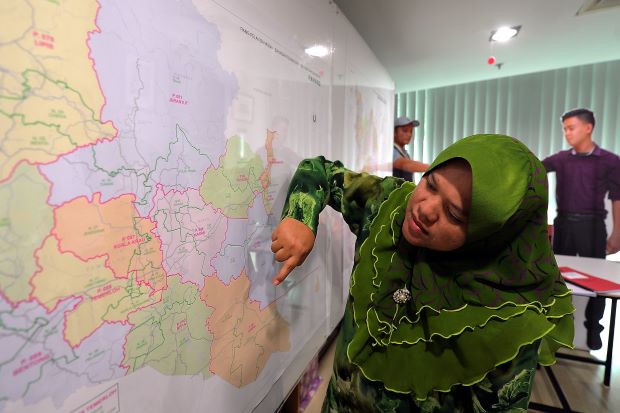
IT’S a good way out with the Barisan Nasional setting up a panel to assess and consolidate different views among the ruling coalition on the Election Commission’s proposed redelineation of electoral constituencies.

The objection from the MCA, MIC and Gerakan against the proposal is clear but Umno has also put on record that it is not happy with the proposed changes.

The proposal, had it been allowed to be implemented in the planned form, would have turned the clock back for Malaysia.

The last time Malaysia had a redelineation exercise was in 2002 after the 1999 general election which saw Umno politicians holding on to their seats because of the decisive Chinese votes.

In that elections, the old electoral logic of Malay voters in rural constituencies faithfully supporting Umno, was rudely chucked out.

If not for the Chinese votes, which many Umno politicians openly acknowledged, it would have been a disastrous outing for the Barisan, particularly Umno.

The Malay electorate, angry with Umno over the sacking of Datuk Seri Anwar Ibrahim from the party and his subsequent imprisonment, sent out its message loudly – via the ballots.

The effect was that in 2002, the ruling coalition, realising the danger of depending entirely on Malay voters, decided that the system needed a re-think.

So, it decided to reduce markedly the Malay bias of the electoral system and address the overall imbalance in the size of the constituency.

The 2002 exercise represented a “correction” of an increasing imbalance between patterns of the government’s electoral support and constituency delineations as researcher Graham Brown of the Centre for Research on Inequality, Human Security and Ethnicity (CRISE), Queen Elizabeth House Department for International Development, University of Oxford, wrote in his paper on Malaysia’s electoral system and ethnic voting.

He described it as the “most extensive electoral engineering for two decades”.

Brown’s research showed that between 1999 and 2004, all three main ethnic groups moved significantly towards equal representation.

“The Malay community lost a quarter of its over-representation, dropping to 5.3 %; the other communities reduced their under-representation correspondingly.

“In understanding the implications of this shift, two opposite factors are worth noting. Firstly, while constituency delineation has historically favoured rural, largely Malay constituencies, the Barisan has increasingly performed best in ethnically-mixed seats, most of which are urban.

“Secondly, in the 1999 general election, a drop in support of the Barisan regime was particularly evident among the Malay community.”

Fast forward to 2016 – if the EC is to have its way, it will be a return to a system that is Malay-biased.

What was passed in 2002 with greater emphasis to mixed ethnic constituencies will be replaced by the return of increasing Malay predominant constituencies.

To put it simply – it is a crude method of dumping racially-balanced constituencies to one that favours only the Malay electorate, in urban and rural areas.

In the peninsula, this will be a blow to non-Malay parties like the MCA, MIC and Gerakan, which could possibly find themselves elbowed out, with Umno possibly arguing that it should be the one contesting in these Malay majority areas. Rightly or wrongly, long-time partners of Umno – the MCA and MIC – could find themselves becoming footnotes in Malaysia’s political history, if the proposed redelineation is allowed to proceed.

To be fair, gerrymandering exercise is an acceptable democratic method, which is done in a way as to benefit the party in power.

Gerrymander, originally written as Gerry-mander, was used for the first time in the Boston Gazette on March 25, 1812. The word was created in reaction to a redrawing of Massachusetts state senate election districts under Governor Elbridge Gerry (1744-1814). In 1812, Governor Gerry signed a bill that redistricted Massachusetts to benefit his party, according to a report.

But if one were to look at the existing 222 parliamentary seats, it is already heavily in favour of the Malays and bumiputeras, with heavy rural weightage.

Of the 222 parliamentary seats, only 29 have more than 50% majority of Chinese voters and these were all won by the DAP in the 2013 general election. Some other mixed seats also benefitted PKR.

To put it bluntly, despite the huge number of Chinese voters returning from abroad to vote for the DAP in 2013, the reality is this – the system makes it impossible to overthrow the Barisan, in particular, Umno.

It is sheer wishful thinking, if not fantasy, for Chinese voters, to think they can overthrow the regime by just voting the DAP or any opposition coalition.

To make it worse, Chinese voters in Pahang, Kelantan and Terengganu voted for PAS – a move that has triggered great mistrust and unhappiness among Umno politicians until this day.

While many Umno politicians accepted the Chinese votes for DAP or even PKR, they could not fathom why the community voted for PAS, which has said in no uncertain terms that it wants to set up an Islamic state and implement Syariah laws.

As expected, today, PAS president Datuk Seri Abdul Hadi Awang is persistent in pushing through his Syariah bill – along with his fellow PAS MPs – which many Chinese voters had ushered into Parliament in the 2013 elections.

But the miscalculation, if not damage, has been done. The MCA lost many of its representatives and this, for sure, has affected its clout in Cabinet.

In short, Umno does not think it can depend on Chinese votes in the next general election – expected to be held in mid-2017. The perception is that the anti-establishment sentiments among the Chinese has not changed.

But the 2016 proposed redelineation has serious implications – with the Chinese population shrinking to 20%, its relevance could diminish even sooner if the push for Malay-predominant constituencies increases.

In 2011, the national census revealed that Malaysia’s population doubled in size from 13.7 million in 1980 to 28.3 million in 2010 with 32 million now.

Bumiputeras numbered 17.5 million, or 67.4% of the population, while Chinese made up 24.6% at 6.4 million, Indians 7.3% at 1.9 million while “others” made up 0.7% of the population at 200,000.

Foreigners made up 8.2% at 2.3 million – much more than the Indians. That was in 2011 but updated figures in 2016 has suggested that the unofficial figure could go as high as seven million against the official estimates of three million. At seven million – that is 22.1% of the 32 million population.

Going by current trends, the projection is that the number of non-Malays will continue to drop further with some saying that by 2050, there could be 80% bumiputeras in Malaysia and just 15% Chinese and about 5% Indians.

In 2014, 75.5 % from the total of live births were bumiputeras, followed by Chinese (14 %), Others (6 %) and Indians (4.5 %).

Based on calculations, the Chinese’s birth rate of 1.4 babies per family in 2015 from 7.4 in 1957 means that their position in Malaysia will fall from 24.6 % in 2010, 21.4% in 2015 to 18.4 % or less in 2040, according to a report.

The reality is that the Malay majority constituencies will increase. Even in the present scenario, 138 out of 184 seats in the peninsula had an increase in the percentage of Malay voters between the 2013 and 2008 elections, transforming previously Chinese-majority seats — Serdang, Rasah, Kluang and Taiping — to mixed seats, according to a research.

But no Malay-based parties, especially Umno, should take for granted that Malay votes would stay with Umno as it may become increasingly irrelevant due to Malay urbanisation and shifting ethnic voting patterns. Having more Malay majority seats should never be regarded as a safety net.

Umno may be swayed by its increase in Malay support in five states: Kedah, Kelantan, Penang, Perak, and Kuala Lumpur in the Federal Territories in 2013 although it lost support in Terengganu, Johor and Malacca.

One research showed that Putrajaya in the Federal Territories saw 100% of its Malay voters leaning towards Barisan in the 2013 polls, after its total voters doubled from 6,608 to 15,791, with 46% of them transferred in from other states.

Politweet, a research group, noted that 59% of Malay voters in the peninsula leaned towards Barisan in 2013, a slight increase from 57% in the 12th general election.

But support from the Malay youth for Barisan, however, reportedly dropped from 57% in the 12th general election to 54% in the last election.

The increasing number of Malay-majority parties, beside PAS and PKR, such as Parti Amanah Negara and Parti Pribumi Bersatu Malaysia (PPBM) have entered the fray, all aiming at the mass Malay votes.

In a multi-corner fight, it will be the non-Malay votes that will decide and the experiences of the Sungai Besar and Kuala Kangsar by-elections and the Sarawak state elections have shown that Chinese voters will return to Barisan.

If the purported 300,000 members of Perkasa headed by Datuk Ibrahim Ali and supported by Tun Dr Mahathir Mohamad, joins Parti Pribumi as speculated, the Chinese voters will revolt against any opposition front.

The Chinese electorate understands its minority status, and it realistically accepts Malay leadership – which is opposed to Malay supremacy, which smacks of racist, if not, feudalistic tendency, in modern Malaysia.

The EC’s proposal is to alter the boundaries of 128 of the 222 parliament seats – thus it does not need to get a two-thirds majority approval in Parliament.

Divisive politics, especially race and religious, has already damaged Malaysia in recent years. We don’t need the EC to make it worse.

If we allow the EC to push through this, we will be stuck with it until 2024, by which time the damage to race relations will be beyond repair. It is a point of no return, to put it bluntly.

Let’s do the right thing – be rational and sensible for Malaysia. Having more mixed ethnic constituencies will help Malaysia in the long term as a candidate contesting in such areas, will deter from playing the race and religion cards.

The EC must serve the interest of Malaysians of all races and it must not give rise to speculations that it wants to serve the interests of political parties and surely not politicians, as they come and go.

Our diversity, our asset

THERE was a time when to brand a fellow Malaysian as a communist would mean a kiss of death. There were some Malay politicians and journalists who were given this label, and it ruined their political career and probably their lives.

The late Samad Ismail, a veteran journalist, was detained without trial under the Internal Security Act, together with Tan Sri Abdullah Ahmad, allegedly, without proof, to be either ‘communists’ or ‘communist sympathisers’.

The late Abdullah Ahmad, former political secretary of Tun Razak, was then said to be “very close to the Soviet Union”.

They had to confess for their purported crimes over RTM in a manner that Pyongyang would be proud of even to this day.

Later on, in the early 1980s, Sidiq Ghouse, a political secretary of Prime Minister Dr Mahathir Mohamad was also detained under the ISA for allegedly being ‘a Soviet spy’.

To many political observers, they were victims of a political play, with the late Tun Muhammad Ghazali Shafie, whom, to many, was a ruthless Home Minister, being the one to blame.

Fast forward to 2016. Communism is as good as dead. China is only a communist state by name as it is more capitalist than many countries which advocate free trade.

Communism icons like Karl Marx and Friedrich Engels remain mere dead philosophers, who got their theories awfully wrong, as they didn’t see the emergence of the middle class.

They wrongly believed the world was divided between the “exploitative capitalists and the oppressed working class.”

Mao Zedong also could not imagine that human beings, by nature, wanted to be recognised, rewarded and praised, and that collective rewards did not promote initiative and only helped the lazy ones.

Like most political science students in the 1980s, I was required to study communism but I cannot imagine why anyone would want to learn or teach this totally irrelevant subject today. Maybe in the history department.

This was the pre-Internet age and the “Communist Manifesto” was kept under lock and key in the university library.

The curious young mind of mine wanted to read it badly, like the lure of all forbidden fruits, but only to find it was the ideal cure for insomnia after just a few chapters.

Fast forward – the present relevant subjects revolve around religious radicalism, especially politics and in particular, the Islamic State. Nobody cares about communism as they belong to a long lost era. Even al-Qaeda is regarded as irrele­vant now.

So in the year 2016, it was mind boggling, if not laughable, when a newspaper accused communists of being involved in the Bersih 2.0 rally in November, alleging links between the organisers, Filipino armed terrorists and an American pro-democracy NGO.

Again, no evidence is needed. Malaysian politicians and the public, after all, like conspiracy theories, rumours and they see shadows everywhere.

The Jews and Christians are often blamed for many things, and it doesn’t help that many Malaysians cannot differentiate between Zionist Jews and secular Jews, or Protestants and Catholics.

Anyone circulating copies of the printed Bible in Bahasa Malaysia run the risk of setting off a riot but in the same breath, anyone can just download the same Bible, with a click of the mouse. That’s the irony.

Among Muslims, to be labelled murtad or person born to a Muslim parent, who later rejects Islam and a person who converted to Islam and later rejects the religion, is a very serious and sensitive matter.

In Malaysia, non-Muslims have often being called kafir – an Arabic term for an unbeliever or disbeliever. Umno members used to be called that term in the 1980s and 1990s, until now, with the new political understanding between PAS and Umno.

Suddenly, Ummo leaders are no longer kafir. In fact, just before the 2013 general election, DAP leaders were also suddenly not kafir. It depends entirely on the whims and fancies of PAS.

That is why PAS is not an Islamic party but an Islamist party which interprets religious laws and practices according to the belief of its politician leaders.

And now, non-Malays are learning another term – dhimm – which is a historical term referring to non-Muslim citizens of an Islamic state, which is the ultimate goal of PAS.

It seems that the most dangerous political label to be associated with in Malaysia now is LGBT – lesbian, gay, bisexual and transgender.

It has to be discussed in hushed tones. We are supposed to pretend that these people do not exist in conservative Malaysia.

They are supposed to only exist in “immoral, hedonistic and decaying western countries” – and anyone with non-conformist preferences must be shunned and punished.

There are not many Siti Kasim, the fiery orange-haired lawyer, who dared to stop moral guardians from stopping a private function, claiming that it was a beauty pageant. The intruders obviously couldn’t tell the difference between a show and a beauty contest.

Not many dare to lecture our moral policemen that compassion, tolerance and understanding are more important values than humiliating, embarrassing and intimating fellow human beings. LGBT is almost regarded as hysterical in Malaysia.

And of course, the latest undesirables are liberals and secular. Malaysians who uphold these principles are treated with contempt now, especially Muslims who dare to declare themselves as such. The advice from the Government is this – you can be “slightly liberal but not overly liberal.”

Even a few Cabinet ministers, who want to play the religious card, are openly offended by the stand taken by liberals. At the rate we are going, we hope Malaysians do not have to become closet liberals.

Not to forget, the remark of Pahang mufti Datuk Seri Dr Abdul Rahman Osman that non-Muslims who disagreed with PAS’ Private Member’s Bill on Syariah court amendments were classified as kafir harbi (those at war with Islam). He later clarified that he never called on Muslims in Malaysia to go to war with those who opposed Islam.

The rise of supremacist non-govern­mental organisations, mostly with questionable membership, which accuse others who do not share their mono-ethnic and mono-religious stand, as anti-Islam, anti-Malay and anti-monarchy, is most disturbing.

These individuals and groups intentionally appear irrational, racist and worse, the perception is that they appear to be “untouchable”.

As the Group of 25 rightly puts it, “these developments undermine Malaysia’s commitment to democratic principles and rule of law, breed intolerance and bigotry, and have heightened anxieties over national peace and stability.”

It makes some of us wonder if some of these political-religious figures are aware that the Rukun Negara is still in existence.

I have learned by heart the five principles – belief in God, loyalty to King and country, upholding the Constitution, rule of law and good behaviour and morality.

There are also the objectives of the Rukun Negara – to achieve a greater unity of all her peoples, maintain a democratic way of life, create a just society where the nation’s wealth shall be equitably shared, to ensuring a liberal approach to her rich and diverse cultural traditions and building a progressive society which shall be oriented to modern science and technology.

The key words are democratic, just, liberal, progressive and diverse cultural traditions – that’s the value and vision that Malaysia has all along.

We don’t have to listen nor oblige the religious and racial bigots, who want to impose their mono-ethnic and mono-religious agenda on us, and to violate these values.

We have just celebrated Malaysia Day but let us not forget the lyrics of the patriotic song, Malaysia Berjaya, which was first played in the 1960s after the Confrontation era with Indonesia (see box below).

We celebrated 53 years of nationhood on Friday and we are reminded that there are still those who seek to tear this nation apart with their divisive moves. We must be careful that their tactics do not take root.

For us to progress as a nation, we must share in a single purpose.

And we cannot allow, in particular, religious and racial disruptions to derail our country’s economic growth in these challenging times. Yes, Malaysia Berjaya, because we are in one accord to succeed. Our diversity is our strength.

Together, let us build bridges that unite, not walls that divide.