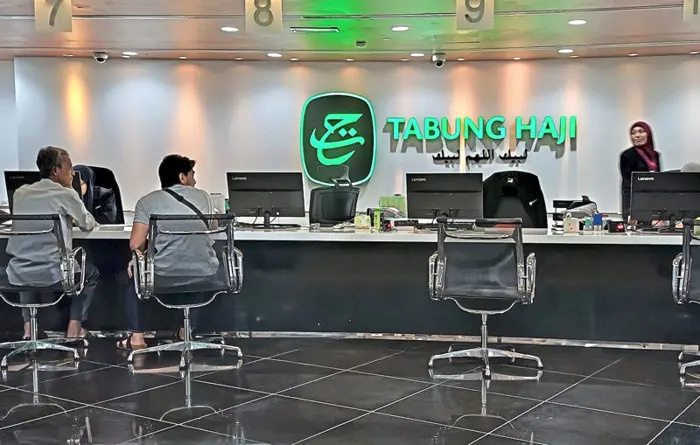
For generations of Malaysian Muslims, Tabung Haji has been more than a financial institution. It is a trusted place to save for one of the most important journeys in their life – the pilgrimage to Mecca. — AZLINA ABDULLAH/The Star
NOT all Malaysians will understand the scale of the Tabung Haji scandal as it does not hit their pockets directly.
However, this disturbing scandal is a story of mismanagement and apparent abuses, a failure of fiduciary duties, poor investments, weak governance and more.
It would not be wrong to suggest that even many members of Parliament who read the report would not understand it fully.
The reality, unfortunately, is that the cost of the alleged financial mismanagement of Tabung Haji has to be borne by all Malaysians as a whole – not just Muslims.
The government reportedly executed a financial rescue package exceeding RM10bil for Tabung Haji to restore its financial standing following several controversial issues.
The findings from the recent Royal Commission of Inquiry (RCI) highlighted several malfeasances – intentional and unlawful acts of wrongdoing – from 2014 to 2017, prompting the ongoing anti-corruption investigations and plans to amend the Tabung Haji Act.
To put it simply, a government bail-out had to be carried out to address impaired assets – the drop in the value of a business asset below its recorded book value – and structural deficits.
A structural deficit is a budget shortfall when ongoing spending is higher than regular income.
If the rescue had not been done, Tabung Haji would likely have been forced to adopt a mass sell-off of fund assets, which would have had severe implications.
The key RCI findings exposed alleged severe governance failures, dubious hotel leases abroad, and misleading investment strategies under the previous management.
For generations of Malaysian Muslims, Tabung Haji has been more than a financial institution. It was a trusted place to save for one of the most important journeys in their life: the pilgrimage to Mecca.
This makes the controversies surrounding Tabung Haji more painful and a huge letdown.
The most disturbing part is that the money involved was the savings of ordinary Malaysian Muslims who put aside their hard-earned money, ringgit by ringgit, believing that their savings would be managed responsibly.
Tabung Haji was created on Sept 30, 1973, as the Malayan Muslim Pilgrims Savings Corpo-ration. Founded by the late economist Royal Prof Ungku Abdul Aziz, it was created with the noble purpose of helping Malaysian Muslims to save money for the haj.
It gave Muslims a safe and syariah-compliant way to save for the haj. It also helped make the pilgrimage possible for gene-rations who might otherwise have struggled to afford it.
But an institution built on trust can be badly damaged when those entrusted with managing it forget who the money belongs to.
The lessons from the Tabung Haji saga are therefore much bigger than just accounts and balance sheets.
They are about governance, accountability, and above all, they are about what happens when political influence, poor management, and questionable decisions are allowed to weaken an institution meant to serve the people.
The horror is not simply that money can be lost. Money can be recovered, institutions can be restructured, policies can be changed – but trust is much harder to rebuild.
Ordinary depositors who now read about questionable investments, inflated valuations, transactions involving connected parties, or decisions that appear to benefit others, must ask one simple question: Who was looking after our money?
That question deserves a straight answer. Not political statements meant to divert from the main issue. Not another spin on race and religion to get out of a tight spot.
Tabung Haji cannot be treated as a political cash cow or a convenient source of influence.
Its board and management must be chosen for competence, integrity, and independence. There must be proper checks and balances, professional investment decisions, and transparent reporting.
When will we ever learn that politicians – many of whom do not even have corporate and financial competence – have no business running a savings corporation involving billions of ringgit?
A look at the board of directors of the past management will reveal that some of its members were picked based merely on their political party standing.
There is also a wider lesson here for Malaysia.
We have too often allowed institutions to become vulnerable because we assume that those in charge will always do the right thing.
That is not good enough and certainly not true. Good governance requires building systems that prevent abuse, detect wrongdoing early, and ensure that no one is too powerful to be questioned.
Tabung Haji’s experience should therefore be remembered not merely as another financial scandal or political controversy. It should be remembered as a warning.
When an institution holds the life savings of ordinary people, there can be no room for complacency, cronyism, or political interference.
The depositors of Tabung Haji deserve nothing less than the highest standards of stewardship.
The money of Malaysian Muslim depositors was entrusted to Tabung Haji. So was their trust, and that trust should never again be treated so callously.
Let’s not forget that the money of other Malaysians, regardless of race and faith, had to be used to bail out Tabung Haji.
We have politicians who claim that the word “sakau”, which means to steal, to rob, to pilfer or to embezzle, was never used in the RCI report. Of course not.
Sakau is Malay slang or street language for stealing or embezzling, but in another connotation, is also used for drug craving and addiction.
Certainly, we do not expect the esteemed members of the RCI to use that word in their report.
Ahead of National Day, the actions of the culprits can best be described as a most traitorous act to the country and Malaysians.