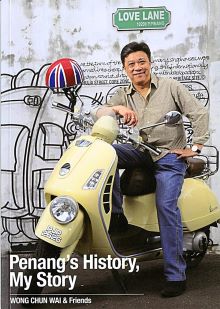
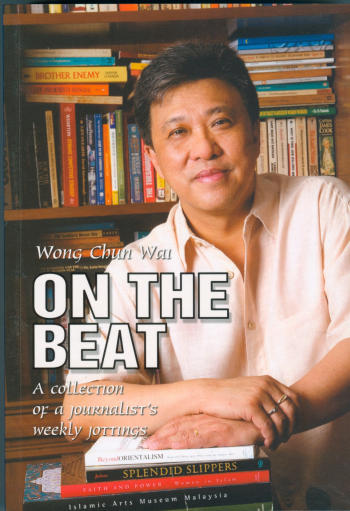
Author Archives: wcw

Get out of the time warp

ANOTHER year gone. Just like that, in the blink of an eye. But in Malaysia, there is always this recurring frustration that we are trapped in some kind of a political time warp.

A new year is supposed to bring new hopes, new commitments and new aspirations.

We can see and feel that Prime Minister Datuk Seri Najib Tun Razak is setting new targets and plans to take the country ahead.

The plans are there for all to see and for the first time, the public is encouraged to question the goals of the National Key Results Area (NKRA) and to give their input.

They may just be plans at this stage but we all should give Najib a chance to implement these initiatives.

Certainly, there is a consensus on the drive to reduce crime, combat corruption, expand access to quality affordable education, uplift the living standard of low income groups, strengthen infrastructure in rural and remote areas, and improve public transport.

But all these can only work if we adopt a fresher – if not a bolder and radical – way to make them work without being bogged down by bureaucratic resistance and obstacles.

A group of dedicated and empowered professional overseers need to be set up to execute this comprehensive plan.

With just about two years to the next general election, the stakes are high and this could well be the Government’s last chance to meet a demanding electorate in the new political landscape.

Some of us have wasted enough time and energy in the past year with incredulous, mind­less politicking, some bordering on provocative racism in the name of race and religion.

Press statements with racial overtones do not help stimulate the economy, stupid. Instead, they generate ill-feelings and definitely will not help the Government, if the intention is to win votes.

Issues such as schools, languages, labels such as pendatang and quotas, the political language of the turbulent 60s, are still being used. Such thoughtless statements have made many Malaysians feel like we are trapped in a time warp, giving rise to pessimism.

The NKRA must succeed. There is no other choice because the figures and numbers are disturbing.

Finance Minister II Datuk Seri Ahmad Husni Hanadzlah sent a wake-up call recently, saying: “Malaysia is trapped in a low value-added, low wage and low productivity structure. While Singapore and Korea’s nominal per capita GDP grew within the last three decades by nine and 12 times respectively, ours is only by a factor of four.”

Among our neighbours China, India, Indonesia, the Philippines and Thailand, our real GDP growth in the last three years was the second lowest at 5.5%. If this is not worrying, we don’t know what is.

Last month, former minister Datuk Seri Effendi Norwawi provided more figures – foreign and domestic investment declined significantly with outflow of capital at RM117bil for 2008 and RM54bil for the first half of 2009. In simple language, money is being taken out of the country.

We can have the best plans but without the best talents, we will never be strong enough to compete.

We can argue that Japan, South Korea and China do not use English but their scientific and educational institutions are already so established that they are able to produce enough skilled workers.

Let’s be honest. If Malaysia is good enough only to attract unskilled foreign workers to be maids and restaurant workers, then there is something wrong with our country.

In short, we are not attractive enough because the wages are too low to attract the best talents here. Singapore and China, and even Thailand and Vietnam, are the preferred choices.

In 2008, 2.062 million unskilled foreign workers entered Malaysia and in the last seven years, the entry of these foreign labourers has increased by 300%, forming 30% of our workforce. That’s only the official figures.

But the number of skilled workers and professionals entering Malaysia has dropped by nearly 60% – 85,000 in 2000 to 35,000 in 2007. The migration pattern of Malaysians, which includes all races, is also disturbing.

Obviously, we cannot allow this slide to continue. Our strength is our plural society with our ability to speak and write in a few languages, even if our proficiency in English has dipped.

Instead of driving a wedge into our plural society, our politicians and media should be encouraged to capitalise on our diverse backgrounds and talents.

We cannot attract the best expatriates to work in Malaysia or our young Malaysians to come home if the wages are low. The fact is that Malaysia has been in the middle income group for 15 years now and to move up the ladder, we need to improve on our per capita income.

Again, we are not going to achieve this if our political brats continue with their erratic behaviour, which often sends jitters to fellow Malaysians and investors.

Neither can we attract the good workforce if they feel that our cities are not safe enough and the political setting appears unfair.

Singapore, for example, competes for investors by providing scholarships for their children and its immigration department does not make it a hassle for their spouses to renew their visas, especially if they have a professional background.

Malaysia has been lucky in many ways but we cannot take for granted what we have achieved. Most analysts, not feng shui experts, expect 2010 to be a volatile year.

But there are good signs too. Our infrastructure development would help stimulate the economy with our economy predicted to rebound 4.2% this year after contracting 2.5% last year.

Most of us are getting tired of the excessive politicking in Malaysia with little debate in our national media and in Parliament on the state of our economy despite the many warning signs.

Wake up, the New Year celebrations are over. By the way, this is 2010, not the 60s any more.

Soaring focus on the RMAF

Certainly, no one would be convinced that a small band of low-rung corporals are able to plan the entire logistics of finding a buyer, stealing the engines and shipping them off.

The engines are sophisticated machines and only those with extensive knowledge of their functions and worth would be able to pull off such a despicable act.

And even if it is true that some clever low-ranking officers were capable of pulling off this theft, the head of some top officials should roll for allowing this fiasco to take place.

Malaysians are used to reading, or at least hearing, stories of our leaders who steal from our coffers. It could be plain bribery, either a huge commission or a generous winning bet at the golf course, but this one takes the cake.

Last week, the RMAF denied that 41 personnel, including a brigadier-general, were sacked because of the theft of the two RM50mil turbo jet engines.

In a statement on Thursday, the RMAF said the 41 were sacked due to incompetency and poor working performances.

It added that the decision to give them the boot was taken before the engines were discovered missing.

Several senior RMAF officers, including generals, are expected to be questioned following the theft of the General Electric J85-21A afterburner turbojet engines (the power plant for the single-seater F-5E Tiger 11 and RF-5E Tigereye).

Few of us have heard of those in the civil service, including the armed forces, being sacked for incompetency.

There would be no end to the sacking of civil servants in an over-bloated administration if they were actually sacked for lousy performances.

We have now been told that four people, including three low-ranking personnel, were arrested and released on bail over the theft. It’s the small fry again.

Would we be told soon that there was no evidence to implicate the generals and that they were too clever to be caught?

Would this theft be soon forgotten with the press losing interest as they move on to other subjects with greater news value?

If this had not been exposed by the media, we would never have known about it as it was obvious that the RMAF, being non-civilians, were trying to resolve the matter within the RMAF. Until a police report was lodged, would the theft have possibly been uncovered?

Assuming we accept what the RMAF wants us to believe, that this is the work of some small-time thieves, a serious breach of security has taken place and seemingly with ridiculous ease.

We are furious because the theft took place in 2007, an audit revealed the loss in 2008, and the public only knew about it at the end of 2009.

A police report, we are now told, was also only made very much later although the theft took place two years earlier. It seemed to suggest that there was no urgency on the part of the RMAF.

It has been reported that the Argentinians do not use these two jets. Obviously, the next question would be where exactly the engines are heading.

The F-5E planes were used by the RMAF from 1974 to 1999 before they were replaced by MiG-29N and F/A-18D. The planes, said to be obsolete now, were reactivated for reconnaissance and training purposes in 2003.

Prime Minister Datuk Seri Najib Tun Razak and Defence Minister Datuk Seri Zahid Hamidi have pledged that those responsible would be punished. Indeed, it can only be good for the administration if these traitors are punished and shamed.

It makes little sense to protect these thieves as doing so, even in the most subtle form, would only send the wrong signal to others.

There is no need to be defensive and it would be wrong for the RMAF to think it is good press relations to try to cover up or attempt to protect those who are responsible.

The theft has not only astonished Malay­sians but, following press reports, it has also made many question whether we overpaid for these engines.

There is big demand for J85 engines; you only need to go online to sites like www.speednews.com to get more details for such items and the prices that buyers would pay.

It’s time the Malaysian Anti-Corruption Agency steps in to find out whether hefty kickbacks were paid for these engines.

It’s no longer just a simple theft and the MACC must also now ask a simple but relevant question: were the engines worth the price we paid for them?

There have been claims that these engines are probably only worth RM7mil in the market.

Malaysian taxpayers have a right to seek answers about the RM50mil because this involves our money.

It would seem that Santa Claus came much earlier for some people in the RMAF. We need to recover their stolen presents because they don’t belong to them.

A mere fine is not fine with us


On The Beat
By WONG CHUN WAI

IT always looks good on paper but the difficult part is implementing proposals on improving things in the country. Public expectations are high and no one can blame Malaysians for running out of patience.

The living standards of Malaysians have basically gone down while the cost of living has shot up.

The streets are no longer safe and public confidence in the ability of our police force to protect us is eroding. Only those in denial mode will tell us that corruption has not gone out of control. It is fast in danger of becoming a way of life, very much the Indonesia and Thailand way. Our politicians can argue that it is merely a perception but try telling ordinary Malay­sians that.

When a policeman stops a foreigner by the roadside, no one perceives he is a carrying out a routine crime check. Most of us passing by would assume that he is trying to extort money from the poor foreigner.

Businessmen assume, rightly or wrongly, that palms need to be greased if contracts are to be approved.

And have we seen details of multi-million public contracts being made public? They should be put on the Internet and in newspapers, as in India, because they involve our money.

Some politicians who live beyond their means and openly flout their wealth seem to be untouchable.

Hence, the Government can not only expect plenty of hope but also cynicism from the public on the 1Malaysia Government Transformation Programme (GTP) roadmap.

The two ministers responsible for the GTP, Tan Sri Dr Koh Tsu Koon and Datuk Seri Idris Jala, have given a commitment that these proposals would be implemented.

“You don’t make a concrete commitment like that to show transparency unless you intend to do it. If you don’t intend to do it or don’t have the political will, it is better that you don’t put something like that in the public domain,” said Jala.

We hope that Jala, a no-nonsense person known for his persistence in achieving targets, would not be disappointed. For that matter, Malay­sians too.

Jala was the man who coined the term “labs” in place of the more mundane words like “workshops” or “seminars” because he wanted ideas to flourish during the six weeks that the participants put together these proposals.

The six National Key Result Areas (NKRAs) are reducing crime, fighting corruption, raising living standards of low income households, strengthening infrastructure in rural areas, improving urban public transport and education.

In the tradition of the townhall concept, a meet-the-people session was held on Friday where the lab leaders and members were able to interact with the people.

The move is certainly a good start because public input is essential. The days of leaders talking down to the public and telling us what is good for us are over. They should do more listening if they still want to stay in office.

A similar event will be held in Sabah and Sarawak in the first week of next month but the Government should consider holding the meet-the-people session in major towns like Penang and Johor Baru too.

Understandably, interest was on the plans to battle corruption, where the lab presentation was extended to three hours.

The general sentiment was that only the ikan bilis (small fry) were caught while the jerung (sharks) were allowed to swim free.

It is also time that a mandatory jail sentence be imposed on graft offenders as these criminals must not assume they can get away by just paying a fine.

There should also be confiscation of assets that have been stolen from the public as that would deter offenders. To be jailed for two years, for example, is almost nothing if a person gets to keep hundreds of millions of ringgit – which he would not be able to accumulate in his lifetime of working.

And why shouldn’t politicians who live beyond their means be investigated without having to wait for official complaints to be lodged?

Politicians must not only be clean but must also be seen to be clean and even smell clean.

The Malaysian Anti Corruption Agency (MACC) should set up MACC stations, similar to police stations, in key areas like government offices and markets.

In Hong Kong, the Independent Com­mission Against Corruption set up such bases to enable the public to walk right in to lodge reports and these stations also serve as a place to educate the people on the ills of corruption.

At the market place, council enforcement officers, regarded as being corrupt by most Malaysians, would think twice if the MACC station is within easy reach for stallholders to complain.

Why shouldn’t the public think that our council enforcement officers are corruptible when they see tables and chairs being put up at parking bays in front of mamak shops? Or are they going to tell us that they do not have enough enforcement officers to act? Come on!

Places of worship should also be used to educate the public. What is the point of being seemingly God-fearing and pious, in mannerism, dressing and habits, if one is blatantly corrupt?

A refreshing start has been made by the Government. Prime Minister Datuk Seri Najib Tun Razak is certainly aware of the need to implement these proposals as the next general election isn’t that far away.

We all want the GTP to succeed because this is the last chance for Malaysia. We are on the downhill roll and we need to get back on track.

From the heart and refreshing

IT isn’t often that we read something refreshing from our politicians. Their statements are often predictable and unexciting. If they are in Government, they are talking down to us, lecturing us or are being plain defensive.

Those in the Opposition are not exemplary either. It was thus refreshing to read a bold and honest speech by Finance Minister II Datuk Seri Ahmad Husni Hanadzlah last week.

The mild-mannered Perak politician, at the National Award For Management Accounting on Dec 8, struck a chord with his listeners with his openness and his admission to use the country’s plural society to push for Malaysia’s competitiveness. It is a rarity these days as many politicians prefer to make “safe speeches”.

At a time when some politicians attempt to play the racial card, believing it to be still the best way to shore up voter support, Ahmad Husni has taken a different route. “It is about time we fully exploit the potential synergy that is fully inherent in the diversity of our talent pool,” he said.

Indeed, what has put London, Hong Kong and New York way ahead of Kuala Lumpur is they have always placed emphasis on meritocracy. You are either good or no good – nobody cares about the colour of your skin.

The fact is that the Malaysian domestic market is just too tiny and every businessman looking at the global market needs a good force of employees from diverse backgrounds and talents.

It would be plain stupid, even if he’s a self-professed nationalist, if he cannot see beyond the shores of Malaysia, or his village.

We will continue to lose our best talents to Singapore, Hong Kong, Shanghai and even Jakarta if we refuse to discard old hang-ups.

“I see highly talented young people working together, respecting each other’s intellectual capabilities and, to an extremely large extent, measured by only that benchmark,” Ahmad Husni said.

As he correctly pointed out, we have the single best comparative advantage – our multi-racial make-up – but we have not used it, preferring instead to dwell on trivial emotional issues that serve little purpose.

“If we are to unleash this cultural synergy, this economic opportunity to all participants, we have to break down the invisible barriers that prevent us from truly accepting the beauty of each other’s culture and capabilities.”

There can be no compromise over the issues of transparency if we want to pull ourselves ahead again. We are on self-denial mode if we don’t. The world isn’t going to wait for us.

A week earlier, speaking at the National Economic Outlook Conference 2010-2011, he said: “Malaysia is trapped in a low value added, low wage and low productivity structure. While Singapore and Korea’s nominal per capita GDP grew within the last three decades by nine and 12 times respectively, ours is only by a factor of four.”

I am glad that Ahmad Husni has the courage to pull the blinkers away. Malaysia is losing its place on the radar screen of investors. It doesn’t help that investors have the perception that it is costly to do business in Malaysia because of inflated cost as a result of corruption.

There is an urgent need to restore confidence, credibility and governance. Ahmad Husni added: “Amongst our peers, China, India, Vietnam, Indonesia, Philippines and Thailand, our real GDP growth in the last three years was the second lowest at 5.5%.”

We are obviously in danger of lagging behind in the region. One way to fend off these challenges would be to address the competitive pressure and to move away from traditional markets which could be already overcrowded.

Private investment has declined, Ahmad Husni pointed out. “For the period 2000-2007, our investment per value added in percentage nominal terms in manufacturing dropped from 30.6% to 21.7% while (for) the services sector, the decline is from 26.8% to 22.1%.”

But what struck me more is Ahmad Husni’s frankness. In his words, “a simple analysis of our capital account will show that there has been a continuous outflow of capital from our shores.”

That’s not all. The fact is that some of best brains are either staying overseas or, worse, migrating.

But we must not give up. As Ahmad Husni declared: “We have to rebuild an environment that gives confidence to the private sectors.”

It is heartening to hear the government talking about restoring confidence in leadership and governance, market driven resource mobility, strong and effective institutions and a knowledge and innovation society.

It is time for Malaysian politicians to use the right sound bite. The news now tend to be littered with inconsequential comments that make good political reading but name-calling and racist reactions, unfortunately, are not going to help check our declining competitiveness.

The two speeches by Finance Minister II Datuk Seri Ahmad Husni Hanadzlah referred to by Wong Chun Wai in On the Beat are below.

Minister of Finance II Datuk Seri Ahmad Husni Hanadzlah’s speech at the “National Economic Outlook Conference 2010-2011”, Dec 1, 2009, at Hilton Kuala Lumpur.

Ladies and Gentlemen 1. The Government intends to revise its estimate for next year’s GDP growth from 3.0% upwards. We have identified several sources of growth and we will enhance our capacity through domestic demand. We are also looking to strengthen the private sector’s contribution to the GDP through the Government-linked companies. We have identified several projects in the pipeline and we will bring them forward for implementation in the first quarter of next year. We are reasonably confident that a target of 5.0% is achievable.

2. Next year we will unveil the Tenth Malaysian Plan. We will focus on initiatives to revitalise private initiative as the primary engine of growth. In this respect, we will improve the dynamics of competition in the domestic marketplace, focus on technology and innovation in niche areas including green and bio technologies. We will develop these niches on existing comparative advantages and provide soft & hard infrastructure for the knowledge economy.

3. With all these, we will create new catalysts of growth, boost demand for knowledge workers and skilled labour, raise private and social returns to education and skills upgrading, and a more balanced internal economic structure with a bigger role for domestic demand. Externally, we will also continue to further promote closer economic, trade and financial linkages within the region.

4. For the longer term, our Prime Minister has tasked the New Economic Advisory Council (NEAC) to develop a new economic model to transform the country into a high income economy. This journey will be an exciting as it would represent the single biggest transformative process since the introduction of the New Economic Policy in 1970.

5. There will be many changes. Quoting the Prime Minister, business is not as usual. Fundamental and structural economic reforms are critical if our economy is to be transformed successfully. Malaysia is trapped in a low-value-added, low wage and low productivity structure. While Singapore and Korea’s nominal per capita GDP grew within the last three decades by 9 and 12 times, respectively, ours only by a factor of 4.

6. Amongst our peers, China, India, Vietnam, Indonesia, Philippines and Thailand, our real GDP growth in the last three years was the second lowest at 5.5%. Our manufacturing sector is not investing up the value chain while our services sector remains low in growth and under-developed.

7. The transformation is particularly urgent when we take the external environment into account. The global environment is changing. We can no longer rely on our traditional trading partners and we need to address the competitive pressure from other emerging markets on our existing exports.

8. Our economy has been stagnating in the last decade. We have lost our competitive edge to remain as the leader of the pack in many sectors of the economy. Our private investment has been steadily in decline. Our private investment is now half of what it was since the Asian crisis while both manufacturing and service sectors have become less capital intensive. For the period 2000 to 2007, our investment per value-added in percentage nominal terms in manufacturing dropped from 30.6% to 21.7% while the services sector, the decline is from 26.8% to 22.1%.

9. We need to restore the private sector’s role in the economy, serving as the primary engine of growth. How do we re-catalyse the private sector? In this regard, I wish to take this opportunity to articulate the concept of 1Malaysia in economic terms. There are some quarters, the cynics and the pessimists, whom view the 1Malaysia concept as another slogan gimmick. I assure you, it is not. We know that the bumiputras do not hold the bulk of Malaysia’s wealth. A simple analysis of our capital account will show that there has been a continuous outflow of capital from our shores. In this mobile world, capital will always flow to jurisdictions that are perceived to be more secure, not necessarily the ones that give a higher return.

10. Therefore, we have to rebuild an environment that gives confidence to the private investors. The critical pillars for us to restore confidence are leadership and governance, macroeconomic stability, market driven resource mobility, strong and effective institutions and a knowledge and innovation society. Allow me to articulate these five pillars, one by one. First: Leadership and Governance.

11. Political stability is a necessary component of leadership, especially so in a government that is based on a coalition of component parties. If there is to be continuity in a leadership structure that has the track record of a successful economy manager, Malaysians have to embrace acceptance of our differences and diversities which have been the base of our coalition. We also recognise that all Malaysians must be given equal opportunity to participate in the economy. Performance must be the primary rod of measurement. In this regard, we have announced that there will no longer direct negotiations for any public projects unless it is for the procurement that is related to national defence and security matters. There have been concerns that the Government is abandoning the bumiputras. This will not happen. The responsibility to develop and improve the economic standing of the bumiputras is the bedrock of this Administration’s mandate.

12. Nevertheless, we have to do it differently. There may have been a number of bumiputras who are awarded contracts whom are not genuine entrepreneurs. Yes, we encourage collaboration, of course. Consortiums and strategic alliances are a good thing but there must be a demonstrable element of genuine collaboration. For years the Government has denounced this “Ali Baba’ syndrome. It’s about time we get tough on it. Meritocracy must prevail. This is necessary for the long term economic survival of the bumiputras, of ourselves.

13. If we are to ensure there is fairness in the marketplace, there must also be a corresponding strengthening of our public institutions. Transparency and adherence to the highest standards of governance is something that we must strive towards. In this regard, we wish to see greater participation from all races in the public institutions, where performance is the key measurement. The introduction of NKRAs and KPIs is the first step in that direction.

Second: Macroeconomic Stability 14. Moving forward, we have to ensure that our fiscal position is restored to a more sustainable level. While the broad objective of increasing private investment in the economy will be continuously pursued, from the Treasury’s point of view, we also need to ensure that we receive optimal return from our hard-earned tax revenue. There have been too many leakages in the past and less than productive spending.

15. I do not for one minute underestimate the difficulty of achieving this. One of the most difficult things that anyone in management can tell you is “cultural change”. How can anyone change a cultural mindset that has been ingrained for so many years? But I have faith. Malaysians had developed all these centuries a strong survival gene. When push comes to shove, we change. The key is – there must be someone or something to do the shoving. The world is changing and that’s the biggest shove that I can think of.

Third: Market-driven Resource Mobility 16. The Government spends RM8,000.00 per capita annually in numerous subsidies. Not only this places a huge weight on our operating expenditure but it also create distortions in our marketplace. We need to realign this. We will re-calibrate the distribution of the subsidies. We want to ensure there is greater precision in its application. Nonetheless, we also want to ensure that there will be no erosion in the standards of living for the underprivileged and the poor, regardless of race or ethnicity.

17. We must also consider the gradual dismantling of our open-ended protection of specific sectors and industries which have introduced a climate of complacency and artificial levels of supply. The long term success of the nation’s economy must take precedence over the short term interests of a few protected groups.

Fourth: Strong and Effective Institutions 18. Entrepreneurs need to know that the public institutions are transparent and are run by the highest standards of governance. Entrepreneurs need to know that they do not compete in a market whereby their competitors seemed to possess institutional advantage. We need to see better competition policies and better regulatory environment which can allow market forces to operate in an orderly manner.

Fifth: Knowledge and Innovation-Driven Society 19. One of the biggest challenges that we face is the development of an innovative knowledge-driven society. Fortunately, we have a substantial middle class whom understands the value of knowledge. Unfortunately, our institutions of higher education have proven to be a disappointment. The mismatch between our industry’s needs and the output from the local universities has resulted in Malaysia having the highest unemployment rate of graduates, at close to 4.0%, compared to, for example, Ireland, Korea and Singapore. We have to consider introducing greater competition in our halls of higher learning. We have to introduce greater diversity in the range of capabilities in the members of the academia. If there is a lack of self-induced factors in our in our undergraduates and academics to strive for greater performance, maybe we should introduce external factors to drive excellence.

20. If there is one operative word that runs through consistently in all the points that I have just put across to you just now, the word would be competition. 1Malaysia equals inclusivity and by being inclusive, we introduce competition. We have to increase the level of competition in all the relevant sectors of our economy. To those that compete and win, there will be a set of rewards in terms of higher wages and awards. A performance-based culture does not accept mediocrity. We want to see a steady decline in those that suffer from the “dependency syndrome”.

21. Countries that have made successful transition into a high-income economy such Japan, Korea and Singapore have a single commonality – their workforce has strong work ethics, a disciplined mind and the hunger to succeed.

22. Historically, Malaysia never subscribed to any dogmatic approach to any particular ideology or economic school of thought. We are pragmatic people. Malaysia is a unique country that has its own particular set of dynamics. However, in a globalised world where economic and financial integration is inevitable, there will be a greater level of equalisation in our market economy with other participating economies. We cannot participate in half way measures although in our own pragmatic way, we will participate in ways and means that are prudent and cautious so as not to disrupt the existing equilibrium too much. A measured approach is called for but the end-destination is clear.

23. The journey ahead is certainly exciting but also daunting. The next decade will prove to be a period of unprecedented change in this Nation’s economic history since the last thirty years. Indeed, we are embarking on this adventure in a period where the external environment is also going through a level of transformation that is unparalleled since the conclusion of World War II. The challenges are great but if we persevere, God willing, we shall succeed.

SPEECH AT THE NATIONAL AWARD FOR MANAGEMENT ACCOUNTING (NAFMA) 2009, DEC 8, 2009 AT ONE WORLD HOTEL, PETALING JAYA.

1. I most pleased and honoured to be here this evening to present the National Awards for Management Accounting (NAfMA) 2009. It is a momentous occasion not for just those whom are present here tonight, but also for the management accounting industry as a whole. The recognition given to the deserving recipients tonight is create greater awareness in the importance of management accountancy in regards to risk management and corporate governance practices in Malaysia.

Ladies and Gentlemen: 2. Management accounting is one of the key pillars of corporate governance and corporate governance is a cornerstone of efficient markets. It requires corporate and business entities, as well as public sector organizations, to benchmark themselves against the best in their respective sectors. These benchmarks must indeed be global and universally accepted. The most prudent and comprehensive criteria must be applied, the highest standards adopted.

3. The Malaysian corporate sector is very important to the Government. We are most unhappy that the private sector’s share in its contribution to our Nation’s GDP has steadily declined since the Asian Financial Crisis. We are also alarmed by the decline in the private sector’s level of investment, both in the manufacturing and services industries. We wish to reverse these trends.

4. In the Government’s efforts to institute the necessary changes in the economy to re-galvalnise private investment, we seek to increase the confidence of investors in this country. Malaysia is facing the threat of being “squeezed” from all sides. On our right is India, India, on our left, China, behind us, Vietnam, and in front of us, Indonesia. We have to build up our comparative advantages quickly and strongly.

5. Over the next few years we hope that Malaysia’s comparative advantages will be emphasized and the factors that contributed to the decline of confidence lessen in their importance. One of our most important and obvious comparative advantage is the diversity of our ethnic make-up. It is striking that seventy percent of the Malaysian population is under 25, and I cannot think of anything more exciting to have such a mix in any economy – young and diverse pool of talents to propel the future growth of this beloved country.

6. In this respect, we have to acknowledge that we, all Malaysians, have not fully taken advantage of harnessing the synergy that can come from our racial mix. We have witnessed in a few other countries how ethnicity, tribal divisions and religion can lead a country to a state of strife and failure, one of the most obvious evidence being Northern Ireland, Fiji and the various African states. I do not ever believe that there is even a remote possibility that we will ever be inclined in such a direction.

7. Nevertheless, ladies and gentlemen, it is about time we fully exploit the potential synergy that is inherent in the diversity of our talent pool. When I visit the financial capitals of the world, London, Hong Kong and New York, I am struck by the diversity of the racial mix in their workforce.

8. I see highly talented young people working together, respecting each other’s intellectual capabilities, and, to an extremely large extent, measured by only that benchmark. There were the Caucasians, the Chinese, Indians, Koreans African Americans and even a few Malays, all taking pride in the quality of their output and confident of their place in the organization.

9. The United States have gone through, and still have yet to fully resolve its racial issues. But what they have done successfully is to fully realize the economic synergy that can be obtained by combining the talents of the American African and the whites. This is most evident in the music, film and sports industries, which I am sure you are very well aware, are worth in the tens of billions of US Dollars. 10. As we are surrounded by the four afore-said economies, we should look around us and identify how best we can penetrate these economies. The solution is staring right front of our noses, our single biggest comparative advantage is our racially diverse population.

11. In a creative economy, the export of cultural products and services can gain much importance, the most notable example being the American sale of its popular culture abroad. In this regard, I do not see any impediments that cannot be overcome for us to export films, music and multimedia content. The racial diversity that is ours can produce the most fascinating cultural products that can truly amaze the world.

12. We have been living in our respective parallel universes for far too long. By and large, the Malays going to see Malay movies, living in Malay areas and pretty much living in a Malay world. So, have the Chinese and the Indians. If we are to unleash this cultural synergy, this economic opportunity, which is mutually beneficial to all participants, we have to breakdown the invisible barriers that prevent us from truly accepting the beauty of each other’s culture and capabilities.

13. I have been brought up to believe that God has given each of us something to offer to the world, that everyone has a gift that someone else can appreciate, no matter how small or seemingly insignificant. If each one of us has the sincere desire to seek, to discover this gift, this world of ours will be a much better and prosperous place.

14. You may be wondering why I am talking about racial diversity at a management accounting award ceremony. Racial diversity is all around us, everyday, all the time. It is an applicable issue as long as the audience is Malaysian. Wherever we are, whenever, it is a valid theme. At the workplace, at home, at play, it is a valid issue. We cannot go on living with our heads buried in the sand, living in separate universes.

15. I have no doubt that there will be arguments and disagreements between us. To say otherwise would be unrealistic but does that not happen in any family? Blood is thicker than water. In this context, our history, the sacrifices and the rewards that we have shared together, the good and bad times together, in these so many years, are as good as blood can get. 16. The Prime Minister has inspired us with the 1Malaysia campaign. I hear now, what next? What is the Government going to do next? 1Malaysia is not the Government’s campaign. Take ownership, it is OUR campaign. The Government can only inspire but it us Malaysians that need to put life into it and make it happen.

17. In this regards, I am very proud to be here tonight. Earlier in this speech, I greeted Tuan Haji Rosli, Mr Chandran and Mr Yeo tonight. This is an excellent example of 1Malaysia at its best. Congratulations.

Swiss in the doghouse

THE Swiss are not known for making global headlines. Like the way they run their banks, they prefer the conservative and low-key approach to handling any issue.

But they have suddenly been condemned worldwide for their decision to ban the building of minarets on mosques.

The decision, backed by the country’s far right Swiss People’s Party, is as good as banning the construction of mosques.

The advocates of this policy have equated minarets to Islamisation, with caricatures on posters showing the physical similarities between minarets and missiles.

They also argued that minarets were incompatible with the country’s political and legal systems as mosques advocated the imposition of Syariah laws.

The controversy started in the small town of Langenthal when its community of 750 Muslims applied for permission to add a minaret to its mosque. The town, with a population of 14,500, has 11 churches.

The strong reaction to this harmless request has shocked Switzerland’s neighbours.

It is right that the decision has led to global outrage, and pressure should be mounted to make Switzerland an international pariah. Even the Swiss Bishops Conference has issued a statement condemning the shocking results of the referendum.

Critics have pointed out that mosques seemed to be discriminated against, as Sikh temples and Orthodox churches did not face such difficulties in the country.

What has probably not been said is that Europe is feeling uneasy over the large number of Muslims who have migrated to the continent, especially France.

French president Nicolas Sarkozy has pushed for the ban of the purdah or burqa, saying such garments were “unwelcome” and a “threat to the secular constitution”.

In Switzerland, there are reportedly over 40,000 Muslims who are mostly from the former Yugoslavia, which has no history of Islamic radicalism.

Malaysia has correctly joined in the chorus of protest with Foreign Minister Datuk Seri Anifah Aman describing the banning of minarets as a setback to the promotion of global religious tolerance.

He said Malaysia was deeply concerned that the ban had happened in an era of globalisation and in a country that had long supported human rights and had continuously advocated peace and understanding between the Muslim and the non-Muslim worlds.

“Malaysia hopes the Swiss government will take every effort to reverse the act of intolerance that would serve to generate negative consequences on society, especially the Muslim community, as a result of the referendum,” he said.

Anifah said the ban was a serious blow to religious freedom and would infringe on the rights of the minority to practise their religion in Switzerland.

That is precisely the point – the rights of the minority must always be respected. In the case of Switzerland, it is the tyrant majority disregarding the rights of the minority.

Deep in their hearts, many Swiss would probably say that if the minority Muslims do not like it, they can simply pack their bags and leave the country.

It is the same kind of ignorance and bigotry that we in Malaysia often get from some racists.

In their inability to argue rationally and fairly, they often resort to such mindless retorts, citing that it was the majority decision and that the minority must always respect the majority.

But the minority – whether you are Muslim, Buddhist, Christian or Kabbalah – does have a constitutional right to build their places of worship and to practise their religion. We all call God in many names, and it is the Creator that one gives honour and love to. The path is the same.

France has no legal right to ban the veil, which they also see as a form of gender discrimination even though many Middle Eastern women see the wearing of it as a religious or cultural requirement.

But the point is, how can legislation be imposed on what one wants to wear? If they choose to cover up from head to toe, that’s their business.

Similarly, if women choose to colour their hair, wear tight jeans or mini-skirts, that’s also their right. Why should we impose our values on these people simply to make them conform to our standards?

No one should be telling us what concerts we should or should not watch. Only extremists impose such conditions and they are not even in power yet in Malaysia.

The construction of mosques, temples and churches should be made simple and no politician or official should make it difficult.

Christians in Malaysia have long made representation to the Government about how local authorities often turn a simple application to build a church into a complicated process. Putting up a Buddhist temple is easy but to build a church, that’s another story.

Construction of many of the grand Catholic churches that now exist in Penang and Malacca was done by missionaries decades ago.

In the case of Protestant churches, they are found mainly in office buildings and shoplots – hardly conducive environments for the worship of God even if we hold steadfast to the belief that God is everywhere.

The reaction of the Swiss is, to say the least, shocking as they are an educated lot and one would expect more from them.

A minaret is just a harmless physical addition to a mosque and is like any other feature in a religious building, be it a church, synagogue or temple. These features should be admired rather than condemned or, worse, feared.

Where every minute counts

THE ruling that the Malaysian Anti-Corruption Agency (MACC) cannot interview witnesses beyond office hours has put the agency in a fix.

There is now a suggestion that the same judicial principle is also applicable to the police.

Lawyer-politician Karpal Singh has argued that the recent High Court landmark ruling on the MACC was also applicable to the police, but the Inspector-General of Police has shot back to say it did not apply to them.

The country’s top cop also sarcastically said all police reports should be referred to Karpal Singh after 5pm. He stressed that it would be pointless to operate police stations round the clock if police could not record statements from witnesses after office hours.

Karpal Singh has also said all witnesses who were questioned after office hours in the last three years could claim damages against the government and police.

Under the Public Authority Protection Act, a suit against the government or government body could commence within three years, he said.

The MACC and police are both law enforcement agencies and do not operate like other government departments. Theirs, and especially the police, is a 24-hour job because criminals do not operate only during office hours.

It would be naive of anyone to think so, and when it comes to dealing with criminals, one does not treat them with kid gloves. Timing is crucial when dealing with criminal cases and, many times, it can be a matter of life and death.

Take, for example, life-threatening abduction or kidnapping cases. How would the police react if these cases take place after office hours when they cannot question any witnesses? Must they wait until the next morning before they react, which could mean the victim could already be dead?

When a criminal or a witness is allowed time, they are also able to tamper with crucial evidence which could otherwise have determined their conviction.

What happens if a murder or robbery takes place after 5pm and the cops can only take a report but are unable to record a statement?

What if the witnesses, especially the traumatised ones, cannot remember important details the next morning?

In some instances, the witness may have to fly off the next day, as in cases involving foreigners, or they may be threatened by those involved. That allowance of time could enable the criminals to meet these witnesses. In short, investigations would be impeded, suspects have the chance to abscond, and evidence could be tampered with or even destroyed.

The High Court had ruled that the MACC can no longer hold witnesses for questioning overnight.

Justice Mohamad Ariff Md Yusof said that Section 30(3)(a) of the MACC Act does not empower it to conduct investigations on a witness “around-the-clock” and agreed that Kajang Municipal Councillor Tan Boon Wah, 39, who filed for a judicial review, had been “unlawfully detained” by the MACC.

Tan had sued the MACC, its chief commissioner Datuk Seri Ahmad Said Hamdan and assistant superintendent Mohammad Hassan Zulkifli for questioning him for 16 hours overnight which, he said, caused him to suffer damages and losses.

Public sentiment is also against the MACC as an overnight questioning had ended with the mysterious death of political aide Teoh Beng Hock.

Public opinion is also not on the side of the MACC and the police. That is a fact the two agencies would need to rectify.

The MACC has said it would accept the court ruling but their work could be affected from now onwards.

MACC officers have privately commented that the office hours ruling would make their families happier. They are not compensated for doing their questioning in the wee hours, but are instead criticised. They do not get support from politicians and the public alike for doing their work. In short, morale is down.

The police have said the court ruling is not applicable to them but Karpal Singh has insisted that it does. So, no one is clear at this point.

If it is extended to the police, Immigration and Customs, it would mean that no work would be done after 5.30pm and during weekends.

The job of the enforcement agencies has now become harder but the work of the criminals has become easier.

No doubt witnesses must be protected and their human rights upheld but we should not forget to consider the wide-ranging consequences of the ruling in fighting crime.

It would probably be politically popular, as the overnight questioning of Teoh had led to tragic consequences and even now no one is sure how and why he died.

But the fact is the MACC has been blamed because of the suspicious circumstances surrounding Teoh’s death and the black blot would be permanently on its record. It has put the MACC and other enforcement agencies in a difficult spot as there is now a lack of trust towards their operating methods.

An appeal is expected to be filed by the Attorney-General against the High Court decision. It is now up to the A-G to argue that the decision would restrict the work of the MACC and other agencies in fighting crime.

We can’t put the MACC and the police in such a situation when Scotland Yard, Hong Kong’s Independent Commission against Corruption and Interpol are sticking to the practice of questioning witnesses after office hours.

Where every minute counts

THE ruling that the Malaysian Anti-Corruption Agency (MACC) cannot interview witnesses beyond office hours has put the agency in a fix.

There is now a suggestion that the same judicial principle is also applicable to the police.

Lawyer-politician Karpal Singh has argued that the recent High Court landmark ruling on the MACC was also applicable to the police, but the Inspector-General of Police has shot back to say it did not apply to them.

The country’s top cop also sarcastically said all police reports should be referred to Karpal Singh after 5pm. He stressed that it would be pointless to operate police stations round the clock if police could not record statements from witnesses after office hours.

Karpal Singh has also said all witnesses who were questioned after office hours in the last three years could claim damages against the government and police.

Under the Public Authority Protection Act, a suit against the government or government body could commence within three years, he said.

The MACC and police are both law enforcement agencies and do not operate like other government departments. Theirs, and especially the police, is a 24-hour job because criminals do not operate only during office hours.

It would be naive of anyone to think so, and when it comes to dealing with criminals, one does not treat them with kid gloves. Timing is crucial when dealing with criminal cases and, many times, it can be a matter of life and death.

Take, for example, life-threatening abduction or kidnapping cases. How would the police react if these cases take place after office hours when they cannot question any witnesses? Must they wait until the next morning before they react, which could mean the victim could already be dead?

When a criminal or a witness is allowed time, they are also able to tamper with crucial evidence which could otherwise have determined their conviction.

What happens if a murder or robbery takes place after 5pm and the cops can only take a report but are unable to record a statement?

What if the witnesses, especially the traumatised ones, cannot remember important details the next morning?

In some instances, the witness may have to fly off the next day, as in cases involving foreigners, or they may be threatened by those involved. That allowance of time could enable the criminals to meet these witnesses. In short, investigations would be impeded, suspects have the chance to abscond, and evidence could be tampered with or even destroyed.

The High Court had ruled that the MACC can no longer hold witnesses for questioning overnight.

Justice Mohamad Ariff Md Yusof said that Section 30(3)(a) of the MACC Act does not empower it to conduct investigations on a witness “around-the-clock” and agreed that Kajang Municipal Councillor Tan Boon Wah, 39, who filed for a judicial review, had been “unlawfully detained” by the MACC.

Tan had sued the MACC, its chief commissioner Datuk Seri Ahmad Said Hamdan and assistant superintendent Mohammad Hassan Zulkifli for questioning him for 16 hours overnight which, he said, caused him to suffer damages and losses.

Public sentiment is also against the MACC as an overnight questioning had ended with the mysterious death of political aide Teoh Beng Hock.

Public opinion is also not on the side of the MACC and the police. That is a fact the two agencies would need to rectify.

The MACC has said it would accept the court ruling but their work could be affected from now onwards.

MACC officers have privately commented that the office hours ruling would make their families happier. They are not compensated for doing their questioning in the wee hours, but are instead criticised. They do not get support from politicians and the public alike for doing their work. In short, morale is down.

The police have said the court ruling is not applicable to them but Karpal Singh has insisted that it does. So, no one is clear at this point.

If it is extended to the police, Immigration and Customs, it would mean that no work would be done after 5.30pm and during weekends.

The job of the enforcement agencies has now become harder but the work of the criminals has become easier.

No doubt witnesses must be protected and their human rights upheld but we should not forget to consider the wide-ranging consequences of the ruling in fighting crime.

It would probably be politically popular, as the overnight questioning of Teoh had led to tragic consequences and even now no one is sure how and why he died.

But the fact is the MACC has been blamed because of the suspicious circumstances surrounding Teoh’s death and the black blot would be permanently on its record. It has put the MACC and other enforcement agencies in a difficult spot as there is now a lack of trust towards their operating methods.

An appeal is expected to be filed by the Attorney-General against the High Court decision. It is now up to the A-G to argue that the decision would restrict the work of the MACC and other agencies in fighting crime.

We can’t put the MACC and the police in such a situation when Scotland Yard, Hong Kong’s Independent Commission against Corruption and Interpol are sticking to the practice of questioning witnesses after office hours.

Be careful what we wish for

IT’S incredulous. PAS Members of Parliament and State Assemblymen have been compelled to take an oath to divorce their wives if they quit or jump to another party.

The news, which has been a hot topic in the political and media circle, has kicked off a controversy.

Even Shah Alam MP Khalid Samad, who is regarded as a moderate in the conservative party, does not see why anyone would want to question what PAS is doing.

It is perfectly acceptable to him. He has been quoted as saying that the oath is not against Islamic teachings as Prophet Muhammad and his companions also did the same thing and were willing to sacrifice their families and belongings.

But others, including religious scholars, have shot down the argument, saying the Prophet’s companions did not do that because of politics.

Perak Mufti Datuk Seri Hussani Zakaria explained the oath was made by the companions to show their loyalty and to defend the Prophet.

“If we want to take an oath for the sake of the party, then divorcing wives should not come into the picture,” he said.

Problematic mix

Even the Malaysian Muslim Lawyers Asso­ciation has questioned the mind-blowing decision of PAS.

But this is what happens when politics is mixed with religion; for that matter, problems too arise when politics and business are not separated.

There was a time when PAS labelled Umno as infidel because of the latter’s partnership with the MCA and the MIC.

PAS leaders and followers, especially in Kelantan and Terengganu, refused to pray in the same mosque as Umno members. Even marriages with Umno members were shunned.

But now, PAS is openly working with the DAP, PKR and even Parti Sosialis Malaysia. So, politics is essentially expedient in nature, not about religion, as PAS leaders would want its members to believe.

The reality is that PAS leaders, behind the flowing robes, turbans and beards, are just politicians who can cut deals for power and position.

Being able to walk the corridors of power in Putrajaya is a tempting goal, whether it is via cooperating with Umno or PKR.

It has showed that its leaders are quite prepared to work with Umno for purported Muslim unity after telling its non-Muslim listeners that Umno is a communal party.

But PAS is also consistent on certain issues. As much as it wants to win over non-Muslim votes, exploiting their resentment against Umno, it has been unable to fully convince the non-Muslims of their readiness to shed their orthodox slant.

The liberal lifestyle enjoyed by Malaysians is at stake if progressive and liberal forces continue to lose their battle.

Gaming and drinking liquor may be frowned upon by all religions but democracy is also about the right to make choices. We have the right to decide for ourselves whether we want to drink or not. If the sale of beer is restricted, as pursued by PAS, would it be followed with wine as the next step?

Wine is used in many churches as part of the Eucharist, a commemoration of Jesus’ Last Supper with his disciples before his arrest and crucifixion.

PAS has put it plainly that it wants to set up a Saudi Arabian-style Islamic state, including chipping away the secular aspect of the Federal Constitution. If non-Muslim supporters continue to strengthen PAS, they are doing so with their eyes open.

The people of Iran overthrew the corrupt Shah Mohammad Reza Pahlavi monarchy in 1979 because they were against the excesses of his regime. They replaced him with Ayatollah Ruhallah Khomeini, whose return from exile was greeted by millions of Iranians.

Today, the idealistic young set of Iran has found that you have to be careful with what you wish for. Human rights continue to be violated and polls rigged with theologians holding on to power in the name of religion.

Closed debate

In Malaysia, non-Muslims who question PAS leaders have been told to shut up because they are not qualified to debate due to their lack of knowledge on Islam or simply because they are not Muslims.

Activists like Sisters in Islam can tell you the kind of harassment they have to face simply because their liberal views do not match the views of those who push the conservative line.

We are still struggling to open up the demo­cratic space, and discourse often degenerates to name calling and threats, especially in the blogosphere, often by those hiding behind anonymity.

When civil issues become entangled with religious concerns, the debate becomes even more emotional and often the louder ones drown out their opponents.

Even former Perlis Mufti Dr Mohd Asri Zainul Abidin, despite his Islamic credentials, has found out how vicious those who evoke rules and regulations in the name of religion can be.

But those who use God’s name should beware that they too can suffer a similar fate because they are mere mortals like everyone else.

Squabbles within and without

Last week, PKR information chief Latheefa Koya wrote an angry letter to Malaysiakini advising the online news portal to avoid “being manipulated”.

She also took offence with Malaysiakini on its reports quoting unnamed sources “that have been exaggerated or told half-truths or simply lies of party affairs”.

The reports included “Sabah chief throws tantrums at PKR meet” and the purported resignation of PKR secretary-general Salehuddin Hashim, she wrote in her Oct 28 letter.

But a day earlier, Sabah PKR leader Datuk Dr Jeffrey Kitingan had quit as a national vice-president. His resignation from the party now seems inevitable.

On Thursday, Port Klang Assemblyman Badrul Hisham resigned from PKR. Selangor Mentri Besar Tan Sri Abdul Khalid Ibrahim had to hurriedly issue a statement urging Badrul to resign and branding him a non-performer – about three hours before Badrul’s press conference.

In the case of Salehuddin, he has texted reporters with a simple denial of reports of his growing frustrations. Most times, he refuses to answer telephone calls.

But some PKR leaders including MPs have privately told the media that they would probably lose Salehuddin, saying he is “on hold” only because of an appeal from party adviser Datuk Seri Anwar Ibrahim.

On Thursday, PKR president Datuk Seri Dr Wan Azizah Wan Ismail finally admitted that the party was facing a problem.

“The frustrations which have been expressed by some colleagues within the party and by some supporters are valid,” she said.

There is no smoke without fire.

Politicians and journalists have a love-hate relationship but they cannot live without each other. On their part, journalists are used to being accused by politicians of “having an agenda”. On the other hand, most politicians have an agenda, and so they perceive that journalists live and think like them.

Journalists often tell each other that when they are being bashed by both sides of the political divide – meaning the Government and opposition – they are doing all right.

Supporters, too, often get carried away, expecting the media to be anti-government before they are regarded as credible and objective.

Thus, when Malaysiakini, often perceived as unfriendly to the Barisan Nasional, reported on the feuding in PKR, the party found it hard to accept.

Against the backdrop of this resentment in PKR, former friends of Anwar, like Datuk K.S. Nallakaruppan and Ezam Mohd Nor, are making serious insinuations against Anwar and his protégé Azmin Ali, a vice-president.

They have left Malaysians wondering what they are talking about as there has been no response from those they implicated. Being more specific, unfortunately, could get them sued.

Depending on which side you are on, Nalla and Ezam are either traitors or opportunists – or simply former allies who know too much about the main PKR players. But the fact is that both went to jail for Anwar.

Ezam was jailed under the Official Secrets Act and the Internal Security Act while Nala, Anwar’s close friend for 30 years, was sentenced to prison for unlawful possession of live ammunition.

Another PKR ally, PAS, has found itself squabbling over the direction of the Islamist party. The cause of the rift is almost unthinkable, proving the point that there is no permanent enemy or friend in politics, only common interest.

Party spiritual adviser Datuk Nik Abdul Aziz Nik Mat wants PAS to get rid of “problematic leaders” – meaning those, including president Datuk Seri Abdul Hadi Awang, who have been accused of wanting to cooperate with Umno.

Nik Aziz, the Kelantan Mentri Besar, has gone on to say that he is prepared to fight those who pursue this aim even if it means wrecking the party.

As a result, some of those implicated by Nik Aziz have come out to say the Umno-PAS deal is over and that they are pro-Pakatan.

The history behind the Umno-PAS unity plan, as most political analysts would be aware of by now, is the uneasy feeling among PAS leaders towards Anwar, who had started to see himself as the next prime minister after the general election.

The much published attempt to grab power by the so-called Sept 16 deadline, via massive defections of Barisan MPs, failed to materialise. A Shadow Cabinet was subsequently planned and announced but until now, the list has not been revealed.

More than a year later, PKR has found itself on the defensive with PAS flexing its muscles to push for and implement its agenda of eventually setting up an Islamic state.

Non-Muslim supporters who voted for PAS then simply because of resentment towards Umno are now coming to realise what their actions in backing PAS could bring.

In Selangor, state PAS chief Datuk Dr Hassan Ali wants the sale of beer to be restricted in certain areas and its youth wing is continuously fussing over concerts involving Western artistes.

One reason megastar Beyonce postponed her Oct 25 concert here was the protest by PAS.

PKR MP Zulkifli Nordin, who sees himself as a defender of Islam, has attempted to push for a Private Member’s Bill in Parliament that would chip away secular laws and replace them with Islamic laws. He, too, pushed to restrict the sale of beer and for action to be taken against Sisters in Islam. He remains untouchable in PKR.

Time to decide

THE countdown has begun. On Saturday, the MCA delegates will decide once and for all who they want to lead the party.

The reality is that party president Datuk Seri Ong Tee Keat and his suspended deputy president Datuk Seri Dr Chua Soi Lek have been an odd couple.

They never intended to be a team but during the Oct 18, 2008, party polls, the delegates ended up putting the two together.

In that contest, Ong polled 1,429 votes against Datuk Chua Jui Meng’s 918 for the presidency race.

At the deputy’s race, Dr Chua garnered 1,115 against Ong Ka Chuan (1,001), Donald Lim (209) and Lee Hack Teik (10).

It has been almost a year since the party elections and a year that has been wasted.

The MCA extraordinary general meeting (EGM), for all intents and purposes, is an election between Tee Keat and Soi Lek.

Supporters of both sides have been meeting delegates as if there is a full-scale polls going on. Dinners have been hosted and non-stop telephone calls and SMSes have been made to the voters.

With just six days to go, both Tee Keat and Soi Lek have taken a very low-key approach, preferring not to issue statements but taking a more personal touch instead.

But the feverish coverage of the EGM has stepped up in the Chinese media with front page treatments; as for radio and television talk shows, the dominant issue remains the MCA leadership.

Love-hate relationship

Even as some dismissed the relevance of the MCA in the country’s new political landscape, the amount of attention on, if not the concern of the community for, the party reflects the importance of the Barisan Nasional’s second largest partner.

There’s always a love-hate relationship between the Chinese community and the MCA. Many love to take jibes at the party but they also understand that the MCA is the party that they go to for help.

Some may outwardly condemn the MCA “for not doing anything”, yet these critics would also admit that the community has benefited from the educational programmes of the MCA’s Universiti Tunku Abdul Rahman and Kolej Tunku Abdul Rahman.

For the working class, they turn to the MCA Public Services and Complaints Department chief Datuk Michael Chong for assistance. It is no exaggeration to say that his office resembles a government hospital with people waiting for their turn to seek his help.

But the community also wants reforms in the party. They do not want to see a subser­vient MCA. They do not want to see a party of yes-men and conformists – they want to see their leaders stand up and speak up.

They like the push against corruption and Tee Keat’s relentless initiatives in unveiling the wrongdoings of the Port Klang Free Zone project have earned him much admiration.

The task force initiated by him has uncovered disputed claims amounting to RM1.6bil. The community wants to see leaders who dare to take on the seemingly untouchable with their political-business clout.

However, Tee Keat’s detractors have said he is taking on too many battles and offending too many powerful figures, which will cost him politically.

Tee Keat’s youthfulness is his plus point and at TV talk shows, this has been constantly brought up.

A new MCA culture with reforms, including a direct presidential election, has been the focus of Tee Keat’s message. The fact is that the MCA has to change and as with everything in transition, it is often a painful process.

If the MCA is unable to move on, leaving its old baggage behind, then there is little chance of regaining the support of Malaysians.

The sex DVD issue has continued to dog Soi Lek, with his backers saying this was a personal matter and that he had paid the price by quitting all party and government posts and he got himself re-elected.

In many ways, that would be the crux of the EGM – to decide on the kind of leadership and the course of the party. It’s not just what the delegates want but what the community wants.

The 2,377 delegates cannot detach themselves from the sentiments of the community. They have to accommodate their wishes.

High stakes

As the lobbying enters its final lap, supporters of Tee Keat and Soi Lek have both predicted victories.

Chinese papers, however, have apparently reported that gambling syndicates have bet that Tee Keat would win.

Supporters of Tee Keat, however, have frowned on the betting, saying this was not something to be taken lightly. The idea of being a favourite, they said, would help sympathisers vote for Soi Lek.

In the psychological warfare, Soi Lek said there were “silent supporters” who would surprise Tee Keat when they voted.

Then, there is talk of a “third force” which does not want both Tee Keat and Soi Lek but Tee Keat’s camp has dismissed it as a tactic to “divide the supporters of Tee Keat”.

In the Chinese media, where the real battle is being waged, full page newspaper advertisements have been placed by Tee Keat’s supporters to openly back him.

The stakes are high – Tee Keat has openly declared that he would quit, along with the central committee members, if the EGM approves resolution No. 2 to annul the decision of the central committee (CC).

If that happens, Tee Keat said, it would be deemed as casting a vote of no confidence against the CC and him.

That means he would quit – even if the delegates reject Soi Lek’s resolution No. 1 to pass a vote of no confidence against him.

In short, the delegates cannot have the best of both worlds. They have to choose whether they want Tee Keat or Soi Lek.

There’s a Chinese saying yi shan bu neng cang er hu or two tigers cannot live on one mountain. In the case of the MCA, there can only be one party boss and the delegates will have to decide once and for all.