Author Archives: wcw

Best foot forward


LET’S give credit where it’s due. Datuk Seri Ismail Sabri Yaakob seems determined to implement significant reforms in his first 100 days as Prime Minister.

These are changes Malaysians, including the Opposition, have longed for in our political system.

Last week, the Cabinet agreed to cap the PM’s tenure at 10 years, and introduce the anti-hopping law, as well as offer recognition to the opposition.

While the PM never provided a time scale for the reforms, it’s imperative that Members of Parliament from both sides get down to drafting and amending laws to turn these changes into reality.

These reforms can’t be implemented overnight because the legal changes will take a while, but the PM must set a date to work towards this parliamentary and government transformation.

It’s a good start, and the swiftness in which he has pushed for the reforms has surprised me, because he could face resistance from his own party, which isn’t known to embrace the unconventional.

These changes would help evolve the Malaysian political system to become more mature and encouraging of bipartisan politics.

But let’s prioritise what to do. We need to give Ismail Sabri time and support to conduct more reforms.

There are many changes we want to see, including fair, if not equal, development allocation for all MPs, regardless of them being in the government or opposition.

Opposition MPs should be invited to sit in selected committees to ensure that everyone is accountable in addressing issues that concern the nation. Malaysians are tired of the adversarial antics that have become the hallmark of Malaysian politics.

But I am sure most Malaysians will agree that it is ill advised to appoint anyone, despite his or her experiences, to any position if the person is facing criminal charges or is being investigated.

It doesn’t matter if it is merely an advisory post with no executive powers, no ministerial perks or doing it for free. The point is that it is ethically wrong. There are over 30 million Malaysians, many of whom are much more talented and smarter, to choose from. Many would willingly work quietly for the nation without the fanfare and positions.

I am 60 years old, and I’ve covered politics and parliament in my 30-plus years as a journalist. In all that time, I’ve never seen such disdain for politicians by the people.

Our MPs are called Yang Berhormat (The Honourable) only by name because their voters don’t think they are, except their most fanatical supporters and sycophants.

The distrust of politicians also extends to our Rulers, although that’s not openly addressed.

At the end of the Rulers special meeting last month, a statement was carefully crafted and issued by the King, which said that Ismail Sabri will be the country’s ninth Prime Minister.

In the statement, Istana Negara said that based on the statutory declarations received on Aug 18 from 220 Members of Parliament, 114 had nominated the former Deputy Prime Minister.

Basically, the King, with the backing of the Rulers, was satisfied with the support obtained by Ismail Sabri.

The next step was the presentation of the instrument of appointment and swearing in ceremony, which played out the following day on Saturday, Aug 21, 2021.

The Yang di-Pertuan Agong, who wanted to return to Pahang on Saturday, had planned to swear Ismail Sabri in on Monday.

But the Rulers advised the King to make the swearing in a priority, suggesting he postpone his trip.

They didn’t want to wait any longer. Clearly, they were fed up with the politicians and wary of the possibility of some of the 114 changing their stand. They wanted Ismail Sabri to be officially sworn in as PM to end the impasse, power struggle and speculations.

The Rulers have remained unhappy with the incessant power play by politicians.

But two important details were absent from the statement by the King on Aug 20 – there was no mention of Ismail Sabri having to seek confirmation from the Dewan Rakyat.

There was also no reference of Ismail Sabri forming a unity government with the opposition, as suggested by some groups previously.

What was not said to the media is that this statement supposedly supersedes the previous statements by the King – that was the spirit and thinking of the Rulers who met on Aug 20. Of course, some have dismissed this as “hearsay” in the absence of an official statement from the Istana.

Then, there are contrasting legal interpretations from both sides of the divide on whether it’s necessary for the PM to face a motion of confidence in Parliament. Some have argued that it’s just a formality but wonder why the PM must face it at all.

But well-informed sources said the Rulers were generally tired of the political antics and attempted power grab by politicians. So, most Rulers have now resisted meeting politicians.

Except for the PM and the Menteri Besar and Chief Ministers, the Rulers are not inclined to listen to politicians, and in private conversations, the remarks they’ve used have been harsh.

The key words in the Aug 20 statement were – “the government must immediately continue its efforts against the Covid-19 pandemic for the benefit and safety of the people and the well-being of the nation, which has been greatly affected by this crisis.”

The King also hopes the new prime minister’s appointment will conclude the political crisis and that all MPs will set aside their political agenda and work towards addressing the pandemic in the interest of the people and the country.

“His Majesty reiterated that the people should not be burdened with endless political turmoil at a time when the country is struggling with health issues and economic depression due to the Covid-19 pandemic.”

The Malay Rulers also support the King’s stand that a stable government must be formed as soon as possible, following the resignation of the previous prime minister, it said.

The principles of Istana Negara and the Rulers have remained the same – political stability, fighting the pandemic and economic recovery first.

Last week, de facto Law Minister Wan Junaidi Tuanku Jaafar said he believed that based on the support displayed by the 114 MPs for Ismail Sabri to the King, “Tuanku (His Majesty) consented that there is no need to have a vote of confidence.”

Wan Junaidi wouldn’t have had the audacity to make the statement if he didn’t have his facts right.

The test is also on our lawmakers – who have pledged to the King – to cast politics aside and work with the government to fight the pandemic and put the country’s economy back on track. And after that, they can slug it out in the general election, which isn’t far away.

Unfortunately, many of our lawmakers are quick to run to the King when they need him but do something else when it suits their political interests.

The special parliament meeting on Covid-19 was a complete waste of time because it degenerated into a shouting match and, worse, it caused the MPs’ aides and officials to be infected with Covid-19.

If many of us think that some of our Cabinet members are slacking and don’t deserve to be in the line-up, then it’s not a comforting thought that the quality and competence of some of our lawmakers – from both sides – are just as bad.

But because of our deep political allegiance, many of us are, unfortunately, not honest with our assessment. It’s always the other side that doesn’t perform sufficiently.

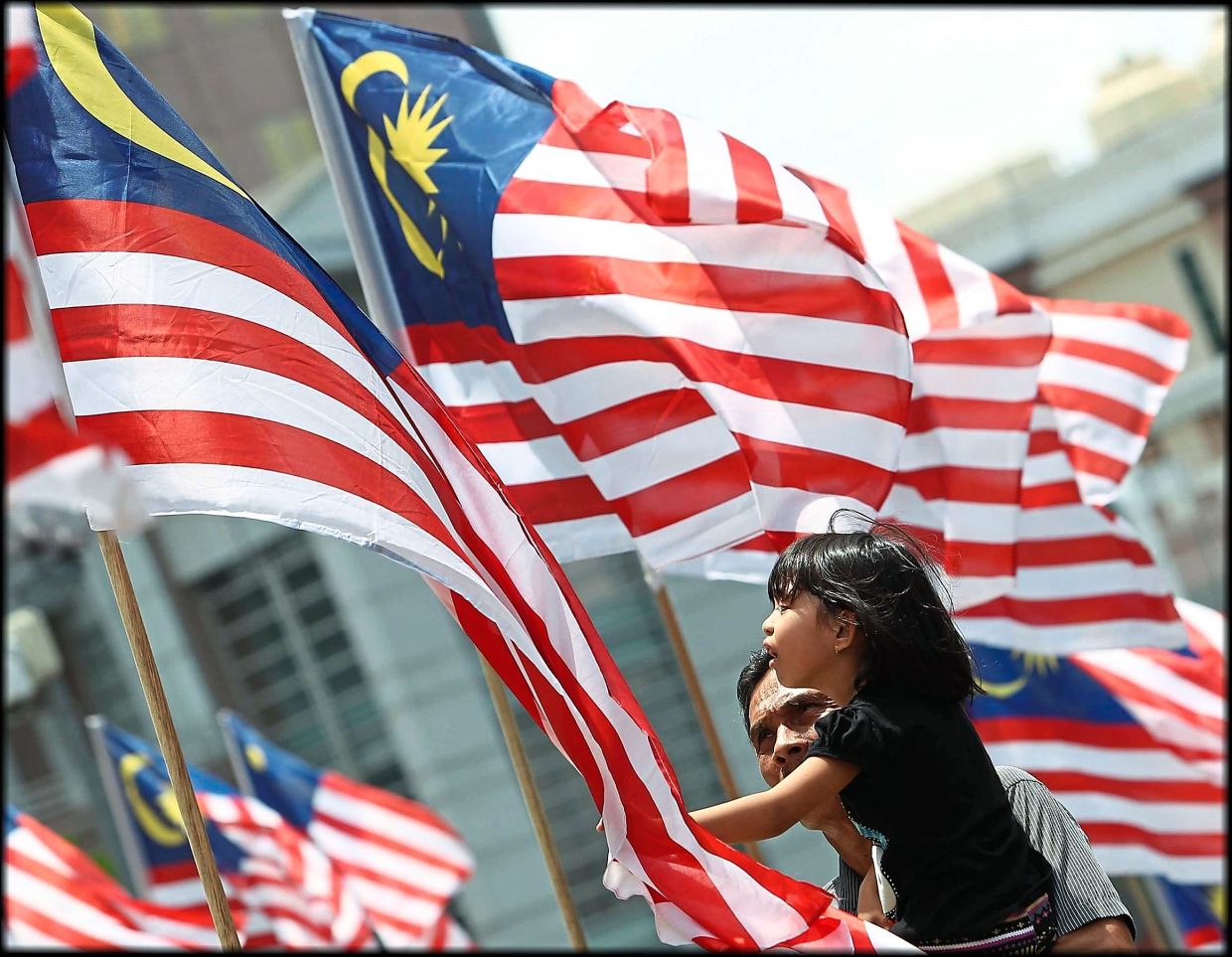
Malaysia Day 101


MM2H: Time To Go Home?


Jack of all languages and master of none

IF there is one thing our politicians need to learn to save Malaysians from embarrassment, it is this — there is absolutely no need to use English if your command of the language is atrocious.

Old and unflattering video clips of Tan Sri Noh Omar (now Entrepreneur Development and Cooperative Minister) and Datuk Seri Rina Harun (Women, Family and Community Development Minister), who had delivered their speeches badly in English, have resurfaced.

They appeared to have been speaking to an international audience and so, had no choice but to use English.

But their listeners probably became more confused after straining to decipher what they were trying to say.

Surely, their aides should have insisted that they practised their speeches before delivering them, or really, if their pronunciation was beyond salvage, they should stick to using Bahasa Malaysia.

There is absolutely nothing wrong in delivering speeches in the national language, even if your audience prefers English, as interpreters can be made available easily.

Chinese Premier Xi Jinping speaks in Mandarin for sure. Indian Prime Minister Narendra Modi speaks impeccable English but as he plays the nationalistic card, he uses Hindi exclusively, even when interviewed by the foreign media.

In a 2019 show with adventurer Bear Grylls, the Indian leader spoke in Hindi in the entirety.

Thai PM Prayut Chan-o-cha will definitely stick to speaking Thai. So will his counterparts from Japan, South Korea and Vietnam.

President Rodrigo Duterte, like most Filipinos, uses a mix of English and Tagalog, in all his speeches.

French leaders like Francois Hollande and Nicholas Sarkozy, of course, choose to speak in French, probably still insisting that theirs is the rightful lingua franca, while German leader Angela Merkel prefers to speak in her native tongue.

The bottom line is this – leaders should not speak in a language they are not familiar with as their words are important and they shouldn’t be misunderstood.

No doubt, for those in Commonwealth countries like Malaysia, there is a certain level of snobbery and bias towards English-medium schooling and tertiary education in the United Kingdom, United States or Australia. English is an international language, without a doubt.

Our previous PMs had the benefit of having an English medium education.

Tunku Abdul Rahman was Anglophile, he spent years in England, as did Datuk Seri Najib Razak, who studied at St John’s Institution in Kuala Lumpur before going to Malvern College in Worcestershire and then University of Nottingham, England.

Tan Sri Muhyiddin Yassin had his secondary education in Muar, Johor, and the 74-year-old has a solid grasp of the English language although he studied locally.

In 2016, then Deputy Prime Minister Datuk Seri Dr Ahmad Zahid Hamidi used English when he spoke at the United Nations General Assembly in New York.

The polite comment over this episode had been “less than eloquent” but it was a disaster, really. I wrote a piece defending him for trying, as he could have easily opted for BM – which he should have done.

But the problem is this — we are right smack in the age of social media, Malaysians are in an unforgiving mood and are angry with the Cabinet line-up. The comments had been scathing, and these embarrassing videos will haunt our politicians for a while.

Comparison is often made with Singaporean leaders, which is unfair, as they have only one medium, which is English. Malay is the republic’s official language but let’s be honest, not many of them speak it well, or at all.

Over here, the present crop of leaders are from the Malay school background including Datuk Seri Ismail Sabri Yaakob, whose parents were rubber tappers and certainly not from an aristocratic and privileged background.

Recently, Deputy Higher Education Minister Senator Datuk Dr Ahmad Masrizal Muhammad found himself a target when he posted a message to thank Malaysians over his appointment.

The short note was in BM except for a short sentence that read: “lets (sic) together light tomorrow with today.”

The grammar error was actually the missing apostrophe, as while the “light tomorrow with today” is strange to many of us, it was not wrong.

I googled it and found out that it was first used by Elizabeth Barrett Browning, a prolific writer of poetry and prose of the Victorian era.

Last week, one fake picture went viral again, showing a signage purportedly put up in Semenyih, Selangor, which read: “Free wife, coffee brick and message” instead of free wifi, coffee break and massage.

Many of my friends quickly shared it, presumably angry at the continuing deterioration of the English language in Malaysia.

For one, our signages are in BM and even if there were those written in English, there will be no massage for sure, except maybe “massage chairs”.

After 64 years of independence, many of us need to speak better Bahasa Malaysia and more widely, too.

And as the world evolves, it would do us good to speak Chinese as China is becoming the new economic powerhouse. If we have Arabic or Hindi thrown in, it is even more commendable.

In many European countries, most people are able to speak several languages proficiently. While we are without doubt multi-lingual, we are the master of none, really.

So how? Can ah? Cannot meh? Die lah like that.

The bigger picture

IT’S an unpopular decision by the Selangor government to degazette a huge tract of forest land for development, and the Mentri Besar has found himself having much to answer for.

With a general election looming, Parti Keadilan Rakyat, which helms the state government, is understandably concerned about the sentiments of urban voters.

Datuk Seri Amirudin Shari is in the unenviable position of having to deal with pressure from all sides over the proposal to degazette the Kuala Langat North Forest Reserve (KLNFR) for development.

It would have been much easier for the MB to make a similar decision in Pahang or Kelantan, where there are plenty of jungles.

But city folk love their forests, with the environment increasingly a passionate cause.

Non-governmental organisations and environmental activists have understandably displayed disdain for the move.

The temperature has risen as a palace-linked company has been mentioned, even though it has wound up, while a powerful Sarawak company has entered the picture.

The company has been awarded the right to turn 495ha of the initially proposed 931.17ha of the forest into a mixed commercial project.

But as with everything, there are always two sides to the story. Proponents of the deal have argued that a report prepared by Universiti Putra Malaysia has shown the replacement forest reserve – as per the degazetting of KLNFR – has a total size of 1,058ha, compared to the KLNFR at 991.5ha.

The replacement sites are Sabak Bernam (308ha), Hulu Selangor (207ha) and Hulu Langat (63ha).

The main source of the controversy is the purported displacement of the orang asli community.

They certainly deserve to be treated better as the four villages within the KLNFR have been seeking to gazette and receive titles for the land they’ve been living on for many years.

The villagers at Kampung Orang Asli Busut Baru were shortchanged when they were relocated from KL International Airport, where they were promised titles and 404ha of land. Other villages have waited even longer.

For 27 years, they never received their land title or full promise. Where were their champions?

Finally, early this year, the MB and exco approved titles for four orang asli villages within the vicinity of KLNFR.

Kampung Orang Asli Busut Baru, for example, was approved 364ha at their existing site as well as another 41ha at KLNFR.

Strangely, the stakeholders at Bukit Cheeding, Pulau Kempas and Bandar Saujana Putra have no objections to the degazetting, but there is protest from Kampung Busut Baru.

Ironically, the state has fulfilled its promise to this village, but they must have valid reasons for their objections, and it must be respected.

Many of us who meant well in discussing this topic, have probably neither heard of these locations nor set foot there to talk to the communities.

Some of us even think that the orang asli in Selangor still depend on the forests for food.

On the contrary, they are part of our modern community. In fact, at Bukit Lanjan, not far from 1 Utama shopping mall, is a big orang asli settlement, composed mainly of the Temuan tribe.

I know because I regularly help a church group to deliver food to some orang asli children from Pahang.

I am sure Malaysians who oppose the degazetting mean well because our forests are disappearing and we want to protect the need for soil and water conservation, biodiversity and other environmental reasons.

After all, KLNFR comprises 8,000-year-old peat swamps that used to spread over 7,200 ha of land back in 1927.

The wisdom is to strike a balance between environment, economic development of the state and the availability of land.

Land is a state matter, and the authority lies with the state government, as clearly stipulated in the National Forestry Act 1985.

The proponents and opponents of the KLNFR have arguments to justify their cases, often leaving out many details which Malaysians, especially Selangor subjects, ought to know and understand.

For a start, 40% of the KLNFR forest has already been degraded due to encroachment and fires. So, it’s not quite green virgin land with clean rivers filled with fishes and prawns, as many of us might imagine.

In fact, an estimated RM2.2mil has been spent on fire fighting.

Succinctly put, in a hectare of land, only five or six big trees or two or three species can be found, as opposed to hundreds of species in a normal healthy forest, according to the UPM report.

The debate, of course, is that we can replant and rehabilitate the degraded forest.

But not many are aware that the East Coast Rail Link (ECRL) was supposed to cut through a small portion of the forest, some 2% of it, but luckily, the plan has changed under the Perikatan Nasional government, and the train is now set to go through the northern parts of Selangor, passing by Gombak instead.

Selangor state generated a total of RM2.2bil in revenue last year. Land premium contributes approximately RM1.074bil, which is around 55%, while land taxes represent 25% of the revenue, which is around RM542mil.

Amirudin has received a hefty legal bill of over RM255mil, which the Selangor state government must now bear because the state has lost three suits from land acquisitions.

The total compensation that Selangor had to fork out for unlawful land acquisitions actually totalled RM1.3bil – and the RM220mil is merely the amount that the Selangor government has to pay now. The MB, unfortunately, has inherited a legacy problem left behind by his predecessor Tan Sri Khalid Ibrahim.

The MB should also explain if it’s true that Selangor, while being the richest state in the peninsula, is actually struggling with finances because it has spent RM1.1bil on Covid-related initiatives.

The bad economy, plus the fact that while Selangor contributes about 23% to the national gross domestic product (GDP), the state only gets back less than 10% from the federal government.

Here’s a lesson to politicians – winning the polls is easy but running the state and juggling the budget is tough.

According to the Department of Statistics, Selangor has 6.55 million people with an average of 1.5% annual increase, but by 2030, another 1.05 million people will be residents. I’m not sure if the illegals are factored into the estimates.

The National Physical Plan 2 states that Selangor is right in the middle of a Mega City comprising Selangor, KL, Putrajaya and Seremban.

State government coffers are drying up. Penang is doing a deal with a developer to reclaim land, and last week, Chief Minister Chow Kon Yeow said the state would be selling land and transferring some of its dormant land to its development arm, the Penang Development Corporation (PDC).

He said the state collected revenue amounting to RM386mil as of June 2021, which was 76% of the estimated revenue of RM506mil, revealing it could not be collected in full in 2021.

Penang state is facing a barrage of brickbats from Penangites and its NGOs for allegedly killing fishing grounds.

For Selangor, the challenge would be to source a revenue stream as finances dry up, look to develop land with a growing population, and keep the people of Selangor safe and factories open.

Selangor has pressures which other state MBs and Chief Ministers don’t face because job opportunities have attracted millions of people to the state.

Also, the state needs to please the voters who want to protect the forests as a heritage and for the environment. After all, once the trees are gone, they can’t be replaced.

Those agreeing or opposing the de-gazettement have taken a strong stand instead of treading the middle ground – a classic case of failing to see the forest for the trees.

So, what do politicians do when a controversy can’t be resolved? Postpone a decision and review it.

Let’s return to reason and science


Looking ahead: Malaysia’s Institute for Medical Research is currently working on a few Covid-19 vaccines. — SAMUEL ONG/The Star

Internationally renowned academician Professor Dr Jeffrey Sachs, who heads the Lancet Covid-19 Commission, shares his views in an exclusive interview on the fight against the pandemic, the US-China rivalry and his call to Malaysia to produce its own vaccine.


Prof Dr Sachs: Malaysia started late in vaccination because it’s not a vaccine producer, but now, the country is catching up. Malaysia should aim to produce vaccines in the future.

The Lancet Covid-19 Commission was created to help speed up global, equitable and lasting solutions to the pandemic. How much has been achieved and what are the hurdles?

The global response to the pandemic has been wholly inadequate. This results from five main factors:

  1. The epidemic has been handled as a matter of national policy-making, without adequate regional and global coordination;
  2. The major regions, including the US, EU, China, India, Russia and Asean, have not attempted any kind of coordinated response;
  3. The rich countries have not fairly shared their technologies, especially on vaccines;
  4. The global financing system has favoured the rich countries, providing too little support to the developing countries;
  5. The culture in many societies – such as the United States – have put personal behaviour ahead of the social good. In the name of “liberty”, Americans have failed to follow basic rules and protocols, and the disease has therefore been allowed to run rampant in the United States.

Perhaps the main geopolitical problem has been the failure of the US to work with China for global solutions. This is tragic, since China has done an excellent job of suppressing the pandemic, and the world could and should have learned a lot more from China’s response.

On a personal level, what is your role?

I am participating in policy discussions almost daily with governments and international organisations, as well as with the Commissioners and the experts on our various task forces. My job is to help coordinate the work of the Commission, and to oversee the drafting of various statements and the final report, which will be published in mid-2022.

While the world still battles the raging pandemic, new variants have surfaced, making it harder to contain the problem.

What are your views on the continuing obstacles?

The delta variant has been a huge setback, but given the faulty policies by so many governments around the world, the emergence of new variants like delta has been made much more likely by the delays in comprehensively suppressing the virus. We should have known better but failed to act wisely.

Vaccination remains the most effective way to fight the pandemic. What is your view on how Malaysia is handling its vaccination exercise?

We know that the vaccines are not enough to stop transmission – as Israel has shown (with high vaccine coverage but a strong epidemic). Vaccines cut serious disease, but do not stop transmission by themselves. Thus, countries need to combine vaccination with strong suppression policies (based on social distancing, prohibition of super-spreader events, face mask wearing, widespread and readily available testing, emphasis on outdoor rather than indoor activities, contact tracing, and other measures). Malaysia started late in vaccination because it’s not a vaccine producer, but now, the country is catching up. Malaysia should aim to produce vaccines in the future.

Obtaining vaccines continues to be an issue for many developing countries. It’s worse in Africa. How real is the hoarding of vaccines by powerful developed countries?

Very real. The failure of the vaccine-producing countries to come up with a plan to scale up production and distribution of vaccines to developing countries is a great disappointment. It is a moral failure as well as a practical failure, leading to more deaths and more chances of dangerous variants.

Many scientists have said the third vaccination – the booster – isn’t necessary as it will further deprive many countries from having access to the supply. What are your thoughts?

The evidence is not comprehensive, but it is a shame for rich countries to give the third dose without even a plan for the first dose in much of the world. That is unwise, unfair, and immoral in my view. The US, China, Russia, EU, UK, and India should present a coherent, coordinated plan for global vaccination coverage, and the US and EU should waive IP (intellectual property) to facilitate the scale-up of vaccine production in more countries. China, for example, should be helped to speed the production of mRNA vaccines.

Ordinary people are overloaded with all kinds of information. Vaccines – whether they are Pfizer, AstraZeneca or Sinovac, are basically the same, but because the US, Europe and China have adopted different requirements, it has led to anxiety for securing entry into these countries. What are your views on this?

Once again, there is too little coordination and cooperation among the major countries, and too little sharing of information.

Can you comment on how politics, especially geopolitical rivalry, can be separated from science?

The United States should learn some good manners, to work cooperatively with China rather than try to impose its will on the country.

What is your comment on the increasing friction between China and the US over the origins of the coronavirus and the pressure on the WHO to have another round of investigations to determine its source?

Both governments have information that they should add to the investigation on the origin of the virus. Indeed, much of the research underway at the Wuhan Institute of Virology was a joint US-China project, with funding by the US. Therefore, there is no cause for finger-pointing by one country at the other. We need scientific cooperation between the US and China in the search for the origin of SARS-CoV-2, the virus that causes Covid-19.

What should the US and China be doing in the fight against the pandemic, instead of having this side issue? How can both sides work together and in what areas can they combine resources? Both sides have accused each other of the virus originating from lab leaks.

As I just mentioned, scientists from the two countries have actually been working together on SARS-like viruses. The two governments should be cooperating transparently together. Both should be adding more information to the investigation. The US should acknowledge its role in the laboratory work, and therefore, its co-responsibility in investigating the possible origins of the virus.

The WHO’s team, comprising experts from China and other countries, arrived in Wuhan for a month’s investigations into the origins of the virus. There is now another request for a follow up probe while China has also demanded a separate investigation into Fort Detrick in the US. What is your take?

We need a clear investigation of the joint US-China research programme to see if, by some terrible accident, it somehow contributed to a research-related spill over event. That is one hypothesis that needs investigation, along with various possibilities of natural spill over events.

Finally, in the post Covid-19 pandemic world, how should the world and health experts brace for more infectious diseases?

We have many disease crises around the world, ranging from known infectious diseases that are not yet properly controlled (such as Malaria, worm infections, TB, HIV, etc.), as well as emerging infectious diseases such as Covid-19, non-communicable diseases (such as the global diabetes epidemic), and environmental ills (such as lung and cardiovascular diseases caused by air pollution). We should be investing far more resources into epidemiology, disease surveillance, disease prevention, and disease treatments. The Global Fund to Fight AIDS, TB, and Malaria should become the Global Health Fund, to finance the response to the global disease burden in developing countries. All of this requires foresight, long-term thinking, and more resources from the rich world.

US needs to work with China

KUALA LUMPUR: The United States needs to work with China to find a global solution in the fight against the Covid-19 pandemic, says prominent academician Prof Dr Jeffrey Sachs.

“This is tragic, since China has done an excellent job of suppressing the pandemic, and the world could and should have learned a lot more from China’s response.

“The United States should learn some good manners to work cooperatively with China, rather than trying to impose its will on that nation,” the head of the Lancet Covid-19 Commission said.

In an email interview, the Columbia University lecturer was asked to comment on the increasing friction between the US and China over the origins of the coronavirus and the pressure on the World Health Organisation to conduct another round of investigations to determine the source of the problem.

“Both governments have information that they should add to the investigation of the origin of the virus.

“Indeed, much of the research underway at the Wuhan Institute of Virology was a joint US-China project, with funding by the US.

“Therefore, there is no cause for finger-pointing by one country towards the other. We need scientific cooperation between the US and China in the search for the origin of SARS-CoV-2, the virus that causes Covid-19,” he added.

On how the synergy can be established and areas to focus on, Dr Sachs said “scientists from the two countries have actually been working together on SARS-like viruses”.

“The two governments should be cooperating transparently together. Both should be adding more information to the investigation. The US should acknowledge its role in the laboratory work, and therefore, its co-responsibility in investigating the possible origins of the virus.”

Dr Sachs said rich countries had also not generously shared their knowledge, especially on vaccines, adding that the major regions including the United States, European Union, China, India, Russia and Asean had not attempted any kind of coordinated response.

“The global financing system has favoured the rich countries, providing too little support to developing countries,” he said.

“The culture in many societies – such as the United States – has put personal behaviour ahead of the social good.

“In the name of ‘liberty’, Americans have failed to follow basic rules and protocols, and the disease has therefore been allowed to run rampant in the US.”

Click here for the full interview

Award-winning Jeffrey D. Sachs is an economics professor, best-selling author, innovative educator and a global leader in sustainable development. He serves as the director of the Center for Sustainable Development at Columbia University in New York, and is a University Professor, Columbia’s highest academic rank.

Home improvements


IT’S good that the Home Ministry is now open to reviewing its Malaysia My Second Home (MM2H) programme because its new rules have been criticised, the Sultan of Johor among its detractors.

Minister Datuk Seri Hamzah Zainuddin has assured that the government is prepared to re-examine the new criteria – which many feel is too stringent – following the programme’s reactivation.

Rubbing salt into the wound, the rules even apply to those already settled in Malaysia, and not just new applicants.

Let’s take a step back and assess what the objectives were for MM2H – it was to target high-income participants possessing adequate capabilities with stipulated rules on the duration of social visit pass, minimum days of staying in Malaysia per year, the threshold of offshore income, the number of deposits and amount of liquid assets declaration.

More importantly, the MM2H programme has managed to stimulate the country’s economy, with a cumulative gross value-added income of RM11.89bil from 2002 to 2019 through visa fees, property purchases, personal vehicle purchases, fixed deposits, and monthly household expenditure. As of now, the ministry has approved a total of 57,478 MM2H participants, including dependents of MM2H pass holders.

Basically, when the country is grappling with an economic problem, MM2H is a low hanging fruit.

Most of the participants applied for this programme because they had bought homes in Malaysia, and they certainly would want to have some form of incentive. Most don’t even contemplate permanent resident status.

But even before these new revisions were introduced, it was already a nightmare applying for an MM2H status.

I have a Hong Kong celebrity singer friend, in her late 60s, who wanted to apply to stay here. She is Muslim and felt she could spend her time here since she already has many properties.

But the conditions included one strange rule – she could not work in Malaysia while her application was being processed.

As someone who performed regularly in Genting Highlands, she refused to accept the requirement.

She continues to sing praises of Malaysia, especially Sabah, in all her interviews, but Malaysia broke her heart, and she’s a high-value individual with plenty of money.

Of course, she has now cynically said that it’s easier for poor-skilled foreign workers to stay here than herself.

Thailand, Indonesia and the Philippines have all launched similar MM2H programmes, and they are much more attractive than Malaysia’s.

Indonesia’s Minister of Tourism and Creative Economic, Sandiaga Uno, has announced his plan to establish a long-term visa valid for up to five years (extendable). This visa will also allow foreign nationals to invest and work in Indonesia legally.

“The concept is to create a long-term stay, second home visa for a five-year term. They deposit IDR 2bil (US$142,300/RM582,702) per individual or IDR 2.5bil (US$178,000/RM728,378) for the whole family. They will be allowed to invest or do business here, and it is extendable every five years,” he was quoted.

If all goes to plan, this five-year visa will be launched by mid-2021. Three destinations are prepared to welcome the holders of long-term visas – Bali, Batam and Bintan.

For Johor, the MM2H needs to be flexible because it has a multiplying effect on its property market and other industries, including the food and beverage sectors.

It’s not just Singaporeans, but also Chinese and Indonesians who want to stay in Johor Bahru but work in Singapore.

The Sultan of Johor is understandably upset and has used very strong words on the new MM2H rules.

Just look at the number of unsold properties in Johor Baru, with the amount of unsold housing and serviced units combined amounting to RM38.6bil up to March 2021.

Rather than impose new rules on those who have already settled here, it’s better to reach out to those who have not fulfilled the conditions.

Interestingly, Hamzah said that some 8,000 participants have been found not to be using the facility to live in the country, despite being given the pass, adding that according to immigration records, the number of participants who don’t reside in Malaysia was between 7,000 and 8,000.

“They will only come in for a short period to register their application and when they want to renew their passes later.

“I have asked officers to call up these participants to find out their intention of taking up the offer as they don’t even stay in Malaysia,” he told a press conference on Wednesday (Sept 1).

There must be a minimum amount of time spent in Malaysia, but also, if they are high-value globetrotters, we can’t expect them to stay here for too long.

Supposedly, British tycoon Richard Branson chose to enrol in MM2H, so we can’t expect him to be in Malaysia for long spells. He will be the best ambassador for our country though.

But what’s more important is, Malaysia can’t afford to keep on shifting the goalposts because whether we like it or not, the impressions foreigners have of our country now aren’t flattering ones.

Hamzah has said the rules for MM2H have not changed in the last 20 years, and any revisions would be considered fair. However, it mustn’t run too far off.

With that said, I trust the Home Minister to be a fair person who will do what’s right for MM2H participants.

MERDEKA-kan Malaysia Dari Rasuah


The Malaysia We Want with Yusuf Hashim