



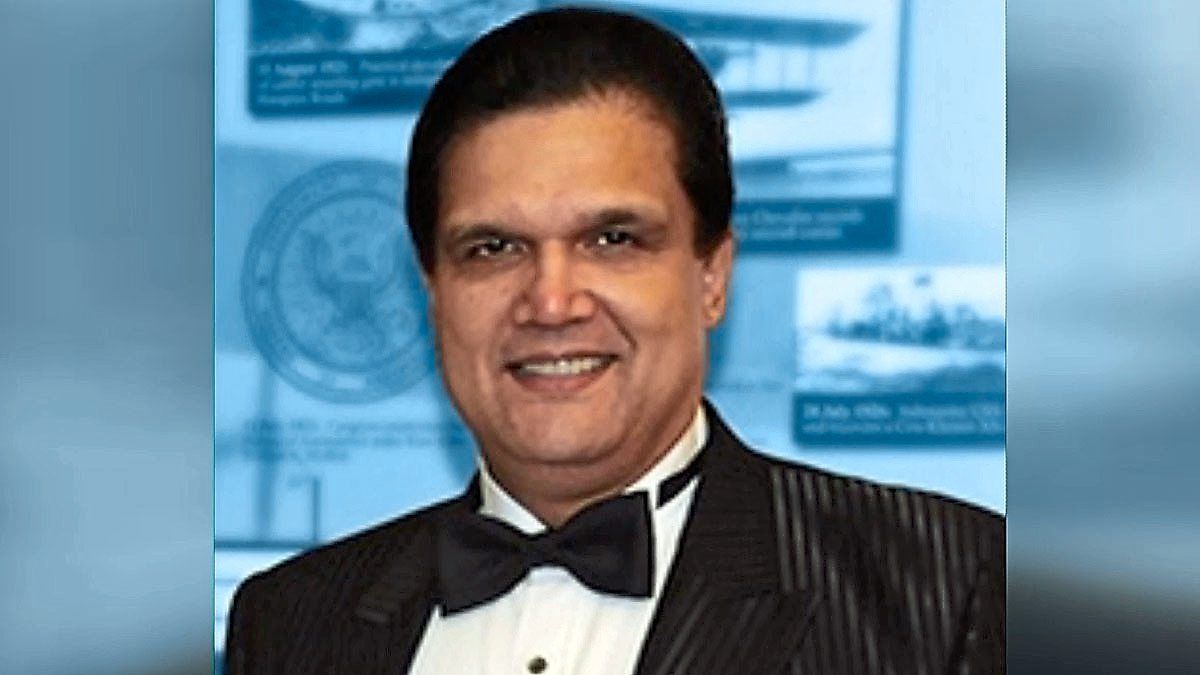
Francis is notorious for his role in what has been billed as the biggest scandal in US navy history.
HE may not be in the same league as Malaysian fugitive financier Jho Low, but fellow Malaysian crook Leonard Glenn Francis is also making headlines in American media for all the wrong reasons.
Low still takes the cake for masterminding the siphoning of US$4.5bil (RM18.9bil) in the 1MDB scandal, but Francis isn’t far off for his role in what has been billed as the biggest scandal in US navy history.
Like Low, he, too, is from Penang. While Low has disappeared from the public eye and is hiding, the defence contractor is ready to tell his story and expose the US Navy.
Fat Leonard, as he’s called because he used to weigh 350 pounds (160kg), has been accused of providing cash, prostitutes, travel expenses, luxury items and concert tickets to many US navy officers, including those from the US Seventh Fleet.
Besides tickets to Lady Gaga concerts and Lion King shows, he loved hosting Spanish suckling pig and Kobe beef dinners. And of course, Cohiba cigars and fine whiskey were on the menu, too.
According to the Washington Post, Francis was so skilled at cultivating Navy informants that “it was a challenge to juggle them all. On a near daily basis, they pelted him with demands for money, prostitutes, hotel rooms and plane tickets” to Hawaii, the Philippines, Hong Kong, Malaysia, Singapore, Cambodia, Thailand, Japan and even Tonga.
The Japan-based fleet is the largest of the forward-deployed US fleets, with 60 to 70 ships, 300 aircraft and 40,000 Navy, Marine Corps personnel, and Coast Guard support personnel, and it operates in the Pacific and Indian oceans.
Francis, now 53, was so good at his job, including buying over top US Navy elites, that one commander said, “he is a crook, but he is our crook”.
The Malaysian was even handed classified data on the movements of US ships and submarines. With the information, he redirected aircraft carriers to ports he controlled in Southeast Asia for fuel, tugboats, barges, food, water, sewage removal and more since 2006. He became very wealthy doing business with the US Navy, which obviously included overcharged bills to them. After all, it’s taxpayers’ money and word is, the US Navy had no qualms relinquishing its funds.
His company created forged invoices, falsified quotes and ran kickback schemes. It also allegedly created ghost subcontractors and fake port authorities to fool the Navy into paying for services it never received, amounting to a fraud of over US$35mil (RM146.7mil), although investigators say the real amount could be much greater.
Here’s the gem. According to one report, a decorated federal agent John Bertrand Beliveau leaked information to Francis to ensure he would not get into trouble.
Beliveau was given money and prostitutes but it was never enough, and from court documents, it was stated that he sent Francis an email which read: “You give whores more money than you give me. I can be your best friend or worst enemy.”
Defence analysts have said that there are many such defence contractors in the industry, but the rot has appeared because Francis got caught, in a sting operation, no less. The US federal prosecutors have filed criminal charges against Fat Leonard and those connected to him, including staff, navy officials and civilians.
Suffering health problems, Francis was hospitalised and released in March 2018. He has been granted medical furlough and allowed to stay at a private residence under 24-hour surveillance.
So, why has Fat Leonard decided to sing? For one, the case has been postponed many times, although he pleaded guilty in 2015.
Cynical journalists and analysts have claimed that the US State Department doesn’t want the embarrassing details aired like dirty laundry, resulting in an interminable series of sentencing delays.
It seems prosecutors would rather work amicable solutions with corrupt top officers to secure guilty pleas, and then work out the punishments ranging from a slap on the wrist to jail sentences.
The highest profile case involves Cambodian Michael Vannak Khem Misiewicz, who escaped from his country’s killing fields as a child and was adopted by an American mother.
He became a decorated officer as a skipper of a US warship. However, in 2016, he was sentenced to a six-and-a-half-year jail term for his role in the epic bribery scandal that has rocked the Navy.
He pleaded guilty to leaking a long list of military secrets in 2011 and 2012 to Glenn Defence Marine Asia, a Singapore based company belonging to Francis that sealed more than US$200 mil (RM838mil) worth of contracts to restock US Navy ships. Misiewicz served as deputy director of operations for the Navy’s Seventh Fleet, an influential role overseeing ship movements throughout Asia.
Last week, I spoke to award winning journalist Tom Wright, who co-authored the best seller Billion Dollar Whale with Bradley Hope, about how our numero uno hero Low pulled off one of the biggest financial heists in history.
Wright, who is now based in Singapore, will be sharing his investigations and interviews with Francis in his nine-episode podcast series beginning Oct 5. It will be available on Apple, Spotify and other platforms.
The podcast will shed light on the Navy’s cover-up of the case, which has targeted more than 30 officers, yet failed to prosecute admirals, whom Francis claims accepted gifts and favours.
“The explosive story will also feature scores of other voices including prominent women who share the broader tale of misogyny and sexual abuse in the US military,” reads a release.
Wright has given me a sneak peek of what’s in the podcast, but no spoilers from me. That said, it will be very interesting, as Wright is an accomplished storyteller.
Wright, who managed to gain access to Francis through a Malaysian intermediary, spoke about how their relationship had started well, but turned testy towards the end when Wright uncovered more details.
Apparently, Francis had, by then, lost control of the narrative he wanted to spin and the ability to protect his image.
The interview will include Leonard’s revelation of how in 1989, when he was only 21, he was caught by the police for his role in a gun-robbery in Penang. He was given a three-year jail sentence for firearms possession but escaped the death sentence.
Interestingly, Francis came from a prosperous family, enriched by the maritime logistics firm his maternal grandfather had started, a media report revealed.
Well, it’s certainly a podcast worth listening to about a colourful and charming character, who lied, cheated and bribed US Navy officers, and supposedly, even ones higher up in the hierarchy. He was given countless testimonials from the US Navy for “job well done” for his “exemplary services.”
So, how was the US Navy’s biggest scandal exposed? It was an angry wife of a top Navy official who felt enough was enough. As the saying goes, hell hath no fury like a woman scorned, but that’s a story for another time.
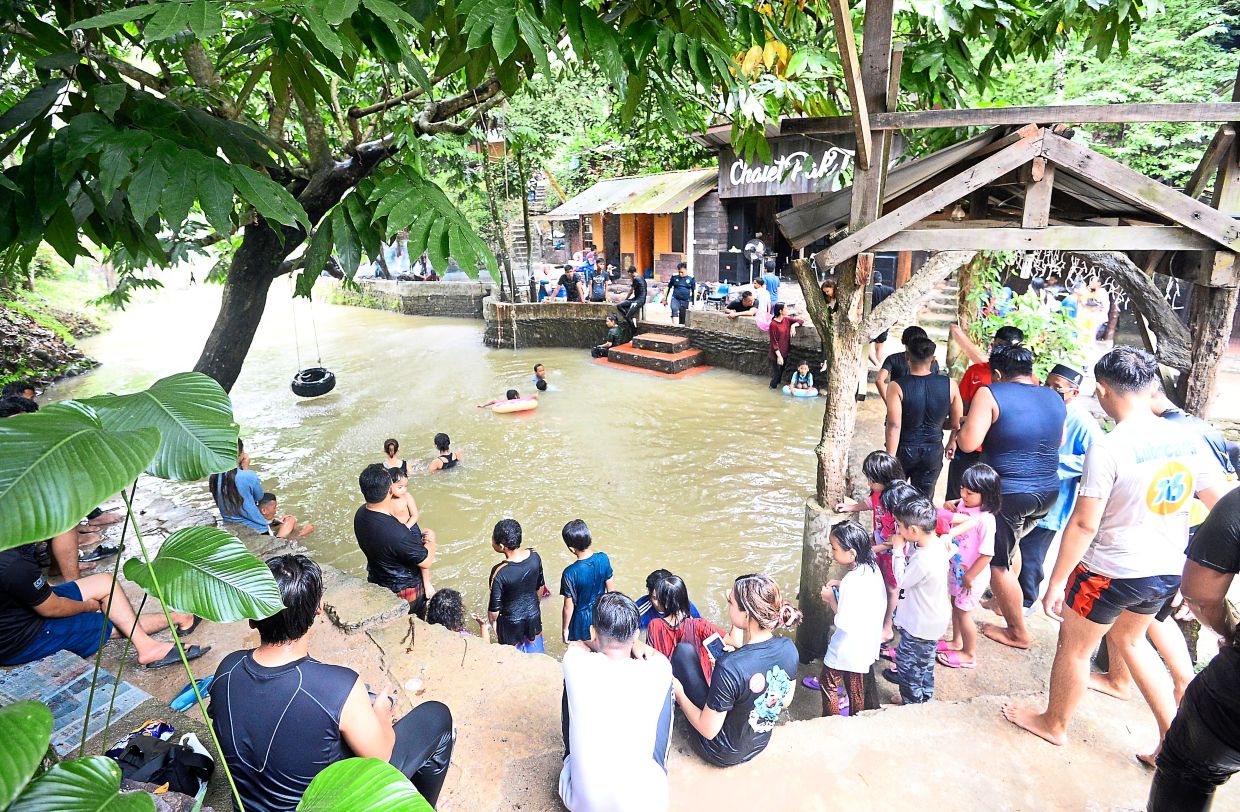
Tough call: Although people are understandably tired of being cooped up indoors, picnics and swimming in the river are hardly ‘essential’ when the Covid-19 pandemic is still raging.
THIS is a tough call. It’s understandable that we crave going out since most of us have been cooped up at home for so long, and especially now that many of us are fully vaccinated.
But it’s difficult to reason how many of my friends have dined in coffee-shops and restaurants. As a Penangite foodie, I can vouch that there’s a massive difference between eating your nasi kandar or char koay teow at coffee shops and having it packed and delivered.
But I’ve decided to err on caution’s side because I still fear eating out.
I’m receptive to having my meal outdoors or alfresco, but even then, only in the coming weeks.
As much as I’ve championed the need for the economy to reopen and be set back on track, I still feel we should exercise wisdom and discipline.
It’s necessary for a return to normalcy with concessions given to resume most sectors. But let’s not have our guard down.
Many Malaysians must have been traumatised by watching video clips on social media featuring large numbers of people going for picnics at parks and beaches.
If these videos are recent and authentic, then it goes to show how ignorant and even irresponsible these people are.
Honestly, what were they thinking? Taking their families for an outing believing the coronavirus has vanished?
Picnics and swimming in the sea or rivers are hardly “essential”, especially when the Covid-19 pandemic is still raging. They must surely know that being double vaccinated doesn’t spare them from being infected by the virus.
I’m just as perplexed at how the authorities didn’t see this coming. But better late than never because following the viral videos, enforcement officers have begun guarding the entrances of these recreational spots.
As social activist Tan Sri Lee Lam Thye rightly put in his letter to The Star, about how weekends in Port Dickson are “chock-a-block with picnickers ignoring even basic SOP.
“The rakyat depend on the law enforcers to keep them safe. Doing otherwise is a dereliction of duty and in itself, a punishable offence, just as much as non-compliance with SOP is.”
Obviously, there’s a need to cap the number of people entering such sites and have them register, too, as per the Standard Operating Procedures.
Likewise, there was a surge in human traffic at jetties and airports, so these SOPs and officers should have been in place anticipating the crowds.
The local authorities must install huge and compelling billboards to remind Malaysians to adhere to SOP. Such visual cues are surely more essential than those paying homage to VIPs.
It’s ridiculous that crowd control was only engaged or stepped up after the media highlighted these cases, but truth be told, this is typically Malaysia.
We have the tendency to react rather than anticipate.
So, why should anyone be surprised when many Bangladeshis turned up at a post office because they could finally renew documents or transfer money home?
A video displayed an exasperated woman shouting angrily. While many Netizens were upset that she appeared rude, we must also understand that the crowd was probably ignoring SOPs.
No one knows how many of these foreigners have been vaccinated or are carriers.
Again, the bottom line is that we should have foreseen the numbers and the gate should have even been locked to cap the number of people allowed into the premises.
If that’s not bad enough, after more than a year, we all know that queries on certain government agencies handling the Covid-19 related matters go unanswered.
It reflects badly on our competency and planning because communication is imperative. This backup mechanism must surely be in place before decisions and announcements are made.
It’s the classic of kelam kabut (in disarray, or confused), a phrase universal in our society, but not with foreigners who put us on the spot when they ask us its meaning.
When the government announced that cinemas were allowed to open from Sept 9, the Golden Screen Cinemas (GSC) and TGV Cinemas (TGV) operators decided to hold their horses.
While the green light was given, the cinema operators hadn’t received a finalised SOP from the National Security Council (NSC), hence the delay.
Yes, it looks like Covid-19 has become endemic, but we still don’t want to see a surge in infections, especially those in Categories 3, 4 and 5.
With schools, universities and tourist spots reopening and eventually, inter-state travel allowed, it’s best to be prepared for all possibilities. As the saying goes, better to be safe than sorry.
LET’S give credit where it’s due. Datuk Seri Ismail Sabri Yaakob seems determined to implement significant reforms in his first 100 days as Prime Minister.
These are changes Malaysians, including the Opposition, have longed for in our political system.
Last week, the Cabinet agreed to cap the PM’s tenure at 10 years, and introduce the anti-hopping law, as well as offer recognition to the opposition.
While the PM never provided a time scale for the reforms, it’s imperative that Members of Parliament from both sides get down to drafting and amending laws to turn these changes into reality.
These reforms can’t be implemented overnight because the legal changes will take a while, but the PM must set a date to work towards this parliamentary and government transformation.
It’s a good start, and the swiftness in which he has pushed for the reforms has surprised me, because he could face resistance from his own party, which isn’t known to embrace the unconventional.
These changes would help evolve the Malaysian political system to become more mature and encouraging of bipartisan politics.
But let’s prioritise what to do. We need to give Ismail Sabri time and support to conduct more reforms.
There are many changes we want to see, including fair, if not equal, development allocation for all MPs, regardless of them being in the government or opposition.
Opposition MPs should be invited to sit in selected committees to ensure that everyone is accountable in addressing issues that concern the nation. Malaysians are tired of the adversarial antics that have become the hallmark of Malaysian politics.
But I am sure most Malaysians will agree that it is ill advised to appoint anyone, despite his or her experiences, to any position if the person is facing criminal charges or is being investigated.
It doesn’t matter if it is merely an advisory post with no executive powers, no ministerial perks or doing it for free. The point is that it is ethically wrong. There are over 30 million Malaysians, many of whom are much more talented and smarter, to choose from. Many would willingly work quietly for the nation without the fanfare and positions.
I am 60 years old, and I’ve covered politics and parliament in my 30-plus years as a journalist. In all that time, I’ve never seen such disdain for politicians by the people.
Our MPs are called Yang Berhormat (The Honourable) only by name because their voters don’t think they are, except their most fanatical supporters and sycophants.
The distrust of politicians also extends to our Rulers, although that’s not openly addressed.
At the end of the Rulers special meeting last month, a statement was carefully crafted and issued by the King, which said that Ismail Sabri will be the country’s ninth Prime Minister.
In the statement, Istana Negara said that based on the statutory declarations received on Aug 18 from 220 Members of Parliament, 114 had nominated the former Deputy Prime Minister.
Basically, the King, with the backing of the Rulers, was satisfied with the support obtained by Ismail Sabri.
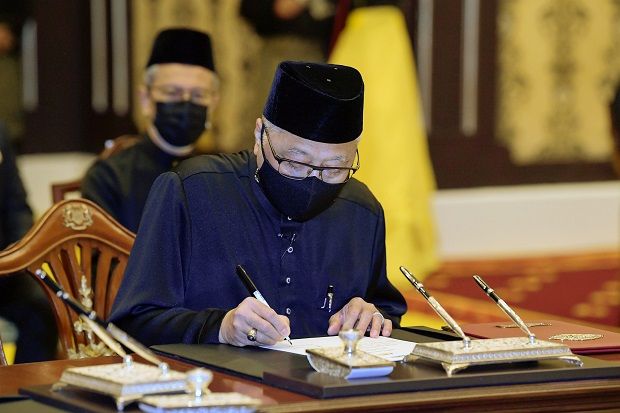
The next step was the presentation of the instrument of appointment and swearing in ceremony, which played out the following day on Saturday, Aug 21, 2021.
The Yang di-Pertuan Agong, who wanted to return to Pahang on Saturday, had planned to swear Ismail Sabri in on Monday.
But the Rulers advised the King to make the swearing in a priority, suggesting he postpone his trip.
They didn’t want to wait any longer. Clearly, they were fed up with the politicians and wary of the possibility of some of the 114 changing their stand. They wanted Ismail Sabri to be officially sworn in as PM to end the impasse, power struggle and speculations.
The Rulers have remained unhappy with the incessant power play by politicians.
But two important details were absent from the statement by the King on Aug 20 – there was no mention of Ismail Sabri having to seek confirmation from the Dewan Rakyat.
There was also no reference of Ismail Sabri forming a unity government with the opposition, as suggested by some groups previously.
What was not said to the media is that this statement supposedly supersedes the previous statements by the King – that was the spirit and thinking of the Rulers who met on Aug 20. Of course, some have dismissed this as “hearsay” in the absence of an official statement from the Istana.
Then, there are contrasting legal interpretations from both sides of the divide on whether it’s necessary for the PM to face a motion of confidence in Parliament. Some have argued that it’s just a formality but wonder why the PM must face it at all.
But well-informed sources said the Rulers were generally tired of the political antics and attempted power grab by politicians. So, most Rulers have now resisted meeting politicians.
Except for the PM and the Menteri Besar and Chief Ministers, the Rulers are not inclined to listen to politicians, and in private conversations, the remarks they’ve used have been harsh.
The key words in the Aug 20 statement were – “the government must immediately continue its efforts against the Covid-19 pandemic for the benefit and safety of the people and the well-being of the nation, which has been greatly affected by this crisis.”
The King also hopes the new prime minister’s appointment will conclude the political crisis and that all MPs will set aside their political agenda and work towards addressing the pandemic in the interest of the people and the country.
“His Majesty reiterated that the people should not be burdened with endless political turmoil at a time when the country is struggling with health issues and economic depression due to the Covid-19 pandemic.”
The Malay Rulers also support the King’s stand that a stable government must be formed as soon as possible, following the resignation of the previous prime minister, it said.
The principles of Istana Negara and the Rulers have remained the same – political stability, fighting the pandemic and economic recovery first.
Last week, de facto Law Minister Wan Junaidi Tuanku Jaafar said he believed that based on the support displayed by the 114 MPs for Ismail Sabri to the King, “Tuanku (His Majesty) consented that there is no need to have a vote of confidence.”
Wan Junaidi wouldn’t have had the audacity to make the statement if he didn’t have his facts right.
The test is also on our lawmakers – who have pledged to the King – to cast politics aside and work with the government to fight the pandemic and put the country’s economy back on track. And after that, they can slug it out in the general election, which isn’t far away.
Unfortunately, many of our lawmakers are quick to run to the King when they need him but do something else when it suits their political interests.
The special parliament meeting on Covid-19 was a complete waste of time because it degenerated into a shouting match and, worse, it caused the MPs’ aides and officials to be infected with Covid-19.
If many of us think that some of our Cabinet members are slacking and don’t deserve to be in the line-up, then it’s not a comforting thought that the quality and competence of some of our lawmakers – from both sides – are just as bad.
But because of our deep political allegiance, many of us are, unfortunately, not honest with our assessment. It’s always the other side that doesn’t perform sufficiently.


IF there is one thing our politicians need to learn to save Malaysians from embarrassment, it is this — there is absolutely no need to use English if your command of the language is atrocious.
Old and unflattering video clips of Tan Sri Noh Omar (now Entrepreneur Development and Cooperative Minister) and Datuk Seri Rina Harun (Women, Family and Community Development Minister), who had delivered their speeches badly in English, have resurfaced.
They appeared to have been speaking to an international audience and so, had no choice but to use English.
But their listeners probably became more confused after straining to decipher what they were trying to say.
Surely, their aides should have insisted that they practised their speeches before delivering them, or really, if their pronunciation was beyond salvage, they should stick to using Bahasa Malaysia.
There is absolutely nothing wrong in delivering speeches in the national language, even if your audience prefers English, as interpreters can be made available easily.
Chinese Premier Xi Jinping speaks in Mandarin for sure. Indian Prime Minister Narendra Modi speaks impeccable English but as he plays the nationalistic card, he uses Hindi exclusively, even when interviewed by the foreign media.
In a 2019 show with adventurer Bear Grylls, the Indian leader spoke in Hindi in the entirety.
Thai PM Prayut Chan-o-cha will definitely stick to speaking Thai. So will his counterparts from Japan, South Korea and Vietnam.
President Rodrigo Duterte, like most Filipinos, uses a mix of English and Tagalog, in all his speeches.
French leaders like Francois Hollande and Nicholas Sarkozy, of course, choose to speak in French, probably still insisting that theirs is the rightful lingua franca, while German leader Angela Merkel prefers to speak in her native tongue.
The bottom line is this – leaders should not speak in a language they are not familiar with as their words are important and they shouldn’t be misunderstood.
No doubt, for those in Commonwealth countries like Malaysia, there is a certain level of snobbery and bias towards English-medium schooling and tertiary education in the United Kingdom, United States or Australia. English is an international language, without a doubt.
Our previous PMs had the benefit of having an English medium education.
Tunku Abdul Rahman was Anglophile, he spent years in England, as did Datuk Seri Najib Razak, who studied at St John’s Institution in Kuala Lumpur before going to Malvern College in Worcestershire and then University of Nottingham, England.
Tan Sri Muhyiddin Yassin had his secondary education in Muar, Johor, and the 74-year-old has a solid grasp of the English language although he studied locally.
In 2016, then Deputy Prime Minister Datuk Seri Dr Ahmad Zahid Hamidi used English when he spoke at the United Nations General Assembly in New York.
The polite comment over this episode had been “less than eloquent” but it was a disaster, really. I wrote a piece defending him for trying, as he could have easily opted for BM – which he should have done.
But the problem is this — we are right smack in the age of social media, Malaysians are in an unforgiving mood and are angry with the Cabinet line-up. The comments had been scathing, and these embarrassing videos will haunt our politicians for a while.
Comparison is often made with Singaporean leaders, which is unfair, as they have only one medium, which is English. Malay is the republic’s official language but let’s be honest, not many of them speak it well, or at all.
Over here, the present crop of leaders are from the Malay school background including Datuk Seri Ismail Sabri Yaakob, whose parents were rubber tappers and certainly not from an aristocratic and privileged background.
Recently, Deputy Higher Education Minister Senator Datuk Dr Ahmad Masrizal Muhammad found himself a target when he posted a message to thank Malaysians over his appointment.
The short note was in BM except for a short sentence that read: “lets (sic) together light tomorrow with today.”
The grammar error was actually the missing apostrophe, as while the “light tomorrow with today” is strange to many of us, it was not wrong.
I googled it and found out that it was first used by Elizabeth Barrett Browning, a prolific writer of poetry and prose of the Victorian era.
Last week, one fake picture went viral again, showing a signage purportedly put up in Semenyih, Selangor, which read: “Free wife, coffee brick and message” instead of free wifi, coffee break and massage.
Many of my friends quickly shared it, presumably angry at the continuing deterioration of the English language in Malaysia.
For one, our signages are in BM and even if there were those written in English, there will be no massage for sure, except maybe “massage chairs”.
After 64 years of independence, many of us need to speak better Bahasa Malaysia and more widely, too.
And as the world evolves, it would do us good to speak Chinese as China is becoming the new economic powerhouse. If we have Arabic or Hindi thrown in, it is even more commendable.
In many European countries, most people are able to speak several languages proficiently. While we are without doubt multi-lingual, we are the master of none, really.
So how? Can ah? Cannot meh? Die lah like that.
IT’S an unpopular decision by the Selangor government to degazette a huge tract of forest land for development, and the Mentri Besar has found himself having much to answer for.
With a general election looming, Parti Keadilan Rakyat, which helms the state government, is understandably concerned about the sentiments of urban voters.
Datuk Seri Amirudin Shari is in the unenviable position of having to deal with pressure from all sides over the proposal to degazette the Kuala Langat North Forest Reserve (KLNFR) for development.
It would have been much easier for the MB to make a similar decision in Pahang or Kelantan, where there are plenty of jungles.
But city folk love their forests, with the environment increasingly a passionate cause.
Non-governmental organisations and environmental activists have understandably displayed disdain for the move.
The temperature has risen as a palace-linked company has been mentioned, even though it has wound up, while a powerful Sarawak company has entered the picture.
The company has been awarded the right to turn 495ha of the initially proposed 931.17ha of the forest into a mixed commercial project.
But as with everything, there are always two sides to the story. Proponents of the deal have argued that a report prepared by Universiti Putra Malaysia has shown the replacement forest reserve – as per the degazetting of KLNFR – has a total size of 1,058ha, compared to the KLNFR at 991.5ha.
The replacement sites are Sabak Bernam (308ha), Hulu Selangor (207ha) and Hulu Langat (63ha).
The main source of the controversy is the purported displacement of the orang asli community.
They certainly deserve to be treated better as the four villages within the KLNFR have been seeking to gazette and receive titles for the land they’ve been living on for many years.
The villagers at Kampung Orang Asli Busut Baru were shortchanged when they were relocated from KL International Airport, where they were promised titles and 404ha of land. Other villages have waited even longer.
For 27 years, they never received their land title or full promise. Where were their champions?
Finally, early this year, the MB and exco approved titles for four orang asli villages within the vicinity of KLNFR.
Kampung Orang Asli Busut Baru, for example, was approved 364ha at their existing site as well as another 41ha at KLNFR.
Strangely, the stakeholders at Bukit Cheeding, Pulau Kempas and Bandar Saujana Putra have no objections to the degazetting, but there is protest from Kampung Busut Baru.
Ironically, the state has fulfilled its promise to this village, but they must have valid reasons for their objections, and it must be respected.
Many of us who meant well in discussing this topic, have probably neither heard of these locations nor set foot there to talk to the communities.
Some of us even think that the orang asli in Selangor still depend on the forests for food.
On the contrary, they are part of our modern community. In fact, at Bukit Lanjan, not far from 1 Utama shopping mall, is a big orang asli settlement, composed mainly of the Temuan tribe.
I know because I regularly help a church group to deliver food to some orang asli children from Pahang.
I am sure Malaysians who oppose the degazetting mean well because our forests are disappearing and we want to protect the need for soil and water conservation, biodiversity and other environmental reasons.
After all, KLNFR comprises 8,000-year-old peat swamps that used to spread over 7,200 ha of land back in 1927.
The wisdom is to strike a balance between environment, economic development of the state and the availability of land.
Land is a state matter, and the authority lies with the state government, as clearly stipulated in the National Forestry Act 1985.
The proponents and opponents of the KLNFR have arguments to justify their cases, often leaving out many details which Malaysians, especially Selangor subjects, ought to know and understand.
For a start, 40% of the KLNFR forest has already been degraded due to encroachment and fires. So, it’s not quite green virgin land with clean rivers filled with fishes and prawns, as many of us might imagine.
In fact, an estimated RM2.2mil has been spent on fire fighting.
Succinctly put, in a hectare of land, only five or six big trees or two or three species can be found, as opposed to hundreds of species in a normal healthy forest, according to the UPM report.
The debate, of course, is that we can replant and rehabilitate the degraded forest.
But not many are aware that the East Coast Rail Link (ECRL) was supposed to cut through a small portion of the forest, some 2% of it, but luckily, the plan has changed under the Perikatan Nasional government, and the train is now set to go through the northern parts of Selangor, passing by Gombak instead.
Selangor state generated a total of RM2.2bil in revenue last year. Land premium contributes approximately RM1.074bil, which is around 55%, while land taxes represent 25% of the revenue, which is around RM542mil.
Amirudin has received a hefty legal bill of over RM255mil, which the Selangor state government must now bear because the state has lost three suits from land acquisitions.
The total compensation that Selangor had to fork out for unlawful land acquisitions actually totalled RM1.3bil – and the RM220mil is merely the amount that the Selangor government has to pay now. The MB, unfortunately, has inherited a legacy problem left behind by his predecessor Tan Sri Khalid Ibrahim.
The MB should also explain if it’s true that Selangor, while being the richest state in the peninsula, is actually struggling with finances because it has spent RM1.1bil on Covid-related initiatives.
The bad economy, plus the fact that while Selangor contributes about 23% to the national gross domestic product (GDP), the state only gets back less than 10% from the federal government.
Here’s a lesson to politicians – winning the polls is easy but running the state and juggling the budget is tough.
According to the Department of Statistics, Selangor has 6.55 million people with an average of 1.5% annual increase, but by 2030, another 1.05 million people will be residents. I’m not sure if the illegals are factored into the estimates.
The National Physical Plan 2 states that Selangor is right in the middle of a Mega City comprising Selangor, KL, Putrajaya and Seremban.
State government coffers are drying up. Penang is doing a deal with a developer to reclaim land, and last week, Chief Minister Chow Kon Yeow said the state would be selling land and transferring some of its dormant land to its development arm, the Penang Development Corporation (PDC).
He said the state collected revenue amounting to RM386mil as of June 2021, which was 76% of the estimated revenue of RM506mil, revealing it could not be collected in full in 2021.
Penang state is facing a barrage of brickbats from Penangites and its NGOs for allegedly killing fishing grounds.
For Selangor, the challenge would be to source a revenue stream as finances dry up, look to develop land with a growing population, and keep the people of Selangor safe and factories open.
Selangor has pressures which other state MBs and Chief Ministers don’t face because job opportunities have attracted millions of people to the state.
Also, the state needs to please the voters who want to protect the forests as a heritage and for the environment. After all, once the trees are gone, they can’t be replaced.
Those agreeing or opposing the de-gazettement have taken a strong stand instead of treading the middle ground – a classic case of failing to see the forest for the trees.
So, what do politicians do when a controversy can’t be resolved? Postpone a decision and review it.

PENANG'S HISTORY, MY STORY
Click on image to purchase book

A COLLECTION OF WONG CHUN WAI'S JOTTINGS
Click on image to purchase book