


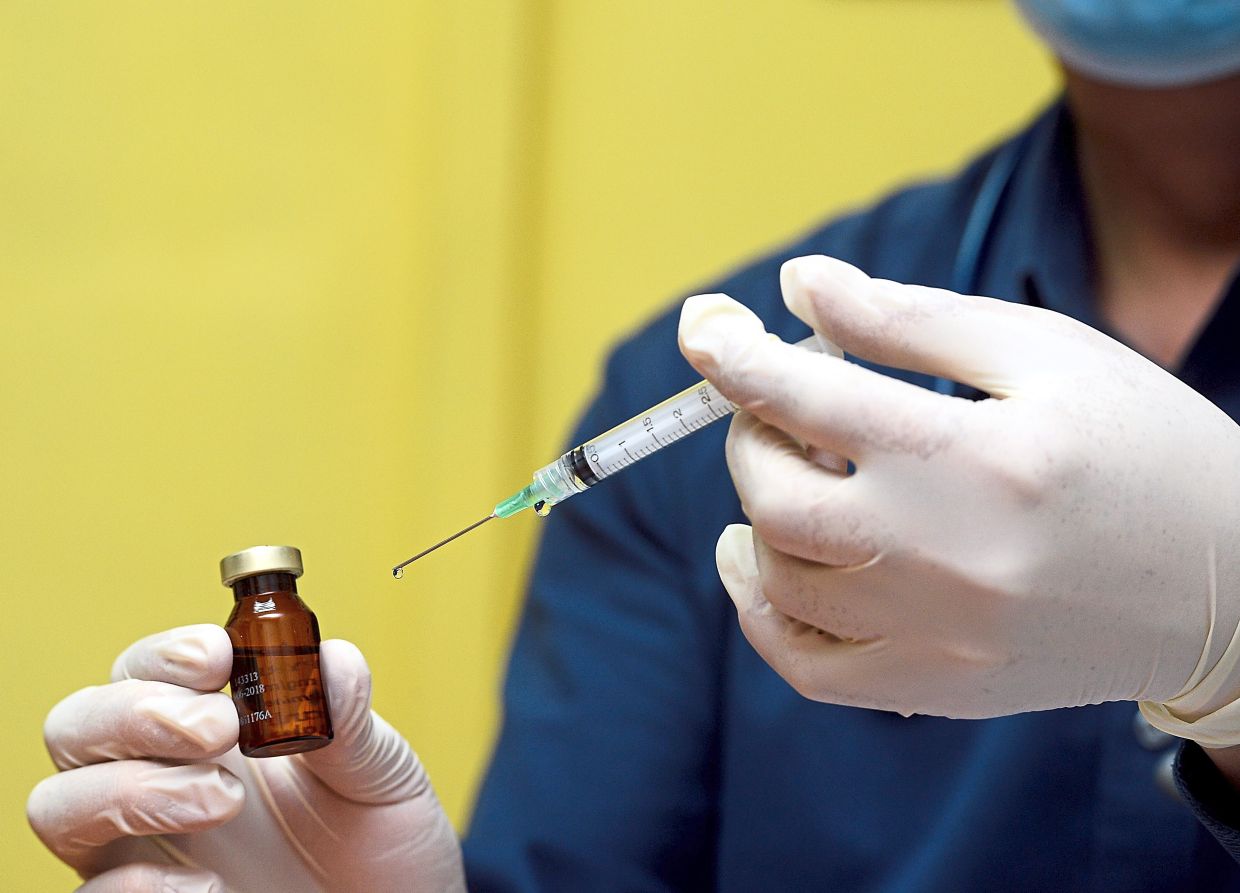
New hope: Malaysia is set to embark on its first Covid-19 vaccine trial, involving some 3,000 participants from eight hospitals under the Health Ministry.
AS we begin 2021, most of us are invigorated by renewed hope, positivity and optimism. After all, it surely can’t be as bad as the past year, when the pandemic stunned us into submission and destroyed our way of life.
The miraculously quick availability of vaccines – although only a few countries have fast tracked its approval – means a cure has been found, so, a rebound is in sight.
The coronavirus-induced recession crushed almost all businesses, with the aviation, tourism, entertainment and hospitality sectors the hardest hit.
Many of us, like the rest of the world, lost our jobs, and working from home has become entrenched.
But as Malaysia enters the first week of 2021, and as we prepare to welcome the Year of the Ox, many of us feel bullish.
Naturally, we need to be level-headed, even if we want things to be better.
The number of Covid-19 positive cases can only increase, and Malaysia has disappointingly gone from bad to worse.
But this is partly due to massive screenings conducted on foreign workers by health authorities.
We went into lock down in March last year when our Covid cases averaged mere two digits daily. But the current numbers are a staggering all-time high well into four figures. Still, we’re free to move around, albeit with safe practices firmly in place.
The truth is we’ve simply succumbed to the economic reality. Having to balance the needs of the economy and health of the public means we can’t revisit the harsh movement control order (MCO).
Although most of us in the Klang Valley continue to live with the conditional MCO, the tough measures experienced during the MCO period no longer apply.
As local tourism resumes, it’s apparent how caution has been thrown to the wind, exhibited by congestion at ferry jetties, and in one situation, a huge crowd at a clothing apparel promotion.
The malls are packed again, and so are the restaurants and coffee shops, and that means we will only expose ourselves to the virus more.
We also need to brace ourselves for the potential shut down of non-essential businesses again if the numbers spiral out of control in the first quarter of 2021.
But real hope has arrived. There is talk that vaccines will be available by April or May, by when we hope trials with volunteers would have concluded.
We should be able to see, by then, the effects on people in countries which have taken the vaccine route.
Malaysia is set to embark on its first Covid-19 vaccine trial, involving some 3,000 participants from eight hospitals under the Health Ministry. The trial would be a Phase Three clinical trial, developed by the Institute of Medical Biology Chinese Academy of Medical Sciences in Beijing.
Malaysia is reportedly working to secure Covid-19 vaccine doses for an initial target of 60%-70% of the population.
CIMB, in a report, forecasted the market will do well in the first half of 2021, due to factors such as additional liquidity available to retail investors, improved sentiment over mass vaccine programmes in Malaysia, reopening of international borders and potential fund flows back to emerging markets.
While I remain an optimist, I am also prepared for volatility and the unexpected. The economic rebound of up to 7.5% growth will depend on internal and external factors, which involve many things beyond our control.
We will also see the unveiling of the 12th Malaysia Plan, the country’s development blueprint for 2021-2025. It could well be the ruling government’s manifesto ahead of any general election. The 12th Malaysia Plan is likely to be ready in the coming months.
However, we can expect the fractious politics to continue. If the current government seems weak with its thin majority, then the Opposition is just as divided.
It doesn’t have the numbers to topple the government, and the two main figures – Tun Dr Mahathir Mohamad and Datuk Seri Anwar Ibrahim – just can’t work together.
The DAP has a problem because none of the Malay-based parties want to work with it.
Gabungan Parti Sarawak, which is vital to hold the federal government, has also said it won’t work with the DAP either.
The continuous support from the Chinese community for the DAP – which has a strong Chinese appeal – means voting itself out of the government.
This has happened in Sabah, and now Perak, where there’s no Chinese representation in both state governments.
PAS, which is clearly enjoying its lynchpin position, will continue to push its brand of Islamist politics, which has unsettled many Malaysians.
We can expect the same theatrics and incredible claims, or lies, from some of our politicians, but they won’t be helping to inspire foreign investment.
Sarawak is expected to call for its state elections by March, and that will kick off the year’s political events.
It’s good to be confident, but don’t unfasten the seat belts just yet, because the ride will still be bumpy. And keep those face masks on, too, for insurance.

Somehow, the significance of Dec 25 to the Christian community continues to elude many in our beautifully plural society.
CHRISTMAS Day may be over, but we should still be talking about this special occasion since the world is still celebrating the festive season. As a matter of fact, the Orthodox Christians in Russia and Eastern Europe annually celebrate Christmas Day on or around Jan 7.
There’s nothing in the Bible that states Jesus was born on Dec 25. However, the date was recorded as a day of celebration in 336, during the time of the Roman Emperor Constantine.
The Orthodox date works on the Julian calendar, named as such because it was proposed by Roman leader Julius Caesar. It predates the Gregorian calendar introduced in 1582 by Pope Gregory XIII, which is what’s used in most of the world.
But date aside, Christmas is to celebrate the birth of Christ. It’s not about Santa Claus, a decorated tree or exchanging gifts, but instead, purely about Jesus Christ.
It’s about his redemptive heart, of forgiveness and healing, loving and giving, the fulfilment touch and that God has come. That explains the season.
Christmas has, of course, become more secular and commercialised. It has now become a year-end holiday season. An Internet search of Christmas shows the appearance of Santa Claus in greater numbers than Christ himself. For many non-Christians, there is no religious significance.
No one will have their faith compromised by wishing someone Merry Christmas or even seeing a cake with that message displayed on the gateau.
Certainly, it’s not about whether wishing a Christian “Merry Christmas” is religiously acceptable or if selling cakes with the Christmas message jeopardises halal certification status.
Malaysians shouldn’t let these silly distractions affect their celebrations and the central message of the auspicious occasion. There will always be some looney, or groups of them, looking for attention and this time, PAS, with its newfound political power, seems to have gained a much louder voice.
But PAS has been consistent with such pronouncements, although it readily bends its rules and beliefs when it suits the party’s political gains.
So let’s not get overly upset. It’s just catering to its audience, who believe anything and everything their political/religious idols tell them.
It’s no different from the hardcore Donald Trump supporters in evangelical churches in the mid-west of the United States.
But here are the facts. Jesus was born in Bethlehem, as mentioned in the Gospels of Luke and Matthew in the Bible, although the date is not revealed.
Bethlehem is in Israel, but it’s administered by Palestinian authority. It’s a Palestinian town south of Jerusalem in the West Bank.
Basically, this is a huge Muslim town. Many biblical sites are found in towns which are predominantly Palestinian.
There are, indeed, many holy sites which are significant to both Muslims and Christians. And Christmas is celebrated in a huge way by the people there, both Christians and Muslims. Muslims make up over 50% of the population in Bethlehem.
Most of the Palestinians depend on Christian pilgrims and tourists for their living because they sell Christian religious and commemorative items.
No eyebrows are raised or debates sparked if people wish each other Merry Christmas in Palestine.
And Palestinian leaders have traditionally attended services at the Church of the Nativity, the site of the manger where Jesus is said to have been born.
It’s regarded as the world’s oldest continuously operating church, and inside the church is a grotto, a cramped, candle-lit nook said to be the spot where Jesus was born.
My knowledge isn’t Google-generated but firsthand because I’ve been to Jerusalem and other biblical sites as a Christian pilgrim.
I’ve spoken with many Palestinians, including Muslims, about their way of life, their frustrations and anger against the Israeli government.
The West Bank is a tiny but heavily populated area, and the people can’t possibly have the time to channel their energy towards meaningless polemics.
Here’s another gem: a Muslim family has been protecting the Church of the Holy Sepulchre, where many believe Jesus Christ was crucified and entombed.
The church is one of Christianity’s holiest sites, and many Christian denominations share this holy space for prayer. Thousands of people from all over the world make the pilgrimage there for the Easter holidays.
Few of these visitors are aware that the Joudeh family has held the keys to the church for generations, dating back to 1517.
The task fell to Joudeh’s ancestors as a way of maintaining a neutral guardian of the Church of the Holy Sepulchre, since the church is split between multiple Christian denominations, including Armenian Orthodox, Greek Orthodox and Franciscans.
This agreement between Joudeh’s Muslim ancestors and the Christians has helped build and maintain cooperation among the religions.
In a nutshell, instead of annually talking about the propriety of wishes, I’m glad most of my Muslim friends and relatives have simply ignored the whining of the minority.
The King, Al-Sultan Abdullah Ri’ayatuddin Al-Mustafa Billah Shah ibni Al-Marhum Sultan Haji Ahmad Shah Al-Musta’in Billah, also joined in wishing Christians a Merry Christmas, together with the Rulers of Selangor and Johor, Sultan Sharafuddin Idris Shah and Sultan Ibrahim Ibni Almarhum Sultan Iskandar.
The Ruler of Perak, Sultan Nazrin Muizzuddin Shah, has also consistently spoken up with his well-crafted messages on various issues affecting the people.
The messages of these senior Rulers are important because they are the true custodians of Islam and heads of Muslims in this country.
It’s also reassuring to the non-Muslim communities who are increasingly feeling insecure in the face of the actions and statements of some politicians and even civil servants, who possess the clout and authority to make decisions which affect many of us.
By applying pressure on non-Muslims to refrain from organising beauty contests and the like, they make many of us wonder where moderate Malaysia is headed.
And let’s not forget about a PAS MP grudgingly apologising for his claim of a distorted Bible.
In the warped minds of these PAS politicians, every celebration must be “hedonistic”. That means engaging in sensually pleasurable experiences, and in most cases, portrayed by the proverbial party and the prerequisite booze and drugs.
They simply love this word, and who knows why. Too many Netflix movies, perhaps?
At a time when we’re struggling with shrinking incomes, a faltering economy, a weak government and a raging pandemic, it’s incredulous that some of us can still find the time and energy for frivolous issues.
In the absence of many politicians unwilling to speak up against zealots who push unreasonable political tones because of political expediency, we can only count on our Rulers to speak up for most of us.
Daulat Tuanku! Merry Christmas to all Christians and a Happy New Year to all.
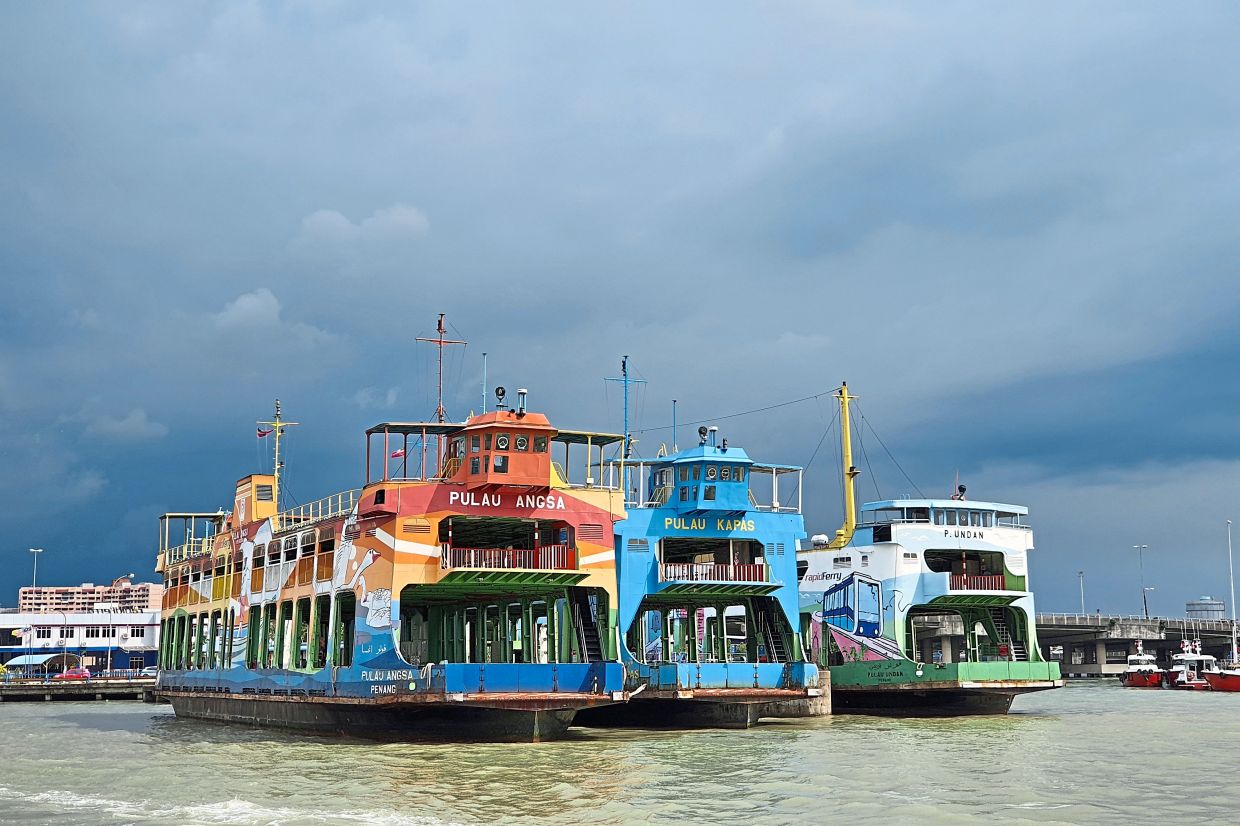
Photo: CHAN BOON KAI/The Star
Financial logic is shaking the foundations of the Penang ferry’s nostalgic appeal.
IF there’s a valid reason for Penang’s iconic ferry service to be retained, then it’s merely to preserve heritage and aesthetics.
However, that means taxpayers would have to cough up millions of ringgit for nostalgia.
I wonder how many of our politicians on the island regularly patronise the ferry service when they travel to the mainland.
Barring those accessing Butterworth town from George Town, they’ll likely use the Penang bridge to reach Seberang Prai. It’s apparent that the second link to the mainland, the 24km Sultan Abdul Halim Muadzam Shah Bridge, is greatly underutilised. Again, it wouldn’t be wrong to presume that these politicians don’t use it often either, if at all.
Like the Star Ferry service, which connects Hong Kong and Kowloon, the Penang ferry is more than just a tourist attraction – it also serves as a quick travel system.
But the Penang ferry service is also like an unwanted child. Everyone talks passionately about wanting to keep the baby, but no one wants to pay for childcare.
Talk is cheap, so show us the money, goes the adage.
Many Penang politicians – a bulk not even true-blue Penangites in the first place – talk about saving the service, but no one has practical plans to sustain it.
The cost won’t justify its upkeep – it’s that simple.
If the Finance Ministry announces that the ferry service is to be retained with an allocation of RM30mil, then it is certainly not a long-term solution. It is throwing away good money as this service is already in the intensive care unit.
Any plan should be feasible and long-term in nature.
There is little point in using political superlatives – like “acts of betrayal” – in an attempt to hang on to it.
The reality is that the Penang ferry service, with the same models, same look and feel, can no longer act as the continuing mode of transport. Period.
Like the Star Ferry in HK, the Penang ferry service has also been bleeding profusely. Passenger numbers have dropped drastically, so the operation has been running at a massive loss.
In HK, since the Star Ferry pier was moved from its old spot next to City Hall to its new location outside the International Finance Centre, passenger count has fallen sharply, so the service caters mainly to tourists and few commuters, reveal reports.
Likewise, the Penang ferry service has experienced the same fate. Over the last four years, the number of passengers has been dismal.
An average of two million users, including bicycles, lorries, cars, motorcycles and passengers, used the ferry between 2016 and 2019.
The number of passengers and motorcycles averages around a million a year, respectively.
That figure was halved this year, although the Covid-19 pandemic can take credit for that with travelling restricted.
But while the issue of ridership remains a major concern, the big question is the seaworthiness of the ferries in the future, since most of them are 47 years old.
The service experiences an average of one breakdown a month. That’s how bad it’s been. Just talk to the workers operating the ferries for details.
Sourcing spare parts from Europe has been a major challenge because the manufacturers no longer make these obsolete parts.
The government entity, Prasarana Malaysia Bhd, has been put in the unenviable position of running this loss-making entity, as it is said to cost them RM13.7mil annually to keep the ferries in service, yet it only collects RM7mil in tickets on average.
Prasarana has had to fork out RM24mil a year since it took over the service from Penang Port Sdn Bhd in 2018.
The previous Transport Minister, Anthony Loke, under the Pakatan Harapan government, had announced that Prasarana would be allocated RM90mil for upgrading the ferries and terminals. Of this, RM21mil would have been set aside to buy new passenger ferries, which presumably would be in a different form and shape from the present iconic ones.
A total of RM13.7mil from the allocation was to be spent on repairing the six existing ferries over a three-year period, but the funds never arrived.
I’m told that of the RM31mil operations cost a year, the ferries’ maintenance takes up to 50% of the budget, a bill which could increase as they age.
An annual loss of RM24mil is incurred in operating the ferry service. That’s a colossal sum to pay for the sake of nostalgia.
With an average monthly passenger and motorist count of 84,000 each, registered between 2016 and 2018, no business can afford such an operation.
Instead of making generalised and populist comments, politicians should also look at the financial details.
It makes sense to use catamarans and new water buses to replace the ferries, which would ensure the transport facility’s flow.
In fact, last year, Loke announced the use of catamarans to replace the existing ferry service.
Likewise, the iconic Penang Hill funicular railway, which climbs from Air Itam to Penang Hill, has been replaced with many different models because of maintenance and spare part issues.
It makes little sense to stubbornly insist on sticking to these old ferries purely for nostalgic reasons.
It’s not as if transportation between Penang island and Butterworth will be terminated.
I go back to my home state every month because I’m a born and bred Penang Island boy. The ferry service holds many fond memories for me, but if it needs to take a bow, then we must accept it. After all, logic should prevail.


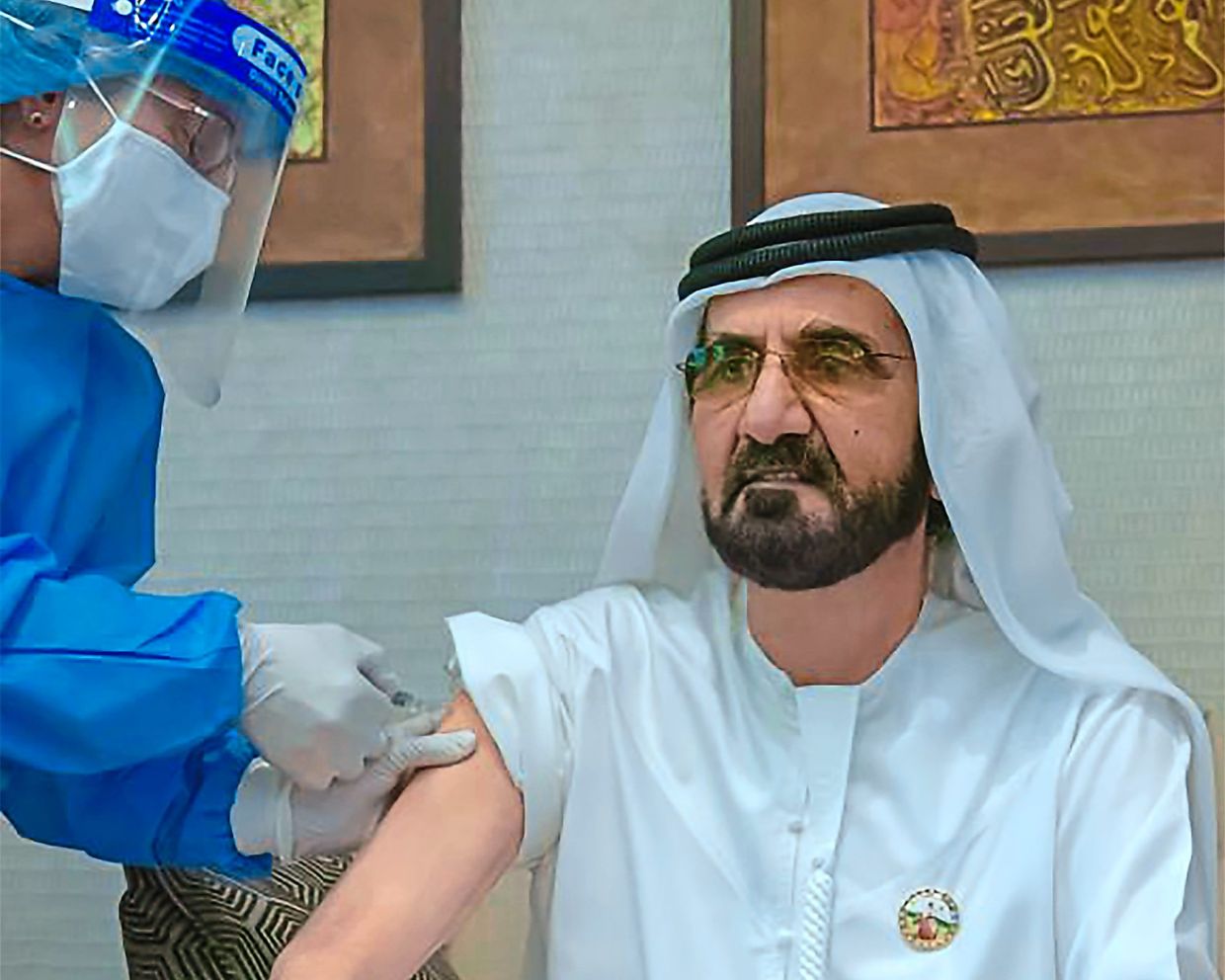
Royal approval: UAE’s Crown Prince of Dubai Sheikh Mohammed bin Rashid Al-Maktoum receiving an injection of a Covid-19 vaccine. — AFP
THERE’S finally light at the end of the tunnel from a dark period in modern history. The race to complete the final stage of testing the Covid-19 vaccine is almost at the finish line.
In Britain, the vaccination exercise has kicked off with people above 80 years old, since they’re the most vulnerable to the dreadful virus.
But let’s not get carried away. Only the British government has expedited the approval because it’s bracing for a huge spike with the coming winter.
The United States government only officially approved the use of Pfizer Inc’s Covid-19 vaccine on Friday, with the Food and Drug Administration (FDA) granting an emergency use authorisation for healthcare workers and elderly people in long-term care facilities in its first round of 2.9 million doses.
The FDA is responsible for protecting public health by ensuring safety, efficacy and security of human and veterinary drugs in the US. The FDA has always been used as a benchmark by most countries in providing approvals.
Last week, MyEG Services Bhd announced that it will work with Anhui Zhifei Longcom Biopharmaceutical Co Ltd (Zhifei) to obtain the Malaysian halal certification for the Chinese biopharma company’s Covid-19 vaccine, and to exclusively distribute it in Malaysia for a three-year period.
It said the two companies had signed a memorandum of understanding to cooperate in conducting Phase 3 clinical trials of Zhifei’s vaccine in Malaysia and to meet the halal status requirements of the Department of Islamic Development Malaysia (Jakim).
In September, loss-making Ho Wah Genting, which had been searching for a core-income generating business for a while, declared it was officially in the race to produce vaccines.
It announced that it had been appointed by a China-based diagnostic reagents manufacturer as its designated overseas sales agent for Covid-19 diagnostic products in Asean countries.
More recently, a Covid-19 research centre not linked to any medical institution, also sprouted and began issuing press releases to the media.
Firstly, let’s be clear that there’s nothing to stop the private sector from playing a role in the search for a vaccine source. In fact, I think it’s commendable that these companies are ready to play a complementary role.
If the intention is to help their bottom line, and in the process, propel their share prices, it’ll be up to shareholders to be mindful, and perhaps the Securities Commission to keep its eyes open.
Individuals hoping to set up a non-governmental organisation, including for Covid-19, have the right to do so, but their authority and credibility are for the public and media to decide.
The private sector, in fact, should be encouraged to take a stronger role in the fight against the pandemic, as the number of cases continue to climb in Malaysia.
The truth is, while we’ve relaxed the rules, with a crippling economy in mind, our situation has gotten worse. Let’s be honest – statistics don’t lie.
Only those with a warped mind, like conspiracy theorists, think the numbers in Malaysia have been manipulated and jacked up for political reasons. It’s an insult to dedicated professionals like Health Ministry director-general Tan Sri Dr Noor Hisham Abdullah and his team of frontliners, who haven’t taken a day off since the Movement Control Order (MCO) began in March.
The number of positive cases in Malaysia could likely be higher because only targeted areas and cases are tested, including travellers, medical treatment seekers and foreign workers.
The average daily cases (originally three digits in March and rendering us house bound) has passed the 2,000 mark now.
Most of us feel the end is near and that even with the staggering new numbers, we are certain that the cure is just round the corner, what with all the media hype over 90% efficacy by these drug companies.
Unfortunately, none of the vaccines have been approved by the National Pharmaceutical Regulatory Agency of Malaysia yet. Companies bringing in Covid-19 vaccines must also be registered with the NPRA – it doesn’t matter if these vaccines are from the UK, US, China or Russia.
I’ve been reliably informed that until today, no private companies have applied despite their announcements. So, nothing has been approved.
Like the US, Malaysia has also decided to wait until all the vaccines have completed the final stages of trials and are properly approved.
With the situation exceptionally dire there though, the FDA is reported to be ready to approve emergency use of Covid-19 vaccines in the US as more than 285,000 people have died from the virus.
But as with all testing, there will be cases of side effects, including fatalities. Tests are often called off and then resumed, which is normal, but if we are to read the Western media, only US and UK-made vaccines are good enough.
They have put the Chinese and Russian products in bad light by insinuating they are inferior products.
This isn’t just a question involving billions of dollars, but a race for political and diplomatic achievements.
It won’t be surprising if the US FDA refuses to approve the Chinese and Russian products. And if that happens, then those nations would need to turn to the World Health Organisation.
So many of us have been brain-washed into believing that everything from the West is good and most things from China are inferior or not of international standards.
The New York Times reported that researchers are currently testing 57 vaccines in clinical trials on humans, and at least 86 pre-clinical vaccines are under active investigation on animals.
I am told that China has provided its initial consignment of vaccines from state-owned Sinopharm to Malaysia, and that we would be carrying out trials with the Medical Research and Ethics Committee to finalise the stringent criteria.
Shipments of Beijing-based Sinovac’s vaccine, CoronaVac, have arrived in Indonesia in preparation for a mass vaccination campaign, with another 1.8 million doses due by next month.
Sinovac’s edge is that it can be stored in a standard refrigerator at 2-8 degrees Celsius, like Oxford’s AstraZeneca, while Moderna’s vaccine needs to be stored at -20 C and Pfizer’s at -70 C.
That means the Chinese and UK vaccines are more practical for developing countries like Malaysia. Otherwise, we’d have issues storing large amounts of vaccine at extremely low temperatures because special storage facilities will be needed, which seems almost out of the question for rural areas.
Then, there’s the halal issue. The concerns among Muslims about the shots containing substances forbidden by Islam is understandable as the same issue was also brought up by Muslims in Indonesia.
But here are some simple medical rules – the Malaysian government does not register a medicine based on halal or non-halal status. No medicine carries a Jakim sticker that says halal certified.
Malaysia has inked a deal with Pfizer to supply 12.8 million doses of its Covid-19 vaccine for 20% of the population. It has also reportedly entered a pact with Covax Facility, the global Covid-19 vaccine development platform, to cover another 10% of the population.
This is a life and death situation. No one needs to be an Islamic theology expert to know what Islam says about emergency cases relating to starvation or medical treatment. Perlis Mufti Datuk Mohd Asri Zainul Abidin has reportedly said that “even if there is an ingredient which is not permissible, the chemical transformation process will make it clean and halal.”
The Special Muzakarah Committee of the National Council for Malaysian Islamic Affairs met on Dec 3 to discuss whether the vaccine can be administered to Muslims.
Religious Affairs Minister Datuk Seri Zulkifli Mohamed Al-Bakri said the decision would be announced by the King.
Given the grounds to this concern, this is certainly the right course of action, especially in curtailing it from becoming both religious and political issues, or from companies exploiting the matter for commercial reasons by making all sorts of claims.
As someone privileged to have met Zulkifli, who tested positive himself, I can vouch that he is one of the most rational and practical Islamic scholars.
The United Arab Emirates, a Muslim country, has accepted the China-made Sinopharm and Indonesia, the world’s most populous Muslim country, is ready to take the vaccine from China, too. And Saudi Arabia has embraced Pfizer’s vaccine.
The end of Covid-19 is in sight for sure. The fact that Malaysia is already talking of vaccination and testing approaches, means we’re already making practical preparations.
Last week, I spoke to Datuk Zulkarnain Md Eusope, the chief executive officer of Pharmaniaga Bhd, the company tasked with bottling and transporting the Covid-19 vaccine for Malaysia.
The company is already preparing for the distribution of these vaccines and is just waiting for the government’s approval for the big day.
Zulkarnain is an excited man and rattled off details of what and how Pharmaniaga has readied itself to be part of history and saving lives.
For most Malaysians, 2020 has been a horrible year of Covid-19 and squabbling politicians.
What a toxic combination. For sure, we can’t wait to welcome 2021.
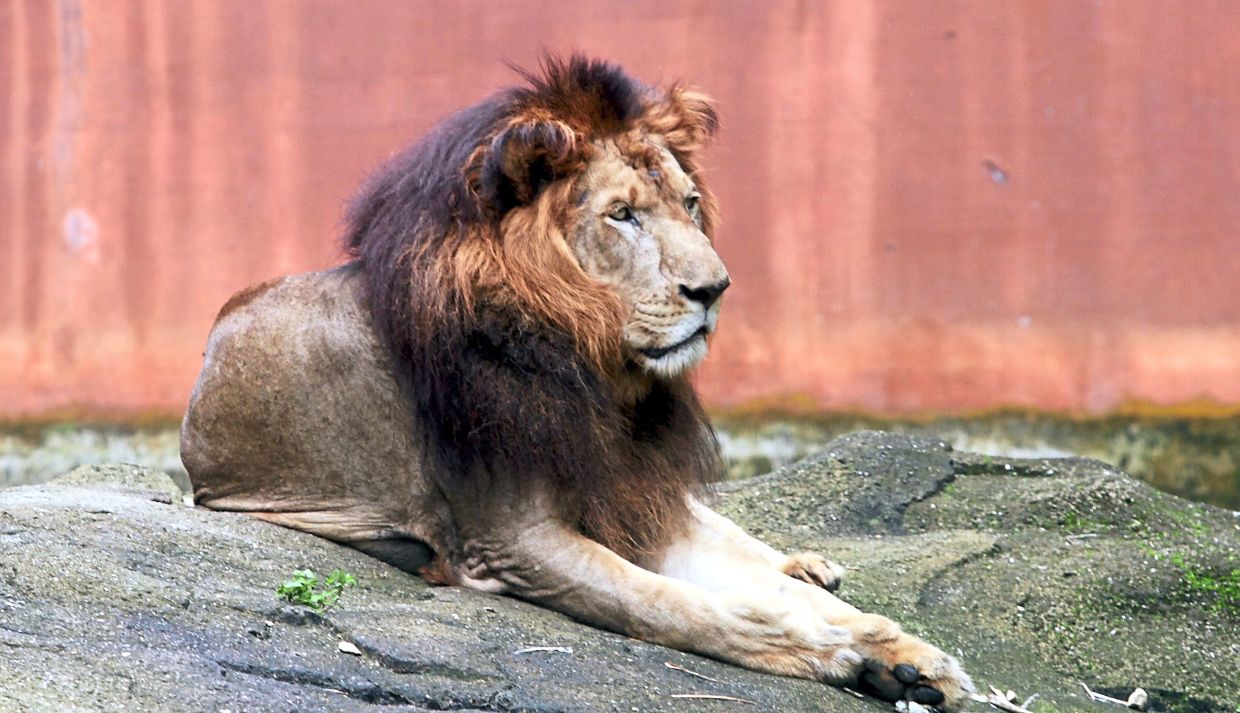
Time to rest: Saleng’s age is equivalent to 178 human years and he has not had a female companion in many years. — Filepic/The Star (2017)
THERE was a time when going to the zoo was an exciting family affair, but not anymore. Young ones now frown on the idea of keeping animals in cages.
Being exposed to information online, many young Malaysians, like their global contemporaries, also hate the idea of animal tourism.
Likewise, young people can’t imagine why their parents would still want to eat shark fin soup.
Recently, when the Melaka Zoo revealed it needed to buy a lion, the tender document went viral and earned a roar of disapproval.
It’s a Catch 22 situation for the Melaka Zoo. It needs to replace 28-year-old Saleng the lion, also known as the King of Malacca Zoo, because authorities feel he should be allowed to rest and not be paraded.
Saleng’s age is equivalent to 178 human years, so the state has certainly made the right call. Also, he has not had a female companion in many years.
If that’s not enough, there have been allegations on social media that Saleng is scrawny, and likewise the tigers there. The state authorities have steadfastly denied the claims, though.
Melaka is stuck with the zoo. It can’t simply shut it down and release the animals.
As with all zoos, maintenance is an expensive affair. It has also become increasingly politically incorrect to keep animals locked up in small, cramped conditions because many of us see zoos as prisons for animals.
Revenue has dropped and this has worsened following the Covid-19 pandemic since zoos have been forced to close temporarily.
But even before the pandemic, a rethink about zoos worldwide was brewing.
Animal parks and sanctuaries, like those in Africa, have taken over from zoos as they allow animals to roam freely in a huge natural enclosure. Unfortunately, this would never be possible in land-scarce Malaysia.
The only argument for retaining zoos is the focus on conservation and education, especially to save endangered species and make the public aware of nature’s wonders.
For example, the lion the Melaka Zoo wants to buy isn’t captured from the wild but likely from breeding programmes. The inability to find Saleng a mate is a sad story, though.
In zoos elsewhere, breeding has been successful, and it has helped, to some extent, in stopping the extinction of some animals.
With zoos, the public can see animals up close and not merely on screen in TV programmes or online videos. Not everyone can afford to travel to Africa on expensive safari excursions to see real animals roaming.
But in the end, the cost of confining animals completely outweighs the benefits. It’s a violation of animal rights because no one should lock animals up.
Zoos are like circuses. They are a thing of the past. Animals are not supposed to be beaten to entertain us. We know these animals are forcibly trained to do these tricks against their will.
It’s good that most circuses have closed shop because people have lost interest in such lame entertainment, and operators find the astronomical cost of running circuses too difficult to bear.
Most animals in zoos look either bored or stressed because they are confined. They’ve been robbed of their instincts and hunting skills because they are fed.
They sleep most of the time because there’s really nothing they can do.
It’s a cruel business because inter-generational bonds are broken when animals are sold or traded between zoos. It basically amounts to splitting up families.
Last week, a mistreated and dangerously overweight elephant that spent more than 30 years languishing inside a notorious Pakistani zoo made world news when he was freed, thanks to a wide-reaching and lengthy campaign led by singer Cher.
Kaavan, who became known as “the world’s loneliest elephant” after his partner died in 2012, had spent 35 years in captivity – and in shackles – at Islamabad’s Marg-hazar Zoo, a run-down institution that served as his home until the American icon secured his release.
It had taken four years for the animal-loving singer and a team of experts from Four Paws International to rescue the 36-year-old elephant. Those involved in the operation said they spent weeks training him to calmly enter and exit his custom-built crate (designed to transport a 5.5-tonne mammal) so they could take him to the Cambodian Wildlife Sanctuary.
Likewise, the campaign against animal tourism in Thailand has stepped up with tourists being discouraged from taking pictures with drugged tigers.
Riding on elephants has also been frowned upon, owing to growing concerns about the distressing way these animals – reported to be among the most sensitive and intelligent mammals – are treated.
Now, most tourists, especially those from the United States and Europe, prefer to just observe elephants from a distance in their natural surroundings.
Better educated travellers now understand that they must respect animals and that there should be no physical contact with them.
Before they dive into the ocean, scuba divers and snorkelers are now reminded not to touch or feed sea creatures.
Except for the petting section, zoos have also disallowed the public from animal feeding.
Writer Benjamin Wallace Wells, in an essay titled “The Case for the End of the Modern Zoo” wrote aptly that “the whole animal captivity picture began to look decidedly more grim and less defensible”.
Zoos are not going to be closed any time soon, but there must be a better way to see these animals in bigger and more natural preserves. So cages must be done away with.
Politicians who still only talk about building zoos are really relics of the past with no creative ideas to score tourist dollars. More and more holidaymakers have found Sabah and Sarawak ideal destinations because they want to experience nature and animals in the wild and not in zoos.
As Indian leader Mahatma Gandhi said, the greatness of a nation and its moral progress can be judged by the way its animals are treated. Locking them up is certainly not the way to go.

PENANG'S HISTORY, MY STORY
Click on image to purchase book

A COLLECTION OF WONG CHUN WAI'S JOTTINGS
Click on image to purchase book