Author Archives: wcw

Councils need to clean up their act

SELANGOR Ruler Sultan Sharafuddin Idris Shah gets many complaint letters and e-mails from the rakyat and patiently reads them all before sending them to the relevant parties for follow-up action.

Many of the complaints are sent to His Royal Highness out of desperation after their pleas elsewhere were ignored.

These are not surat layang (poison-pen letters), but genuine grouses as the writers leave their names, addresses and phone numbers.

On one occasion, a woman complained that her divorce proceedings had dragged on for seven years with no ruling. That had robbed her of her youth and hindered her chances of remarrying.

There were also complaints that divorce and distribution of wealth cases in the syariah courts were delayed due to petty reasons, the Sultan revealed in a previous interview.

That was then.

Fast forward to 2025 – e-mails from the rakyat still reach the office of the Selangor Ruler, but their major grievance is about the state’s worsening cleanliness.

It is ironic that the country’s most developed state has to grapple with this problem. It’s the kind of complaint that one would expect to hear in Kelantan.

The Sultan of Selangor, understandably, has publicly expressed his frustration with the state’s worsening cleanliness.

One Bahasa Malaysia news portal aptly used the word “muak” to emphasise His Royal Highness’ anger. This message should jolt every municipal corridor in the state, especially the state-owned KDEB Waste Management, which is entrusted with maintaining Selangor’s cleanliness.

Royal remarks are rarely delivered lightly; they come only when frustration has reached a point where silence is negligence.

Anyone living in Selangor knows these concerns are not new. They simply underscore something the public has felt for years: the system responsible for keeping the state clean is not working as it should.

The question is not whether KDEB works – thousands of tonnes of waste are collected daily, and the logistical scale is enormous.

The question is why, despite its resources and mandate, Selangor’s cleanliness remains inconsistent, uneven and in many areas, visibly deteriorating.

The problem is that KDEB relies on multiple subcontractors, each varying in capacity, efficiency and incentives.

When performance is measured by contract fulfilment rather than environmental outcomes, you inevitably get a system where rubbish eventually gets collected, but not necessarily when or how, as it should.

The ordinary rakyat do not care whether the truck is subcontracted or outsourced or how much these contractors are paid. They only care that their neighbourhoods are kept clean.

Operations details are of no relevance – what we know is that we have to put up with lousy rubbish collection, smelly alleys, illegal dumping, overflowing commercial bins and clogged drains. Uncollected bulk waste have become routine sights.

The officials from KDEB and the councils should get out of their offices and see for themselves. It’s a disgrace, to put it simply, as Selangor expects the highest standards.

The public too must play its part by being more civic and not litter indiscriminately. It’s easy to blame the authorities but we have to be responsible, too.

Taxpayers want to see effective waste management and not a reactive one which responds only after complaints are filed.

When taxpayers cannot see how their money is being used – or whether underperforming contractors face consequences – trust evaporates.

The Sultan’s remarks should not be seen as a reprimand alone, but also as an opportunity to reset expectations and demand a new standard of public service.

The Selangor Ruler’s patience has run out. To put it simply, the people of Selangor deserve better.
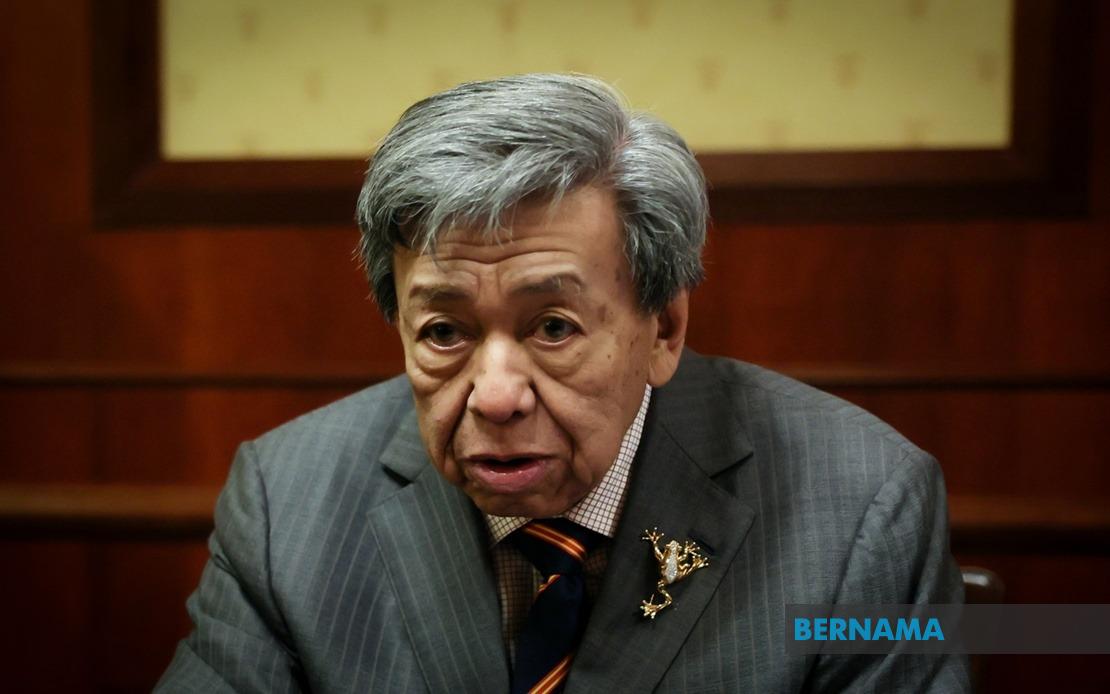
Many Complaints Over Uncleanliness In Selangor, Says Sultan Sharafuddin


KUALA LUMPUR, Dec 11 (Bernama) — The Sultan of Selangor, Sultan Sharafuddin Idris Shah, has voiced deep concern over the worsening cleanliness in Selangor, saying he has received numerous complaints and wants immediate action to restore the state’s image. 

“In the past, when people wrote to me, they often left out their names and contact details, but now they provide their full personal information. They want to be contacted.

“They also attach photographs to substantiate their complaint. They show proof. One even blogged about the situation with an open letter to me, out of desperation to get my attention,” His Royal Highness said in an exclusive interview with Bernama.

“I am fed up, really. It’s time the councils clean up their act.

“Selangor is Malaysia’s most developed and most populous state (7.4 million people), and it is supposed to be the nation’s pride,” the Ruler said.

Sultan Sharafuddin said that the state was meant to stand as a model of progress, efficiency and good governance, “yet my people are complaining that a walk through many of its towns and suburbs today tells a very different story.”

“I am seeing pictures of overflowing rubbish bins, clogged drains, unkempt back lanes, and litter-strewn roads have become an increasingly familiar sight. They said it’s smelly to walk in some streets.

“Something is very wrong when residents – from Klang to Petaling Jaya, to Ampang and Subang – are all voicing their frustrations over the decline in street cleanliness,” His Royal Highness said.

Sultan Sharafuddin said that for a state which collects billions in revenue and prides itself on modern infrastructure, such problems should never be occurring, and held the respective councils responsible for the situation.

The Ruler added that irregular rubbish collection, poorly maintained street bins, and lax enforcement against littering have become daily irritants, which point to a much larger problem.

Sultan Sharafuddin said there must be clear accountability, stressing that the issue must be taken seriously and that local councils must have measurable cleanliness standards.

The Ruler called for waste management contracts to be reviewed and terminated if contractors fail to perform, noting that clean streets are a reflection of both civic pride and government competence.

His Royal Highness also pointed out that clogged drains were among the reasons behind the state’s recurring flood problems.

“This has led to the destruction of property and caused unnecessary burdens and losses on the people,” Sultan Sharafuddin said.

The Ruler also called for fairer and better-balanced representation in local councils, noting that they should not be made up of 100 per cent politicians, for example.

“The councils should appoint councillors who are professionals, or retired individuals with relevant skills and experience, not just politicians.

“These professionals can offer valuable advice and input to help develop the various municipalities,” Sultan Sharafuddin added. 

Sultan Of Selangor Calls For Halt To Hate Postings On Social Media


KUALA LUMPUR, Dec 11 (Bernama) — The Sultan of Selangor, Sultan Sharafuddin Idris Shah, has expressed deep concern over the many hate postings and comments on social media, saying he is disturbed over the rising tide of issues of race and religion, as well as fake news.

The Ruler advised netizens to “think deeply before you post something or want to say something”.

“There is a cost to your postings, especially on matters relating to race and religion. There are consequences, including harm and stirring unnecessary hatred,” said Sultan Sharafuddin.

His Royal Highness asked what was the point of these race-based narratives and comments if they led to polarisation and mistrust among Malaysians.

“What is the point of calling fellow Malaysians 'Type C’  (Chinese) or 'Type M’ (Malays) or kafir and non-kafir (infidels and non-infidels), orang kita (our people) or jenis dia (their kind)? Stop such nonsense, please,’’ His Royal Highness said in an exclusive interview with Bernama.

The interview was conducted by Bernama chairman Datuk Seri Wong Chun Wai, who is a National Journalism Laureate.

“My message to the people of Selangor, please care about Malaysia and the state of Selangor. Please work together regardless of our race and religion.

“Focus on the commonalities of all races. Don’t harp on the differences. There are things that we cannot change as human beings. So, it is better to emphasise the common good, values and principles in life and religion,’’ the Ruler added.

Sultan Sharafuddin expressed concern that “it will get worse in the run-up to the next general election”, which could be next year or the following year.

“With AI (artificial intelligence), I can only sense more damaging content being created to stir up political negativity.

“AI is good, but we still need to have laws to prevent its abuse, such as deepfakes, which are often used by scammers.

“We also need to stop other forms of damaging content by applying strict laws which must be enforced,’’ said the Ruler.

Sultan Sharafuddin said hate speech and malicious content tied to race and religion not only jeopardise social harmony but are also legally actionable under existing laws. 

“Many of these comments and postings are provocative, disrespectful and harmful.

“In Malaysia’s context, where sensitivities around ethnicity, faith and national identity are high, we must understand that such online behaviour cannot be tolerated,’’ His Royal Highness added.

Selangor Sultan Ticks Of Rowdy Lawmakers


KUALA LUMPUR, Dec 11 (Bernama) — The Sultan of Selangor has asked Members of Parliament to represent the rakyat (people) with respect, dignity and integrity.

Sultan Sharafuddin Idris Shah took aim at some MPs who descend into shouting matches and disorderly behaviour.

"It's a disgrace. Despite numerous calls in the past advising these MPs to behave, some continue to be rowdy," he said in an interview with Bernama.

His Royal Highness said these errant lawmakers should serve as role models especially to the younger generation but instead "they behave like bullies."

Last month, two MPs were ordered out of Parliament after a verbal altercation. 

There have also been numerous occasions when Parliament erupted into chaos this year as tempers flared.

The Ruler said the Dewan Rakyat must be a model of mature democratic discourse.

"MPs should debate intelligently and offer constructive ideas.There is no need to be abusive or to hurl insults at each other.

"Such immaturity will only diminish the trust of the rakyat in the institution," he said.

His Royal Highness urged MPs to uphold decorum and to debate with civility.

"I have no intention to interfere in the proceedings of the Dewan Rakyat as that is work of the Speaker, however, certain conduct in the Dewan Rakyat reflects poorly on our leadership and may set a bad example for the younger generation.

"But I have to voice my views and concerns as a Ruler," he added, saying differences in opinions should be resolved with reason and persuasion.

“Stop this nonsense”: Selangor sultan slams racial, religious taunts online

Sultan Sharafuddin Idris Shah says terms like ‘Type C’ and ‘Type M’ have no place in a multiracial country like Malaysia.


Sultan Sharafuddin Idris Shah said many comments and postings on social media touching on race and religion are provocative, disrespectful and harmful. (Bernama pic)

PETALING JAYA: The Selangor sultan has called for a stop to negative comments about race and religion on social media, saying they only lead to polarisation and mistrust among Malaysians.

In a Bernama report, Sultan Sharafuddin Idris Shah said many comments and postings on social media touching on race and religion were provocative, disrespectful and harmful.

He also advised netizens to “think deeply” before interacting with one another on social media.

“What is the point of calling fellow Malaysians ‘Type C’ (Chinese) or ‘Type M’ (Malays), or kafir and non-kafir (infidels and non-infidels), orang kita (our people) or jenis dia (their kind)?” he said in an interview with Bernama.

“Please stop such nonsense. In Malaysia’s context, where sensitivities around ethnicity, faith and national identity are high, we must understand that such online behaviour cannot be tolerated.”

Sultan Sharafuddin said hate speech and malicious content tied to race and religion not only jeopardised social harmony and stirred unnecessary hatred, but was also legally actionable under the law.

He urged netizens to work together regardless of race or religion.

“Focus on the commonalities of all races. Don’t harp on the differences,” he said.

“There are things that we cannot change as human beings. So it is better to emphasise the common good, values and principles in life and religion.”

Sultan Sharafuddin also expressed concern about the exploitation of racial and religious issues for political purposes in the run-up to the next general election, which must be held by February 2028.

He said while artificial intelligence has numerous benefits, he sensed that it would be used to create “more damaging content” to stir up political negativity ahead of the next polls.

Rowdy lawmakers ‘a disgrace’

The Selangor sultan also took aim at MPs who descend into shouting matches and disorderly behaviour in the Dewan Rakyat, saying these elected representatives “behave like bullies”.

Sultan Sharafuddin reminded parliamentarians of the need to maintain respect and dignity in the Dewan Rakyat.

Two MPs were ordered out of Parliament after a verbal altercation last month, and there have been numerous other occasions this year when the Dewan Rakyat erupted into chaos as tempers flared.

“It’s a disgrace. Despite numerous calls in the past advising these MPs to behave, some continue to be rowdy,” Sultan Sharafuddin said.

“I have no intention of interfering in the proceedings of the Dewan Rakyat as that is the work of the speaker. However, certain conduct in the Dewan Rakyat reflects poorly on our leadership and may set a bad example for the younger generation.

“There is no need to be abusive or to hurl insults at each other. Such immaturity will only diminish the trust of the rakyat in the institution.”

The ruler said the Dewan Rakyat must be a model of mature democratic discourse, where MPs debate each other intelligently and offer constructive ideas.

He urged MPs to uphold decorum and to debate with civility, adding that differences in opinion should be resolved with reason and persuasion.

Sultan Sharafuddin Saddened By Rising Violence Involving Minors, Including In Schools


KUALA LUMPUR, Dec 10 (Bernama) — Sultan of Selangor Sultan Sharafuddin Idris Shah has expressed continued sadness over the fatal stabbing of a 16-year-old student at Sekolah Menengah Kebangsaan Bandar Utama 4 in Petaling Jaya in October.

“I never imagined that such a tragedy could happen in Malaysia, more so, in Selangor. I could only think of the families of these students. I feel deeply for the family of the deceased.”

Sultan Sharafuddin said he had given deep thought to what had happened.

“I have listened to many views. One thing is certain, we cannot ignore this. I pray it won’t happen ever again, anywhere.

“It is more than just a disciplinary problem, it is about values, environment, and digital influence.

“Malaysians are quick to blame other people. Teachers are blamed, the Education Minister is blamed, the ministry is blamed. We blamed everyone except ourselves as parents,’’ the Ruler said in an interview with Bernama in conjunction with his 80th birthday.

His Royal Highness said: “We have no idea what kind of games these minors are playing online. Is the content violent in nature? Do they promote forbidden content?

“We expect teachers to be surrogate parents after the children are dropped off at the school gates,’’ he said.

Sultan Sharafuddin added that the problem grew in the absence of support when families are too busy to connect, when schools focus more on grades than emotional well-being, and when online platforms become a child’s primary source of social activities.

Therefore, the Ruler called for greater digital literacy and empathy education, not just in schools, but for parents as well.

“Know what your kids are doing. Please take a more active role to talk to your children. They have become more connected online than ever, but increasingly disconnected from empathy,’’ Sultan Sharafuddin said.

His Royal Highness said he was happy that the government was taking steps to prohibit children under the age of 16 from accessing social media, saying it was in the right direction.

The Ruler urged the government to emulate the move by Denmark, which has introduced educational initiatives that emphasise social and emotional learning as a core component of the national curriculum, most notably through a mandatory weekly class dedicated to developing empathy and respect.

Since 1993, all children in Danish public schools, from ages 6 to 16, are required to take part in the weekly “klassens tid” (Class Time).

“Such initiatives are important. It is not good enough to simply punish, but children must learn to respect people of other faiths and races, for example. Laws alone are not sufficient.

“We must instil the importance of values, tolerance and respect in our kids,” Sultan Sharafuddin added.

Selangor Sultan Thanks Rakyat For Wishes, Prayers On His 80th Birthday


KUALA LUMPUR, Dec 10 (Bernama) — Sultan Sharafuddin Idris Shah has thanked the rakyat for their wishes and prayers on his 80th birthday this year, saying he looks forward next year to marking the 25th anniversary of his reign as the Sultan of Selangor.

His Royal Highness said these milestones were not his alone “but they belong to the people of Selangor, who have stood with me through times of progress and challenge, and who have worked hand in hand to build our beloved state into what it is today. For this, I express my heartfelt appreciation and gratitude.”

Looking back at the past years, the Ruler said he had witnessed Selangor grow into a vibrant, modern, and prosperous state — a home to people of many races, religions, and backgrounds.

“For me, it is always about the people. The people come first. Selangor is our home.

“This diversity is our strength, but it must always be protected by the values of respect, moderation, and mutual understanding.

“I wish to remind all my subjects that harmony and unity do not happen by chance — they are the result of patience, tolerance, and a sincere desire to live peacefully together,’’ Sultan Sharafuddin said in an interview with Bernama.

“My wish for Selangor is simple – let us reject all forms of extremism, hate speech, and division, whether in our daily lives or on social media. Instead, let us embrace knowledge, compassion, and integrity as our guiding principles.

“This will be the best birthday gift for me on my 80th birthday.

“As your Sultan, my hope and prayer are that Selangor continues to prosper with fairness, justice, and good governance,’’ the Ruler added.

His Royal Highness said this had been a memorable year as the wedding reception of Raja Muda Tengku Amir Shah and Datin Paduka Seri Afzaa Fadini Abdul Aziz went smoothly.

“I wish to thank the people of Selangor for their wonderful wishes and blessings to the couple,” said Sultan Sharafuddin.

State Rights Must Not Overshadow National Interests, Says Selangor Sultan


KUALA LUMPUR, Dec 10 (Bernama) — Sultan Sharafuddin Idris Shah has expressed concern over the practice of certain states amplifying state rights, saying there must be an awareness of the broader national interest.

The Sultan of Selangor said the principles of state sovereignty and local self-governance were fundamental for any state, but “they must not go overboard.”

“It is essential that states exercise their rights with an awareness of the broader national interest.

“The strength of the nation depends not only on the autonomy of its individual states but also on the cohesion and stability of the union as a whole,” His Royal Highness said.

The Ruler, however, declined to name the states when asked by Malaysian National News Agency (Bernama) Chairman Datuk Seri Wong Chun Wai, during an interview conducted in conjunction with his 80th birthday.

His Royal Highness said his ancestors had formally ceded Kuala Lumpur to the Federal Government in 1974, making it Malaysia’s first Federal Territory, “and Selangor had to move its capital to Shah Alam.”

“Then, in 1995, Selangor had to hand over Putrajaya to the Federal Government through an agreement, although it only took effect in 2001,” he added.

Sultan Sharafuddin said both the old and current Istana Negara were originally part of Selangor, with the old mansion, known as Istana Selangor, being handed over to the Federal Government upon Malaysia’s independence and converted into the first Istana Negara.

The land on which the current Istana Negara stands, covering nearly 250 acres (over 101 hectares), also originally belonged to Selangor, the Ruler added.  

“Yes, we all understand that state pride is important but we must not forget that we all belong to one big Malaysian family. Sacrifices must be made for national interests.

“The interests of Malaysia must always come first. There is no point shouting about state rights and identity if the country suffers in the long run.   

“My father sacrificed by giving parts of Selangor, namely Kuala Lumpur and Putrajaya, to the Federal Government for the development of the nation. So when sentiments of regionalism arise, it is profoundly disheartening,” His Royal Highness said.

 His Royal Highness said his late father, Sultan Salahuddin Abdul Aziz Shah, put a stop to a plan by certain groups who wanted to organise a ‘Malam Anak-Anak Selangor’ when Kuala Lumpur was ceded to the Federal Government.

“Selangor has always been a progressive state because of our openness. It is the home not just of people born in Selangor but also of those from other states who have made Selangor their home.

“As a result, Selangor has benefited from these talented and skilled people who have migrated to the state,” Sultan Sharafuddin said, adding that Selangor has also not imposed “restrictive laws on land ownership for people not born in Selangor or non-Muslims except in Malay reserve land.’’

His Royal Highness also said that there was nothing in the State Constitution to forbid anyone not born in Selangor from becoming a Menteri Besar.

When states push their authority to extremes, it will jeopardise collective national interests and security or weaken the shared economic and social framework, the Ruler added.

Sultan Sharafuddin called for a healthy balance that takes into account state rights and local needs, while considering how their decisions could affect neighbouring states and the nation’s long-term well-being.

“Let’s have a sense of shared responsibility with a common purpose that enables the country to thrive,” His Royal Highness said, pointing out that Selangor has been the largest contributor to Malaysia’s gross domestic product (GDP) growth in the past decade.

Sultan Sharafuddin said Selangor’s GDP growth rate has been consistently above the country’s, “although we don’t produce oil,” and that its 2024 GDP per capita income of RM65,907 was above the World Bank’s high-income threshold of US$13,845 (RM56,971).

Time to fast track reforms


Crunch time: Anwar meeting Tuaran residents on the campaign trail recently. While Pakatan’s performance in the Sabah polls may not be reflective of its position in the peninsula, the Madani government needs to deliver more tangible policy wins and real reforms, says the writer. — ZULAZHAR SHEBLEE/The Star

THE political clock is ticking. For Prime Minister Datuk Seri Anwar Ibrahim, 2026 has to be the Year of Delivery as Malaysia inches closer to the next general election.

Pakatan Harapan fared badly in the recent Sabah elections, and there are many reasons for it. However, the same barometer cannot be applied for the peninsula.

Without a doubt, there is unhappiness and anger among the core base of Pakatan supporters in the 2022 elections, although the sentiments in Sabah differ to some extent.

The Sabahan Chinese overwhelmingly backed Warisan but their peninsula brethren aren’t likely to choose the opposition Perikatan Nasional, especially not with PAS there.

In fact, even in Sabah, Bersatu led by Tan Sri Muhyiddin Yassin failed to win a single seat despite fielding 33 candidates.

Perikatan state chief Ronald Kiandee even lost in the state polls as the anti-Semenanjung sentiment swept through.

Although the focus has been on DAP because it lost all eight seats it contested, the fact is all peninsula-based parties suffered badly including Umno, although it did better than others.

PAS won its first ever seat in the state and while the Islamist party has reason to celebrate, it would be wrong to assume that the single symbolic breakthrough has translated into structural strength, political momentum or electoral viability, as analyst Phar Kim Beng pointed out.

“One victory, however headline-grabbing, does not establish PAS as a significant force in Sabah’s political landscape,’’ he wrote.

It was more likely that the voters picked Aliakbar Gulasan, the state PAS chief, as he is seen as a working candidate. Also, his challengers were not strong. PAS, in fact, lost in five other seats it contested.

Certainly, PAS’ uncompromising Islamic agenda was not the reason Aliakbar was picked.

That brings us back to the main point – if the peninsula Chinese voters are upset with the DAP, which they backed previously, will they now back the MCA via Barisan Nasional or Gerakan in Perikatan?

Or will they just stay away from the polling stations all together as a silent show of protest?

In the coming Sarawak state elections in 2026, the Chinese voters will also be deciding if they want to reject DAP and give all their support to Sarawak United People’s Party (SUPP).

It would be safe to say that the community will go the way of their Sabah neighbours, and stick to Sarawak-based parties.

Many have already written off Pakatan, especially DAP, but it must be remembered that one week is a long time in politics. A year is much longer – but it has to be used properly.

Anwar knows fully well that the restlessness is palpable, especially among his supporters and his reformist coalition.

Voters who once rallied behind the promise of sweeping reform now feel the weight of delay, compromise, and political fatigue. For Anwar, 2026 cannot be another year of careful calibration or incrementalism.

It is not easy to implement reforms if it involves laws and the Federal Constitution as laws need to be drafted and presented to Parliament.

Next year, the Constitution will be amended to allow for the separation of powers of the Attorney General and Public Prosecutor.

Then, there is the two-term limit on prime ministerial tenures, which Anwar supports, but it has to be passed into law.

With the perception that the pace has been slow and limited, it is obvious the momentum on reforms has to be put on the fast track.

The PM campaigned as a reformer, and many expected early, bold shifts: judicial independence safeguards, anti-corruption reforms, a more transparent governance model, and depoliticisation of institutions.

Quick deliveries in 2026 are absolutely needed to rekindle support among the urban electorate. It must be a year of reform, delivery, and visible transformation – because the coalition’s support base is no longer satisfied with rhetorical commitment.

They want results.

Anwar came into office carrying a historical mandate: to fulfil a reform agenda that had animated Malaysian politics for two decades. But mandates are not indefinite, and public patience – even among the faithful – has its limits, even if such sentiments can seem unreasonable at times.

Supporters frustrated by rising living costs, perceived slow institutional reforms, and ongoing political horse-trading now question whether the reformist politics can survive Malaysia’s entrenched system.

If 2026 does not provide a clear breakaway moment – and an unmistakable acceleration of the agenda – disillusionment risks becoming disengagement at the ballot box.

It doesn’t help that the cost of living crisis is no longer a talking point; it is the central lived reality of Malaysian families.

Food prices, youth unemployment, and stagnating wages fall squarely into the category of issues that cannot be postponed.

Initiatives such as the one-off RM100 cash assistance SARA (Sumbangan Asas Rahmah) may be small to the more affluent Malaysians but for many Malaysian families, the amount when pooled together is regarded as generous.

The petrol assistance through BUDI Madani Ron95 targeted subsidy programme is also felt directly by the voters. It helps as it reaches the people directly and they remember.

Supporters are not demanding miracles – they are demanding movement – but the PM needs to announce good initiatives every few months, just as public-listed companies have to announce quarterly results to its shareholders.

There has to be swifter moves as they would be seen as decisive actual turning points from old political culture.

If reforms are not accelerated in 2026, the opposition will seize the narrative that the government has abandoned its ethos – and many supporters may quietly agree.

To be fair to Anwar, he has been able to steer the country well and has kept the unity government together for three years.

We had three PMs in five years but Anwar has stabilised a fragmented Parliament and contained the constant political turbulence of recent years.

No investor would put money on Malaysia if it is unstable politically – but stability is not a voter-moving achievement in itself. Malaysians do not go to the ballot box to reward neutrality; they vote based on direction. They want to know where the country is heading, not only that the ship has stopped rocking. They want to see and feel electoral promises, including reforms, being kept.

Ahead of the general election, Pakatan needs a strong and convincing narrative built on tangible wins – policies that make life better, institutions that become stronger, and corruption that becomes a thing of the past.

Anwar has to win back the core supporters in urban and semi-urban constituencies. Forget the PAS fans in Kedah, Kelantan and Terengganu, they won’t vote for Pakatan no matter how much he tries to please them.

2026 is a make-or-break year. It is a year that demands courage, speed, and political will. He has to go to the polls with the strength of achievement rather than the memory of promises. But don’t be too quick to write off Anwar especially when the options are not palatable.

Sabah polls a wake-up call to Putrajaya

THE signs were already there even before campaigning for the 17th Sabah state elections entered its final lap.

At a recent DAP ceramah at a food court in Tanjung Aru, which began at 7.30pm, the crowd was thin.

There were mostly party workers and members. The rain didn’t help and by 9.30pm, the talk had ended.

In the last few days before polling, local DAP candidates politely told the federal party leaders to stay away.

However, it seemed that the federal leaders didn’t listen, as political heavyweights arrived thinking they could swing the results.

By then, my media friends had told me that the DAP and PKR could get zero seats.

Others said PKR could do better by winning at least two seats.

I shared the bad feedback with a DAP federal minister, but he told me the speculation was “harsh” as he believed DAP could win at least “2-4 seats.”

As always, nobody wants to hear any form of negative feedback. That is human nature.

The “Sabah for Sabahans” sentiment was strong and as Upko read the political winds rightly, they pulled out of Pakatan Harapan and managed to capture three seats.

The Chinese sentiments were detected very early as they politely and privately whined.

It wasn’t just the DAP not speaking up enough against corruption but local issues like continued water and power disruptions.

The roads outside many towns are in horrible condition. It is not something new; Prime Minister Datuk Seri Anwar Ibrahim had questioned the delay of phase one of the Pan-Borneo highway, although funds had been allocated.

It was slated to be ready by 2022 and yet, it is still not ready.

Some said Chief Minister Datuk Seri Hajiji Noor was a “nice and good person” but needed to be “more authoritative.”

The Sabah voters also showed the exit to several veteran local leaders such as Datuk Seri Salleh Syed Keruak (Barisan), Tan Sri Pandikar Amin Mulia (GRS) and Tan Sri Anifah Aman (GRS).

Some Sabah businessmen privately asked why Hajiji could not say no to these leaders who don’t understand that they should retire.

Instead, they lobbied the CM hard to be fielded as candidates.

But then, there are other veterans like Datuk Bung Moktar Radin (BN) and Datuk Seri Jeffrey Kitingan (Sabah STAR), who can still win in every state election.

Even Datuk Seri Shafie Apdal, who is a former chief minister and an MP and state assemblyman for decades.

His Semporna constituency has been in the news again recently for being the dirtiest in the state.

Still, Warisan won 25 seats out of the 73 seats in the state.

It managed to wipe out the DAP seats that its Chinese candidates won in the urban areas.

But with 25 seats, it wasn’t enough to reach the last mile – the minimum 37-seat simple majority.

GRS was able to get the backing of the others – Pakatan, Sabah STAR, Upko and independents to secure the simple majority.

Many had predicted before polling that Warisan would comfortably achieve pole position but may not be enough to hit the simple majority.

Sabah politics are always complicated and many federal politicians and analysts don’t always feel the pulse correctly.

Friends of mine who have been giving their expert opinions included many who have never stepped into Sabah, the second largest state, or have merely visited Kota Kinabalu.

Sabah’s voters include those who may have to sacrifice a day’s wage to travel for miles by road to vote.

These voters insist on being reimbursed for this, something which many people in Peninsular Malaysia frown upon.

The people of Sabah feel that these are condescending remarks from Orang Malaya, as people from the peninsula are called, that rural voters are easily bought by money.

Many people have no idea that areas like Banggi are located near the border with the Philippines.

Without a doubt, huge sums of money are needed to win elections in Sabah, and it is even sadder when politicians are perceived to make more money through corruption later.

These are the same politicians who have exploited the Sabah voters but also campaigned along the lines of “Sabah for Sabahans.”

But for peninsula-based parties like Pakatan, Barisan and Perikatan Nasional, where the results are clear, they would need to go back to the drawing board.

Pakatan leaders would have to ask themselves honestly what had gone wrong after being in power for three years.

It is the first time in Malaysia’s history that the ruling party does not hold the largest number of seats.

Prime Minister Datuk Seri Anwar Ibrahim leads a unity government with 18 partners.

He is pulled in all directions but the people’s expectations of a reformist leader are huge and many may not be in the mood to listen to reasons. They want promises and pledges to be fulfilled.

Some federal ministers and deputies do not even return texts or calls from the media, what more the ordinary rakyat.

It is a serious situation when the “fixed deposit” voters of Chinese, Indians and the people of Sabah, are eroding.

They included many who took part in the Reformasi marches. They are angry, frustrated and disappointed.

The results of the Sabah election is a very loud wake-up call.

Don’t take the voters, especially the ones who put you there in power, for granted.