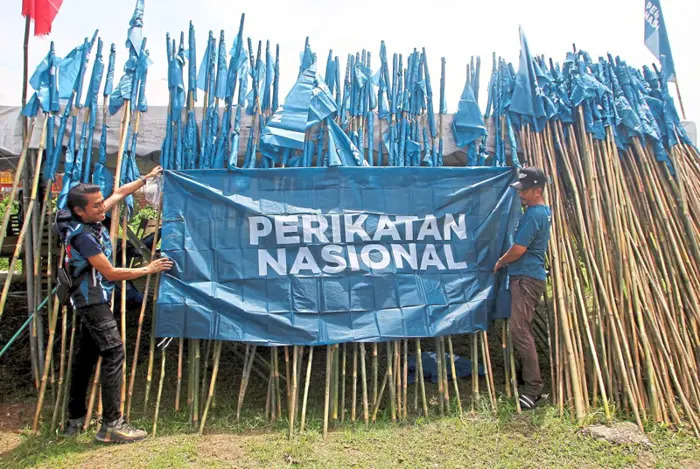
Will Perikatan crumble in the face of a state political feud reaching the national level? — Bernama
IT was a political bomb that dropped perfectly, just before the year ended – and its loud impact is still being felt even as we enter into the second week of the new year.
Tan Sri Muhyiddin Yassin’s decision to step down as Perikatan Nasional chief has been followed by a cascade of resignations among state-level leaders.
The Bersatu president’s decision to walk away from the post is as good as a farewell to the Opposition front and certainly its most serious internal rupture.
There will be attempts to put on a brave front, with a top-level meeting involving its component leaders being planned.
But the real test will be for Islamist party PAS now that Bersatu has left a huge crater. The other Perikatan partners, Gerakan and the Malaysian Indian People’s Party, have virtually no influence.
The fact is that Muhyiddin has been the coalition’s glue: a former prime minister with national name recognition, acceptable to Malay conservatives yet not threatening to fence-sitters uneasy about PAS’s ideological edge.
His departure strips Perikatan of that moderating influence and exposes the coalition’s underlying imbalance of power.
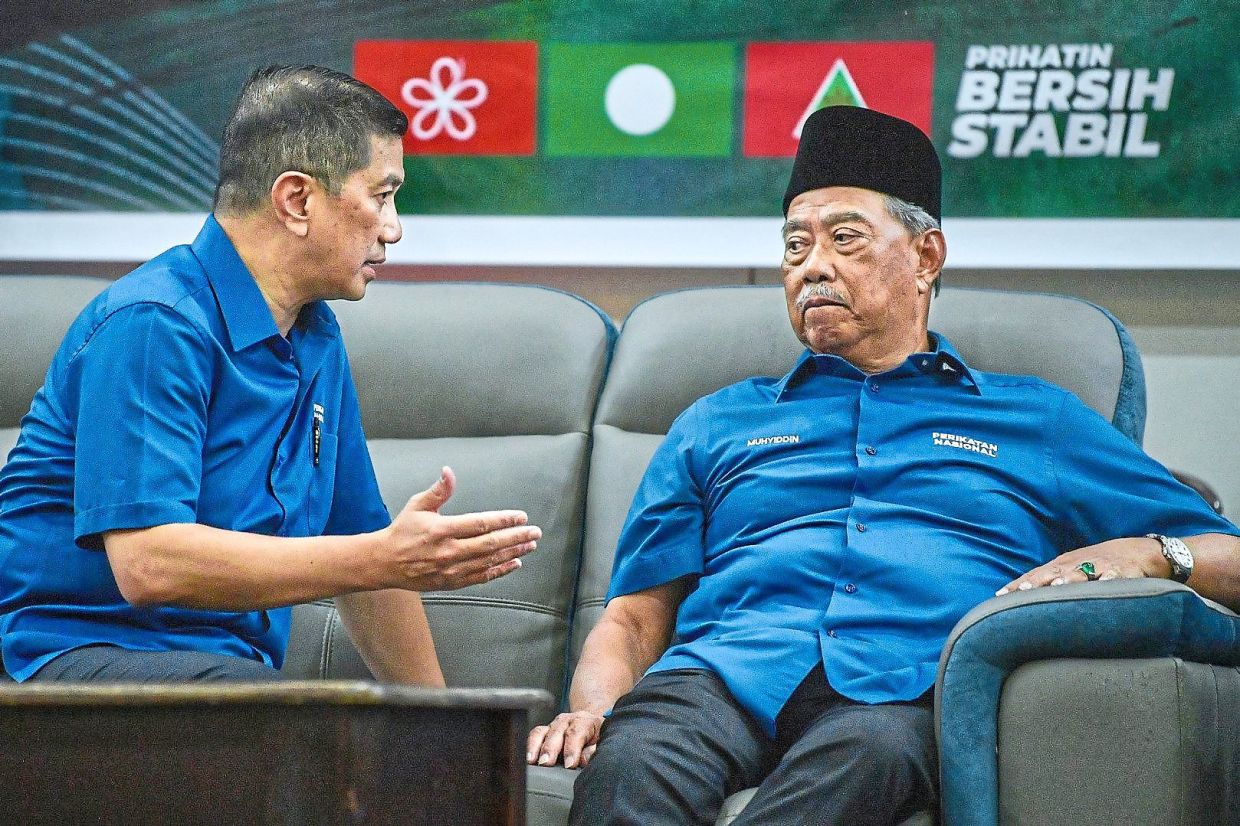
National figure: Muhyiddin (right), here seen with Azmin, has been Perikatan’s glue – acceptable to Malay conservatives yet not threatening to fence-sitters uneasy with PAS’ ideological edge. — Bernama
There is really nothing to gain for PAS, which no doubt feels betrayed by the coup in Perlis, the country’s smallest state, where its mentri besar was replaced by a Bersatu assemblyman.
PAS has made its anger known, and while it has expressed support for the new MB, none of the PAS representatives will be in the new state government line-up.
The political feud can now be expected to reach the national level as Perikatan crumbles.
PAS will surely be tempted now to take on the lead role, believing that a possible Malay tsunami is on the horizon and it has nothing to lose. After all, over the past several election cycles, PAS has emerged as Perikatan’s electoral workhorse.
It delivered votes, mobilised grassroots machinery and has dominated parliamentary representation within the coalition.
Bersatu, by contrast, has struggled to build durable party structures beyond its leadership elite. The mass resignations of state chiefs – many of whom were already under pressure or facing credibility issues – underscore this weakness. While Bersatu thins out, PAS remains embedded.
The reality, though, is that PAS is only strong in the predominantly Malay states of Kedah, Kelantan, Perlis, and Terengganu, all of which have demonstrated only mediocre economic performances.
PAS simply lacks appeal in urban and mixed constituencies, which have always depended on reassurance that PAS’s Islamist agenda would be tempered by coalition politics.
Without a figure like Muhyiddin at the helm, that narrative becomes harder to sell.
The support for PAS in the Malay heartland is undeniable but national power requires a broader appeal.
A PAS-led Perikatan will completely turn off non-Malay voters and moderate Malays.
There is no way that the clerics, who call the shots in the party, will allow professionals like Terengganu MB Datuk Seri Dr Ahmad Samsuri Mokhtar to helm the coalition.
He may be a PAS vice president but the clerics decide, and even if leaders like him are put there, they would merely serve as political cosmetics with no real clout.
Decision-making authority is dispersed among religious councils and senior ulama, which lends moral legitimacy but limits decisiveness.
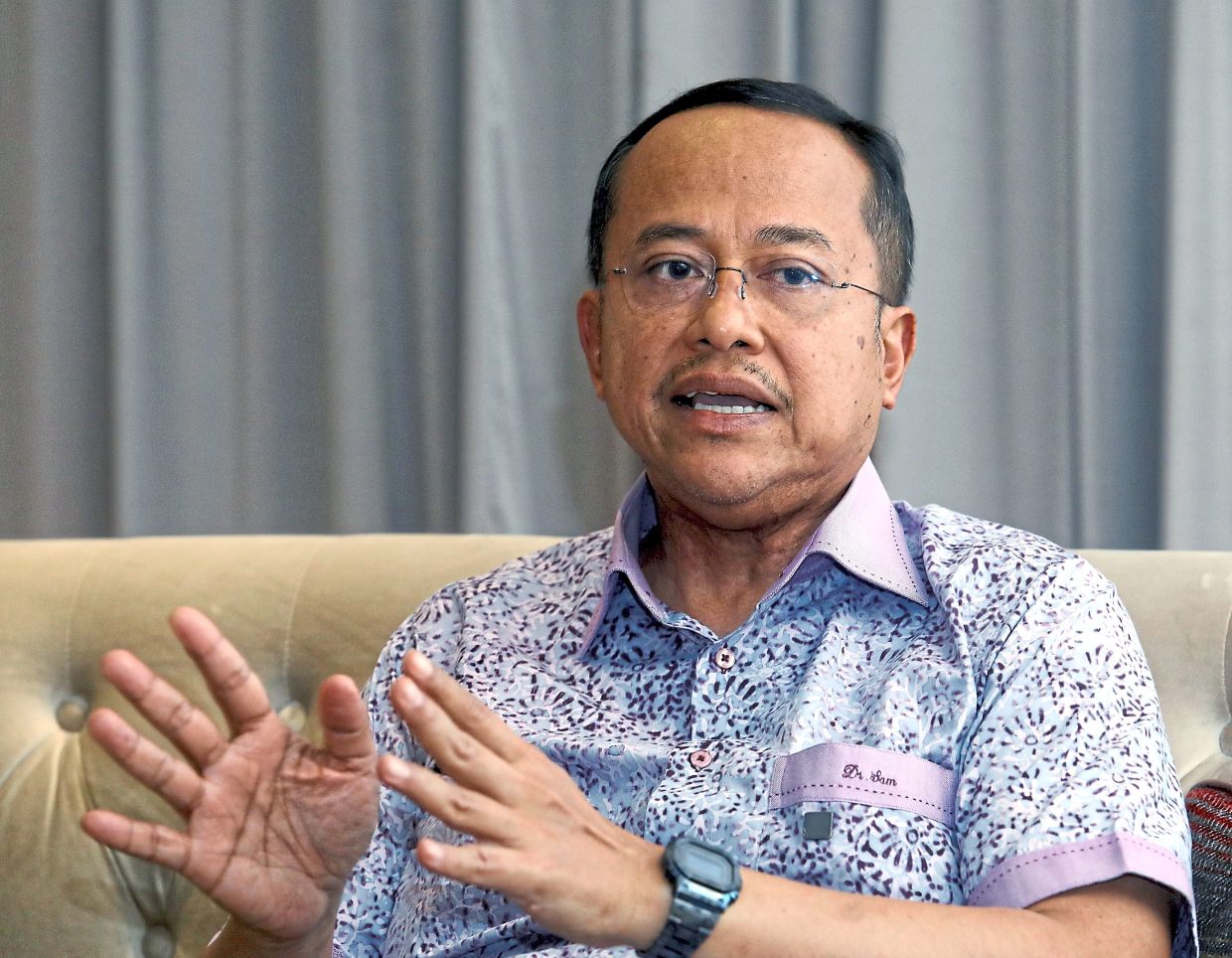
Technocract Ahmad Samsuri is popular but the powerful clerics call the shots in the party. — AZLINA ABDULLAH/The Star
What helped Perikatan grow was not just PAS’ organisational muscle, but the promise of a multi- party front that could govern inclusively.
It served as a realistic option to the Umno-led Barisan Nasional or PKR-helmed Pakatan Harapan.
There is also the question of succession and leadership style. Muhyiddin was a unifying, if pragmatic, figure.
With the senior Bersatu leaders having quit en masse, it will be odd for deputy president Datuk Seri Hamzah Zainuddin, the Opposition leader, to take over the driver’s seat.
His differences with his party boss, Muhyiddin, and secretary-general Datuk Seri Azmin Moha-mad Ali, are an open secret.
He has maintained his silence following Muhyiddin’s departure but he should not nurture any hope of taking over.
Negri Sembilan Bersatu chief Hanifah Abu Baker has expressed support for PAS president Tan Sri Abdul Hadi Awang to replace Muhyiddin, but one wonders if this was even a sincere proposal.
The 78-year-old theologian is in a wheelchair, has earned the unenviable title of being the Member of Parliament with the worst attendance record in the august House, and had nothing much to show for his time as Terengganu mentri besar (1999-2004).
The other options are PAS deputy president Tuan Ibrahim Tuan Man, the MP for Kubang Kerian, and secretary-general Takiyuddin Hassan.
These top figures command loyalty within the party and respect among grassroots supporters, but none have broad appeal across Perikatan’s non-PAS components or among swing voters.
Steering a national coalition in turbulent political waters requires not only ideological clarity but tactical flexibility, something PAS will need to demonstrate more convincingly in the post-Muhyiddin era.
If Muhyiddin’s resignation creates a leadership vacuum, it does not automatically follow that PAS can – or should – fill it.
A PAS leader elevated to Perikatan chief would remain constrained by internal consultative structures, reducing the agility expected of a coalition leader.
The Islamist party will continue to face the problem of optics and a PAS-led Perikatan would almost certainly intensify fears about its ideological rigidity.
For urban Malays and non-Malays, a PAS Perikatan chief could harden resistance and shrink the coalition’s already limited reach in competitive constituencies.
PAS has not made any serious attempt to change the minds of non-Muslim voters who see the party as a hardline one wanting to impose an Islamic State. Worse, it has taken on a racist tone as well now.
Umno Youth leader Akmal Saleh’s call for a revival of the Muafakat Nasional Muslim-dominated front sounds more idealistic than realistic as PAS is not going to give up its dominance for Umno.
Muafakat Nasional was a shortlived political alliance formed by PAS and Umno in 2019 with the intention of consolidating the Malay-Muslim vote.
Umno tried to work with PAS and failed. The same type of bad marriage between Bersatu and PAS has now flopped.
The question is why PAS continues to be a poor choice for any political marriage? Blaming DAP and proclaiming Malay unity is the easy out. The reality is Bersatu-PAS backstabbed each other in Perlis.