Author Archives: wcw

Stand together for our M’sia

A photo publication: The cover of the book The Holy Month of Ramandan - A Visual Celebration.

A photo publication: The cover of the book The Holy Month of Ramandan – A Visual Celebration.

Moderation is key to a stronger nation and we must pursue it, no matter how difficult it is, for the sake of this great country.

EVERY few months, the Islamic Arts Museum Malaysia would send me a copy of its latest coffee table book.

Through its generosity, my collection of books on Islam has grown over the years, and as a result my knowledge of the religion has grown too.

The museum is located right in the heart of Kuala Lumpur between the Lake Gardens and the National Mosque. It is certainly a world-class museum which houses more than 7,000 artefacts, as well as an exceptional library of Islamic art books.

For this Ramadan, the museum has produced a 334-page collection of rare photographs from around the world capturing the beauty of Islam’s holiest month. The Holy Month of Ramadan: A Visual Celebration brings together the works of the best photojournalists and amateurs around the world who visually captured the spirit of Ramadan.

It is probably the world’s first and only photo publication dedicated solely to the fasting month, with over 300 pictures.

One picture that caught my attention was that of a Palestinian Christian who served as a Musaharati to wake up his Muslim neighbours for sahur in the old city of Jerusalem.

The Musaharati, or public waker, is the person who rouses Muslims in his neighbourhood during the holy month of Ramadan to take their meals before starting the fast.

The Musaharati’s job starts an hour ahead of daybreak when the Muslims start a new fast with the sunrise, according to a report.

He is used to calling each of the sleeping residents by his name and doesn’t hesitate even to knock at each door to make sure that they would not miss the pre-dawn meal.

These wakers carry out their job by banging a small drum and chanting a rhyming song learnt by heart while walking through the old alleys. They are rewarded with tips or food, depending on the generosity of the neighbours.

The point is this – the fasting month isn’t just about Muslims but also non-Muslims joining in this special month.

Although the Western media prefer to dwell on the conflict of the Middle East, the people-to-people relations are entirely different.

On a trip to Jerusalem more than a decade ago, I have seen how the Palestinians, both Muslims and Christians, live together, sharing the same wishes and aspirations, like any ordinary people.

It was perfectly normal for Muslims to sell Christian religious items such as crucifixes at biblical sites located at Muslim areas and it was normal for Muslims to attend church services during Christmas.

Interestingly, it is a Muslim family that holds the key to the Church of the Holy Sepulchre, one of the most revered shrines in Christiandom. It is a tradition stretching back more than 1,300 years and passed down through the generations.

This is the site where most Christians believe is the site of the crucifixion, tomb and resurrection of Jesus.

According to one report, since the arrival of Islam in Jerusalem in the seventh century, the key has been handed to a Sunni family to avoid clashes among rival Christian sects for control over the church.

Although the role is purely symbolic, the arrangement is a reflection of tolerance and inter-religious harmony, giving the Nusseibeh family (the current key-holder) a visible role in Christian activities in Jerusalem, as a report aptly puts it.

But what about our own country? I have had the privilege of breaking fast with my Muslim friends and contacts over the last few weeks. In fact, I am deeply honoured to have hosted a buka puasa for my fellow moderates including Anas Zubaidy, Zainah Anwar, Lyana Khairuddin, Marina Mahathir, Noor Farida Ariffin, Azhar Harun aka Art Harun and my colleagues on the second day of Ramadan. We had so much to discuss that we were the only ones left in the restaurant when the workers started to clean up.

Marina has also been hosting her #Puasa4Malaysia, organised by Malaysians For Malaysia, with non-Muslims at a mamak restaurant in Jalan Telawi, Bangsar, at 4.30am.

Then, there is Syed Azmi – a man with a heart of gold – helping the poor and needy in the streets of Kuala Lumpur during this fasting month.

Lyana, a Universiti Malaya virologist, is supporting Syed Azmi as well as Ramesh Vadiveloo’s Meals For All initiative which supplies food to a number of soup kitchens around the city.

“We started last Ramadan, and over the past year, I’ve noticed the increasing number of urban poor. It’s a matter of realising that people are finding it hard to survive out there. Just talking to them humbles me,” she said.

But the events of the past weeks must have also surely broken the hearts of many Malaysians, especially those who genuinely want only the best for our country.

Rationality seems to have flown out of the window and worse, many Malaysians seem to have taken sides, unable to differentiate between a right and wrong when it involves a dispute between different races.

A simple criminal act can become racial when inflammatory remarks are posted on social media. Many of these remarks by Malaysians of all races have been downright shameful.

Many are quick to jump into the fray without first checking the facts. We seem to swallow whatever is posted on social media and act without any self-restraint.

For too long, the authorities have refused to use the Sedition Act but it is time for the full force of the law to be used against those who make inflammatory racial remarks. There are those who feel they can get away with anything because action is not taken against them.

Malaysia is truly a beautiful and blessed country with so much greatness ahead – what we don’t need are politicians who harp on race and religion to win votes.

We need to pursue the quest for moderation in a stronger manner now, no matter how difficult it is, for the sake of Malaysia.

This Hari Raya, more than ever, we must display a sense of togetherness as a nation. We have proven the naysayers wrong and again, we will, as we believe most ordinary Malaysians are good people.

There are only good or bad people – look beyond race, religion and culture.

I wish all my Muslim brothers and sisters Selamat Hari Raya!

Cool heads should prevail

An anti-austerity banner depicting former (L-R) Prime Ministers George Papandreou, Antonis Samaras and current Prime Minister Alexis Tsipras reads "We have bled enough, we have paid enough," hangs off the tallest building in the port of Piraeus, near Athens on July 11, 2015.-AFP

An anti-austerity banner depicting former (L-R) Prime Ministers George Papandreou, Antonis Samaras and current Prime Minister Alexis Tsipras reads "We have bled enough, we have paid enough," hangs off the tallest building in the port of Piraeus, near Athens on July 11, 2015.-AFP

The people should not jump to conclusions but take into account the final outcome of investigations regarding any incident before they pass judgement.

NO one would have imagined that Greece, which gave so much to the world, would be in such a sorry state today.

From Socrates to Plato to Aristotle, the foundations of Western philosophical thought were rooted in ancient Greece. The Hippocratic Oath which all medical doctors subscribe to had its origins in Greece. Malay­sia is still waiting to win its first gold medal at the Olympics which was birthed in the ancient city of Olympia more than 3,000 years ago.

Demokratia, Greek for “power of the people”, was born in Athens in the 7th century BC. Athens also introduced to us the concept of trial by jury. And surely, the world will be much the poorer without the heroes and villains of Greek mythology which we are so familiar with.

Today, Greece is bankrupt and unable to pay off its debts. Banks are shutting down and the people cannot even get cash from the ATM machines. The unemployment rate is high with all the marks of a failed society and, worse, the people have voted in a populist, leftist government that has refused to conform to the rules of global finance.

Now, we are seeing an actual Greek Tragedy being played out in real life. In ancient Greek theatre, the tragedy happens when the protagonist, often a man of high standing and influence, falls into disaster through a combination of a personal failing and circumstances which he cannot deal with.

According to the Ancient History Encyclo­pedia, Greek Tragedy was a popular and influential form of drama performed in theatres across ancient Greece. It led to the emergence of the Greek Comedy, where playwrights poked fun at politicians and philosophers. Theatre, in fact, is one of the legacies that the Greeks gave to the world.

Unless you are a student of Greek philosophy, all these terms are likely to be well, Greek, to most of us. That is an idiomatic expression that we can always use when we do not understand any difficult issue before us.

Some of our politicians, in fact, should simply say, “It’s all Greek to me,” rather than pretend they know everything and spew out nonsense in the process.

Although Greece is so far away from us, we are also seeing the emergence of the Malaysian tragedy and comedy, all being rolled out at the same time.

Over the past few months, we have grabbed global headlines for the wrong reasons. People are looking at us differently, I am afraid.

From nudist trekkers at the summit of Mount Kinabalu to allegations of corruption over Mara’s purchase of property in Melbourne to the ongoing 1MDB saga, Malaysia has been making headlines repeatedly across the globe.

And, of course, the world media love our passionate, no, overzealous implementation of the dress code that makes Bermuda shorts and above-the-knee skirts such talking points. It is virtually impossible to keep track of the jokes and parodies that creative Malaysians have come up with and openly shared on social media.

There are both tragic and comic elements in what is happening in our country. We are not very good at arguing our cases, and so what may actually be a small issue that could be easily nipped in the bud becomes a major controversy that we cannot handle.

We lack the persuasive powers and the skills to articulate our position. No thanks to our education system and, to a larger extent, our inbuilt cultural heritage, we never encourage our young to speak up, thinking that this is a challenge to the elders and authority.

So, whether in classes or at conferences, most of us Malaysians will not put up our hands to express our views nor challenge the speakers.

I have also noticed that at concerts involving some major world entertainers, Malay­sians are too shy to even get off their seats and move along with the music.

So when we have to defend ourselves, which may include our ministers and top officials having to write letters to the foreign media, they are not able to rebut the allegations with coherent and convincing arguments. Instead, it is usually rhetoric. Well, at least the ministers do take the trouble to respond.

And why in the first place does Putrajaya have to respond when it should be the job of the overseas missions in countries where the reports are published to correct any misconceptions about our country?

This would be the work of the press liaison officers, not even the third secretary. The sad story is that our embassies are not known for defending the country when we are under attack in the media. Perhaps they just lack the ability.

Our institutions are under the spotlight now. Those holding positions of power and influence need to understand what they do and stand for will have serious implications for the country.

The members of the task force that have been given the job to investigate the 1MDB controversy must remember the responsibi­lities they are carrying.

Malaysians expect them to deliver a professional and politically unbiased report based on their own investigations.

Likewise, we expect the same from the Auditor-General and Public Accounts Committee. The MPs who sit on the PAC, be they from the Opposition or Barisan, must investigate in a truly bipartisan manner and not try and score cheap political points in the process.

These investigations by various groups are not just about power but also about credibility and accountability, values that are essential in all the arms of government and democracy. We need to believe that there is still hope in these institutions.

The investigators must go after both the whistle blowers and culprits. The controversy has attracted much attention. But everyone should wait for the final outcome of the investigations before they pass judgment.

We need to believe in our media. Malay­sians seem to have better faith in the foreign media – never mind if they have also been party to many false allegations. From reports about the so-called weapons of mass destruction to recent accusations by CNN that China has banned Muslims from fasting, these ­foreign media are held in high esteem because they question the credibility of the local media.

A Google search for the mistakes by the Wall Street Journal would show a long list of fiascos too despite its powerful brand.

But let us not forget that the Malaysian media is sometimes perceived to be too submissive to the authorities. When the people lose faith in it, the media, which could be a valuable conduit of information between the governed and the government, will be of no use to anybody.

The people will just believe whatever they read on social media. There is so much information, misinformation and disinformation out there that it is extremely difficult to separate the wheat from the chaff. Most people just believe what they want to believe based on their own political stance.

Last week, a report went viral about former cop Sirul Azhar Umar purportedly wanting to testify in an Australian court that he was ordered by the Prime Minister’s wife to kill Mongolian Altantuya Shaariibuu. It was clearly a hoax with Sirul’s lawyer, Hasnal Rezua Merican, having to rubbish the claim.

Likewise, there are now attempts to link the killing of Arab-Malaysian bank founder Ahmad Hussain Najadi in July 2013 to the 1MDB saga. The Ambank founder had relinquished ownership of the bank, which he founded in 1975, in 1982.

The hitman, Koong Swee Kwan, was sentenced to death by the High Court in September 2014 for the murder.

It’s a tragedy, no doubt, but at the same time, it is also comical that Malaysians would actually believe that a retired banker, who no longer had any role in Ambank for ­decades, would be playing a role in the 1MDB case.

At times of uncertainty, every story, even if far-fetched, will gain credence if those in authority are not able to address the issues properly.

Perception can sometimes be more powerful than reality itself. It will be a tragedy for our politicians to dismiss what the people are saying and thinking.

The numerous twists and turns have confused most of us. But all we want is for truth to prevail so that this country can move on.

Focus on the real issues

While the politicking continues to take centre stage, Malaysians are tired of the charade. There are other issues to be concerned about.

I AM tired and I believe many Malaysians are fed up too with the non-stop politicking in this country. Politics has become a national obsession.

Our leadership seems to be losing its grip at a time when we are looking to them for clear directions and for an assurance that the Malaysia we know is still intact.

Perhaps the 1MDB controversy has dragged on too long and has distracted the attention of our leaders, what with fresh allegations on an almost daily basis.

Malaysians, especially those in the urban areas, are greatly disturbed as the players fight to convince their listeners that they are the ones telling the truth.

We want the Auditor-General to quickly complete his report and hand it to the Public Accounts Committee and also for Bank Negara to share with us its findings. It is still our hope that they can reveal the facts, without any tinge of political biasness, for the true picture to emerge.

The integrity of these institutions must be kept intact and we certainly want to evaluate their findings.

The issue of accountability and integrity aside, there is genuine concern among many Malaysians that our nation is drifting towards a mono religious country with greater conservatism while open-mindedness and tolerance are frowned upon.

But many of our Cabinet ministers have, regrettably, chosen to remain silent when they ought to be standing up for the rest of us Malaysians. We don’t even know what they are thinking any more.

Anyone following the news in Malaysia today would know that we have to put up with a whole lot of issues.

Do we really even care about whether eateries should be closed after midnight or if the length of a woman’s skirt conforms to some dress code? And why do we have to spoil the joy of our gymnast winning a gold medal by condemning her attire? Come on, get real!

It is to the credit of some of our Rulers that they have spoken up on these issues while our politicians choose to keep silent.

One can imagine how gymnast Farah Ann Hadi must feel to get a personal letter from the Sultan of Selangor Sultan Sharafuddin Idris Shah congratulating her on her performance and telling her not to take to heart negative comments from narrow-minded people.

There is this perception that the Little Napoleons, or civil servants with their own agendas, are showing their clout because the political leadership is weak. These administrators know too well that they can get away with anything when the leaders are too busy fighting their own battles.

Pakatan Rakyat, with dreams of winning Putrajaya, is another story. It is in total shambles. The marriage could not last more than seven years, and finally the seven-year itch took its toll on the coalition.

Malaysians are confused and amused over what is happening to the three partners.

Are they divorced, separated or still living together because they cannot imagine living alone without the privileges of power that had consummated the marriage?

The bottom line is that with all the turmoils within, it is no longer able to prove itself as an alternative to the existing ruling Barisan Nasional government.

It is not able to take advantage of the black eye that the national leadership is having because the Pakatan leaders are too busy killing themselves.

While urban Malaysia is totally transfixed over how the 1MDB issue is unfolding each day, with the endless claims of greed, corruption and criminal breach of trust, it is amazing that the issue was not even brought up at the recent PAS general assembly.

That probably explains how much interest, or rather the lack of it, such issues resonate with the rural heartland. Or is it simply because the issue is too complicated for the delegates to understand?

If urban Malaysia believes that the so-called ousted PAS progressives will win via a new Islamist party, then they have no idea how rural politics works.

Malaysians, in general, are upset that our politicians are becoming disconnected with most of us. We are losing sleep over the continued depreciation of the ringgit. That is what ordinary Malaysians talk about over meals.

Our ringgit is shrinking and no one is sure if the worst is over, as touted. There seems to be some decimal improvement following the Fitch report, which maintained our A- rating, but there has been no real shift of improvement of our currency.

Malaysians are still struggling with the impact of the GST implementation as we adjust to the rules of the goods and services tax. It has continued to be a major issue among ordinary Malaysians, especially businessmen, who have seen sales dropping since April.

The escalating cost of living has continued to be a major impact on the lives of ordinary workers. Many have little left from their salaries after paying all the necessary bills. It is not wrong to say that it is a struggle for many, especially the urban poor and middle class, just to survive.

The rakyat is simply tired of all the charade.

The mission: service first

A photo taken from Facebook showing what the woman wore when she was denied entry to the Balik Pulau court complex. - Filepic

A photo taken from Facebook showing what the woman wore when she was denied entry to the Balik Pulau court complex. – Filepic

TEACHERS are supposed to teach. And when members of the public visit the hospital, the Road Transport Department, or any government facility for that matter, they are there for a service, and they expect to be given that.

After all, as has been said many times before, the public service exists because the taxpayers are the ones who pay the salaries of the civil servants.

But things do become complicated when some individuals get side-tracked from their job specifications, and start to bring politics and religion into play.

The problem with some Malaysians is that we are also not very good at exercising reasonable discretion. Maybe we fear those who hold higher positions and dare not question their authority, as it is not part of our culture, or simply because of fear of reprisals.

So, if you are a security guard, whether a member of the People’s Volunteer Corp (Rela) or someone from a security firm, you would be expected to just carry out the orders made by the boss, or maybe the smaller bosses, which in most cases, can be more difficult than the real top boss.

Malaysians would know by now, judging from incidents in the past weeks, that it’s always these little guys who get the blame.

If you are being asked to wear a sarong over your skirt which is deemed too short, you will look quite unnatural, and are bound to draw strange looks from others. Wouldn’t the front desk officer enquire from you, in a puzzled manner, why you are wearing a skirt with a sarong on?

But if the officers are indifferent to the ­situation and the head of the front desk does not even bat an eyelid, it is obvious that they are fully aware of what the security guard has ordered the member of the public to do.

Maybe this has been going on for a while, except that no one has complained, and a recording of the event had not gone viral.

Since incidents of such a “humiliating” exercise have been reported, many others, including a former colleague, have shared their experiences on social media.

My ex-colleague took her case all the way up to the JPJ chief, who apologised for the unfortunate incident. But in her case, she has access to the boss because of her job.

I have been following the exchange of opinions on social media and, by now, we are well aware that we are also not very good at articulating or advocating our case well. Many of these views seem racially and religiously prejudiced and, as a result, a sense of reasonableness is lost.

Dress codes are not something unusual. Even casinos, as some have pointed out, have strict dressing codes before anyone can enter. But the question here is how these rules are reasonably enforced in our government departments?

In all fairness, checks by our reporters have shown that most government departments are reasonable and seem to totally ignore even their own dress codes. Their priority is to provide service and the people are served even if the skirt’s hemline is above the knee or they are wearing slippers.

We actually have photographs of inadequate­ly dressed men, including one in a pair of shorts and singlet, rushing into a JPJ office and were properly served.

As with all debate, there are those who argue whether micro mini-skirts and bikinis would be tolerated, which I think is stretching the argument too far. Anyone who wants to dress that way in public, not just in a govern­ment facility, will most likely be hauled up.

No sane person would go to any office, private or public, in a bikini, so such arguments are flawed and unreasonable.

The recent cases whereby the women were asked to wear the sarongs are certainly not in this category. Anyone with a fair and objective mind would surely agree that all the ladies were properly and decently dressed.

Then, there have been a number of cases brought to light recently of teachers who want to play moral guardians in schools.

One incident was when a teacher reportedly confiscated the little crucifix that a student was wearing. A police report was subsequently lodged.

But according to the latest report, the cross has since been returned to the student and the father has accepted an apology from the school principal and also withdrawn the report.

It has also been reported that pressure was exerted on the headmaster and school management board of St Mary Labuk in Sandakan to remove the cross from the new school building. But Deputy Education Minister Datuk Mary Yap stepped in and guaranteed that the cross would remain, saying it had been clearly stated that mission schools are allowed to upkeep the ethos and characteristics of these schools.

It seems to be a phenomenon of the past decade. We all know the crucifix has long been removed from classrooms in mission schools, because of an order from the then minister who is now in the opposition.

About the same time, the symbol of the crucifix was also taken out of mission school badges. The Latin mottos fortunately have remained and presumably no one understands what they mean.

Well, Malaysia’s problem, or rather the Little Napoleons’ problem, is that we seem to channel our energy in a very unproductive way. There is a lot of fire-fighting because these people think they can get away with anything, and only when it becomes an issue do they step back.

Teachers should be striving to make our students top in Maths and Science and be competent in the English language. Instead, in these core areas of education, we have continued to deteriorate further.

Our students are no longer gaining entry into Ivy League schools such as Harvard as we used to. Schools used to be able to boast of these achievements but these days, many of them get into the news for all the wrong reasons.

Even if we seem to be generating many students with a string of As in the public examinations, these premier universities are not that easily impressed.

Meanwhile, no one will deny that our government-run hospitals are providing good service to the people. We must commend our doctors and nurses who toil daily for the public, at wages that are far less to what their counterparts in the private hospitals can command.

But the people who run these hospitals must also focus on keeping the standards high, and even raise the bench mark. The least of their concerns should be to worry about how visitors are dressed.

Just like at the JPJ, surely worrying about the dressing of the public is not part of the JPJ mission statement.

Malaysian taxpayers should be treated as customers who deserve the best service. They should not be sent home, denied entry or asked to wear a sarong, simply because someone takes offence to how they dress.

One for all, all for one

Education is for all, it’s time we think of the bigger picture affecting all children.

MY colleague received a press statement sent by a very high-ranking official of a government department recently. It was personally written in English by the official and sent by WhatsApp to ensure it was speedily delivered.

The only snag was that his command of the language was so horrendous that my colleague had to suggest to him, politely, that he might want to stick to Bahasa Malaysia to ensure accurate reporting on our part. He got the message. A new version was eventual­ly sent.

Then, there are also the vice-chancellors of a few public universities who face the same language problem despite having spent much time in overseas universities to pursue their post-graduate studies.

We have also met Malaysian diplomats who cannot carry out a proper conversation in flawless English and we know some of them even shy away from social functions, which is a shame as this where they can pick up nuggets of information for their intelligence reports.

A few generations, yes, a few generations, are paying the price – unable to speak and write in proper English – because of our education system.

At best, they may have some semblance of communication English, but without the proper foundations in grammar, many are unable to even string a sentence together correctly.

Because English is just a subject, there is hardly any opportunity to use and practise the language on a regular and extensive basis within the school system.

That’s how low we have sunk. Forget about the occasional use of some Latin words to make the language more refined, if not, more classy. Getting through the basics is tough enough.

It is no surprise, therefore, that they really struggle when they reach tertiary level where much of the information is in English.

And even upon graduation, many employers are reluctant to hire them when they cannot function properly in an environment where the working language is English.

Controversial MP Datuk Bung Mokhtar became the butt of every joke on social media when he introduced a hashtag ­#earthquack for his postings on the earthquake situa­tion in his home state.

Well, we also can see that some of our Chinese politicians, from both sides of the political divide, struggle with English, judging by some of the postings they make on Facebook.

Every now and then, we have reports about bad English in an English examination paper. We have more or less gotten used to the fact that the English in many of our official websites are littered with mistakes.

It doesn’t seem to bother our politicians and decision makers one bit, as they will simply shrug off calls to allow English as a medium of instruction in our education system.

Why should they be worried as many of them are able to send off their children to boarding schools overseas at a young age? After all, the only ones that would bear the consequences would be the students in the rural areas.

The Ruler of Johor, Sultan Ibrahim Ibni Almarhum Sultan Iskandar, recently suggested that English be made a medium of instruction – he didn’t say make English THE medium of instruction.

The reality is that English, as a medium of instruction, is already available but it is restricted only to private and international schools, mostly in urban areas.

And despite the high fees charged, more urban parents are opting to send their children to such schools because they simply want their children to be proficient in this international language.

The urban-rural divide is accentuated because while children in the rural areas are sometimes teased for using English, it is perfectly normal for English to be used at home in middle-class Malaysia.

And with greater exposure to the language, the urban children do have an edge over those in the rural areas.

But it doesn’t have to be this way. As his Royal Highness the Sultan of Johor said, these politicians are using nationalism and race to champion communal rights and the Malay language at the expense of the English language.

They are doing so to protect their interests and political positions. Unfortunately, many seem to buy into their agendas.

We must also be clear that the lack of proficiency in English cuts across all races.

Many Chinese parents send their children to Chinese schools at the primary level because they want their children to be able to speak and write basic Chinese as they eye the growing economic power of China.

Many shy away from the national schools because there is a strong perception that these schools have turned more religious in character with a single race dominant in the overall attendance.

The national schools that many of us from my generation and earlier grew up in, where English was the medium of instruction, were different as all races were well represented.

But in our current situation, many Chinese parents also find that sending their children to the Chinese primary schools does not help their children have a good command of English either.

The English proficiency of the majority of Chinese teenagers, because of their background in Chinese schools, is just as bad as their counterparts in the rural schools.

They live in the Chinese world, watching Taiwanese and Hong Kong movies, with little interest in the real world.

Their worldview is shaped pretty one-­dimensionally and because of the environment they grew up in, they are unlikely to have real friends from those of other races.

Many of us in our 50s have been lucky – we were probably the last batch of the English-medium schools where we sat for the Malaysia Certificate of Education (MCE) and the Higher School Certificate (HSC) examinations.

The English-medium schools were neutral grounds as students of all races attended such schools and the best friendships were forged there.

We had real friends from all races because we were growing up together for at least 10 years in the schools. It was not functional friendship at work, but real bonding as we studied and played together.

I feel really sorry for many Malaysian kids who do not have friends outside their own race as they are not be able to shape their thinking in a more open way.

So, when a hot issue comes up in the country, especially those involving race and religion, they are not able to see things from another perspective.

Like many, I also worry about the future of Malaysia and our children, as the performance of our schools continues to falter. Beyond our concerns over language skills, we should be even more worried about the quality of our education.

Our ranking in Science and Mathematics is already reportedly low, although our politicians question its accuracy. But the reality is that many of us are no longer surprised by such trends.

Our politicians will continue to tell us that all is well and fine in our schools, and that we have little influence to change anything. Some of us may believe that to be so.

But if we really care for the country, we should not be afraid to propose radical changes for the sake of our future generations.

Education is for all and it is totally selfish if we only think of our own interests while the majority are stuck in a system which does not empower them to reach for the stars.

Moderates, stand up

Before and after: Photos posted on Tan’s Facebook page showing her original attire (left) and the sarong she was asked to wear at the JPJ office.

Before and after: Photos posted on Tan’s Facebook page showing her original attire (left) and the sarong she was asked to wear at the JPJ office.

IT is said that ignorance is bliss, but not necessarily so all the time. Most Malaysians must have been amused, rather than upset, over a recent Facebook posting that went viral and eventually caught the attention of a news portal.

It started with an angry customer, going by the name Mista Bob Faishah, posting on the Texas Chicken Malaysia Facebook page that the fast food chain obviously did not take into account religious sensitivities because the franchise’s brand dipping sauce is named “Church”.

“Dear TCM… Please do explain (yo)ur dipping sauce brand at Malaysia Franchises… Most of (yo)ur customers is a Muslim… AND Muslim didn’t not eat for food from ‘church’ brand,” he wrote. He also shared the image of said dipping sauce together with his post, the portal reported.

Soon, an equally outraged Facebook user, Halim Zainal, left a comment saying that Texas Chicken Malaysia should change the name on the packet as a sign of respect to its Muslim customers.

The angry person warned TCM that they would not be able to sustain their business if they were not sensitive to Muslims in the country.

The management of TCM had to patiently explain to the customer that the franchise’s “Church” brand dipping sauce was named after the founder and did not represent the Christian house of worship.

“Please be informed that the brand Texas Chicken was founded in San Antonio, Texas USA by our founder by the name of George W Church Sr — Church being his surname and the name of the brand Church’s Chicken.”

The Facebook post elaborated that the word “church” was not used in a religious context and that some of the dipping sauces were imported from the United States, where the food chain originates.

But it has ended well. The customer has now posted an apologetic comment: “Deepest from my heart that I want to ask apologized for my post (1 June). For that time I only want to inquiry regarding the brands of “church” brand. And after TCM do explain to my inquiry n I accepted that was the co brand from san Antonio, Texas.

“I hope with my apologized here can stop all the negtive things goes more bigger. That what can say I only just want to inquiry regarding that brands only..But for ur info, I stlll enjoy my meal with my favorite winglets from TCM!

“Once again..I’m apologized for my post before that I had removed because I don’t want that all people read n negtive thingking of my inquiries.”

Well, as we can see from the postings, the person’s command of the English language really leaves much to be desired.

That could have been one reason why he did not first check, via Google or other search engines, for information about this food chain and why its products are named as such.

Our English language proficiency, sad to say, has hit rock bottom and many of our Internet users are missing out a lot because they have such a poor command of the universal language.

He only associated the word “church” with religion, without being aware that it can also be the surname of many people. Christian Bale would be really worried if people stop going to watch his movies if such an association is made.

But let us keep this in perspective. We can all accept Mista Bob Faishah for sportingly admitting his mistake. We are sure he has no intention to create a controversy.

But another issue that we need to be concerned about, apart from poor English, is whether we are seeing a rise in religious conservatism where many modern-day practices that everyone in our plural society used to accept as a matter of course – from food to sports and entertainment – are being looked at from a different, and more radical, perspective.

Those who spew hate messages in the name of religion can always find a ready audience in those who are prepared to take what they say without question.

And this applies to all religions where such leaders thrive on those who are blissfully ignorant on the true nature of their faith.

Such an environment makes it easy for these people to create fears among the followers that they are constantly under threat. The bogeymen in flavour today include Christians, Jews, the LGBT community, liberal-minded people, etc.

Fortunately, we are still a country where people of different faiths can co-exist peacefully and in harmony with one another.

Faith is a matter of the heart and whatever the rabble-rousers may want to ferment, few will believe that just seeing the religious symbols of another faith will so easily shake their own beliefs.

Be that as it may, we need to also be on guard against the rise of extremism, especially when it comes quietly in every day situations.

The voices of moderation must be heard, and the silent majority cannot afford to be quiet if they value the kind of society we live in.

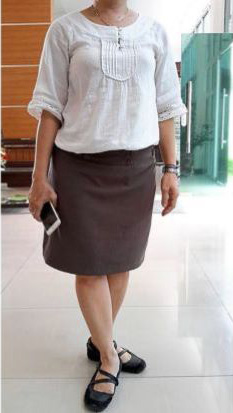
Why are so many Malaysians not surprised to read about the middle-aged “aunty” who was asked to wear a sarong before she could be served at a Road Transport Department office? The Rela guard felt her skirt, which was just above her knees, was too short and did not adhere to the dress code.

It may be a small matter to some, but it was good of Suzanna G L Tan to share her experience on Facebook by posting a photograph of herself outside the office, showing her attire for the public to judge.

“I had to go to JPJ personally to sign the transfer form for the car I sold. That in itself is already a pain,” Tan wrote.

“I go dressed like this. Indecent meh?” she asked in reference to her dressing in the photograph.

Tan said while she was at the counter to get a queue number, she was handed a sarong to wear “or they would not entertain me”.

The blame eventually fell on the Rela guard but none of the other officers at the JPJ office bothered to tell off the Rela guard for his over-reaction. They have kept silent over this demeaning exercise.

We used to be able to blame the little Napoleans for incidents like this but with the advent of social media, such actions can always be recorded for the public to judge.

And then we have our Malaysian gymnast Farah Ann Abdul Hadi, who has just won a gold medal at the Sea Games, being criticised for not covering up. But to be fair, there were many who came to defend her on Buletin TV3’s Facebook.

Instead of applauding her flawless performance, there seem to be those with perverted minds whose minds are focused elsewhere.

These people thrive on attention and their antics have a way of being magnified way beyond their actual influence.

But here’s the saddest part. Those who speak out for Farah Ann are the usual known personalities and non-governmental organisations while those we wish to hear from – including politicians from both sides of the divide who hold national level posts – are strangely quiet.

But we are glad that the Youth and Sports Minister Khairy Jamaluddin, who has to protect our athletes, spoke out.

“In gymnastics, Farah wowed the judges and brought home gold. In her deeds only the Almighty judges her. Not you. Leave our athletes alone,” wrote Khairy on his Twitter account.

Beef up security first

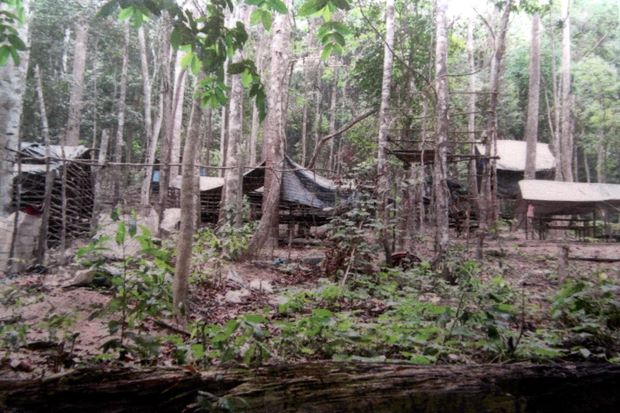
A view of an abandoned camp in Wang Kelian, Perlis. -Bernama

A view of an abandoned camp in Wang Kelian, Perlis. -Bernama

IT’S totally absurd – why would any tourist want to visit a former human trafficking camp near the Malaysia-Thailand border?

Much more bizarre was the statement by Minister in the Prime Minister’s Department Datuk Seri Shahidan Kassim, who reportedly described the campsite as “very nice” and with “complete facilities”.

We can be sure none of the illegal Rohingya and Bangladeshi immigrants who were locked up at the camp would share Shahidan’s enthusiasm.

The former Perlis Mentri Besar reportedly said “let tourists see where it all happened. With this as a new tourism spot, it will also deter human trafficking activities from taking place as there will be more people coming in and out.”

It’s mind-boggling that a federal minister could actually make such an atrocious proposal. One is reminded of macabre attractions in other parts of the world, such as the “killing fields” of Choeung Ek in Cambodia.

It has become a tourist spot because of its horrifying past, where millions of people were killed. A glass compartment with some 8,000 skulls, now a spot for selfies, reminds visitors of the horrendous genocide carried out by the Khmer Rouge in the 1970s.

But surely we cannot compare the large-scale mass killings of Cambodians with the human trafficking issue. The camp in Wang Kelian, even if transformed into some form of eco-tourism project, will hardly draw the kind of tourist revenue to justify its existence.

Instead of channelling resources to this pathetic proposal, Malaysians would surely agree that it would be better off if the government spend more time finding ways to beef up security in the border area.

The area is well-known for smuggling activities because of poor security or, to put it bluntly, corruption among the law enforcers there. Whether they are Thai or Malay­sian, corrupt officers are probably the most integral collaborators that allow the human trafficking syndicates to operate with impunity.

Are we surprised that a recent report by the Special Branch, based on 10 years of undercover surveillance and intelligence gathering at border checkpoints as well as enforcement agencies across the country, has revealed that 80% of law enforcement officers and security personnel manning our country’s borders are corrupt? Isn’t it convenient that no one has yet to be arrested after the grisly discovery of the 139 graves and 28 suspected camps on May 11?

Even more ridiculous was the statement by Shahidan to the media that his party “saw unidentified persons fleeing to the Thai side of the border as we approached the campsite”. It’s as good as saying that anyone can still walk across the border even after the gruesome discovery without the likelihood of being caught. And when it comes to crossing our borders, we know how entrenched the problem in Sabah is.

We suppose the same sentiments must be shared by the Filipino abductors who have made kidnapping Malaysians and tourists in Sabah such a regular business affair.

Yet, our authorities still get upset each time warnings are issued to tourists to stay away from Sabah, insisting that Sabah, especially the coastal areas, are safe.

Seriously, with such a pathetic record of coastal surveillance in Sabah, the strong presence of the army and navy should be a permanent feature – and not a mere show of force only after an abduction or, worse, after an intrusion by armed men into our territory.

Of course, besides the lacklustre security, we are also paying for the sins of the past, when we allowed thousands, if not, millions of immigrants into Sabah. We have come to the point where we are not even sure whether the enemies in our midst are really citizens or illegals with dodgy identity cards?

Is it the result of past political manoeuvrings to win elections without a thought for the horrible consequences to the demography and security of Sabah?

Let’s face it – we were practically handing out blue identity cards to these foreigners at one time, or are we going to deny it?

The result of the IC handouts to naturalise these foreigners has now led to some of these people actually joining political parties and enjoying affirmative privileges for bumiputras, while other real Malaysians, born and bred in Sabah, have less rights!

Has the situation become more complicated and out of control because of entrenched corruption among our security officers who choose to look the other way when these foreigners come into our waters?

The number of illegal immigrants in Sabah, excluding the naturalised ones, now ranges from a million to 1.9 million out of Sabah’s population of 3.3 million.

We have a serious security problem, if not a crisis, in Sabah. And, as the discovery of the camps in Perlis will testify, if we do not control our borders well along the Thai border, we will soon be flooded with more illegal immigrants just walking across. And let us also not forget the difficulty in controlling our coastal areas up north.

Before we become a laughing stock talking about turning the human trafficking camps into a tourist spot, we had better worry about non-tourists checking in because of our lousy security.

Practise what you preach

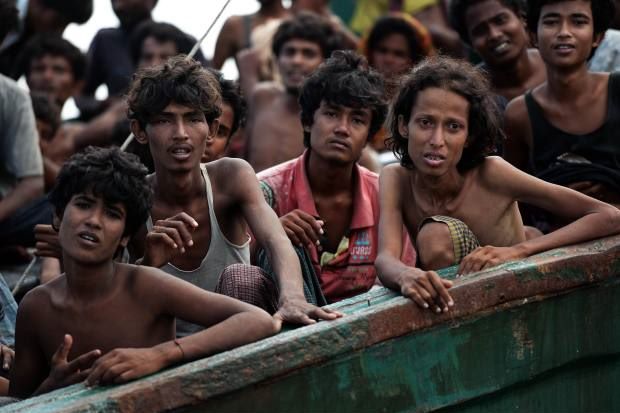
A file picture of Rohingya migrant men from Myanmar on a drifting boat in the Thai waters off the southern island of Koh Lipe in the Andaman on May 14, 2015. - AFP

A file picture of Rohingya migrant men from Myanmar on a drifting boat in the Thai waters off the southern island of Koh Lipe in the Andaman on May 14, 2015. – AFP

Moderate Buddhists should come up strongly to condemn what extremist personalities and groups are doing in Myanmar.

ULTRA nationalist groups and religious extremists, by themselves, are bad enough, but when brought together by a common agenda, you have the most potent brew possible.

These elements always fight in the name of country, race and religion. Tolerance and acceptance are not in their vocabulary, and they justify their ends with the most intolerant means, never mind that we all believe that all religions preach about peace and harmony.

It’s very simple – politics have no place for religious figures, especially when they come dressed in their full religious regalia.

When men speak on politics, supposedly on behalf of God, or give such an impression, that is the beginning of trouble.

The reality is few people dare to challenge these religious figures, who not only claim to speak in the name of God, but pass themselves off as experts whose interpretation of doctrines is final. To challenge them would be to risk the wrath of the community, especially in conservative societies.

Because it is regarded as a sin to question these religious figures, who are actually mere mortals elevated to near demi God status by their adherents, they can get away with the most demonic crimes.

All religions have their extremists, ­whether Islam, Christianity, Judaism, Hinduism or Buddhism.

The world is now shocked to see videos of Myanmar monks making hate speeches and, in some cases, actually taking part in racial and religious violence.

It is one thing to develop a dislike or prejudice against the Rohingya people, who are Muslims, but to actually instigate an act of violence against them is a gross violation of human decency and rationality.

I have tried to understand why the Myanmar are so angry with these Rohingya that they do not count them as one of the recognised people of the country.

Surely, it cannot just be because they are Muslims because Yangon and Mandalay, two cities most Malaysians are familiar with, are filled with Muslims. Buddhists and Muslims have co-existed for centuries.

Some of the reasons given, at least from social media, seem bizarre with accusations of rape by Rohingya against Buddhist girls, and amassment of weapons. It sounds ridicu­lous. Perhaps we do not know Myanmar politics well enough but those who put up their case against the Rohingya are not doing a good job.

The Rohingya have found themselves in a tight spot and are fleeing the country. Indonesia and Malaysia, under pressure from the international community amid growing calls for humanitarian aid and compassion, have given in to housing the latest refugees numbering some 7,000 temporarily for a year.

But the likelihood is that both countries will end up stuck with this mixture of Rohingya and Bangladeshis after that. Turkey is said to be interested in them but let’s see whether that happens. Thailand has walked away from the Asean Foreign Ministers’ meeting uncommitted and has remained so until today while Australia has shut the door.

But much more troubling is the continuing dominance of the extremist Myanmar monks led by Arshin Wirantu, who heads the ultra-nationalist 969 movement.

Wirathu spent nine years in prison after being sentenced in 2003 for inciting religious conflict, but has continued to amplify his campaign since his release.

Recently, Wirathu created international headlines when he called Yanghee Lee, Myanmar’s UN special rapporteur, “a whore” and “bitch” after she objected to controversial draft legislation.

But what is disappointing is that while many are quick to condemn Islamic groups which carry out extremist acts, there is a deafening silence when it comes to speaking out against these extremist Myanmar Buddhist monks?

Where are our local non-government organisations and politicians who are often quick in condemning Islamic terrorist acts?

Surely these Buddhist extremists are no different. They have forgotten that monks should be preaching reconciliation, forgiveness and tolerance instead of hate and violence.

It is always easier to point out the weakness and failure of another community and religion but when it involves our own kind, many prefer to look the other way, shamefully. But we cannot be racially or religious selectively. What is right is right and what is wrong is wrong.

Surely, this madness of burning and killing cannot be right, no matter how much one dislikes another race.

And at a higher level, we also want strong voices to speak out. In this context, the Dalai Lama should be commended for speaking out – and also asking that fellow Nobel Peace Laureate Aung San Syu Kyi to do more to help the persecuted Rohingya Muslims in her country, Myanmar.

These Myanmar extremist monks are giving Buddhism a bad name. Surely this is not what Buddhism is about.

But it will help if moderate Buddhists all over the world come up strongly to condemn what these extremist personalities and groups are doing in Myanmar, whipping up the emotions of the people in Myanmar by feeding on their ignorance and prejudices.

The bottom line is that men of the faith should practise faithfully what they preach. Politics and religion simply cannot mix.

Hope within the prison walls

Sam Kian Seng, who has already spent 27 years in prison and who is making a difference in the lives of his fellow prisoners, harbours hopes of being a free man again.

IN the course of my work, I have met all kinds of people. From kings to prime ­ministers to even former terrorists but one person – a prisoner – has remained very much in my mind.

In fact, his case has continued to haunt me ever since I met him a few years back. It started with a telephone call from a very senior Kajang Prison official.

He said I should meet up with Sam Kian Seng as he seemed to have a gift that has fascinated him and other prison officers.

It isn’t every day that prison officials would call up a journalist to help seek the release of a prisoner, whom they feel has transformed himself into a model citizen.

“We see him every day from the day he stepped in here. We know him better than anyone in the Pardons Board. He has changed and, more importantly, he has been changing the lives of other inmates,” the official told me.

The long-serving prisoner is able to do what many prison wardens and counsellors cannot do – he turns hardcore criminals into church mice, literally.

He readily gives away soap and toiletries to other prisoners and he encourages inmates to go for rehabilitation.

He counsels the inmates, leads daily worship and conducts Bible classes in cells, and provides information about non-governmental organisations like Malaysian Care and halfway houses to prisoners about to be released.

Every Sunday, over 60 inmates, including former hardcore criminals, spend their time in worship under his leadership.

But Sam is serving a natural life jail sentence where he will have to die in prison. He was also given six strokes of the rotan. (A normal life sentence only requires a convict to serve 20 years with the usual one-third remission.)

In short, Sam who was arrested for gun possession in a 1988 robbery will never be able to get out from prison alive. The authorities said he should have been sentenced to death, by right, but he escaped the gallows because he was not the principal offender.

He has continuously appealed to the Pardons Board to have his punishment reduced to life imprisonment but he has not been successful.

His appeals file is thick with letters written by the most prominent lawyers and even prison officers who see his work and know him, but it has not worked.

When his parents died, he was not given a chance to attend their funeral. After all, he is a nobody, not a popular politician.

Every warden in Kajang prison, who are mainly Muslims, and almost every counsellor who does prison work, knows of this man, Sam Kian Seng. There is plenty of sympathy and support for him but it remains just there.

When I visited this man, the prison officials told me I could have all the time I wanted. After all, time passes by very slowly behind prison walls.

There was plenty of awkwardness as I barely knew this man. I was asked to read up all the appeal letters before I met him. Some, who wrote these appeals passionately on his behalf, have themselves passed way.

He spoke to me in English, which he taught himself, as he was told that I could not speak Mandarin. He was also told that I would struggle with my Cantonese or Hokkien. But we managed well. I was facing a man who would most likely die in prison and yet, he spoke about his plans to carry on with his counselling work once he was released from jail.

I let him speak, not interrupting at all, and when he finally ended, I told him that I would try my best to help him.

I have sought the audiences of two Sultans to alert them of this case. Unfortunately for Sam, the crime took place in Kuala Lumpur – and any appeals for a lesser sentence, or even pardon, would have to come from the King.

The Pardons Board, which includes the Attorney-General, would have to make their recommendations to the King but unfortunately I have no access to His Majesty The King.

But the process to grant a pardon is the same, whether at state or federal level, so I felt sharing my views with the two Rulers would help as they have direct access to their fellow Rulers.

The two Sultans have suggested that he should write, or at least I should write on his behalf, to the Conference of Rulers and that they would bring this matter up for discussions with their fellow Rulers, if there is a merit to the case and whether what I have heard is the truth.

I have not met Sam since our one meeting. Church workers who regularly meet up with him said he always asked about me. They swore that Sam is a changed man. His conversations with them have always been about God, forgiveness and how to help others.

Sam’s dilemma is constantly on my mind because of the recent audience I had with His Royal Highness the Sultan of Johor.

On the occasion of his coronation, Sultan Ibrahim Sultan Iskandar had issued a royal pardon for a man on death row who has been in prison for the past 11 years. The pardon was for the 29-year-old man who was sentenced to death for murder in 2004.

Johor State Secretary Datuk Ismail Karim said the state government hoped that the released prisoner would put to good use the second chance given to him to improve and develop his life, his family and also for the country.

Sultan Ibrahim also reduced the death sentences of 10 other prisoners to life imprisonment and natural life sentences.

Six prisoners were spared the gallows through the royal amnesty by only serving life imprisonment. They were originally sentenced to death under Section 39B (1) (a) of the Dangerous Drugs Act 1952 and Section 3 of the Firearms (Increased Penalties) Act 1971.

Four others who also faced the death sentence were granted amnesty where they will serve natural life sentences. They were previously sentenced to death under Section 3 of the Firearms (Increased Penalties) Act 1971 and also Section 302 of the Penal Code for murder.

Early this month, the Sultan of Perak, Sultan Nazrin Shah, pardoned a prisoner and granted a commutation of the death sentence of two prisoners to life imprisonment, in conjunction with his enthronement.

Perak Pardons Board secretary Datuk Razali Othman said the decision was made by the State Pardons Board conference chaired by the Sultan at Iskandriah Palace.

Razali said the Sultan had issued a reminder that any appeals from prisoners must be submitted by the prisoners themselves or through the channels prescribed and not forwarded by a third party using other channels.

He said the Sultan also decreed that a sentence was imposed to act as a lesson to the public to respect the laws of the country.

He added that a pardon or lessening of a sentence that had been decided by the court would be considered when prisoners who filed the appeal showed remorse, had repented and apologised, with promise of good behaviour and would not repeat the same offence.

Reflecting on these remarks on when a pardon can be issued, my mind goes back to that day with Sam once again.

It has been hard for me, after that meeting, to simply put his case aside and to tell myself that there’s only so much I can do as an ordinary person.

But as I pressed my hand on to the panel which separated us to say goodbye, he told me that he believed that he would walk out of prison one day and continue his mission work outside.

When I asked him why he should be optimistic, he looked and me and said: “Sir, even the word hopeless begins with hope.”

I learnt something from Sam, the ­prisoner serving a natural life sentence, that day. Surely, there is a need to strike a balance between the interests of the public and the interests of the offender. A ­repentant person deserves a chance in life, especially if he has paid his debt to society.

I do not know what else I can do but to make a direct plea to the powers that be, those with influence and authority at the Federal Pardons Board. You have been put there by God; I hope that this article will strike a chord among all members of this Pardons Board.

Please revisit the case of Sam Kian Seng – Number 1000 2901 – who has already served 27 years. Let his hope to walk out of prison a free man not be in vain.

Don’t let emotions rule the waves

Rohingya migrants waiting inside a boat off the coast of Thailand in the Andaman Sea. -AFP

Rohingya migrants waiting inside a boat off the coast of Thailand in the Andaman Sea. -AFP

MALAYSIA has to be real careful in sending the right message to the migrants from Myanmar and Bangladesh. If we are seen to be soft and seemingly ready to accommodate them, our shores will soon be filled with them.

Malaysia and Indonesia are preferred destinations because the perception is that both these countries are Muslim-majority and have shown sympathy for the Rohingya people in the past.

And this is further accentuated by the presence of a huge foreign workforce in Malaysia, comprising both legal and illegal workers, that gives the impression that Malaysia is an attractive destination to eke out a living.

The recent events where boatloads of these migrants have suddenly made it into Malaysian territory have made us more aware of the different ways through which these migrants have landed on our shores.

First, it shows how porous our borders are. It is so easy for foreigners to enter our seas and our shores with little prevention or detection by our authorities. That is, of course, nothing new with Malaysians already, especially in Sabah.

The Abu Sayyaf has long found out how easy it is to come over to Malaysia and to grab a few Malaysians and foreigners and hold them for ransom.

It is a lucrative business for these kidnappers who amazingly still think of themselves as freedom fighters in the name of religion. In reality, they are not even terrorists, but just plain criminals.

Much more brazen are the recent reports of how the Thais involved in the syndicates, using fishing boats, had unloaded these migrants on our shores, treating Malaysia as a dumping ground.

Who were these people who brought them to our shores – Thai fishermen, Thai army personnel or the Thai courier service? Again, how did they enter our coastal jurisdiction with such ease?

Unlike the Indonesians, who have sent these migrants off after giving them water and food, Malaysia has actually taken them into the detention centres with no time frame of when they will be asked to conti­nue with their journey.

The Indonesians seem to have spun their story pretty well – they are saying that these migrants do not really want to stay in Indonesia but their destination is Malaysia.

Arrmanatha Nasir, a spokesman for Indonesia’s Foreign Ministry, reportedly said an Indonesian ship had given provisions to a migrant boat it encountered on patrol in the Straits of Malacca before the boat continued its way to Malaysia, which he said was its intended destination.

“The people on the boat did not want to go to Indonesia, but they asked for help, clean water and food,” he said. “After the aid was given, they parted.”

That’s brilliant, Pak, and certainly very much in the spirit of Asean solidarity and the much touted brotherhood ties between our two countries. It was only later that the Indonesians took in about 1,400 immigrants in Acheh.

Let’s face it, Malaysians are people with loads of sympathy and compassion. Then, there is the added dimension of religion.

But we have to use our heads too, not just our hearts, in dealing with the increasing number of migrants coming to Malaysia.

We cannot afford to give the impression that we will take them in, even temporarily, because news will soon travel back home that they were welcomed in Malaysia.

Yes, it is painful to read news reports of overcrowded traffickers’ boats with their human cargo including women and children, but Malaysia is already overflowing with immigrants, many of whom are illegals.

Older Malaysians will recall that in May 1975, the first boat of 47 Vietnamese refugees arrived in Malaysia from Vietnam.

Pulau Bidong in Terengganu was used as a refugee island to house the trickling boat people but two years later, boats arriving from Vietnam became a near daily occurrence.

It was reported that by January 1979, there were 18,000 Vietnamese on the island and by June 1979, it was said to be the most heavily populated place on earth with about 40,000 refugees crowded into a flat area hardly larger than a football field.

The Pulau Bidong camp was finally shut down in 1990 and the refugees were moved to Sungai Besi in Kuala Lumpur. It took Malaysia 20 years before the last of the 250,000 Vietnamese refugees here finally left the country.

But compare the situation then to the estimated millions of registered and illegal foreign workers in Malaysia now. It would not be wrong to say that it has become a security issue.

The majority of Malaysians are sick and tired of the huge influx of foreigners, mostly unskilled, into Malaysia.

It is reassuring for Deputy Home Minister Datuk Wan Junaidi Jaafar to say that Malaysia cannot welcome them here. He has rightly said that “if we continue to welcome them, then hundreds of thousands will come from Myanmar and Bangladesh”.

The United Nations High Commissioner for Refugees has so far registered over 35,000 Rohingya migrants in Malaysia but most people believe the number is much higher.

Turning these migrants away would invite criticism by non-governmental organisations and activists but no country has joined in the chorus of support because governments know they cannot simply accept them and, if they do so, it would be hugely unpopular with their electorate.

Despite the hypocritical criticism by the United States against Malaysia, Indonesia and Thailand, the US will surely not accept these Rohingyas and Bangladeshis.

In fact, the US appears reluctant to even provide direct help in search and rescue, with US State Department spokesman Jeff Rathke saying “this is a regional issue, it needs a regional solution in short order”. We will be quite happy to send these refugees to the US.

Prime Minister Datuk Seri Najib Tun Razak meanwhile has said that Malaysia will not tolerate any form of human trafficking, adding that the government would take the “necessary action” and that anyone found to be perpetrating this injustice and contravening Malaysian laws would be held accountable.

“I am very concerned over the plight of migrants in our region, some of whom have already reached our shores and still others who are trying.

“The Ministry of Foreign Affairs and the National Security Council are taking the necessary actions to deal with this humanitarian crisis,” the Prime Minister reportedly said.

Najib is right in condemning the human traffickers who have given false hopes to these helpless people but no one should interpret this concern as a sign that Malaysia is welcoming these people.

The source of the problem is Myanmar. Malaysia should exercise its authority as the chairman of Asean to deal with Myanmar for its persecution of the Rohingya minority who are effectively stateless.

No one would leave his country in a rickety boat, gambling with his life, unless the situation is so desperate.

Worse, it is shocking to read of extremist Buddhist monks calling for the killing of these Rohingya people.

With the Malaysian and Thai authorities cracking down on the smuggling of these people via the jungles, the sea which is more dangerous has become the optional route. But Malaysia should chart its course correctly too because it is one problem that Malaysia does not need.

Don’t we have enough problems already?