Author Archives: wcw

Silence is not golden

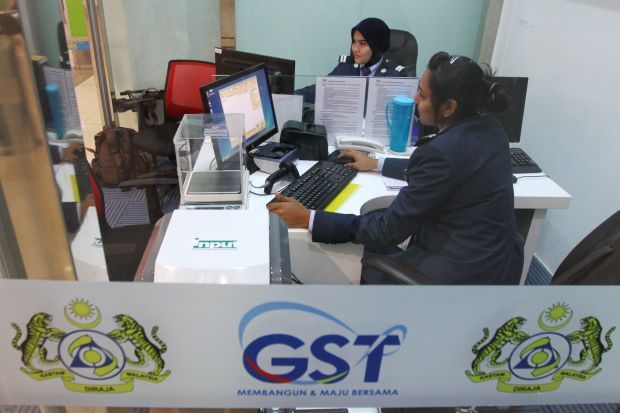
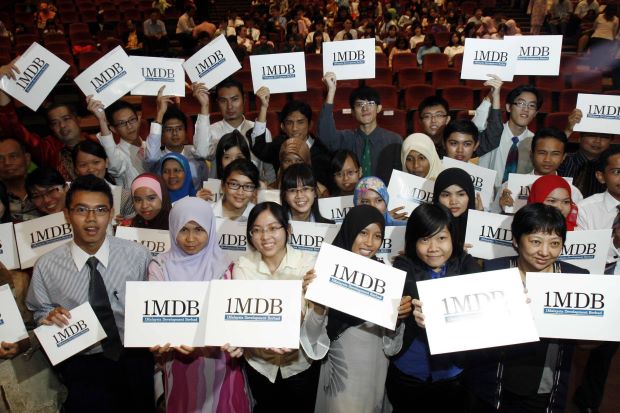
It is tough enough for the government to deal with an electorate still adjusting to the GST. But it puts itself in double jeopardy when it does not provide more information on the 1MDB.

EVERY businessman knows that April would be a tough month with the implementation of the Goods and Services Tax (GST) but many have been hit much harder than they had anticipated.

I know of one watch dealer who did not make a single sale for a day in April – it has never happened before in his entire career.

The hardest hit were the electrical appliances dealers, where profit margins are already low, with many consumers joining in the pre-GST rush to buy these products. So in terms of sales, April was practically a dead month for them.

One jewellery businessman said sales were 30% to 50% down in April compared to the same month last year. In the first week of April, the jeweller recorded a 70% decline in sales.

The media industry has taken a beating as well with slower advertising revenue recorded for the month of April.

There is serious concern now that the weak consumer sentiment will drag on for the next two months, and that the second quarter would not be a happy one.

With the fasting month coming up in June and Hari Raya in July, media houses would traditionally see early bookings but everyone is worried. There does not seem to be any enthusiasm.

In a recent report, the Retail Group Malaysia (RGM) had predicted that Malaysian consumers would buy earlier in the year in anticipation of higher retail prices after April 2015.

However, retail sales performance during the first two months of the year was actually below expectations.

That is from a business perspective but for many Malaysian consumers, the reality is that they now have to pay more, even for their daily needs. Many have resisted spending on items they feel they do not need because of the GST, and the weaker ringgit hasn’t helped either.

Some have however expressed cautious optimism, believing that there would be a correction by next month, insisting that there would be more spending with the Hari Raya festivities coming up.

The reality is that the GST has taken a much greater toll on consumer sentiment than expected.

Yes, we can say that glitches are expected. We can say that Malaysia is among the last countries to impose the GST and that we have to start living with the new tax system.

Malaysians have also been told that the GST is necessary if we want to improve our deficits and to prevent our credit ratings from being downgraded.

But while our leaders expect the ordinary people to make these sacrifices for the national good, we also expect them to live up to our expectations.

Reports of lavish spending on themselves or their family members, whether real or otherwise, are not going to endear them to the people.

In fact, there is a lot of grumbling among the people that some of our leaders have become disconnected and are not hearing the loud murmurings on the ground.

If they were to listen hard enough, they would realise that all those statistical ­figures that have been tossed around to justify how well the country is doing have not shifted the people’s thinking one bit.

In fact, not many people even believe in these magical numbers because the rosy picture is not being felt by the rakyat who are struggling to pay their bills.

The situation is made worse by reports of public money being purportedly siphoned off. To be clear, we are talking about the 1Malaysia Development Berhad issue. No one seems to have been hauled up for investigations even as we eagerly wait for some action to be taken.

All those high-powered teams comprising our top investigators are supposed to have been set up but none of us can tell for sure if they have actually started work.

Instead of going after the whistle blowers, we are sure most Malaysians want to see our police channel their resources and energy pursuing those who have allegedly dipped their fingers or, rather, their hands, illegally into the money pot.

It would help if fresh information is made available regularly on how our police and others have progressed in their work. Instead, Malaysians are getting their daily dosage of allegations via social media but without any rebuttal or strong clarification from those implicated.

Perceptions are important, and if those aggrieved do not respond fast enough, and provide more information, it will have a serious impact on their positions and eventually their legitimacy.

Until these issues are tackled, they would continue to disrupt the running of the government and put the government in a defensive mode.

It is tough enough for the government to deal with a dissatisfied, if not angry, electorate, still adjusting to the introduction of the GST. But it puts itself in double jeopardy when it also has to deal with the detractors with their constant barrage of exposes on the 1MDB.

Insist on the middle ground

The concert venue at the Mines International Exhibition and Convention Centre in Seri Kembangan stays empty after the concert was cancelled.

The concert venue at the Mines International Exhibition and Convention Centre in Seri Kembangan stays empty after the concert was cancelled.

IF you want to watch a good concert without having to worry about our Malaysian authorities throwing a spanner in the works at the last minute, then just head to Jakarta, Bangkok or Singapore.

Talk to concert promoters in Malaysia – there are not that many in this financially risky business – and they will tell you that Malaysia has a bad reputation among artistes in this region. Bad is an understatement, really.

Some Malaysian concert promoters have moved to China to stage shows there as they find dealing with the communist authorities is actually simpler. Not to forget, the market in China is huge, with the potential for larger audiences, like in Jakarta and Bangkok.

Our problem is that just about ­everyone in Malaysia wants to have a big say over how concerts should be organised, or whether they can be organised in the first place. And what is ridiculous is that most of them do not even know who the artistes are, yet they have strong opinions over whether they are “morally suitable” for the impressionable young minds in our country.

The most powerful body is the Central Agency for Applications of Filming and Performance by Foreign Artistes or Puspal.

The agency was set up by the Cabinet in 2001 to coordinate and consider all applications for filming and performance by foreign artistes. It has so much clout that no concert promoter would dare to make a comment, even a little squeak, about Puspal, for fear of being blacklisted. Puspal reports to the Communications and Multimedia Minister.

Then there are the authorities at other levels. And the hottest issue now is that even the district police headquarters can stop an event. Last week, the highly awaited “Thirst 2015: We Are All Stardust” event, which was scheduled to take place at Mines International Exhibition & Contention Centre (MIECC), was cancelled at the last minute.

Never mind if it was supposed to be a closed-door dance music event with only non-Muslims allowed, since beer would be served. For the organisers, one year of planning went down the drain, thanks to the fickleness of the police and the Subang Jaya Municipal Council.

According to reports, on the afternoon of April 24, the day before the event, the police sent a letter to MPSJ stating that they would not support the concert. This led to the MPSJ withdrawing the entertainment permit that had been issued to the organisers. It has also been claimed that the Serdang police had initially issued a letter on March 25 stating that they had no objections to the staging of this event.

MPSJ then issued a temporary permit to the organisers, Future Sound Asia Sdn Bhd, on April 21, to stage the concert, subject to certain conditions. They included ­ensuring that there would be no one under the age of 18 attending the concert, and that Muslims are also forbidden to attend.

The police have cited security reasons for their decision and have denied that they acted following a complaint by Seri Serdang state assemblyman Noor Hanim Ismail, who wrote an official letter objecting to the concert.

The PAS representative reportedly said it was her responsibility as a Muslim legislator to stop the concert, which is sponsored by beer company Heineken, as it would have an adverse social impact on society.

Ikatan Muslimin Malaysia (Isma)’s Youth wing has also reportedly backed the authorities’ decision to withdraw support for Thirst 2015, claiming the event encourages the consumption of alcohol.

Pardon the expression but these objections have left a bitter taste in my mouth. As a non-Muslim who drinks, I believe I have the right to enjoy a party with alcohol served. It is not for PAS or Isma to pass moral judgement on non-Muslims as the conditions clearly stated that Muslims would not be allowed to participate.

Thank you very much to non-Muslims who cast their votes for PAS candidates in the 2013 general election. Thank you for believing that PAS policies, including the implementation of hudud laws, would not affect non-Muslims.

Before this issue broke out, there was also a lot of debate generated when it was revealed that the Malaysian Islamic Development Department (Jakim) had proposed that males and females be segregated during concerts. Its guidelines included a section on dealing with the organisation of entertain­ment events whereby Jakim said such programmes should not allow “mixing (percampuran) of males and females in the audience”.

The guidelines were endorsed during the 107th National Fatwa Committee Meeting held on Feb 10 and 11 this year.

According to reports, the guidelines also specified that concert organisers should not allow pergaulan bebas (mingling) between men and women during rehearsals.

Needless to say, it created a furore among Malaysians of all races for its impracticality and the controversy was also widely reported in neighbouring countries.

Jakim subsequently backpedalled and clarified it was merely a guideline. Well, if Malaysians had not spoken up, it could well be regarded as a regulation.

It would appear no one gave any thought as to how the gender segregation proposal could be implemented. Would it mean married couples have to be seated separately? And does the rule apply to non-Muslims as well? If it is a yes, the rights of non-­Muslims would surely be infringed. And we all know that some members of our royalty, including certain Sultans and their families, like attending concerts. Would the regulation be applicable to them as well?

It has also been reported that Jakim has ruled that jokes made during performances must be appropriate and cannot lead to “excessive laughter”.

Now, who is to decide what kind of jokes would be deemed appropriate and is there such a thing as “moderate laughter”? This sounds really absurd, even to an advocate of moderation like me.

But by now, Malaysians have got used to such absurdities. Three years ago, a Singaporean dance troupe was denied a permit to perform here owing to their “indecent” costumes. Puspal was reportedly against the female dancers wearing tutus as well as the tights worn by men.

If ballet dancers do not wear tutus and tights, then what are they supposed to wear? In the end, it had to take the minister to knock some sense into them.

The point here is this – do we always need to run to the Prime Minister or Minister for something as ordinary as holding a concert?

Back in 2008, the promoter of the Avril Lavigne concert, someone I know, was in tears because there was pressure from PAS leader Nasruddin Hassan for the show to be cancelled. Imagine the financial losses he had to bear. Even though the argument was frivolous, there were few Umno leaders who had the courage to speak up against this politician.

Lavigne may just be a skinny artiste to most of her fans but Nasruddin, now the MP for Temerloh, found her too sultry and sexy to be allowed to perform in Kuala Lumpur. The promoter was desperate but thankfully was able to seek the help of then Prime Minister Tun Abdullah Ahmad Badawi to intervene and allow the show to proceed.

Interestingly enough, in the 2013 elections, there were enough Chinese voters who supported Nasruddin to help him defeat the incumbent MP, Datuk Saifuddin Abdullah, now a fellow moderation advocate.

Malaysia is in danger of becoming a basket case with extreme theologians and communal champions appearing to combine their strengths to push their agendas.

If moderate Malaysians do not speak up, or prefer to let others do the job, we will be heading towards a Malaysia which our founding fathers never envisioned.

There will be no turning back if we do not speak up for a moderate Malaysia. We must insist on the middle ground.

No room for intolerance

Building caretaker showing the empty space where the Cross was brought down following a protest by residents at Taman Medan, Petaling Jaya.

Building caretaker showing the empty space where the Cross was brought down following a protest by residents at Taman Medan, Petaling Jaya.

LIKE most Christians in this country, I am sad rather than angry over the protest staged by about 50 people demanding the removal of a cross at a church in Taman Medan in Selangor.

In fact, if some of the protesters have their way, they would want the church to leave the area because of its predominantly Muslim population.

This flawed argument feeds on the fears of these people, and we are not even sure if they actually represent the views of the majority as they claimed. The demonstration may well be the work of some local politicians.

But it is clear enough that some of the remarks made at that demonstration last Sunday seem to stem from ignorance, prejudice and even plain bigotry.

They include the claim that the sight of a cross in a Muslim area challenged Islam and could influence the young.

Just a few months ago, hundreds of protesters gathered at a development site in Taman Keramat, claiming that their Malay-majority neighbourhood would be overrun by the Chinese because of the ongoing project.

The rowdy protesters stormed into the construction site of the condominium project, Datum Jelatek, after tearing down its zinc hoardings.

It was revealed later that their fears were unfounded, or rather false, as the developer, the Selangor State Development Corporation, confirmed that the majority of bookings were by the Malays.

Although it is wrong to play the racial card, we must acknowledge that the fears of the urbanites being pushed aside by development in their own areas are real.

Many of them, especially the urban poor, struggle to own homes in the areas which had been their home for generations because the new developments are beyond their reach.

Still, incidents like these, which smack of racism, have left many Malaysians, especially non-Malays, wondering about the state of affairs in this country.

We love this country, like the rest of our brothers and sisters, regardless of their race and religion. Malaysia remains our country and our only home.

There is nowhere else to go. Just because we are of ethnic Chinese and Indian origin does not mean we can just pack our bags and head to China and India, as some ignorant ones think.

Our hearts bleed when such incidents happen. Worse, despite the inflammatory racial remarks made at Taman Keramat, no one has been arrested or charged over that incident so far.

Can cynical Malaysians be blamed if they assume that no one would be arrested or charged over the Taman Medan protest as well?

We salute the Prime Minister, the Home Minister and the Cabinet for their strong stand against what had taken place.

Our politicians, as well as some individuals and groups, should stop harping on the wrong belief that Malays and Islam are under siege in our country.

The statistics themselves already prove that this is not possible. The Malays are the substantive majority, and their fertility rate is such that their numbers are growing. In contrast, both the Chinese and the Indian communities are shrinking.

As for religion, Islam is firmly entrenched as the religion of the country, even as the freedom of religion is guaranteed under the Constitution.

The official statistics reveal that Muslims constitute 60.4% of the population, Buddhist (19.2%), Christian (9.1%), Hindu (6.3%), Confucianism, Taoism, other traditional Chinese religions (2.6%), other or unknown (1.5%), and none (0.8%).

It is unfortunate that so many issues today are still seen through racial and religious perspectives.

Which is why many are under pressure to only speak out for their own community and faith, right or wrong. Those who are prepared to point out the flaws in some of the extreme arguments of their own communities are often condemned. And many just remain silent.

But talk of moderation would remain hollow if we are not able to take the internal pressures.

Our conscience requires us to speak up against those who cannot draw the line between right and wrong. How can we remain silent when something that is so fundamentally wrong happens in front of our eyes?

Coming back to Taman Medan, the argument that a place of worship belonging to a minority cannot be set up in a Muslim-majority area is deeply flawed.

Everyone is entitled to profess and practise his faith freely. That is clearly defined in our Federal Constitution.

Although our nation is predominantly Muslim, there are also many areas in states like Penang, Sabah and Sarawak where they are actually in the minority. But like everyone else, they too have the right to set up mosques and worship freely even if their numbers are not large.

No one should tell Muslims to pray elsewhere in areas with more Muslims, for example. That would surely be unacceptable. The protesters in Taman Medan obviously never thought of this angle.

Likewise, in Europe and the United States, Muslims should be given the right to build mosques and should not face any form of restrictions in the practice of their faith.

What has happened in Taman Medan should open the eyes, the ears and most importantly, the hearts of all Malaysians on the predicament faced by Christians in this country. The fact that Christians have to set up places of worship in commercial and industrial lots should lead us to question why this has become the norm.

These are certainly far from perfect refuges to worship God. It is not unusual to have churches being set up above coffee shops, and the worshippers just have to bear with the din downstairs.

The traditional churches, with all their architectural grandeur, are relics of the past. These were churches built during the British colonial days and they cannot accommodate many of the new Christians who have their own denominations.

Today, Christians have to fight bureaucracy, mostly at council level, and other obstacles, just to set up a church where they can pray and worship the God they believe in.

It is even more difficult for independent churches like the Community of Praise in Taman Medan, with only about 20 people in its congregation. It is not part of the mainstream church with its proper structure and support facilities.

But the incident has certainly put this relatively unknown Tamil language church located in a shoplot in the national spotlight.

The future of the church is not clear. Obviously, the congregation does not want any controversy or conflict with the local community. That is not the Christian way.

The fact that they were quick to take down the cross, as demanded by the protesters, shows that they are peacemakers in line with the teachings of their faith. But the action itself must have broken their hearts.

We all need to understand the religions of fellow Malaysians. We must not be suspicious of each other because there is beauty in all religions.

No religion teaches bad things. We need to emphasise on the common values such as compassion, tolerance, patience, forgiveness, mutual respect and acceptance.

It is dangerously selfish of anyone, especially small time politicians, to use race and religion to win votes.

And when such personalities spew racist and religious rhetoric freely, without the fear of facing the wrath of the law, it only emboldens the extremists to continue what they are doing. And others will join in believing they have the superior right to do so.

Those on the receiving end will assume, rightly or wrongly, that there are different sets of laws for different people, or worse, different communities.

Our leaders must understand they represent all Malaysians. A government of one faith or one race has no legitimacy in multi-racial Malaysia.

Any political party that assumes it does not need the support of other races is simply arrogant. Such a belief is surely a recipe for disaster at the polls.

The Rukunegara is clear – Kepercayaan Kepada Tuhan – or the Belief in God. We pray for Malaysia and its leaders to do the right thing and to right the wrongs.

Glare of the spotlight

The reality is that politicians, as public figures, can no longer ask for privacy. After all, no one asked them to be politicians and they cannot cherry-pick their choice of publicity.

WELL, it was only a matter of time before this came out. Images of Malaysian politicians wearing luxury watches, as well as cheap ones as a comparison, have gone viral on social media.

Those named have chosen to remain quiet except for Home Minister Datuk Seri Dr Ahmad Zahid Hamidi, who was clearly peeved.

He defended his purchase of three luxury watches allegedly worth more than RM1mil in total, saying he was a corporate figure before becoming a politician.

The Umno vice-president questioned the need for the Malaysian Crime Watch Task Force (MyWatch) to monitor watches worn by politicians.

Deputy Finance Minister Datuk Ahmad Maslan also quickly defended himself on Twitter although he wasn’t highlighted prominently in the expose, saying he has never owned a RM40,000 Rolex Submariner.

Even Prime Minister Datuk Seri Najib Tun Razak, his wife Datin Seri Rosmah Mansor and Umno Youth chief Khairy Jamaluddin were implicated in the watch issue.

Social media has become both a boon and bane to politicians everywhere. From their choice of restaurants to how they shop and what they want to buy, politicians and their spouses have never been so openly scrutinised.

It is no longer about the paparazzi or press. Anyone who has a smartphone is able to capture anyone else in a public place and post that image online.

The reality is that politicians, as public figures, can no longer ask for privacy. Public figures only have public lives. After all, no one asked them to be politicians and they cannot cherry-pick their choice of publicity.

Politicians with expensive watches are now the talking point of the Malaysian public, but they are not the first to come under such scrutiny.

Four years ago, Chinese officials wearing such high-end watches found themselves being watched. An official of ministerial rank earned only RM50,000 a year, so questions were raised on how certain officials could afford luxury brands like Rolex, Piaget, Omega and Cartier, which probably cost more than half of their annual income.

Those caught in the exposé by the Chinese Internet activist included China’s railways minister Sheng Guangzu.

Among the reported glittering timepieces identified by an activist when he zoomed in for a closer look at Sheng’s wrist were a Rolex Oyster Perpetual DateJust, a Piaget Altiplano and an Omega Constellation.

Together, these three timepieces were worth a total of 400,000 yuan (RM237,000).

Ironically, Sheng took over the job after the previous railways minister Liu Zhijun was arrested and investigated for corruption, with reports in China’s official media alleging that he had taken up to RM500mil in bribes.

Sheng lost his job after the ministry was dismantled.

Nearer to home, Indonesia’s military commander was photographed wearing a watch from Richard Mille brand’s Filipe Massa collection, reportedly worth more than RM360,000.

Gen Moeldoko quickly refuted the accusation, saying the timepiece was actually a cheap Chinese fake worth only five million rupiah (RM1,400).

To prove his point, he removed his watch and showed it to reporters who were covering his press conference, saying “this is a Chinese-made fake watch… how could such a watch be original?” while slamming the watch onto the floor.

A Singapore website had also shown photos of Moeldoko wearing other luxury watches.

Moeldoko appeared unnecessarily defensive as he actually comes from a very wealthy family with numerous land assets.

In fact, he had reported to the anti-graft commission last year that he had assets worth about 36 billion rupiah (RM10mil).

Back to Malaysia. There must be something about watches, especially for male politicians. There could be a correlation between an expensive watch and the male ego but for sure, a watch can land many male politicians into trouble.

Well, it happened to Datuk Seri Anwar Ibrahim in that infamous sex video involving a man resembling the opposition politician.

To refresh our memories, a mysterious video purportedly featuring Anwar surfaced in Kuala Lumpur in 2011, allegedly showing him having sex with a Chinese woman believed to be a prostitute.

The trio of Tan Sri Abdul Rahim Tamby Chik, Datuk Shazryl Eskay and Datuk Shuib Lazim, who referred to themselves as “Datuk T”, showed the video to some members of the press, including this writer, at Carcosa Seri Negara.

The single luxurious fashion accessory that was mentioned was an Omega watch said to be worn by the man resembling Anwar on that day.

One of the Datuk Ts was allegedly asked by the person in the video to pick up the watch, which the latter had accidentally left in the room.

That Datuk T, who is actually Shazryl Eskay, claimed to have the watch in his possession before handing it to the police for further investigation.

Of course, Anwar was challenged to reproduce the infamous Omega watch but he denied that he was the man in the video.

Anwar’s wife Dr Wan Azizah Wan Ismail has insisted she has in her possession the expensive watch, which some said was a gift from a Saudi Arabian royal family burnished with a royal crest, but until now, no one has seen it.

While Malaysians do not expect our politicians to live like paupers or lead a pretentious life of poverty, what most of us find hard to swallow is the flaunting of wealth. Such a blatant show of extravagance will certainly not go down well with most Malaysians struggling with their daily lives.

Malaysians already find it hard to understand why many of our politicians must go everywhere with an entourage – don’t these government officials or party leaders have work to do?

If only they could emulate the likes of Minister of International Trade and Industry Datuk Mustapa Mohamed and Ministers in the Prime Minister’s Department Datuk Wahid Omar and Datuk Seri Idris Jala, who are all so simply down to earth.

Travellers taking the ERL from KL Sentral to KLIA have often seen Mustapa travelling alone with no hangers-on.

The reality is that political leaders are being watched closely – not just them, but also their spouses and children. And it is not just about what they indulge in, but also their behaviour.

Our leaders need to stay connected to ordinary Malaysians. They need to be sensitive so that they can understand fully how most of us cope on a daily basis.

Walk a mile in our shoes

A notice pasted on wall stating 10% service charge and 6% GST at a restaurant in Kuala Lumpur. AZHAR MAHFOF/The Star

A notice pasted on wall stating 10% service charge and 6% GST at a restaurant in Kuala Lumpur. AZHAR MAHFOF/The Star

We want politicians who understand what real Malaysians have to put up with every day, and to help up deal with them.

GET real – real Malaysians talk about the further increase in the cost of living since the Goods and Services Tax was implemented two weeks ago.

We are at the adjustment stage as we try to come to terms with the changes that are affecting our daily lives.

We are definitely looking at the bill more closely. Even if we are prepared for the 6% GST to show up, we grumble why we have to pay 10% for service charge as well.

We know the GST is supposed to go to the government coffers, but we are not sure if the service charge is going straight into the pockets of the restaurant owners or to the workers who should get the money. Some of us may also have a sneaky suspicion if the GST will actually go where it is supposed to go.

Okay, we admit we do not have a tipping culture, and we have to be “forced” to give service tax. But at the same time, let’s admit that in most cases, there is no quality service from most restaurant helpers.

We now check our receipts more carefully because we do not want any extra charges to show up. Let’s get real. We are all affected by the rising cost of living.

At roadside stalls, where no GST is charged, we also notice that the food portion has shrunk or the price has gone up slightly. Yes, even these stallholders need to earn more to make ends meet.

This is what most Malaysians talk about in their daily conversations. If our politicians and bureaucrats think these are all made up, then they are either in self-denial or living on another planet, which means they really deserve to be sacked from their jobs.

Stop waiting for just good news which you only want to hear. If you want real feedback, talk to real people, not apple polishers or opportunists.

The typical Malaysian wage-earner cannot escape the taxman as everything is deducted at source. So there is always a gap between the actual salary and the take-home pay after all the statutory deductions.

Not only does he have to juggle his expenses, he also cannot be sure about the annual increment exercise. After all, employers also can cite reasons like weak market sentiments to reduce the increments and bonuses.

Middle class Malaysians are the worst off. They are truly squeezed in the middle. They can’t qualify for BR1M and they are too poor to live the life of the rich and famous of Bangsar.

Our leaders can rattle off statistics to convince us how well the Malaysian econo­my is doing but we are sorry to tell them that the trickle-down effects are not being felt at all. Most of us are not reporting roaring businesses. Try talking to those in the retail business especially.

So the last thing we are interested in are squabbling politicians. They include retired politicians who just can’t accept the fact that they are retired. And then there are those still in service who really need to get special lessons on how to provide convincing and truthful answers during interviews.

Either way, Malaysians are not amused with the daily overdose of news about murder conspiracies, alleged missing money and plots to overthrow the leader­ship – not when many of us have to put food on the table and figure out where the money should go this month.

But of course, if we Malaysians think that the cost of living is our biggest issue, PAS Members of Parliament think otherwise.

Nothing matters to them more than to push through the Private Member’s Bill to impose hudud law. It was at the top of the party’s biggest agenda but it didn’t happen, so most of them must have travelled back to the East Coast grumbling away. They have to wait until the next Parliament meeting. Good luck, try again.

Their next more important item, of course, is to prepare themselves for their coming party elections. Economic issues? That’s too difficult to understand and explain to the village folks. It doesn’t have emotional appeal and it will be difficult to grab the attention of the ceramah crowds.

And of course, it doesn’t help that the ringgit has shrunk. The cost of doing business has gone up and it has also become more expensive for those of us with children studying overseas.

If there’s any consolation, the price of petrol has just gone down a bit, but the hawkers have not reduced their prices since the last time the prices of crude oil went up. For many businesses, what goes up need not come down, never mind the law of gravity.

But just when we think our politicians on the opposite sides of the divide must disagree on everything, it is interesting to note that when it comes to increasing the allowances of our elected representatives, there is almost brotherly love and reconci­liation in the august hall from everyone. No need to call for block voting, all in favour, just say “aye”. It is amazing what money can do.

You know what else Malaysians want? We want our cops to get back to catching criminals, especially snatch thieves, instead of locking up journalists whose only crime was to file inaccurate articles.

We want our MPs to stop sleeping on the job and to actually take part in ­voting in Parliament instead of sneaking off somewhere with pathetic excuses.

We want politicians who understand what real Malaysians have to put up with every day, and to help us deal with them. These are issues that affect all of us, whatever our race or religion, and there is no need to see everything through political eyes. It should not be about helping only those who will vote for them.

Live your lives as we simple folks do. Be sensitive, listen to us. Don’t talk down to us. That is all we ask for – remember we elected you and not the other way around.

Teach, not convert students

It’s time for the Education Ministry to send out a directive that religious conversion is strictly out of bounds in schools.

TEACHERS are hired to teach – that’s why they are called teachers. But in the case of two teachers in SMK Lutong in Miri, Sarawak, they went further and created a storm in the process.

The two, who are from the peninsula, have been taken out of the school and reassigned to desk jobs with immediate effect for allegedly converting a 13-year-old student to Islam. The Education Ministry has acted rightly and swiftly to put an end to the ugly episode.

We all know that attempting to convert any child below 18 years old to whatever religion without the parents’ consent is illegal.

It is time for the Education Ministry to send out a directive that religious conversion is strictly out of bounds in schools, where all the students are below the age of 18.

When cases like this happen, we should not simply transfer the teachers to another school, whether within the state, or even to another state. If these teachers are not clear as to their actual role within the confines of the school, then it would not be proper to place them anywhere near our schoolchildren.

That the girl involved came from a Chris­tian family only heightened the contro­versy, which has not only angered the predominantly Christian community in Sarawak, but also gone viral on social media.

Some already feel that the two teachers should be sacked immediately but as civil servants, they are also entitled to due process. According to media reports, they have been assigned to desk jobs at the Miri district education office, and the likelihood of them being transferred out of Sarawak is probably a foregone conclusion.

We must, however, be clear that they should not remain as teachers unless we can be sure that they are truly remorseful. Transferring them to another school is merely moving a problem elsewhere.

In February, a similar controversy arose in SMK Kinarut in Sabah when a 16-year-old schoolgirl was reportedly converted to Islam.

Media reports quoted Sabah Police Commissioner Datuk Jalaluddin Abdul Rahman who said their inquiry showed the girl was still a Christian and had not converted although she practised the Islamic way.

Her father, Jilius Yapoo, correctly insisted that his daughter remains a Christian, and can only decide on her own religion after she turns 18. For now, the parents have decided to transfer her and her three siblings to SMK Tun Fuad Stephens, a mission school in Kiulu, some 40km from Kota Kinabalu.

Meanwhile, the errant ustazah and her husband, also a teacher, have been transferred to religious schools in Tuaran and Inanam.

These two cases appear to reinforce the fears among parents of the rural Christian communities in both Sabah and Sarawak over what might happen if they send their children to schools with hostel facilities in the urban areas.

Away from home, the parents need to be reassured that their children are going for an education, and not a new religion.

It may be natural for teachers, especially those who are religious, to share their beliefs. But to the parents, this is a form of indoctrination.

The teachers’ responsibility is to teach, and in the case of the hostel students, to also care for their well-being as these young students are away from home.

The children are still considered minors and the law is very clear that their religion is determined by their parents until they turn 18. Obviously, any teacher who seeks to influence a conversion has entered into forbidden territory. It is also a violation of the Child Protection Act, in case these teachers are not aware of it.

Worse still, if such cases involved teachers from the peninsula, as in the Sarawak case, there will also be major political ramifications.

The Federal Government has to listen carefully to the unhappiness that is now openly expressed by the substantial Christian community in these two states.

They have proven themselves to be consistent loyal supporters of the Barisan Nasional but their support must not be taken for granted.

It is a fact that the Malay-Muslim vote in itself will not be enough to keep the Barisan in power. The coalition needs the backing of the Sabahans and Sarawakians. The Barisan politicians, in particular those from Umno who are still ignorant and arrogant, should wake up to the reality.

Christian leaders in Sabah and Sarawak, if you listen to them, will tell you of their concerns over the Islamic resurgence, led by certain federal agencies, supposedly funded by the Federal Government, in the two states.

Rightly or wrongly, perception is everything. If it is not true, then efforts must be made to reassure the people there. They are the ones who can teach us about racial and religious harmony and how diversity is truly embraced by all. They certainly do not want to see the kind of fissures in the peninsula exported across the South China Sea.

We have also come to a point where Christians who bring up such issues are attacked on the Internet by groups and individuals whose words clearly breached the Sedition Act.

Liberals and moderates have also been called all sorts of names and threatened at times. It takes a tremendous amount of courage for them to speak up, especially when they may end up in jail as a result.

But that is how the racist and religious bullies work – they want the moderates to be cowed into silence. Let us be clear that Malaysia does not belong to them.

Islam is the official religion of this country. Malaysia is a predominantly Muslim country, and their numbers are expected to grow even faster due to their high fertility rate.

According to the latest study by Washington-based pollster Pew Research Center, Muslims will make up 72.4% (32.7 million) of Malaysia’s projected population of 45.2 million in 2050, compared to just 63.7% (18 million) of the 28.4 million population in 2010.

The report titled The Future of World Religions also revealed that Malaysian Christians will stay at just 9.4% of the population in the next 40 years, while all other religions will see their share of the populace shrinking. The biggest decline will be the Buddhists, who will make up an estimated 10.8% of the country’s population in 2050, compared to 17.7% in 2010.

With the dominant Muslim population, politics will also be played out differently. Already we can see how the push by PAS for the implementation of hudud has put Umno in a spot, since both depend on the same racial and religious voters.

The irony is that as much as some non-Malays dislike Umno, the party is probably the best hope to stop PAS from turning Malaysia into another Pakistan, Afghanistan or Iran.

If Malaysians, especially the urban Chinese, are not tactically careful or strategically clever, Malaysia will turn green – and it won’t be the Environment Party that wins, but PAS.

Likewise, Umno has to remember that it too needs the support of non-Malays. Trying to compete and outdo PAS all the time isn’t going to help.

Which brings us back to the point of why Sabah and Sarawak are so important. These two entities are not just two states within the federation. They were the ones who helped form Malaysia by merging with then Malaya and Singapore in 1963.

All of us, including the children in our schools, need to be reminded that without Sabah and Sarawak, there will be no Malaysia.

Trying to change the religious and political landscape of these two states, and in that process, stepping on the sensitivities of the people there, is plain stupidity.

But as we celebrate Easter Sunday today, forgive them we must – for they do not know what they are doing.

No more pussyfooting around

PAS President Datuk Seri Abdul Hadi Awang

PAS President Datuk Seri Abdul Hadi Awang

PAS president Datuk Seri Abdul Hadi Awang is experienced enough to know that the implementation of hudud laws, even in Kelantan, would be ultra vires the Federal Constitution – but the signals have already been sent.

IT’S almost certain that the attempt by PAS president Datuk Seri Abdul Hadi Awang to push for the implementation of hudud laws in Kelantan, via a private member’s bill, will not see the light of day in the current session of Parliament.

The word in Putrajaya is that Hadi will be told that the Dewan Rakyat is busy with other more urgent matters including several other bills in the current one-month session which ends on April 9.

In short, Hadi’s proposed bill to amend the Syariah Courts (Criminal Jurisdiction) Act to synchronise it with the recently passed Syariah Criminal Code II 1993 (Amendment 2015) in Kelantan will not happen.

The statement by Prime Minister Datuk Seri Najib Tun Razak on the hudud issue is also long ready. It is understood that he wants to choose the right timing to state his stand.

It is obvious that Barisan Nasional is enjoying the daily mud-slinging between PAS and DAP, with PKR already indicating that it won’t support the PAS attempt.

But one thing is clear in Putrajaya – the implementation of hudud laws, even in Kelantan, would be ultra vires the Federal Constitution. Or, in simple language, it will go against the supreme law of the country.

PAS and the party’s array of lawyers can argue and try to interpret the laws to suit their stand but, in the end, any implementation of hudud would still need an amendment to the Federal Constitution, which requires a two-thirds majority.

Criminal laws are under the sole jurisdiction of the federal authorities. Even the criminal laws under the Kelantan enactment will need some form of enforcement authority and, as it stands, the only authority is the Royal Malaysian Police.

While the state religious authorities are empowered to enforce specific religious matters, they do not have any power with regard to criminal matters.

It is not the job of PAS leaders to play policemen. It is the job of the Royal Malaysian Police headed by Inspector General of Police Tan Sri Khalid Abu Bakar.

The policemen report to him and not PAS leaders and their state religious authorities, or any self-appointed moral police force.

Kelantan, or any state government for that matter, simply does not have the power or the right to introduce criminal laws. Only Parliament can legislate on such matters, and provide the punishment to go with the offences. That’s what the Penal Code is all about, which is a federal piece of legislation.

What PAS is trying to do, and they know that they cannot do it, is to usurp the power of Parliament.

The Syariah Criminal Code II 1993, which was amended recently, is being revived after 22 years. It has always been there, but the party did not push it at the federal level because it was realistic about its chances of getting enough MPs to support it.

So why the current push? Is it because PAS believes that it now has sufficient clout – together with other Muslim MPs from Umno, and possibly some from PKR – to get the stamp of approval?

Or is it simply because the PAS ulamaks, headed by Hadi, want to make sure that the party president gets re-elected in the coming PAS elections, and in the process strengthen their grip on the Islamist party?

Hadi is experienced enough to know that PAS will never be able to push it through – but the signals have already been sent.

PAS has always been consistent about its hudud and Islamic state ambitions, even if its Pakatan partners, DAP and PKR, seem to want to gloss over this clear fundamental divide. It is also clear that PAS wants to push harder now because of the changing demographics in the country.

The Chinese and Indian population is shrinking and so will its electorate base in the years to come. This is primarily the case in the peninsula. The only bastion against any Islamic agenda seems to be the non-Muslim bumiputra voters in Sabah and Sarawak, with their large number of Christians.

And these two states also control 56 of the 222 seats in the Dewan Rakyat, so they cannot be ignored.

But over in the peninsula, especially in the Malay heartland, Umno is handling the hudud issue cautiously as PAS campaigns along the line that “Hudud=Islam and Islam=Hudud” in the rural areas.

There is no doubt that the religious and conservative side of Islam is on the move and increasing its influence. And the reality is that only Umno, whether we like it or not, can hold back the push by PAS.

Unfortunately, the Chinese and Indian voters were convinced in the 2013 general elections by DAP that the Barisan Nasional government could be toppled at the federal level. In the process, they happily voted in PAS candidates without thinking of the consequences.

The saddest case was in Temerloh where incumbent MP Datuk Saifuddin Abdullah was voted out and replaced by PAS hardliner Nasrudin Hassan Tantawi. Saifuddin, known for his progressive views, is now an active advocate of moderation.

Now, DAP secretary-general Lim Guan Eng has said that the party wants to sever ties with Hadi, but will keep its relations with PAS within the Pakatan Rakyat. In Sarawak, however, the state DAP has declared that it will not work with PAS any more.

For all that bravado, the reality is that PAS is actually inconsequential in Sarawak. But DAP appears to want to play safe at the national level by going after Hadi personally. But whether DAP wants to work with PAS or not is quite irrelevant, even if Hadi is not party president, because the Islamist party has clearly stated its goals.

Is DAP, again, in the next general election going to tell the Chinese voters to vote for PAS and pretend that all is well and fine? DAP has to make up its mind.

Likewise, the Prime Minister also needs to come out strongly on the issue.

Barisan cannot continue the tactical move of deferring any Private Member’s Bill on hudud at every parliament session. The charade has to stop and the best way is to say clearly that Malaysians will not and cannot accept hudud because it is unconstitutional.

This is a multi-racial and multi-religious country. It is a total fallacy and gross misrepresentation for Hadi and anyone, including some misguided Umno leaders, to believe that hudud laws do not affect non-Muslims. Of course, they will, make no mistake about it.

The implications to non-Muslims are clear enough. If anyone missed out on their possible impact in the original 1993 enactment, the amendments that were recently passed should convince them that there is no way hudud can be exclusively a Muslim issue.

Until now, we have not heard any convincing rebuttals from PAS or their supporters other than to be told to stay out of the debate.

It won’t be just Malaysia watching how we deal with Hadi but also the world. Keep our beloved Malaysia multi-racial, multi­cultural and multi-religious. We will not and must not let PAS dictate how we live our lives.

Get it right, we’re all affected

In a multi-racial and multi-religious country like Malaysia, hudud will impact the non-Muslims as well, whatever the assurances given so far.

IF we were to listen to Umno leader Datuk Seri Ismail Sabri and various PAS leaders, they would want us to believe that the hudud laws in Kelantan, if implemented, would not affect non-Muslims in Malaysia. So we should not be worried.

Correction – judging from Ismail’s tone, it was more of a warning to non-Muslims not to “interfere” in the issue. And this is the same person, who also happens to be a Minister, who has achieved notoriety for his controversial rantings recently.

We should be aware that there are some non-Muslim hardcore supporters of Pakatan Rakyat, because of their fanatical anger against the Barisan Nasional, who would also agree with the claim that it does not affect non-Muslims.

Despite such persistent claims that hudud does not affect the non-Muslims, we have to acknowledge the reality that in a multi-racial and multi-religious country like ours, there is absolutely no way that we can separate the Muslims and non-Muslims. Our daily interactions will be mainly for the good, but when crime covered by hudud is committed, there will invariably be cases when both parties are involved.

Which is why the questions will persist over what happens in such situations. In a rape case, for example, it remains unclear how it would be resolved if the victim is a non-Muslim and the perpetrator(s) are Muslims.

How does one get the four reputable Muslim witnesses to prove that the offence has been committed? What if only non-Muslims were witnesses to this horrible crime? How can they testify in a religious court, and how much weight will their evidence be given? And what if there are absolutely no witnesses involved, when it is just the word of the victim against the perpetrator?

These are questions that need to be answered properly, even by people like Ismail. Or should we just shut up and not interfere?

Just take a look at Section 41 of Kelantan’s Syariah Criminal Code (II) Enactment 1993 which states that it only permits direct evidence by just adult male Muslims. A “just” male Muslim is defined as a person who does whatever is required of him by Islam, avoids committing great sins, does not continuously commit lesser sins and also has a sense of honour.

Section 40(1) clearly states that there must be two or more witnesses for every hudud offence listed in the Code, except for adultery and sodomy, where the number of witnesses shall not be less than two.

Again, not only do you need two witnesses, but they must be “just, adult male Muslims.” These particular sections have already been widely discussed by many legal commentators, and even law students.

It should also be noted that while the current issue is with regard amendments being made to the original Enactment, and PAS’ plan to ensure its implementation by moving the Private Member’s Bill in Parliament, the issues have remained unresolved since 1993.

Back in 1993, we all probably saw it as a state issue which will probably not get a federal mandate to allow for its implementation. But now with a stronger PAS at the national level, and the realisation that the Islamist party could also get the support of other Muslim MPs, it is a different scenario altogether.

The problem is that our politicians are so eager to rush through these laws for their own political agenda that they are not interested in explaining to us how hudud would be carried out.

While they claim to pursue this cause in the name of God and Islam, we can’t help but suspect that politics is at play here with powerful religious arguments used to shut down critics and of course, non-Muslims. This is what non-Muslims fear most – that we cannot comment nor criticise anything that affects us because we are not Muslims.

Non-Muslims, if we were to listen to PAS and the likes of Ismail, should just stop debating or even talk about hudud laws.

But from a political perspective, non-Muslims are also responsible for the situation we are in today. The reality is that the DAP campaigned strongly for PAS in the 2013 general election. A huge number of non-Muslims, especially among the Chinese, voted for PAS even if the Islamist party never wavered from its stand that it wanted to set up an Islamic state.

There was only one DAP leader who consistently objected to it – the late Karpal Singh. The other DAP leaders simply glossed over this fundamental issue and pretended that it would never come to pass. And they were successful in convincing the Chinese voters to throw their support behind the PAS candidates and put more of them into Parliament and the various state assemblies.

It also has to be mentioned that the voting trend of the last two general elections was also due to the fact that most Malaysians want a good government. With so many allegations of corruption and abuse of power, it was felt that voting for the opposition would facilitate the creation of a two-party system which would help to keep all the politicians in check.

The so-called liberal stand by some PAS leaders during the election season also helped, but what we see in PAS today is that the conservative ulama leaders, who are also politicians, are wrestling to gain control of the party. Hudud is used to show that they are the real leaders – and this has to be carried out before the party elections.

In Umno, there are some party leaders who have given up on non-Muslim (principally also non-Malay) voters after the last elections. They feel let down and angry that these voters would rather vote for PAS than Umno, despite knowing what PAS stood for.

Against this political backdrop, some Umno grassroots members are saying they would rather gain the support of the Muslims, particularly Malays, even if that means, rightly or wrongly, playing the racial and religious cards. Their argument is that if some Chinese voters can work with and support PAS, why can’t Umno members do the same on an issue that affects them as Muslims and Malays.

Unfortunately, this has given rise to the impression that Umno and PAS are thinking alike but let us not forget that the Barisan Nasional, of which Umno is the dominant partner, is still a multi-racial coalition. Malaysia isn’t just about the Malay heartland in the peninsula but also Sabah and Sarawak, with its huge base of non-Muslim voters. These are the voters who have been loyal to Barisan and are crucial for the ruling coalition to remain in power.

One can understand their concerns when religion, as perceived in the peninsula, becomes the focus. They are watching closely how Umno would handle this issue, bearing in mind how the centre handled the few contentious cases relating to religion in these two states.

And we have to salute the Sarawak Chief Minister Tan Sri Adenan Satem for his open-mindedness, especially his stand that he will never compromise on issues that could disrupt the racial and religious harmony of the people.

On the hudud, it has been reported that he has conveyed the party’s stand direct to the Barisan chairman.

If we need more convincing relating to how hudud affects non-Muslims, just look at some clauses in the recently passed Bill, now officially known as the Syariah Criminal Code II 1993 (Amendment 2015).

The PAS Kelantan government has reportedly retained three clauses that could subject non-Muslims to the Islamic penal law despite its assurance otherwise.

The media has reported that the Bill retained Clause 56, 57 and 58 under the “General” supplementary that provides for hudud and ta’zir (discretionary) punishments for anyone who conspires, plots, abets or assists in the act of a crime.

Clause 58 also provides that those found to have assisted in a sariqah (theft) offence would also be subject to the hudud punishment of amputation, it said.

Clause 56 states that “if the act of crime is perpetrated by a result of or caused by abetment, assistance, plotting or malicious planning, everyone involved in the planning, plotting, assisting or partaking in the malicious plan to perpetuate an act of crime shall be punished by imprisonment under ta’zir of not more than 10 years.”

It was further reported that Clause 57 states that “shall an act of crime be perpetrated by a group of individuals in order to realise a malicious plan, then every one of those individuals involved shall be deemed as guilty as the main perpetrator and shall be punished with imprisonment under ta’zir of not more than 10 years.”

According to some reports, section 46(1) states that circumstantial evidence will not be accepted in hudud offences, except for zina (adultery) and syurb (intoxication), leaving only oral evidence to be admissible.

No doubt the lawyers mounting the challenge to this law will be perusing every detail of the Enactment but for the ordinary people, they have very simple questions that need to be answered.

Certainly we want to know who will actually be enforcing such a law – the religious police or our police. And we have already seen how, even without hudud, the religious authorities conduct themselves in situations when both Muslims and non-Muslims are involved, like in the Borders case.

How will the syariah courts carry out the hearings and what is the view of the Attorney-General? Being the principal legal adviser in this country, he has to be concerned for the rights of all Malaysians. We would certainly like to hear his views and what kind of advice he will give to the federal government should this process go one step further and land in Parliament.

Let’s get the picture right – the hudud laws do affect the non-Muslims, so let’s not kid ourselves into believing otherwise.

I believe and trust in God but I will surely not trust politicians masquerading as theologians and using God’s name.


Let the A-G do his work

Speed is of the essence but the task force and Auditor-General must do a thorough investigation and leave no stone unturned in the controversial 1MDB issue.

IT looks like Malaysians would have to start learning about accounting terms from now on if they want to make sense of the many news reports on the controversial 1MDB issue.

The accusations and figures bandied around, purportedly involving billions of ringgit, have been mind-blowing to most Malaysians. It is simply beyond the grasp of most ordinary Malaysians who will never get to see that kind of money in their lifetime. After all, a recent report quoting the Employees Provident Fund revealed that 75% of its 14 million contributors, meaning those who are currently employed, earn less than RM2,000 a month.

Until now, the only time we hear of forensic is when we watch those popular TV police programmes showing investigators removing blood and hair samples at the scene where a crime has taken place.

Now we are hearing about forensic auditing, whereby the Auditor-General and a panel comprising staff from the Attorney-General’s Chambers, the Malaysian Anti-Corruption Agency and the police have been entrusted to investigate and give us the answers.

It must not be forgotten that this is on the order of the Prime Minister.

But the task force would need trained personnel with a strong accounting background, and not just any accountant but those equipped with forensic auditing skills. Those with legal and police experience won’t be good enough for this case.

That means going beyond looking at the numbers when examining the state of the company’s finances. They have to effectively reconstruct the books to look at what lurks beneath, just like what the police forensic team would do when they reconstruct a crime scene, where every piece of evidence has to come together to show them the real picture.

One report defined forensic auditing as the application of accounting methods to the tracking and collection of forensic evidence, usually for investigation and prosecution of criminal acts such as embezzlement or fraud.

With 1MDB, there have been allegations of criminal fraud, but these remain mere allegations. Pointing fingers is the easy part. Furthermore, what has been revealed so far relates mainly to an email trail among various individuals.

The purported exchange of email, as well as the content, will be vigorously challenged in any court of law.

From a layperson’s point of view, he will wonder if the name or names of a person or individuals implicated will actually show up on any document. Or will the perpetrators, if any, be smart enough to make sure their names won’t be there?

Certainly, one would be curious to also see the actual paper trail – documents and agreements which may be far too complex for the ordinary person to comprehend.

The task force will have to gather all such evidence first, before they use their forensic skills to determine if any criminal act, or acts, has or have been carried out. Of course, for most of us, all we want to know is who then is responsible.

Whether the 1MDB is a strategic development company or a sovereign fund, the fact remains that it is a wholly owned government entity and public money is involved.

A RM950mil standby credit has been granted to the company by the government. You can call it “facility” or “standby credit” but in simple language it is a loan. And the bottom line is that the money is public money.

The comprehensive audit of this high-powered task force would also need to look at the work done by the external auditors, considering that the company has had three different auditors in five years.

Deloitte, the current external auditor which was engaged by the fund in December 2013, is its third auditor. It replaced KPMG, which had taken over from Ernst & Young.

The reasons for KPMG’s departure remain unclear although 1MDB has contended that the auditor left on the grounds that it could not complete the accounts. KPMG has so far remained silent on the matter.

Malaysians are right to demand for answers and the Prime Minister has rightly called for a full investigation.

The composition of the task force itself, comprising wholly of government officers, may not satisfy the sceptics.

But let us give Auditor-General Tan Sri Ambrin Buang, who has proven himself to be a man of high integrity, the support to carry out the difficult task ahead. He will have to report his findings to Parliament in the end.

As my colleague, specialist editor N. Shanmugam wrote, “Amrin has to do a good job not only on paper. But he must also be seen as having done a good job, considering the various reports that have emerged.”

Another person who would figure prominently once the investigations are underway would be Public Accounts Committee chairman Datuk Nur Jazlan, an accountant who is also seen as another person of high integrity. His fellow Barisan Nasional MPs sometimes say he is “more opposition than the opposition”.

The PAC would need the Auditor-General’s Report as a basis to begin its own investigation into 1MDB, which has raked up RM42bil in debts since 2009.

The PAC chaired by Nur Jazlan, with DAP’s Dr Tan Seng Giaw as deputy, includes five Pakatan Rakyat MPs and six from the Barisan.

The PAC, by parliament tradition, has sufficient clout to call up any witness to get to the bottom of any financial issue involving public funds. The members will surely want to maintain its integrity when it starts its own probe.

Speed is of the essence but the task force and Auditor-General must do a thorough investigation and leave no stone unturned.

It would be better for 1MDB and the political leadership for things to clear up as soon as possible. Otherwise, the controversy will continue, especially in cyberspace where nothing is sacred and lies and half-truths will escape legal action. The Prime Minister has already filed a suit against an opposition MP.

Beyond the financial matters, the issue has become murky and tricky because the 1MDB controversy is also being used to settle political scores.

It’s a minefield out there when not enough is known accurately, or beyond what has been reported and whispered. These allegations may be unsubstantiated but if they remain unrebutted, then there would be serious implications. It is not a very smart way for the authorities to handle this delicate situation.

There is a need for 1MDB to answer these allegations head-on so that Malaysians can decide. Mere denials would not be good enough as Malaysians expect strong answers.

If it is merely bad business decisions or management incompetency, then we should ask for a management audit. Let’s keep an open mind.

The truth needs to be told and the truth will emerge eventually. But meanwhile, let the Auditor-General and task force carry out their work.

Much to celebrate

Malaysia has moved on, embracing and accepting the talents of women. The Grant Thornton International Business Report revealed that Malaysia has the highest number of women in the workforce – up to 40% – compared with other Asean countries.

I AM surrounded by women – in a positive way. Until a few years back, I was the only man in the house.

Now, besides my wife, four other females play a key role in my life – my mother-in-law, daughter, maid and my female poodle. Before my sister-in-law got married, she also lived with us.

These days, her two sons come to my house, which is like a daycare centre for my sister-in-law and her husband.

Both my wife and daughter are opinionated and strong-minded, even stubborn, in many ways. The days of submissive women are long over in Malaysia.

My 23-year-old daughter has set the record for being the first law graduate in three generations of Wongs, and is now chambering with a law firm.

The change in gender composition in my life has been really radical because I grew up without sisters, only three brothers.

It would have been nice to have a sister. I am the youngest in the family but I know my parents wanted a daughter too. In the 1960s, there was no scan to tell the sex of the child before birth, and so it was a lot of guessing and hoping.

Actually, my parents were so sure I would be a girl, a sort of wishful thinking, that they even had an English female name ready for me. That was what I was told, but my parents have never confirmed that little piece of information.

And so when I was born, it was just another son to my father who did not bother to turn up immediately at the midwife’s clinic in King Street, which is within walking distance of the old Star office in Penang.

My male-dominated life continued with my enrolment into St Xavier’s Institution for primary and secondary education. Except for Sixth Form, which is co-ed, SXI is an all-boys’ school.

I played football, spent plenty of time at the river near my home catching fish, and, until my hormones began raging during my teenage years, it was just the company of boys for me.

So, from an all-male home, except for my mum, I moved on to an all-female home in Kuala Lumpur. That’s how it changed.

In many ways, it also indicates how Malaysia has moved on, embracing and accepting the talents of women.

When I first joined The Star as a cub reporter, as the most junior journalist was known then, I was interviewed by then editor-in-chief Hng Hung Yong, the Cambridge and Harvard-trained journalist. He remains a journalist today, and certainly a respected one with his intellect.

That was just after I finished my Sixth Form exams, and I left The Star to continue my tertiary education at Universiti Kebangsaan Malaysia. When I rejoined The Star after I graduated three years later, it was the newspaper’s first woman top editor Datuk Ng Poh Tip who interviewed me.

With her Masters degree in political science, she set new standards in the newspaper, demanding that journalists have better education and research abilities and not just be able to file stories. More women editors emerged by then, including Cheryl Dorall, who became Sunday Star editor in the 80s, the first woman to do so.

Fast forward 2015: The Star has changed. I have stopped counting the number of women editors and journalists in the company. In some cases, the men may think they are in charge but it’s actually the women who run the show, even if they refuse to admit it.

I have had the privilege of working under our first woman managing director Datin Linda Ngiam, who went on to become the first woman director of our media group. Both her roles have been records of sorts in the company’s history.

The Star Radio Group chief operating officer Kudsia Kahar, a well-known radio personality, is also a first, and our group’s Capital Radio remains the country’s only radio station dedicated to women, with huge listenership among professionals.

Of the over 1,500 staff in the company, over 40%, and for sure women, would play a bigger role in the years to come.

Our universities and colleges now comprise 60% to 70% of female student intake, and while some have expressed concern at the imbalance, I really do not see why a predominantly female ratio should be of concern.

Gender should not be an issue; what is more important should be the quality of the graduates our universities are producing. The Grant Thornton International Business Report (IBR) recently revealed that Malaysia has the highest number of women in the workforce – up to 40% – compared with other Asean countries. However, not everything in Malaysia is that rosy as the country reportedly has the lowest number of women occupying senior roles, at only 26%.

Grant Thornton said the data also showed that Malaysia was the third lowest globally to have women on the board of companies as chairman, chief executive officer, chief financial officer, executive and non-executive directors.

Malaysian employers must realise that gender diversity is good for business. Grant Thornton rightly pointed out that “it increases financial performance, enriches brand perception in the marketplace, improves problem-solving, enhances team and individual creativity, as well as boosts employee satisfaction and retention.”

In fact, racial diversity is also good for any company as it brings the best talent out, cutting across gender and race.

I am thankful to be born and living in Malaysia. I wouldn’t want to live in Pakistan, Afghanistan, Saudi Arabia or some conservative society where women are regarded as inferior by misguided males, some of whom use religious doctrines to keep their power.

Such men with their inferiority complex seem to have forgotten the importance of their mothers, grandmothers and sisters in bringing them up.

Then there are those who continue to blame women for their sexual urges, often citing their dressing as being provocative. Some rapists blame the women and try to play the role of victim instead, as in the numerous cases in India, especially in the rural areas where they are sadly deprived of outlets to release their frustrations.

The reality is, even in Malaysia, rape perpetrators are usually known, or even related, to the victims. Many of these cases take place in rural areas and the victims are dressed in conservative clothing.

PAS-ruled Kelantan, despite its strict religious façade, consistently ranks top in the country with reported rape cases and other social woes. The Internet is filled with statistics on the problems in the state.

The International Women’s Day theme for this year is “Make It Happen”, and certainly most right-minded Malaysians believe in making it happen for all our sisters. I don’t have one but for all women, you are my sisters! We will make it happen!