Author Archives: wcw

Off with the kid gloves

Let’s not expect our cops to fight crime with their hands tied behind their backs. Let them do their job with our support and the necessary laws.

LET’S be blunt: I’d really like to know how those who oppose the introduction of a preventive law against criminals would react if they or their family members were to be robbed and beaten to a pulp by these scums.

It may be fashionably liberal to preach civil and personal liberties but the overall interest of society surely must always come first.

Cop-bashing seems to be a warped way of gaining popularity for some politicians but, again, I would like to know who they will turn to for help when they are in desperate need.

I fear some of these people with their purported lofty ideals and principles are not in touch with the sentiments on the ground.

Ordinary Malaysians are angry at the prevailing lawlessness and inability of the police to stop the criminals, many of whom are “graduates” of the Simpang Renggam detention centre. These ex-detainees seem to be roaming about freely.

Thanks to the human rights advocates who successfully pushed for the abolition of the Emergency Ordinance and the Banishment Act, many of these hardcore criminals are back in business.

They are busy killing each other to regain their turf or have made themselves available as hired killers, according to various press reports.

There’s no reason for us to be angry if Singapore newspapers claim that Malaysia – no longer just Johor – is not safe. Malaysians feel the same way too, and there are plenty of news reports to justify this perception.

Go to YouTube and you can watch some of the most frightening criminal acts in Malaysia captured on CCTV.

Thanks to this video-sharing portal, we can now watch real-life crime unfold and how ordinary Malaysians are suffering.

It is depressing that parang-wielding robbers would even attack ordinary Malaysians having a bowl of mee and a cup of coffee at the kopitiam, and in broad daylight as well. How much can these desperate criminals gain from such mindless acts?

What has angered people is that these robbers are not merely content with grabbing the loot but are vicious enough to slash and hurt their victims.

The videos and media reports are not concocted but are based on police reports and real crime incidents. So there’s no reason for our government leaders, politicians or people in authority to be upset if the media give prominence to such blatant crime stories.

The reality is that even Cabinet members or at least their immediate family members have also fallen victim to these dangerous elements.

So let’s not be angry with the messenger, in this case the media, for reporting on such high-profile crimes.

The harsh reality is that you have to deal with criminals the hard way. You cannot expect a criminal to volunteer a confession over a cup of coffee, and then be whisked to the courts to be charged and convicted. That doesn’t happen in real life and even movie makers would not use that script because it is simply unrealistic.

Home Minister Datuk Seri Dr Ahmad Zahid Hamidi and the Inspector General of Police Tan Sri Khalid Abu Bakar have the fullest support of this writer to crack the whip on criminals who don’t deserve any sympathy from us.

The many illegal gaming outlets, operating in the guise of Internet outlets, in Kuala Lumpur, Selangor and other major towns should be shut down.

Malaysians have long questioned how these outlets are able to operate openly. Should we be blamed if we suspect that corrupt cops and local government officials are in cahoots with these illegal gaming operators?

It is well documented that gambling and drug addiction are linked to crime in Malaysia. We need to go to the source and stop illegal gambling and drug addiction. Dealing with the symptoms alone is not enough.

Enough is enough. Let’s not expect our cops to fight crime with their hands tied behind their backs. Let them do their job with our support and the necessary laws to clean up the streets.

Missionary couple’s contributions are well-recorded in Penang

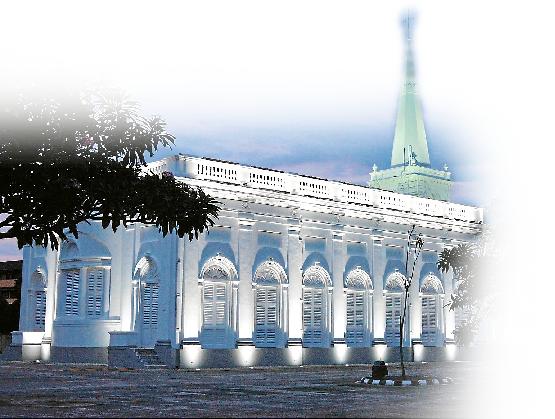
The newly refurbished church in Farquhar Street is one of the country’s 50 national treasures.

The newly refurbished church in Farquhar Street is one of the country’s 50 national treasures.

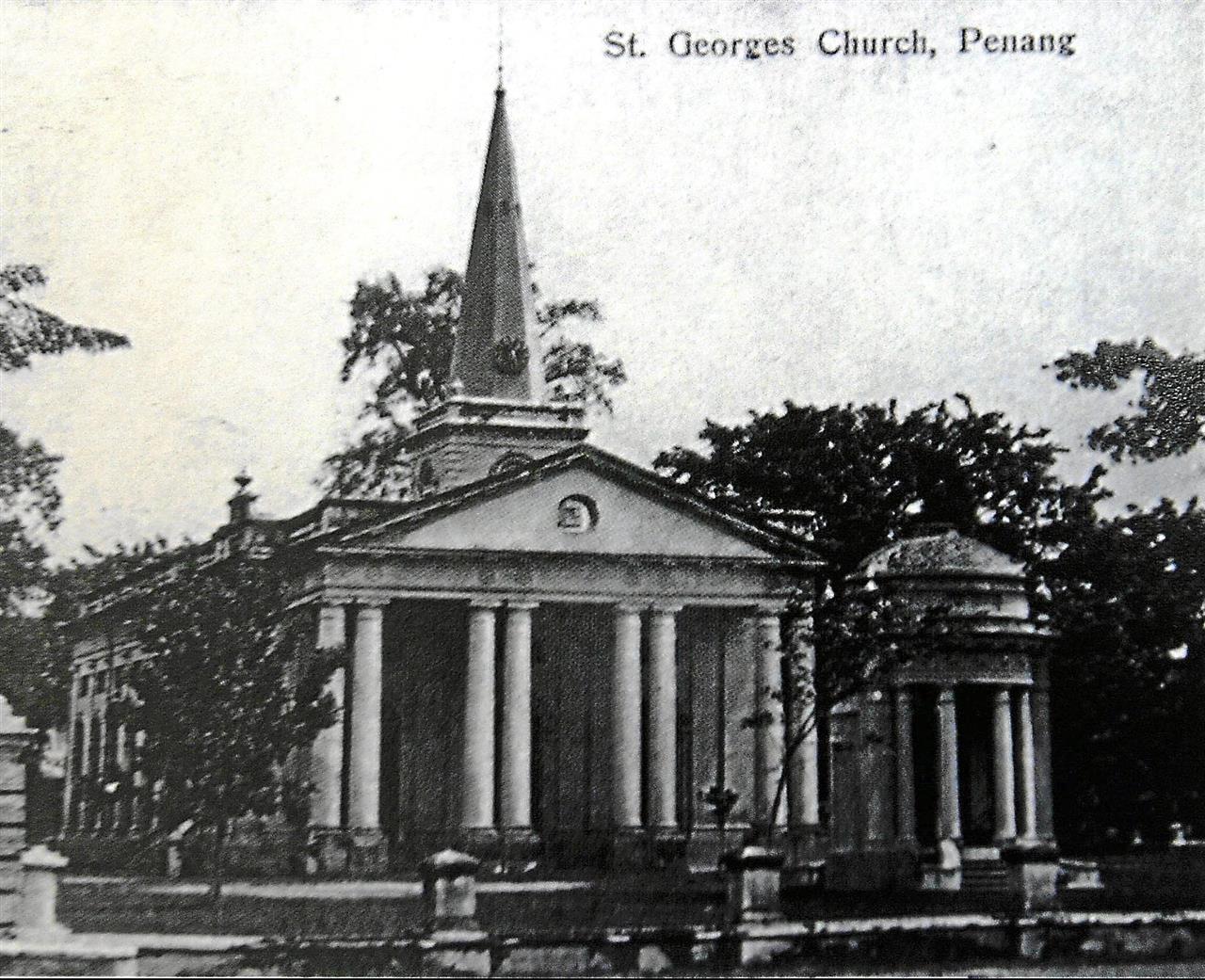
IT IS easily the most beautiful church in Penang but more than that, St George’s Church, which was built in 1816, is the oldest Anglican church in South-East Asia.

Not surprisingly, the church, located on Farquhar Street, has been declared one of the 50 national treasures of Malaysia by the Government.

The landmark church was completed in 1818 on the initiative of the Penang Colonial Chaplain Rev Robert Sparke Hutchings, more popularly known as the founder of the Penang Free School.

Much has been written about Hutchings but there is another name associated with the church that is not so common — Rev Louis Coutier Biggs, of which Biggs Road is named after.

Biggs Road is a relatively unknown tree-lined road in the Ayer Rajah/Pulau Tikus area, which runs from Cantonment Road on one end to Park Road on the other.

A photo of St George's Church taken in the late 19th century to early 20th century. Photo was reprinted from 'Penang Postcards Collection: 1899-1930s' written by Khoo Salma Nasution & Malcolm Wade. (NOTE: need to acknowledge book if want to use this)

Landmark: A photo of St George’s Church taken sometime between the late 19th century and early 20th century.

Biggs is virtually unknown today even to Penangites, which is quite sad considering the unwritten legacy he had left behind.

Biggs and his wife, Katherine, were missionaries of the St George’s Anglican Church, who had the honour of founding the St George’s Girls School.

In 1886, he also founded the St Paul’s Church, formerly known as the St George’s Church Chinese Mission, which is located on Macalister Road.

The newly refurbished St George's Church in Farquhar Street. 30 April 2011

The newly refurbished St George’s Church in Farquhar Street. 30 April 2011

Biggs was a man of distinction, graduating at Oxford with a Bachelor of Arts degree in 1863 and a Master’s degree in 1866. He was already an ordered deacon in 1864 and ordained a priest in 1865.

He was the Colonial Chaplain of Penang from 1885 to 1897.

Their contributions to church and education are thankfully well-recorded in Penang.

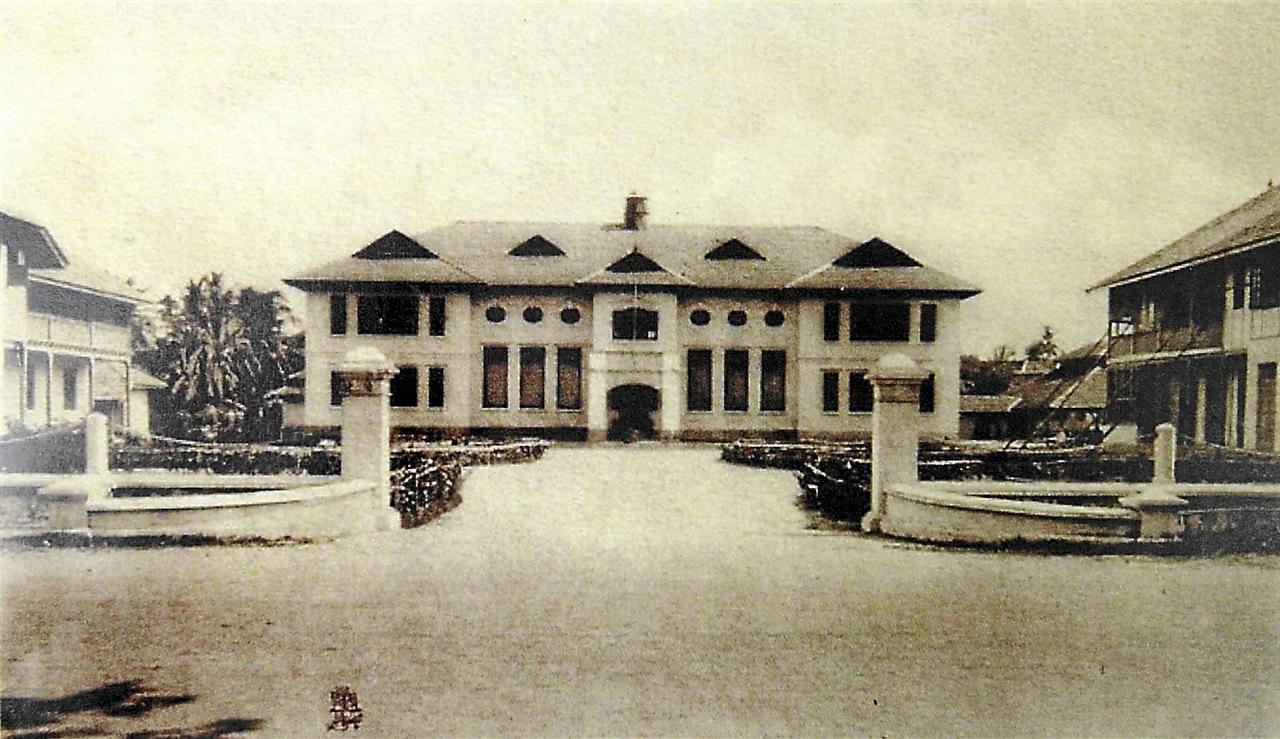
According to reports, the St George’s Girls’ School, now located on Macalister Road, was started on Farquhar Street at their home called “The Manse”.

It was here that Mrs Biggs taught for a year before a formal school was set up and named after St George, the patron saint of England, who is often pictured slaying a red dragon.

The former St George¿s Girls¿ School (SGGS) on Jalan Sultan Ahmad Shah. Picture taken from ¿Giving Our Best: The Story of St George¿s Girls¿ School, Penang, 1885-2010¿ published by Areca Books.

Edwardian architecture: The former St George’s Girls’ School in Jalan Sultan Ahmad Shah. — Picture taken from ‘Giving Our Best: The Story of St George’s Girls’ School, Penang, 1885-2010’.

St George was often used throughout the British Empire for schools and churches established by Anglican missionaries.

In Penang, it is reported that in the early days of St George’s Girls’ Schools, the pupils mostly come from well-to-do families.

“They often come to class on trishaws, shielded from public view by a curtain, ferried right up to the school entrance.

“In that Victorian age, it was considered indecent for unmarried ladies — especially those of well-to-do families — to be seen in public,” one report said.

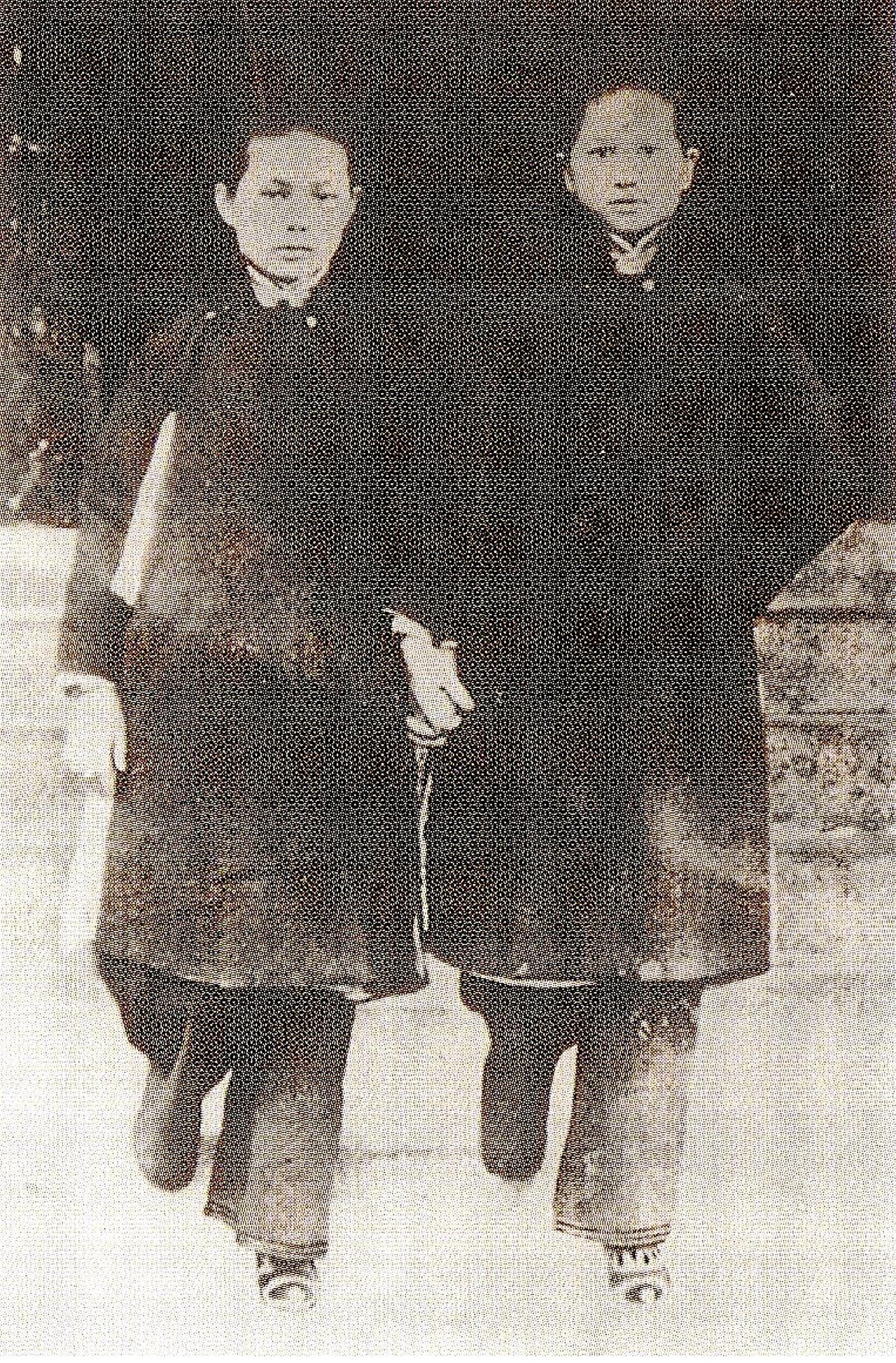
Sun Yat Sen's daughters, Sun Yan and Sun Wan, studied in St George's in 1911

Sun Yat Sen’s daughters, Sun Yan (right) and Sun Wan, studied in St George’s in 1911. — Photos taken from ‘Giving Our Best: The Story of St George’s Girls’ School, Penang, 1885-2010.

The school population expanded and it was relocated to its present premises in 1954.

The school has produced famous personalities such as Raja Permaisuri Tuanku Bainun, Wanita Umno leader Datuk Seri Shahrizat Abdul Jalil, playwright Datuk Faridah Merican, conductor Datuk Ooi Chean See, historian-writer Khoo Salma Nasution, athlete-sports psychologist Zaiton Othman, journalist-actor Fatimah Abu Bakar and former DAP women’s wing chief Dr Oon Hong Geok.

“Former students included the daughters of Dr Sun Yat Sen, the founder of the Republic of China — Sun Yan and Sun Wan,” according to Giving Our Best: The Story of St George’s Girls’ School, jointly written by Khoo Salma Nasution, Alison Hayes and Sehra Yeap Zimbulis.

The Sun girls stayed in Penang from September 1910 to February 1912, and attended St George’s in 1911. “Here, they spent precious time with their father, who was usually away making revolution,” they wrote.

Readers write

Remembering C.Y. Choy

Patrick J. Rogers writes: “Thank you for a nice write-up on my late beloved Uncle C.Y. Choy. I have great memories of him but there is an error regarding his name. His name is Chooi Yew Choy (C. Y.Choy) and not Choy Chee Yew.

Uncle Choy (as we family members addressed him) is my late mother’s eldest brother. C.Y.Choy’s other siblings were his second brother Chooi Yew Hong and his two sisters Chooi Vai Ying & my late mother Chooi Phooi Ying. All have since passed on. His parents were Chooi Fong Chooi and his wife Madam Wong Ah Khoo.

Chun Wai replies: Thank you for the clarification.

* * * * *

The fun of watching movies

Azman Yusof writes: Your story on the cinemas in Penang sometimes back brought back sweet memories for me. On the way back to our boarding school, my friends and I would take the early train to Butterworth from Arau and Alor Setar before taking the night mail train to Kuala Kangsar. That would give us enough time to hop over via the ferry to watch David Chiang, Ti Lung , Chen Kuan Tai and even Wang Yu on the big screen.

We would then be able to brag to others that we had seen this and that film when they arrived at the small town of Kuala Kangsar months later! Those Shaw Bros movies, mainly sword-fighting flicks, were very popular with us Malay boys then (until Bruce Lee came and front-kicked, side-kicked, back-kicked, everywhere kick kick everyone else out of the cinemas).

All of us would look forward to the scene where the hero would say “Wor yau por chau” (or something like that), meaning “I will take revenge”.

Another scene would be when the villain said something like, “You must be tired of living!” That was in 1970 to 1972. Before that, I think the furthest railway station was in Prai. You had to take a bus to Butterworth before you can board the ferry.

But with the new station in Butterworth, you just need to walk less than 100m to the Ferry Terminal. If not for the new station, we would probably watch David Chiang and company a few months later like the rest of them mere mortals.

* * * * *

Something about the Brittania Lodge

Ahila writes: I am a long-time resident of Penang. I have been reading all your articles about Penang since the series started. On June 29, you wrote about Gottlieb Road and the Penang Chinese Girl’s High School.

Before the school was built, on the opposite side, there was a big house surrounded by rambutan trees called the Brittania Lodge. The grounds of the property, surrounded by rambutan trees, stretched all the way from Ramanathan Road to the end of New Bob building.

The house was owned by Mr Lim Cheng Law and later by one Mr Arulambalam, a retired station master who subdivided the property into smaller lots and sold them off.

This Lim Cheng Law earlier owned a house in Logan Road next to the present Methodist Girls School. And he lived next door to Arulambalam.

Gypsies, tramps and thieves

London, Paris and other parts of Europe are ripe for the picking – to petty criminals targeting unsuspecting tourists. And the fingers are pointed at gypsies, more correctly called Romas, who are mostly from Bulgaria and Romania.

IF you are one of the many Malaysians heading for London, Paris and other parts of Europe for the Hari Raya holidays, be cautious of the many gangs of pickpockets there who are targeting unsuspecting tourists.

Rampant crime by these petty criminals has become big news items in the European media with fingers pointed at gypsies, more correctly called Romas, who are mostly from Bulgaria and Romania.

Having taken advantage of the free flow of travel for European Union citizens, these gangs are often found in many tourist spots.

Britain is already bracing for the influx of thousands of immigrants from Romania and Bulgaria who will seek work in the United Kingdom as a result of changes to EU immigration rules on Jan 1 next year, a report said.

In London, newspapers have published pictures of Romas practically camping near Marble Arch and Hyde Park, taking advantage of the summer weather.

On July 19, police and immigration authorities ordered these gypsies to leave, and taxpayers had to pick up the bill for their flights home. But when I left London last week, I still saw a small number of these gypsies sleeping along Marble Arch. It seems there is little that the authorities can do about the Romas.

The influential Paris Match magazine published an eight-page report and pictures under the heading “The flagrant crimes of pickpockets” to expose how these criminals brazenly target their victims in broad daylight. One report said “the increasingly aggressive gangs are causing chaos and misery” in Paris.

Their popular spots are around the Eiffel Tower and The Louvre museum, where the staff reportedly staged a walkout because of lack of protection against organised Roma groups who are stealing on “an industrial scale from workers and tourists”.

Popular tourist website www.virtualtourist.com carried a picture of a gypsy gang operating outside the Gare Du Nord train station in Paris.

Strolling along Champs Elysees, which is surely Paris’ most famous street with its strip of shops, cinemas and cafes, I saw how tourists were approached by two teenage Romas. They were asked if they could speak English, and they were soon persuaded to sign fake petitions for some dubious causes.

In this case, those who responded were asked to make some donations, and when the tourists realised they were being duped, they walked off, inviting angry responses from the Romas.

The more unlucky ones, according to reports, would be pickpocketed by the accomplices while they were busy talking to the so-called petition interviewers.

In Athens, outside the Acropolis Museum, I saw Romas who were no more than 10 years old playing musical instruments and hustling tourists for money. Their parents, living the nomadic lifestyle of gypsies, do not send their children to school and such form of begging is a norm.

In France, the authorities have reacted strongly against these nomadic gypsies by dismantling their camps and expelling them.

Last year, according to a report, nearly 13,000 Romanians and Bulgarians were deported from France, an increase of 18.4% on the previous year.

In January, the UK’s Daily Mail reported that 28,000 Romanians were arrested for crime over the last five years.

“That is the equivalent of 15 Romanians being held by the police every day. There are only estimated to be 68,000 living in the UK.

“It puts Romania second only to Poland in the list of countries with the most citizens arrested in London – but there are around half a million Poles in Britain,” the newspaper reported.

The newspaper quoted Romanian Prime Minister Victor Ponta as admitting that Romanian gypsies are posing a “huge challenge” to Britain’s law enforcement by their begging and stealing.

But not all Romanians are gypsies or criminals. Visiting some Chinese restaurants owned by Malaysians in Bayswater in London, I was told that some Romanian kitchen hands are being trained to cook Chinese food.

One Malaysian restaurant owner complained that Malaysian chefs insisted on a minimum of £500 (RM2,450) a week whereas the Romanians only asked for £100 (RM490) per week.

The Romanians were “slow and easily distracted but did not cause problems”, said the restaurant owner.

I have seen a Romanian cook making simple Chinese food such as fried rice, sweet and sour chicken, and noodles.

It looks like the face of cities in Europe, especially London, is fast changing. The Italian restaurants are already full with Bosnian cooks, and now the Romanians are taking over the Chinese restaurants.

What’s new? In Malaysia, the Myanmar people are operating hawkers stalls in coffee shops.

He was the people’s Choy-ce

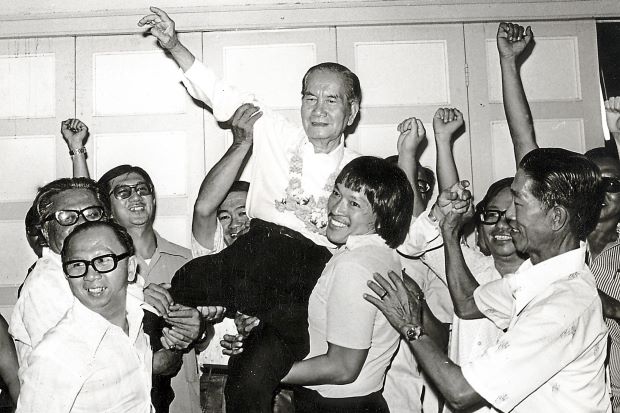
Undefeated: Choy celebrating after being the only Independent candidate to retain his seat (Pengkalan Kota) in the 1978 election

Undefeated: Choy celebrating after being the only Independent candidate to retain his seat (Pengkalan Kota) in the 1978 election

JALAN C.Y.CHOY

IF THERE is one thing that Penangites are noted for, it has to be their independent streak. Penang remains the only state that has voted out every single one of its chief ministers.

It started with its first chief minister, the late Wong Pow Nee of MCA, then the late Tun Dr Lim Chong Eu and his successor Tan Sri Dr Koh Tsu Koon, both of Gerakan.

The state has produced numerous outspoken opposition leaders activists and journalists.

But one person stands out above the rest — the late Choy Chee Yew, or popularly known as C.Y. Choy.

He was part of the Socialist Front and had the distinction of being the third and last mayor of George Town. It became a city by a royal charter granted by Queen Elizabeth II in 1957.

Brief Caption:The Jalan C.Y. Choy in Georgetown.The Star/ Lim Beng Tatt/ 25 July 2013.

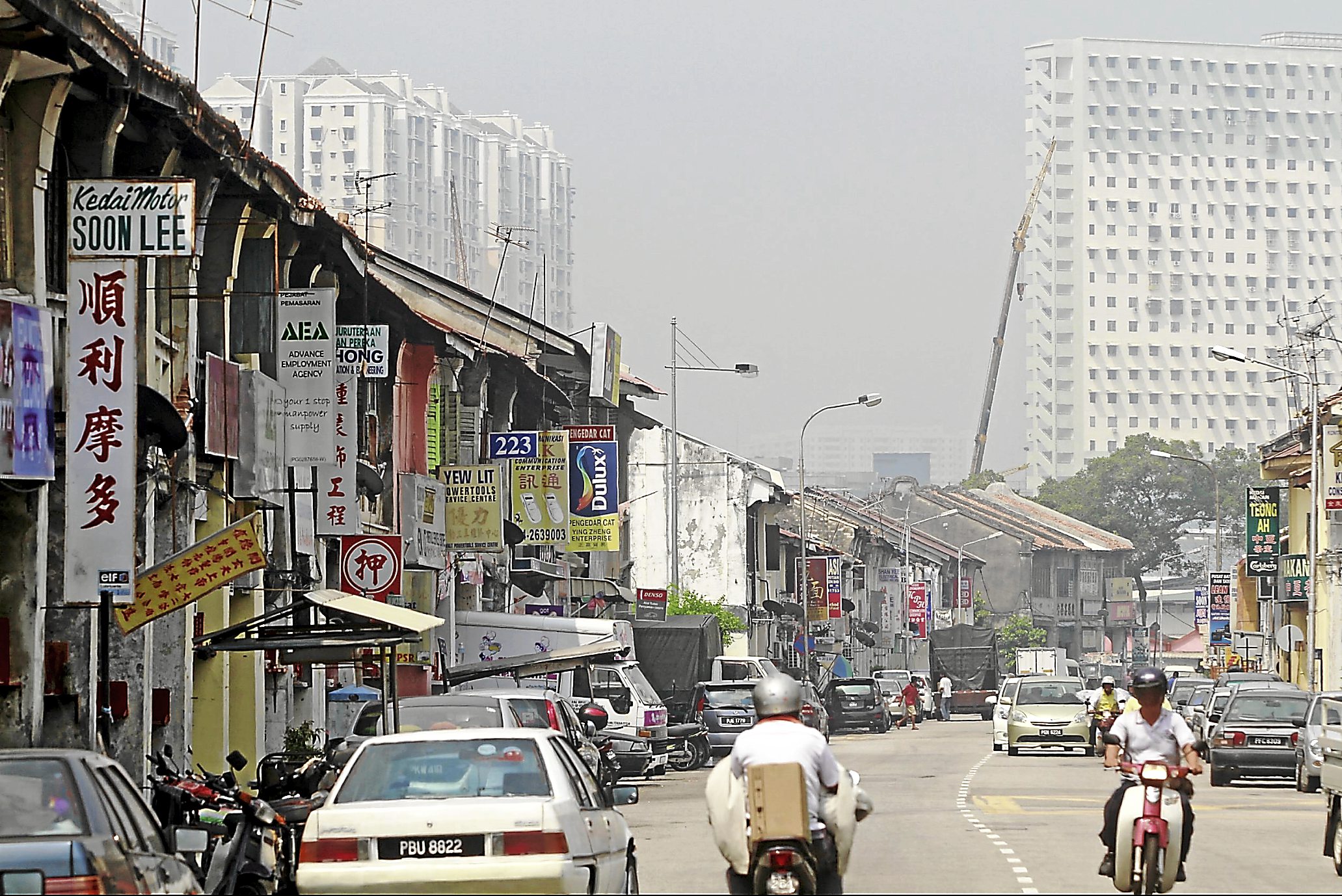
True to his route: Jalan C.Y.Choy remains a place with a working class community and home to various traders who have been doing business here for generations.

The Socialist Front was a coalition of the Labour Party of Malaya and the Parti Rakyat Malaya, which was formed to contest against the Alliance comprising Umno, MCA and MIC.

Historian Tan Kim Hong wrote in his research paper that in 1953, 16 intellectuals including D.S. Ramanathan, Tan Phock Kin, N. Patkunam, Lee Kok Liang, C.Y. Choy, Tan Chong Bee and V. Veerapan of the Fabian Society of Penang joined the Pan-Malayan Labour Party (PMLP).

These professionals and teachers, all social democrats, moved to immerse themselves in politics, offering analyses, recommendations and political participation vastly different from those of the moderate trade unionists favoured by colonial officials.

By early 1954, PMLP had come to resemble the British Labour Party, advocating gradual economic nationalisation and a welfare state.

Choy won a city election in 1964 as a candidate of the then Socialist Front but ceased as mayor when the Federal Government suspended local elections two years later as a result of the Indonesian Confrontation.

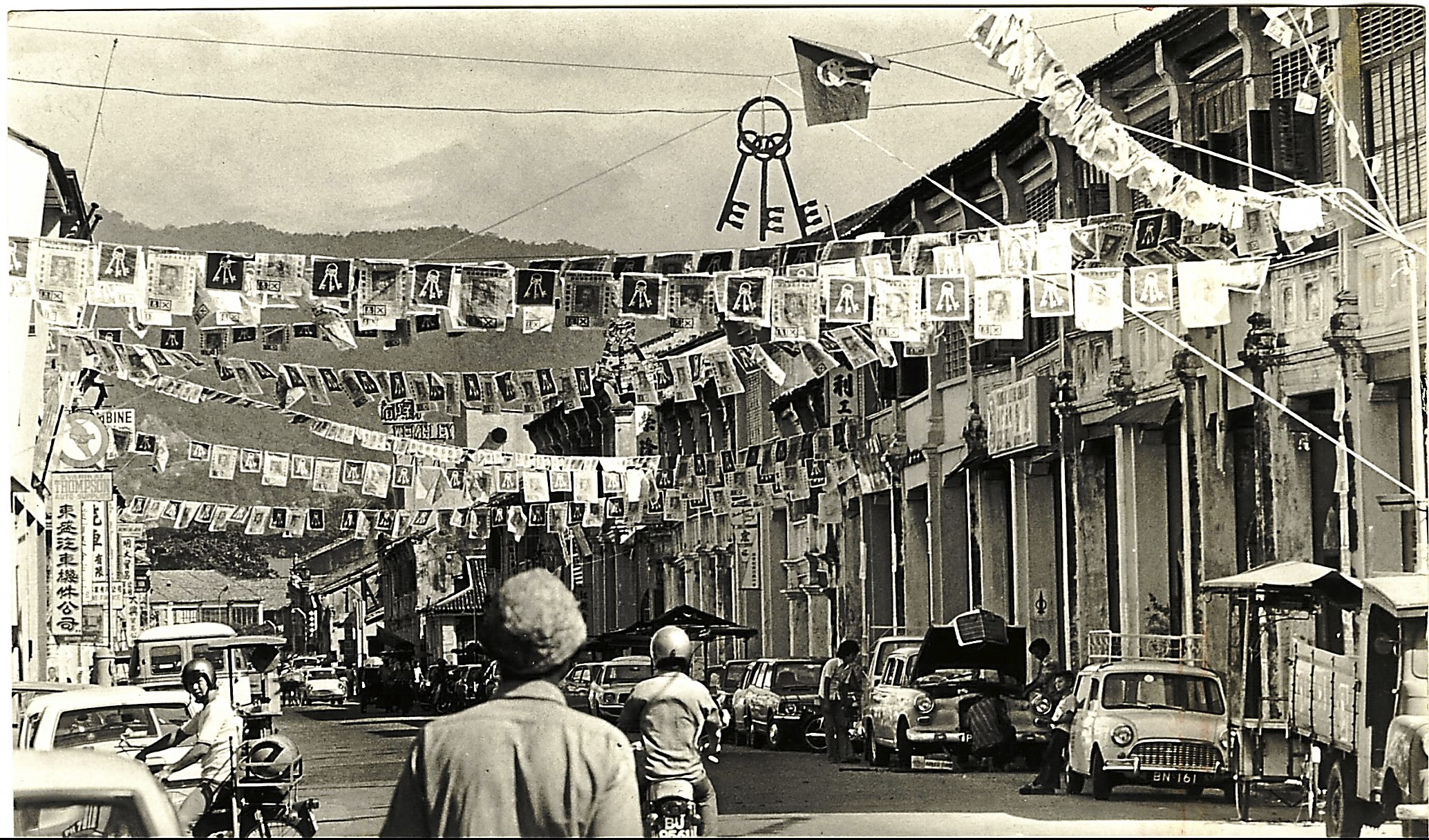
07.06.1978 Golden Keys of Independent candidate Mr C.Y. Choy at Noordin Street.

Populist: During the campaign season in 1978, Choy’s symbolic set of keys were seen in Noordin Street.

Today, a road has been rightly named after him but ironically by the Barisan Nasional state government under Dr Lim, who had faced Choy in many political battles.

According to a newspaper report, Choy, who worked as an office assistant, was such a populist figure that when he walked into the streets, the people came out to shake his hand.

The Socialist Front later disbanded after its partners, the Labour Party and Parti Sosialis Rakyat Malaya, went separate ways due to the political upheavals of that time.

Refusing to join any other party but still wanting to serve the city folk, he took part in the 1969 general election as a candidate contesting the Pengkalan Kota state seat and won easily.

He remained an assemblyman until his death in 1980 at the age of 73 and Bridge Street, the main thoroughfare of the constituency, was re-named Jalan C.Y. Choy.

Choy’s symbol during his campaign was a set of keys. It was symbolic with independence as he won the seats under that banner.

The Pengkalan Kota constituency has always been a working class area.

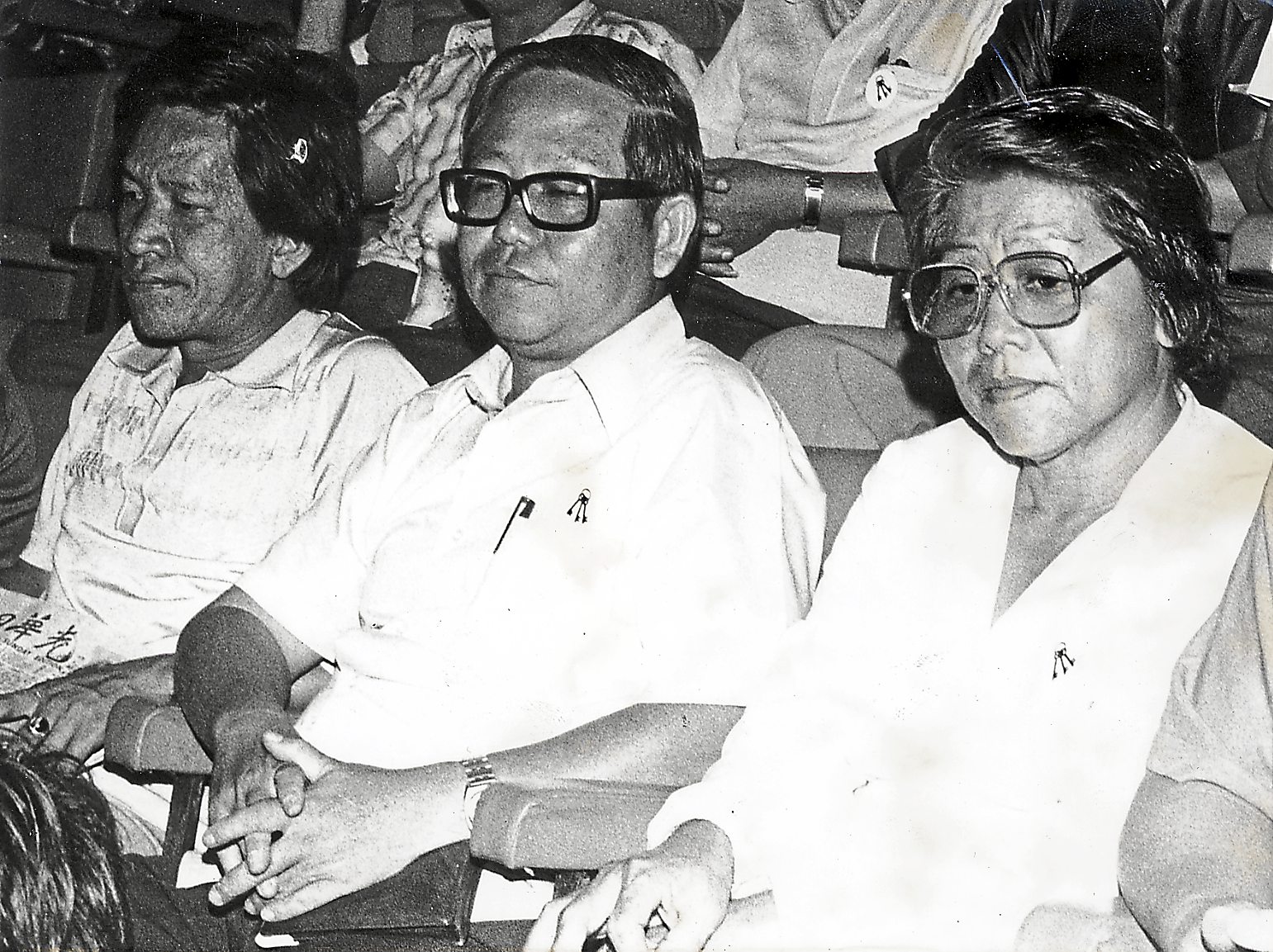
Glum faces of defeat: Independent candidate Lim Ewe Chin and his most staunch supporter Mrs C.Y. Choy after the election results were announced in November 1980.

Glum faces:Independent candidate Lim Ewe Chin (centre) and his most staunch supporter Mrs C.Y. Choy after the election results were announced in November 1980.

His humble and down-to-earth approach reportedly endeared him to the voters.

Local historian and publisher historian Khoo Salma Nasution described Jalan C.Y. Choy as a former working-class quarter of the Hokkien community which once supported a triad society.

The shophouses along the whole length of Bridge Street are strikingly regular – most were rebuilt in the late 19th century, replacing houses of wood and attap which had been repeatedly set on fire by the rival society.

Despite having no official position after the Socialist Front deregistered, he still commanded the support of his constituents.

Brief Caption:The Jalan C.Y. Choy in Georgetown.The Star/ Lim Beng Tatt/ 25 July 2013.

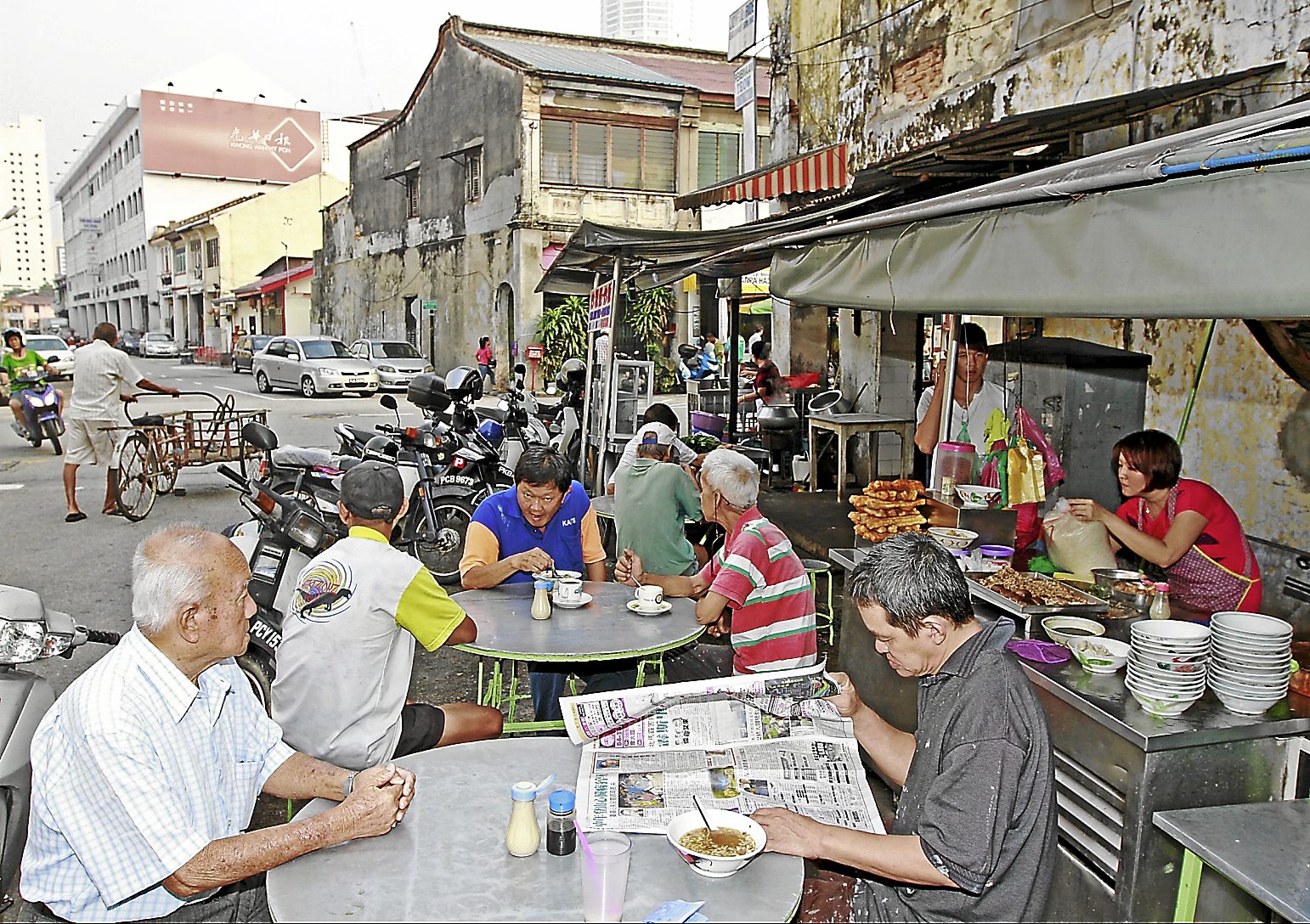
Enjoying the morning: Just like other streets in Penang. Jalan C.Y.Choy has some popular coffeeshops.

He often went around the constituency, stopping at five-foot-ways with a typewriter to write petitions and letters to the authorities.

His mostly-illiterate voters called him ‘the father of hawkers’ and by 1974, Choy retained his seat with a 5,000 vote majority. By then, he was nearly 70 years old.

Jalan C.Y. Choy still remains very much a working class area, with its hawkers, traders and blue-collar community.

Every state assemblymen for Pengkalan Kota; from Teoh Teik Huat (DAP), Lim Kean Siew (MCA) and Lee Hack Teik (MCA) has all tried to emulate Choy’s populist image.

They have all come and gone but none will be able to match Choy’s legendary ways and legacy as the fighter of the downtrodden.

Storm in a teacup

The writer is baffled over the resistance to the move to make Titas a compulsory subject. Titas was already mandatory for Universiti Kebangsaan Malaysia students more than 30 years ago and it has, he feels, fostered better understanding of different civilisations among the different races.

THE move to make Islamic and Asian Civilisation Studies (Titas) compulsory for university students in private institutions from Sept 1 has kicked up a storm.

But for many graduates of local universities, particularly Universiti Kebangsaan Malaysia, it has certainly not raised an eyebrow.

Thirty years ago when I was studying at UKM, it was already mandatory for us to pass the Islamic Civilisation course.

It did not matter what we studied; we all had to pass the paper if we wanted to get our scroll at the end of our studies. No one, even Muslims, was exempted and often there were non-Muslims who were top scorers.

As I can recall, none of my friends was converted into Islam, and certainly this writer did not become a Muslim. We didn’t complain about the requirement to pass the ZI course, as it was code-named, as we already knew about the condition when we picked UKM as our choice.

Certainly, taking the course has given me a better understanding of Islam. Like it or not, Islam is the religion of the majority of Malaysians.

The course at UKM was simply an introduction to Islam and it has helped me in the course of my work as a journalist.

As I had sat for Islamic History and Malay Literature in my Sixth Form examination, the ZI course was pretty easy for me. That arrogance and complacency, however, proved to be costly as I did not score as well in ZI as I had expected. The others who did not have that academic background studied harder and performed better in the end.

I still passed the test but it was lectures by the late Datuk Fadzil Noor, who went on to join politics and become a PAS president, and Datuk Dr Haron Din, with his profound story telling of jins and spirits, that caught my interest.

I have continued to collect books on Islam, improving my understanding of the subject, and building up a decent private collection.

Certainly, reading plenty of books on this subject and my ZI classes have benefited me in many ways, particularly in my interaction with friends, colleagues and other acquaintances who are Muslims. I am glad I took the ZI course in UKM.

But I also believe that studying and appreciating the other main religions, especially Buddhism, Christianity and Hinduism, will also benefit all of us.

The idea is not to belittle any religion or to extol one’s belief as more superior, but rather to emphasise the commonalities such as compassion, tolerance, love, sharing and peace.

We all call God by different names and we practise our beliefs in different ways but there will always be many common values and areas because we all believe in the importance of goodness and respect for each other.

In fact, students of Islam in UKM, like in other institutions in the Middle East, are also required to study other religions including Judaism and Christianity.

Likewise, students who want to become Catholic priests and Protestant pastors will need to study Islam at their seminaries.

I have been lucky growing up in Penang and later working in Jalan Mesjid Kapitan Keling, previously Pitt Street. It was always a joy to walk past, or at least drive through, the road which has a mosque, a Hindu temple, a Taoist temple and a church located next to each other.

As a child who grew up in the Chulia Street area, where my grandmother’s home was located, it was common for me to walk through the Kapitan Keling mosque to take a short cut.

Today, two paintings by the late Penang artist Tan Choon Ghee hang on the wall of my home in memory of my childhood days. There is no religious hang-up of having drawings of a mosque in my home.

In Singapore, schools regularly organise visits to places of worship as part of their extra-curricular activities.

We shouldn’t be afraid of learning the religions of all communities. It should not be restricted to just one religion.

Non-Muslims should learn about Islam and at the same time, there is no reason why Muslim students in universities, both public and private, should not study other religions which have been here for centuries.

It should be made compulsory for everyone to study each other’s religion in order to have a better understanding of each other.

In this period of Ramadan, breaking fast with our Muslim friends and colleagues is certainly encouraged. It will be a good way to understand each other’s faith.

Zipping in and out of George Town

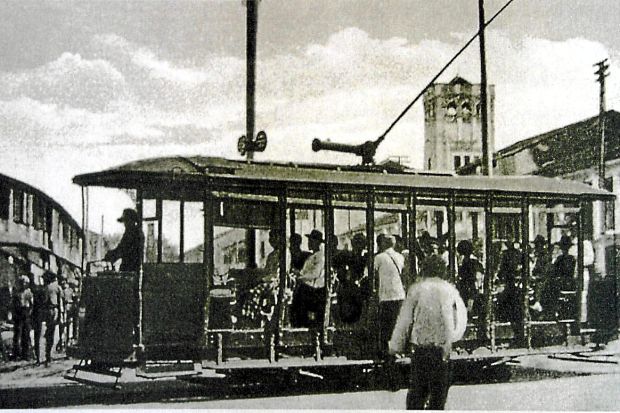
Hop On: The tram was a way for locals to get around George Town.

Hop On: The tram was a way for locals to get around George Town.

IT IS a fact that public transport is crying out for attention in Penang, as the roads get more jammed with cars, especially during weekends and long holiday breaks when just about everyone visits the island.

No one would recommend any tourist to wait for the public bus and taking a cab is not so easy either. Unlike in Kuala Lumpur where metered cabs are easily available, if you were to flag down a cab in Penang, chances are the driver will not use the meter.

Most Penangites prefer to use their own transport, which is probably one reason why vehicular traffic is high.

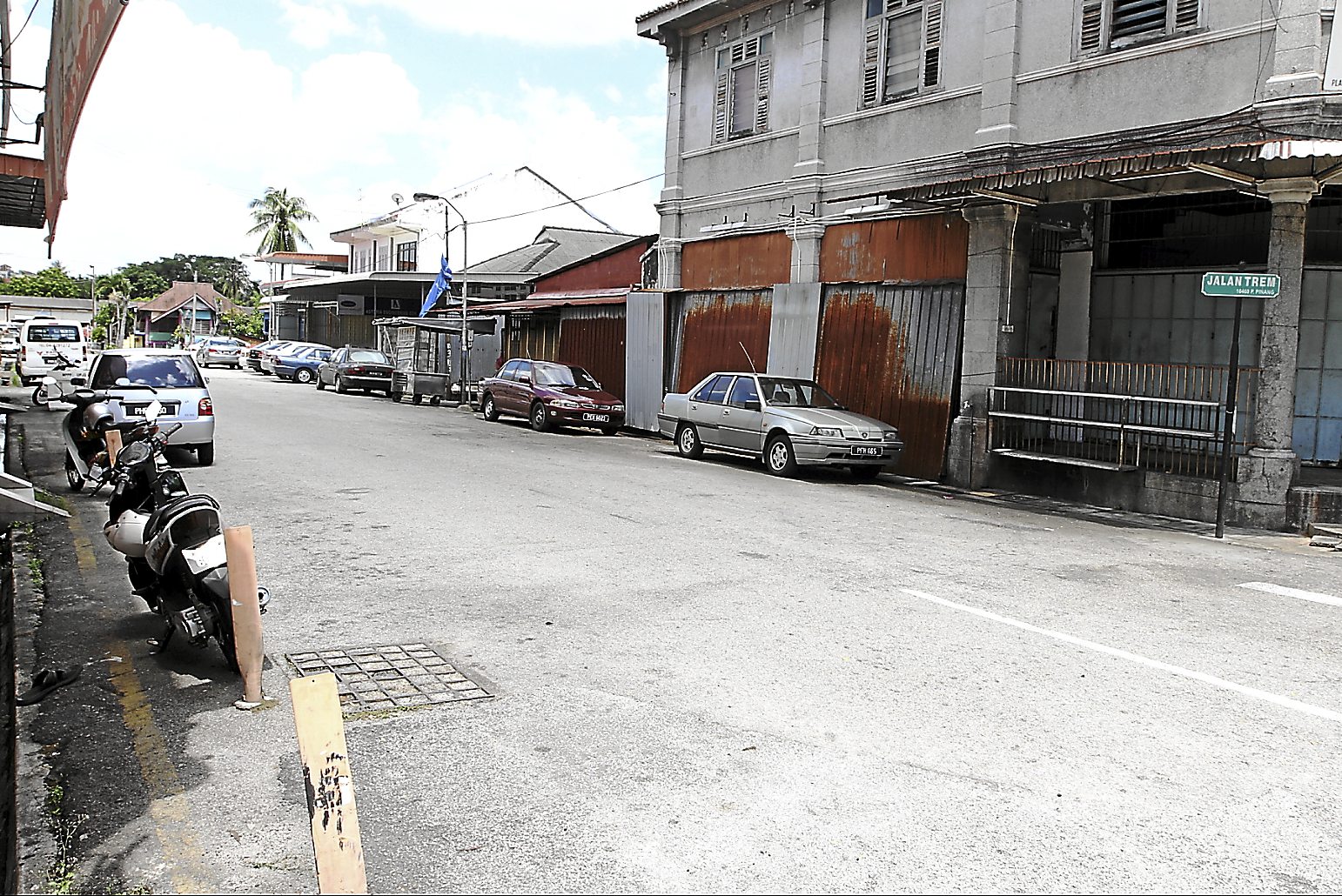
Brief caption: Road sign of Jalan Trem, off Datuk Kramat. (Charles Mariasoosay - 30/06/2013)

In name only: Jalan Trem is a nod to the existence of the Tramway Office in Penang.

And many still use motorcycles, which are suited for short-distance travelling. To the surprise of many outsiders, most women in the state are able to ride the two-wheelers.

Yet, unknown to many young Penangites, the island used to have the best transport system in the country.

Public transport in George Town, especially at the turn of the century, was second to none. The state was the earliest to have tarred roads, electric trams, double-decker buses and cars.

There were also the man-pulled jinrikishas — which are not like the trishaws which are pedalled — and horses!

In fact, George Town was accorded city status on Jan 1, 1957 — the first in the country to be granted such a status. According to the book Old Glimpses of Penang, the first motorcar to make its appearance in Penang was recorded in the state’s annual report of 1903.

It was reported that by the end of that year, there were 80km of roads used by 791 carrriages, 73 gharries, 3,185 public and 323 private jinkrishas, 679 bullock carts and 803 handcarts. Horses and bicycles made their appearances between 1896 and 1900.

The book described that Penangites owned four cars in 1904, but 10 years later, 174 were licensed by the municipal council.

Tram cars were first introduced in Penang in the 1880s when a businessman, one Mr Gardner, set up a steam-run tram service in the Air Itam and Waterfall roads.

“There were 11 cars on those routes in 1890 and the Penang Steam Tramways Co had its headquarters in Western Road,” the book said.

By 1904, when electricity supply came, the trams were run on electricity and more routes were added. Two years later, a 4km route was introduced between George Town and Air Itam.

The tram lines can still be found in Penang Road in front of the Odeon Cinema while the Tramway Office was located in Jalan Tramway (renamed Jalan Trem), off Datuk Kramat Road.

There were many reports of accidents and the trams were described as unreliable with operators losing money from the business.

Difficulties were encountered by the enterprise with declining receipts due to the economic slump in 1907-1908, and the destruction of a bridge in 1909. But by 1913, the trams were making a profit and continued to do so until the trade depression of 1922,” wrote Ric Francis and Colin Rayney in Penang Trams, Trolley Buses and Railways.

Another means of transportation in town was the first regular private bus service which started as early as 1919. Unknown to most Malaysians, it has been recorded that the world’s smallest trolley bus was founded in Penang.

The electric-run nine-seater buses were used as shuttle buses between the Lower Station on the Hill Railway to the Air Itam market.

In the 1970s to 1980s, most Penangites depended on the bus services operated by the municipal council. It had to compete against private operators such as Penang Yellow Bus, Lim Seng Seng, Sri Negara and the Hin Company.

They were easily identified by their colours. You would take the yellow bus to places such as Balik Pulau and Bayan Lepas, the green bus to Air Itam, the blue bus to the beaches and the plain-coloured municipal ones around town.

My colleague reminded me that when he was growing up in Jelutong, his aunt in Balik Pulau would regularly send vegetables and even live chickens via a friendly bus driver to their house at no cost.

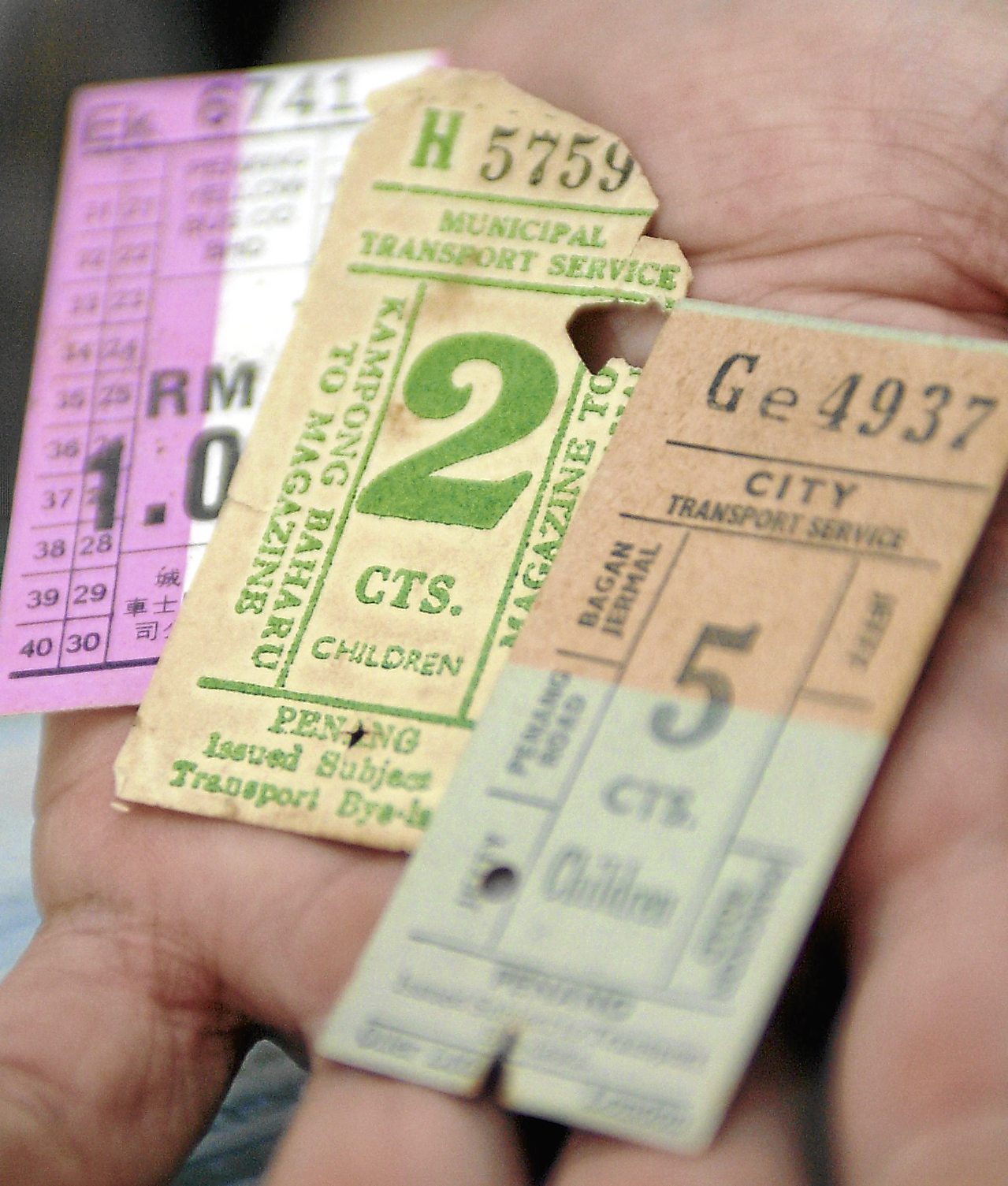
Avid numismatist and collector Danny Tan Swee Boon showing some of the old Penang tramway and Penang City Council bus tickets that he has in his collection.

Colourful: Some of the old Tramway and bus tickets.

Ridiculous as it may sound to many youngsters now, many of us then used to collect the colourful bus tickets as a hobby, as one would collect stamps.

There was always a conductor on board who would give you the ticket based on where you are going and occasionally an inspector will join the bus halfway to check that you had a ticket.

The bus was probably the most popular form of transport among students although we had to literally fight our way to get onto the buses daily.

Today, there are air-conditioned buses in Penang but it does not have the colour, nor the efficiency of the network back then. The times are a-changing and Penangites yearn for a proper mass rapid transit system to connect various parts of the island to the city centre.

But it is still a dream, even as development continues to increase the population density, and by extension, the number of cars on the roads.

Readers write

YOUR article brought back sweet memories. House No 28 in Nagore Road (the synagogue) and the three adjacent houses originally belonged to my maternal grandfather, – NgUng Eng.

* * * * *

In typical Penang Peranakan culture, the sons got a house each.The house No 28 was given to the eldest son, my tua ku (uncle). He must have sold the house very much earlier.All the children and grand children’s lives revolved around house No 26.

Every school holidays we would pass time at No 26 where the household was dominated by our grandmother. Our grandfather passed away before I was born.

My mum was about 13 years old then. Our grandmother was a real dragon lady. Anybody causing any mischief would get a cubit (pinch) from her. I miss her a lot.

My parents, uncles and aunties would gamble away in the hall. Come tea-time everybody will stop their activities while the nyonya kuih man would drop by. He would be carrying laksa soup on a pole on his shoulder while balancing a tray of kuih on his head.

Since my grandmother passed away, the three houses owned by my uncles were sold.

Nagore Road evokes sweet memories of my childhood. We would peek inside the synagogue when we hear noises inside and without fail we would get a scolding from the elders.

– GK Pak Chan, Xavierian class of 1970

* * * * *

I truly appreciate your article on June 29 about Gottlieb Road, especially the photo of the Penang Chinese Girls’ High School.

I happened to pass through this busy road with my grandson Michael Wong at the wheel.

He also drove me to Air Itam as it was few decades since I last went there.

I made a point to walk to the tortoise well, located half way to the Kek Lok Si Temple.

I was hoping to take the new furnicular train up Penang Hill but it did not materialise because the place, being a Saturday, was terribly congested with construction work in progress at the foot of the hill.

We also went to Gurney Drive, Esplanade and Padang Kota Lama. I wanted to savour the famous char koay teow at Kota Lama. But we had to abandon the idea because the queue was too long and I had to rush to catch the flight home to Subang at 5.30pm.

However, we did manage to enjoy tandoori chicken, naan and chicken briyani at Restoran Kapitan in Chulia Street.

– S.Ragunathan, Petaling Jaya

* * * * *

I wanted to let you know how much I enjoyed reading Penang’s History, MyStory.

Your articles are nostalgic to me because I was in the police force in Bukit Mertajam from 1975 to December 1978.

I used to go to the Chemistry Dept in Jalan Tull and during the night, I would visit several cabarets, nightclubs and discos.

I wanted to point out in one of your articles where you said Seberang Prai was also called Prai. Seberang Prai is divided into Utara (Butterworth), Tengah (Bukit Mertajam) and Selatan (Nibong Tebal).

Prai was a small Indian settlement between Chai Leng Park and Sungai Prai estuary. I am now retired, aged 65 and residing in Damansara. – Anonymous

It’s back to square one

The Egyptians wanted democracy but they have ended up endorsing a military coup, something that they could not have imagined a year or two ago.

FOR the past one week, I have been spending my leave in Europe, reading through all their newspapers and following their coverage of the political situation in Egypt.

It’s pretty clear that many European leaders are at a loss on how they should react to the military coup there.

When Mohamed Morsi was arrested, one top British leader immediately deplored the action of the army. A democratically elected leader, he argued, should not be forced to step down by the army.

The Foreign Office, meanwhile, later said that it was an inevitable change, suggesting that while it was a coup, the world needed to recognise that the army only moved in after millions of Egyptians took to the streets to protest against Morsi.

Some even said that more people were involved in this massive protest than the one that had brought down the army-backed dictatorship of Hosni Mubarak in 2011.

Any coup is clearly detested by Western democrats and Morsi was democratically elected in June 2012 after the fall of Mubarak.

But judging from the Western reactions, it is clear that the Muslim Brotherhood with its Islamist approach is naturally not palatable in Europe.

And who can blame the Europeans? Just two years ago, the Egyptians had clashed with the army and police in the streets to bring down Mubarak.

Now these protesters are welcoming the same security forces, which still comprise many of Mubarak’s supporters, to overthrow Morsi’s government.

Many in the judiciary, who had previously backed Mubarak, are now involved in the next phase of action after conspiring with the army to topple Morsi. And they are being cheered on by the people in the streets who hated the Mubarak establishment.

Quite simply put, the revolution in June 2011 has gone around and come back to the same position.

The Egyptians thought Morsi could bring hope and change but after two years, they reckon that things are more or less the same, if not worse.

There was no democracy under Mubarak and, under Morsi, despite his promises, there was none either.

And now that the army is in charge, many doubt if any form of real democracy will prevail, even as the people wait for a date to be set for fresh elections.

Under Morsi, protesters who opposed him were reportedly violently crushed by the police and by Muslim Brotherhood members.

The Interior Ministry, which Mubarak had used, was also used by Morsi to punish protesters and, in many cases, it was said that many of his opponents were killed.

Under Mubarak, there were substantial Christian representatives in the government but under Morsi, their numbers shrank.

The Coptic Christians, many of whom were strong supporters of the revolution that ousted Mubarak, learnt the hard way that Morsi was turning a blind eye to attacks on Christians in Egypt.

There were many minority groups who supported Morsi but, once in power, his concern for them diminished. For these minorities, it is a classic case of being careful with what you wish for.

Morsi also reportedly pushed to lower the retirement age of judges so that he could clear the way for his allies to be appointed. Judicial intervention was something he had openly detested previously.

And now the vicious circle repeats itself. Following the coup, the pro-Morsi media has been shut down while the pro-army media has taken on an inflammatory stance.

For the common people of Egypt, it’s back to square one. They have ended up endorsing a military coup, something that they could not have imagined a year or two ago.

Two years back, the angry people of Egypt got rid of a dictator but then elected an incompetent leader who had no idea how to run a country.

There’s a lesson here. The Egyptians wanted democracy but promises by politicians must always be followed by real work and proper planning.

The institutions that provide the checks and balances must be in place.

The lesson for Europe is that their leaders cannot be too simplistic and idealistic in attaching political labels on different regimes.

The Syrian government has been painted as dictatorial but what about the freedom fighters who want to take over?

Images on YouTube of freedom fighters purportedly cutting off their opponents’ body parts and eating them like cannibals have had a chilling and terrifying effect across the continent.

Surely, these people who claimed to fight Assad on religious grounds cannot be the type of people they want to take over Syria.

The world will be watching Egypt closely as those who fought against Mubarak at Tahrir Square are now on different sides.

Morsi’s supporters have found victory snatched from them and their only solution would be to go to the streets again.

The danger is when the streets become the battleground, government work in a real democracy can never be done.

Life’s a beach in Penang

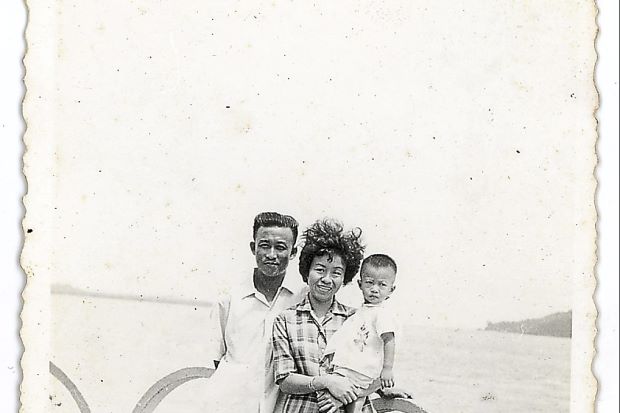
Fun times: (Clockwise from left) The writer at two with his mother Yeoh Poh Choo and father Wong Soon Cheong at Batu Maung.

Fun times: (Clockwise from left) The writer at two with his mother Yeoh Poh Choo and father Wong Soon Cheong at Batu Maung.

IT IS hard to explain to someone outside Penang, especially those staying in the Klang Valley, how wonderful life can be on the island.

Even those of us who have left the island to pursue our careers and set up new lives elsewhere will sing the same tune, as if our time on the island is permanently captured in a time capsule.

The so-called Penang diaspora is a living testimony to the saying that “you can take a Penangite out of Penang, but never the Penang out of a Penangite”.

Apart from those who venture out in search of greener pastures, there are, of course, many who will never leave the island.

They will never give up their lifestyle for the fast-paced life of Kuala Lumpur, for example, even if the career options are more plentiful.

For me, having migrated to the Klang Valley such a long time ago, I can only reminisce about my early days, my growing-up years where memories seem to be strongly embedded.

Where else but in Penang — except maybe in some East Coast states — where the beaches are just a short distance from your school, office or home.

For those of us who studied in St Xavier’s Institution at Farquhar Street, we had a seafront at the end of our football field.

After a game of football, we would sit near the seafront, where we would enjoy the strong crushing sounds of the waves hitting the wall, as we closed our eyes to let the wind blow against our faces.

Fishing was not allowed but on occasion, we would be able to throw our lines into the sea and take home a fish or two for dinner.

Our neighbour — Convent Light Street (CLS) — was luckier. Many of their classrooms faced the sea directly!

No wonder Captain Francis Light and Sir Stamford Raffles, who later went on to discover Singapore, chose to work and live at the site where CLS is now located.

For most families, a Sunday outing meant going to Gurney Drive, Tanjung Bungah, Batu Ferringhi or Teluk Bahang for a swim.

It also meant digging bucketfuls of siput remis or shellfish in the sand.

Working at the Pitt Street — now renamed Jalan Mesjid Kapitan Keling — office of this newspaper, we would sometimes take a slow walk to the nearby Esplanade for our meals.

In the evening, when work was completed, my colleagues and I would drive to Gurney Drive to have some hawker snacks before heading home.

During the 1970s until the 1980s, the annual dragon boat races were held off Gurney Drive and at night, the road would be turned into an illegal racing track.

The races would only begin after midnight and dragged on until 2am, with cheering at strategic spots, particularly at the roundabout.

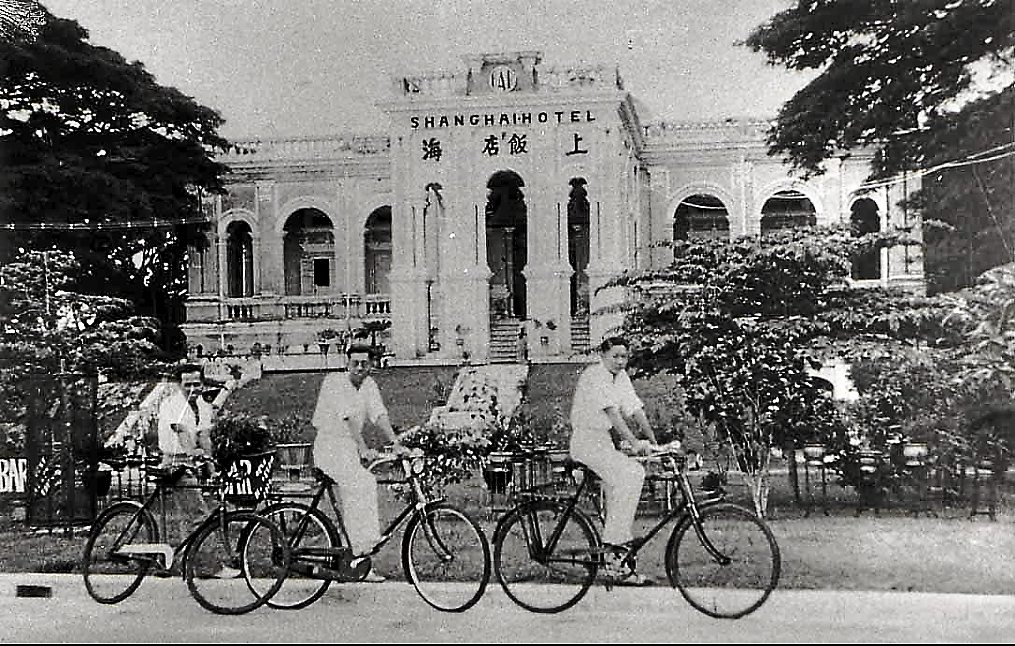
Where the condominiums of 1 Gurney Drive (or PG1 as it is commonly known) now stand, there used to be an old hotel and restaurant called The Shanghai, which was THE place for important functions like weddings during the 1960s.

But that is known only to people in their 60s and 70s.

For us young journalists, Gurney Drive was where we would meet to have endless rounds of beer at the restaurants facing the promenade.

And the conversations would often be about the interesting interviews we have done with tourists at Batu Ferringhi.

There was such a thing as the “beach beat” then but during the 1970s, this tabloid was rather racy in nature.

While it could not deliver the Page 3 topless girls similar to The Sun in the United Kingdom, there were regular pictures of tourists in bikinis. The Home Ministry then was obviously less strict!

By the time I joined The Star, for the first time in 1980, there were already fewer such interviews as the newspaper had moved on to be more serious in its reporting.

Still, the beaches continued to be a source of news stories which included foreigners swimming in the nude at the freshwater pools at Chin Farm in Batu Feringghi.

There were the occasional raids by the authorities and the newsmen would be happy to tag along.

Batu Ferringhi or Foreigners Rock has many personal memories for me as I used to camp along the long stretch of beach as a teenager with my school friends.

My parents did not even bother to ask where I would be camping.

All I did was tell them that I would be camping for three days or nights.

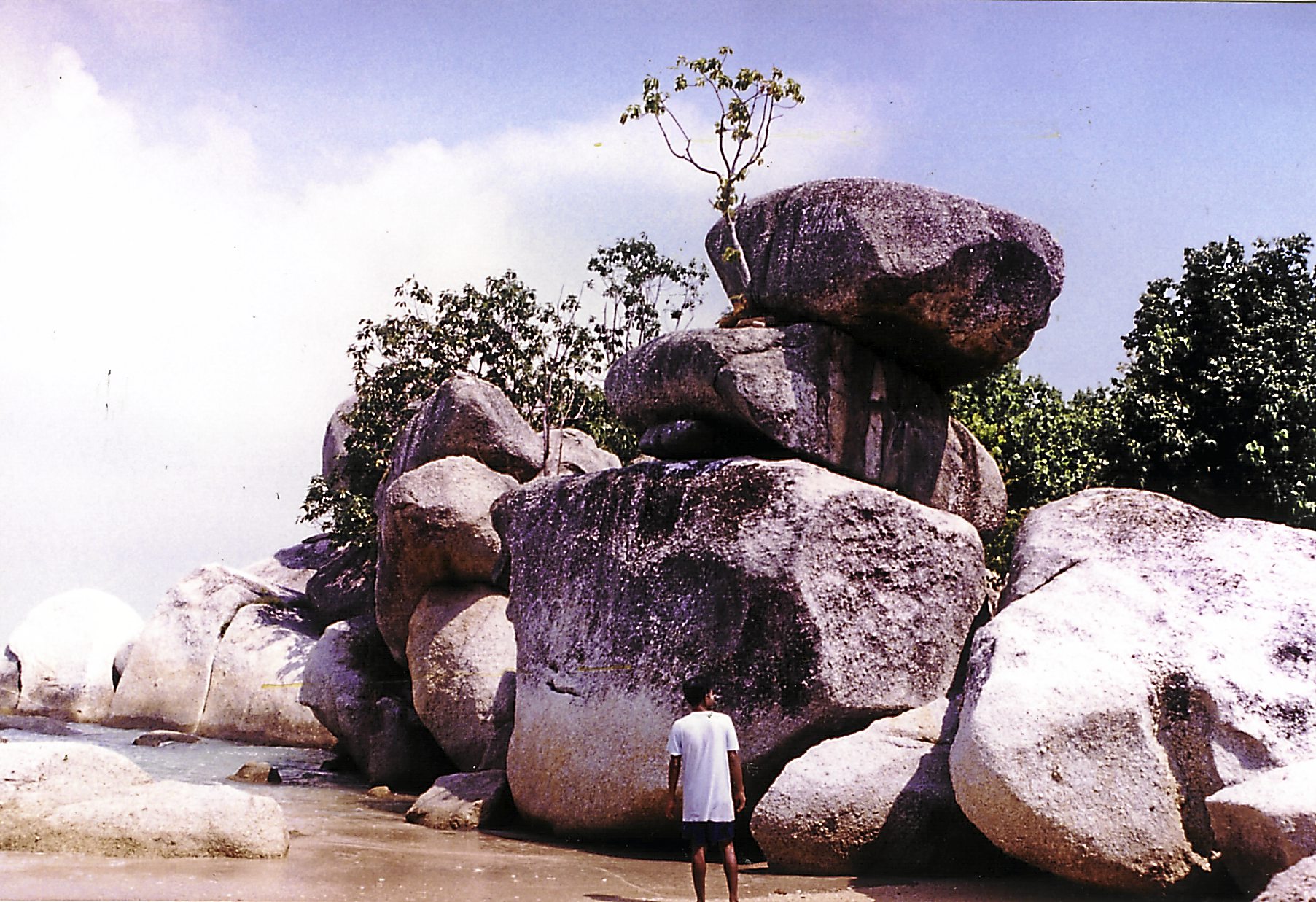
April 1999 The balancing rocks.

Unique feature: Large boulders are a common feature on beaches in Batu Ferringhi.

On one occasion, all our canned food was stolen while we were sleeping. Needless to say, the camping trip had to be cut short.

As we grew up to be young adults, many nights were spent at the then famous disco, Cinta, at the Rasa Sayang Hotel.

It was only natural that I chose the Rasa Sayang Hotel to propose to my wife at an expensive Western restaurant.

But as a true reporter, there’s always a story behind every event.

The salad, for example, came with a big wriggling worm which certainly took away much of the romance of the evening.

Midway, a colleague of my wife approached us from another table because her boyfriend did not have enough cash to pay for their meal.

Today, the hotel has been renamed Shangri-La’s Rasa Sayang Resort and Spa, and it is surely one of the best beach hotels in Penang.

SHANGHAI HOTEL, FORMERLY CHUNG THYE PIN'S SEASIDE BUNGALOW

A landmark: The Shanghai Hotel used to be a popular venue for important functions in the 1960s.

The beach culture was so ingrained in me that on my first visit to The Star office in Petaling Jaya, I strolled into the newsroom in my shorts and shocked many!

But it was so natural in Penang island, where most of the time, we would be in our shorts and sneakers!

It would be a lesson from then on that my life in Kuala Lumpur will no longer be a stroll on the beach.

Download the PDF version of this story.

Related story:

Jalan Yahudi to Jalan Zainal Abidin the real Zainal

Jalan Yahudi to Jalan Zainal Abidin — the real Zainal

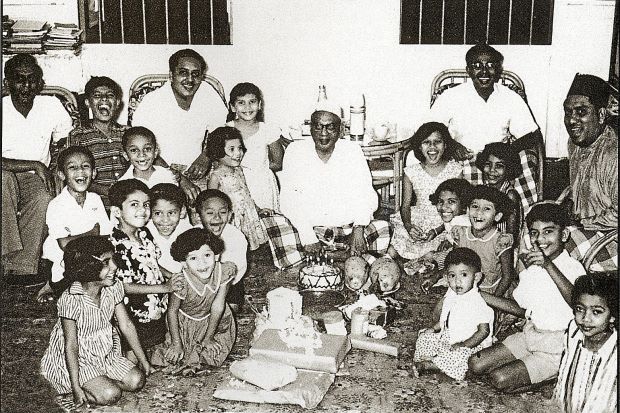
A colourfu l life: The late S.M. Zainul Abidin was a judo champion when he was still teaching and his grandchildren always gathered around to celebrate his birthday. The photos are reproduced from the book, Pengkisahan Riwayat Hidup Haji S.M. Zainul Abidin, published by Dimensi Eksklusif (M) Sdn Bhd.

A colourfu l life: The late S.M. Zainul Abidin was a judo champion when he was still teaching and his grandchildren always gathered around to celebrate his birthday. The photos are reproduced from the book, Pengkisahan Riwayat Hidup Haji S.M. Zainul Abidin, published by Dimensi Eksklusif (M) Sdn Bhd.

I WOULD like to thank readers for pointing out the error in the history behind Jalan Yahudi, subsequently renamed Jalan Zainal Abidin, published in this column on July 6.

I had wrongly identified Zainal Abidin with the noted Malay writer who was better known as Za’aba. The road is actually named after S.M. Zainul Abidin, one of Penang’s pioneer educationists, whose name is also spelt as Zainal Abidin.

The letter below from his youngest son Zainul Arshad is reproduced in full to put the matter in context. There is also another letter from another reader who also pointed out the same error. I am given to understand that many readers had called Zainul Arshad about this matter and he has taken the initiative to write us the letter.

I record my deepest appreciation to readers of this column who have constantly given me feedback, and pointed me to the right direction when needed.

It reminds me that much of local history is passed down orally, from generation to generation. We should all strive to know our own history. In writing this column, I have found that it is difficult to find the definitive records of many of the personalities that have roads named after them.

I believe all local authorities should make it a requirement to document the history of all the roads under their jurisdiction, old or new, for public record. Even new developments named after people or events must be documented so that those who come after us will have a proper record. The little stories that surround our neighbourhoods are a rich legacy that should be preserved.


The road is named after my father

I read your article Penang’s History, My Story titled “Leaving only tombs behind”. Since I was born and bred in Penang I always look forward to reading this weekly column.

I had wanted to send you a book about my father in the hope that you may write something about him being the pioneer educationist and politician in Penang. But before I could do that your article on the Jewish cemetery appeared.

I have to point out an error in your article. Zainal Abidin Ahmad has nothing to do with Jalan Zainal Abidin. He was not a Penangite. Jalan Zainal Abidin (although wrongly spelt) was named after my late father S.M. Zainul Abidin. I am his youngest son.

S.M. Zainul Abidin was one of Penang’s pioneer educationists. Among his former students were Tunku Abdul Rahman, Tuanku Syed Putra Jamalullail (Raja of Perlis), Tun Dr Lim Chong Eu and Tuan Yusoff Rawa.

He taught at the Penang Free School for 20 years before becoming headmaster of the Francis Light School in 1938. He retired as Inspector of Schools in Penang. Zainul Abidin was the first Malay to obtain a B.A. degree (externally) from London University in 1933.

He was also a founder member of Penang Umno and was responsible for getting a piece of land from his good friend, the late Hamid Khan, to build the Umno building in Penang.

S.M. Zainul Abidin was selected by Tunku to stand as a candidate in Malaya’s first Parliamentary election in 1955. He won handsomely as an Umno candidate in the north-west constituency whilst Chee Swee Ee of MCA won in the north-east constituency.

One of S.M. Zainul Abidin’s sons is the wellknown broadcaster, the late Datuk Zainul Alam. Interestingly enough, my late father stayed at No 35, Jalan Zainal Abidin (Jalan Yahudi), two doors from the Jewish cemetery, from 1929 until his death in 1969. — Zainul Arshad S.M. Zainul Abidin


The wrong Zainal

I am a fan of history and naturally an avid reader of your Saturday articles. You wrote that Jalan Yahudi was re-named Jalan Zainal Abidin in memory of Za’aba.

However, I think it is not so. I think it was attributed to S.M. Zainal Abidin, who was a member of the 1955 Federation Legislative Assembly.

I am told by old-timers that Zainal Abidin’s home was situated just behind the present Umno building at the junction of Macalister Road and Jalan Zainal Abidin.

Hence, lending credence that it was named after a local personality rather than Za’aba who originated from Negri Sembilan and had no real links to Penang. – Abdul Fareed Abdul Gafoor

Our flag flies high in London

Tan Sri Liew with Najib, Cameron and Johnson at the Battersea project launch.

BATTERSEA has become the most talked about word in London. Malaysians travelling to this city over the last few days have been asked the same question by Immigration officers on arrival: “Are you here for Battersea?”

At Bayswater in Central London, one of the city’s most cosmopolitan areas with significant populations of Arabs, Greeks and even Brazilians, I was asked by an Arab salesman at Whiteleys if I was from Kuala Lumpur and whether I was attending the Battersea Power Station development launch.

British friends, especially those with links to Malaysia, also asked for help to get invitations to the Battersea regeneration event on Thursday.

Everyone wanted to be part of history. It is safe to say that there has never been any property groundbreaking event in Europe which was attended by two prime ministers and the mayor himself!

All three – Datuk Seri Najib Tun Razak, David Cameron and Boris Johnson – endorsed the project, declaring the enormous economic benefits that would be brought to the city.

Foreigners, including house buyers, see the Battersea property project as a good investment. Londoners see thousands of jobs being created and, better still, a RM4bil underground rail line in the works.

It was exactly 30 years ago on Thursday when the Battersea Power Station stopped producing power for the city but, as SP Setia boss Tan Sri Liew Kee Sin rightly pointed out, that power is back again in Battersea to bring a planned RM38bil development to the area.

It is a massive project by all counts, with the first phase comprising a block of 865 apartments that will be completed in two years. All the apartments have been sold, mostly to Malaysians, Singaporeans and Hong Kong buyers.

The project, which is backed by Sime Darby Bhd and the Employees Provident Fund (EPF), is unprecedented for a Malaysian consortium in one of the world’s biggest financial centres. The icing on the cake is that Liew beat Chelsea football club boss Roman Abramovich to the prized land, where Stamford Bridge, the club’s stadium, is not far away.

Local residents associations also lent their support to the Malaysians as they feared Abramovich’s plan to relocate the stadium to Battersea could cause traffic disruptions but bring few new jobs to the area.

After 30 years, life will be rekindled at the abandoned coal-fired power station once the project is in full swing. Located on the south bank of the River Thames, the station once generated about a fifth of London’s electricity.

It was used as the backdrop for Pink Floyd’s Animals album in 1977 and this writer has been made to understand that talks are ongoing to convince the remaining members of the hugely successful band to reunite for a charity concert at the iconic site.

In more recent times, Battersea was used to launch the Conservative Party’s election manifesto, according to Boris Johnson.

At one point, it was bought by John Broome, chairman of Alton Towers, who wanted to turn it into a British Disneyland. Hong Kong businessman Victor Hwang wanted to turn it into a shopping mall but the plan never took off.

The groundbreaking event by Najib and Cameron saw plenty of history being made. The two premiers carried out bilateral talks for 30 minutes on the upper floor of the site sales office – where the show unit is located!

Johnson, as usual, cycled his way to Battersea while it has to be recorded here that a Malaysian bomoh was flown all the way to London to ensure the unpredictable British weather was beaten. Whether it was the bomoh’s expertise or sheer luck, the rain stayed away.

Now that the fanfare is over, the real work needs to be done. The sales of the first phase have been a roaring success. SP Setia, in fact, had to turn away buyers.

The real challenge would be the subsequent phases. Getting Arab investors and buyers for the higher-end units would bring higher value to the project. There is also a need to secure sales from European, American and East European buyers.

Liew, who is well known for his down-to-earth approach, played down his visionary role in making the Battersea project a success. Instead, he attributed the success to the backing of Najib and the British leaders. He consistently reminded journalists, who billed it as Malaysia’s success story, that he has never felt so proud of being a Malaysian, a sentiment shared by his countrymen regardless of their race at the event.

But the reality is that Battersea is really a feather in his cap. His leadership, professionalism, dynamism and commitment have made this first step to changing the skyline in London possible. He has successfully flown the Malaysian flag in England.

This should serve as a reminder to Permodalan Nasional Berhad, the giant Malaysian asset management company that now owns the majority share in SP Setia, that Liew should be allowed to carry on his work with no interference.

In the day-to-day management, Liew and his men know their job inside out and they have the track record to prove it.

Let the professionals do their job and I am sure his financial backers, Sime Darby and EPF, would feel the same way. Their concern is that their investments must see good returns, that’s all.