Author Archives: wcw

Sex in the city

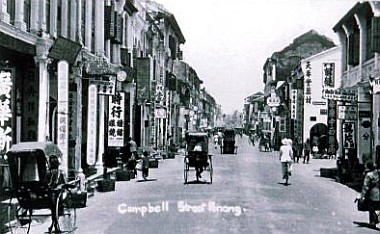
Good ol’ times : An old postcard showing rickshaws plying Campbell Street in Penang from the book ‘Penang – Postcard Collection 1899-1930’. — Courtesy of Malcolm Wade Good ol’ times : An old postcard showing rickshaws plying Campbell Street in Penang from the book ‘Penang – Postcard Collection 1899-1930’. — Courtesy of Malcolm Wade

THANKS to the old Penang’s status as a bustling metropolis and port, the island was already exposed to foreign culture long before the rest of the country. From hotels, where social events were held, to seedy bars for lonely sailors, Penang had it all.

George Town was in fact conferred city status by Queen Elizabeth II in 1957, making it the first town in the country to achieve city status — which explains why many Penangites are not overly excited with the need to apply for city status today.

In short, it was a real happening place. And right in the heart of it all was Campbell Street, which was a new road created between Pitt Street — now renamed Jalan Mesjid Kapitan Kling — and Penang Road in the mid-19th century.

Campbell Street is named after Sir George William Robert Campbell, who was also the acting Lieutenant Governor of Penang between 1872 and 1873.

According to local historian Khoo Salma Nasution, for the local Hokkiens, sin kay or new road, by way of pun, came to refer to the fresh prostitutes or “new chickens” brought in from China to fill the courtesan quarters along this street.

Campbell Street, with its many goldsmith and textile shops, was a shoppers’ paradise from the 1960s to the early 1980s. But it had a reputation for being a red light district even much earlier, and flourished as one until the war.

“The houses of pleasure were identified by red lanterns hung at the door. Senior citizens recall these dens as places to relax and enjoy a range of services. The well-dressed, well-mannered courtesans served opium, tea and liquor, and provided musical entertainment and companionship,” Khoo said.

But George Bilainkin, who was appointed as editor of Penang’s English newspaper The Straits Echo, in 1929, had a less romantic description of Campbell Street. The brash and young Briton reported that in many of these brothels there were prostitutes “as tender an age as 10 or 11 are to be found. Sometimes they are sold by their mothers and grandmothers for as little as £10.”

He wrote that “European residents in northern Malaya are careful not be seen anywhere near these houses, but visitors are not so discreet and, at times, the police have exceptionally delicate tasks to perform.”
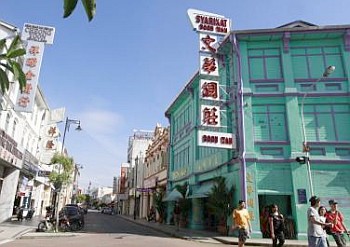
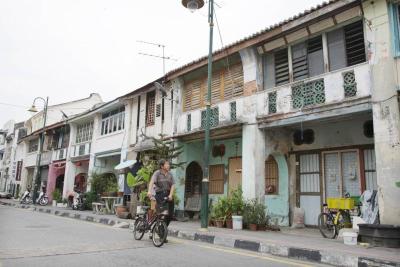
Present time: What Campbell Street looks like now. Present time: What Campbell Street looks like now.

It is clear that the old Penang wasn’t just exotic but truly erotic.

Most present-day Penangites are probably unaware that from the late 19th century to the 1940s, before the war, there was a sizeable Japanese community in that part of town. To be precise, in 1910, the official census counted 207 Japanese residents in Penang, mostly poor settlers trying to find fortune in the lively port city.

According to researcher Clement Liang, many of the Japanese were involved in the flesh trade, with 28 such “business establishments” recorded with four male staff and 126 females.

Many of these prostitutes came from Kyushu, the Shimabara peninsula located in Nagasaki prefecture, particularly in the impoverished areas of Karayuki-San in Japan.

“Today, visitors to Tennyo Temple, a Buddhist shrine in Kyushu can witness hundreds of stone pillars engraved with the names of Karayuki-San, former places of occupation and the amounts of donation. The word ‘pinang’ is featured prominently on many of the pillars there, a testimony to Penang’s past link with the Karayuki-San which originated from this area,” Liang wrote.

He wrote that many of the farmers’ daughters were sold overseas as prostitutes with false promises of decent jobs.

Campbell Street is connected to Cintra Street or Jipun Kay while the nearby Kampung Malabar, so named after the Malabars from southern India, was known as “Jipun sin lor” or the Japanese New Road, with reference to the Japanese-run brothels and small sundry shops.

“The locals could recall that Cintra Street was a favourite place for the foreigners and non-Chinese looking for sex because the Japanese prostitutes did not turn them away like the Chinese do. These Karayuki-San were deemed cleaner as they inspected the client beforehand and refused those whom they saw carrying diseases,” Liang wrote in his paper on the pre-war Japanese community of Penang.

But by 1920, the Japanese government through collaboration with the British administrators who were concerned with the epidemic spread of venereal diseases, began to abolish this flesh trade and forced the Japanese prostitutes to leave the Straits Settlements and the Malay states.

“Most of them were repatriated to Japan for good and for those who refused to return, they either went “underground” and turned to sly prostitution or married locals to stay on,” he wrote.

Not all Japanese were involved in immoral activities, with the records showing many ran dental clinics, dispensaries and photo studios.

The Japanese were among the first groups to bring in the silent movies to Penang. One silent movie cinema owned by the Japanese was operating in Kuala Kangsar Road, near the Komtar building.

But all the excitement in Campbell Street is gone today. With the emergence of the many shopping malls in Penang, there are few reasons to shop at this once colourful and vibrant street.

Even the efforts of the Penang Island Municipal Council to build a RM2.3mil pedestrian walkway failed to bring life to Campbell Street. At night, once the shutters come down, the street is quiet and distinctively lonely with little life.

For this writer, the only chicken that makes him want to go back to Campbell Street is the one served at the century-old Indian Muslim Hameediyah Restaurant. The fried chicken and curry chicken dishes are among the best I have eaten.

And I do have many fond memories of this street. It was at one of the jewellery shops that I bought two tiny diamonds worth RM1,000 – a hefty sum then for this salaried man — for our wedding rings.

I can no longer recall the name of the shop and it has not become an issue during Valentine’s Day, which happens to be our anniversary, because my wife has forgotten too.

My mother, Yeoh Poh Choo, grew up in nearby Chulia Street, and was naturally a familiar face in the area. She used to shop for food at the Campbell Street wet market and we were always amazed at how she came back with such good bargains and occasional freebies, either some extra meat or prawns, thrown into her basket.

The Campbell Street wet market continues to be popular today and its Victorian-style architecture has provided its facade with a heritage image, similar to the Covent Garden in London.

I also remember the many hawkers who ply the street in their three-wheeled vehicles, including the kueh kak seller (fried carrot cake) who was arrogant because he always had a long queue of customers, to the curry mee seller, who would always have her entire brood with her.

Back in those days, my mother bought her own textiles to make clothes and she would bring me along. And to prevent me from getting bored, she would treat me to the dried and pickled fruits from a shop there.

All these memories and more are good enough reasons to still visit this historically-rich street each time I am back in my hometown.
Troubling diatribes

The more agitated they become, the angrier they turn against the government and everyone else around them. Their entire day is spoiled and, presumably, they would also blame the government for that.

Anyone who disagrees with their views are called names, cursed and rubbished. And they do this even as they extol the virtues of the freedom of expression and respect for individual views in the same breath.

Exiled blogger Raja Petra Kamaruddin was hero-worshipped and everything he wrote was deemed the gospel truth until he started questioning some opposition leaders. Overnight, he lost his legions of fans who not only turned against him but also called him all kinds of names.

Last week, someone posted on Twitter that Jakim had declared the coffee at Starbucks to be haram. No one took the trouble to check the authenticity of the claim that some coffee beans from South America could be religiously unclean. Instead, there was a barrage of criticisms against the religious authority which soon turned into an anti-government session.

And the problem with such diatribes on the social media is that even if an inaccuracy is corrected on one site, many would have shared this piece of false news elsewhere. Many of us are not surprised when old controversies resurface after a long time simply because along the sharing loop, there will be someone who will happily pass on anything critical even if it is no longer hot.

Some of the pro-government supporters writing on the social media platform are no better. They seem incapable of arguing their case in a rational manner and, often, the arguments take on a racial angle.

Many seem oblivious to the fact that dissent is part of democracy and differences in opinion are to be respected.

Some of these supporters narrowly champion the interest of one component party, forgetting that the other component member parties are equally important. That’s how divided the country has become.

The inability to articulate one’s views objectively and in a mature manner is troubling. A glance at the comments posted on the various news portals would show the level of shouting, not debate, that is taking place. They seem to have become the gathering point of like-minded people with the same political bias, prejudices and viciousness too.

Many hide behind their anonymity but are quick to condemn writers who dare to put their names to their works as cowards if they do not share their views. How ironic indeed.

These are the people who read the same blogs and news portals every day, nodding in agreement as they do so and believing that the whole country not only shares their political views but also actually support their stand.

Their idea of objectivity is one that reflects their world view while the opposing views are to be dismissed. Everything seems to be either white or black. There’s no middle ground or readiness for reasoning.

In places of worship, prayers by some religious leaders have become skewed and their measure of “ethical and righteous” leaders are actually based on their personal political beliefs.

They are not ashamed to post their rantings daily on Facebook, forgetting that as religious leaders they have a certain degree of responsibility to their followers who come from both sides of the political fence.

Such obsession with politics seems to have overtaken their spiritual priorities as they become cyber troopers, unknowingly serving the interest of the politicians first instead of their flock who need spiritual guidance.

They evoke the Scriptures to justify their political campaign and unashamedly use God’s name, as if God is telling the congregation, via these religious leaders, who and how to vote.

There are two things one tries to avoid at social gatherings – religion and politics. But with the general election just weeks ahead, it has become more difficult to avoid these topics.

My dentist talks about politics to me as I hold tightly to the dental chair with the buzz of the drill ringing in my ears. My stylist not only cuts my hair but feels he also has the right to share his political views with me.

Even the Myanmar man who runs the prawn mee stall talks politics. But, thankfully, it’s only about Aung San Suu Kyi and the generals.

Penang’s rich history unfolds

Rich in culture: Armenian Street was once home to prominent Armenians whose touch in architecture and business can still be felt in Penang today. Rich in culture: Armenian Street was once home to prominent Armenians whose touch in architecture and business can still be felt in Penang today.

Wong Chun Wai may have left Penang more than two decades ago to settle down in the Klang Valley. But his heart remains in his hometown. Now, in this column aptly titled Penang’s History, My story, Chun Wai makes the streets of George Town come alive by taking a walk into the past to unravel the personalities and events that made Penang what it is today. It is history, and also his story, as the writer juxtaposes the stories with those of his growing-up years in the heart of George Town. The weekly column begins today in StarMetro.

MORE than ever, the stories behind all the street names lining George Town need to be told. Unlike most major towns in other states, the names of roads bearing the original names of colonial administrators, Malay leaders, Chinese tycoons and Indian traders have remained unchanged.

Yet, it would not be wrong to assume that the lovers, strolling along Gurney Drive, hand in hand, are unlikely to have any idea who is Henry Gurney. Or care.

Henry Gurney was a British High Commissioner who was ambushed and killed by the communists on his way to Fraser’s Hill, but that’s another story.

The motorists passing by Farquhar Street daily probably do not see the need to find out about Robert Townsend Farquhar, who was a Lieutenant Governor — a senior colonial officer, who was a representative of the Queen.

But there is also romance, err sex, in history. There is Love Lane. Some said Love Lane, or ai cheng hang as the Hokkiens called it, was so named because sailors used to meet their local lovers there, with its large Eurasian community around the church while others claimed the name originated from its association with the local Chinese rich who kept their mistresses by the adjacent road, Muntri Street.

In fact, at least one house there had a horse stable. For a while, the stable was converted into rented homes but now, it has become a boutique hotel, appropriately named The Mews.

And who is the Muntri or Mentri that was so important and powerful until a name was referred to this man?

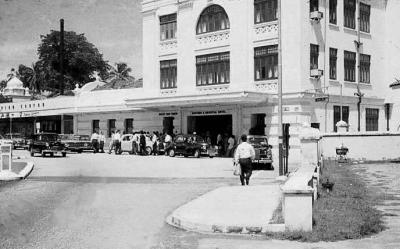
Still standing: The Eastern & Oriental Hotel in Penang in 1950. It is founded by the Sarkies Brothers. Still standing: The Eastern & Oriental Hotel in Penang in 1950. It is founded by the Sarkies Brothers.

This is a weekly column to share my passion for the history of Penang, my hometown, and where my heart is still is although I have lived and worked in the federal capital for the last two decades.

I have made it a point to return home at least once a month to see my parents, who are already in their 80s, and they remained an important reminder of my roots.

The history of Penang has always been fascinating, not just to Penangites, but Malaysians in general. That is why, this column, will not only be published in Penang but also in the Metro section of the central edition.

History, as the name suggests, is about His Story. Unfortunately, most of us can only recall nightmares about how our history teachers forced us to take down long notes and memorise useless dates, which has no bearing to our lives!

Bad history teachers and bad teaching methods killed all our enthusiasm because our teachers forgot that history is about telling interesting stories to keep our attention, so that we learn how people used to live their lives and how we should learn from the past, so we would not make the same mistakes as they did.

This column seeks to talk about the personalities behind the names of the streets in Penang and it is also about my story — of how growing up in Penang, during the 1960s and until my adulthood of the 1980s, were like.

Thanks to people such as Khoo Salma Nasution, who remained a source of inspiration for me and for wanting to share our love of Penang history.

Her book, Streets of George Town, Penang, has gone to the fourth edition, and will be a major source of my work.

Then there is Dr Neil Khor, a former colleague, who is now instrumental in helping to make the heritage of Penang alive.

But much of the researched work for this column is based on the work of my colleague, Ronald Byrne, who ran a weekly column, called The Old and The New for The Star, in its northern edition in the 1980s.

He took the trouble to produce old pictures of the streets and ran them along the scenes of the streets, as they are today.

The postcards were contributed by Chan Guan Fook, who has a huge collection of these vintage post cards.

Thanks to the Internet, there are many amateur historians who have blogged about the history of these personalities who made Penang what it is today.

Ex-Bernama journalist, Syed Imran Syed Ahmad, has painstakingly written much about the streets of Penang via his kudaranggi.blogspot.com site, which I like to credit as another source.

This fresh attempt hopes to rekindle interest among young Penangites and the state’s leaders — on both sides of the political divide — who have made Penang their home.

In this journey, join me in the walk through the heritage trail where this writer hopes to learn more about our past from you as well so that the present and future can be more meaningful and interesting!

Outskirts hold the key

The island is actually the largest island in Malaysia followed by Pulau Bruit (in Sarawak) and Pulau Langkawi. My hometown island, Penang, is fourth. With an area of 440.7 sq km, its unique location off the northern coast of Sabah in the district of Kudat makes it the furthest tip of Malaysia.

Banggi is home to the Bonggi people, an estimated 2,000 of them. Most of these self-sufficient fishermen and farmers are influenced by animistic beliefs and lead a lifestyle that many in the peninsula would not be able to imagine. It would not be wrong to assume that many of us do not even know the existence of this group of Malaysians who, like us, will be voting in the coming general election.

Welcome to Malaysia. Malaysia isn’t just Petaling Jaya, Kepong, Cheras, George Town, Ipoh, Lembah Pantai, Kota Baru and Johor Baru.

At Banggi Island, one needs to travel by boat for three hours from Kudat, the nearest town, to reach this isolated state constituency. By air, from the capital of Kota Kinabalu, it means flying through a seemingly endless mass of sea.

This state constituency is under the control of Barisan Nasional’s Datuk Abdul Mijul Unaini, who beat his opponent with a 2,074 vote majority and, at the parliamentary level, the elected representative is Datuk Abdul Rahim, who is also from the BN. He polled 17,634 votes against PKR’s 7,739 votes.

There are 222 parliamentary seats and 576 state seats. With the exception of the 71 seats in Sarawak, where state polls were held in 2011, the general election will see contests at both parliamentary and state levels.

While most peninsular folks are familiar with the infamous Datuk Bung Mokhtar Radin, the MP for Kinabatangan, it won’t be wrong for me to suggest that many of us have no idea where to pinpoint his kawasan, which is slightly bigger than Pahang, on the map. He won with a 8,507 vote majority.

There are probably more animals than voters in Kinabatangan. The Kinabatangan river is the longest in Sabah, second only to the mighty Rajang river in Sarawak.

In both these constituencies I have highlighted, the kind of huge crowd ceramahs that one sees in urban areas would be impossible, and also useless and ineffective. Reaching these two areas itself is a massive challenge.

But there are plenty of such rural and isolated constituencies all over Malaysia and it is in these heartland seats, where Umno and its BN component parties, with their extensive network of support organisations and personnel, have the edge.

So when we discuss politics, and especially when we attempt to predict the outcome of the general election, we have to concede that our opinion can sometimes be distorted and most of the time it is often shaped by our personal sentiments and limited worldview.

Someone who sips coffee in Bangsar and has never stepped into a rural constituency, where one needs to wait for days, if not weeks, for a tin of kerosene, would sometimes erroneously assume that the same set of perspectives are to be used.

A political discourse over the death penalty would mean little to a farmer whose priority is to secure his fertiliser and a bag of rice from the cooperative in his village.

Even in the urban areas, we have to take note that there are only 45 seats that are predominantly Chinese while there is not even a single seat with an Indian majority. For the two communities, their numbers are declining fast, which would have serious implications on their political clout, or the lack of it, in the years to come. More than ever, the need to be politically strategic, rather than emotive, has never been so vital.

In the coming general election, almost certain to be held by March, it will be the Malay voters, in both urban and rural areas, who will determine the outcome.

The reality is that both Umno and PAS have to win the support of the majority Malay voters. Umno has emphasised that it is the protector and patron of the Malays while PAS plays up the Malay-Islamic card again to regain its lost votes among its hardcore supporters, after its disastrous flirting with DAP.

For the Chinese voters, many are still in anti-establishment mood, and the question arises whether it could lead to a Sarawak scenario. This was when Tan Sri Taib Mahmud’s party, the Parti Pesaka Bumiputra Bersatu, won all the 38 seats it contested while the DAP walloped the Chinese-based Sarawak United People’s Party to almost make a clean slate.

The harsh reality is seen in Kuching, where the city is divided by the majestic river, and its politics are even more divided. The Melanau-Malay voters in Kuching North backed the BN while in Kuching South, it remains a DAP stronghold. The final outcome of the 2011 state polls – the Chinese were left out of the state cabinet.

The test would now be put to the Chinese voters on the peninsula this time, where the MCA still has 15 parliamentary seats.

This year-end article may seem like an odd way to end 2012 but beginning from tomorrow, the countdown to the 13th general election would have started. For the next three months, there will be nothing else except politics, politics and politics.

Hang on to your seats, get ready for the roller coaster, because the ride is going to be rough in the toughest elections ever.

Psy gets my vote, any time

Certainly it shouldn’t be President Barack Obama, however popular he may be globally. Even if he has already got a Nobel Prize for merely delivering good speeches or has just been named Time’s Person of the Year.

For sure, it should not be Kim Jong-un. He’s too mysterious, needs a good haircut and we really ought to know his wife better first.

Also ignore the super-rich footballers who have been taking us for a ride – those who kiss the club badge on their jerseys after scoring a goal and the next thing you know, they are kissing the money notes after they join a new club.

For me, the Man of The Year has to be South Korean hip hop star – Psy. Go ahead and laugh but that chubby man with the silly sunglasses has single-handedly brought the world together. His Gangnam Style video became the first to clock one billion hits on YouTube, and counting.

More importantly, he has brought hope to all middle-aged men with pot bellies and who aren’t very good looking, especially Asian men. He’s only 35 years old but seriously, he looks older than his age. To be more precise, unkind as it may sound, Psy looks like many Malaysian men who have passed the half century mark, including this writer.

He gets my vote over all those skinny South Korean teenyboppers with their saccharine good looks, some of whom looking like they have just stepped out of a plastic surgery clinic.

If many of us thought that the all-girl bands look and sound too girly, some of the boy bands are even worse.

But Park Jae-sang or Psy proved that the lack of good looks, lack of height and lack of a good voice need not stop anyone from becoming a superstar.

We all cheered for Susan Boyle. While she may not have the looks, at least she could sing. This Psy guy may not have that killer voice but definitely he has the energy to make those slick horse-dancing movements.

His fellow South Korean singers have been trying to break into the lucrative American market but they hardly made a dent until he appeared last year.

Now Psy has become a global obsession, not just a global sensation.

No singer has ever had video spoofs churned out at such a rate around the world, nor inspired flash mobs, like Psy.

We all love him because of his non-pretentious underdog image – he had to repeat military service, he was caught smoking weed in college and he screwed up most of the time.

He was the loser many of us could identify with and this was the dude who was looking for that one big chance and wow, he made it! What a feel-good story.

It has now been exposed that as a struggling singer he made a song that criticised Americans. The lyrics were simply distasteful, even for the liberal and fun-loving Americans, as he poked fun at the United States. The past caught up with him but he has quickly apologised. The lesson for everyone is never to mess around with the Americans and if you want to make your fortune, the US is still the place.

Without doubt, he’s my Man of The Year. We had better give him the distinction now because many of us may not even remember him next year.

I can still use the many Samsung products in my house but I am not sure I can finish the huge containers of kimchi that I have stocked up following this Gangnam craze. There is only so much Korean barbecue that I can eat at those Korean restaurants.

I am not sure whether he will get past the security officers at the United Nations this time and whether Hollywood TV hosts would do the four-step horse dance any more, as they tried to outdo each other to look silly horsing around.

As I write this column, I am at a coffee outlet in Capetown, South Africa. I am trying hard to imagine the iconic hit song, Africa, by Toto playing in my head but what the hell, some African kids are playing loudly Gangnam Style and asking me if I am Korean.

Hey! Do I look chubby and ridiculous with my sunglasses? Do I look like someone with a Kim surname just because I am using a Samsung? I am Malaysian lah!

Let’s just name Psy the Man of The Year, ok? Happy holidays!

All I want for Christmas …

I thought I was the only one with this problem as my wife is from Penang. It is almost legendary that the islanders, especially the women, hold onto their purse tightly.

Penangites may no longer bring eggs to the char koay teow man to save cost but, seriously, they are still really budget-conscious. I can vouch for that because I am Penang-born myself.

But men will be boys. No matter how old men are, there is a little kid in all of us. We like toys, no matter how grown-up we look.

If I had my way, like many men who are suffering from a mid-life crisis or have just passed through it, I would get a Harley-Davidson bike. I would don the black leather jacket, boots and the bull horn helmet. That would really make me look mean, especially with the sunglasses as well. Riding on that powerful machine with the wind blowing against my face, that’s life, man!

But the Home Minister has kept on rejecting my application. She wouldn’t even take a cursory look at the catalogue or pretend to have a semblance of interest in it. She just rejects outright without any sound or logical reason, such as the price.

And then she tells me the rejection is for my own good. Now, that’s how our Home Ministry officials usually sound. Every decision made is “for our own good”.

Apparently, middle-aged men, with their beer bellies and poor physique, are no longer very good at keeping their balance. That’s why they end up killing themselves on the road.

So, last week as I read about Datuk K, husband of singer Datuk Siti Nurhaliza, injuring himself in New Zealand while on a motorcycling trip, I quickly hid the newspaper from my wife.

Businessman Datuk Seri Khalid Mohamad Jiwa may look macho and think he’s still young but, seriously, after the accident, he had better look at himself in the mirror and accept the ageing process.

I know I sound like sour grapes. I would have loved to join those motorcycle convoys but I have given up. Getting even a Vespa may not become a reality.

One Christmas, I hinted to my wife that it would be nice to have an aquarium in our living room. I imagined watching fish swimming, with the aquarium lights on, while sipping wine and listening to romantic French music in the evening.

I was pretty sure I had sold the idea to her until she snapped me out from my dream. “Who’s going to change the water, ah? You think electricity very cheap, ah?”

I was just thinking of freshwater fish as I dared not even broach the idea of having sea fish and those lovely corals. Well, that thought did cross my mind but taking into account the odds, I tested the waters with the freshwater option, and even that led nowhere.

So this year, I toyed with the idea of getting a 60-inch TV set. Yes, the ultimate widescreen with a solid sound system, and I can watch Arsenal thrash Tottenham Hotspurs while drinking beer with my buddies.

The argument was sound, I thought. I would not go out to watch football at the pub and come home smelling like an ashtray but would instead invite the boys to the house. Surely that should be appealing to the other half.

Furthermore, even for the tight-fisted Penangite, it is obvious that prices of TV sets have plunged so much in Malaysia. If you are at KLIA, you will notice that every Bangladeshi worker there is going home with widescreen TV sets and Blu Ray players.

The price drop for electrical items is just unbelievable and they certainly make the best Christmas gifts.

We are talking about a 60-inch set that everyone in the family can watch together – when the boys are not watching football, of course – and in the afternoon while I am at work, even my mother-in-law can keep up with her silly Taiwanese Hokkien soap operas.

It’s just too good to be true and the realistic man in me was not even talking about investing in a 3D set, where you have to buy five extra pairs of glasses because the dealer would only give you two. No. I was just hoping for a 60-inch set.

The response was fast and furious. “You seow ah (crazy in Hokkien)? You think you are very rich ah? What’s wrong with the present set?”

End of story. Until two days ago, I thought I was the only man with this Christmas predicament. A lot of my male colleagues poured out their frustrations and thanked me for opening up on the subject of our Home Ministers. Talking about them in a group turned out to be like some kind of therapy.

A male editor lamented that he could not even get another smartphone because his wife said he already had one. Another wanted a good folding bike but was told to stick to brisk walking for exercise and still another who wanted a pet dog was told he would not be allowed to visit pet shops any more! Geez!

But the best Christmas gift is simply to be with the family. That is something money cannot buy.

To all my readers, let me wish you a Merry Christmas and Happy New Year.

Non-Muslims feeling the heat

Four non-Muslims – two men on a plane-spotting outing and a couple in a park – have been issued with summonses for khalwat.

The summonses were for “indecent behaviour” but the four have denied any wrongdoing, insisting that the municipal council enforcement officers were “merely abusing their position”.

The first case involved two men in their 30s who were in a car parked beside the Sultan Ismail Petra Airport. They claimed they were watching planes land in the night when they were issued with the summonses by these Taliban-style officers.

This writer can only deduce that Kota Baru must be so boring – the result of a ban on entertainment outlets – that the two young men have to watch planes landing at the airport for entertainment. How these officers can consider their action an offence is mind-boggling.

But we know that the PAS politicians have a great sense of imagination and can conjure up fantasies out of seemingly ordinary situations. They think that getting a haircut from a person of the opposite sex can lead to moral decay and watching concerts can lead to hedonism or excessive pleasure, whatever that means.

Malaysians know that these cranky politician-theologians also frown upon the mixed company of males and females, but two non-Muslim men being punished for being in a car together, that’s a new one. Are they telling us now that two men together can lead to immoral activities or that watching planes at the airport can be sexually arousing? Even if they had committed a “gay act”, does the council have any jurisdiction over non-Muslims?

The other case involved a 17-year-old boy and a girl aged 15. They were together at the Tengku Anis Park in the town centre, in broad daylight, when they were arrested. They were approached by the enforcement officers and issued summonses on the spot for purported indecent behaviour.

Nothing seems to be safe any more for non-Muslims in Kota Baru. You get fined for having a hair cut by a hairstylist of a different sex, you get fined for being in love and sharing private moments in a park in broad daylight, and you also get summoned for being in a wrong queue in a supermarket check-out.

Before anyone accuses this writer of filing another PAS-bashing piece, it is important to point out that the protest over the latest controversies was started by the National PAS Supporters Congress president Hu Pang Chaw, who is known for his apologist stand for the Islamist party.

Interestingly enough, Hu has also revealed that the male victims had complained to him that the officers had even sought RM500 “to settle the matter”, which means that these holier-than-thou officers were open to corruption.

Hu added that “as far as I know, the council has no right to issue summonses to non-Muslims for close contact with their girlfriends in the dark or out in the open”. But Hu shouldn’t plead ignorance now because the PAS rules have always infringed upon non-Muslims. This is not the first time and it won’t be the last.

Don’t blame PAS either because they have consistently told Malaysians that their objective is to turn Malaysia into an Islamic State. Barisan Nasional tells us that we are already an Islamic State, but they still keep intact the secular laws and the British-style courts.

But for political expediency, and for selfish political ambitions, there is now a deafening silence from allies of PAS. The only exception seems to be DAP chairman Karpal Singh, who has also consistently spoken up against the hudud laws pushed by PAS. However, his party comrades have decided to keep silent and, worse, are encouraging us to elect more PAS leaders into Parliament and the state assemblies.

It is also pertinent to note that during The Star’s interview with the Sultan of Selangor, the Tuanku had revealed that there were politicians who tried to prevent the opening of cinemas in shopping malls in Shah Alam! This is in Selangor and not even in Kelantan. We can also assume that this must be the work of PAS elected representatives.

We know for a fact that the PAS state assemblyman for Bangi, Dr Shafie Abu Bakar, has prevented a cinema from being set up by a non-Muslim, and that the Kuala Selangor PAS wants to stop unmarried couples from watching movies in a cinema there.

We are merely kidding ourselves if we think the rules by PAS do not affect non-Muslims. Despite the promised intervention by PAS’ top leaders over the hair salon ruling, nothing has changed until today.

In an interview with The Malay Mail on Friday, PAS president Abdul Hadi Awang was quoted as saying “even Chinese wives don’t agree with (unisex) salons”.

He seems out of touch with reality, or pretending to be.

Best to get it over with fast

Everything seems to have just zapped past our eyes and it’s frightening because I can still remember vividly the parties I attended during the festive seasons.

The only thing that has not happened is the general election. For many, lives seemed to have been put on hold because of it.

There have been so many wrong predictions, postponed vacations, cancelled meetings and false starts. Our plans have been disrupted in many ways.

The next popular date now is some time in March, which is based on the assumption that the Prime Minister would seek the dissolution of Parliament after the Chinese New Year celebration, which begins on Feb 10.

There isn’t much time left because the Barisan Nasional term ends on April 28, which means that by the next two months, the momentum for the elections should be peaking.

No one should complain about the campaigning period being limited because the reality is that since the 2008 general election, where Barisan lost its two-thirds majority in the Dewan Rakyat, both Barisan and Pakatan Rakyat have been busy campaigning.

Everything has been seen to be political since then and no one has been spared. Even badminton hero Datuk Lee Chong Wei found himself the target of a Tweeter attack from a mindless DAP politician who was apparently cheering for his Chinese opponent Lin Dan.

Lee also found himself being belittled by supporters of Pakatan Rakyat on Facebook because of his wedding plans. As it was his wedding, he had the right to decide who he wanted to invite and who he wanted to sit with. Even his big day was the target of incredulous political connotations.

Then there is the Automated Enforcement System (AES) speed trap plan. That has become a political bombshell too. Strangely, no one from either side of the political divide has demanded that the police stop putting up roadblocks along the highways.

These roadblocks are irritating and give rise to suspicions of corruption. Most of us, especially those who claim to despise corruption, would want to end any perception that conversations in the middle of the road revolve around the “macam mana selesai” (how to resolve this) question. So, if you are not speeding or breaking any speed limit, why would you complain about the AES?

Going to church or the mosque can turn political too in this over-extended silly political season. If Barisan supporters find it painful listening to imam or pastors who seem to be inclined towards Pakatan Rakyat, the same must surely be felt by supporters of the latter who have to listen to a pro-Barisan preacher.

I believe those who advocate loudly about purported political consciousness in places of worship wouldn’t be so enthusiastic if their preachers were inclined to Barisan in their sermons. But there shouldn’t be different sets of rules.

Going for a haircut in a unisex salon can become political too if you are in Kelantan because the PAS-controlled state wants to impose its brand of religious fervour on the people.

Going gay has taken a different meaning now. Older Malaysians like me were taught that “going gay” means “being happy” but now it means adopting a certain sexual preference. For PAS Youth chief Nasrudin Hassan, it can mean that you become “hedonistic and gay” after attending an Elton John concert.

And simply by questioning every concert coming to town with his political-­religious stance, Nasrudin has made it into the world news. Now, he is demanding that the Information, Communications and Culture Ministry consult him on any concert to be staged in Malaysia. Good luck to PAS supporters; he deserves your vote.

I wonder how he missed protesting against Jennifer Lopez who will be performing at Stadium Merdeka tonight. Maybe he does not find the Latino singer hot since he has already found the pencil-thin Avril Lavigne to be hot.

I really can’t wait for 2013 to start. Hold the general election, accept the results and we can all get back to some sanity, focus on keeping businesses healthy in a softening economy and not waste time on silly political antics.

As an aside, I wonder why my wife questioned me suspiciously when I came back to my Petaling Jaya home before midnight after the concert. It was too early for me to be home, it seemed. And I looked and felt happy after a great concert.

I must not use the word gay, though. But I must remember to show her the clipping of the front page of The Singapore Free Press dated Aug 31, 1957. “A So Gay Merdeka Day” was its headline, and the subheading read, “Not even a heavy downpour could dampen their enthusiasm.”

Be careful who we vote for

There are many Chinese voters, swayed by anti-establishment sentiments towards Barisan Nasional, who have been easily convinced that the Islamist party is perfectly acceptable and that hudud laws would not encroach into the lifestyle of non-Muslims.

So they take a light, if not cynical, response towards the call by the Chinese-based component parties in the Barisan and have dismissed the red flag raised by the MCA and Gerakan as no more than a scare tactic.

Last week’s report that a female Chinese hairstylist has been fined regularly by the Kota Baru Municipal Council for cutting the hair of male Chinese customers has revealed how the PAS agenda is affecting non-Muslims.

Salon operators have learnt the hard way that gender segregation regulations in the PAS-controlled state apply to non-Muslims as well. The KB municipal council by-laws forbid women from cutting men’s hair and vice-versa regardless of their religion.

E-Life Hair Salon manager Ong Lee Ting said she has been paying fines of between RM200 and RM350, adding that she was warned the licence for the salon would be revoked because of the many summonses issued to the operator.

While many of us may be used to the way the PAS state government has been running Kelantan with its strict religious regulations, including gender segregation at concerts and supermarket check-outs, some might not be aware that the party’s leaders in other states have been doing something similar.

In Bangi, Selangor, the PAS state assemblyman Dr Shafie Abu Bakar has stood firm against any proposal to set up a cinema in his constituency. A Chinese businessman reportedly tried to set up a cinema in Bangi but the PAS politician was the biggest stumbling block.

When the issue was reported in February, Dr Shafie questioned the need for a cinema in his constituency when one could watch movies on television and the Internet.

He claimed that his constituency was 97% Muslims who preferred to attend religious and educational classes.

In July, PAS in Kuala Selangor insisted on putting up notices in a cinema forbidding unmarried couples from sitting together. State PAS Commissioner Dr Rani Osman said the directive was made by the licensing department of the Kuala Selangor district council.

The state deputy commissioner Khalid Samad, who is purportedly a liberal, was reported as saying that the cinema was frequented by families and they had complained of couples making out there.

He also reportedly described it as a poor man’s nightclub!

In Kota Baru, the PAS state government at one time reportedly insisted that the lights in cinemas must be switched on during the movie to prevent patrons from conducting immoral activities.

In 1995, when PAS came to power in Terengganu, the first thing the state’s then Mentri Besar Hadi Awang did was to demolish the replica of a turtle at a roundabout in Kuala Terengganu, saying it was akin to idol worshipping. This is the same man who has indicated his interest to be Prime Minister of Malaysia.

But we must accept the fact that PAS politicians have always been very clear on what they want to achieve if they are in power. They have consistently and clearly made it known that implementation of hudud laws are on top of their agenda.

It is only the apologists outside PAS that have tried to reassure their non-Muslim supporters that this would not happen or that hudud laws, even if implemented, would not affect non-Muslims. Try telling that to a non-Muslim rape victim if the perpetrators are Muslims.

We should be on guard against politicians who try to pass themselves off as theologians, regardless of their religion. Those who challenged the authority of such politician­theologians have found themselves being reminded that dissent means challenging God’s laws.

They are also put down by such figures who dismiss their critics as unqualified and incapable of carrying out a debate because the challengers are not religiously qualified. Suddenly, religion has become the monopoly of these political-religious characters.

Malaysia is veering towards a dangerous situation where there are many non-Muslim voters who are prepared to vote in orthodox PAS leaders. They don’t realise that they would be turning the clock back with their political adventurism.

It could be a hair-raising experience!

Stop the whining!

With newer and smarter phones in the market, there are no other compelling reasons why I should hold on to the BB. It cannot download The Star’s e-paper, a digital replica of our print edition, and does not have the wide range of applications that help to make life on the move complete.

So, I am now in the midst of migrating entirely to my Samsung Galaxy Note. If the BB breaks down, it will not be repaired. It will just become a memory of the past, like my earlier Nokia mobile phones. We just have to move on.

Those of us who are older will remember the cassettes and cartridges that delivered music to us once upon a time.

Now, even the CD’s days may be numbered as it not only has to compete with smaller devices with higher storage capacity, but also WiFi processes that stream music direct to us.

I am also using a Samsung tablet and an iPad, but I must say that the Samsung Tablet 2 has better features and its slim size fits nicely inside my sling bag. I love my two Samsung devices, really, and it looks like Samsung is emerging as the big winner.

If there’s a lesson to be learnt here, it is about innovation. While Samsung comes out with a few different improved models each year, we used to have to wait for someone, dressed in his iconic black turtleneck and jeans, to unveil an Apple product once a year.

Phone users keep wanting new gadgets with better applications. They don’t have the patience to wait a year for a new iPhone.

Both Apple and Samsung are embroiled in legal battles over copyright infringement but seriously, look at the new iPad, which has shrunk in size. It is reminding many of us that Apple seems to be copying the Samsung tablet!

The Samsung-Apple case came up during my chat with Datuk Seri Najib Tun Razak at the Chawan coffee shop in Bangsar on Wednesday.

The Prime Minister, who is using both the Apple and Samsung products, told our group that innovation has to be a part of the Malaysian vocabulary.

“We need to be focused, precise and innovative. The Germans, for example, are known for their precision, which makes them very good with machines. I can’t tolerate lebih kurang, that’s not good for Malaysia. It shouldn’t be in our vocabulary,” the PM said.

We, in turn, told the PM that Malaysia’s tolerance for mediocrity is well known and we seem prepared to settle for second best. With our “boleh terima lah” forgiving nature, we are definitely not helping Malaysians to excel.

But we have to keep changing and improving.

Apple, the world’s most valuable company in terms of market capitalisation, has reportedly slid 20% in its share value in less than two months. Its stock now is reportedly below the US$705.05 all-time high it hit the day before the iPhone5 was unveiled on Sept 21. It’s certainly far away from the US$1,000 valuation that some insane analysts had predicted.

It’s just over a year since Apple’s co-founder Steve Jobs passed away and his successor Tim Cook has found Samsung breathing down his neck.

Apple’s share of the tablet market has declined, reportedly falling from almost two-thirds to just above half between the second and third quarters. In fact, the media reported that Apple missed its last financial targets because of slow iPad sales.

The world is now crazy over anything and everything Korean and the sight of Psy trotting around the globe is likely to help Samsung products.

But China-made Huawei is also selling high-quality, cheap devices that’s giving Apple a fight in the Asian markets.

And what about the newspaper industry, where print is said to be on the decline? While many media companies whine and complain without doing anything significant, The Star stepped up to the challenge and introduced its e-paper in July.

In just four months, it gained close to 50,000 subscribers, which is an incredible figure and bucks the trend. Even the circulation of The Star’s print version has gone up, surpassing the 300,000 a day figure. Putting the newspaper on mobile devices like the Samsung or iPhone has certainly been innovative.

The point is that just like any business, innovation is the key factor for any entrepreneur to improve its products, boost sales and increase revenue.

Whining is the easiest part, and that seems to have become our national pastime when it comes to trying to make things better. But coming up with ideas and workable solutions and being able to execute them is the harder part.

If we are to stay competitive, innovation should not only be our buzz word, it should also be our way of life.